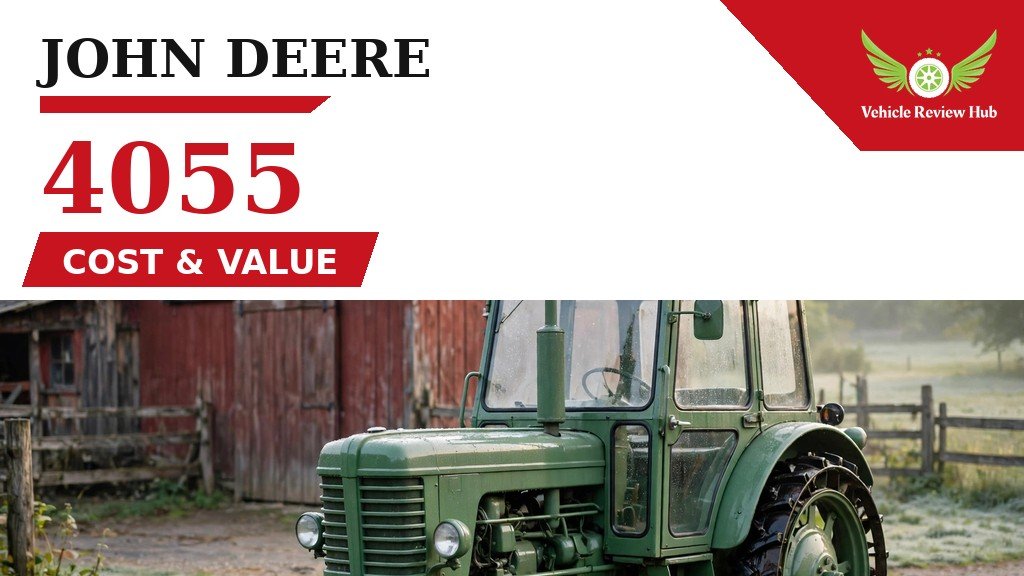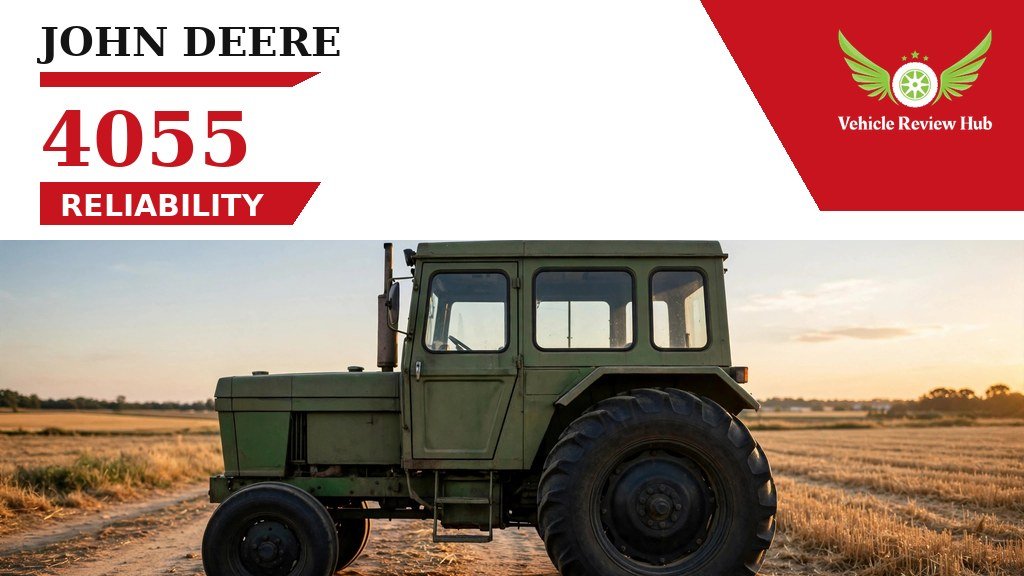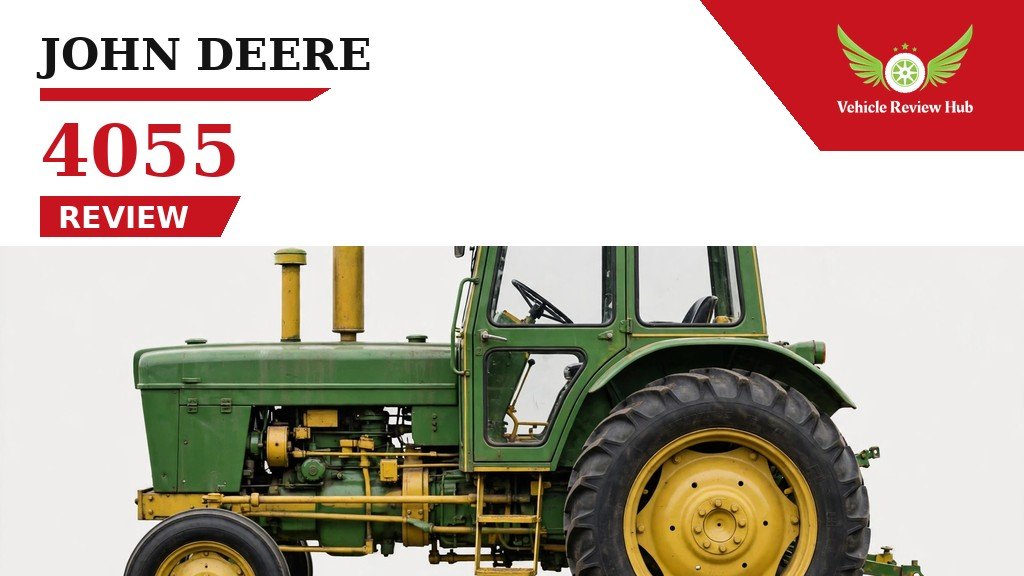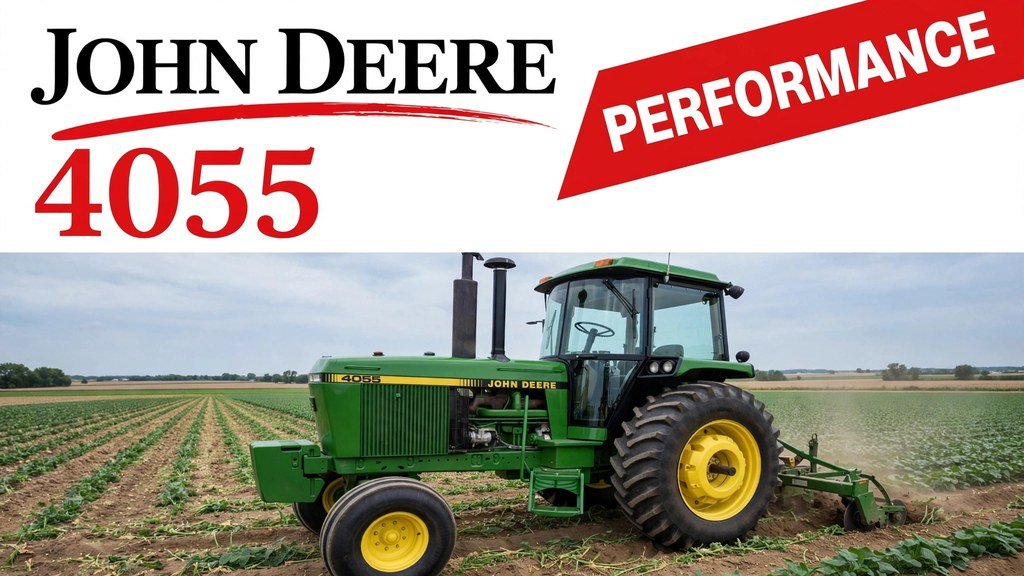
The short answer on John Deere 4055 performance is that this is a genuinely capable 100-horsepower-class row-crop tractor that still earns its keep: a turbocharged 7.6-liter six-cylinder, a tested 108.7 horsepower at the PTO, and a drawbar result just over 100 horsepower. The trade-offs are just as real: fuel use around 6.6 to 6.8 gallons per hour at full load, a 15- or 16-speed gearbox from an era before infinitely variable transmissions, and traction that depends heavily on two-wheel-drive versus MFWD. This guide to John Deere 4055 performance covers tested fuel consumption, drawbar power, the two transmissions, cab comfort, and what decades of real farm use say about how this tractor actually works.
One framing note for this John Deere 4055 performance guide: the 4055 was built from 1988 to 1992 as the smallest model of John Deere’s 55 Series, the Waterloo-built row-crop line that replaced the 50 Series. It is a pre-electronics tractor — no common-rail injection, no IVT, no GPS steering — so John Deere 4055 performance should be judged against the job it was built for: tillage, planting, hay work, and hauling on a mid-size farm.
John Deere 4055 Fuel Consumption and Operating Efficiency
Fuel is the first thing any buyer asks about, and the 4055 has an advantage most vintage tractors lack: it was independently tested. Nebraska Tractor Test 1626, published in September 1989, tested a Quad-Range 4055, and its numbers anchor every fuel claim in this section of the John Deere 4055 performance guide.
OECD PTO Test Results and Fuel Use Under Load
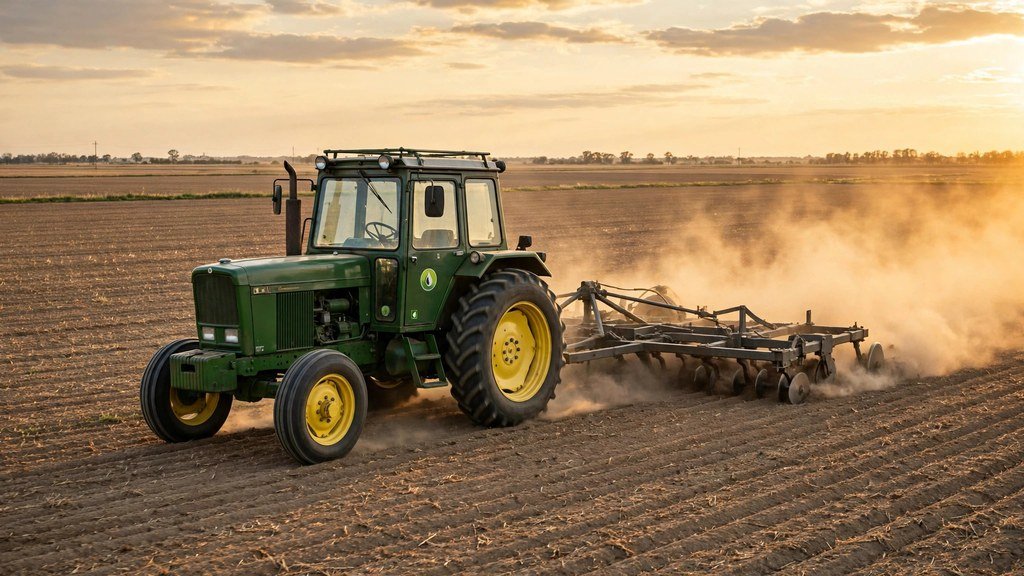
At the PTO, the Nebraska test recorded 108.7 horsepower for the John Deere 4055 performance story, slightly above the 106 horsepower Deere claimed, at a fuel burn of 6.8 gallons per hour at maximum power. That is the honest headline figure: full-load PTO work — a big mower-conditioner, a large square baler, a grain auger at full capacity — costs roughly 6.8 gallons an hour. On the drawbar, the same test recorded 100.07 horsepower at 6.6 gallons per hour, with a maximum drawbar pull of 13,378 pounds. Those two numbers together define John Deere 4055 performance at full load: just over 100 drawbar horsepower, burning a little under 7 gallons an hour.
What matters more for a working farm is part-load fuel use: the lab also measures drawbar fuel consumption at 75 percent and 50 percent of maximum pull, and again at 50 percent pull with the engine geared up and throttled back. The lesson for John Deere 4055 performance is the one every old operator knows: gear up and throttle back whenever the load allows. The same load in a higher gear at reduced engine speed can cut hourly consumption noticeably, and the 4055’s closely spaced gears make that practical.
| Test condition (Nebraska Test 1626) | Power | Fuel use |
|---|---|---|
| Maximum PTO power | 108.7 hp (106 hp claimed) | 6.8 gal/hr |
| Maximum drawbar power | 100.07 hp | 6.6 gal/hr |
| Maximum drawbar pull (ballasted) | 13,378 lb | — |
| Maximum engine power (6466T, rated) | 128 hp @ 2,200 rpm | — |
| Fuel tank capacity | 65 gallons | Roughly 9–10 hours at full drawbar load |
The 65-gallon tank deserves a line in any John Deere 4055 performance discussion. At full drawbar load it gives roughly nine to ten hours before refueling; at lighter loads, where hourly burn falls into the 4.5 to 5.5 gallon range as a planning estimate, a tank stretches well past a full day. For a 400-hour working year, a planning estimate of around 2,000 to 2,200 gallons a year is realistic for mixed work — heavy tillage weeks will run higher, light hauling weeks lower.
How Field Conditions, Implement Load and Engine Speed Affect Fuel Demand
Three things move John Deere 4055 performance at the fuel pump more than anything else: implement load, ground speed, and soil condition. A chisel plow in heavy clay at full depth can hold the engine at maximum output all day, burning near the tested 6.6 gallons per hour; the same tractor pulling a planter on worked ground at moderate speed may use a third less. Wet, sticky soil adds rolling resistance and wheel slip, which burns fuel without doing work — the classic sign is a tractor that sounds loaded while the implement barely moves, and that wasted fuel shows up directly in John Deere 4055 performance. Dry, firm ground is where John Deere 4055 performance is most efficient, because traction is high and slip is low.
Engine speed is the lever the operator actually controls. The 6466T engine is rated at 2,200 rpm and makes its peak torque of 550 Nm (about 406 lb-ft) down at 1,210 rpm, so it pulls strongly well below rated speed. Running a PTO implement at the correct 540 or 1,000 rpm shaft speed matters for John Deere 4055 performance — PTO speed, not engine speed for its own sake — but for drawbar work, the fuel-smart habit is to select the highest gear that still holds speed on the load and let the engine lug down toward its torque peak. That is also kinder to the drivetrain. The engine and specifications behind these numbers are covered in full in the review.
John Deere 4055 Field Performance and Drawbar Power
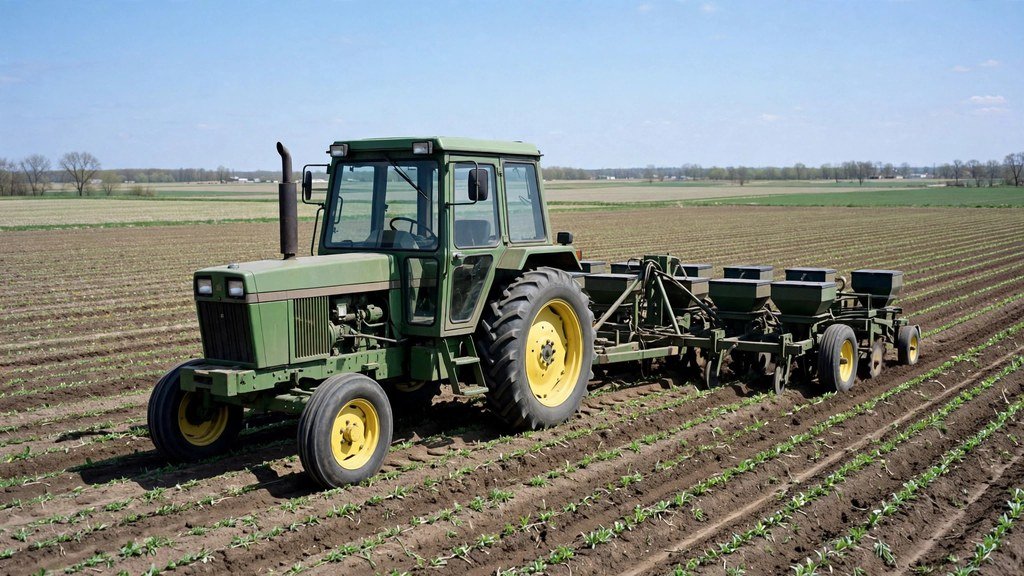
Drawbar power is where a row-crop tractor proves itself, and the 4055’s tested 100.07 drawbar horsepower puts it squarely in the class for 5- to 7-bottom plows, 12- to 15-foot discs, 6-row planters, and large round balers — the standard mid-size farm toolkit of its era.
Tillage, Planting, Hauling and PTO-Driven Implements
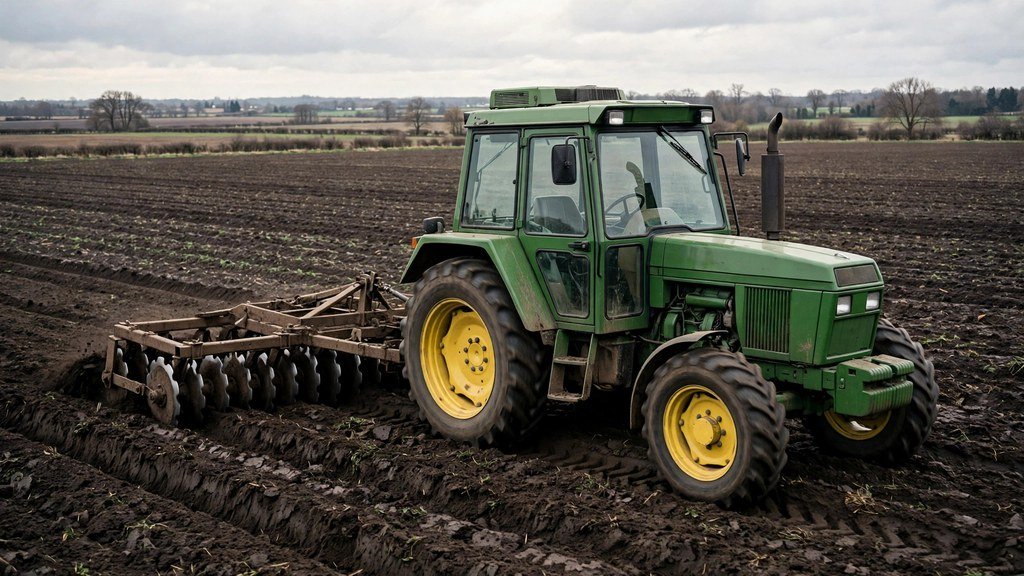
In tillage, John Deere 4055 performance is best described as steady rather than spectacular. The long-stroke 466-cubic-inch six pulls hard from low revs, so it holds ground speed in variable soil better than a smaller, peakier engine, and the closed-center hydraulics — 26.5 gallons per minute from the main pump, 20.6 gallons per minute at the selective control valves — run modern folding implements and hydraulic motors without the starvation that plagued open-center systems. For planting, the Category II three-point hitch, commonly rated around 5,504 pounds of lift, handles 6-row planters and mounted sprayers comfortably, though lift ratings vary by measuring point.
For PTO work, John Deere 4055 performance benefits from the independent PTO with its hydraulic clutch and the choice of 540 or 1,000 rpm shaft speeds, which covers older 540-rpm balers through 1,000-rpm implements. Hauling is the one job where the 4055’s age shows least: a 12,130-pound base weight (two-wheel-drive) gives a stable towing platform, the differential hydraulic wet-disc brakes stop a loaded wagon confidently, and road speeds up to about 19.6 mph keep short road moves practical. The video below shows a 4055 at real field work, moldboard plowing with a White plow — a useful look at the tractor’s draft, pace, and traction in the field rather than in a showroom, and it gives a feel for John Deere 4055 performance that numbers alone cannot:
Tested Drawbar Pull, Traction and 2WD vs. MFWD Performance
The tested maximum drawbar pull of 13,378 pounds, achieved with ballast, is the number to keep in mind when sizing implements for John Deere 4055 performance. Pull is traction-limited, not power-limited: the same engine that makes 100 drawbar horsepower on a concrete test course with ballast will spin its wheels sooner on loose, dry soil without it. Wheel weights, fluid-filled tires, and correct tire pressure matter as much as horsepower here.
The bigger traction decision is two-wheel-drive versus MFWD. A 2WD 4055 weighs about 12,130 pounds, costs less to buy and maintain, and is perfectly adequate on flat, firm ground. An MFWD version weighs roughly 15,190 pounds, pulls noticeably harder in soft or hilly conditions, and brakes better with the front axle engaged, but it adds front-axle seals, joints, and tires to the maintenance bill. For John Deere 4055 performance on rolling or wet ground, MFWD is the single most valuable option on the tractor; on flat prairie ground, a ballasted 2WD machine does the same work for less money. What to check on both driveline configurations before buying is listed in the pre-purchase checklist.
John Deere 4055 Transmission, Handling and Operator Comfort
The 4055 was sold with two transmissions, and choosing between them is the most consequential decision a buyer makes after 2WD versus MFWD. Both are honest, mechanical gearboxes with no electronics to fail — which is part of why John Deere 4055 performance has aged so well — but they feel very different in the field, and the choice shapes John Deere 4055 performance every working day.
PowerShift vs. Quad-Range in Field Operations
The 15-speed PowerShift is the premium box: fifteen forward speeds and four reverse, shifted under load without clutching, with a left-hand reverser feel that makes loader work and headland turns fast. In tillage, John Deere 4055 performance with PowerShift shines because the operator can step up or down a gear to match changing soil without stopping or losing momentum — the same reason the Nebraska lab’s fuel-saving “gear up, throttle back” technique is easiest on this transmission, and that flexibility is a genuine John Deere 4055 performance advantage in variable conditions. Its weakness is complexity and repair cost: clutch packs, control valves, and pressures need a specialist when they eventually wear.
The 16-speed Quad-Range is the simpler, cheaper box: four ranges, each with four synchronized gears, giving sixteen forward speeds and six reverse. It requires clutching for range changes but shifts cleanly within a range, and it is the transmission the Nebraska lab actually tested (Test 1626 is titled for the Quad-Range machine). For John Deere 4055 performance in steady draft work — plowing, discing, planting — Quad-Range is entirely adequate, and its simplicity is a long-term ownership advantage: fewer clutch packs and cheaper parts. For loader work or jobs with constant direction changes, PowerShift earns its premium. Neither transmission is a bad choice; the wrong choice is paying a PowerShift premium for a tractor that will only ever pull a plow, or buying a Quad-Range machine for daily loader duty.
Sound-Gard Cab, Controls, Visibility and Long Workdays
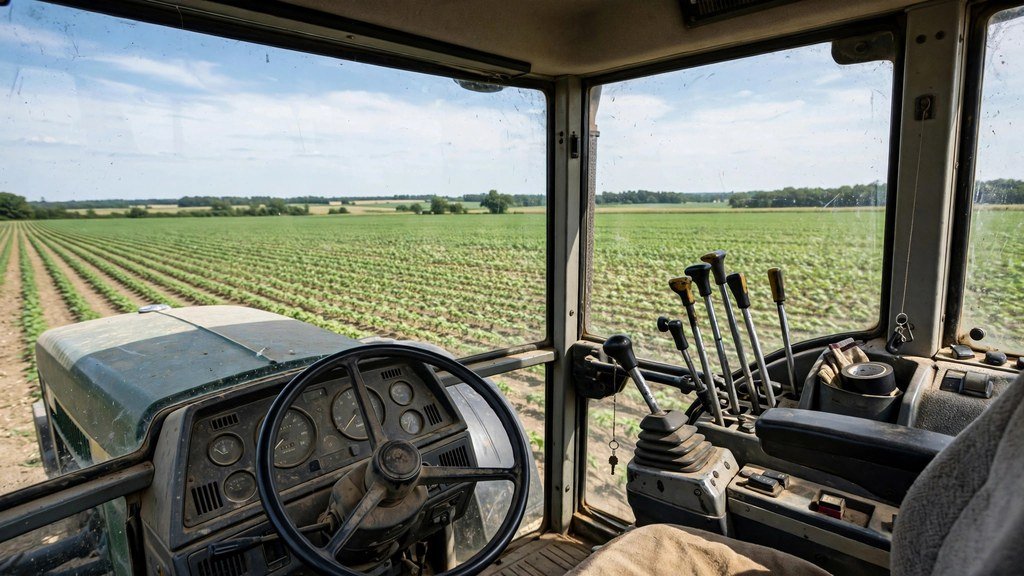
The Sound-Gard cab is one of the 4055’s genuine strengths and a big part of its lasting appeal. At a rated 76 dB(A) in the cab, it was among the quietest cabs of its era, and the difference over a ten-hour day is real: less fatigue and easier conversation. Visibility is good in all directions for row-crop work, and the controls — gear lever, hydraulic levers, and PTO engagement — fall to hand without reaching. Air conditioning was standard equipment on cab tractors of this class, and a working system is worth checking on any used example, since a failed compressor is one of the more common comfort complaints.
Comfort limits are honest ones for a tractor of this age. There is no suspended cab and no air-ride seat as standard, so rough ground comes through the seat on long days, and the turning circle is wide by modern standards, especially on 2WD machines. For John Deere 4055 performance across a full season, the cab is a strength that keeps operators fresh, while the ride is the reminder that this is a 1980s machine. What cab and air-conditioning repairs cost when they eventually come due is worked through in the cab repair costs.
John Deere 4055 Real-World Ownership Experience
Three decades of farm use have settled the 4055’s reputation: it is a durable, straightforward tractor whose weaknesses are known, affordable, and mostly avoidable with maintenance. That is why John Deere 4055 performance remains a practical question rather than a nostalgic one.
Strengths, Limitations and Practical Farm Applications
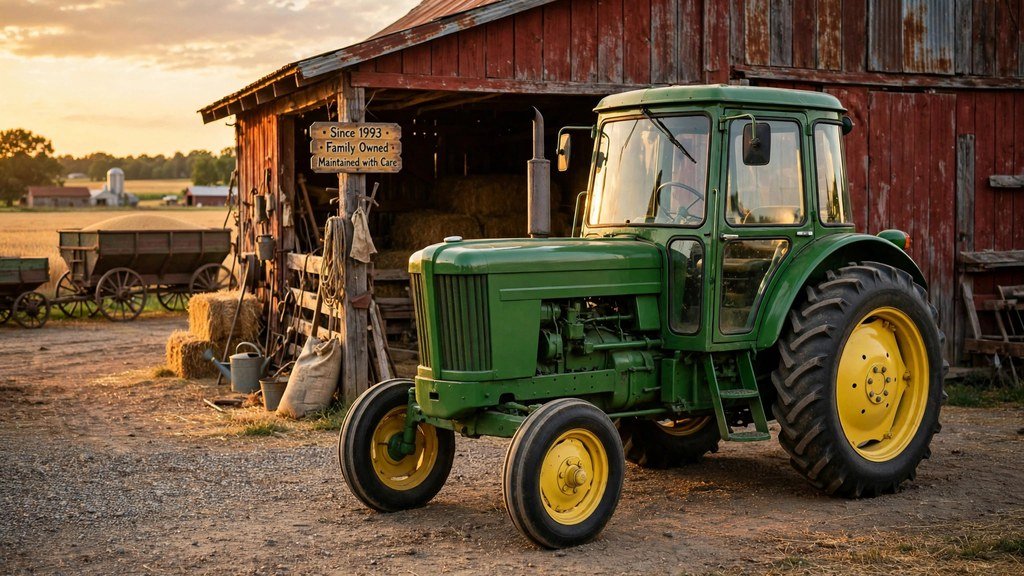
The strengths of John Deere 4055 performance start with the engine. The 6466T is a long-stroke, turbocharged, direct-injection six with a reputation for longevity when oil changes are kept up, and its torque curve — peak torque at just 1,210 rpm — means it does not need to be revved hard to work. Parts availability is excellent: the 55 Series shared engines, transmissions, and hydraulics across the 4055, 4255, and 4455, and Deere dealers still stock the common wear parts. For John Deere 4055 performance, the tractor’s size is a sweet spot for a mid-size farm: big enough for real tillage, small enough to maneuver in yards and on roads.
The limitations are equally clear. John Deere 4055 performance tops out around 100 drawbar horsepower, so it will not run a 12-row planter, a 20-foot disc, or a large square baler at full capacity; buyers who need that class should look at the 4455 or 4755 instead. Hydraulic flow of 26.5 gallons per minute is adequate but not generous for modern high-demand implements, and the electrical system — while simple — is now old enough that wiring, connectors, and the IntelliTrak monitoring display can need attention. Finally, this is a 30-plus-year-old machine: even a good one will need seals, hoses, and cab work.
How Hours, Maintenance and Configuration Affect Performance
Hours alone tell only part of the story for John Deere 4055 performance. A 6,000-hour tractor with documented oil changes and fresh clutch packs will outperform a 3,000-hour tractor that sat outside with stale fuel and neglected hydraulics. Configuration matters too for John Deere 4055 performance: an MFWD PowerShift tractor with dual rear wheels will put more of its 100 drawbar horsepower to the ground than a bare 2WD machine on worn tires, and tire size and ballast change the result more than most buyers expect.
The most useful single check on a used 4055 is also the simplest: run it under load. A healthy 6466T starts promptly, pulls cleanly to rated speed without smoke beyond a light haze at full load, and holds temperature. That test, plus a look at service records, tells more about John Deere 4055 performance on that particular tractor than any specification sheet, which is why a working demonstration matters more than a brochure claim for John Deere 4055 performance. Individual examples can also surprise on the upside: the 1991 4055 featured in the video above reportedly dyno-tested at 145 horsepower at the PTO after years of work — a reminder that factory ratings are conservative, not a promise that every 4055 makes that power.
John Deere 4055 Performance: Frequently Asked Questions
These are the questions buyers and owners actually ask about John Deere 4055 performance, answered directly from the Nebraska test results, specifications, and field experience covered above.
How much horsepower does the John Deere 4055 have?
John Deere 4055 performance is rated at 128 horsepower maximum engine power at 2,200 rpm, with 106 horsepower claimed at the PTO and 108.7 horsepower actually measured at the PTO in Nebraska Tractor Test 1626.
What is the drawbar horsepower of the John Deere 4055?
John Deere 4055 performance on the drawbar tested at 100.07 horsepower in Nebraska Test 1626, with a maximum drawbar pull of 13,378 pounds when ballasted.
How much fuel does a John Deere 4055 use per hour?
At full load, John Deere 4055 performance burns about 6.8 gallons per hour at maximum PTO power and 6.6 gallons per hour at maximum drawbar power, per the Nebraska test. Lighter work uses less: roughly 4.5 to 5.5 gallons per hour is a reasonable planning estimate.
How big is the John Deere 4055 fuel tank?
John Deere 4055 performance runs on a 65-gallon fuel tank, giving roughly nine to ten hours of work at full drawbar load and well over a full day at lighter loads.
What engine does the John Deere 4055 have?
John Deere 4055 performance comes from the John Deere 6466T engine: a turbocharged, direct-injection, 6-cylinder diesel displacing 466 cubic inches (7.6 liters), with a bore of 4.56 inches and a stroke of 4.75 inches, rated at 2,200 rpm.
What transmissions were available on the John Deere 4055?
John Deere 4055 performance was offered with a 15-speed PowerShift transmission (15 forward, 4 reverse) or a 16-speed Quad-Range transmission (16 forward, 6 reverse). PowerShift shifts under load and suits loader work; Quad-Range is simpler and cheaper to maintain.
Is the John Deere 4055 2WD or 4WD?
John Deere 4055 performance was offered in both two-wheel-drive and MFWD (mechanical front-wheel drive) versions. The 2WD machine weighs about 12,130 pounds; the MFWD version weighs roughly 15,190 pounds and pulls harder in soft or hilly conditions.
How fast does a John Deere 4055 go?
John Deere 4055 performance covers a speed range of about 1.5 to 19.6 mph (2.4 to 31.5 km/h) across its gears, which covers slow tillage work up to road transport speed.
What is the hydraulic flow on a John Deere 4055?
John Deere 4055 performance includes a closed-center hydraulic system with a 26.5-gallon-per-minute main pump and 20.6 gallons per minute at the selective control valves, at 2,530 psi, with a Category II three-point hitch.
How quiet is the John Deere 4055 cab?
John Deere 4055 performance in the cab is rated at 76 dB(A), thanks to the Sound-Gard cab, which was among the quietest cabs of its era.
What size implements can a John Deere 4055 handle?
John Deere 4055 performance suits 5- to 7-bottom plows, 12- to 15-foot discs, 6-row planters, large round balers, and mower-conditioners. It is not the right tractor for 12-row planters or very large discs — those jobs belong to the 4455 and larger 55 Series models.
Is a John Deere 4055 still a practical farm tractor?
Yes, for the right farm. John Deere 4055 performance — 100 drawbar horsepower, simple mechanical systems, excellent parts availability, and a comfortable cab — makes it a practical, affordable workhorse for mid-size tillage, planting, hay, and hauling work, provided the individual tractor has been maintained.