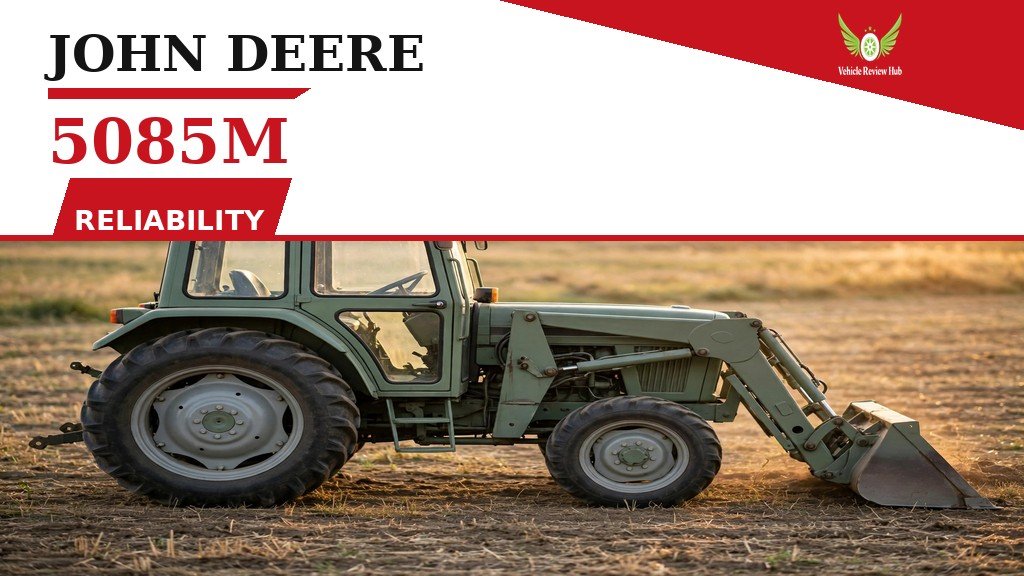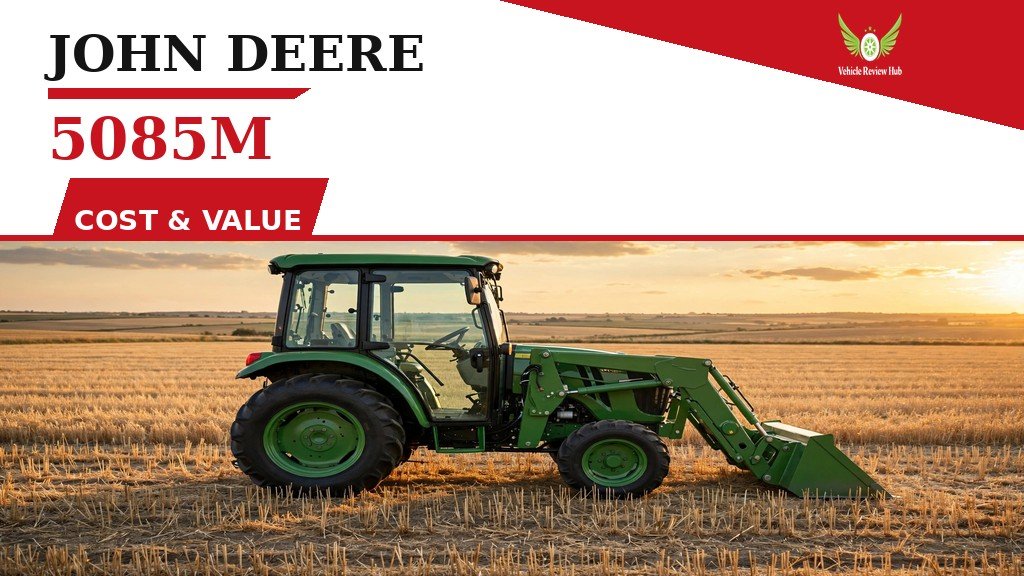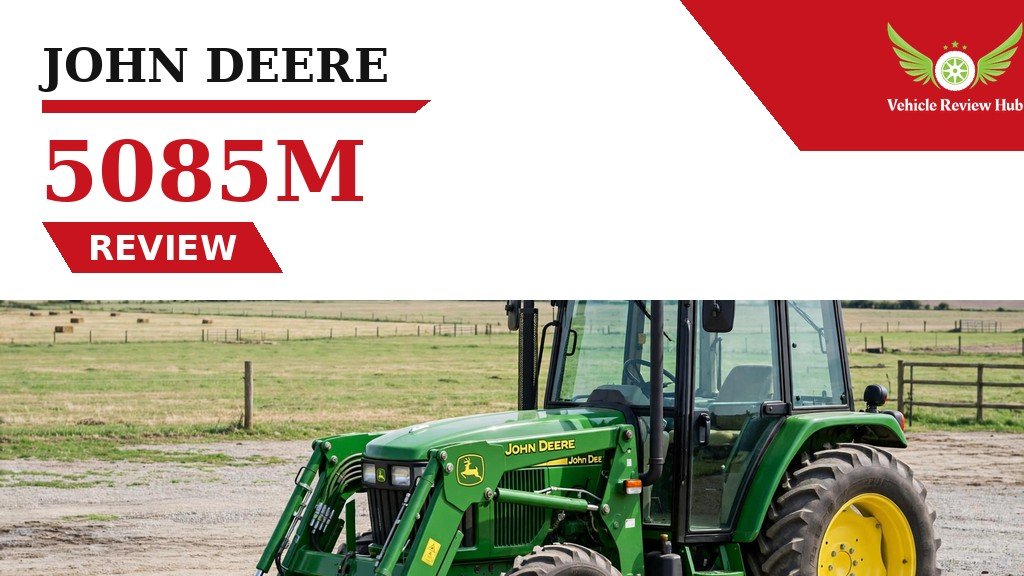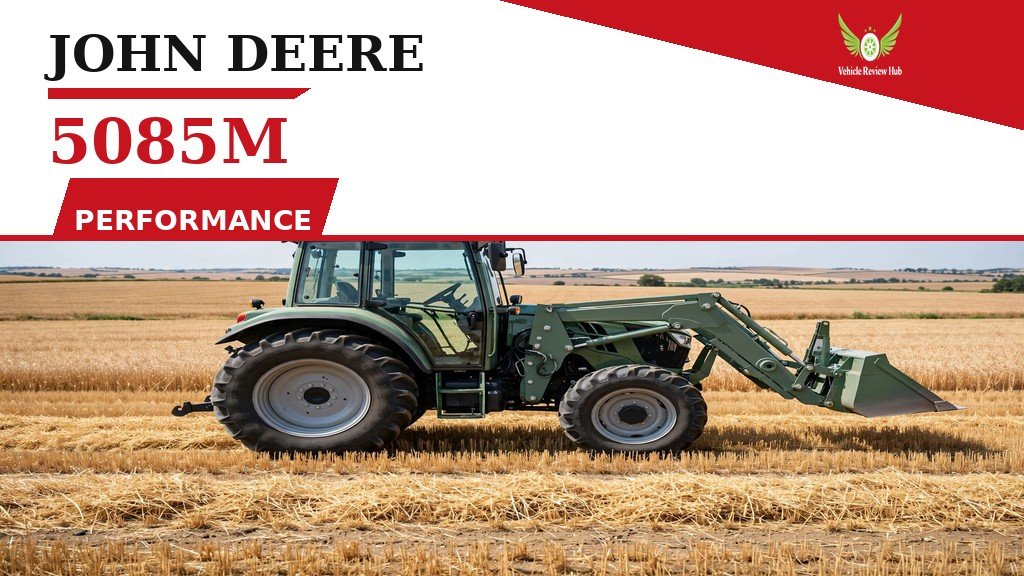
The short answer on John Deere 5085M performance is that this is a genuinely capable 85-horsepower utility tractor: Nebraska testing put 74.07 horsepower at the PTO, the 4.5-liter four-cylinder pulls hard from low revs, and the combination of a 540/540E PTO, strong hydraulics, and a choice of shuttle or powershift-style transmissions covers hay work, mowing, tillage, and loader work without drama. This John Deere 5085M performance guide works through the test numbers, real fuel use, field behavior, transmission choice, traction, and owner experience.
One framing note matters before any John Deere 5085M performance claim: the 5085M has lived through more than one generation. The Nebraska test figures in this guide come from the first generation, a 2009 machine with a Tier 3 engine, while current 5M models use a Final Tier 4 engine with DEF and updated transmissions. Where the generations differ, this guide says so plainly.
John Deere 5085M Fuel Consumption and Operating Efficiency
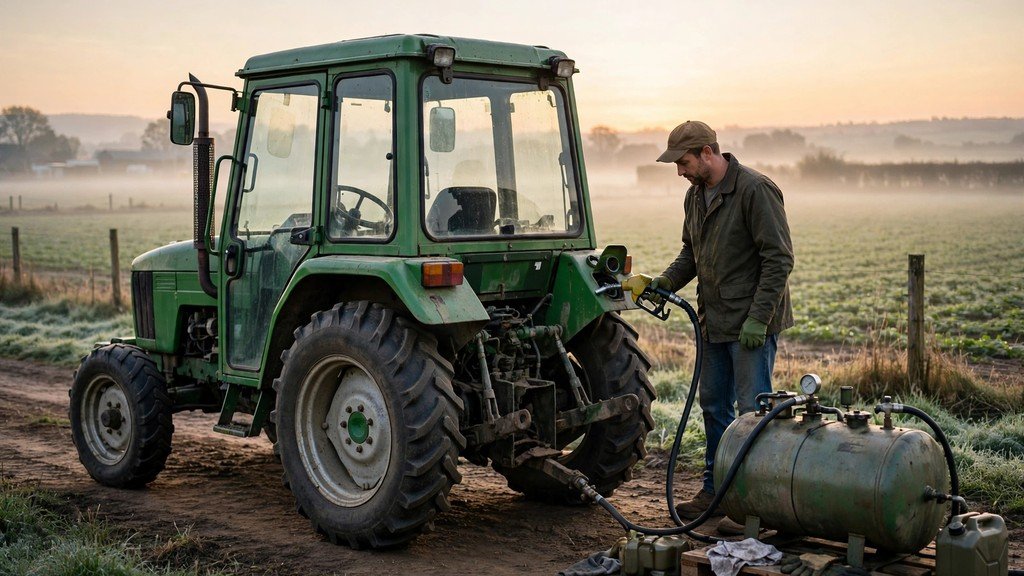
Fuel is where John Deere 5085M performance either earns its keep or quietly eats your margin. The tested machine burned 4.6 gallons per hour at maximum PTO power, and everyday work at part load burns considerably less. This John Deere 5085M performance section separates test figures from planning estimates so you can budget fuel with confidence.
Nebraska Tractor Test Fuel Use at Maximum PTO Power
The anchor for John Deere 5085M performance is Nebraska Tractor Test 1960, run October 15–20, 2009 on a 16-speed 4WD 5085M. At maximum PTO power the test recorded 74.07 horsepower at 4.6 gallons per hour; at rated engine speed it made 70.37 horsepower, and at rated PTO speed 73.29 — all above the 70-horsepower PTO rating Deere claimed. That is a useful John Deere 5085M performance result: the test tractor beat its own rating, which is not something every machine manages.
In plain terms, PTO output is honest mid-70s horsepower: enough for a 4×5 round baler, a 10-foot rotary cutter in moderate grass, a 6-row planter, or a mid-size square baler. The 4.6-gallon figure is a full-load number, though. Nobody runs a PTO implement at maximum power all day, so treating 4.6 gallons per hour as your everyday burn rate would overstate John Deere 5085M performance costs. The test is a ceiling, not an average, and the rest of this section works out what sits below it.
| Nebraska Test 1960 figure (2009, 16-speed 4WD) | Result | What it means for you |
|---|---|---|
| Maximum PTO power | 74.07 hp | Above the 70 hp claimed PTO rating |
| Fuel use at maximum PTO power | 4.6 gal/hr | Full-load ceiling, not an everyday average |
| Power at rated engine speed | 70.37 hp | Power at 2,200 rpm |
| Power at rated PTO speed | 73.29 hp | Power at the 540-rpm PTO setting |
| Engine rating behind the test | 85 hp @ 2,200 rpm | 4.5L PowerTech M 4045, Tier 3 generation |
How Implement Load, Engine Speed and Field Conditions Affect Fuel Use
Three things move John Deere 5085M performance fuel use more than anything else: how hard the implement pulls, what engine speed you run, and what the ground is like. A rotary cutter in light grass might ask for half the engine’s output, while the same cutter in heavy, wet growth can ask for nearly all of it. Soft ground adds rolling resistance, and a dull mower blade wastes fuel without doing more work. Good John Deere 5085M performance starts with the implement, not the throttle.
Engine speed is the lever most owners underuse: the 540E economy PTO mode, standard on current 5M models and fitted to many earlier ones, lets the engine run slower while the PTO shaft still turns at 540 rpm, cutting fuel use, noise, and wear on light PTO jobs. For planning purposes in this John Deere 5085M performance guide, figure roughly 2 to 2.5 gallons per hour for light loader and mowing work, roughly 3 to 3.5 gallons per hour for mixed field work, and up to the tested 4.6 gallons per hour only when the PTO is genuinely loaded hard. Those middle figures are planning estimates, not test results, and your own ground and implements will move them.
Tank range follows directly from John Deere 5085M performance fuel use. The first-generation machine carried about 30 gallons on open-station models and roughly 36 to 41 gallons on cab models, with the cab figure varying by year and source. At a mixed-work planning rate of 3 gallons per hour, a 30-gallon tank gives about 10 hours between fills and a cab tank stretches toward 12 hours or more. Tank sizes and weights across the generations are covered in detail in the review.
John Deere 5085M Field Performance and PTO Output
In the field, John Deere 5085M performance feels like a tractor with more torque than its horsepower badge suggests. Peak torque on the first-generation engine was 331 lb-ft at 1,600 rpm, and the current-generation engine makes 281 lb-ft at the same speed with a 30 percent torque rise and an Intelligent Power Management boost to 88.9 horsepower under PTO or hydraulic load. This section looks at the jobs owners actually buy this tractor for.
Hay Equipment, Mowing, Tillage and Material Handling
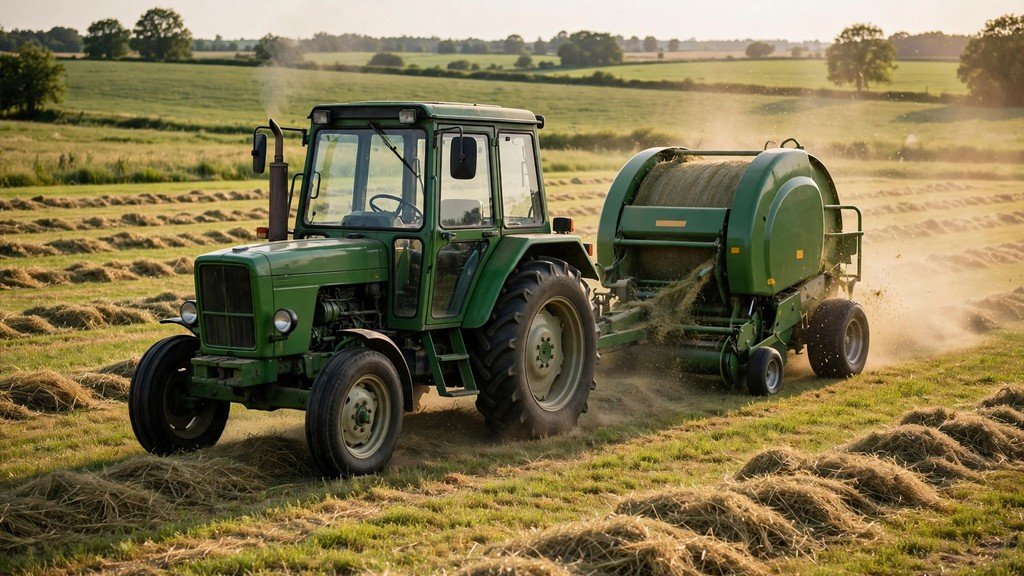
Hay work is the natural home of John Deere 5085M performance: the 70-horsepower rated PTO output (74.07 tested) runs a 4×5 round baler, a disc mower-conditioner, a tedder, and a rake without strain, and the 540E mode keeps fuel down on the lighter jobs. Mowing is equally comfortable: a 10-foot rotary cutter suits the tractor in grass and light brush, and the Category II hitch with up to 6,970 pounds of lift on PowrQuad and Powr8 models (5,150 pounds on the standard PowrReverser) handles heavy mounted mowers without the front end going light, provided the tractor is ballasted sensibly.
Tillage is where John Deere 5085M performance needs honest sizing. The tractor will pull a mid-size disc, a field cultivator, or a 3-bottom plow in most soils, but it is not a primary-tillage tractor for big acreage: draft work at this power level is about matching width to soil, not forcing a wide implement through heavy ground. Where the 5085M genuinely shines is material handling. A loader-equipped 5085M — the 553 loader on a 2012 dealer example lifted about 3,100 pounds to about 122 inches — moves bales, pallets, gravel, and feed with the shuttle transmission doing the direction changes, and that loader-plus-hay combination is why so many 5085Ms live on livestock farms. The video below shows the same class of utility work on a 5M sibling, a 5115M clearing debris with a root grapple:
Rated Engine Power vs. Tested PTO Performance
The gap between rated and tested figures is the most useful lesson in John Deere 5085M performance. Deere rated the engine at 85 horsepower and claimed 70 horsepower at the PTO; Nebraska measured 74.07 at the PTO. That means roughly 87 percent of engine power reached the PTO shaft on the test tractor, a healthy figure for a utility tractor with a mechanical transmission, and it means owners can plan implement sizes around the low-70s rather than discounting the rating. Real-world John Deere 5085M performance tracks the test closely because the driveline is simple: gears and a clutch, no CVT losses.
One caution: the current engine’s headline torque figure (281 lb-ft) looks lower than the first generation’s 331 lb-ft, but the two come from different calibrations and emission generations, and the current engine adds the IPM boost the older one lacked. Do not judge a newer 5085M by an older torque number, and do not judge an older one by a newer brochure. Drive the generation you are buying, with an implement attached, and let John Deere 5085M performance speak through the drawbar and the PTO shaft rather than the spec sheet.
John Deere 5085M Transmission, Traction and Operator Comfort
Transmission choice shapes John Deere 5085M performance more than any other option, because the same engine behaves very differently behind a shuttle gearbox than behind a partial powershift. The current 5M lineup offers the PowrReverser 16F/16R as standard, with Hi-Lo, PowrQuad PLUS, and Powr8 options, while earlier generations offered a 12F/4R SyncShuttle alongside the 16- and 32-speed PowrReverser boxes. This John Deere 5085M performance section matches each box to the work it suits.
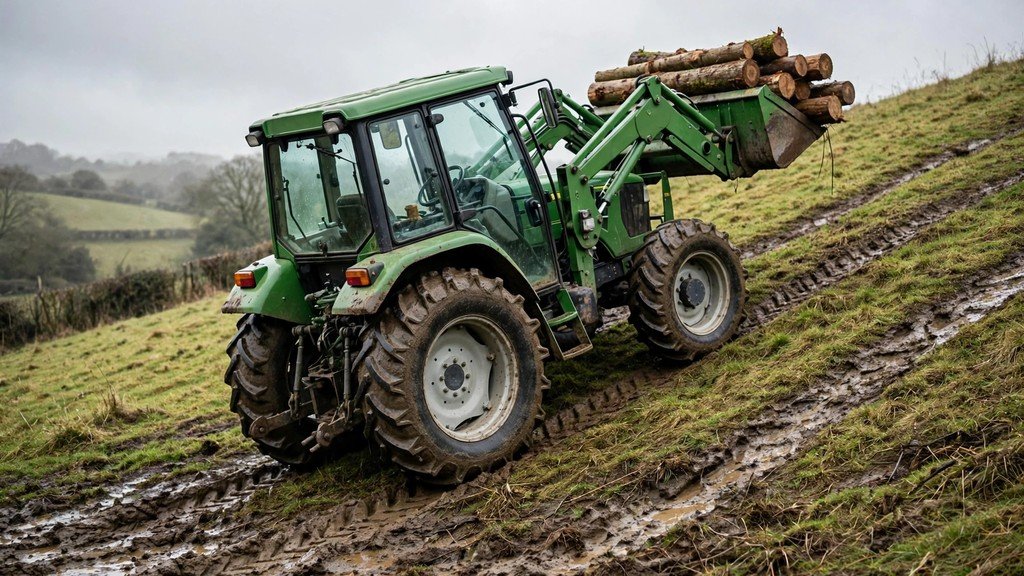
PowrReverser, PowrQuad PLUS and Powr8 in Daily Work
The PowrReverser is the loader operator’s gearbox, and it defines everyday John Deere 5085M performance for most owners. A fingertip lever changes direction without clutching, the wet clutches outlast dry clutches under multiple operators, and the Hi-Lo version adds a push-button 20 percent speed step in each gear. For loader work, yard work, and jobs with constant direction changes, the PowrReverser is hard to beat, and its simplicity is part of why John Deere 5085M performance stays predictable over thousands of hours.
PowrQuad PLUS and Powr8 change the character of John Deere 5085M performance toward field work. Both give clutchless push-button shifts within a range, so the operator can hold PTO speed while adjusting ground speed to crop conditions. Powr8 adds more speeds (32 forward, 16 reverse) for finer speed selection. The trade-off is cost and complexity: these boxes cost more to buy and more to repair, and they also unlock the higher hitch-lift ratings. A buyer who mostly loads and mows will never miss them; one who spends long days baling will feel the difference every hour. What each transmission needs to stay healthy is covered in the transmission maintenance notes.
| Transmission (current 5M generation) | Speeds | Best suited to |
|---|---|---|
| PowrReverser (standard) | 16F/16R | Loader work, yard work, frequent direction changes |
| PowrReverser Hi-Lo | 32F/16R | Loader work with finer speed control |
| PowrQuad PLUS | 16F/16R | Hay and tillage with clutchless range shifting |
| Powr8 | 32F/16R | Field work needing the finest speed selection |
| Earlier generations | 12F/4R, 16F/16R, 32F/16R | SyncShuttle plus PowrReverser variants |
2WD vs. MFWD on Slopes, Soft Soil and Heavy Implements
Traction is the other half of John Deere 5085M performance, and the 2WD-versus-MFWD decision is worth more thought than the price difference suggests. MFWD adds weight, cost, and front-tire wear, but it transforms the tractor on slopes, in soft ground, and with a loaded bucket, where a 2WD machine spins and a MFWD machine walks away. On flat, dry ground with PTO implements, 2WD is perfectly adequate and cheaper to own.
For John Deere 5085M performance on hills, the answer is MFWD without hesitation: a loaded loader on a slope, a baler on a hillside, or a wet headland all punish 2WD traction, and the differential lock — electrohydraulic and shift-on-the-move on the 5085M — only partly compensates. MFWD also improves braking on slopes, since the front axle helps slow the machine. Ballast matters on either configuration: rear wheel weights or a ballast box keep the front end planted with heavy rear implements, and the adjustable tread width (53.1 to 80.9 inches on flange axles, up to 90 inches with the bar axle) lets the tractor straddle windrows or widen its stance for hillside stability. Good John Deere 5085M performance is as much about setup as about horsepower.
John Deere 5085M Real-World Owner Experience
Owner experience is where John Deere 5085M performance stops being numbers and starts being working days, and the consensus from owners and dealer listings is consistent: this is a straightforward, hard-working tractor that rewards basic care and punishes neglect in the usual places. A 2012 MFWD example with 872 hours, a 553 loader, and a 16-speed power shuttle reads like a typical low-hour used 5085M — still tight, still capable. This section of the John Deere 5085M performance guide covers what long days on a 5085M actually feel like.
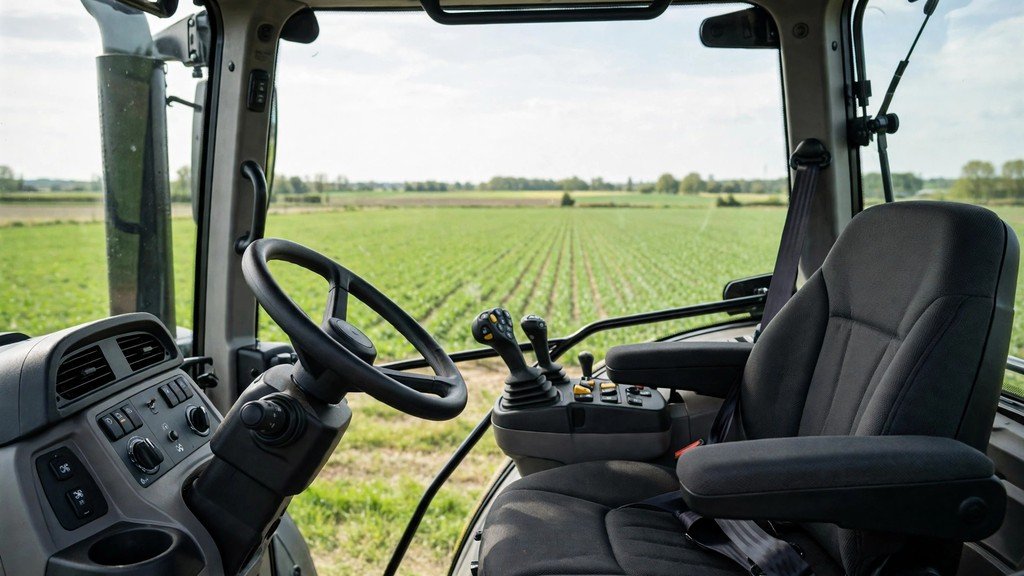
Cab Comfort, Visibility and Long Working Days
Cab comfort directly affects John Deere 5085M performance on long days, because a tired operator makes slower, sloppier passes. The 5M cab gives a low, sloping hood with good forward visibility, a wide roof window, and on premium cabs a panorama roof that Deere says improves upward visibility by about 80 percent — a real advantage when stacking bales. Standard cabs offer mechanical suspension seats (pneumatic available), flat floors, and well-placed controls. AutoTrac guidance, available on current models, cuts overlap on mowing and spraying passes and reduces fatigue.
Noise and ride are the honest compromises in John Deere 5085M performance. Owners note that in-cab noise at full throttle is higher than on premium competitors, and the ride without suspension options is firm on rough ground. Both matter on 10-hour days. The 5085M is a working utility tractor, not a luxury machine, and John Deere 5085M performance should be judged against other utility tractors, not against tractors costing twice as much.
Matching Tractor Power, Hydraulic Flow and Implements
The most common owner mistake with John Deere 5085M performance is oversizing the implement. A 12-foot batwing mower, a 5×6 baler, or a wide disc will all hook up to the hitch, but they will lug the engine, burn fuel, and wear the clutch faster than a right-sized implement worked at proper speed. The right match starts from the tested numbers: about 74 PTO horsepower available, roughly 24 to 26 gallons per minute of hydraulic flow on current models (18.4 gallons per minute implement flow on the first generation, 24.7 total), and a hitch that lifts 5,150 to 7,860 pounds depending on transmission and options. Size the implement to those numbers, not to the 85-horsepower badge, and John Deere 5085M performance stays in its sweet spot.
Hydraulic capacity deserves its own check in any John Deere 5085M performance plan. Current models offer up to six rear SCVs with selectable detents on deluxe valves, which covers grapples, hydraulic-fold implements, and motors without compromise, while first-generation machines offered up to three rear remotes. If your work needs continuous hydraulic flow — a post driver, a hydraulic motor, a grapple that cycles all day — confirm the SCV count and flow on the specific tractor you are buying, because that is a configuration detail, not a model-line guarantee. These options are weighed against used prices in the used-price comparison, so you can decide whether a higher-spec tractor is worth its premium.
John Deere 5085M Performance: Frequently Asked Questions
These are the questions buyers and owners actually ask about John Deere 5085M performance, answered directly from the test figures, specifications, and field experience in this guide.
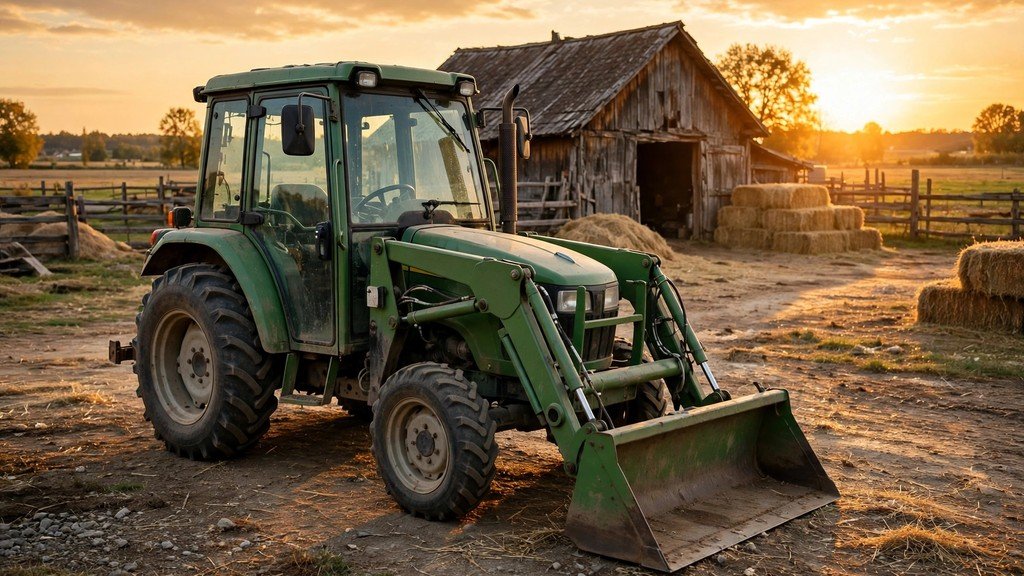
How much horsepower does a John Deere 5085M have?
John Deere 5085M performance starts with an 85-horsepower engine rating at 2,200 rpm, with a 70-horsepower rated PTO output. Nebraska testing measured 74.07 horsepower at the PTO, above the claimed rating.
What did the Nebraska test show for the 5085M?
John Deere 5085M performance in Nebraska Tractor Test 1960 (October 2009, 16-speed 4WD) was 74.07 horsepower maximum PTO power at 4.6 gallons per hour, 70.37 horsepower at rated engine speed, and 73.29 horsepower at rated PTO speed.
How much fuel does a 5085M use per hour?
Fuel use is 4.6 gallons per hour at maximum PTO load in testing. Planning estimates are roughly 2 to 2.5 gallons per hour for light work and roughly 3 to 3.5 gallons per hour for mixed field work.
What engine does the John Deere 5085M have?
A 4.5-liter four-cylinder PowerTech turbo diesel. The first generation used the PowerTech M 4045 (Tier 3, 331 lb-ft at 1,600 rpm); current models use the 4045 EWL with DOC/SCR aftertreatment and DEF.
What is the torque of a John Deere 5085M?
John Deere 5085M performance torque is 331 lb-ft at 1,600 rpm on the first-generation engine and 281 lb-ft at 1,600 rpm on the current engine, which adds a 30 percent torque rise and an IPM boost to 88.9 horsepower under load.
Which transmission is best on a 5085M?
The PowrReverser suits loader work and frequent direction changes, while PowrQuad PLUS and Powr8 suit field work with clutchless gear changes. The standard box is the 16F/16R PowrReverser; Hi-Lo adds 32 forward speeds.
Is the 5085M good for hay work?
Yes. John Deere 5085M performance fits hay work well: the tested 74-horsepower PTO output runs a 4×5 round baler, disc mower-conditioner, tedder, and rake, and the 540E mode saves fuel on lighter hay jobs.
Can a 5085M run a loader?
Yes. John Deere 5085M performance with a loader is a core strength: loader-ready frames, up to six SCVs on current models, and a shuttle transmission for direction changes. A 2012 dealer example with a 553 loader lifted about 3,100 pounds to about 122 inches.
Should I buy a 2WD or MFWD 5085M?
John Deere 5085M performance on slopes, soft ground, and loader work strongly favors MFWD. Buy 2WD only if your ground is flat and dry and your work is mostly PTO implements, where the simpler tractor costs less to own.
What is the hydraulic flow of a 5085M?
John Deere 5085M performance hydraulics deliver about 24.8 gallons per minute on current PowrReverser models and about 25.6 on PowrQuad and Powr8 models. First-generation machines listed 18.4 gallons per minute implement flow and 24.7 total.
How much can a 5085M lift on the hitch?
John Deere 5085M performance hitch lift is 5,150 pounds standard on PowrReverser models, 6,970 pounds standard on PowrQuad and Powr8 models, and up to 7,860 pounds with the optional high-capacity hitch on those models.
Does the 5085M use DEF?
John Deere 5085M performance on current Final Tier 4 models uses DOC/SCR aftertreatment, so DEF is part of operating costs. First-generation Tier 3 machines did not use DEF — check the generation before assuming either way.
Is the 5085M good for tillage?
John Deere 5085M performance suits mid-size tillage: a mid-size disc, field cultivator, or 3-bottom plow in most soils. It is not a primary-tillage tractor for big acreage; size the implement to the tested 74-horsepower PTO output.