If you are shopping for a middleweight adventure bike on a budget, this Honda Transalp XL750 buying guide has one clear message: buy used, buy the right year, and check two things before you pay. The Transalp returned to the United States for 2024 at $9,999, gained a facelift for 2025 at the same price, and became an E-Clutch-only model for 2026 at $10,199 plus $600 destination. That short history means nearly every used example is still young, yet prices already spread from under $8,000 to above the cost of a new leftover. This Honda Transalp XL750 buying guide covers real asking prices, the insurance question, a full inspection checklist, and the year-by-year differences that decide bargain or mistake.
Honda Transalp XL750 Price and Market Availability
Used Transalp prices are still settling because the bike has only been on sale in the United States since 2024. Supply is thin, so this Honda Transalp XL750 buying guide prices everything from a dated snapshot of real listings, not from national averages that do not exist yet for this model.

What Does a Used Honda Transalp XL750 Cost in the USA by Year?
In a snapshot of dealer listings observed on November 2, 2026 for this Honda Transalp XL750 buying guide, used 2024 examples clustered between $7,999 and $9,999. The cheapest used bikes were 2024s at $7,999: one with 4,154 miles from Larry’s Motor Sports in Missouri, and one with 7,783 miles from Timbrook Honda in Virginia. Fees change the maths: the Stubbs 10,000-mile bike at $8,999 became $9,794 after fees, while the National Powersports 6,232-mile bike at $8,299 carried no fees and included a skid plate. As a rule from this Honda Transalp XL750 buying guide, budget $8,000 to $9,500 for a good used 2024 and always compare the out-the-door figure.
| Used listing (snapshot November 2, 2026) | Mileage | Asking price | Seller and notes |
|---|---|---|---|
| 2024 Honda Transalp XL750 | 4,154 miles | $7,999 | Larry’s Motor Sports, Jefferson City, MO |
| 2024 Honda Transalp XL750 | 7,783 miles | $7,999 | Timbrook Honda of Winchester, VA |
| 2024 Honda Transalp XL750 | 6,232 miles | $8,299 | National Powersports, Pembroke, NH; skid plate fitted, no fees |
| 2025 Honda Transalp XL750 | 2,733 miles | $8,495 | Hollister Powersports, Hollister, CA |
| 2024 Honda Transalp XL750 | 10,000 miles | $8,999 | Stubbs Cycles, Houston, TX; plus $200 doc and $595 recon fees |
| 2024 Honda Transalp XL750 | 941 miles | $9,999 | Fun Country Powersports, The Dalles, OR |
| 2024 Honda Transalp XL750 (outlier) | 2,402 miles | $11,999 | Timbrook Honda of Winchester, VA; above new-model pricing, not a market rate |
Leftover New 2024 Bikes From Around $7,399 Against Used Asking Prices
Here this Honda Transalp XL750 buying guide corrects its own outline. No Transalp listing I could verify carried a $7,399 price: that figure is the 2024 NX500 and CBR500R MSRP, apparently mixed into the outline by mistake. What does exist is genuinely cheap leftover new 2024 stock, led by $7,829 at Pony Powersports in Jackson, Ohio, excluding $299 documentation and $600 destination ($8,728 before tax and title). Other new 2024 leftovers included $8,899 and $9,999 examples. Compare out-the-door against out-the-door: a used 2024 at $7,999 with no fees can beat a $7,829 new leftover that becomes $8,728 after fees, while a $9,999 used bike with 941 miles loses to a new leftover at the same money, which is why this Honda Transalp XL750 buying guide says to price new leftovers first.
Honda Transalp XL750 Insurance and Ownership Costs
Insurance is the one running cost where this Honda Transalp XL750 buying guide refuses to give you a single number, because no reliable one exists yet. The rest of the ownership maths is unusually clear, thanks to long service intervals and a frugal engine.

Why No Model-Specific US Insurance Average Exists Yet
No insurer or major quote aggregator publishes a Transalp-specific average premium for the United States, and any article that quotes one is guessing. The reasons are structural: the bike only reached US dealers for 2024, the American sample of insured Transalps is still small, and most published motorcycle insurance averages blend hundreds of models or lean on older, bigger-selling bikes. Premiums also swing with age, record, garaging state, mileage, and whether the policy is liability-only or full coverage, which a financed bike normally requires. The honest method, recommended in this Honda Transalp XL750 buying guide, is to collect three quotes against the exact VIN, with accessories declared, because a skid plate, crash bars, panniers and heated grips all change the insured value. Do not import another model’s range: Africa Twin insurance bands describe a bigger, costlier motorcycle.
How to Estimate Fuel, Maintenance, Parts and Other Ownership Expenses
Fuel is the easy part in this Honda Transalp XL750 buying guide: Honda USA publishes no MPG figure, but the 4.4-gallon tank and RevZilla-tested 55 mpg on road and 51 mpg off-road put range at roughly 200 to 240 miles. Servicing follows Honda’s long-interval pattern: first service at 600 miles, oil every 8,000 miles or annually, filters and valve clearances every 16,000 miles, spark plugs inspected at 16,000 and replaced at 32,000 miles, brake fluid every two years, and chain care every 600 miles. Do not use UK or Indian service costs as US figures: MCN’s £140 a year is British labour. A sensible annual budget for 6,000 to 8,000 miles is one oil service, tires every year or two, chain care, and a brake-fluid change every second year, with the 16,000-mile valve service as the one larger bill.
How to Inspect a Used Honda Transalp XL750
A used Transalp is a young bike, so inspection is less about wear and more about evidence: servicing, recall status, and crash damage. Work through this Honda Transalp XL750 buying guide checklist in daylight, on a cold engine.

Checking the Engine, Cold Start, Service Records and Maintenance History
Insist on a genuinely cold start in this Honda Transalp XL750 buying guide, because a warmed-up engine hides rattles, smoking and lumpy idle. The 755cc twin should settle into a smooth idle quickly, with no blue smoke and no lingering cam-chain rattle. Ask for the service book: the 600-mile first service stamp, oil changes every 8,000 miles, and past 16,000 miles, proof of the valve inspection. Then run the VIN through Honda’s recall lookup and the NHTSA database, because the Transalp is covered by recall 25V358, Honda campaign KS2, for a crankcase sealing bolt that may leak oil onto the rear tire. The recall covers certain 2024 manual-transmission Transalps, about 1,016 motorcycles across all affected Honda models, with free bolt replacement, and only a VIN check confirms whether a specific bike is affected.
Inspecting the Sump, Frame, Spokes, Tires, Brakes and Chain
Start underneath: the sump is the Transalp’s best-known weak spot. The 2024 and 2025 bikes left the factory with the sump exposed, and only the 2026 gained a standard aluminum skid plate, so look for dents, cracks and oil weeping around the sump and sealing bolt, the first check in this Honda Transalp XL750 buying guide. The wheels are tubed and spoked, 21 inches at the front and 18 at the rear, so check spoke tension by hand, look for bent or missing spokes, and confirm the tires match Honda’s sizes, 90/90-21 front and 150/70-18 rear. Check tire age as well as tread depth; a puncture on a tubed tire is a wheel-out job. Brakes are dual 310mm front discs and a single 256mm rear disc with ABS, so measure pad thickness and confirm rear ABS-off works. Finally, check the #520 chain, sprockets, fork seals and rear shock.
Honda Transalp XL750 Model Years and Features to Compare
Three model years, three distinct bikes, and differences bigger than the spec sheet suggests. This part of the Honda Transalp XL750 buying guide separates the original, the facelift and the E-Clutch model.
Comparing 2024 Original With 2025 Facelift and 2026 E-Clutch Versions
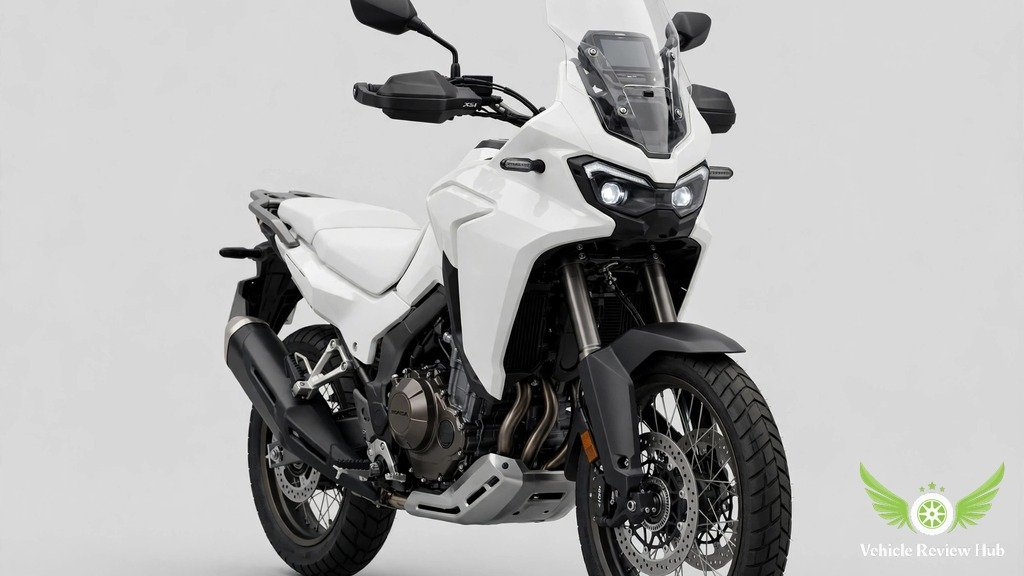
The 2024 original is the purest and cheapest Transalp: Matte Black only, 459 lb, and the first-generation headlight and cowl. Its 5-inch TFT drew criticism for readability in dust and sunlight, and its suspension was soft and preload-only. The 2025 facelift held the price at $9,999 while adding a dual-projector LED headlight, Durabio windscreen, revised TFT with RoadSync, and revised damping. The 2026 model, the newest bike in this Honda Transalp XL750 buying guide, is E-Clutch only, letting you start, stop and shift without the lever while still allowing normal clutch use. It also gains fully adjustable suspension, a standard skid plate, and 468 lb, at $10,199 plus $600 destination, arriving July 2026. Note the year trap: Europe received a 2023 Transalp, but the United States did not, so any “2023” bike offered in America is an import or mislabel. For full specifications, Honda’s official 2026 Transalp E-Clutch page lists the 755cc Unicam twin, 43mm Showa fork and 4.4-gallon tank used throughout this Honda Transalp XL750 buying guide.
Which Features Matter Most: Skid Plate, Suspension Adjustment and Dash?
Of the three headline features, suspension matters most, the skid plate second, and the dash least. Suspension is the Transalp’s known weakness: the 2024 and 2025 bikes offer preload adjustment only, and reviewers describe damping that blows through its travel, especially two-up. The 2026 model’s fully adjustable suspension is therefore the fix for the bike’s biggest complaint, and the strongest reason to stretch to a 2026. The skid plate is second because the pre-2026 sump is exposed: one rock strike can end a trip. The dash matters least: the 2025 TFT improved visibility and added RoadSync. Beyond those three, remember the Transalp has no IMU, no cornering ABS and no cruise control in any year. The standard up-and-down quickshifter, five ride modes and selectable torque control should be present and working on any used example, a check this Honda Transalp XL750 buying guide recommends.
Honda Transalp XL750 vs Yamaha Tenere 700: Which One to Buy in the USA
This is the comparison almost every Transalp buyer also shops. This Honda Transalp XL750 buying guide prices both bikes as they stand in 2026 and separates fact from the “simpler and lighter” shorthand.

Transalp at $10,199 With E-Clutch vs Tenere 700 at $10,999, Simpler and Lighter Claim
On 2026 pricing the Transalp undercuts the Tenere 700 by $800 before destination: $10,199 plus $600 against $10,999 plus $675, a real gap of $875 that this Honda Transalp XL750 buying guide insists on because destination charges are real money. The “simpler and lighter” claim belongs to the Yamaha side, and it is broadly true with one modern caveat. The Tenere is the simpler machine in spirit: a 689cc CP2 twin, 9.3 inches of clearance against the Honda’s 8.3, a 34.6-inch seat against the Honda’s 33.7, and suspension with more travel and damping adjustment. The caveat: the Tenere has grown more electronic, with a TFT dash from 2024 and ride-by-wire and modes from 2025. The character split stands: the Transalp is the better street bike and tourer, while the Tenere is the better dirt bike. Dork in the Road, who owns both, picked the Honda overall, while Cycle News, judging dirt-first, put the Tenere on top. Both verdicts can be true, and this Honda Transalp XL750 buying guide agrees: pavement-heavy riders should buy the Transalp; dirt-heavy riders should buy the Tenere. For the Yamaha’s figures in this Honda Transalp XL750 buying guide, the Tenere 700 review covers specification and pricing history, and the RideApart Transalp versus Tenere comparison summarizes the owner-of-both verdict in this Honda Transalp XL750 buying guide.
When a V-Strom 800DE, Tuareg 660 or Tiger 900 Makes More Sense
Three other rivals change the answer for specific buyers in this Honda Transalp XL750 buying guide. The Suzuki V-Strom 800DE suits riders wanting more off-road suspension without jumping to 1,000cc-plus: the 2026 base lists at $11,799 plus $700 destination, with a claimed 84.3 hp, about $1,600 more than the Transalp E-Clutch before destination. The Aprilia Tuareg 660 suits dirt performance over dealer depth and low running costs, but carries a premium over the Tenere. The Triumph Tiger 900 suits mostly road touring with a premium triple in this Honda Transalp XL750 buying guide: the 2026 GT Pro and Rally Pro sit around $17,300 to $17,600, a full price class above the Transalp. None of these three beats the Transalp on value, and the verdict of this Honda Transalp XL750 buying guide is that the Honda wins as a dependable, comfortable middleweight at the lowest price in the class. Shoppers cross-checking the Honda family should also read the Africa Twin buying guide, which covers the bigger adventure bike’s used market in this Honda Transalp XL750 buying guide’s companion context.
Is Buying a Used Honda Transalp XL750 Worth It?
Yes, with two conditions: buy the right year for your riding, and never skip the recall and service-history checks. The Transalp is one of the strongest used buys in the middleweight adventure class right now, because it is young, mechanically simple, and priced below every rival. This closing section of the Honda Transalp XL750 buying guide weighs the case for and against, and the video below shows what a week-long test revealed.

Benefits and Risks of Buying a Used Transalp XL750 in the USA
The benefits start with reliability and value in this Honda Transalp XL750 buying guide. MCN’s owners give the Transalp 4.4 out of 5 for reliability in this Honda Transalp XL750 buying guide, though that score comes from only 14 owners and should be read as encouraging rather than conclusive. A used 2024 at $7,999 to $8,999 saves roughly $1,800 to $2,800 against a new 2026 E-Clutch out the door, the key saving in this Honda Transalp XL750 buying guide. The risks, as this Honda Transalp XL750 buying guide lists them, are specific and checkable: an open 25V358 recall, soft preload-only suspension on 2024 and 2025 bikes, an exposed sump on pre-2026 bikes, tubed tires, thin paint, a 2024 TFT that washes out, and no cruise control. None of these risks alone is a reason to walk away; two or three together are a reason to demand a lower price or keep looking. The best-value used Transalp is a 2025 facelift bike with a skid plate and full service record, while the best-value new alternative is a leftover 2024 at $7,829 to $8,899, which is the bottom line of this Honda Transalp XL750 buying guide.
The video below is a real-world look at the newest Transalp: BIKERBUDDYS tests the 2026 E-Clutch model and asks whether it could be better. It is a useful reality check for the verdict of this Honda Transalp XL750 buying guide: the E-Clutch removes clutch work in traffic without taking away the lever, which is why the 2026 costs more and why a used 2025 remains the value pick. For the most detailed written test, see Moto-1’s week-long Transalp test.
US-Market Alternatives Across the Middleweight Adventure Class
If the Transalp does not fit, the class still offers a clear ladder in this Honda Transalp XL750 buying guide. The Tenere 700 at $10,999 is the dirt-first alternative; the V-Strom 800DE at $11,799 adds suspension and presence; the Tuareg 660 is the dirt weapon for buyers comfortable with European costs; the Tiger 900, around $17,300 to $17,600, is the premium alternative. Below the Transalp in this Honda Transalp XL750 buying guide, Honda’s own NX500, which listed at $7,399 for 2024, is the budget road-biased option. For the Transalp’s own technical background in this Honda Transalp XL750 buying guide, the Transalp review covers specifications and riding, the Transalp performance figures explain the power-claim gap, and the Transalp reliability record details problems and servicing. The MCN Transalp review sources the 4.4-out-of-5 reliability score and suspension and paint notes, while the Cycle News comparison remains the most detailed back-to-back test. The NHTSA recall 25V358 acknowledgement confirms the 1,016-unit scope and free remedy, and the Transalp maintenance schedule reproduces the manual intervals used in this Honda Transalp XL750 buying guide.
Honda Transalp XL750 Buying Guide: Frequently Asked Questions
These are the questions used Transalp shoppers ask most, answered directly from the prices, specifications and recall records used in this Honda Transalp XL750 buying guide.
What is the best year of used Honda Transalp XL750 to buy?
The 2025 facelift is the sweet spot in this Honda Transalp XL750 buying guide: better dash, headlight and damping at used prices, while the 2024 is the bargain.
What should I pay for a used Honda Transalp XL750 in the USA?
In the November 2026 snapshot used in this Honda Transalp XL750 buying guide, good 2024 examples asked $7,999 to $9,999, and a low-mileage 2025 asked $8,495.
Is the $7,399 leftover new 2024 Transalp price real?
No. No Transalp listing could be verified at $7,399 in this Honda Transalp XL750 buying guide; that figure matches the 2024 NX500 and CBR500R MSRP, while the cheapest new leftover 2024 was $7,829 before fees.
How much does insurance cost for a Honda Transalp XL750?
There is no published model-specific US insurance average for the Transalp, so this Honda Transalp XL750 buying guide gives no number rather than inventing one. Get three quotes against the exact VIN.
Has the Honda Transalp XL750 been recalled in the USA?
Yes, as documented in this Honda Transalp XL750 buying guide. Recall 25V358, Honda campaign KS2, covers certain 2024 Transalps for a crankcase sealing bolt that may leak oil onto the rear tire. About 1,016 motorcycles across all affected models are involved, and only a VIN check confirms whether a specific bike is affected.
Is the 2026 E-Clutch worth paying extra for?
It is worth it in this Honda Transalp XL750 buying guide’s view if you ride in traffic or tour long distances, because E-Clutch removes clutch work.
Does the Transalp warranty transfer to a second owner?
Yes. Honda’s one-year limited warranty is transferable, but many 2024 bikes are already out of warranty by late 2026. Confirm the in-service date before paying a premium for remaining cover, as this Honda Transalp XL750 buying guide advises.