The Honda Fury is a factory-built chopper almost unchanged since 2010, and the reason is simple: it keeps working. Honda Fury reliability rests on a proven 1312cc liquid-cooled V-twin, a shaft final drive with no chain to adjust, and electronics so simple there is very little to fail. There are caveats — a fresh fuel-pump recall on 2023–2025 bikes, owner-reported watch items, and one surprising service interval — but the verdict is clear. Buy on service history, keep up with the schedule, and check the VIN against the three recalls in this guide. This guide covers Honda Fury reliability in full: owner evidence, common problems, the service schedule, tire and brake maintenance, ownership costs, and the habits that protect it.
Honda Fury Reliability Overview
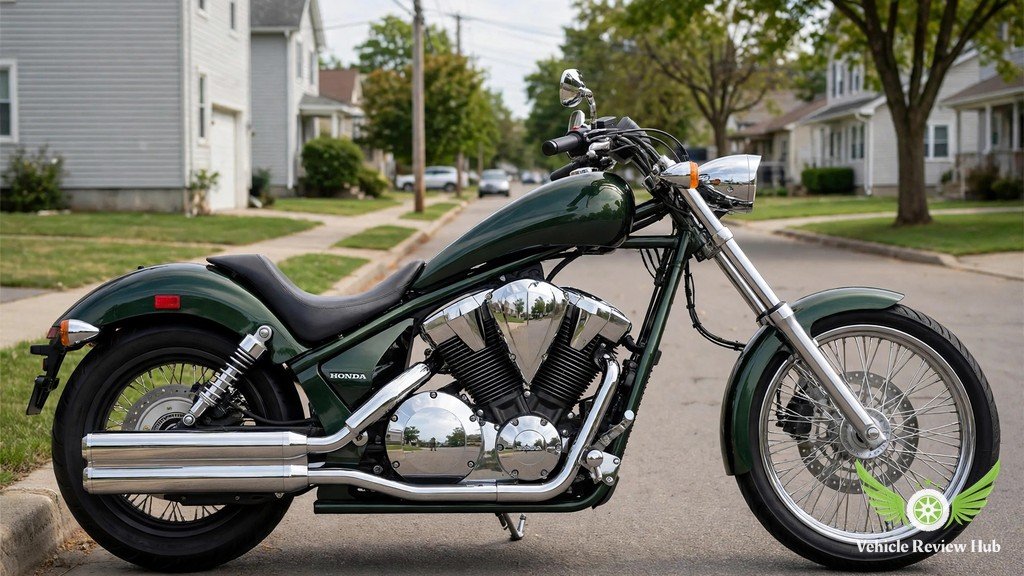
Honda Fury reliability is easy to understand: a mass-produced Honda cruiser wearing chopper styling, built around an engine family in service since the VTX1300 days and barely changed since the 2010 launch. Its strengths come from proven parts and simple systems; its weaknesses, from a few fuel-system quirks and age-related wear. That balance is Honda Fury reliability in a nutshell.
MCN Owners 4.7 Out of 5 From Only Six Reviews Explained
MCN’s owner-rating summary for the Fury sits at 4.7 out of 5, a strong score with one important qualifier: it comes from only six owner reviews. Six riders is a tiny sample, not a verdict on thousands of bikes. Cycle Insider carries 23 Fury ratings, including 5.0 and 4.5 scores from long-term owners. For Honda Fury reliability, the honest reading is positive with thin evidence: the individual bike’s service history matters more than any average for Honda Fury reliability.
How Mileage, Maintenance History and Previous Use Affect Reliability
Mileage alone tells you very little about a Fury. A 40,000-mile example with services on schedule can beat a 5,000-mile garage ornament that sat for years on old fuel with a dead battery and dried seals. For Honda Fury reliability, what matters most is maintenance history: the 8,000-mile oil and valve rhythm, fluids changed on time. Previous use matters: a gently ridden bike wears differently from one lowered or fitted with cheap parts and poor wiring. Sloppy electrics and untuned exhaust changes are where problems start. When you judge Honda Fury reliability on a used example, read the service file first.
Honda Fury Common Problems and Wear Items
The Fury has no long list of failures — just a short list of watch items, plus a new recall that changes the advice for 2023–2025 bikes. Together they explain why Honda Fury reliability depends more on checking a few specific things than on worrying about the engine. That short checklist is the practical side of Honda Fury reliability.

Known Watch Items, Launch Criticisms and Aging-Bike Checks
The best-known Fury watch item is the fuel filter. Owners report filters clogging with a white, crystalline deposit; forums debate crystallized ethanol residue versus debris from inside the fuel pump. Honda’s answer was a Type B conversion kit replacing the original round filter. Ask whether the updated filter is fitted, especially on an early bike. The second item is hard starting: slow cranking when hot and lazy cold starts. Owners debate battery versus starter; several report a replacement starter cured hot-start trouble even on the original battery. A Fury that cranks slowly when hot deserves a battery test and starter check before purchase. The third complaint is comfort: the stock seat is widely criticized, though one Cycle Insider owner found an aftermarket seat transformed it. For Honda Fury reliability on an aging bike, check fork seals, tire age as well as tread, rubber lines, battery age, and aftermarket wiring.
Fuel Pump Recall 26V633 for 2023-2025 Bikes, 820 US Units
The most important Honda Fury reliability item for recent bikes is recall 26V633. Honda is recalling certain 2023–2025 Fury VT1300CX motorcycles (820 US units) over a manufacturing defect in the fuel pump. Contamination during production of the pump commutator can cause the pump to fail and the engine to stall, raising crash risk. The campaign covers 4,206 units in total (the rest 2024–2025 Shadow VT750 models, Honda campaign KU9); the remedy is a free dealer fuel-pump replacement. Fury owners receive interim letters first because parts were not ready. Timeline: defect declared September 24, 2026; dealers notified September 25; owner letters from November 27, 2026; VINs searchable from October 8, 2026. Honda reported 48 warranty claims and no injuries or deaths. If you own or are considering a 2023–2025 Fury, Honda Fury reliability starts with running the VIN through NHTSA’s lookup or calling Honda customer service on 1-866-784-1870 before you ride or buy. The full Fury review covers pricing and model-year history.
Honda Fury Maintenance Schedule and Servicing
Honda Fury reliability starts with a straightforward service schedule, with one interval that catches owners out: oil and filter changes land every 8,000 miles, and so do valve-clearance inspections — far more often than the 16,000-mile intervals Honda specifies for many other motorcycles. That is not a misprint. For Honda Fury reliability, the valve check is the interval that matters most. The shaft drive, meanwhile, removes the chain maintenance that dominates other bikes’ service bills.

First Service at 600 Miles, Oil and Filter Every 8,000 Miles
The first service falls at 600 miles and covers the initial oil and filter change. After that, engine oil is replaced every 8,000 miles or once a year, using Pro Honda GN4 10W-30. For Honda Fury reliability, the oil filter is replaced at every oil service, starting with the 600-mile service. The filter part number is 15410-MFJ-D01, with the Hiflofiltro HF204RC a commonly used equivalent. Torque figures: drain bolt 30 Nm (22 lb-ft), filter 26 Nm (19 lb-ft). The Fury has two oil drain bolts, so draining only one leaves old oil behind. The video below walks through the Fury oil and filter change to factory specifications. Sticking to the 8,000-mile oil rhythm is the cheapest insurance for Honda Fury reliability.
Valve-Clearance Inspection Every 8,000 Miles and Spark Plug Intervals
Valve-clearance inspection every 8,000 miles is the Fury schedule’s defining feature. For Honda Fury reliability, inspection is not adjustment: clearances are measured, and shims changed only where a valve has drifted out of specification. Many Furys pass several inspections with no adjustment needed, tempting owners to skip the check. That risks a tight valve and eventual engine damage. Access requires seat and tank removal, so many owners pay a dealer for this job. Spark plugs: inspect at 4,000, 12,000 and 20,000 miles, replace at 8,000, 16,000 and 24,000; specified plug NGK DCPR6E, gap 0.8–0.9 mm. For Honda Fury reliability, budget a dealer valve service into any 24,000-mile bike with no valve history — before you buy, not after.
Honda Fury Tires, Brakes and Suspension Maintenance
The Fury’s chassis is simple — a 45mm fork, a single rear shock, two disc brakes — and Honda Fury reliability here means regular inspection plus a few replacement intervals. The two things that cost owners money are tires, because the rear tire is wide and wears under a heavy bike, and brake fluid, because it ages whether you ride or not.
Air Cleaner Every 12,000 Miles, Coolant and Final-Drive Oil at 24,000
The air cleaner is replaced every 12,000 miles and again at 24,000 (more often in dusty or wet conditions). The OEM element is part number 17213-MFR-670, and the K&N HA-1310 is a widely used reusable alternative. For Honda Fury reliability, radiator coolant is replaced at 24,000 miles and every two years using Honda Long-life Coolant; a slow coolant loss is worth investigating, not just topping up. For Honda Fury reliability, the final drive saves real work: no chain to clean, adjust, or replace, and shaft-drive oil simply replaced at 24,000 miles with Pro Honda Shaft Drive Oil. Inspect between services for weeping at the final-drive housing and debris in the airbox intake.
Brake Pads, Brake Fluid Around Two Years, Forks and Shock Checks
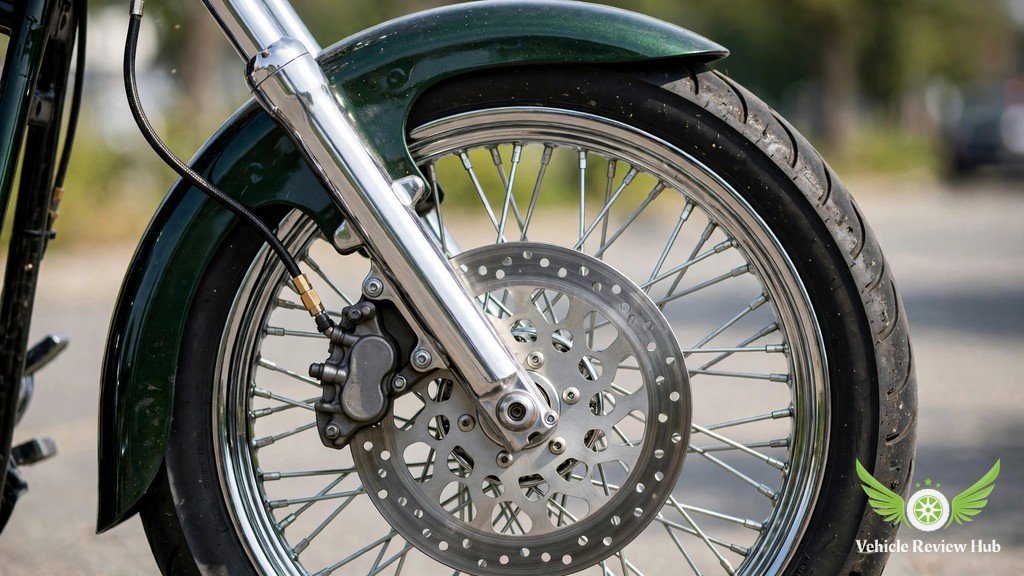
For Honda Fury reliability, brake pads are inspected at every service visit and replaced when worn, a wear judgment rather than a mileage figure. The Fury’s brakes are a single 336mm front disc with a twin-piston caliper and a single 296mm rear disc, with ABS standard on the current 2025 model. Early bikes were sold without ABS, so check the actual bike rather than assuming. Brake fluid is inspected at 4,000, 8,000, 16,000 and 20,000 miles, replaced at 12,000 and 24,000 miles and every two years (Honda DOT 4). The two-year rule matters most for low-mileage bikes: fluid absorbs moisture with age. Suspension checks are visual and tactile: fork seal weeping, rear shock leaks and preload, and notchiness in the steering head bearings. Fresh fluid, honest pads, and dry seals keep the chassis right.
| Service item | Interval | Notes |
|---|---|---|
| First service | 600 miles | Oil + filter, general check |
| Engine oil (GN4 10W-30) | Every 8,000 miles / 1 year | Two drain bolts; 30 Nm |
| Oil filter (15410-MFJ-D01) | Every oil change | 26 Nm (19 lb-ft) |
| Valve clearances | Inspect every 8,000 miles | Adjust if out of spec |
| Spark plugs (NGK DCPR6E) | Inspect 4k/12k/20k; replace 8k/16k/24k | Gap 0.8–0.9 mm |
| Air cleaner | Replace 12,000 / 24,000 miles | More often in dust/wet use |
| Coolant / final-drive oil | Replace at 24,000 miles | Coolant also every 2 years |
| Brake fluid (DOT 4) | Replace 12,000 / 24,000 miles and every 2 years | Pads inspected every visit |
Honda Fury Maintenance and Ownership Costs
The Fury is cheap to keep by cruiser standards, and that is part of Honda Fury reliability: affordable servicing actually gets done. The surprise costs are tires and the dealer valve inspection; the cost that does not exist is chain maintenance.

Fuel, Routine Servicing, Tires and Replacement Parts
Fuel is the Fury’s most visible running cost, shaped by the small tank. The period EPA estimate is 45 mpg, and owner reports cluster between 37 and 50 mpg, so planning on 45 mpg from the 3.4-gallon tank gives about 150 miles between fill-ups — stop well before the tank runs dry. For Honda Fury reliability, routine servicing is modest: oil and filter every 8,000 miles, plugs on the same rhythm, air cleaner every 12,000, coolant and final-drive oil at 24,000. None is expensive; all are standard Honda items any dealer stocks. Tires are the exception. The front is a 90/90-21 and the rear a wide 200/50-18, which costs more than ordinary cruiser rubber and wears faster under the Fury’s 675 lb curb weight. Parts are a Honda Fury reliability strength: a design barely changed since 2010 means most mechanical parts fit across many model years. The full Fury performance guide covers fuel economy in more depth.
Repair Expenses, Parts Availability and Long-Term Ownership Costs
The largest predictable expense is not a failure: the dealer valve-clearance inspection, whose labor reflects the seat and tank removal for access. It is far cheaper than the engine damage a neglected tight valve can cause. Genuine failures are uncommon and usually small: a battery, starter, fuel filter, or fork seals. Recall remedies are free at a dealer, another reason to run the VIN before buying. Long-term, the Fury’s unchanged design is a parts-availability advantage, and the aftermarket covers seats, exhausts, and luggage generously. Fury-specific bodywork and trim can be slower to source than shared mechanical parts. Warranty on a new Fury is a transferable one-year limited warranty, with HondaCare extended coverage available. Insurance has no Fury-specific US average to quote honestly, so get quotes by VIN. Over a decade, the cost story is steady small servicing, periodic tires, one labor-heavy valve rhythm, and very little else. That is why Honda Fury reliability holds up for owners who follow the book.
How to Keep a Honda Fury Reliable
Honda Fury reliability is about routine: scheduled work on time, proper storage, and checking what ages before it fails — all cheaper than the repair each prevents.

Preventive Maintenance, Storage Care and Regular Inspections
For Honda Fury reliability, the routine starts with the schedule — oil, valves, plugs, air cleaner, coolant, final-drive oil, brake fluid — recorded in a logbook or app for the next owner. For Honda Fury reliability between services, a monthly walk-around catches most trouble early: tire pressures (33 psi front, 41 rear cold), tread and tire age, pads, seals, coolant, final-drive weeping, and battery terminals. For winter storage, fill the tank with stabilizer, connect a battery tender, keep the bike clean, dry, and covered — and do not start it for a few minutes each month, which condenses moisture in the oil and exhaust. Before the first spring ride, check pressures, brakes, fluids, and lights. The Africa Twin reliability guide follows the same philosophy on a very different Honda: the bikes that last are the ones whose owners treat the schedule as a promise, not a suggestion.
Older Recalls 15V439 Starter Relay and 17V805 Replacement Tanks by VIN
Two older recalls complete the Honda Fury reliability picture, both checked by VIN, not by model year alone. Recall 15V439 covers the starter relay switch: incorrectly applied sealant can increase resistance at the main fuse, cause power loss, and risk a fire at the relay. The campaign covers 47,168 units across many Honda models, with certain 2014–2015 VT1300 models in scope; Honda’s revised December 2015 bulletin publishes Fury VT1300CX VIN ranges. The remedy is a lot-number inspection and free replacement; owner notification began August 31, 2015. No Fury-only unit count is published, so any claim of one should be treated with suspicion — check the VIN. Recall 17V805 is far smaller: 20 units, covering certain 2017 VT1300CX Furys and 2010 and 2016 Furys that received a replacement fuel tank. Those tanks may be missing welds around the mounting bracket, which can separate and leak fuel. The remedy is a free tank inspection and replacement; the recall began December 14, 2017, and only about three of the twenty bikes were expected to carry the defect. If your Fury falls in the affected years or has had a replacement tank fitted, a VIN check settles it in minutes (Honda: 1-888-234-2138). Together with 26V633, these three campaigns are the complete recall story for the Fury. The Fury buying guide walks through the same VIN check as part of its used-bike inspection.
Honda Fury Reliability FAQs
These are the questions Fury buyers and owners ask most about dependability, answered from the manual, the recall filings, and owner evidence. For Honda Fury reliability questions beyond this list, see the schedule and recall sections above.
Is the Honda Fury a reliable motorcycle?
Yes. Honda Fury reliability is built on a proven 1312cc V-twin, a shaft drive with no chain, and simple electronics with no ride modes or IMU to fail. For Honda Fury reliability, the caveats are specific: check the fuel-pump recall on 2023–2025 bikes and keep up with the 8,000-mile valve inspections.
What is the MCN owner rating for the Honda Fury?
MCN’s owner-rating summary for Honda Fury reliability is listed at 4.7 out of 5, but from only six owner reviews — an encouraging snapshot, not a strong statistical result. Broader sentiment agrees: Cycle Insider carries 23 Fury ratings with several 5.0 scores.
Does the Honda Fury have any recalls?
Yes, three campaigns affect Honda Fury reliability. The current one is 26V633, covering certain 2023–2025 Furys (820 US units) for a fuel-pump defect, with a free dealer pump replacement. The older two are 15V439 (starter relay switch) and 17V805 (missing welds on replacement tanks, 20 units).
How do I check a Honda Fury for open recalls by VIN?
For Honda Fury reliability, run the 17-digit VIN through NHTSA’s recall lookup tool, which covers all three Fury campaigns, or call Honda — 1-866-784-1870 for the fuel-pump recall, 1-888-234-2138 for the replacement-tank recall. Check before buying any used Fury.
How often does a Honda Fury need an oil change?
For Honda Fury reliability, change the oil every 8,000 miles or once a year, after the first service at 600 miles. Use Pro Honda GN4 10W-30, and replace the oil filter at every oil change. Filter part number 15410-MFJ-D01.
Do Honda Fury valves really need checking every 8,000 miles?
Yes, and this is the most commonly skipped item on the Fury schedule. The manual calls for valve-clearance inspection at every 8,000-mile service, not every 16,000 miles as on many Hondas. For Honda Fury reliability, inspection means measuring clearances and adjusting only valves out of specification — but skipping the check risks a tight valve and serious engine damage.
What are the most common Honda Fury problems?
The short list for Honda Fury reliability is fuel-filter clogging on early bikes (Honda supplied a Type B conversion filter), owner-reported hard starting traced to the starter, and widespread complaints about the stock seat’s comfort. None is a defect finding except where a recall applies.
Is Honda Fury reliability good for high-mileage bikes?
Yes, provided the bike has been serviced on schedule. Owners report Furies past 40,000 miles with only a battery replaced and never stranded, and a 2010 example past 32,000 miles cured by the updated fuel pump filter. For Honda Fury reliability, the 8,000-mile valve rhythm is the key discipline.
Does the Honda Fury have a chain or a shaft drive?
A shaft drive, and that is a meaningful advantage for Honda Fury reliability. There is no chain to clean, lubricate, adjust, or replace, and no sprockets to wear. The only final-drive service is shaft-drive oil at 24,000 miles with Pro Honda Shaft Drive Oil. Never apply chain intervals from other Hondas to the Fury.
Does the current Honda Fury have ABS?
Yes. For Honda Fury reliability, Honda’s 2025 specification lists ABS on both the single 336mm front disc and the single 296mm rear disc, so ABS is standard on the current bike. The history is mixed: ABS was an option on early Furys from 2010, and by 2020 the US bike was listed without ABS, so check the actual bike you are buying.