Short answer: Honda XR650L reliability is the bike’s whole reason for existing. This 644cc air-cooled single has been sold in the United States since 1993 with barely a change, and Honda XR650L reliability comes from that stubborn simplicity: no radiator, no fuel injection, no ride modes, and almost nothing electronic to fail. The honest version also includes one real weak point — the thin factory countershaft sprocket — and the shortest service intervals in its class. Keep the oil fresh, check the valves, fit a wide sprocket, and owners routinely ride this motorcycle for decades.
Honda XR650L Reliability Overview
Honda XR650L reliability starts with a deliberately under-stressed engine: the 644cc single makes modest power, turns slowly, and breathes through a carburetor, so very little heat, pressure, or electronics works against it.
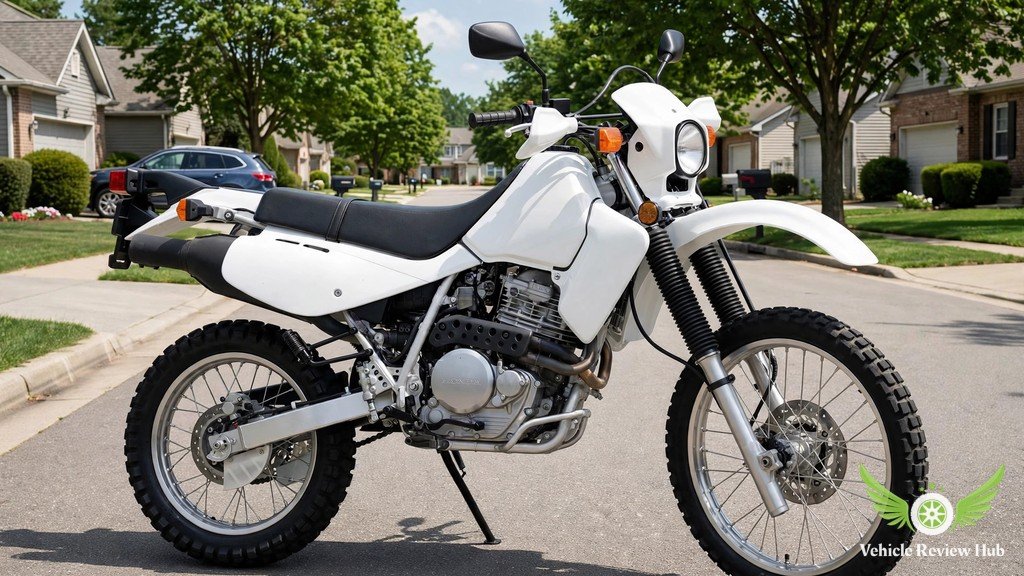
Zero NHTSA Safety Recalls Verified Across the Model’s US Run
The headline claim behind Honda XR650L reliability holds up: NHTSA database searches by make, model, and year return zero safety recall campaigns for the XR650L, including for 1993 through 2025. That record is central to Honda XR650L reliability. But one qualification matters. Honda did issue an emission recall covering all 2017 XR650L motorcycles — campaign KH9 — and buyers who hear “no recalls at all” and stop there will miss it. For Honda XR650L reliability, the practical advice is the same either way: run the VIN through the NHTSA recalls lookup before buying any used bike, and never treat a clean safety-recall result as proof that no emissions action exists.
How Mileage, Maintenance History and Previous Use Affect Reliability
Mileage alone tells you little about Honda XR650L reliability. A 40,000-mile XR650L with a full service history is a better motorcycle than a 5,000-mile example that sat outside for five winters with old fuel, a flat battery, and a dry, rusted chain. When judging Honda XR650L reliability on a used bike, ask for the service record first, and weigh three things: oil changed on time, valves ever checked, and countershaft splines inspected. That is Honda XR650L reliability in one sentence: maintenance done on time.
Honda XR650L Common Problems and Wear Items
Honda XR650L reliability has a short list of genuine weak points, all checkable before you buy: wear items, neglected maintenance, and one design compromise — not an engine that blows up.

Countershaft Sprocket Spline Wear and the Full-Width Sprocket Fix
The countershaft sprocket is the signature Honda XR650L reliability issue. The factory front sprocket is narrow — 8.5 mm wide in the splined area — so it grips only part of the countershaft’s splines. Once the splines are badly worn, the repair is not a new sprocket: the cases have to be split to replace the countershaft, which turns a small job into an engine-out repair. RevZilla’s XR650L sprocket project documents the problem clearly, and the fix owners have used for years: a wider sprocket that uses the full splined area. A flipped XR650R sprocket measures 13.6 mm, and dedicated wide sprockets such as the Fritzco Supermax are made specifically for the XR650L. The rule for Honda XR650L reliability is simple: pull the sprocket cover and look at the splines before you buy, fit a wide sprocket early, and grease the splines when it is off. That single habit underpins Honda XR650L reliability more than any other. The video below is a general ProX dirt-bike sprocket guide, not an XR650L-specific tutorial.
Two related facts belong in any honest account of Honda XR650L reliability. First, the XR650L has no cush drive, so drivetrain shock loads pass straight through the chain to the sprockets — ProCycle’s XR650L transmission guide explains the connection. Second, the wide-ratio gearbox (large first-to-second gap, short fifth gear) is a character trait to budget for, not a reliability defect.
Why Second-Gear Failure Stories Are Forum Lore, Not Documentation
Second-gear failure is the Honda XR650L reliability story that sounds the scariest and holds up the worst. Forum second-gear anxiety usually traces to the XR600 family and usually lacks a failed part or shop invoice behind it. The documented record is different: third-gear trouble is reported on the older XR600, and no Honda bulletin or recall ties a pattern of second-gear breakage to the XR650L. That does not mean no XR650L has ever lost a gear — any motorcycle can break — but a pattern is a different claim from an anecdote, and Honda XR650L reliability should not be judged on anecdotes dressed as patterns. If a seller warns you about second gear, ask what actually failed; if a forum post cannot answer that, treat it as lore, not Honda XR650L reliability evidence. On a test ride, check clean shifts, no jumping out of gear, and no debris on the drain plug magnet.
Honda XR650L Maintenance Schedule and Servicing
Honda XR650L reliability is a maintenance story more than a parts story. The intervals are short, but the jobs are simple, the parts are cheap, and everything suits a home mechanic with basic tools.
First Service at 600 Miles, Oil Every 2,000 Miles or Six Months
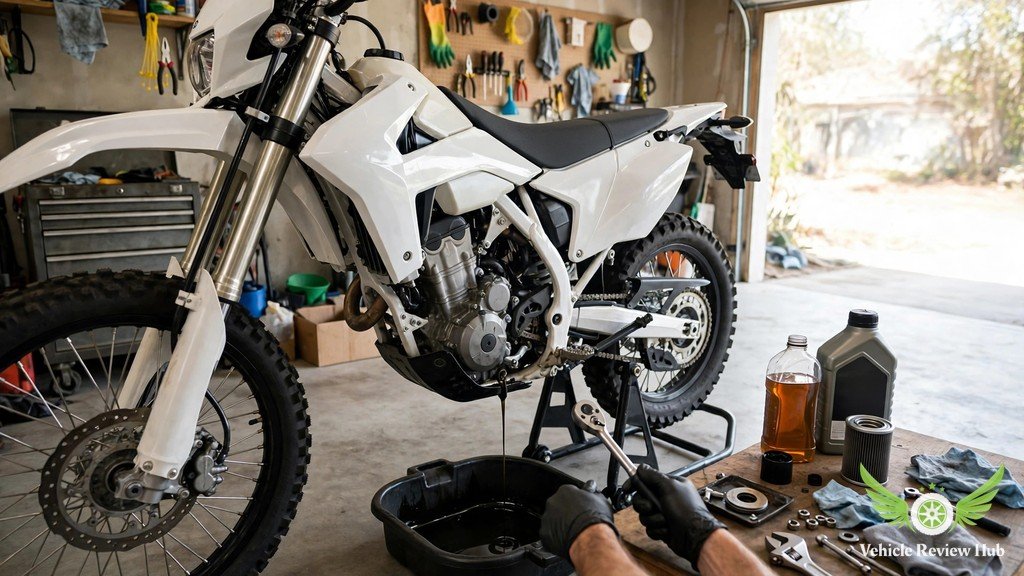
The XR650L’s first service lands at 600 miles or one month, whichever comes first, and from there the oil-change interval is every 2,000 miles or six months. That is short: the single holds only about 2.0 quarts with a filter change, so the oil works hard and has little reserve. Honda specifies Pro Honda GN4 10W-30, with SAE 10W-40 JASO MA or MA2 also covered in manual guidance. A full XR650L maintenance schedule is worth keeping next to the bike, because air filter, brake fluid, and spark plug intervals are easy to forget. Honda XR650L reliability rewards owners who treat the 2,000-mile oil change as a religion, and the cost is tiny compared with the engine it protects.
Valve-Clearance Inspection Every 4,000 Miles and Foam Air Filter Care
The standard service every 4,000 miles includes a valve-clearance inspection, and this is the job that separates maintained XR650Ls from neglected ones. The XR650L uses screw-and-locknut adjusters, so the job is straightforward, but skipping it is risky: a tight exhaust valve that never fully closes will burn. This article does not print valve-clearance numbers, because online figures are inconsistent across model years, and a wrong number printed with confidence is worse than no number at all. Use your model year’s manual figures, and treat the 4,000-mile check as the rule. Clean and re-oil the foam air filter often, and far more often than the 12,000-mile interval on dusty trails. For Honda XR650L reliability, the valve check and the air filter are the two jobs where “it still runs fine” is the most dangerous excuse, since both fail quietly before they fail loudly.
| Service item | Interval | Notes |
|---|---|---|
| First service | 600 miles or 1 month | Oil, filter, and full inspection |
| Engine oil and filter | Every 2,000 miles or 6 months | About 2.0 quarts with filter; NGK DPR8EA-9 plug |
| Valve-clearance inspection | Every 4,000 miles | Screw-and-locknut adjusters; use your year manual figures |
| Air filter | Every 12,000 miles normal use | Clean and re-oil far more often off-road |
| Brake fluid | Every 2 years | Front and rear systems |
| Summary | Short, cheap, frequent | The schedule is the reliability plan |
Honda XR650L Tires, Brakes and Suspension Maintenance
Honda XR650L reliability extends beyond the engine to the parts that touch the ground, and these checks keep a tall dual-sport safe as much as reliable. All are worth doing before a long ride.
Checking Oil the Honda Way: Warm It, Wait, Dipstick Not Screwed In
The oil check is the most commonly botched job on this bike: the dry-sump design drains oil back when the bike sits, so a cold check reads falsely low and tempts owners to overfill. Honda’s procedure is specific: idle the engine 3 to 5 minutes, switch it off, wait 2 to 3 minutes, hold the bike upright on a level surface, wipe the dipstick clean, insert it until it seats without screwing it in, and read between the marks. The 2022 XR650L owner’s manual shows the same steps with diagrams. Overfilling pushes excess oil into the airbox, and underfilling a 2.0-quart system leaves little margin, so the warm-wait-unscrewed routine is a genuine Honda XR650L reliability habit. The bike has two drain points, so an oil change that empties only one leaves dirty oil behind; guide torque figures are 29, 18, and 9 ft-lb, but confirm them in your manual.
Brake Pads, Chain Slack 35 to 45mm, Forks and Shock Checks
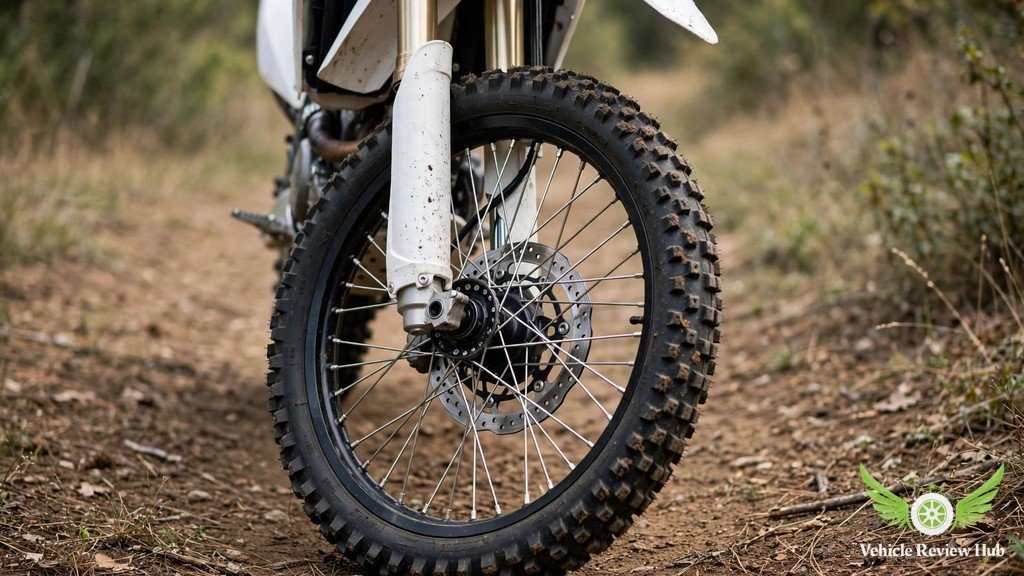
The XR650L’s braking and running gear is simple but not maintenance-free. Front brake: single 256 mm disc, twin-piston caliper; rear: single 220 mm disc, both easy to inspect and cheap to pad, and worn pads should never reach the backing plate. Chain care is the bigger daily job for Honda XR650L reliability: clean and lubricate the chain approximately every 500 miles or as conditions require, check slack against the manual’s figure of 35 to 45 mm, and replace chain and sprockets as a set rather than one at a time. One honesty note: the 35 to 45 mm slack figure comes from this guide’s documented outline and was not independently re-extracted from manual text, so confirm it against your model year’s manual before setting slack. Suspension checks are equally straightforward: check the 43 mm Showa fork (11.6 inches of travel) and Pro-Link Showa shock (11.0 inches) for leaking seals, dented stanchions, and loose linkage bearings. For Honda XR650L reliability, the suspension check is also a safety check, because a tall bike with 13.0 inches of ground clearance punishes neglected steering and wheel bearings faster than a low street bike would.
Honda XR650L Maintenance and Ownership Costs
Honda XR650L reliability is cheap to buy and cheap to keep. The costs below are estimates from typical parts and shop rates, not Honda-published figures, assuming DIY servicing.

Fuel, Routine Servicing, Tires and Replacement Parts
Fuel is the XR650L’s most frequent running cost, and it is modest: Honda’s 52 mpg figure is an EPA lab estimate rather than a road result, but even at 40 mpg fill-ups stay small and cheap. Routine servicing is where Honda XR650L reliability really pays: an oil and filter change costs little more than the oil itself, a valve check is a morning’s work, and wear parts are all common sizes sold by every parts house. Tires deserve their own budget line: the 3.00-21 front and 4.60-18 rear knobby sizes wear faster on pavement, and a daily commuter replaces rubber far more often than a weekend trail rider. The cost trap is the countershaft: a wide sprocket fitted early costs a fraction of the case-splitting repair worn splines demand. For what the bike costs to buy and run, read the Honda XR650L buying guide, and check the Honda XR650L review for the riding experience behind the numbers.
Repair Expenses, Parts Availability and Long-Term Ownership Costs
Parts availability is a genuine long-term strength of Honda XR650L reliability. Because the bike changed so little from 1993 to 2025, most parts fit a huge range of years and aftermarket support is deep, so a broken lever or tired shock is a weekend fix. The expensive repairs are the ones that follow neglect: a countershaft replacement requiring split cases, a top-end rebuild after dirty oil or a burned valve, and suspension work after ignored seals and bearings. All three are avoidable, and each costs more than years of routine service. That is the whole argument for Honda XR650L reliability as a long-term proposition: the bike is not expensive to maintain, it is expensive to ignore. Insurance and registration are generally modest for a 644cc single, and a well-kept XR650L holds its price precisely because buyers know what the maintenance record means.
How to Keep a Honda XR650L Reliable
Honda XR650L reliability is not a mystery; it is a checklist. Owners who get decades out of these bikes do the same few things, on time, every time, and inspect before they ride.

Preventive Maintenance, Chain Care Every 500 Miles and Inspections
The preventive routine that protects Honda XR650L reliability fits on a single card. Change the oil every 2,000 miles or six months, check the valves every 4,000 miles, clean and lubricate the chain approximately every 500 miles, check the oil the Honda way, inspect the countershaft splines when the cover is off, and walk around the bike before riding. For storage, use fresh oil, a full tank with stabilizer, a battery tender, and tires off cold concrete: most stored-bike ‘reliability’ complaints are really a dead battery and gummed carburetor. The Honda XR650L performance article covers power, speed, and fuel economy in detail. The discipline behind Honda XR650L reliability is unglamorous, but it is why a well-kept example is one of the safest used-bike purchases in motorcycling.
The Only Recall Document: 2017 Misprinted Manual Emissions Recall
The single recall document attached to this model is worth telling in full. In December 2017, Honda issued an emission-recall bulletin covering all 2017 XR650L motorcycles, because the owner’s manual supplied with those bikes — part number 31MGW650 — was misprinted. The printing error omitted critical symbols from the Maintenance Schedule page, symbols showing required skill level and whether parts should be inspected or replaced. Honda’s concern was emissions: skipped maintenance could eventually produce excessive emissions. The remedy was not a new part, a dealer repair, or anything touching the motorcycle itself — it was a corrected owner’s manual, part 31MGW651, mailed to owners. The Honda service bulletin for the 2017 manual recall is public. For Honda XR650L reliability, the lesson is reassuring and oddly fitting: the only recall in the model’s long history was a misprinted book, not a broken bike, and the fix was better instructions — the same instructions that, followed on time, are what keep these motorcycles reliable for decades.
Honda XR650L Reliability FAQs
Questions buyers and owners ask about Honda XR650L reliability, answered from the manual, the recall record, and owner experience.
Is the Honda XR650L reliable?
Yes. For Honda XR650L reliability, the formula is simple: an air-cooled 644cc single, a carburetor, and no complex electronics. Maintenance matters most: oil every 2,000 miles and valve checks every 4,000 miles.
Has the Honda XR650L ever been recalled?
The Honda XR650L reliability record is clean: no safety recalls have been recorded for the XR650L in the NHTSA database across its US run, including for 1993 through 2025. There was one emission recall: in December 2017, Honda recalled all 2017 XR650L motorcycles because the owner’s manual was misprinted, and the remedy was a corrected manual, not a bike repair.
What is the countershaft sprocket problem on the XR650L?
The factory front sprocket is only 8.5 mm wide in the splined area, so it can rock and wear the splines over time. If the splines wear badly, the engine cases must be split to replace the countershaft. The Honda XR650L reliability fix is a full-width sprocket — a flipped XR650R sprocket at 13.6 mm or a Fritzco Supermax — fitted early and greased at installation.
Do XR650L second gears fail?
There is no documented pattern of second-gear failure on the XR650L, and Honda XR650L reliability should not be judged on forum lore. Stories are often confused with older XR600 models, and no Honda bulletin or recall supports a pattern. Check for clean shifts, no jumping out of gear, and no false neutrals.
How often should I change the oil on an XR650L?
For Honda XR650L reliability, the oil schedule is: first service at 600 miles or one month, then every 2,000 miles or six months. The bike holds only about 2.0 quarts with a filter change, so the short interval is worth respecting. Honda specifies Pro Honda GN4 10W-30, with SAE 10W-40 JASO MA or MA2 also covered in manual guidance.
How do I check the oil on an XR650L correctly?
Idle the engine 3 to 5 minutes, switch it off, wait 2 to 3 minutes, hold the bike upright on a level surface, wipe the dipstick clean, insert it until it seats without screwing it in, and read between the marks. A cold check reads falsely low because dry-sump oil drains back when the bike sits.
How often do XR650L valves need checking?
Every 4,000 miles — a core Honda XR650L reliability habit. The XR650L uses screw-and-locknut adjusters, so the job is simple for a home mechanic, but skipping it risks a tight exhaust valve that burns. Always use your model year’s manual figures.
What chain slack does the XR650L need?
The documented figure is 35 to 45 mm, but confirm it against your model year’s manual before setting slack, since it was not independently re-extracted from manual text during research. Clean and lubricate the chain approximately every 500 miles, and replace chain and sprockets as a set — a small Honda XR650L reliability habit with a big payoff.
Does the XR650L have a cush drive?
No. The XR650L has no cush drive, so drivetrain shock loads pass straight through the chain to the sprockets. That is why countershaft spline wear matters more here, and why a wide sprocket is worth fitting early.
How long do XR650L engines last?
With on-time oil changes and valve checks, XR650L engines routinely last decades and tens of thousands of miles. The engines that die early are almost always the ones whose maintenance was skipped — a Honda XR650L reliability lesson, not a design defect.
What should I check before buying a used XR650L?
For Honda XR650L reliability, check the service history first, then the countershaft splines, valves, oil condition, chain, brakes, tires, and suspension bearings. Run the VIN through the NHTSA recalls lookup, and remember that a clean safety-recall result does not rule out the 2017 manual emission recall.
Is the XR650L expensive to maintain?
No — and that is part of Honda XR650L reliability: routine servicing is cheap, with common, inexpensive wear parts, and most jobs suit a home mechanic. The expensive repairs follow neglect, especially countershaft replacement after spline wear.