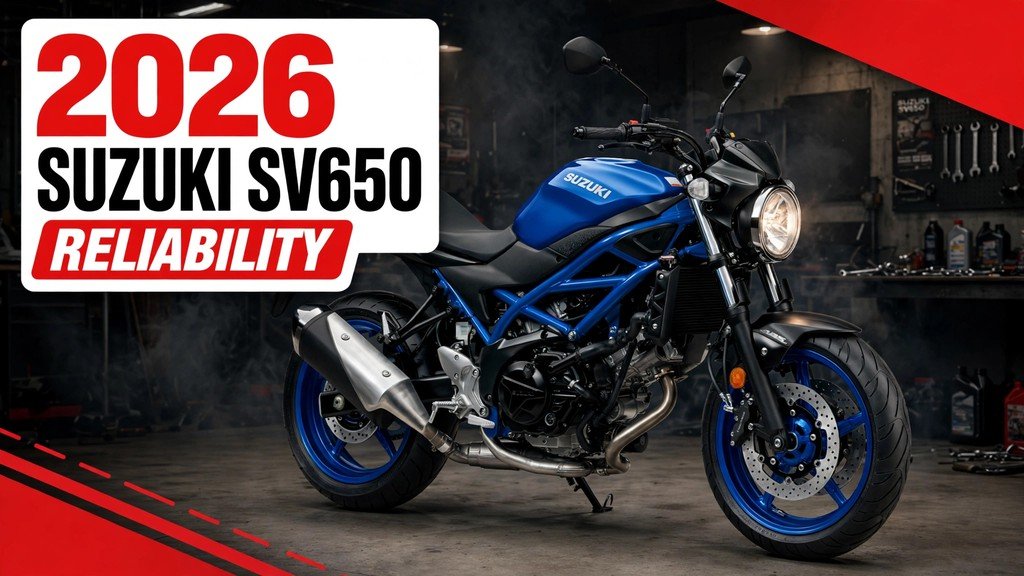
The Suzuki SV650 is one of the most reliable middleweight motorcycles you can buy: only two recalls name the SV650, neither touches a Gen 3 bike, owners rate the old bikes 4.2 out of 5 for reliability, and high-mileage examples run past 100,000 miles on original engines. The one fault every buyer should know is the SV325 plug-well problem — water pooling in the front spark-plug well — a cheap fix, not a reason to walk away. This Suzuki SV650 reliability guide covers the owner ratings, the common problems, the full Gen 3 service schedule, and the real ownership costs.
Suzuki SV650 Reliability Overview
Reliability is the SV650’s quiet strength, and this Suzuki SV650 reliability guide starts with the numbers owners report. The 645cc V-twin has been in production since 1999, the Gen 3 bike has no recall and no systemic engine pattern, and the data shows a bike that rewards basic care and punishes neglect.
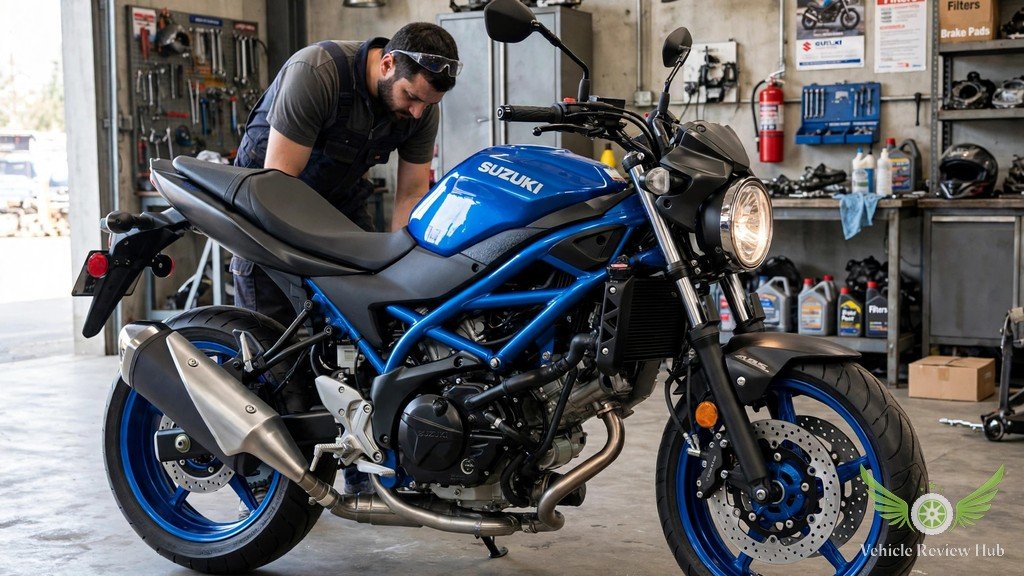
UK Owners: 4.2 Reliability for the Old Bikes
MCN’s owner review of the 1999–2015 SV650, based on 100 owners, gives reliability and build quality 4.2 out of 5 — and the overall owner score of 4.5 out of 5 is a different number, not a reliability score. The only Gen 3-adjacent MCN reliability figure is the SV650X’s 4.8 out of 5 from just six owners, a small sample, and no MCN Gen 3 (2016-on) figure exists at all, so this Suzuki SV650 reliability guide prints none. The UK MOT record backs the owner view: 80.8% of 60,060 SV650 tests passed first time, and brakes caused 26.2% of failure defects. The table below is the short version of the ratings record.
| Source | Figure | Sample |
|---|---|---|
| MCN owners, 1999–2015 SV650 — reliability | 4.2 / 5 | 100 owners |
| MCN owners, 1999–2015 SV650 — overall score | 4.5 / 5 (not a reliability score) | 100 owners |
| MCN owners, SV650X — reliability | 4.8 / 5 | 6 owners only |
| MCN owners, Gen 3 (2016-on) SV650 — reliability | No figure exists | — |
| UK MOT, all SV650 2005–2025 — first-time pass | 80.8% | 60,060 tests |
| MCN expert verdict, 2016–2025 SV650 | “MCN Recommended” | Used £2,000–£6,750 |
The table above is the honest record: strong owner scores for the old bikes, a thin sample for the SV650X, and no invented Gen 3 figure — and MCN’s owner review is the source for the 4.2 reliability figure.
How Mileage, Storage and Previous Care Affect Reliability
Mileage matters less on an SV650 than storage and previous care, and this Suzuki SV650 reliability guide weighs the record over the odometer. Owner forums report high-mileage examples running 100,000 to 200,000-plus miles on original engines and clutches, with valves still in specification — one MCN SV650X owner called the engine “pretty much bullet-proof” as long as it is not run low on oil. What wears a bike out is sitting outside in winter, skipped services and ignored chains — a garaged bike with regular oil changes will outlast a low-mileage bike that sat damp for years. When buying used, this Suzuki SV650 reliability guide says to check the service history first, then the front plug well, then the chain and sprockets, then the brakes — in that order. The review covers the generations and what changed between them.
Suzuki SV650 Common Problems and Wear Items
The SV650 has no systemic engine problem — but it has two owner-documented patterns worth knowing: the SV325 plug-well fault and Gen 1 regulator failure, neither a reason to avoid the bike once you know what to look for — the two problems this Suzuki SV650 reliability guide covers first.
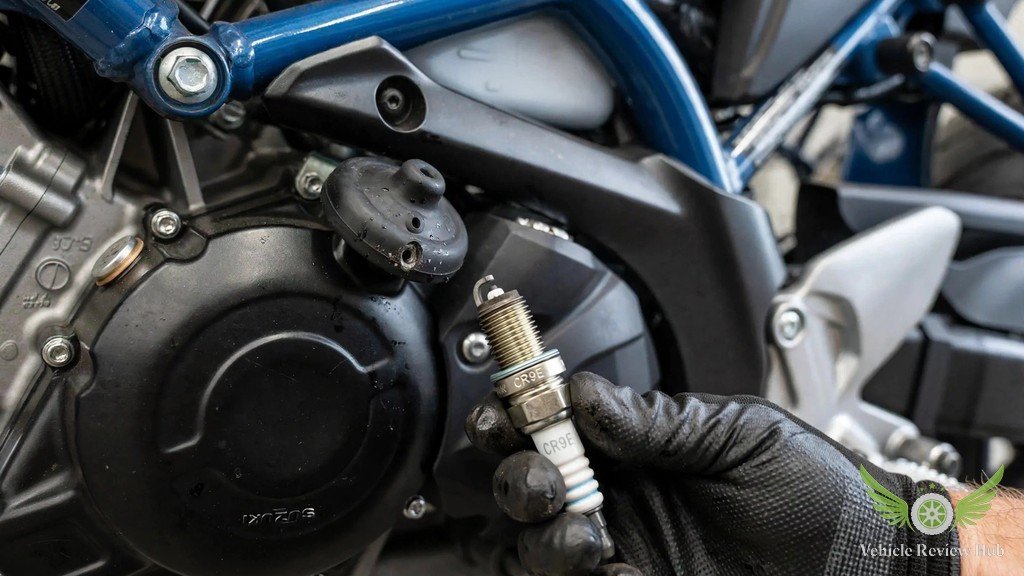
SV325: Water in the Front Plug Well
SV325 is a community nickname, not a Suzuki fault code — Suzuki’s own fault codes are C-codes, and no manual or magazine uses “SV325” as one. It means an SV650 running on one cylinder only. The front cylinder sits behind the front wheel, so road spray and washing water pool in the front spark-plug well when the drain hole blocks with dirt; the plug and cap corrode, and the front cylinder misfires below about 2,500 rpm. It affects all generations — the front plug’s exposure is a layout trait, not a year-specific defect — and MCN flags it for Gen 1 while RiDE flags it for Gen 3. The fix is cheap, and this Suzuki SV650 reliability guide lists it in full: new plugs, a new plug cap, grease on the seal, clearing the drain hole with a pipe cleaner or wire, and a front mudguard extender. No recall covers it; it is a maintenance item owners learn once and then prevent.
The video below, from PASSIONBUILT, shows how to clean and maintain the SV650’s drain holes so the SV325 problem never starts.
Gen 1 Regulator Failures Are Owner-Documented
Gen 1 regulator and stator failures are extensively owner-documented — owner-reported, not Suzuki-confirmed, and with no recall behind them. Owners report stators failing repeatedly — in one case a third stator in a month — and the community blames the stock shunt-type regulator, which makes the stator deliver full output constantly and dumps the excess as heat, charring the stator insulation until it shorts to ground. The documented community fix is a series or MOSFET regulator upgrade, such as a Shindengen SH775 or SH847, plus heavier-gauge wiring — the fix this Suzuki SV650 reliability guide recommends for a Gen 1 charging fault. If a used Gen 1 bike shows charging trouble, a multimeter check of the regulator and stator is the first test. The regulator recalls that sometimes get attached to the SV650 actually name the Gladius, as the final section of this Suzuki SV650 reliability guide explains.
Suzuki SV650 Maintenance Schedule and Servicing
The Gen 3 service schedule is simple and cheap, and this Suzuki SV650 reliability guide prints it as the US owner’s manual sets it out: services every 6,000 km — about 3,500 to 4,000 miles — or every six months, oil changed at every service, the filter not, and the valve check only at 14,500 miles.

Oil at Every Gen 3 Service Interval
Engine oil is replaced at every Gen 3 service, using SAE 10W-40 meeting JASO MA — the simplest rule in this Suzuki SV650 reliability guide. The oil filter is the one trap in the schedule: the filter is replaced ONLY at 11,000 miles (18 months), not at every service. The full schedule is in the table below, transcribed from the 2017 owner’s manual via MaintenanceSchedule.com. Secondary sources report EU and Oceania manuals use a longer 7,500-mile oil interval against the US interval of about 3,500 miles, but that is unverified against a manual, so this Suzuki SV650 reliability guide uses the US chart.
| Service item | 4,000 mi / 6 mo | 7,500 mi / 12 mo | 11,000 mi / 18 mo | 14,500 mi / 24 mo |
|---|---|---|---|---|
| Engine oil (SAE 10W-40, JASO MA) | Replace | Replace | Replace | Replace |
| Oil filter | — | — | Replace | — |
| Air filter | Inspect | Inspect | Replace | Inspect |
| Spark plugs (NGK MR8E-9) | Inspect | Replace | Inspect | Replace |
| Valve clearances (IN 0.10–0.20 mm; EX 0.20–0.30 mm) | — | — | — | Inspect only |
| Throttle valve synchronisation | — | Inspect | — | Inspect |
| Brake fluid (DOT 4) | — | — | — | Inspect — replace every 2 years |
| Brake hoses | — | — | — | Inspect — replace every 4 years |
| Coolant (Suzuki Super Long Life) | — | — | — | Inspect — replace every 4 years / 48,000 km |
| Drive chain | Clean + lube every 600 mi; slack 20–30 mm | Clean + lube every 600 mi; slack 20–30 mm | Clean + lube every 600 mi; slack 20–30 mm | Clean + lube every 600 mi; slack 20–30 mm |
Gen 1 and Gen 2 bikes share the same kilometre grid, but coolant is replaced every two years rather than four, and Gen 1 valves fall at 15,000 miles — and the performance guide covers what the engine actually puts down on a dyno.
Valve Inspection Near 15,000 Miles
Valve clearances are inspected only at 24,000 km — 14,500 miles — and that is the first and only valve job in the schedule this Suzuki SV650 reliability guide prints. The clearances are 0.10–0.20 mm intake and 0.20–0.30 mm exhaust, and the manual asks for an inspection, not an adjustment: on most SV650s the clearances are still in specification. A dealer valve service is commonly estimated at $300–$600, but that is an estimate from a weak source. What matters for a buyer is the record: a Gen 3 bike approaching 14,500 miles without a valve-inspection stamp is a negotiation point, and one with the inspection done is worth more.
Suzuki SV650 Tires, Brakes and Suspension Maintenance
Tyres, brakes and suspension are where the SV650’s budget shows: common-size tyres, simple brakes, deliberately basic suspension — and this Suzuki SV650 reliability guide gives each one a check a buyer should not skip.

Plugs at 7,500, Coolant Every Four Years
Spark plugs are NGK MR8E-9 on the Gen 3 bike: inspected at 4,000 miles and replaced at 7,500, then again at 14,500. Coolant is Suzuki Super Long Life, replaced every four years or 48,000 km — Gen 1 and Gen 2 bikes used a two-year interval, so an older bike’s history should show coolant twice as often, a detail this Suzuki SV650 reliability guide flags for used-bike buyers. Brake fluid is DOT 4, replaced every two years, and brake hoses every four years. The drive chain is a DID 520V0 with 112 links: check the slack at the loosest point — 20–30 mm — and clean and lubricate it every 600 miles. Tyres are Dunlop RoadSmart III from the factory, front 120/70 ZR17 at 33 psi and rear 160/60 ZR17 at 36 psi. Two details catch buyers out: the Gen 1 bike ran a 120/60-17 front tyre, not the 120/70-17 of later bikes.
Budget Suspension Wears: Seals and Shock
The suspension is the SV650’s honest weak point, and this Suzuki SV650 reliability guide does not dress it up. The 41 mm fork is non-adjustable with 125 mm of travel, and the single rear shock has preload adjustment only — and RiDE reports that even from new the rear shock lacks significant damping, fading as the bike ages. Many aftermarket shocks are available and even lower-priced ones offer a significant improvement, though no verified SV650-specific shock price was found. Fork seals are the other wear item: check for leaks and oil mist on the fork legs, and budget for a seal job on any bike past 20,000 miles — generic UK benchmarks put a full fork strip and rebuild at around £150, but that is a generic figure, not an SV650 price. There is no fork-oil change interval in the owner’s schedule; the manual asks only for inspection. On a used bike, push down on the front end and watch the rebound, bounce the rear and listen for the shock, and walk away from leaking seals or a dead rear shock unless the price reflects the repair.
Suzuki SV650 Maintenance and Ownership Costs
Ownership costs are where the SV650 earns its reputation, and this Suzuki SV650 reliability guide keeps the figures labelled by source: 48 mpg in both US tests, simple servicing, common-size tyres, and parts that are cheap and everywhere. Where no reliable price exists, this guide says so instead of inventing one.

Fuel, Routine Servicing, Tires and Replacement Parts
Fuel economy is the SV650’s quiet saving, and the headline figure of this Suzuki SV650 reliability guide: 48 mpg in both US comparison tests, Cycle World and Motorcycle.com independently, on a 3.8-gallon tank — roughly 182 miles before reserve. Suzuki publishes no MPG figure for the US bike, and its own claim of 61 mpg, quoted by Motorcycle.com’s first ride, is a manufacturer claim, not a test. Routine servicing is cheap in the UK context — MCN lists £150 a year for the old bikes and £140 for the SV650X — but no verified US dealer service price was found, so this Suzuki SV650 reliability guide prints no dollar service cost. Tyre life is owner-reported at 7,000 to 12,000 miles depending on the rubber, and no reliable current price was found for the RoadSmart III or common replacements. Chain and sprocket life is commonly estimated at 25,000 to 40,000 km at $150–$300, but that is a weak-source estimate. The pattern is certain: running costs stay low because the bike is simple and its parts are shared across a quarter-century of production. A new 2026 SV650 ABS costs $8,149 plus $600 destination — $8,749 before any surcharge, or $8,999 with the provisional $250 freight surcharge — and the comparison puts that price against the MT-07, the Z650 S and the GSX-8S.
Only Two Recalls, Neither Touches Gen 3
Exactly two Suzuki recalls name the SV650 nameplate, and neither touches a Gen 3 bike — the headline fact of this Suzuki SV650 reliability guide, verified by a full NHTSA sweep of model years 1999 to 2025. The first, 00V009000 from January 2000, covers the 2000 SV650: air pockets form near the oil-pump inlet when oil sloshes, the pump draws air, lubrication fails, and severe engine damage or a rear-wheel lockup can follow. The second, 06V013000 from January 2006, covers California-spec SV650 and SV650S bikes from 2003 to 2006: vibration stress cracks the fuel tank at the separator-bracket weld, leaking fuel; dealers replaced the tank free of charge. NHTSA returns zero recalls for SV650 model years 2007 to 2025, and no recall names a Gen 3 bike. The table below lists both SV650 recalls plus the two regulator campaigns that owners often confuse with them — both name the Gladius, not the SV650.
| Campaign | Date | Models named | Issue |
|---|---|---|---|
| 00V009000 | Jan 2000 | 2000 SV650 | Oil-pump air pockets → inadequate lubrication, severe engine damage; remedy: oil plate |
| 06V013000 | Jan 2006 | California-spec SV650/SV650S, 2003–2006 | Fuel-tank crack at separator-bracket weld → fuel leak; remedy: tank replaced free |
| 11V108000 | Feb 2011 | 2009 SFV650 Gladius — does NOT name the SV650 | Regulator/rectifier; 73,426 bikes across 12 models |
| 16V018000 | Jan 2016 | 2009–2010 SFV650 Gladius — does NOT name the SV650 | Regulator/rectifier redo; 68,344 bikes across 11 models |
Unit counts for the two SV650 recalls are not in the NHTSA record, so none are printed; the aftermarket recall 08E052000 covers Motion Pro brake levers — an equipment recall, not a Suzuki recall.
How to Keep a Suzuki SV650 Reliable
Keeping an SV650 reliable is mostly about small, regular jobs, and this Suzuki SV650 reliability guide closes with the checklist: clear the drain hole, clean the chain, check the brakes, keep the records. Do those four things and the V-twin will outlast most of its rivals.

Preventive Maintenance, Records and Regular Inspections
Preventive maintenance on the SV650 is a short list, done on time, and this Suzuki SV650 reliability guide keeps it to four jobs. Clear the front plug-well drain hole with a pipe cleaner or wire at every wash and before winter, and fit a front mudguard extender — that one job prevents the SV325 misfire entirely. Clean and lubricate the chain every 600 miles and keep the slack at 20–30 mm. Check the brakes before every ride — pads, discs, fluid level — and remember the 2017–2018 bikes carry the two-piston calipers the magazines criticised, the four-piston Tokicos arriving in 2019. Inspect the tyres for date codes as well as tread. Keep every receipt and stamp the service book — a documented SV650 sells faster and for more — and the GSX-8S reliability guide shows the same discipline pays on Suzuki’s parallel-twin heir too. Finally, store the bike dry: fastener corrosion is the most common cosmetic complaint on bikes kept outdoors.
The Regulator Recall Belongs to the Gladius
The regulator recall belongs to the Gladius, and this Suzuki SV650 reliability guide ends by untangling the confusion once and for all. Two NHTSA campaigns cover regulator/rectifier failures — 11V108000 in February 2011 and 16V018000 in January 2016, the second superseding the first — and both name the SFV650 Gladius (2009–2010) among their models. Neither names the SV650, and Suzuki’s own 2016 customer letter lists “2009–2010 SFV650” among the affected models. The confusion is understandable: the Gladius shares the SV650’s engine family and was sold in the USA as the SFV650 after 2012, and Gen 1 owners do report regulator failures — but those are owner-documented, not recalled. Before buying any used Suzuki, check the VIN against the NHTSA recalls database: an SV650 VIN returns the two recalls in the table above, a Gladius VIN returns the regulator campaigns. That single check separates a real recall from a borrowed one.
Suzuki SV650 Reliability: Frequently Asked Questions
Direct answers to the questions riders ask about this Suzuki SV650 reliability guide.
Is the Suzuki SV650 reliable?
Yes. Owners rate the 1999–2015 bikes 4.2 out of 5 for reliability on MCN, the UK MOT first-time pass rate is 80.8%, and only two recalls name the SV650 — neither touches a Gen 3 bike — a record this Suzuki SV650 reliability guide rates among the best.
What is the SV325 problem?
SV325 is a community nickname, not a Suzuki code, for a one-cylinder SV650. Water pools in the front spark-plug well when the drain hole blocks with dirt, the plug and cap corrode, and the front cylinder misfires below about 2,500 rpm. The fix is new plugs and a plug cap, grease on the seal, clearing the drain hole and a front mudguard extender — the prevention this Suzuki SV650 reliability guide recommends.
How often should I change the oil on an SV650?
At every Gen 3 service — every 6,000 km, about 3,500 to 4,000 miles, or every six months — using SAE 10W-40 meeting JASO MA, as this Suzuki SV650 reliability guide records. The oil filter is replaced only at 11,000 miles, not at every service.
When do the valves need checking?
Valve clearances are inspected only at 24,000 km — 14,500 miles — with intake 0.10–0.20 mm and exhaust 0.20–0.30 mm, as this Suzuki SV650 reliability guide records. The manual asks for an inspection, not an adjustment, and most SV650s are still in specification.
How many recalls does the SV650 have?
Exactly two recalls name the SV650, as this Suzuki SV650 reliability guide records: 00V009000 (January 2000, oil-pump air pockets on the 2000 model) and 06V013000 (January 2006, fuel-tank crack on California-spec 2003–2006 bikes). No recall names a Gen 3 bike, and NHTSA returns zero recalls for model years 2007 to 2025.
Does the SV650 have a regulator problem?
Gen 1 bikes have owner-documented regulator and stator failures, but no recall covers an SV650 regulator — the distinction this Suzuki SV650 reliability guide draws throughout. The two regulator recalls — 11V108000 and 16V018000 — name the SFV650 Gladius only. The community fix for a Gen 1 charging fault is a series or MOSFET regulator upgrade.
What spark plugs does the SV650 use?
Gen 3 bikes use NGK MR8E-9 plugs, inspected at 4,000 miles and replaced at 7,500, then again at 14,500 — the schedule this Suzuki SV650 reliability guide prints in full above. Gen 1 bikes use NGK CR8E, inspected at 6,000 km and replaced at 12,000 km.
How long do SV650 tyres last?
Owner reports put tyre life at 7,000 to 12,000 miles depending on the rubber, and this Suzuki SV650 reliability guide treats that as the honest range. The factory tyre is the Dunlop RoadSmart III, front 120/70 ZR17 at 33 psi and rear 160/60 ZR17 at 36 psi.
How much does it cost to service an SV650?
UK figures from MCN put annual servicing at £150 for the old bikes and £140 for the SV650X, but no verified US dealer service price was found, so this Suzuki SV650 reliability guide prints no dollar figure. Fuel is the big saving: 48 mpg in both US tests on a 3.8-gallon tank.
Is the Gen 3 SV650 reliable?
Yes — the Gen 3 bike has no recall and no systemic engine pattern in any named source. The documented Gen 3 items are the SV325 plug-well fault, a rear shock that fades early, and fastener corrosion on bikes kept outdoors. No MCN Gen 3 owner reliability figure exists, so this Suzuki SV650 reliability guide invents none.
What should I check when buying a used SV650?
Check the service history first, then the front plug well and drain hole, the chain and sprockets, and the brakes and tyres — the order this Suzuki SV650 reliability guide recommends. On a Gen 1 bike, test the charging system. On any bike near 14,500 miles, ask whether the valve inspection was done. Check the VIN against the NHTSA recalls database before you buy.
How long will an SV650 last?
Owner forums report SV650s running 100,000 to 200,000-plus miles on original engines and clutches with valves still in specification, as long as the bike is not run low on oil. With regular oil changes, a clear plug-well drain hole and a maintained chain, this Suzuki SV650 reliability guide expects the V-twin to outlast most of its rivals.