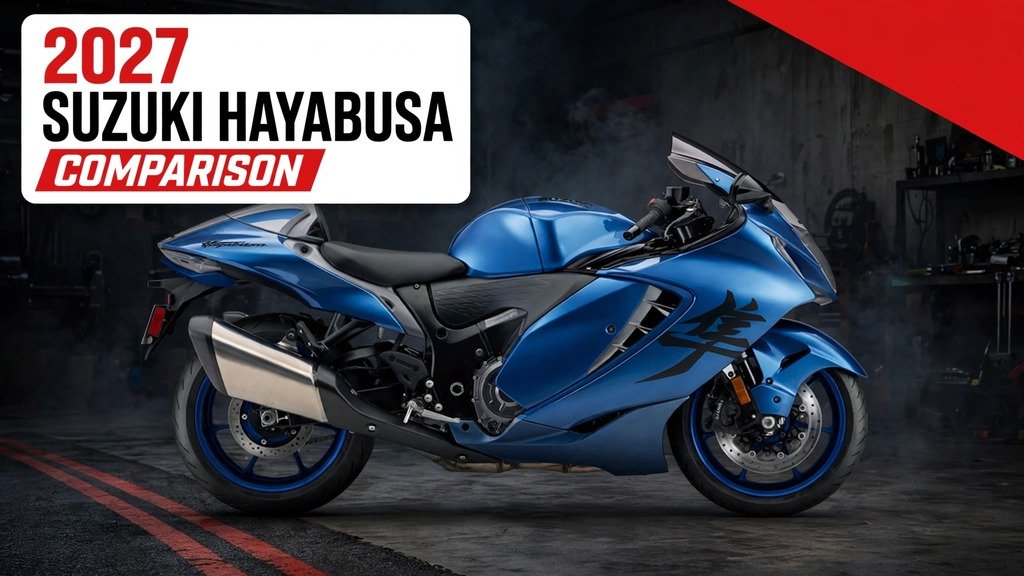
The 2027 Suzuki Hayabusa costs $19,699 plus $750 destination, $20,449 delivered, and its closest rival is a bike you can no longer buy new: the Kawasaki Ninja ZX-14R has no 2026 US model, and its future is unconfirmed. That leaves the supercharged Kawasaki Ninja H2 SX SE at $29,999 — $10,300 more — and Suzuki’s own GSX-R1000R at $17,939, $1,760 less. This Suzuki Hayabusa comparison puts the Hayabusa against all three.
Suzuki Hayabusa Overview and Its Closest Rivals
This Suzuki Hayabusa comparison starts with a strange fact: the Hayabusa is the only new bike in its exact class still on sale in the USA — the FJR1300’s last US model year was 2024, the Concours 14 was produced until 2022, and the ZX-14R has no 2026 model. The Hayabusa survived because Suzuki kept revising it — the Gen 3 is a heavy revision of the Gen 2, not an all-new bike — while its rivals were left to age or dropped. The three bikes in this Suzuki Hayabusa comparison test the Hayabusa a different way: the ZX-14R on history and speed, the H2 SX SE on boost and technology, and the GSX-R1000R on what Suzuki itself can do with a litre of engine.

Why These Three Rivals: History, Boost, Family
The ZX-14R is the history rival: Kawasaki built the ZX-14 in 2006 as its answer to the Hayabusa, then the ZX-14R in 2012 with a 1,441cc engine. The H2 SX SE is the boost rival: the only supercharged sport-tourer still on sale new in the USA. The GSX-R1000R is the family rival: Suzuki’s own litre superbike, rebuilt for 2027, lighter and sharper than the Hayabusa but with far less torque and no touring comfort.
How the Four Bikes Differ at a Glance
| Figure | 2027 Hayabusa | 2025 ZX-14R | 2026 H2 SX SE | 2027 GSX-R1000R |
|---|---|---|---|---|
| Engine | 1,340cc inline-4 | 1,441cc inline-4 | 998cc supercharged inline-4 | 999.8cc inline-4 |
| Claimed power | 190 PS (187.7 hp) @ 9,700 rpm | 197.0 hp @ 10,000 rpm | 207.0 hp @ 10,000 rpm | 195 PS (192.3 hp) @ 13,200 rpm |
| Claimed torque | 150 Nm / 111 lb-ft @ 7,000 rpm | 158 Nm / 116.5 lb-ft @ 7,500 rpm | 137 Nm / 101.0 lb-ft @ 8,500 rpm | 110 Nm / 81.1 lb-ft @ 11,000 rpm |
| Curb weight | 264 kg / 582 lb | 269 kg / 593.1 lb | 268 kg / 590.9 lb | 203 kg / 448 lb |
| Seat height | 800 mm / 31.5 in | 800 mm / 31.5 in | 835 mm / 32.9 in | 825 mm / 32.5 in |
| Fuel capacity | 20.0 L / 5.3 gal | 22.0 L / 5.8 gal | 19.0 L / 5.0 gal | 16.0 L / 4.2 gal |
| MSRP | $19,699 | $17,599 | $29,999 | $17,939 |
| Delivered | $20,449 | $18,439 | $30,839 | $18,689 |
The table above is the headline record for this Suzuki Hayabusa comparison: the ZX-14R out-muscles the Hayabusa on paper, the H2 SX SE out-powers everything here, and the GSX-R1000R is 134 lb lighter with more peak power but far less torque. Power figures are the manufacturers’ claims; Suzuki USA publishes no horsepower figure for the Hayabusa, so its 190 PS — and the GSX-R1000R’s 195 PS — are global figures. Top speeds are not in this table: the H2 SX SE figure is a class estimate, not a manufacturer-published number.
Suzuki Hayabusa vs Kawasaki Ninja ZX-14R
The ZX-14R is the bike the Hayabusa has been measured against since 2012. But the Suzuki Hayabusa comparison has changed shape: the ZX-14R is now a used-market bike in the USA, while the Hayabusa is still on sale new — the drag-strip record on one side, the buying decision on the other.

Engine, Specs and Performance Side by Side
The ZX-14R’s 1,441cc inline-four makes 197.0 hp at 10,000 rpm with 116.5 lb-ft at 7,500 rpm — more power and more torque than the Hayabusa’s 190 PS (187.7 hp) and 111 lb-ft. Kawasaki has claimed around 207–210 hp with ram air globally, but the US spec sheet prints 197.0 hp only. The ZX-14R is also heavier at 593.1 lb against 582 lb, with a bigger 5.8-gallon tank against 5.3. Both bikes in this Suzuki Hayabusa comparison are limited to 186 mph under the gentlemen’s agreement. The Hayabusa’s advantage in this Suzuki Hayabusa comparison is not power but electronics: ride-by-wire, a six-axis IMU, 10-mode traction control and anti-lift, cornering ABS and Smart Cruise Control. The ZX-14R has three-mode traction control, two power modes and ABS — no ride-by-wire, no cruise control, no cornering ABS, no quickshifter. On the dyno, the 2012 Motorcycle.com shootout put the ZX-14R at 188.1 hp against the Hayabusa’s 171 hp at the rear wheel, and the quarter-mile at 9.69 seconds against 9.81 — paired figures from the same day and the same riders. Motorcycle.com’s 2012 shootout is the source for the paired figures. The Gen 3 Hayabusa has since closed some of the gap: Bennetts timed it at 9.89 seconds at 146.3 mph with a 0–60 of 2.69 seconds, and Rider’s dyno read 173 hp at the rear wheel. Bennetts’ review is the source for the Gen 3 figures. The 194 mph figure belongs to the 1999 original Hayabusa only — the Gen 2 and Gen 3 are both limited to 186 mph, and so is the ZX-14R.
The video below is Edmunds’ three-way drag race from September 2021: a Tesla Model S Plaid against a stock 2022 Hayabusa and a stock 2021 ZX-14R. It is a drag race, not a comparison review — Edmunds’ article publishes only the Tesla’s numbers, 0–60 mph in 2.3 seconds and a quarter-mile of 9.4 seconds at 150.8 mph, with no Hayabusa time in the text. The video’s own summary gives 0–60 times of 2.47 seconds for the Hayabusa and 2.85 seconds for the ZX-14R — attribute those to the video, not to Edmunds’ article. Edmunds’ article is the source for the Tesla-only numbers.
Price, Equipment and Which Suits Which Rider
The 2025 ZX-14R cost $17,599 plus $840 destination, $18,439 delivered — $2,010 less than the 2027 Hayabusa delivered. But there is no 2026 ZX-14R, so the real choice is a 2025 leftover or a used bike. Clean used ZX-14Rs sit around $11,000, which makes the Kawasaki the value pick in this Suzuki Hayabusa comparison — if you can live with 2012-era electronics and no cruise control. The Hayabusa suits the rider who wants the touring package: Smart Cruise Control, a quickshifter, cornering ABS, and a bike still in production. The ZX-14R suits the rider who wants the biggest engine and the lowest used price. One naming trap: the ZX-14R is also sold as the ZZR1400 outside North America — same bike, different name. And the 2006–2011 ZX-14 is a different bike from the ZX-14R, with a 1,352cc engine instead of 1,441cc. The Hayabusa review covers the Gen 3’s full electronics list, and the Hayabusa performance guide covers the tested figures in depth.
Suzuki Hayabusa vs Kawasaki Ninja H2 SX SE
The H2 SX SE is the only bike in this Suzuki Hayabusa comparison that beats the Hayabusa on technology and outright power — and the only one that costs $10,000 extra to do it. It is a supercharged sport-tourer, not a superbike.
Engine, Specs and Performance Side by Side
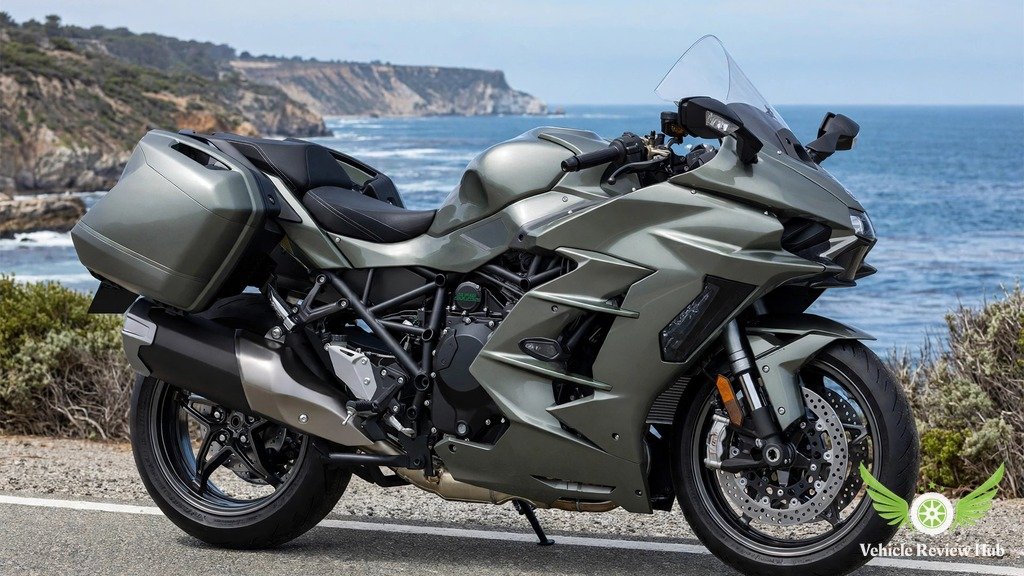
The H2 SX SE’s supercharged 998cc inline-four makes 207.0 hp at 10,000 rpm with 101.0 lb-ft at 8,500 rpm — 19 hp more than the Hayabusa’s 187.7 hp, but 10 lb-ft less torque, and the torque arrives 1,500 rpm higher. The Hayabusa’s 1,340cc engine makes its 111 lb-ft at 7,000 rpm, which is why it feels stronger in normal riding. The H2 SX SE in this Suzuki Hayabusa comparison is also heavier at 590.9 lb against 582 lb, taller at 32.9 inches against 31.5, and carries a smaller 5.0-gallon tank against 5.3. Where the Kawasaki leads in this Suzuki Hayabusa comparison is electronics: radar Adaptive Cruise Control, Blind-Spot Detection, Forward Collision Warning, semi-active Showa Skyhook suspension, a 6.5-inch TFT, tyre-pressure monitoring, grip heaters and cornering lights. The Hayabusa answers with its own full SIRS suite — 10-mode traction control and anti-lift, cornering ABS, Smart Cruise Control and a bi-directional quickshifter — but it has no radar and no semi-active suspension. Kawasaki’s H2 SX SE page is the source for the supercharged bike’s figures. Do not confuse the H2 SX SE with its siblings: the street-legal Ninja H2 is a 240 hp superbike at $32,700, and the H2R is a track-only 322 hp machine — RevZilla lists $59,100, dealers $62,100, a conflict this Suzuki Hayabusa comparison flags rather than resolves.
Price, Equipment and Which Suits Which Rider
The 2026 H2 SX SE costs $29,999 plus $840 destination, $30,839 delivered — $10,390 more than the Hayabusa delivered. That buys the supercharger, the radar, the semi-active suspension and the touring kit. It does not buy a better touring bike for every rider: the Hayabusa is lower, torquier at normal revs, cheaper to buy and cheaper to run. The H2 SX SE suits the rider who wants the most advanced motorcycle in this Suzuki Hayabusa comparison and will pay for it. The Hayabusa suits the rider who wants the same job done for $10,390 less, with more low-down torque and a lower seat. The Hayabusa reliability guide covers what the Hayabusa costs to keep, and the Hayabusa review covers the ownership case in full.
Suzuki Hayabusa vs Suzuki GSX-R1000R
The GSX-R1000R is the awkward rival in this Suzuki Hayabusa comparison: it comes from the same factory. It is faster on a track, lighter by 134 lb, and $1,760 cheaper — and it still loses for most buyers, because it was built for a different job.
Engine, Specs and Performance Side by Side
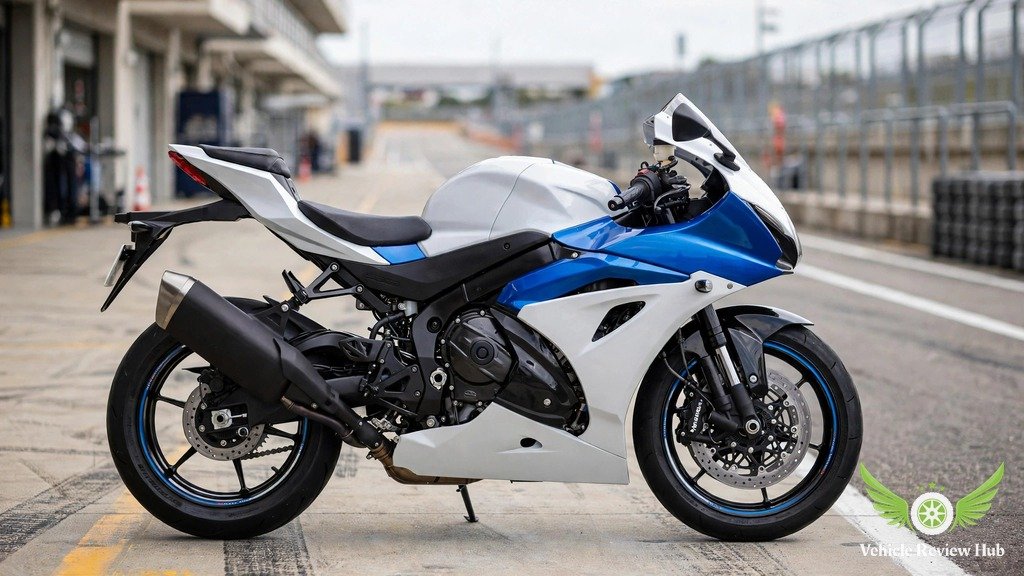
The 2027 GSX-R1000R’s 999.8cc inline-four makes 195 PS (192.3 hp) at 13,200 rpm, with 81.1 lb-ft at 11,000 rpm — more peak power than the Hayabusa’s 187.7 hp, but 30 lb-ft less torque, peaking 4,000 rpm higher. On the road the Hayabusa pulls harder from low revs; on a track the GSX-R1000R revs harder. The 2027 bike in this Suzuki Hayabusa comparison is a heavy revision of the 2017 L7 platform, not a clean-sheet new generation — Euro 5+ forced the previous generation out of Europe after 2020. The R adds Showa Balance Free suspension, an adjustable swingarm pivot, a bi-directional quickshifter and launch control over the base GSX-R1000. The base GSX-R1000 costs $16,399 and the range-topping RS — the R with winglets — costs $18,639, both plus $750 destination. Suzuki’s GSX-R1000R page is the source for the 2027 prices. One figure to flag: the GSX-R1000R’s fuel capacity is 4.2 gallons in the spec table, but one track review says 4.3. Either way it is a gallon short of the Hayabusa’s 5.3, and the GSX-R1000R’s 32.5-inch seat is an inch taller.
Price, Equipment and Which Suits Which Rider
The GSX-R1000R costs $17,939 plus $750 destination, $18,689 delivered — $1,760 less than the Hayabusa delivered; the base GSX-R1000 is $17,149 delivered, $3,300 less. In this Suzuki Hayabusa comparison, the Hayabusa suits the rider who tours: a lower seat, a bigger tank, Smart Cruise Control and luggage-friendly ergonomics. The GSX-R1000R suits the rider who rides track days: 134 lb lighter, sharper steering, and a chassis built for corner speed. The Hayabusa is the better motorcycle for most buyers in this Suzuki Hayabusa comparison — the GSX-R1000R is the better motorcycle for the few who will use what it was built for. The GSX-R1000R comparison covers the superbike’s own rivals, and the GSX-S1000 comparison covers Suzuki’s naked alternative.
Suzuki Hayabusa Price and Value Compared
Price is where this Suzuki Hayabusa comparison gets practical: the Hayabusa sits in the middle of its class, and the cheapest Hayabusa rival is a used one.
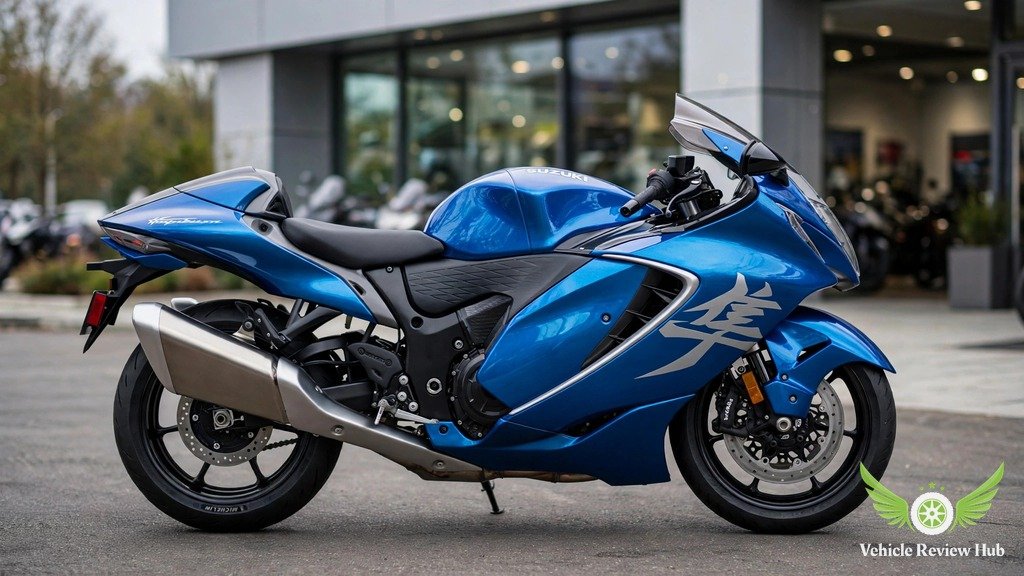
No Direct Living Rival Remains in the USA
The Hayabusa is the only new bike in its exact class still on sale in the USA for 2026. The ZX-14R has no 2026 model, the FJR1300’s last US model year was 2024, and the Concours 14 was produced until 2022. The ZX-14R is not officially discontinued in the USA — no discontinuation statement was found — but no 2026 model was announced, and new US inventory is 2025-model leftovers. It is discontinued in the EU on emissions grounds. So the Hayabusa’s “no rival” claim is real for a new-bike buyer in this Suzuki Hayabusa comparison. The Special Edition costs $20,399 plus $750, $21,149 delivered — a $700 premium for Pearl Brilliant White and Metallic Oort Gray paint, SE badging and trim. The 2027 changes are colours only; the bike is mechanically and electronically unchanged from 2026. Cycle News’ 2027 Hayabusa report is the source for the prices and the warranty wording, and Suzuki USA’s Hayabusa page is the source for the colours and specs.
Running Costs and Resale Value Compared
Running costs in this Suzuki Hayabusa comparison favour the Hayabusa over the ZX-14R. In the 2012 Motorcycle.com same-day test the Hayabusa returned 37.1 mpg against the ZX-14R’s 31.0 mpg, and Rider’s Gen 3 test averaged 38 mpg over about 1,700 miles. Servicing is cheap: UK owners report about £180 a year for a Gen 3, and the US schedule asks for oil every 3,750 miles, the filter only at 11,250 miles and valves at 15,000 miles. Resale is where the ZX-14R fights back: clean used examples sit around $11,000, and the bike holds value well. The Hayabusa’s UK used range is £8,999–£15,500 for a Gen 3. One honest gap: no direct KBB or NADA used value could be verified for a 2022 Hayabusa or any rival, so this Suzuki Hayabusa comparison prints none. Tyres are the most frequent cost on either bike: the stock Bridgestone Battlax Hypersport S22 costs about $211 for a rear tyre, a pair $220 to $305.
| Bike | MSRP | Destination | Delivered | vs Hayabusa |
|---|---|---|---|---|
| 2027 Suzuki Hayabusa | $19,699 | $750 | $20,449 | — |
| 2027 Hayabusa Special Edition | $20,399 | $750 | $21,149 | +$700 |
| 2025 Kawasaki Ninja ZX-14R | $17,599 | $840 | $18,439 | −$2,010 |
| 2026 Kawasaki Ninja H2 SX SE | $29,999 | $840 | $30,839 | +$10,390 |
| 2027 Suzuki GSX-R1000R | $17,939 | $750 | $18,689 | −$1,760 |
| 2027 Suzuki GSX-R1000 (base) | $16,399 | $750 | $17,149 | −$3,300 |
| 2026 Suzuki GSX-S1000GT+ | $14,399 | $700 | $15,099 | −$5,350 |
| 2026 Kawasaki Ninja 1100SX ABS | $13,999 | — | — | −$5,700 |
| 2026 Ducati Panigale V4 | $27,795 | $1,295 | $29,090 | +$8,641 |
| 2026 Ducati Panigale V4 S | $35,595 | $1,295 | $36,890 | +$16,441 |
| 2026 Ducati Panigale V4 R | $49,995 | Not verified | — | +$30,296 |
The price table above is the full delivered-price record for this Suzuki Hayabusa comparison. The ZX-14R’s destination charge is $840 on Kawasaki USA’s own page — some outlets print $815. The Panigale V4 R’s destination charge could not be verified, so no delivered total is shown for it.
Suzuki Hayabusa Comparison Verdict and US Alternatives
The verdict of this Suzuki Hayabusa comparison is simple: the Hayabusa wins the class by surviving it — its rivals are gone, more expensive, or built for a different job, and the bike that beats it on a drag strip cannot be bought new any more. That does not make the Hayabusa the fastest bike here — it makes it the one a buyer can actually ride home.

ZX-14R Skipped 2026, Future Unconfirmed
Kawasaki USA’s 2026 sport announcement listed the Ninja 500, Ninja 650, ZX-4R and ZX-6R and did not mention the ZX-14R; no 2026 US model has been formally announced. The honest wording is “skipped 2026, future unconfirmed” — not “officially discontinued in the USA”. It has had no crucial update since 2012. A buyer who wants one should look at 2025 leftovers or the used market, where clean examples sit around $11,000. If Kawasaki brings it back, the rivalry resumes; until then, the Hayabusa stands alone in its class. Kawasaki’s ZX-14R page still lists the 2025 model, and TopSpeed’s used-market report is the source for the $11,000 figure.
GT+ and Panigale V4 Alternatives
Two more alternatives sit outside the three-rival core of this Suzuki Hayabusa comparison. The Suzuki GSX-S1000GT+ costs $14,399 plus $700 destination, $15,099 delivered — $5,350 less than the Hayabusa — with a 999cc engine making about 150 hp, a 498 lb curb weight, a 31.9-inch seat, standard side cases and Smart Cruise Control. It is the practical alternative in this Suzuki Hayabusa comparison: cheaper, lighter and better equipped for luggage. The Kawasaki Ninja 1100SX ABS is cheaper still at $13,999. The Ducati Panigale V4 is the opposite direction: $27,795 plus $1,295, $29,090 delivered, with a 1,103cc V4 making 209 hp and 89.5 lb-ft — 161 lb lighter than the Hayabusa but with 21.5 lb-ft less torque, a 33.5-inch seat, a 4.5-gallon tank, no luggage and no cruise control. The V4 S costs $35,595 and the homologation-special V4 R costs $49,995 with a 998cc engine making 218 hp. Ducati’s Panigale V4 page is the source for the 2026 prices. The Panigale beats the Hayabusa on a track and loses on everything a tourer needs; the GT+ loses on power and wins on price and practicality. The GSX-R1000 comparison covers the base superbike’s own rivals for a buyer cross-shopping inside Suzuki.
Suzuki Hayabusa Comparison: Frequently Asked Questions
Direct answers to the questions riders ask about this Suzuki Hayabusa comparison.
Which is faster, the Hayabusa or the ZX-14R?
The ZX-14R, on the paired test in this Suzuki Hayabusa comparison: Motorcycle.com’s 2012 shootout put it at 9.69 seconds against the Hayabusa’s 9.81 over the quarter-mile, with 188.1 hp against 171 hp at the rear wheel. The Gen 3 Hayabusa has closed the gap since — Bennetts timed it at 9.89 seconds — but the two runs are from different tests.
Is the ZX-14R discontinued?
Not officially in the USA. No 2026 US model was announced and no discontinuation statement was found, so the honest wording in this Suzuki Hayabusa comparison is “skipped 2026, future unconfirmed”. It is discontinued in the EU on emissions grounds.
How much does a 2027 Hayabusa cost?
$19,699 plus $750 destination, $20,449 delivered. The Special Edition costs $20,399 plus $750, $21,149 delivered in this Suzuki Hayabusa comparison.
Is the H2 SX SE worth $10,300 more than the Hayabusa?
Only if you value what the money buys in this Suzuki Hayabusa comparison: a supercharger, radar cruise control, blind-spot detection, semi-active suspension and a 6.5-inch TFT. On power and touring kit, yes. On torque, seat height, fuel range and running costs, the Hayabusa wins — the delivered gap is $10,390, not the $10,300 MSRP gap.
Is the GSX-R1000R a better buy than the Hayabusa?
For track days, yes — it is 134 lb lighter with more peak power and costs $1,760 less delivered. For touring, no: the Hayabusa has more torque, a lower seat, a bigger tank and cruise control. This Suzuki Hayabusa comparison picks the Hayabusa for most buyers and the GSX-R1000R for the few who will use it as intended.
What is the fastest Hayabusa ever?
The 1999 original, at 194 mph measured by Cycle World on a radar gun before the gentlemen’s agreement — the fastest figure in this Suzuki Hayabusa comparison. Every Hayabusa since 2000 is limited to 186 mph.
Which bike is best for touring?
The Hayabusa, in this Suzuki Hayabusa comparison: the lowest seat of the four at 31.5 inches, the most low-down torque, Smart Cruise Control, and the best fuel economy of the group at 38 mpg tested.
Which of these bikes is best for a beginner?
None of them in this Suzuki Hayabusa comparison. At 582 lb with 187.7 hp, the Hayabusa is far too much motorcycle for a new rider, and the ZX-14R, H2 SX SE and GSX-R1000R are no better. Start smaller — the GSX-8R is the sensible step.
Does the Hayabusa have any direct rival left in the USA?
No, not as a new bike in this Suzuki Hayabusa comparison: the ZX-14R has no 2026 model, the FJR1300’s last US model year was 2024, and the Concours 14 was produced until 2022. The H2 SX SE is the only living supercharged alternative.
What is the cheapest alternative to the Hayabusa?
A used ZX-14R at around $11,000, or a new Kawasaki Ninja 1100SX ABS at $13,999 — the cheapest options in this Suzuki Hayabusa comparison. The Suzuki GSX-S1000GT+ at $15,099 delivered is the cheapest new Suzuki alternative.
Is the Panigale V4 a Hayabusa rival?
Not really, in this Suzuki Hayabusa comparison. The Panigale V4 is a track superbike: 209 hp and 421 lb, but only 89.5 lb-ft of torque, a 33.5-inch seat, a 4.5-gallon tank, no luggage and no cruise control. It beats the Hayabusa on a track and loses on everything a tourer needs.
Which one should I buy?
Buy the Hayabusa if you want the class’s best all-rounder new. Buy a used ZX-14R if you want the most speed for the least money. Buy the H2 SX SE if you want the most advanced bike and will pay $10,390 more for it. Buy the GSX-R1000R if you ride track days. That is the verdict of this Suzuki Hayabusa comparison.