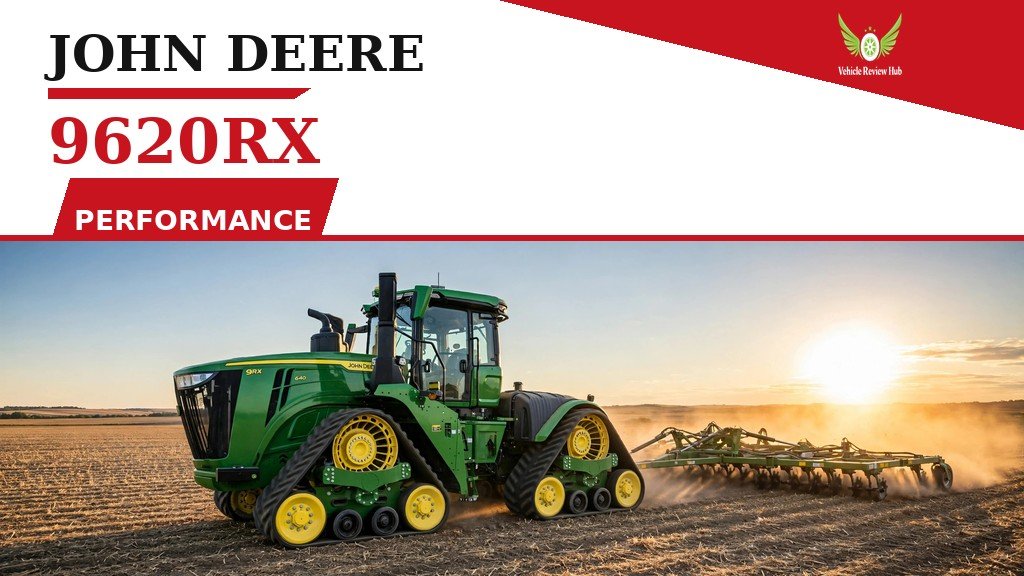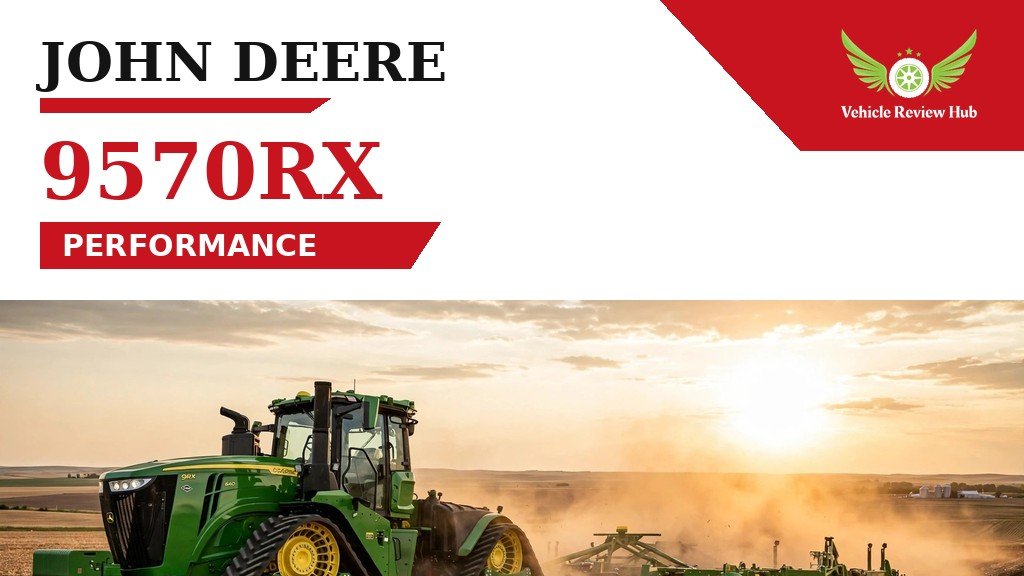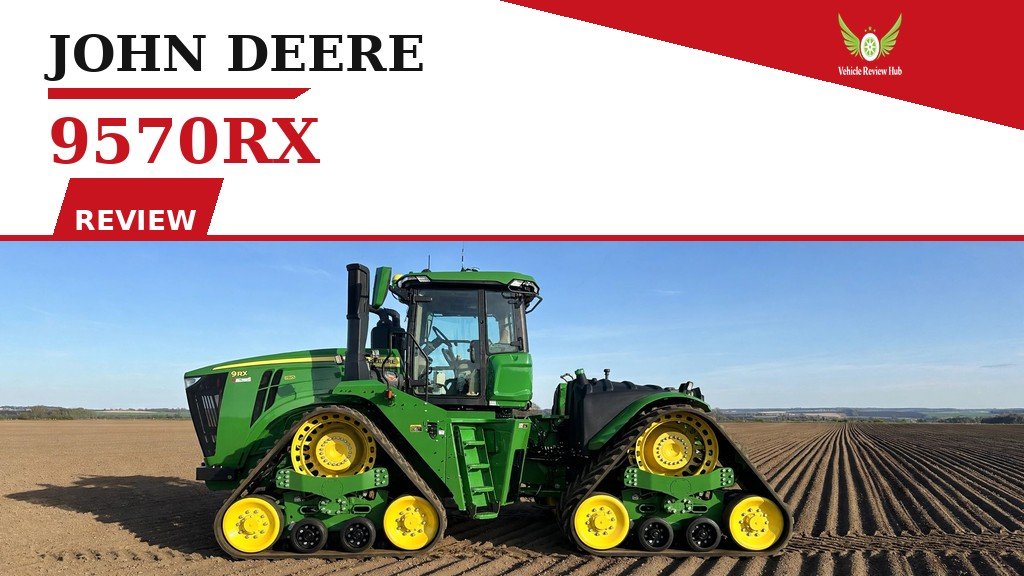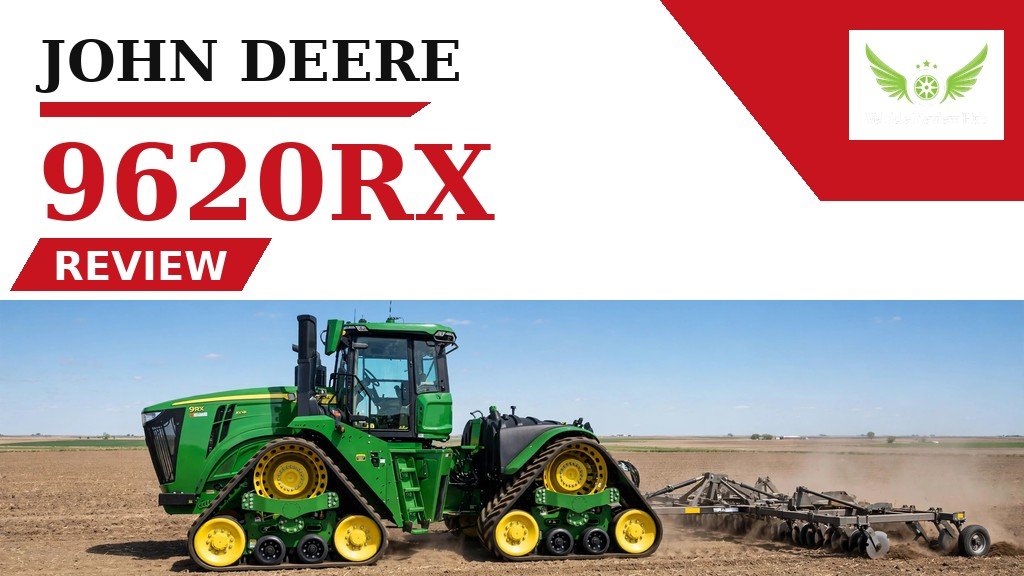
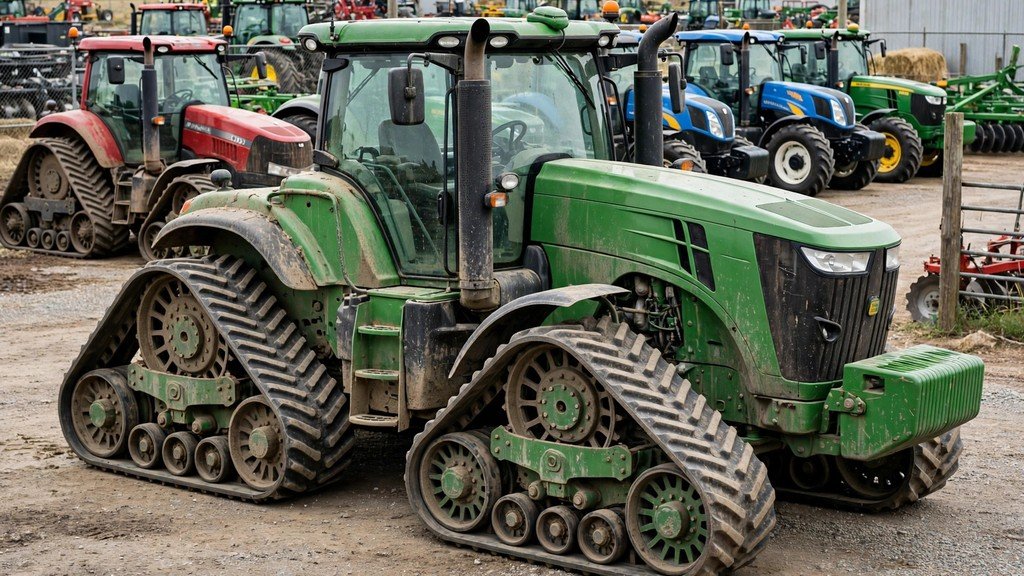
The John Deere 9620RX review starts with a straight answer: this is the flagship of Deere’s original four-track 9RX family, a used-only 620-horsepower machine that remains the cheapest way to put more than 600 horsepower on four tracks. Built in Waterloo, Iowa, it pairs a Cummins 14.9-liter six-cylinder with an 18-speed PowerShift and four Camso rubber tracks, built for the biggest tillage, seeding, and scraper work. This John Deere 9620RX review covers the verified specs, the transmission, the track system, current used prices, and how it stacks up against the smaller 9570RX and the newer JD18-powered 9RX models.
Because the 9620RX is no longer in production, every buyer today is a used buyer. That changes the questions that matter: hours, track condition, service history, and whether the tractor left the factory with a PTO and hitch or as a drawbar-only machine. This John Deere 9620RX review answers those questions from dealer spec sheets and current October 2026 listings, with every figure verified or labeled as an estimate.
John Deere 9620RX Review, Features and Used Price
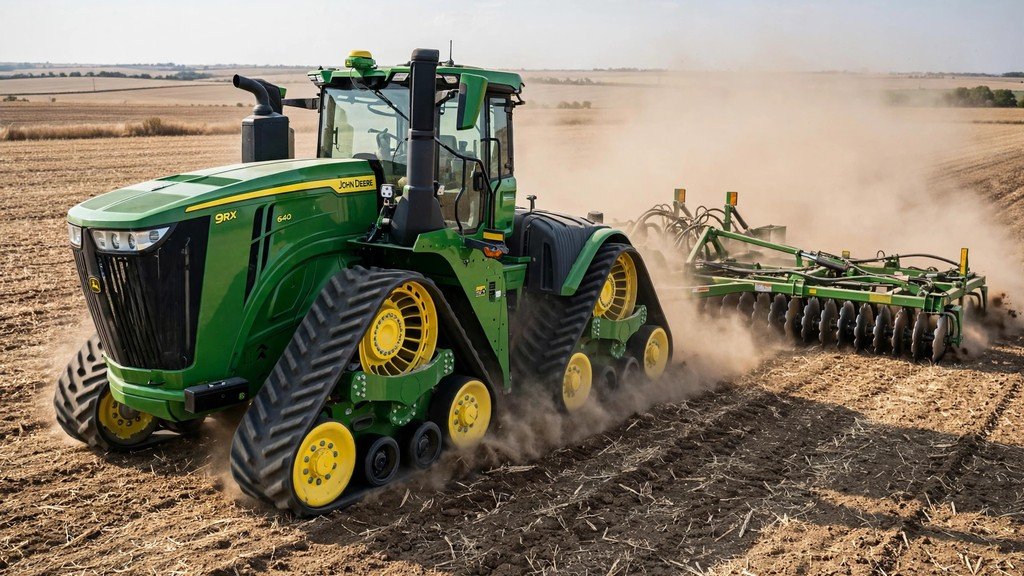
The 9620RX sits at the top of the original 9RX lineup, which launched in 2015 with four models: the 9470RX, 9520RX, 9570RX, and 9620RX. The two smaller models used Deere’s own 13.5-liter engine; the 9570RX and the 9620RX stepped up to the larger Cummins block. That split is the most misunderstood fact about this tractor family, and this John Deere 9620RX review keeps it front and center because some listings still mislabel the engine.
Key Features, Configurations and Intended Uses
Standard equipment includes the e18 18-speed PowerShift with Efficiency Manager, full-locking front and rear differential locks, the Generation 4 CommandCenter with AutoTrac readiness, JDLink capability, and a cab-suspension CommandView III cab. ActiveCommand Steering, which varies steering effort with ground speed, appears on many well-optioned units, and a 120-inch track spacing option arrived from model year 2019. The intended work is consistent across the lineup: primary tillage, large air seeders and carts, nutrient application, scraper work, and transport for a machine this size. Our 9570RX review covers the 570-horsepower sibling for farms that do not need the 9620RX’s extra power, and the full 9620RX performance and fuel usage guide breaks down what the Cummins drinks per hour of real work, as this John Deere 9620RX review notes for buyers comparing fuel bills.
Used Prices by Model Year, Hours and Equipment
There is no new 9620RX price anymore, so the used market is the whole market. Current October 2026 dealer listings put the band at roughly $400,000 to $460,000 for 2019–2021 machines with 1,500 to 2,250 hours. A 2019 example with 1,509 hours at Van Wall in Carroll, Iowa, lists at $410,000; a 2020 with 2,245 hours at Van Wall in Story City, Iowa, lists at $404,900; and a 2021 with 1,810 hours at Papé Machinery in Colfax, Washington, lists at $459,999 with 36-inch tracks and no PTO or three-point hitch. Hours move the price more than model year does, and track condition is the second price lever. This John Deere 9620RX review treats $400,000–$460,000 as the realistic band for a clean, mid-hour machine; low-hour 2021 examples sit above the band, and high-hour or rough-track machines sit below it.
| Example (verified Oct 2026) | Hours | Asking price | Notable equipment |
|---|---|---|---|
| 2019, Van Wall, Carroll, IA | 1,509 | $410,000 | Track tractor, guidance-ready |
| 2020, Van Wall, Story City, IA | 2,245 | $404,900 | 30-in tracks, PTO, 5 SCVs, ACS |
| 2021, Papé, Colfax, WA | 1,810 | $459,999 | 36-in tracks, no PTO or 3-pt |
John Deere 9620RX Engine, Horsepower and Specifications
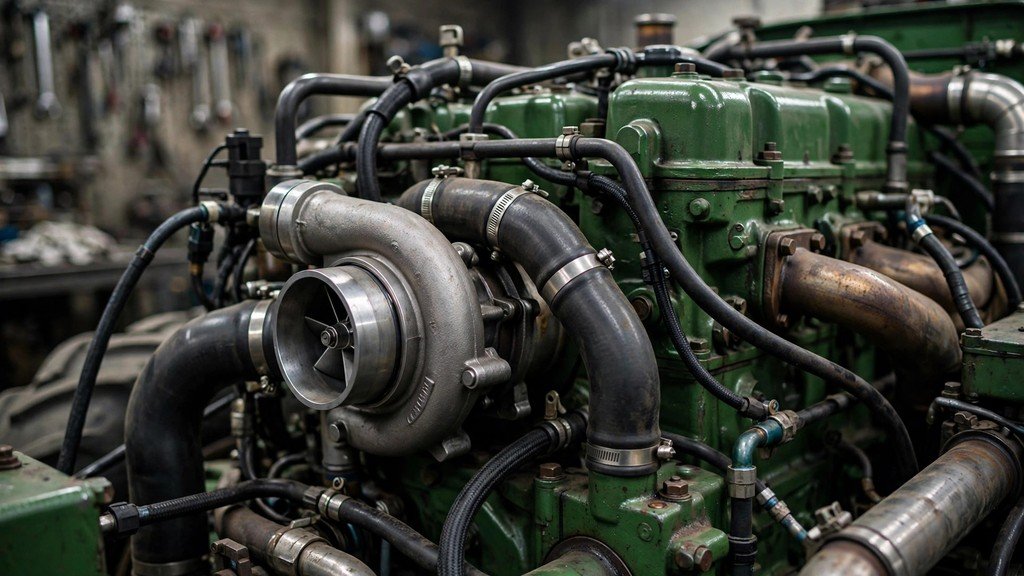
The engine is the heart of this John Deere 9620RX review, and it deserves a careful statement because the record is genuinely confusing. The 9620RX uses a Cummins QSX15, marketed as the Cummins X15: a 14.9-liter (912 cu in) inline six-cylinder with wet-sleeve liners, four valves per cylinder, a single variable-geometry turbocharger with air-to-air aftercooling, and cooled exhaust gas recirculation. It meets US Final Tier 4 with a DOC, DPF, and SCR aftertreatment system, so it uses diesel exhaust fluid, unlike the newer JD18-powered 9RX models. The smaller 9470RX and 9520RX used Deere’s 13.5-liter PowerTech instead, which is where listing mix-ups come from; on the 9620RX, the verified engine is the Cummins 14.9L, confirmed on the dealer spec sheet and in the Farmers Weekly driver’s view cited by this John Deere 9620RX review.
14.9L Cummins QSX15 Engine, Rated HP and PTO Power
Rated power is 620 horsepower at 2,100 rpm, with an 8 percent power boost giving a maximum of about 670 horsepower. Rated PTO power is 335 horsepower SAE on the independent 1,000-rpm shaft, which is a driveline limit shared across the whole first-generation 9RX family: the bigger models do not deliver more PTO power than the smaller ones. Peak torque is 2,800 Nm at 1,600 rpm — about 2,065 lb-ft — with 36 percent torque rise. One caution for spec-sheet readers: the dealer spec sheet prints “3800 lb-ft” next to 2,800 Nm, which is a bad conversion, since 2,800 Nm converts to about 2,065 lb-ft, and this John Deere 9620RX review uses the correct converted figure. The practical meaning is simple: the 9620RX is a drawbar tractor first, and the PTO exists for implements that need it rather than as the machine’s main job. For the full consumption picture, this John Deere 9620RX review points to our 9620RX performance and fuel usage guide, which covers gallons per hour by application.
Dimensions, Fuel Capacity, Hydraulic Flow and Track Options
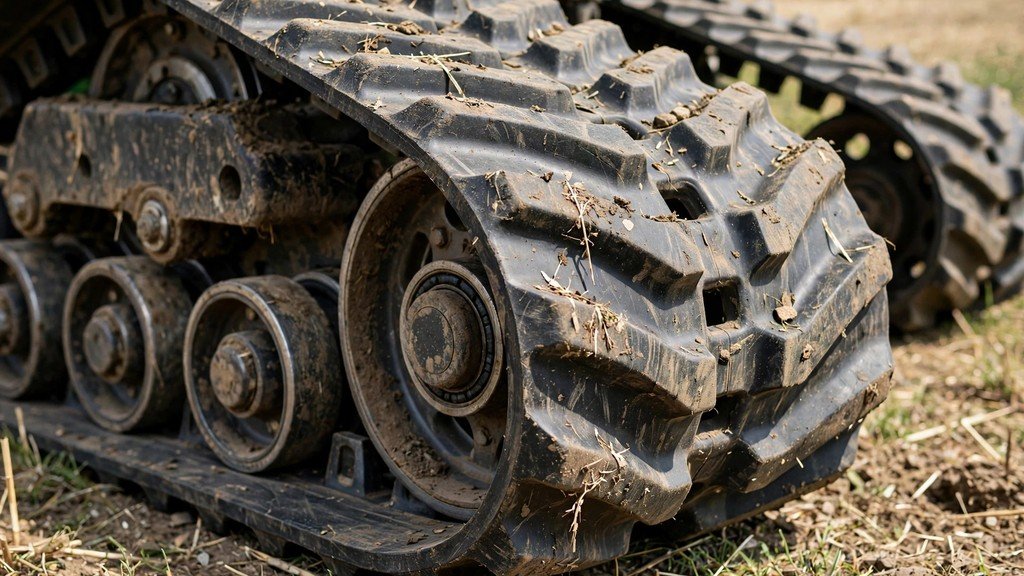
The 9620RX is big by any measure. Shipping weight is about 54,000 pounds, with ballast taking it to 62,000 pounds for heavy draft work. Wheelbase is 162.5 inches, overall length is 300.7 inches without the hitch and 323.5 inches with hitch and coupler, and overall width runs about 117 inches on 30-inch tracks or wider on 36-inch tracks. Height over the exhaust is about 162.3 inches, drawbar clearance is 15.9 inches, and the turning radius is 21 feet without brakes. The fuel tank holds 400 US gallons, with a 31.7-gallon DEF tank per Deere family specifications; some dealer pages list 22 gallons, so confirm the tank on the specific machine. Hydraulics are a closed-center, pressure-and-flow-compensated system: 58 gallons per minute from the standard single pump, or 115 gallons per minute with the optional dual-pump setup most big air-seeder and planter operators chose. Rear SCVs run four to six from the factory, with up to eight possible through field installation. The track system is the Camso positive-drive setup in AG 3500 or AG 6500 belts, in 18-, 24-, 30-, or 36-inch widths. A Category 5 drawbar is standard; a Category 4N three-point hitch was optional, and many used units are drawbar-only, so buyers reading this John Deere 9620RX review should verify the hitch before buying rather than assuming it is there.
John Deere 9620RX Transmission and Implement Compatibility
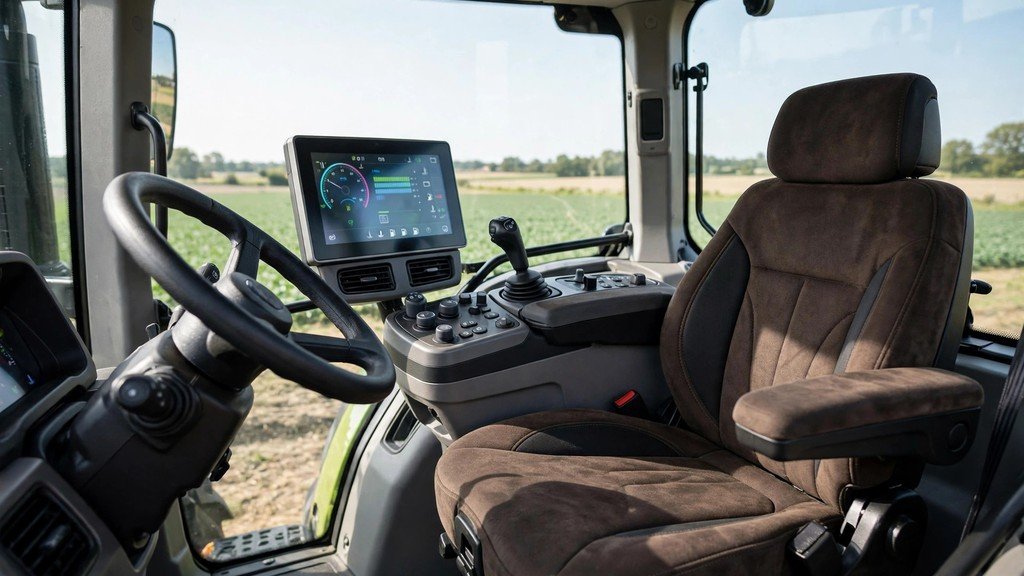
The e18 PowerShift is the only transmission offered on the 9620RX, and it is a conventional full powershift rather than a continuously variable box: 18 forward speeds and 6 reverse, with Efficiency Manager software that shifts automatically based on load and target speed. The transmission pairs with electrohydraulic front and rear differential locks and the articulated chassis, which bends at the center pivot for steering. The video below walks through the highlights of the 9RX tractor, from its positive-drive undercarriage to its transmission, and this John Deere 9620RX review includes it because it shows the hardware behind the horsepower:
18-Speed PowerShift Transmission and Available Configurations
Efficiency Manager is the feature that defines daily use of the e18: set a target speed and the software picks the gear and throttles back when the load allows, which saves fuel on long passes and reduces operator input. Three modes are available — Full AUTO, custom, and manual — and custom mode adds an Eco setting for transport and light work. Top road speed is about 25 mph, slower than a wheeled tractor on the road, and roading wears belts faster than field work, so transport distance matters in ownership math. Our 9620RX maintenance and common problems guide covers the e18’s service intervals and the issues owners report most, and this John Deere 9620RX review recommends reading it before inspecting any high-hour machine.
PTO, Drawbar, Hydraulic Connections and Implement Compatibility
Implement compatibility is where the 9620RX earns its price. The independent rear PTO is 1,000 rpm on a 1.75-inch 20-spline shaft, with electrohydraulic engagement. The main connection on most 9620RX machines is the Category 5 drawbar pulling towed implements: disc rippers, vertical tillage, field cultivators, chisel plows, and air-seeder carts. With up to 115 gallons per minute and up to eight rear SCVs, it runs the largest air seeders and planters, including central-fill planters with hydraulic downforce, managed through the Generation 4 CommandCenter with ISOBUS control. Many 9620RX machines were ordered drawbar-only, and adding a hitch later is expensive. The video below highlights the 9RX tractor’s undercarriage, traction, and transmission, and this John Deere 9620RX review includes it because heavy draft work is the most honest demonstration of what the tractor does:
John Deere 9620RX vs. 9570RX and Newer 9RX Models
The 9620RX sits between two very different buying decisions. Against the 9570RX, the 9620RX brings 50 more rated horsepower from the same Cummins engine block, with the same PTO rating, fuel capacity, cab, and transmission. Against the newer JD18-powered 9RX models, the 9620RX trades modern engine technology and a newer transmission for a purchase price that is a fraction of a new machine’s. This John Deere 9620RX review treats that trade as the core of the value case.
Differences in Horsepower, Engine and Track Configuration
| Attribute | 9570RX | 9620RX | 9RX 830 (newer JD18) |
|---|---|---|---|
| Rated hp | 570 | 620 | 830 PS |
| Engine | Cummins QSX15/X15 14.9L | Cummins QSX15/X15 14.9L | JD18 18.0L |
| Rated PTO hp | 335 | 335 | 335 |
| Transmission | e18 18F/6R PowerShift | e18 18F/6R PowerShift | e21 21F/11R PowerShift |
| Fuel capacity | 400 gal | 400 gal | 515 gal |
| Hydraulics | 58 / 115 gpm | 58 / 115 gpm | 56 / 112 / 168 gpm |
| DEF system | DOC + DPF + SCR (uses DEF) | DOC + DPF + SCR (uses DEF) | EGR only (no DEF, no DPF, no SCR) |
| Base weight | ~54,000 lb | 54,000 lb | ~74,000 lb |
The differences that matter in daily use are the engine’s aftertreatment, the transmission’s gear count, and the purchase price. For the smaller row-crop step below the 9RX family, see our 8RX Series review and our 9RX Series review for the newer-generation overview, both of which this John Deere 9620RX review cross-references for buyers still deciding between tracks and wheels.
Which Tractor Offers Better Value for Heavy-Duty Farming?
Start with the work, not the badge. If your biggest tools are 50- to 60-foot tillage implements, large air seeders, or scraper pans, the 9620RX’s four tracks and 620 horsepower cover them at roughly a third of the price of a new flagship. If you want the newest engine technology, a warranty, and DEF-free operation, the newer 9RX 710, 770, and 830 are the answer, but at roughly three to four times the price of a clean used 9620RX. This John Deere 9620RX review treats the 9620RX as the value pick for heavy-duty farming on a budget: the most horsepower per dollar in the original four-track market, provided you buy on track condition and service history rather than on hours alone. Our 9620RX ownership cost guide runs the five-year math behind that judgment.
Frequently Asked Questions About the John Deere 9620RX
Buyers researching a used 9620RX ask the same core questions: what engine it really has, how much power it makes, what it costs today, how it compares with the 9570RX and the newer 9RX models, and what to check before buying. This John Deere 9620RX review answers those questions below from dealer spec sheets, current listings, and owner-reported experience.
What engine does the John Deere 9620RX have?
The 9620RX uses a Cummins QSX15, marketed as the Cummins X15: a 14.9-liter (912 cu in) inline six-cylinder with a single variable-geometry turbo, air-to-air aftercooling, and cooled EGR. It meets US Final Tier 4 with DOC, DPF, and SCR aftertreatment, so it uses diesel exhaust fluid from a 31.7-gallon DEF tank per Deere family specifications. Do not confuse it with the smaller 9470RX and 9520RX, which used Deere’s 13.5-liter PowerTech engine instead, a distinction this John Deere 9620RX review repeats because it is the most common error in listings.
How much horsepower does the John Deere 9620RX have?
This John Deere 9620RX review confirms the 9620RX is rated at 620 horsepower at 2,100 rpm, with an 8 percent power boost giving a maximum of about 670 horsepower. Rated PTO power is 335 horsepower SAE, which is a driveline limit shared across the first-generation 9RX family.
What is the peak torque of the 9620RX?
Peak torque is 2,800 Nm at 1,600 rpm, about 2,065 lb-ft, with 36 percent torque rise. Beware of dealer pages that print “3800 lb-ft” next to 2,800 Nm — that conversion is wrong, and the correct figure is about 2,065 lb-ft.
What years was the John Deere 9620RX made?
The 9620RX belongs to the first-generation 9RX family that launched in 2015, and used examples span 2016 through 2021 model years. It is a used-only tractor now, as this John Deere 9620RX review documents; the current 9RX lineup uses the JD18 engine instead.
How much does a used John Deere 9620RX cost?
Current October 2026 dealer listings put clean mid-hour machines at roughly $400,000 to $460,000: a 2019 with 1,509 hours at $410,000, a 2020 with 2,245 hours at $404,900, and a 2021 with 1,810 hours at $459,999. Hours and track condition move the price more than model year does, which is why this John Deere 9620RX review ranks inspection above model year when you compare two machines.
What transmission does the 9620RX use?
The e18 PowerShift: 18 forward speeds and 6 reverse, full powershift, with Efficiency Manager software that shifts automatically based on load and target speed. It is a conventional powershift, not a CVT, and top road speed is about 25 mph, as covered in the transmission section of this John Deere 9620RX review.
Does the 9620RX use DEF?
Yes. Unlike the newer JD18-powered 9RX models, which meet Final Tier 4 with cooled EGR only, the 9620RX’s Cummins engine uses a DOC, DPF, and SCR system with diesel exhaust fluid from a 31.7-gallon tank per Deere family specifications, a difference this John Deere 9620RX review flags because it affects running costs. Some dealer pages list 22 gallons, so confirm the tank on the specific machine.
What is the fuel capacity of the 9620RX?
The fuel tank holds 400 US gallons.
What hydraulic flow does the 9620RX have?
This John Deere 9620RX review lists 58 gallons per minute from the standard single pump, or 115 gallons per minute with the optional dual-pump setup. Four to six rear SCVs were factory options, with up to eight possible through field installation, and a single SCV delivers 35 gallons per minute.
Does the 9620RX have a three-point hitch?
Not always, as this John Deere 9620RX review explains. A Category 5 drawbar is standard, and a Category 4N three-point hitch was optional, but many used 9620RX machines were ordered drawbar-only. Verify the hitch is installed before you buy; adding it later is expensive.
What tracks does the 9620RX run?
Camso positive-drive belts in the AG 3500 or AG 6500 series, in 18-, 24-, 30-, or 36-inch widths, on 88-inch or 120-inch track spacing. Track condition is the biggest inspection item on a used machine, since a full belt set is a five-figure replacement job and belt life depends heavily on roading, tension, and alignment.
How much does the 9620RX weigh?
This John Deere 9620RX review lists shipping weight at about 54,000 pounds, rising to 62,000 pounds with full ballast for heavy draft work. Overall width is about 117 inches on 30-inch tracks, wheelbase is 162.5 inches, and overall length is 323.5 inches with hitch and coupler.
Is the 9620RX good for heavy tillage?
Yes, that is its core job. Four tracks, 620 horsepower, and a heavy articulated chassis give it the traction and flotation for 50- to 60-foot tillage tools, large air seeders, and scraper work, especially on soft or wet soils where wheeled tractors slip and compact.
What is the difference between the 9620RX and the 9570RX?
Mainly power: the 9570RX makes 570 horsepower and the 9620RX makes 620 horsepower, both from the Cummins 14.9-liter engine. Both share the e18 transmission, 400-gallon fuel tank, and four-track layout, so the choice comes down to how much power your implements need.
What is the difference between the 9620RX and the newer 9RX 830?
The 9RX 830 is a newer generation: an 18-liter JD18 engine making 830 PS, a 21-speed e21 transmission, a 515-gallon tank, and DEF-free operation, at roughly three to four times the price of a used 9620RX. The 9620RX counters with a far lower purchase price.
What warranty comes with a used 9620RX?
The original factory warranty of 24 months or 2,000 hours has expired on every 9620RX by now, as this John Deere 9620RX review notes. Paid PowerGard extended protection and dealer-certified used programs are the options to ask about, and a documented service history matters more than any remaining warranty claim.
Are there any recalls on the John Deere 9620RX?
This John Deere 9620RX review could not verify any 9620RX-specific CPSC safety recall. Treat any recall claim as reported rather than confirmed, and check any used machine’s serial number through your Deere dealer or by calling Deere at 800-537-8233 before buying.
Is a used 9620RX a good buy?
Often yes, for the right farm. A clean mid-hour machine with good tracks, verified hours, current software, and a full service history delivers four-track 620-horsepower capability at roughly a third of new flagship money. The deal-breakers are worn tracks, unverified hours, and missing PTO or hitch equipment, as our 9620RX maintenance guide explains and as this John Deere 9620RX review recommends throughout.