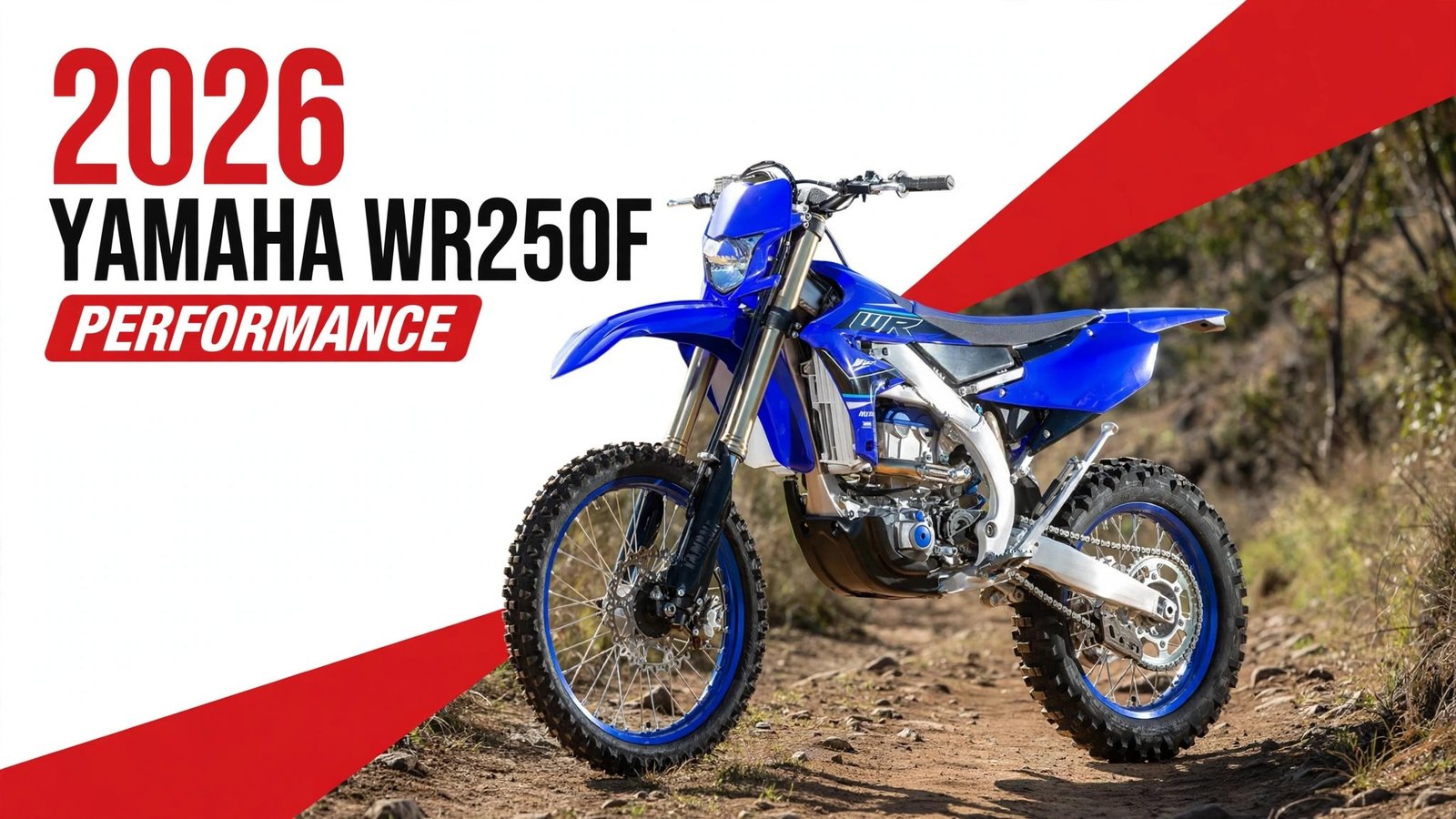
Yamaha WR250F performance is the reason this 250cc enduro bike has such a loyal following: a rev-happy single-cylinder engine borrowed from Yamaha’s motocross program, a wide-ratio six-speed gearbox that covers both tight trees and open fire roads, and a chassis light enough to flick through single-track all day. The point of Yamaha WR250F performance is usable speed on the trail — strong midrange and top-end pull, a gearbox that rarely leaves you hunting for the right ratio, and suspension that stays composed when the trail turns rough.
This guide separates tested figures from estimates. Dyno numbers come from Dirt Rider’s named 2021 test, specifications come from Yamaha and period spec sheets, and top-speed and range figures are labelled honestly wherever no instrumented test exists.
Yamaha WR250F Engine Performance and Power Delivery
The heart of Yamaha WR250F performance is a liquid-cooled, DOHC, four-valve single-cylinder displacing 250cc, with a 77.0 x 53.6 mm bore and stroke and a 13.8:1 compression ratio on current models. It breathes through a Mikuni 44 mm throttle body, with the reversed cylinder-head layout Yamaha pioneered on the YZ250F. Yamaha WR250F performance is tuned for enduro rather than motocross: different ECU mapping and a spark-arrestor muffler trade a little peak output for tractability.
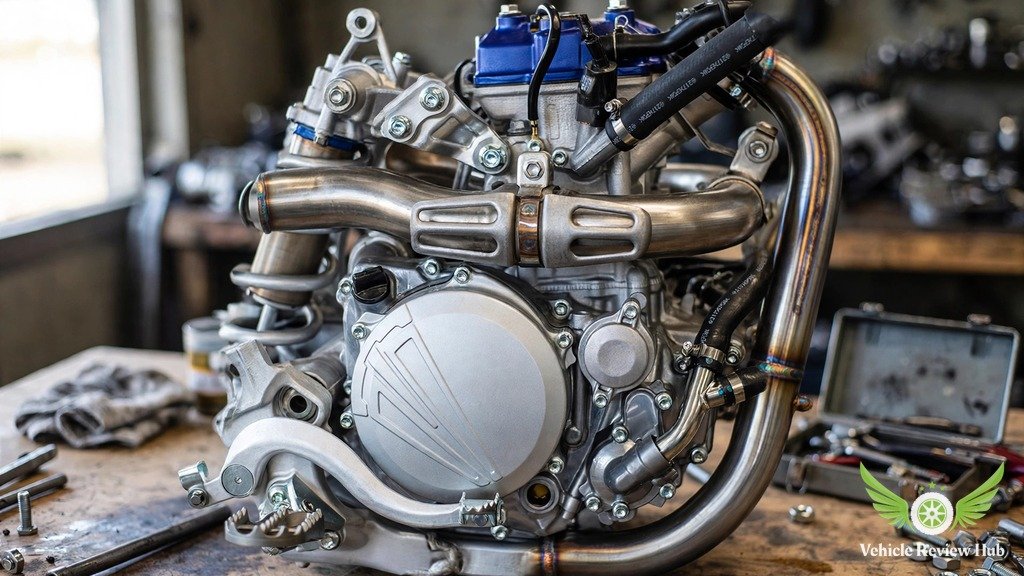
Dirt Rider Dyno 36.1 HP at 12,000 RPM for the 2021 Model Explained
The most quoted number in Yamaha WR250F performance comes from Dirt Rider’s 2021 test, which was the first time the magazine had ever run a WR250F on its dyno. The bike spun 36.1 hp at 12,000 rpm and 17.9 lb-ft of torque at 8,100 rpm. That is 2.9 hp less at peak and only 0.1 lb-ft less torque than the YZ250F Dirt Rider tested, For Yamaha WR250F performance, the shape of the curve matters more than the peak.
Two details frame that dyno figure honestly. First, the 2021 bike was mechanically unchanged from the 2020 model, so the 36.1 hp figure represents the 2020–2024 generation, not the 2025 redesign. The 2021 WR250F specifications confirm the engine hardware behind the test: the same basic engine as the YZ250FX, with enduro-specific ECU tuning and a spark-arrestor muffler. Treating Yamaha WR250F performance as “about 36 rear-wheel horsepower, measured” is accurate; treating it as a Yamaha-claimed figure is not.
| Test source | Rear-wheel horsepower | Rear-wheel torque |
|---|---|---|
| Dirt Rider, 2021 WR250F | 36.1 hp @ 12,000 rpm | 17.9 lb-ft @ 8,100 rpm |
| Dirt Rider, YZ250F (comparison) | 39.0 hp (derived: 2.9 more than WR) | 18.0 lb-ft (derived: 0.1 more than WR) |
| Yamaha factory claim | Not published | Not published |
Six-Speed Wide-Ratio Gearbox, Map Switch and Power Delivery
Yamaha WR250F performance leans heavily on its wide-ratio six-speed gearbox, and the “wide-ratio” part is the whole point. First gear is low enough for crawling through technical single-track without constant clutch work, while sixth gear is tall enough for fire-road transfers without screaming the engine. The clutch is a wet multiplate unit, and the 2021 bike received a clutch-basket update for durability — a small change that matters for Yamaha WR250F performance because enduro riding punishes clutches with constant low-speed slipping.
Electronics shape Yamaha WR250F performance more with each generation, and the years matter. The 2020 model introduced the free Power Tuner app plus a handlebar two-mode map switch. The 2025 model goes further with a new handlebar switchbox and four-level traction control, adjusted through the next-generation Power Tuner app — on the stock 2025 WR, full custom mapping needs the accessory GYTR ECU. Pre-2025 bikes have no traction control at all. For Yamaha WR250F performance, the map switch is a genuine trail tool: a softer map for slick roots and mud, a sharper map for open ground.
Yamaha WR250F Top Speed and Acceleration
Top speed is where Yamaha WR250F performance reporting gets sloppy online, so this section keeps every figure labelled. The honest position: no verified, instrumented top-speed test of a stock WR250F exists from a major outlet. What exists is a consistent estimate band, plus one well-documented modified bike that explains the wilder numbers.

Top Speed Around 75 to 85 MPH Stock and Why Gearing Changes Everything
The working estimate for Yamaha WR250F performance is a stock top speed around 75 to 85 mph, with most guides settling near 85 mph. That band is an estimate, not a GPS-verified run, and it makes sense against the bike’s ingredients: roughly 36 rear-wheel horsepower, a 249–254 lb wet weight depending on year, and a wide-ratio sixth gear built for trail versatility rather than outright speed. For Yamaha WR250F performance, top speed is almost irrelevant to how fast the bike actually covers a trail; corner speed, suspension and gearing matter far more.
Gearing is why two owners can report very different top speeds for the same model, and why Yamaha WR250F performance changes so much with sprockets. A taller final-drive ratio raises speed in each gear and lifts top speed, at the cost of duller low-end pull and more clutch work in technical terrain. A shorter ratio does the opposite: livelier acceleration out of corners, lower top speed. When comparing Yamaha WR250F performance figures, always ask whether the bike was stock-geared; if the answer is unknown, treat the number as anecdote.
Why Low-90s Claims Come From Re-Geared Desert Race Bikes Only
Low-90s top-speed claims trace back to modified desert race bikes — Dirt Bike Magazine’s WR250 desert racer is the documented example. That bike was built for Best in the Desert racing with a competition conversion, including Yamaha’s power-up parts, an aftermarket exhaust and fueling changes, and gearing raised to a 14/48 sprocket combination. Dirt Bike Magazine’s desert racer build reports taking that modified bike to 94 mph, while noting it needed room to get there. That 94 mph figure is real, but it belongs to a re-geared, uncorked race bike — it is not evidence about Yamaha WR250F performance in stock form.
Yamaha WR250F Mileage and Fuel Economy
Fuel economy is the most practical chapter of Yamaha WR250F performance for trail riders, because it decides how far apart fuel stops fall — and whether a loop is even possible on one tank. With no factory MPG figure, this section works from a tested average and simple tank math. The bike’s small tank is its main range limit,

Yamaha Publishes No MPG Figure: 2.0-Gallon Tank and Trail Range Instead
Yamaha lists no fuel-economy figure for the WR250F, so Yamaha WR250F performance has to be judged on tank size and tested consumption. Tank size varies by generation: the 2020–2024 bikes carry about 2.1–2.2 gallons (sources vary by year: 2.2 gallons for 2022 per Motorcycle.com, 2.1 gallons for 2024 per Yamaha), while the 2025 redesign trims the tank to 2.0 gallons as part of its slimmer, lower-center-of-gravity chassis. The 2022 WR250F specifications confirm the earlier generation’s larger tank and 254 lb wet weight.
The best tested consumption figure for Yamaha WR250F performance comes from Dirt Bike Test’s 2015 WR250F test, which averaged 30 mpg on a just-shy-of-two-gallon tank, with the fuel light coming on with roughly 10–15 miles remaining. At 30 mpg, a 2.0-gallon 2025 bike covers about 60 miles and a 2.1–2.2-gallon 2021–2024 bike about 64 miles, before reserve thinking. The honest rule for Yamaha WR250F performance is to treat the fuel light as the real gauge and the odometer as the backup.
| Scenario | Tank size | Range at 30 mpg (tested average) |
|---|---|---|
| 2025-on WR250F | 2.0 gal | ~60 miles |
| 2021–2024 WR250F | 2.1–2.2 gal | ~64 miles |
| Hard single-track (estimate) | 2.0 gal | ~50 miles |
| Gentle fire roads (estimate) | 2.0 gal | ~70 miles |
Real-World Planning Estimate Around 50 to 70 Trail Miles Per Tank
Putting the tested average together with the tank sizes gives the planning estimate used throughout this guide for Yamaha WR250F performance: roughly 50 to 70 trail miles per tank. The low end covers hard single-track and sand; the high end covers gentle fire-road cruising. Most real trail days land in the middle, around 60 miles, which matches both the 30 mpg test average and the desert-racing observation that a stock WR covers fuel stops spaced 30 miles apart with room to spare, while stops beyond 50 miles demand extra fuel. For Yamaha WR250F performance, range is a planning exercise, not a flaw: the bike was built for enduro loops with fuel available, not for crossing states.
Yamaha WR250F Real-World Riding Performance
On the trail, Yamaha WR250F performance feels less like a small bike working hard and more like a full-size racer tuned for control. The engine’s broad, rev-happy delivery, the wide-ratio gearbox and the soft-but-controlled KYB suspension combine into a bike that testers repeatedly call fun rather than intimidating — a machine that rewards momentum and corner speed over brute force. That character, more than any single number, is what Yamaha WR250F performance actually sells.
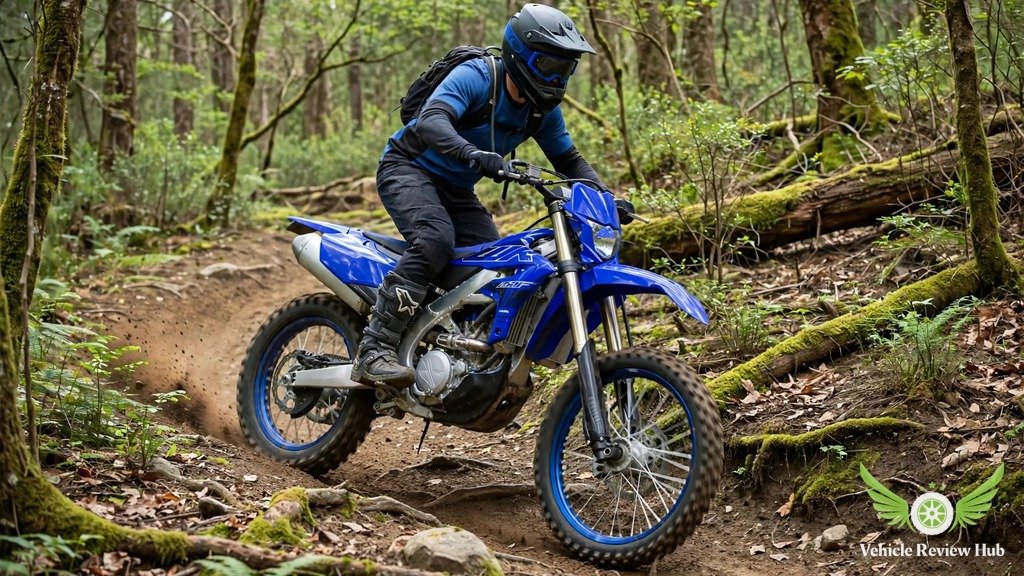
Single-Track, Woods Riding and Everyday Trail Acceleration
Single-track is where Yamaha WR250F performance earns its reputation. The wide-ratio gearbox means first and second gear cover crawling speeds without constant clutch slipping, while the engine’s clean low-end pull lets the bike tractor over roots and rocks without stalling. The 2025 WR250F Idaho test found the same balanced character in steep, loose high-country terrain.
Open Desert, Hill Climbs and Long-Distance Limitations
Open desert and hill climbs expose the honest limits of Yamaha WR250F performance. In fast, open terrain the 250 gives up ground to 450s: it holds its own on flowing fire roads, but long sand washes and steep, loose climbs demand it be kept on the pipe. For Yamaha WR250F performance, the bike is outstanding inside its envelope — woods, single-track and enduro loops — and merely adequate outside it. Riders whose weekends are mostly open desert or long-distance adventure would be better served by a bigger bike, and the full WR250F review covers that sizing question in detail.
The video below, from Odyssey Offroad, shows a 2026 WR250F out on the trail with a new map and revised suspension settings — an owner’s real-world ride on the current-generation bike, not a studio test.
Yamaha WR250F Handling, Braking and Stability
Handling is the surprise chapter of Yamaha WR250F performance for riders coming from bigger bikes. The WR carries its weight low, steers quickly without feeling nervous, and uses suspension directly derived from Yamaha’s motocross program — retuned softer for enduro, but with the same KYB Speed-Sensitive System hardware.
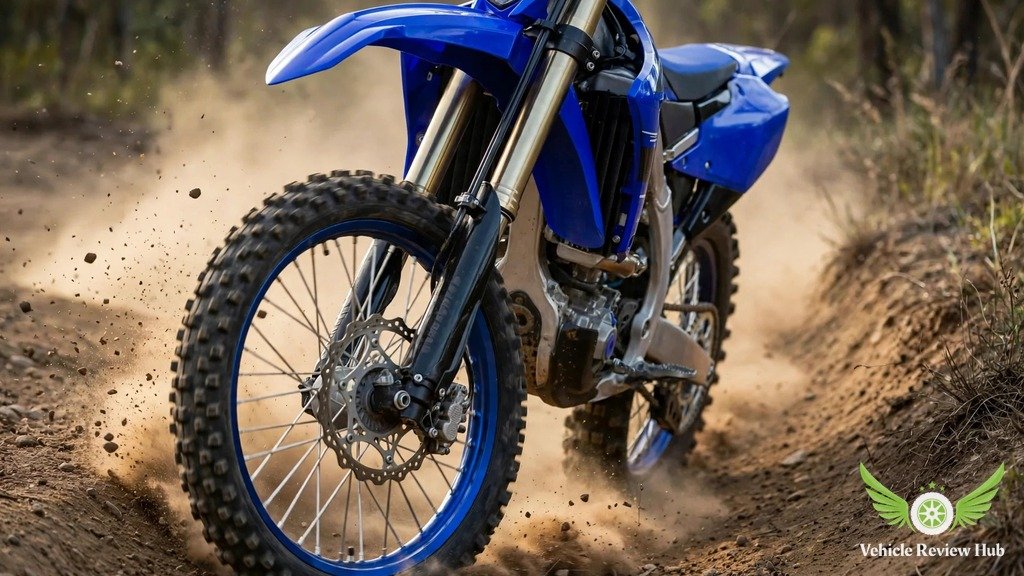
KYB Fork and Shock, Chassis, Dunlop MX33 Tires and Cornering
Yamaha WR250F performance starts at the KYB Speed-Sensitive System coil-spring fork and KYB single shock, fully adjustable on every recent generation. Travel is generation-specific: 2020–2024 bikes offer 12.2 inches of fork travel and 12.5 at the shock, while the 2025 redesign trims that to 11.8 and 12.0 inches, with a 10 mm shorter wheelbase, 5 mm more trail and footpegs lowered 10 mm. The 2025 fork also gains tool-free compression adjustment. Tires follow the same split: MX3S rubber on 2020–2024 bikes, Geomax MX33F/MX33 on 2025-on bikes, both with an 18-inch rear wheel. For Yamaha WR250F performance, the cornering story is consistent across generations: quick steering, a planted feel on rough ground, and a chassis that flatters riders who carry corner speed.
270mm Front and 240mm Rear Discs and Off-Road Braking Features
Braking on the current WR250F is a 270 mm front disc with a two-piston caliper and a 240 mm rear disc with a single-piston caliper, both Nissin units — the headline figures for Yamaha WR250F performance in this section. Year-scope note: early 2020–2022 bikes used a 245 mm rear disc; Yamaha’s own 2024 specification already lists a 240 mm rear disc, which carried into the 2025 redesign. For Yamaha WR250F performance, braking is competition-grade hardware sized for the bike’s weight. The hour-based service schedule covers brake checks in detail.
Yamaha WR250F Performance Compared With Other Enduro Bikes
Yamaha WR250F performance sits in the middle of the 250 enduro class on paper and near the top on versatility. Its rivals are sharper in places, but none matches the WR’s combination of six-speed gearbox, trail equipment and electronic tuning. The class has effectively three answers to the same question, and the WR is the broadest one.
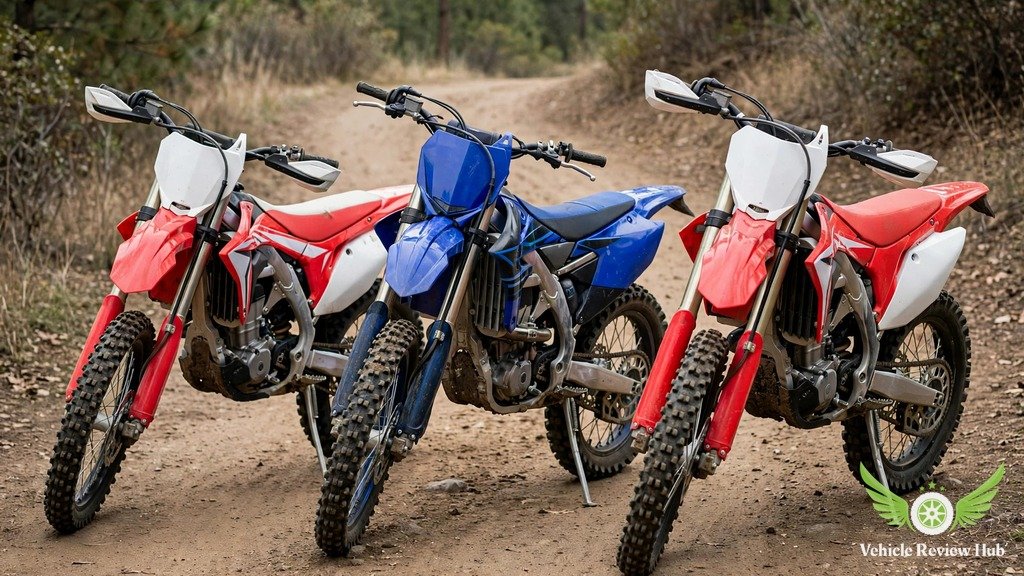
Yamaha WR250F vs Honda CRF250RX and YZ250FX
Against Yamaha’s own YZ250FX, Yamaha WR250F performance is a story of small sacrifices for big versatility. The two share the same basic engine, but the FX runs sharper tuning, no spark-arrestor restriction and no trail equipment — no headlight, meter, fan or kickstand — and weighs 243 lb wet against the WR’s 249 lb on 2025 models. The FX makes slightly more peak power (Dirt Rider’s comparison implies about 39 hp against the WR’s 36.1), and for closed-course GNCC and hare-scramble racing it is the faster tool. Against the 2025 Honda CRF250RX ($8,699 against the WR’s $9,099), Yamaha WR250F performance trades a little sharpness for breadth: the Honda is lighter at 242 lb wet with a five-speed gearbox, while the WR’s six-speed box and Power Tuner electronics suit changing terrain. The 2025 Yamaha YZ250FX, also $9,099, is the same trade in miniature: same family, one built for racing, one for trails.
| Model (2025) | Price | Wet weight | Gearbox / tank |
|---|---|---|---|
| Yamaha WR250F | $9,099 | 249 lb | 6-speed wide-ratio / 2.0 gal |
| Yamaha YZ250FX | $9,099 | 243 lb | 6-speed wide-ratio / 2.1 gal |
| Honda CRF250RX | $8,699 | 242 lb | 5-speed / 2.1 gal |
Is the Yamaha WR250F Suitable for Beginner Trail Riders and Racing?
Yamaha WR250F performance suits two very different riders, and honesty about both matters. For racing, the answer is straightforward: the WR is built for enduro, hare scrambles and GNCC-style competition. For beginners, the answer is qualified: a confident beginner with some dirt experience will find the WR manageable and rewarding — its delivery is softer than a motocrosser’s, its weight is low, and its electronics (from 2020’s map switch to 2025’s traction control) genuinely help. But a true novice faces a 37.6-inch seat height, a rev-happy engine that wants to be ridden hard, and a bike that punishes timid throttle control with stalling in technical sections. The used WR250F prices make this practical: a used WR is a bargain for a progressing rider and a handful for a first-timer.
Yamaha WR250F Performance: Frequently Asked Questions
These questions cover the numbers riders actually ask about Yamaha WR250F performance, each answer labelled by source so tested figures are never confused with estimates.
How much horsepower does the Yamaha WR250F make?
Yamaha publishes no horsepower figure. Dirt Rider’s 2021 test measured 36.1 hp at 12,000 rpm and 17.9 lb-ft at 8,100 rpm on the 2020–2024 generation bike, so a realistic Yamaha WR250F performance figure is about 36 rear-wheel horsepower, measured — not a factory claim.
What is the top speed of the Yamaha WR250F?
There is no verified instrumented stock top-speed test. The honest estimate band for Yamaha WR250F performance is around 75 to 85 mph stock, with most guides near 85 mph. The 94 mph figure in circulation comes from Dirt Bike Magazine’s re-geared, modified desert race bike, not a stock machine.
What MPG does the Yamaha WR250F get?
Yamaha publishes no MPG figure. Dirt Bike Test’s 2015 test averaged 30 mpg on the trail, which is the best tested number available for Yamaha WR250F performance. Plan fuel stops from tank size and that average, not from a factory economy claim.
How far can the Yamaha WR250F go on a tank?
Plan on roughly 50 to 70 trail miles per tank for Yamaha WR250F performance: about 60 miles at the tested 30 mpg average on the 2.0-gallon 2025 tank (about 64 miles on the 2.1–2.2-gallon 2021–2024 tank), less on hard single-track, more on gentle fire roads.
Does the Yamaha WR250F have a six-speed gearbox?
Yes, a wide-ratio six-speed on every recent generation — a key part of Yamaha WR250F performance, giving a low first gear for technical trails and a tall sixth for fire-road transfers. The Honda CRF250RX, by contrast, uses a five-speed.
Does the Yamaha WR250F have traction control?
Only from 2025, when Yamaha added four-level traction control adjustable through the next-generation Power Tuner app. Pre-2025 WR250F models have no traction control, so do not expect it on an older used bike.
What does the Yamaha Power Tuner app and map switch do?
From 2020, the Power Tuner app connects to the bike and the handlebar map switch flips between two maps on the fly. On the stock 2025 bike the app also handles traction control and lap timing, while full custom mapping needs the accessory GYTR ECU.
Is the Yamaha WR250F good for beginner trail riders?
It suits confident beginners with some dirt experience, but it is not a soft beginner bike: the 37.6-inch seat is tall, the engine likes revs, and technical sections punish timid throttle control. Yamaha WR250F performance rewards progressing riders far more than first-timers.
Is the Yamaha WR250F faster than the YZ250FX?
No, slightly slower at peak: the FX’s sharper tuning and lack of spark-arrestor restriction give it roughly 39 hp against the WR’s tested 36.1 hp. The WR wins on trail versatility — headlight, meter, fan, kickstand and softer delivery — which is the point of Yamaha WR250F performance.
Can the Yamaha WR250F race enduro and GNCC events?
Yes. Yamaha WR250F performance is built for exactly that: enduro, hare scrambles and GNCC-style racing in the 250 classes, with competition-grade suspension, a wide-ratio gearbox and a chassis derived from Yamaha’s motocross program.