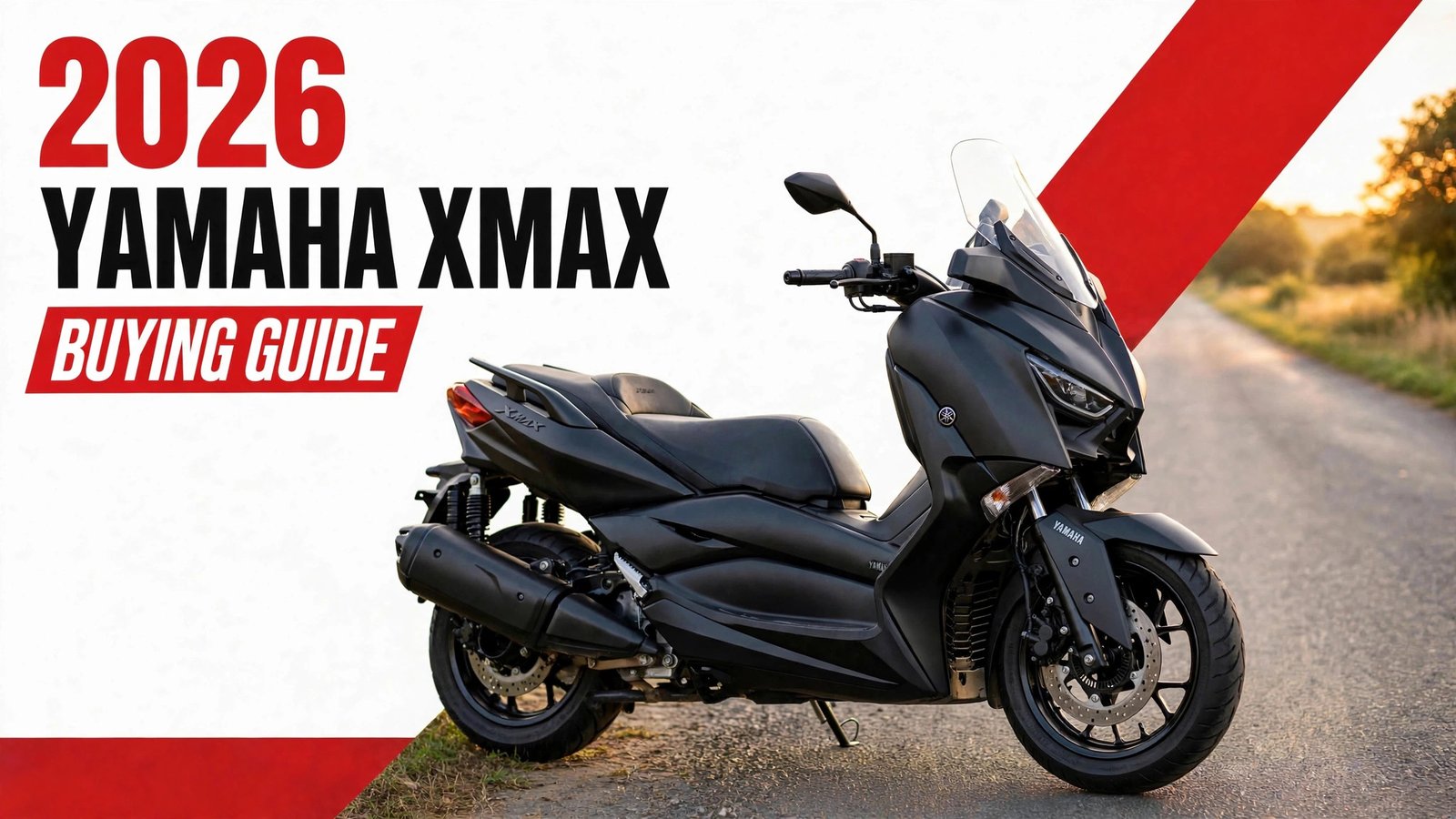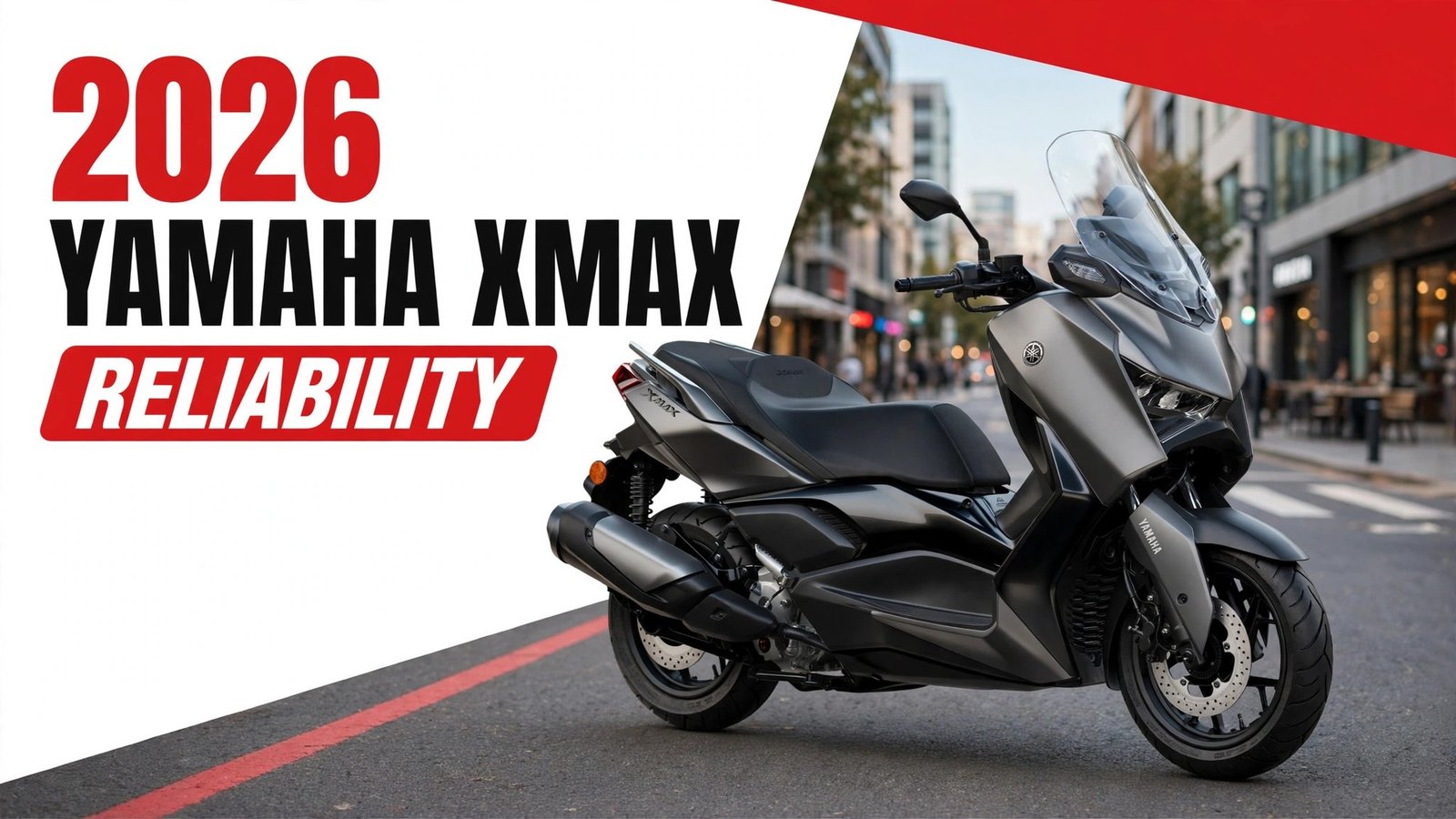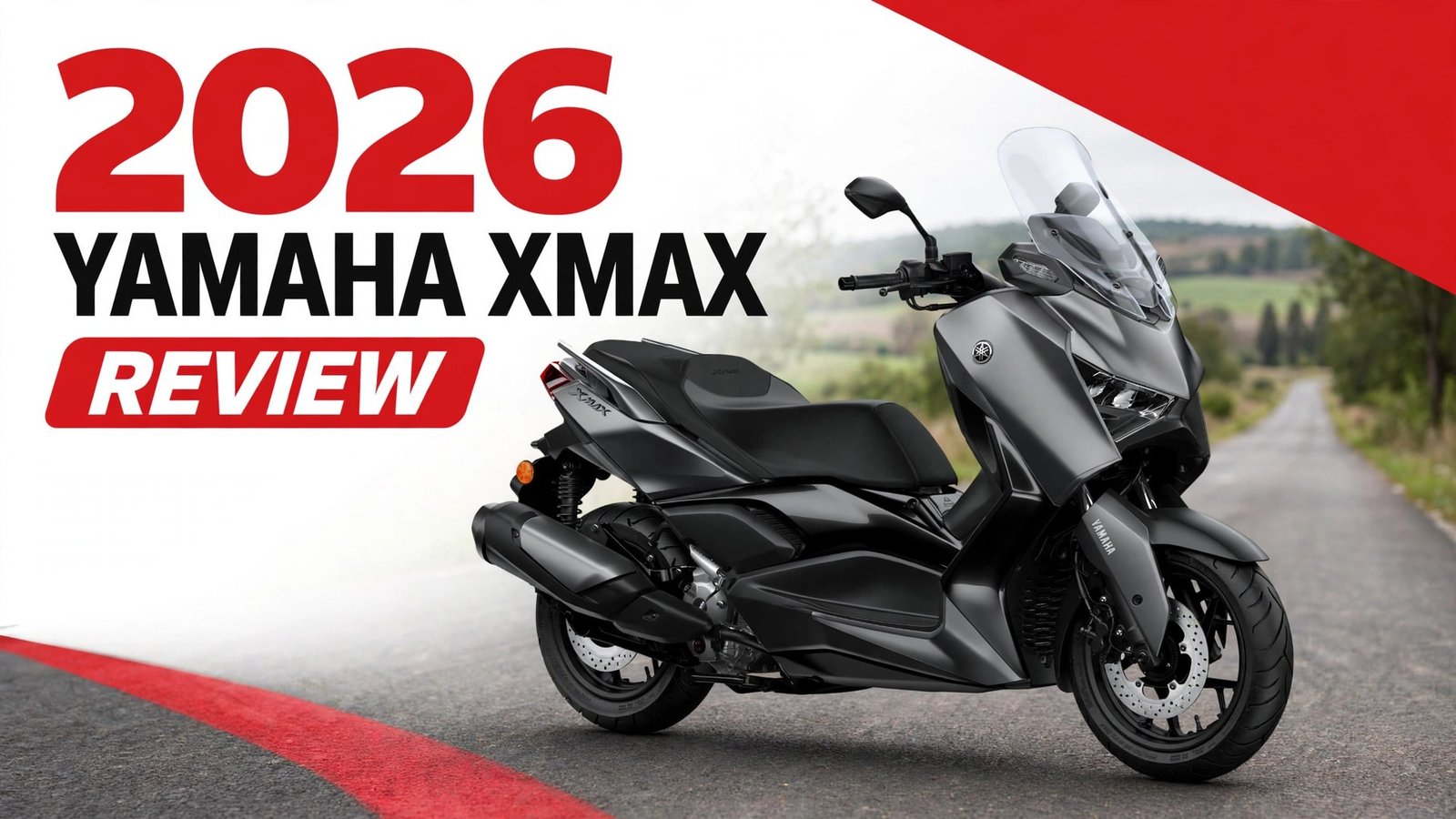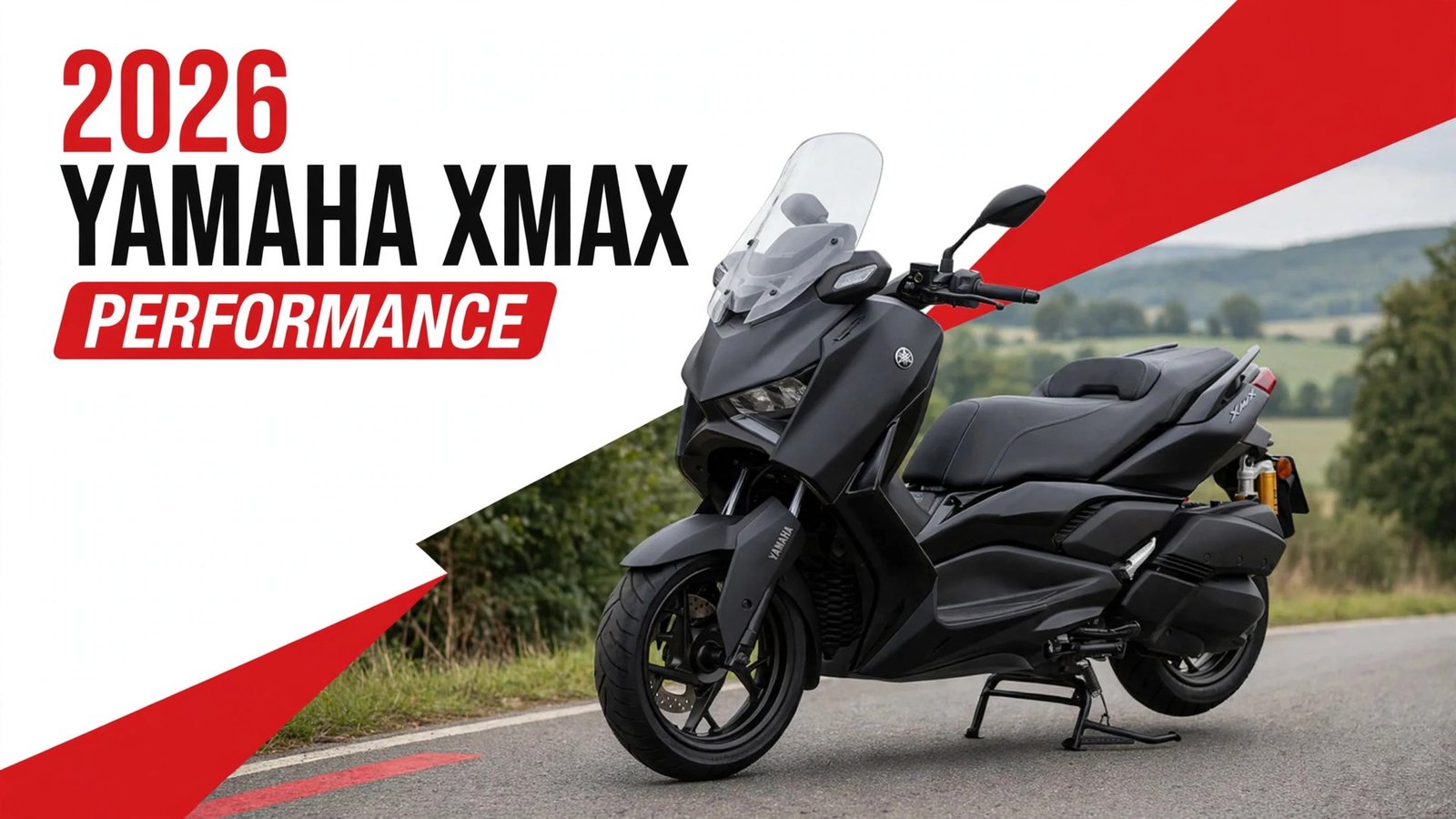
The Yamaha XMAX is a 292cc maxi-scooter built around one clear idea: enough speed for real highway work, enough economy for daily commuting, and enough comfort to ride all day without feeling beaten up. That balance is exactly what Yamaha XMAX performance is about,
So what does Yamaha XMAX performance actually deliver in numbers? Independent GPS testing measured a top speed of 89 mph and a 0–60 mph time of 9.72 seconds, while Yamaha estimates 73 mpg from a 3.4-gallon tank, good for roughly 248 miles between fill-ups. This guide breaks down every part of Yamaha XMAX performance, from the engine and CVT tuning to real-world mileage, handling, braking, and how it stacks up against the Suzuki Burgman 400 and Vespa GTS 300.
Yamaha XMAX Engine Performance and Power Delivery
The heart of Yamaha XMAX performance is a 292cc liquid-cooled single-cylinder engine with a single overhead camshaft, four valves, and fuel injection. It is a modern Blue Core design with a 70.0 mm bore and 75.9 mm stroke, a 10.9:1 compression ratio, and a counterbalanced crankshaft that keeps vibration low. The engine sits low in the frame, which helps the scooter feel planted, and it drives the rear wheel through an automatic CVT and a V-belt final drive, so there is no clutch lever, no foot shifter, and nothing to think about except the throttle.
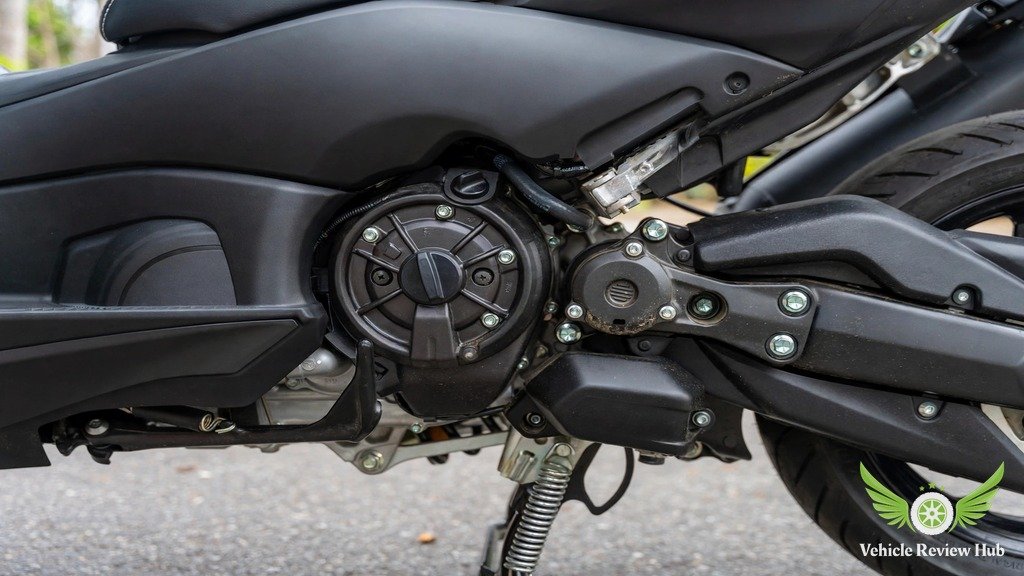
EU Figure 27.6 HP at 7,250 RPM Explained: Yamaha USA Publishes No Power
Here is a fact that surprises many US buyers: Yamaha USA does not publish a horsepower figure for the XMAX at all. The number you will see quoted in reviews, 27.6 hp at 7,250 rpm, comes from Yamaha’s European factsheet, which lists 20.6 kW at 7,250 rpm, and that converts to 27.6 hp. Torque is listed the same way, at 29.0 Nm at 5,750 rpm, or about 21.4 lb-ft.
That distinction matters when judging Yamaha XMAX performance, because 27.6 hp sounds modest on paper. In practice, the single delivers its power low and smoothly, with strong pull from a standstill and enough mid-range to keep up with traffic without wringing the throttle. The full 2026 Yamaha XMAX specifications list the same 292cc single, the CVT automatic, and the 397-pound wet weight that the engine has to move. For a broader picture beyond speed, the Yamaha XMAX review covers pricing by year, the 2023 redesign, and the 2025 technology update in full.
CVT Tuning, Throttle Response and Power Delivery
The CVT is where Yamaha XMAX performance is really shaped. A continuously variable transmission has no fixed gears, so it holds the engine near its best revs as speed rises, giving smooth, stepless acceleration with no shift shock. Yamaha tuned the clutch engagement for comfort rather than aggression: pull away is gentle and refined, with no jerk or snatch, and the scooter builds speed in a calm, linear way.
Throttle response is direct and predictable, with a cable throttle that gives a natural connection between your right hand and the rear wheel. Traction control, remapped for the 2025 model, works quietly in the background, cutting in only when the rear wheel starts to slip on wet or loose surfaces. Keeping the CVT healthy is essential to holding on to Yamaha XMAX performance’s smooth delivery, and the XMAX maintenance schedule explains belt and roller inspection intervals in detail.
Yamaha XMAX Top Speed and Acceleration
Top speed is where Yamaha XMAX performance gets tested most honestly, because a scooter that cannot hold highway speed is limited to city work. Independent GPS testing and period road tests agree on the same picture: a genuine top speed in the high 80s, a comfortable cruising range of 65 to 75 mph, and acceleration that is brisk off the line but tapers noticeably past 70 mph.
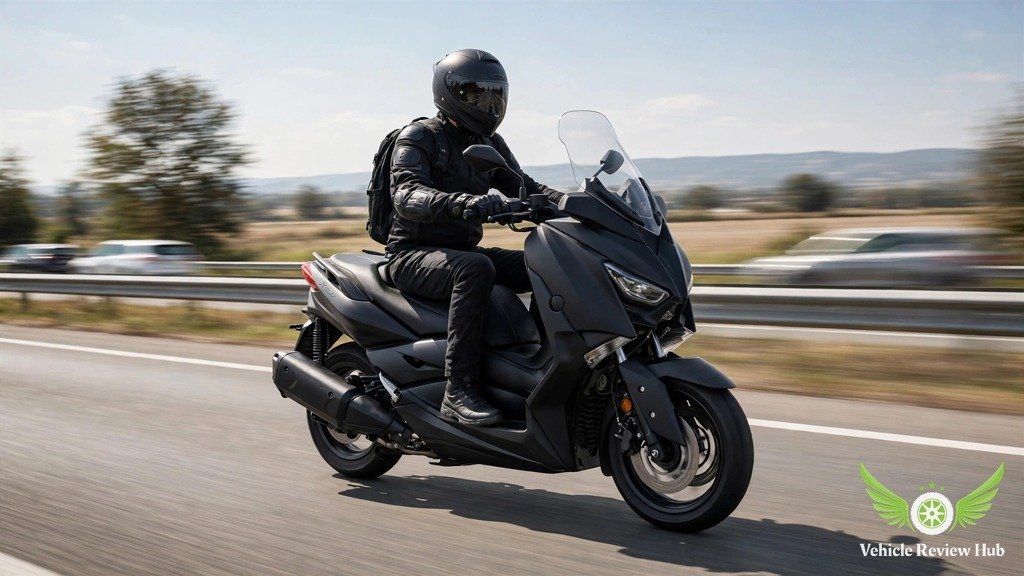
MotoStatz Measured Top Speed 89 MPH and 0-60 in 9.72 Seconds
The most useful acceleration data for Yamaha XMAX performance comes from MotoStatz, which tested the XMAX 300 with GPS equipment rather than relying on the scooter’s own speedometer. Its Yamaha XMAX performance results were 0–30 mph in 3.14 seconds, 0–50 mph in 6.89 seconds, 0–60 mph in 9.72 seconds, 0–70 mph in 13.90 seconds, and 0–80 mph in 22.00 seconds, with a quarter mile of 17.24 seconds at 76 mph. Top speed was 89 mph in a full tuck, and 80 mph seated normally.
Those figures tell a clear story about Yamaha XMAX performance. Up to 60 mph, the XMAX is genuinely quick for a scooter, easily fast enough to stay ahead of city traffic and to merge onto a freeway without drama. Between 70 and 80 mph, acceleration slows sharply, so overtaking at highway speed needs planning and a longer gap. The full MotoStatz XMAX 300 top speed and acceleration test publishes the complete GPS data set behind these numbers.
The video below shows what full-throttle Yamaha XMAX performance looks like in the real world. It is a highway test ride filmed at wide-open throttle, not an instrumented US test, so treat it as a visual sense of how the scooter holds speed at full throttle rather than as a measured result.
Motorcycle.com 94 MPH Indicated and Quarter Mile 17.24 Seconds Context
Motorcycle.com tested the XMAX at its 2018 US launch and reported 94 mph on the freeway, but that figure comes with an important qualifier: it was read from the speedometer, not measured by GPS. Speedometers on scooters typically read a few percent high, so 94 mph indicated is consistent with Yamaha XMAX performance’s true GPS speed in the high 80s, which lines up neatly with the MotoStatz 89 mph result. The Motorcycle.com 2018 Yamaha XMAX review remains a useful period source for how the original US bike rode.
For context, the quarter-mile figure of 17.24 seconds at 76 mph comes from the MotoStatz GPS test, not from Motorcycle.com, and pairing the two sources this way keeps the attribution honest. Together they describe the same reality: Yamaha XMAX performance is strong where it counts for daily riding, adequate on the highway, and clearly not built for outright speed. The honest band is 87 to 90 mph GPS at the top end, with 80 mph the comfortable seated cruising ceiling.
Yamaha XMAX Mileage and Fuel Economy
If top speed is where Yamaha XMAX performance is tested, fuel economy is where it quietly wins. Yamaha estimates 73 mpg, and the 3.4-gallon tank turns that into a theoretical range of about 248 miles.
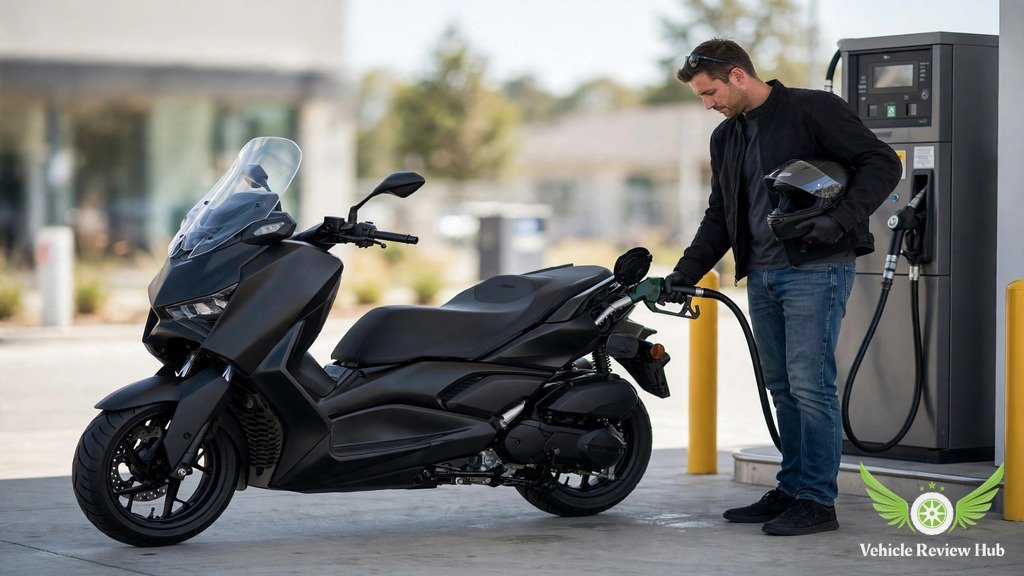
Official Yamaha 73 MPG Estimate and 3.4-Gallon Tank
The official 73 mpg figure for Yamaha XMAX performance is Yamaha’s estimate for the US model, and the math behind the range claim is simple: 3.4 gallons multiplied by 73 mpg equals 248.2 miles. That is a best-case number, achieved in steady, moderate-speed riding, and it assumes you run the tank down to empty, which no sensible rider does. Yamaha XMAX performance in this area is helped by the engine’s modest output, the CVT holding revs in an efficient band, and the scooter’s aerodynamic bodywork, which cuts wind drag compared with a naked motorcycle.
Tested 70 MPG in US Riding and Around 240 Mile Range
Real-world reports put Yamaha XMAX performance at around 70 mpg in mixed US riding, which works out to about 238 miles from the full 3.4-gallon tank, or roughly 240 miles in round numbers.
Yamaha XMAX Real-World Riding Performance
Numbers only tell half the story of Yamaha XMAX performance. The other half is how the scooter feels in the places you actually ride: in traffic, on suburban roads, and on the highway. The step-through design, low 31.3-inch seat, and upright riding position make it easy to manage at low speed, the CVT removes all gear-changing effort, and the 397-pound wet weight is light enough to paddle around a parking lot but heavy enough to feel stable at speed.
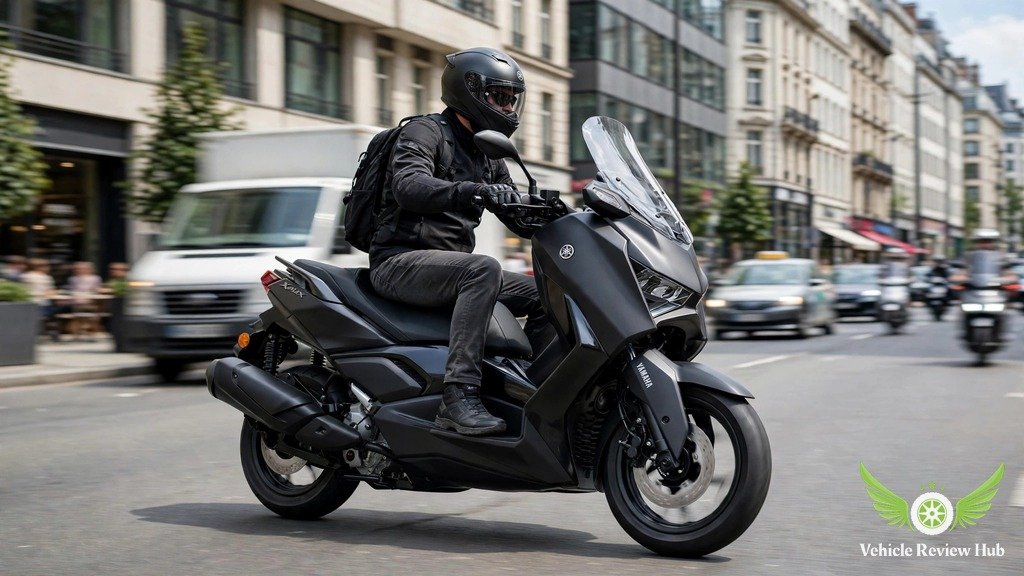
City Riding, Traffic Performance and Everyday Acceleration
In the city, Yamaha XMAX performance feels effortless. The soft CVT launch in Yamaha XMAX performance costs a little off-the-line sharpness but pays off in traffic, where smooth, jerk-free progress matters more than a fast start. The 0–30 mph time of 3.14 seconds is quick enough to pull away from lights ahead of cars, and the scooter’s narrow 30.5-inch width helps it filter through gaps that a wider motorcycle cannot use.
Everyday acceleration is exactly where Yamaha XMAX performance shines, thanks to the 292cc single. Around town, you rarely need more than half throttle, and the engine responds cleanly from low revs with no flat spots. The 2025 update made that daily experience better still, with a 4.2-inch TFT display paired with a 3.2-inch LCD, a USB-C socket, and an electrically adjustable windscreen that moves about 4 inches at the touch of a left-bar switch, as covered in the Rider Magazine 2025 Yamaha XMAX preview.
Highway Riding, Overtaking Ability and Long-Distance Limitations
On the highway, Yamaha XMAX performance is capable but honest about its limits. Cruising at 65 to 75 mph, Yamaha XMAX performance is comfortable and stable, with the bodywork and windscreen doing a good job of keeping wind blast manageable, especially with the 2025 electric screen raised.
Overtaking in Yamaha XMAX performance is where you need to plan. Above 70 mph, acceleration tapers sharply, so passing a truck at 80 mph takes noticeably longer than it would on a larger motorcycle, and you should allow a bigger gap. The Cycle World 2025 Yamaha XMAX first look notes the same 2025 updates, including the lighter muffler and remapped traction control, which help refinement but do not change the fundamental performance envelope.
Yamaha XMAX Handling, Braking and Stability
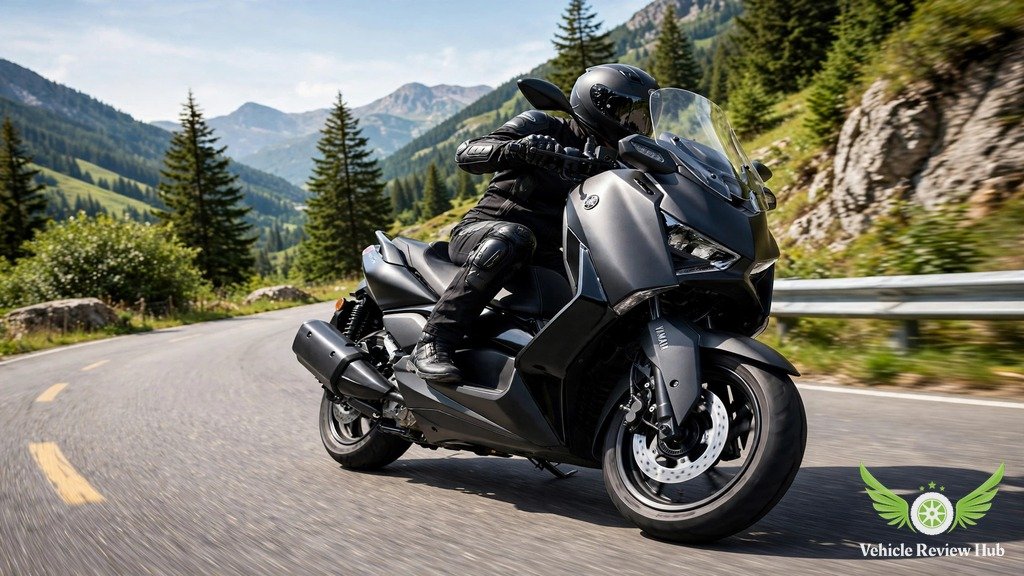
Handling is an underrated part of Yamaha XMAX performance, because a scooter that feels vague or nervous in corners will never inspire confidence, no matter how good its engine is. The XMAX uses a steel frame, a 33 mm telescopic fork with 4.3 inches of travel, and dual rear shocks with 3.1 inches of travel, all tuned for comfort over broken pavement rather than for racetrack sharpness.
Chassis, Tires, Cornering and Traction Control Behaviour
The chassis geometry tells you what Yamaha XMAX performance is built for: a 26.5-degree rake, 3.7 inches of trail, and a long 60.6-inch wheelbase give stability first, with agility second. In corners, the scooter leans predictably and holds its line without drama, and the 15-inch front and 14-inch rear wheels, shod with Dunlop Scoot Smart tires in 120/70-15 front and 140/70-14 rear sizes, roll over bumps better than the 12-inch wheels found on smaller scooters.
Traction control, remapped for 2025, intervenes gently when the rear wheel slips, and it can be switched off for riders who prefer no intervention. There is no lean-sensitive system here, because the XMAX has no IMU, so the traction control reacts to wheel-speed difference rather than to lean angle. In everyday riding, Yamaha XMAX performance in corners is reassuring rather than exciting, and for a commuter that is the right priority.
267mm Front and 245mm Rear Discs and ABS Features
Braking in Yamaha XMAX performance comes from a single 267 mm front disc and a single 245 mm rear disc, both with ABS as standard. The front brake has good feel and enough power for confident stops from highway speed, while the rear brake is useful for low-speed control and for settling the scooter into corners. ABS is always on and cannot be switched off, which is the right choice for a commuter scooter, because it prevents wheel lockup in a panic stop on wet or dirty roads.
One honest note on Yamaha XMAX performance here: the single front disc is adequate rather than outstanding, and riders coming from a motorcycle with twin discs and radial calipers will notice less initial bite. The system is well matched to the scooter’s weight and speed, though, and the ABS gives a safety margin that matters most in the emergency stop you hope never to need.
Yamaha XMAX Performance Compared With Other Maxi Scooters
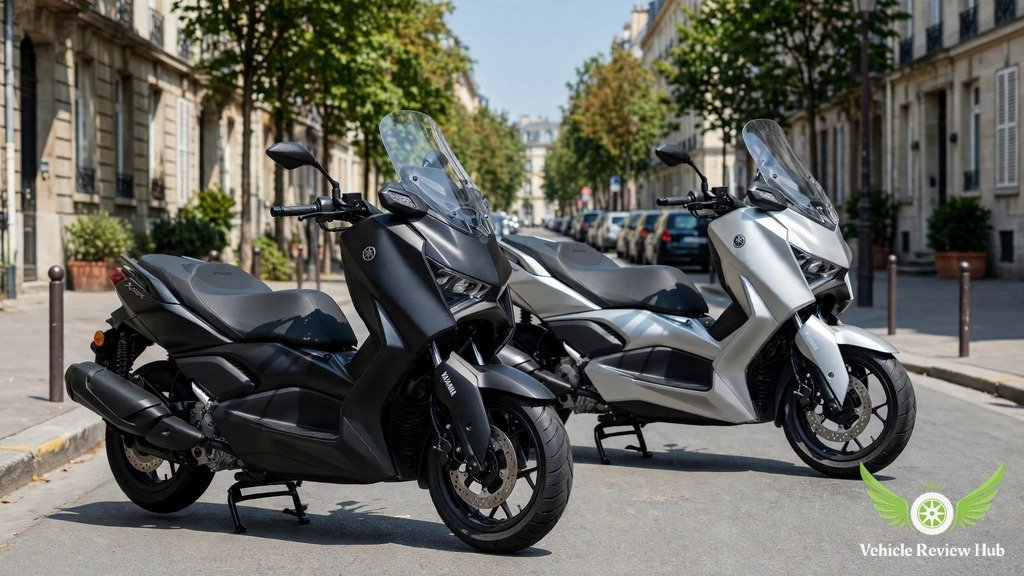
No scooter exists in isolation, and Yamaha XMAX performance only makes full sense next to its rivals. The two closest comparisons are the Suzuki Burgman 400, the bigger and more expensive maxi-scooter, and the Vespa GTS 300, the style-led Italian scooter with a smaller engine and smaller wheels.
Yamaha XMAX vs Suzuki Burgman 400 and Vespa GTS 300
The Burgman 400 is the most serious rival to Yamaha XMAX performance. Its 2026 US price is $8,949, well above the XMAX at $6,399, and it brings a larger 400cc engine, twin 260 mm front discs with a 210 mm rear disc, a 3.6-gallon tank, and a much heavier 481-pound curb weight. That extra capacity gives stronger highway pull and a higher comfortable cruising speed, but it also costs more to buy, more to fuel, and more to muscle around at parking speed. The full 2026 Suzuki Burgman 400 specifications confirm those figures.
The Vespa GTS 300 plays a different game from Yamaha XMAX performance. Its 2025 GTS SuperSport 300 model is priced at $8,099 in the US, above the XMAX, yet its 278cc i-Get single makes 23.8 hp at 8,250 rpm with 26.7 Nm of torque, below the XMAX’s European-rated 27.6 hp, and it rides on small 12-inch wheels with 220 mm discs front and rear. The 2025 Vespa GTS SuperSport 300 specifications list the same price and engine figures used here.
| Model | Engine | US Price | Weight | Tank | Front Brake |
|---|---|---|---|---|---|
| Yamaha XMAX | 292cc single | $6,399 (2026) | 397 lb wet | 3.4 gal | 267 mm disc, ABS |
| Suzuki Burgman 400 | 400cc single | $8,949 (2026) | 481 lb curb | 3.6 gal | Twin 260 mm discs, ABS |
| Vespa GTS 300 SuperSport | 278cc single | $8,099 (2025) | Lighter, 12-in wheels | Smaller tank | 220 mm disc, ABS |
Is the Yamaha XMAX Suitable for Highway Commuting and Daily Riding?
Yes, with one clear condition: your highway cruising speed should sit at 75 mph or below. At those speeds, Yamaha XMAX performance is comfortable, stable, and economical, and the scooter will handle a daily highway commute without complaint. If your commute regularly demands sustained 80 mph-plus cruising, or fast overtakes at those speeds, the Burgman 400’s extra capacity is worth the higher price,
Daily riding is where Yamaha XMAX performance wins outright. The combination of 70 mpg real-world economy, a 240-mile range, two-helmet storage, a low seat, and a smooth CVT makes it one of the easiest vehicles to own in its class. If you are comparing used options as well, the XMAX buying guide covers used prices, inspection points, and ownership costs in detail.
Yamaha XMAX Performance FAQs
These are the questions buyers ask most often about Yamaha XMAX performance, answered directly from the verified figures in this guide.
What is the top speed of the Yamaha XMAX?
GPS testing by MotoStatz measured Yamaha XMAX performance at 89 mph in a full tuck and 80 mph seated normally. Motorcycle.com recorded 94 mph on the speedometer, which reads a few percent high, so the honest GPS band is 87 to 90 mph. Claims of 98 to 103 mph are not supported by GPS testing.
How fast does the Yamaha XMAX accelerate from 0 to 60 mph?
MotoStatz measured Yamaha XMAX performance at 0–60 mph in 9.72 seconds with GPS equipment. It also measured 0–30 mph in 3.14 seconds and a quarter mile of 17.24 seconds at 76 mph.
How much horsepower does the Yamaha XMAX have?
Yamaha USA publishes no horsepower figure for the XMAX. The commonly quoted Yamaha XMAX performance figure of 27.6 hp at 7,250 rpm comes from Yamaha’s European factsheet, which lists 20.6 kW at the same revs, and torque of 29.0 Nm at 5,750 rpm, about 21.4 lb-ft. Always treat these as European ratings, not US-published figures.
What is the Yamaha XMAX mileage and fuel range?
Yamaha estimates 73 mpg for Yamaha XMAX performance, and the 3.4-gallon tank gives a theoretical range of about 248 miles. Real-world mixed riding returns around 70 mpg, for a practical range of roughly 240 miles. Sustained high-speed highway riding pulls economy toward the mid-60s.
Is the Yamaha XMAX good on the highway?
Yes, up to about 75 mph, where Yamaha XMAX performance is stable and comfortable, especially with the 2025 electric windscreen raised. Above 70 mph, acceleration for overtaking slows sharply, and sustained 80 mph cruising sits near the top of its comfortable band.
Does the Yamaha XMAX have a manual gearbox?
No. Yamaha XMAX performance comes from an automatic CVT with a V-belt final drive, so there is no clutch lever and no foot shifter.
How does Yamaha XMAX performance compare with the Suzuki Burgman 400?
The Burgman 400 costs more at $8,949 for 2026, weighs 481 pounds, and has a larger 400cc engine with stronger highway pull and twin front discs. The XMAX at $6,399 is lighter at 397 pounds, cheaper, and more economical,
Is the Yamaha XMAX faster than the Vespa GTS 300?
Yes. Yamaha XMAX performance’s 292cc engine is rated at 27.6 hp in Europe against the Vespa GTS 300 SuperSport’s 23.8 hp, and its larger 15-inch front wheel and longer wheelbase make it more settled at highway speed.
What changed for Yamaha XMAX performance in 2025?
The engine and its output did not change. The 2025 update added an electrically adjustable windscreen, a combined 4.2-inch TFT and 3.2-inch LCD display, a USB-C socket, a redesigned front end with integrated turn signals, a lighter muffler, and remapped traction control. The 2025 price was $6,299, rising to $6,399 for 2026.
What is the Yamaha XMAX service interval for the CVT belt?
CVT belt and roller inspection intervals are part of the routine Yamaha XMAX performance service schedule, and belt condition should be checked at every service.