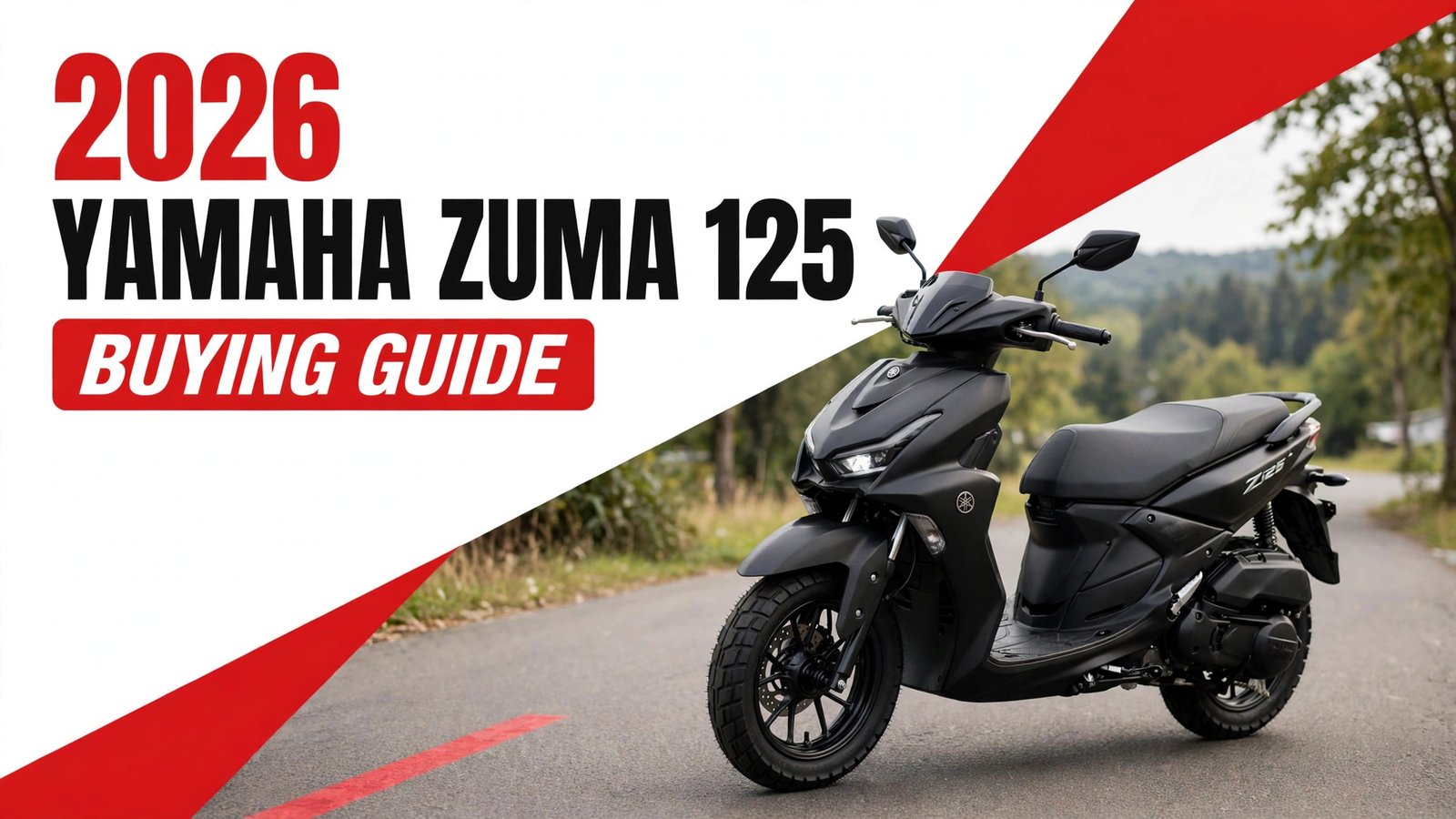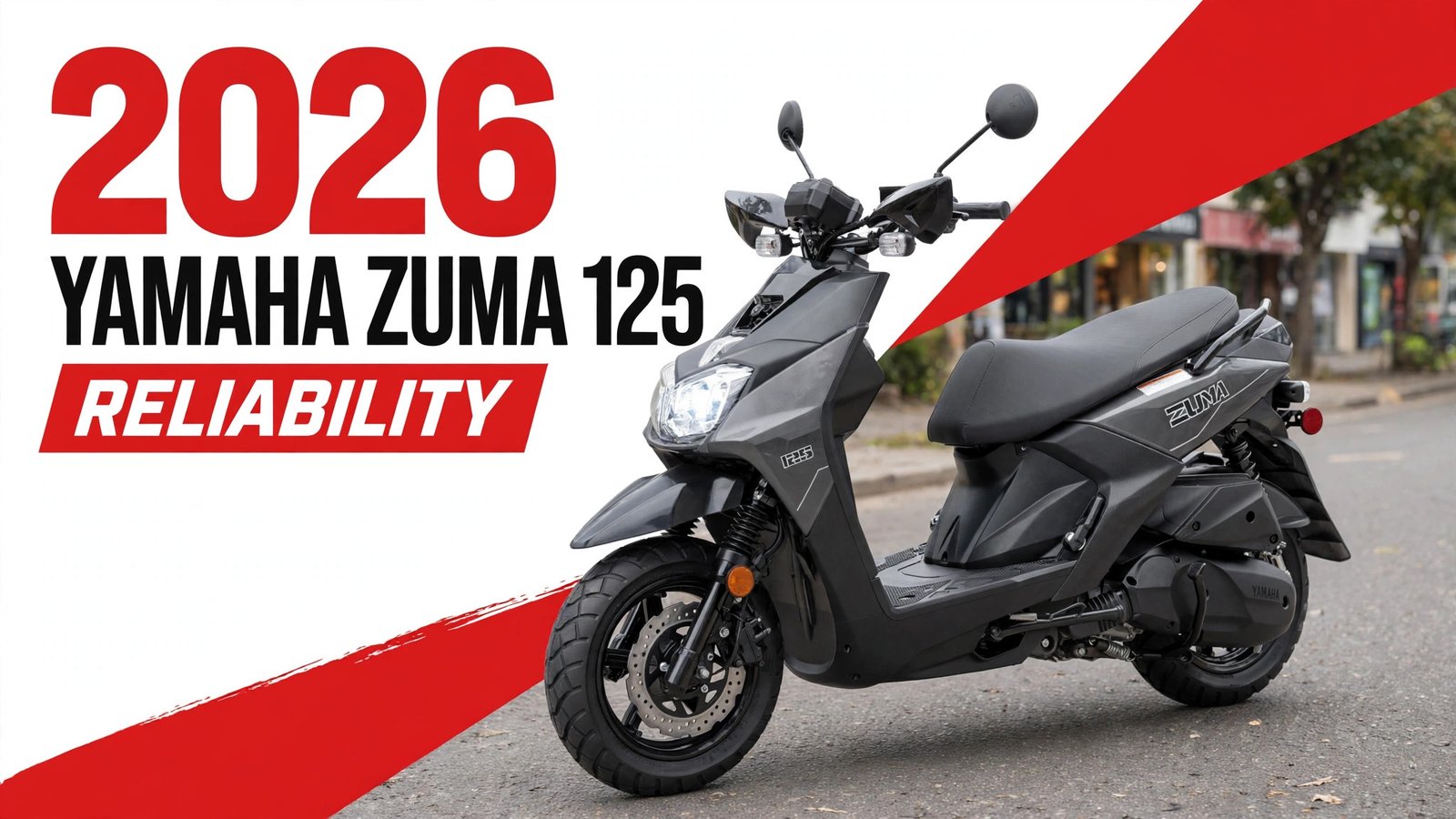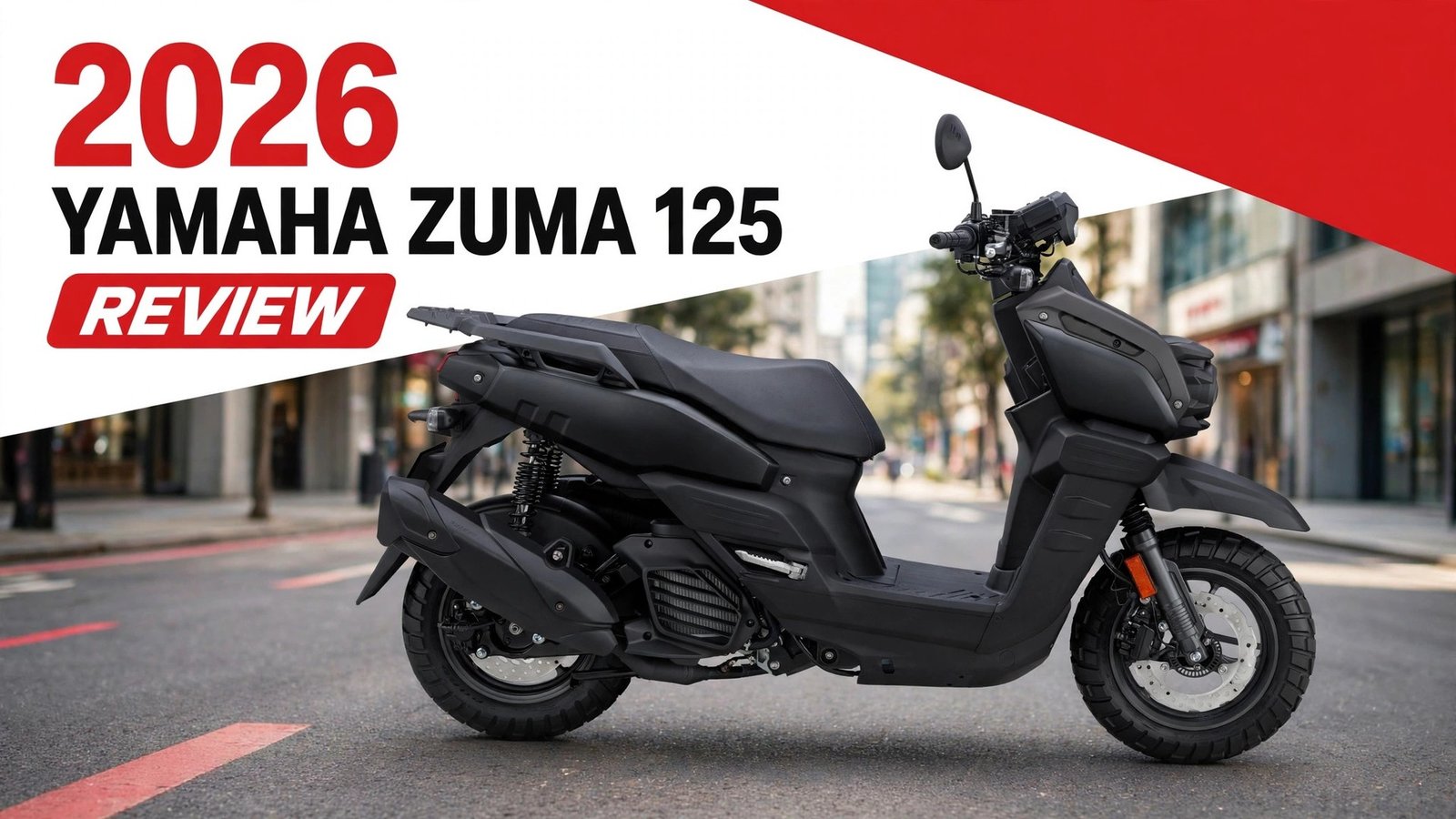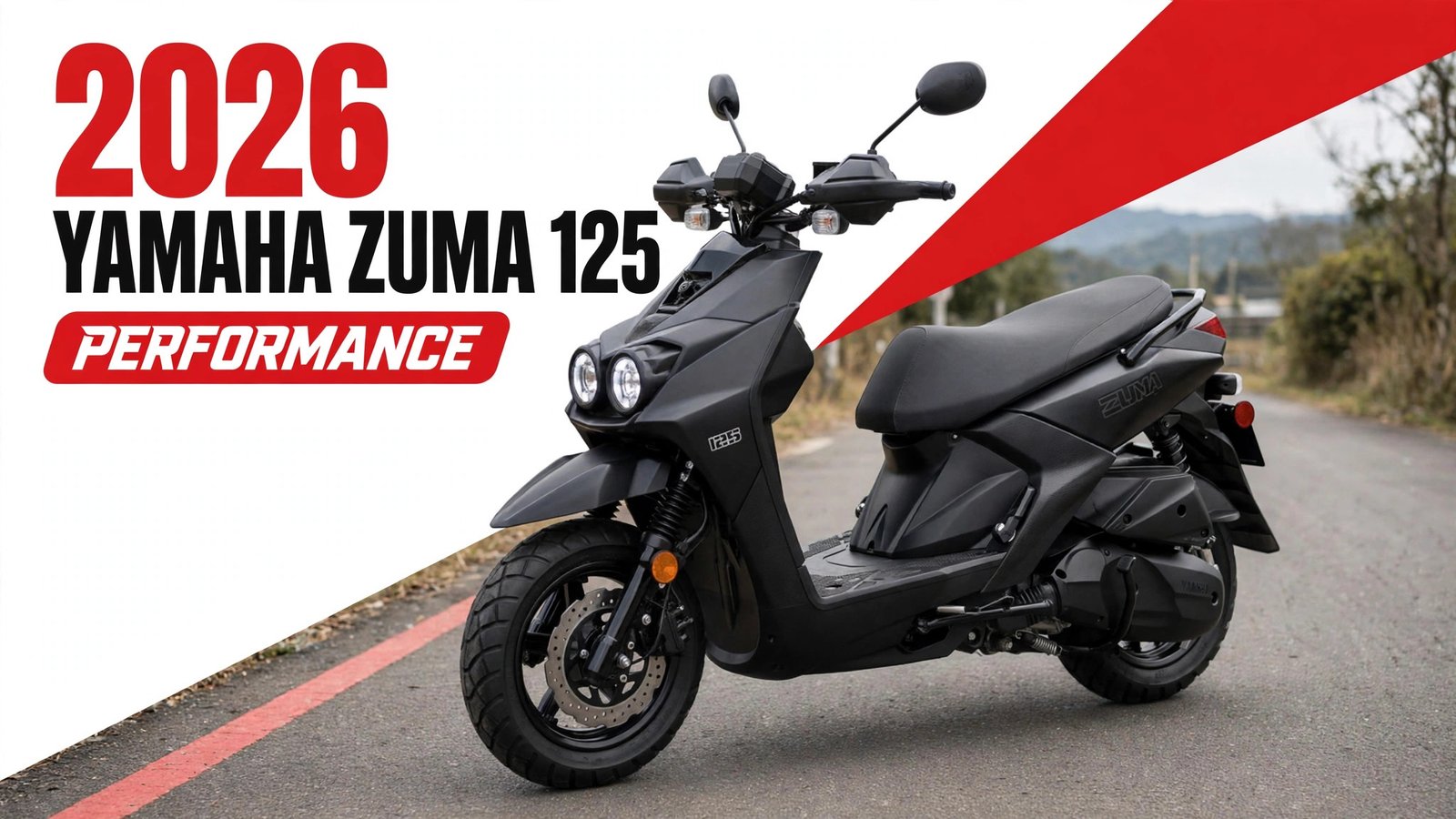
Yamaha Zuma 125 performance is honest city-scooter performance: quick off the line, happiest at 30–50 mph, and upfront about its ceiling. The 125cc liquid-cooled Blue Core single pulls cleanly through traffic, sips fuel, and tops out around 61 mph in the best third-party GPS testing — so Yamaha Zuma 125 performance suits urban commuting and campus runs, not freeway duty. This guide separates Yamaha’s figures from independent tests, explains why no factory horsepower number or major-outlet 0–60 time exists, and compares speed, mileage, and braking with the Honda ADV160 and PCX.
The short version: expect 55–60 mph real-world top speed, 75–85 mpg mixed against Yamaha’s 101 mpg estimate, and roughly 120–136 practical miles from the 1.6-gallon tank. If your daily route stays on roads posted at 55 mph or below, Yamaha Zuma 125 performance is more than enough; with regular 65 mph traffic, you need a bigger scooter.
Yamaha Zuma 125 Engine Performance and Power Delivery
Yamaha Zuma 125 performance starts with the engine itself — and with what Yamaha does not claim for it.
Yamaha Publishes No Horsepower: Why Third-Party HP Figures Differ
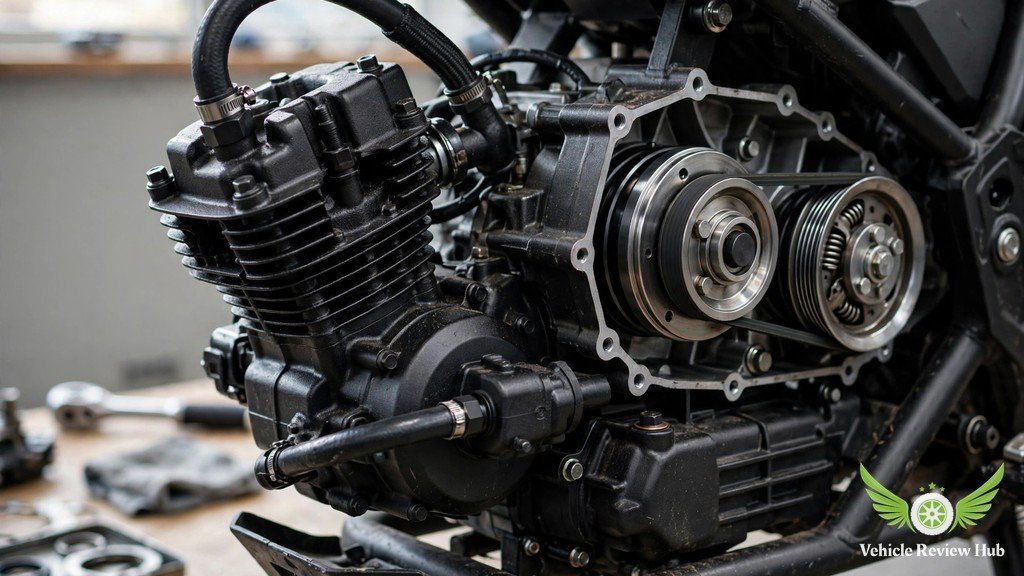
Yamaha Motor Corporation, USA publishes no horsepower figure for the Zuma 125: its official Zuma 125 page lists displacement, cooling, and fuel economy but no power output. The most repeated estimate is around 8 bhp (about 6.0 kW), cited by Wikipedia’s Zuma 125 entry for the earlier air-cooled engine, some compilations list 8 hp and roughly 7 lb-ft for the current liquid-cooled model. Treat all of these as third-party estimates, never as Yamaha’s claim, because Yamaha Zuma 125 performance has no factory power rating to anchor them.
Three things push the estimates apart. First, the generations differ: 2009–2021 bikes used an air-cooled single at 10:1 compression, while the 2022 redesign uses a liquid-cooled Blue Core engine at 11.2:1, so figures do not transfer between generations. Third, overseas BWS 125 figures sometimes get copied onto US pages despite different tuning. The honest statement for Yamaha Zuma 125 performance is the range itself: roughly 8 horsepower by third-party reckoning, torque near 7 lb-ft, and no factory number confirming either.
CVT Tuning, Throttle Response and Power Delivery
What the Zuma lacks in outright power it makes up for in delivery. The fully automatic V-belt transmission with a centrifugal clutch means no clutch lever to feather and no gear to miss — twist the throttle and go. The Blue Core engine’s Variable Valve Actuation (VVA) switches cam profiles as revs rise, boosting low-end pull and top-end breathing. In practice, Yamaha Zuma 125 performance feels peppy to about 50 mph, then the acceleration curve flattens noticeably toward the ceiling.
The CVT deserves most of the credit for Yamaha Zuma 125 performance in the city. It holds the engine near its strongest revs during acceleration, which is why the scooter feels quicker than single-digit horsepower suggests in traffic. The trade-off is CVT drone at sustained high speed and a rubber-band feel when asking for a burst at 55 mph. That is normal scooter behavior, not a fault, and it defines Yamaha Zuma 125 performance — brisk where it matters, patient everywhere else.
| Yamaha Zuma 125 performance snapshot | Figure | Source and status |
|---|---|---|
| Engine | 125cc liquid-cooled SOHC single, 4 valves, VVA | Yamaha USA specs |
| Bore x stroke / compression | 52.0 x 58.7 mm / 11.2:1 | Yamaha USA specs |
| Horsepower | ~8 hp (estimate only) | Third-party only |
| Transmission | V-belt automatic (CVT), centrifugal clutch | Yamaha USA specs |
| Top speed | 61 mph best (GPS); 55–60 mph typical | Third-party GPS testing |
| Fuel economy | 101 mpg Yamaha estimate; 75–85 mpg real-world | Yamaha est. + third-party |
| Fuel tank / practical range | 1.6 gallons / ~120–136 miles | Calculated |
| Wet weight / seat height | 282 lb / 30.9 inches | Yamaha USA specs |
Yamaha Zuma 125 Top Speed and Acceleration
Top speed is the number every prospective buyer asks about, and Yamaha Zuma 125 performance answers it consistently across independent sources — once GPS readings are separated from the speedometer.
Top Speed 55 to 60 MPH Typical and 61 MPH Best Case Explained
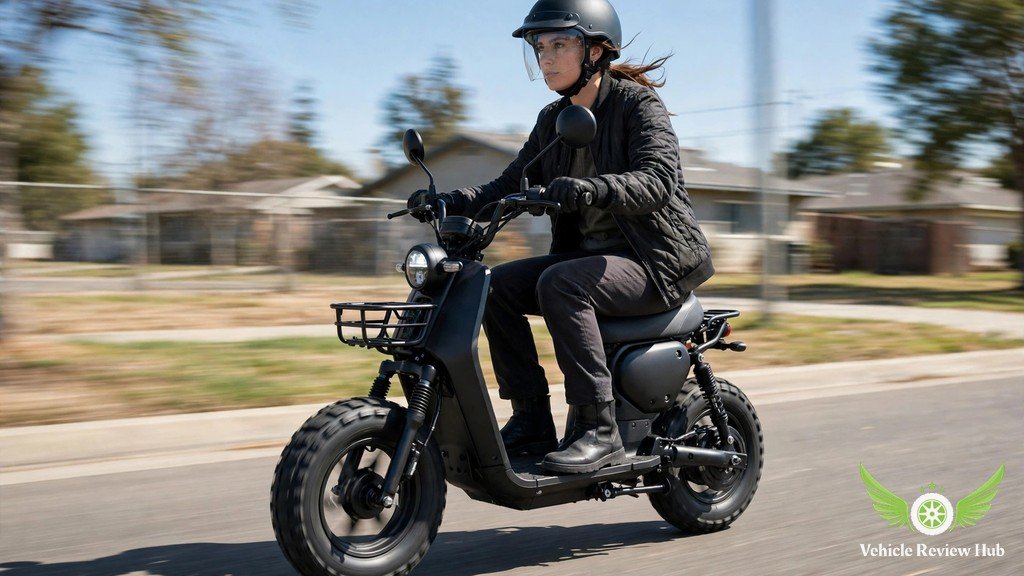
The best credible figure for Yamaha Zuma 125 performance is 61 mph, recorded by GPS in third-party testing under ideal conditions: flat pavement, average-sized rider, no headwind. NCY Motorsports reports a 60 mph ceiling, and owner GPS runs cluster at 55–60 mph, with one owner recording 54 mph GPS carrying a 220-pound rider. The gap is pure physics: weight, headwind, grades, and a passenger all cost speed on a scooter with roughly 8 horsepower pushing 282 pounds plus rider.
For Yamaha Zuma 125 performance, read the speedometer with suspicion. Third-party testing notes the speedometer reads roughly 5 percent optimistic, so an indicated 60 mph is closer to 57 mph GPS. The honest summary for Yamaha Zuma 125 performance is 55–60 mph in normal use and 61 mph as the verified best case — a spread covering nearly every independent report without cherry-picking the fastest one.
The video below is a first ride of a 2022 Zuma: a ride impression of Yamaha Zuma 125 performance, not an instrumented test, showing real-world pace.
Why No Instrumented 0-60 Test Exists From a Major Outlet
No major American motorcycle outlet has published an instrumented 0–60 mph test for the Zuma 125, and that absence is itself informative. Big outlets test larger machines, where acceleration figures differentiate models; for a 125cc city scooter, reviewers describe acceleration qualitatively. One widely cited account notes the Zuma takes ten seconds or more to reach top speed — but that is an observation about the long climb to maximum velocity, not a measured 0–60 time, and should not be quoted as one.
Owner GPS runs are not instrumented tests either: different riders, roads, and wind, with no standardized timing. What can be said with confidence about Yamaha Zuma 125 performance is comparative: brisk to 30 mph, brisk again from 30–50 mph thanks to the CVT, then fading to a crawl beyond 50 mph.
Yamaha Zuma 125 Mileage and Fuel Economy
If top speed is the Zuma’s limitation, fuel economy is its superpower — though Yamaha Zuma 125 performance on mileage needs the same careful reading.
Official Yamaha 101 MPG Estimate and 1.6-Gallon Tank
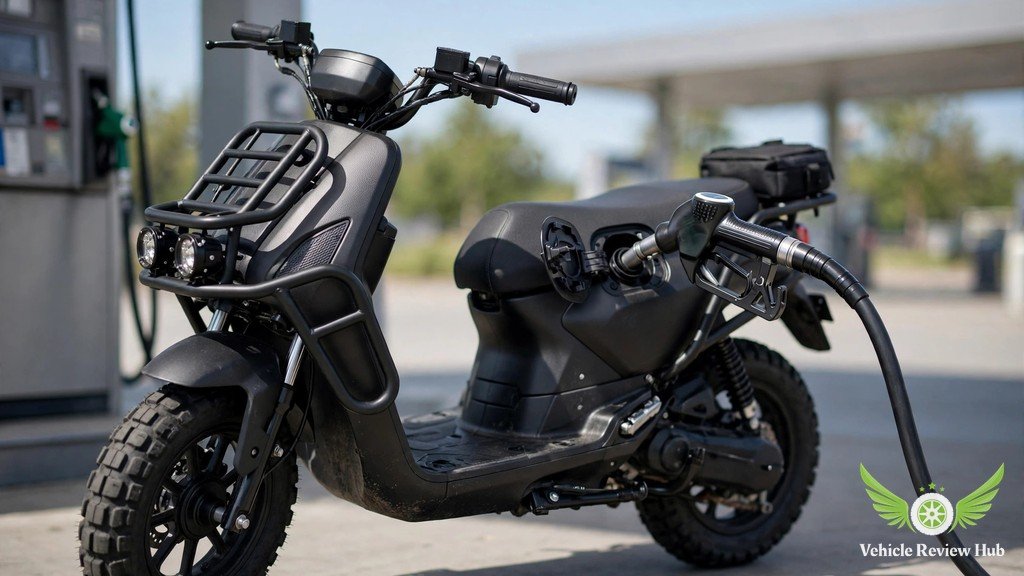
Yamaha rates the current Zuma 125 at 101 mpg, an estimate printed alongside its 1.6-gallon fuel capacity in the 2026 model specifications. Multiply the two and the theoretical range is about 162 miles per tank — the figure behind many “162-mile range” claims. That arithmetic is correct, but it pairs best-case economy with a full tank, and real riding rarely matches either.
The tank is small by motorcycle standards but well matched to the bike: 1.6 gallons keeps weight down, and at city consumption it still means refueling roughly once a week for a typical commuter. For Yamaha Zuma 125 performance, the headline is not the tank size but what the engine does with it.
Tested 75 MPG Overall and Around 162 Mile Estimated Range
Here the numbers need untangling: the two halves of this heading describe different things. Independent reports put real-world Yamaha Zuma 125 performance at roughly 75–85 mpg in mixed riding, while the 162-mile figure is the theoretical range at Yamaha’s 101 mpg estimate, not at 75 mpg. At a tested 75 mpg, a full 1.6-gallon tank gives about 120 miles; at 85 mpg, about 136 miles. Any source pairing “75 mpg” with “162 miles” has mixed the two calculations.
| Riding condition | Economy | Range on 1.6 gallons |
|---|---|---|
| Yamaha estimate | 101 mpg | ~162 miles (theoretical) |
| Mixed real-world riding | 85 mpg | ~136 miles |
| Hard use (full throttle, hills, heavier rider) | 75 mpg | ~120 miles |
| Older air-cooled gen., heavy throttle (2012) | 58 mpg | ~93 miles (different engine) |
Motorcycle.com’s 2012 review of the air-cooled Zuma recorded 58 mpg under heavy throttle — a figure sometimes copied onto current-model pages where it does not belong. The 2022 liquid-cooled Blue Core engine is a different, more efficient design At 85 mpg and $3.50 a gallon, fuel costs roughly four cents a mile, so 5,000 annual city miles cost about $206 — a strong argument for Yamaha Zuma 125 performance as a commuter.
Yamaha Zuma 125 Real-World Riding Performance
Numbers aside, Yamaha Zuma 125 performance in daily use is defined by where the scooter feels effortless and where it feels out of its depth.
City Riding, Traffic Performance and Everyday Acceleration
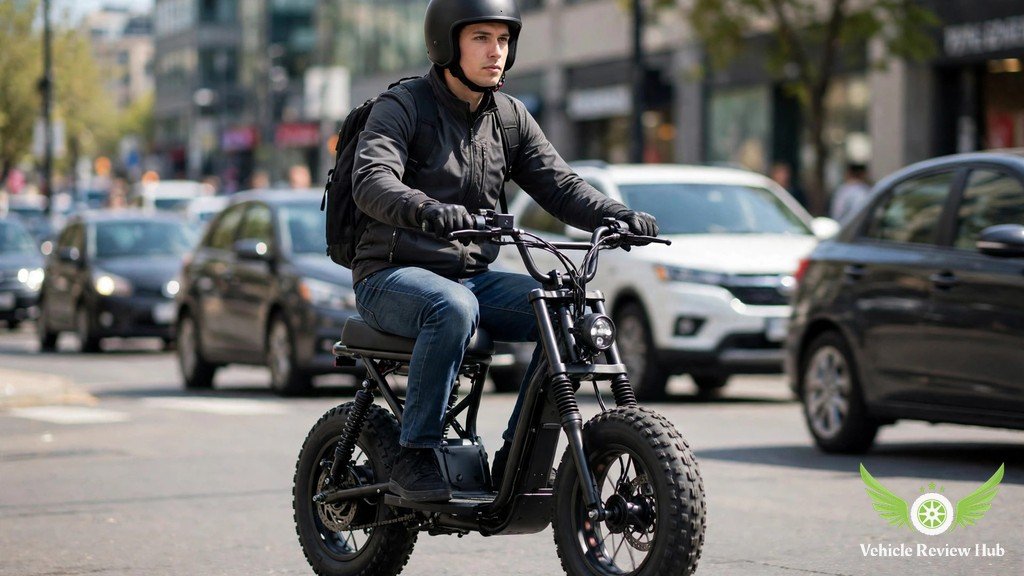
In city traffic, Yamaha Zuma 125 performance is in its element. The twist-and-go CVT launches the scooter ahead of cars from green lights, the 282-pound weight and 30.9-inch seat make filtering and parking easy, and the upright position gives a commanding view over car roofs. Acceleration to 30 mph is genuinely brisk, and 45 mph cruising feels relaxed — the fat tires shrug off manhole covers and patched asphalt.
Beyond speed, practicality is strong: underseat storage swallows a full-face helmet, the front compartment adds a USB socket, and step-through floorboards ease mounting. Owners describe Yamaha Zuma 125 performance as low-drama commuting: start it, ride it, park it anywhere. Weak points show on longer rides: a firm seat some find tiring after 30 minutes, minimal wind protection, and a 120–136 mile range that turns a day trip into fuel planning. For the full ownership picture, the Zuma 125 review covers price and specs, and the Zuma 125 reliability record covers servicing and wear.
Why the Zuma 125 Is Not Freeway Legal or Highway Suitable
The freeway question has two answers, legal and practical, and both point the same way. Legally, California classifies sub-150cc motorcycles as motor-driven cycles under Vehicle Code 405, not freeway-approved there — the California Highway Patrol’s own guidance draws the motorcycle line at more than 150cc. Other states vary, so check local rules — but 125cc puts the Zuma on the wrong side of the line in the largest US motorcycle market.
Practically, even where no rule bars it, Yamaha Zuma 125 performance has no reserve for freeway traffic. At 65 mph the scooter is past its verified top speed, leaving nothing for merging or passing. The honest Yamaha Zuma 125 performance rule: if your fastest regular road is posted at 55 mph or below, the Zuma handles it; at 65 mph, buy a bigger scooter.
Yamaha Zuma 125 Handling, Braking and Stability
Speed is only half of performance. The chassis and brakes shape how confidently the scooter uses its speed, and here Yamaha Zuma 125 performance punches above its price.
Chassis, 12-Inch Wheels, Fat Tires and Cornering
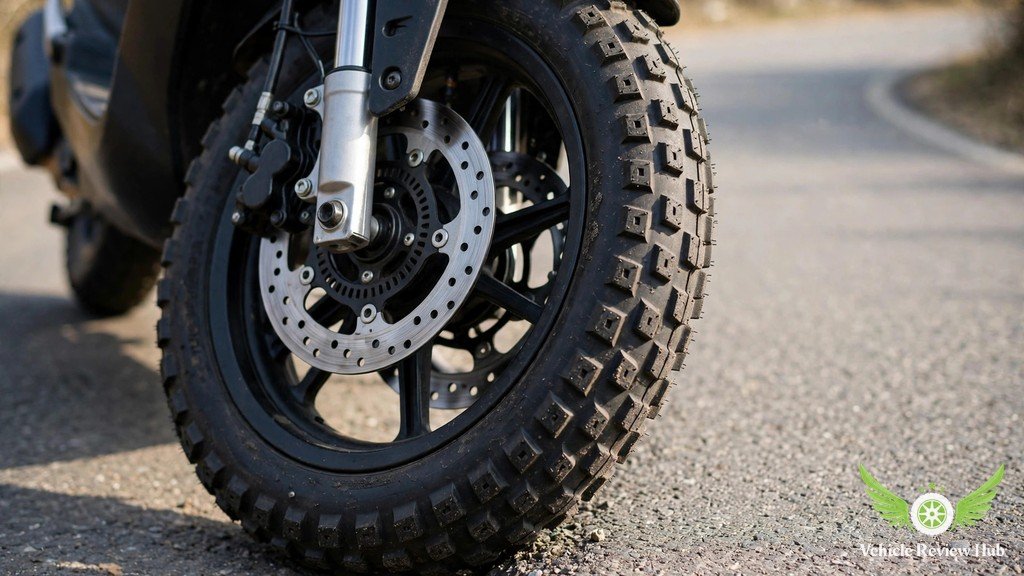
The Zuma rides on a steel-tube frame, 52.8-inch wheelbase, 33mm fork with 3.2 inches of travel, and dual rear shocks with 3.1 inches. The 12-inch wheels wear fat 120/70-12 front and 130/70-12 rear Duro tubeless tires with an aggressive block pattern — the visual signature of the bike and a real handling asset. The fat tires give a bigger contact patch and more cushion than most small scooters’ skinny tires, and the long wheelbase keeps the scooter stable at top speed.
Cornering in Yamaha Zuma 125 performance is confident at city speeds: predictable tip-in, a steady line, and wide tires forgiving mid-corner bumps. Suspension is firm — Yamaha stiffened spring rates for the rough-road brief — so sharp potholes come through more than on a softly sprung city scooter, but the trade-off is control on rough roads. For Yamaha Zuma 125 performance, the chassis verdict is simple: nimble in town, stable at speed, firm over sharp bumps, and honest about its limits.
245mm Front and 230mm Rear Discs With Unified Braking
Braking in Yamaha Zuma 125 performance is a 245mm front disc (double-piston caliper) and 230mm rear disc (single-piston), tied together by Yamaha’s Unified Brake System (UBS). UBS is linked braking, not ABS: pulling the rear lever also applies some front braking, while the front lever operates the front brake alone. No anti-lock system exists on any US Zuma, so a hard grab on a wet road can still lock a wheel.
For Yamaha Zuma 125 performance, the hardware is well matched. The front disc does most of the work, the linked rear adds stability for less experienced riders who instinctively grab the rear lever, and the wave-style front rotor adds a modern touch. One owner-reported caveat: the rear brake can feel weak when wet, so keep pads fresh and discs clean. The 2022 Zuma specifications confirm the disc sizes and the linked-brake description.
Yamaha Zuma 125 Performance Compared With Other Small Scooters
Yamaha Zuma 125 performance only makes sense against its rivals: its strengths — price, economy, simplicity — trade directly against speed and braking technology.
Yamaha Zuma 125 vs Honda ADV160 and Honda PCX
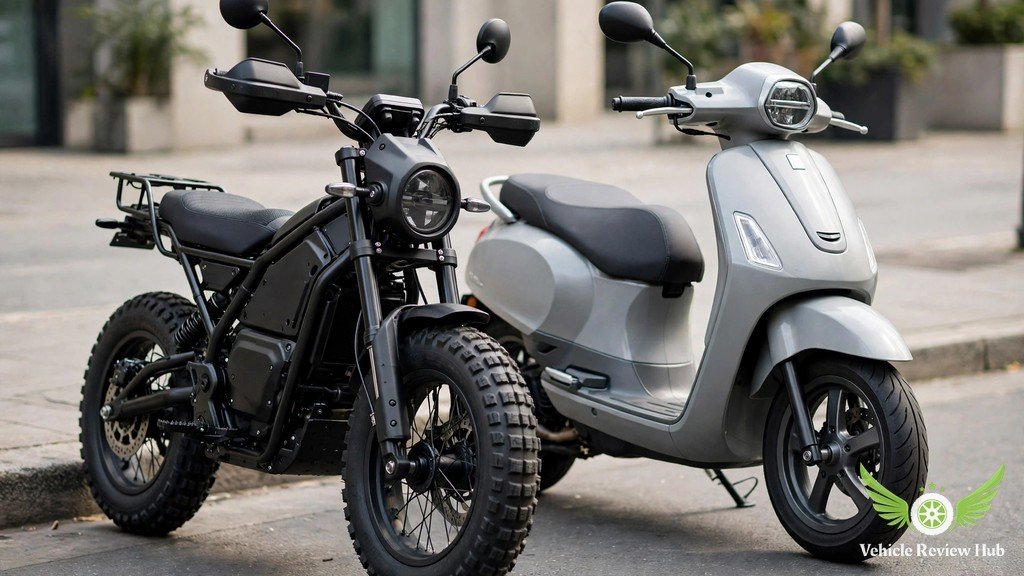
The Honda ADV160 is the closest adventure-styled rival to Yamaha Zuma 125 performance. Honda’s 157cc single, front-wheel ABS, and larger displacement give it freeway-capable speed the Zuma cannot match, but the Honda ADV160 page lists it at $4,499 plus $600 destination — $700 over the Zuma’s 2026 MSRP of $3,799 plus $460 destination.
The Honda PCX is a sleeker, more refined city scooter with a 157cc-class engine and front-wheel ABS, priced at $4,349 before destination. Against the PCX, Yamaha Zuma 125 performance loses on refinement, top speed, and braking technology, but wins on price, economy, and rough-road ability — the PCX’s smaller wheels and street tires are not built for broken pavement. A step up within Yamaha’s own range, the larger XMAX performance figures show what another 167cc buys: genuine freeway ability at roughly twice the price. And the Zuma 125 buying guide covers used prices and inspection.
| Scooter | Engine | Top speed | Economy | Brakes | Current MSRP |
|---|---|---|---|---|---|
| Yamaha Zuma 125 | 125cc single, VVA, CVT | 61 mph best (GPS) | 101 mpg est.; 75–85 tested | 245/230mm discs, UBS linked (no ABS) | $3,799 + $460 dest. |
| Honda ADV160 | 157cc single, CVT | Freeway-capable | Lower (larger engine) | Front-wheel ABS | $4,499 + $600 dest. |
| Honda PCX | 157cc single, CVT | Freeway-capable | Lower (larger engine) | Front-wheel ABS | $4,349 before dest. |
Is the Yamaha Zuma 125 Suitable for New Riders and Daily Riding?
For new riders, Yamaha Zuma 125 performance is close to ideal, licensing caveat aside. The twist-and-go CVT removes the hardest skill a new motorcyclist must learn, the 282-pound weight is easy at parking speeds, the 30.9-inch seat suits shorter riders, and forgiving power delivery turns a ham-fisted throttle hand into a surge, not a scare. A safety course is strongly recommended, and most states require a motorcycle endorsement: at 125cc the Zuma exceeds the 50cc moped threshold.
For daily riding, the Yamaha Zuma 125 performance verdict depends entirely on the route. A commute of city streets, campus roads, and suburban arterials posted at 55 mph or below is exactly what the Zuma was built for, at roughly four cents a mile in fuel. A commute with freeway stretches or sustained 65 mph traffic is not — the scooter will do it at its absolute limit, unhappily and, in some states, unlawfully. Match the machine to the fastest road on your route, not the average one, and Yamaha Zuma 125 performance will rarely disappoint.
Yamaha Zuma 125 Performance FAQs
Direct answers on Yamaha Zuma 125 performance, from verified figures and labelled estimates.
What is the top speed of the Yamaha Zuma 125?
About 61 mph in the best third-party GPS testing, with 55–60 mph typical. The speedometer reads roughly 5 percent optimistic, so an indicated 60 mph is closer to 57 mph GPS — the key number in Yamaha Zuma 125 performance.
How much horsepower does the Yamaha Zuma 125 have?
For Yamaha Zuma 125 performance, Yamaha publishes no horsepower figure for the US Zuma 125. Third-party estimates cluster around 8 horsepower and roughly 7 lb-ft of torque — estimates, never a factory rating.
What is the 0–60 time of the Yamaha Zuma 125?
No major outlet has published an instrumented 0–60 test for Yamaha Zuma 125 performance, so no verified figure exists; owner GPS runs should not be quoted as one.
What gas mileage does the Yamaha Zuma 125 get?
Yamaha estimates 101 mpg for Yamaha Zuma 125 performance; real-world mixed riding returns roughly 75–85 mpg. The 2022 liquid-cooled engine beats the older air-cooled generation’s 58 mpg under heavy throttle in 2012 testing.
How far can a Yamaha Zuma 125 go on a tank?
For Yamaha Zuma 125 performance, about 120 miles at a tested 75 mpg and 136 miles at 85 mpg, from the 1.6-gallon tank. The often-quoted 162 miles is the theoretical range at Yamaha’s 101 mpg estimate, not tested economy.
Is the Yamaha Zuma 125 freeway legal?
Not everywhere for Yamaha Zuma 125 performance. In California, sub-150cc machines are motor-driven cycles, not freeway-approved; other states vary, so check local rules. Even where legal, the Zuma has no reserve for 65 mph traffic.
Does the Yamaha Zuma 125 have ABS?
No. Yamaha Zuma 125 performance uses Yamaha’s Unified Brake System, linking the rear lever to some front braking, but no anti-lock system exists on any US Zuma 125.
Is the Yamaha Zuma 125 good for beginners?
Yes. For Yamaha Zuma 125 performance, the automatic CVT, 282-pound weight, low 30.9-inch seat, and forgiving delivery make it one of the easiest powered two-wheelers to learn on, though most states still require a motorcycle endorsement.
How does the Zuma 125 compare with the Honda ADV160?
Against Yamaha Zuma 125 performance, the ADV160 is faster, freeway-capable, and has front-wheel ABS, but costs $700 more before destination and drinks more fuel. The Zuma is cheaper, more economical, and tougher on rough roads.
Can the Yamaha Zuma 125 carry a passenger?
Yes — the seat has room for two — but a passenger noticeably cuts top speed and acceleration on a scooter with roughly 8 horsepower, and Yamaha Zuma 125 performance suffers most on hills.
Does VVA make a real difference on the Zuma 125?
Yes, in the way Yamaha Zuma 125 performance is delivered rather than the peak number. Variable Valve Actuation gives stronger low-end pull and freer top-end breathing, which is why the current bike feels perkier than its horsepower estimate suggests.