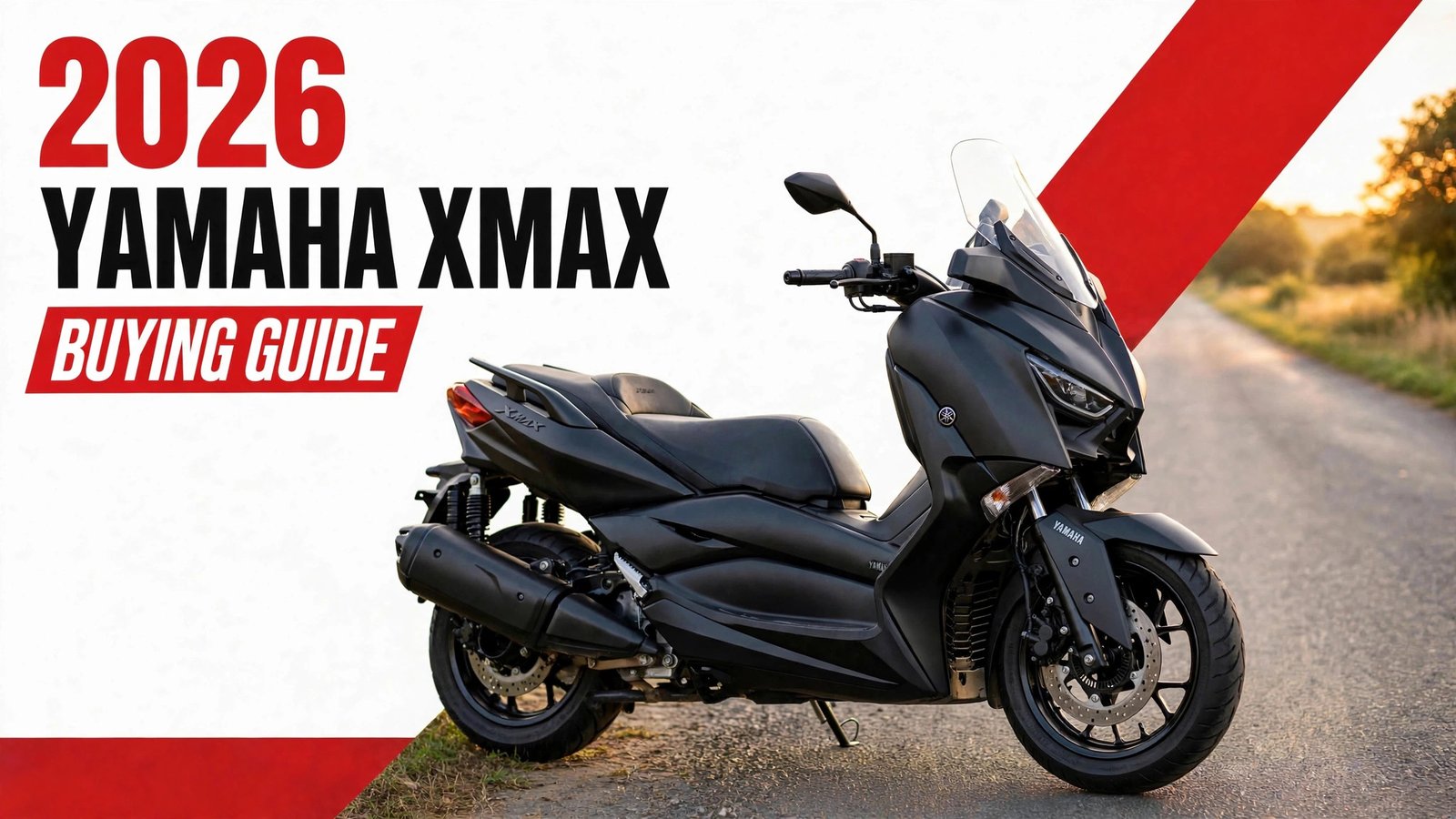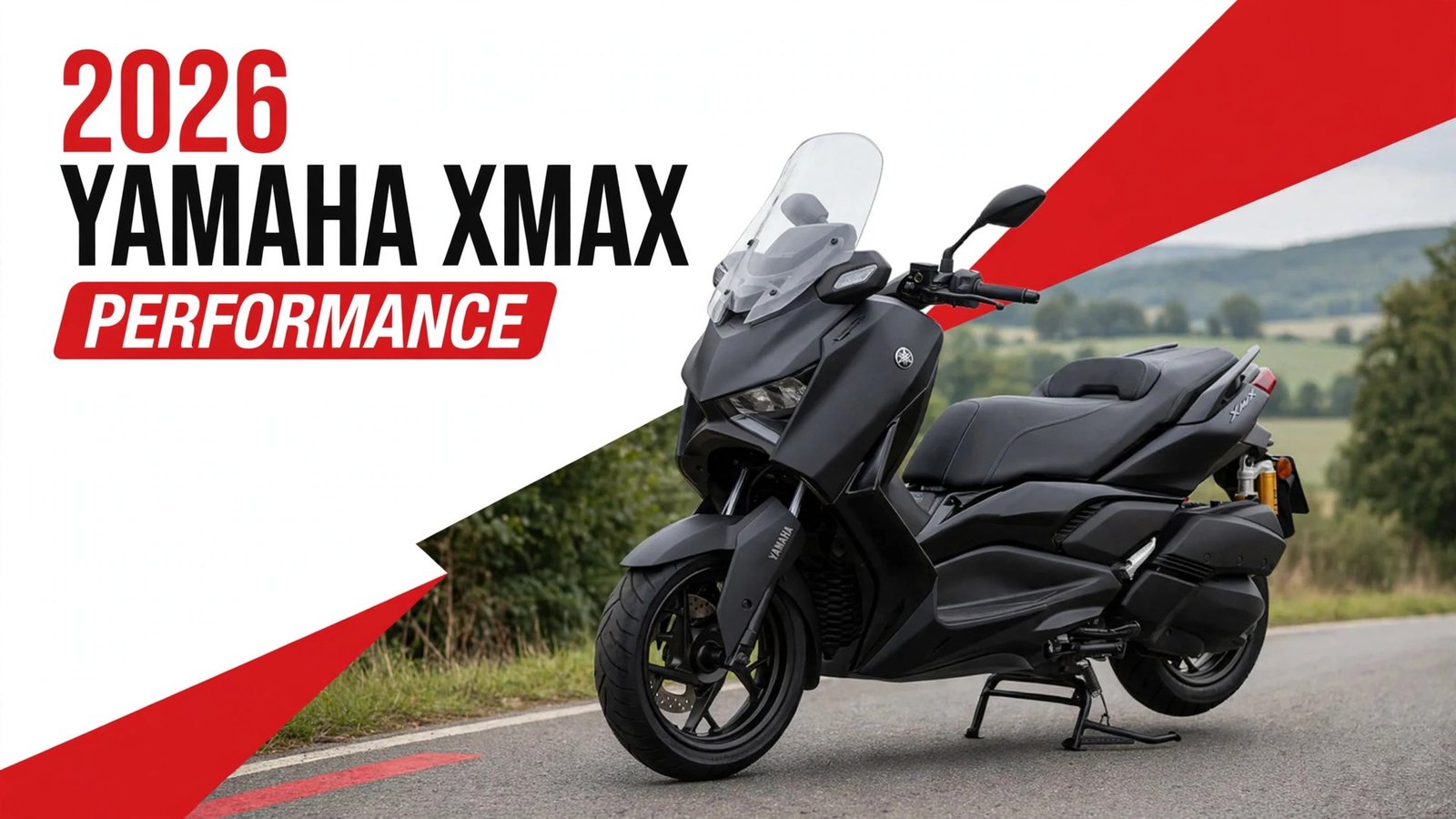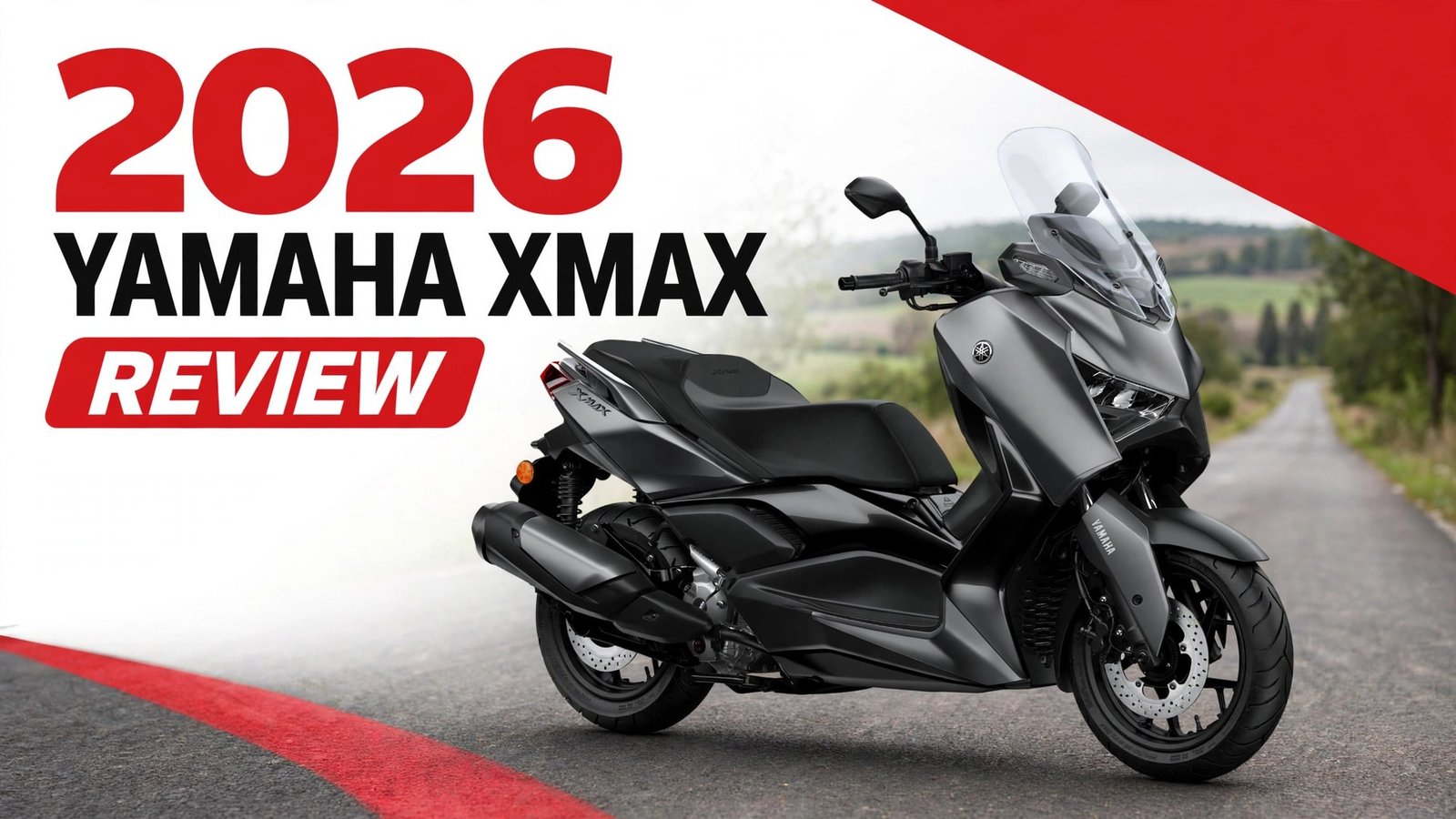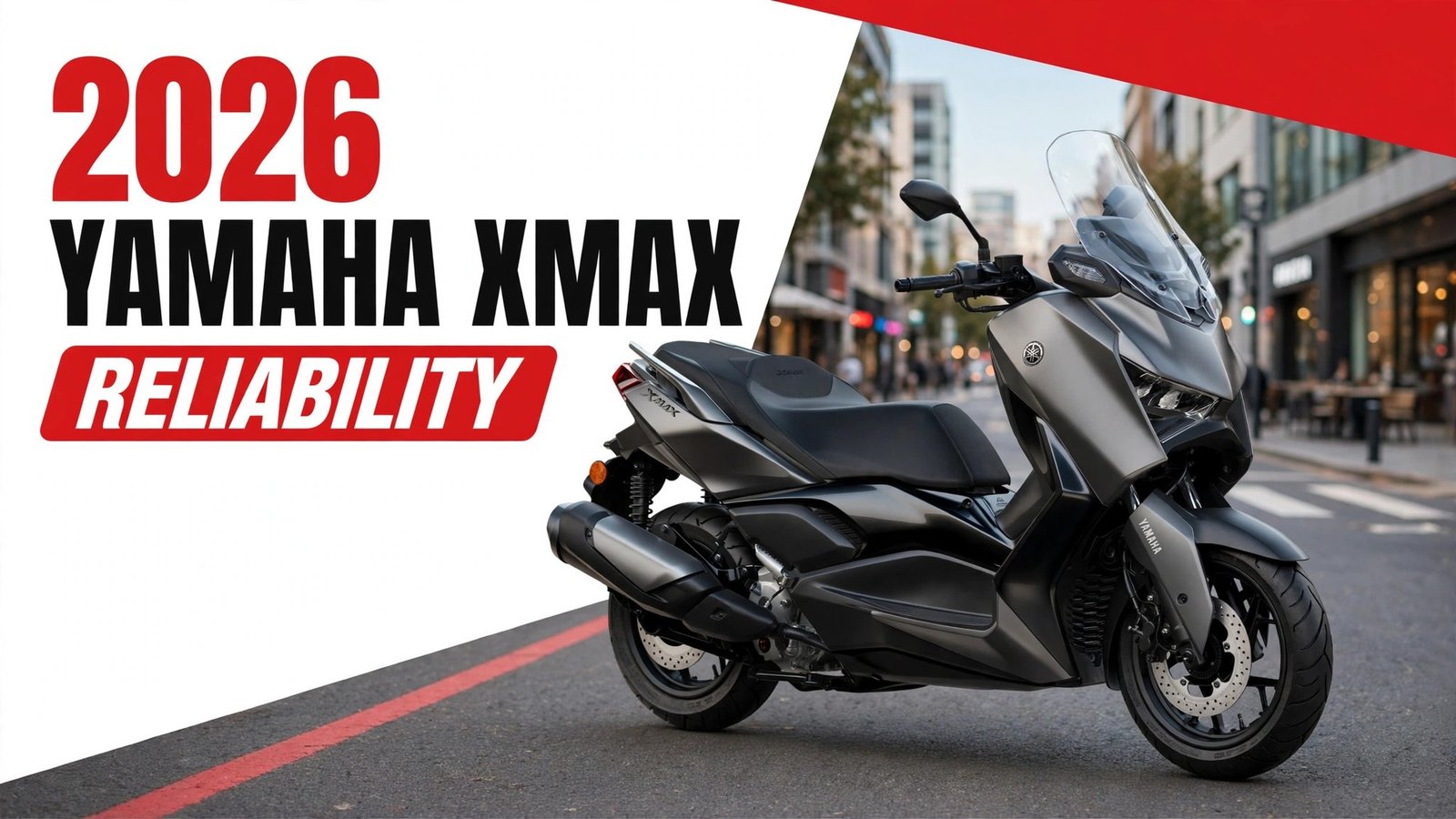
Yes, Yamaha XMAX reliability is strong — with one recall you must check before you buy. The 292cc Blue Core single, the fully automatic CVT and the V-belt final drive form a simple, proven package, and Yamaha XMAX reliability shows up in the way these scooters start every morning and cover highway miles without drama. But Yamaha XMAX reliability is not automatic: the 2018–2022 models carry a nationwide camshaft recall, the CVT belt is a wear item with a firm 12,000-mile replacement point, and the small battery punishes owners who park for months without a charger. This guide covers the service schedule, all three recalls, ownership costs and the habits that keep Yamaha XMAX reliability high.
First, the basics: the XMAX is a scooter, not a small motorcycle. There is no clutch lever, no foot shifter and no chain — a continuously variable transmission and a V-belt drive the rear wheel. That changes what wears out — and therefore what Yamaha XMAX reliability depends on. For the scooter itself, see the Yamaha XMAX review for price and specs, and the XMAX performance figures for what the 292cc engine delivers on the road.
Yamaha XMAX Reliability Overview
Yamaha XMAX reliability begins with a long production run: sold in the United States since the 2018 model year, with a mechanical package barely changed since: the same 292cc liquid-cooled single, the same CVT, the same steel frame and the same brake sizes. That long, stable run means problems have had eight years to appear — and very few serious ones have. That history is why Yamaha XMAX reliability can be judged on evidence rather than promises.
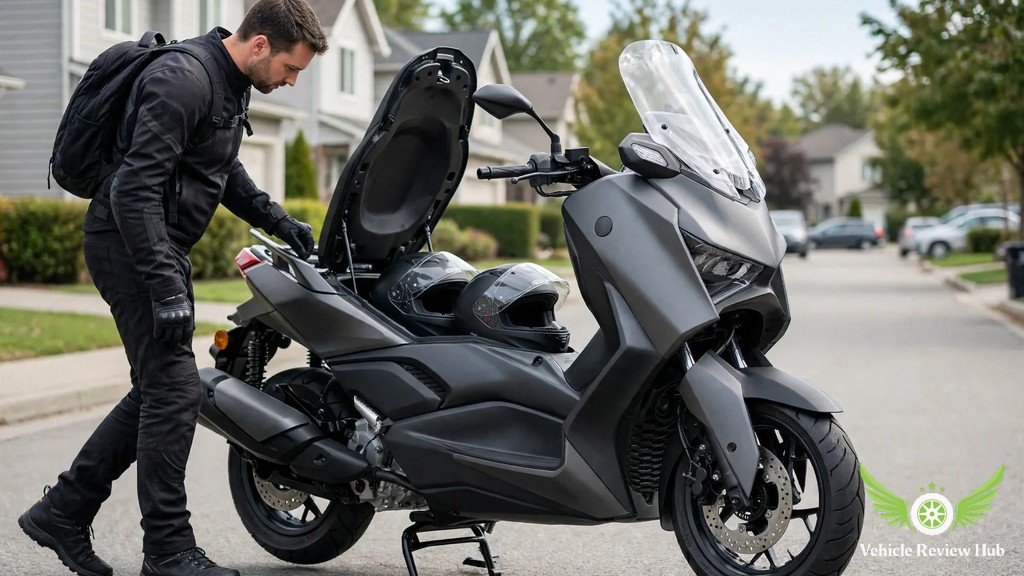
By the measures that matter — starting every morning, finishing long trips, avoiding expensive failures — Yamaha XMAX reliability scores well. The Blue Core engine is a low-stress single (European figure 27.6 hp at 7,250 rpm; Yamaha USA publishes no horsepower figure), and liquid cooling keeps temperatures stable in traffic. Owner reports describe the scooter as smooth, quiet and trouble-free, with complaints centering on comfort rather than breakdowns. Still, Yamaha XMAX reliability depends on consumables with shorter lives than motorcycle parts: the V-belt, rollers, rear tire and battery.
MCN Owners Reliability 4.4 Out of 5 From Only 5 Reviews Explained
The most quoted owner score comes from MotorCycle News in the UK, where owners rate XMAX 300 reliability at 4.4 out of 5. State the context plainly: that score rests on only five owner reviews. Five riders cannot support a claim that the XMAX is the most reliable scooter in its class. What it does support is narrower: the owners who reviewed the bike were happy with it, and none reported a major failure. Treat the 4.4 figure as encouraging sentiment for Yamaha XMAX reliability, not as a statistically solid rating.
How Mileage, Maintenance History and Previous Use Affect Reliability
With the XMAX, the service book matters more than the odometer. A 2019 example with 15,000 miles and a stamped belt change at 12,000 miles beats a 2022 example with 6,000 miles and no records — the belt job is the most consequential service and the easiest to skip. Storage matters too: a scooter parked for two winters without a charger is more likely to need a battery and possibly a fuel-system clean than a daily commuter with double the mileage. For Yamaha XMAX reliability, inspect wear items and records, not just the year on the registration.
Yamaha XMAX Common Problems and Wear Items
There is no pattern of catastrophic engine or frame failure in the Yamaha XMAX reliability record. The issues that do arise fall into three categories: one genuine safety recall, normal scooter wear items, and a handful of owner-reported annoyances. Keeping those categories separate is the key to reading used listings honestly.
Camshaft Retainer Plate Recall 25V778 for 2018–2022 Models Explained
The one serious XMAX recall is 25V778, filed by Yamaha Motor Corporation, USA with NHTSA on November 12, 2025. It covers certain 2018–2022 XMAX scooters (model code CDZ300) built between July 3, 2017 and July 4, 2022 — 2,715 units, with Yamaha estimating about 30 percent actually carry the defect. The camshaft retainer plate may not keep the retainer bolt in place, the bolt can loosen, and the camshaft may no longer be properly secured, which can cause the engine to stall. A stalling engine at speed is a genuine safety issue for Yamaha XMAX reliability.
Yamaha’s filing (number 990184) set dealer notification for November 20–24, 2025, with owner letters from December 10, 2025. By the March 2, 2026 quarterly report, only 216 of the 2,715 scooters had been remedied — a gap every Yamaha XMAX reliability check should note. If you own or are considering a 2018–2022 XMAX, run the VIN through Yamaha’s recall lookup or NHTSA’s recall tool, and ask the seller for written proof the remedy was done. Yamaha customer service can be reached at 1-800-962-7926, and the NHTSA safety hotline is 1-888-327-4236.
CVT Belt, Rollers, Clutch, Battery and Electrical Checks
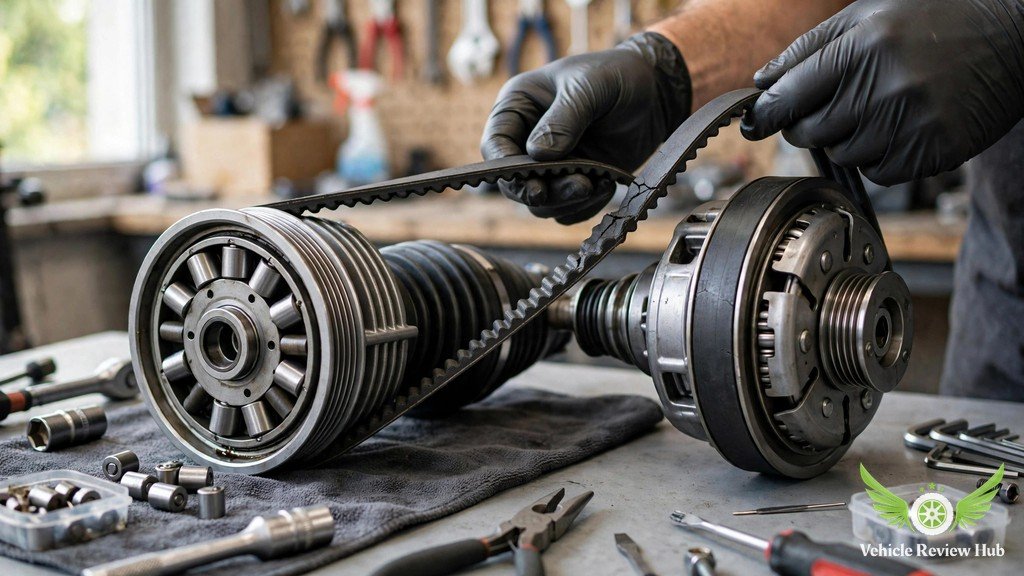
The CVT is the biggest single factor in Yamaha XMAX reliability. The V-belt flexes thousands of times a minute, variator rollers wear flat spots that show up as sluggish take-off or lost top speed, and centrifugal clutch shoes wear until pull-away judders or slips. A used XMAX with 13,000 miles and no belt receipt needs a belt job immediately, and the price should reflect that.
The battery is the other weak point for Yamaha XMAX reliability, and it is small: a GTZ8V unit rated at 12 volts and 7.0 amp-hours. That is enough for Yamaha XMAX reliability on a scooter ridden regularly, but it does not tolerate months of sitting, and the Smart Key system draws a small standby current even when the scooter is off. Owners who park for winter without a trickle charger often find a dead battery in spring, and repeated deep discharges shorten its life. A battery tender is the cheapest Yamaha XMAX reliability upgrade you can buy. Beyond the battery, electrical complaints are minor and isolated: occasional glitches after a battery disconnect and squeaky floorboards or bodywork clips working loose with age. The fuses live under the right-side panel, so a dead accessory or lighting fault is usually a five-minute check.
Yamaha XMAX Maintenance Schedule and Servicing
The XMAX service schedule is one of the simpler ones, and the scooter helps you follow it: the panel flashes “OIL SERV” or “V-BELT SERV” when each job falls due. Yamaha XMAX reliability rewards owners who respect those warnings instead of resetting them and riding on. Ignore them and Yamaha XMAX reliability suffers first.
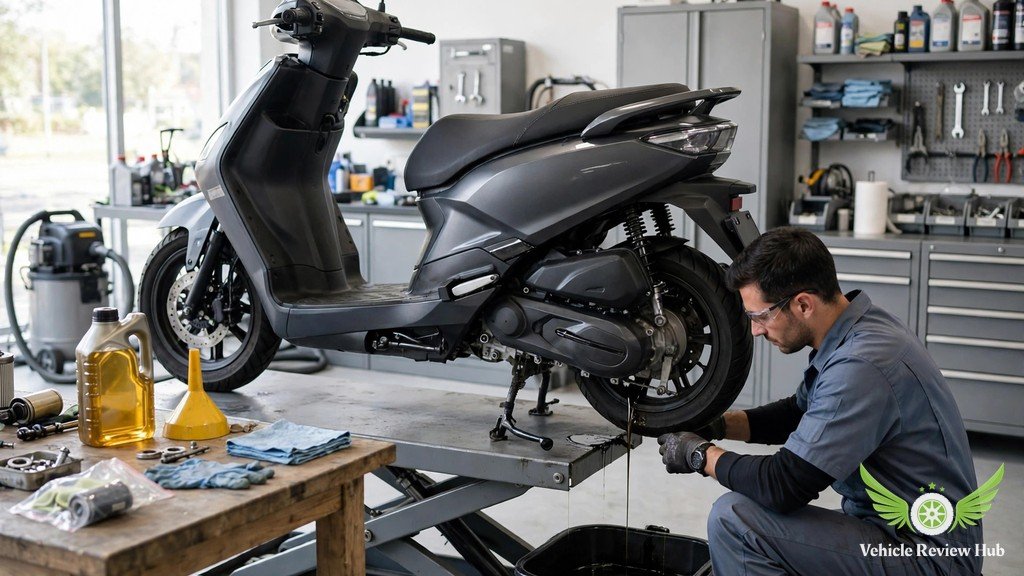
Routine Services, Engine Oil, Filters and CVT Inspection Intervals
The first service falls at 600 miles (1,000 km). After that, the oil-change indicator works on a short cycle: it flashes at the 600-mile service, then at 2,400 miles, and then every 3,000 miles. An oil change takes 1.50 litres, or 1.60 litres with the filter removed. The oil filter element itself is replaced every 12,000 miles, at the same visit as the belt. Major service visits fall roughly every 6,000 miles under the 2022 owner’s manual periodic chart, and keeping them matters for Yamaha XMAX reliability. Time-based items run alongside mileage: brake fluid every two years, coolant every three years and brake hoses every four years, regardless of miles covered.
The video below shows the kind of CVT access work a belt service involves. It films the larger Yamaha TMAX rather than the XMAX, so the fairing layout and cover bolts are not identical — but it honestly shows the sequence: fairing removal, then the CVT cover, then the variator and belt area.
V-Belt Replacement and Valve Checks Every 12,000 Miles, Not 24,000
This is the interval most often quoted wrong for the XMAX, so here it is precisely. The V-belt replacement indicator flashes every 20,000 km, which the US manual expresses as 12,000 miles. When “V-BELT SERV” appears, the belt is due — and Yamaha XMAX reliability depends on acting on it — not at 24,000 miles, not “when it looks worn,” and not at the next convenient service. For Yamaha XMAX reliability, budget for the belt at 12,000 miles and treat anything beyond that as borrowed time.
Valve clearance needs a more careful explanation. The owner’s manual does not headline a single valve interval the way it does for the belt; instead, valve clearance appears as a periodic-chart item that the dealer checks and adjusts at scheduled service points, with the work done on a cold engine. Dealers commonly bundle the valve check with the 12,000-mile major service. So expect a valve check at the 12,000-mile service — a key Yamaha XMAX reliability visit — and follow the chart in your own model-year manual.
| Service item | Interval (US manual) | Notes |
|---|---|---|
| First service | 600 miles | Initial oil change and full check |
| Engine oil | Every 3,000 miles | 1.50 L (1.60 L with filter) |
| Oil filter and V-belt | Every 12,000 miles | When “V-BELT SERV” flashes — not 24,000 |
| Valve clearance | Periodic-chart item, bundled at 12,000-mile service | Dealer job, cold engine |
| Brake fluid (DOT 4) | Every 2 years | Time-based |
| Coolant | Every 3 years | System 1.10 L; reservoir 0.18 L |
| Brake hoses | Every 4 years | Time-based replacement |
Yamaha XMAX Tires, Brakes and Suspension Maintenance
Bigger wheels than most scooters — 15-inch front, 14-inch rear — help stability and tire life, but the rear tire still works hard as the driven wheel. These checks catch problems before they become bills.
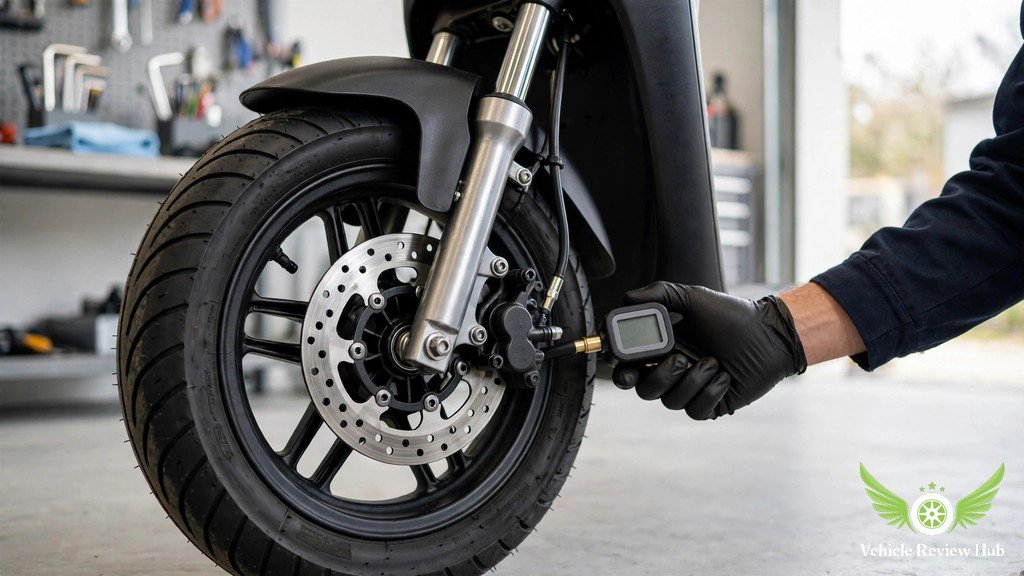
Tire Condition, Pressure, Tread Wear and Replacement
For Yamaha XMAX reliability, tire care starts here: the US XMAX wears Dunlop Scoot Smart tires: a 120/70-15 front and a 140/70-14 rear, both tubeless. The manual’s cold pressures are 29 psi front and 33 psi rear, solo or two-up, with a maximum load of 355 lb combined. Check pressures cold, before the first ride of the day: a warm reading hides under-inflation, which wears the shoulders and hurts fuel economy. The minimum tread depth is 1.6 mm (0.06 inches) front and rear, and the manual warns that tires age even when unused: cracking in the tread and sidewall rubber means an aged tire, not just a worn one.
Brake Pads, Brake Discs, Forks and Rear Suspension Checks
Braking is a 267 mm front disc with a two-piston slider caliper and a 245 mm rear disc with a single-piston slider caliper, both with ABS standard — the same hardware Motorcycle.com’s 2018 XMAX review tested at launch. Pad life depends heavily on riding style, so check pad thickness at every service rather than trusting a mileage figure. A pulsing lever, a persistent squeal or a disc with a visible lip at the edge all mean the brakes need attention now for Yamaha XMAX reliability. Suspension is simple: a 33 mm fork with 4.3 inches of travel and dual rear shocks with 3.1 inches. That simplicity helps Yamaha XMAX reliability — no electronic adjusters to fail — but wear shows up as behavior: fork seals weeping oil, a front end diving excessively under braking, or rear shocks feeling soft and bouncy.
Yamaha XMAX Maintenance and Ownership Costs
Yamaha XMAX reliability comes cheaply: the XMAX is cheap to run by motorcycle standards, but the belt service makes its cost curve lumpy: most years are inexpensive, and every 12,000 miles brings a bigger bill. Planning for that lump is the difference, for Yamaha XMAX reliability, between a scooter that feels cheap and one that delivers a surprise bill.
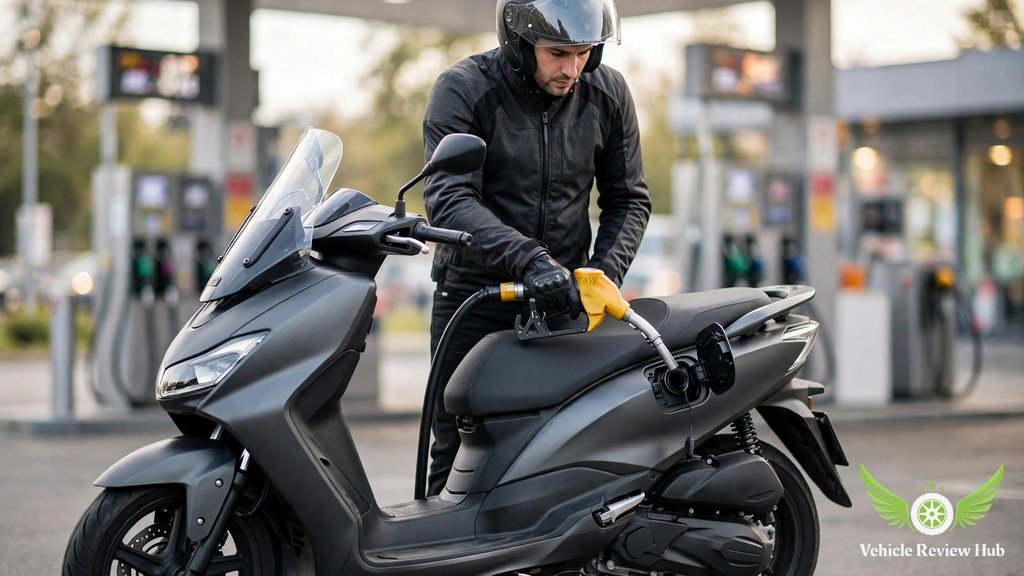
Fuel, Routine Servicing, Belt, Tires and Replacement Parts
Fuel is the smallest line. Yamaha claimed 75 mpg for the 2018 launch model, Motorcycle.com observed 70 mpg in testing, and Yamaha’s 2025 announcement estimates 73 mpg with the 3.4-gallon tank — a theoretical range of roughly 240–250 miles per tank. At $3.50 a gallon, 73 mpg works out to under five cents a mile in fuel. The predictable big-ticket items are the 12,000-mile belt job, tires and a battery. As planning estimates for Yamaha XMAX reliability, budget $250–$400 for a dealer belt-and-rollers service, $150–$250 for a pair of tires fitted, and $60–$120 for a battery.
| Cost item | Typical interval | Planning estimate |
|---|---|---|
| Fuel | Ongoing | ~$0.05 per mile at 73 mpg and $3.50 per gallon |
| Oil change | Every 3,000 miles | Low; 1.50–1.60 L of oil |
| Belt, rollers and valve check | Every 12,000 miles | $250–$400 dealer estimate |
| Tires (pair, fitted) | Rear roughly twice as often as front | $150–$250 estimate |
| Battery (GTZ8V) | Every 3–5 years with proper care | $60–$120 estimate |
| Annual routine total (excluding belt years) | Per year | A few hundred dollars for most commuters |
Repair Expenses, Parts Availability and Long-Term Ownership Costs
Parts availability is a genuine strength for Yamaha XMAX reliability. The scooter has been sold in the US since 2018 with minimal mechanical change, so belts, rollers, filters, pads and bodywork are stocked by Yamaha dealers and online parts houses, and used parts are easy to find. Long-term, the costs that catch owners out are rarely mechanical failures: a neglected belt that strands the scooter, a battery killed by winter storage, tires aged out rather than worn out, and brake fluid never changed because mileage stayed low.
How to Keep a Yamaha XMAX Reliable
Yamaha XMAX reliability is mostly a matter of discipline rather than luck. The machine is simple and well proven; trouble usually follows skipped services, bad storage or unchecked recalls.
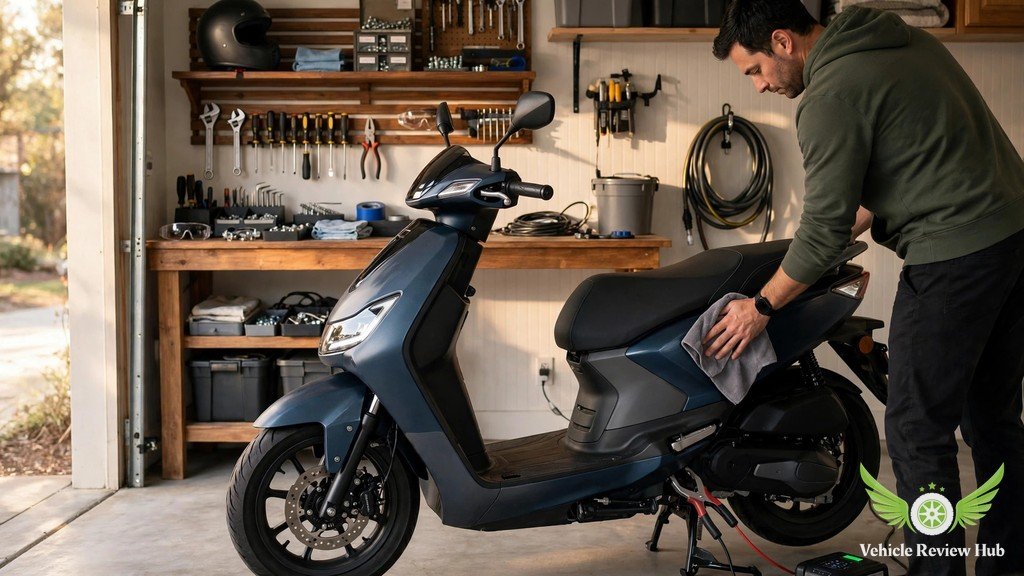
Preventive Maintenance, Proper Lubrication and Regular Inspections
Yamaha XMAX reliability rewards a short routine: build one and stick to it. Before every ride, protect Yamaha XMAX reliability: check tire pressures cold, look for cuts or nails, and confirm the brakes feel normal on the first stop. After washing, lubricate the sidestand and centerstand pivots and cables, and never pressure-wash bearings, fork seals or connectors. For storage, fill the tank with fuel stabilizer, connect a battery tender, and store the scooter clean, dry and covered. For Yamaha XMAX reliability, use the correct engine oil grade, DOT 4 brake fluid, and genuine or equivalent-quality filters. Saving a few dollars on a no-name belt is false economy on a part that strands you when it fails.
Recall Checks: Reflector 20V611, VIN Label 21V048 and 25V778
Three recalls touch the XMAX, and a careful buyer checks all three by VIN. The camshaft recall 25V778 is covered in detail above: certain 2018–2022 scooters, 2,715 units, free remedy, check before you ride. Recall 20V611 covers the rear reflector, which could lose reflectivity from condensation and contaminants. It spans certain 2015–2020 YZF-R3 models, the 2020 MT-03 and certain 2018–2020 XMAX scooters — 31,000 units in total, never XMAX-only. The remedy is a free reflector replacement; the recall began in October 2020 (Yamaha 990139). Recall 21V048 concerns the VIN printed on the Federal Certification label, which may not match the VIN stamped on the vehicle. It covers certain 2019–2021 YZF-R3 models, certain 2019–2020 XMAX scooters and the 2020 MT-03 — 8,281 units in total (Yamaha 990144). Confirm all three recalls through NHTSA’s recall tool before money changes hands — a non-negotiable step for Yamaha XMAX reliability. For the full picture of used prices, insurance and inspection, see the XMAX buying guide.
Yamaha XMAX Reliability FAQs
Direct answers on Yamaha XMAX reliability from the verified facts above.
Is the Yamaha XMAX reliable?
Yes, by the evidence available. Yamaha XMAX reliability rests on a simple 292cc engine and CVT drivetrain, positive owner sentiment, and no pattern of major mechanical failure in the US record. The one serious exception is the 2018–2022 camshaft recall, which must be checked by VIN.
Does the 25V778 recall affect 2023 and later XMAX models?
No. For Yamaha XMAX reliability, note the recall covers certain 2018–2022 XMAX scooters only. The 2023 redesign models are outside its scope.
How often should I change the oil on a Yamaha XMAX?
After the 600-mile first service, the oil-change indicator flashes at 2,400 miles and then every 3,000 miles. Follow the indicator and the manual for Yamaha XMAX reliability, using 1.50 litres for a plain change or 1.60 litres when the filter is also removed.
When should the V-belt be replaced?
Every 12,000 miles, when the “V-BELT SERV” indicator flashes — the single most important Yamaha XMAX reliability interval. Do not stretch it to 24,000 miles: Yamaha’s own interval is 12,000, and a failed belt strands the scooter.
How long do XMAX tires last?
It depends on riding style, but the rear typically wears about twice as fast as the front, and city commuting wears both faster than highway riding. Check tread against the 1.6 mm minimum for Yamaha XMAX reliability and replace tires that show age cracking even if the tread looks adequate.
How long does the XMAX battery last?
With regular riding, several years; with winter storage and no charger, a single season can kill it. The battery is a small 12-volt, 7.0 amp-hour unit, so a battery tender during storage is the best investment in Yamaha XMAX reliability.
Should I buy a used 2018–2022 XMAX?
Yes, with conditions: confirm the 25V778 remedy by VIN, check the belt-service history (a belt receipt at 12,000 miles is worth more than low mileage for Yamaha XMAX reliability), inspect tires for age as well as tread, and test the battery and Smart Key.
Does the Yamaha XMAX have a chain?
No — and that simplicity helps Yamaha XMAX reliability. The XMAX uses a fully automatic CVT with a V-belt final drive and a dry centrifugal clutch. There is no chain to adjust or lubricate, and no clutch lever or foot shifter.
What is the XMAX warranty?
US models carry a one-year limited factory warranty, as Rider Magazine’s first look at the 2018 launch model also recorded — a short warranty that makes Yamaha XMAX reliability habits matter more. Extended coverage is sometimes available through the dealer at purchase.