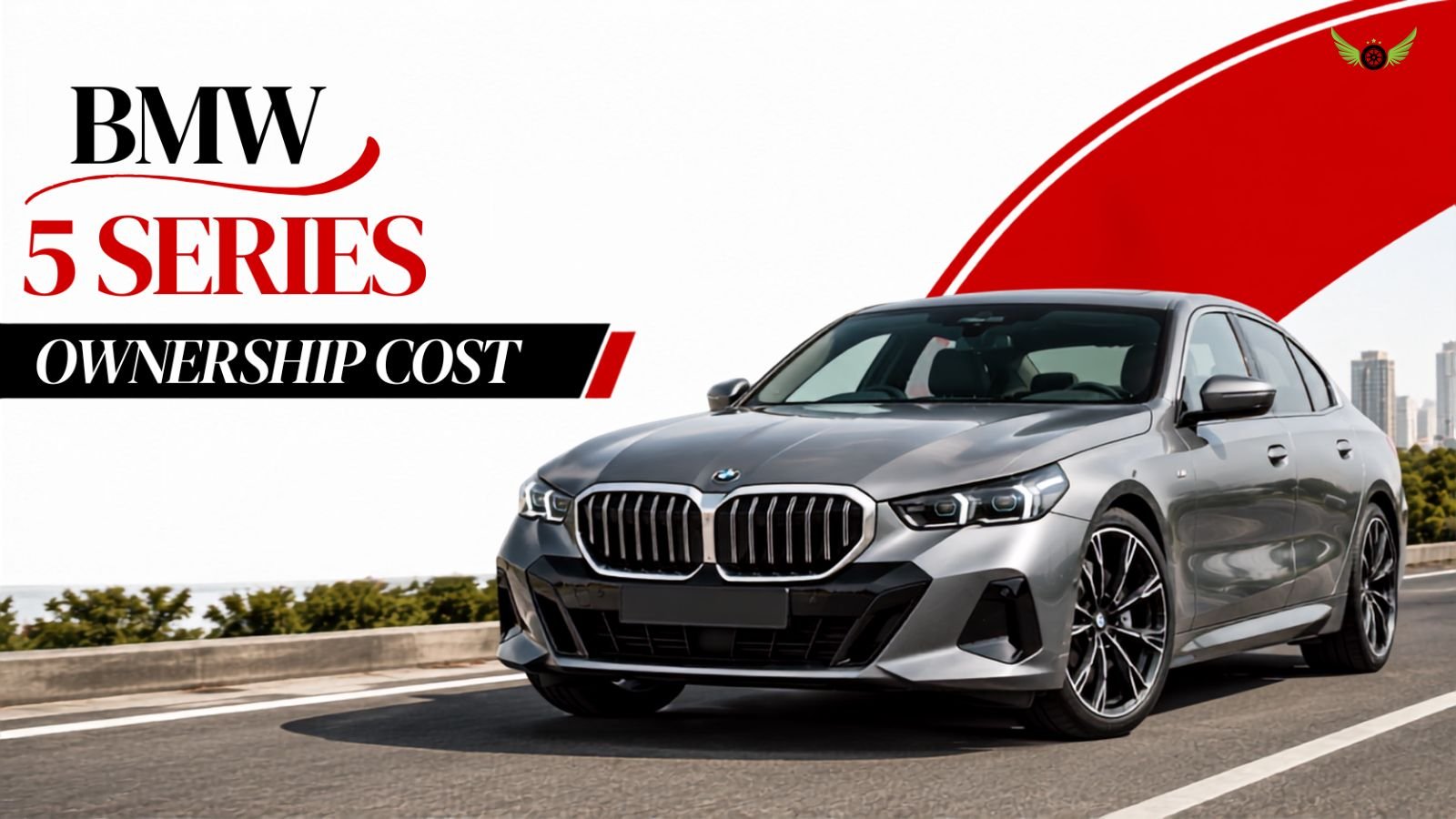
The 2026 BMW 5 Series is a premium sedan where the purchase price is only part of the ownership equation. Fuel, maintenance, repairs, insurance, financing, taxes and depreciation can significantly affect what you actually spend over several years. Current five-year estimates from Kelley Blue Book put the 5 Series at about $82,394 in total ownership cost, including $39,092 in depreciation and $43,302 in out-of-pocket expenses.
This guide examines the main parts of BMW 5 Series Ownership Cost, including everyday running expenses, financing and taxes. It also covers BMW 5 Series Insurance, the factors that can change premiums, and the expected BMW 5 Series Resale Value and depreciation over three and five years.
Long-term ownership is another key consideration, so we will look at high-mileage expectations and compare the running costs of the 530i, 540i xDrive and 550e xDrive. Finally, the goal is to determine whether the BMW 5 Series makes sense as a long-term purchase in 2026 based on its overall ownership costs and value.
BMW 5 Series Total Ownership Cost
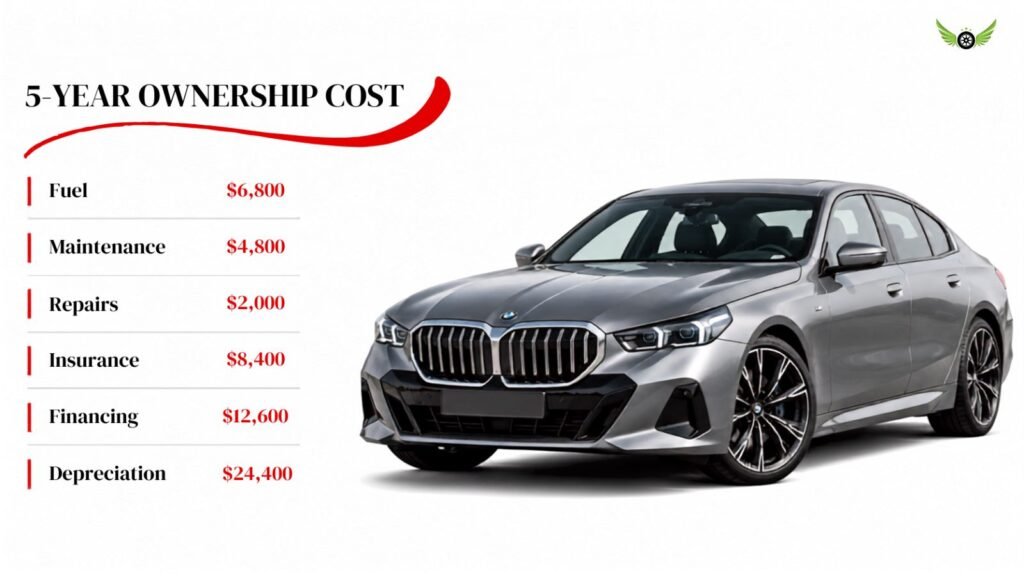
The cost of owning a BMW 5 Series depends on more than the purchase price. Fuel, scheduled maintenance, repairs, financing, taxes, insurance and depreciation all contribute to the long-term bill. Edmunds’ current five-year estimates, based on 15,000 miles per year, put total ownership cost at $79,903 for the 530i, $83,452 for the 530i xDrive, $87,793 for the 540i xDrive and $96,688 for the 550e xDrive.
These are planning estimates rather than guaranteed expenses. Edmunds assumes a 10% down payment, a 60-month loan and above-average credit, so an individual owner’s actual cost can be quite different.
Fuel, Maintenance, Repairs & Other Running Expenses
Fuel is one of the easier ownership costs to estimate, but it varies by engine, drivetrain and driving habits. The 530i uses a 2.0-liter turbocharged mild-hybrid powertrain, while the 540i xDrive uses a 3.0-liter inline-six mild hybrid. The 550e xDrive adds a plug-in hybrid system, making charging habits particularly important to its real-world fuel spending.
Maintenance is initially helped by BMW’s included coverage. For a 2026 vehicle purchased through an authorized BMW center in the U.S., BMW Ultimate Care covers scheduled maintenance for 3 years or 36,000 miles, whichever comes first. Covered items include services such as engine oil, filters, brake fluid, spark plugs and vehicle checks when required by the maintenance schedule.
Edmunds currently estimates the following five-year running costs:
Expense | 530i | 540i xDrive | 550e xDrive |
Fuel | $10,150 | $11,241 | $12,582 |
Maintenance | $6,722 | $7,788 | $7,838 |
Repairs | $2,298 | $2,432 | $2,432 |
Five-year Edmunds estimates; actual costs vary with mileage, fuel prices, driving conditions and repairs.
According to our experience with ownership-cost analysis, the key point is that maintenance should not be viewed in isolation. Once the included maintenance period ends, routine servicing, tires, brakes and unexpected repairs can become a more noticeable part of the budget.
Financing, Taxes & Long-Term Ownership Costs
Financing can add thousands of dollars to the cost of a new luxury sedan. Edmunds estimates five-year financing expenses of $13,384 for the 530i, $13,965 for the 530i xDrive, $15,693 for the 540i xDrive and $16,631 for the 550e xDrive. These figures are based on Edmunds’ financing assumptions and are not representative of every buyer’s loan.
Taxes and fees also vary by location. Under Edmunds’ assumptions, five-year taxes and fees range from $3,655 for the 530i to $4,517 for the 550e xDrive.
Depreciation is the largest single cost in Edmunds’ five-year estimates:
Cost | 530i | 540i xDrive | 550e xDrive |
Depreciation | $37,876 | $40,021 | $45,175 |
Financing | $13,384 | $15,693 | $16,631 |
Taxes & Fees | $3,655 | $4,205 | $4,517 |
Five-year Edmunds estimates.
For a long-term owner, this makes depreciation, financing and insurance just as important as fuel or routine service when calculating the real cost of keeping the car. The 530i generally has the lowest estimated five-year ownership cost in Edmunds’ current comparison, while the 550e xDrive carries the highest estimate.
BMW 5 Series Insurance Cost
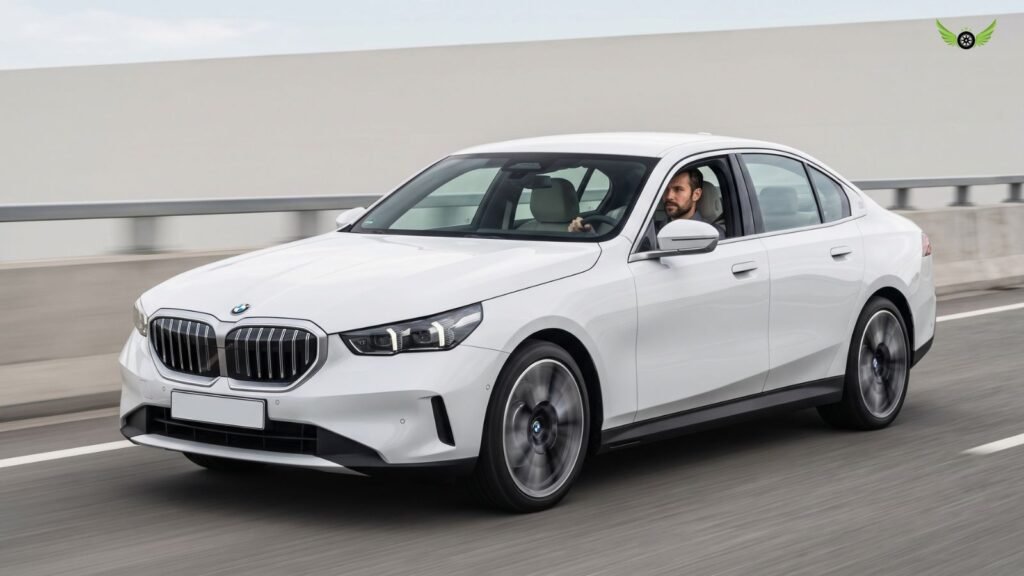
Insurance is one of the larger recurring expenses when owning a BMW 5 Series, particularly with full coverage. MoneyGeek’s current estimate puts average 2026 5 Series insurance at about $253 per month for full coverage, or approximately $3,036 per year. Its minimum-coverage estimate is about $129 per month. These are averages for a defined driver profile and should not be treated as an individual quote.
Edmunds reaches a different five-year estimate because it uses its own ownership-cost methodology. It estimates $5,165 for insurance on the 530i, $4,934 on the 530i xDrive, $5,111 on the 540i xDrive and $6,146 on the 550e xDrive over five years.
The difference between published estimates is a good reason to use insurance averages only for budgeting. Your actual premium is determined by the vehicle, policy and driver profile.
Factors That Affect BMW 5 Series Insurance Rates
The vehicle’s value and repair requirements matter, but they are only part of the calculation. The NAIC identifies location, age, driving experience, driving record, claims history, credit history where permitted, vehicle type, vehicle use, annual mileage, coverage and deductibles among the factors insurers may consider.
Repair costs can also influence premiums. MoneyGeek estimates average annual repair costs for the 5 Series at approximately $1,773. A luxury sedan with expensive components and advanced technology can therefore have higher claim costs than a less expensive vehicle.
Safety equipment is another part of the risk picture, although a strong safety rating does not guarantee a lower premium. The 2026 5 Series receives Good ratings from IIHS in the small-overlap front and updated side crash tests, while its standard pedestrian front-crash-prevention system also receives a Good rating.
Coverage selection also makes a substantial difference. Comprehensive and collision coverage generally costs more than liability-only insurance, while choosing a higher deductible can reduce the premium but increases the owner’s out-of-pocket cost after a covered claim.
How Trim, Location & Driver Profile Affect Premiums
Trim selection can affect insurance because the 2026 range spans different purchase prices and powertrains. BMW lists starting MSRPs of $60,500 for the 530i, $62,800 for the 530i xDrive, $67,700 for the 540i xDrive and $75,500 for the 550e xDrive.
Edmunds’ five-year insurance estimates show how the figures can differ:
Trim | 5-Year Insurance Estimate |
530i | $5,165 |
530i xDrive | $4,934 |
540i xDrive | $5,111 |
550e xDrive | $6,146 |
Interestingly, the more expensive trim does not always produce a proportionally higher insurance estimate. Insurers use their own claims and risk models, so vehicle price alone does not determine the premium.
Location can create a major difference. MoneyGeek’s current data shows 5 Series full-coverage rates varying substantially between states, while the NAIC confirms that geographic location is a core rating factor. Areas with different accident frequency, theft rates, repair costs and insurance regulations can therefore produce very different premiums.
Driver profile is equally important. Age, driving experience, accident and ticket history, previous claims, annual mileage and—in states where insurers are allowed to use it—credit history can all affect the final rate.
For that reason, a published BMW 5 Series Insurance average is best treated as a starting point. The most useful figure for an actual buyer is a quote based on the exact trim, ZIP code, coverage limits, deductible and driver profile
BMW 5 Series Resale Value & Depreciation
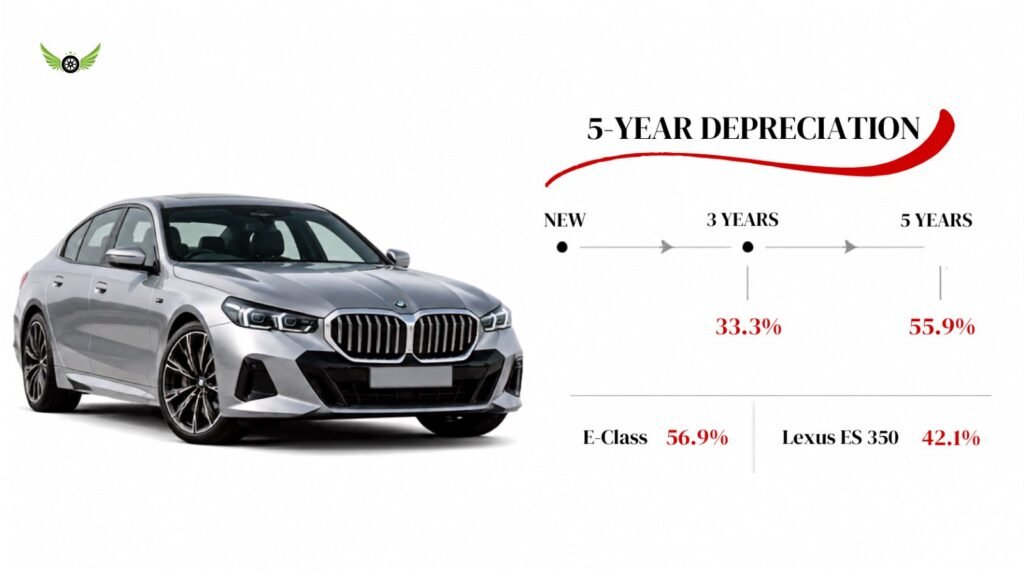
The BMW 5 Series loses a substantial amount of value during the first five years, making depreciation one of the most important ownership costs to consider. iSeeCars’ current analysis of more than 15 million vehicles estimates that a new 5 Series loses 33.3% of its value after three years and 55.9% after five years. That leaves about 66.7% and 44.1% of its original value, respectively.
For the plug-in-hybrid 5 Series, depreciation is higher. iSeeCars estimates 40.1% depreciation after three years and 59.2% after five years. This difference is important when comparing the 550e with the gasoline-powered versions.
Expected Depreciation Over 3 and 5 Years
A three-year ownership period already exposes the owner to a significant depreciation loss. iSeeCars estimates a regular 5 Series resale value of $39,949 after three years, compared with $26,413 after five years.
Vehicle Age | Depreciation | Value Retained |
3 years | 33.3% | 66.7% |
5 years | 55.9% | 44.1% |
Based on iSeeCars’ current historical depreciation analysis.
Actual resale prices for a 2026 model will depend on mileage, condition, options, service history and used-car market conditions. Edmunds’ current appraisal model, for example, estimates a 2026 550e xDrive with no options at $39,305 after five years, starting from an estimated current value of $63,029.
BMW 5 Series Resale Value Compared with Luxury Rivals
The 5 Series trails several competitors in historical value retention. iSeeCars estimates five-year depreciation of 61.4% for the BMW 5 Series, compared with 56.9% for the Mercedes-Benz E-Class and 42.1% for the Lexus ES 350.
Model | 5-Year Depreciation | Value Retained |
BMW 5 Series | 61.4% | 38.6% |
Mercedes-Benz E-Class | 56.9% | 43.1% |
Lexus ES 350 | 42.1% | 57.9% |
Historical model-level data from iSeeCars; this is not a guaranteed forecast for a specific 2026 vehicle.
That gives the E-Class a 4.5-percentage-point advantage in five-year value retention over the 5 Series, while the Lexus ES 350 retains considerably more of its original value.
The data suggests that buyers who plan to keep the car for only three to five years should pay close attention to depreciation when calculating ownership cost. According to our experience analyzing vehicle ownership economics, the purchase price, mileage and condition can matter greatly when it is time to sell, but historical depreciation data should be treated as a benchmark rather than a guaranteed future resale price.
BMW 5 Series Long-Term Ownership Experience
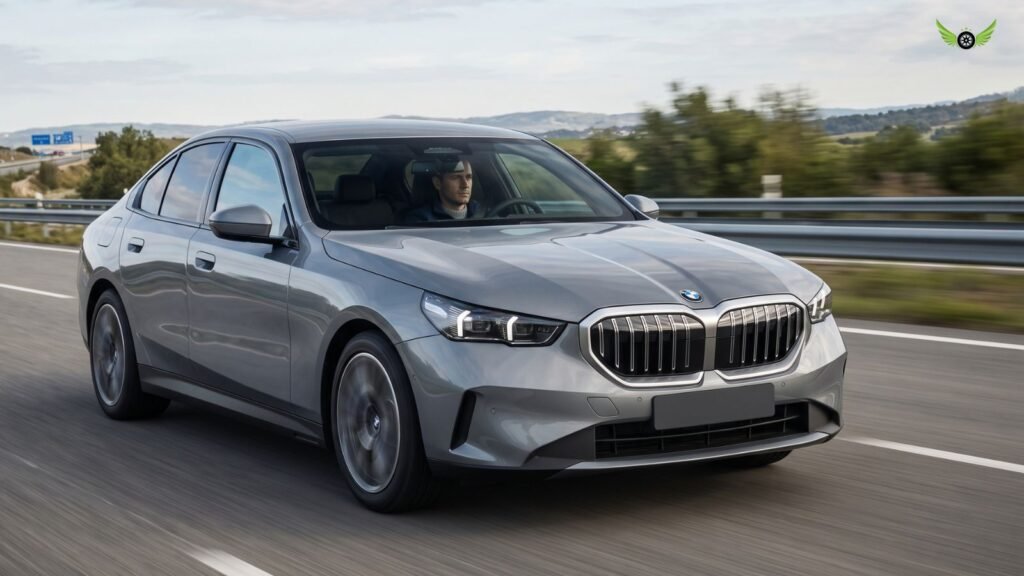
The 2026 BMW 5 Series is still too new for a meaningful owner history at very high mileage, so long-term reliability conclusions for this exact model year should be treated cautiously. There is useful historical evidence from the 5 Series nameplate, but it should not be presented as proof of how every 2026 car will perform.
iSeeCars estimates the 5 Series has an average lifespan of about 109,383 miles, with a 2.2% predicted chance of reaching 200,000 miles based on its large historical vehicle dataset.
BMW also provides 3 years/36,000 miles of scheduled maintenance under Ultimate Care and a 4-year/50,000-mile new-vehicle limited warranty in the U.S.
High-Mileage Ownership Expectations
At higher mileage, maintenance history becomes increasingly important. The 2026 5 Series uses BMW’s Condition Based Service system, which determines when scheduled service is required rather than relying solely on a simple fixed-mileage schedule. Keeping up with these service requirements is important as mileage accumulates.
The available historical data suggests that many 5 Series vehicles can reach substantial mileage, but the current G60 generation does not yet have enough real-world high-mileage history to make a confident prediction for the 2026 model. CARFAX data shows 53.5% of 5 Series vehicles in its dataset reaching 150,000 miles and 19.5% reaching 200,000 miles, compared with 58.8% and 26.2% for similar luxury midsize cars.
For long-term ownership, budgeting beyond the factory maintenance period is therefore sensible. BMW’s maintenance program does not cover items such as tires, wheels, alignment, gasoline or damage caused by wear, accidents or improper operation.
530i vs 540i vs 550e Long-Term Running Costs
The 530i is the least expensive of the three to run according to Edmunds’ five-year estimates. The 540i xDrive costs more because of its larger six-cylinder powertrain, while the 550e xDrive has the highest estimated running costs among the three.
Cost Over 5 Years | 530i | 540i xDrive | 550e xDrive |
Fuel | $11,538 | $12,778 | $14,303 |
Maintenance | $6,859 | $7,944 | $7,994 |
Repairs | $2,369 | $2,507 | $2,507 |
Insurance | $5,165 | $5,111 | $6,146 |
Total Ownership Cost | $82,112 | $89,781 | $98,814 |
Edmunds estimates based on 15,000 miles per year; actual costs will vary.
The 530i makes the strongest financial case for buyers prioritizing lower running costs. The 540i xDrive costs more but provides the six-cylinder powertrain, while the 550e xDrive adds plug-in-hybrid capability and carries the highest estimated five-year ownership cost. For the 550e in particular, charging habits can have a meaningful effect on actual fuel spending.
From an ownership perspective, I would not describe any of these 2026 versions as proven high-mileage performers yet. A personal test drive can tell you about ride, comfort and power delivery, but it cannot establish long-term reliability for a model this new. The more useful evidence currently comes from BMW’s warranty and maintenance information, historical 5 Series data, and ongoing owner experience.
Is the BMW 5 Series Worth Buying in 2026?
Yes, the BMW 5 Series is worth considering in 2026 if your priorities are comfort, refined performance, technology and a premium driving experience. Edmunds rates the 2026 model 7.4/10, highlighting its quiet cabin, comfortable ride, technology and fuel efficiency. Its testing recorded 5.7 seconds from 0–60 mph for the 530i and 4.3 seconds for the 540i xDrive.
The range also gives buyers meaningful choices. The 530i produces 255 hp, the 540i xDrive makes 375 hp, and the 550e xDrive combines its six-cylinder engine and electric motor for 483 hp. BMW lists U.S. starting MSRPs of $60,500, $67,700 and $75,500, respectively.
Ownership cost is the main point to consider before buying. Edmunds estimates five-year True Cost to Own at $82,112 for the 530i, $89,781 for the 540i xDrive and $98,814 for the 550e xDrive. Depreciation is the largest expense in each estimate.
Who Should Buy the BMW 5 Series?
The 5 Series suits buyers who want a comfortable midsize luxury sedan without giving up strong acceleration. Consumer Reports found the 530i xDrive comfortable, refined and agile, while its testing also praised the supportive seats, ride quality and cabin materials.
The 530i is the sensible choice for buyers who want the lowest estimated ownership cost. The 540i xDrive is better suited to drivers who place a higher value on six-cylinder performance; MotorTrend considers it the strongest choice among the gasoline versions because it adds substantial power without a major fuel-economy penalty.
The 550e xDrive is aimed at buyers who can make regular use of its plug-in-hybrid system. It combines 483 hp with an EPA-estimated 33 miles of electric-only range, giving it a different ownership proposition from the gasoline models.
Final Long-Term Ownership Verdict
The 2026 5 Series is a strong choice when the priority is a blend of luxury, comfort, performance and modern technology. Its higher purchase price and depreciation mean it is not the ideal option for someone whose main goal is minimizing total ownership expenses.
For most buyers, the 530i offers the best balance between purchase price, performance and projected ownership cost. The 540i xDrive is worth the additional expense for its six-cylinder engine, while the 550e xDrive is most attractive when its plug-in-hybrid capability can be used regularly.
BMW also provides a 4-year/50,000-mile limited warranty, while scheduled maintenance is covered for 3 years/36,000 miles under BMW Ultimate Care in the U.S.
From an ownership perspective, the 5 Series makes the most sense for someone prepared for premium-car running costs. According to our experience, buyers should judge it on the complete ownership picture—not simply the monthly payment or starting MSRP.
Frequently Asked Questions About 2026 BMW 5 Series Ownership
These FAQs answer the key ownership questions buyers commonly have about cost, insurance, depreciation, long-term running expenses, trim selection, and overall value using current 2026 data.
How much does a 2026 BMW 5 Series cost to own?
Edmunds estimates five-year ownership costs of $82,112 for the 530i, $89,781 for the 540i xDrive, and $98,814 for the 550e xDrive. These estimates include depreciation, financing, fuel, insurance, maintenance, repairs, taxes and fees.
What is the biggest ownership expense?
Depreciation is the largest cost in Edmunds’ five-year estimates. It accounts for $38,364 on the 530i, $40,589 on the 540i xDrive and $45,782 on the 550e xDrive.
How much does BMW 5 Series insurance cost?
Insurance varies by driver and location. Edmunds estimates five-year insurance costs of $5,165 for the 530i, $5,111 for the 540i xDrive and $6,146 for the 550e xDrive. These are estimates rather than individual insurance quotes.
Which 5 Series trim is cheapest to own?
The 530i has the lowest five-year estimated ownership cost among the versions covered by Edmunds. Its estimated total is $82,112, compared with $89,781 for the 540i xDrive and $98,814 for the 550e xDrive.
How much value does the BMW 5 Series lose?
Kelley Blue Book currently estimates $39,092 in five-year depreciation for the 2026 5 Series, with an estimated five-year residual value of $22,858. Actual resale prices will depend on mileage, condition, service history, equipment and market conditions.
Is the BMW 5 Series good for long-term ownership?
Long-term ownership depends heavily on maintenance and running costs. BMW provides scheduled maintenance for 3 years or 36,000 miles and a new-vehicle limited warranty for 4 years or 50,000 miles in the U.S.
Which is better for ownership, 530i or 540i?
The 530i is the better choice when controlling ownership expenses is the priority. The 540i xDrive costs more but uses a 3.0-liter six-cylinder engine producing 375 hp, compared with 255 hp from the 530i’s 2.0-liter four-cylinder.
Is the 550e xDrive expensive to run?
Yes, its projected ownership cost is the highest of the three versions discussed. Edmunds estimates $98,814 over five years, including $14,303 for fuel, $7,994 for maintenance, $6,146 for insurance and $45,782 for depreciation.
Does the 550e require special maintenance?
BMW states that its plug-in-hybrid vehicles, including the 550e xDrive, do not require special scheduled maintenance beyond the normal factory maintenance schedule. BMW also provides an 8-year/100,000-mile warranty for the high-voltage lithium-ion battery in the U.S.
Is the 2026 BMW 5 Series worth buying?
It is a strong choice for buyers who value luxury, comfort, technology and performance and are comfortable with premium-car ownership costs. The 530i offers the lowest projected ownership cost, while the 540i xDrive and 550e xDrive provide additional performance at a higher financial cost.