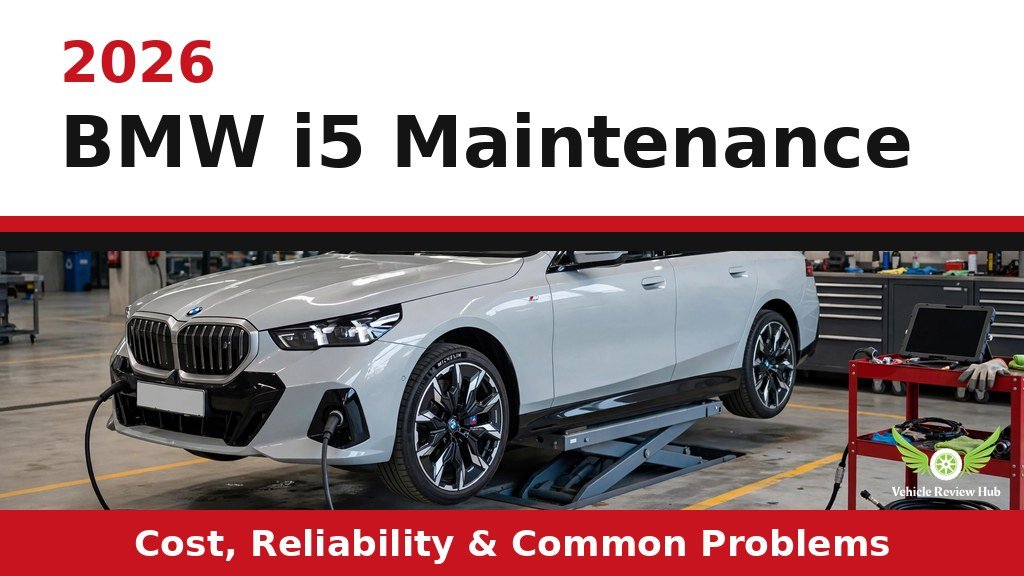
BMW i5 maintenance cost is one of the pleasant surprises of owning this electric luxury sedan. Without oil changes, spark plugs, or a complex transmission to service, the i5 costs roughly 30 percent less to maintain than an equivalent gas-powered 5 Series over the first five years. Independent ownership-cost analyses put routine BMW i5 maintenance cost at about $800 to $1,400 for scheduled service, and that BMW i5 maintenance cost figure excludes tires plus $1,000 to $1,800 for tires and brakes over five years and 60,000 miles — roughly $1,800 to $3,000 all in, assuming nothing unusual goes wrong. This guide breaks down the maintenance schedule, warranty coverage, real BMW i5 maintenance cost figures, reliability record, common problems, and recalls so you know exactly what long-term ownership looks like.
BMW i5 Maintenance Schedule & Routine Service Requirements
The i5 follows BMW’s condition-based service system, which monitors your driving and tells you when service is actually due rather than using fixed mileage intervals. For most American owners, that means a service visit roughly every two years, and BMW includes three years or 36,000 miles of scheduled maintenance free. That low BMW i5 maintenance cost in the early years is a big part of the EV ownership appeal, and it is the first reason BMW i5 maintenance cost surprises new owners on the upside.
Tires, Brakes, Cabin Filters & Essential EV Maintenance
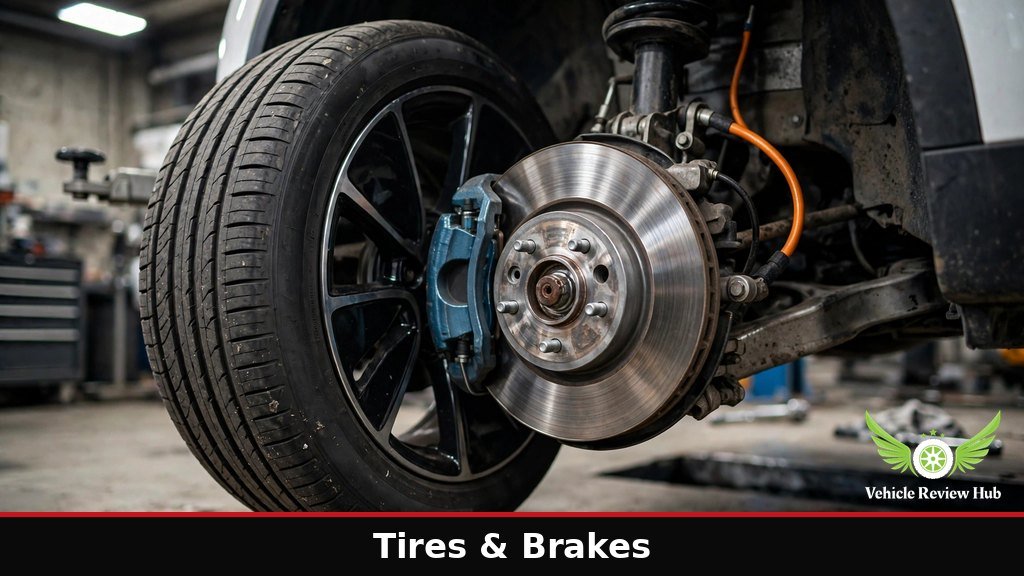
The actual maintenance list on an i5 is refreshingly short. There is no engine oil to change, no spark plugs, no timing components, and no exhaust system to inspect — the core reasons BMW i5 maintenance cost stays low. The routine items are brake fluid and coolant checks every couple of years, cabin air filter replacement roughly every two years, and periodic inspections of suspension components, wipers, and lights. The high-voltage battery gets a health check at each service, and battery coolant is typically flushed around 100,000 miles. None of these add much to BMW i5 maintenance cost.
Tires are the biggest recurring element of BMW i5 maintenance cost for most owners. The i5 is a heavy car riding on performance rubber, especially with 20- or 21-inch wheels, and many owners budget $1,200 to $1,800 per set. One long-term test found front tires lasting about 20,000 miles on an i5 driven normally, which is respectable for the class. Brakes last much longer than on a gas car because regenerative braking does most of the work — pads can stretch to 50,000 to 70,000 miles — though owners should watch for brake disc corrosion from lack of use, which can force earlier disc replacement.
BMW Maintenance Coverage, Warranty & Scheduled Service
Every 2026 BMW i5 comes with a four-year or 50,000-mile bumper-to-bumper warranty, and the high-voltage battery carries its own eight-year or 100,000-mile warranty against defects and abnormal capacity loss. If usable battery capacity drops below roughly 70 percent within that window, BMW will repair or replace modules at no cost, so catastrophic battery failure never becomes part of your BMW i5 maintenance cost — and the battery warranty follows the car to second and third owners. Three years or 36,000 miles of scheduled maintenance is included free, which effectively means the first several years add nothing to your BMW i5 maintenance cost for routine service.
For shoppers comparing the i5 with gas alternatives, our full 2026 BMW i5 review covers pricing and trims alongside the ownership picture. After the included maintenance period ends, your annual BMW i5 maintenance cost settles into a few hundred dollars per service visit, which keeps everything covered, with tire replacement being the only big-ticket wear item. Extended warranty plans exist for those who plan to keep the car well past the factory coverage.
BMW i5 Maintenance & Repair Costs
Breaking BMW i5 maintenance cost into pieces helps set realistic expectations for the total BMW i5 maintenance cost picture. Routine scheduled service is the cheapest part of the equation; wear items and the occasional out-of-warranty repair make up the rest. The overall picture remains far gentler than a combustion 5 Series.
Routine EV Service Costs and Common Wear Items
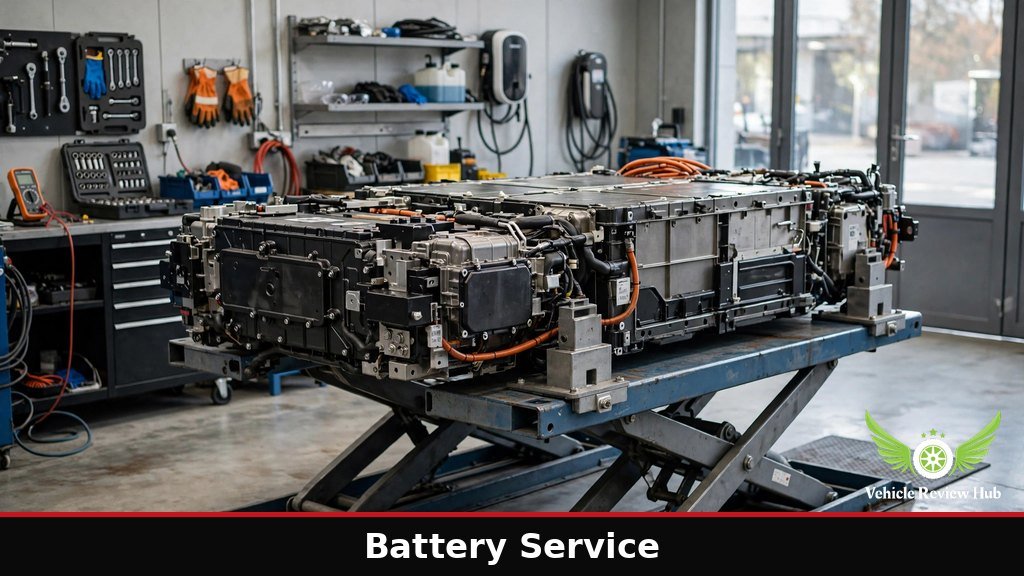
Once the free maintenance period expires, a single routine visit adds only $150 to $400 to your BMW i5 maintenance cost at a BMW dealer, depending on what is due. Over five years and 60,000 miles, ownership analyses estimate a total routine BMW i5 maintenance cost of $800 to $1,400, a BMW i5 maintenance cost level few luxury sedans can match — a fraction of what a gas 5 Series costs for the same period. There are simply fewer fluids, filters, and inspections involved.
The wear items tell their own story. Tires are the largest expense: $1,200 to $1,800 per set for the performance rubber the i5 uses, needed roughly every 25,000 to 35,000 miles depending on driving style and wheel size. Brake pads and rotors may not need attention for 50,000-plus miles thanks to regen, which keeps that part of BMW i5 maintenance cost low, but when they do, luxury-car brake hardware is pricey — budget around $600 to $1,200 per axle at a dealer. Cabin filters run about $50 to $100, and the 12V auxiliary battery, which powers the car’s computers, will need replacement every three to five years at roughly $300 to $500 — a modest line item in overall BMW i5 maintenance cost. Add it up and most owners land between $1,800 and $3,000 in total BMW i5 maintenance cost over five years — a BMW i5 maintenance cost total that undercuts most gas rivals.
Electronics, Suspension & Potential Repair Expenses
The expensive surprises on an i5 are rarely mechanical — they are electronic. The curved display and iDrive system, the Highway Assistant hardware, and the DC fast-charging components are all complex and costly to replace outside warranty. Air suspension hardware, standard on the M60, can generate four-figure repair bills if a strut or compressor fails after the warranty expires. That is why many long-term owners build a repair cushion into their budgets or plan to sell before the four-year warranty ends.
That said, catastrophic failures are rare. The electric motors are generally regarded as robust, and the battery pack includes a buffer plus active thermal management that protects it from the worst stresses. Owner forums report that most i5s go through their first years with nothing more than tires and the occasional software visit, which is why real-world BMW i5 maintenance cost often comes in below even the estimates. The BMW i5 maintenance cost story is one of predictable small bills rather than shocking big ones, and keeping that BMW i5 maintenance cost curve flat is mostly about catching electronics issues while still under warranty — until something electronic fails outside warranty, which is the main risk to budget for.
BMW i5 Reliability & Common Problems
The i5 has been on sale in the US since the 2024 model year, so there is now a meaningful record of owner experiences and official reliability data. Overall, the picture is positive: the car is generally well-regarded, with most problems clustering around software and electronics rather than the core electric drivetrain. Here is what the data and owner reports show.
Battery, Electric Motor, Charging & High-Voltage System Concerns
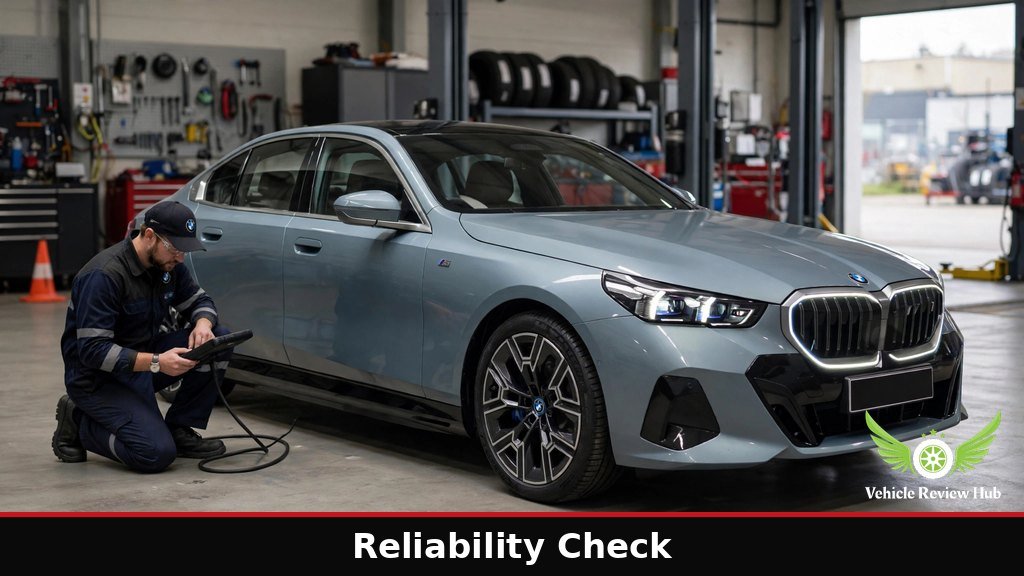
The high-voltage drivetrain is one of the i5’s most reliable areas. The motors are proven units shared with other BMW EVs, and the battery’s active thermal management plus a capacity buffer protect it from rapid degradation. Independent analyses of used i5s show battery health in the mid-90 percent range after two to three years of normal use — very good by industry standards — with high-80s percent after six to seven years still considered normal.
Charging-related complaints do appear on owner forums. Some owners have reported erratic charging behavior, where the car charges slower than expected or fails to recognize certain public stations. One owner reported that their i5 tripped their home wall charger while charging at 11 kW, an issue their previous BMW EV never had — a dealer traced it to the combined charging unit and applied a software fix. These cases are the exception rather than the rule, many trace back to software rather than hardware, and none of them materially change expected BMW i5 maintenance cost. Charging mostly to 80 or 90 percent for daily use, saving 100 percent for trips, and avoiding constant DC fast charging all help keep the battery healthier over the years.
Software, Electronics & Other Reported BMW i5 Issues
Software is the i5’s most common complaint category, as it is for most modern luxury EVs. Owners have reported occasional infotainment glitches — unresponsive touchscreens, navigation quirks, and Apple CarPlay hiccups — though BMW has been proactive with over-the-air updates that resolve many of them. Some owners also report the MyBMW app occasionally losing sync with the car, dropping remote unlock, pre-conditioning, and charge monitoring until the app or iDrive system is reset.
Other reported quirks include inconsistent regenerative braking feel for some drivers, occasional unusual noises from the electric motor, and minor interior trim wear on touch-heavy surfaces. None of these are widespread or severe, and the consensus across forums is that the car’s performance and luxury outweigh its quirks. Because the i5 shares most of its structure and electronics with the gas 5 Series, it also benefits from a mature platform rather than a first-generation design — a meaningful reliability advantage.
BMW i5 Recalls, Software Updates & Service History
Like every modern car, the i5 has had recalls — most of them software-related and fixable over the air. Understanding the recall history helps you check any used i5 and understand how BMW handles issues. None of this changes the BMW i5 maintenance cost picture much, since recalls are always free — your out-of-pocket BMW i5 maintenance cost is unaffected.
How to Check VIN-Specific Recalls and Service Campaigns
The fastest way to check recalls on any specific i5 is the NHTSA website (nhtsa.gov/recalls), where you can enter the 17-character VIN to see every open and completed campaign. BMW also maintains recall lookup on its own site, and your dealer can pull the full service and campaign history for any car. When shopping used, ask the seller for service records and confirm all recall work is complete — dealers are required to perform recall repairs free of charge.
Notable i5 recalls to date include a 2025 drive-motor software recall affecting roughly 71,000 BMW EVs across the i4, i5, i7, and iX lines, where incorrectly coded software could shut down the high-voltage system and cause a loss of drive power — fixable with a free software update, including over the air. An early 2024 recall covered about 4,926 i5s whose external pedestrian warning sound generator could fail to activate due to a control-unit software fault. A 2026 campaign (NHTSA 26V096000) addresses an air-conditioning wiring harness that could be damaged during cabin air filter replacement on certain 2024–2026 models, and a smaller recall covered steering spindle components on a few hundred 2024–2025 i5s. All were repaired free.
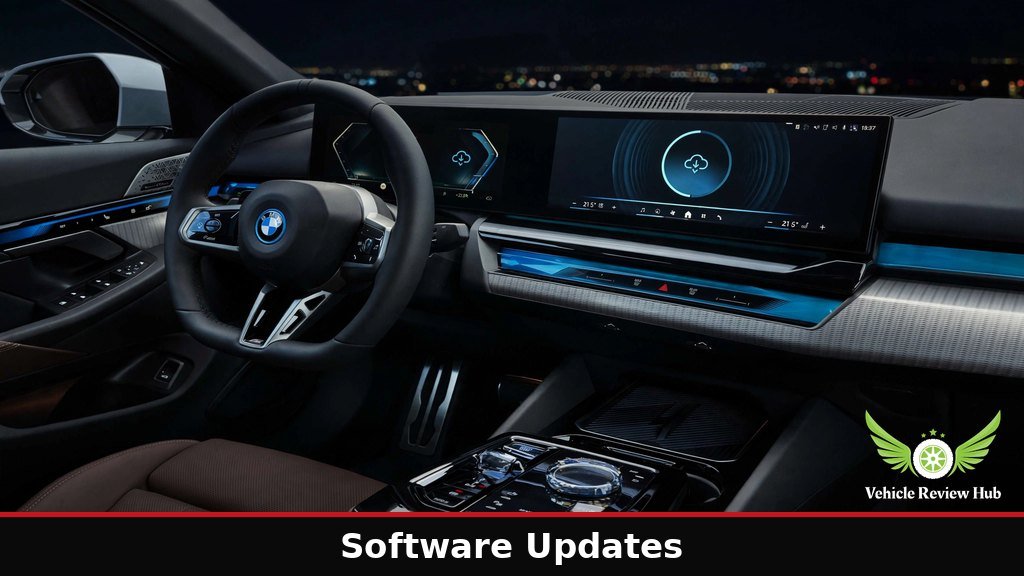
Why Software Updates Matter for BMW i5 Ownership
Software is a genuine maintenance item on the i5. BMW pushes over-the-air updates that improve charging behavior, fix infotainment bugs, and occasionally add features — keeping the car current is part of ownership. Some updates require a dealer visit, but many install overnight at home. Owner reports show that several early complaints, from charging quirks to app sync issues, were resolved by later software versions rather than hardware repairs.
This has a practical effect on BMW i5 maintenance cost over time: problems that would once have meant a workshop visit and a parts bill now often resolve with a free update. Before scheduling a dealer visit for a glitch, check that your car is running the latest software — the My BMW app shows your current version. That said, persistent or safety-related issues should always go to a dealer, and recall campaigns should be completed promptly regardless of whether the car seems fine.
BMW i5 Long-Term Reliability
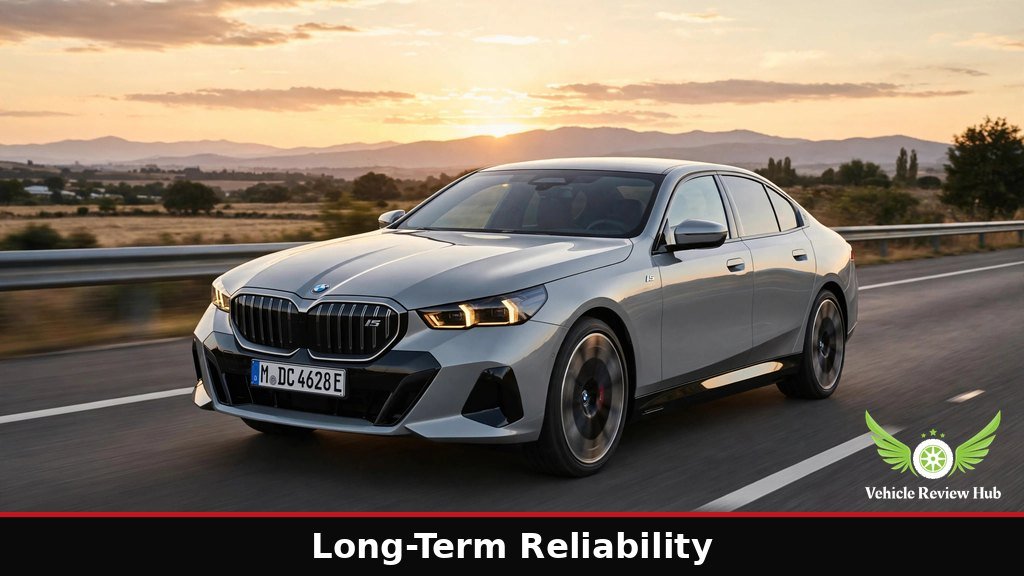
What does the i5 look like at 100,000 miles? No 2026 owner has been there yet, but the trajectory is encouraging. Long-term press tests of the i5 have reported essentially trouble-free running — one European long-termer covered 12,000 miles with nothing going wrong and no service needed in its first year. Combined with BMW’s battery warranty and the shared mature platform, the i5 shapes up as a solid long-term bet.
Battery Life and High-Mileage Ownership Expectations
The battery is the long-term question every EV buyer asks. Real-world data suggests a well-cared-for i5 pack should retain the mid-90s percent of its original capacity after two to three years and the high-80s percent after six to seven years — easily enough for normal daily use. If capacity ever drops below roughly 70 percent within eight years or 100,000 miles, the warranty covers repair or module replacement. Charging habits matter more than the badge: charging to 80–90 percent daily, preconditioning in winter, and parking in shade or a garage all slow degradation.
For American drivers, that means an eDrive40 that started with 310 miles of range should still deliver close to 280 miles after several years — well within usable territory. Our BMW i5 mileage and MPGe guide has the full range picture by trim. High-mileage owners should also watch the 12V battery and suspension bushings, the two items most likely to need attention on an older i5, and budget for a potential battery coolant flush around 100,000 miles.
How Proper Maintenance Can Help Reduce Long-Term Repair Costs
The cheapest repair is the one you never need. Following the condition-based service schedule, keeping software current, and addressing small issues early keeps your BMW i5 maintenance cost predictable and low. Tire rotation and alignment checks protect the i5’s expensive rubber, periodic brake service prevents disc corrosion from regen-heavy driving, and cabin filter replacement protects the HVAC system that the 2026 recall campaign touched.
It also pays to think about how you use the car. Gentle daily charging habits extend battery life, garage parking protects electronics and the battery from heat, and using the included Electrify America charging thoughtfully on trips keeps costs down. Our BMW i5 ownership cost analysis puts maintenance in the context of insurance, charging, and depreciation for the full financial picture. With sensible habits, most owners should find the i5’s long-term reliability matches its luxury promise — and their BMW i5 maintenance cost stays one of the lowest in the segment, making the total BMW i5 maintenance cost story a genuine selling point.
BMW i5 Maintenance & Reliability FAQs
These are the questions American shoppers ask most about BMW i5 maintenance cost, reliability, and common problems.
How much does it cost to maintain a BMW i5?
Independent analyses estimate total BMW i5 maintenance cost of roughly $1,800 to $3,000 over five years and 60,000 miles, covering routine service ($800–$1,400) and wear items like tires and brakes ($1,000–$1,800). That is about 30 percent less than a comparable gas-powered 5 Series, and the first three years or 36,000 miles of scheduled maintenance are included free.
Is the BMW i5 reliable?
Early data and owner reports are positive. The electric drivetrain and battery have proven robust, and long-term press tests report trouble-free running. Most reported issues are software and electronics glitches rather than mechanical failures, and many are fixed by free over-the-air updates. The i5 shares its platform with the mature gas 5 Series, which helps.
What are the most common BMW i5 problems?
The most commonly reported issues are infotainment and MyBMW app glitches, occasional charging quirks, inconsistent regenerative braking feel for some drivers, and minor interior trim wear. Several recalls — mostly software-related — have been issued and fixed free of charge. Serious drivetrain or battery failures are rare in owner reports.
How long does the BMW i5 battery last?
BMW warranties the high-voltage battery for eight years or 100,000 miles against defects and abnormal capacity loss (below roughly 70 percent). Real-world data shows well-cared-for packs retaining mid-90s percent capacity after two to three years and high-80s percent after six to seven years. Charging to 80–90 percent daily and avoiding constant DC fast charging extends battery life.
Does the BMW i5 have any recalls?
Yes. Notable campaigns include a drive-motor software recall affecting around 71,000 BMW EVs (fixable over the air), a pedestrian warning-sound software recall on early 2024 models, an air-conditioning wiring harness campaign (NHTSA 26V096000), and a small steering-component recall. Check any specific car by VIN at nhtsa.gov/recalls — all recall work is free.
Is BMW i5 maintenance cheaper than a gas 5 Series?
Yes — significantly. With no oil changes, spark plugs, or transmission service, BMW i5 maintenance cost runs roughly 30 percent lower than an equivalent petrol 5 Series over five years. The main i5 expenses are tires and eventual brake work, while gas models add thousands in engine-related service over the same period.