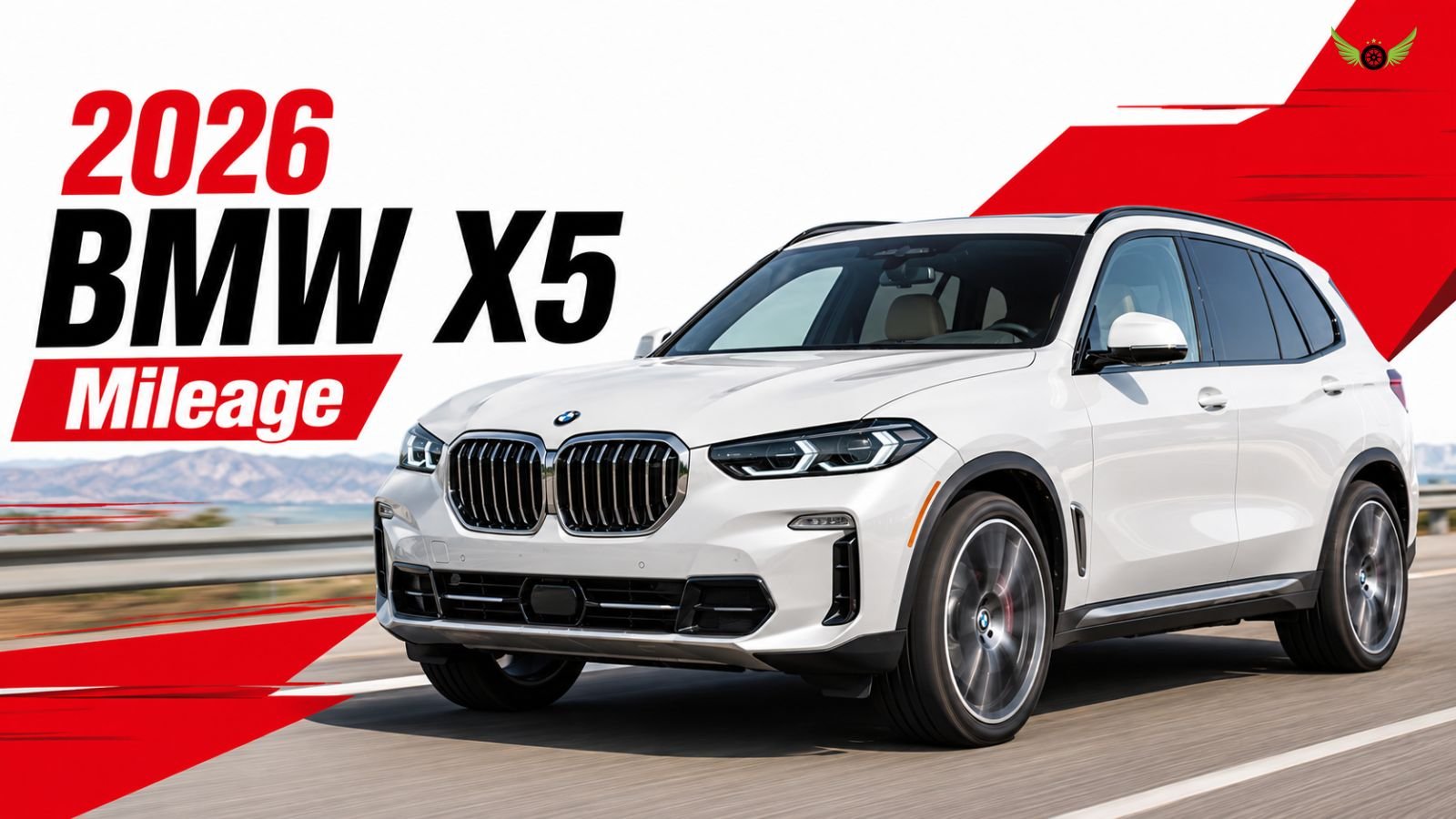
The 2026 BMW X5 combines strong performance with competitive fuel economy for a midsize luxury SUV. In the U.S., the standard sDrive40i and xDrive40i deliver an EPA-rated 25 MPG combined, while buyers can choose the xDrive50e plug-in hybrid for electric driving capability or the V8-powered M60i for significantly stronger performance.
Beyond the numbers, the BMW X5 is designed to balance everyday comfort with the responsive handling expected from BMW. Independent road testing has found that the standard xDrive40i can exceed its EPA highway estimate under real-world highway testing, while the X5’s refined ride and confident handling remain key strengths of the model.
In this guide, we’ll look at BMW X5 Mileage, official BMW X5 MPG ratings, available powertrains, performance, and what the X5 is like to drive every day in the USA. This helps buyers understand which version best fits their commuting, highway driving, family, and performance needs.
BMW X5 Mileage & Fuel Economy
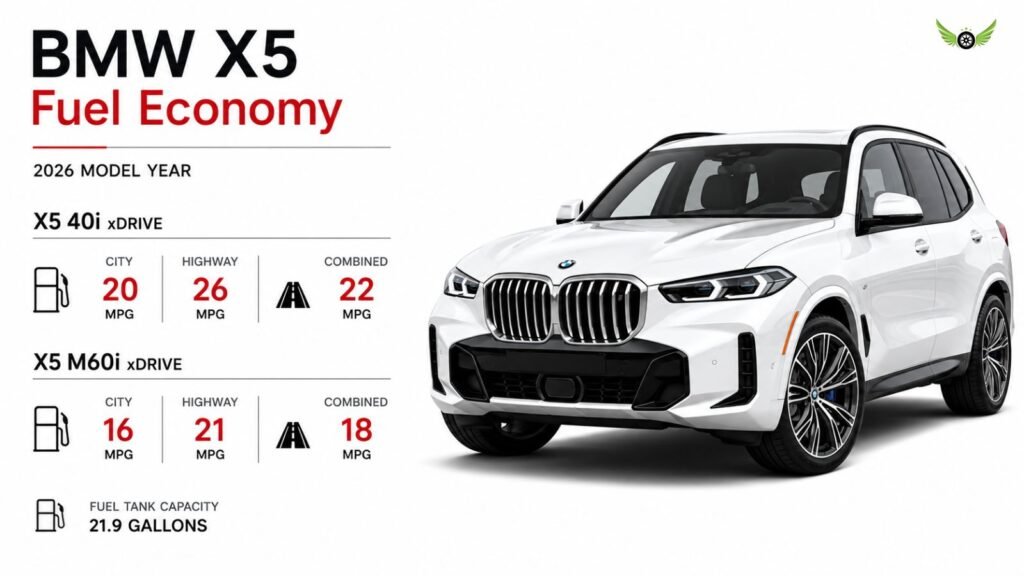
The 2026 lineup offers several powertrains, so fuel economy depends largely on the model you choose. The sDrive40i and xDrive40i deliver the best balance of gasoline efficiency and everyday power, while the xDrive50e can reduce fuel consumption for drivers who regularly charge its battery. The V8-powered M60i is the least efficient option but is designed primarily for stronger performance.
Official EPA Fuel Economy Ratings
The official EPA-based ratings make the differences between the gasoline, plug-in hybrid, and V8 models easy to compare:
2026 Model | City MPG | Highway MPG | Combined MPG |
sDrive40i | 23 | 27 | 25 |
xDrive40i | 23 | 27 | 25 |
xDrive50e* | 21 | 23 | 22 |
M60i | 17 | 22 | 19 |
The xDrive50e is a plug-in hybrid. Its gasoline MPG rating does not reflect all-electric driving; published EPA-based data lists approximately 40 miles of electric range, while BMW USA currently advertises up to 38 miles, so the exact figure should be checked for the specific vehicle configuration.
Real-World BMW X5 Fuel Economy
Real-world results can differ from EPA estimates depending on traffic, speed, weather, and driving style. In Car and Driver’s 75-mph highway test, a 375-hp xDrive40i achieved 28 MPG, one MPG above its EPA highway rating. The same test vehicle recorded 21 MPG overall during the publication’s testing, showing the difference between steady highway cruising and mixed driving.
For most U.S. buyers, the 40i models offer the most practical fuel economy without sacrificing performance. The xDrive50e can be a stronger choice for short daily trips when regular charging is available, while the M60i is better suited to buyers who prioritize V8 performance over fuel savings.
BMW X5 Performance & Driving Experience
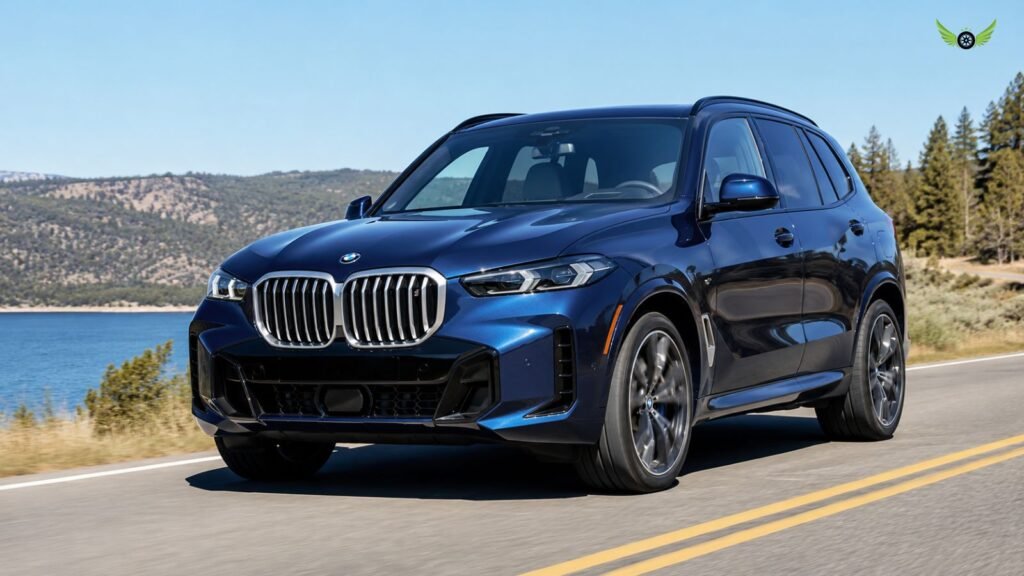
The 2026 BMW X5 offers three distinct performance choices: a turbocharged inline-six with 48-volt mild-hybrid assistance, a plug-in hybrid, and a twin-turbo V8. The main difference is how they deliver power, but all are paired with an eight-speed automatic transmission. Overall, the X5 is known for combining strong acceleration with a refined ride and stable handling, making it suitable for both daily driving and long highway trips.
Mild Hybrid, Plug-in Hybrid & V8 Performance
The 40i models use a 375-horsepower turbocharged inline-six with a 48-volt mild-hybrid system, providing smooth power for everyday driving. The xDrive50e plug-in hybrid combines an inline-six engine and electric motor for 483 horsepower, delivering stronger low-speed response and quicker acceleration. The M60i uses a 523-horsepower twin-turbo V8 and is the most performance-focused option in the regular lineup.
2026 X5 Model | Powertrain | Horsepower | BMW-Claimed 0–60 MPH* |
sDrive40i | Inline-six mild hybrid | 375 hp | 5.3 sec |
xDrive40i | Inline-six mild hybrid | 375 hp | 5.2 sec |
xDrive50e | Plug-in hybrid | 483 hp | 4.6 sec |
M60i | Twin-turbo V8 mild hybrid | 523 hp | 4.2 sec |
*BMW notes that acceleration results can vary based on vehicle specification, road conditions, and testing procedures.
Acceleration, Ride Comfort & Highway Driving
Independent testing shows that real-world acceleration can be quicker than manufacturer estimates under controlled conditions. Car and Driver recorded 4.4 seconds to 60 mph for the xDrive40i and 3.6 seconds for the M60i, while its test of the xDrive50e reached 60 mph in 3.9 seconds. These results should be viewed as test-track figures rather than typical everyday results.
On the road, the suspension and steering give this luxury SUV a confident, controlled feel. Independent reviews describe the ride as refined and the handling as stable, although larger wheels can make rough pavement more noticeable. At highway speeds, the smooth power delivery and composed chassis make long-distance driving comfortable, while the strong acceleration provides confident passing performance.
BMW X5 Daily Driving Experience

The 2026 BMW X5 is well suited to daily driving because it combines a comfortable cabin, strong road manners, and useful cargo space. Independent testing also highlights its quiet ride and comfortable seating, although some interior controls can take time to learn. For families and commuters, it offers the practicality expected from a midsize luxury SUV without feeling overly cumbersome on the road.
City Driving, Visibility & Parking
In city traffic, the X5 feels composed and easy to control for its size. Edmunds found outward visibility generally good in its road testing, but also notes that the small mirrors and wide roof pillars can create blind spots. Parking sensors and camera systems can therefore be especially helpful in tight spaces.
The X5 measures 194.3 inches long and 78.9 inches wide, so drivers moving from a smaller vehicle may notice its size when parking. Its smooth power delivery and available driver-assistance features, including blind-spot monitoring and rear cross-traffic alert, can make everyday driving easier.
Passenger Comfort & Cargo Practicality
Passenger comfort is one of the X5’s strongest points. The cabin provides ample headroom and legroom for five passengers, and independent reviewers describe it as quiet and comfortable on longer journeys. Car and Driver also found generous space for adults in both rows.
Cargo space is competitive for the class, and the rear seats fold to create a much larger load area. The standard gasoline models offer 33.9 cubic feet behind the rear seats and 72.3 cubic feet with them folded, while the xDrive50e plug-in hybrid provides slightly less space at 33.0 and 71.2 cubic feet, respectively.
Model | Cargo Space Behind Rear Seats | Maximum Cargo Space |
sDrive40i / xDrive40i | 33.9 cu. ft. | 72.3 cu. ft. |
xDrive50e | 33.0 cu. ft. | 71.2 cu. ft. |
The split tailgate and flat cargo area add practical value for groceries, luggage, and family travel. However, Edmunds notes that smaller-item storage inside the cabin is less generous than the overall interior size might suggest.
BMW X5 xDrive AWD & Driving Modes
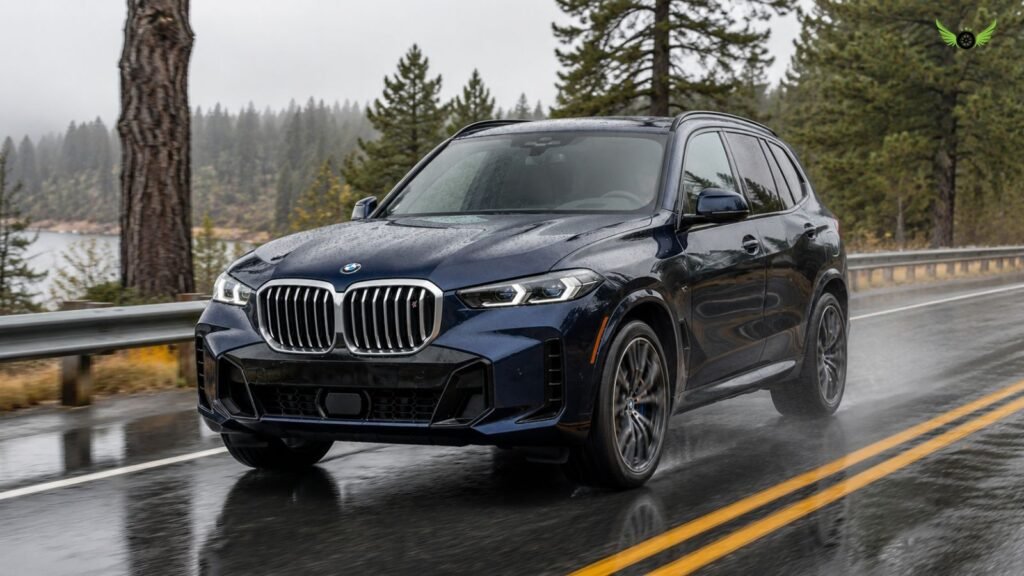
For buyers who drive in changing weather conditions, xDrive all-wheel drive adds useful traction and stability, while the available suspension and drive settings allow the X5 to shift between comfort-focused and sportier driving characteristics. The 2026 model carries over without major changes, so its driving experience remains consistent with the current generation.
xDrive AWD Performance in All Weather
BMW’s xDrive system automatically redistributes power when it detects wheel slip, helping improve traction on wet and slippery surfaces. BMW says the system is designed to enhance stability in conditions such as rain and snow, and Edmunds recommends the xDrive40i over the rear-wheel-drive version for drivers who want additional traction in both dry and slippery conditions.
In real-world driving, xDrive helps the SUV feel secure and predictable, but it does not improve braking grip on its own. Tire choice remains especially important in winter, so AWD should not be considered a substitute for appropriate winter or all-weather tires.
Adaptive Suspension & Drive Modes
The X5’s available Adaptive M Suspension allows the driver to choose between a more comfortable or sport-focused setup by adjusting the damping characteristics. BMW explains that SPORT and SPORT+ settings provide tighter body control and a more direct driving feel, while comfort-oriented settings are better suited to everyday roads and longer trips.
This flexibility is one of the X5’s practical strengths. Independent testing describes its ride as refined and its handling as stable, although Edmunds notes that larger wheels can transmit more road imperfections into the cabin. For daily driving, comfort-oriented settings are the better choice, while Sport mode is more useful when sharper response and greater body control are preferred.
BMW X5 vs Mercedes-Benz GLE & Audi Q7
The BMW X5, Mercedes-Benz GLE, and Audi Q7 appeal to different types of luxury SUV buyers. The X5 is the most driver-focused choice, the GLE places greater emphasis on ride comfort, and the Q7 offers the strongest advantage for buyers who need three rows of seating. All three provide premium interiors and strong highway capability, but their everyday priorities are noticeably different.
Driving Dynamics Comparison
For drivers who enjoy responsive handling, the BMW X5 has the strongest overall driving character of the three. Car and Driver’s testing recorded 0–60 mph in 4.4 seconds for the X5 xDrive40i, compared with 5.3 seconds for the GLE450 4Matic and 5.9 seconds for the Q7 55 in their respective tests. Beyond acceleration, recent comparisons consistently describe the X5 as more engaging and better balanced between ride quality and handling.
The GLE is tuned more toward relaxed cruising, while the Q7 feels stable and composed but prioritizes family-oriented practicality over sporty handling. For buyers who want a luxury SUV that remains enjoyable on winding roads without becoming uncomfortable for daily use, the X5 has a clear advantage.
Comfort, Refinement & Everyday Practicality
The Mercedes-Benz GLE is the stronger choice for buyers who prioritize a softer, more comfort-focused ride, while the Q7 offers standard three-row seating for up to seven passengers. The X5 is limited to five seats, but its cabin remains spacious and practical for families that do not need a third row.
For everyday practicality, the Q7 is the most flexible for larger families. The GLE offers an available third row, while the X5 focuses on two-row comfort and a generous cargo area. Ultimately, the choice is straightforward: choose the X5 for driving enjoyment, the GLE for ride comfort, and the Q7 when passenger capacity is the priority.
BMW X5 Mileage, MPG, Performance & Driving Experience FAQs
Before making a buying decision, most shoppers want clear answers about fuel economy, real-world performance, daily comfort, and how this luxury SUV compares with its closest rivals. These FAQs cover those key topics without repeating the full article.
What MPG does the 2026 BMW X5 get?
The 40i models are rated at 25 MPG combined (23 city/27 highway). The xDrive50e plug-in hybrid is rated at 22 MPG combined when using gasoline, while the M60i is rated at 19 MPG combined. Your actual fuel economy will depend on traffic, speed, weather, and driving habits.
Is the BMW X5 fuel-efficient for a luxury SUV?
The 40i models offer a good balance of power and fuel economy, especially considering their 375-horsepower turbocharged inline-six engines. The xDrive50e can reduce gasoline use further for drivers who regularly charge it, with an EPA-rated electric range of approximately 40 miles.
Which 2026 BMW X5 has the best performance?
The M60i is the strongest-performing regular model, with a 523-horsepower twin-turbo V8 and a BMW-claimed 0–60 mph time of 4.2 seconds. The xDrive50e is also quick, combining 483 horsepower with strong electric-motor torque.
Is the BMW X5 comfortable for daily and highway driving?
Yes. Independent testing describes the cabin as composed, quiet, and comfortable, with ample space for five passengers. Larger wheels can make rough pavement more noticeable, so wheel choice can affect ride comfort.
Is xDrive AWD worth it in snow and bad weather?
For drivers who regularly encounter snow, rain, or slippery roads, xDrive can provide additional traction and confidence. However, all-wheel drive does not replace proper tires, especially in winter conditions. Tire choice remains important for braking and overall control.
Is the BMW X5 practical for families?
Yes, for families that need seating for up to five people. It offers a spacious cabin and 33.9 cubic feet of cargo space behind the rear seats in the standard configuration, but it does not offer a third row. Buyers who regularly need more passenger capacity may prefer a three-row SUV.
How does the BMW X5 compare with the Mercedes-Benz GLE?
The X5 is generally the more driver-focused choice, while the GLE places greater emphasis on ride comfort. The GLE also offers an available third row, whereas the X5 is a five-seat SUV. Both are strong luxury options, so the better choice depends on whether driving engagement or a softer, more comfort-oriented experience matters more.
Is the BMW X5 better than the Audi Q7 for driving?
The X5 is quicker in independent testing and is designed as a two-row luxury SUV with a stronger focus on performance. The Audi Q7 adds standard three-row seating and is better suited to buyers who need space for up to seven passengers. The right choice depends on whether driving performance or passenger capacity is the higher priority.
Is the 2026 BMW X5 a good choice for buyers who want one SUV for everything?
For buyers who want a combination of strong performance, comfortable daily driving, practical cargo space, and available all-weather capability, it is a well-rounded choice. Its main limitation is the lack of a third row, so larger families should consider whether five-passenger seating is enough before buying.