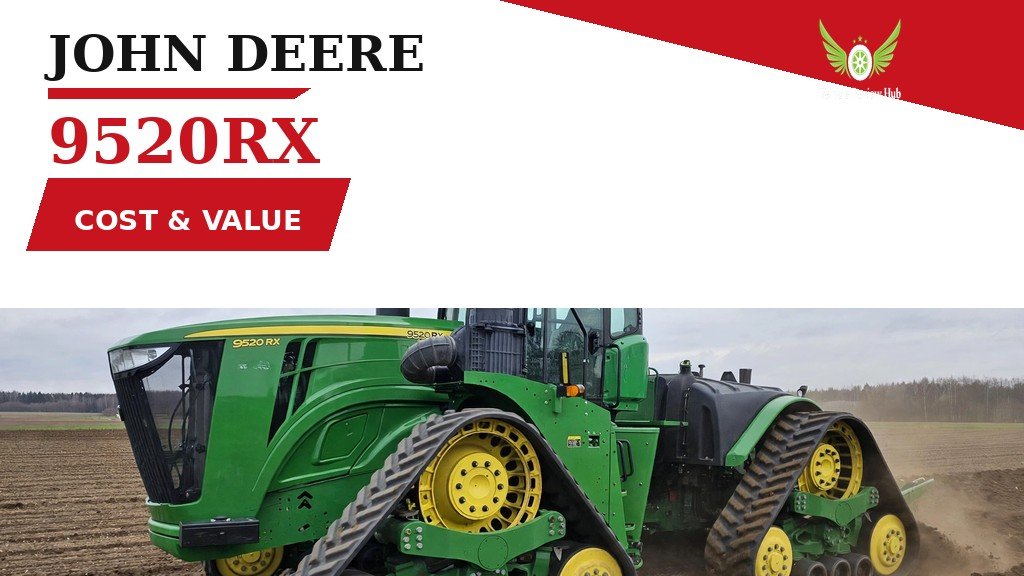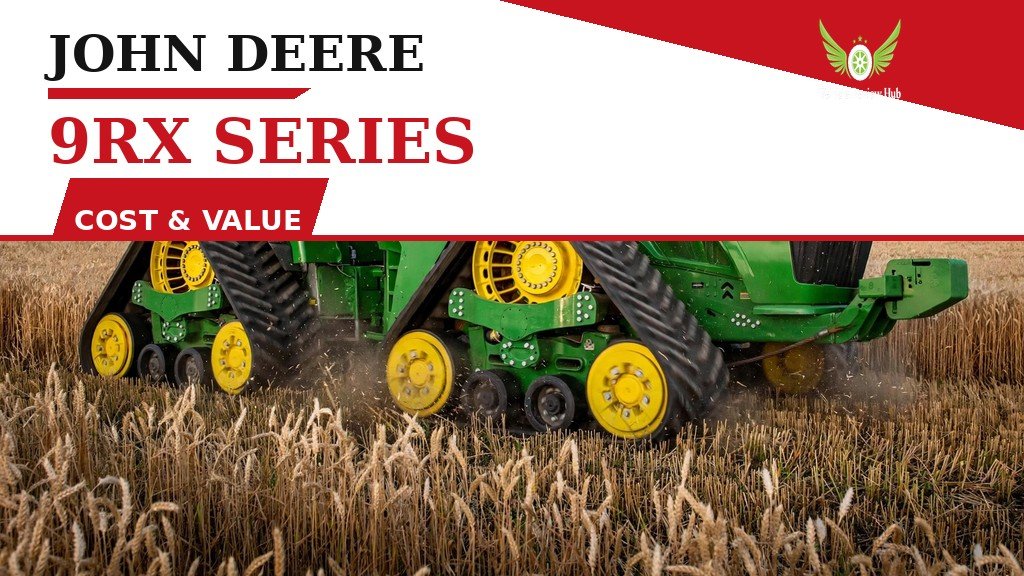
Owning a John Deere 9RX Series four-track tractor means budgeting at a scale few farm purchases approach. A new 9RX 710 lists around $1.07–$1.11 million, the 770 runs $1.10–$1.22 million, and the flagship 9RX 830 — the most powerful tractor Deere has ever built at 830 PS — pushes toward $1.2 million, with working builds running higher still. Over five years at 800 hours per year, total John Deere 9RX Series ownership cost lands roughly between $998,000 and $1,176,000 per model in our illustrative budgets, with fuel and depreciation accounting for about 85 percent of that total. The good news in the cost story: the JD18 engine runs without DEF, DPF, or SCR entirely — a single-fluid Final Tier 4 design that removes an entire layer of aftertreatment expense.
This guide breaks down every dollar of John Deere 9RX Series ownership cost: fuel math by model, maintenance and track expenses, insurance, depreciation and resale value, and a used-buying checklist built around verified 2026 listings. Every figure below comes from Deere spec sheets, dealer listings, or is labeled as an estimate where it cannot be verified — nothing is guessed.
John Deere 9RX Series Total Cost of Ownership
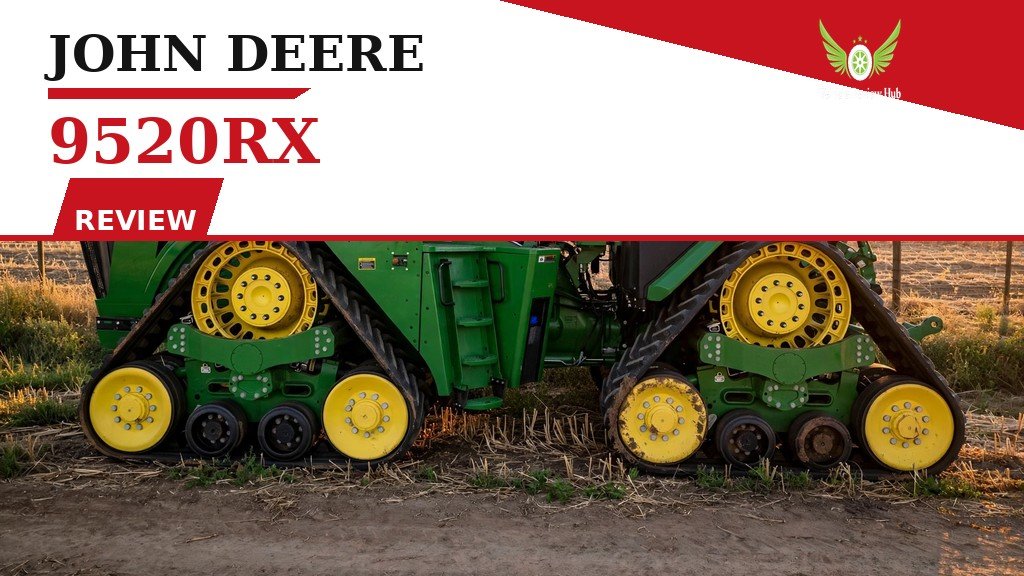
The John Deere 9RX Series ownership cost conversation starts with the lineup itself, because the gap between the smallest and largest model is a $130,000+ spread in purchase price and a six-figure difference in five-year operating cost. The current generation runs Deere’s own 18-liter JD18 inline six-cylinder — the engine at the heart of John Deere 9RX Series ownership cost, an e21 21-speed PowerShift, and four rubber belt tracks on a 74,000-pound base machine. A 515-gallon fuel tank feeds that engine, and there is no DEF tank at all — the JD18 meets Final Tier 4 with cooled EGR only, which means no DEF purchases, no DPF ash service, and no SCR repairs for the life of the tractor.
Fuel, Routine Maintenance and Track Operating Expenses
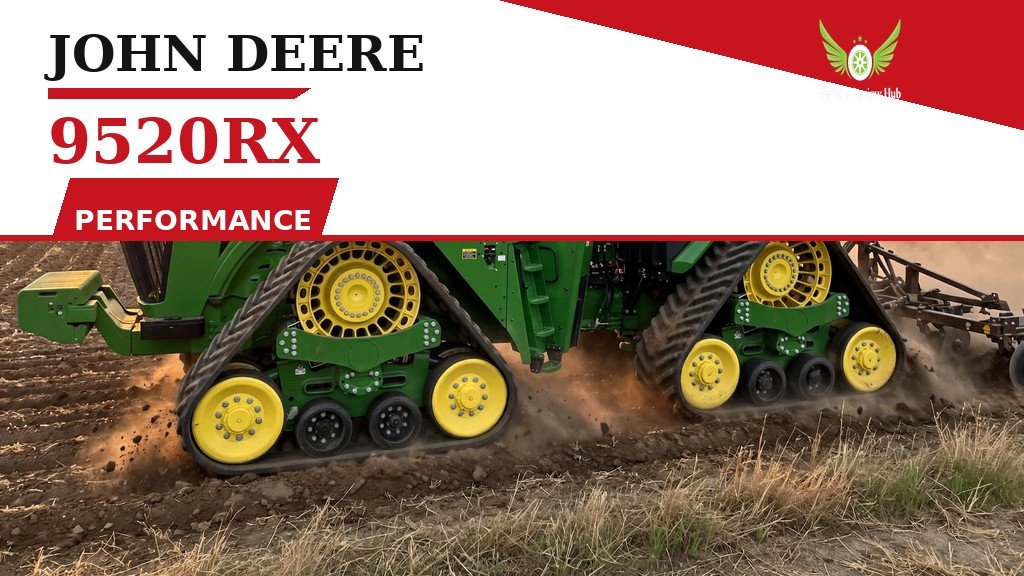
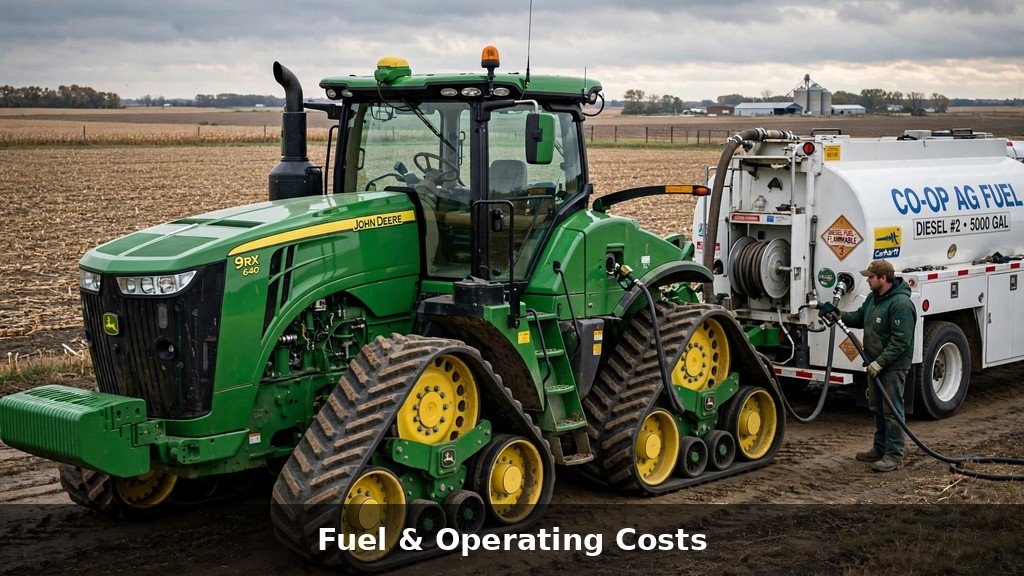
Fuel is the single largest operating line in any John Deere 9RX Series ownership cost budget, and small differences in gallons per hour compound into six figures over a tractor’s life. Owner-reported figures cluster around 12–18 gph for field tillage, 18–28 gph for sustained heavy draft, and 8–14 gph for transport and light work. With a 515-gallon tank, a 9RX 830 pulling hard can empty the tank in under 24 hours of field time, and at these volumes even small price moves swing John Deere 9RX Series ownership cost by thousands — plan fuel logistics for roughly 20–35 hours of work between fills depending on load. For the five-year budgets below, this guide uses planning averages of 17 gph (710), 19 gph (770), and 21 gph (830), with diesel at $6.179 per gallon from the EIA weekly diesel update for the week of October 12, 2026.
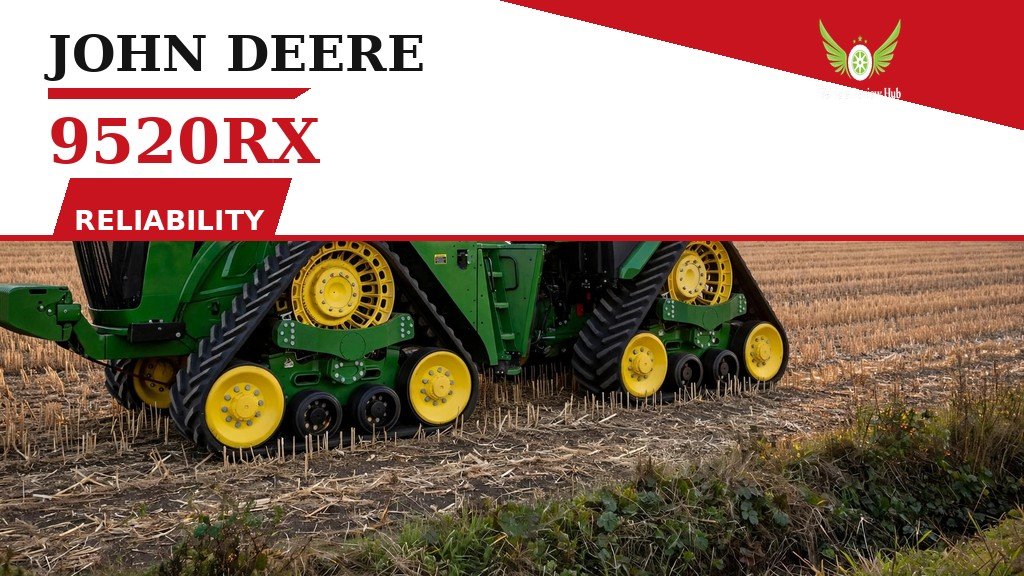
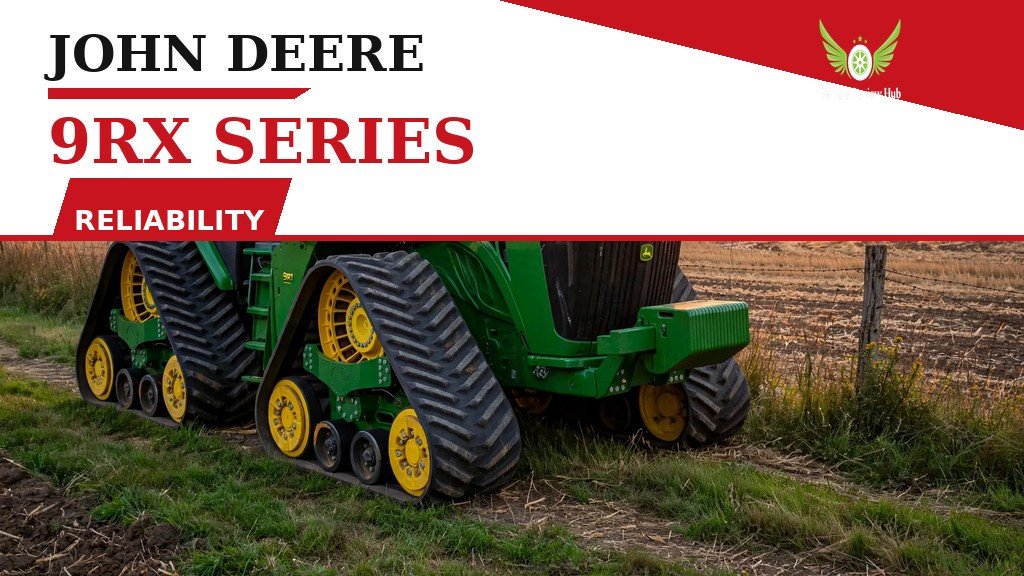
Routine maintenance is comparatively straightforward for a machine this size, which is one reason scheduled service is a small slice of John Deere 9RX Series ownership cost. Engine oil and filters go every 500 hours (two spin-on filters), and the biggest recurring wear item is the track system itself. Camso supplies the positive-drive belts — the 3500 General Ag, 6500 General Ag, and 6500 Scraper models — and Camso backs them with a 4-year/2,000-hour warranty for agricultural use. Owner-reported belt life typically runs 3,000 to 5,000+ hours depending on roading, ballast, and tension discipline. Dealer quotes for replacement commonly land around $10,000–$15,000+ per belt installed (estimate); a full four-corner refresh at dealer rates can exceed $50,000 (estimate). The fastest way to keep John Deere 9RX Series ownership cost under control is track discipline: minimize roading (it wears belts far faster than field work), maintain correct tension, keep rocks out of the undercarriage, and avoid spot turns and counter-rotation that scrub the belts.
Repairs, Unexpected Costs and Five-Year Budget
Outside of fuel and tracks, repair reserves follow the same logic that shapes the rest of John Deere 9RX Series ownership cost as any high-horsepower machine: complexity costs money when it breaks. The e21 transmission, triple-pump hydraulics (up to 168 gpm), and the full precision-ag stack (guidance, displays, telemetry) are all expensive to service at the dealer. Owners on farm forums consistently point to software and electronics — code cascades, sensor faults, guidance gremlins — as the most common surprise-repair category, ahead of actual mechanical failures. Budgeting a repair reserve of $40,000–$55,000 over five years (estimate) is prudent on a million-dollar machine.
Here is an illustrative five-year John Deere 9RX Series ownership cost budget at 800 hours per year, with diesel from the math above, depreciation from base prices and realistic residuals, and insurance, tracks, and repairs labeled as estimates. There is no DEF line — the JD18 uses no diesel exhaust fluid.
| Expense (5 years) | 9RX 710 (est.) | 9RX 770 (est.) | 9RX 830 (est.) |
|---|---|---|---|
| Diesel (17 / 19 / 21 gph avg @ $6.179/gal) | $420,240 | $469,680 | $519,120 |
| DEF | $0 (none used) | $0 (none used) | $0 (none used) |
| Routine maintenance (est.) | $18,000 | $20,000 | $22,000 |
| Repair reserve (est.) | $40,000 | $48,000 | $55,000 |
| Track belt reserve (est.) | $25,000 | $25,000 | $25,000 |
| Insurance (est.) | $45,000 | $50,000 | $55,000 |
| Depreciation (base price to 5-yr residual, est.) | $450,000 | $480,000 | $500,000 |
| Total five-year cost (est.) | $998,240 | $1,092,680 | $1,176,120 |
Fuel and depreciation together make up roughly 85 percent of John Deere 9RX Series ownership cost — which is exactly why buying a low-hour used machine, skipping the steepest depreciation years, is the single most effective way to cut total John Deere 9RX Series ownership cost. Our 9RX Series maintenance and common problems guide covers what actually breaks, so you can size the repair reserve honestly.
John Deere 9RX Series Insurance and Financial Considerations
A tractor that costs over a million dollars new cannot sit on the books unprotected. Equipment insurance, liability coverage, and the realities of theft and storm damage are a real part of John Deere 9RX Series ownership cost — manageable if set up correctly from day one, punishing if ignored.
Equipment Insurance and Liability Coverage
Insure a 9RX like the capital asset it is. Insurance is a fixed line in John Deere 9RX Series ownership cost that rewards shopping around. Full-coverage equipment insurance on a million-dollar machine typically runs $8,000–$12,000 per year (estimate), scaling with stated value, deductible, and whether the policy covers electronics and guidance hardware separately. Beyond the machine itself, liability coverage matters: a 74,000-pound tractor (up to 84,000 pounds ballasted) on public roads is a serious risk exposure, and umbrella liability coverage sized for farm operations is cheap insurance against the worst case. Review the stated-value clause annually — as the tractor depreciates, keeping the insured value current avoids paying premiums on value that no longer exists — a simple annual review that trims John Deere 9RX Series ownership cost.
Storage, Theft and Damage Protection
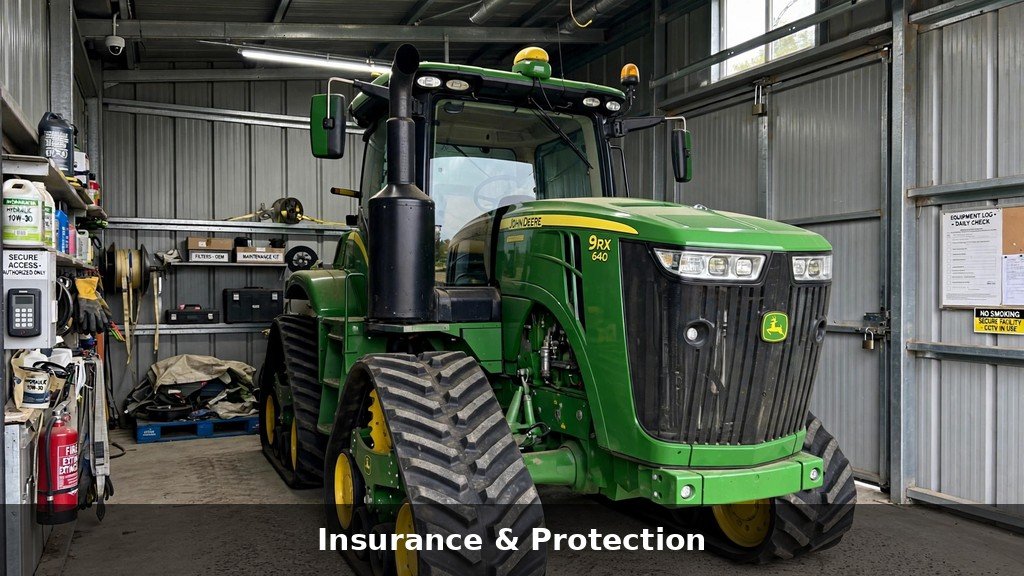
Storage is protection. A 9RX is over 22 feet long with a 15.2-foot wheelbase and 22.3-foot turning radius — it needs a shed built for it, and the shed pays for itself in preserved resale value. Theft protection matters at this price point: GPS tracking, geofencing, and remote disable are available through Deere’s connected support and telematics, and some insurers discount premiums for machines with active tracking. Storm damage is the underappreciated risk — hail on a CommandView IV Plus cab’s glass and bodywork runs into the thousands, and a single windstorm across an open lot can damage several machines at once. Every one of these risks feeds back into John Deere 9RX Series ownership cost through premiums and deductibles. Budget a secure shed and active tracking as part of John Deere 9RX Series ownership cost from year one — both are among the cheapest dollars in the entire John Deere 9RX Series ownership cost picture.
John Deere 9RX Series Depreciation and Resale Value
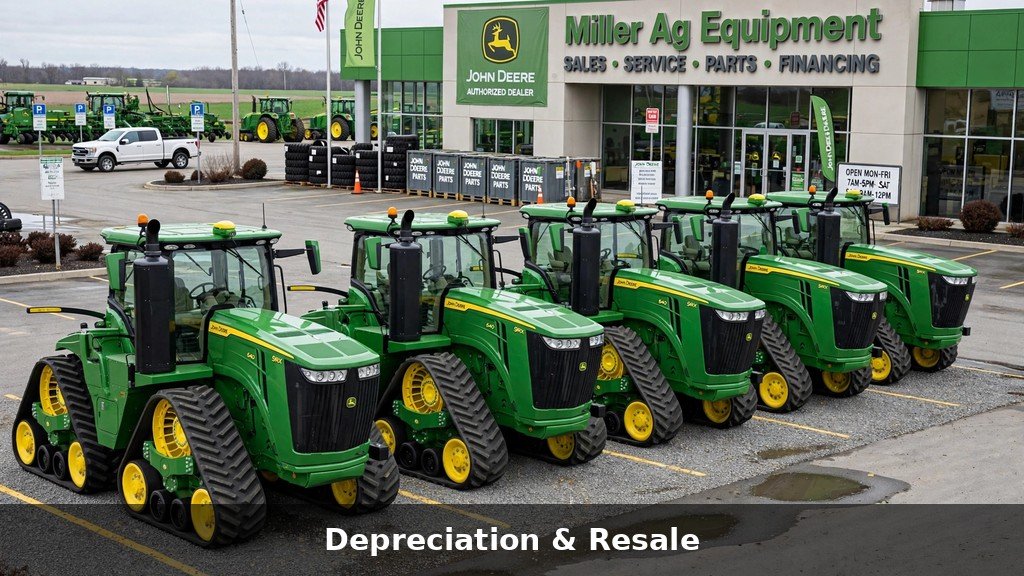
Depreciation is the second-largest line in any John Deere 9RX Series ownership cost budget, and the line the buyer controls least after the purchase, and it is steepest in the first 1,000–2,000 hours. The used market in October 2026 shows the pattern clearly: a 2025 9RX 830 with 707 hours listed at $925,000 (Van Wall, Mason City IA) against a new list near $1.2 million, while older-generation four-tracks like the 2024 9RX 640 trade at $655,000–$694,500 with 400–800 hours.
How Model, Year, Hours and Equipment Affect Resale Price
Hours are the primary depreciation driver. The market treats sub-500-hour machines as nearly new; 1,000–2,000 hours as solid working stock; and 2,000+ hours as the point where buyers start discounting for the next track replacement. Model matters too: the JD18-powered 710/770/830 carry a premium over the older Cummins-powered 9RX 470–640 generation — a 2022 9RX 490 with 1,531 hours listed at $450,000 (Greenway, Arkansas) versus $606,999–$669,999 for 2024 9RX 540/590 machines with under 1,000 hours (Papé, Washington). Equipment moves the needle as well: the triple-pump 168-gpm hydraulics, six rear SCVs, guidance-ready hardware, 36-inch tracks, and autonomy prep all support stronger resale, while base-config machines with the single 56-gpm pump trade softer. Our 9RX Series performance and fuel usage guide details what each model pulls, which helps explain the price steps.
Private Sale, Dealer Trade-In and Resale Preparation
For a machine at this price, most sellers go through a dealer — the resale channel you choose is itself a John Deere 9RX Series ownership cost decision — the buyer pool for a $700,000+ used tractor is thin, and dealers with nationwide reach (Van Wall, Papé, GreenMark) move these machines across state lines regularly. Private sale can net a few percent more, but it takes time and exposes the seller to inspection disputes. Trade-in against a new 9RX is the fastest exit and often the cleanest on taxes, though the dealer discount is real. Resale preparation that pays: complete service records (especially the 500-hour services and any track work), a documented guidance/precision-ag package, fresh detailing, and an honest hours-to-belt-condition story. Buyers at this level check everything — a clean paper trail is worth real money, and it is one of the few ways to improve your realized John Deere 9RX Series ownership cost after the fact.
Buying a John Deere 9RX Series Tractor
Buying a 9RX is a configuration decision as much as a model decision. Three models, two track widths, three hydraulic pump options, and a long options list mean two 9RX 770s can differ by $150,000+ in price. Match the machine to the work, verify every hour, and negotiate like the six-figure transaction it is — the purchase price sets the floor for John Deere 9RX Series ownership cost.
Choosing Between the 710, 770 and 830
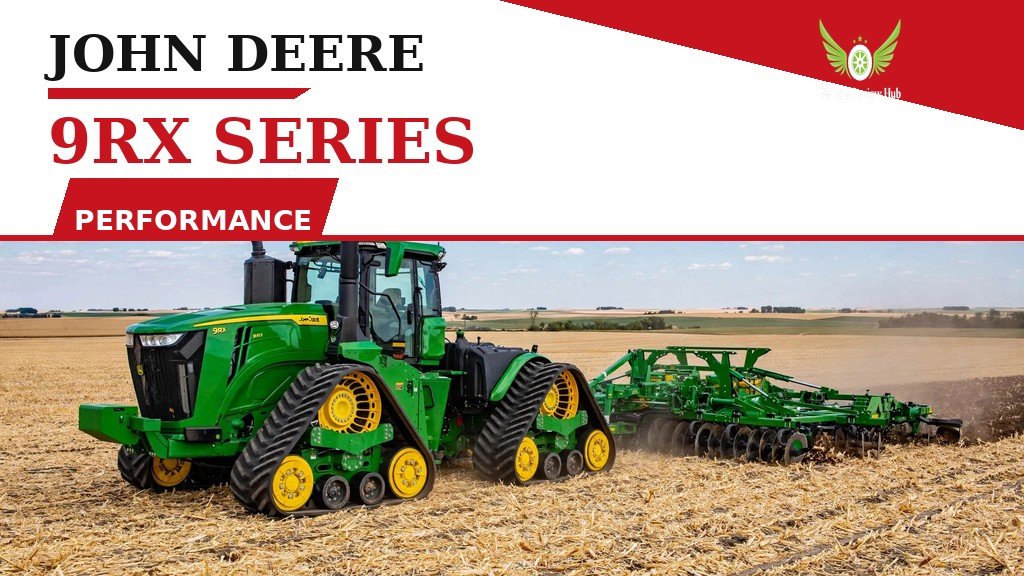
The three models share the same JD18 engine architecture, e21 transmission, 335-hp PTO, and 74,000-pound base platform — the difference is power and the work it enables. The 9RX 710 (700 hp SAE rated, 770 max, 2,671 lb-ft) is the entry to the range and the value play for operations that need four-track flotation more than maximum horsepower. The 9RX 770 (770 PS rated, 847 max) is the middle ground — most of the 830’s capability at a meaningfully lower price. The 9RX 830 (830 PS rated, 913 max, 3,123 lb-ft, optional +40-hp Intelligent Power Management) is for the heaviest draft work on the biggest acreage: deep rippers, 60-foot+ air seeders, and scraper work, where it also comes in Scraper Special configurations. The video below — a Farmers Guide review testing the 9RX 830 — shows what the flagship does in the field:
Used-Tractor Inspection, Price Negotiation and Alternatives
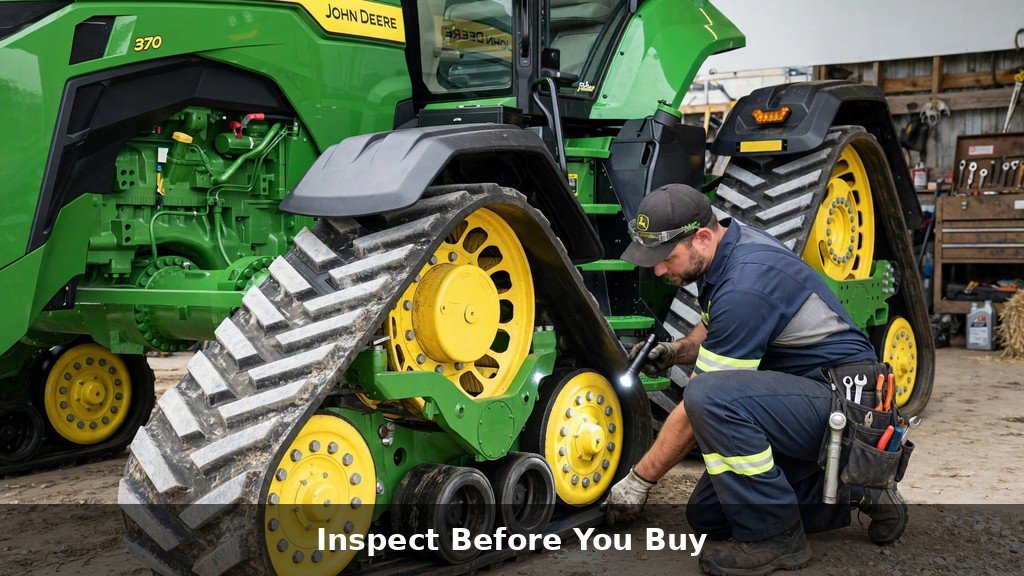
Used inspection on a 9RX centers on four things: tracks, hours verification, software, and service history. Measure belt wear and check for cuts, chunking, and alignment issues — a worn set is a $40,000–$60,000+ negotiation lever at dealer rates (estimate). Verify hours against the machine’s electronic records, not just the dash. Check that all software and guidance updates are current; a machine several versions behind may need a dealer visit before it works with your existing precision-ag setup. When sizing John Deere 9RX Series ownership cost on a used machine, pull the full service history — the 500-hour services, any transmission or hydraulic work, and recalls. Speaking of recalls: no 9RX-specific CPSC recall could be verified for this guide; treat any recall claim as reported rather than confirmed, and check Deere’s serial-number lookup or call 800-537-8233 before buying.
On price, negotiate from the used bands, not the new list. The October 2026 market shows 2024 JD18-gen-adjacent machines (previous generation) and new-gen machines with real spreads: use comparable hours and equipment, not model year alone. Alternatives worth cross-shopping: the wheeled 9R Series (same JD14/JD18-era technology on wheels, lower purchase price, cheaper tires than tracks), the two-track 9RT, and the 8RX Series (four tracks at a lower horsepower and price point). For the full picture, our 9RX Series review and specs guide covers every model in detail.
Frequently Asked Questions About John Deere 9RX Series Ownership Cost
These are the questions buyers actually ask about John Deere 9RX Series ownership cost, answered from verified specs, dealer listings, and labeled estimates.
How much does a new John Deere 9RX cost in 2026?
Aggregator pricing puts the 9RX 710 at $1,070,800–$1,114,500, the 9RX 770 at $1,102,700–$1,218,800, and the 9RX 830 at roughly $1.2 million (estimates, before options). A working farm build with the triple 168-gpm pump, six SCVs, guidance hardware, and 36-inch tracks can add $100,000–$200,000+ (estimate) to the base machine.
What is the five-year ownership cost of a John Deere 9RX?
At 800 hours per year, our illustrative budgets run $998,240 (710), $1,092,680 (770), and $1,176,120 (830) over five years — all labeled estimates. Fuel (about half the total) and depreciation (about a third) dominate; maintenance, repairs, track reserves, and insurance make up the rest. The JD18’s DEF-free design removes an entire cost line that comparable engines carry.
Does the John Deere 9RX use DEF?
No. The JD18 engine meets Final Tier 4 with cooled EGR only — no diesel exhaust fluid, no DPF, and no SCR, per Deere’s US dealer spec sheets. That saves roughly 800 gallons of DEF per year versus a comparable SCR-equipped engine and eliminates aftertreatment regeneration and ash-service downtime.
How much does it cost to replace the tracks on a 9RX?
Dealer quotes for a single Camso belt on a 9RX-size machine commonly run $10,000–$15,000+ installed (estimate); a full four-corner refresh at dealer rates can exceed $50,000 (estimate). Owner-reported belt life is 3,000–5,000+ hours, and Camso warrants the belts for 4 years or 2,000 hours in agricultural use. Belt condition is the single biggest inspection item on a used 9RX, and the fastest way a buyer misjudges John Deere 9RX Series ownership cost.
What warranty comes with a John Deere 9RX?
Deere’s agricultural warranty statement covers tractors for 24 months or 2,000 hours, whichever comes first. The 60-month/2,000-hour powertrain extension listed in the statement applies to 5E Series tractors specifically — it does not extend the 9RX’s base coverage. Paid PowerGard extended protection plans are available for longer, higher-hour coverage.
Is a used John Deere 9RX a good buy?
Often yes — depreciation does the heavy lifting for the second owner. Late-model low-hour machines (2024–2025, under 1,000 hours) trade at meaningful discounts to new list while carrying most of their working life ahead — the clearest path to lowering lifetime John Deere 9RX Series ownership cost. Just inspect the tracks first: belt wear is the cost item that can erase the used discount fastest. Budget a professional undercarriage inspection before committing, and verify hours, software currency, and service records on every candidate.