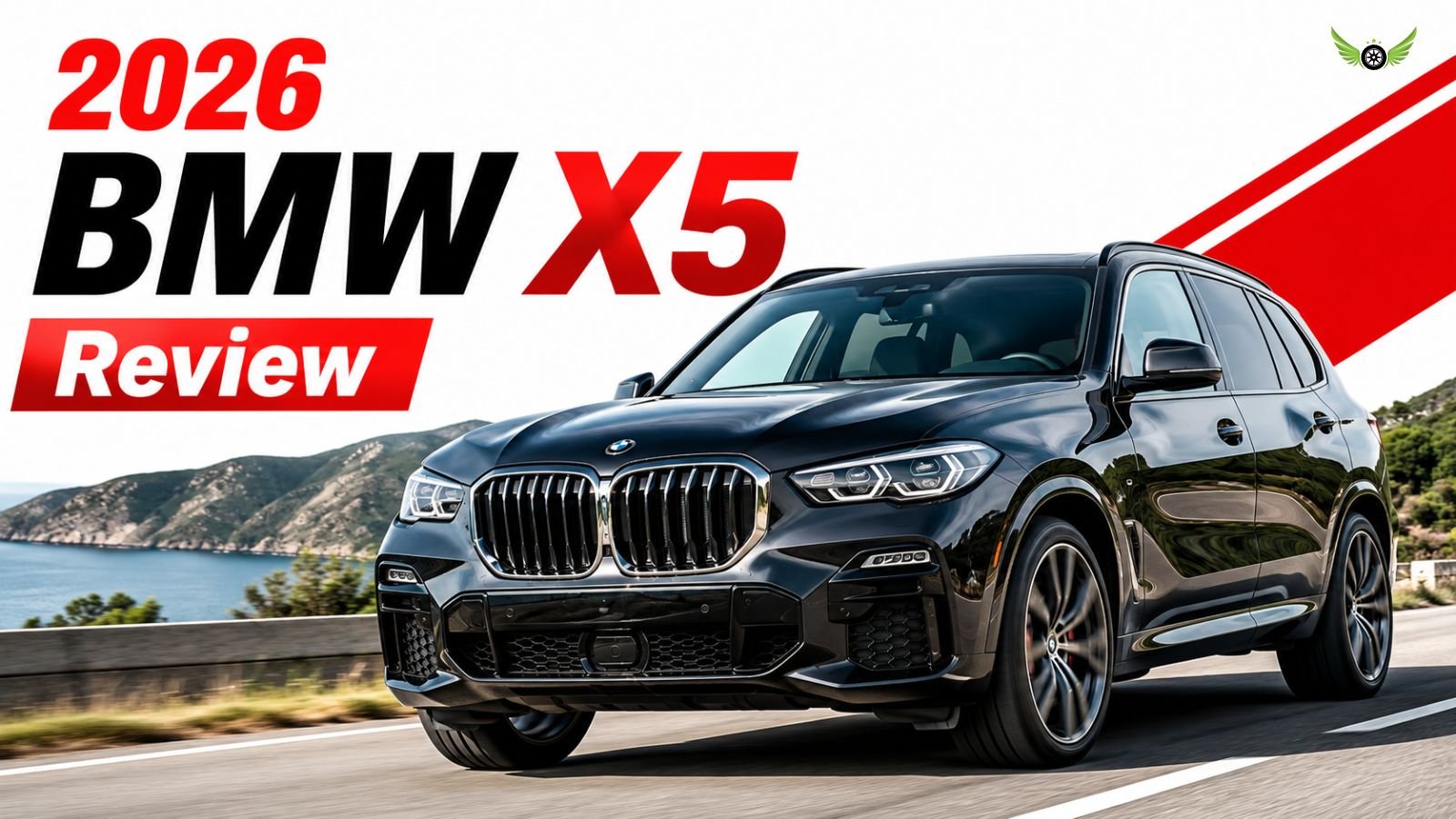
The 2026 BMW X5 remains one of the strongest choices for buyers who want a midsize luxury SUV that balances performance, comfort, technology, and everyday practicality. The U.S. lineup includes the rear-wheel-drive sDrive40i, all-wheel-drive xDrive40i, plug-in hybrid xDrive50e, and performance-focused M60i, giving buyers several powertrain options depending on their needs and budget.
For the 2026 model year, the BMW X5 price starts at $68,300 for the sDrive40i on BMW USA’s current model listing, while pricing increases with all-wheel drive, plug-in hybrid capability, and V8 performance. The lineup offers up to 483 horsepower in the xDrive50e, while the M60i provides an even more performance-focused option. BMW also lists a maximum towing capacity of 7,200 pounds when properly equipped with the factory-installed trailer hitch.
This BMW X5 Review covers the trims, pricing, engine options, performance, interior technology, safety features, and key competitors to help you decide which version fits your needs. Whether you’re looking for a comfortable family SUV, a plug-in hybrid, or a powerful luxury vehicle, this BMW X5 Buying Guide focuses on the information that matters before making a purchase.
BMW X5 Trims, Pricing & What's New
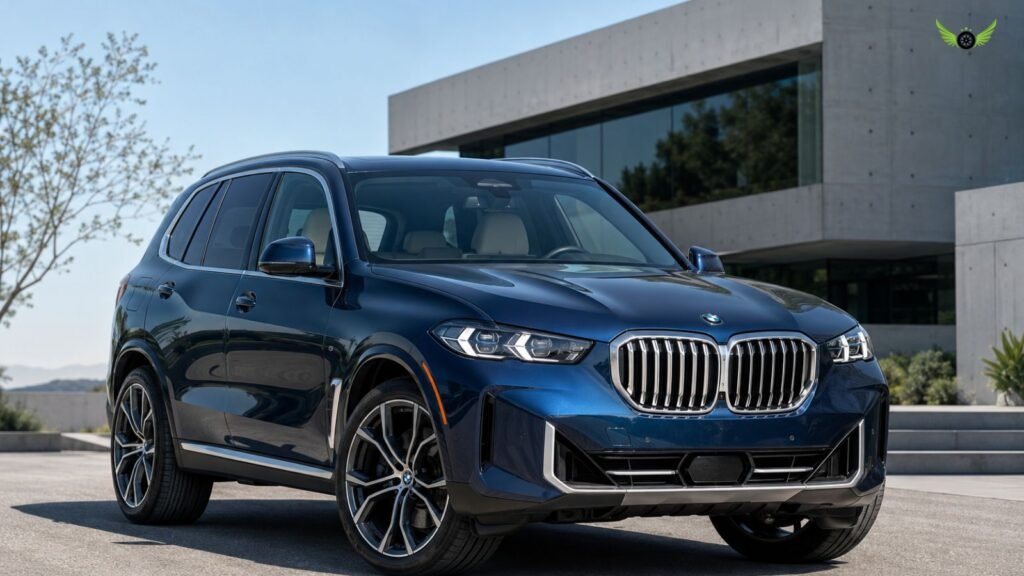
The 2026 model is offered with four distinct powertrain choices in the U.S., ranging from a rear-wheel-drive six-cylinder SUV to a plug-in hybrid and a high-performance V8 model. The lineup gives buyers flexibility, but the best choice depends largely on whether you prioritize price, all-weather capability, electrified driving, or performance.
BMW USA currently lists the sDrive40i from $68,300, xDrive40i from $70,600, xDrive50e from $76,000, and M60i from $93,600. However, BMW’s official model-year pricing guide lists base prices before destination charges, so buyers should always check the latest configurator for the final MSRP and available equipment.
BMW X5 sDrive40i, xDrive40i, xDrive50e & M60i Comparison
Model | Starting MSRP | Powertrain | Drivetrain | Best For |
sDrive40i | $68,300 | Turbo inline-six mild hybrid | RWD | Lowest entry price |
xDrive40i | $70,600 | Turbo inline-six mild hybrid | AWD | Everyday all-weather driving |
xDrive50e | $76,000 | Plug-in hybrid | AWD | Drivers who can charge regularly |
M60i | $93,600 | Twin-turbo V8 mild hybrid | AWD | Performance-focused buyers |
The sDrive40i and xDrive40i use the same 375-horsepower turbocharged inline-six engine with 48-volt mild-hybrid assistance. The main difference is drivetrain: the sDrive40i is rear-wheel drive, while the xDrive40i adds BMW’s all-wheel-drive system. BMW lists 0–60 mph times of 5.3 and 5.2 seconds, respectively.
The xDrive50e is the plug-in hybrid option, producing 483 horsepower and offering up to 38 miles of electric range according to BMW. Its combination of strong acceleration and short-distance electric driving makes it particularly appealing for owners with convenient home or workplace charging.
The M60i is the performance-focused choice, powered by a 4.4-liter twin-turbocharged V8 with 523 horsepower. It delivers significantly more performance than the other versions but comes with a substantially higher starting price.
Packages, Options & Best Value Trim
BMW offers several packages that can add luxury, performance, and driver-assistance features. The Premium Package includes features such as a Head-up Display, Remote Engine Start, and Harman Kardon premium audio. The Executive Package builds on this with items including a Panoramic Sky Lounge LED Roof, Glass Controls, and Soft-close automatic doors. The available M Sport Professional Package and Driving Assistance Professional Package add performance styling and advanced driving assistance, respectively. Package availability varies by model.
For most buyers, the xDrive40i is the best all-around value. It delivers the same six-cylinder performance as the entry-level model while adding all-wheel drive for a relatively modest price increase. Buyers who do not need AWD can save money with the sDrive40i, while the plug-in hybrid makes the most financial and practical sense for drivers who will regularly use its electric capability.
What’s new for 2026: Based on the current BMW U.S. model information, the 2026 model continues with the established four-model lineup rather than introducing a major redesign. Buyers should also be aware that BMW has announced a new fifth-generation X5 for a future rollout, so it is important not to confuse that newly announced vehicle with the currently listed 2026 model.
BMW X5 Engine, Performance & Specifications
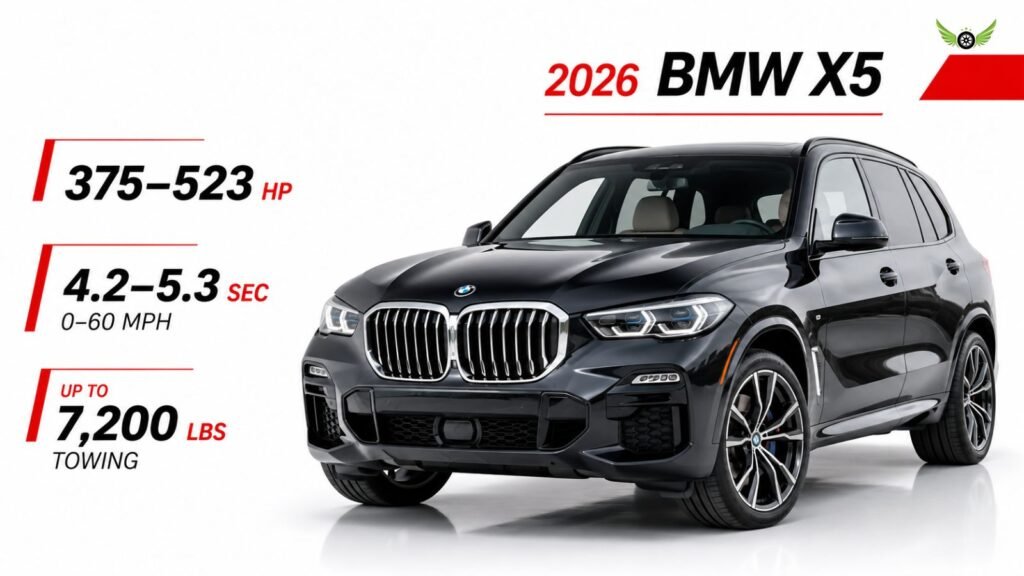
The 2026 lineup offers three distinct powertrain approaches: a 48-volt mild-hybrid inline-six, a plug-in hybrid, and a twin-turbocharged V8. All models use an eight-speed automatic transmission, while the available engines give buyers a clear choice between balanced daily performance, electrified driving, and maximum power.
Mild Hybrid, Plug-in Hybrid & V8 Engine Options
The sDrive40i and xDrive40i use a 3.0-liter turbocharged inline-six with a 48-volt mild-hybrid system. Both produce 375 horsepower and 398 lb-ft of torque. The mild-hybrid setup supports the gasoline engine but does not provide the electric-only driving capability of a plug-in hybrid.
The xDrive50e combines a 3.0-liter inline-six with an electric motor for 483 horsepower and 516 lb-ft of torque. BMW lists up to 38 miles of electric range for the 2026 model, making this version most useful for drivers who can charge regularly and complete shorter trips on electric power.
The M60i uses a 4.4-liter twin-turbocharged V8 with 48-volt mild-hybrid technology, producing 523 horsepower and 553 lb-ft of torque. It is the performance-focused choice for buyers who want significantly stronger acceleration than the six-cylinder models.
Horsepower, Torque, 0–60 MPH & 7,200-lb Towing Capacity
BMW’s published figures show a clear performance progression across the lineup:
Model | Horsepower | Torque | 0–60 MPH |
sDrive40i | 375 hp | 398 lb-ft | 5.3 sec |
xDrive40i | 375 hp | 398 lb-ft | 5.2 sec |
xDrive50e | 483 hp | 516 lb-ft | 4.6 sec |
M60i | 523 hp | 553 lb-ft | 4.2 sec |
These are BMW’s manufacturer test figures, and actual acceleration can vary with vehicle specification and driving conditions.
For buyers who tow, the 2026 model has a maximum towing capacity of 7,200 pounds when properly equipped with the available factory-installed trailer hitch, according to BMW. The exact towing capability depends on the vehicle configuration and appropriate towing equipment.
For most drivers, the six-cylinder models offer the best balance of power and everyday usability. The plug-in hybrid adds electric driving flexibility, while the V8 is the choice for buyers who place performance above price and fuel economy.
BMW X5 Interior, Technology & Safety
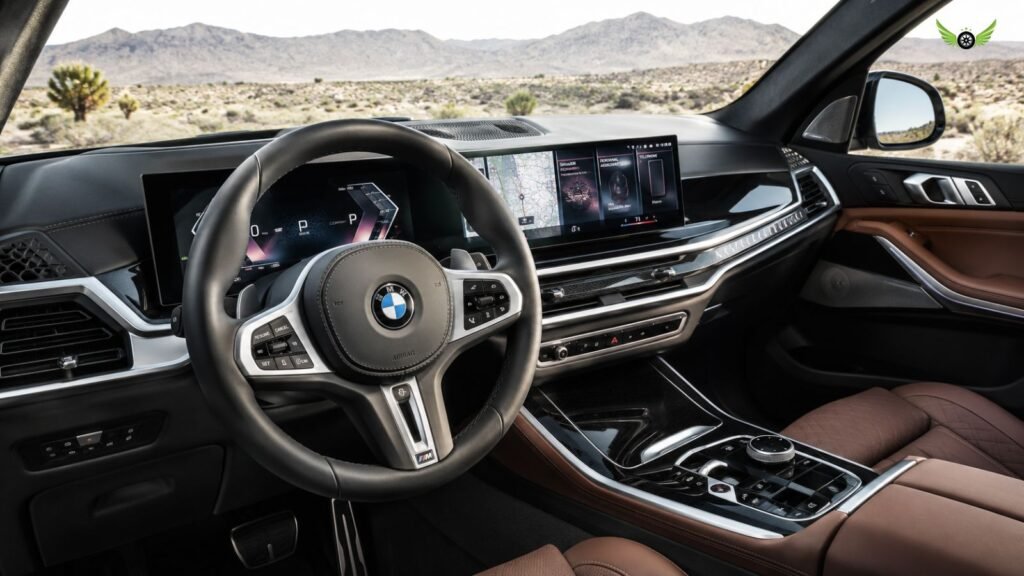
The 2026 BMW X5 offers a premium five-seat cabin with practical cargo space, a modern digital cockpit, and a strong range of driver-assistance features. Its interior combines everyday usability with optional luxury upgrades, allowing buyers to choose the features that matter most to them. BMW’s official specifications and safety information support its position as a well-equipped midsize luxury SUV.
Cabin Comfort, Cargo Space & Premium Features
The cabin is designed to accommodate five passengers comfortably, with a flexible rear seat for carrying larger items. Cargo capacity differs slightly between the gasoline models and the plug-in hybrid, so a quick comparison is useful for buyers considering both powertrains.
Model | Cargo Space Behind Rear Seats | Maximum Cargo Space |
sDrive40i / xDrive40i | 33.9 cu ft | 72.3 cu ft |
xDrive50e | 33.0 cu ft | 71.2 cu ft |
The available Climate Comfort Package adds features such as ventilated front seats, heated front and rear seats, a heated steering wheel, and heated armrests. Other available upgrades include extended Merino leather upholstery, Glass Controls, and a Harman Kardon premium sound system. These options improve comfort, but buyers should choose them based on actual needs because they increase the final vehicle price.
BMW Curved Display, iDrive & Driver Assistance Systems
The 2026 model features BMW’s Curved Display and digital operating system, which integrates infotainment and vehicle functions into a large driver-focused interface. The system provides access to navigation, entertainment, communication, and vehicle settings, while the digital layout gives the cabin a more modern feel.
Standard safety technology includes Forward Collision Mitigation and Lane Departure Warning. The available Highway Assistant with Active Lane Change can support attentive hands-free driving at speeds of up to 85 mph on eligible controlled-access highways when conditions allow. The 2026 model also earned an IIHS Top Safety Pick+ rating, although buyers should remember that safety ratings and available equipment can depend on specific model configurations and testing criteria.
For most buyers, the standard interior technology and safety equipment provide a strong foundation. Optional packages are most worthwhile for those who regularly take long highway trips or place a higher priority on premium comfort features.
BMW X5 vs Mercedes-Benz GLE, Audi Q7 & Genesis GV80
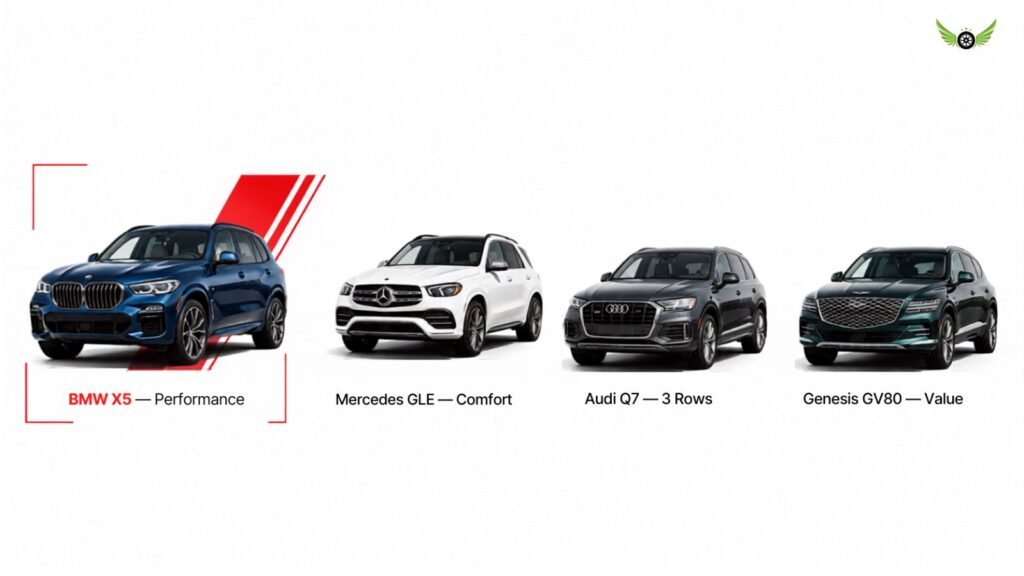
The BMW X5 competes with four distinct approaches to luxury SUV ownership. It offers stronger standard performance and multiple powertrain choices, while the Mercedes-Benz GLE focuses on comfort, the Audi Q7 adds standard three-row seating, and the Genesis GV80 offers a lower starting price with a high level of technology and luxury features.
Performance, Luxury & Technology Comparison
SUV | Starting MSRP* | Base Power | Seating | Standout Strength |
BMW X5 | $68,300 | 375 hp | 5 | Strong performance and powertrain choice |
Mercedes-Benz GLE | $62,250 | 255 hp | 5; 7 optional | Comfort and refined technology |
Audi Q7 | $62,000 | 261 hp | 7 | Three-row practicality |
Genesis GV80 | $57,700 | 300 hp | Varies by trim | Luxury features and lower entry price |
Manufacturer-listed starting MSRP at the time of research; destination charges, options, and dealer pricing can change the final cost.
For buyers comparing entry-level models, the X5 has the strongest standard engine at 375 horsepower. The GLE 450 offers comparable power at a higher price, while the X5 lineup also gives buyers plug-in hybrid and V8 options. The Q7’s main advantage is its standard seven-seat layout, and the GV80 combines a lower entry price with features such as a 27-inch OLED display on the base model.
Which Luxury SUV Delivers the Best Value?
The best value depends on what you need most. The BMW X5 is the strongest all-around choice for buyers who prioritize performance, a premium two-row cabin, and a wide choice of powertrains.
The Audi Q7 is the better fit for families who need three rows, while the Genesis GV80 offers the lowest starting price in this comparison and strong standard luxury technology. The Mercedes-Benz GLE is worth considering for buyers who prefer its comfort-focused character and available features.
BMW X5 Buying Guide
The 2026 BMW X5 is a strong choice for buyers who want a premium two-row luxury SUV with strong performance and everyday practicality. The lineup includes four main versions, so the best choice depends on your budget, driving conditions, and whether you can regularly charge a plug-in hybrid. Current U.S. pricing starts at $68,300 for the sDrive40i, while the xDrive40i, xDrive50e, and M60i offer different levels of capability and performance.
Best BMW X5 Trim for Different Buyers
Buyer Priority | Best Trim | Why It Fits |
Lowest entry price | sDrive40i | Strong six-cylinder performance with rear-wheel drive |
Best all-around choice | xDrive40i | All-wheel drive and strong everyday performance |
Plug-in hybrid driving | xDrive50e | Electric driving capability and 483 hp |
Maximum performance | M60i | 523-hp twin-turbo V8 |
For most buyers, the xDrive40i is the best-balanced option. Independent reviews from Edmunds and Car and Driver also favor this version because the standard six-cylinder provides plenty of power, while all-wheel drive adds useful year-round capability. The xDrive50e makes more sense if you have convenient charging access, and the M60i is primarily for buyers who specifically want V8 performance.
Pros, Cons & Final Verdict
Pros
- Strong range of six-cylinder, plug-in hybrid, and V8 powertrains
- Comfortable, premium interior with practical cargo space
- Good balance of ride comfort and confident handling
Cons
- No third-row seating option
- Options can significantly increase the final price
- Some rivals offer a lower starting price
Final Verdict: The 2026 BMW X5 remains one of the most well-rounded choices in the midsize luxury SUV segment. It is particularly appealing to buyers who want strong performance without sacrificing comfort or practicality. The xDrive40i is the best choice for most buyers, while the xDrive50e and M60i are better suited to more specific needs. If a third row is essential, a larger SUV may be a better fit.
BMW X5 FAQs: Price, Performance, Features & Buying Questions
Before making a buying decision, shoppers often want quick answers about pricing, trims, performance, practicality, safety, and ownership needs. These questions cover the key topics from this 2026 luxury SUV review without repeating the full article.
How much does the 2026 BMW X5 cost in the USA?
Pricing depends on the trim and optional equipment. BMW’s official 2026 pricing information lists the sDrive40i, xDrive40i, xDrive50e, and M60i as the core lineup. Buyers should confirm the latest MSRP and destination charges when ordering because pricing and available equipment can change.
Which BMW X5 trim offers the best value?
For most buyers, the xDrive40i is the best all-around option. It combines the 375-horsepower inline-six engine with all-wheel drive, while the sDrive40i is a lower-cost alternative for buyers who do not need AWD. The xDrive50e and M60i are better suited to buyers with specific plug-in hybrid or performance priorities.
Is the BMW X5 available as a plug-in hybrid?
Yes. The 2026 xDrive50e is the plug-in hybrid version and combines a six-cylinder engine with an electric motor. BMW lists 483 horsepower and up to 38 miles of electric range for the currently listed 2026 model.
How fast is the 2026 BMW X5?
Performance varies by trim. BMW lists 0–60 mph times of 5.3 seconds for the sDrive40i, 5.2 seconds for the xDrive40i, 4.6 seconds for the xDrive50e, and 4.2 seconds for the M60i. These are manufacturer test figures, and actual results can vary.
How much can the 2026 BMW X5 tow?
When equipped with the available factory-installed trailer hitch, the 2026 model has a maximum towing capacity of 7,200 pounds, according to BMW. Buyers should check the owner’s information for their specific configuration before towing.
Does the BMW X5 have a third row?
No. The 2026 model is a two-row, five-seat SUV. Buyers who regularly need seating for more passengers should consider a three-row alternative such as the BMW X7 or a competing luxury SUV with a third row.
Is the 2026 BMW X5 safe?
The 2026 BMW X5 is listed as an IIHS Top Safety Pick+ in the midsize luxury SUV category. Standard driver-assistance equipment also includes features such as forward collision mitigation, lane keeping assistance, and active blind spot detection, according to BMW’s 2026 pricing and equipment information.
Is the BMW X5 better for performance or family use?
It can serve both needs, but it is particularly strong for buyers who want performance without giving up everyday practicality. The five-seat layout, cargo space, multiple powertrain options, and available towing capability make it suitable for families, while its more powerful engines appeal to drivers who want stronger acceleration.
Is the 2026 BMW X5 worth buying?
The X5 is worth considering if you want a premium two-row luxury SUV with strong engine choices, modern technology, and a balance of comfort and driving performance. It may not be the best fit if you need a third row or prioritize the lowest purchase price in the segment.