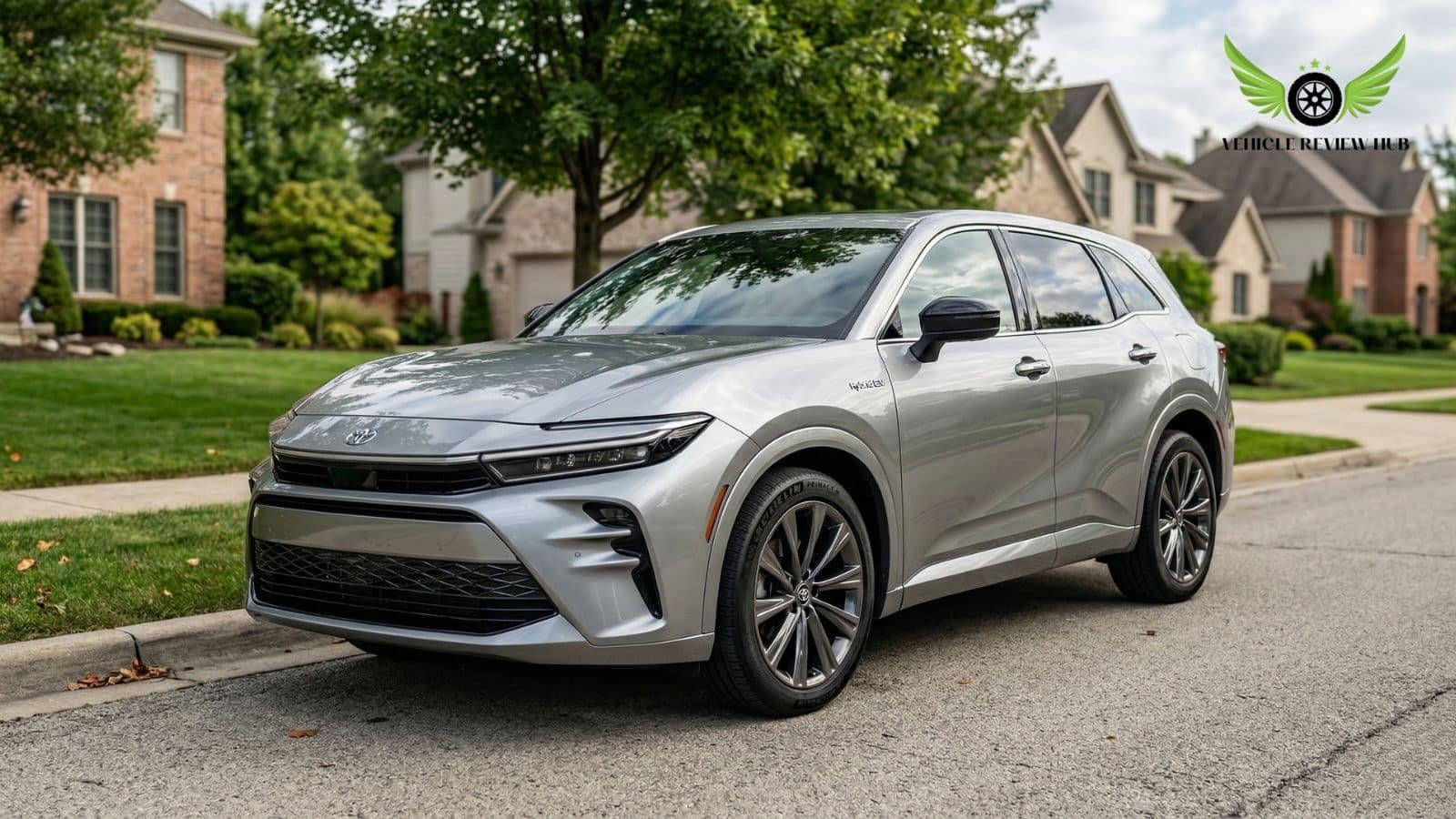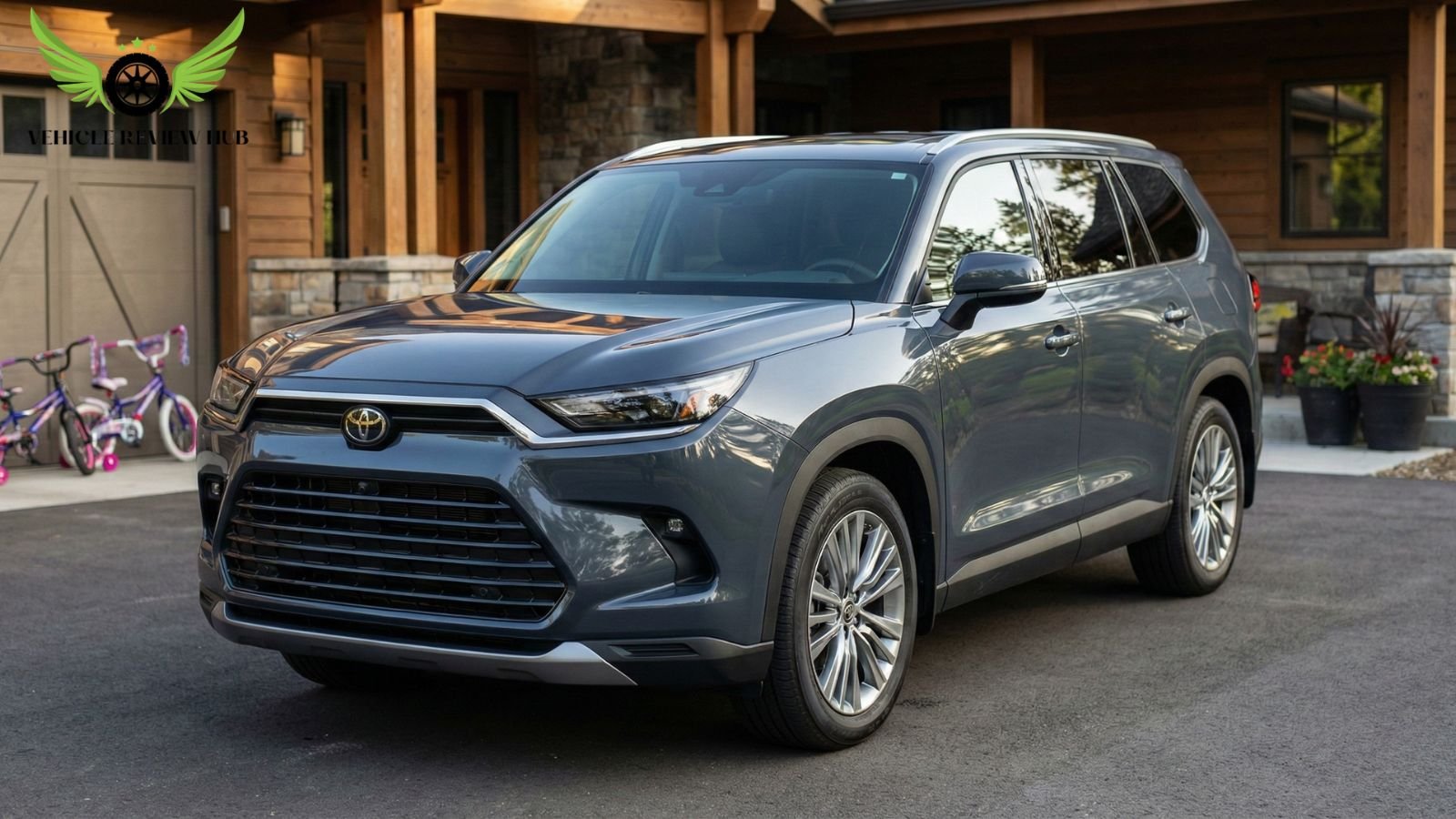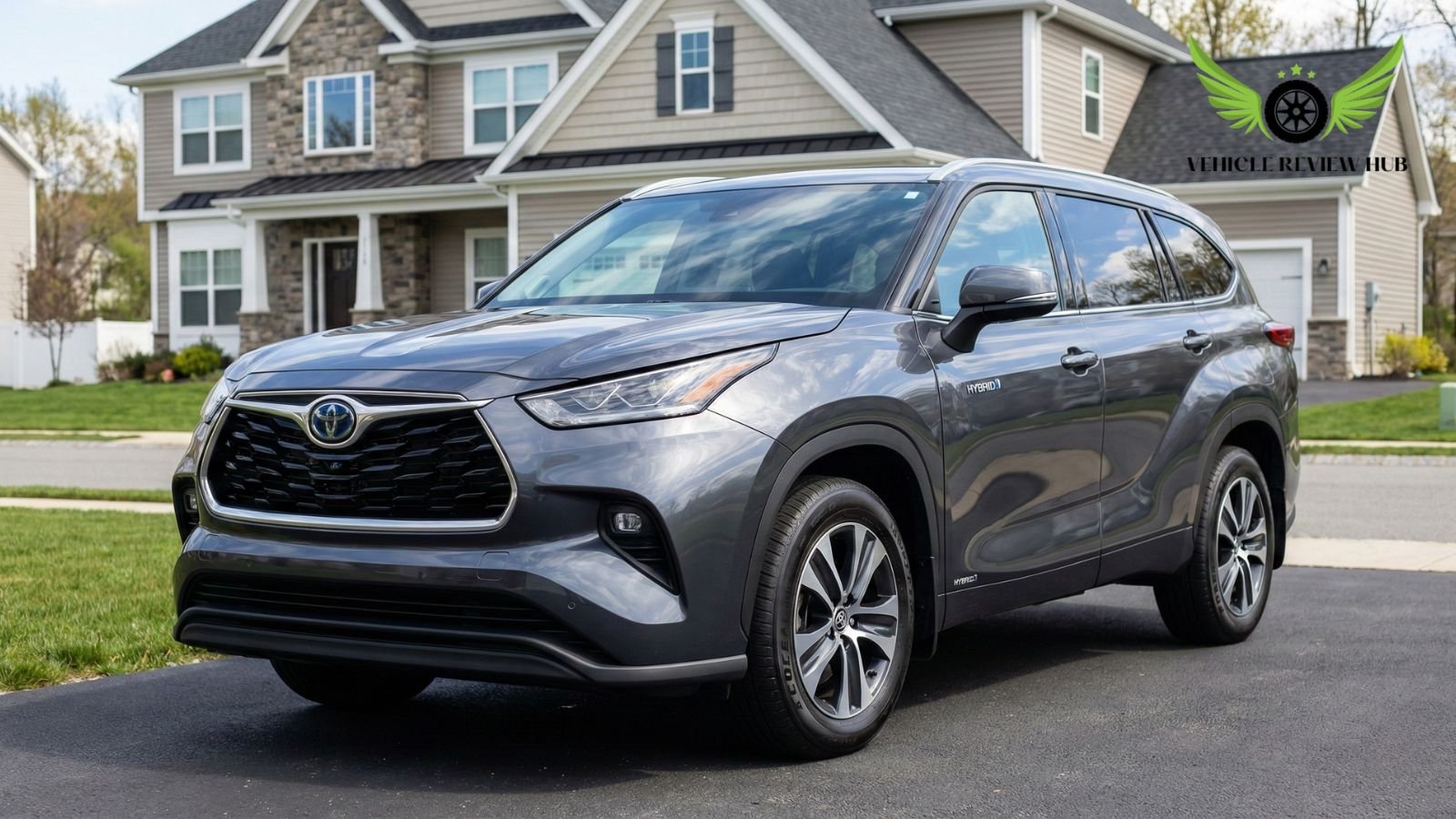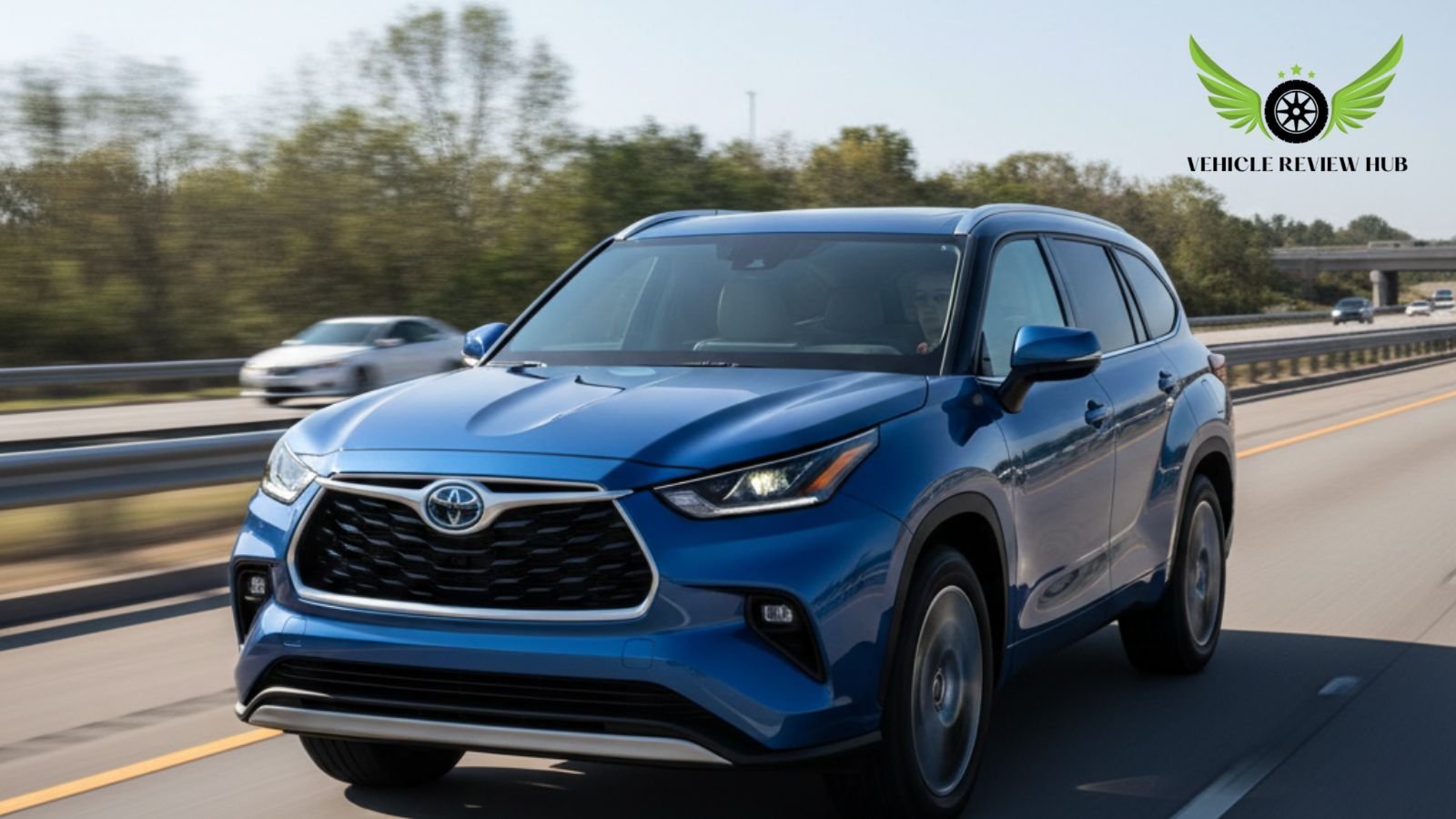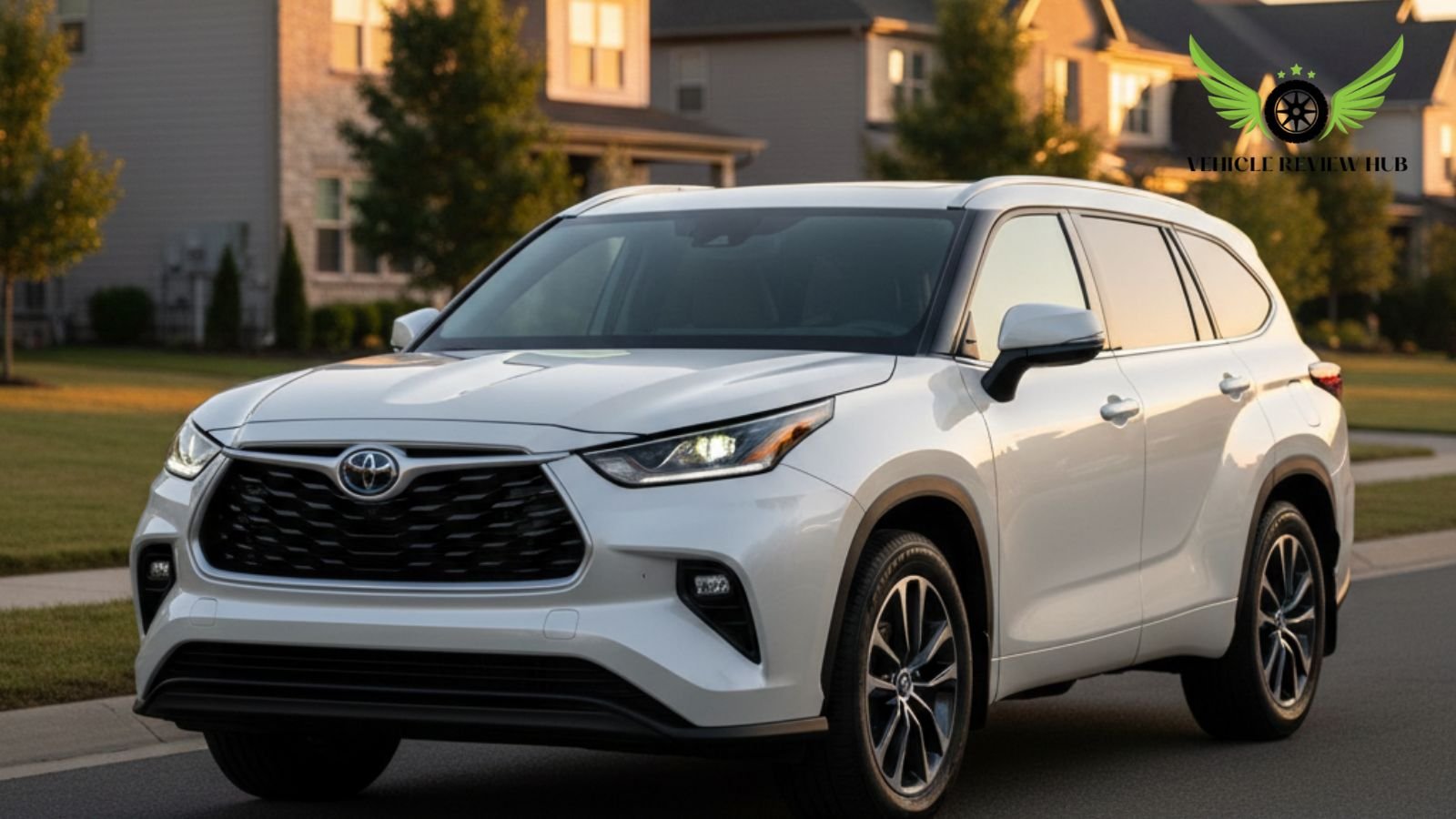
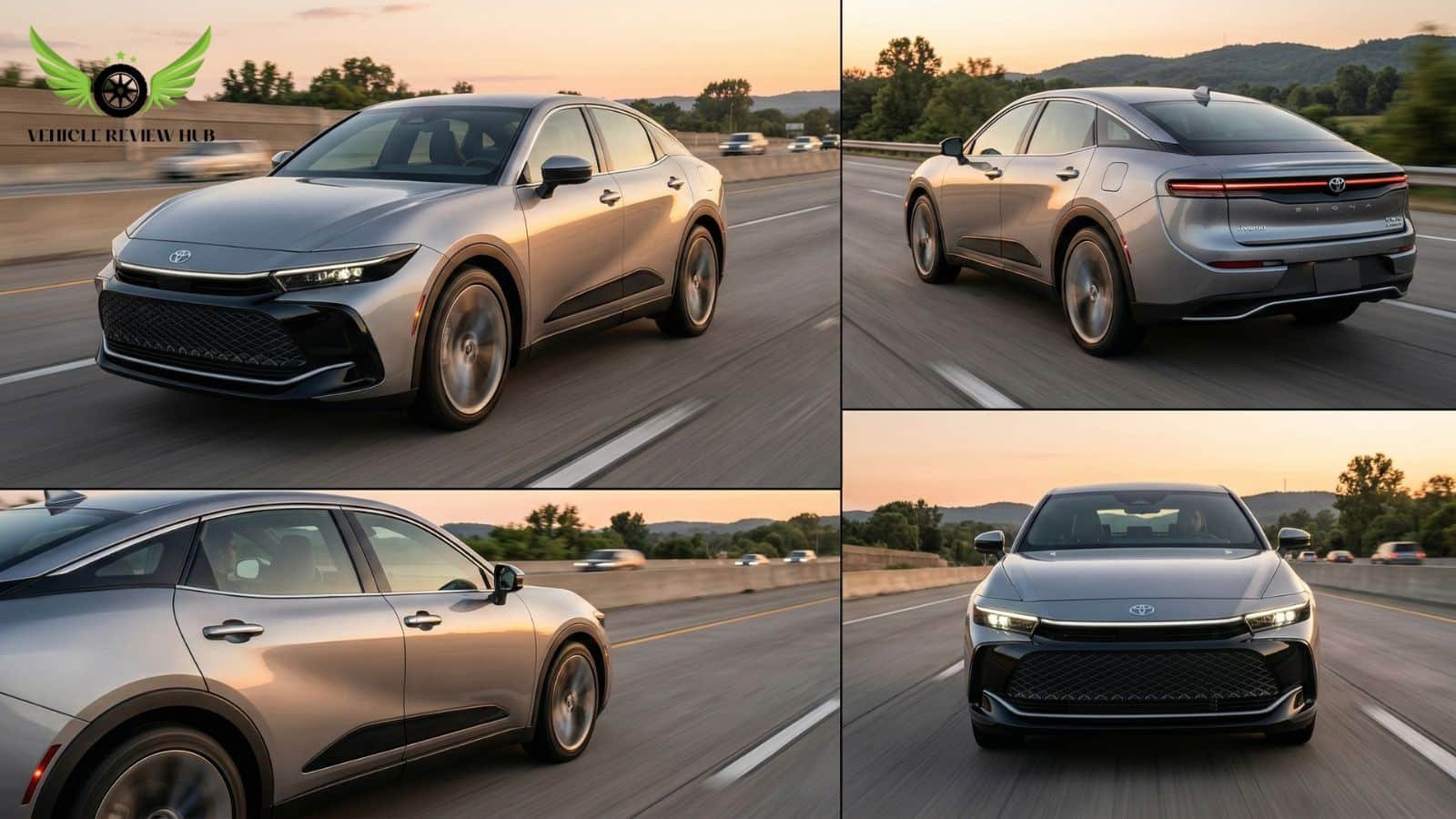
The Toyota Crown Signia MPG rating is one of the main reasons this hybrid SUV is getting attention in the U.S. market. In this guide, you’ll clearly understand how efficient it really is, how the hybrid system performs in daily driving, and how it impacts long-term running costs for American owners.
Based on officially released EPA data for the current model year (2025, as 2026 EPA figures are not yet published), the Toyota Crown Signia delivers an estimated 39 MPG combined (39 city / 37 highway) with its standard electronic on-demand AWD system. Until the EPA releases certified 2026 numbers, these are the verified fuel economy figures buyers should consider.
What makes this AWD hybrid efficiency possible is Toyota’s 2.5L 4-cylinder engine paired with the Toyota Hybrid System and dual electric motors. The rear electric motor supports AWD without using a traditional mechanical driveshaft, which helps reduce energy loss and improve hybrid fuel economy. The result is a smooth power transition between gas and electric driving while maintaining strong overall Toyota Crown Signia Performance.
For a practical example, consider a U.S. commuter driving 30 miles daily. That equals about 7,800 miles per year. With 39 MPG combined, fuel usage would be roughly 200 gallons annually. Compared to a conventional midsize AWD SUV averaging around 25 MPG, the difference in yearly fuel expense becomes noticeable — especially in states with higher gas prices.
MPG matters because fuel efficiency directly affects monthly budget, resale value, and long-term ownership confidence. Hybrid performance is not just about saving fuel — it’s about balanced power delivery, quiet operation, and predictable operating cost.
Fuel economy details, real-world driving experience, and full running cost analysis are discussed in detail below.
Toyota Crown Signia Official MPG Ratings and Real-World Fuel Economy
The official Toyota Crown Signia MPG rating, based on EPA-certified data for the current model year (2025, as 2026 EPA certification has not yet been separately published), is 39 mpg city, 37 mpg highway, and 38 mpg combined for the standard hybrid AWD configuration. These are the verified federal fuel economy numbers used across dealership window stickers and government fuel economy comparisons in the United States.
EPA Fuel Economy Breakdown
Driving Condition | EPA Rating |
City | 39 MPG |
Highway | 37 MPG |
Combined | 38 MPG |
The EPA fuel economy rating comes from controlled laboratory testing designed to simulate both stop-and-go urban driving and steady highway cruising. While no lab test perfectly reflects every driver’s habits, the combined MPG figure is the most practical number for buyers. It blends city and highway results using a standardized formula, making it the best estimate for yearly fuel planning.
The hybrid AWD efficiency of the Crown Signia plays a major role in achieving these ratings. Its 2.5-liter gasoline engine works together with electric motors, including a rear motor that activates when additional traction is needed. Because this AWD system does not rely on a traditional mechanical driveshaft, energy loss is minimized. That efficiency contributes directly to the strong EPA combined figure.
In real-world driving, results may vary slightly. For example, a driver who primarily travels short suburban routes with moderate traffic may stay close to the EPA combined estimate. However, sustained high-speed interstate driving can lower overall fuel economy below the official rating due to aerodynamic drag and continuous engine load.
The relationship between official Toyota Crown Signia MPG ratings and actual driving behavior also connects closely to overall Toyota Crown Signia Performance, especially in how the hybrid system balances power delivery with fuel conservation.
Toyota Crown Signia EPA City, Highway and Combined MPG
The officially certified Toyota Crown Signia MPG figures for the hybrid AWD model are 39 mpg city, 37 mpg highway, and 38 mpg combined (EPA-rated). These are the federal test results published for U.S. consumers and should be used for accurate vehicle comparison.
EPA Test Cycle | Official MPG | Test Focus |
City | 39 mpg | Stop-and-go driving, lower speeds, frequent braking |
Highway | 37 mpg | Steady higher-speed cruising |
Combined | 38 mpg | Weighted mix of city (55%) and highway (45%) driving |
The city MPG rating reflects simulated urban traffic conditions where vehicles accelerate, slow down, and idle repeatedly. Hybrids generally perform better in city testing because the electric motor assists at low speeds and reduces engine workload. In this environment, regenerative braking plays a major role. When the driver slows down, the system converts kinetic energy into electricity and stores it in the hybrid battery instead of wasting it as heat. That recovered energy is later reused for acceleration.
The highway fuel economy figure measures efficiency at sustained speeds where aerodynamic drag increases and the gasoline engine operates more consistently.
The combined cycle efficiency blends both test types and gives the most practical expectation for everyday drivers. These ratings help explain how Toyota Crown Signia Performance balances power delivery with measurable fuel savings in mixed U.S. driving conditions.
Toyota Crown Signia Real-World Highway MPG at 70–75 MPH
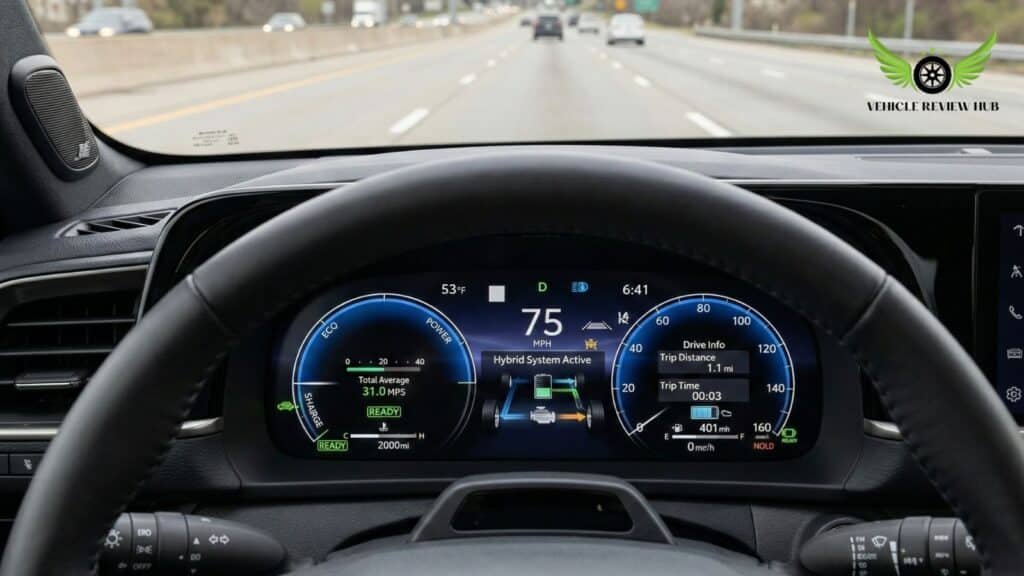
At steady interstate speeds of 70–75 mph, realistic Toyota Crown Signia MPG typically trends lower than the official EPA highway rating of 37 mpg. Independent highway testing conducted at a constant 75 mph has recorded results around 32 mpg, which reflects true steady-speed highway cruising rather than mixed driving conditions.
The reason efficiency drops at these speeds comes down to physics. Once a vehicle moves beyond 65 mph, aerodynamic drag increases significantly. At 70–75 mph, wind resistance becomes the dominant force working against the vehicle. In this situation, the gasoline engine carries most of the workload because the hybrid battery provides minimal assist during continuous cruising. Unlike city driving, there is almost no regenerative braking happening on open highways, meaning the system has fewer opportunities to recover and reuse energy.
For example, on a 180-mile interstate trip driven consistently at 75 mph, averaging 32 mpg would require roughly 5.6 gallons of fuel. Under lighter traffic conditions at 65 mph, that number could move closer to the EPA highway estimate.
Terrain and climate also influence steady-speed fuel economy. Long uphill grades, strong crosswinds, roof cargo, or very cold temperatures can push real highway mileage lower. Despite this, overall Toyota Crown Signia Performance remains stable and refined at highway speeds, with smooth power delivery and low cabin noise — even when highway cruising efficiency decreases slightly.
Toyota Crown Signia Fuel Economy Compared to Lexus RX and Other Rivals
When comparing midsize hybrid SUVs, the Toyota Crown Signia’s MPG rating places it among the most efficient AWD options in the segment. Based on official EPA specifications, the Crown Signia is rated at 39 mpg city, 37 mpg highway, and 38 mpg combined. These figures position it slightly ahead of the Lexus RX 350h hybrid in overall combined efficiency while remaining close to other Toyota hybrid crossovers.
Model | City MPG | Highway MPG | Combined MPG |
Toyota Crown Signia (Hybrid AWD) | 39 | 37 | 38 |
Lexus RX 350h (Hybrid AWD) | 37 | 34 | 36 |
Toyota Venza (Hybrid AWD) | 40 | 37 | 39 |
The most noticeable difference appears in combined fuel economy. The Lexus RX 350h carries a 36 mpg combined rating, which is 2 mpg lower than the Crown Signia. While that gap may seem small, it reflects differences in vehicle weight, tuning, and market positioning. The RX is engineered with additional luxury insulation, comfort features, and slightly different power calibration. Those refinements can increase overall mass, influencing the Lexus RX hybrid fuel rating.
From a performance standpoint, both vehicles use Toyota’s proven hybrid architecture with electronic on-demand AWD. However, Toyota Crown Signia Performance is tuned with a slightly stronger focus on efficiency balance, allowing it to maintain competitive acceleration while protecting hybrid SUV MPG comparison results.
In real-world terms, a driver covering 15,000 miles annually would consume about 395 gallons in the Crown Signia versus roughly 417 gallons in the RX hybrid. Over several years, that difference becomes meaningful.
For buyers prioritizing efficiency without sacrificing comfort, the Toyota Crown Signia MPG advantage provides a practical edge in this competitive segment.
Toyota Crown Signia Hybrid Performance and Acceleration
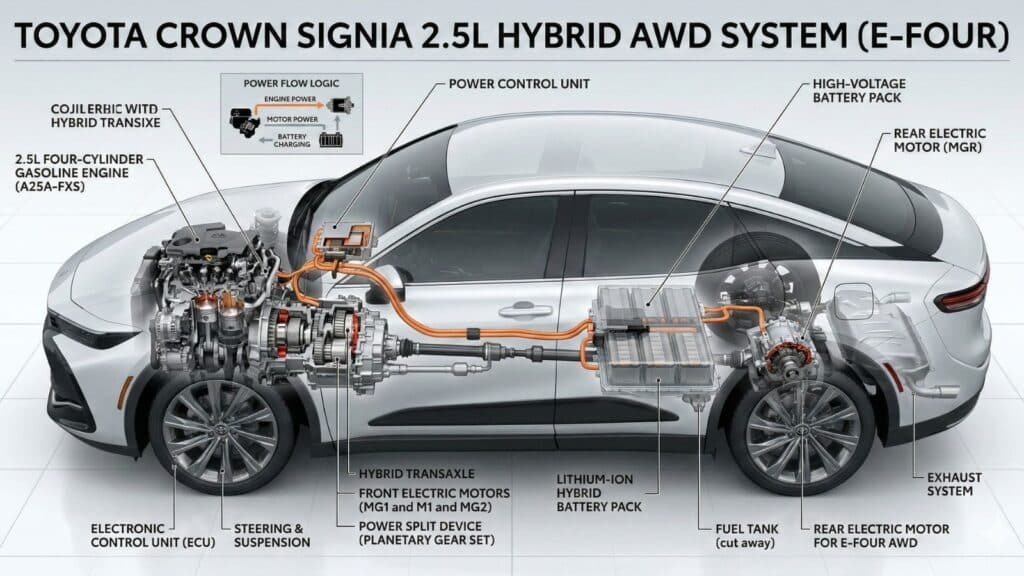
The 2026 Toyota Crown Signia delivers a manufacturer-rated 240 net combined horsepower from its 2.5-liter four-cylinder engine paired with Toyota’s hybrid electric system. This setup defines overall Toyota Crown Signia Performance, blending gasoline and electric output through an electronically controlled continuously variable transmission (eCVT). Power delivery is smooth rather than aggressive, but it is strong enough for confident daily driving and highway merging.
One key advantage of hybrid power delivery is instant electric torque. Unlike a traditional gasoline engine that needs revs to build power, the electric motor produces torque immediately. That instant response improves low-speed acceleration and makes the vehicle feel lighter off the line. In city traffic, this responsiveness reduces hesitation when pulling into intersections or navigating tight gaps.
The electronic on-demand AWD system uses a rear electric motor instead of a mechanical driveshaft. Under normal cruising, the vehicle primarily operates in front-wheel drive to protect efficiency. When extra traction or acceleration is needed, the rear motor engages automatically. This design improves AWD torque response while avoiding constant mechanical drag, helping maintain balanced efficiency alongside performance.
In real-world driving, acceleration feels linear and controlled rather than abrupt. For example, during a 60–70 mph highway merge, the electric assist fills the power gap while the engine builds speed, creating a steady surge without excessive engine noise. That smooth integration supports both driving comfort and consistent fuel control, which ultimately complements the Toyota Crown Signia MPG without sacrificing everyday usability.
Toyota Crown Signia 2.5L Hybrid Power Delivery and AWD Operation
The Crown Signia uses Toyota’s 2.5L hybrid system architecture, combining a naturally aspirated 2.5-liter four-cylinder gasoline engine with front electric motor-generators and a lithium-ion battery pack. The system delivers a manufacturer-rated 240 net combined horsepower, managed through an electronically controlled CVT. This configuration defines core Toyota Crown Signia Performance, balancing efficiency with responsive everyday drivability.
At the front axle, the gasoline engine and primary electric motor work together to provide propulsion. The electric motor supplies immediate torque at low speeds, while the engine supports sustained acceleration and higher-speed cruising. Energy is stored in the battery and replenished through regenerative braking and engine-assisted charging.
The e-AWD operation adds a separate rear electric motor. Under normal cruising, the vehicle primarily operates in front-wheel drive to reduce mechanical drag. When wheel slip is detected, or when the driver demands stronger acceleration, the system automatically engages the rear electric motor. This rear motor engagement happens electronically, without a mechanical driveshaft, improving traction while preserving efficiency.
In real driving conditions, such as launching from a stop on a wet road, the rear motor activates quickly to stabilize traction. The result is smooth, controlled acceleration rather than wheel spin. During low-speed city driving, the electric torque response feels immediate and refined.
However, this system is designed for on-road stability and light all-weather capability, not heavy off-road use. For a broader view of how this setup supports acceleration and daily usability, see the Hybrid Performance and Acceleration section above.
Toyota Crown Signia Acceleration and Highway Overtaking Performance
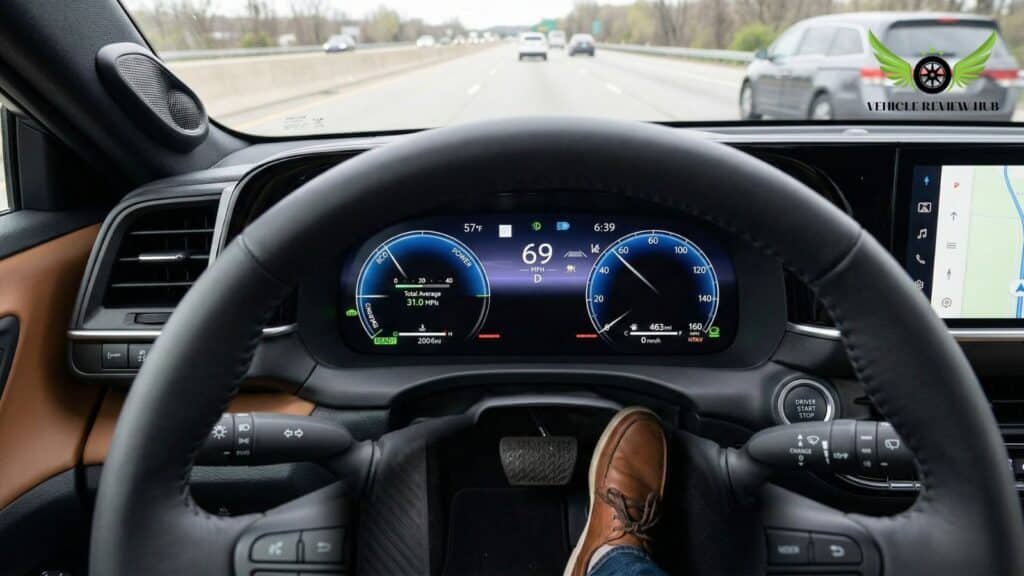
Acceleration in the Crown Signia is best described as confident and controlled rather than aggressive. Independent instrumented testing places 0–60 mph acceleration in the high-6 to low-8-second range depending on conditions and methodology. That figure indicates solid responsiveness for a midsize hybrid SUV, especially one tuned primarily for refinement and efficiency rather than outright sport performance.
The 0–60 time reflects how quickly the vehicle can merge into highway traffic from a standstill. However, daily drivability depends more on mid-range power than launch numbers. This is where Toyota Crown Signia Performance feels strongest. The hybrid system delivers immediate electric torque the moment the accelerator is pressed, helping the vehicle build speed smoothly without delay. Unlike a traditional gasoline-only setup that needs higher engine revs, the electric assist fills the gap instantly.
The CVT transmission plays a major role in shaping the driving feel. Instead of stepped gear changes, it maintains a steady power flow. Some drivers may notice the engine holding a consistent rpm under heavy throttle, but the trade-off is smooth, uninterrupted acceleration.
In a real-world 50–70 mph passing scenario, such as overtaking a slower vehicle on a two-lane highway, the hybrid assist responds quickly and provides steady mid-range pull. It’s not sports-car quick, but it delivers predictable highway passing capability while still supporting strong Toyota Crown Signia MPG efficiency for everyday driving.
Toyota Crown Signia Drive Modes – Eco, Normal and Sport Differences
Drive modes in the Crown Signia adjust how the vehicle behaves without increasing total horsepower. Instead of adding power, the system modifies throttle response mapping, steering feel, and hybrid assist calibration to suit different driving needs. This allows drivers to fine-tune overall Toyota Crown Signia Performance based on traffic, road conditions, or personal preference.
In Eco mode, throttle sensitivity is reduced, meaning the accelerator responds more gradually to input. This encourages smoother launches and controlled acceleration, helping drivers maintain stronger Toyota Crown Signia MPG in daily commuting. The hybrid system prioritizes electric assist during light throttle use, which is especially beneficial in stop-and-go city traffic.
Normal mode provides a balanced setup. Throttle response feels natural, steering effort remains moderate, and power delivery blends efficiency with responsiveness. For most drivers, this mode offers the best everyday driving experience.
When switched to Sport mode, throttle response becomes noticeably sharper. The vehicle reacts more quickly to pedal input, and the powertrain holds revs slightly longer under acceleration. Steering may feel a bit firmer, creating a more engaged driving sensation. However, peak horsepower does not change — only responsiveness improves.
In real-world use, Eco feels calm and smooth in traffic, while Sport delivers quicker reaction during highway merges or overtaking situations.
Toyota Crown Signia Real-World Driving Comfort and Ride Quality
The overall ride quality of the Crown Signia leans strongly toward comfort and refinement rather than sport-focused sharpness. This hybrid crossover is engineered to deliver a calm, stable driving experience, making it well suited for daily commuting and long-distance travel. From behind the wheel, the emphasis is clearly on smoothness and cabin isolation — a core part of balanced Toyota Crown Signia Performance.
The suspension setup uses an independent front and rear configuration, which allows each wheel to react separately to road imperfections. This design helps absorb bumps and uneven pavement more effectively than simpler suspension layouts. The tuning favors compliance over aggressive cornering, so body movement remains controlled but not stiff. Hybrid SUVs often prioritize this type of suspension calibration because their target buyers value comfort and quietness more than sharp handling.
In urban driving, the Signia handles potholes, expansion joints, and speed bumps with a soft, composed feel. The steering remains steady, and the cabin stays relatively insulated from harsh vibrations. On the highway, the ride becomes even more settled. At 70 mph, wind and road noise are well managed, and the vehicle tracks straight with minimal correction needed from the driver.
For example, during a typical weekday routine — city traffic in the morning and a 40-mile highway return in the evening — the Crown Signia maintains consistent comfort without fatigue. Even while delivering strong Toyota Crown Signia MPG efficiency, the suspension and cabin refinement work together to keep long drives relaxed.
Toyota Crown Signia Suspension Comfort and Bump Absorption
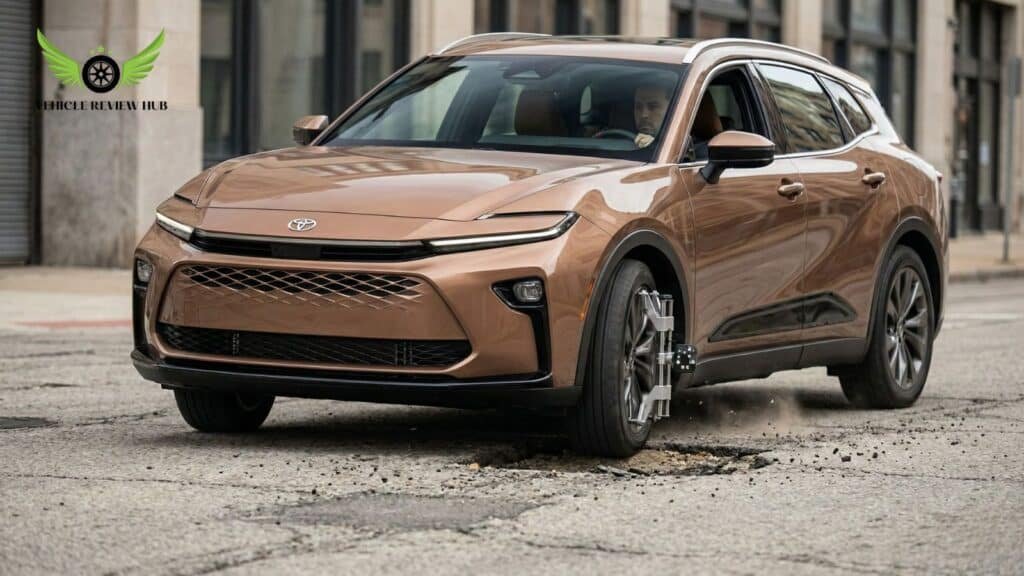
The Crown Signia’s suspension is clearly tuned for comfort-first driving. It uses a MacPherson strut setup in the front and a multi-link independent suspension in the rear, a configuration that allows each wheel to respond separately to road imperfections. This design improves overall ride compliance while maintaining stable body control during everyday driving.
On uneven city streets, the suspension filters out small cracks and surface roughness effectively. Minor bumps feel softened before they reach the cabin, and even larger impacts are absorbed with controlled damping. Instead of a harsh rebound, the body settles quickly, which helps maintain composure over broken pavement. This balance supports overall Toyota Crown Signia Performance, especially for drivers prioritizing smoothness over sharp handling.
Wheel size can influence the ride experience. Models equipped with larger wheels and lower-profile tires may transmit slightly more road texture into the cabin. In contrast, trims with slightly taller tire sidewalls provide better shock absorption and a more cushioned feel over potholes or patched asphalt.
In real-world conditions — such as crossing multiple highway expansion joints at 70 mph — the Crown Signia maintains stability with minimal vertical movement. The impact is felt but controlled, without excessive cabin disturbance. Body roll during moderate cornering remains present but predictable, reinforcing that this suspension setup favors daily comfort and refined cruising rather than aggressive driving dynamics.
Toyota Crown Signia Cabin Quietness and Hybrid Noise Levels
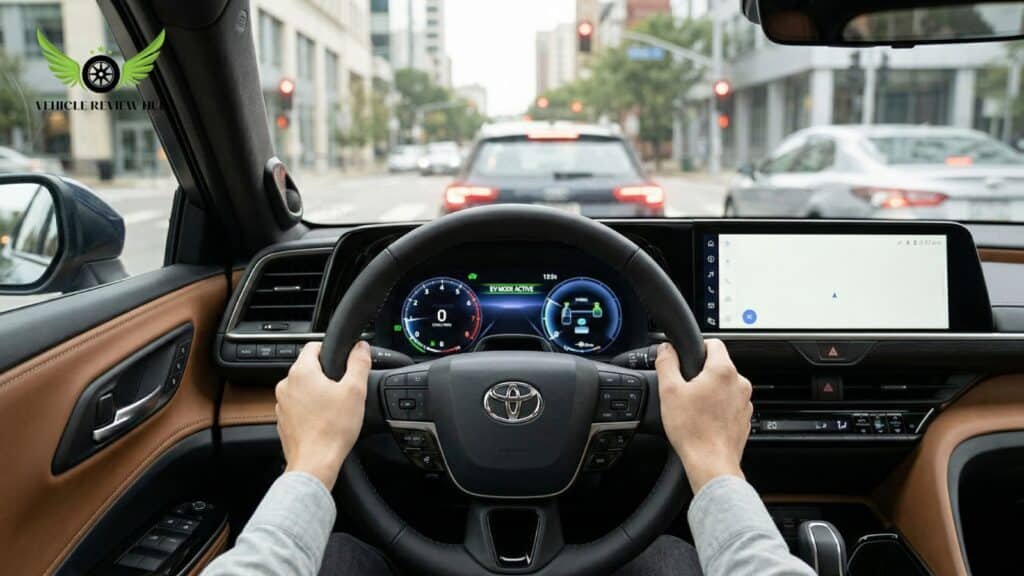
Cabin quietness is one of the strongest day-to-day impressions in the Crown Signia. At low speeds, NVH levels remain well controlled because the hybrid system frequently operates on electric power alone. During idle at a traffic signal or slow parking-lot movement, there is minimal vibration and almost no traditional engine sound entering the cabin. Instead of a constant idle hum, the interior feels calm and insulated, which enhances perceived refinement.
When the gasoline engine starts, the transition is smooth rather than abrupt. The hybrid control system blends electric and engine power gradually, preventing harsh jolts or noticeable shudder. This contributes to a composed driving experience that aligns with overall Toyota Crown Signia Performance, particularly in urban environments where frequent stop-and-go movement occurs.
At highway speeds, the character changes slightly. Wind noise becomes more apparent around the side mirrors and roofline once speeds exceed roughly 65–70 mph. Tire noise also depends on road surface texture and wheel size; coarser asphalt produces more audible road hum than smooth pavement. However, conversation inside the cabin remains easy at cruising speed.
Under firm acceleration, especially during highway merging, the CVT holds engine revs higher, making the hybrid engine sound more noticeable. It is not intrusive, but it is clearly present. Even while maintaining efficient Toyota Crown Signia MPG, the overall sound profile remains controlled and appropriate for a comfort-focused midsize hybrid SUV.
Toyota Crown Signia Steering Feel and Handling Characteristics
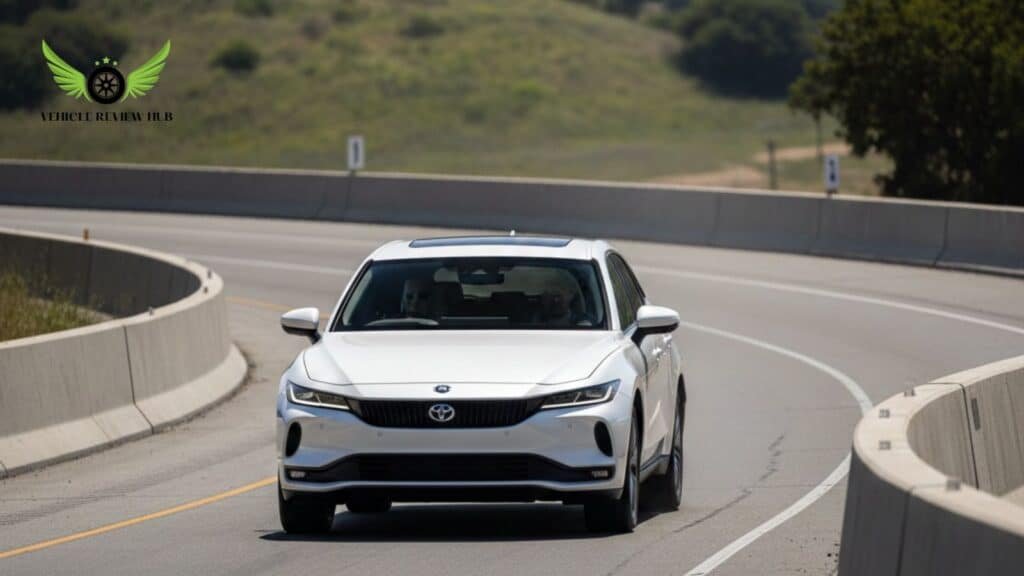
Steering feel in the Crown Signia is best described as composed and confidence-oriented rather than sporty. The electric power steering system delivers a smooth, progressive response that becomes slightly firmer as speed increases. At low speeds, the wheel feels light and easy to turn, which makes parking and tight urban maneuvers effortless. As you transition to highway driving, the steering gains subtle weight, helping the vehicle feel planted and stable.
This tuning supports overall Toyota Crown Signia Performance, especially for drivers who prioritize predictability over aggressive corner carving. Steering feedback is present but intentionally filtered. You feel directional changes clearly, yet road imperfections do not transmit excessive vibration through the wheel. The result is reduced fatigue during longer trips.
The electronic on-demand AWD system plays a quiet but important role in handling. When accelerating through a curve, the rear electric motor can engage to enhance traction and maintain balance. This improves cornering stability without requiring constant rear-wheel engagement, preserving efficiency and ride comfort.
In a real-world scenario, taking a curved highway ramp at approximately 50–55 mph, the Crown Signia maintains a steady arc with moderate body roll but no instability. The vehicle feels controlled rather than eager. It doesn’t aim to compete with sport-oriented SUVs, but it delivers consistent handling that aligns with comfort-focused driving while still supporting strong Toyota Crown Signia MPG efficiency for everyday use.
Toyota Crown Signia Monthly and Yearly Running Cost
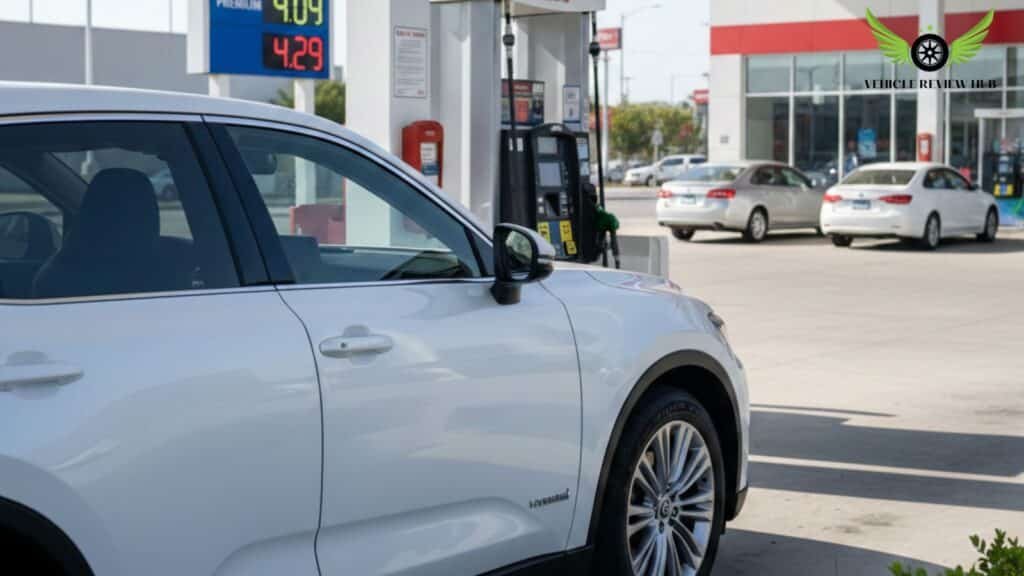
Fuel cost is one of the biggest long-term ownership factors, and this is where the Toyota Crown Signia MPG makes a measurable difference. Using the official EPA combined rating of 38 mpg and the current AAA U.S. national average regular gasoline price of $3.28 per gallon (at the time of writing), we can calculate a realistic yearly fuel expense. Assumption: 15,000 miles driven annually, which reflects typical U.S. driving patterns.
The formula is simple:
Miles per year ÷ Combined MPG × Fuel price
15,000 ÷ 38 = 394.7 gallons per year
394.7 × $3.28 = $1,295 per year (rounded to nearest dollar)
Item | Value |
Annual Mileage | 15,000 miles |
EPA Combined Rating | 38 mpg |
Gallons Used | 394.7 gallons |
AAA Avg. Gas Price | $3.28/gal |
Estimated Annual Fuel Cost | $1,295 |
That breaks down to approximately $108 per month in fuel.
For comparison, a conventional AWD SUV averaging 25 mpg would require 600 gallons annually under the same driving conditions. At $3.28 per gallon, that equals $1,968 per year — about $673 more annually. This difference highlights the hybrid savings advantage.
A real-world example: a driver commuting 60 miles daily (around 15,000 miles yearly) would spend roughly $1,295 annually on fuel in the Crown Signia. Over five years, that totals about $6,475 in gasoline costs, significantly lower than many non-hybrid competitors.
While Toyota Crown Signia Performance ensures smooth power delivery and confident AWD traction, its strong efficiency keeps the cost per mile near 8.6 cents, helping control long-term ownership expenses.
Toyota Crown Signia Estimated Annual Fuel Cost Based on 15,000 Miles
Estimating what you’ll spend on fuel each year with the Crown Signia gives a practical perspective on everyday ownership costs. Using the EPA-rated 38 mpg combined figure and a verified average U.S. gas price from AAA — $2.98 per gallon — we can calculate a solid baseline for annual fuel expenses based on 15,000 miles driven per year. This approach — dividing mileage by mpg then multiplying by fuel price — shows how hybrid efficiency translates to dollars in your wallet.
Item | Value |
Annual Mileage | 15,000 miles |
EPA Combined MPG | 38 mpg |
Gallons Used | 15,000 ÷ 38 = 394.7 gallons |
Average Fuel Price | $2.98 / gallon |
Estimated Annual Fuel Cost | $1,177 |
Estimated Monthly Cost | ~$98 |
Cost per Mile | ~$0.08 |
This calculation shows that, at a realistic national fuel price, you’d spend about $1,177 annually on gasoline if you drive 15,000 miles in the Crown Signia. That equates to roughly $98 per month and around 8 cents per mile — a useful figure for budgeting or comparing against other vehicles.
For example, a non-hybrid SUV averaging 25 mpg would use about 600 gallons for the same mileage. At the same price per gallon, that adds up to nearly $1,788 per year on fuel — more than 50% higher than the Crown Signia. This comparison highlights how efficient fuel use and hybrid design contribute to lower ongoing operating costs while still delivering the smooth, composed driving experience that defines the vehicle’s broader performance character.
Hybrid Savings Compared to Gas SUVs
Choosing a hybrid over a traditional gasoline SUV is ultimately a financial decision as much as a driving one. When you compare Toyota Crown Signia MPG (EPA 38 mpg combined) to a typical midsize gas AWD SUV such as the Toyota Highlander AWD (EPA 24 mpg combined), the yearly fuel difference becomes clear. Using the AAA national average regular fuel price of $2.98 per gallon and assuming 15,000 miles per year, here is the direct comparison.
Formula used: Miles ÷ MPG × Fuel Price
Vehicle | Combined MPG | Gallons per Year | Annual Fuel Cost |
Toyota Crown Signia (Hybrid AWD) | 38 mpg | 394.7 gal | $1,177 |
Toyota Highlander (Gas AWD) | 24 mpg | 625 gal | $1,863 |
Annual Hybrid Savings: $686
The difference of nearly $700 per year shows how hybrid savings accumulate quickly. Over five years of ownership at the same mileage, fuel savings alone could exceed $3,400, assuming stable fuel pricing.
High-mileage drivers benefit even more. At 20,000 miles annually, the gap widens significantly because fuel consumption increases proportionally with distance. This is where hybrid efficiency makes the strongest financial impact.
While Toyota Crown Signia Performance focuses on smooth power delivery and everyday usability rather than aggressive speed, the financial advantage comes from burning fewer gallons per mile. For buyers comparing total ownership cost, this fuel cost comparison clearly demonstrates how hybrid efficiency reduces long-term operating expenses without sacrificing daily practicality.
Does the Hybrid System Pay Off Over Time?
Does the hybrid system pay off over time? The honest answer is: it depends on your annual mileage and fuel prices. The higher you drive each year, the faster the hybrid advantage becomes financially meaningful.
Here’s how the break-even calculation works. First, determine annual fuel savings compared to a similar gas-only SUV. Using the EPA combined rating of 38 mpg for the Crown Signia and 24 mpg for a typical gas AWD midsize SUV, and applying a verified AAA national average fuel price of $2.98 per gallon, the yearly numbers look like this at 15,000 miles:
15,000 ÷ 38 × $2.98 ≈ $1,177 per year
15,000 ÷ 24 × $2.98 ≈ $1,863 per year
That’s roughly $686 in annual fuel savings.
If the hybrid version costs, for example, $3,000 more upfront than a comparable gas SUV, the break-even point would be about 4.3–4.5 years ($3,000 ÷ $686). Drive 20,000 miles per year instead of 15,000, and the savings grow proportionally — shortening the payback window.
Toyota also provides additional peace of mind with a 10-year / 150,000-mile hybrid battery warranty (whichever comes first), reducing long-term ownership risk.
However, for a low-mileage driver covering only 8,000 miles per year, fuel savings may be modest, stretching the return timeline significantly.
Beyond pure numbers, the hybrid system also delivers smooth, quiet Toyota Crown Signia Performance, so long-term value isn’t only financial — it’s experiential as well.
Frequently Asked Questions About Toyota Crown Signia MPG, Performance & Ownership
Before making a final buying decision, most drivers want clear answers about fuel economy, hybrid reliability, performance, and long-term cost. Below is a direct, no-fluff FAQ section that covers the most important ownership questions related to Toyota Crown Signia MPG, hybrid operation, driving comfort, and financial value.
What is the official Toyota Crown Signia MPG rating?
The EPA-rated fuel economy is 39 mpg city, 37 mpg highway, and 38 mpg combined for the hybrid AWD model.
Does real-world MPG match EPA ratings?
In mixed driving, many drivers stay close to the 38 mpg combined figure. Sustained highway speeds above 70–75 mph may reduce mileage slightly due to aerodynamic drag.
Is the Crown Signia fast?
It delivers solid everyday acceleration, with independent testing placing 0–60 mph in the high-6 to low-8 second range. It is tuned for smooth response rather than sporty aggression.
How does the AWD system work?
It uses an electronic rear motor (e-AWD). The rear motor engages automatically when extra traction or acceleration is needed, without a mechanical driveshaft.
Does the hybrid battery have a warranty?
Yes. Toyota provides a 10-year / 150,000-mile hybrid battery warranty (whichever comes first).
How much does fuel cost per year?
At 15,000 miles annually and $2.98 per gallon, estimated fuel cost is about $1,177 per year, based on 38 mpg combined.
Is maintenance more expensive than a gas SUV?
Routine maintenance is similar. Hybrid systems typically reduce brake wear due to regenerative braking.
Does the hybrid system pay off financially?
For drivers covering 15,000+ miles per year, fuel savings can exceed $600 annually compared to a typical 24 mpg gas SUV, helping offset any price difference over time.
Is the ride comfortable for long trips?
Yes. The suspension is tuned for ride comfort and cabin refinement, making highway travel smooth and quiet.
Is it designed for off-roading?
No. The AWD system improves traction in rain and light snow but is not built for heavy off-road use.