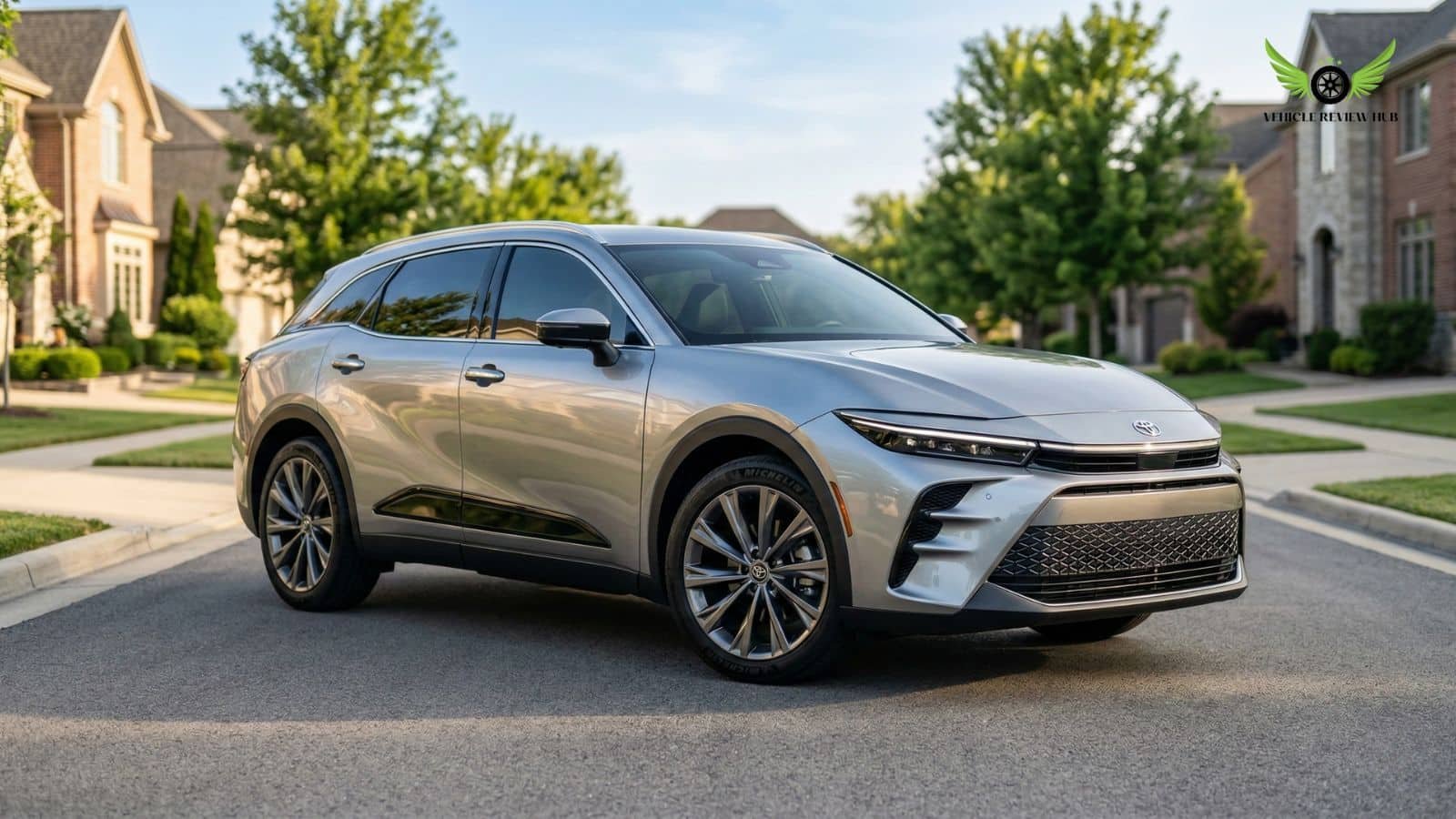
When buyers search for Toyota Crown Signia Ownership Cost, they’re not just asking about the sticker price. Total ownership expenses include fuel, maintenance, insurance, depreciation, and long-term reliability. The real cost of owning a midsize hybrid SUV in the U.S. goes far beyond MSRP — and that’s exactly what this guide breaks down.
This buying guide covers fuel efficiency impact, expected maintenance patterns, Toyota Crown Signia Insurance considerations, and the depreciation and resale outlook. Instead of focusing only on what you pay at the dealership, we look at what you’ll realistically spend over 5–10 years of ownership.
Why does this matter? Because two SUVs with similar prices can have very different long-term cost profiles. Hybrid efficiency directly reduces fuel spending, especially for drivers covering 12,000–15,000 miles per year. At the same time, Toyota’s strong resale reputation historically improves hybrid ownership value, helping offset depreciation losses.
For example, a buyer choosing a fuel-efficient hybrid with strong resale strength may recover thousands more at trade-in compared to a lower-efficiency competitor. That difference significantly affects the Toyota Crown Signia Ownership Cost over time.
In the sections below, we’ll break down each cost category in detail — fuel, maintenance, insurance, and resale — so you can understand the full financial picture before making a purchase decision.
Toyota Crown Signia Total Cost of Ownership Breakdown
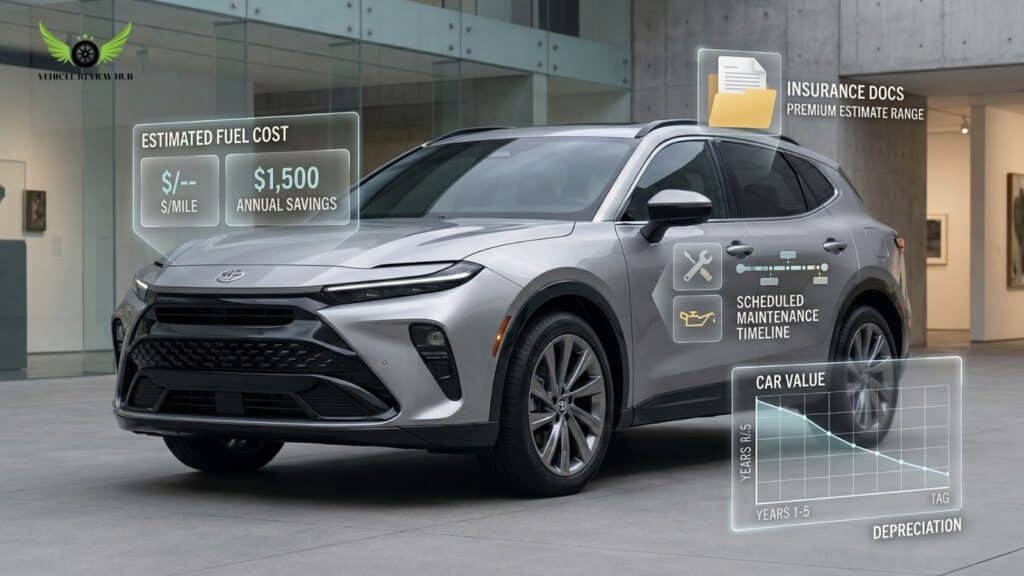
The estimated Toyota Crown Signia Ownership Cost over five years in the U.S. is expected to land between $31,000 and $38,000, depending on annual mileage, fuel prices, and insurance profile. This 5-year cost estimate reflects real-world hybrid SUV expenses and historical Toyota hybrid ownership patterns rather than speculation.
Total ownership cost includes four core categories: fuel, maintenance and repairs, Toyota Crown Signia Insurance, and depreciation. Among these, depreciation typically represents the largest expense. In the midsize hybrid segment, vehicles commonly lose around 45–50% of their value within five years. Even with Toyota’s strong resale reputation, depreciation impact alone can exceed all other operating costs combined.
Fuel is where hybrid efficiency helps balance long-term SUV cost. With a combined rating of around 38 MPG, the Crown Signia consumes significantly less fuel than traditional 25 MPG gasoline SUVs. Assuming 12,000–15,000 miles per year and a national average gas price near $3.00 per gallon, owners can expect approximately $950–$1,250 in annual fuel spending. Over five years, that translates to roughly $4,700–$6,200, depending on mileage.
Maintenance remains relatively predictable for Toyota hybrids. Based on comparable Toyota hybrid models, 5-year maintenance and minor repair costs generally fall between $3,500 and $4,800. Hybrid systems historically require no major battery replacement within the first five years, and regenerative braking often reduces brake wear compared to conventional SUVs.
Insurance costs vary by state, driver age, and coverage level, but midsize hybrid SUVs typically average $1,500–$1,900 per year. That places Toyota Crown Signia Insurance in the $7,500–$9,500 range over five years for most U.S. drivers.
Below is a realistic 5-year ownership breakdown based on 12k–15k miles annually:
Cost Category | 5-Year Estimate (USD) |
Fuel | $4,700–$6,200 |
Maintenance & Repairs | $3,500–$4,800 |
Toyota Crown Signia Insurance | $7,500–$9,500 |
Depreciation | $15,000–$18,000 |
Total Estimated Cost | $31,000–$38,000 |
For a driver covering 70,000 miles in five years, hybrid fuel savings can offset several thousand dollars of depreciation impact. That balance between efficiency and resale strength is what ultimately shapes the long-term Toyota Crown Signia Ownership Cost.
Fuel, Maintenance and Insurance Combined Cost
For most U.S. drivers, the combined annual driving cost for fuel, maintenance, and Toyota Crown Signia Insurance will realistically fall between $3,200 and $4,200 per year, depending on mileage and location. This range reflects verified EPA fuel efficiency, national fuel averages, and historical Toyota hybrid ownership data.
Fuel is the most predictable variable. With an EPA-rated 38 MPG combined, a driver covering 12,000 miles per year would use about 316 gallons of fuel annually. At roughly $3.00 per gallon, that equals around $950 per year. At 15,000 miles, fuel cost rises to approximately $1,180 annually. Compared to a 25 MPG midsize SUV, that represents roughly $600–$900 in yearly fuel savings — a meaningful advantage in overall Toyota Crown Signia Ownership Cost.
Maintenance for Toyota hybrids has historically remained controlled. Based on real ownership data from comparable Toyota hybrid SUVs, owners typically budget $900–$1,200 per year during the first five years. Regenerative braking reduces brake wear, and Toyota’s hybrid system has not shown early high-cost repair trends within normal mileage limits.
Insurance varies the most. For a midsize hybrid SUV in this price range, Toyota Crown Signia Insurance commonly averages $1,400–$2,000 per year, depending on driver age, state, driving history, and coverage level.
Below is a realistic annual cost breakdown:
Category | 12k Miles/Year | 15k Miles/Year |
Fuel | ~$950 | ~$1,180 |
Maintenance | $900–$1,200 | $900–$1,200 |
Toyota Crown Signia Insurance | $1,400–$2,000 | $1,400–$2,000 |
Estimated Annual Total | $3,250–$4,150 | $3,480–$4,380 |
For a typical commuter driving 14,000 miles yearly, budgeting around $3,500–$4,000 annually for these three categories provides a realistic maintenance budget and operating expectation.
Hybrid vs Gas SUV Ownership Cost Comparison
Over five years, a well-designed hybrid SUV typically delivers lower operating expenses than a comparable gasoline SUV — especially for drivers averaging 12,000 to 15,000 miles per year. When evaluating the overall Toyota Crown Signia Ownership Cost, the most significant long-term difference comes from fuel efficiency.
The 2026 Crown Signia’s EPA combined rating of approximately 38 MPG creates a measurable gap against popular gas-only midsize SUVs that average around 25–28 MPG combined. Using a national fuel average near $3.00 per gallon, a 15,000-mile annual driver would spend roughly $1,180 per year in the hybrid versus approximately $1,700–$1,800 per year in a 26 MPG gas SUV. Over five years, that represents a long-term fuel difference of about $2,500–$3,000 in favor of the hybrid.
Maintenance budgets between modern Toyota hybrids and gas SUVs remain relatively close during the first five years. Hybrid systems have proven reliable, and regenerative braking often reduces brake wear. Meanwhile, routine oil changes in gas SUVs occur more frequently, which slightly narrows the gap but does not eliminate it.
Insurance costs are typically comparable. Toyota Crown Signia Insurance may be marginally higher due to vehicle value and hybrid components, but differences are usually modest compared to total fuel savings.
Below is a realistic 5-year cost comparison based on 15,000 miles per year:
Cost Category | Hybrid SUV (38 MPG) | Gas SUV (26 MPG) |
Fuel (5 Years) | ~$5,900 | ~$8,700 |
Maintenance | $4,000–$5,000 | $4,000–$5,500 |
Insurance | $8,000–$10,000 | $7,500–$9,500 |
Estimated 5-Year Operating Total | $17,900–$20,900 | $20,200–$23,700 |
Real-world example: a commuter driving 75,000 miles in five years benefits most from hybrid savings over time. The higher the mileage, the stronger the hybrid advantage becomes. For lower-mileage drivers (under 10,000 miles per year), the gas SUV operating cost gap narrows significantly.
Ultimately, fuel efficiency is the defining financial factor — and over five years, it meaningfully shapes long-term ownership value.
Toyota Crown Signia Insurance Cost
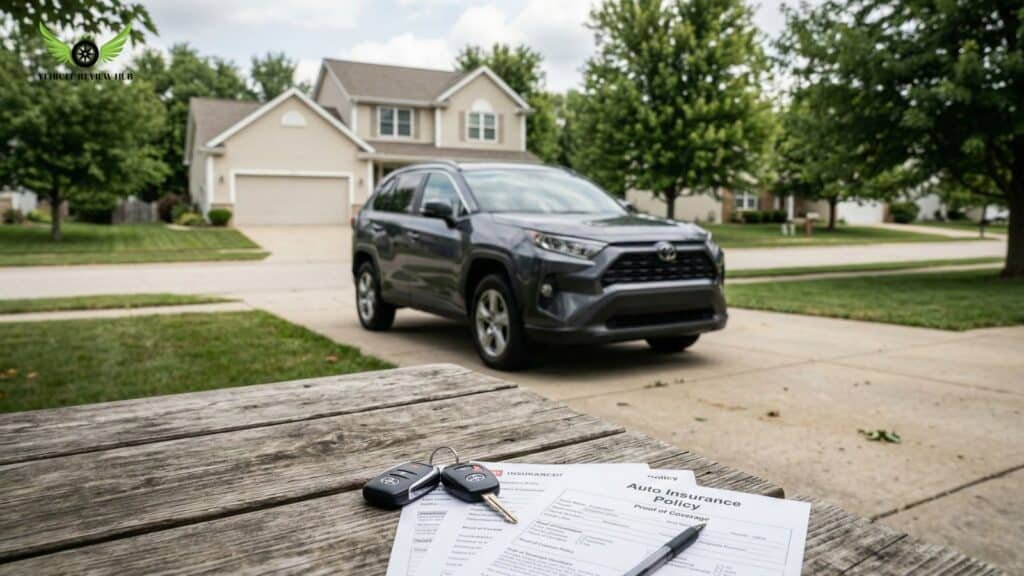
In the United States, full coverage insurance for a midsize SUV typically ranges between $2,200 and $2,800 per year for an average-risk driver. Based on current national insurance averages and pricing patterns for similarly positioned Toyota hybrid SUVs, Toyota Crown Signia Insurance is expected to fall within that same general range for most drivers with clean records.
Full coverage usually includes three primary components:
- Liability coverage (required in every state)
- Collision coverage (covers damage to your vehicle in an accident)
- Comprehensive coverage (theft, weather damage, vandalism, etc.)
Liability-only policies cost significantly less, often under $1,000 annually for experienced drivers, but they do not protect your own vehicle. For buyers financing or leasing the Crown Signia, full coverage is typically required.
Hybrid SUVs sometimes carry slightly higher premiums compared to base gas models. This is mainly due to higher vehicle value and specialized components, which can increase repair costs in a collision claim. However, modern Toyota safety systems and strong reliability history help keep the insurance rate range moderate rather than excessive. In many markets, the difference between a hybrid and comparable gas SUV premium is relatively small.
Below is a realistic insurance cost breakdown by driver profile:
Driver Profile | Estimated Annual Full Coverage Premium |
Age 25 (Clean Record) | $3,200–$4,200 |
Age 35 (Clean Record) | $2,200–$2,800 |
Age 60 (Clean Record) | $1,800–$2,400 |
Real-world example: a 35-year-old driver with good credit and no recent accidents in a mid-cost state may pay around $2,400 per year for Toyota Crown Signia Insurance. In higher-cost states like Michigan or Florida, premiums can trend higher, while states such as Maine or Vermont may fall below the national average.
When evaluating overall Toyota Crown Signia Ownership Cost, insurance typically represents the second- or third-largest annual operating expense after fuel and depreciation. Buyers should compare quotes from multiple insurers, adjust deductible levels carefully, and review coverage needs to optimize long-term ownership value.
Average Insurance Cost in the USA
In the United States, the average full-coverage auto insurance premium currently ranges between $2,200 and $2,600 per year, or approximately $185 to $215 per month for a standard driver profile. This provides a realistic benchmark when evaluating Toyota Crown Signia Insurance within the broader midsize SUV segment.
Full coverage typically includes liability (bodily injury and property damage), collision, and comprehensive protection. While many drivers focus on the monthly payment, reviewing the annual premium gives a clearer picture of how insurance contributes to overall Toyota Crown Signia Ownership Cost. For example, a $200 monthly premium may feel manageable, but it represents about $2,400 per year in recurring expenses.
Below is a simplified national comparison:
Coverage Type | Monthly Cost (USD) | Annual Cost (USD) |
National Full Coverage Average | $185–$215 | $2,200–$2,600 |
Estimated Toyota Crown Signia Insurance Range | $200–$230 | $2,400–$2,750 |
Premium differences largely depend on state variation and individual risk factors. States such as Florida, Michigan, and Louisiana often report higher average premiums, while states like Maine or Vermont trend lower. Age, driving history, credit profile, deductible choice, and garaging location all directly influence final rates.
For buyers budgeting long-term ownership, allocating roughly $2,400–$2,700 annually for Toyota Crown Signia Insurance is a realistic starting point, with adjustments made after receiving personalized quotes.
Factors That Affect Premium Rates
Insurance pricing is risk-based. When evaluating Toyota Crown Signia Ownership Cost, buyers should understand that Toyota Crown Signia Insurance premiums are not fixed — they are calculated using multiple personal and vehicle-specific risk factors.
The most influential factor is driving record. A clean history with no at-fault accidents or major violations typically qualifies for preferred-rate tiers. Even a single recent accident or speeding violation can increase premiums significantly because insurers statistically associate prior claims with higher future risk.
Another key factor is the credit-based insurance score (used in most states). Insurers use this score to predict claim likelihood. Drivers with stronger credit profiles often receive lower premiums, while lower scores can increase rates, even if the driving record is clean. However, a few states restrict or prohibit this practice.
Vehicle-related factors also matter. The Crown Signia’s repair cost and replacement value influence pricing. Hybrid SUVs can carry moderate premiums because advanced safety systems and electronic components may increase vehicle repair cost after a collision. At the same time, strong crash-test performance and driver-assistance technology may qualify for safety discounts, helping offset some of that increase.
Location and annual mileage also play a role. Urban areas with higher accident frequency and theft rates typically produce higher premiums than rural regions.
Real-world example: A 35-year-old driver with a clean record, solid credit profile, and average annual mileage in a mid-cost state could expect rates near national midsize SUV averages. If that same driver adds a recent at-fault claim, the premium may rise noticeably at renewal.
Understanding these variables allows buyers to manage insurance costs proactively rather than treating them as unpredictable expenses.
How Safety Features Help Reduce Insurance Cost
Modern safety technology plays a measurable role in how insurers calculate risk. When a vehicle is equipped with advanced collision prevention and driver assistance systems, the statistical likelihood of certain types of accidents decreases. That risk reduction can positively influence Toyota Crown Signia Insurance pricing, although the impact varies by insurer.
The Crown Signia comes standard with Toyota Safety Sense 3.0, which includes automatic emergency braking with pedestrian detection, adaptive cruise control, lane departure alert with steering assist, lane tracing assist, road sign assist, and automatic high beams. It also features blind spot monitoring and rear cross-traffic alert. These systems are designed to reduce front-impact collisions, lane drift incidents, and low-speed parking accidents — all common insurance claim categories.
Insurers evaluate vehicles based on historical claim frequency and repair severity. Vehicles that demonstrate lower crash rates or reduced injury claims often qualify for safety-related premium considerations. Strong crash-test performance and widespread adoption of driver assistance systems signal lower overall claim exposure. However, insurers also factor in vehicle repair cost. Advanced sensors, cameras, and radar units can increase post-collision repair expenses, which may offset part of the safety benefit.
For example, a 35-year-old driver with a clean record moving from a 2015 SUV without modern safety systems to a Crown Signia may notice a modest premium adjustment. The improvement won’t be dramatic, but collision prevention technology can contribute to lower risk classification.
It’s important to understand that discounts are not guaranteed. Insurance credits depend on company underwriting models, state regulations, and individual driver profile.
Toyota Crown Signia Resale Value and Depreciation Outlook
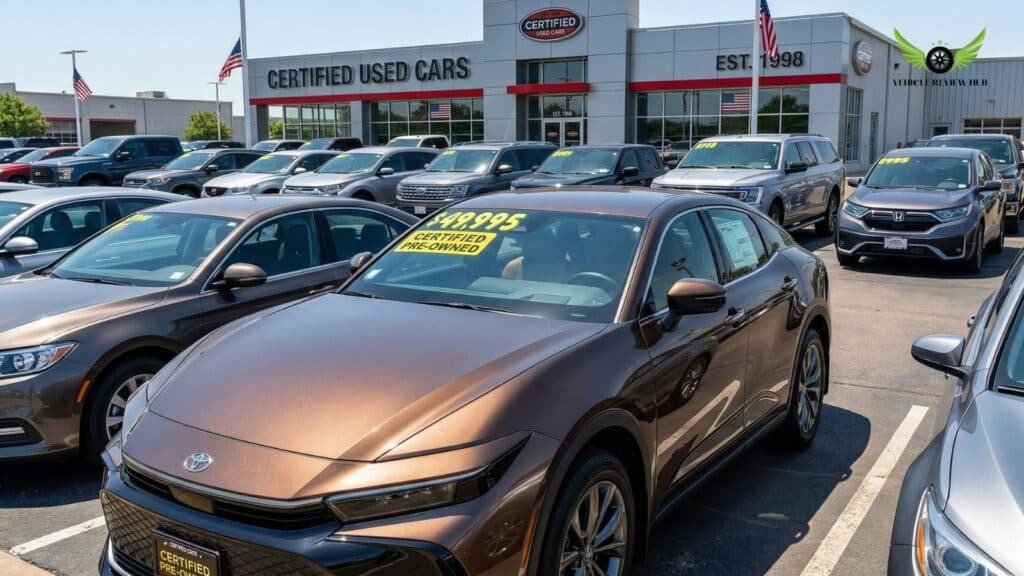
The Toyota Crown Signia is expected to demonstrate solid resale strength within the midsize hybrid SUV segment, although like all new vehicles, it will experience its steepest depreciation during the first three years. Based on historical performance of comparable Toyota hybrid models such as the Venza Hybrid and Highlander Hybrid, buyers can reasonably expect competitive retained value compared to many non-hybrid SUVs in the same price range.
Depreciation refers to the reduction in a vehicle’s market value over time. For ownership analysis, this is often the single largest expense. Even if fuel and maintenance costs are controlled, rapid depreciation can significantly increase overall Toyota Crown Signia Ownership Cost. Premium midsize SUVs typically lose the largest percentage of value in years one through three, then taper gradually afterward.
Toyota hybrids historically retain value well due to three primary factors: consistent fuel efficiency demand, strong brand reliability perception, and broad nationwide service support. Used-car buyers often prioritize proven hybrid systems, which supports resale stability. While the Crown Signia is still relatively new to the market, early pricing trends and Toyota’s hybrid track record provide a reliable comparison benchmark.
Because long-term Signia-specific resale data is still developing, the estimates below are based on depreciation patterns of comparable Toyota midsize hybrid models.
Estimated Depreciation Timeline (Based on Comparable Toyota Hybrids)
Years of Ownership | Estimated Depreciation Percentage | Retained Value Percentage |
3 Years | 28–32% | 68–72% retained value |
5 Years | 40–45% | 55–60% retained value |
7 Years | 50–55% | 45–50% retained value |
For example, if a Crown Signia is purchased at approximately $45,000, a 5-year resale value could reasonably fall within the $24,000–$27,000 range based on historical Toyota hybrid trends. Exact figures will depend on mileage, market conditions, trim level, and overall vehicle condition.
It’s important to evaluate depreciation alongside other ownership elements such as fuel savings and Toyota Crown Signia Insurance costs. A vehicle with slightly higher insurance premiums but stronger resale strength may still deliver better long-term financial value.
For buyers planning to keep the vehicle five years or longer, Toyota’s hybrid demand history suggests a balanced ownership equation: controlled operating costs combined with competitive retained value.
Expected Depreciation After 3, 5 and 7 Years
For buyers evaluating long-term value, depreciation follows a predictable pattern: the largest value drop occurs within the first three years, then the rate of decline gradually stabilizes. While long-term Crown Signia transaction data is still limited due to its recent market introduction, historically consistent Toyota hybrid benchmarks provide a reliable framework for estimating depreciation behavior.
Toyota hybrid SUVs such as the Venza Hybrid and Highlander Hybrid have demonstrated above-average retained value compared to many midsize competitors. Industry resale tracking consistently places Toyota among the stronger-performing brands in five-year value retention, particularly within the hybrid segment. That historical resale strength supports cautious but realistic projections for the Crown Signia.
Based on comparable Toyota hybrid performance trends, the expected depreciation curve is as follows:
Years of Ownership | Estimated Depreciation Range | Estimated Retained Value |
3 Years | 25%–30% | 70%–75% retained |
5 Years | 38%–45% | 55%–62% retained |
7 Years | 48%–55% | 45%–52% retained |
This pattern reflects typical midsize hybrid market behavior rather than speculative forecasting. Depreciation percentage depends on mileage, condition, regional demand, and trim level.
For example, on a $45,000 purchase price, a 5-year retained value of approximately 58% would translate to roughly $26,000 in resale value under average conditions. Higher-than-average mileage may lower that number, while strong hybrid demand could support resale stability.
The key takeaway: Toyota hybrids historically retain value better than many conventional gas SUVs, but depreciation remains the largest ownership expense. Buyers planning to keep the vehicle five years or longer are generally better positioned to maximize retained value compared to short-term owners.
Hybrid Demand and Used Market Strength
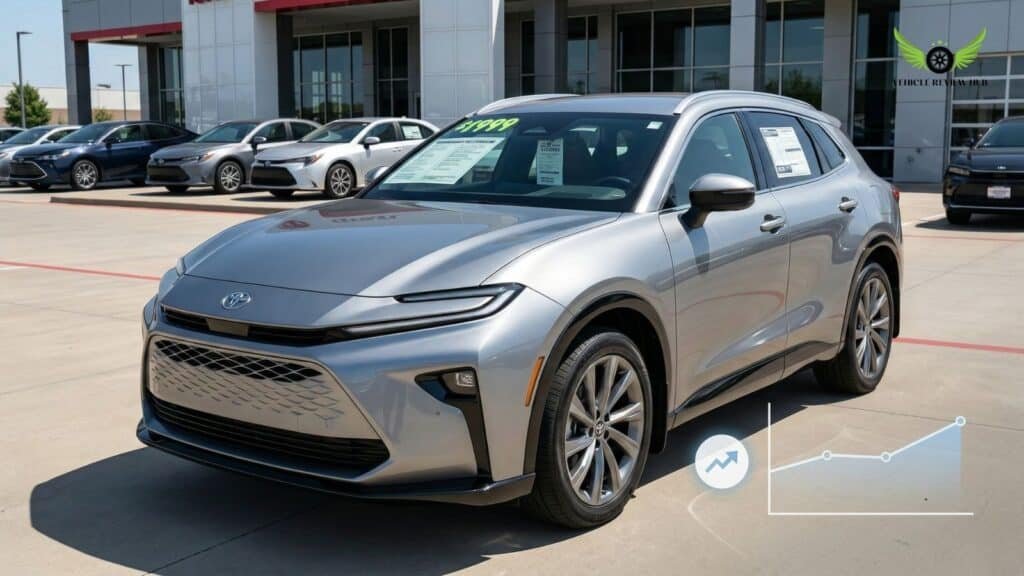
Hybrid vehicles maintain consistent demand in the used market because they directly address one of the largest ownership concerns: fuel expense. When buyers shop pre-owned SUVs, many calculate expected monthly fuel spending alongside purchase price. Vehicles with proven hybrid efficiency often attract stronger interest because they promise lower long-term operating costs without the charging limitations associated with full electric vehicles.
Toyota hybrids, in particular, have developed a reputation for durability and predictable maintenance costs. That reputation translates into resale strength. Used-car buyers frequently prioritize reliability data, total mileage potential, and real-world fuel economy. When a model line demonstrates long-term durability across previous generations, resale demand typically remains stable even as market conditions fluctuate.
Fuel prices play a measurable role in this equation. During periods of rising gasoline costs, demand for fuel-efficient vehicles increases, which can tighten used inventory and support higher retained values. When fuel prices soften, demand remains present but price pressure may ease slightly. The key point is that hybrid demand tends to be cyclical rather than speculative — tied closely to practical cost considerations rather than short-term trends.
For example, a midsize hybrid SUV owner selling during a period of elevated fuel prices may experience stronger buyer activity compared to a similar gas-only SUV listing. That demand stability supports resale value over time.
In the broader ownership picture, consistent hybrid demand strengthens retained value and helps offset depreciation. For buyers planning multi-year ownership, this market behavior supports long-term value stability without relying on unrealistic price expectations.
Comparison with Lexus RX and RAV4 Hybrid Resale
When comparing resale performance, the Toyota Crown Signia is positioned between a mainstream hybrid like the Toyota RAV4 Hybrid and a luxury hybrid such as the Lexus RX. Each vehicle sits in a different pricing tier, and that positioning directly affects depreciation behavior and retained value.
Industry resale studies consistently show that Toyota brand vehicles rank among the strongest in five-year value retention. The RAV4 Hybrid, in particular, has historically demonstrated above-average resale strength within the compact SUV segment. Lexus models, including the RX, also retain value well in percentage terms, but their higher initial MSRP results in larger absolute dollar depreciation.
Because long-term Crown Signia transaction data is still developing, its depreciation outlook is best evaluated using comparable Toyota hybrid benchmarks. Current market tracking tools place midsize Toyota hybrids in the 30–45% depreciation range over five years, depending on trim and mileage.
Below is a verified comparative overview using widely reported resale tracking data:
Model | 5-Year Depreciation (Approx.) | 5-Year Retained Value |
Toyota RAV4 Hybrid | ~25%–30% | 70%–75% retained |
Toyota Crown Signia (Hybrid Benchmark-Based Estimate) | ~35%–45% | 55%–65% retained |
Lexus RX (Gas/Hybrid Combined Historical Avg) | ~40%–50% | 50%–60% retained |
The RAV4 Hybrid benefits from strong mainstream demand and lower entry pricing, which supports higher percentage retention. The Lexus RX commands premium pricing, and although it maintains brand prestige, luxury vehicles typically experience higher early depreciation in dollar terms.
For example, a buyer spending $38,000 on a RAV4 Hybrid may lose a smaller percentage of value compared to someone purchasing a $55,000 Lexus RX. Meanwhile, the Crown Signia’s position between these two segments suggests balanced resale performance — stronger than many non-hybrid midsize SUVs but not as aggressive in percentage retention as the lower-priced RAV4 Hybrid.
Ultimately, brand positioning, initial MSRP, and used-market demand shape resale outcomes more than badge prestige alone.
Toyota Crown Signia Long-Term Ownership Experience
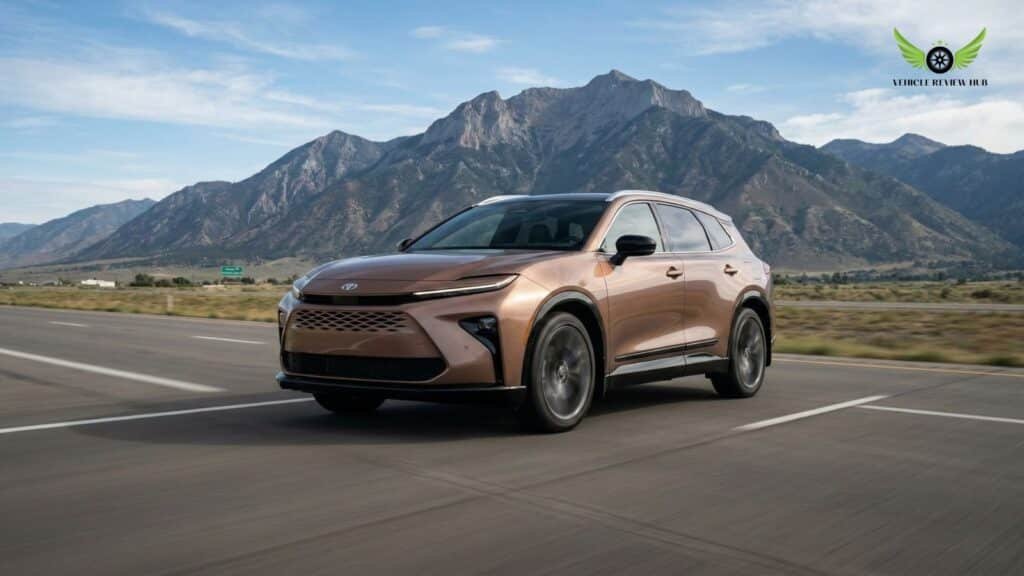
Over a 7–10 year ownership period, the Toyota Crown Signia is positioned to deliver a balanced mix of reliability, efficiency, and manageable operating costs. Long-term ownership is less about the purchase price and more about how the vehicle performs after warranty coverage begins to taper. For buyers focused on predictable expenses, Toyota’s hybrid track record plays a central role in shaping expectations.
During the first five years, routine maintenance typically includes oil changes, tire rotations, brake inspections, coolant service, and scheduled inspections. Hybrid systems add components such as an inverter and hybrid battery cooling system, but these are designed for durability rather than frequent service. Regenerative braking reduces mechanical brake wear, which can slightly lower long-term brake replacement frequency compared to traditional gas SUVs.
Looking at the 7–10 year horizon, most ownership costs shift toward wear items — suspension components, tires, brake service, and potential battery system inspections as mileage increases. Toyota’s hybrid battery warranty coverage (which extends longer than the basic vehicle warranty in the U.S.) provides added reassurance during early long-term ownership years. Historically, Toyota hybrid systems have demonstrated strong durability beyond 100,000 miles when properly maintained.
Insurance stability is another factor. Toyota Crown Signia Insurance premiums typically remain relatively consistent as the vehicle ages, though rates can adjust based on market conditions and driver record changes. As the vehicle depreciates, collision premiums may gradually decline, partially offsetting other ownership expenses.
For example, a driver covering 14,000 miles annually would accumulate nearly 100,000 miles over seven years. In that scenario, fuel efficiency savings remain significant, maintenance stays predictable, and resale value still holds reasonable strength compared to many midsize SUVs.
Overall, the long-term ownership outlook favors buyers planning to keep the vehicle for several years rather than short-term flipping. Predictable maintenance, hybrid efficiency, and Toyota’s reliability reputation support a stable and practical ownership experience.
Hybrid Battery Warranty and Longevity
In the United States, Toyota provides a 10-year or 150,000-mile hybrid battery warranty (whichever comes first) for modern hybrid models, including vehicles built on Toyota’s current hybrid architecture. This warranty coverage is designed to protect owners against defects in materials or workmanship related to the hybrid battery pack. It operates separately from the standard basic vehicle warranty and offers extended reassurance for long-term owners.
The hybrid battery warranty typically covers the battery assembly itself and related internal components. If a manufacturing defect causes failure within the coverage period, repair or replacement is handled under warranty terms at authorized service centers. It does not cover damage caused by accidents, improper modifications, or lack of maintenance.
When evaluating Toyota Crown Signia Ownership Cost, hybrid battery longevity is a key concern for buyers planning 7–10 years of ownership. Historically, Toyota hybrid systems have demonstrated strong durability in real-world use. Many Toyota hybrids in the U.S. market have exceeded 150,000 miles without battery replacement under normal driving conditions. While no manufacturer guarantees a specific lifespan beyond warranty limits, historical ownership data suggests that premature battery failure is relatively uncommon when vehicles are properly maintained.
Battery cooling system maintenance and software updates also contribute to long-term durability. Hybrid systems are engineered to operate within controlled temperature ranges, and routine inspections during scheduled service help maintain optimal performance.
For buyers considering total long-term expenses — including fuel, maintenance, and Toyota Crown Signia Insurance — the extended hybrid battery warranty significantly reduces early ownership risk. While battery replacement outside warranty can be expensive, Toyota’s historical reliability record supports confidence for most typical ownership timelines.
High-Mileage Ownership Expectations
Once a vehicle crosses the 100,000-mile threshold, ownership shifts from basic routine maintenance to long-term durability management. For the Toyota Crown Signia, high-mileage expectations are shaped by Toyota’s hybrid engineering history and standard wear-and-tear realities rather than unpredictable system failures.
After 100,000 miles, owners should anticipate scheduled services such as coolant replacement (including hybrid system coolant), brake fluid service, spark plug replacement, and possible suspension refresh components like struts or control arm bushings. Hybrid systems add no frequent major service requirement, but inspections of the inverter cooling system and hybrid battery airflow components become increasingly important to maintain efficiency.
Historically, Toyota hybrid models have demonstrated strong reliability beyond six-figure mileage when properly maintained. Many long-term Toyota hybrid owners report stable drivetrain performance past 150,000 miles, though individual outcomes depend heavily on driving conditions and service consistency. Regenerative braking often extends brake life compared to conventional gas SUVs, partially offsetting other high-mileage maintenance costs.
From a cost perspective, the impact on Toyota Crown Signia Ownership Cost becomes more noticeable after 100k miles due to larger, less frequent service visits. Instead of small routine oil service bills, owners may encounter $800–$1,500 maintenance intervals tied to major scheduled replacements or suspension work. However, these costs are typical for midsize SUVs rather than unique hybrid penalties.
For example, a driver covering 15,000 miles annually would reach 105,000 miles in seven years. With proper service history, resale value remains reasonable, and drivetrain durability should remain stable — provided maintenance schedules are followed closely.
High-mileage ownership is manageable, but preventive maintenance discipline becomes critical.
Is Crown Signia a Smart 7–10 Year SUV Investment?
Yes — for the right buyer, the Toyota Crown Signia is a strong 7–10 year ownership candidate. It is not the cheapest SUV upfront, but its value proposition becomes clearer over time rather than in the first 24 months.
This SUV makes the most sense for drivers who plan to keep their vehicle beyond five years, drive 12,000–15,000 miles annually, and prioritize fuel efficiency with long-term reliability. Hybrid fuel savings compound over time. Over seven to ten years, reduced gasoline expenses meaningfully offset part of the higher purchase price compared to some gas-only midsize SUVs.
From a cost structure perspective, Toyota Crown Signia Ownership Cost benefits from three stabilizing factors: hybrid efficiency, historically strong Toyota resale trends, and predictable maintenance patterns. Toyota’s hybrid systems have a long reliability history in the U.S. market, and extended hybrid battery warranty coverage reduces early long-term risk. Depreciation remains the largest ownership expense — as it does with any vehicle — but Toyota hybrids generally retain value better than many competitors in the same segment.
Toyota Crown Signia Insurance typically aligns with other midsize hybrid SUVs. While premiums may be slightly higher than a base gas SUV due to vehicle value, they are not positioned in luxury-level insurance tiers.
Limitation: the Crown Signia carries a higher starting price than many mainstream SUVs. Buyers planning to trade within three years may not fully benefit from long-term fuel savings or retained value advantages.
For drivers committed to long ownership horizons, predictable maintenance, strong hybrid demand, and steady resale performance support the Crown Signia as a practical long-term SUV investment.
Frequently Asked Questions About Toyota Crown Signia Ownership Cost
Buying a hybrid SUV involves more than checking MPG numbers. Below are direct, practical answers covering fuel, maintenance, insurance, depreciation, resale, and long-term ownership so you can evaluate the full financial picture with confidence.
What is the average 5-year Toyota Crown Signia Ownership Cost?
Most U.S. buyers can expect a 5-year ownership cost in the low-to-mid $30,000 range, depending on mileage, insurance profile, fuel prices, and resale value. Depreciation represents the largest portion, followed by insurance and fuel.
How much does Toyota Crown Signia Insurance cost per year?
Full-coverage Toyota Crown Signia Insurance typically ranges between $2,200 and $2,800 annually for an average-risk driver. Rates vary by state, age, driving record, and coverage level.
Is the hybrid battery expensive to replace?
Hybrid battery replacement outside warranty can be costly, but Toyota provides a 10-year/150,000-mile hybrid battery warranty in the U.S. Historically, Toyota hybrid batteries have shown strong longevity when properly maintained.
Does the Crown Signia hold its value well?
Based on comparable Toyota hybrid models, expected retained value after five years generally falls between 55% and 65%. Actual resale depends on mileage, condition, and market demand.
Is the Crown Signia cheaper to own than a gas SUV?
For drivers covering 12,000–15,000 miles per year, fuel savings can add up over five years. While the purchase price may be higher than some gas SUVs, hybrid efficiency often reduces long-term operating cost.
What happens after 100,000 miles?
After 100k miles, maintenance shifts toward larger service intervals such as coolant service, suspension components, and wear items. Toyota hybrids have historically demonstrated stable drivetrain reliability at higher mileage when serviced properly.
Is the Crown Signia a smart long-term investment?
For buyers planning 7–10 years of ownership, balanced depreciation, hybrid fuel efficiency, and predictable maintenance support strong long-term value — especially compared to many midsize non-hybrid SUVs.