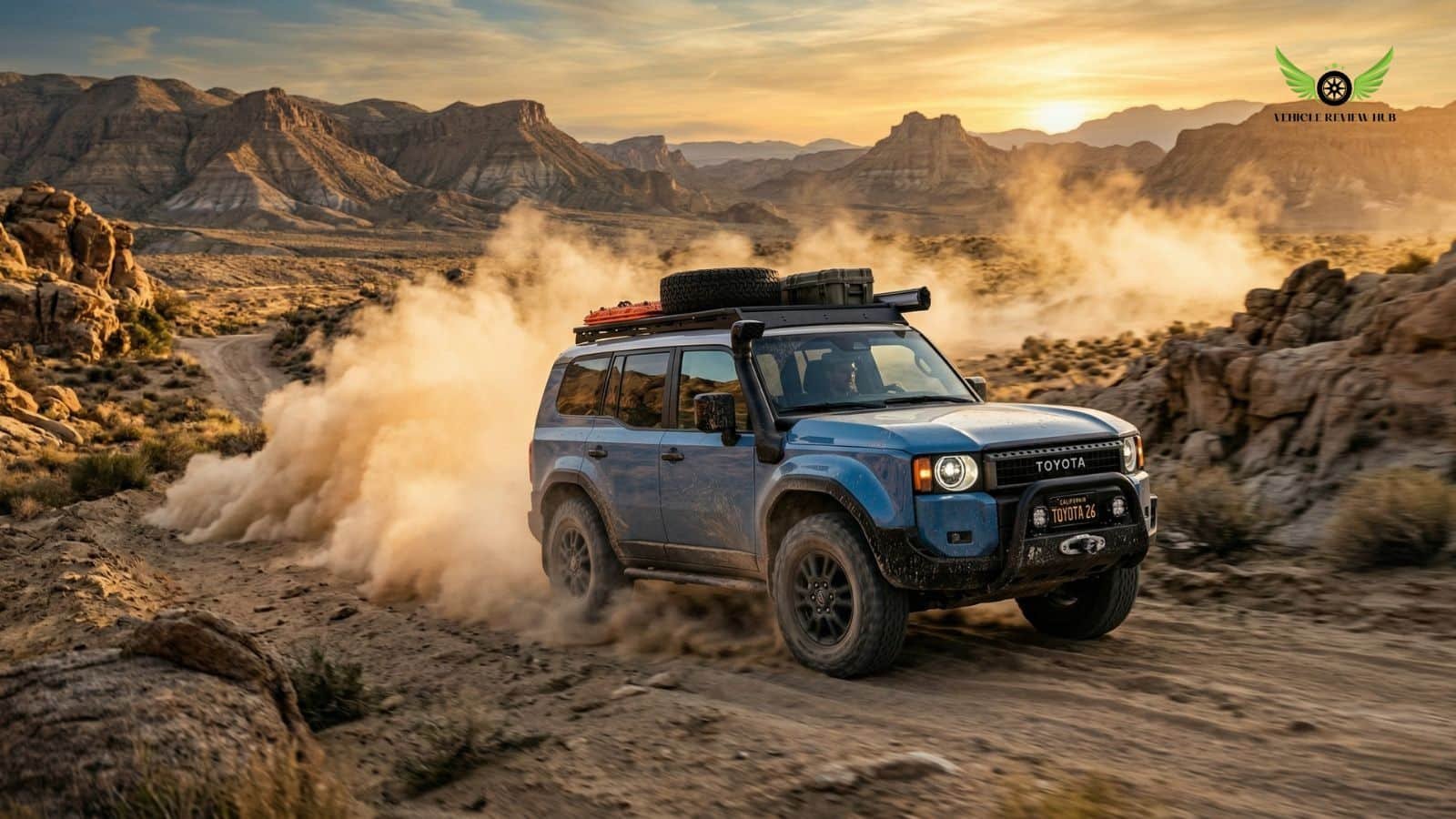
The Toyota Land Cruiser MPG for 2026 reflects a major shift toward efficiency, with an estimated range of around 22 mpg city and 25 mpg highway, which is impressive for a rugged, body-on-frame SUV. In this Toyota Land Cruiser MPG overview, the focus is not only on fuel economy but also on how the vehicle delivers strong, consistent performance through its hybrid system.
What makes this SUV stand out is its 2.4L turbocharged i-FORCE MAX hybrid powertrain, which combines a gasoline engine with an electric motor. This setup allows the Land Cruiser to produce high torque while using fuel more efficiently than traditional engines. Instead of relying only on engine power, the electric motor supports acceleration and low-speed driving, reducing fuel consumption in everyday situations.
Fuel efficiency matters significantly in this segment because large SUVs are typically heavy and consume more fuel. Toyota addresses this by balancing power and efficiency, making the Land Cruiser more practical for daily commuting, long-distance travel, and even stop-and-go city driving. Compared to older versions, the improvement in Toyota Land Cruiser MPG makes it a more usable vehicle for modern drivers.
From a performance perspective, the hybrid system enhances responsiveness, especially at lower speeds where instant torque is beneficial. This results in smoother acceleration and better control, whether you are driving in urban traffic or navigating uneven terrain.
While EPA estimates provide a useful benchmark, real-world results can vary depending on driving habits, terrain, and load. The following sections will explore actual fuel efficiency, hybrid system behavior, and driving experience in greater detail to give you a complete understanding.
Toyota Land Cruiser Hybrid Powertrain & Fuel Efficiency
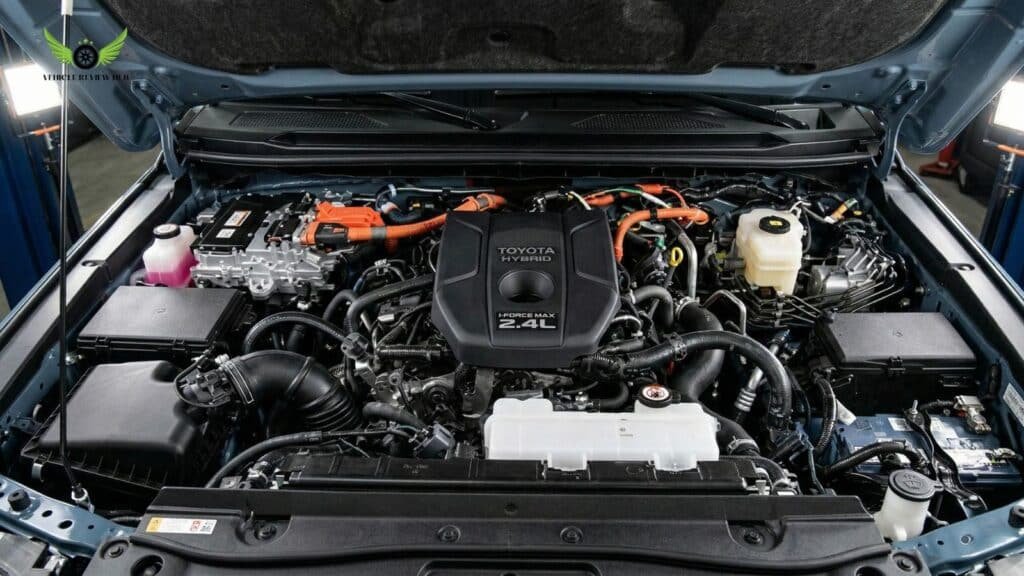
The Toyota Land Cruiser MPG for 2026 places it among the more efficient options in the rugged SUV segment, especially considering its size and off-road capability. Unlike traditional body-on-frame SUVs that prioritize power over efficiency, this model uses a hybrid system to deliver a more balanced fuel economy without sacrificing performance.
At the core is a 2.4L turbocharged i-FORCE MAX hybrid powertrain, where a gasoline engine works together with an electric motor integrated into the transmission. This system intelligently distributes power depending on driving conditions. During low-speed driving or initial acceleration, the electric motor provides support, reducing the need for constant fuel consumption. At higher speeds, the turbocharged engine takes over efficiently, ensuring stable performance on highways.
This setup improves hybrid fuel economy by reducing engine strain and optimizing energy use. In city conditions, where stop-and-go traffic is common, the hybrid system plays a major role in saving fuel. On highways, the engine maintains efficiency through better gear management and steady output. As a result, the Toyota Land Cruiser MPG becomes more practical for daily use compared to older generations.
Model | Engine | City MPG | Highway MPG | Combined |
2026 Toyota Land Cruiser | 2.4L Turbo Hybrid (i-FORCE MAX) | 22 MPG | 25 MPG | 23 MPG |
In real-world conditions, fuel economy can vary. For example, smooth highway driving often delivers close to the estimated numbers, while aggressive acceleration, heavy loads, or off-road driving can reduce MPG. A driver using the Land Cruiser for daily commuting may see better results than someone frequently towing or driving on rough terrain.
Overall, the hybrid system makes the Land Cruiser more efficient and usable, offering a strong combination of power, control, and improved fuel economy for modern driving needs.
EPA Ratings (22 City / 25 Highway / 23 Combined)
The official Toyota Land Cruiser MPG is rated at 22 mpg city, 25 mpg highway, and 23 mpg combined, giving it a strong efficiency profile for a rugged SUV. These EPA ratings provide a standardized way to understand how the vehicle performs under different driving conditions.
Driving Type | MPG Rating | What It Means |
City Driving | 22 MPG | Stop-and-go traffic with frequent braking and acceleration |
Highway Driving | 25 MPG | Steady-speed driving with consistent engine performance |
Combined | 23 MPG | Average of city and highway driving conditions |
Each number represents a specific driving scenario. City MPG is usually lower because the engine works harder during traffic conditions, while highway MPG is higher due to smoother and more consistent driving speeds. The combined figure gives a more realistic expectation for everyday use.
EPA fuel economy ratings are important because they allow buyers to compare vehicles fairly using the same testing standards. These tests are conducted in controlled environments using simulated driving conditions, ensuring consistency across all models.
However, real-world results can vary. Factors like driving style, terrain, traffic, and load can impact actual fuel economy. For example, aggressive driving or off-road use may reduce MPG, while steady highway cruising can achieve numbers closer to the official ratings.
Real-World MPG vs Bronco 2.7L and Wrangler 4xe
In real-world driving, the Toyota Land Cruiser MPG tends to remain stable and predictable, which is one of its biggest advantages over traditional off-road SUVs. While EPA ratings provide a benchmark, actual usage shows that most drivers experience around 21–24 mpg combined, depending on driving style and conditions. This makes it a strong performer in the real-world MPG SUV category.
The reason behind this consistency is the self-charging hybrid system, which continuously supports the engine during acceleration and low-speed driving. Unlike conventional engines, it reduces fuel usage in traffic and maintains smoother efficiency across mixed conditions.
Model | Engine | EPA MPG | Real MPG |
Toyota Land Cruiser | 2.4L Turbo Hybrid | 22 / 25 / 23 | ~21–24 MPG |
Ford Bronco 2.7L | 2.7L Twin-Turbo V6 | ~19 / 21 / 20 | ~17–20 MPG |
Jeep Wrangler 4xe | 2.0L Plug-in Hybrid | ~20 combined | ~20–25 MPG (battery dependent) |
In city driving, the Land Cruiser benefits from hybrid assistance, helping it maintain efficiency even in stop-and-go traffic. On highways, it delivers steady fuel economy due to its balanced power delivery. In contrast, the Ford Bronco’s fuel consumption increases in urban conditions because it relies entirely on a gasoline engine.
The Jeep Wrangler 4xe behaves differently because it is a plug-in hybrid. When the battery is fully charged, it can deliver higher efficiency, especially for short city trips. However, once the battery is depleted, fuel economy drops closer to a standard gasoline SUV.
In a real-world scenario, a daily commuter will find the Land Cruiser more consistent across both city and highway driving, while the Wrangler 4xe requires regular charging to maintain efficiency, and the Bronco performs best in steady highway conditions but consumes more fuel overall.
Toyota Land Cruiser Driving Dynamics & Comfort
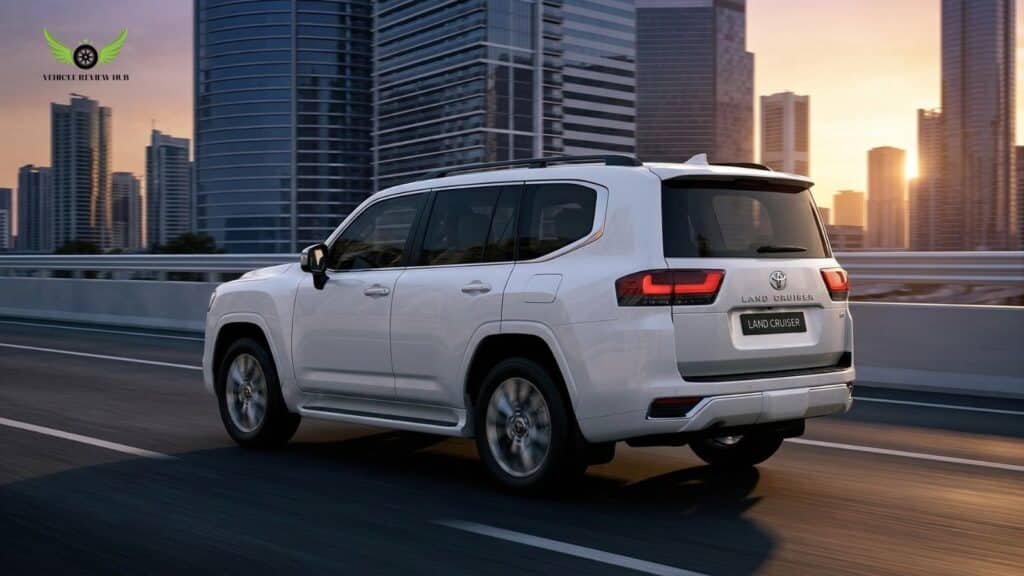
The 2026 Toyota Land Cruiser delivers a driving experience that prioritizes stability, control, and long-distance comfort, rather than aggressive performance. In terms of Toyota Land Cruiser performance, it feels composed and confident across different environments, making it suitable for both daily driving and off-road use.
On the road, the Land Cruiser has a solid and planted feel. The steering is not overly sharp, but it is predictable, which helps maintain control at higher speeds and on uneven surfaces. One of the key highlights is the hybrid system, where the electric motor provides instant torque at low speeds. This makes acceleration smoother in traffic and reduces the need for heavy throttle input, especially in stop-and-go city conditions.
The benefit of this hybrid torque becomes even more noticeable off-road. Whether climbing a hill or navigating rough terrain, the power delivery remains steady and controlled. This improves traction and reduces wheel spin, making the vehicle easier to handle in challenging situations.
In city driving, the Land Cruiser feels refined for a large SUV. The suspension absorbs bumps effectively, and the cabin remains relatively quiet, even in congested traffic. On highways, it performs even better, offering a smooth and stable ride. For example, during a long road trip, the combination of supportive seating and controlled ride quality helps reduce driver fatigue.
However, there are some trade-offs. Due to its size and body-on-frame design, the Land Cruiser does not feel as agile as smaller crossovers. Tight turns and quick maneuvers require more input, and the overall weight can be noticeable during cornering.
Overall, the Land Cruiser offers a balanced driving performance SUV experience, combining everyday comfort with off-road confidence, making it a practical choice for a wide range of driving conditions.
Acceleration (0–60 mph in 7.7 Seconds)
The 2026 Toyota Land Cruiser can accelerate from 0 to 60 mph in about 7.7 seconds, which reflects a balanced approach to Toyota Land Cruiser performance. This number shows how quickly the SUV can reach highway speed, an important factor for merging, overtaking, and everyday driving confidence.
In real driving conditions, this level of acceleration feels smooth rather than aggressive. The hybrid system plays a key role here. The electric motor delivers instant torque at low speeds, helping the vehicle move quickly from a standstill without hesitation. This makes city driving more responsive, especially in traffic where quick acceleration is often needed.
Compared to other SUVs in this segment, the Land Cruiser sits in the middle. Some rivals may feel quicker in straight-line speed, but they often lack the same low-end torque delivery or efficiency. The Land Cruiser focuses more on controlled power and consistency rather than peak acceleration numbers.
However, it is important to understand that this is not a performance-focused SUV. Due to its size, weight, and body-on-frame construction, acceleration is steady rather than sharp, particularly at higher speeds.
Overall, the Land Cruiser offers enough acceleration for daily use while maintaining its core strengths of durability, stability, and hybrid-assisted efficiency.
Ride Quality, Cabin Quietness & Handling
The 2026 Toyota Land Cruiser delivers a ride quality that feels stable, composed, and comfortable, especially considering its rugged body-on-frame design. In terms of Toyota Land Cruiser performance, the suspension is tuned to absorb bumps and uneven surfaces rather than prioritize sporty stiffness, making it well-suited for both daily driving and off-road use.
The suspension setup does a good job of smoothing out rough roads. On broken pavement or gravel, the vehicle remains controlled without excessive vibration entering the cabin. This becomes especially useful during long drives, where consistent ride comfort reduces fatigue over time.
Cabin quietness is another strong point. The Land Cruiser is designed to limit outside noise, including road and wind sound, which improves overall driving comfort. A quieter cabin matters because it allows for better focus, easier conversation, and a more relaxed experience during extended trips.
In terms of handling, the Land Cruiser feels predictable and secure rather than agile. The steering is steady, and the vehicle maintains good stability at highway speeds. For example, on highways, it feels planted and comfortable even over long distances, while on rough or uneven roads, it maintains control without harsh impacts.
However, there is a trade-off. Due to its height and weight, body roll is noticeable during sharp turns, and it does not handle like a smaller crossover.
Overall, the Land Cruiser offers a balanced driving experience, prioritizing comfort, durability, and stability over sporty handling.
Regenerative Braking & Drive Modes (Eco, Sport, etc.)
The 2026 Toyota Land Cruiser uses regenerative braking and selectable drive modes to improve efficiency and adapt performance to different driving conditions. These systems are directly linked to the hybrid setup, helping optimize both fuel usage and driving behavior.
Regenerative braking works by capturing energy during deceleration and converting it into electricity, which is stored in the battery. Instead of losing energy as heat, the system reuses it to assist acceleration. This process helps improve Toyota Land Cruiser MPG, especially in city driving where braking happens frequently.
Drive modes allow the driver to adjust how the SUV responds:
Mode | Function | Best Use Case |
Eco | Reduces throttle sensitivity, prioritizes fuel efficiency | City driving, traffic, long-distance cruising |
Normal | Balanced performance and efficiency | Everyday mixed driving |
Sport | Sharper throttle response, more aggressive acceleration | Highway overtaking, quick acceleration |
In real-world use, Eco mode helps maintain better fuel economy during stop-and-go traffic, while Sport mode provides quicker response when merging onto highways or overtaking slower vehicles. This flexibility allows the Land Cruiser to adapt to both relaxed and more demanding driving situations.
Toyota Land Cruiser Off-Road Capability
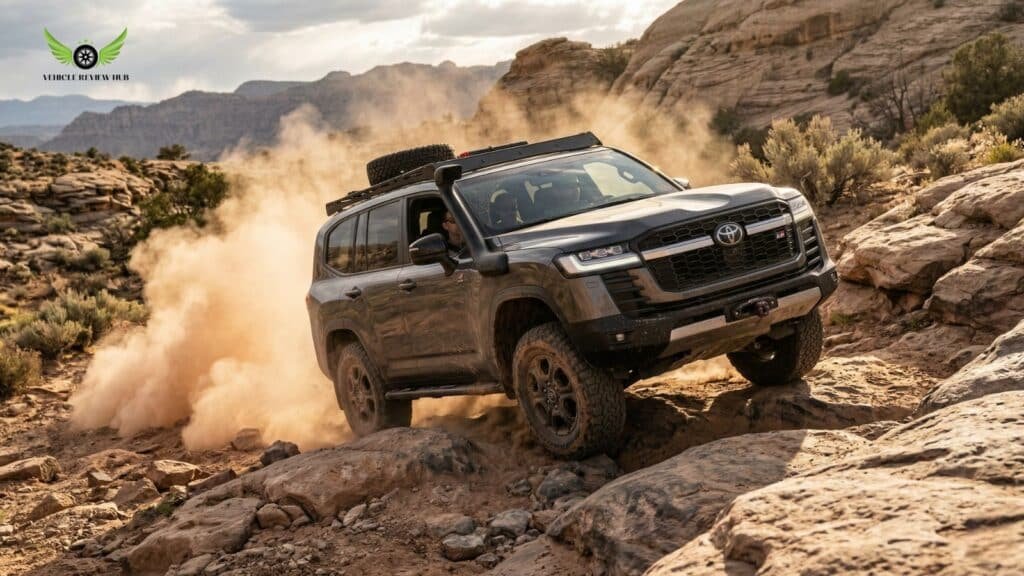
The 2026 Toyota Land Cruiser is designed to handle demanding terrain with a focus on control, traction, and durability. Rather than relying only on engine power, it uses a combination of mechanical systems and electronic aids to maintain stability in difficult conditions. This approach makes Toyota Land Cruiser performance highly reliable across different off-road environments such as sand, mud, rocks, and steep inclines.
At the foundation is a full-time 4WD system with a low-range transfer case, which allows the vehicle to deliver consistent power to all four wheels. Low-range gearing is especially important because it increases torque at low speeds, helping the SUV move precisely over obstacles without losing control. In addition, systems like Multi-Terrain Select adjust traction settings based on surface type, while Crawl Control manages throttle and braking automatically during slow off-road driving.
Feature | Function | Benefit |
Full-Time 4WD | Sends power to all wheels continuously | Maintains grip on loose or uneven surfaces |
Low-Range Gearing | Increases torque at low speeds | Better control on steep climbs and rocks |
Crawl Control | Controls throttle and braking automatically | Reduces driver effort on tough trails |
Multi-Terrain Select | Adjusts traction for different surfaces | Improves performance on mud, sand, and rocks |
Locking Differential | Distributes equal power to wheels | Prevents wheel slip in extreme conditions |
Downhill Assist Control | Controls speed on descents | Safer downhill driving |
These features work together to provide a controlled off-road experience. For example, when driving on a rocky trail, the driver can activate Crawl Control and low-range mode, allowing the vehicle to move steadily while maintaining traction on uneven surfaces.
Full-Time 4WD System with Low-Range & Crawl Control
The 2026 Toyota Land Cruiser uses a full-time 4WD system, low-range gearing, and Crawl Control to deliver strong traction and precise control in off-road conditions. These systems are designed to work together, improving stability on uneven or low-grip surfaces.
Full-time 4WD continuously sends power to all four wheels, which helps maintain grip on mud, sand, or loose terrain without needing manual activation. This constant power distribution improves balance and reduces the risk of wheel slip.
Low-range gearing is used when driving in difficult conditions. It reduces wheel speed while increasing torque, allowing the vehicle to move slowly with more control. This is especially useful for climbing steep hills or navigating rocky trails where precision matters more than speed.
Crawl Control further enhances this by automatically managing throttle and braking at low speeds. It keeps the vehicle moving steadily without requiring constant pedal input, making technical driving easier and more controlled.
Multi-Terrain Select & Stabilizer Disconnect
The 2026 Toyota Land Cruiser uses Multi-Terrain Select and Stabilizer Disconnect to improve traction and suspension flexibility in challenging off-road conditions. These systems help the vehicle adapt to different surfaces without requiring constant driver adjustments.
Multi-Terrain Select allows the driver to choose specific modes such as mud, sand, or rock. Each mode automatically adjusts throttle response, braking, and traction control to match the terrain. This makes it easier to maintain grip, especially on loose or uneven surfaces where normal driving settings may struggle.
The Stabilizer Disconnect system works by loosening the front stabilizer bar, allowing the suspension to move more freely. This increases wheel articulation, meaning each wheel can stay in contact with the ground even on uneven terrain. As a result, the vehicle maintains better balance and traction when driving over rocks or deep ruts.
These features are important because off-road conditions often change quickly. For example, when moving from a muddy path to a rocky section, the system helps maintain control without requiring complex driver input.
However, there are limitations. The stabilizer disconnect is mainly useful at low speeds and does not improve on-road handling. Also, selecting the correct terrain mode may require some driver experience.
Overall, these systems enhance off-road capability by improving adaptability, traction, and control in difficult environments.
8.7-Inch Ground Clearance & Off-Road Geometry
The 2026 Toyota Land Cruiser provides approximately 8.7 inches of ground clearance, which is a key factor in its off-road capability. Ground clearance refers to the space between the lowest part of the vehicle and the ground, and it determines how easily the SUV can pass over obstacles like rocks, bumps, or uneven terrain without scraping the underside.
This level of clearance allows the Land Cruiser to handle rough trails with confidence, but true off-road performance also depends on vehicle geometry. Three important angles—approach, departure, and breakover—define how the vehicle interacts with slopes and obstacles.
Spec | Measurement | Impact |
Ground Clearance | ~8.7 inches | Reduces risk of underbody damage on rough terrain |
Approach Angle | ~31° | Helps the vehicle climb steep inclines without hitting the front |
Departure Angle | ~22° | Prevents the rear from scraping when descending slopes |
Breakover Angle | ~25° | Allows the vehicle to pass over ridges without getting stuck |
These measurements work together to improve real-world usability. For example, when driving over a sharp hill or rocky ridge, the approach angle ensures the front clears the obstacle, while the breakover angle prevents the center from contacting the ground.
However, there is a limitation. The Land Cruiser’s size and longer wheelbase can make tight trails or sharp crests more challenging compared to smaller off-road vehicles.
Overall, the combination of clearance and geometry ensures the Land Cruiser remains capable across a wide range of off-road conditions.
Toyota Land Cruiser Off-Road Comparisons
The 2026 Toyota Land Cruiser competes in a segment where off-road capability is a key buying factor, alongside models like the Ford Bronco, Jeep Wrangler Rubicon, and Land Rover Defender. Each of these SUVs is built for tough terrain, but they differ in how they balance technology, durability, and everyday usability. This makes off-road SUV comparison essential for buyers who want the right mix of capability and comfort.
The Land Cruiser focuses on consistency and control, using a full-time 4WD system combined with modern electronic aids. In contrast, the Wrangler Rubicon is designed for extreme off-road performance, offering features like solid axles and locking differentials that excel in rock crawling. The Ford Bronco provides a versatile off-road setup with advanced terrain modes and removable components, making it more adventure-focused. Meanwhile, the Land Rover Defender blends luxury with off-road technology, offering air suspension and advanced terrain response systems.
Model | 4WD System | Ground Clearance | Key Feature |
Toyota Land Cruiser | Full-time 4WD + Low Range | ~8.7 inches | Crawl Control + Multi-Terrain Select |
Jeep Wrangler Rubicon | Part-time 4WD + Low Range | ~10.8 inches | Solid axles + front/rear lockers |
Ford Bronco | Part-time 4WD + Advanced Modes | ~11.6 inches (Sasquatch) | G.O.A.T terrain system |
Land Rover Defender | Full-time AWD + Air Suspension | ~11.5 inches (adjustable) | Terrain Response + air suspension |
From a capability perspective, the Land Cruiser may not have the highest ground clearance or the most extreme hardware, but it delivers balanced and predictable off-road performance. Its systems are designed to work together smoothly, making it easier for drivers to handle different terrains without needing advanced off-road skills.
Land Cruiser vs Ford Bronco Trail Performance
When comparing trail performance, the 2026 Toyota Land Cruiser and Ford Bronco take two different approaches to off-road capability. Both are highly capable, but they are designed for different types of drivers and terrain challenges.
The Bronco is built for extreme off-road use, especially in technical environments like rock crawling and narrow trails. It offers features such as higher ground clearance (up to ~11.6 inches with Sasquatch package), front and rear locking differentials, and a more aggressive approach angle. These advantages make it better suited for tight, highly technical trails where maximum articulation and clearance are required.
On the other hand, the Land Cruiser focuses on controlled and consistent off-road performance. Its full-time 4WD system, Crawl Control, and Multi-Terrain Select work together to deliver smooth traction across mixed surfaces. Instead of relying only on mechanical extremes, it uses technology to make off-road driving easier and more predictable.
The difference exists because of design philosophy. The Bronco is engineered as a trail-focused vehicle, while the Land Cruiser is built as a multi-purpose SUV that balances off-road capability with daily comfort and reliability.
In a real-world scenario, on a narrow rocky trail with sharp obstacles, the Bronco may perform better due to its higher clearance and shorter wheelbase. However, on a mixed trail with mud, sand, and uneven terrain, the Land Cruiser provides a more stable and easier driving experience, especially for less experienced drivers.
Overall, the Bronco excels in extreme conditions, while the Land Cruiser offers a more balanced and user-friendly off-road experience.
Land Cruiser vs Jeep Wrangler 4xe (Electric Range & Trail Features)
The comparison between the 2026 Toyota Land Cruiser and the Jeep Wrangler 4xe comes down to self-charging hybrid vs plug-in hybrid capability. Both are designed for off-road use, but they approach efficiency and trail performance in very different ways.
The Wrangler 4xe offers a plug-in hybrid system, which means it can run on electric power alone for short distances (typically around 20+ miles in ideal conditions). This is useful for quiet, low-speed trail driving and short city trips without using fuel. It also delivers strong torque when both electric and gasoline systems work together, making it highly capable in technical off-road scenarios.
However, this advantage depends heavily on battery charging. If the battery is not charged, the Wrangler 4xe behaves more like a regular gasoline SUV, reducing its efficiency and electric benefit.
The Land Cruiser, on the other hand, uses a self-charging hybrid system that does not require external charging. It continuously generates and uses electric power while driving, offering consistent performance and efficiency. This makes it more practical for long trips and mixed driving conditions without needing charging infrastructure.
In real-world use, the Wrangler 4xe performs well on short trails where electric mode can be used effectively. But on longer off-road journeys, the Land Cruiser provides more reliable and consistent performance without worrying about battery range.
One limitation of the Land Cruiser is that it does not offer a full electric driving mode like the Wrangler 4xe. On the other hand, the Wrangler’s dependency on charging can be inconvenient for users who drive long distances.
Overall, the Wrangler 4xe is better for short-range electric efficiency and extreme trails, while the Land Cruiser offers a more balanced, dependable off-road experience for varied conditions.
Frequently Asked Questions About Land Cruiser MPG, Performance & Off-Road Capability
Here are the most common questions buyers ask about Toyota Land Cruiser MPG, hybrid performance, and off-road capability to help you make a clear decision.
What is the Toyota Land Cruiser MPG in real driving?
Most drivers experience around 21–24 mpg combined depending on driving style and conditions.
Is the Land Cruiser hybrid system self-charging?
Yes, it uses a self-charging hybrid system that does not require external charging.
How does Land Cruiser MPG compare to Bronco and Wrangler?
It is generally more efficient than Bronco and more consistent than Wrangler 4xe without relying on battery charging.
Is the Land Cruiser good for off-road driving?
Yes, it offers strong off-road capability with full-time 4WD, Crawl Control, and terrain modes.
Does hybrid power affect off-road performance?
No, it improves low-speed torque, making off-road driving smoother and more controlled.
What is the towing capacity of the Land Cruiser?
It can tow around 6,000 lbs depending on configuration.
Is the Land Cruiser better than Jeep Wrangler 4xe?
It is more practical for long-distance and mixed driving, while the Wrangler 4xe is better for short electric runs and extreme trails.
How does regenerative braking help MPG?
It recovers energy during braking and reuses it, improving fuel efficiency in city driving.
Is the Land Cruiser comfortable for daily driving?
Yes, it offers a stable ride, quiet cabin, and smooth hybrid performance.
What are the limitations of the Land Cruiser?
Its size, weight, and lack of full electric mode compared to plug-in hybrids can be considered limitations.
Does it require special maintenance due to hybrid system?
Maintenance is generally manageable but may require specialized service for hybrid components.
Who should buy the Land Cruiser?
Buyers who want a reliable SUV with balanced performance, fuel efficiency, and off-road capability.