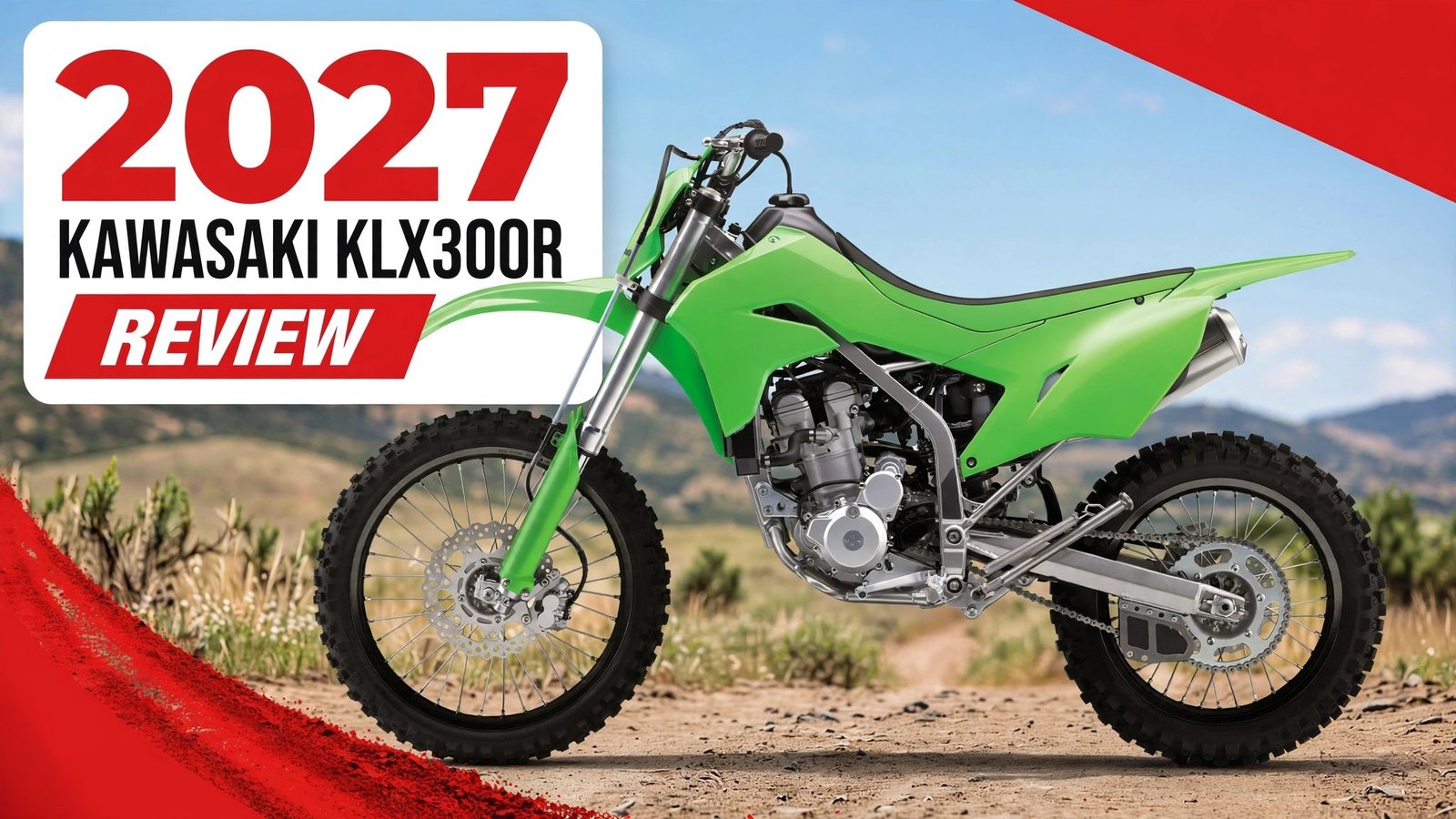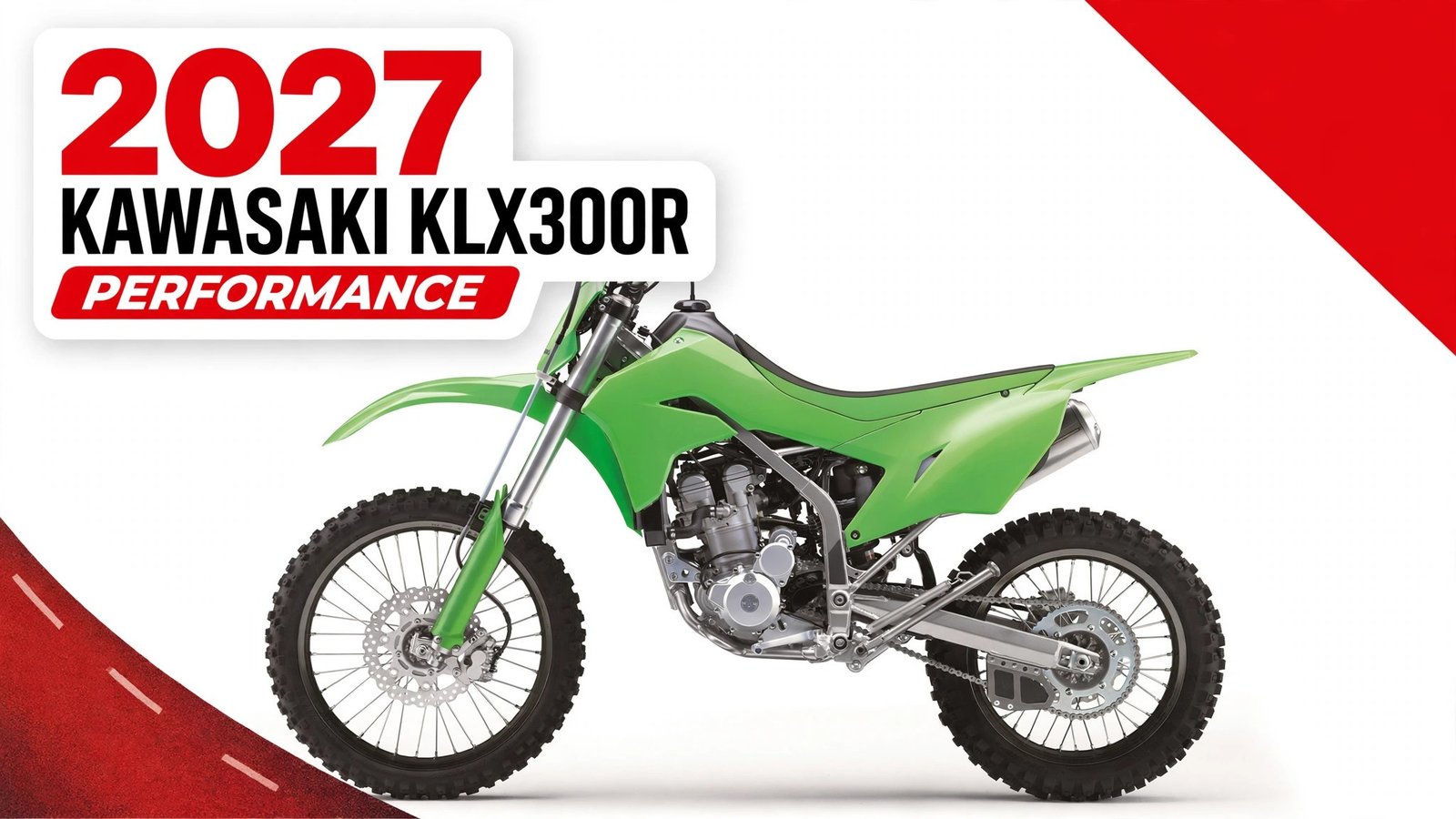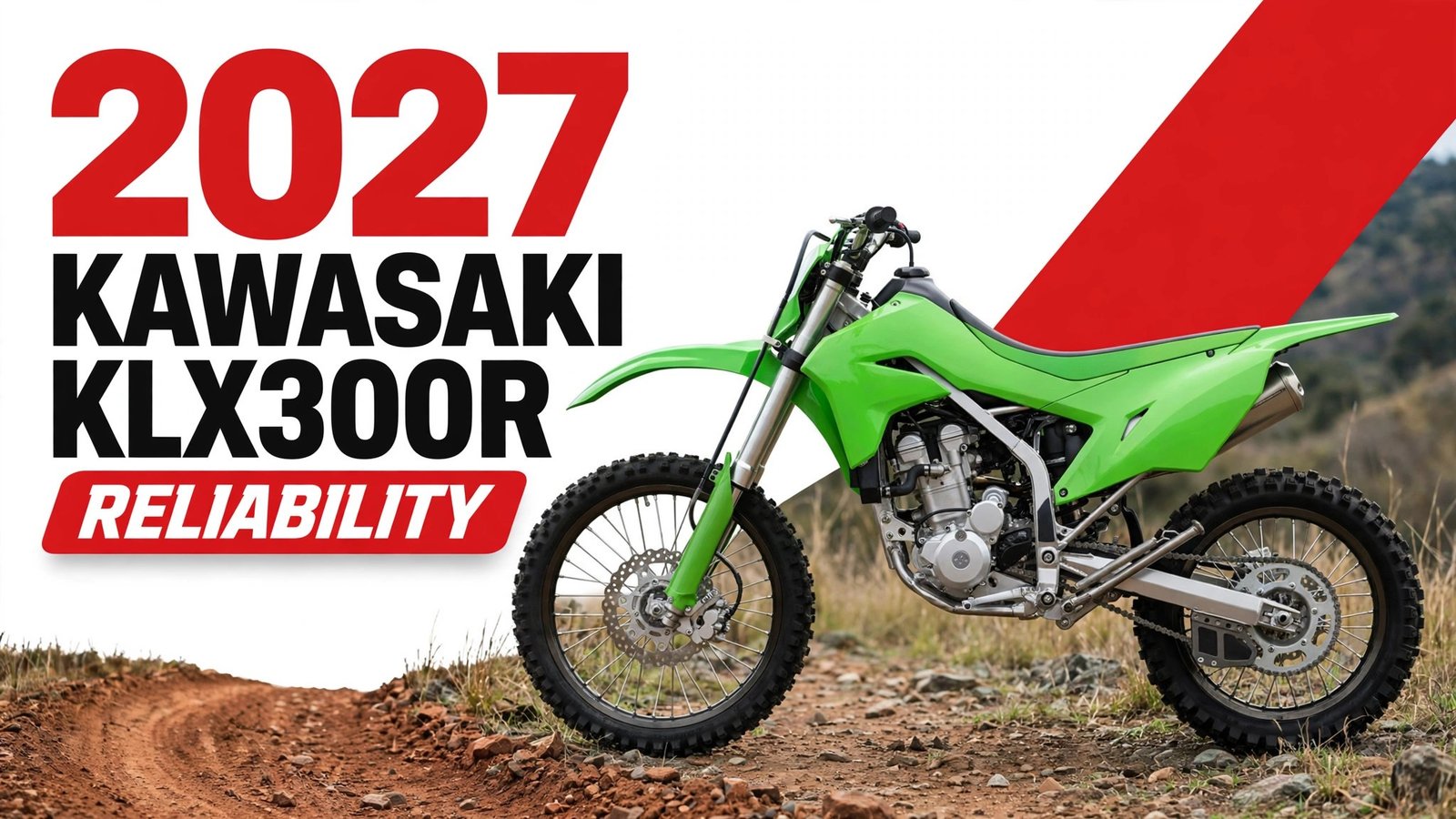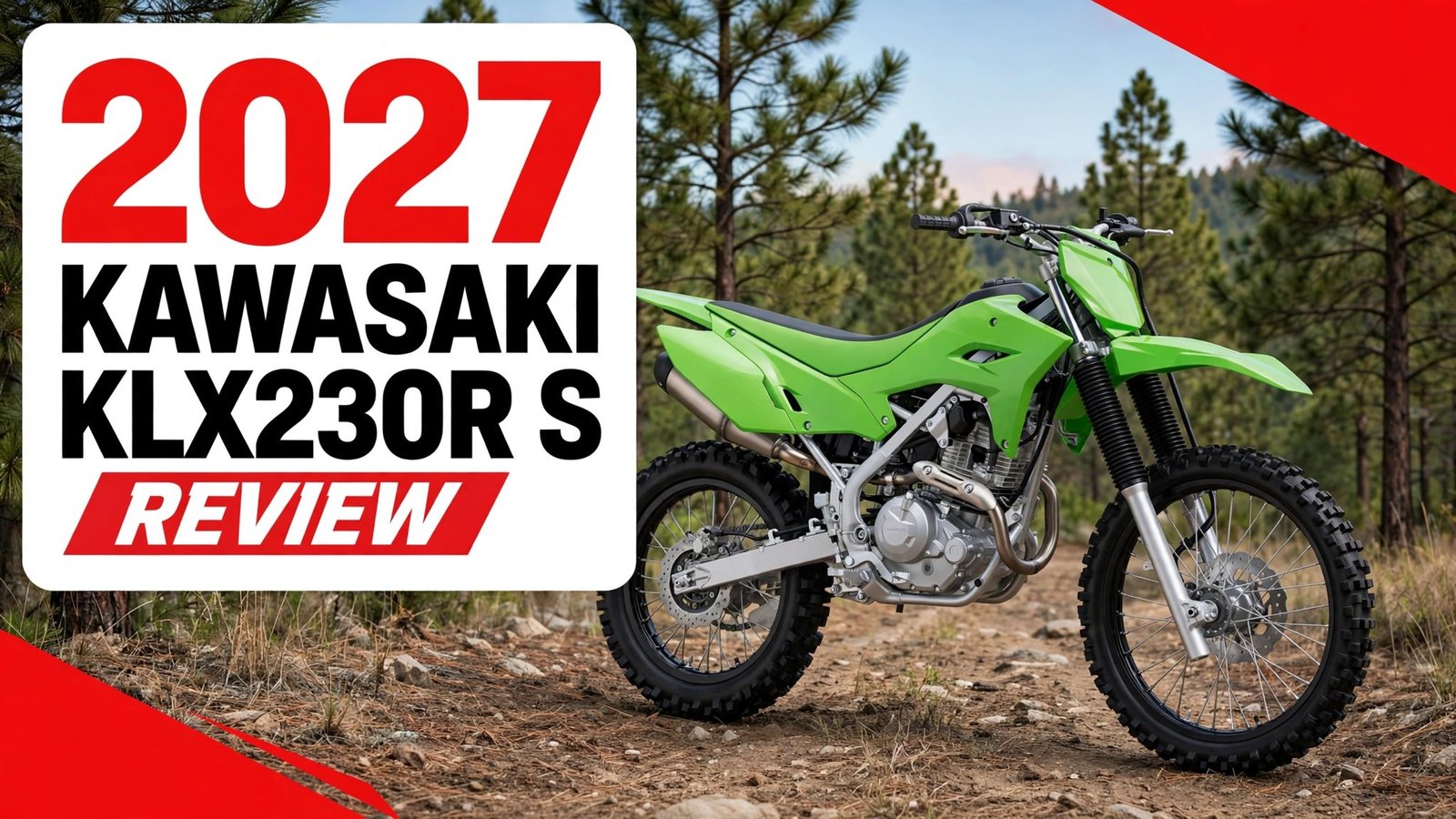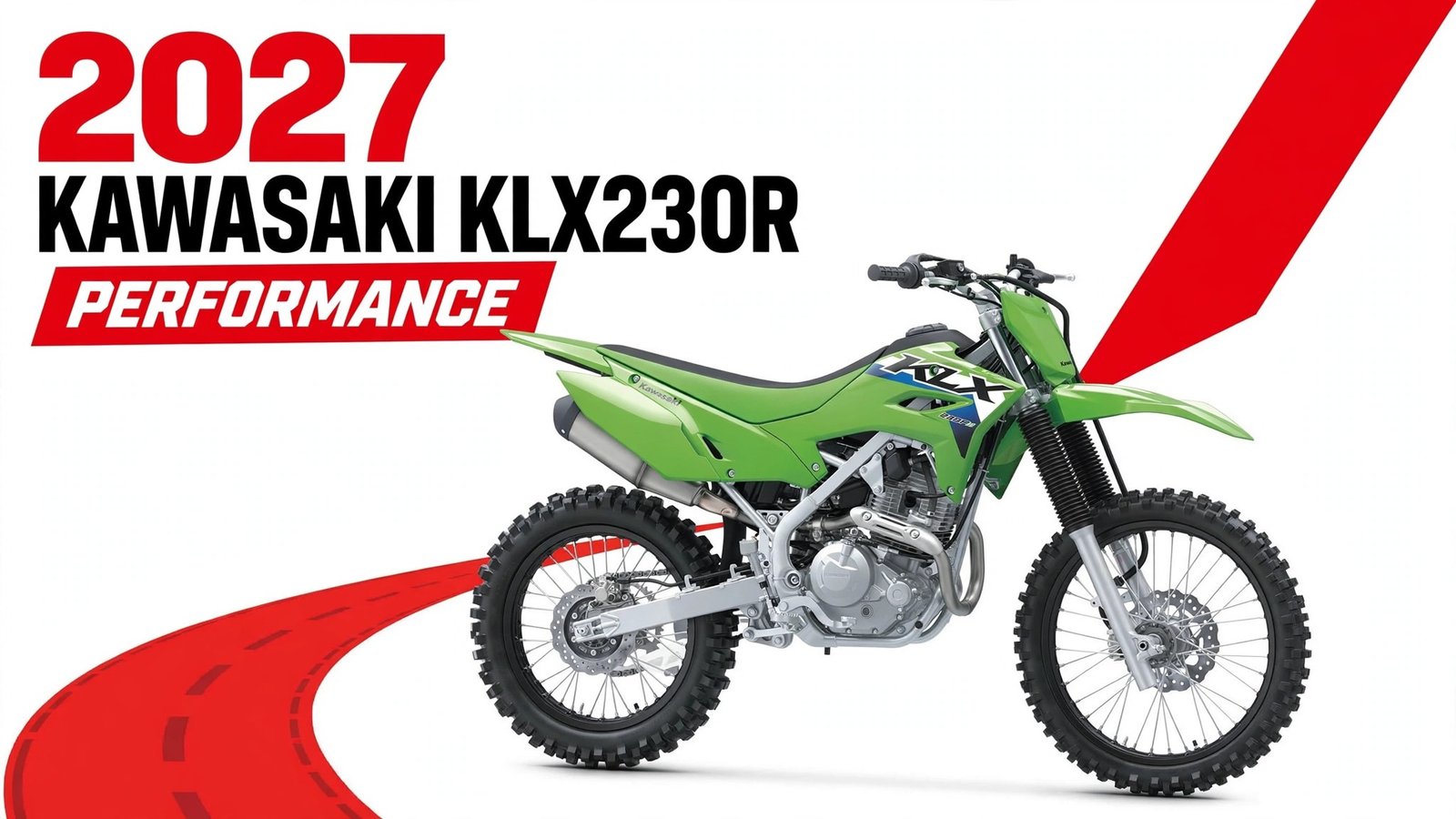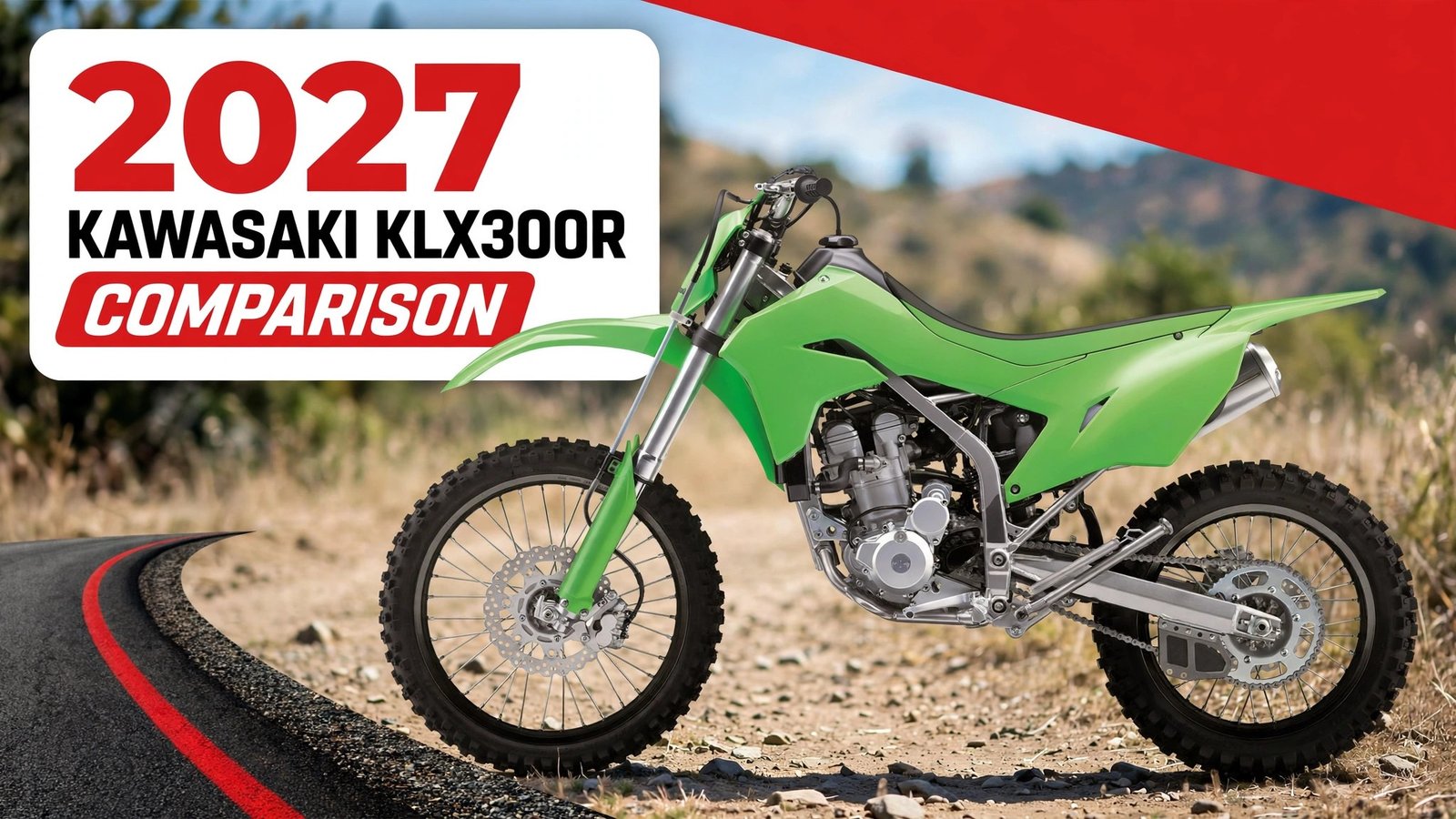
The Kawasaki KLX300R sits in a gap no other bike in its class fills, and that gap is the whole point of this Kawasaki KLX300R comparison. At $6,449 delivered for 2027, it costs $1,015 more than the KLX230R below it. The R is a 292cc liquid-cooled trail bike with no headlight, no dash, no mirrors and no ABS, and the only bike in its four-bike set with fully adjustable suspension at both ends. This Kawasaki KLX300R comparison measures it against the three bikes buyers actually cross-shop — the KLX230R, the CRF300F and the street-legal KLX300. Every figure in this Kawasaki KLX300R comparison is labelled by source.
Kawasaki KLX300R Overview and Its Closest Rivals
The R is a 2020 clean-sheet trail bike, and its rivals split into two groups. Below it sit the air-cooled 230-class trail bikes, the KLX230R and the Honda CRF300F, which cost less. Beside it sits the street-legal KLX300, which shares the R’s 292cc engine and name but trades trail suspension and weight for a plate, a dash, lights and ABS. This Kawasaki KLX300R comparison starts with what the R is, then measures each rival against it.
Only Adjustable Suspension at $6,449
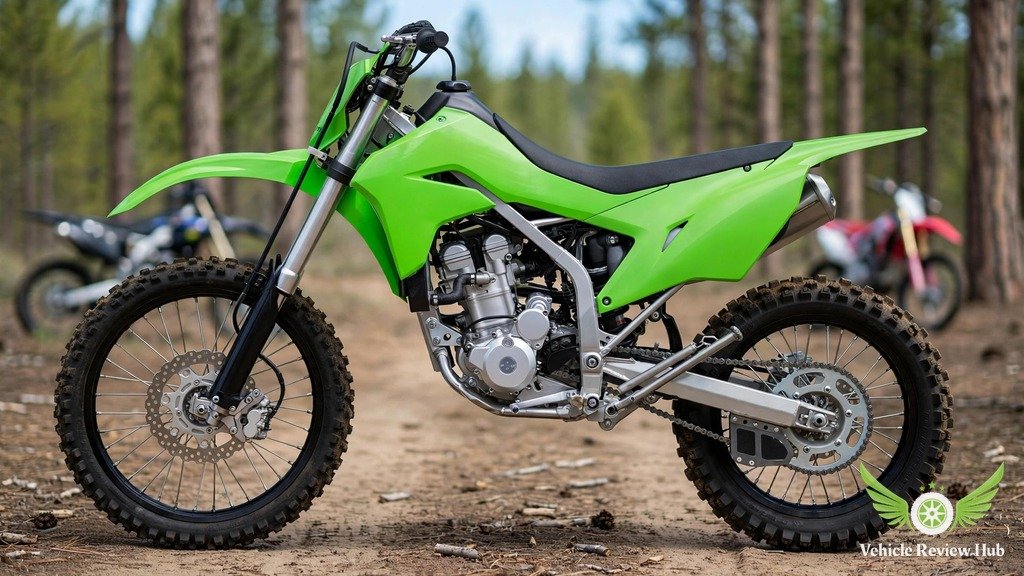
The R’s headline feature is a 43 mm inverted fork with adjustable compression damping and a Uni-Trak piggyback shock with adjustable compression, rebound and spring preload, giving 11.2 inches of travel at both ends. No rival in the four-bike set matches that: the KLX230R runs a 37 mm non-adjustable fork, the CRF300F runs a 41 mm Showa fork with no adjustment, and the street KLX300 runs a fork with compression damping only and a shorter 10.0 inches of front travel. One scope note: the street KLX300 does have an adjustable shock, so the R is the only one with fully adjustable suspension at both ends in this Kawasaki KLX300R comparison. The 2027 bike lists at $5,799 with a $650 destination charge, $6,449 delivered, per the official 2027 KLX300R spec sheet — the headline finding of this Kawasaki KLX300R comparison.
How the Four Bikes Differ at a Glance
Four bikes, four different answers to the same trail-riding question. The table below lines them up on the figures that decide a purchase in this Kawasaki KLX300R comparison: engine and cooling, suspension, seat height, weight and delivered price. This Kawasaki KLX300R comparison returns to each row in the sections that follow.
| Bike | Engine | Suspension travel | Seat height | Curb weight | 2027 delivered |
|---|---|---|---|---|---|
| Kawasaki KLX300R | 292cc liquid-cooled single | 11.2 in / 11.2 in, fully adjustable | 35.4 in | 282.2 lb | $6,449 |
| Kawasaki KLX230R | 233cc air-cooled single | 8.7 in / 8.5 in, non-adjustable | 35.6 in (2025+) | 262.4 lb | $5,434 |
| Honda CRF300F | 293cc air-cooled single | 9.5 in / 9.1 in, non-adjustable | 35.0 in | 271 lb | $5,399 |
| Kawasaki KLX300 ABS | 292cc liquid-cooled single | 10.0 in / 9.1 in, fork compression-only | 35.2 in | 304.3 lb | $6,649 |
Notes: delivered prices are 2027 figures (MSRP plus destination, year-labelled). The KLX230R travel figures are from the Canadian spec sheet. The R is 19.9 lb lighter than the 302.1-lb dual-sport KLX300 on the 2021 to 2023 sheets and 22.1 lb lighter than the 304.3-lb 2027 KLX300 ABS — the two gaps must not be mixed, and this Kawasaki KLX300R comparison keeps them labelled.
Kawasaki KLX300R vs Kawasaki KLX230R
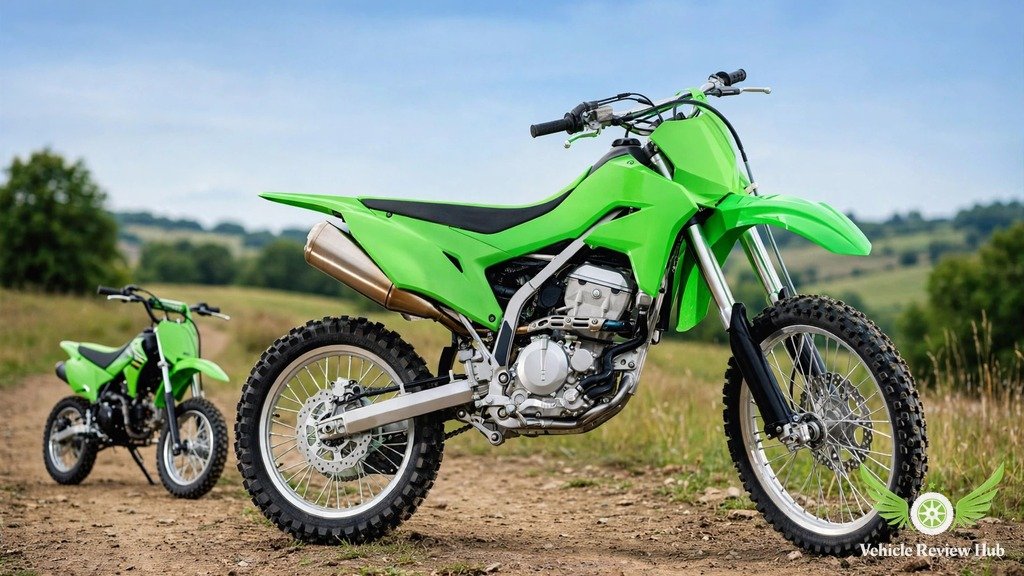
The KLX230R is the R’s little brother and its first rival, and the step between them is the clearest $1,015 in trail biking. The 230R is the same idea — a simple, air-cooled, off-road-only trail bike — with a smaller engine and a lower price. The R answers with liquid cooling, a bigger engine and the only fully adjustable suspension in the class. The KLX230R review covers the smaller bike in full, and it is the first rival in this Kawasaki KLX300R comparison.
Engine, Specs and Performance Side by Side
The engine gap is the whole story of this Kawasaki KLX300R comparison’s first pairing. The R runs a 292cc liquid-cooled DOHC four-valve single with fuel injection and a 34 mm Keihin throttle body, while the 230R runs a 233cc air-cooled single. Kawasaki USA publishes no horsepower figure for the R, and the Australian sheet’s 21.4 kW (29 PS) at 8,000 rpm must never be written as 29 hp. The 230R does have instrumented figures, and they are the only dyno numbers in this pairing: Dirt Rider measured 17.3 horsepower on a 2021 gen-1 standard R, and Cycle World measured 17.9 horsepower on a 2022 gen-1 standard R. Neither figure belongs to the current R, which has no dyno of its own, and no top speed or 0–60 figure exists for either bike as a tested fact. The bigger gap, as this Kawasaki KLX300R comparison shows, is in the chassis: the R’s 43 mm inverted fork and 11.2 inches of travel at both ends against the 230R’s 37 mm non-adjustable fork and 8.7/8.5 inches. The 230R answers on weight: at 262.4 lb it is 19.8 lb lighter than the R’s 282.2 lb, and its 2025-and-later seat is 35.6 inches.
| Spec | Kawasaki KLX300R | Kawasaki KLX230R |
|---|---|---|
| Engine | 292cc liquid-cooled DOHC 4-valve single | 233cc air-cooled single |
| Power (published) | No US figure; AU 21.4 kW (29 PS) | No US figure; dyno 17.3 hp (Dirt Rider 2021) / 17.9 hp (Cycle World 2022), gen-1 |
| Transmission | 6-speed, cable clutch, electric start only | 6-speed, electric start only |
| Fork / travel | 43 mm inverted, compression-adjustable, 11.2 in | 37 mm, non-adjustable, 8.7 in |
| Shock / travel | Uni-Trak piggyback, comp/rebound/preload, 11.2 in | Non-adjustable, 8.5 in |
| Seat / clearance | 35.4 in (2023+) / 11.8 in (2024+) | 35.6 in (2025+) / 11.4 in (gen-2) |
| Curb weight | 282.2 lb | 262.4 lb |
Notes: the 230R dyno figures are gen-1 standard-R bikes and are not the current R’s figures. The R’s power is the Australian-sheet figure, labelled as such, and must never be written as 29 hp. This Kawasaki KLX300R comparison uses delivered prices so the $1,015 gap is like-for-like.
Price, Equipment and Which Suits Which Rider
The price gap is $800 on MSRP and $1,015 delivered: the 2027 KLX230R lists at $4,999 with a $435 destination charge, $5,434 delivered, against the R’s $5,799 plus $650, $6,449 delivered. What the extra $1,015 buys is liquid cooling, 59cc more engine, a 43 mm inverted fork instead of a 37 mm conventional one, and full suspension adjustability at both ends. The 230R suits the rider who wants the lightest, cheapest full-size trail bike in the Kawasaki line. The R suits the rider stepping up from the 230 class who rides longer, rougher trails. Ultimate Motorcycling’s review called the R the largest displacement trail bike available from a major manufacturer. For this Kawasaki KLX300R comparison, the verdict on this pairing is simple — buy the 230R if $1,015 matters more than suspension, buy the R if the suspension matters more than $1,015.
Kawasaki KLX300R vs Honda CRF300F
The CRF300F is the R’s closest rival and the newest one in this Kawasaki KLX300R comparison: Honda launched it for 2026 as the replacement for the CRF250F, aimed directly at the KLX300R. It is a 293cc air-cooled single with fuel injection, a six-speed gearbox, electric start and a 41 mm Showa fork. The Honda CRF300F review covers the Honda in full, and this Kawasaki KLX300R comparison puts the two head to head on the figures that matter.
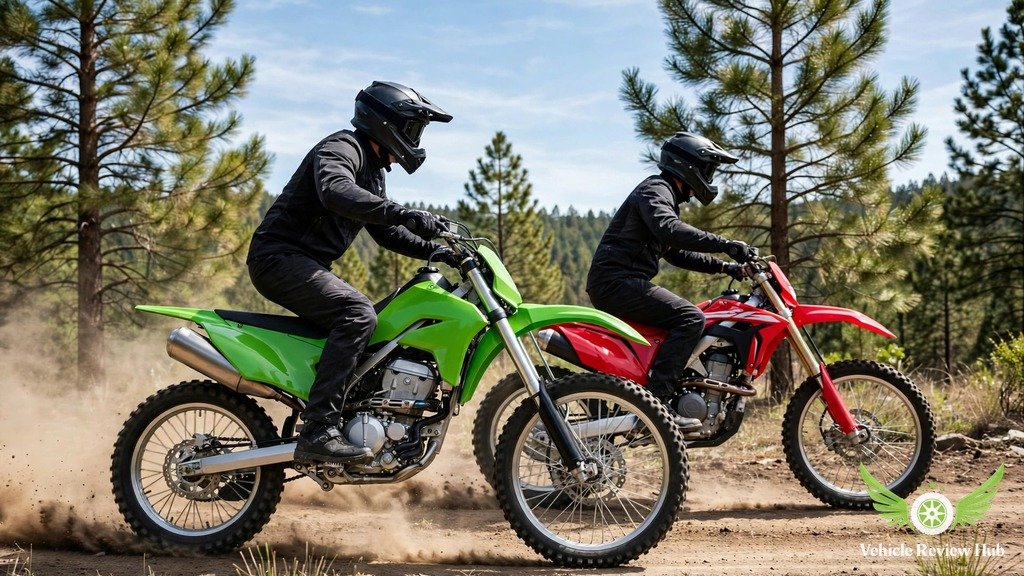
The video below, chosen for this Kawasaki KLX300R comparison, is a buyer’s comparison of the new 2027 Honda CRF300F against the Kawasaki KLX300R — what to buy, not an instrumented test. It walks through the two bikes side by side rather than measuring either one — the only video in this Kawasaki KLX300R comparison.
Engine, Specs and Performance Side by Side
On paper the engines look like twins: the R’s 292cc liquid-cooled DOHC single against the Honda’s 293cc air-cooled single, both fuel-injected six-speeds with electric start. The R’s liquid cooling and DOHC four-valve head suit sustained work on a climb; the Honda’s air-cooled single with its oil cooler suits simplicity and low cost. Honda publishes no horsepower figure for the CRF300F, and Kawasaki USA publishes none for the R either, so there is no factory power figure on either side of this Kawasaki KLX300R comparison — only the Australian sheet’s 21.4 kW (29 PS) for the R, which must never be written as 29 hp, and the street KLX300’s 23.4-horsepower Cycle World dyno, which belongs to the street bike. The R’s 43 mm inverted fork with adjustable compression and 11.2 inches of travel at both ends stands against the Honda’s 41 mm Showa fork with 9.5 inches of front travel and a Pro-Link shock with 9.1 inches at the rear, neither end adjustable. The Honda answers on size and weight: its seat is 35.0 inches against the R’s 35.4, and at 271 lb it is 11.2 lb lighter than the R’s 282.2 lb.
| Spec | Kawasaki KLX300R | Honda CRF300F |
|---|---|---|
| Engine | 292cc liquid-cooled DOHC 4-valve single | 293cc air-cooled single |
| Power (published) | No US figure; AU 21.4 kW (29 PS) | No figure published by Honda |
| Transmission | 6-speed, cable clutch, electric start only | 6-speed, electric start |
| Fork / travel | 43 mm inverted, compression-adjustable, 11.2 in | 41 mm Showa, non-adjustable, 9.5 in |
| Shock / travel | Uni-Trak piggyback, comp/rebound/preload, 11.2 in | Pro-Link Showa, non-adjustable, 9.1 in |
| Seat / clearance | 35.4 in (2023+) / 11.8 in (2024+) | 35.0 in / 11.4 in |
| Curb weight | 282.2 lb | 271 lb |
Notes: the CRF300F engine is 293cc on Honda’s own spec table; it is not the 286cc engine of the CRF300L dual-sport. The CRF300F curb weight is Honda’s 2026 spec-sheet figure. Neither maker publishes a horsepower figure for its bike, and no tested top speed or MPG figure exists for either one, so this Kawasaki KLX300R comparison prints none as fact.
Price, Equipment and Which Suits Which Rider
The Honda’s case is price. The 2027 CRF300F lists at $5,099 with a $300 destination charge, $5,399 delivered, against the R’s $5,799 plus $650, $6,449 delivered — a $700 gap on MSRP and a $1,050 gap delivered. The 2026 Honda was cheaper still at $4,999 plus $300, $5,299 delivered. TopSpeed’s launch article put the 2026 Honda at $4,999 and noted it undercut the R by $550 on MSRP — that was against the 2025 R at $5,549. What the extra $1,050 buys on the R is liquid cooling, a DOHC four-valve head, an inverted fork instead of a conventional one, 1.7 inches more front travel and 2.1 inches more rear travel, and full suspension adjustability at both ends. The Honda suits the rider who wants the lowest seat in the injected trail class and the lowest price. The R suits the rider who rides harder and longer. For this Kawasaki KLX300R comparison, the Honda is the value pick and the R is the capability pick, and the $1,050 gap is the price of that capability.
Kawasaki KLX300R vs Kawasaki KLX300
The street KLX300 is the R’s closest relative, because the two share the same 292cc engine and the same name. The difference, and the reason this Kawasaki KLX300R comparison separates them, is purpose: the street bike is a dual-sport with lights, mirrors, a plate, a digital dash and ABS, while the R is a trail bike with none of those and better suspension. The KLX300R review covers the R in full.
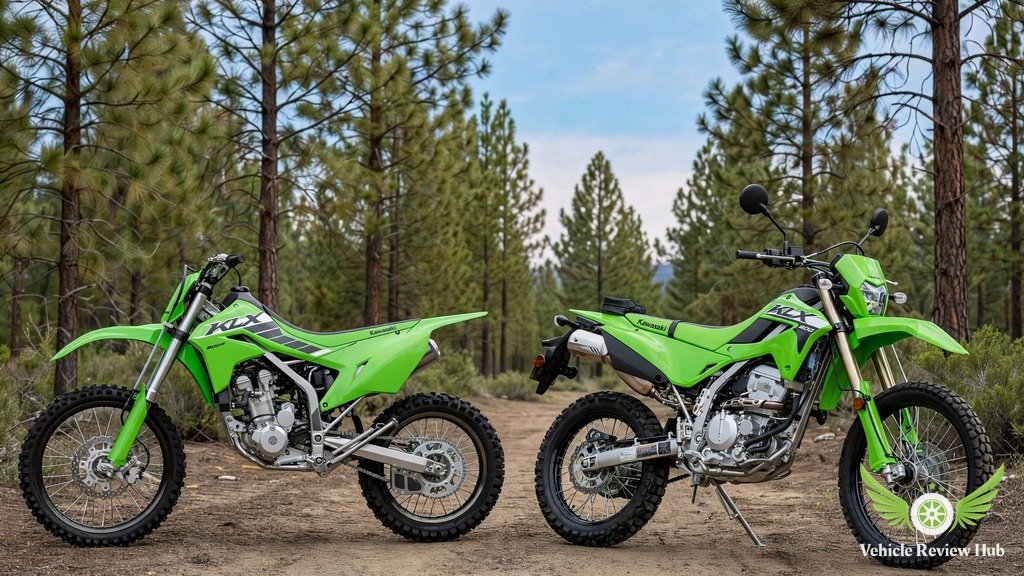
Engine, Specs and Performance Side by Side
The engines share a displacement and a name, and little else in tune. The street KLX300’s 2027 engine was revised to claim 26.8 horsepower at 8,000 rpm and 18.4 lb-ft at 6,800 rpm — the R did not receive that update, and those figures must never be attributed to the R. The street bike also holds the only instrumented dyno figure in the family: Cycle World’s in-house dyno measured the street KLX300 at 23.4 horsepower at 8,100 rpm and 15.4 lb-ft at 8,000 rpm. That 23.4-horsepower figure belongs to the street bike. The chassis is where the R earns its name: a 43 mm inverted fork with adjustable compression and 11.2 inches of travel at both ends against the street bike’s 10.0 inches of front travel and 9.1 inches at the rear. The weight gap is labelled here: the R at 282.2 lb is 19.9 lb lighter than the 302.1-lb dual-sport KLX300 on the 2021 to 2023 sheets, and 22.1 lb lighter than the 304.3-lb 2027 KLX300 ABS and the 304.3-lb KLX300SM. Cycle World’s dyno test of the two street bikes is the source for the 23.4-horsepower figure, and it stays a street-bike figure in this Kawasaki KLX300R comparison.
| Spec | Kawasaki KLX300R | Kawasaki KLX300 ABS |
|---|---|---|
| Engine | 292cc liquid-cooled DOHC 4-valve single | 292cc liquid-cooled DOHC 4-valve single, 2027 tune |
| Power (claimed) | No US figure; AU 21.4 kW (29 PS) | 26.8 hp at 8,000 rpm, 18.4 lb-ft at 6,800 rpm (2027) |
| Power (dyno) | No dyno figure exists for the R | 23.4 hp at 8,100 rpm, 15.4 lb-ft at 8,000 rpm (Cycle World) |
| Fork / travel | 43 mm inverted, compression-adjustable, 11.2 in | 43 mm inverted, compression-only, 10.0 in |
| Shock / travel | Uni-Trak piggyback, comp/rebound/preload, 11.2 in | Adjustable shock, 9.1 in |
| Equipment | No dash, no headlight, no mirrors, no plate | Digital dash, lights, mirrors, plate, ABS |
| Seat / weight | 35.4 in / 282.2 lb | 35.2 in / 304.3 lb (2027 ABS) |
Notes: the 26.8-horsepower claim and the 23.4-horsepower dyno figure both belong to the street KLX300, never to the R. The R is 19.9 lb lighter than the 302.1-lb dual-sport KLX300 and 22.1 lb lighter than the 304.3-lb 2027 KLX300 ABS and the KLX300SM. This Kawasaki KLX300R comparison uses delivered prices so the $200 gap is like-for-like.
Price, Equipment and Which Suits Which Rider
The street bike costs $200 more than the R on every basis: $5,999 plus $650, $6,649 delivered, against the R’s $5,799 plus $650, $6,449 delivered. The $200 buys a plate, a dash, lights, mirrors and ABS, and it costs 22.1 lb, 1.2 inches of front travel, 2.1 inches of rear travel and full suspension adjustability. Buy the street KLX300 if the bike must double as transport to the trailhead. Buy the R if the bike goes to the trail in a truck or trailer and the riding there is the point. One warning from this Kawasaki KLX300R comparison: do not buy the street bike expecting the R’s suspension, and do not buy the R expecting to ride it home on the road.
Kawasaki KLX300R Price and Value Compared
The R’s $6,449 delivered price is the middle of the trail-bike ladder. The R’s value case is that it is the cheapest bike on the ladder with liquid cooling and fully adjustable suspension at both ends. The KLX300R reliability guide covers what that $6,449 costs to keep, and this Kawasaki KLX300R comparison covers what it buys against the field.
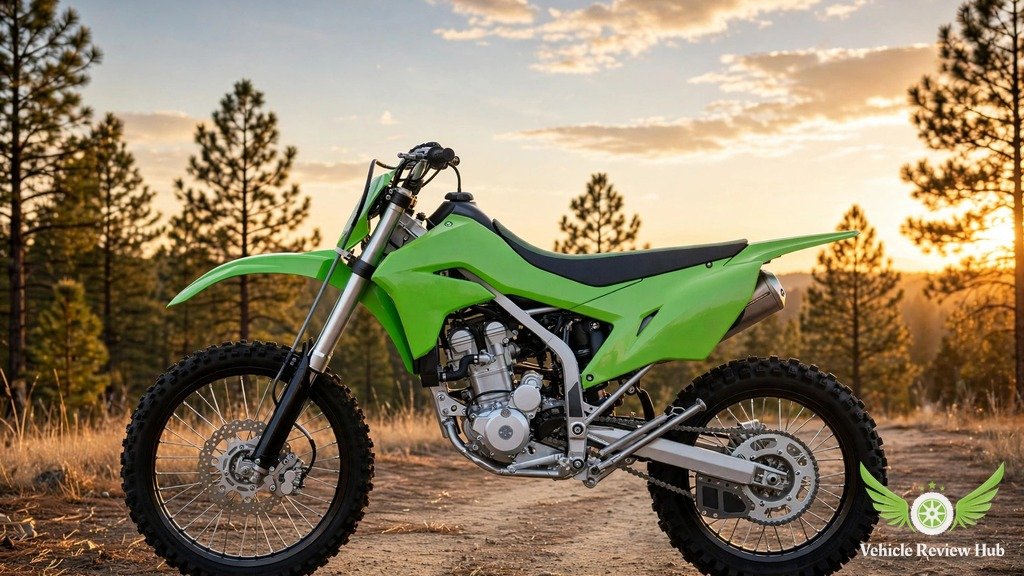
Race Enduros Now Start Near $9,300
The heading above says race enduros now start near $9,300, and the bike that puts a number on it is the 2027 Yamaha YZ250FX, which lists at $9,099 MSRP. That is $201 short of $9,300 on MSRP alone, and destination pushes the delivered figure past it. The YZ250FX is a full-size cross-country race bike — a 250cc four-stroke with a fully adjustable KYB fork, launch control and a 243-lb wet weight — and it is the cheapest race enduro in the class. Its bigger brother, the 2027 YZ450FX, lists at $10,499 MSRP. Both prices are confirmed by Dirt Bike Magazine’s 2027 Yamaha launch coverage. The gap from the R is the point: $9,099 against the R’s $5,799 is $3,300 on MSRP, and the delivered gap is wider still. What the race enduro buys is a lighter, faster, fully race-ready bike at 57 percent more money on MSRP. The R is not a race enduro and does not pretend to be — it is a trail bike with adjustable suspension at a trail-bike price, and the race enduro exists for the rider who has outgrown it. That is where this Kawasaki KLX300R comparison draws the line between the two classes.
Running Costs and Resale Value Compared
No running-cost dollar figure is printed here, because none exists as a tested fact for the R, and no resale percentage is printed either, for the same reason. What can be said honestly is that the R’s running costs are the costs of a simple single-cylinder trail bike: oil and a filter, a chain and sprockets, tyres and brake pads. On safety records, a search of the NHTSA recalls database returns zero recalls for the 2026 KLX300R, with the same search returning one campaign, 25V146000, for the 2024 Ninja 500 control bike — the zero is a search result with a working control, not proof that no recall will ever appear. The CPSC record is inconclusive, and this Kawasaki KLX300R comparison does not print “no CPSC recalls” as a verified fact. On resale, this Kawasaki KLX300R comparison claims no percentage, because none is published.
| Bike | 2027 MSRP | Destination | Delivered | Gap vs the R |
|---|---|---|---|---|
| Yamaha TT-R230 (2026) | $4,699 | $340 | $5,039 | $1,410 less |
| Honda CRF300F | $5,099 | $300 | $5,399 | $1,050 less |
| Kawasaki KLX230R | $4,999 | $435 | $5,434 | $1,015 less |
| Kawasaki KLX300R | $5,799 | $650 | $6,449 | — |
| Kawasaki KLX300 ABS | $5,999 | $650 | $6,649 | $200 more |
| Suzuki DR-Z4S | $8,999 | $600 | $9,599 | $3,150 more delivered |
Notes: all prices are 2027 figures except the TT-R230, which is a 2026 figure. The DR-Z4S gap is $3,200 on MSRP and $3,150 delivered — like-for-like in both cases. This Kawasaki KLX300R comparison prints no running-cost dollars and no resale percentage, because neither exists as a verified fact.
Kawasaki KLX300R Comparison Verdict and US Alternatives
The R wins this Kawasaki KLX300R comparison on the row that matters most to a trail rider: it is the only bike in its four-bike set with fully adjustable suspension at both ends, it is the only one with liquid cooling among the trail bikes, and it is the cheapest bike on the ladder that offers either. The KLX230R is cheaper and lighter, the CRF300F is cheaper and lower, and the street KLX300 is road-legal, but none of the three gives the rider the R’s suspension. That is the verdict of this Kawasaki KLX300R comparison.
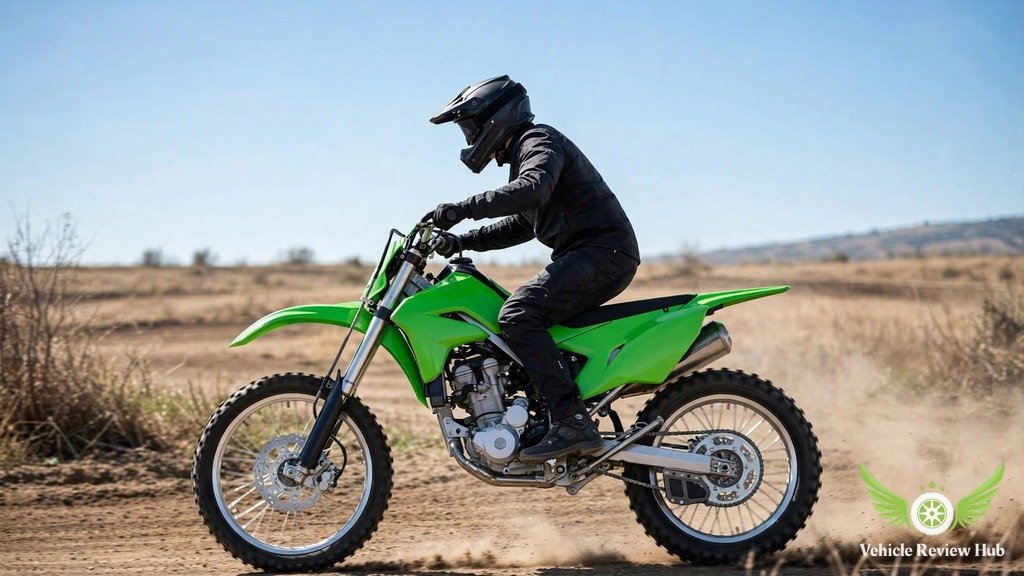
Verdict: The Gap Bike
The R is a gap bike. It sits between the $5,399-to-$5,434 air-cooled trail bikes and the $9,099 race enduros, and it fills that gap with liquid cooling, a bigger engine and adjustable suspension that no bike below it offers and no bike above it needs. The KLX300R performance guide covers what the engine does with that gap, and the buying decision is: buy the R if you ride trails hard enough to feel suspension and cooling — that is the buying rule of this Kawasaki KLX300R comparison — buy the CRF300F if $1,050 matters more than either, buy the 230R for the lightest bike, and buy the street KLX300 for a plate. Motorcycle.com’s 2020 review scored the R 85.75 out of 100 with value at a perfect 10 out of 10, and this Kawasaki KLX300R comparison agrees: at $6,449 delivered, it is the most capable trail bike under $6,500, and the only one with the suspension to prove it.
DR-Z4S Costs $3,150 More
The 2026 Suzuki DR-Z4S lists at $8,999 with a $600 destination charge, $9,599 delivered, per Dirt Rider’s first look. Against the R’s $5,799 MSRP and $6,449 delivered, the like-for-like gaps are $3,200 on MSRP ($8,999 minus $5,799) and $3,150 delivered ($9,599 minus $6,449). A $2,550 figure sometimes appears for this gap; it comes from subtracting the R’s delivered price from the DR-Z4S’s MSRP ($8,999 minus $6,449) — it mixes the two bases, and it understates the real gap by $600. This Kawasaki KLX300R comparison prints the like-for-like figures instead. The DR-Z4S is the alternative for the rider who needs a street-legal dual-sport and is willing to pay $3,150 delivered for it. That is the whole Kawasaki KLX300R comparison: the R is the gap bike, the DR-Z4S is the street-legal step above it, and the $3,150 — not $2,550 — is what the step costs.
Kawasaki KLX300R Comparison Frequently Asked Questions
These answers settle the R’s closest contests in this Kawasaki KLX300R comparison — the KLX230R below it, the Honda CRF300F beside it and the street KLX300 that shares its name — on price, suspension and weight.
KLX300R or KLX230R — which should I buy?
The R if the suspension matters more than $1,015; the 230R if $1,015 matters more than the suspension. The 2027 R lists at $5,799 plus $650, $6,449 delivered, against the 230R’s $4,999 plus $435, $5,434 delivered. What the extra $1,015 buys is liquid cooling, 59cc more engine, a 43 mm inverted fork instead of a 37 mm conventional one, and full suspension adjustability at both ends. The 230R answers on weight: at 262.4 lb it is 19.8 lb lighter than the R’s 282.2 lb.
KLX300R or Honda CRF300F — which is better value?
The Honda is the value pick and the R is the capability pick. The 2027 CRF300F lists at $5,099 plus $300, $5,399 delivered — $1,050 less than the R’s $6,449. The Honda is a 293cc air-cooled single with a 41 mm Showa fork with no adjustment, 9.5 inches of front travel and 9.1 at the rear, a 35.0-inch seat and 271 lb. What the extra $1,050 buys on the R is liquid cooling, a DOHC four-valve head, an inverted fork, 1.7 inches more front travel and 2.1 inches more rear travel, and full suspension adjustability at both ends. Neither maker publishes a horsepower figure for its bike, and this Kawasaki KLX300R comparison calls the $1,050 gap the price of the R’s capability.
KLX300R or street KLX300 — which one?
Buy the street KLX300 if the bike must double as transport to the trailhead; buy the R if the bike goes to the trail in a truck or trailer and the riding there is the point. The street bike costs $200 more on every basis: $5,999 plus $650, $6,649 delivered, against the R’s $6,449. The $200 buys a plate, a dash, lights, mirrors and ABS — and it costs 22.1 lb, 1.2 inches of front travel, 2.1 inches of rear travel and full suspension adjustability. Do not buy the street bike expecting the R’s suspension, and do not buy the R expecting to ride it home on the road. The street bike’s 26.8-horsepower 2027 claim and its 23.4-horsepower Cycle World dyno figure belong to the street bike, never to the R — a point this Kawasaki KLX300R comparison repeats because the two bikes share one name.
How does the KLX300R’s price compare across the whole trail ladder?
In this Kawasaki KLX300R comparison, the R’s $6,449 delivered sits in the middle of the trail-bike ladder. Below it: the Yamaha TT-R230 at $5,039 delivered (a 2026 figure), the Honda CRF300F at $5,399 and the KLX230R at $5,434, all 2027 figures. Above it: the street KLX300 ABS at $6,649 delivered, $200 more, and the Suzuki DR-Z4S at $9,599 delivered. The R is the cheapest bike on that ladder with liquid cooling and fully adjustable suspension at both ends.
Is the KLX300R worth it over a race enduro?
It depends on the rider. Race enduros start near $9,300, and the bike that puts a number on it is the 2027 Yamaha YZ250FX at $9,099 MSRP — a full-size cross-country race bike with a fully adjustable KYB fork and a 243-lb wet weight. The gap from the R is $3,300 on MSRP ($9,099 against $5,799). The R is not a race enduro and does not pretend to be: it is a trail bike with adjustable suspension at a trail-bike price, for the rider who has not outgrown it. The same like-for-like rule applies to the DR-Z4S: $3,200 more on MSRP and $3,150 more delivered than the R — not $2,550, a figure that mixes the DR-Z4S’s MSRP with the R’s delivered price.
Does the KLX300R hold its value, and what does it cost to run?
No resale percentage is published, so none is printed here — and no running-cost dollar figure exists as a tested fact for the R either. What can be said honestly is that the R’s running costs are the costs of a simple single-cylinder trail bike: oil and a filter, a chain and sprockets, tyres and brake pads. On safety records, no recall names the R, with the NHTSA search returning zero for the 2026 bike against a working control — but that zero is a search result, not proof. That is the honest close of this Kawasaki KLX300R comparison: buy the R for the suspension and the ride, not for a number on a chart.