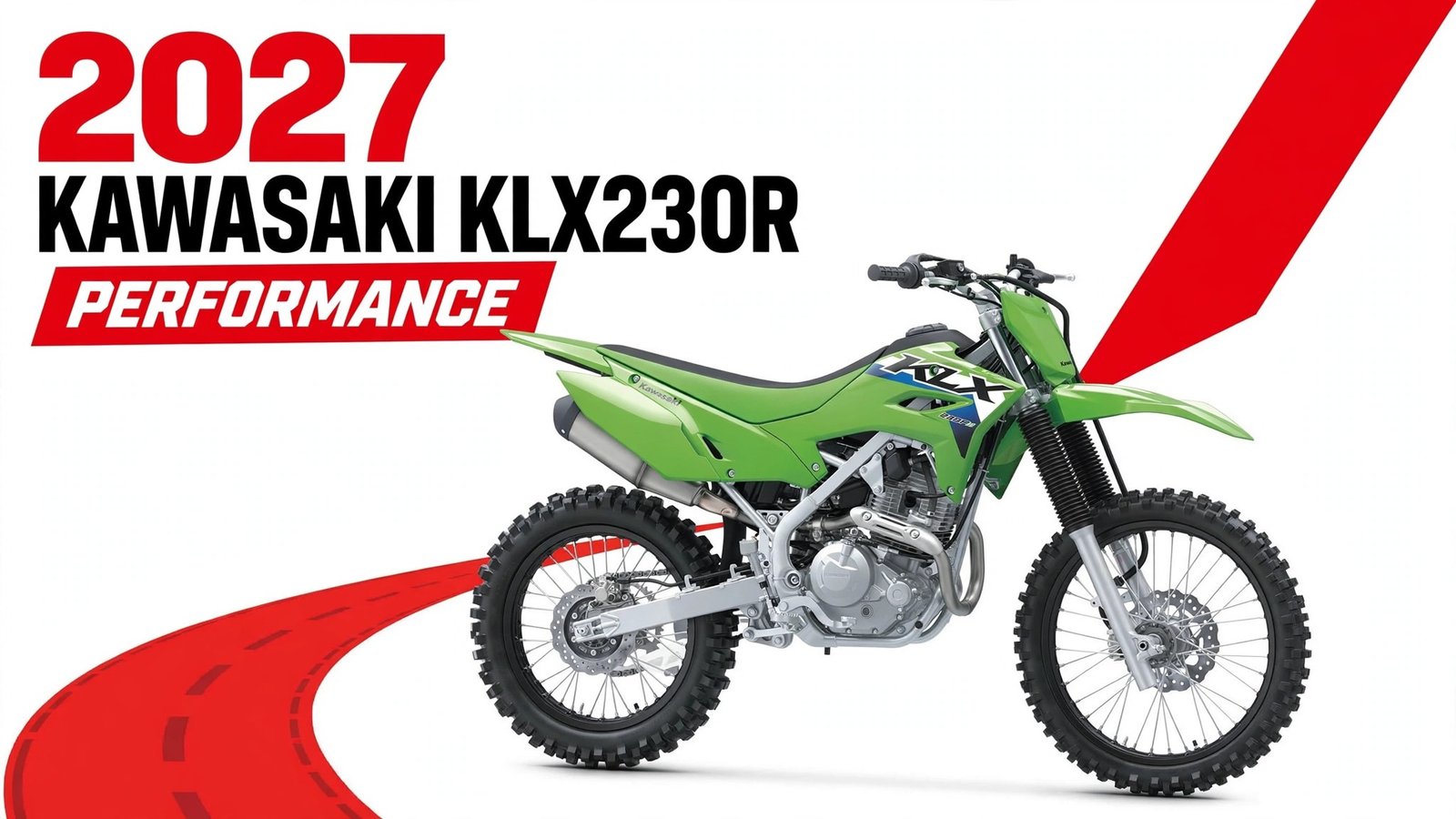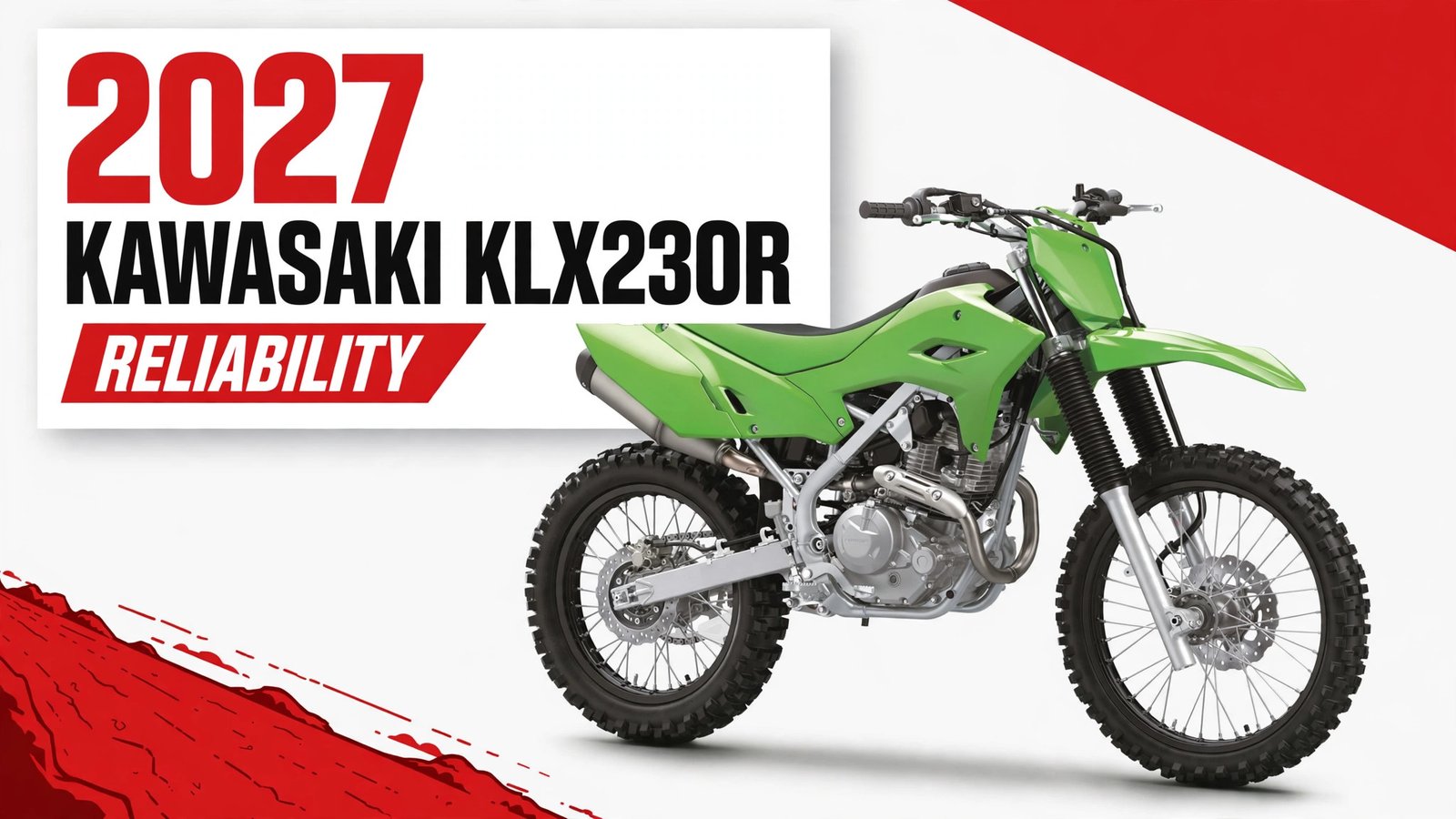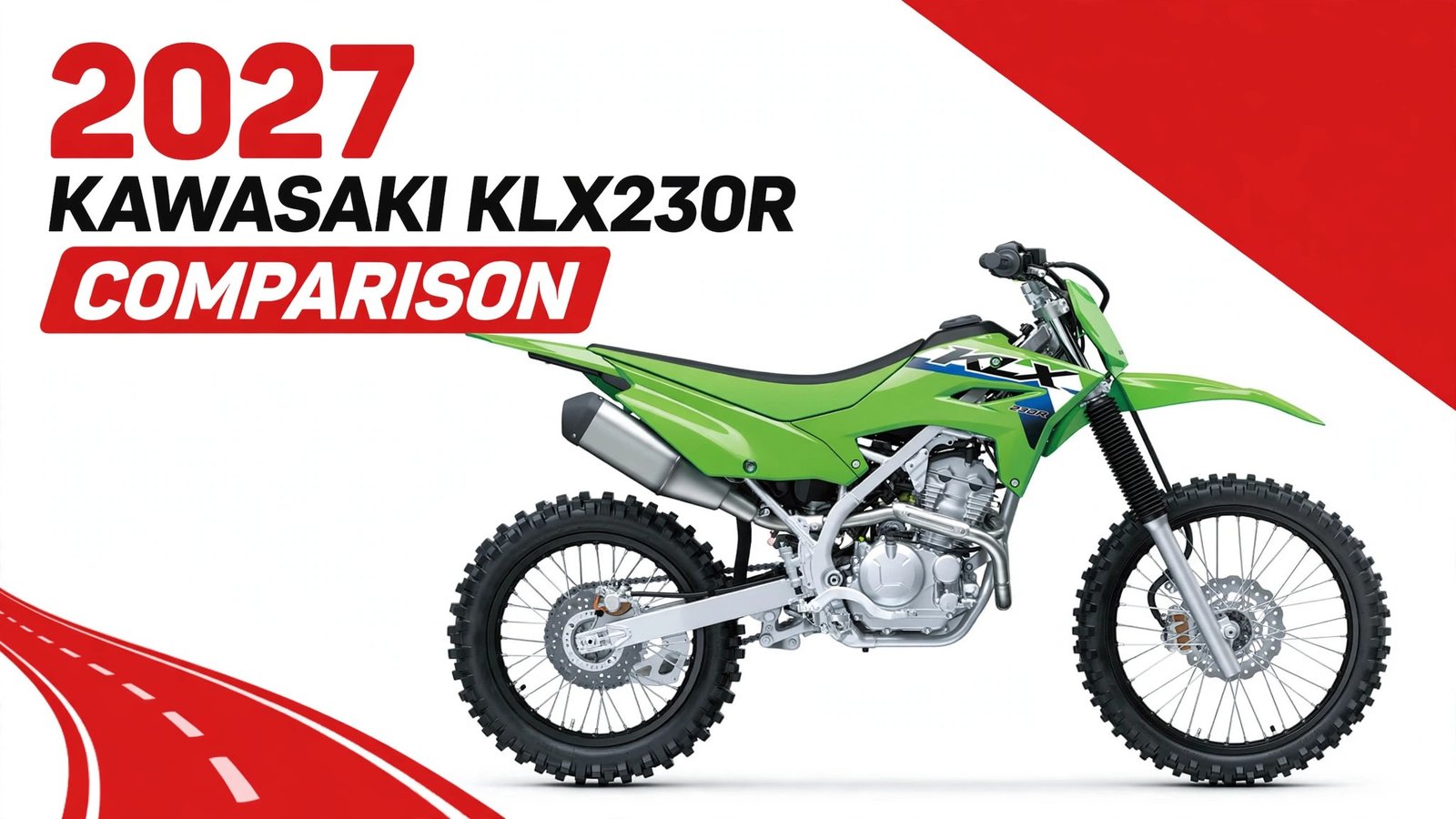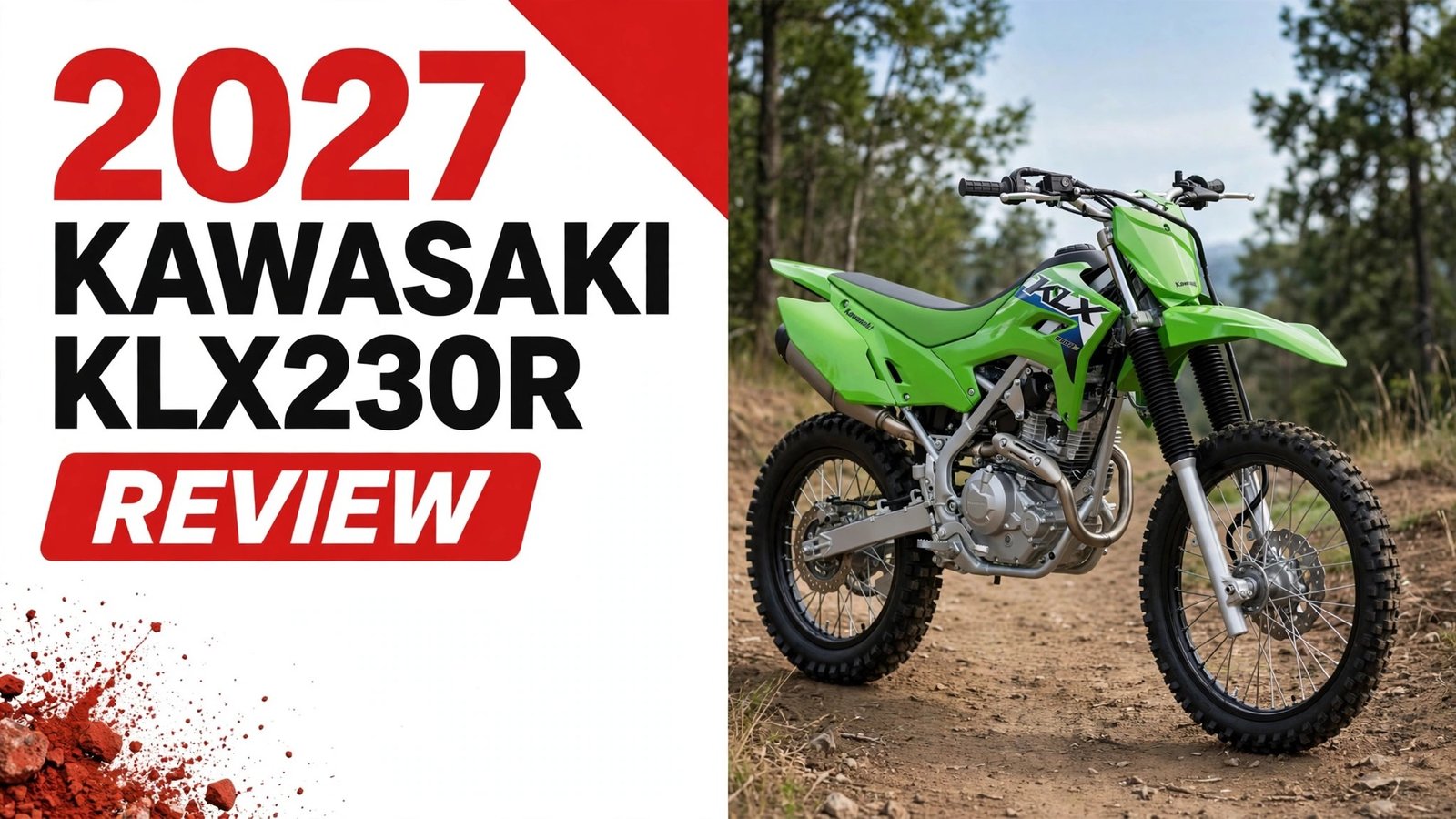
The 2027 Kawasaki KLX230R is a $4,999 off-road-only trail bike that was properly reworked for 2025, not just recoloured. This Kawasaki KLX230R review starts with the short answer: it is a simple, air-cooled, fuel-injected 233cc trail bike with a six-speed gearbox, electric start, no dash, no ABS and no street equipment. If you want a full-size trail bike that is easy to ride and simple to keep, it is one of the strongest options in its class. If you want power, a speedometer or a plate, look elsewhere.
What changed in 2025 is the reason this Kawasaki KLX230R review treats the current bike as a different machine from the 2020 original. Kawasaki added a counterbalancer, reworked the intake and the ECU, fitted a bigger steel tank, lowered the seat and added a keyed ignition. The price stayed at $4,999, and the destination charge for 2027 is $435, which makes $5,434 delivered. The rest of this Kawasaki KLX230R review works through the engine, the price by year, the spartan equipment, the riding position and the verdict, with every figure labelled by year and by source.
Kawasaki KLX230R Overview and Model-Year Updates
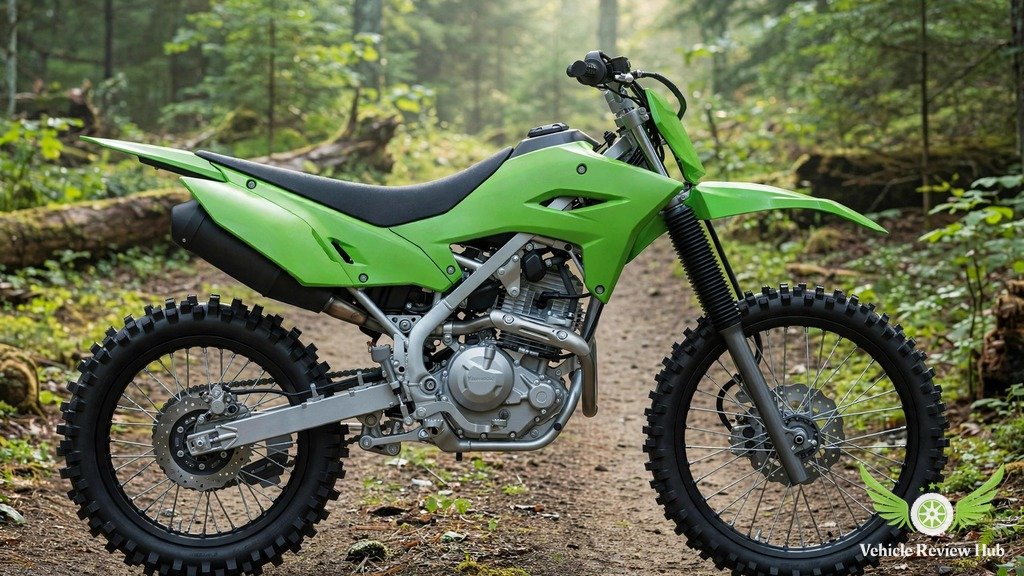
The KLX230R is the off-road member of Kawasaki’s KLX230 family, and it has been on sale in the United States since 2020. It shares its 233cc engine with the street-legal KLX230 dual-sport and the KLX300R, but it has no headlight, no mirrors, no turn signals and no licence plate, so it cannot be ridden on public roads. It is a trail bike for private land, trails and closed courses, and it is green-sticker legal in California. The 2025 update is the biggest change in its life.
The video below is Motorcyclist Magazine’s 2020 launch first ride, covering the KLX230, the KLX230R and the KLX300R together. It is a gen-1 test from the year the bike launched, not a review of the 2027 model, and the R segment is the part that shows what the original bike was like on the trail. This Kawasaki KLX230R review includes it because it is the clearest moving picture of the bike’s character at launch, before the 2025 changes.
Really Updated for 2025, Not Colours
The 2025 model year brought a real mechanical update, and the press coverage agrees on what changed. Ultimate Motorcycling’s 2025 review lists the counterbalancer first: a single-axis balancer that takes the buzz out of the 233cc single. Kawasaki also fitted a smaller 33 mm intake valve, narrowed the intake port and reworked the ECU. The chassis changed too. The seat dropped to 35.6 inches with thicker and wider foam, the footpegs moved back by about a third of an inch, and the handlebar moved forward an inch and half an inch higher. A new steel tank holds 2.0 gallons, up from the old 1.7-gallon plastic tank, and the bike gained a keyed ignition with a locking fuel cap. The rear shock finally got spring-preload adjustment.
None of that is a colour change, and the distinction matters because the gen-1 and gen-2 bikes do not share figures. The 2020 to 2024 bike had a 36.2-inch seat, a 1.7-gallon tank, a 26.5-degree rake and no counterbalancer, no keyed ignition and no shock preload. The 2025 bike has a 35.6-inch seat, a 2.0-gallon steel tank and a 25.4-degree rake. Wet weight rose slightly to 262 lb, and the wheelbase grew to 54.1 inches. Anyone comparing a used 2023 bike with a new 2027 bike needs to know they are comparing two different specifications, and this Kawasaki KLX230R review keeps the generations separate throughout.
Latest Year Is 2027, Non-ABS Labelled
The latest KLX230R on sale is the 2027 model, and it is the gen-2 bike with the 2025 updates carried over. This Kawasaki KLX230R review treats the 2027 model as the current bike throughout. Kawasaki lists it in Lime Green and Bright White for 2027, and the price is unchanged at $4,999 with a $435 destination charge, which makes $5,434 delivered. The 2026 model was also $4,999, but its destination charge for the R was not confirmed separately, so this Kawasaki KLX230R review prints the 2026 price as MSRP only. The bike carries no ABS, and there is no option to add it, which is why it is labelled non-ABS.
The table below lines up the model years.
| Model year | MSRP | Destination | What changed |
|---|---|---|---|
| 2020 | $4,399 | — | Launch; gen-1, 36.2 in seat, 1.7 gal tank |
| 2023 | $4,749 | — | Gen-1; R S also $4,749 |
| 2025 | $4,999 | Not confirmed separately | Gen-2 update; price cut; 35.6 in seat, 2.0 gal steel tank |
| 2026 | $4,999 | Not confirmed for the R | Gen-2 carried over; MSRP only |
| 2027 | $4,999 | $435 | Gen-2; $5,434 delivered; Lime Green, Bright White |
Notes: the 2024 prices ($5,149 for the R) are derived from the reported 2025 price cut and are not Kawasaki-published, so they are not printed as official figures in this Kawasaki KLX230R review. The 2027 destination charge of $435 is confirmed by two dealer listings; the 2026 destination charge for the R was not confirmed, and the street S sibling’s $435 charge is not carried over to the R.
Kawasaki KLX230R Engine and Specifications
The engine is the heart of this Kawasaki KLX230R review, and it is also the part most often misreported. It is a 233cc air-cooled single with fuel injection, a six-speed gearbox and electric start, shared across the KLX230 family. What it is not is powerful on paper: Kawasaki publishes no horsepower figure for the R at all, and the only rear-wheel numbers that exist come from magazine dyno tests of the gen-1 bike. The 2025 engine changes mean those older dyno figures do not directly apply to the current bike, and this Kawasaki KLX230R review prints no gen-2 dyno figure because none exists anywhere.
233cc Injected, 32 mm Throttle Body
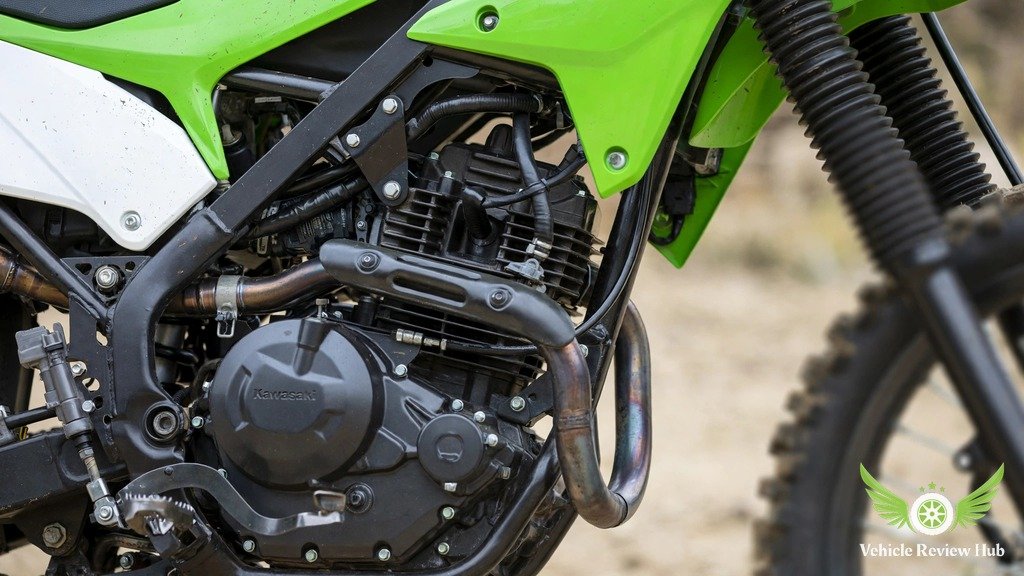
The engine is a 233cc air-cooled SOHC two-valve single, with a 67.0 by 66.0 mm bore and stroke and a 9.4:1 compression ratio. Fuel delivery is Kawasaki’s DFI system through a 32 mm Keihin throttle body, and the gearbox is a six-speed with a wet multi-disc clutch and chain final drive. The gearing is 46/13, a 3.538 final reduction, and first gear is walking-speed slow, which suits tight, technical ground. Electric start is standard, and there is no kick starter.
Two numbers in the press need care. First, some Kawasaki marketing and dealer copy prints “223cc”, which is a misprint; the engine is 233cc, and this Kawasaki KLX230R review uses 233cc throughout. Second, the horsepower figures must stay attached to their sources. Dirt Rider’s 2021 dyno test recorded 17.3 hp at 7,800 rpm and 13.3 lb-ft at 6,300 rpm. Cycle World’s Dynojet 250i test of a 2022 bike recorded 17.9 hp at 7,700 rpm and 14.4 lb-ft at 6,100 rpm. Those are two different publications testing two different model years. The street KLX230 S publishes 17 hp at 8,000 rpm, but that is the street bike’s figure, never the R’s. For the 2025 and later engine there is no published dyno figure at all, and this Kawasaki KLX230R review prints none.
Built in Indonesia, Not Thailand
The KLX230 family is built in Indonesia, not Thailand, and the proof, as this Kawasaki KLX230R review notes, is stamped on the bike. Dealer VINs start with the prefix MH4, the world manufacturer identifier for PT Kawasaki Motor Indonesia, which builds the KLX230 family. The 2027 model codes are KLX232NVFNL for the Lime Green R and KLX232NVFNN for the Bright White R.
| Specification | 2027 KLX230R (gen 2) | 2020–2024 KLX230R (gen 1) |
|---|---|---|
| Engine | 233cc air-cooled SOHC 2-valve single | 233cc air-cooled SOHC 2-valve single |
| Bore x stroke | 67.0 x 66.0 mm | 67.0 x 66.0 mm |
| Compression | 9.4:1 | 9.4:1 |
| Fuel system | DFI, 32 mm Keihin throttle body | DFI, 32 mm Keihin throttle body |
| Intake valve | 33 mm, narrowed port, reworked ECU | 37 mm |
| Gearbox | 6-speed, wet multi-disc manual clutch | 6-speed, wet multi-disc manual clutch |
| Final drive | Chain, 46/13 (3.538) | Chain, 46/13 (3.538) |
| Starting | Electric start only | Electric start only |
| Counterbalancer | Single-axis, fitted 2025 | None |
| Brakes | 240 mm petal front, 220 mm petal rear | 240 mm petal front, 220 mm petal rear |
| Wheels / tyres | 21/18 in, Dunlop D952 80/100-21 / 100/100-18 | 21/18 in |
| Seat height | 35.6 in | 36.2 in |
| Fuel tank | 2.0 gal steel (1.9 gal CA) | 1.7 gal plastic |
| Wet weight | 262 lb (+2 lb CA) | 253.6 lb (258 lb CA) |
| Wheelbase | 54.1 in | 53.5 in |
| Rake / trail | 25.4 degrees / 4.2 in | 26.5 degrees |
| Suspension travel | 9.8 in front / 9.8 in rear | 9.8 in front / about 9.9 in rear |
| Ground clearance | 11.8 in | — |
Notes: the dyno figures in this Kawasaki KLX230R review are gen-1 only: Dirt Rider 2021 at 17.3 hp and Cycle World 2022 at 17.9 hp. No dyno figure exists for the 2025 and later engine. The “223cc” figure seen in some marketing copy is a misprint; the engine is 233cc. Kawasaki publishes no horsepower figure for the R, and the street S model’s published 17 hp is not the R’s figure.
Kawasaki KLX230R Price and Market Availability
Price is one of the strongest parts of this Kawasaki KLX230R review. At $4,999 the 2027 bike costs the same as it did in 2025, and it undercuts most full-size trail rivals once destination is counted. What follows in this Kawasaki KLX230R review is the price story year by year, with the destination charge labelled for the one year it is confirmed.
Kawasaki KLX230R Price in the USA: $4,999
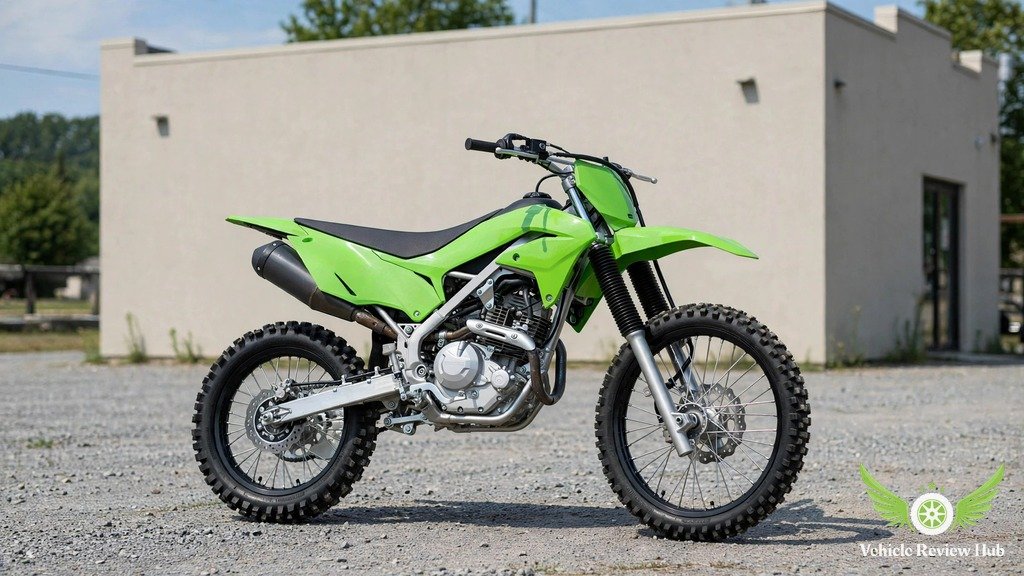
The 2027 KLX230R lists at $4,999, and the destination charge for 2027 is $435, which makes $5,434 delivered before tax, title and any dealer fees. That destination figure is confirmed by two dealer listings. The 2025 bike was also $4,999, a price cut from 2024, and the 2026 bike held the same MSRP. Three model years at the same price, while the bike gained a counterbalancer, a steel tank and a keyed ignition, is unusual in this market, and it is the main reason the value case in this Kawasaki KLX230R review is as strong as it is.
Two warnings belong here. First, the $435 destination charge is a 2027 figure. The 2026 destination charge for the R was not confirmed separately, and this Kawasaki KLX230R review does not print a delivered price for 2026. The street-legal KLX230 S sibling does carry a $435 destination charge for 2026, but a sibling’s charge is not the R’s charge, and carrying it across would be guessing. Second, dealer fees are not Kawasaki charges. One dealer listing shows $355.63 in setup and $399 in documentation fees, and those vary by dealer, so they are ignored in the delivered prices in this Kawasaki KLX230R review.
Launch Price Was $4,399 in 2020
When the KLX230R launched in 2020 it cost $4,399, and four sources agree on that figure: RevZilla’s first ride, Motorcycle.com, Motorcyclist and Ultimate Motorcycling. By 2023 the price had risen to $4,749, with the low-seat R S at the same figure. The 2024 price was $5,149, but that number is derived from the reported 2025 price cut and was never published by Kawasaki, so this Kawasaki KLX230R review labels it as derived and does not present it as an official price. The 2025 cut back to $4,999 was reported by Ultimate Motorcycling, Motorcycle.com and Cycle News, and the price has held there through 2027.
| Year | MSRP | Destination | Delivered |
|---|---|---|---|
| 2020 | $4,399 | — | — |
| 2023 | $4,749 | — | — |
| 2024 | $5,149 (derived) | — | — |
| 2025 | $4,999 | Not confirmed separately | — |
| 2026 | $4,999 | Not confirmed for the R | — |
| 2027 | $4,999 | $435 | $5,434 |
Notes: the 2024 MSRP of $5,149 is derived from the reported 2025 price cut and is not a Kawasaki-published figure. The 2027 destination charge of $435 is confirmed by two dealer listings, while the 2026 destination charge for the R was not confirmed, so no delivered price is printed for 2026 in this Kawasaki KLX230R review. Dealer setup and documentation fees are not Kawasaki charges and are excluded from the delivered prices.
Kawasaki KLX230R Design, Features and Technology
The design of the KLX230R is deliberately spartan, and that is the point. This is a trail bike with modern angular MX-style shrouds, a steel tank, a 37 mm fork and petal disc brakes, and almost nothing else. There is no headlight, no mirrors, no turn signals and no digital display, and the 2025 update added a keyed ignition rather than any electronics. What the bike does have is a counterbalanced engine, a six-speed gearbox and a chassis that was reworked for 2025, and this Kawasaki KLX230R review judges the design on that basis: what it gives a trail rider, and what it honestly leaves out.
No Dash At All: Lamps Only
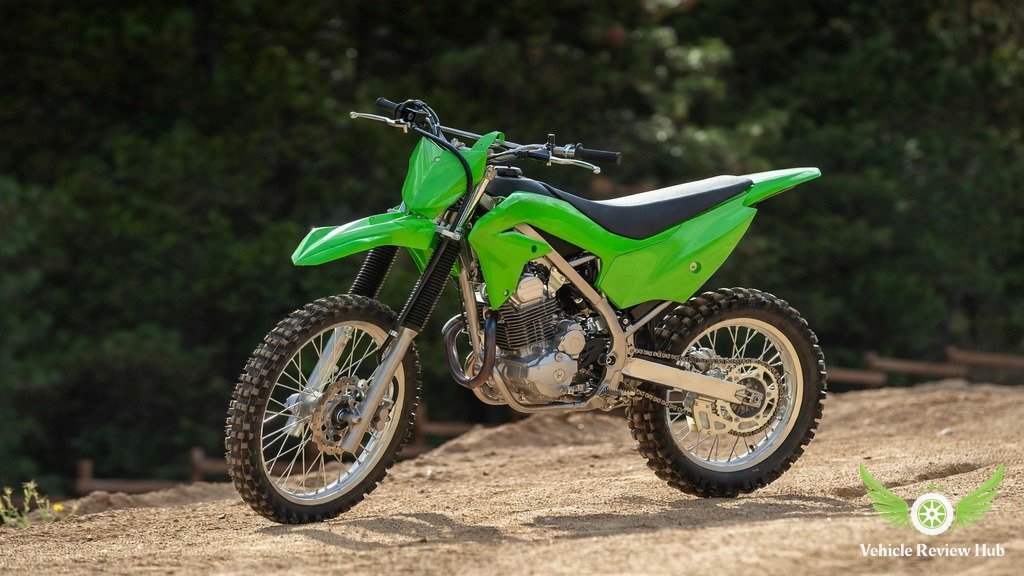
The KLX230R has no dash at all. There is no speedometer, no odometer and no hour meter; the only instruments are indicator lamps for power, low fuel and FI warning, with a check-engine lamp added for 2025. That means the bike cannot tell you how fast you are going, how far you have ridden or how many hours are on the engine, and owners who want to track service hours have to do it themselves. For a buyer coming from a dual-sport, the missing dash is the single most surprising feature in this Kawasaki KLX230R review, and the clearest sign that this is a closed-course trail bike.
The practical consequence is simple. You cannot plan a ride by the odometer, because there is not one, and you cannot prove a top speed, because there is no speedometer to read. This Kawasaki KLX230R review treats the missing dash as a trade-off rather than a defect: it keeps the bike light, cheap and simple, but a buyer who wants to know their speed or hours will need their own solution.
No ABS, and No Option to Add It
The KLX230R has no ABS in any model year, and there is no option to add it. The brakes are a 240 mm petal front disc with a dual-piston caliper and a 220 mm petal rear disc with a single-piston caliper, the same in both generations. On dirt the absence of ABS is not a disadvantage: experienced trail riders prefer to control the rear brake themselves. The point that needs stating plainly is that the R’s lack of ABS is not a cost-cutting omission on a road bike. It is the correct specification for an off-road-only machine, as this Kawasaki KLX230R review notes, and the street KLX230 models are the ones that carry ABS.
The confusion comes from the family recall, and it is worth clearing up here. In June 2022 Kawasaki recalled 1,923 street bikes under campaign 22V-397 because the wrong front brake rotor had been fitted to the KLX230 ABS and KLX230 S ABS. The recall named the street ABS bikes only, never the KLX230R, which has no ABS and a different brake specification. This Kawasaki KLX230R review states that plainly because the recall is sometimes listed against the whole KLX230 family.
| Feature | KLX230R | Street KLX230 S (for contrast) |
|---|---|---|
| Dash | Indicator lamps only; no speedometer, odometer or hour meter | Digital display (Sherpa S adds Rideology app) |
| ABS | None, no option | ABS fitted (Sherpa S ABS standard) |
| Headlight / mirrors / signals | None fitted | LED headlight, mirrors, turn signals |
| Licence plate | None; off-road only | Plated; street legal |
| Front brake | 240 mm petal disc, dual-piston caliper | Disc brake with ABS |
| Rear brake | 220 mm petal disc, single-piston caliper | Disc brake with ABS |
Notes: the KLX230R has no headlight, no mirrors, no turn signals and no dash in any model year, and this Kawasaki KLX230R review treats that as the bike’s intended specification rather than a missing feature. Campaign 22V-397 named the street KLX230 ABS and KLX230 S ABS models only; it did not name the KLX230R.
Kawasaki KLX230R Riding Experience and Comfort
The riding experience is where the 2025 update pays off most clearly. The lower seat, thicker foam, moved footpegs and forward handlebar all change how the bike fits, and the counterbalancer takes the edge off the single-cylinder buzz that made the gen-1 bike tiring. This Kawasaki KLX230R review rates the riding position as the bike’s biggest improvement since launch, and the reason a taller or newer rider should look at the 2025 and later bike before a used gen-1 machine.
Seat 35.6 Inches, Tank Now 2.0 Gallons
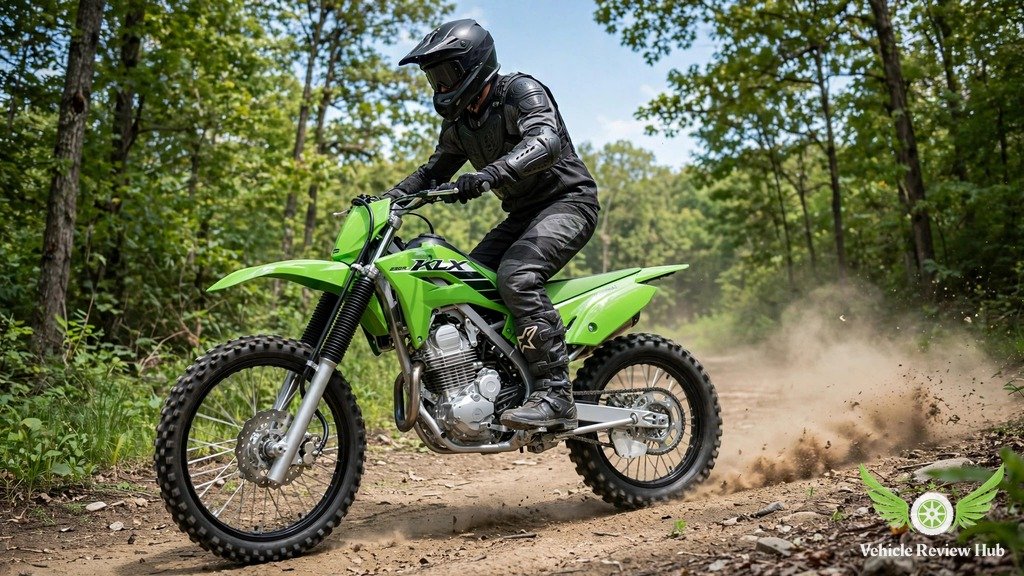
The 2025 seat is 35.6 inches high, down from 36.2 inches on the gen-1 bike, and the foam is thicker and wider, so it is both lower and more comfortable. That matters because the KLX230R is a full-size trail bike, and a 36.2-inch seat puts many riders on tiptoes at a stop. The lower seat, with the footpegs back and the handlebar forward and higher, gives a more relaxed standing position. The steel tank holds 2.0 gallons, up from 1.7, and changes the feel of the bike between the knees. The California version holds 1.9 gallons. No tested fuel range can be printed for this Kawasaki KLX230R review, because no tester has measured the R’s fuel economy, and the 70 mpg figure found online comes from the street Sherpa S, not the R.
Low-Seat R S Costs the Same
The low-seat twin is the KLX230R S, and it costs exactly the same: $4,999 in 2025 and 2027, with the same $435 destination charge for 2027. The S is the same off-road-only bike with a lower seat at 34.4 inches, shorter suspension travel at 8.7 inches front and 8.5 inches rear, and 10.6 inches of ground clearance. It is the same bike made shorter for riders who need the extra reach to the ground. That is the whole point of the S, and this Kawasaki KLX230R review stresses it because the name causes confusion: the off-road KLX230R S and the street-legal KLX230 S are different bikes, and the street S costs $5,199 for 2026 plus $435 destination. The off-road S is the one that costs the same as the R, and it is the one a shorter rider should ask for.
Kawasaki KLX230R Review: Pros, Cons and Verdict
The verdict of this Kawasaki KLX230R review is that the 2027 bike is the best KLX230R yet, and the 2025 update is the reason. It is still a simple, slow, spartan trail bike, but it is now smoother, lower, better equipped and no more expensive than before. The buyer who wants a friendly full-size trail bike will find very little to complain about. The buyer who wants power, instruments or a plate should buy something else, and this Kawasaki KLX230R review makes no apology for that: the bike was never trying to be those things.
Main Advantages and Limitations of the Kawasaki KLX230R
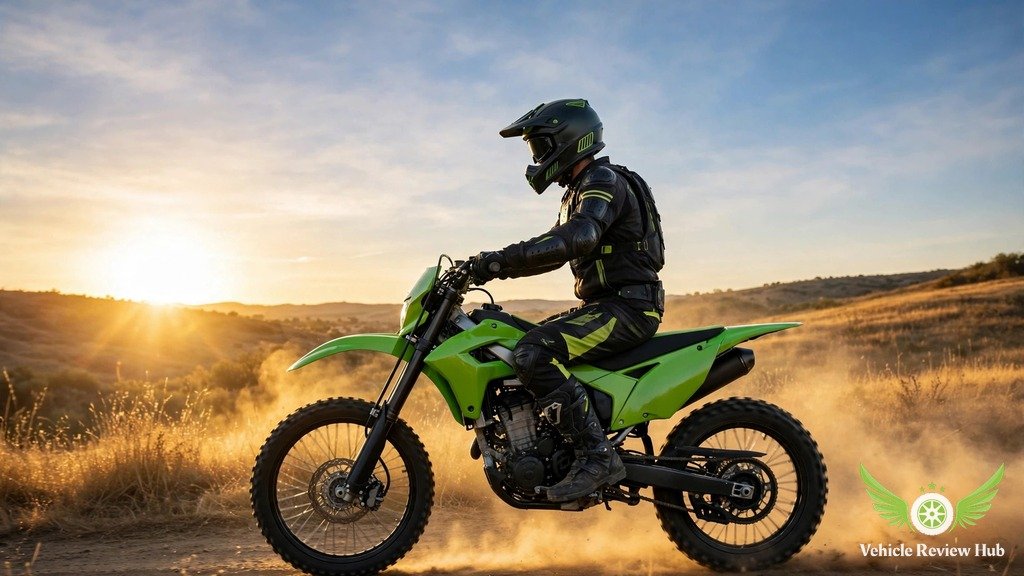
The advantages in this Kawasaki KLX230R review start with the price and the simplicity. At $4,999 with a $435 destination charge, the 2027 bike is $5,434 delivered, and the 2025 update added a counterbalancer, a steel tank, a keyed ignition and a lower seat without raising the price. The fuel-injected 233cc engine starts easily, the six-speed gearbox gives a proper low first gear for tight trails, and the bike weighs 262 lb wet. The limitations are the mirror image: no published horsepower, no dyno figure for the current engine, no speedometer or hour meter, no ABS and no road legality of any kind. The suspension is soft and mostly non-adjustable, with only rear spring preload added in 2025, and the 37 mm fork has nothing to adjust at all.
| Advantages | Limitations |
|---|---|
| $4,999 MSRP held since 2025; $5,434 delivered for 2027 | No published horsepower; no gen-2 dyno figure exists |
| Counterbalancer, steel 2.0 gal tank, keyed ignition from 2025 | No dash: no speedometer, odometer or hour meter |
| Lower 35.6 in seat with thicker foam; low-seat S at same price | No ABS, no headlight, no mirrors; off-road only |
| Fuel-injected 233cc single, 6-speed, electric start, 262 lb wet | Soft 37 mm fork with nothing to adjust; limited suspension |
Notes: the verdict in this Kawasaki KLX230R review rests on the 2025 and later bike. A used gen-1 bike lacks the counterbalancer, steel tank, keyed ignition and lower seat, and its dyno figures do not apply to the current engine. No resale percentage or used-price band is printed, because none was verified.
6 Month Limited Warranty
The KLX230R carries a 6 Month Limited warranty, which this Kawasaki KLX230R review notes is short by road-bike standards and normal for an off-road trail bike. It covers defects in materials and workmanship for six months, the same warranty the KLX140R family carries. For the full maintenance picture, the Kawasaki KLX230R reliability guide sets out the service schedule and the checks that matter before paying, and the Kawasaki KLX230R performance guide has the dyno figures and the top-speed evidence behind this Kawasaki KLX230R review. The step down in the family is the Kawasaki KLX140R L review, and the Indonesian carburetted line is covered by the Kawasaki KLX150 review.
Kawasaki KLX230R Review Frequently Asked Questions
These answers cover the questions buyers ask first about the 2027 KLX230R in this Kawasaki KLX230R review — price, road legality, the 2025 update, and the low-seat option.
How much does the 2027 Kawasaki KLX230R cost?
$4,999 MSRP, plus a $435 destination charge, which makes $5,434 delivered before tax, title and dealer fees. The price has held at $4,999 since the 2025 cut. The 2026 bike was the same MSRP, but its destination charge for the R was not confirmed separately, so this Kawasaki KLX230R review prints no delivered price for 2026.
Is the KLX230R street legal?
No. It has no headlight, no mirrors, no turn signals and no licence plate, so it cannot be ridden on public roads. It is an off-road-only trail bike for private land, trails and closed courses, and it is green-sticker legal in California.
What changed on the KLX230R for 2025?
The 2025 update was mechanical, not cosmetic. Kawasaki added a single-axis counterbalancer, fitted a smaller 33 mm intake valve with a narrowed intake port and a reworked ECU, and lowered the seat to 35.6 inches with thicker, wider foam. The plastic 1.7-gallon tank became a 2.0-gallon steel tank, the bike gained a keyed ignition with a locking fuel cap, and the rear shock finally got spring-preload adjustment — the biggest change in the bike’s life, and the reason this Kawasaki KLX230R review treats the current bike as a different machine from the 2020 original.
What engine does the KLX230R have?
A 233cc air-cooled SOHC two-valve single with digital fuel injection through a 32 mm Keihin throttle body, a six-speed gearbox and electric start only — there is no kick starter. Kawasaki publishes no horsepower figure for the R, and this Kawasaki KLX230R review prints no dyno figure for the 2025-and-later engine, because none exists; the only rear-wheel numbers are magazine dyno tests of the gen-1 bike.
Does the KLX230R have ABS or a dash?
Neither. It has no ABS in any model year and no option to add it, and it has no dash at all — no speedometer, no odometer and no hour meter. The only instruments are indicator lamps for power, low fuel and fuel-injection warning, with a check-engine lamp added for 2025.
Is there a low-seat version?
Yes — the KLX230R S, the off-road low-seat twin, costs exactly the same $4,999, with the seat at 34.4 inches, shorter travel at 8.7 inches front and 8.5 inches rear, and 10.6 inches of ground clearance. Do not confuse it with the street-legal KLX230 S dual-sport, which costs $5,199 for 2026 plus $435 destination and carries a plate and ABS.