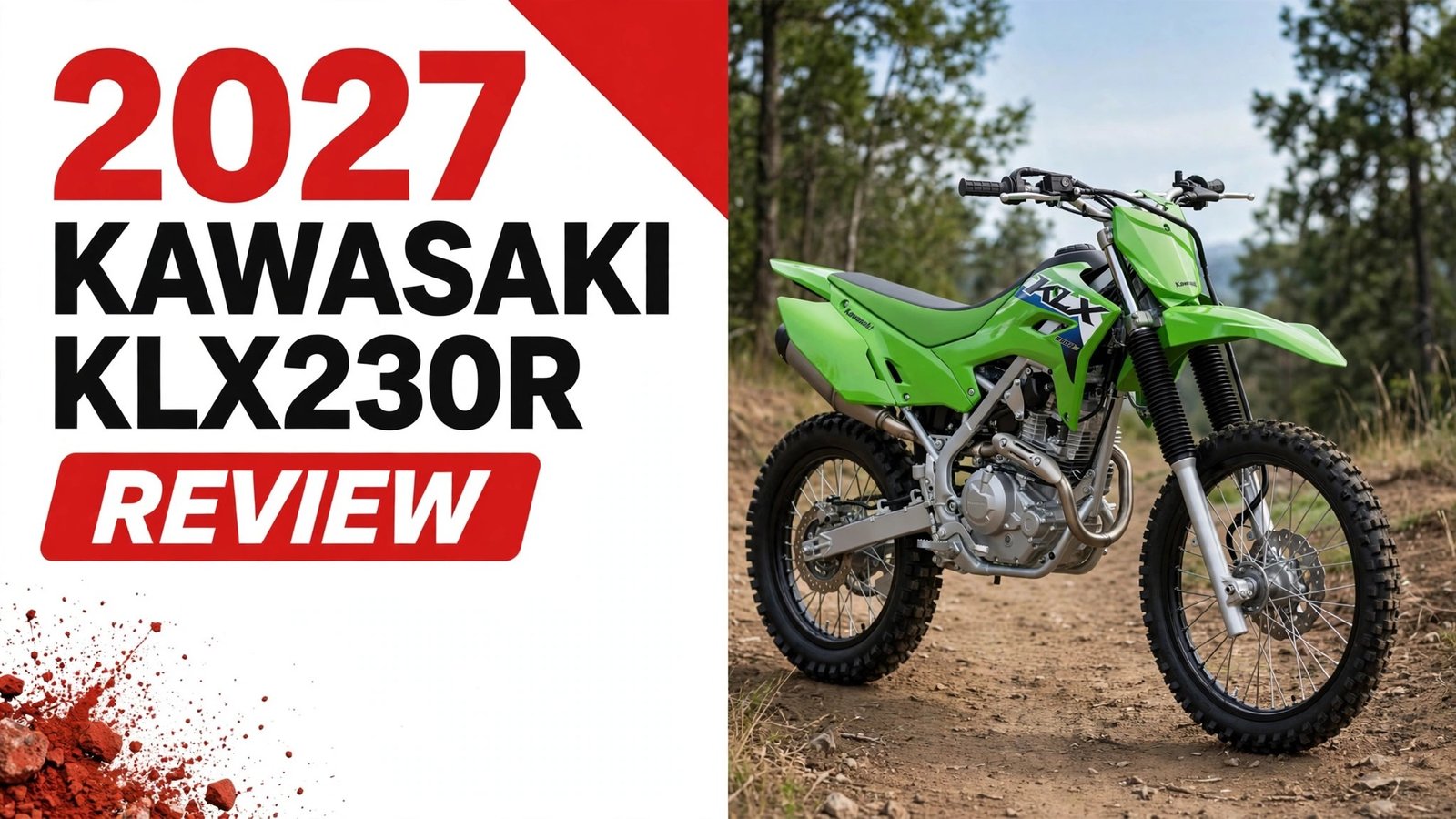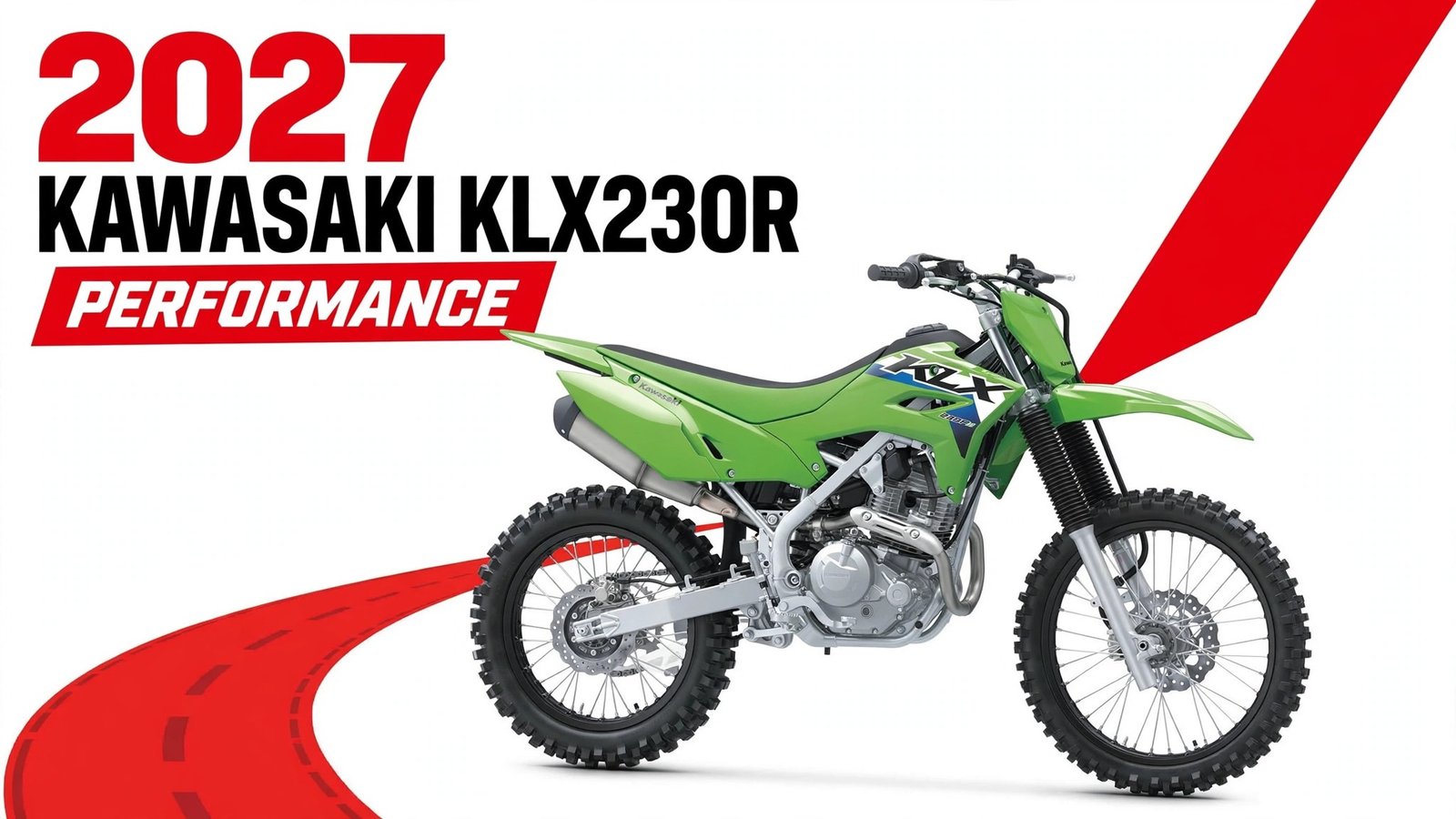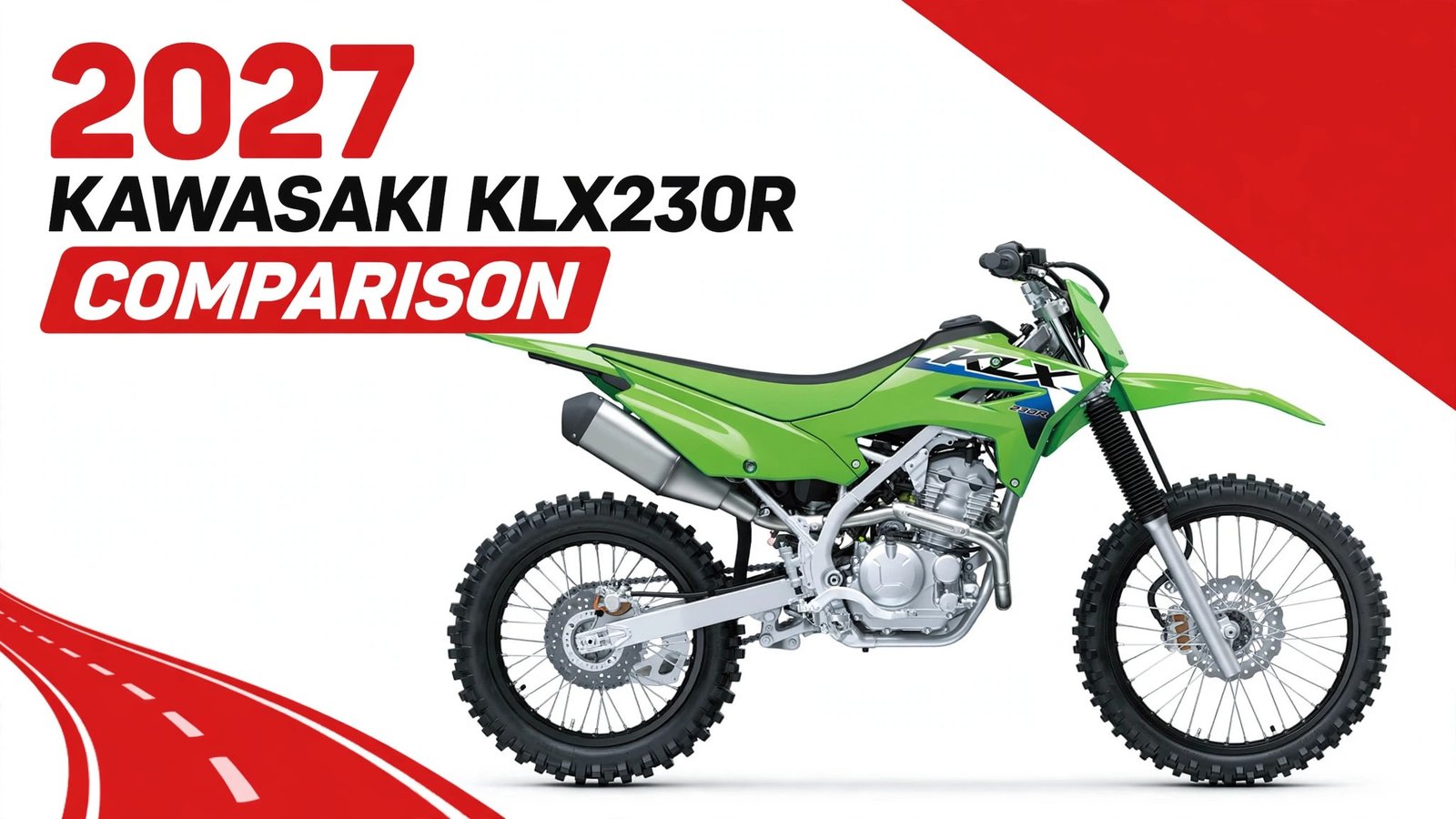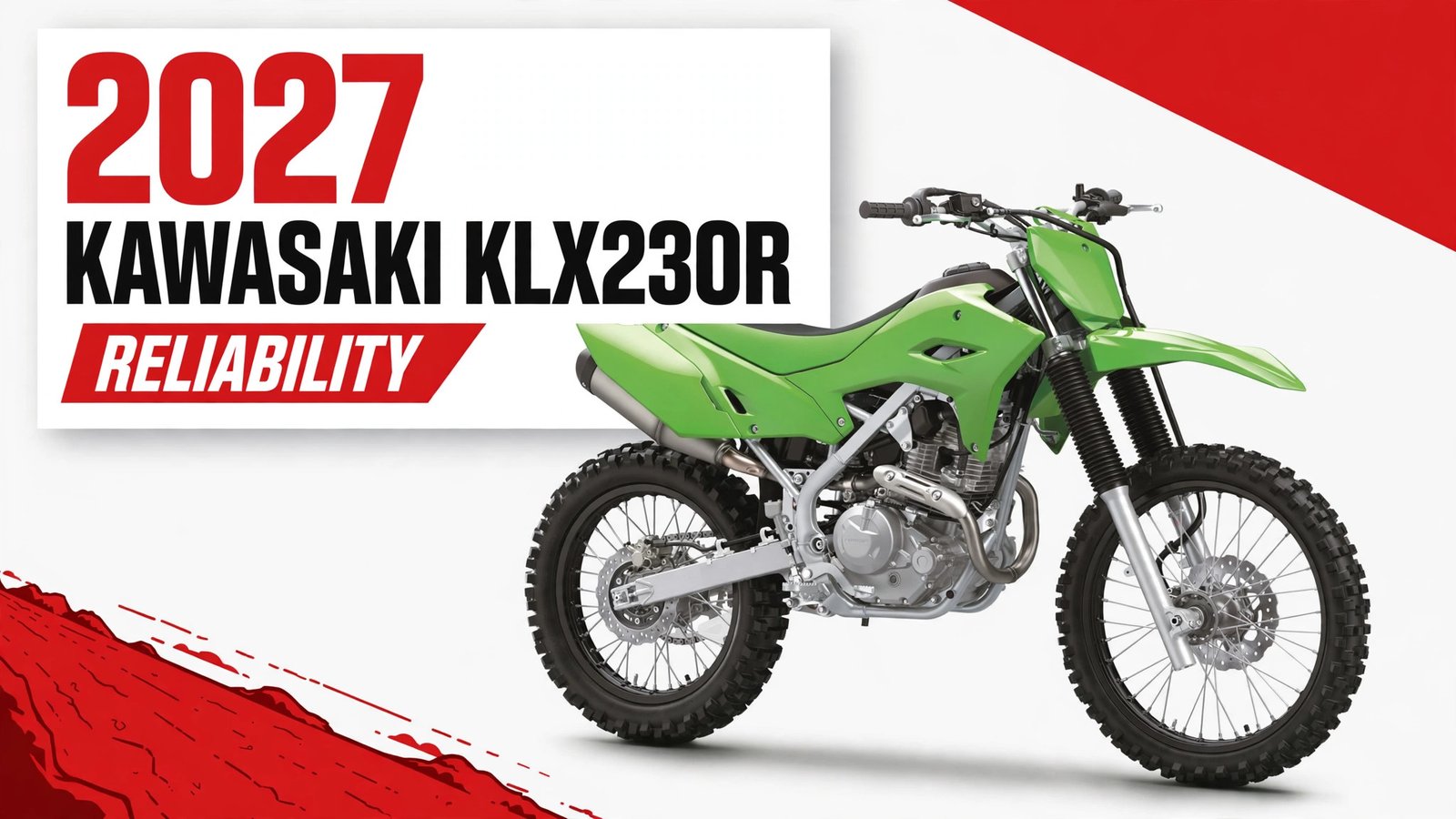
The short answer on Kawasaki KLX230R reliability is a good one: no recall in any source consulted names the KLX230R itself. The only recall in the family, campaign 22V-397, names the street KLX230 ABS bikes, not the off-road R, and the two recalls on the newer W230 belong to a different bike entirely. What this Kawasaki KLX230R reliability guide cannot do is quote a factory service chart, because no retrievable copy of the R’s own chart could be verified. The bike itself is simple — a 233cc air-cooled single with no dash, no ABS and no coolant to service — and this Kawasaki KLX230R reliability guide works with what is verified, labels what is not, and never prints a figure it cannot stand behind.
Kawasaki KLX230R Reliability Overview
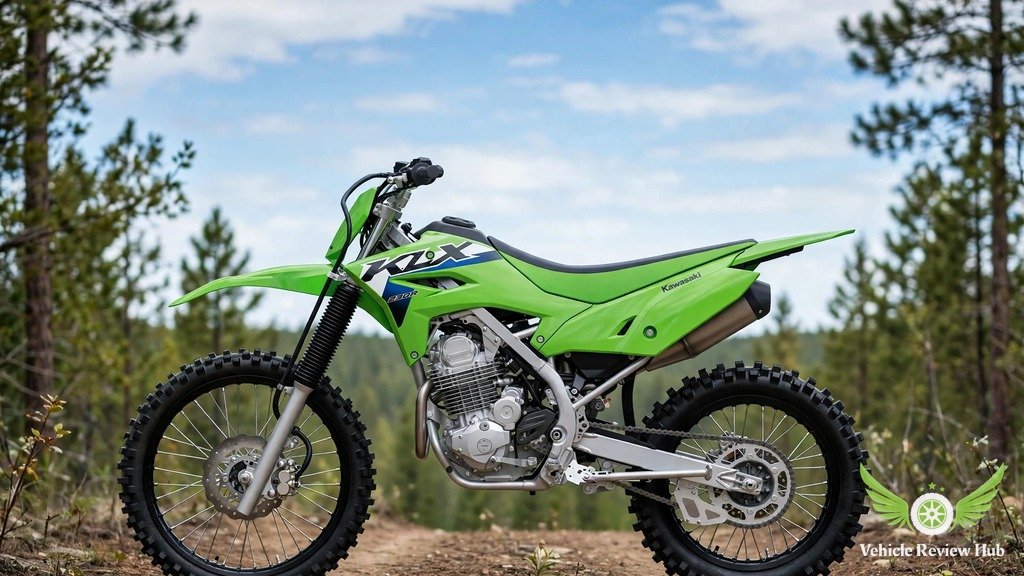
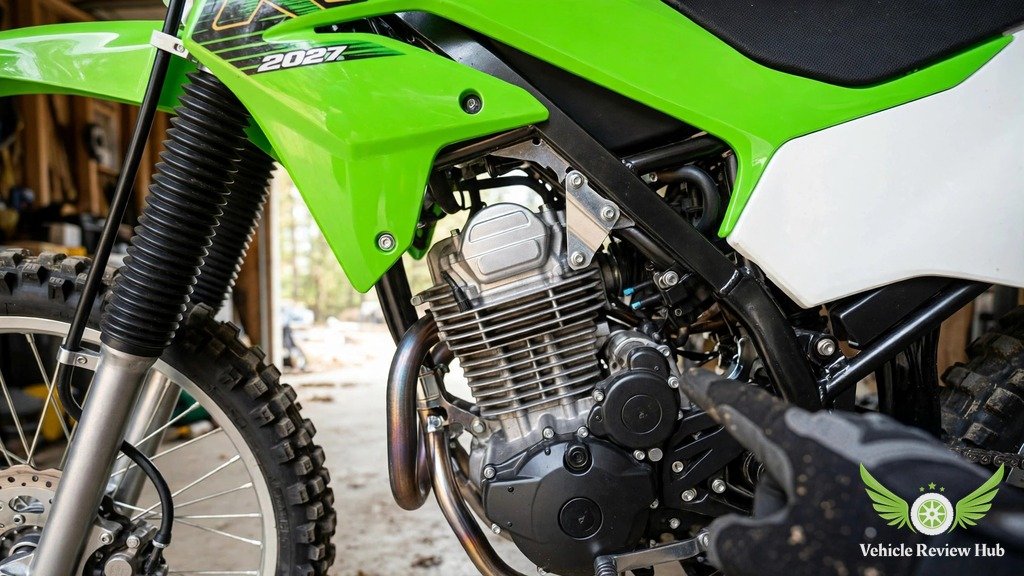
The KLX230R is a deliberately simple machine, and simplicity is the foundation of the Kawasaki KLX230R reliability story. It is a 233cc air-cooled SOHC two-valve single with digital fuel injection, a six-speed gearbox and an electric starter, built in Indonesia and sold in the USA as an off-road-only trail bike. There is no radiator, no ABS, no digital dash and no kick starter to fail. Kawasaki KLX230R reliability rests on that spareness: fewer systems means fewer things to go wrong, and the things that do wear — tyres, brake pads, chain, air filter — are ordinary trail-bike consumables.
No Hour Meter: Hours Are Self-Tracked
The KLX230R has no hour meter at all. There is no speedometer, no odometer and no hour meter — the only instruments are indicator lamps for power, low fuel and fuel-injection warning, with a check-engine lamp added for 2025. That means the bike cannot tell its owner how many hours are on the engine, and any service schedule that runs on hours has to be tracked by the owner — the first rule of Kawasaki KLX230R reliability.
How Hours, Storage and Previous Care Affect Reliability
Previous care shows in the small things a buyer can check in minutes: the chain’s condition and tension, the brake fluid’s colour, the air filter’s cleanliness, the fork seals for weeping, and the tyres for cracking. For a buyer, the honest check is the seller’s records and the bike’s condition, not the year on the title. Kawasaki KLX230R reliability is mostly a story of how the previous owner behaved.
Kawasaki KLX230R Common Problems and Wear Items
No KLX230R has a signature defect. There is no single failure that owners report again and again, no technical service bulletin, and no recall that names the bike. What the R does have, in Kawasaki KLX230R reliability terms, is the normal wear of a trail bike ridden in dirt: consumables that wear, seals that weep, and a small number of owner-reported complaints with no settled pattern. This section of the Kawasaki KLX230R reliability guide separates the verified recall record from the owner reports, because the two are very different kinds of evidence.
The Family Recall Skips the R
The only recall in the KLX230 family is campaign 22V-397, issued in June 2022, and it names the street bikes only. The NHTSA Part 573 report lists 2020–2022 KLX230 ABS and KLX230 S ABS models — 1,923 units — fitted with the wrong front brake rotor, smaller than specified, a failure of the federal braking standard FMVSS 122. Kawasaki’s remedy was a free rotor and pad replacement under manufacturer campaign MC22-04, with owner letters mailed on June 23, 2022. The KLX230R is not named anywhere in the report, and it could not be: the R has no ABS and a different brake specification, and as an off-road-only machine it sits outside the road-vehicle system NHTSA covers.
The confusion comes from aggregator sites that list the recall against the whole KLX230 family, and from owners who see “KLX230” and assume it covers their bike. It does not. The same care applies in the other direction: a street KLX230 ABS from 2020–2022 that has not had its rotor replaced is a bike to check before paying. Kawasaki KLX230R reliability, on the recall record, is clean — not because the family is clean, but because the one family recall was a street-bike problem. The CPSC saferproducts search was inconclusive — it returned unfiltered recent recalls — so no CPSC zero is claimed here.
| Campaign | Bikes named | Problem | Names the KLX230R? |
|---|---|---|---|
| 22V-397 (June 2022) | 2020–2022 KLX230 ABS / KLX230 S ABS, 1,923 units | Wrong front brake rotor, smaller than specified (FMVSS 122) | No — street ABS bikes only |
| 25V363 (June 2025) | 2025 W230 ABS, 482 units | Unstable battery-to-frame ground, engine stall | No — W230 is a different bike |
| 26V387 (June 2026) | 2025–2026 W230, 840 units | Turn-signal bulbs with foreign material or cracks | No — W230 is a different bike |
Notes: campaign 22V-397 is verified from the NHTSA Part 573 report read directly; the R is not in the affected population. The W230 campaigns are included only to stop the common mistake of counting them as KLX230R recalls. No recall names the KLX230R in any source consulted for this Kawasaki KLX230R reliability guide.
Variable Idle: Complaints, No Pattern
The one owner-reported complaint in Kawasaki KLX230R reliability that appears more than once is a variable idle. Owners on forums describe the engine’s idle wandering or hunting, sometimes after the bike is warm, sometimes from cold. The engine has an automatically adjusting idle — Motorcyclist noted it at the 2020 launch — so there is no manual idle screw for an owner to turn, and no single fix has emerged from the owner reports. There is no consistent pattern in when it happens, no technical service bulletin, and no recall attached to it.
That lack of a pattern is itself the finding. A defect with a cause shows the same symptoms in the same conditions; the idle complaints do not. A buyer hearing a used R idle unevenly should treat it as a prompt to check the basics, not as proof of a known defect. This Kawasaki KLX230R reliability guide prints the complaint because owners report it, and prints the absence of a pattern because that is what the evidence shows.
Kawasaki KLX230R Maintenance Schedule and Servicing
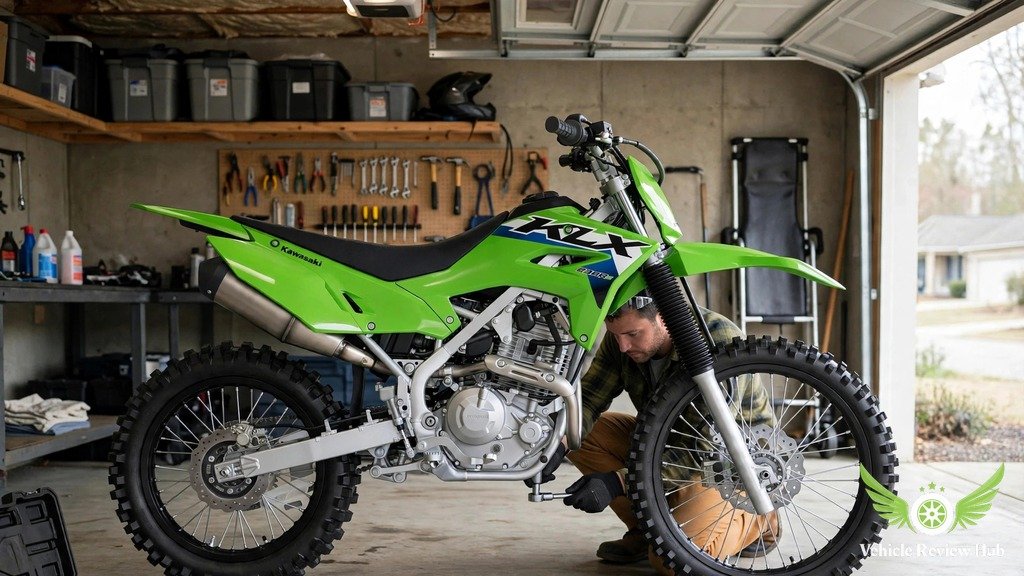
This is the section where honesty matters most, because the factory service chart for the KLX230R could not be verified. Targeted searches for the R’s owner’s-manual maintenance chart returned tractor manuals, KLX250 manuals and KLX140 manuals — nothing KLX230R-specific that could be read for this Kawasaki KLX230R reliability guide. So this Kawasaki KLX230R reliability guide does not print a factory chart. It prints what is verified, labels the rest, and tells the reader where to find the real chart: the owner’s manual that comes with the bike.
Factory Chart Could Not Be Verified
The R is an off-road bike with no hour meter and no odometer, so its factory chart is hour-based, as the KLX140 family’s is. But the R’s own hour numbers are unverified, and this Kawasaki KLX230R reliability guide will not transplant the KLX140’s intervals — first service at 5 hours, oil and filter every 50 hours, valves every 100 hours — onto the 230R. Those numbers belong to a different bike, a 144cc carburetted machine, and printing them as the 230R’s schedule would be inventing a factory chart.
The contrast with the street sibling is worth stating, because it is the most common source of wrong schedules. The street KLX230’s chart is miles-based: its owner’s manual calls for a first service at 600 miles, then mileage intervals. The only schedule that counts is the one in the R’s own owner’s manual, and a buyer should ask for that manual with the bike. RevZilla’s first ride of the 2020 launch bikes describes the R as a simple, friendly trail machine — and the maintenance story matches: simple to look after, but only if the owner tracks the hours.
Retailer Hour Figures Conflict
What is verified for Kawasaki KLX230R reliability, and labelled as such, is the shared-engine oil figure. The 233cc engine runs a small oil bath of about 1.1 litres, a figure from the shared-engine owner’s manual, with SAE 10W-40 oil meeting the JASO MA2 standard. The drain bolt torque is 20 N·m (14.8 lb-ft) with a fresh crush washer. The R’s own manual capacity figure is unverified, so the 1.1-litre figure is printed here as the shared-engine figure, not as the R’s own manual number.
| Service item | What is verified | Status |
|---|---|---|
| Factory service chart | No retrievable copy found | Unverified — read the owner’s manual |
| First service / oil intervals | Retailer hour figures conflict | No figure printed as factory |
| Engine oil capacity | About 1.1 L, SAE 10W-40, JASO MA2 | Shared-engine figure, labelled |
| Oil drain bolt torque | 20 N·m (14.8 lb-ft), fresh crush washer | Verified from the shared manual |
| Valve clearances | No figures found for the 230R | None printed — do not use KLX250 figures |
| Air filter | Foam element, clean and oil regularly | Generic practice, labelled |
| Hour meter | None fitted — hours self-tracked | Verified from the bike’s specification |
Notes: the KLX140’s hour intervals (5 hours first service, oil and filter every 50 hours, valves every 100 hours) are NOT printed here as the 230R’s schedule — they belong to a different bike. The street KLX230’s miles-based chart is also not the R’s chart. No valve-clearance figure is printed in this Kawasaki KLX230R reliability guide, because none was verified for the 230R.
Kawasaki KLX230R Tires, Brakes and Suspension Maintenance
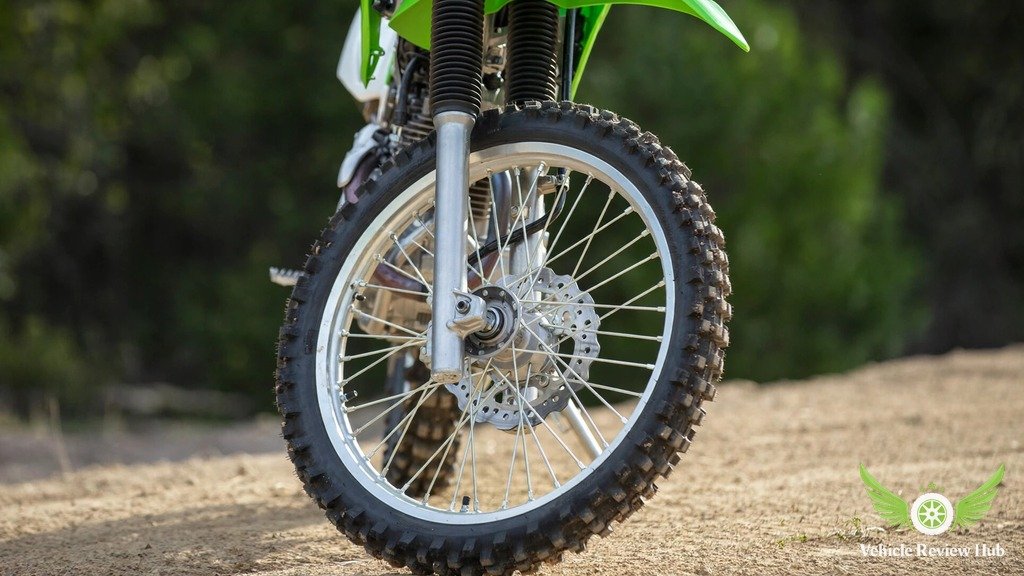
The wear items in Kawasaki KLX230R reliability are the same ones every trail bike has, and they are the parts a buyer should check first. The bike runs Dunlop D952 tyres, 80/100-21 front and 100/100-18 rear, on 21-inch and 18-inch spoked wheels. The brakes are a 240 mm petal front disc with a dual-piston caliper and a 220 mm petal rear disc with a single-piston caliper, the same in both generations, with no ABS. The suspension is a 37 mm non-adjustable fork and a rear shock that gained spring-preload adjustment in 2025. None of these is exotic, and all of them are checkable in a driveway — the practical side of Kawasaki KLX230R reliability.
Air-Cooled: No Coolant to Service
The R is air-cooled, and that removes a whole maintenance category from Kawasaki KLX230R reliability. There is no radiator, no coolant, no water pump and no coolant change to schedule — one less fluid, one less set of hoses, one less thing to leak on a trail. The trade-off is that the engine depends on airflow, so a clogged air filter or a bike idling for a long time in still air will run hotter than a liquid-cooled machine would.
Ultimate Motorcycling’s 2025 review of the updated bike notes the counterbalancer and the reworked ergonomics, but the Kawasaki KLX230R reliability picture did not change with the update — the 2025 bike is as simple to look after as the 2020 bike, with the same air-cooled engine and the same consumables.
Tire, Brake and Suspension Checks That Matter
Tyres are the first check in any Kawasaki KLX230R reliability inspection of a used trail bike. Knobby tyres wear fast on hard ground, and a tyre that looks fine at a glance can be squared off, cracked at the sidewall, or down to the wear bars. The D952 is a proper trail tyre, and a set that has done a season of hard riding will show it. Brake pads are the second check: the petal discs are durable, but the pads are consumables, and a bike that has been ridden hard in mud will eat pads faster than one ridden on dry trails.
Suspension is the third check, and the one buyers most often skip. The 37 mm fork has no adjustment at all, so a fork that dives under braking or bottoms on small hits is a fork that needs attention, not adjustment. The rear shock gained spring-preload adjustment in 2025, which is the only adjustment on the whole bike, and damping is fixed at both ends. Fork seals that weep oil are the commonest suspension complaint in this Kawasaki KLX230R reliability check, and a used R should be checked for oil on the fork legs.
| Check | What to look for | Why it matters |
|---|---|---|
| Tyres (Dunlop D952, 80/100-21 / 100/100-18) | Knob wear, sidewall cracking, wear bars | Trail tyres wear fast; a worn tyre is a safety item |
| Brakes (240 mm front / 220 mm rear petal discs) | Pad thickness, fluid colour, lever feel | Pads are consumables; spongy levers mean air or old fluid |
| Fork (37 mm, non-adjustable) | Oil weeping on the legs, diving under braking | No adjustment exists — a bad fork needs work, not tuning |
| Rear shock (preload added 2025) | Preload setting, damping feel, leaks | The only adjustment on the bike; damping is fixed |
| Chain (46/13 final drive) | Cleanliness, lubrication, tension, sprocket wear | A dry chain wears the sprockets with it |
| Cooling (air-cooled) | Clean fins, oiled air filter | No coolant to service — airflow is the cooling system |
Notes: chain size and slack specification were not verified for the KLX230R, so no figures are printed in this table. The tyre sizes and brake dimensions are the bike’s verified specification, the same in both generations. This Kawasaki KLX230R reliability guide lists checks, not intervals, because the factory chart could not be verified.
Kawasaki KLX230R Maintenance and Ownership Costs
Owning a KLX230R is cheap in the ways that matter, and this section is careful about what it does not claim. No running-cost dollar figure is printed anywhere in this guide, because none was verified — no tested fuel economy, no measured tank range, and no published parts-price survey. What can be said honestly about Kawasaki KLX230R reliability is what the bike consumes, how often its parts wear, and where the costs concentrate. The picture is a small, simple, air-cooled single with ordinary consumables and no expensive systems to fail.
Fuel, Routine Servicing, Tires and Replacement Parts
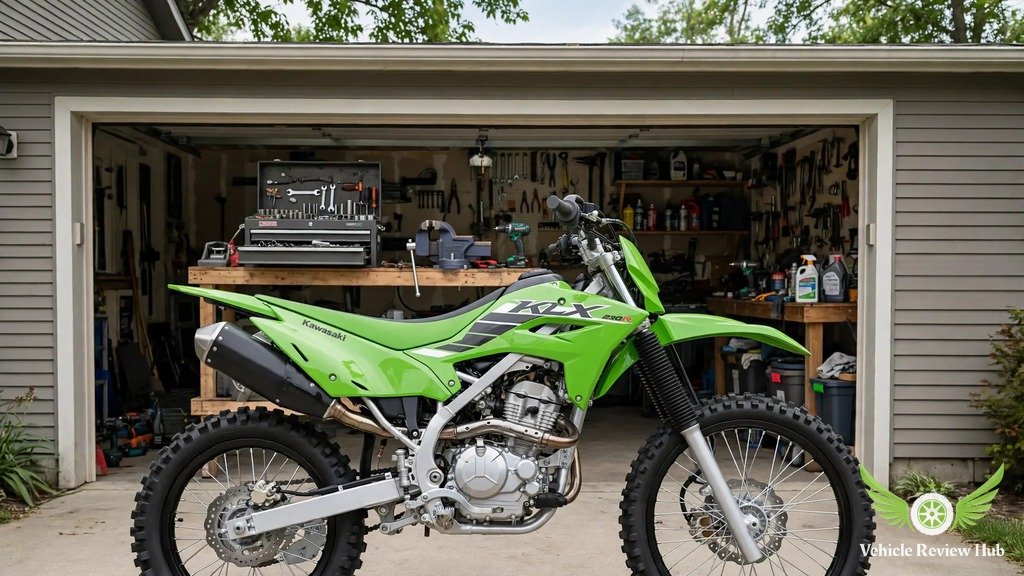
Fuel is the one cost in Kawasaki KLX230R reliability that cannot be counted, because no tester has measured the R’s fuel economy. The bike carries a 2.0-gallon steel tank from 2025 (1.7 gallons of plastic before that, 1.9 gallons on the California bike), and the “just over 70 mpg” figure found online belongs to the street Sherpa S, not the R.
Routine servicing in Kawasaki KLX230R reliability is the small oil bath, the foam air filter, the chain and the brake pads. The oil change is a small job — about 1.1 litres of 10W-40, shared-engine figure, labelled — and the air filter is a clean-and-oil foam element rather than a throwaway paper part. Tyres are the biggest recurring consumable: knobby tyres on a trail bike wear faster than road tyres, and the D952s are a cost that repeats with every hard season. Motorcycle.com’s 2025 review of the updated bike makes the same point from the riding side: the 2025 changes were about manners and fit, not about adding systems that cost money to maintain.
Screw Adjusters, Owner-Sourced
Valve adjustment on the KLX230R uses screw-and-locknut adjusters, a design that is simple to service and needs no shims. That much is owner-sourced for Kawasaki KLX230R reliability, and it stands as labelled: the adjuster type is known from owner reports, but no clearance figures were verified for the 230R, so none are printed here. The KLX250’s clearance figures that appear in some searches belong to the KLX250, not the 230R, and using them would be guessing at a measurement that decides whether the engine runs right.
| Cost area | What the bike needs | What is NOT claimed |
|---|---|---|
| Fuel | 2.0 gal steel tank (2025+); carry fuel on long rides | No tested MPG, no tank range, no dollar figure |
| Routine servicing | Small oil change (~1.1 L, 10W-40), foam air filter | No factory interval printed — chart unverified |
| Tyres | Dunlop D952, 80/100-21 / 100/100-18, knobby wear | No tyre-life figure, no dollar figure |
| Replacement parts | Pads, chain, sprockets, fork seals, filters | No parts-price survey, no dollar figure |
| Valve adjustment | Screw-and-locknut adjusters, owner-friendly | No clearance figures, no interval printed |
Notes: no running-cost dollar figure, resale percentage or used-price band is printed in this Kawasaki KLX230R reliability guide, because none was verified. The fuel economy of the R is unmeasured — the “just over 70 mpg” figure belongs to the street Sherpa S and is not the R’s figure.
How to Keep a Kawasaki KLX230R Reliable
Keeping a KLX230R reliable — the whole point of Kawasaki KLX230R reliability — is mostly a matter of doing the small things on time and keeping records. The bike asks little of its owner — clean the air filter, keep the chain lubricated, change the small oil bath, check the brakes and tyres — and in return it gives a simple, durable trail bike with no recall against its name. Kawasaki KLX230R reliability is a light workload, and the owners who do it are the ones whose bikes last.
Preventive Maintenance, Records and Regular Inspections
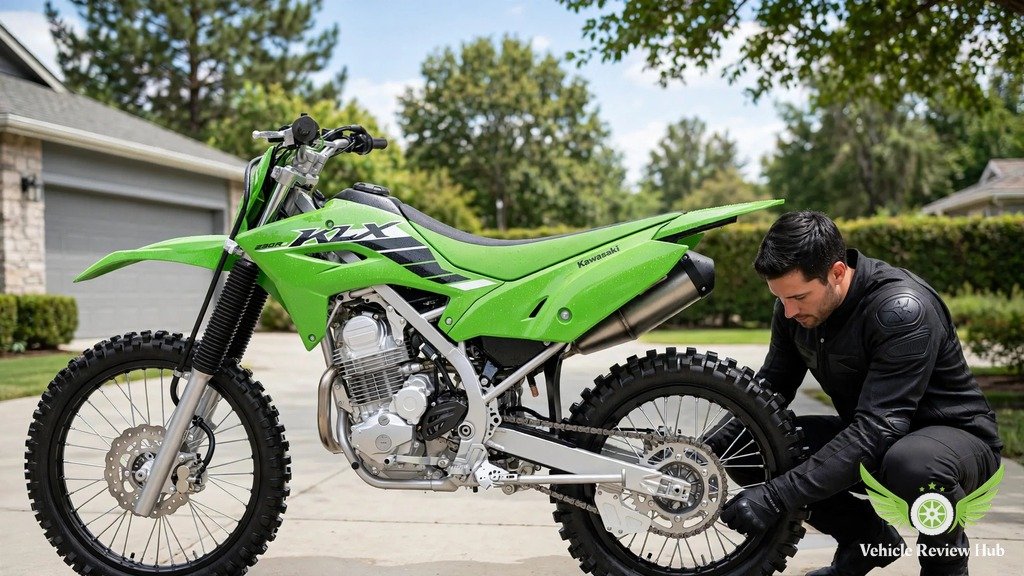
Preventive maintenance in Kawasaki KLX230R reliability starts with the air filter, because a trail bike breathes dust. A foam filter that is cleaned and oiled regularly protects the engine, and a filter left dry and dirty lets grit in. The brakes want pad checks and fresh fluid, the tyres want pressure and tread checks, and the fork seals want a look for weeping oil after every muddy ride. None of this is difficult, and all of it is cheaper than the repair that follows neglect.
Records are the other half of Kawasaki KLX230R reliability. With no hour meter on the bike, the owner’s log is the only service history the bike has, and a written log is worth money when the bike is sold. Note the hours ridden, the date of each oil change, each filter cleaning and each pad replacement, and keep the receipts. A buyer who sees a log trusts the bike; a buyer who sees nothing has to guess. Regular inspections — a walk around the bike before each ride, looking at the chain, the tyres, the brakes and the fork seals — catch small problems before they become big ones. Cycle News’ 2025 review of the updated bike praises the revised engine’s manners, and manners are maintained, not bought: the same care that keeps the bike running well keeps it reliable.
W230 Recalls Are a Different Bike
The last recall point to settle is the W230, because its two campaigns are the ones most likely to be mistaken for KLX230R recalls. The W230 is a 2025-and-later street retro motorcycle built on the same 233cc engine, but it is a different bike from the KLX230R, and its recalls are its own. Campaign 25V363, from June 2025, covers 482 units of the 2025 W230 ABS with an unstable battery-to-frame ground connection that can stall the engine; the remedy is a replacement battery harness and a secured ground under Kawasaki campaign MC25-06. Campaign 26V387, from June 2026, covers 840 units of the 2025–2026 W230 with turn-signal bulbs carrying foreign material or cracks; the remedy is replacement of all four bulbs under campaign MC26-08.
Neither campaign names the KLX230R, and neither should appear in a KLX230R reliability check. The W230 is a street bike with lights, mirrors and a plate; the R is an off-road trail bike with none of those. A buyer who finds a W230 campaign number attached to a KLX230R listing is looking at a seller’s error, not a recall. The verdict of this Kawasaki KLX230R reliability guide is plain: no recall names the R, the factory chart stays unverified, and the bike’s reliability is in the owner’s hands. The Kawasaki KLX230R review covers the price, the 2025 update and the riding position in full, and the Kawasaki KLX230R performance guide has the dyno figures and the top-speed evidence. The step down in the family is the Kawasaki KLX140R L review, and the Indonesian carburetted line is covered by the Kawasaki KLX150 review.
| Bike | What it is | Recalls that name it | Applies to the KLX230R? |
|---|---|---|---|
| KLX230R | Off-road trail bike, no ABS, no lights | None | This bike — clean record |
| KLX230 / KLX230 S (street) | Street dual-sport, ABS option | 22V-397 (2020–2022 ABS, wrong rotor) | No — street bikes only |
| W230 | 2025+ street retro, same 233cc engine | 25V363 (ground, stall), 26V387 (bulbs) | No — a different bike |
Notes: the W230 campaigns 25V363 and 26V387 are verified from the NHTSA documents read directly; neither names the KLX230R. No recall names the KLX230R in any source consulted for this Kawasaki KLX230R reliability guide.
Kawasaki KLX230R Reliability Frequently Asked Questions
These answers cover the recall record, the service schedule and the wear items a used buyer should check — with every gap labelled, as this Kawasaki KLX230R reliability guide does throughout.
Has the KLX230R had any recalls?
No recall in any source consulted names the KLX230R itself. The only recall in the family, campaign 22V-397 from June 2022, names the street KLX230 ABS and KLX230 S ABS models only — 1,923 units fitted with the wrong front brake rotor — and the R, which has no ABS and a different brake specification, is not in the report. The two W230 campaigns, 25V363 and 26V387, belong to a different bike entirely. Kawasaki KLX230R reliability, on the recall record, is clean — not because the family is clean, but because the one family recall was a street-bike problem.
What is the variable idle complaint?
The one owner-reported complaint that appears more than once: owners describe the idle wandering or hunting, sometimes warm, sometimes cold. There is no consistent pattern, no technical service bulletin and no recall attached to it. The engine has an automatically adjusting idle, so there is no manual idle screw for an owner to turn, and no single fix has emerged from the owner reports. A buyer hearing a used R idle unevenly should treat it as a prompt to check the basics, not as proof of a known defect — and this Kawasaki KLX230R reliability guide prints the complaint because owners report it, and the absence of a pattern because that is what the evidence shows.
What is the factory service schedule?
It could not be verified. Targeted searches for the R’s owner’s-manual maintenance chart returned tractor manuals, KLX250 manuals and KLX140 manuals — nothing KLX230R-specific that could be read. Do not use the KLX140’s intervals (first service at 5 hours, oil and filter every 50 hours, valves every 100 hours): they belong to a different, 144cc carburetted bike. The only schedule that counts is the one in the R’s own owner’s manual, which a buyer should ask for with the bike — and this Kawasaki KLX230R reliability guide prints no factory chart, because none could be verified.
How much oil does the KLX230R take?
About 1.1 litres of SAE 10W-40 meeting the JASO MA2 standard, a figure from the shared-engine owner’s manual — the R’s own manual capacity figure is unverified, so it is printed as the shared-engine figure, not as the R’s own number. The drain bolt torque is 20 N·m (14.8 lb-ft) with a fresh crush washer.
Does the KLX230R need coolant?
No. The engine is air-cooled, so there is no radiator, no coolant, no water pump and no coolant change to schedule. The trade-off is that the engine depends on airflow, so a clogged air filter or long idling in still air will run it hotter than a liquid-cooled machine.
How do I track service hours with no hour meter?
By hand. The bike has no speedometer, no odometer and no hour meter — only indicator lamps — so the owner’s log is the only service history the bike has. Note the hours ridden and the date of each oil change, filter cleaning and pad replacement, and keep the receipts; a buyer who sees a log trusts the bike, and a buyer who sees nothing has to guess.