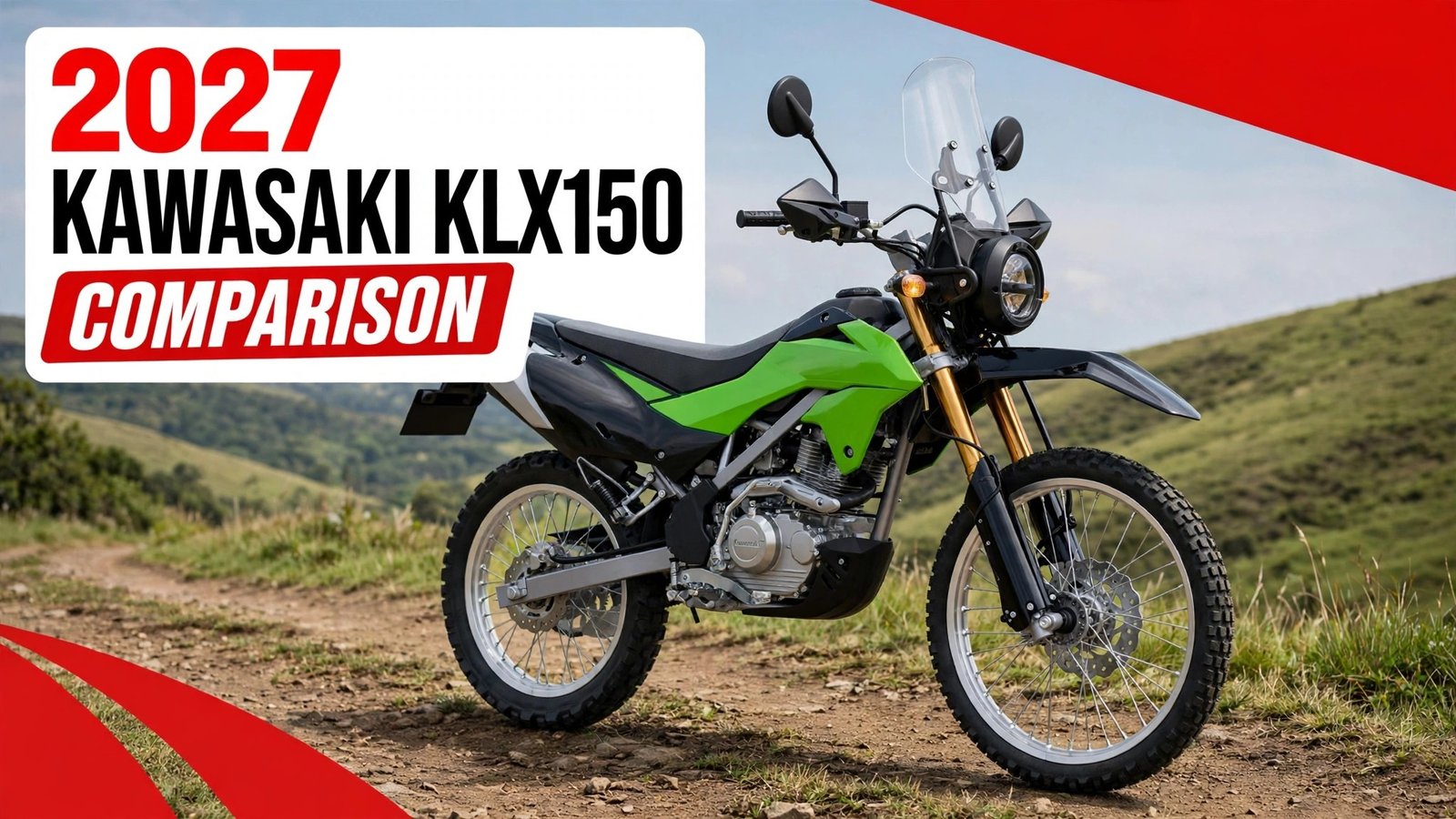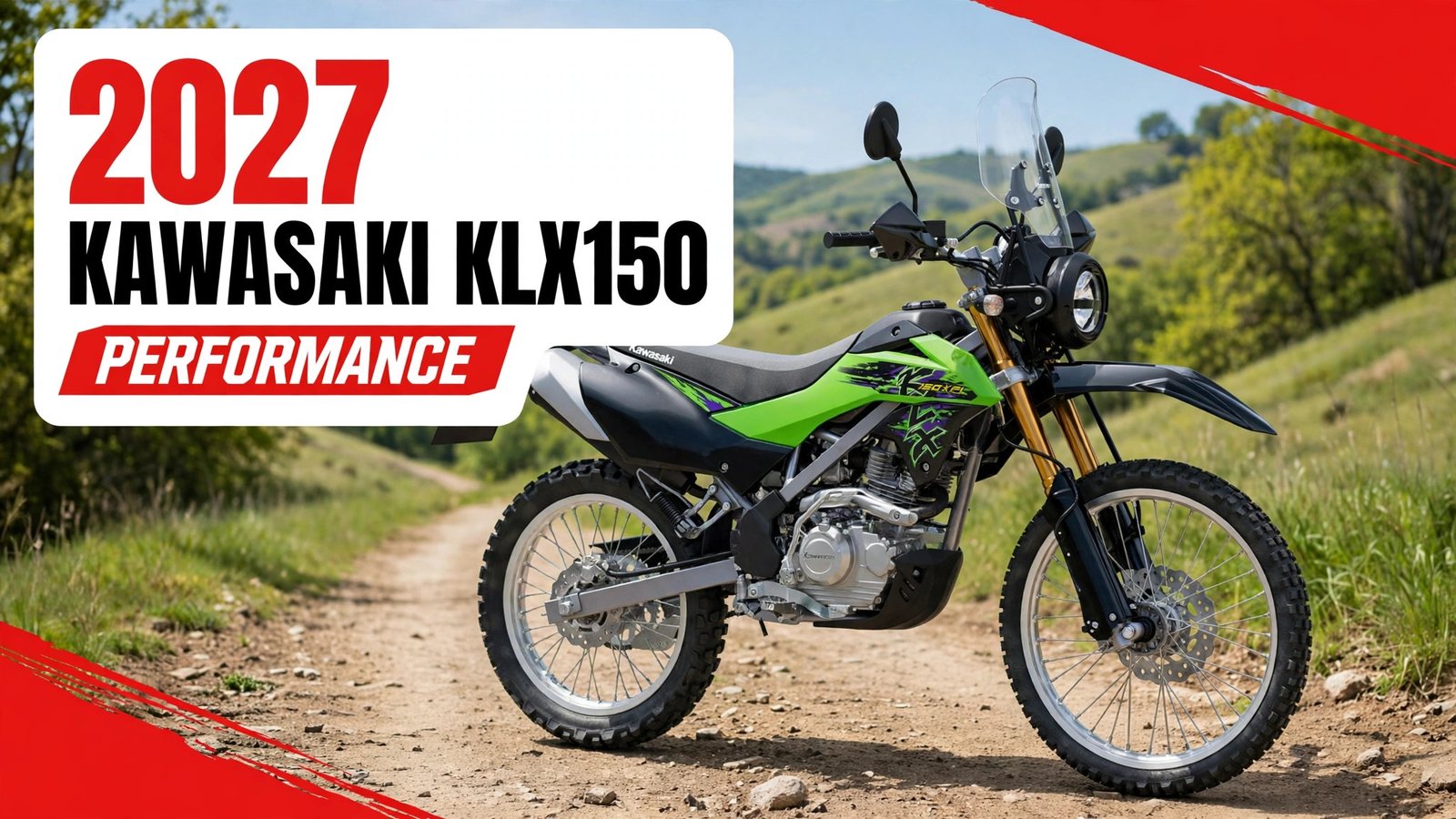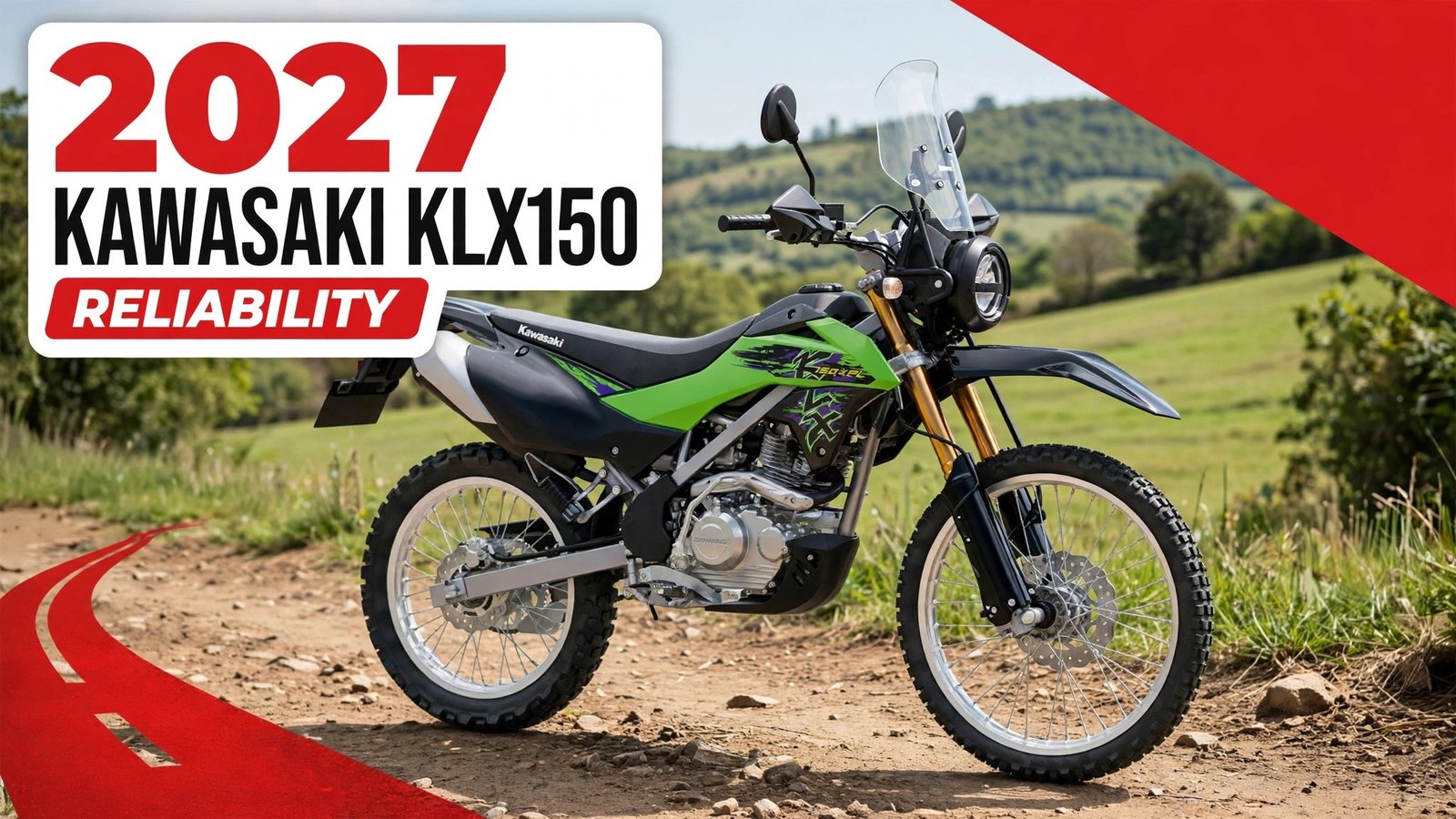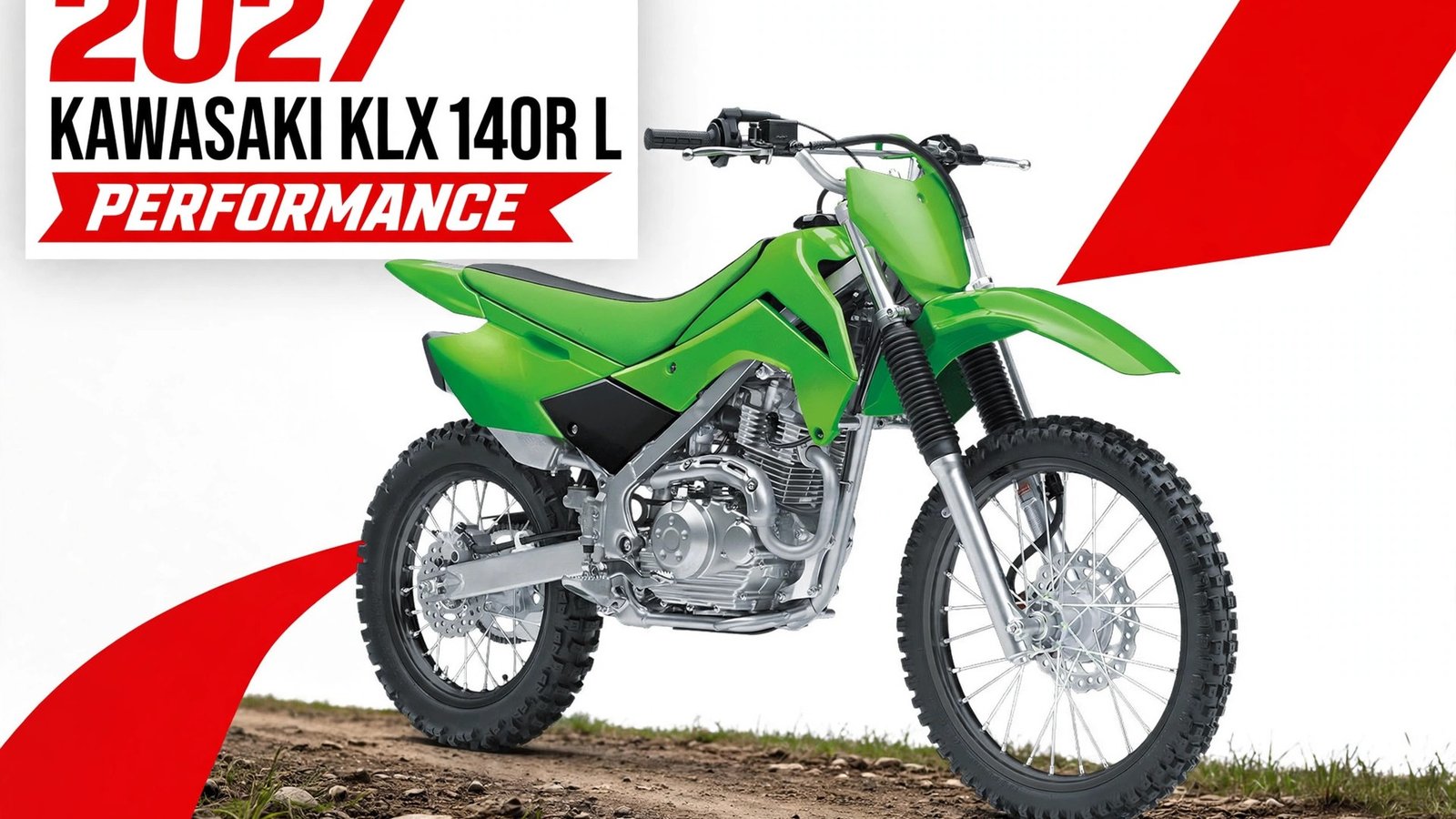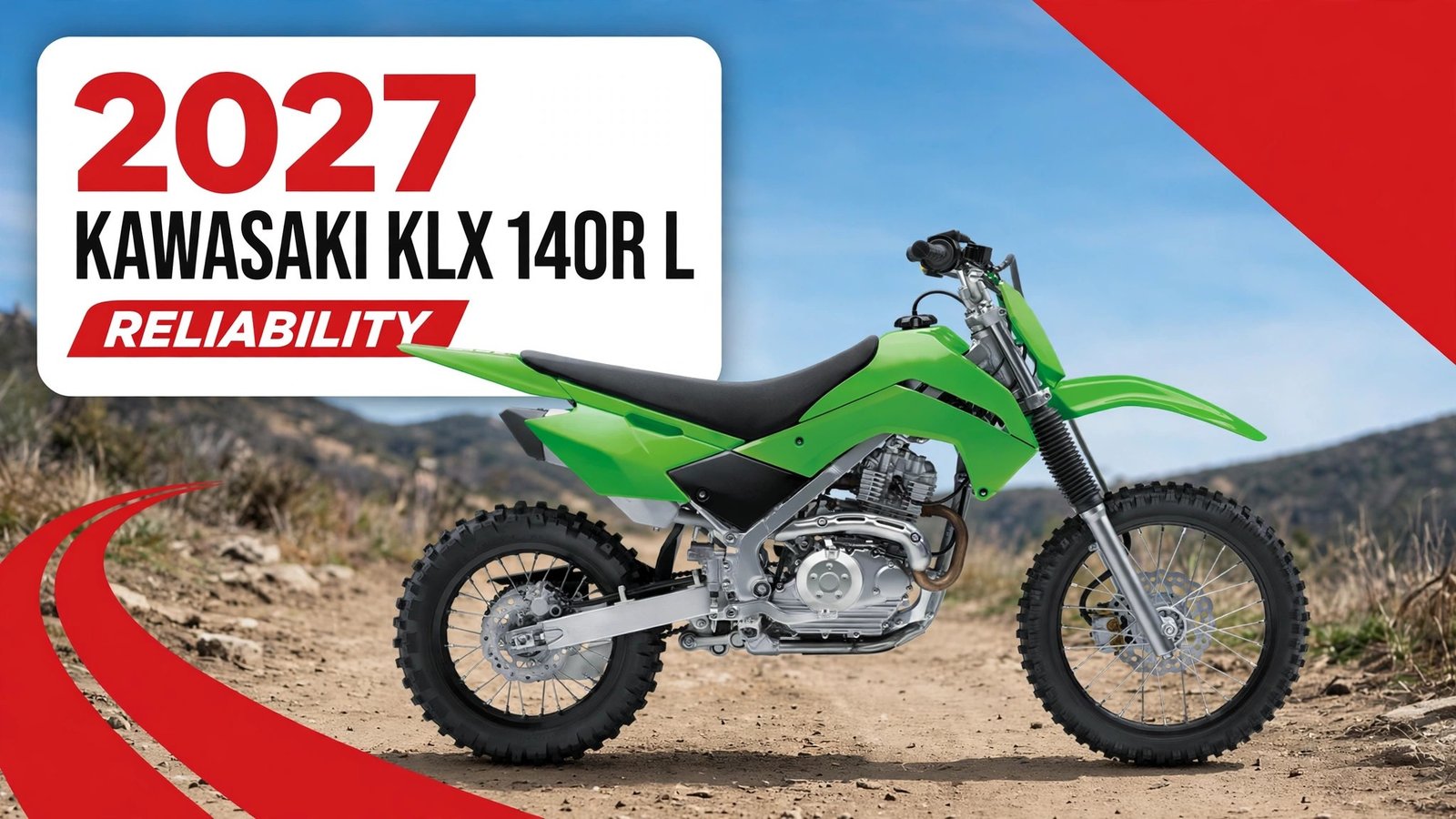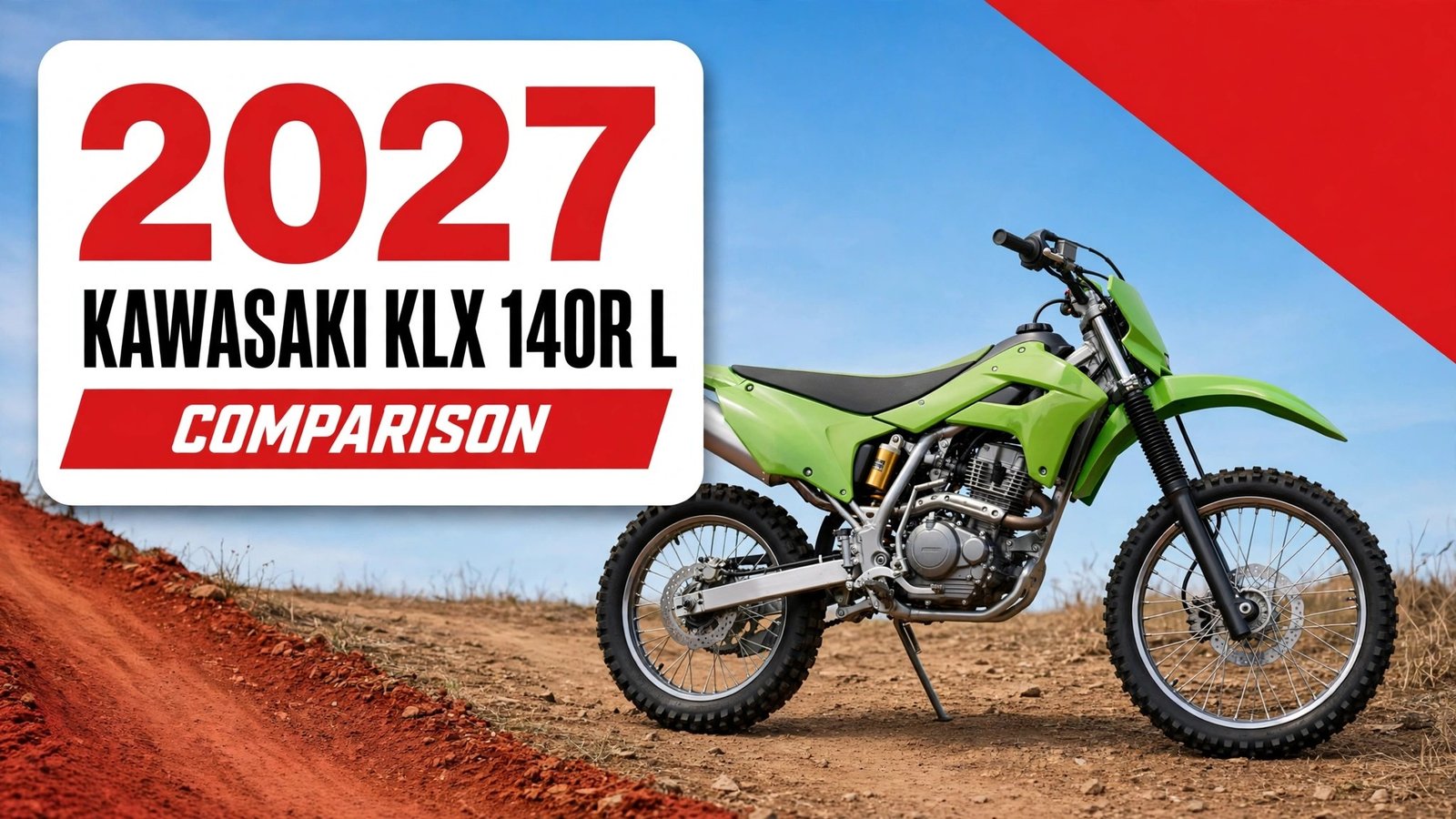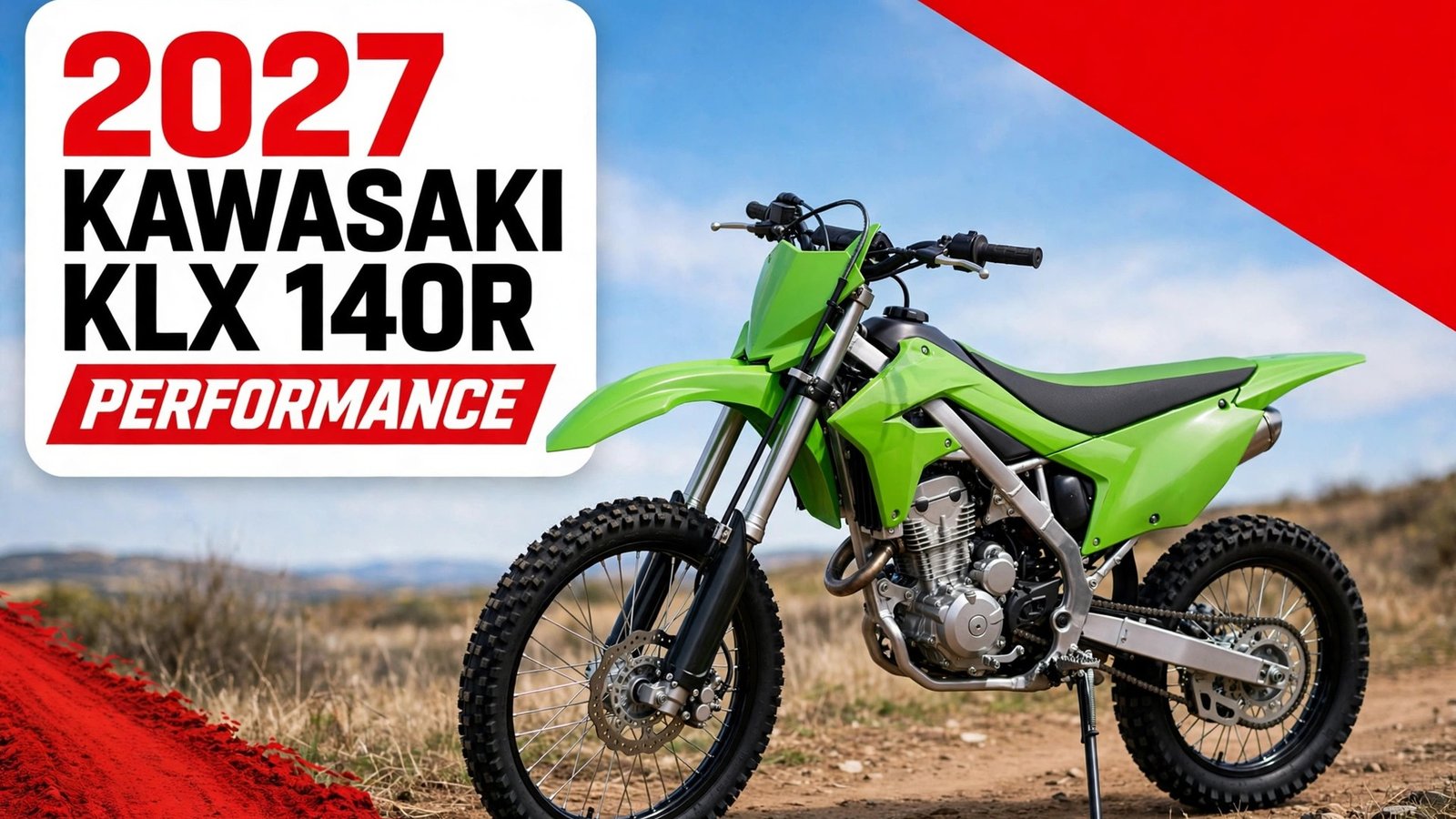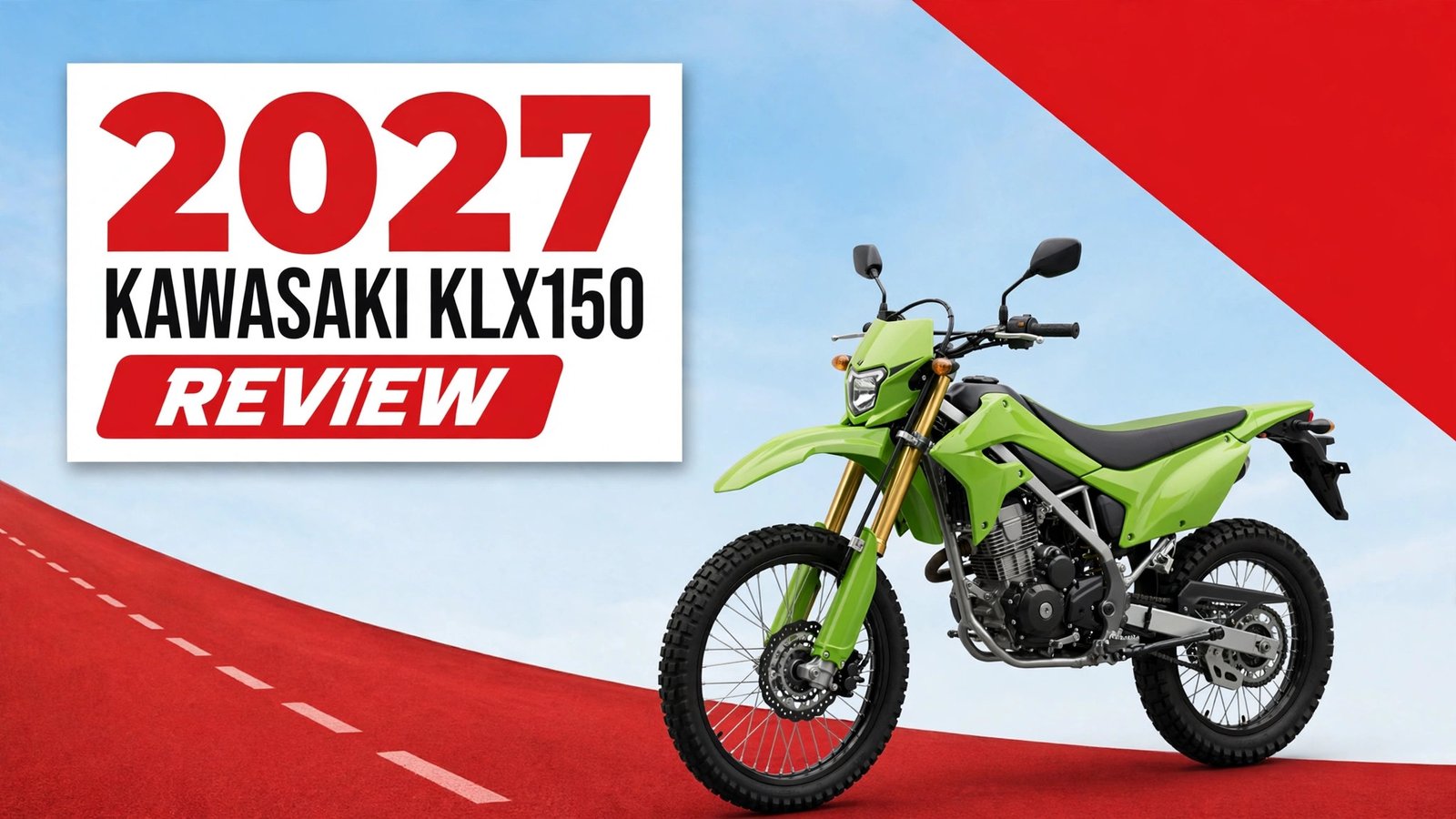
The Kawasaki KLX150 is a small dual sport that most American riders will never see in a showroom, because it was never sold in the United States. This Kawasaki KLX150 review covers the bike as it actually exists: an Indonesian-built, road-legal trail bike with a 144cc carburetted single, a kick starter alongside the electric start, and prices quoted in rupiah only. The standard bike costs Rp 38.6 million on the road in Jakarta in 2026, carries a 12 PS claim from Kawasaki Indonesia, and sits on 21/18 wheels with an inverted fork and a 865 mm seat, and those four facts anchor this Kawasaki KLX150 review. There is no US price, no US test, and no fuel-injected version in any market, and this Kawasaki KLX150 review says so plainly instead of filling those gaps with guesses.
Kawasaki KLX150 Overview and Model-Year Updates
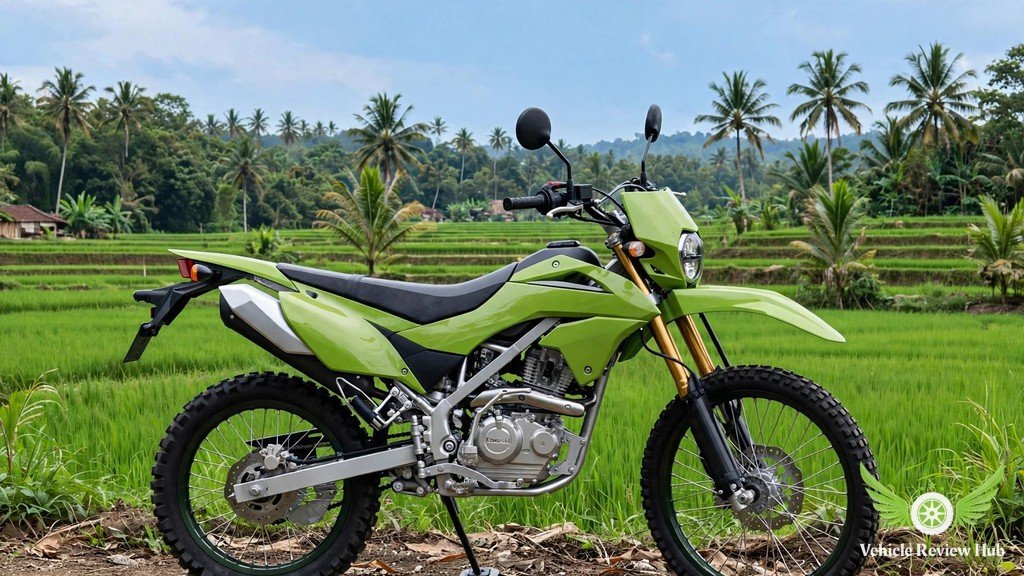
The KLX150 has been in production in Indonesia since 2009, which makes it one of the longest-running small dual sports in Kawasaki’s Asian lineup. Everything else about the bike’s character stayed the same, and that is the point of this Kawasaki KLX150 review: the 150 is a deliberately old-fashioned motorcycle that survives because it is cheap to buy, cheap to fix, and easy to ride on bad roads.
Never Sold in the USA: Verified
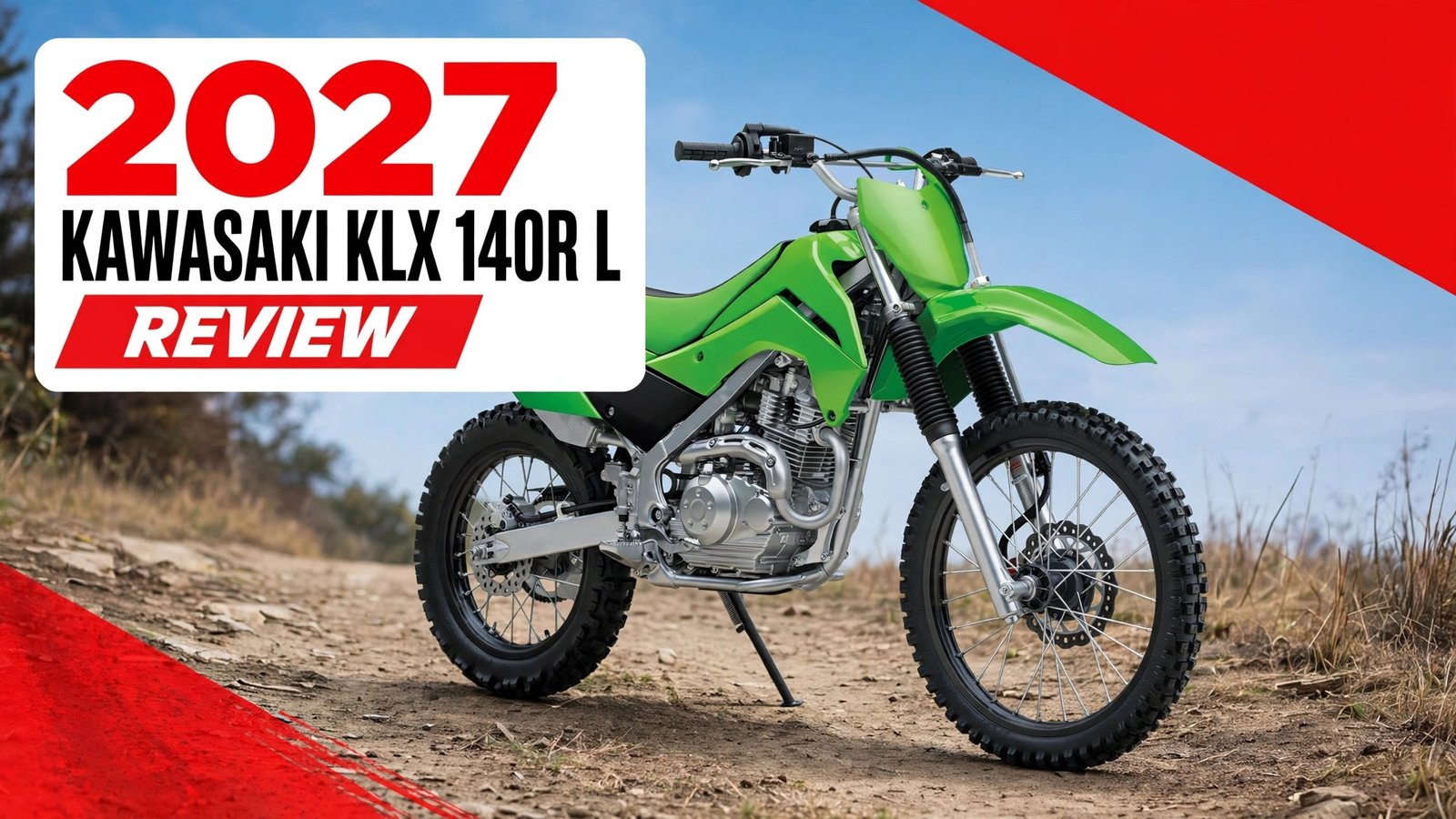
The KLX150 does not appear anywhere on Kawasaki USA’s KLX lineup page, which lists the KLX110R, the KLX140R, the KLX230 family and the KLX300 family. The name “KLX150” is simply absent. That is not an oversight or a missing model year: the bike’s carburetted engine was never certified for US sale, and Kawasaki never offered it through American dealers in any year. For an American reader, the closest showroom alternative is the Kawasaki KLX 140R review, which covers the off-road-only American bike from the same 144cc family.
The video below is a full review of the KLX 150BF by Team BikeBD, filmed over a 3,500 km test in Bangladesh. It shows the BF variant with its 21/18 wheels and inverted fork, not the standard KLX150, and the 110 km/h top speed it quotes is a speedometer reading, not the instrumented 104.1 km/h figure used in this Kawasaki KLX150 review.
An Indonesian Bike, Built in Indonesia
PT Kawasaki Motor Indonesia launched the KLX150S on 16 May 2009 at Rp 22.7 million on the road, as a small trail bike for a market where paved roads end without warning. The bike is built in Indonesia and sold across Southeast Asia and beyond: the Philippines sells it as the KLX150L, Bangladesh as the KLX150BF, and Australia briefly sold the KLX150L in 2015. The 2026 lineup runs from the low S variant through the standard bike, the SE, the SE+, the supermoto SM and SM SE, and the XPL, a 2027 model shown at the Jakarta Fair in 2026. The standard bike at the centre of this Kawasaki KLX150 review is still the same idea it was in 2009.
Kawasaki KLX150 Engine and Specifications
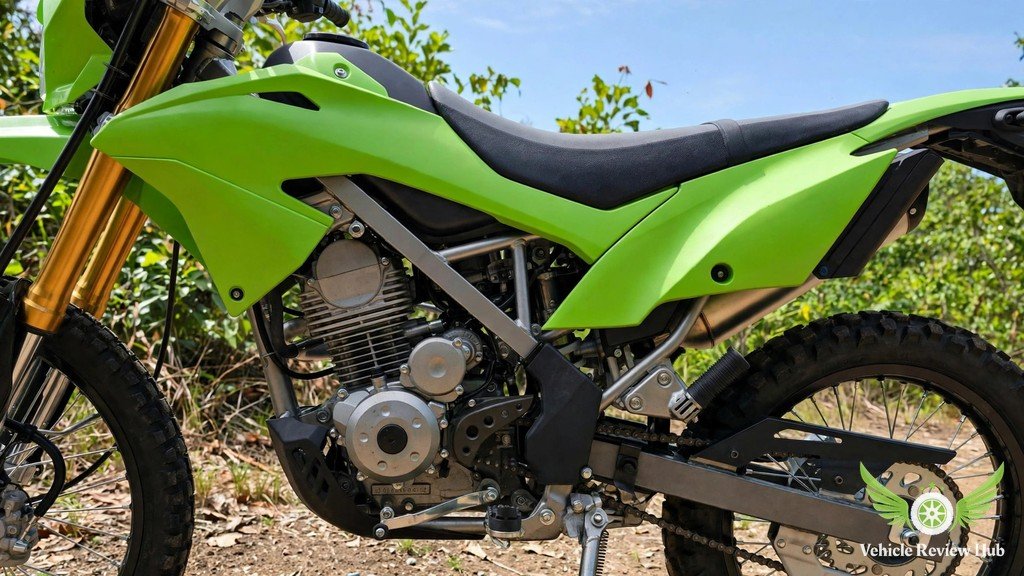
The engine is the least changed part of the KLX150, and that is both its strength and its weakness, so this Kawasaki KLX150 review starts with it. It is a 144cc air-cooled four-stroke single with a single overhead cam and two valves, breathing through a Keihin NCV24 carburettor and firing through a DC-CDI ignition. Kawasaki Indonesia claims 8.6 kW, or 12 PS, at 8,000 rpm, with 11.3 Nm of torque at 6,500 rpm.
144cc, Carburettor, Never Injected
No fuel-injected KLX150 exists in any market. The NCV24 carburettor is the only fuelling the bike has ever had, which is exactly why it stays cheap and fixable in Indonesia, and exactly why it drinks more fuel than its fuel-injected rivals. The Honda CRF150L, the KLX150’s main Indonesian rival, runs programmed fuel injection and returns over 40 km per litre in the same comparison test where the KLX150 managed 31.8 km per litre. This Kawasaki KLX150 review treats the carburettor as a fact of the bike’s design, not as a defect to apologise for. That trade-off is the central tension this Kawasaki KLX150 review keeps coming back to.
One figure needs care. The current Kawasaki Indonesia pages list the final drive as 3.286, or 46/14 sprockets. Otomotif’s 2015 instrumented test of the BF SE describes that test bike’s final drive as 52/14, a much shorter ratio that the magazine itself blames for the bike’s thirst. The 52/14 figure belongs to the 2015 test bike’s setup; the 46/14 figure is the current production spec, and the table below uses the current figure.
It Has a Kick Starter, the 140R Does Not
The KLX150 starts two ways: an electric starter and a kick lever. That sounds unremarkable until it is set against the American KLX140R, which is electric start only and leaves a rider with a flat battery pushing the bike or finding a jump. The Kawasaki KLX 140R L review covers the American bike’s electric-only starting in detail, and the contrast is the point. The 150’s kick starter is not nostalgia; it is a second way home, and one of the strongest cards in this Kawasaki KLX150 review.
| Item | Kawasaki KLX150 (standard, 2026) |
|---|---|
| Engine | 144cc air-cooled 4-stroke SOHC 2-valve single |
| Bore x stroke | 58.0 x 54.4 mm |
| Compression | 9.5:1 |
| Fuelling | Keihin NCV24 carburettor |
| Power claimed | 8.6 kW (12 PS) at 8,000 rpm |
| Torque claimed | 11.3 Nm at 6,500 rpm |
| Start | Electric and kick |
| Gearbox | 5-speed manual, wet multi-disc clutch |
| Final drive | 3.286 (46/14), chain |
| Front fork | 35 mm inverted, 185 mm travel |
| Rear shock | Uni-Trak single shock, preload only, 192 mm travel |
| Brakes | 240 mm petal disc front, 190 mm petal disc rear |
| Wheels | 21/18 in, tyres 2.75-21 / 4.10-18 |
| Seat height | 865 mm |
| Ground clearance | 300 mm |
| Curb weight | 118 kg |
| Fuel tank | 6.9 litres |
| Colours | Ebony, Lime Green |
Notes: the figures in this Kawasaki KLX150 review table come from Kawasaki Motor Indonesia’s official 2026 pages for the standard KLX150. Power is quoted in PS exactly as Kawasaki Indonesia states it; 12 PS is about 11.8 hp, and no dyno figure from any outlet exists.
Kawasaki KLX150 Price and Market Availability
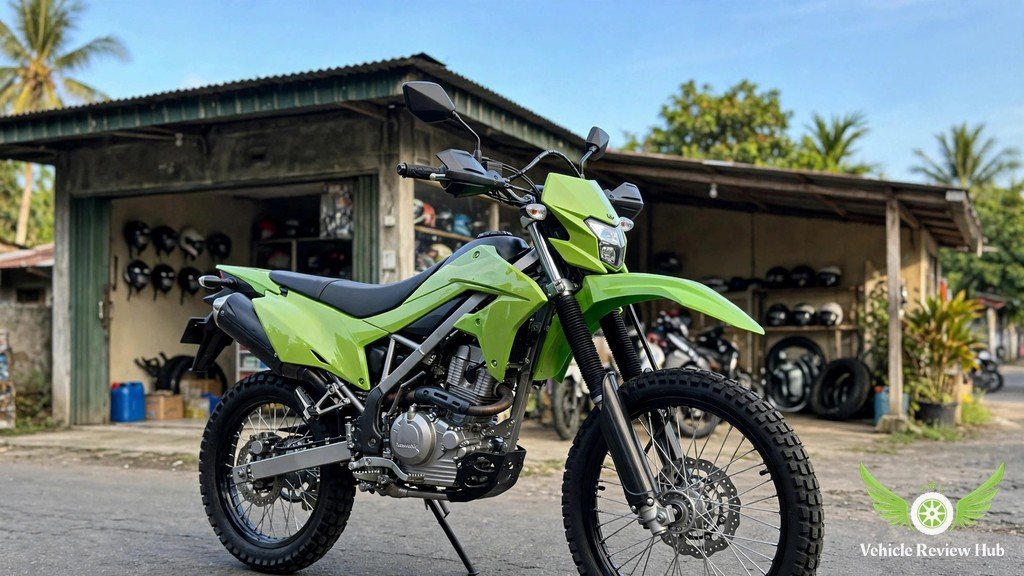
There is no dollar price for the KLX150, and this section does not invent one. The standard KLX150 costs Rp 38.6 million on the road in Jakarta in 2026. What an American reader should take from the price section is not a number to compare with a US sticker, but the bike’s position at home: it is a mid-priced small dual sport, dearer than the Honda rival and cheaper than the Yamaha rival by a whisker, and the rest of this Kawasaki KLX150 review keeps every price in rupiah for that reason.
No US Price Exists, in Any Year
The KLX150 has no US MSRP, no US dealer price, and no import price, because it was never imported or sold in the United States in any year. None of those figures comes from Kawasaki, and none of them is used in this Kawasaki KLX150 review, which names the rejected figures with their sources in the verdict section. The fabricated figures are listed by name, with their sources, in the verdict section below, so a reader who has seen them elsewhere can see exactly why they were rejected.
Jakarta Price: Rp 38.6 Million (2026)
The standard KLX150 is listed at Rp 38.6 million on the road in Jakarta in 2026, a figure agreed by the majority of Indonesian price sources checked for this Kawasaki KLX150 review, including the November 2026 price list and a dealer listing, and the table below puts the whole range side by side so the comparison is like with like. One source, Oto, lists the standard at Rp 37.4 million, which is Rp 1.2 million below the majority figure; it is noted here as a conflicting lower listing, not adopted as the price. In the Philippines the KLX150L is listed at 112,500 pesos, although the same page’s own FAQ says 122,500 pesos, so that figure is quoted here with its conflict attached rather than as a settled price.
| Variant | Price (2026) | Basis | Key difference from standard |
|---|---|---|---|
| KLX150 S | Rp 35.0 million | MSRP | 19/16 wheels, telescopic fork, 830 mm seat, 115 kg |
| KLX150 standard | Rp 38.6 million | On the road, Jakarta | 21/18 wheels, inverted fork, 865 mm seat, 118 kg |
| KLX150 SE | Rp 39.1 million | MSRP | Standard chassis, special graphics and trim |
| KLX150 SE+ | Rp 41.4 million | MSRP | SE trim plus accessories |
| KLX150SM | Rp 39.1 million | MSRP | 17/17 road wheels, 300 mm front disc, 840 mm seat |
| KLX150 XPL | Rp 44.8 million | On the road, Jakarta | 2027 model, shown at Jakarta Fair 2026 |
Notes: all prices in this Kawasaki KLX150 review table are Indonesian rupiah from Kawasaki Motor Indonesia and Indonesian price listings checked in November 2026. MSRP excludes tax and registration; on-the-road prices include them. The Oto listing of Rp 37.4 million for the standard is a conflicting lower figure and is not used in the table.
Kawasaki KLX150 Design, Features and Technology
The KLX150 looks like a small trail bike that grew up and got a number plate, and the design section of this Kawasaki KLX150 review looks at what the road kit changes and what it does not.
Road-Legal Kit the 140R Never Gets
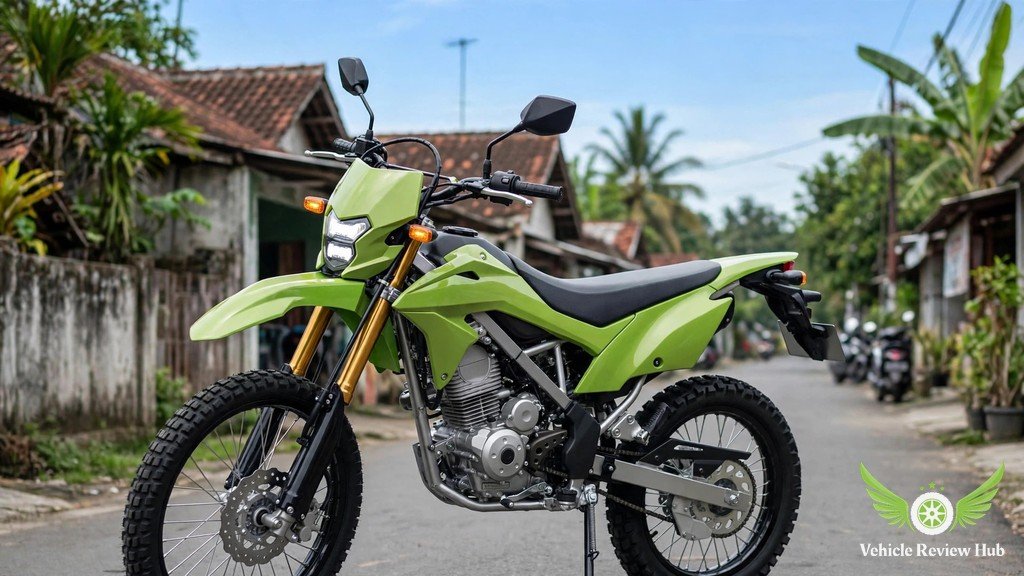
Everything that makes the KLX150 usable on public roads is equipment the American KLX140R simply does not have. The 140R is an off-road-only trail bike: no headlight, no mirrors, no indicators, no tail light, no plate holder, and no kick starter. The 150 carries all of them from the factory, which is why it can be ridden to work in the morning and onto a trail in the afternoon. The difference is not cosmetic, and it is the single biggest contrast this Kawasaki KLX150 review draws between the two bikes. The Kawasaki KLX 140R performance guide shows what the American bike does with the same 144cc family engine when the road equipment is stripped away.
Hawaii PDF Footer Is a Template Trap
A warning belongs in this Kawasaki KLX150 review, because the trap has caught other writers. A search for KLX150 specifications turns up a PDF link on Kawasaki’s Hawaii dealer site for a “2025 KLX150” that returns a successful page load but serves an HTML 404 error page, not a PDF at all. A second link, for a 2024 sheet, is a real PDF, but it is a template document for a taller Latin American KLX150: it lists rake and trail of 26.9 degrees and 110 mm against Kawasaki Indonesia’s 26.7 degrees and 92 mm, describes the brakes only as “single disc” with no sizes, and prints no power or torque figures at all. Neither document is a source for the Indonesian bike. This Kawasaki KLX150 review uses Kawasaki Motor Indonesia’s official pages as the authority for every specification, and the Hawaii PDFs are named here so that no reader mistakes them for one.
Kawasaki KLX150 Riding Experience and Comfort
Riding the KLX150 is an exercise in modest expectations met honestly, and this Kawasaki KLX150 review keeps the riding notes short because the bike itself is simple. A 7,000 km owner review reports that the bike settles down after its first few oil changes, with early vibration easing as the engine runs in, and that it cruises happily at 85 to 90 km/h while feeling strained above 90.

Seat 865 mm, Weight 118 kg
The two numbers that decide whether the KLX150 fits a rider are the 865 mm seat and the 118 kg curb weight. The seat is tall: a shorter rider will be on tiptoes at a standstill, and the honest answer for them is the S variant, which drops the seat to 830 mm and the weight to 115 kg on smaller 19/16 wheels. This Kawasaki KLX150 review does not pretend the bike is a tourer: it is a short-distance dual sport that is comfortable for an hour or two and honest about the rest, and the fit advice here is simple, try the S if the standard seat is too tall.
Feb 2023: LED and Digital Dash Arrive
On 4 February 2023, Kawasaki Motor Indonesia launched the new KLX150 series for the 2024 model year at Kawasaki Bike Week, and the changes were all above the handlebars and in the lights. The supermoto KLX150SM followed on 15 March 2023 with the same updates. For a buyer, the 2023 change is the easiest way to tell a newer bike from an older one at a glance: LED headlamp and digital dash means 2023 or later, and anything older wears the halogen lamp and analogue clocks, which is the simplest buying check in this Kawasaki KLX150 review. The inverted fork itself is older news, dating back to the 2015 KLX150BF launch, which first put the 35 mm upside-down fork and the 21/18 wheels on the range.
| Item | KLX150 standard | KLX140R (USA) |
|---|---|---|
| Engine | 144cc single, NCV24 carburettor | 144cc single, PB20 carburettor |
| Power claimed | 12 PS at 8,000 rpm | 11 PS at 8,000 rpm |
| Start | Electric and kick | Electric only |
| Road equipment | Lights, mirrors, indicators, plate holder | None, off-road only |
| Brakes | 240 mm front, 190 mm rear | 220 mm front, 186 mm rear |
| Wheels | 21/18 in | 17/14 in |
| Seat height | 865 mm | 30.7 in (780 mm) |
| Curb weight | 118 kg | 205.0 lb (93 kg) |
| Sold in USA | No, never | Yes |
Notes: the KLX150 figures in this Kawasaki KLX150 review table are from Kawasaki Motor Indonesia; the KLX140R figures are from the verified C64 cluster. The 12 PS against 11 PS paper gap has never been tested head to head, and no dyno figure exists for either bike.
Kawasaki KLX150 Review: Pros, Cons and Verdict
The verdict on the KLX150 depends on where the reader stands. In Indonesia, it is a sensible, proven, affordable dual sport with the deepest parts network of any trail bike in the country. In the United States, it is a bike to admire from a distance, because it cannot be bought, registered, or imported until the 25-year rule opens the door for the earliest bikes in 2034. This Kawasaki KLX150 review judges it on its home ground, where it competes, and says plainly where it wins and where it loses.
Main Advantages and Limitations of the Kawasaki KLX150
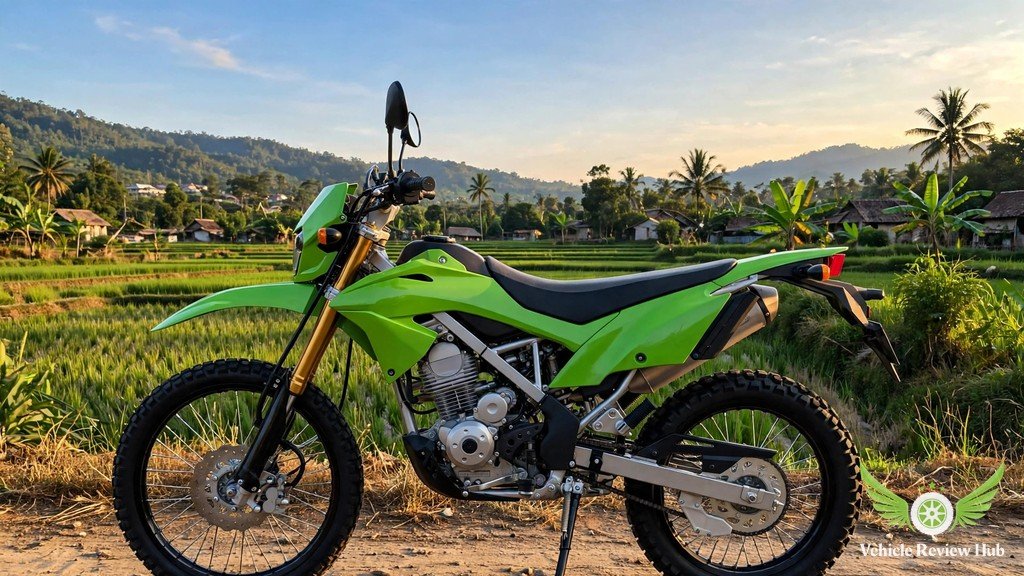
The advantages start with simplicity. The carburetted 144cc single has been in production since 2009, every roadside mechanic in Indonesia knows it, and parts are available in any town with a Kawasaki dealer. It is the weakest bike on paper in its Indonesian comparison set, with the least power and the worst fuel economy at a tested 31.8 km per litre against the Honda rival’s 42.3 in the same test. There is no ABS, no fuel injection, and the 865 mm seat is tall for shorter riders. It is also, on on-the-road price, the second-most-expensive of the four bikes in its comparison set, which is a hard place to sit when the bike is also the thirstiest, and that tension is the honest core of this Kawasaki KLX150 review.
Fabricated USA Prices, Named and Rejected
The site carinterior.alibaba.com lists a “$2,500 USD” price, an 11.5 HP claim, a 60 to 65 mph top speed, and a “KLX150L 30.7 in seat” figure; every one of those is wrong or invented, and the site is an AI-generated aggregator, not a source. The pages at lidopacific.com and handlingstore.co.uk claim a PB20 carburettor and 9.7 hp at 7,500 rpm; the 150 uses a Keihin NCV24 carburettor and Kawasaki Indonesia claims 12 PS, so both figures are wrong. The site motoryk.com claims 10.4 hp at 7,500 rpm, which is also wrong. Top-speed figures of 120 km/h and above come from aggregator spec boxes, including one page that prints 130+ in its spec box and 117 in its own price table, contradicting itself; the only instrumented top speed is Otomotif’s Racelogic figure of 104.1 km/h. Any dollar price for the KLX150, from any source, is fabricated, because the bike was never sold in the United States, and each figure above is named with its source so this Kawasaki KLX150 review can be checked against it.
Kawasaki KLX150 Review: Frequently Asked Questions
The questions riders ask most about the KLX150, answered with the verified figures above, and this Kawasaki KLX150 review labels the gaps where no test or record exists.
Is the Kawasaki KLX150 sold in the USA?
No. The KLX150 was never sold in the United States in any year, and it does not appear on Kawasaki USA’s KLX lineup page. This Kawasaki KLX150 review uses Indonesian prices and tests throughout because no American figures exist.
How much does the Kawasaki KLX150 cost?
The standard KLX150 costs Rp 38.6 million on the road in Jakarta in 2026. The low S variant is Rp 35.0 million at retail, the SE is Rp 39.1 million at retail, and the supermoto SM is Rp 39.1 million at retail. There is no US dollar price.
What engine does the Kawasaki KLX150 have?
A 144cc air-cooled four-stroke single with a Keihin NCV24 carburettor, a five-speed manual gearbox, and electric and kick starting. Kawasaki Indonesia claims 12 PS at 8,000 rpm and 11.3 Nm at 6,500 rpm. No fuel-injected version exists, and this Kawasaki KLX150 review keeps the power figure in PS exactly as Kawasaki states it.
Does the Kawasaki KLX150 have a kick starter?
Yes. The KLX150 has both an electric starter and a kick lever, which is one of its clearest differences from the American KLX140R, a bike that is electric start only. A flat battery on the 150 means a kick, not a push.
How tall is the Kawasaki KLX150 seat?
The standard bike’s seat is 865 mm high, and it weighs 118 kg ready to ride. Shorter riders should look at the S variant, which drops the seat to 830 mm and the weight to 115 kg on smaller 19/16 wheels. That split is the fit guidance this Kawasaki KLX150 review gives shorter riders.
What is the top speed of the Kawasaki KLX150?
The only instrumented figure is 104.1 km/h, measured by Racelogic in Otomotif’s 2015 test of the KLX 150BF SE, with a speedometer reading of 105 km/h. Claims of 115 to 120 km/h and above come from aggregator spec boxes and are not instrumented, and this Kawasaki KLX150 review uses only the tested figure.
What fuel economy does the Kawasaki KLX150 return?
Otomotif’s instrumented test returned 31.8 km per litre over combined dirt and asphalt riding. Two owner sources corroborate it at about 32 km per litre. With a 6.9-litre tank, that works out to roughly 219 km of range, a figure this Kawasaki KLX150 review states as arithmetic from the tested consumption, not as a measured range test.
Is the Kawasaki KLX150 fuel injected?
No. Every KLX150 ever built uses a carburettor, the Keihin NCV24. That is why it is thirstier than its fuel-injected Honda rival, and also why any roadside mechanic in Indonesia can service it, a trade-off this Kawasaki KLX150 review states plainly.
Does the Kawasaki KLX150 have ABS?
No. Braking is by 240 mm front and 190 mm rear petal discs with no ABS on any variant, which is one of the honest limitations recorded in this Kawasaki KLX150 review.
Has the Kawasaki KLX150 been recalled?
No recall naming the KLX150 was found in any market searched, including the NHTSA database, where the model returns zero records for 2024 and 2026. That zero is a search result, not proof on its own: NHTSA covers US-market vehicles, and the 150 was never sold in the United States, so a zero there is expected. No recall was found in Indonesian, Philippine, Bangladeshi or Australian sources either.
Can an American buy and import a Kawasaki KLX150?
Not as a new bike. Under the US 25-year import rule, a vehicle becomes eligible 25 years from its date of manufacture, so the earliest 2009-manufactured KLX150s become eligible in 2034, which is the import answer this Kawasaki KLX150 review gives American readers. No import price or shipping cost is published here, because none was verified.
Should I buy the Kawasaki KLX150 or the Honda CRF150L?
In Indonesia, the Honda costs Rp 2.67 million less, uses fuel injection, and returns over 40 km per litre in the same comparison test, so it is the easier bike to live with. The Kawasaki answers with a kick starter, an inverted fork, and the deepest parts network in the country. A buyer who values simplicity and trail hardware takes the KLX150; a buyer who values economy and modern fuelling takes the Honda.