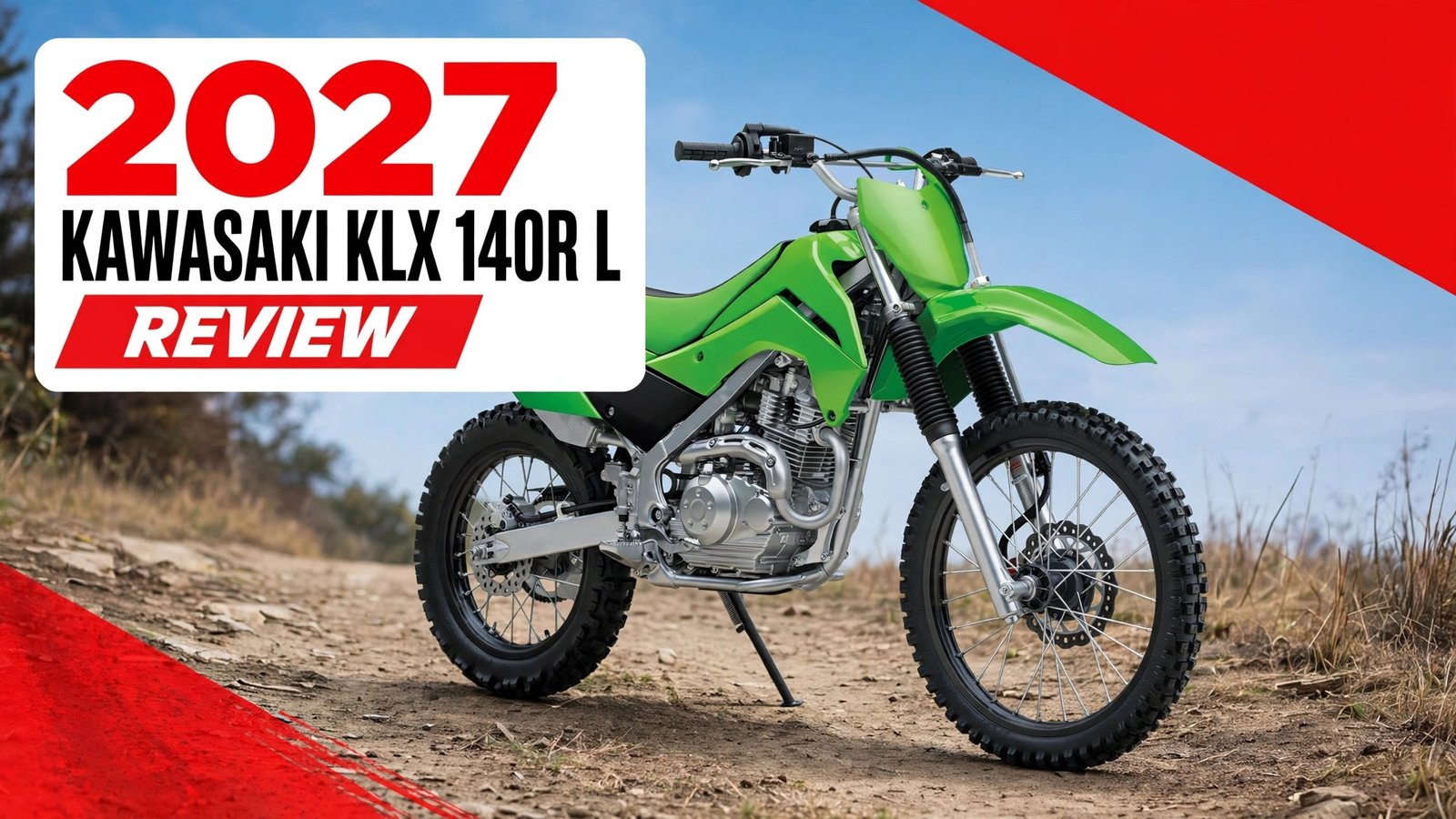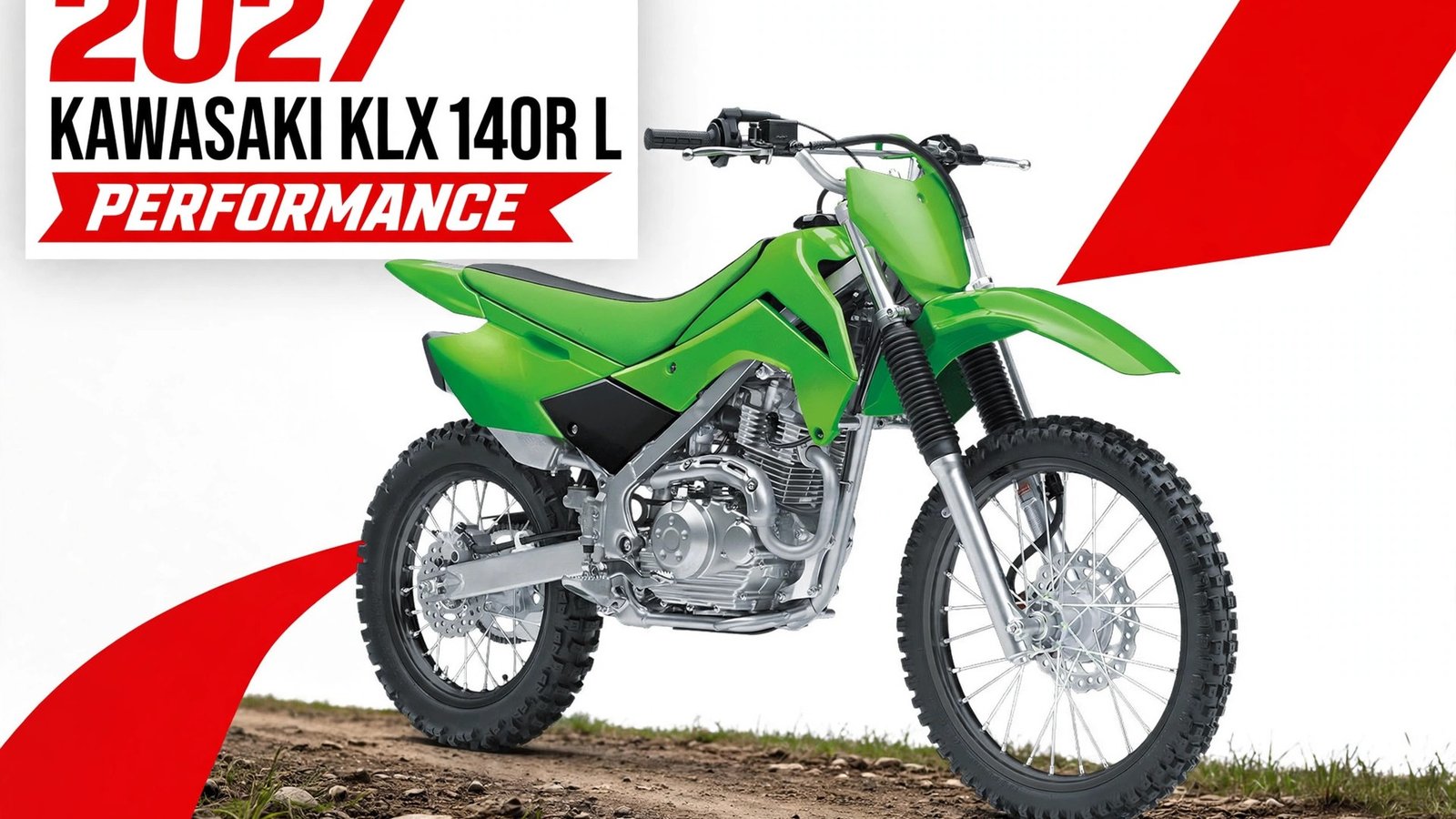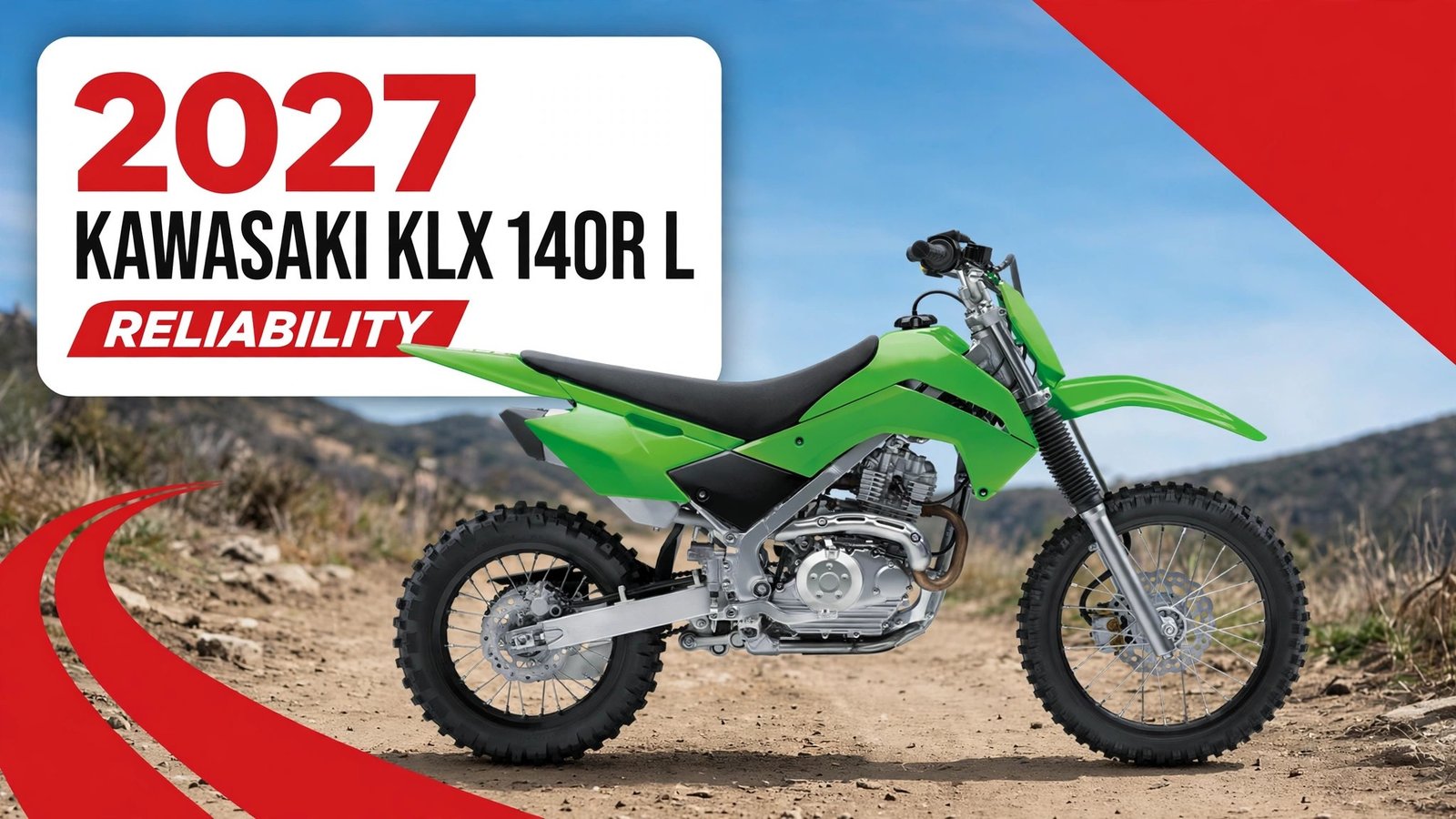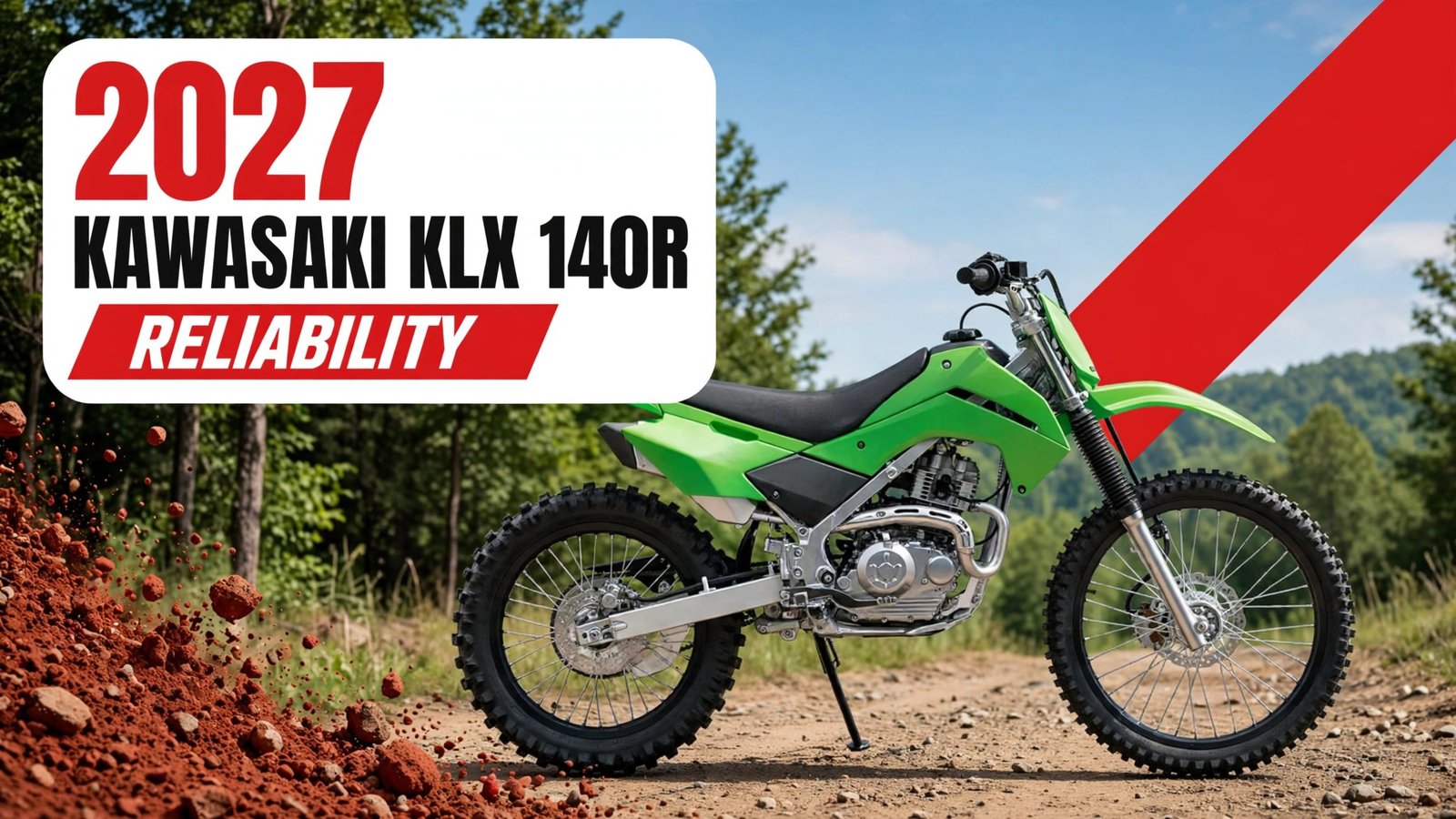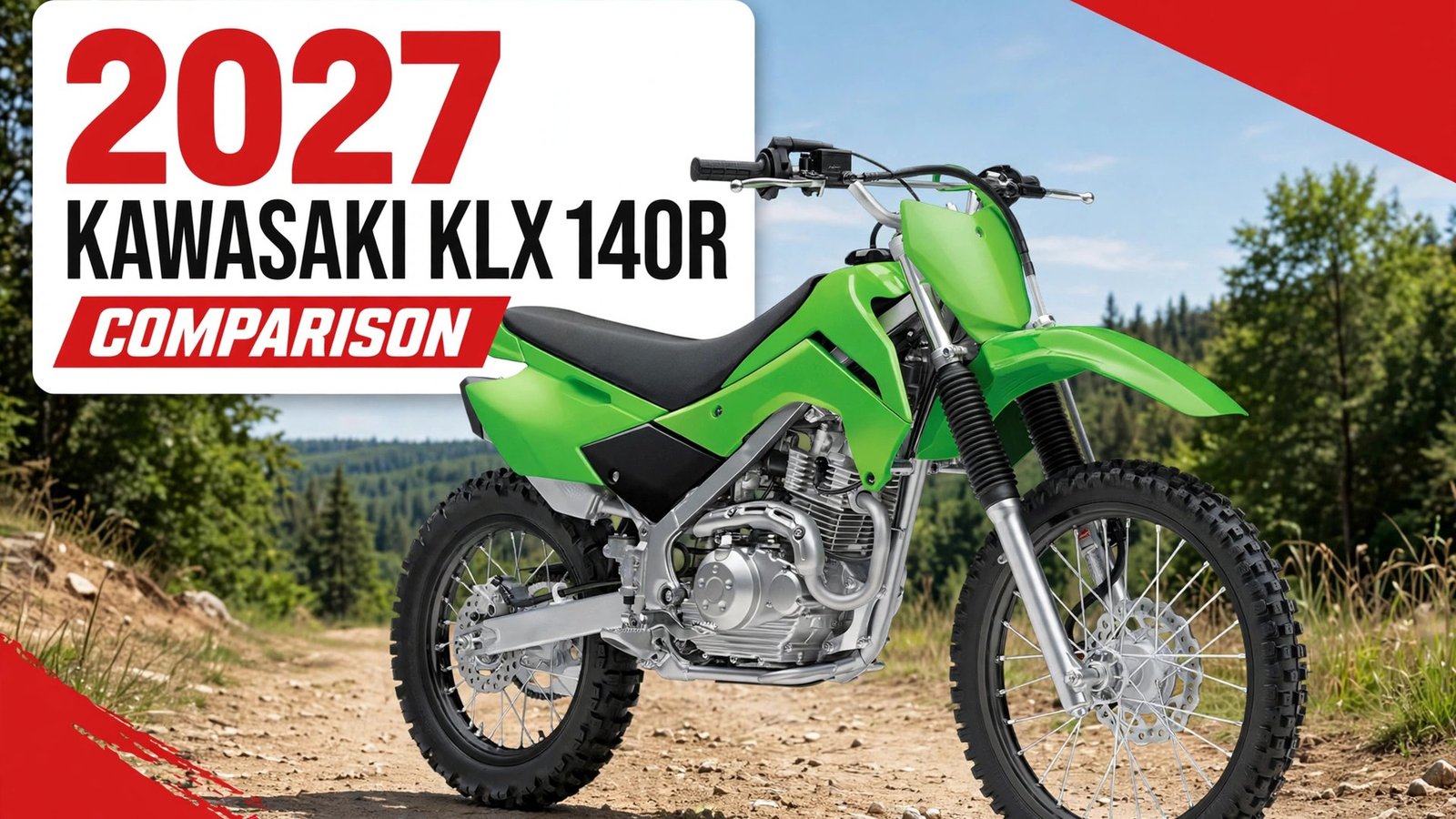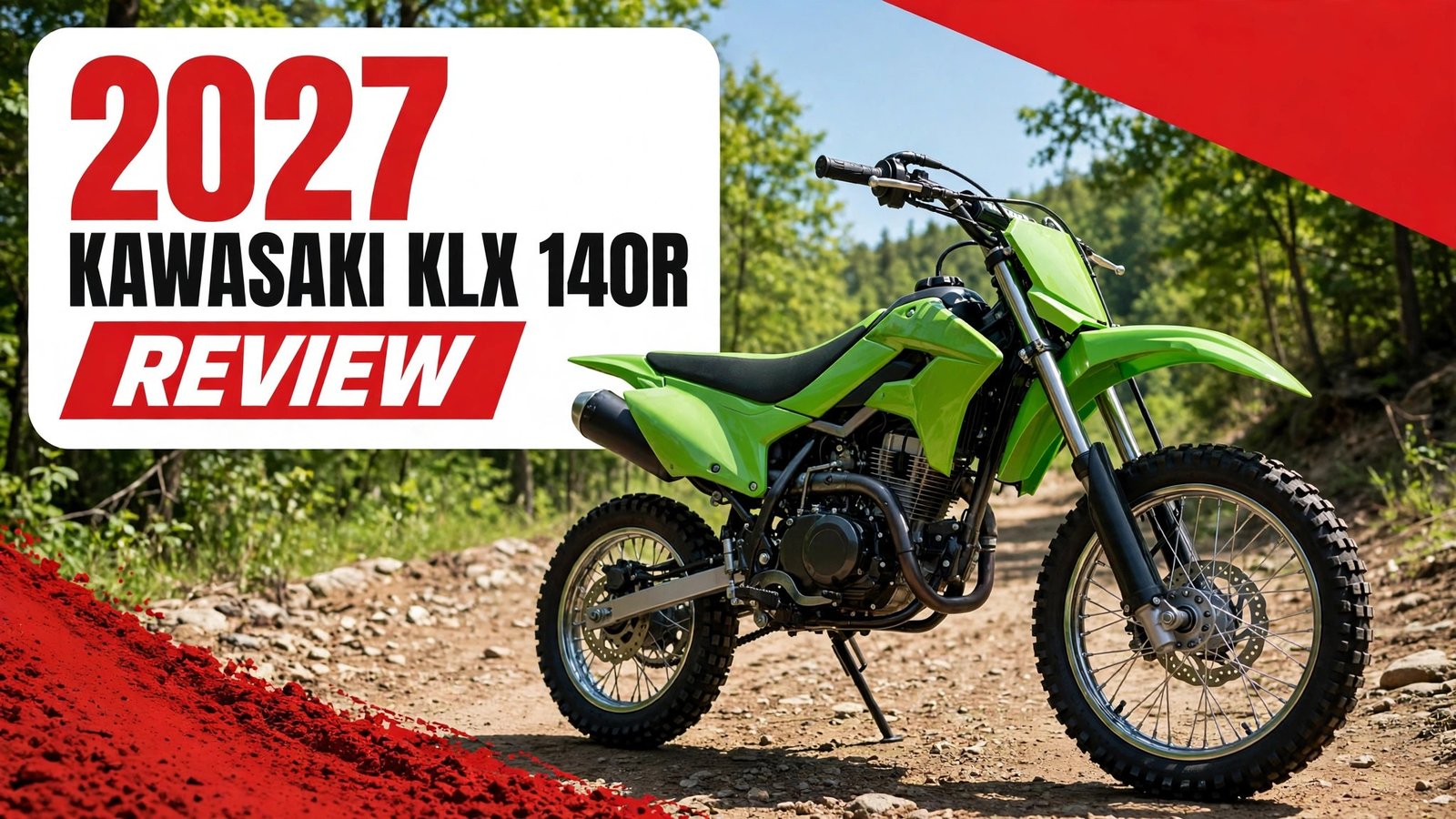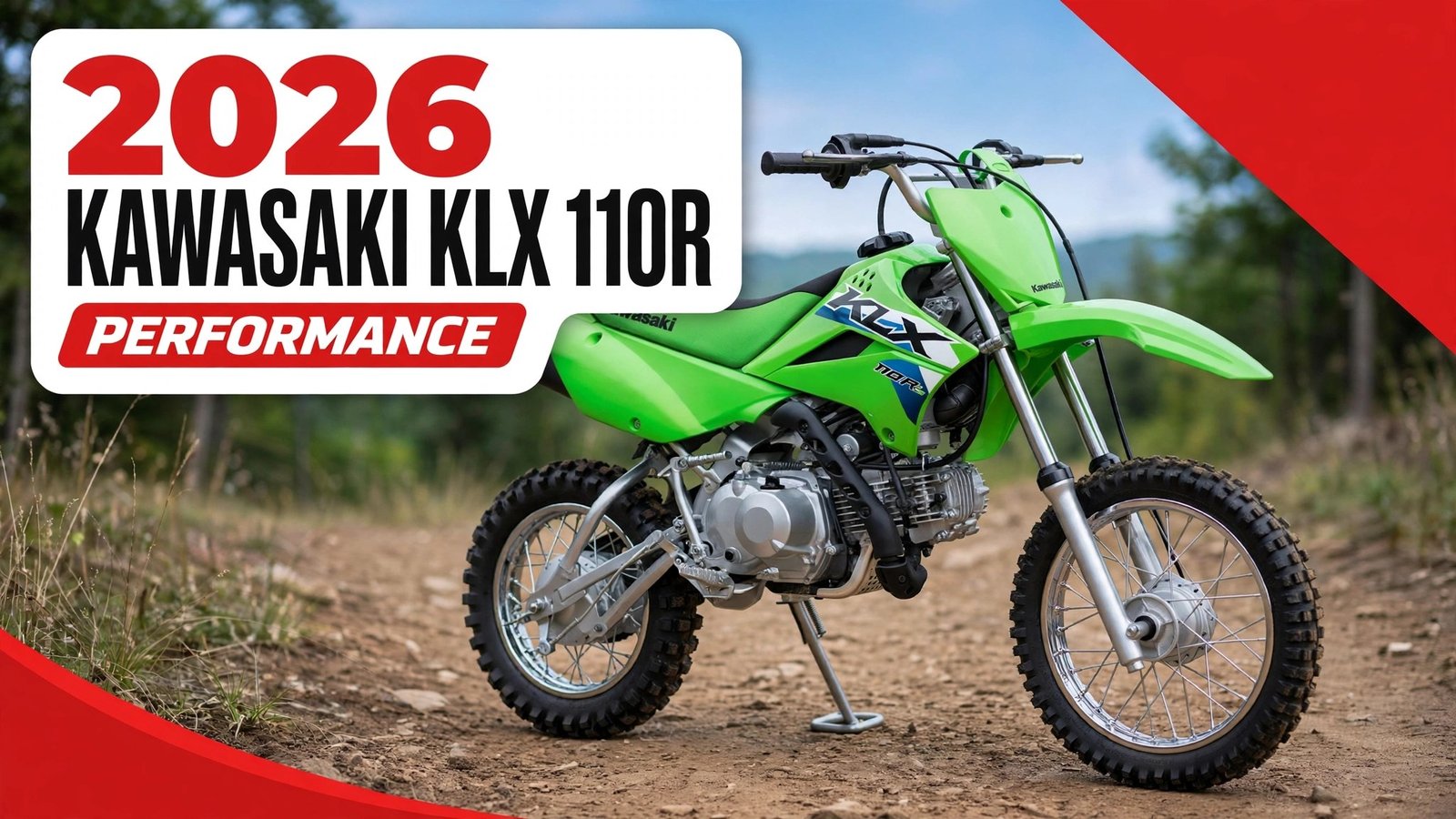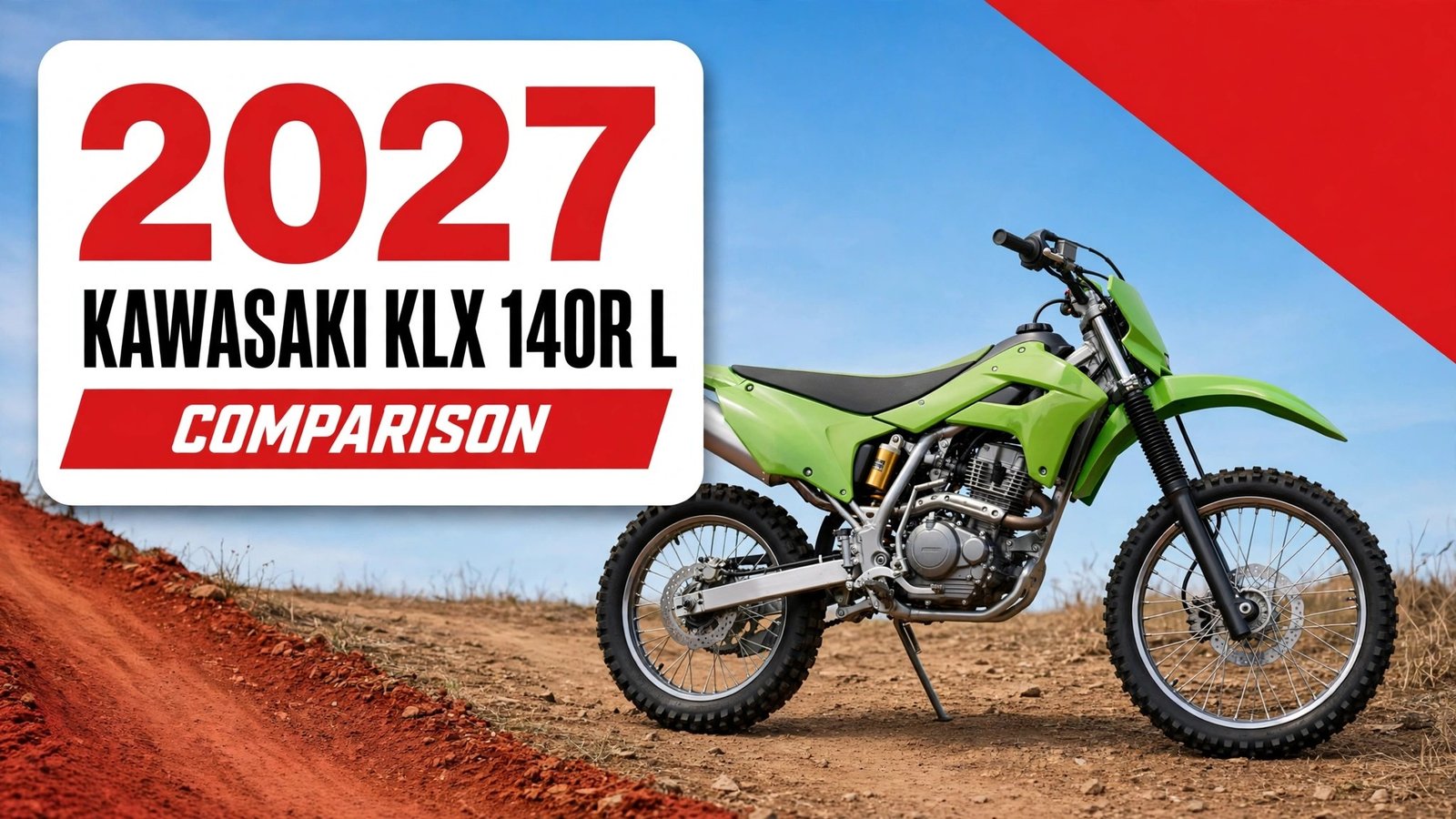
The short answer is that this Kawasaki KLX 140R L comparison ends with the most expensive bike in its set — and the most hardware. The 2027 L costs $4,099 plus a $315 destination charge, $4,414 delivered: $115 more than the Honda CRF125F Big Wheel, $300 more than its own standard sibling, and $475 more than the Yamaha TT-R125LE. This Kawasaki KLX 140R L comparison puts the L against the Kawasaki KLX 140R, the Honda CRF125F Big Wheel, and the Yamaha TT-R125LE on price, wheels, fuelling, brakes, and running costs, with every figure delivered.
Kawasaki KLX 140R L Overview and Its Closest Rivals
Is the tallest KLX140 worth the tallest price? This Kawasaki KLX 140R L comparison starts with the wheel-size basis. The L rolls on 19/16-inch wheels, the same size as the Honda Big Wheel and the Yamaha TT-R125LE, while its standard sibling, the KLX 140R, rolls on smaller 17/14-inch wheels.
The L Sits Between Three Worlds
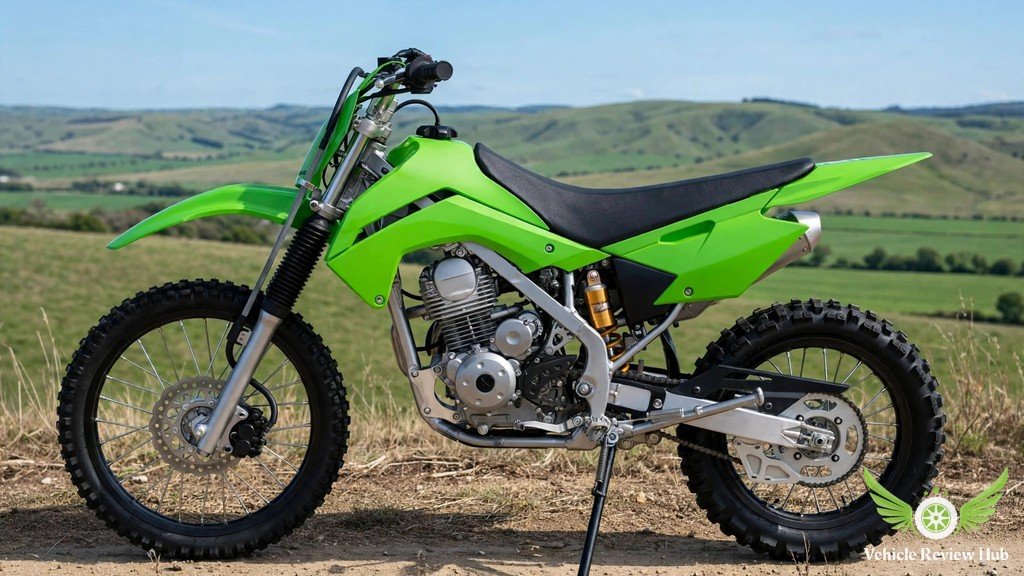
The L sits between three worlds. It shares the 144cc air-cooled single, Keihin PB20 carburettor, and five-speed manual gearbox with the standard R. It matches the Honda Big Wheel and the Yamaha TT-R125LE on 19/16-inch wheels. And it is priced like a premium small trail bike, at $4,414 delivered, above all three rivals in this Kawasaki KLX 140R L comparison.
The L is one of three KLX140R trims: the R on 17/14 wheels, the L on 19/16, and the F on 21/18. Electric start is the only start on every trim — no kick starter anywhere in the family — and discs sit at both ends, a 220 mm petal disc up front and a 186 mm petal disc at the rear.
How the Four Bikes Differ at a Glance
At a glance, the four bikes split on fuelling, gears, brakes, and price. The table below lays out the headline figures for this Kawasaki KLX 140R L comparison, and the sections that follow take each rival in turn.
| Bike | Engine | Fuelling | Gears | Brakes | Wheels | Seat | Delivered |
|---|---|---|---|---|---|---|---|
| Kawasaki KLX 140R L (2027) | 144cc single | Keihin PB20 carb | 5-speed manual | Disc / disc | 19/16 in | 31.5 in | $4,414 |
| Kawasaki KLX 140R (2027) | 144cc single | Keihin PB20 carb | 5-speed manual | Disc / disc | 17/14 in | 30.7 in | $4,114 |
| Honda CRF125F Big Wheel (2026) | 124.9cc single | Fuel injection | 4-speed manual | Disc / drum | 19/16 in | 30.9 in | $4,299 |
| Yamaha TT-R125LE (2026) | 124cc single | Carburettor | 5-speed manual | Disc / drum | 19/16 in | 31.7 in | $3,939 |
Notes: the delivered prices in this Kawasaki KLX 140R L comparison table are MSRP plus destination. The L is the most expensive of the four and the only one with an adjustable shock.
The video below compares short dirt bikes generally — it is not a head-to-head of the L against the Honda or the Yamaha, and it does not show the named rivals side by side. The rival comparison itself is in the text of this Kawasaki KLX 140R L comparison.
Kawasaki KLX 140R L vs Kawasaki KLX 140R
The closest rival to the L is its own sibling, because the choice between them is a fit question, not a power question. Same engine, carburettor, gearbox, travel, brakes, tank, and warranty — the $300 buys wheels, seat height, and a shock.
Engine, Specs and Performance Side by Side
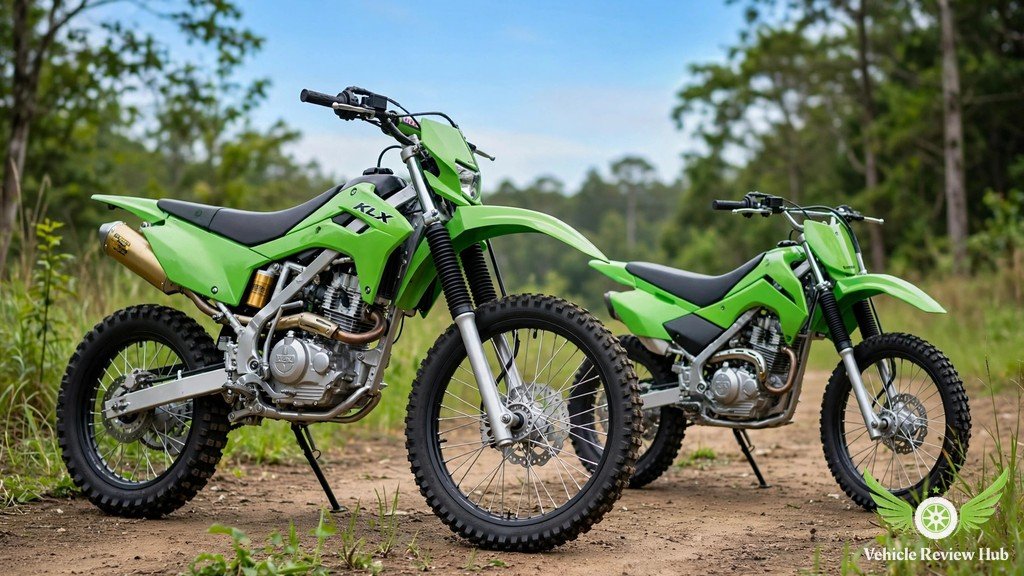
Nothing in the engine changes. Both bikes run the 144cc air-cooled single with the Keihin PB20 carburettor, the five-speed manual gearbox with the same ratios and final reduction of 3.571 (50/14). Kawasaki publishes no power figure; the only figure on record is the Canadian sheet’s 8.3 kW (11 PS) at 8,000 rpm, about 10.8 hp. That shared-engine fact shapes this whole Kawasaki KLX 140R L comparison: the L is never sold on power.
What changes is the rolling package. The L’s 19/16 wheels (70/100-19 front, 90/100-16 rear) roll over obstacles the R’s 17/14 wheels have to climb, and the L’s wheelbase is a full inch longer at 50.6 inches against 49.6. The L is 4.4 lb heavier at the curb — 209.4 lb against 205.0 lb — and 0.7 inches taller in ground clearance at 10.0 inches. The honest counterpoint comes from Ryan Villopoto in Dirt Rider’s 2008 comparison: “I have a small-wheeled KLX because I think that it’s faster with the smaller wheels.”
| Item | KLX 140R L (2027) | KLX 140R (2027) |
|---|---|---|
| Engine | 144cc single, air-cooled | 144cc single, air-cooled |
| Fuelling | Keihin PB20 carburettor | Keihin PB20 carburettor |
| Gears / clutch | 5-speed manual | 5-speed manual |
| Start | Electric only | Electric only |
| Brakes | Disc / disc (220/186 mm) | Disc / disc (220/186 mm) |
| Wheels | 19/16 in (70/100-19, 90/100-16) | 17/14 in (70/100-17, 90/100-14) |
| Seat height | 31.5 in | 30.7 in |
| Travel F/R | 7.1 / 7.1 in | 7.1 / 7.1 in |
| Rear shock | Piggyback, preload + 22-way rebound | 5-way preload |
| Wheelbase | 50.6 in | 49.6 in |
| Clearance | 10.0 in | 9.3 in |
| Chain | 428×126 | 428×122 |
| Curb weight | 209.4 lb | 205.0 lb |
| Fuel tank | 1.5 gal | 1.5 gal |
| Warranty | 6-month limited | 6-month limited |
| Delivered | $4,414 | $4,114 |
Notes: the figures in this Kawasaki KLX 140R L comparison table come from the official 2027 spec sheets. The engine, gearbox, travel, brakes, and tank are identical — the differences are wheels, seat, shock, chain, and weight.
Price, Equipment and Which Suits Which Rider
The 2027 L costs $4,099 plus $315 destination, $4,414 delivered; the 2027 R costs $3,799 plus $315, $4,114 delivered — a $300 step that has held in both 2026 and 2027. For that $300 the L buyer gets the 19/16 wheels, the 31.5-inch seat (0.8 inches taller than the R’s 30.7), and the piggyback shock with fully adjustable preload and 22-way rebound damping, against the R’s 5-way-preload shock.
Fit decides it. Motocross Hideout’s KLX140 guide puts the R at riders around 4 feet 8 inches to 5 feet, and the L at taller teens and shorter adults around 5 feet to 5 feet 4 inches; One ownership note for R owners: the L’s piggyback shock can be fitted to the R as an upgrade, according to Dirt Action’s Kawasaki fun bike review. The standard bike’s full figures are in our KLX 140R review, and the L’s own buying case is in our KLX 140R L review.
Kawasaki KLX 140R L vs Honda CRF125F Big Wheel
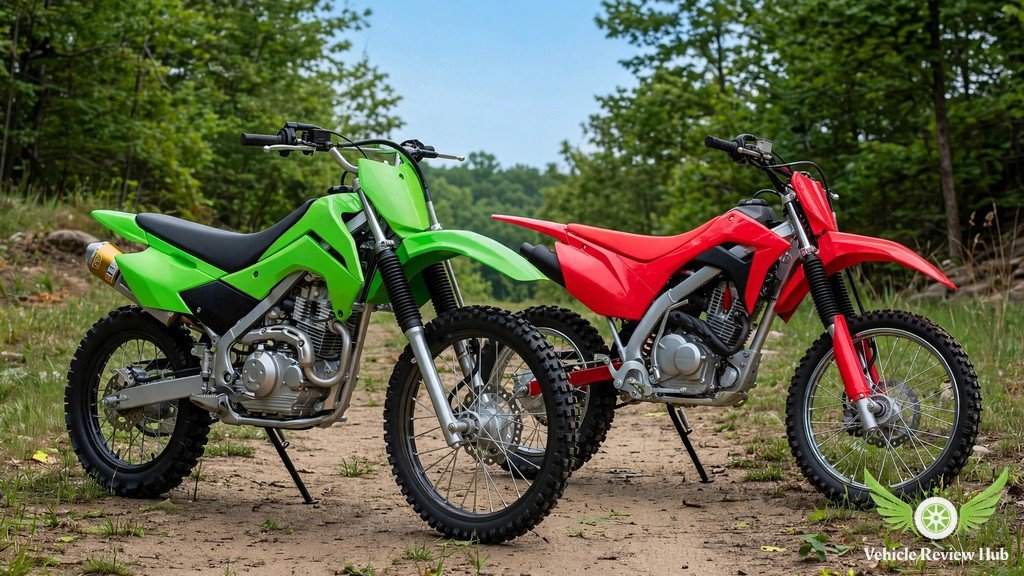
The Honda is the $115 question in this Kawasaki KLX 140R L comparison. The CRF125F Big Wheel undercuts the L by $115 delivered — $4,299 against $4,414 — and it does so with fuel injection, a kick-start backup, and a one-year warranty against the L’s six months.
Engine, Specs and Performance Side by Side
The engine gap is real: 144cc against 124.9cc, about 19cc, and the L’s fifth gear against the Honda’s four. The Honda’s fuel injection needs no jet change; the L’s Keihin PB20 carburettor needs its pilot jet watched — stock #38, with owners settling on #42 — and it is sensitive to elevation. Only the Honda has a kick backup; the L is electric start only.
The brake gap is the L’s clearest win: discs at both ends, 220 mm front and 186 mm rear, against the Honda’s front disc and rear drum. The shock gap is the second: the L’s piggyback unit with fully adjustable preload and 22-way rebound against the Honda’s preload-only rear shock.
| Item | KLX 140R L (2027) | CRF125F Big Wheel (2026) |
|---|---|---|
| Engine | 144cc single, air-cooled | 124.9cc single, air-cooled |
| Fuelling | Keihin PB20 carburettor | Fuel injection |
| Gears / clutch | 5-speed manual | 4-speed manual |
| Start | Electric only | Electric + kick |
| Brakes | Disc / disc (220/186 mm) | Disc / drum |
| Wheels | 19/16 in | 19/16 in |
| Seat height | 31.5 in | 30.9 in |
| Travel F/R | 7.1 / 7.1 in | 5.9 / 5.9 in |
| Rear shock | Piggyback, preload + 22-way rebound | Preload only |
| Curb weight | 209.4 lb | 199 lb |
| Fuel tank | 1.5 gal | 1.1 gal |
| Warranty | 6-month limited | 1 year |
| Delivered | $4,414 | $4,299 |
Notes: the figures in this Kawasaki KLX 140R L comparison table come from the official 2027 spec sheet and Honda’s CRF125F figures. The Honda is the only fuel-injected bike in the set; the L is the only bike here with discs at both ends and an adjustable shock.
Price, Equipment and Which Suits Which Rider
The 2026 Big Wheel costs $3,999 plus $300 destination, $4,299 delivered; the 2027 L costs $4,099 plus $315, $4,414 delivered. The $115 buys the bigger engine, the fifth gear, discs at both ends, the adjustable shock, and 0.4 gallons more fuel.
History leans the same way. In Dirt Rider’s 2008 comparison the KLX140L’s closest Honda rival was the CRF150F, but that bike is discontinued — the Big Wheel is the current Honda rival, and this Kawasaki KLX 140R L comparison uses the bike buyers can actually buy. The small-wheel CRF125F at $3,899 delivered is the R’s rival, not the L’s, and it is not used here.
Kawasaki KLX 140R L vs Yamaha TT-R125LE
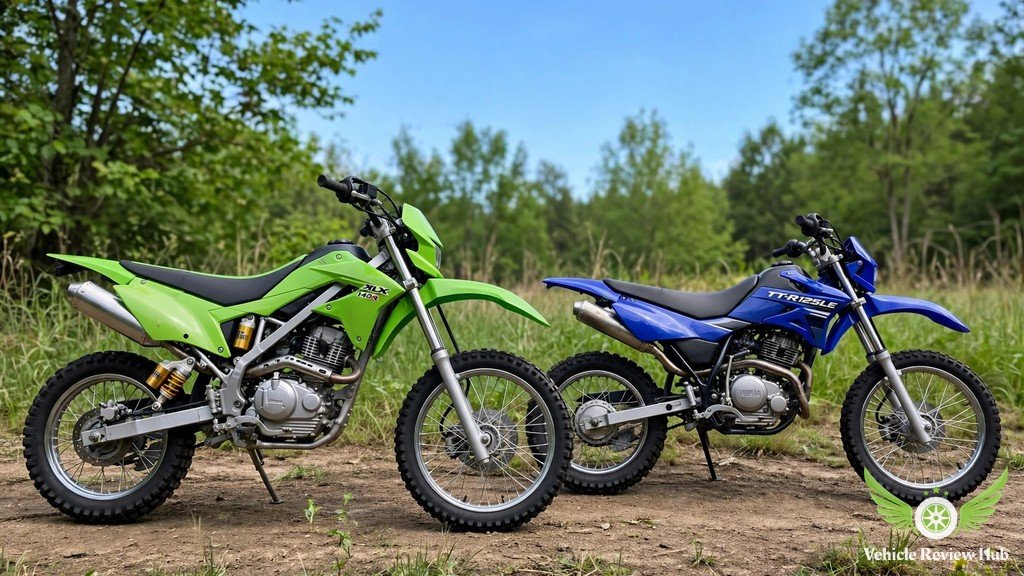
The Yamaha is the 2008 rematch in this Kawasaki KLX 140R L comparison. Dirt Rider’s 2008 comparison leaned to the Yamaha overall — “for many of our testers, the Yamaha TT-R125 is the way to go” — while giving the Kawasaki the best suspension of the bunch, “but that’s really a push since suspension is the weak point of all of these bikes.” The L now costs $475 more.
Engine, Specs and Performance Side by Side
Both bikes are carburetted, both are five-speed manuals, both roll on 19/16 wheels, and their seats sit within 0.2 inches — the L at 31.5, the TT-R125LE at 31.7. The differences are the engine and the brakes: the L’s 144cc against the Yamaha’s 124cc, about 20cc, and the L’s discs at both ends against the Yamaha’s front disc and rear drum.
The Yamaha answers with weight and warranty: 198 lb against the L’s 209.4 lb, 11.4 lb lighter, and a one-year warranty against the L’s six months, plus a kick backup the L does not have. No horsepower figure is published for the TT-R125LE, and this Kawasaki KLX 140R L comparison prints none.
| Item | KLX 140R L (2027) | TT-R125LE (2026) |
|---|---|---|
| Engine | 144cc single, air-cooled | 124cc single, air-cooled |
| Fuelling | Keihin PB20 carburettor | Carburettor |
| Gears / clutch | 5-speed manual | 5-speed manual |
| Start | Electric only | Electric + kick |
| Brakes | Disc / disc (220/186 mm) | Disc / drum |
| Wheels | 19/16 in | 19/16 in |
| Seat height | 31.5 in | 31.7 in |
| Travel F/R | 7.1 / 7.1 in | 7.1 / 6.9 in |
| Rear shock | Piggyback, preload + 22-way rebound | Preload only |
| Curb weight | 209.4 lb | 198 lb |
| Fuel tank | 1.5 gal | 1.0 gal |
| Warranty | 6-month limited | 1 year |
| Delivered | $4,414 | $3,939 |
Notes: the figures in this Kawasaki KLX 140R L comparison table come from the official 2027 spec sheet and Yamaha’s TT-R125LE figures. Both bikes are carburetted five-speeds on 19/16 wheels; the L answers with 20cc more, discs at both ends, and the adjustable shock.
Price, Equipment and Which Suits Which Rider
The 2026 TT-R125LE costs $3,599 plus $340 destination, $3,939 delivered — $475 less than the L’s $4,414. That $475 buys the L’s bigger engine, discs at both ends, the adjustable shock, and half a gallon more fuel.
Fit is nearly identical, so the choice is not about size. Both bikes are carburetted; the L’s pilot-jet story is in the KLX 140R L reliability guide. The L’s speed and economy picture is in our KLX 140R L performance guide.
Kawasaki KLX 140R L Price and Value Compared
Price is where this Kawasaki KLX 140R L comparison stops arguing and starts adding. All four bikes, delivered, in order — and the step-up alternatives above the L.
Honda Big Wheel Undercuts It by $115
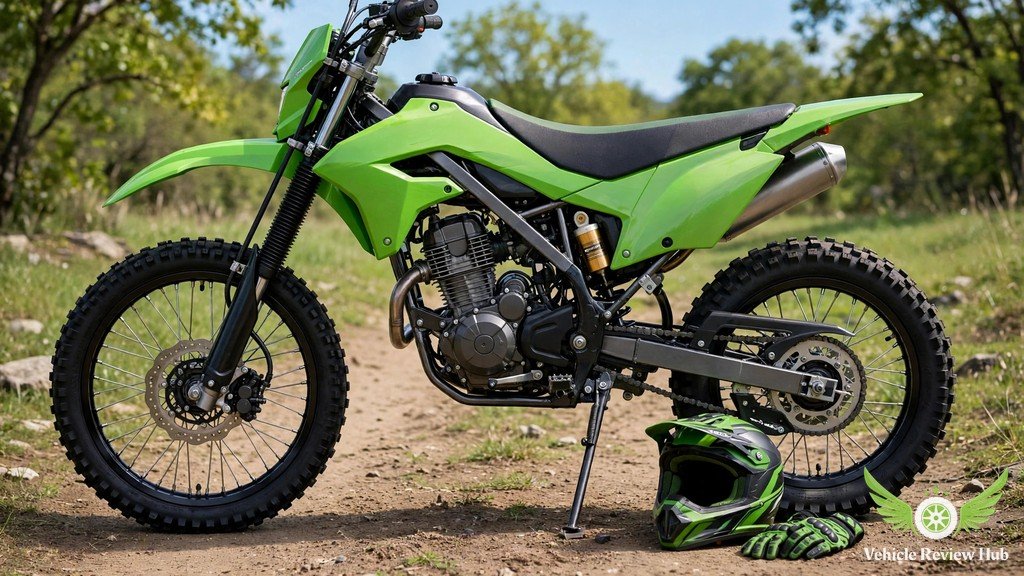
The numbers, delivered: Yamaha TT-R125LE $3,939; Kawasaki KLX 140R $4,114; Honda CRF125F Big Wheel $4,299; Kawasaki KLX 140R L $4,414. The L is the most expensive of the four — $115 more than the Big Wheel, $300 more than the R, $475 more than the TT-R125LE. The Big Wheel’s $115 undercut is the sharpest fact in this Kawasaki KLX 140R L comparison.
The L’s defence is the hardware list: the biggest engine, the only discs at both ends, the only adjustable shock, and the biggest tank.
| Bike | MSRP | Destination | Delivered |
|---|---|---|---|
| Yamaha TT-R125LE (2026) | $3,599 | $340 | $3,939 |
| Kawasaki KLX 140R (2027) | $3,799 | $315 | $4,114 |
| Honda CRF125F Big Wheel (2026) | $3,999 | $300 | $4,299 |
| Kawasaki KLX 140R L (2027) | $4,099 | $315 | $4,414 |
Notes: the delivered prices in this Kawasaki KLX 140R L comparison table are MSRP plus destination . The L’s 2026 price was $3,999 plus $315, $4,314 delivered — dealer listings showing a 2026 L at $4,099 are showing the 2027 price on 2026 stock.
Running Costs and Resale Value Compared
No verified running-cost dollar figure exists for any of these four bikes, and this Kawasaki KLX 140R L comparison invents none — no resale percentage either. All four are simple air-cooled singles with low-mileage servicing, foam air filters, and chain drive. The L’s servicing is counted in hours — first service at 5 hours, oil and filter every 50 hours, valves every 100 hours with screw adjusters.
Warranty is the one cost figure that is published and comparable: six months limited on both Kawasakis, one year on the Honda and the Yamaha. The L’s shorter warranty is the weakest line in its value case, and it sits next to the highest price. One recall touches this family: CPSC Alert 08-548, March 4, 2008, named about 200 bikes including the KLX140B8F — the B8F is the L — for frame welds, with a free inspection and repair, per the CPSC alert record.
Kawasaki KLX 140R L Comparison Verdict and US Alternatives
The verdict in this Kawasaki KLX 140R L comparison is hardware, not travel. Travel is 7.1 inches on the L and on the R, and the Yamaha matches it up front — nothing in this set is sold on travel. What the L’s premium buys is the shock, the wheels, and the brakes.

Verdict: Hardware, Not Travel, Sells It
Buy the L if you want the most hardware in a small trail bike: the biggest engine, the only discs at both ends, the only adjustable shock, the 19/16 wheels, and the tallest seat of the Kawasaki pair. Buy the Big Wheel if you want the easiest bike to live with — fuel injection, a kick backup, a one-year warranty — for $115 less. Buy the TT-R125LE if you want the cheapest way into 19/16 wheels and the 2008 test’s overall winner, for $475 less. That is the bottom line of this Kawasaki KLX 140R L comparison.
The honest counter to the L stays on the table: a carburettor where the Honda has fuel injection, no kick backup, the tallest first gear in the group. Dirt Rider called it “geared too tall for newbies” in 2008 — soft suspension over 180 lb and the shortest warranty in the set at six months. The figures here trace to the official 2027 KLX140R L spec sheet and Cycle World’s KLX140L review.
KLX140R F: $350 to Full Size
The size-up alternative in this Kawasaki KLX 140R L comparison is the KLX140R F: $4,449 MSRP plus $315 destination, $4,764 delivered — $350 over the L on both MSRP and delivered price, since the destination charge is the same $315. The F moves to 21/18 wheels, a 33.9-inch seat, 12.4 inches of ground clearance, and 200 mm of rear travel, on the same 144cc engine. The FRP Moto KLX140R review confirms the F’s price and destination.
The bigger step-up is the KLX230R at $4,999 MSRP — the destination charge is unverified, so no delivered total is printed here. For most riders in this Kawasaki KLX 140R L comparison, the L is the right size; the F is for the rider who already knows the L is too small.
Kawasaki KLX 140R L Comparison: Frequently Asked Questions
The questions riders ask most when choosing between the L and its rivals, answered with the verified figures above — and this Kawasaki KLX 140R L comparison says plainly where no test exists.
Is the Kawasaki KLX 140R L the most expensive bike in its comparison?
Yes. At $4,414 delivered it tops all four bikes in this Kawasaki KLX 140R L comparison — $115 over the Big Wheel, $300 over the R, $475 over the TT-R125LE.
How much more does the L cost than the standard KLX 140R?
$300 delivered. The 2027 L is $4,414 delivered against the 2027 R at $4,114. The $300 buys the 19/16 wheels, the 31.5-inch seat, and the piggyback shock — not more travel, which is 7.1 inches on both bikes in this Kawasaki KLX 140R L comparison.
Why does the Honda CRF125F Big Wheel cost less than the L?
The Big Wheel is $4,299 delivered — $115 less than the L. It undercuts the L while offering fuel injection, a kick backup, and a one-year warranty. This Kawasaki KLX 140R L comparison answers the $115 with hardware: the L’s bigger 144cc engine, fifth gear, discs at both ends, and adjustable shock.
Is the L faster than the CRF125F Big Wheel?
No test proves it. There is no dyno and no instrumented top-speed test for either bike, so this Kawasaki KLX 140R L comparison makes no speed claim. The L has about 19cc more displacement (144cc against 124.9cc) and a fifth gear the Honda lacks.
Does the L have the same travel as the standard R?
Yes. Both bikes have 7.1 inches of travel front and rear. The shock is the delta, not travel: the L’s piggyback unit has fully adjustable preload and 22-way rebound damping. That is the point of the verdict in this Kawasaki KLX 140R L comparison — hardware, not travel, sells it.
Which bike has the best suspension in this comparison?
The L. It is the only bike in this Kawasaki KLX 140R L comparison with an adjustable shock — piggyback reservoir, fully adjustable preload, 22-way rebound. Dirt Rider’s 2008 test called the KLX140L’s suspension the best of its group, “but that’s really a push since suspension is the weak point of all of these bikes.”
Does the L have fuel injection?
No. The L uses a Keihin PB20 carburettor, and this Kawasaki KLX 140R L comparison notes the Honda Big Wheel is the only fuel-injected bike in the set. The L’s pilot jet is stock #38, with owners settling on #42.
Which rival has a kick starter?
The Honda and the Yamaha have electric start plus a kick backup. The L and the standard R are electric start only, with no kick starter on any trim — a flat battery means a push or a jump, which this Kawasaki KLX 140R L comparison lists as one of the L’s honest counters.
Which bike is the lightest in this comparison?
The Yamaha TT-R125LE at 198 lb curb. The Honda Big Wheel is 199 lb, the standard R is 205.0 lb, and the L is the heaviest of the four in this Kawasaki KLX 140R L comparison at 209.4 lb curb.
What is the cheapest bike in this comparison?
The Yamaha TT-R125LE at $3,939 delivered ($3,599 plus $340 destination). It is $475 less than the L and $360 less than the Big Wheel — and it was the overall winner of Dirt Rider’s 2008 comparison, as this Kawasaki KLX 140R L comparison records.
Should I buy the L or step up to the KLX140R F?
The F is $4,764 delivered — $350 more than the L. It moves to 21/18 wheels, a 33.9-inch seat, 12.4 inches of clearance, and 200 mm of rear travel on the same 144cc engine. Buy the F if the L’s 19/16 wheels already feel small; buy the L if 31.5 inches is the right seat height, as this Kawasaki KLX 140R L comparison argues for most riders in the set.
Which bike should a beginner choose?
All four are beginner trail bikes, so fit decides it. The L suits taller teens and shorter adults; the R suits smaller riders; the Big Wheel and TT-R125LE suit the same taller group as the L. A beginner who wants the easiest ownership takes the Honda for its fuel injection and kick backup; a beginner who wants the most hardware takes the L.