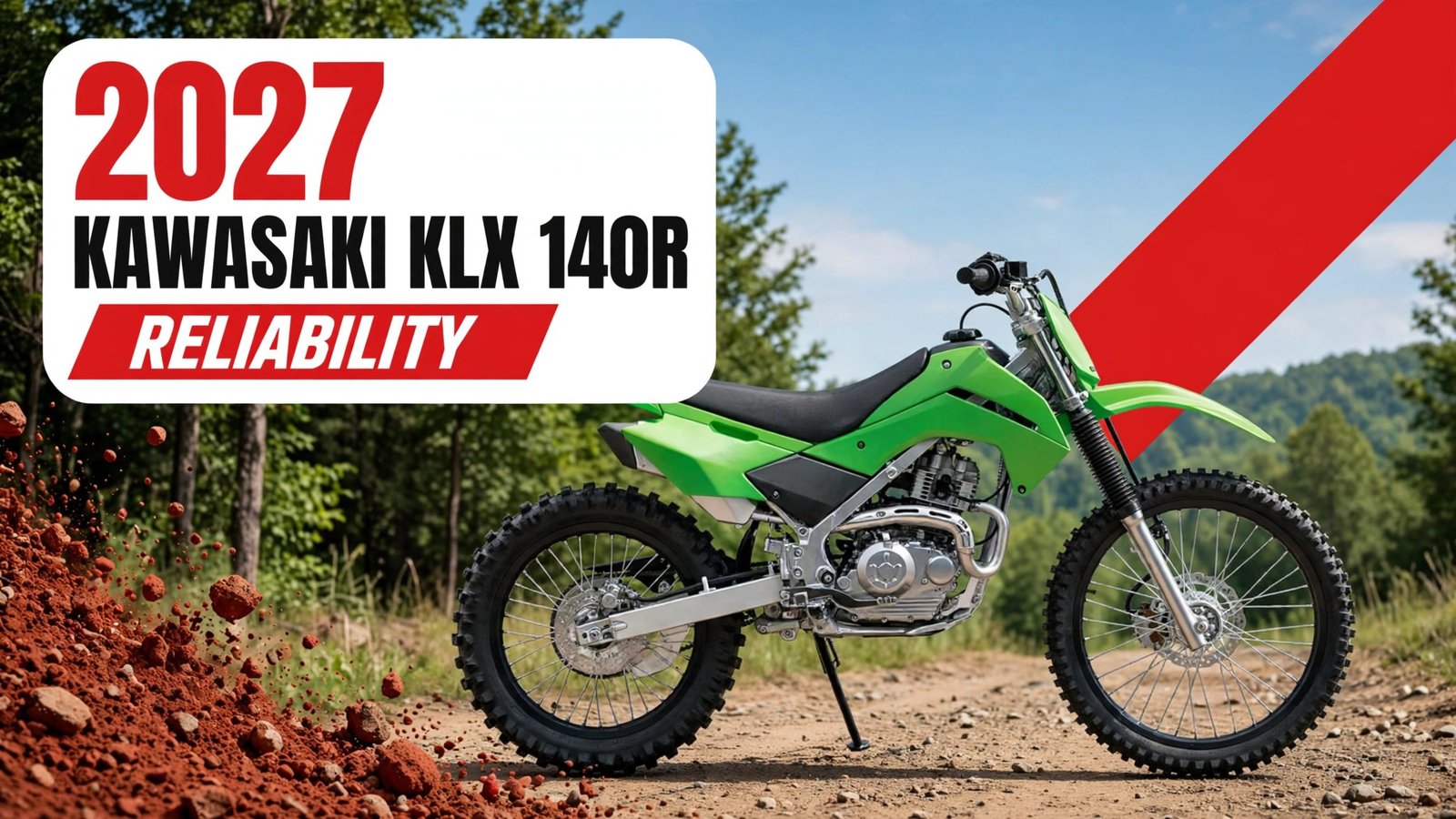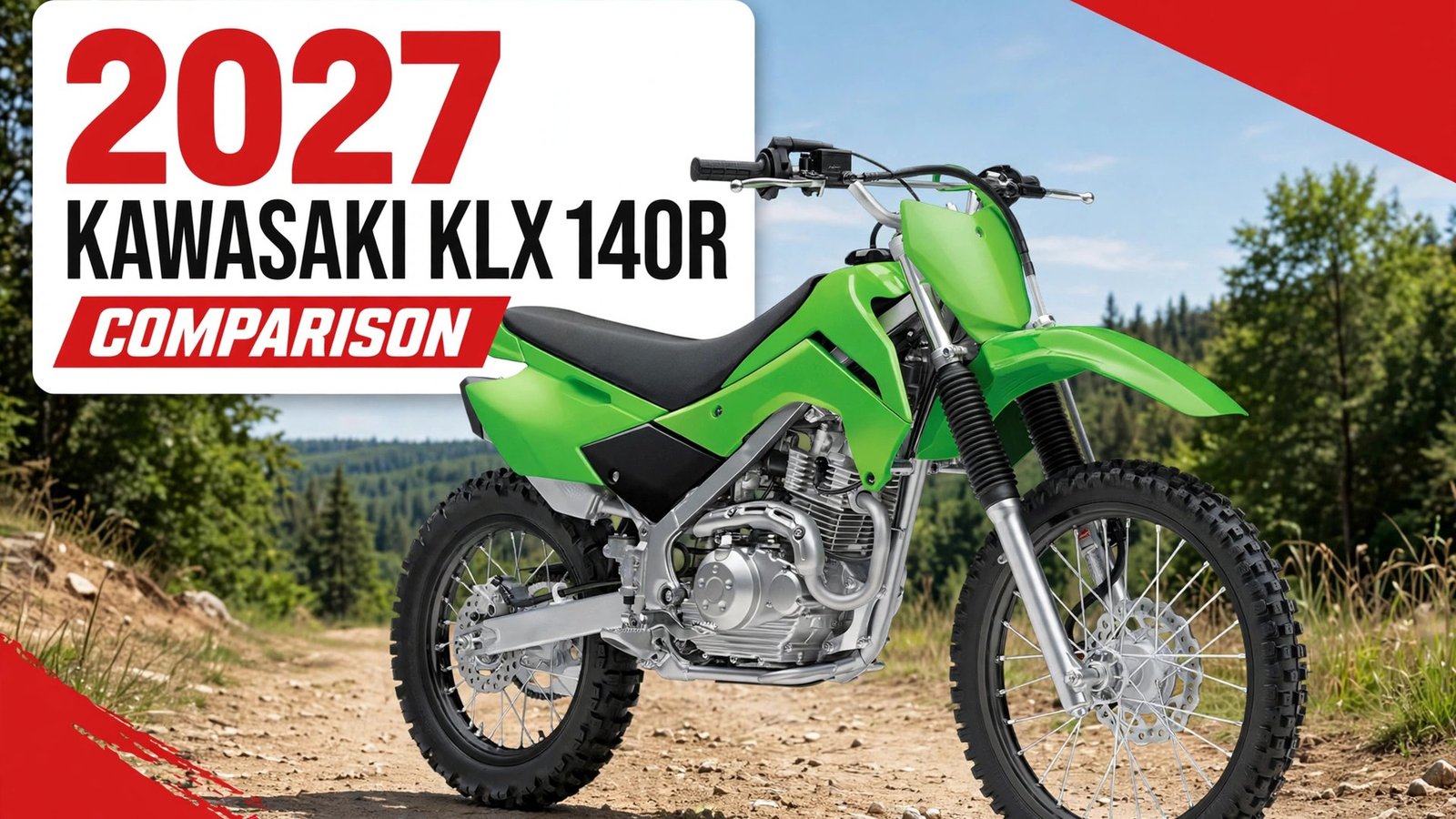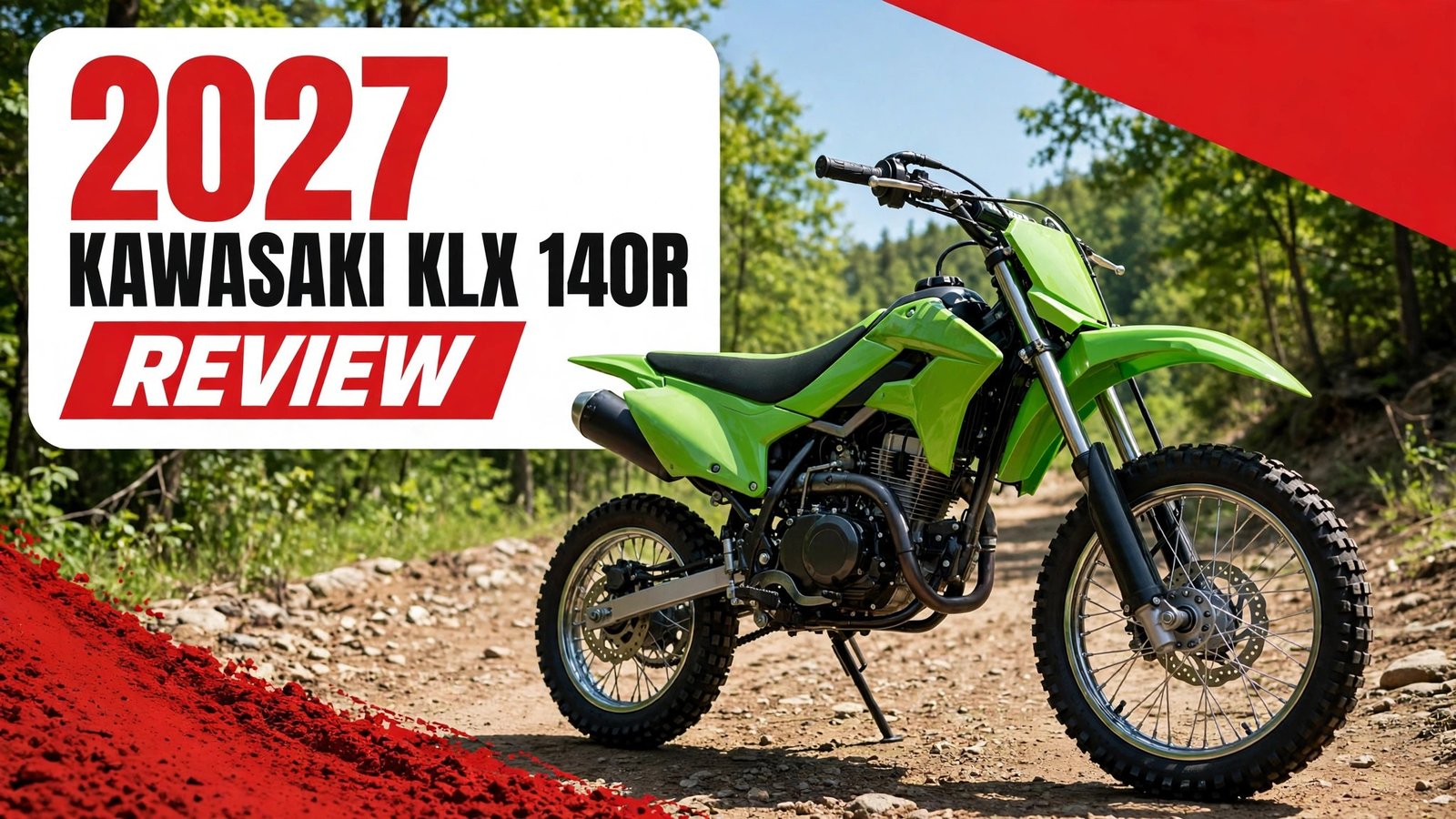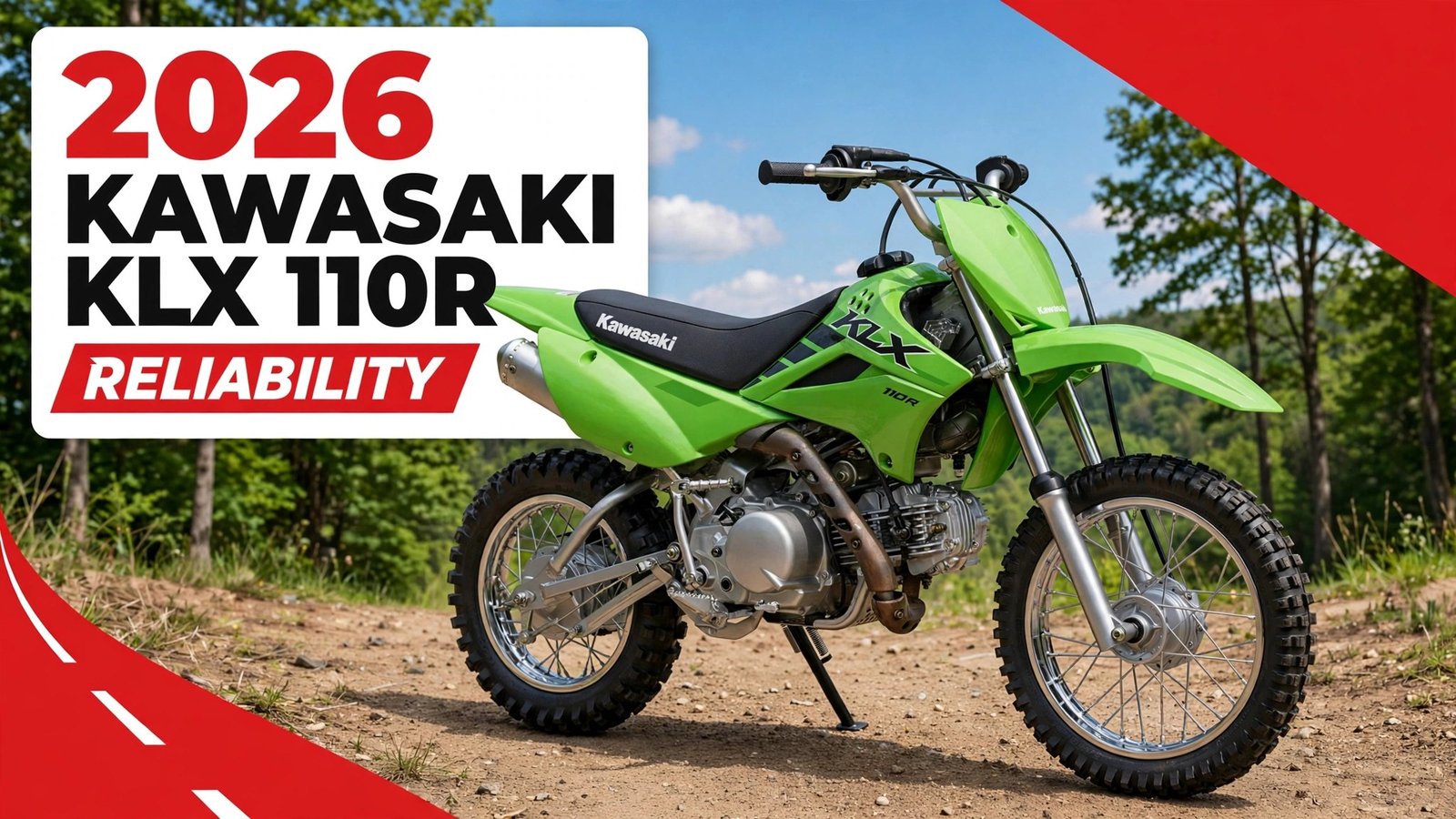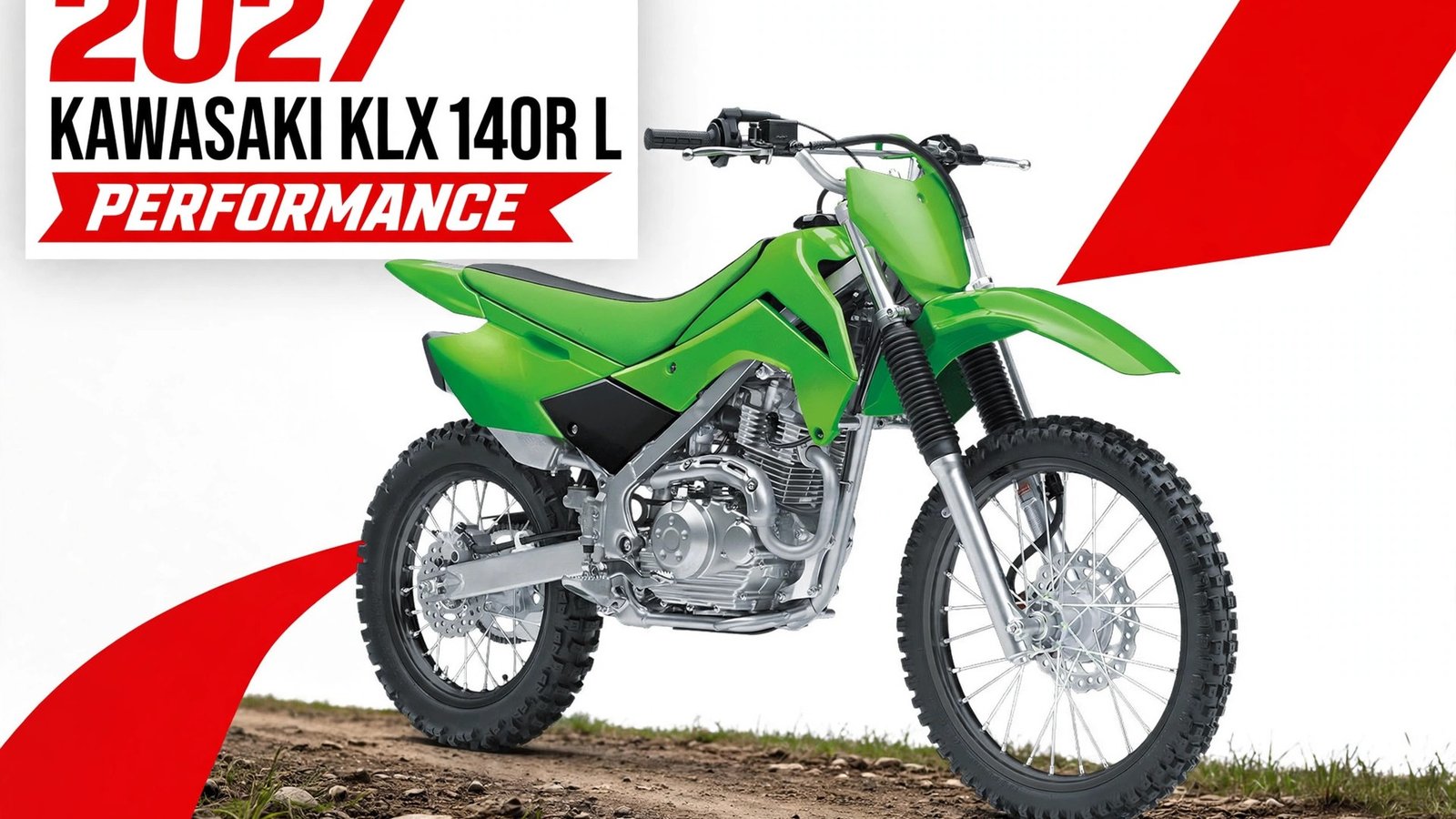
The honest answer to the Kawasaki KLX 140R L performance question is that no major outlet has ever dynoed this bike, timed it, or measured its top speed. This Kawasaki KLX 140R L performance guide starts with that plain fact: the numbers that do exist come from a Canadian spec sheet, owner estimates, and one 2008 magazine comparison. The 144cc single makes 8.3 kW, or 11 PS, at 8,000 rpm on the Canadian sheet, the top-speed estimates run from 50 to 65 mph, and no MPG figure has ever been tested.
What the tests do show is a friendly, predictable trail bike with the best suspension in its class and a motor that testers called bland. The L is the taller trim of the KLX140 family, with 19/16 wheels, a 31.5-inch seat and the KX85 piggyback shock, and its performance is the same engine in a bigger, more adjustable package. This Kawasaki KLX 140R L performance guide works through the power figure, the top-speed estimates, the fuel economy question, the 2008 Dirt Rider test, and how the L compares with the standard R.
Kawasaki KLX 140R L Engine Performance and Power Delivery
The L’s engine is the same 144cc air-cooled single as the standard R — Keihin PB20 carburettor, five-speed manual gearbox, push-button electric start. Nothing about the engine changes between the trims. The power figure comes from the Canadian spec sheet only, because Kawasaki USA publishes no power figure for this bike at all.
No Dyno From Any Major Outlet
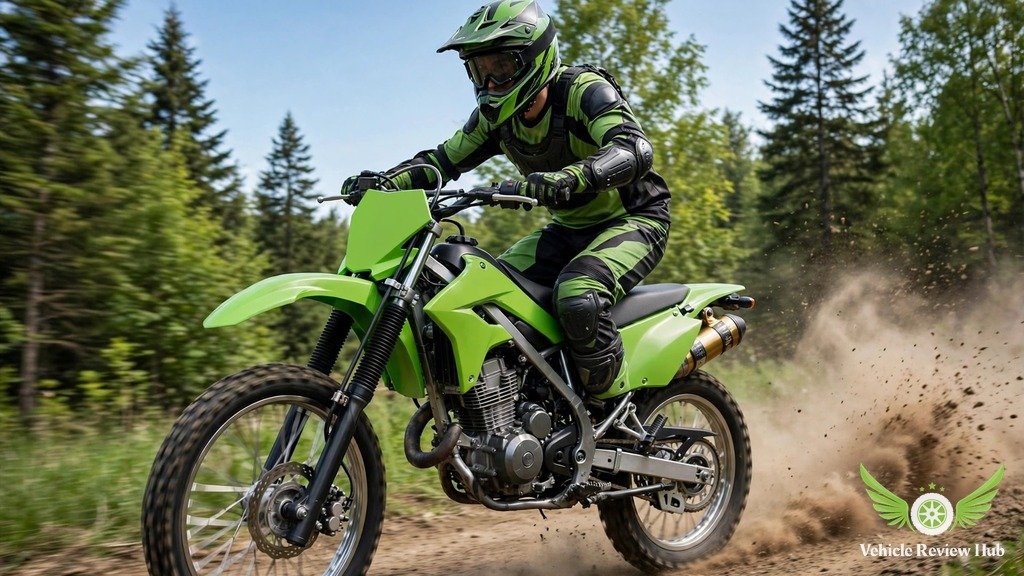
No dyno chart exists for this bike from any major outlet, and no major outlet that has ridden the KLX140 family has published a rear-wheel horsepower figure. The closest number in print is an owner’s estimate of about 9 hp at the rear wheel, and this Kawasaki KLX 140R L performance guide labels it as exactly that — an owner’s estimate, not a dyno run. The only official power figure is the Canadian sheet: 8.3 kW, or 11 PS, at 8,000 rpm, with 12.0 Nm at 6,000 rpm. That 11 PS works out to about 10.8 hp, so the bike should never be described as an 11 hp machine.
The power delivery is deliberately gentle: the 144cc single is tuned for predictable, low-stress trail riding rather than peak output. Dirt Rider’s 2008 test called the motor “very bland and about as lean as could be”, and that leanness is the story this Kawasaki KLX 140R L performance guide flags as the one that matters most for owners: the stock pilot jet is a number 38, and the bike runs lean enough at altitude that owners change jets to fix hard starting and low-speed stumbling. The KLX 140R reliability guide covers the fix, including the owner’s settled #42 pilot jet at 2.0 turns out.
| Item | Kawasaki KLX 140R L |
|---|---|
| Engine | 144cc, air-cooled single, SOHC, 4-stroke |
| Power (Canadian sheet only) | 8.3 kW (11 PS) at 8,000 rpm; 12.0 Nm at 6,000 rpm |
| Rear-wheel power (owner estimate) | About 9 hp — NOT a dyno figure |
| Transmission | 5-speed, return shift, wet multi-disc manual clutch |
| Gear ratios | 1st 2.667 / 2nd 1.895 / 3rd 1.474 / 4th 1.182 / 5th 1.000 |
| Primary reduction | 2.880 (72/25) |
| Final reduction | 3.571 (50/14 sprockets) |
| Final drive | Chain 428×126 |
Notes: the power figure in this Kawasaki KLX 140R L performance table is the Canadian spec sheet only. Kawasaki USA publishes no power figure. The rear-wheel figure is an owner’s estimate, not a dyno.
Dirt Rider Tested the L in 2008
The one proper magazine test of the L is Dirt Rider’s 2008 Midsize Playbike Comparison: five bikes and five pro riders — the Yamaha TT-R125, Honda CRF100F, Honda CRF150F, the Kawasaki KLX140L and the Suzuki DR-Z125L — with Ryan Villopoto on the KLX140L. The test produced no dyno, no timed acceleration and no top-speed run, but it is still the best independent riding verdict on this bike, and this Kawasaki KLX 140R L performance guide quotes it with attribution. The testers found the best suspension of the group on the Kawasaki, and the blandest motor.
Dirt Rider’s verdict mixed praise for the hardware with a shrug at the engine: a fresher, higher-tech play bike than its rivals, but still a budget machine with “cheesy components, a dull motor and questionable styling”. The Dirt Rider 2008 comparison is the source for every quote in this section.
Kawasaki KLX 140R L Top Speed and Acceleration
Top speed is the question every buyer asks first, and the one with the least solid answer. No outlet has run a GPS or timed top-speed test on the KLX140R L, and the bike has no speedometer, so every number in circulation is an estimate. This Kawasaki KLX 140R L performance section puts the estimates side by side.
Estimates Conflict: 50 to 65 MPH
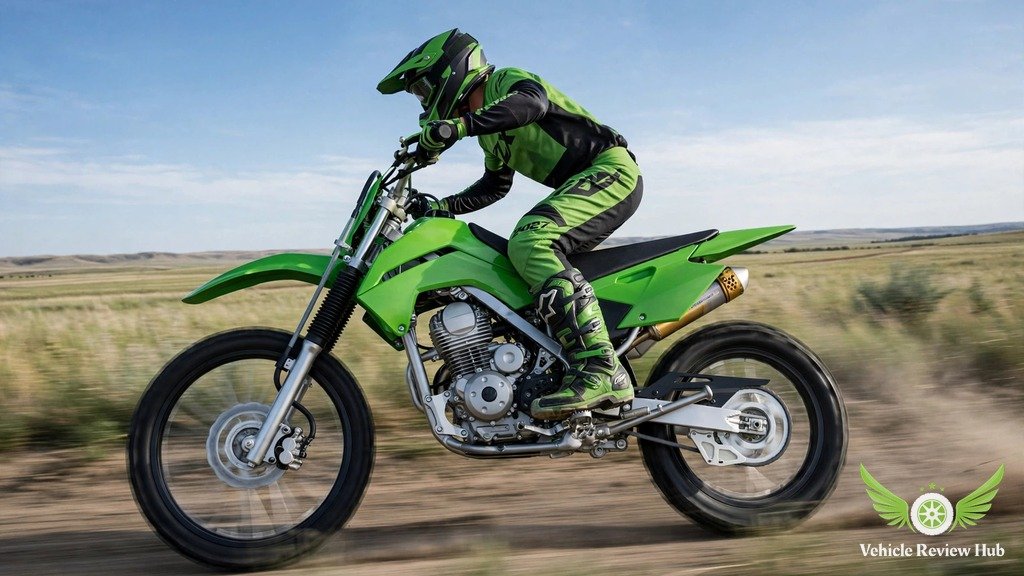
The honest top-speed range is 50 to 65 mph, and the spread is the point: the low end from a general KLX 140 guide, the middle from a dealer listing, and the high end from an owner answer — with jetting. No figure in that range is a test result, and this Kawasaki KLX 140R L performance guide never prints one as if it were.
| Source | Figure | Basis |
|---|---|---|
| Braap Academy KLX 140 guide | 50–55 mph | Stock bike |
| National Powersports 2015 KLX140L listing | 57 mph | Dealer estimate |
| Answers.com owner answer (KLX140L) | 55–60 mph stock; 65 mph with jetting | Owner claim, 65 with jetting |
| BikeBD KLX 140 | About 62 mph (100 km/h) | Approximate |
Notes: every figure in this Kawasaki KLX 140R L performance table is an estimate — no instrumented top-speed test exists, and the 65 mph high end is an owner claim with jetting, never a stock figure.
The 65 mph figure needs its caveat in full: it comes from an owner answer that puts the stock bike at 55–60 mph and adds “65mph maybe with jetting”. Some guides print 65 mph without that context, and one source conflates it with the FRP FX140, a different bike entirely — a mix-up this Kawasaki KLX 140R L performance guide does not repeat. The stock bike runs 50 to 60 mph, and even that is an estimate range.
No Instrumented Test Exists
No instrumented test exists because the bike is built without the instruments a test needs: no speedometer, no odometer, no trip meter. A tester would have to bring their own GPS and timing gear, and no major outlet has bothered. The Braap Academy KLX 140 guide puts the stock top speed at 50–55 mph — the most conservative estimate, and the one this Kawasaki KLX 140R L performance guide treats as the floor.
Acceleration is the same story: no 0–60 figure, no quarter-mile time, no timed run of any kind. Riding reports agree the bike pulls cleanly from low revs, first gear is tall for a beginner bike, and the five-speed gives a fairly fast clip on wide-open ground.
Kawasaki KLX 140R L Mileage and Fuel Economy
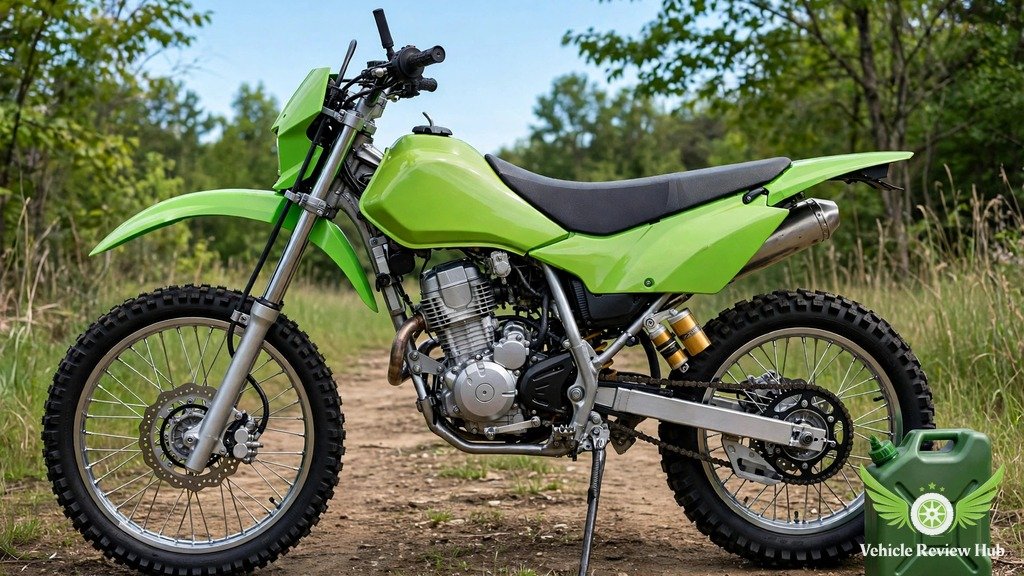
Fuel economy is the third untested number on this bike, for the same reason as top speed: no odometer, so no one can measure miles per gallon without bringing their own instruments. No outlet has published an MPG figure, and this Kawasaki KLX 140R L performance guide prints none. The 1.5-gallon tank and the small, lean-running single make for a light, frugal trail bike.
No MPG Testing Exists
No MPG testing exists for the KLX140R L. The bike has no odometer and a 1.5-gallon tank, so a rider cannot work out consumption from a fill-up without tracking hours instead of miles. The owner’s manual services the bike by the hour — first service at 5 hours, oil and filter every 50 hours. No outlet publishes an MPG figure, and this Kawasaki KLX 140R L performance guide would rather print the gap than fill it with a guess.
The lean jetting is the one fuel-economy factor with real evidence. Dirt Rider’s 2008 test called the motor “about as lean as could be”, and the Road and Trail owner of a 2020 L found the bike hard to start and stumbling at low speed from new at 1,200 metres — a lean pilot jet. The fix was a larger pilot jet, which richens the mixture at some cost to fuel efficiency. The Road and Trail 2020 KLX140L long-term review tells that story over 141 hours.
Gearing Too Tall for Newbies (2008)
Dirt Rider’s 2008 test put the gearing problem in one line: the five-speed “seems to be geared too tall for newbies and slower riders”. First gear is 2.667, and on tall 19/16 wheels the effective gearing is taller still, so a new rider needs real clutch control at walking pace. The same gearbox also gives the bike its wide range. Dirt Rider noted it “actually allows the bike a fairly fast clip on wide-open terrain”. It suits a rider learning clutch control, and it frustrates a complete beginner on tight, slow trails.
The gearing is shared with the standard R — same ratios, same 3.571 final reduction on 14/50 sprockets — so the L’s taller wheels are the only thing that changes the feel. The chain is longer on the L, a 428×126 against the R’s 428×122, because the wheelbase is a full inch longer. The KLX 140R performance guide covers the same gearbox.
Kawasaki KLX 140R L Real-World Riding Experience
On the trail, the L rides like a bigger, more settled version of the standard R: taller wheels roll over roots and rocks more easily, the longer wheelbase adds stability, and the adjustable shock lets a rider tune the rear. The video below shows the KLX140 in real riding — a group pit-bike track day with several bikes on track, including a KLX140. It is real riding footage, not a measured test, but it gives a fair sense of how the bike moves at play pace.
Best Suspension of the Bunch, But
Dirt Rider’s 2008 test gave the L its best line: “This bike seemed to have the best suspension of the bunch, but that’s really a push since suspension is the weak point of all of these bikes.” The adjustable piggyback shock — the fully adjustable unit from the KX85 — brings “a whole new feel to the bike”, in the test’s words, while the 33 mm fork is only “OK at best”. Cycle World agreed, calling the 140L “an exceptional chassis” for its class. This Kawasaki KLX 140R L performance guide keeps both verdicts: the shock is the star, the fork is adequate.
The shock is what makes the L worth its $300 step over the standard R: a piggyback reservoir, fully adjustable preload and 22-way rebound damping, against the R’s simpler 5-way-preload shock. The same shock fits the standard R as an upgrade. Dirt Action notes it directly. The travel is identical on both trims at 7.1 inches, so the money buys tuning, not travel. Sources: the Cycle World 2008 review and the Dirt Action review.
Testers Leaned to the Yamaha Overall
For all its suspension praise, the L did not win Dirt Rider’s 2008 comparison. The testers leaned to the Yamaha TT-R125 overall — “for many of our testers, the Yamaha TT-R125 is the way to go” — and called it “the best all-around bike in its class when you compare weight, power and handling”. The Honda CRF100F was second favourite. The Kawasaki’s motor was the problem: “very bland and about as lean as could be”, with a five-speed too tall for newbies. The lesson this Kawasaki KLX 140R L performance guide stresses is that the L is the best-suspended bike in its class and not the best all-round bike.
That 2008 verdict still frames the L honestly today — the bike has not changed mechanically since. A buyer who wants the best suspension and the most adjustable small trail bike buys the L; a buyer who wants the friendliest motor looks at the Yamaha or the Honda instead. This Kawasaki KLX 140R L performance guide does not hide that trade-off.
Kawasaki KLX 140R L Handling, Braking and Stability
Handling is where the L’s bigger wheels earn their keep: the 19-inch front and 16-inch rear wheels roll over trail obstacles more easily than the standard R’s 17/14 set, the 10.0 inches of ground clearance keeps the frame off rocks, and the 50.6-inch wheelbase adds stability at speed. The cost is 4.4 lb and a taller seat. This Kawasaki KLX 140R L performance section covers the brakes, the geometry and the weight limit the manual does not give.

Handling, Braking and Stability on the Trail
The brakes are a genuine class advantage: discs at both ends, a 220 mm petal disc with a dual-piston caliper at the front and a 186 mm petal disc with a single-piston caliper at the rear. Most play bikes in this class run a disc at the front and a drum at the rear, so the L stops better and more consistently. The Road and Trail owner of a 2020 L noted the brakes are a bit grabby and the rear pedal sits a bit high — honest niggles this Kawasaki KLX 140R L performance guide records.
The geometry is mild and forgiving: 27.0 degrees of rake, 3.8 inches of trail, a 50.6-inch wheelbase, and 10.0 inches of ground clearance. The bigger wheels are the handling story — the Motocross Hideout KLX140 guide notes the L “handles obstacles on the trails a little better because the bigger tires roll over them more easily”. The trade-off is the tall first gear and the soft fork: stable and predictable at trail pace, but not a motocross bike, and jumping it is more than the suspension was built for.
| Item | KLX 140R L |
|---|---|
| Ground clearance | 10.0 in |
| Front tyre / rear tyre | 70/100-19 / 90/100-16 |
| Front brake / rear brake | 220 mm petal disc, dual-piston / 186 mm petal disc, single-piston |
Notes: the figures in this Kawasaki KLX 140R L performance table come from the official Kawasaki 2027 KLX140R L spec sheet; the rear brake is a disc, not a drum.
Shock Bottoms at 160 lb Geared
The suspension’s honest limit is weight. The Road and Trail owner of a 2020 L — 73 kg, or 160 lb with gear — bottomed the rear shock a few times with the stock settings, and Motocross Hideout says riders over 180 lb will bottom the suspension easily. The owner’s manual states no rider weight limit for the L at all — the 154 lb figure that circulates belongs to the standard R’s service manual, not the L — so the honest guidance comes from owners.
For a rider near or above 180 lb, the fix is stiffer springs or a step up to the F, and the manual will not warn them first. For a lighter rider, the stock shock is the best in its class, with 22-way rebound adjustment for slow technical riding or faster trails. That tuning range is what the $300 step over the standard R buys, and it is the reason this Kawasaki KLX 140R L performance guide calls the shock the L’s signature part.
Kawasaki KLX 140R L Performance Compared With Other Trail Bikes
Against other trail bikes, this Kawasaki KLX 140R L performance story is one of fit, not power: the engine, gearbox and travel are the same as the standard R, so the L is not faster — it is taller, more stable and more adjustable. This Kawasaki KLX 140R L performance comparison starts there, with a bike that costs $4,414 delivered.
Kawasaki KLX 140R L vs Kawasaki KLX 140R
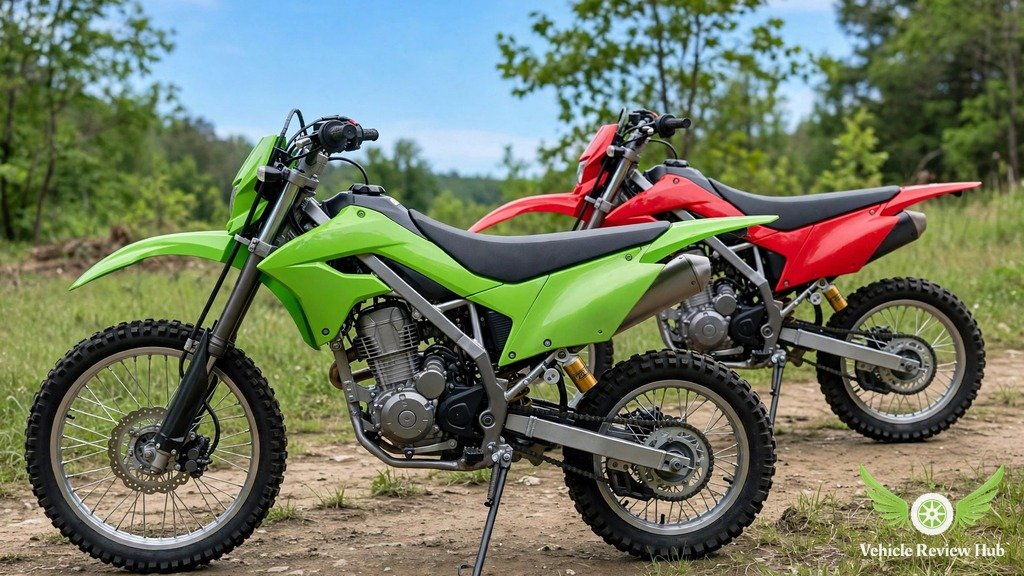
The L and the R share the engine, the carburettor, the five-speed gearbox, the brakes and the 7.1-inch travel, so the difference between them is fit, not power — the point this Kawasaki KLX 140R L performance guide makes about both trims. The L is 4.4 lb heavier at 209.4 lb curb, rolls on taller 19/16 wheels, sits 0.8 inches higher, and carries the adjustable piggyback shock. The KLX 140R review covers the standard bike in full.
Ryan Villopoto’s line from the 2008 test is the honest counterpoint: “I have a small-wheeled KLX because I think that it’s faster with the smaller wheels.” Smaller wheels feel quicker; the L trades a little of that for stability and obstacle rollover. A smaller rider who values quickness is better served by the standard R, and $300 better off.
Is the Kawasaki KLX 140R L Suitable for Beginner Riders?
Yes, with the fit caveat. The L is a friendly first trail bike: a 31.5-inch seat a rider around five feet tall can reach, a light 209.4 lb curb weight, predictable power, electric start, and a manual clutch to learn on. Motocross Hideout puts the fit at many teens and shorter adults, roughly five feet to five foot four, and Dirt Action recommends the L for youths up to 170 cm tall and over 55 kg. The KLX 110R L review covers the smaller sibling — the bike this Kawasaki KLX 140R L performance guide points smaller riders to.
The caveats are the tall first gear, the lean jetting at altitude, and the soft suspension for heavier riders. A new rider needs clutch control at walking pace, and a rider over 180 lb should budget for stiffer springs. It is also not a race bike: jumping these play bikes is more than the suspension was built for. For a teen or shorter adult learning trail riding, the L is the right size — gentle, predictable, and adjustable as the rider grows. That is the verdict this Kawasaki KLX 140R L performance guide lands on.
Kawasaki KLX 140R L Performance: Frequently Asked Questions
These are the questions riders ask most about how the taller KLX140 performs, answered with the verified figures above — and this Kawasaki KLX 140R L performance guide says plainly where no test exists.
How much power does the Kawasaki KLX 140R L make?
Kawasaki USA publishes no power figure; the Canadian sheet gives 8.3 kW (11 PS) at 8,000 rpm — about 10.8 hp — and this Kawasaki KLX 140R L performance guide uses only that figure.
What is the top speed of the Kawasaki KLX 140R L?
No instrumented top-speed test exists. The estimates run 50 to 55 mph stock, up to 65 mph claimed by an owner with jetting, and this Kawasaki KLX 140R L performance guide prints the range with its sources.
Does the Kawasaki KLX 140R L have a dyno test?
No. No major outlet has published a dyno chart or rear-wheel figure, and this Kawasaki KLX 140R L performance guide prints no invented figure.
Is the Kawasaki KLX 140R L fuel injected?
No. It uses a Keihin PB20 carburettor — the Honda CRF125F is the fuel-injected rival, as this Kawasaki KLX 140R L performance guide notes. The stock pilot jet is a number 38.
What is the mileage of the Kawasaki KLX 140R L?
No MPG figure has ever been tested or published for this bike — no odometer, a 1.5-gallon tank — and this Kawasaki KLX 140R L performance guide invents none.
How does the Kawasaki KLX 140R L accelerate?
No 0–60 or quarter-mile time exists, and this Kawasaki KLX 140R L performance guide prints none. Riding reports agree it pulls cleanly from low revs, with a tall first gear that needs clutch control.
Is the Kawasaki KLX 140R L geared too tall for beginners?
Dirt Rider’s 2008 test said the five-speed “seems to be geared too tall for newbies and slower riders”, and the warning still holds. First gear is 2.667.
What did Dirt Rider find in the 2008 test?
The 2008 Midsize Playbike Comparison tested the KLX140L and found the best suspension of the group, a “very bland” motor, and gearing too tall for newbies — and the testers leaned to the Yamaha TT-R125 overall, the verdict this Kawasaki KLX 140R L performance guide quotes in full above.
Is the Kawasaki KLX 140R L faster than the standard KLX 140R?
No. The two bikes share the engine, gearbox and travel, so the L is not faster — a point this Kawasaki KLX 140R L performance guide makes plain.
Is the Kawasaki KLX 140R L good for beginners?
Yes, for beginners who fit it. The 31.5-inch seat, 209.4 lb curb weight, predictable power and electric start make it a friendly first trail bike — though this Kawasaki KLX 140R L performance guide still warns the first gear is tall.
Why does the Kawasaki KLX 140R L need jetting changes at altitude?
The stock #38 pilot jet runs lean, so the bike stumbles and starts hard at altitude. The Road and Trail owner of a 2020 L settled on a #42 at 2.0 turns out.
Can the Kawasaki KLX 140R L keep up on wide-open trails?
Yes. Dirt Rider’s 2008 test found the five-speed “actually allows the bike a fairly fast clip on wide-open terrain” — but it is not a race bike.