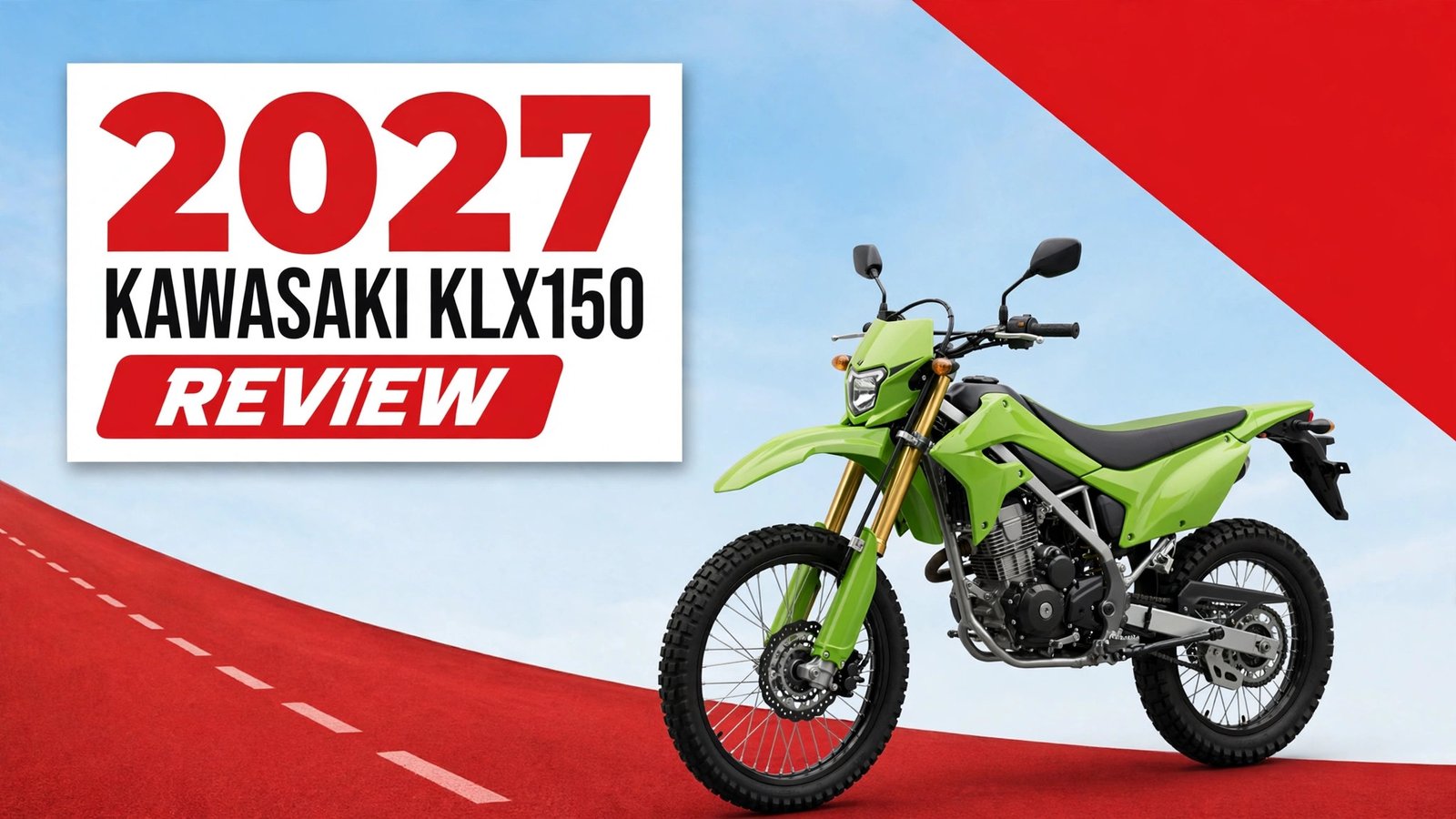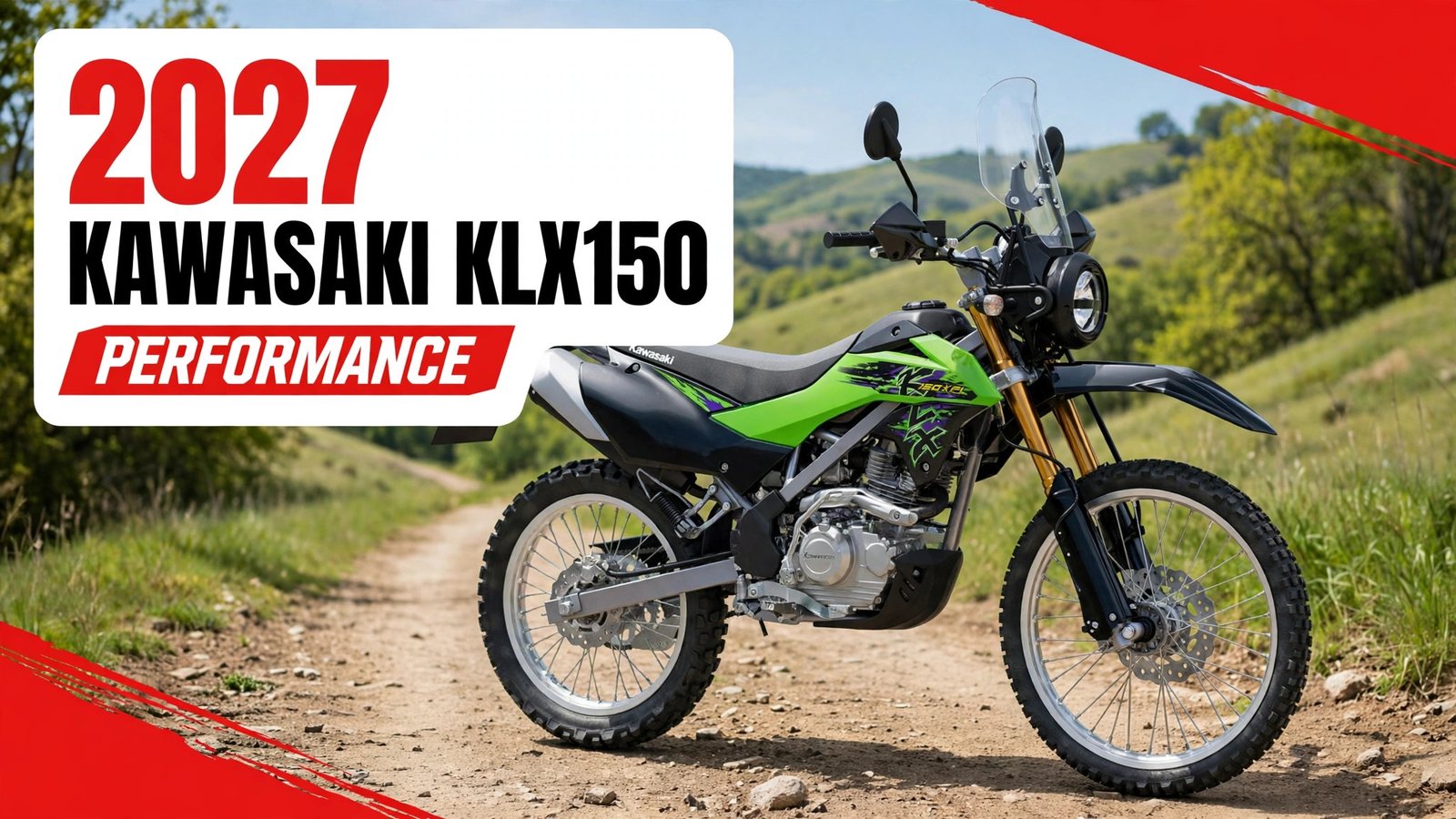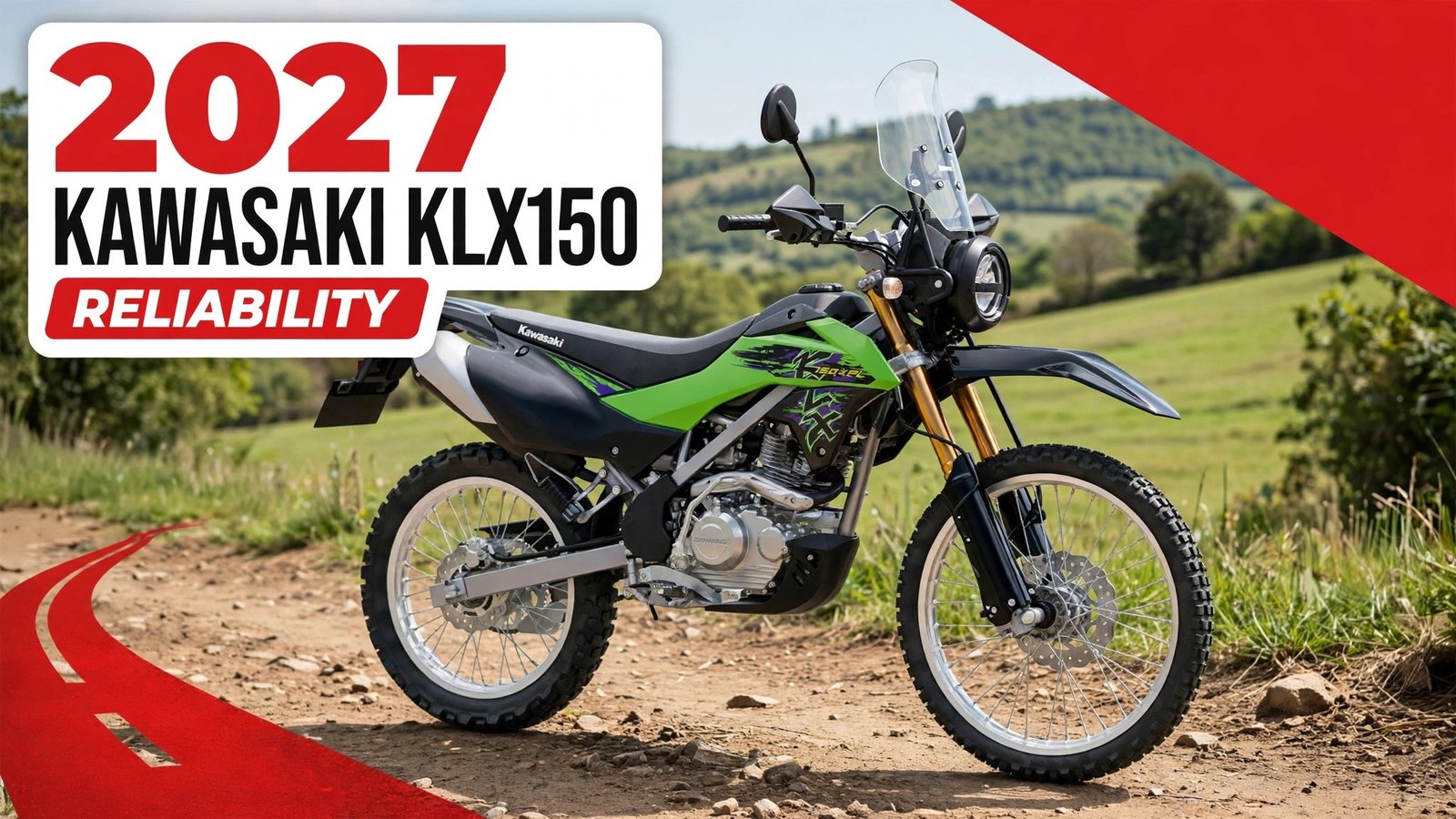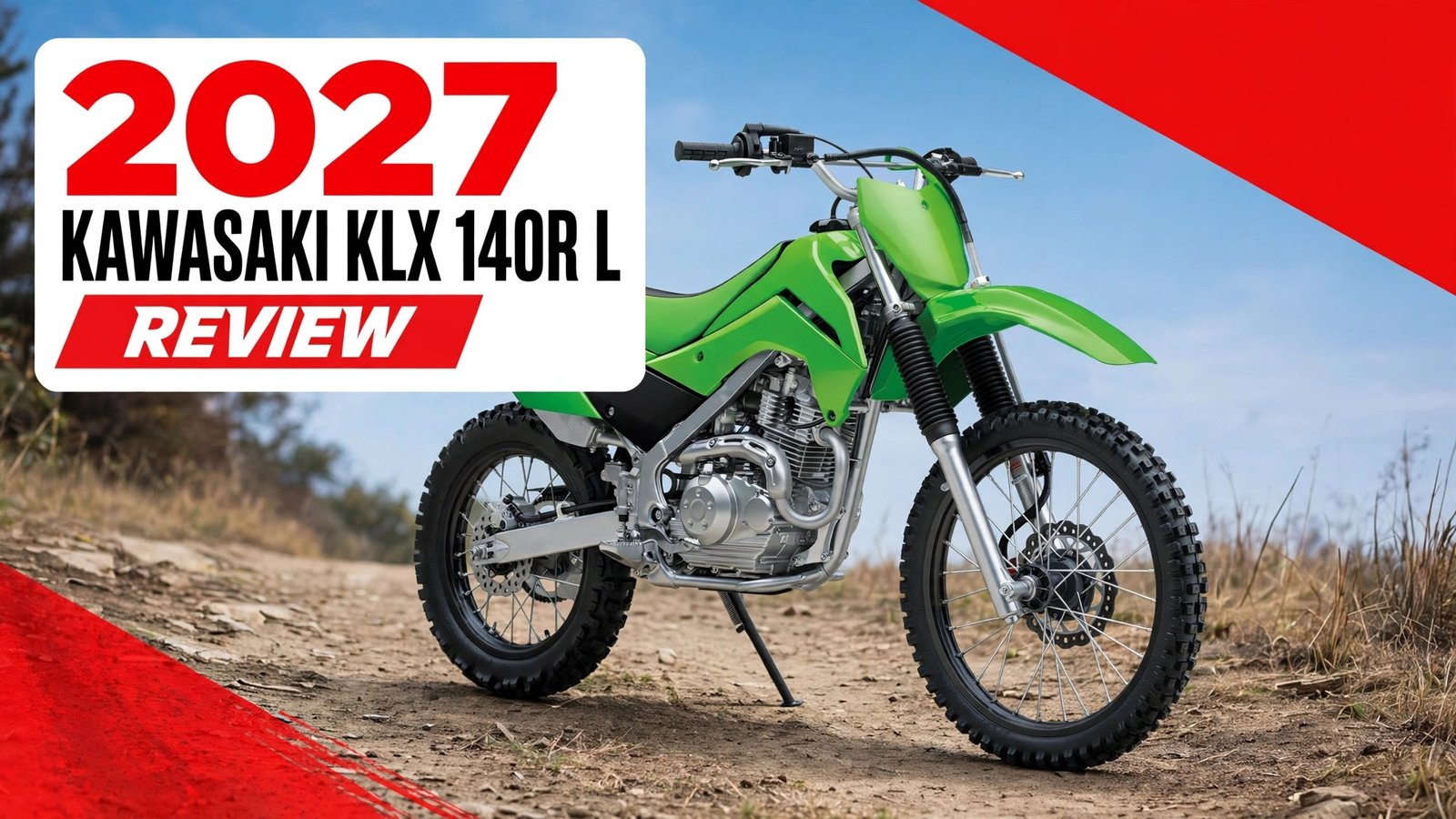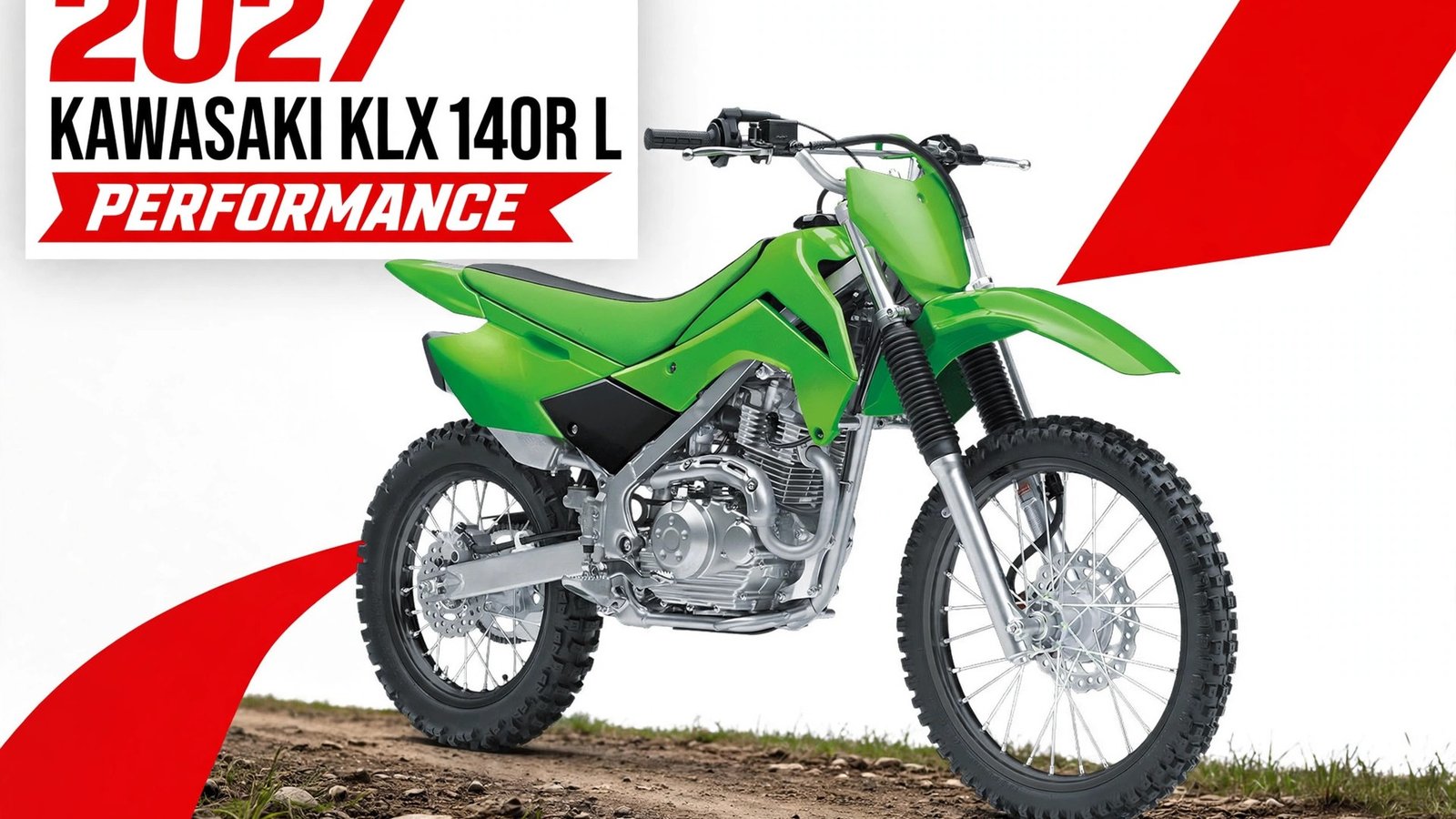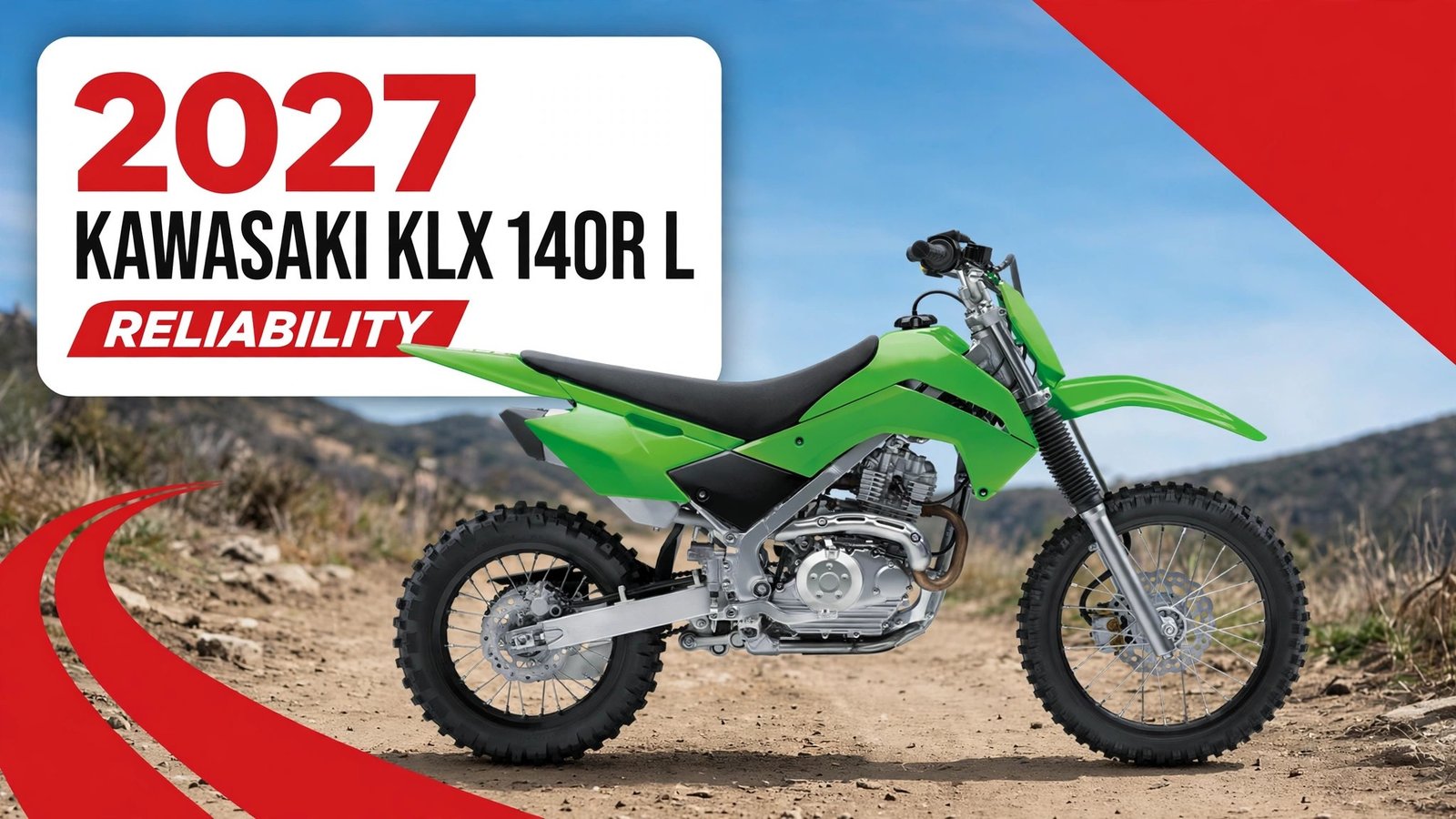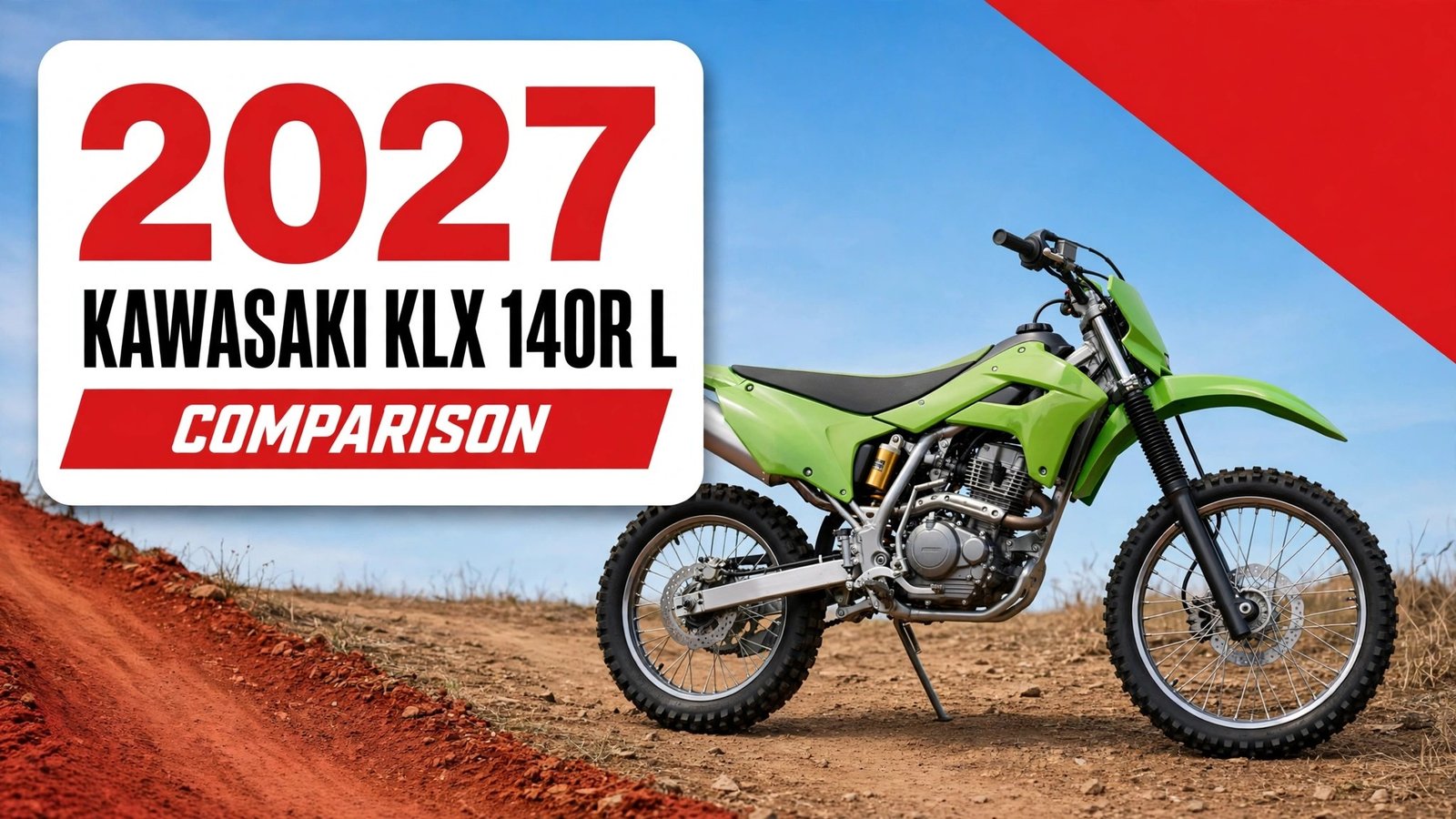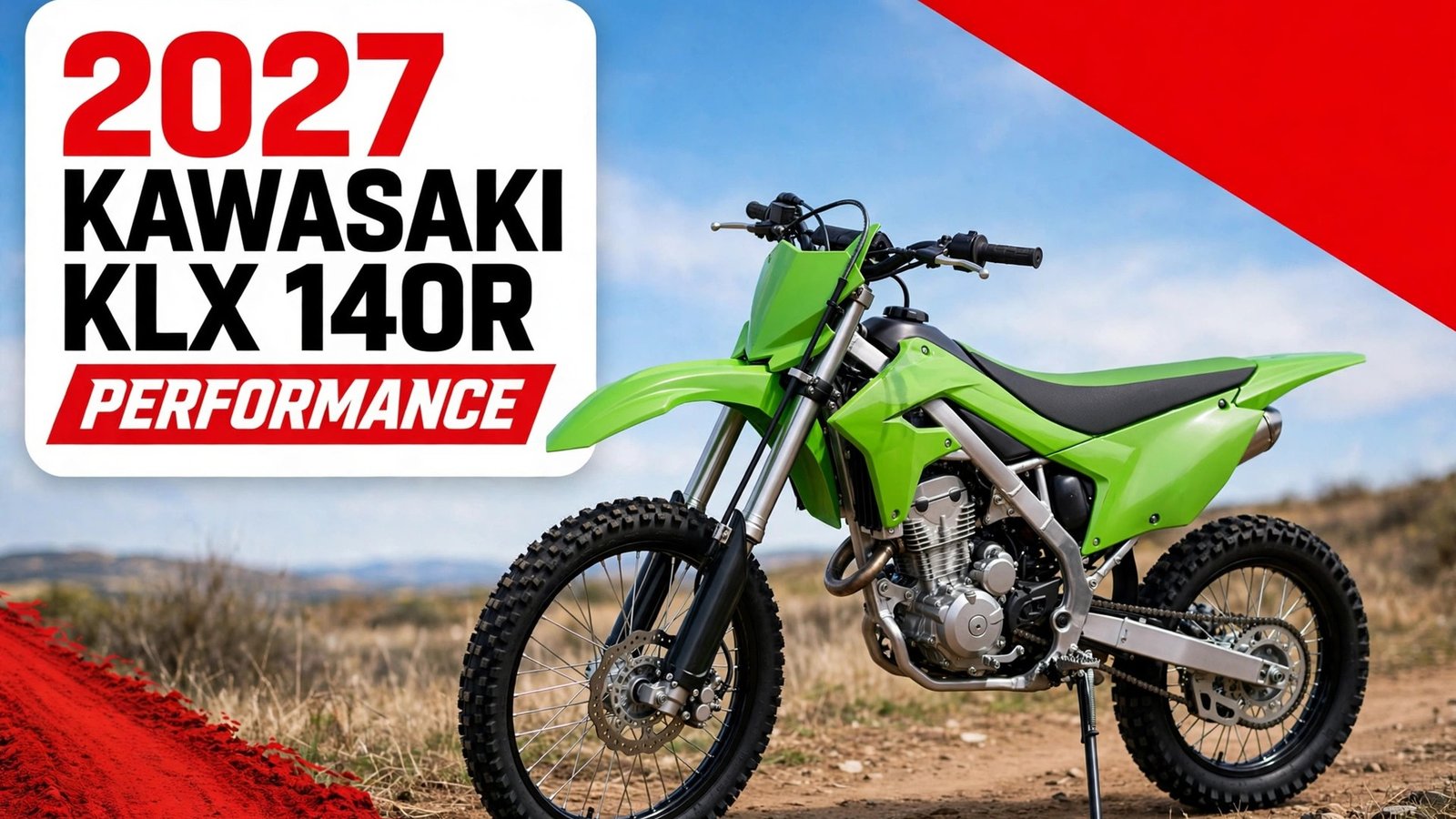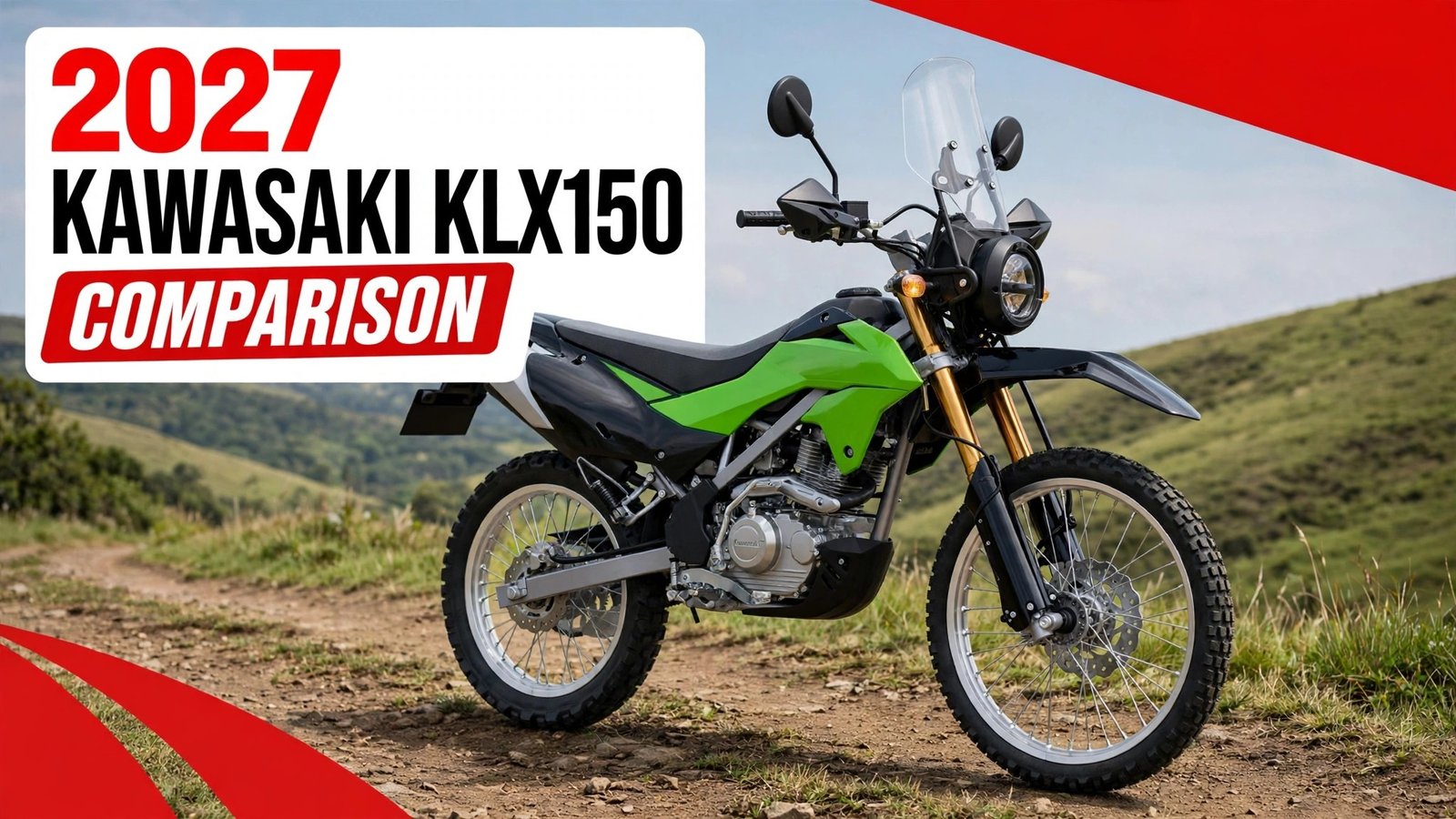
The Kawasaki KLX150 was never sold in the United States, so this Kawasaki KLX150 comparison is fought on the bike’s home ground: Indonesia. The KLX150 is an Indonesian-built, road-legal dual sport with a 144cc carburetted single, a kick starter, and rupiah-only prices, and its rivals are the bikes Indonesians actually cross-shop against it: the Honda CRF150L, the Yamaha WR155R, and Kawasaki’s own supermoto sibling, the KLX150SM. The short answer is that the KLX150 is the simplest bike in the group and the second-most-expensive on price.
Prices here are on-the-road Jakarta figures, labelled OTR. The order is the Honda CRF150L at Rp 35.93M, the KLX150SM at Rp 37.2M, the KLX150 at Rp 38.6M, and the Yamaha WR155R at Rp 38.66M, so the KLX150 costs Rp 2.67M more than the Honda and only about Rp 60,000 less than the Yamaha.
Kawasaki KLX150 Overview and Its Closest Rivals
The four bikes in this Kawasaki KLX150 comparison all live in the same Indonesian showrooms.
The video below compares the US-market Honda XR150L and Yamaha WR125R, two other budget dual sports, and it does not show the KLX150 or any of the three Indonesian rivals in this Kawasaki KLX150 comparison. It is included because it shows how a budget dual-sport comparison is judged, on price, seat height, simplicity and real trail use.
Its Rivals Live in Indonesia Too
The CRF150L, the WR155R and the KLX150SM are all sold new in Indonesia. In this Kawasaki KLX150 comparison, the Honda is the fuel-injected value pick, the Yamaha is the performance pick, and the SM is the same KLX150 engine in street clothes, and the honest read of this Kawasaki KLX150 comparison is that the KLX150 is the cheapest-feeling bike to own and the weakest on paper at the same time.
None of the four is sold in the United States, as the Kawasaki KLX150 review explains. The Kawasaki USA KLX lineup page lists the KLX110R, KLX140R, KLX230 and KLX300 families, and the KLX150 appears nowhere on it. That is why every price in this Kawasaki KLX150 comparison is in rupiah.
How the Four Bikes Differ at a Glance
| Bike | Engine | Fuelling | Power claimed | Torque claimed | Gears | Start | Tested fuel | Racelogic top speed |
|---|---|---|---|---|---|---|---|---|
| Kawasaki KLX150 | 144cc, air-cooled, SOHC 2-valve single | Keihin NCV24 carburettor | 8.6 kW (12 PS) at 8,000 rpm | 11.3 Nm at 6,500 rpm | 5-speed | Electric and kick | 31.8 km per litre | 104.1 km per hour |
| Honda CRF150L | 149.15cc, air-cooled, SOHC 2-valve single | PGM-FI fuel injection | 9.51 kW (12.91 PS) at 8,000 rpm | 12.43 Nm at 6,500 rpm | 5-speed | Electric and kick | 42.3 km per litre | 103 km per hour |
| Yamaha WR155R | 155cc, liquid-cooled, SOHC 4-valve VVA single | Fuel injection | 16.7 PS at 10,000 rpm | 14.3 Nm at 6,500 rpm | 6-speed | Electric | 48.3 km per litre | 109.9 km per hour |
| Kawasaki KLX150SM | 144cc, air-cooled, SOHC 2-valve single | Keihin NCV24 carburettor | 8.6 kW (12 PS) at 8,000 rpm | 11.3 Nm at 6,500 rpm | 5-speed | Electric and kick | Not tested | Not tested |
Notes: power and torque are manufacturer claims, not dyno figures. The tested figures come from the same Otomotif test, which ran the KLX150BF SE, the CRF150L and the WR155R together with Racelogic timing. No tested figure exists for the KLX150SM.
| Bike | Front fork | Wheels | Front brake | Rear brake | Seat height | Curb weight | Tank | Price, OTR Jakarta |
|---|---|---|---|---|---|---|---|---|
| Kawasaki KLX150 | 35 mm inverted, 185 mm travel | 21/18, knobby tyres | 240 mm petal disc | 190 mm petal disc | 865 mm | 118 kg | 6.9 litres | Rp 38.6M |
| Honda CRF150L | 37 mm inverted Showa, 225 mm stroke | 21/18, knobby tyres | 240 mm disc | 220 mm disc | 869 mm | 122 kg | 7.2 litres | Rp 35.93M |
| Yamaha WR155R | 41 mm inverted, 245 mm travel | 21/18, knobby tyres | 240 mm disc | 220 mm disc | 880 mm | 134 kg | 8.1 litres | Rp 38.66M |
| Kawasaki KLX150SM | 35 mm inverted, 175 mm travel | 17/17, road tyres | 300 mm semi-floating petal disc | 220 mm petal disc | 840 mm | 119 kg | 6.9 litres | Rp 37.2M |
Notes: prices are on-the-road Jakarta figures from Oto listings, except the KLX150 at Rp 38.6M, the majority Jakarta OTR figure. Oto also lists the standard KLX150 at Rp 37.4M, a conflicting lower listing not used as the price. The SM’s Rp 37.2M is Oto’s OTR figure; its KMI list price is Rp 39.1M.
Kawasaki KLX150 vs Honda CRF150L
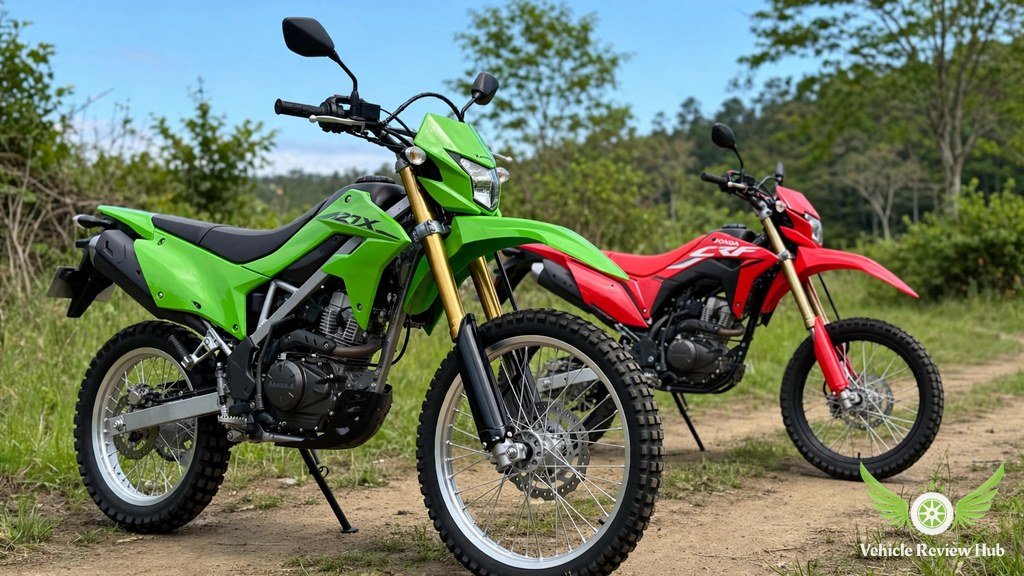
The Honda CRF150L is the rival that hurts the KLX150 most, because it is cheaper, more economical and fuel-injected. This Kawasaki KLX150 comparison starts with the Honda for exactly that reason.
Engine, Specs and Performance Side by Side
On paper the two engines are close in this Kawasaki KLX150 comparison, and the difference is in the fuelling rather than the size. The Honda’s paper advantage is under one PS, but the fuel injection matters every day, where the KLX150’s carburettor needs more attention.
The tested figures come from the same Otomotif test, so the two bikes were measured on the same day with the same Racelogic equipment. The KLX150BF SE recorded 104.1 km per hour and 31.8 km per litre, while the CRF150L recorded 103 km per hour and 42.3 km per litre. The top speeds are effectively tied, but the fuel figures are not: the Honda goes about a third further on every litre. The Otomotif three-bike comparison is the source for both tested figures. The KLX150’s own acceleration was measured in the same programme at 0 to 100 km per hour in 21.7 seconds, with 0 to 60 in 5.8 seconds; no matching CRF150L figure was published.
| Figure | Kawasaki KLX150 | Honda CRF150L |
|---|---|---|
| Engine | 144cc, air-cooled, SOHC 2-valve single | 149.15cc, air-cooled, SOHC 2-valve single |
| Fuelling | Keihin NCV24 carburettor | PGM-FI fuel injection |
| Power claimed | 8.6 kW (12 PS) at 8,000 rpm | 9.51 kW (12.91 PS) at 8,000 rpm |
| Torque claimed | 11.3 Nm at 6,500 rpm | 12.43 Nm at 6,500 rpm |
| Gearbox | 5-speed, manual clutch | 5-speed, manual clutch |
| Start | Electric and kick | Electric and kick |
| Front fork | 35 mm inverted, 185 mm travel | 37 mm inverted Showa, 225 mm stroke |
| Brakes | 240 mm front, 190 mm rear petal discs | 240 mm front, 220 mm rear discs |
| Seat / weight / tank | 865 mm / 118 kg / 6.9 litres | 869 mm / 122 kg / 7.2 litres |
| Tested fuel / top speed | 31.8 km per litre / 104.1 km per hour | 42.3 km per litre / 103 km per hour |
| Price, OTR Jakarta | Rp 38.6M | Rp 35.93M |
Notes: power and torque are manufacturer claims, and no dyno figure exists for either bike. The tested figures are from the same Otomotif test with Racelogic timing, and the KLX150 figures are for the BF SE variant.
Price, Equipment and Which Suits Which Rider
The price gap is Rp 2.67M in the Honda’s favour, and the equipment does not close it. Both bikes have inverted forks, 21/18 knobby wheels, a kick starter and seats within 4 mm of each other. The Honda’s fork is longer at 225 mm against 185 mm, its tank is bigger at 7.2 litres against 6.9, and its rear brake is larger at 220 mm against 190 mm. The KLX150’s answer is a deeper parts network, built since its 2009 launch, though the Honda has a kick starter too.
Kawasaki KLX150 vs Yamaha WR155R
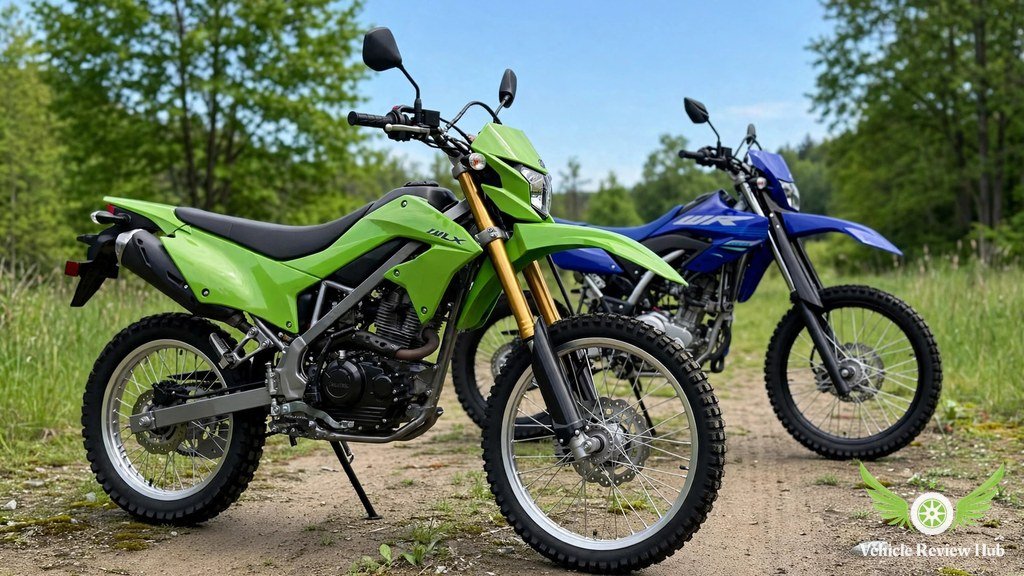
The Yamaha WR155R is the rival that makes this Kawasaki KLX150 comparison uncomfortable, because it costs essentially the same money and beats the KLX150 on almost every measured figure. The Oto Jakarta price for the WR155R is Rp 38.66M, only about Rp 60,000 more than the KLX150’s Rp 38.6M, and for that near-identical price the Yamaha brings a liquid-cooled engine, variable valve actuation, a six-speed gearbox and the best fuel economy in the group.
Engine, Specs and Performance Side by Side
The engine gap is the largest in this Kawasaki KLX150 comparison. The WR155R’s 155cc liquid-cooled single, with four valves and Yamaha’s VVA variable valve actuation, claims 16.7 PS at 10,000 rpm. That is 4.7 PS more, with a six-speed gearbox where the KLX150 has five.
The same Otomotif test measured both bikes, and the results match the paper gap: the WR155R recorded 109.9 km per hour on Racelogic against the KLX150’s 104.1, and 48.3 km per litre against the KLX150’s 31.8. The Otomotif instrumented test is the source for the KLX150’s figures, and the Kawasaki KLX150 performance guide explains why the KLX150 is thirsty. No dyno figure exists for either bike, so the claimed and Racelogic figures are all this Kawasaki KLX150 comparison can print.
| Figure | Kawasaki KLX150 | Yamaha WR155R |
|---|---|---|
| Engine | 144cc, air-cooled, SOHC 2-valve single | 155cc, liquid-cooled, SOHC 4-valve VVA single |
| Fuelling | Keihin NCV24 carburettor | Fuel injection |
| Power claimed | 8.6 kW (12 PS) at 8,000 rpm | 16.7 PS at 10,000 rpm |
| Torque claimed | 11.3 Nm at 6,500 rpm | 14.3 Nm at 6,500 rpm |
| Gearbox | 5-speed, manual clutch | 6-speed, manual clutch |
| Start | Electric and kick | Electric only |
| Front fork | 35 mm inverted, 185 mm travel | 41 mm inverted, 245 mm travel |
| Brakes | 240 mm front, 190 mm rear petal discs | 240 mm front, 220 mm rear discs |
| Seat / weight / tank | 865 mm / 118 kg / 6.9 litres | 880 mm / 134 kg / 8.1 litres |
| Tested fuel / top speed | 31.8 km per litre / 104.1 km per hour | 48.3 km per litre / 109.9 km per hour |
| Price, OTR Jakarta | Rp 38.6M | Rp 38.66M |
Notes: power and torque are manufacturer claims, and no dyno figure exists for either bike. The tested figures are from the same Otomotif test. The WR155R price is Oto’s Jakarta figure of Rp 38.66M; general listings put it at Rp 39.7M, so the gap in this Kawasaki KLX150 comparison depends on which listing is used.
Price, Equipment and Which Suits Which Rider
On equipment the Yamaha keeps winning: a 41 mm fork with 245 mm of travel against 35 mm and 185 mm, a 220 mm rear disc against 190 mm, and an 8.1-litre tank against 6.9. The KLX150’s counters are real but smaller: 16 kg lighter, a seat 15 mm lower, a kick starter where the Yamaha has electric start only, and an air-cooled engine that is simpler to service anywhere in Indonesia. But neither closes a 4.7 PS gap or a 16.5 km per litre fuel gap, and this Kawasaki KLX150 comparison does not pretend otherwise.
Kawasaki KLX150 vs Kawasaki KLX150SM
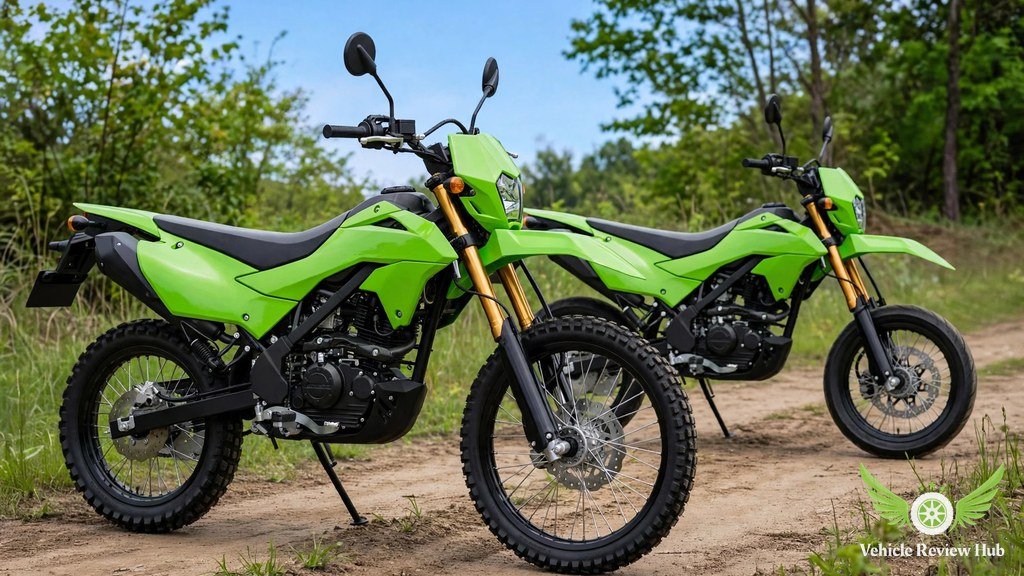
The KLX150SM is the same bike in street clothes, and this Kawasaki KLX150 comparison treats it as a sibling rivalry rather than a real contest. The engine, gearbox, kick starter and tank are all shared. What changes is everything the tyres touch: 17-inch road wheels, a 300 mm front disc, an 840 mm seat, and 275 mm of clearance.
Engine, Specs and Performance Side by Side
There is no performance comparison to run, because the two bikes share an engine and no SM test figure exists. The Kawasaki Motor Indonesia SM page lists the same 144cc engine, the same 12 PS claim and the same 6.9-litre tank, and this Kawasaki KLX150 comparison prints no SM test figure because none was found. The differences are all in the chassis, and they are in the table below.
| Figure | Kawasaki KLX150 | Kawasaki KLX150SM |
|---|---|---|
| Engine / fuelling | 144cc, NCV24 carburettor, 12 PS at 8,000 rpm | 144cc, NCV24 carburettor, 12 PS at 8,000 rpm |
| Wheels / tyres | 21/18, knobby tyres | 17/17, road tyres |
| Front brake | 240 mm petal disc | 300 mm semi-floating petal disc |
| Seat / clearance / weight | 865 mm / 300 mm / 118 kg | 840 mm / 275 mm / 119 kg |
| Tested fuel / top speed | 31.8 km per litre / 104.1 km per hour | Not tested |
| Price | Rp 38.6M OTR Jakarta | Rp 37.2M OTR Jakarta; Rp 39.1M MSRP |
Notes: the two bikes share an engine, so no performance gap is printed, and no SM test figure exists in citable form. The SM’s Oto OTR figure is Rp 37.2M while its KMI list price is Rp 39.1M; the two bases are never mixed in one subtraction in this Kawasaki KLX150 comparison.
Price, Equipment and Which Suits Which Rider
On Oto’s on-the-road list the SM is Rp 1.4M cheaper than the standard bike, at Rp 37.2M against Rp 38.6M, though Kawasaki’s list price is the same Rp 39.1M for the SM and the SE. The SM suits the rider who lives on sealed roads. The standard bike suits the rider who actually rides trails. Neither is the better bike in general; the road decides, and this Kawasaki KLX150 comparison leaves that choice to the rider’s roads.
Kawasaki KLX150 Price and Value Compared
Price is where this Kawasaki KLX150 comparison turns into a value judgement, and it is not kind to the KLX150. It is the second-most-expensive of the four on on-the-road price, while carrying the weakest engine and the worst tested fuel economy. The value case for the KLX150 has to be made on ownership, not on the spec sheet.
Priced Between Its Two Rivals
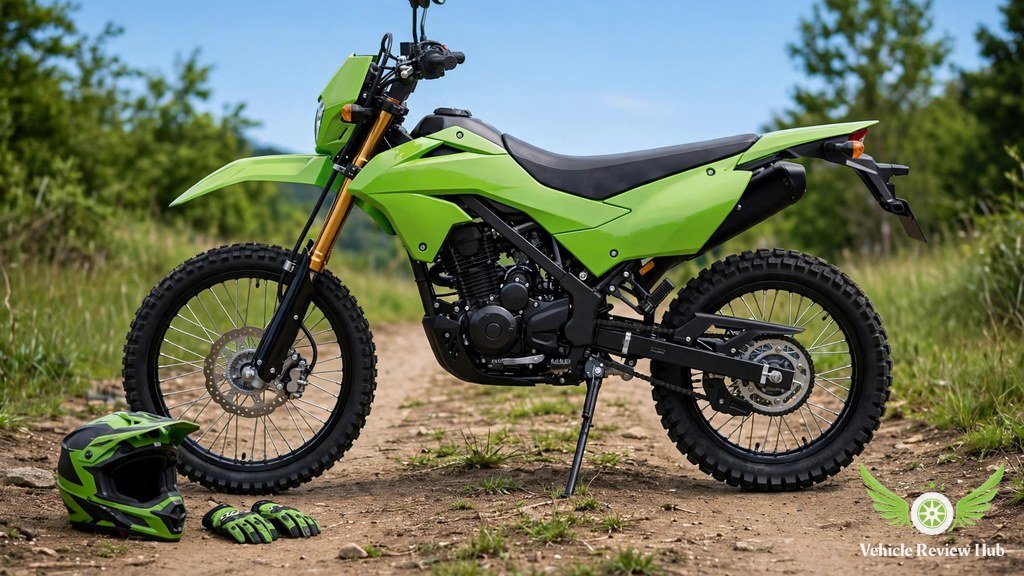
The KLX150 is Rp 2.67M more than the Honda and about Rp 60,000 less than the Yamaha, so the buyer choosing it over the WR155R saves almost nothing and gives up 4.7 PS, a six-speed gearbox, liquid cooling and 16.5 km per litre. The KLX150 SE lists at Rp 39.1M and the SM SE at Rp 41.5M, with Oto’s on-the-road figures at Rp 39.8M.
| Bike | Price, OTR Jakarta | Gap to the KLX150 | What the money buys |
|---|---|---|---|
| Honda CRF150L | Rp 35.93M | Rp 2.67M cheaper | Fuel injection, 42.3 km per litre, 7.2-litre tank |
| Kawasaki KLX150SM | Rp 37.2M | Rp 1.4M cheaper | Same engine, 17-inch wheels, 300 mm front brake |
| Kawasaki KLX150 | Rp 38.6M | The benchmark | Simplest engine, kick starter, 300 mm clearance |
| Yamaha WR155R | Rp 38.66M | About Rp 60,000 more | 16.7 PS, 6-speed, liquid cooling, 48.3 km per litre |
| Kawasaki KLX150 SE | Rp 39.1M MSRP | List price, not OTR | Standard chassis, SE equipment |
Notes: all figures are on-the-road Jakarta except the SE at Rp 39.1M, a list price. The WR155R’s general listings put it at Rp 39.7M; the Oto Jakarta figure of Rp 38.66M is used here for consistency. Oto also lists the standard KLX150 at Rp 37.4M, a conflicting lower listing not used as the price.
Running Costs and Resale Value Compared
No resale percentage and no running-cost figure was found for any of the four bikes in citable form, so this Kawasaki KLX150 comparison prints none. On fuel, the KLX150 costs the most to run on every tank, and its 6.9-litre tank gives it about 219 km of range against roughly 305 km for the Honda and 391 km for the Yamaha on the same arithmetic. On fuelling, the KLX150’s carburettor needs more attention than the rivals’ fuel injection. On parts, the KLX150 has the oldest and deepest network in Indonesia, sharing its 144cc architecture with the KLX140 family, as the Kawasaki KLX150 reliability guide explains.
Kawasaki KLX150 Comparison Verdict and US Alternatives
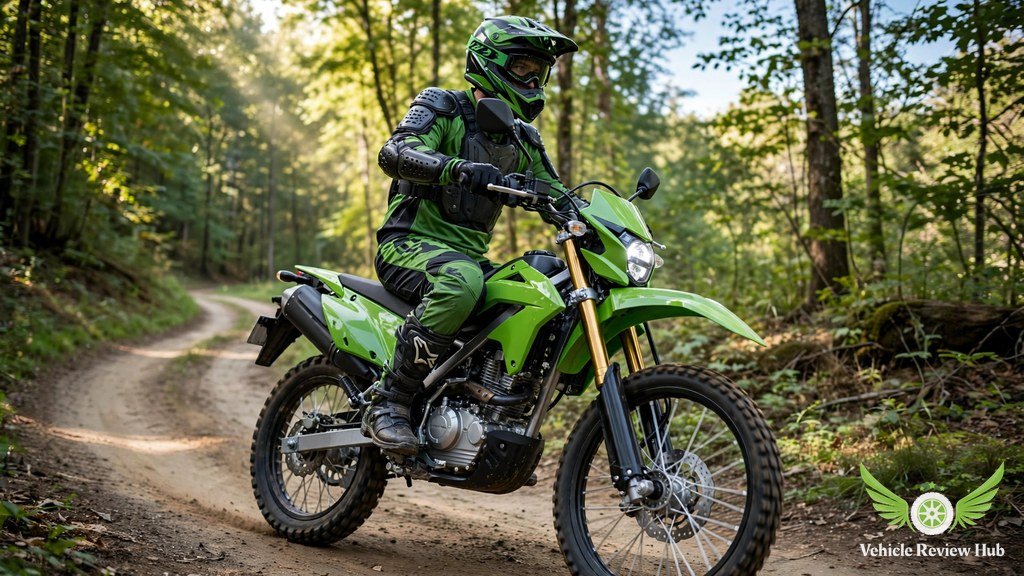
The verdict of this Kawasaki KLX150 comparison is that the KLX150 answers an Indonesian question, and only an Indonesian question. It is the simplest bike in the group, the easiest to fix anywhere in Indonesia, and the one with the deepest parts network, and also the weakest on paper, the thirstiest in the test, and the second-most-expensive on price. For an Indonesian trail rider who works on the bike at home, that trade is fair. For an American reader, it is a bike to admire from afar.
Verdict: A Home-Market Answer Only
Pick the CRF150L for value, the WR155R for performance, the SM for the street, and the KLX150 for simplicity and trail work, and that is the verdict of this Kawasaki KLX150 comparison. The Kawasaki KLX 140R comparison shows the same 144cc family judged on American ground, and the Kawasaki KLX 140R L comparison covers the bigger-wheeled American sibling, but neither is the road-legal KLX150.
| US alternative | Price | What it is |
|---|---|---|
| Kawasaki KLX140R | 2027 $3,799 + $315 = $4,114 delivered | Same 144cc family, PB20 carb, 17/14 wheels, electric start only, off-road only |
| Kawasaki KLX230 | 2027 MSRP $4,999 (destination unverified) | Fuel-injected 233cc single, road-legal dual sport |
| Honda XR150L | $3,300 MSRP per the video | US-market 150cc air-cooled carburetted dual sport |
| Yamaha WR125R | $3,999 MSRP per the video | US-market small dual sport named in the same video |
Notes: the KLX140R delivered price and the KLX230 MSRP are verified figures from the American KLX clusters. The XR150L and WR125R prices are quoted in the comparison video only, labelled per the video, and no US price is printed for the KLX150 because none exists.
Import Rule: 2009 Bikes Eligible 2034
An American who wants a real KLX150 has one legal route. Under the 25-year import rule, a vehicle at least 25 years old may be imported without regard to federal safety standards, and the 25-year period runs from the date of manufacture, not the model year, so a 2009 KLX150 becomes eligible in 2034. The Way Autos 25-year import rule explainer states the manufacture-date rule, and the LegalClarity import guide confirms the separate EPA rule, under which a vehicle 21 years or older with its original engine is exempt from emissions certification, so a 2009 bike cleared the EPA hurdle in 2030 and the 2034 safety clock is the binding one. Show or Display does not help, since it covers genuinely rare vehicles with a 2,500-mile yearly cap, and state titling and emissions rules are separate from the federal exemption. No import price, shipping cost or step-by-step guide is printed in this Kawasaki KLX150 comparison, because none was verified.
Kawasaki KLX150 Comparison: Frequently Asked Questions
The questions riders ask most about this Kawasaki KLX150 comparison, answered with the verified figures above.
Which bike is the cheapest in this comparison?
The Honda CRF150L, at Rp 35.93M on the road in Jakarta, Rp 2.67M less than the KLX150 in this Kawasaki KLX150 comparison.
Which bike is the fastest?
The Yamaha WR155R, at 109.9 km per hour on Racelogic, ahead of the KLX150 at 104.1 and the CRF150L at 103 in this Kawasaki KLX150 comparison.
Which bike is the most economical?
The Yamaha WR155R, at 48.3 km per litre in the same test, against 42.3 for the Honda and 31.8 for the KLX150 in this Kawasaki KLX150 comparison.
Is the Kawasaki KLX150 faster than the Honda CRF150L?
Barely, and only on top speed: 104.1 km per hour against 103 in the same test, while the Honda wins clearly on fuel in this Kawasaki KLX150 comparison.
Why is the Kawasaki KLX150 so thirsty?
Two reasons, both named by Otomotif: the Keihin NCV24 carburettor, where its rivals use fuel injection, and short final gearing that keeps the engine spinning fast, which is the trade-off this Kawasaki KLX150 comparison measures.
Does the Kawasaki KLX150 have fuel injection?
No. Every KLX150 ever built uses a carburettor, the Keihin NCV24, which is why it is thirstier than its fuel-injected rivals in this Kawasaki KLX150 comparison.
Which is better for trails, the KLX150 or the KLX150SM?
The standard KLX150, with 21/18 knobby wheels and 300 mm of clearance, where the SM runs 17-inch road wheels and 275 mm, as this Kawasaki KLX150 comparison shows.
Is the Kawasaki KLX150 good for beginners?
Yes, with a fit caveat: it is light at 118 kg with gentle power and a five-speed manual gearbox to learn on, but the 865 mm seat is tall for short riders, who should look at the S variant at 830 mm, and this Kawasaki KLX150 comparison says so plainly.
Can I buy a Kawasaki KLX150 in the USA?
No. It was never sold in the United States, so no US price exists, and the US alternatives in this Kawasaki KLX150 comparison are the KLX140R and the KLX230.
When can a 2009 Kawasaki KLX150 be imported to the USA?
In 2034, under the 25-year rule, which runs from the date of manufacture, and this Kawasaki KLX150 comparison prints no import price or shipping cost because none was verified.
Which bike has the lowest seat?
The KLX150SM at 840 mm among the four, and the low S variant at 830 mm, both lower than the standard KLX150 at 865 mm in this Kawasaki KLX150 comparison.
Should I buy the Kawasaki KLX150 or the Yamaha WR155R?
For performance and economy, the Yamaha wins: 16.7 PS against 12, 109.9 km per hour against 104.1, and 48.3 km per litre against 31.8 in the same test. The Kawasaki answers with a kick starter, simpler maintenance, and the deepest parts network in Indonesia, and this Kawasaki KLX150 comparison leaves that choice to the buyer.