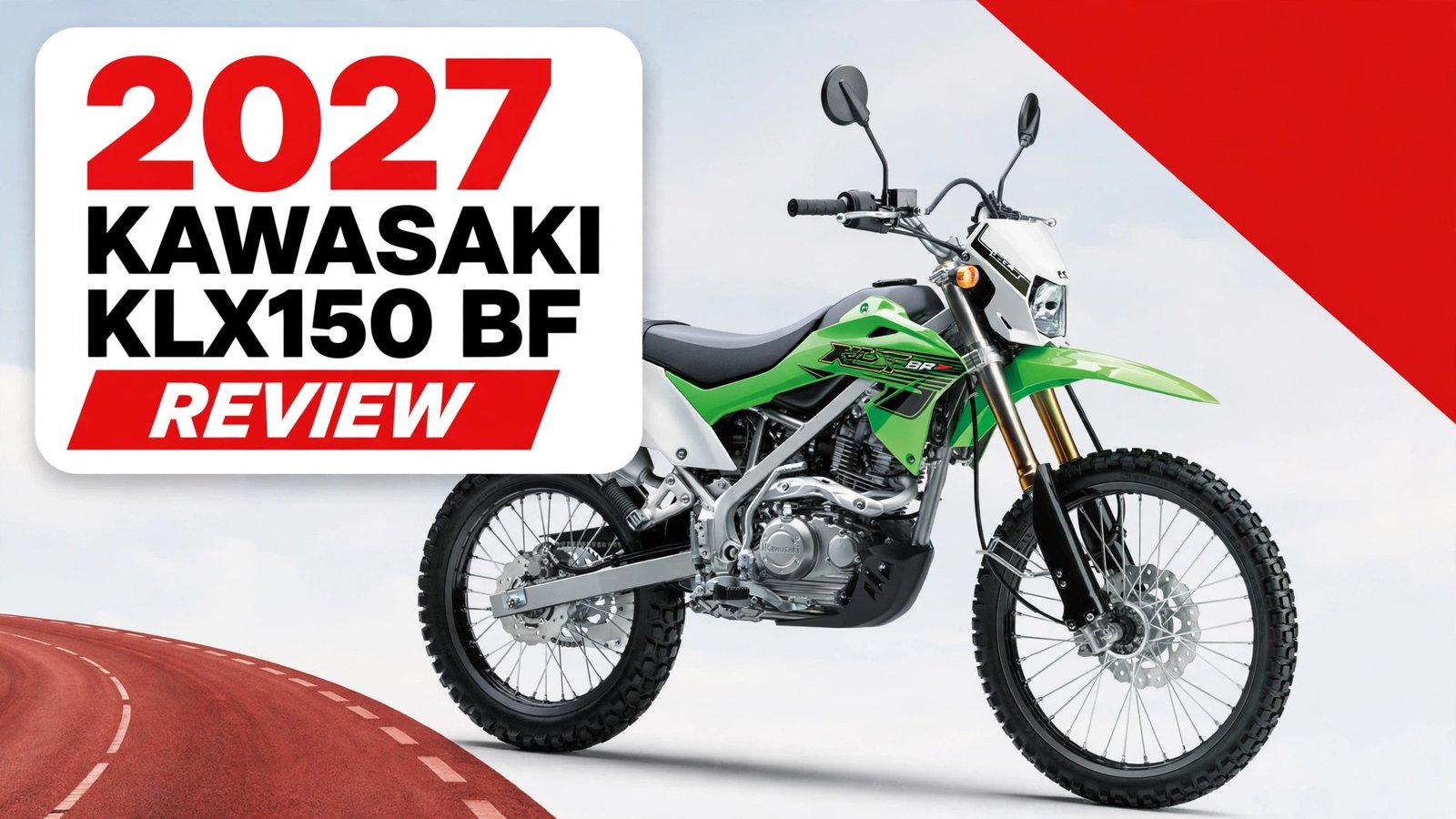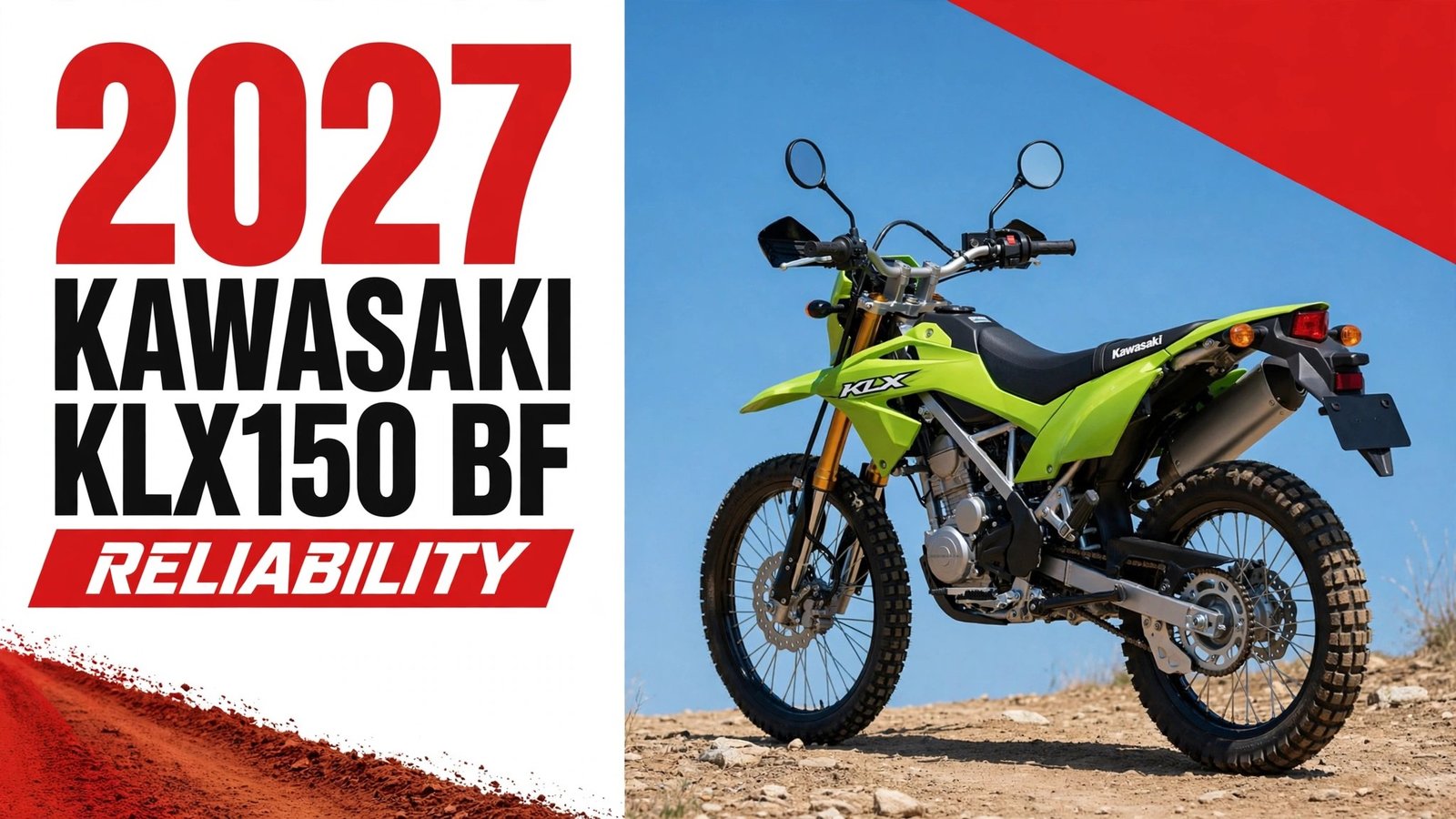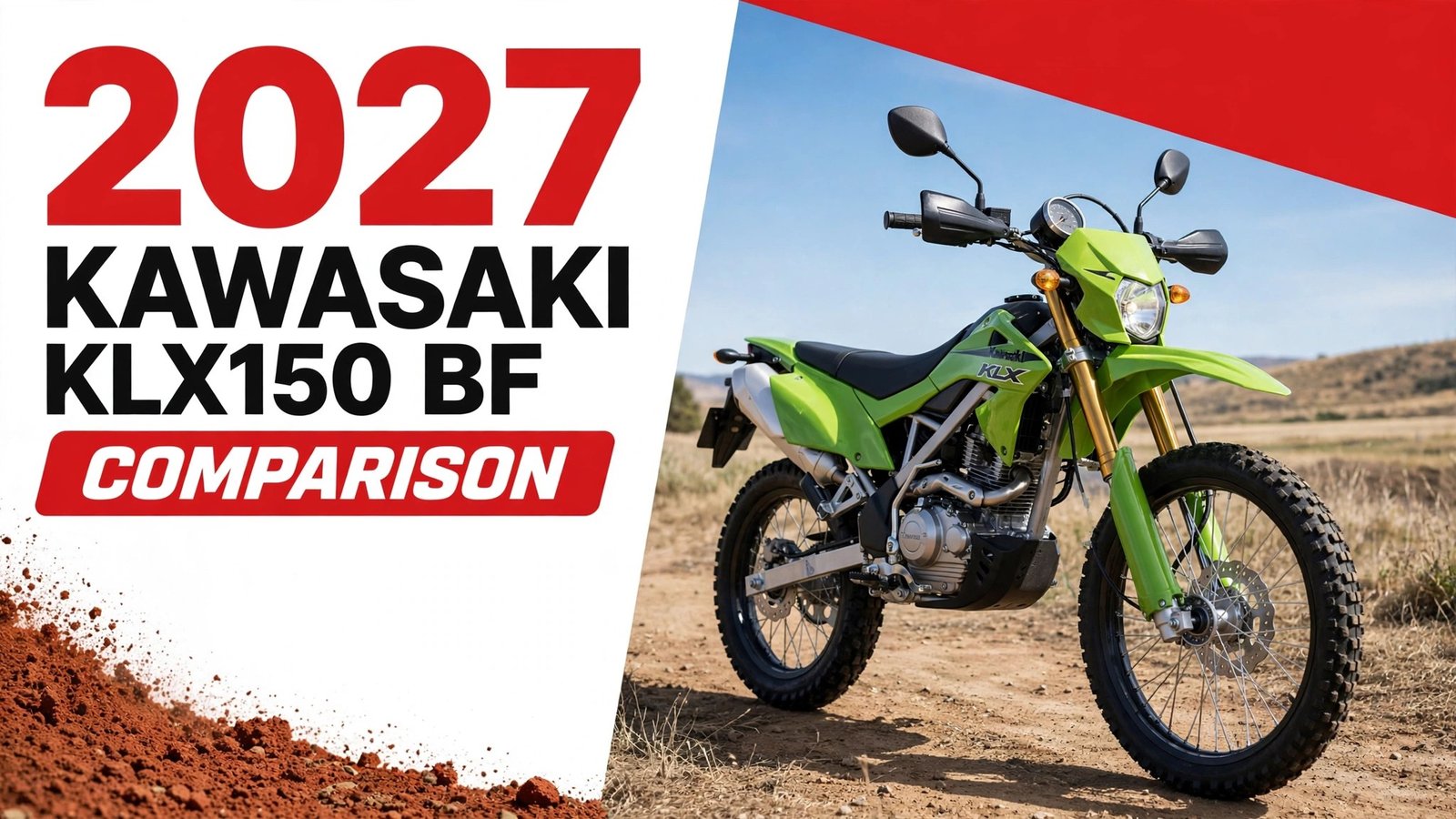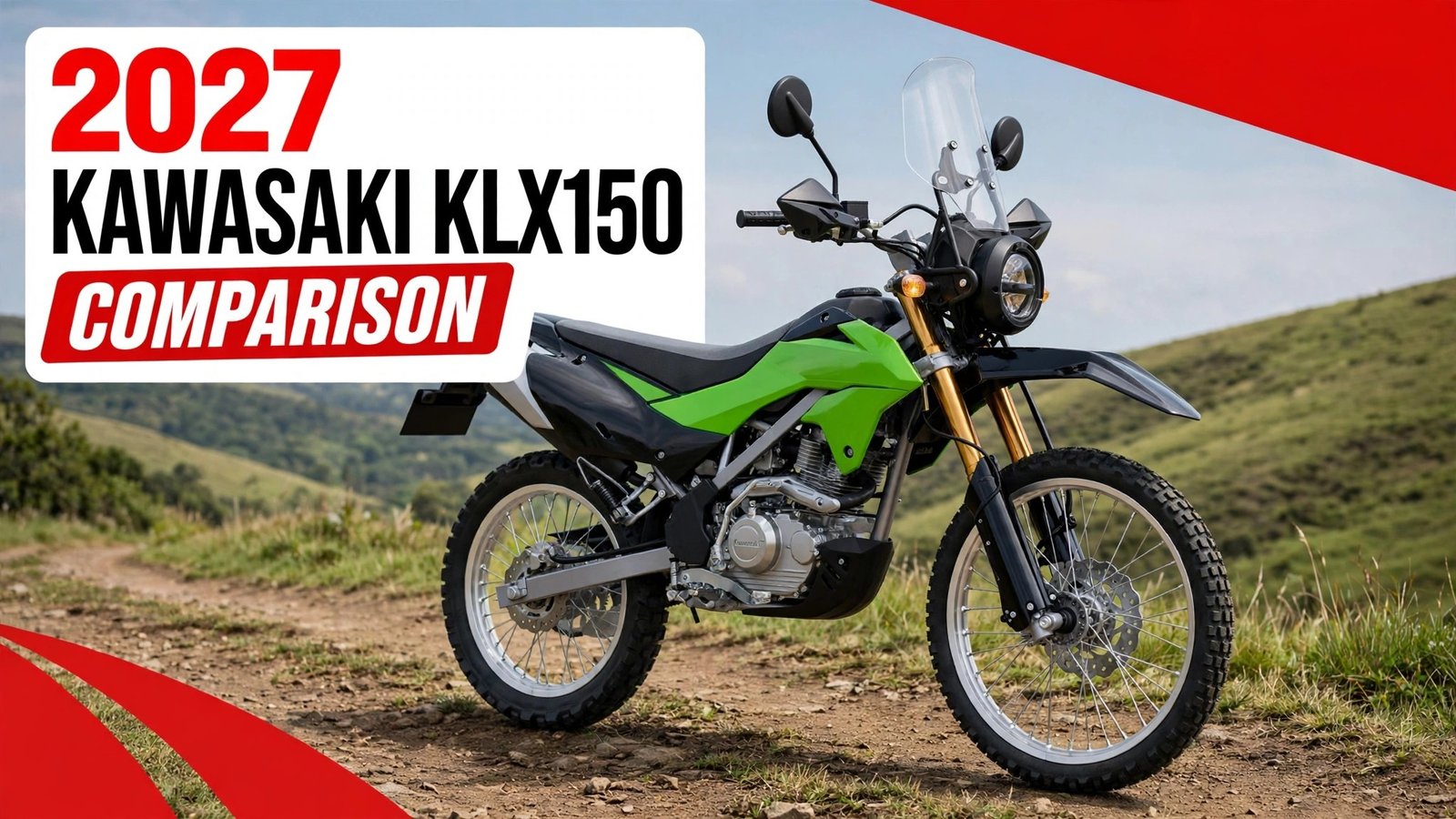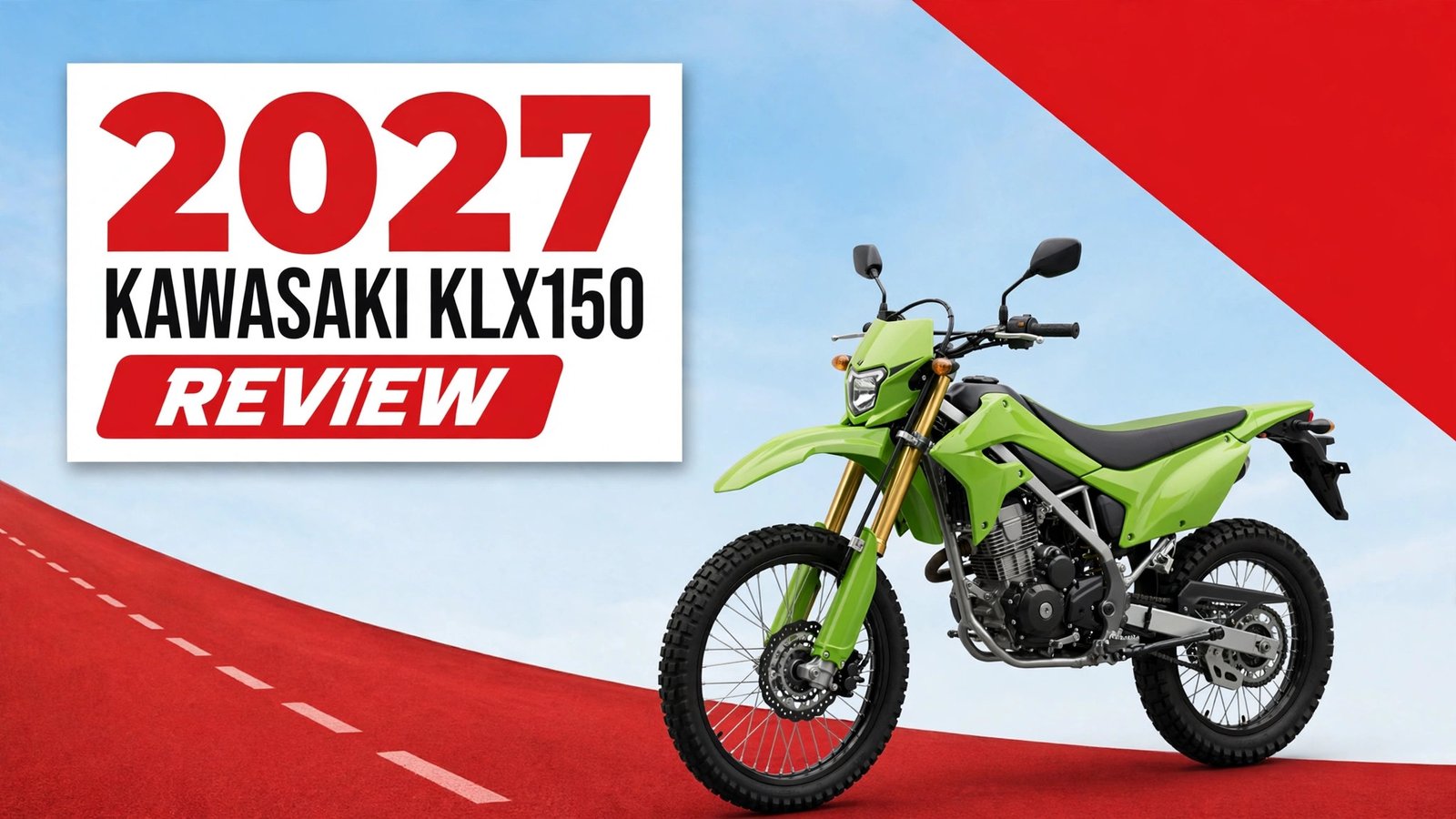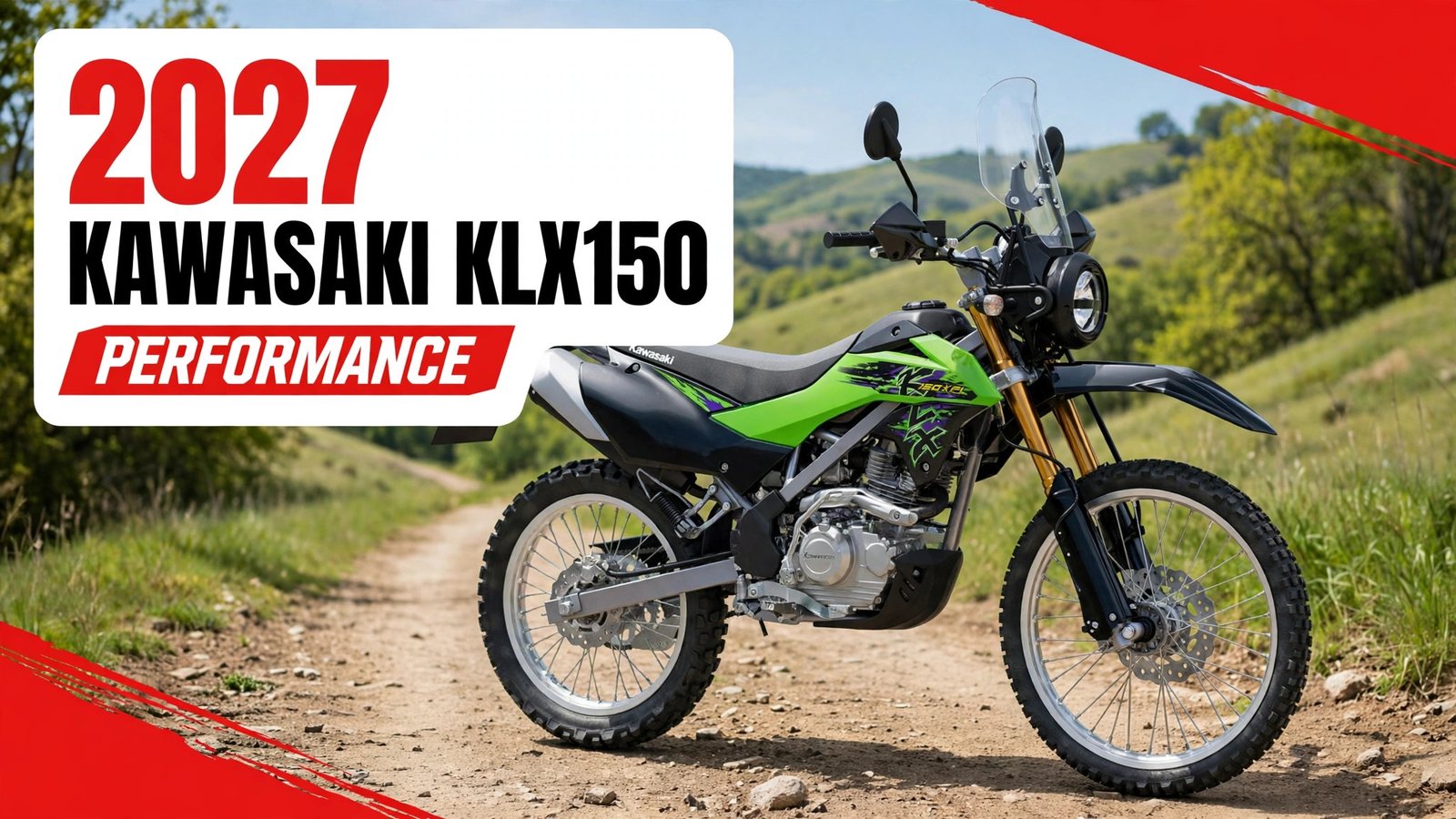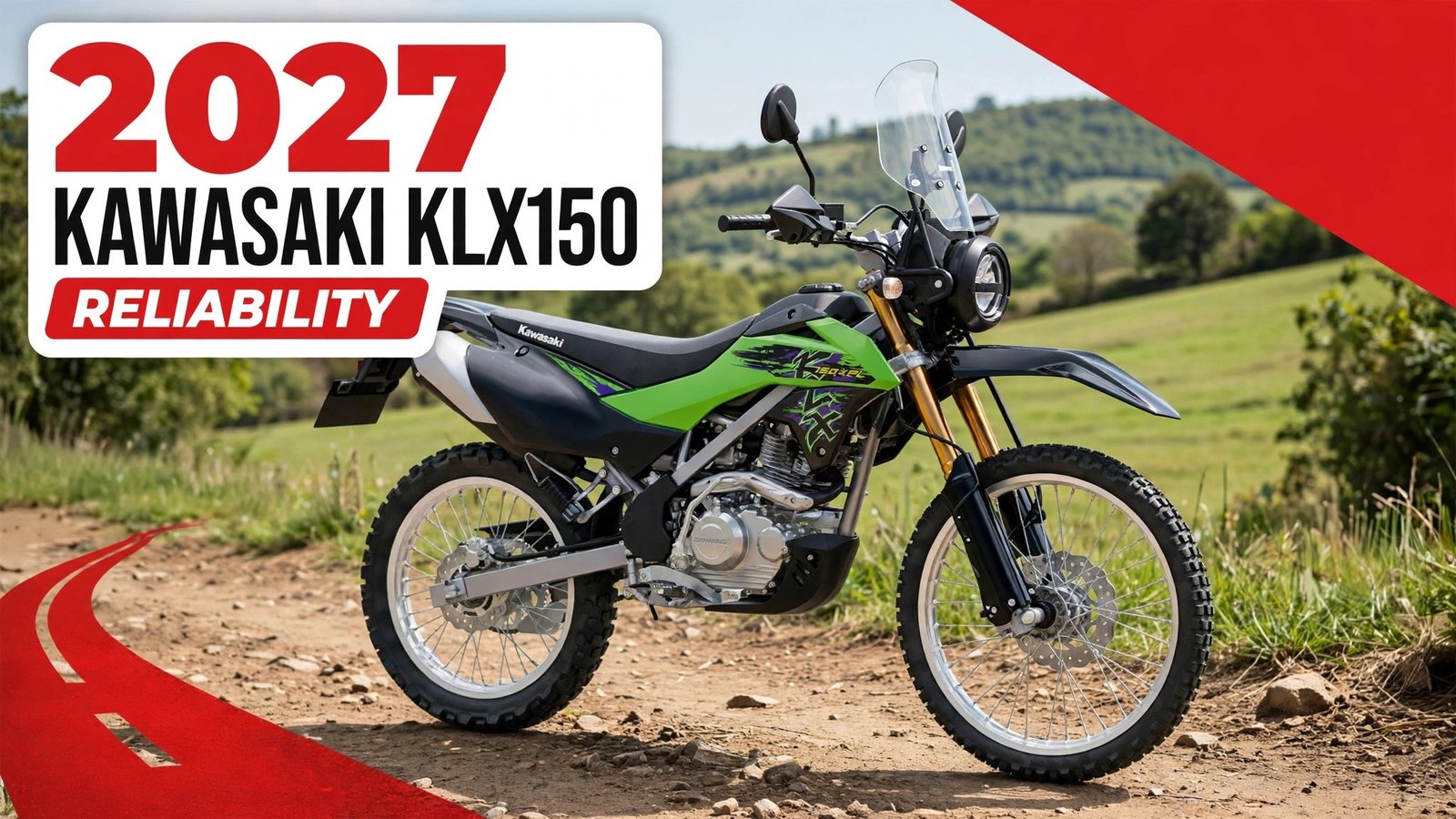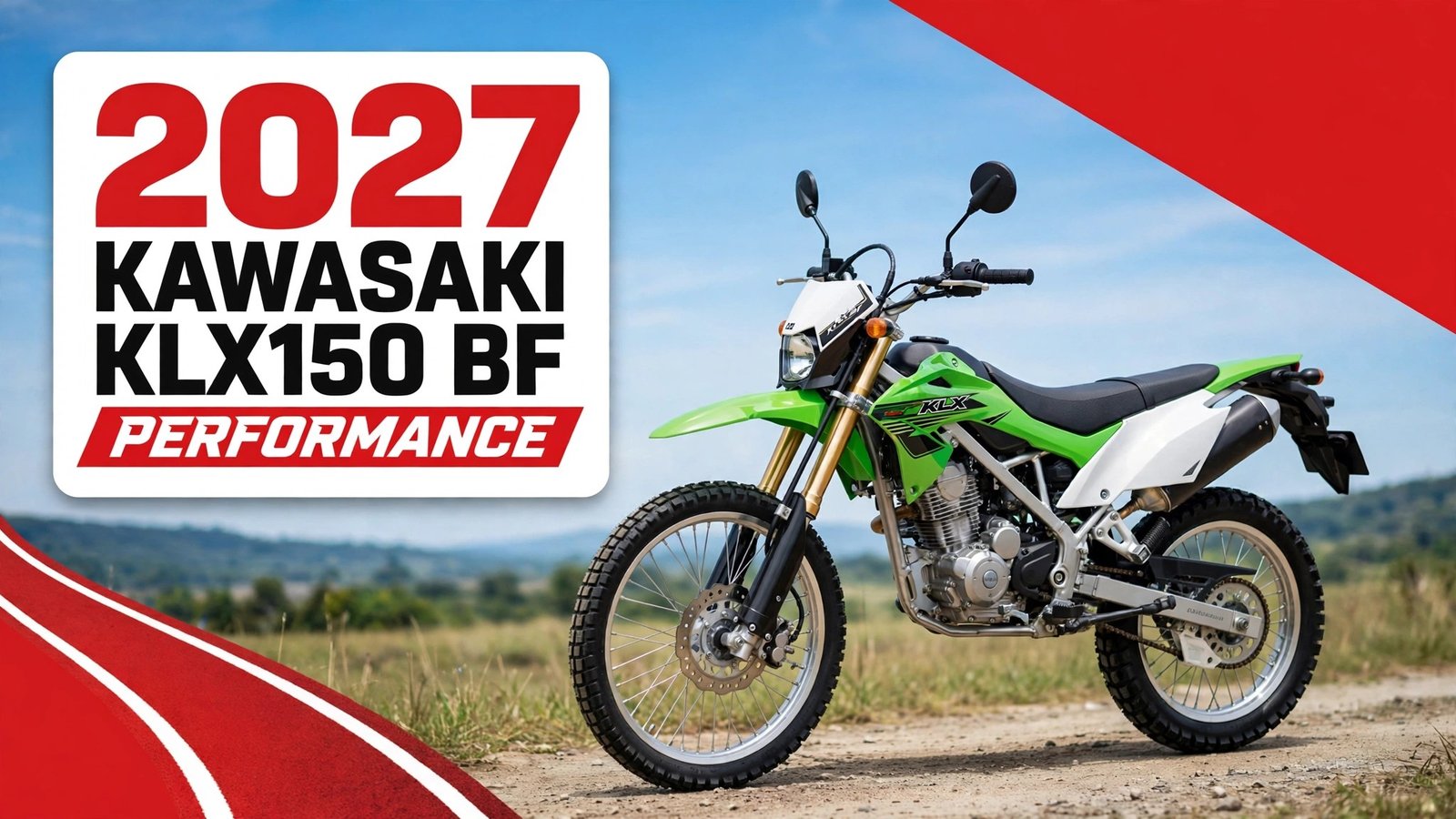
The Kawasaki KLX150 BF is not a fast motorcycle, and that is the first thing this Kawasaki KLX150 BF performance guide has to say plainly. Its only instrumented top speed is 104.1 km/h, measured by Racelogic on a BF SE in Indonesia in 2015, and its only instrumented fuel figure is 31.8 km per litre from the same test. The BF was the slowest bike in its own three-bike test and the thirstiest — and, by the same test’s judgement, the friendliest off-road. This Kawasaki KLX150 BF performance guide explains why, with every figure traced to the test that produced it.
The numbers in this Kawasaki KLX150 BF performance guide come from two Otomotif tests and nothing else: the instrumented BF SE test of September 2015 and the three-bike comparison of September 2020, in which the BF SE faced the Honda CRF150L and the Yamaha WR155R. No dyno figure exists for a stock BF from any outlet, no American test exists at all — the bike was never sold in the United States — and the higher top speeds and better fuel figures printed by aggregator sites are rejected here, with the reasons given in this Kawasaki KLX150 BF performance guide.
Kawasaki KLX150 BF Engine Performance and Power Delivery
The BF’s engine is the least changed part of the bike, and its performance starts there: a 144 cc air-cooled single with a Keihin NCV24 carburettor, five speeds, and a kick starter beside the electric start. Kawasaki Indonesia claims 12 PS at 8,000 rpm and 11.3 Nm at 6,500 rpm, and the press printed slightly less. What makes the BF feel different from the standard KLX150 is not the engine but the gearing behind it — the short 52/14 final drive that trades top speed for low-end pull. The full review of the bike is set out in the Kawasaki KLX150 BF review, and this section of this Kawasaki KLX150 BF performance guide sets out the engine figures, then the two things that shape how they reach the ground.
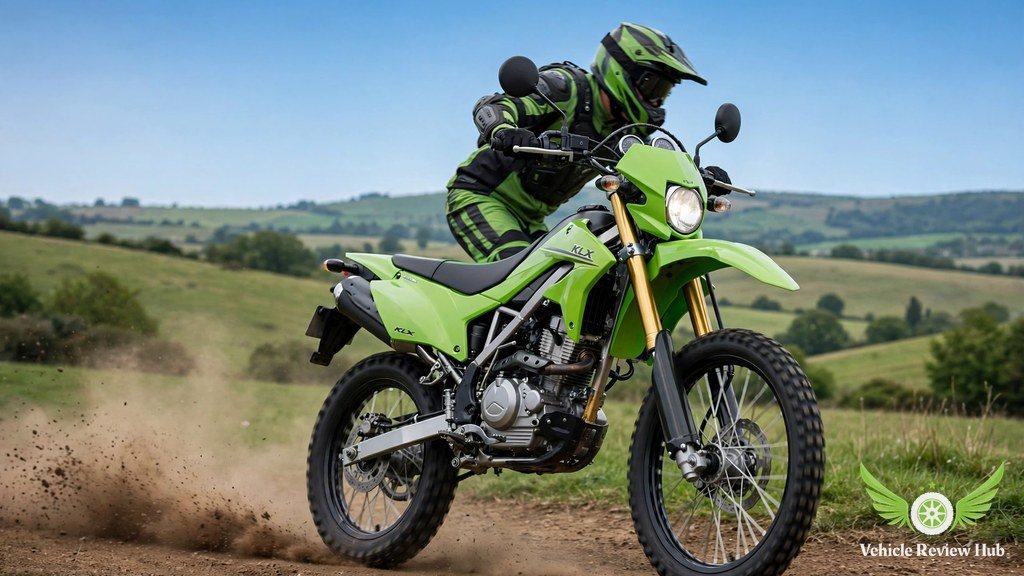
12 PS Official, Press Printed Less
Kawasaki Indonesia’s claim is 8.6 kW, which is 12 PS at 8,000 rpm, with 11.3 Nm of torque at 6,500 rpm. Press tests printed slightly less: Otomotif recorded 11.8 dk in its 2015 first ride and 11.9 dk in the 2020 three-bike test, Dirt Action in Australia put it at “around 12Hp”, and the Philippine listing quoted 11.52 hp. Those figures are the same claim in different units and rounding — 8.6 kW converts to 11.53 hp — so there is no real dispute, only a unit change. What matters for this Kawasaki KLX150 BF performance guide is that the official figure is 12 PS, never “12 hp”, and that the BF’s engine is identical to the standard KLX150’s: the same 144 cc bore and stroke of 58.0 × 54.4 mm, the same 9.5:1 compression, the same NCV24 carburettor, and the same five-speed gearbox.
| Figure | Kawasaki KLX150 BF |
|---|---|
| Engine | 144 cc air-cooled SOHC 2-valve single |
| Bore × stroke | 58.0 × 54.4 mm |
| Compression | 9.5:1 |
| Fuelling | Keihin NCV24 carburettor |
| Power | 8.6 kW (12 PS) @ 8,000 rpm |
| Torque | 11.3 Nm @ 6,500 rpm |
| Gearbox | 5-speed, return shift |
| Final drive | 52/14 (3.714), 428 chain, 132 links |
| Fuel tank | 6.9 L |
| Curb weight | 118 kg |
Notes: power and torque are Kawasaki Indonesia’s claims (8.6 kW = 12 PS). Press tests printed 11.8 dk in 2015 and 11.9 dk in 2020 — the same claim in different units. No dyno figure exists for a stock BF, so this Kawasaki KLX150 BF performance guide prints no rear-wheel figure.
No Stock Dyno From Any Outlet
No stock dyno figure exists for the BF from any outlet. Otomotif’s two tests, Dirt Action’s review and the Philippine listings all quote the factory claim or their own conversions of it — none put a BF on a dynamometer. That means there is no verified rear-wheel horsepower figure to print, and this Kawasaki KLX150 BF performance guide does not invent one. The standard KLX150 has no dyno figure either, as the Kawasaki KLX150 performance guide notes. The only measured performance numbers for the BF are the Racelogic acceleration and top-speed figures from the 2015 BF SE test, covered in the next section of this Kawasaki KLX150 BF performance guide.
Kawasaki KLX150 BF Top Speed and Acceleration
Top speed is where the BF’s short gearing shows up most clearly. The instrumented figure is 104.1 km/h by Racelogic, from the Otomotif BF SE test of 29 September 2015 at the Pagedangan circuit in Serpong, Tangerang, with a 65 kg tester and RON 92 fuel. The speedometer read 105 km/h in the same run. That 104.1 km/h is the only instrumented top speed for the BF — there is no second test, no American test, and no faster verified figure. This section of this Kawasaki KLX150 BF performance guide sets out the test, the acceleration figures that came with it, and the inflated claims it rejects.
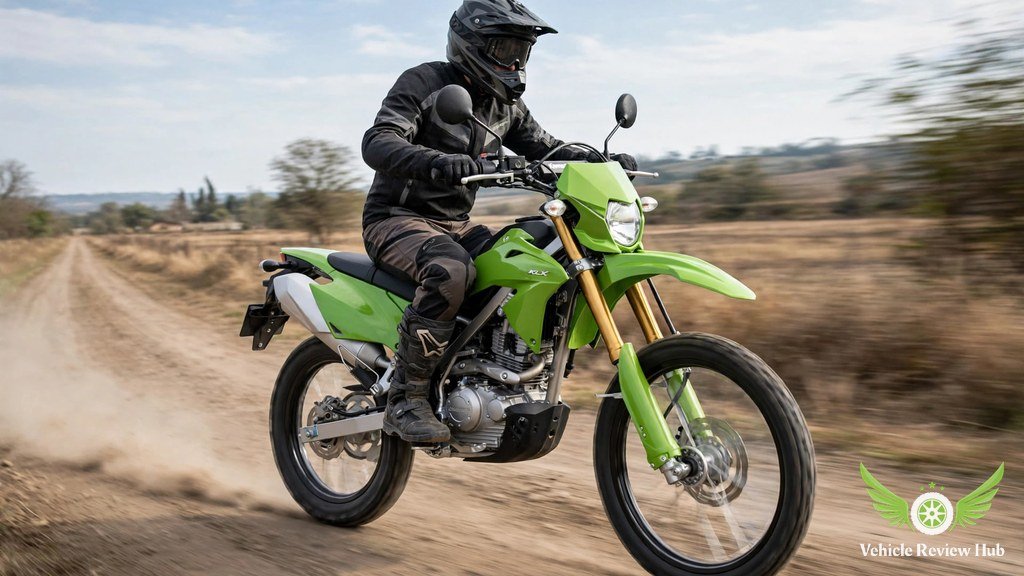
104.1 km/h, Racelogic, BF SE Tested
The test bike was a KLX 150BF SE, the Rp 30.9 million top variant, ridden on the circuit and on daily asphalt. Racelogic recorded 0–60 km/h in 5.8 seconds, 0–80 in 10.8, and 0–100 in 21.7 seconds — slow by any standard, and the slowest of the three bikes in the 2020 comparison, where the Yamaha WR155R did 0–100 in 15.4 seconds and the Honda CRF150L in 20.6. Over the standing 402 metres the BF SE took 20.9 seconds at 95.5 km/h, against 18.8 for the Yamaha and 20.3 for the Honda — the slowest run in this Kawasaki KLX150 BF performance guide. The BF’s gearing explains the shape of those numbers: short ratios pull hard at low speed — BikeBD’s owner test felt “aggressive torque until around 70–80 km/h” — then run out of room at the top. The testers also noted the engine itself was smooth; the slowness is gearing and power, not roughness, and that is the honest reading of this Kawasaki KLX150 BF performance guide.
| Measurement | Racelogic (BF SE, 2015 test) |
|---|---|
| 0–60 km/h | 5.8 s |
| 0–80 km/h | 10.8 s |
| 0–100 km/h | 21.7 s |
| 0–100 m | 8.1 s (70.3 km/h) |
| 0–201 m | 12.8 s (83.6 km/h) |
| 0–402 m | 20.9 s (95.5 km/h) |
| Top speed | 104.1 km/h (speedometer 105 km/h) |
Notes: all figures from the Otomotif BF SE test, 29 September 2015, Racelogic, tester 65 kg, RON 92 fuel. The 0–100 km/h and 0–402 m figures were re-measured in the 2020 three-bike test at 21.7 s and 20.9 s — identical. This Kawasaki KLX150 BF performance guide prints no 0–60 mph or quarter-mile figure: none was measured.
115 to 130 Claims Are Rejected
Aggregator sites print much higher top speeds for the BF — 110, 115, 117, 120, even 130 km/h — and every one of them is fiction. Deshibiker claims “130+ KM Per Hour” while printing 117 km/h in its own price table, contradicting itself. BikeBD’s spec box and other aggregators print 120 km/h with no test behind it. The only number with a test behind it is 104.1 km/h by Racelogic, and the 2020 three-bike test confirmed it at the same 104.1 km/h — the reference figure of this Kawasaki KLX150 BF performance guide. BikeBD’s own 3,500 km owner test recorded a speedometer maximum of 110 km/h — a speedometer reading, not an instrumented figure, and labelled as such here. The rule this Kawasaki KLX150 BF performance guide applies is simple: a top speed without a test behind it is not a top speed.
Kawasaki KLX150 BF Mileage and Fuel Economy
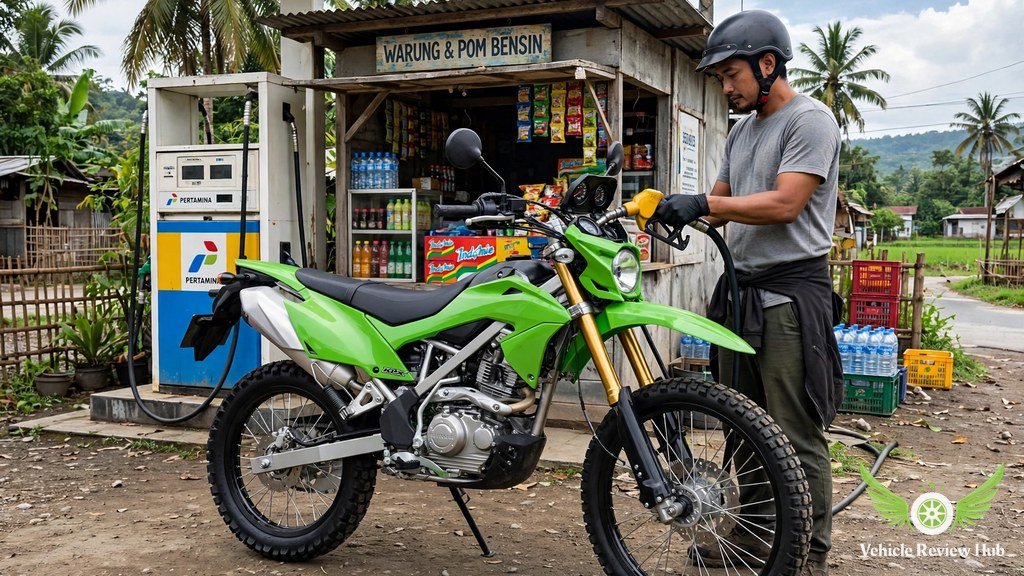
The BF’s fuel economy is its weakest measured number: 31.8 km per litre in the same 2015 BF SE test that produced the top speed. The same figure was recorded again in the 2020 three-bike test, where the BF SE was the thirstiest of the three bikes by a wide margin. This section of this Kawasaki KLX150 BF performance guide explains what 31.8 km/l means in range, why the BF drinks more than its rivals, and which higher fuel figures are not to be believed.
31.8 km per Litre in the Same Test
The 31.8 km/l figure comes from the Otomotif BF SE test of September 2015 — the same Racelogic session as the 104.1 km/h top speed, on the same bike, with the same 65 kg tester and RON 92 fuel. With a 6.9-litre tank that works out to about 219 km of range, labelled arithmetic rather than a measured range: 6.9 × 31.8 ≈ 219 — the range figure this Kawasaki KLX150 BF performance guide uses. No fuel-injected rival has this problem, because the BF still runs a carburettor — the Keihin NCV24 — while the Honda CRF150L runs PGM-FI and the Yamaha WR155R runs fuel injection with variable valve actuation. The carburettor is simple and fixable anywhere in Indonesia, and it is also the reason the BF uses more fuel than either rival in this Kawasaki KLX150 BF performance guide.
Thirstiest of the Three in 2020
In the September 2020 three-bike test the gap was stark: the Yamaha WR155R recorded 48.3 km per litre, the Honda CRF150L 42.3, and the KLX150BF SE 31.8. The test’s own words were blunt — the BF SE was the thirstiest of the three, “paling haus”. The BF burned roughly a third more fuel than the Honda and half as much again as the Yamaha, while being the slowest of the three. The carburettor explains part of it, as this Kawasaki KLX150 BF performance guide notes; the short 52/14 gearing explains the rest, since the engine spins faster at any given road speed. BikeBD’s owner test averaged near 38 km per litre on regular terrain — an owner-test average, labelled as such, and higher than the instrumented 31.8 km/l. Aggregator claims of 40 km/l or more for the BF are fiction, with no test behind them, and this Kawasaki KLX150 BF performance guide rejects them. The same three bikes are compared on price and value in the Kawasaki KLX150 comparison.
| Bike | Fuel (km/l) | Top speed, Racelogic (km/h) | 0–100 km/h (s) | 0–402 m (s) |
|---|---|---|---|---|
| Yamaha WR155R | 48.3 | 109.9 | 15.4 | 18.8 |
| Honda CRF150L | 42.3 | 103.0 | 20.6 | 20.3 |
| Kawasaki KLX150BF SE | 31.8 | 104.1 | 21.7 | 20.9 |
Notes: all figures from the Otomotif three-bike test, September 2020, Racelogic. Speedometer top speeds in the same test were 117 / 113 / 105 km/h. The BF SE was the thirstiest and the slowest to 100 km/h, yet the friendliest off-road — the trade this Kawasaki KLX150 BF performance guide keeps returning to.
Kawasaki KLX150 BF Real-World Riding Experience
On paper the BF loses every race in its own test. On a trail it wins a different contest: the 2020 test judged it the friendliest bike off-road, the easiest to control, with the smoothest power character of the three. That is the BF’s real performance story — not speed, but control at low speed over rough ground. This section of this Kawasaki KLX150 BF performance guide covers what the BF feels like where it was built to be ridden, and the fork that limits it.
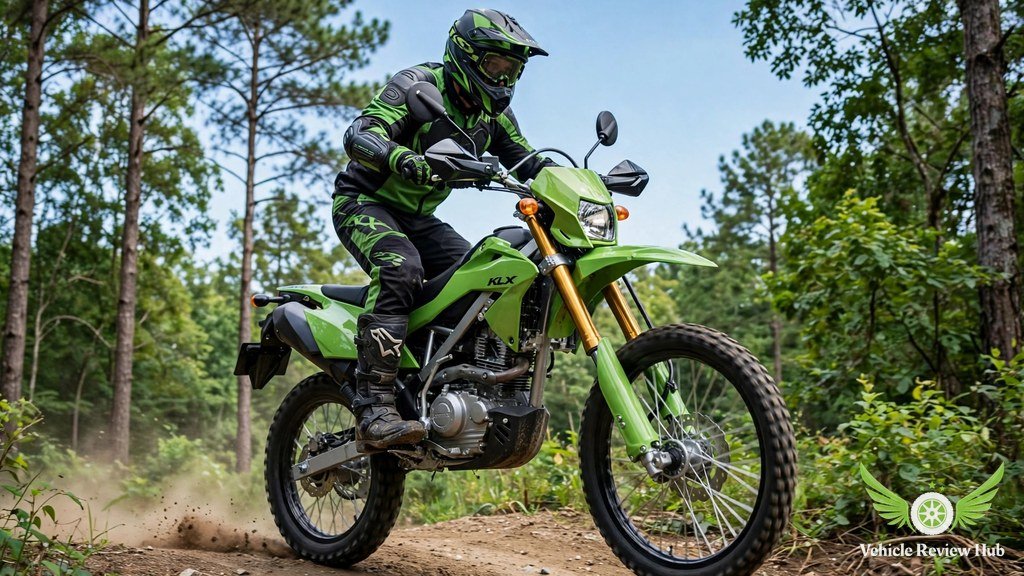
The video below is a Malaysian KLX150 trail ride at Bukit Botak, Puncak Alam — a chest-mounted ride through the trails, not a BF top-speed test and not a BF-specific video. It runs mostly on engine and trail sound, with no narration; the only words heard are a few brief English exclamations near the end. This Kawasaki KLX150 BF performance guide includes it because it shows the kind of slow, technical trail riding the BF was built for, on the same family of bike.
Slowest, Yet Friendliest Off-Road
The 2020 test’s verdict on the BF SE was two-sided: “KLX 150 BF SE jadi yang paling bersahabat, karena motornya lebih mudah dikendalikan” — the most friendly off-road, because it is the easiest to control — and “KLX 150BF SE jadi trail yang karakter tenaganya paling smooth”, the smoothest power character. The short 52/14 gearing is the reason this Kawasaki KLX150 BF performance guide calls the BF the friendliest of the three: at walking pace over rocks and ruts the BF pulls cleanly without clutch work, where the taller-geared rivals need more revs and more care. The same gearing is why it loses on the road — 0–100 km/h in 21.7 seconds, a 104.1 km/h top speed, and a fuel figure of 31.8 km/l. BikeBD’s owner test put it the same way: “if you are crazy about street performance and crazy to race over the speed of 100kmph then it’s not your machine”, while 85–90 km/h on the street was “just an easy deal”. For a learner on a trail, the BF’s slowness is a feature, not a flaw — the bike stays calm where a faster bike would get away from a new rider, and that is the central judgement of this Kawasaki KLX150 BF performance guide.
Soft Fork Bottomed on Landings
The BF’s fork is its best part and its weakest part at once. The gold 35 mm upside-down fork, with 175 mm of travel, is a real fork on a cheap trail bike — the single most visible BF identifier — and the fatbar handlebar above it was the sturdiest in the 2020 test’s judgement. But the 2015 BF SE test found its limit on the first jump: “Bahkan saat sedikit terbang ketika mendarat suspensi depan sampai mentok” — even a small jump bottomed the front suspension on landing. A soft fork that bottoms on landings is forgiving at low speed and punishing at pace, and it is the reason this Kawasaki KLX150 BF performance guide says the BF suits learners better than aggressive riders. The test’s own summary said the BF was “kurang pas untuk rider agresif, namun pas bagi yang masih belajar adventure” — not right for aggressive riders, right for those still learning adventure riding. The rear shock, a Uni-Trak single gas unit with five-way preload and 192 mm of travel, takes the same soft approach, and the whole setup is the reason this Kawasaki KLX150 BF performance guide calls the BF a learner’s trail bike rather than a racer’s.
Kawasaki KLX150 BF Handling, Braking and Stability
Handling is where the BF’s compromises show. On a trail the short gearing and soft suspension make it easy; on the road the same setup makes it wobbly and slow. The brakes are strong enough for the speeds the bike reaches, and the gearing — the BF’s defining change — deserves its own explanation. This section of this Kawasaki KLX150 BF performance guide covers the road manners first, then the gearing that causes them.
Handling, Braking and Stability on the Road
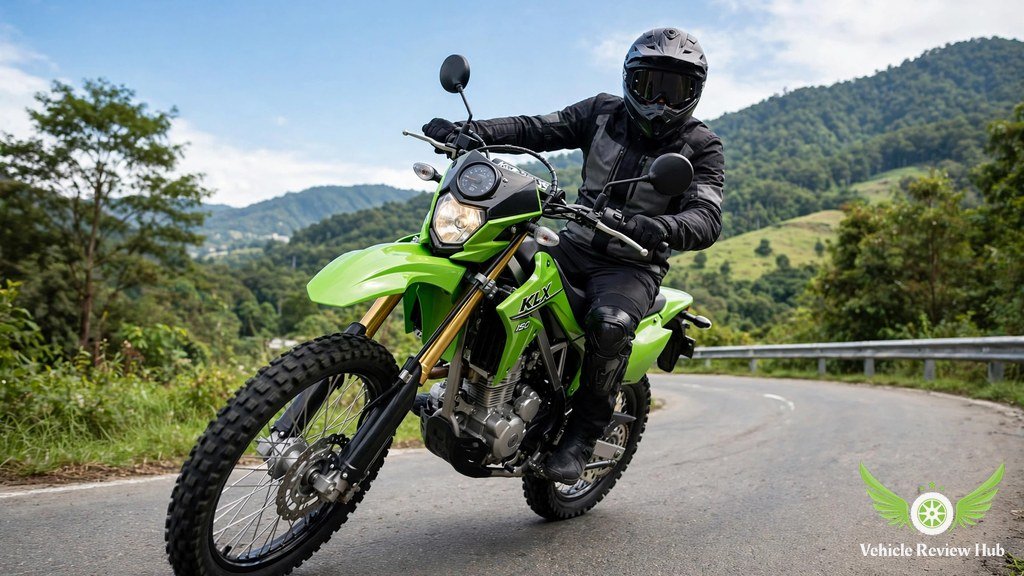
On the road the BF is honest but limited. The 2015 test found cornering “kurang pede, agak goyang” — less confident, a little wobbly — and noted high-rpm handlebar vibration. The 21/18 knobby tyres, built for dirt, give up grip and feel on asphalt, and the tall 870 mm seat and 295 mm of ground clearance put the rider high over a narrow bike. The brakes are not the problem: a 240 mm petal front disc with a twin-piston caliper and a 190 mm petal rear disc with a single-piston caliper stop a 118 kg bike with ease at the speeds it reaches. The problem is stability and comfort at the top of its range, and this Kawasaki KLX150 BF performance guide puts the BF’s happy place below 90 km/h, where BikeBD’s owner test found it an easy, relaxed ride, and it has nothing more to give above 100. That ceiling is part of the performance picture in this Kawasaki KLX150 BF performance guide, not an afterthought: the bike was built for trails, and its road manners are the price of that choice.
Shorter Gearing: 52/14, Not 47/14
The gearing is the BF’s defining performance change, and the numbers are settled: 14/52, a 3.714 final reduction, confirmed by the Otomotif BF SE test spec box, the Kawasaki Malaysia brochure and sprocket listings alike. Against the current standard‘s 46/14 (3.286 on Kawasaki Indonesia’s 2026 pages) the BF’s gearing is much shorter — more pull at low speed, less speed at the top. Two confusions need clearing. First, the 47-tooth rear sprocket that some guides quote is an aftermarket recommendation, not stock: satupiston’s gearing article suggests swapping to a bigger rear sprocket, “misal ukuran 47”, as an example — it was never the factory fitment. Second, satupiston’s update claims the 2024 standard runs 14/52 as well, while Kawasaki Indonesia’s pages say 46/14; this Kawasaki KLX150 BF performance guide reports both and settles neither, because the BF’s own 52/14 is confirmed by three independent sources either way. The gear ratios behind the final drive are 2.917, 2.000, 1.474, 1.182 and 1.000 across the five speeds, with a 2.880 primary reduction.
Kawasaki KLX150 BF Performance Compared With Other Dual Sports
Performance only means something against rivals, and the BF’s most revealing comparison is not against the Honda or the Yamaha — it is against the bike it replaced. The KLX150L was the big-wheel variant of the old KLX150 line, and the BF took its wheels and changed everything that mattered. This final section of this Kawasaki KLX150 BF performance guide compares the BF with the L it replaced, then answers the question every buyer asks: is this a beginner’s bike?
Kawasaki KLX150 BF vs Kawasaki KLX150L
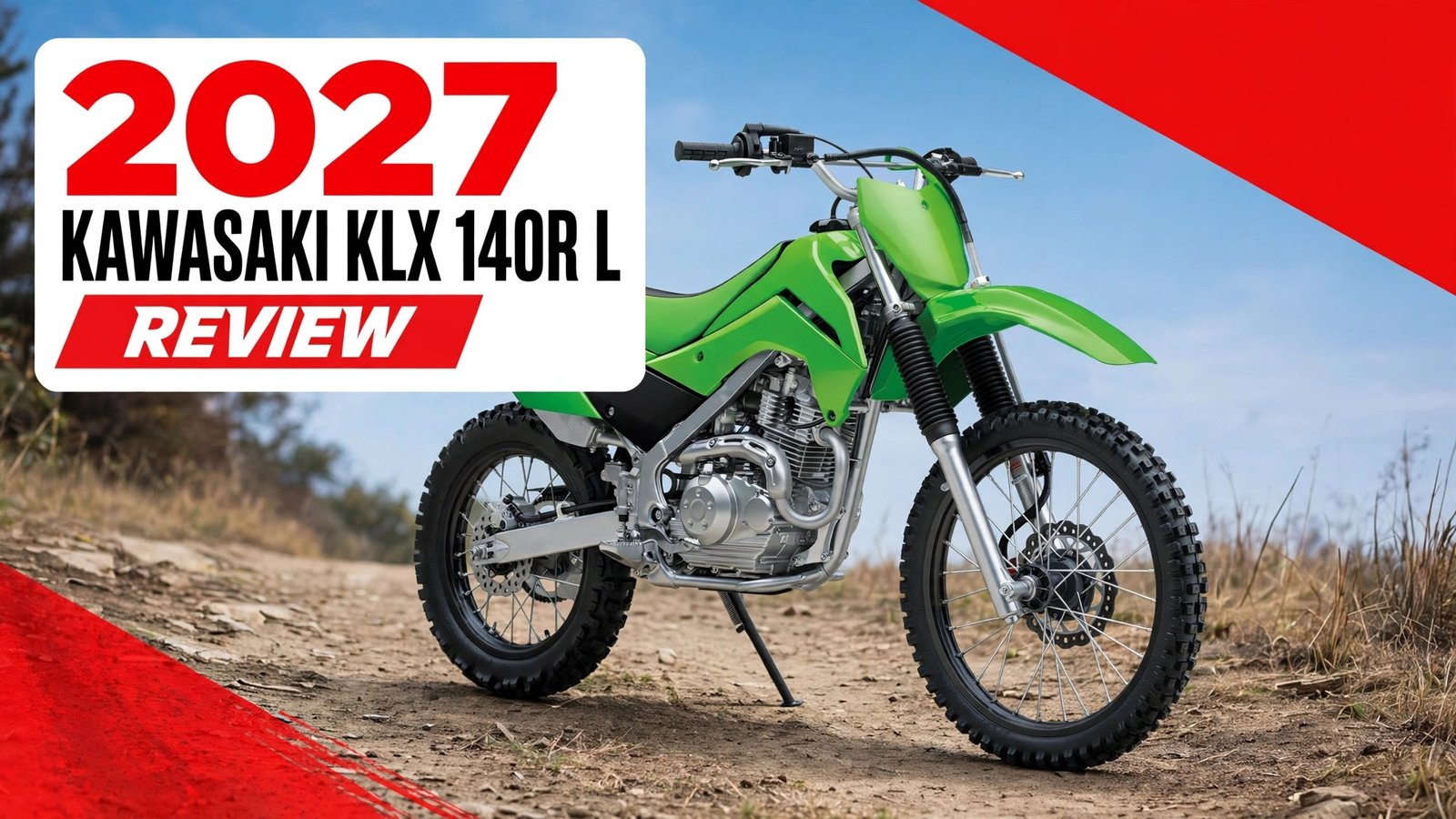
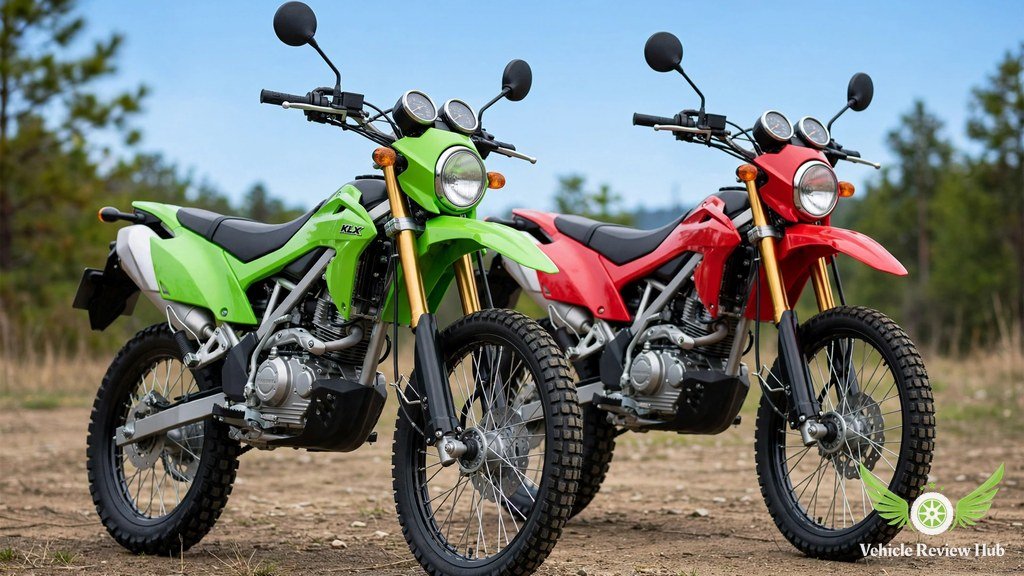
The old KLX150L already ran the 21/18 wheels and the same 2.75-21 and 4.10-18 knobby tyres the BF kept — the “Big Foot” name misleads buyers on exactly this point, because the wheels were not the change. What the L did not have was the upside-down fork or the short gearing: it ran a telescopic fork and the old 14/46 gearing, against the BF’s gold 35 mm upside-down fork with 175 mm of travel and its 14/52 final drive. The BF also added the fatbar handlebar — 13 mm taller and 32 mm wider than the pre-2015 bar — and the SE kit of hand guard, skid plate and black rims on the top variant. The engine did not change between the two bikes: the same 144 cc single, the same NCV24 carburettor, the same 12 PS claim. A buyer comparing a late L with an early BF should look at the fork and the rear sprocket, not the wheels, as this Kawasaki KLX150 BF performance guide explains — gold upside-down fork and a 52-tooth rear sprocket mean BF, telescopic fork and a 46-tooth rear sprocket mean L. The BF is the L with the two parts that change how a trail bike rides, and that is the whole performance difference between them in this Kawasaki KLX150 BF performance guide.
Is the Kawasaki KLX150 BF Suitable for Beginner Riders?
Yes — with two conditions, as this Kawasaki KLX150 BF performance guide sets out. The BF is the friendliest bike in its own test, the easiest to control off-road, with the smoothest power delivery and a simple air-cooled carburetted engine that forgives mistakes. Its testers called it right for riders still learning adventure riding, and its soft fork and short gearing keep speeds low while a new rider learns. The conditions are height and ambition: at 870 mm the seat is tall for a short rider, and the BF has no low variant of its own — the low bike in the family was the old S at 830 mm. And a rider who wants to go fast will outgrow it quickly, because 104.1 km/h is all there is and the fork bottoms on landings. For a taller beginner riding trails in Indonesia, where the bike was sold, the BF is an honest first trail bike. For anyone else — and for any American reader, since the bike was never sold in the United States and the earliest BF only becomes eligible for import in 2040 — it is a bike to learn from at a distance. That is the final word of this Kawasaki KLX150 BF performance guide: the slowest bike in its test, the thirstiest, and the one its testers would hand to a learner first.
Kawasaki KLX150 BF Performance Frequently Asked Questions
These answers give the BF’s measured performance figures — top speed, acceleration and fuel economy — from the instrumented tests that produced them.
What is the KLX150 BF’s top speed?
104.1 km/h by Racelogic, measured on a BF SE in the Otomotif test of 29 September 2015; the speedometer read 105 km/h in the same run. It is the only instrumented top speed for the BF — the 2020 three-bike test confirmed the same 104.1 km/h, and higher claims of 115 to 130 km/h are rejected in this Kawasaki KLX150 BF performance guide.
How fast does the BF accelerate?
0–60 km/h in 5.8 seconds, 0–80 in 10.8, and 0–100 in 21.7 seconds, all by Racelogic. Over the standing 402 metres it took 20.9 seconds at 95.5 km/h — the slowest of the three bikes in the 2020 test.
What fuel economy does the BF get?
31.8 km per litre in the same instrumented 2015 test — and the thirstiest of the three in the 2020 test, against the Honda CRF150L’s 42.3 and the Yamaha WR155R’s 48.3. With a 6.9-litre tank that works out to about 219 km of range, labelled arithmetic rather than a measured range.
How much power does the BF make?
Kawasaki Indonesia claims 12 PS at 8,000 rpm and 11.3 Nm at 6,500 rpm — 8.6 kW, never “12 hp”. No stock dyno exists for the BF from any outlet, so this Kawasaki KLX150 BF performance guide prints no rear-wheel horsepower figure.
Is the BF good for beginner riders?
Yes, with two conditions. It was the friendliest bike off-road in its own test — the easiest to control, with the smoothest power — and its testers called it right for riders still learning adventure riding. But the seat is 870 mm tall, and a rider who wants speed will outgrow its 104.1 km/h top speed quickly.
What does the BF’s 52/14 gearing do?
It trades top speed for low-end pull: the short final drive makes slow trail work easy without clutch work, which is why the BF was the friendliest off-road yet the slowest on the road. The 47-tooth rear sprocket some guides quote is an aftermarket recommendation, not stock.