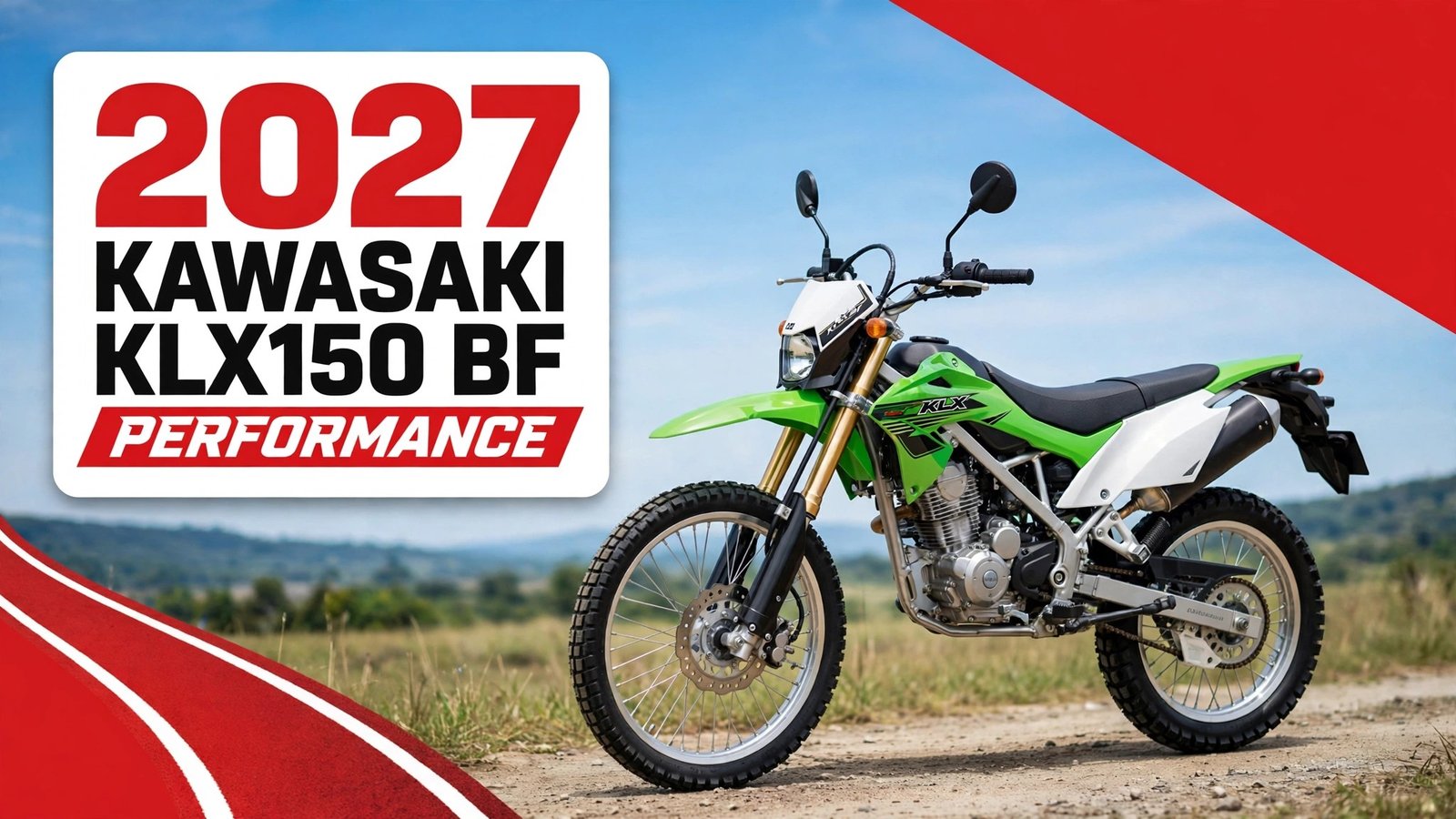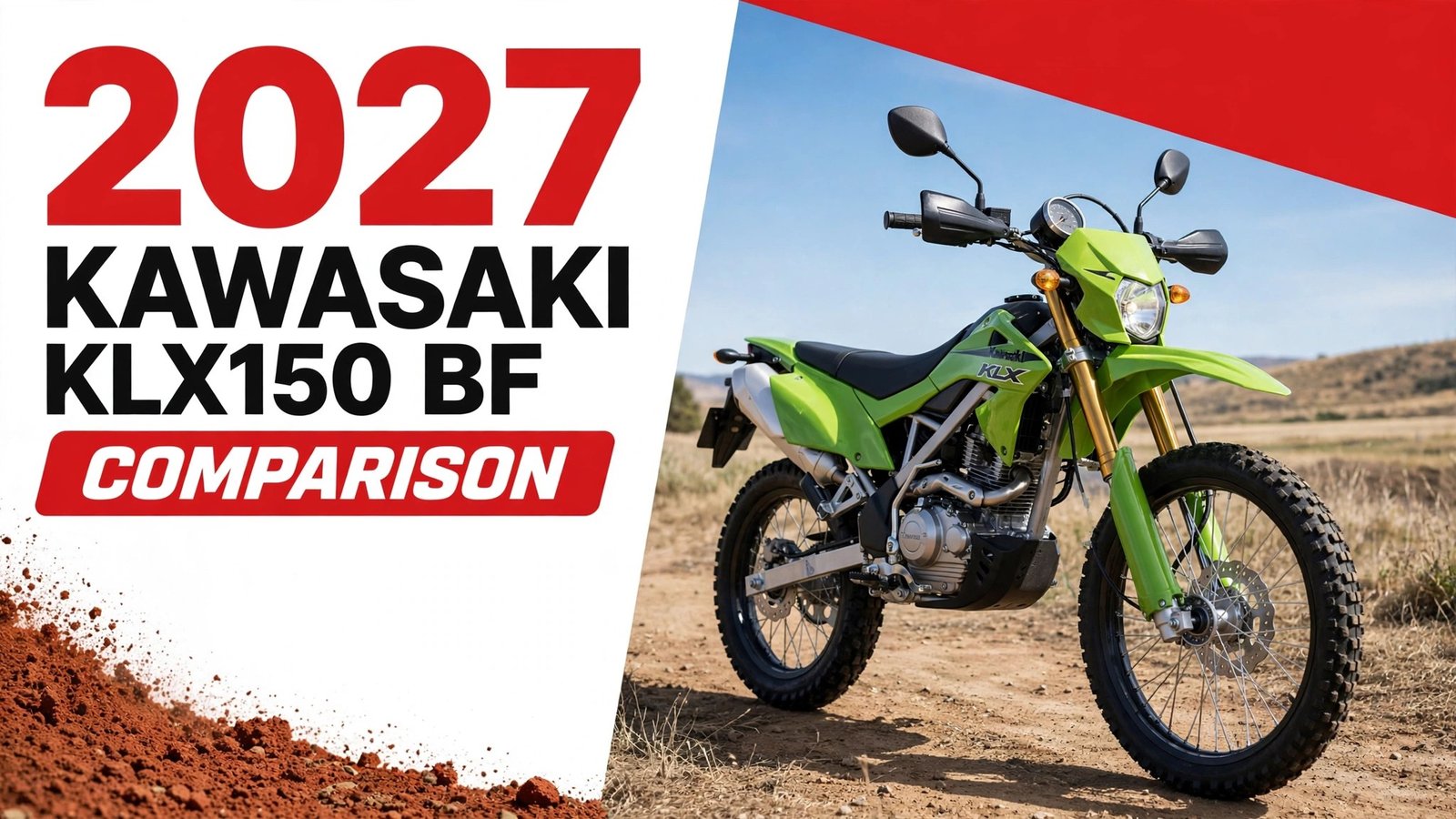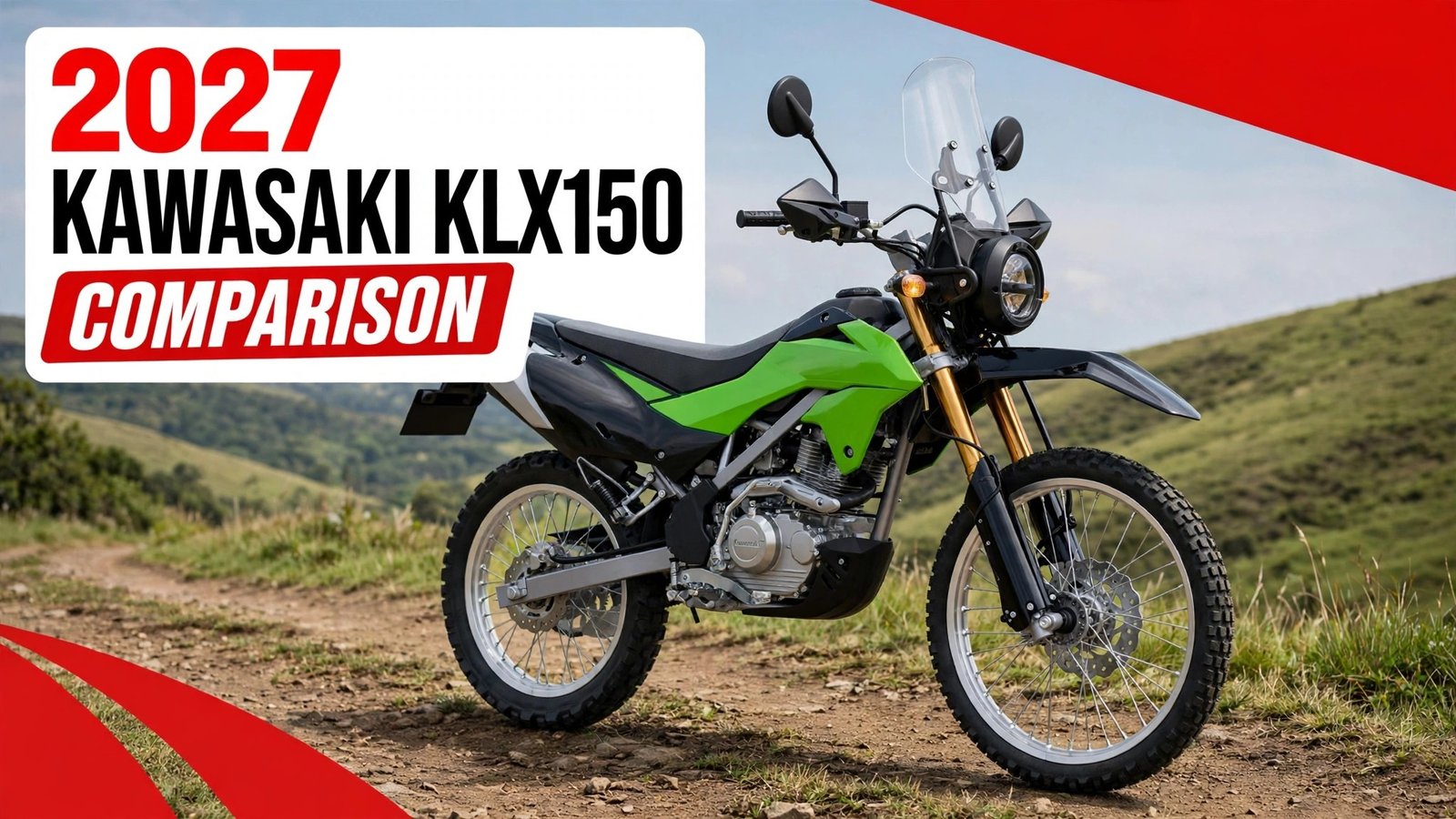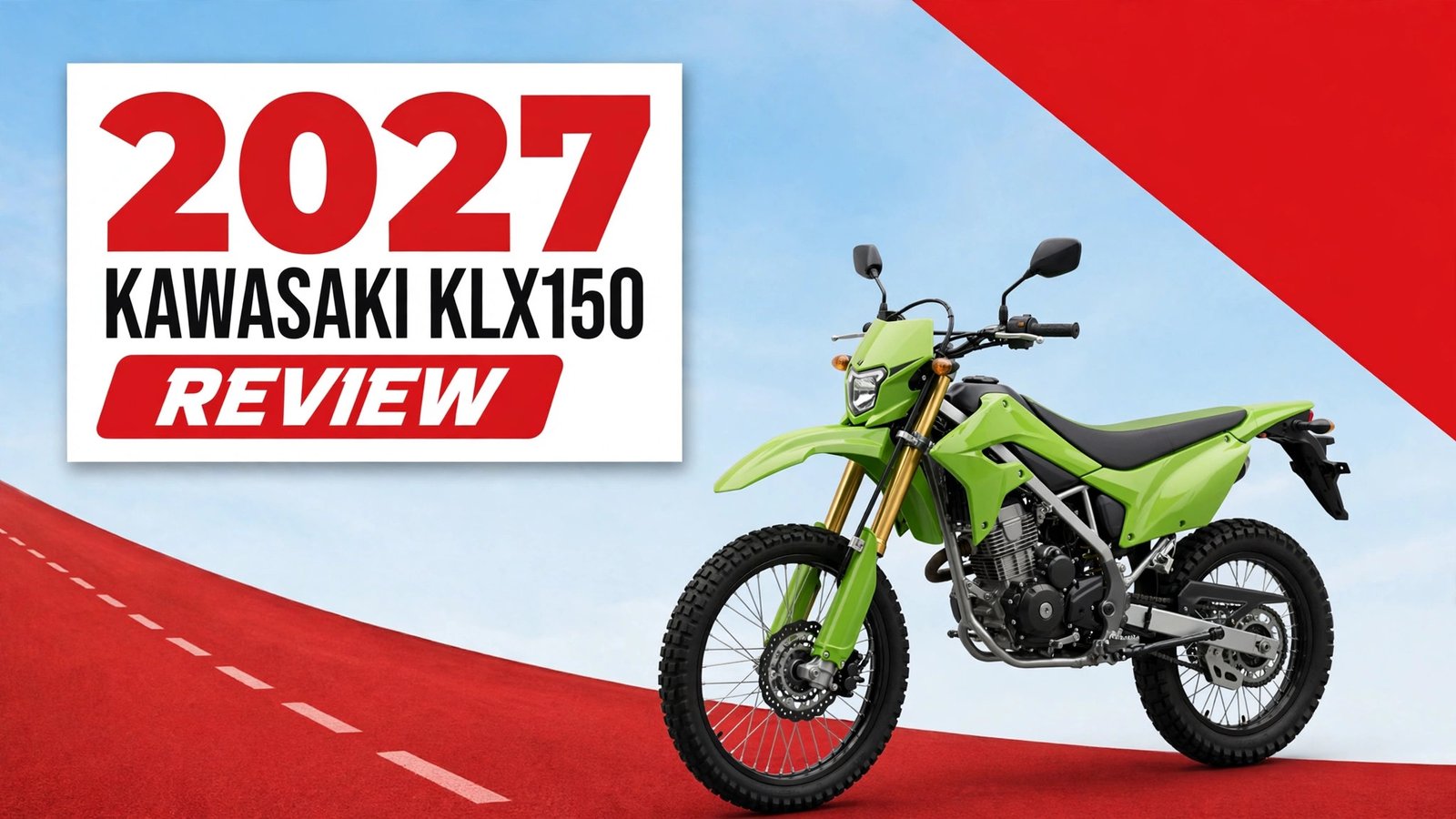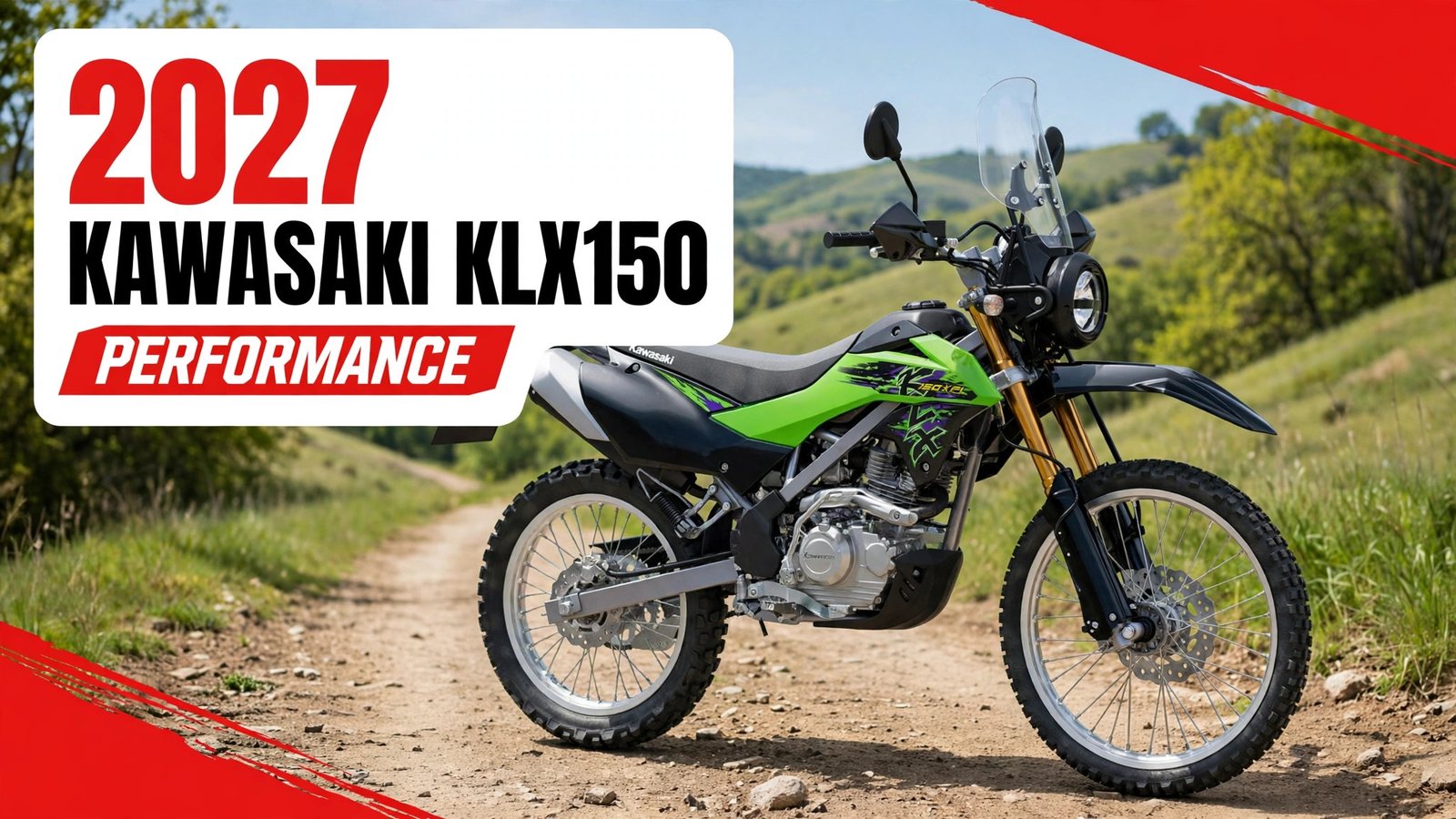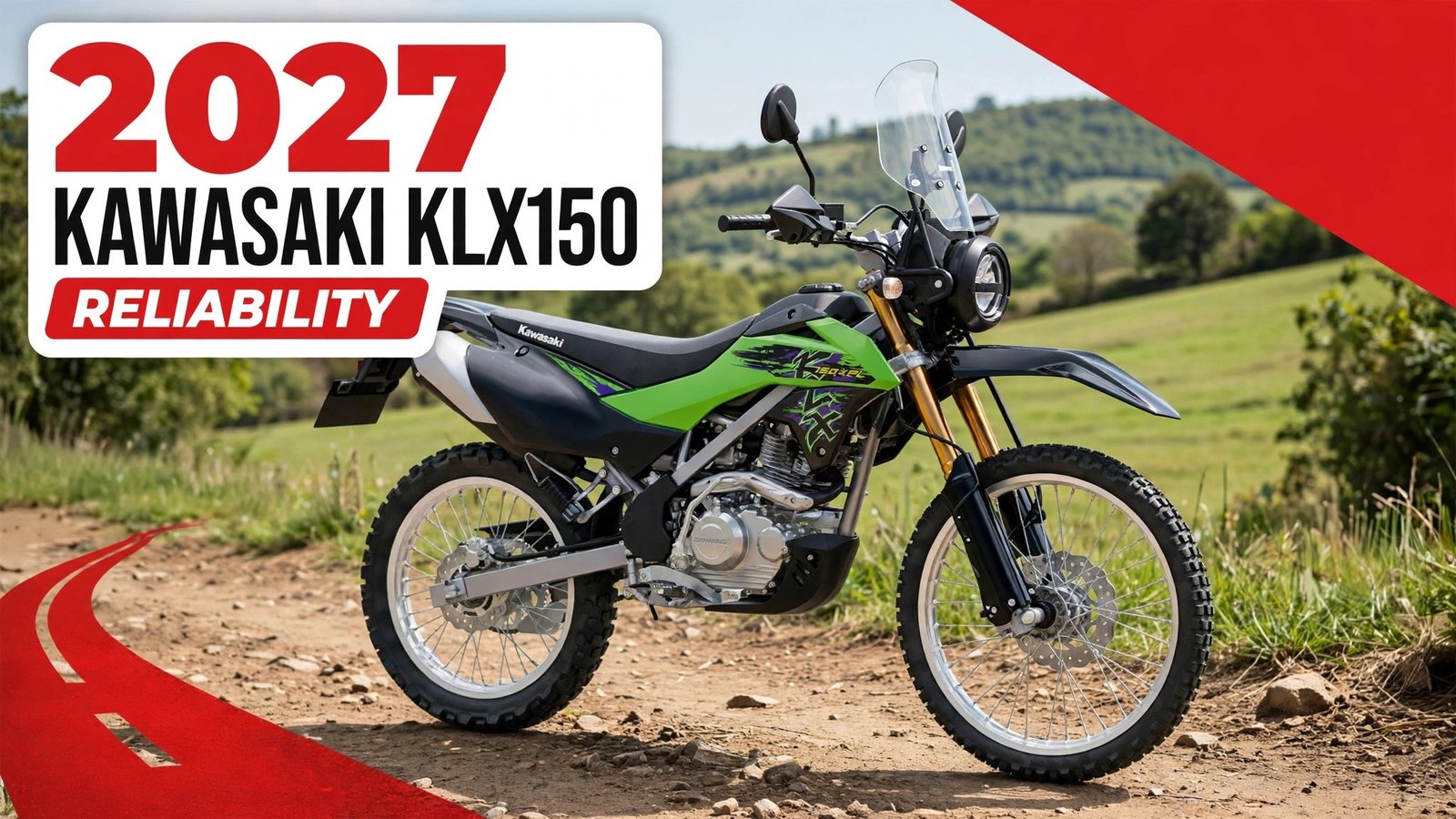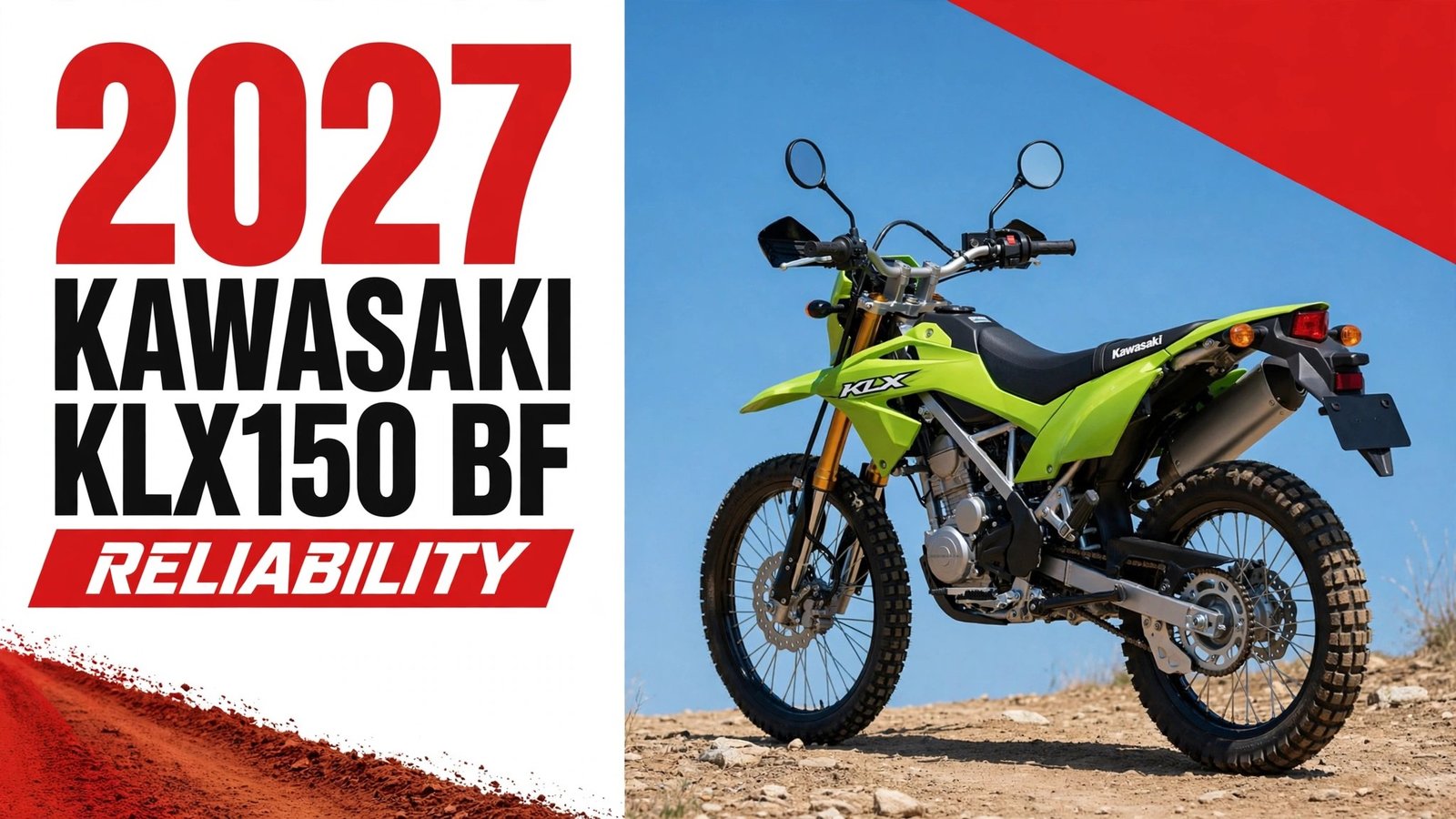
The short answer to the question behind this Kawasaki KLX150 BF reliability guide is that nothing in the record gives a buyer a reason to fear the bike — and nothing in the record proves it is faultless either. No recall was found naming the BF in any market, no signature defect is documented for it, and the engine is a simple air-cooled, carburetted single shared with the whole KLX150 family since 2009. The honest limits are just as plain: the full factory service schedule could not be verified, the warranty terms are unverified, and the one thin owner watch item — the fork seals — rests on general fork practice, not on a documented BF failure record. The rest of this Kawasaki KLX150 BF reliability guide works through the record, the wear items, the servicing, and the costs in that order.
The BF is now a used buy only. Kawasaki dropped the BF name from the Indonesian lineup in February 2023, so no new BF exists anywhere, and the bike was never sold in the United States at any price. Every BF on the road today is at least a few years old, so this Kawasaki KLX150 BF reliability guide is about two things: what the bike was built like, and what a buyer should check on the example in front of them.
Kawasaki KLX150 BF Reliability Overview
Reliability starts with the record, and the BF’s record is quiet. Searches of the US recall databases and of Indonesian, Australian, Philippine and Bangladeshi sources found no recall naming the KLX150 BF, and no owner community has documented a defect that follows the BF specifically. The bike’s simplicity helps: a 144 cc air-cooled single with a Keihin NCV24 carburettor, five speeds, a kick starter beside the electric start, and no electronics beyond DC-CDI. This section covers the recall record first, then the things that do affect an individual bike — its mileage, its storage, and how its previous owner treated it. The record is the starting point for this Kawasaki KLX150 BF reliability guide.
No Recalls Found in Any Market
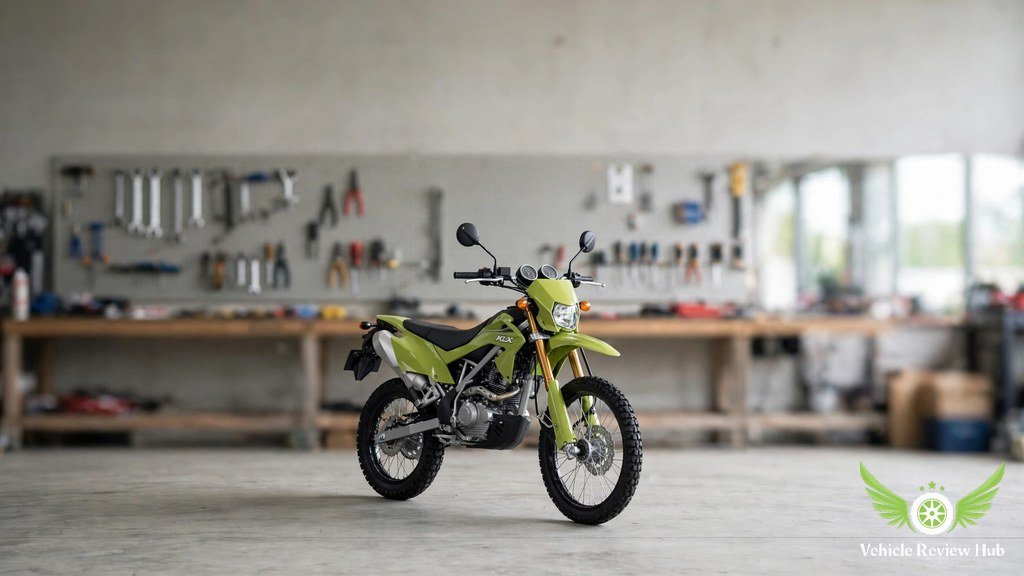
No recall was found naming the Kawasaki KLX150 BF in any market searched. The US National Highway Traffic Safety Administration recalls database could not be checked directly — its API was unreachable, so this Kawasaki KLX150 BF reliability guide states no NHTSA result at all rather than claiming a zero it could not verify. A search of the US Consumer Product Safety Commission records found Kawasaki recalls for competition motorcycles and side-by-sides, but nothing naming the KLX150 or the KLX150 BF. That is a search result, not proof that no defect ever existed: a recall search can only report what the databases hold, and the BF was never sold in the United States, so no US record is expected in any case. One thing is settled in this Kawasaki KLX150 BF reliability guide — the frame-weld recall that names the smaller KLX140R family does not apply to the 150. The full review of the bike is set out in the Kawasaki KLX150 BF review, and the performance figures are covered in the Kawasaki KLX150 BF performance guide.
How Mileage, Storage and Previous Care Affect Reliability
On a used BF, the individual bike matters more than the model. A low-mileage example that lived in a garage, was serviced on a rhythm, and comes with records is a different purchase from a high-mileage bike that sat outside through rainy seasons with stale fuel in its carburettor. The carburettor is the part most sensitive to neglect: fuel left standing gums up the small jets, and the NCV24’s pilot circuit is the first to suffer, showing up as hard starting and a lumpy idle. Storage matters too — a bike kept dry keeps its chain, spokes, fasteners and brake discs in far better shape than one left in the weather. Mileage alone is a weak guide: a BF with high kilometres and a careful owner can be a better buy than a low-kilometre bike that was crashed, stored wet, and never serviced. Ask for service records, check the oil, look for weeping at the fork seals, and listen for a clean idle.
| Reliability question | What the searches found |
|---|---|
| Recalls naming the BF | None found in any market searched |
| Signature BF defect | None documented in any source searched |
| Thin owner watch item | Fork seals — general USD-fork practice, not a documented BF failure |
| Factory service schedule | Could not be verified from any source |
| Warranty terms | Unverified — no KMI terms found |
| Engine design | 144 cc air-cooled single, NCV24 carburettor, 5-speed, kick + electric start |
Notes: the recall and defect rows are search results, not proof of zero faults — a search can only report what the databases and sources hold. The schedule and warranty rows are unverified because no source could confirm them, and this Kawasaki KLX150 BF reliability guide labels them as such rather than filling the gap — and it will not guess at them.
Kawasaki KLX150 BF Common Problems and Wear Items
The BF has no problem that follows it by name. That is worth stating plainly rather than inventing a defect to fill the section. What the BF does have is the normal wear of a cheap, hard-used trail bike: fork seals, chain and sprockets, knobby tyres, brake pads, and a foam air filter. The difference matters — a wear item is expected, cheap, and visible before it fails, while a problem is a design fault that surprises an owner. This section of this Kawasaki KLX150 BF reliability guide names the wear items, explains the one thin watch item, and rejects a fabricated defect that circulates online.
No Signature BF Defect Documented
No signature defect is documented for the Kawasaki KLX150 BF. No source searched for this Kawasaki KLX150 BF reliability guide — Indonesian press, Australian and Philippine reviews, owner forums, or recall databases — records a failure that follows the BF specifically. The closest things to complaints are ride-quality observations: BikeBD’s 3,500 km owner test notes only a little vibration at low speeds, and the 2015 BF SE test notes high-rpm handlebar vibration and a soft fork that bottoms on landings. One fabricated defect deserves naming: an online buyer’s guide claims buyers should avoid 2013–2014 units because a cam chain tensioner fails. The claim is fabricated — the BF did not exist before June 2015, and no tensioner failure record for the BF exists in any source searched. The standard KLX150 shares the same engine and the same record, as the Kawasaki KLX150 reliability guide notes.
Fork Seals: The Thin Owner Watch Item
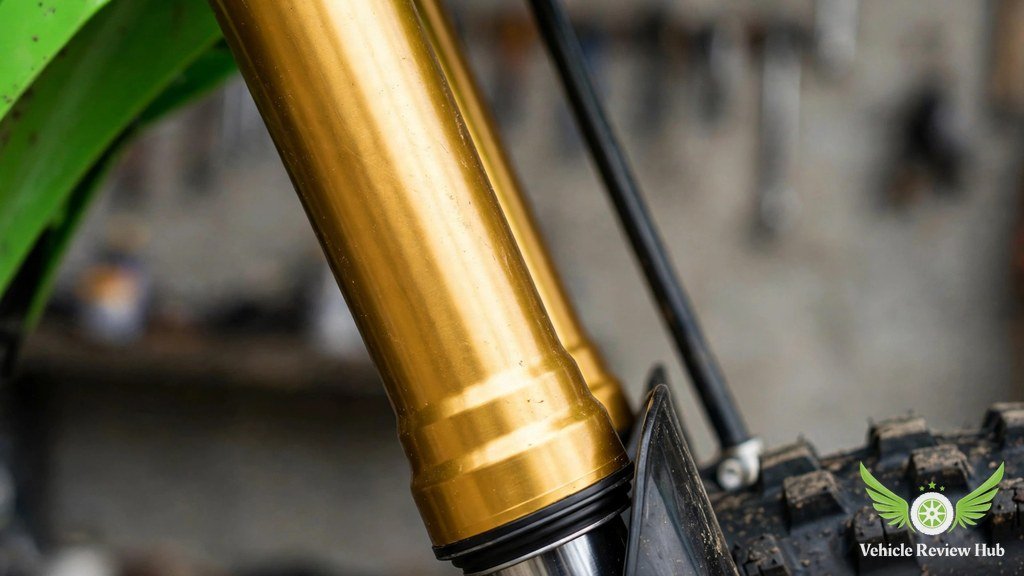
The fork seals are the thin owner watch item on the BF — thin because no BF-specific fork-seal failure record was found in any search, and the advice here rests on general upside-down-fork practice rather than on a documented BF defect. An inverted fork’s seals are a wear item on any trail bike: dust and grit work past the dust wipers, the seal lip wears, and oil weeps down the fork leg. A weeping seal left alone is not a cosmetic problem — the oil contaminates the front brake and the fork loses oil, which weakens the damping and makes the fork more likely to bottom. There is an honest mechanical link to the BF’s own test record: the 2015 BF SE test found the soft front fork bottoming on even a small jump. That is reasoning, not a reported failure. Look for oil mist on the fork leg just above the seal, and check that the fork moves smoothly without sticking. No failure rate, no mileage at which seals fail, and no repair cost is printed in this Kawasaki KLX150 BF reliability guide — none was verified, and the BF must not be described as “known for” fork-seal leaks when no such record exists.
| Wear item | What to check | Why it matters |
|---|---|---|
| Fork seals (USD fork) | Oil weeping on the fork leg above the seal | Leaking oil contaminates the front brake and weakens damping |
| Chain and sprockets (428, 132 links, 14/52) | Stretch, stiff links, hooked sprocket teeth | A worn chain jumps teeth and wears the sprockets faster |
| Tyres (2.75-21 front, 4.10-18 rear) | Knob height, cracking, age | Worn knobs lose grip off road and feel vague on asphalt |
| Brakes (240 mm petal front, 190 mm petal rear) | Pad thickness, disc scoring, lever feel | Thin pads score the disc and lengthen stopping distances |
| Air filter (foam) | Dirt loading, tears, oil saturation | A clogged filter starves the carburettor and dulls performance |
| Spark plug | Colour, gap, fouling | A fouled plug causes hard starting and rough running |
Notes: every row above is a wear item, not a defect — each is expected, visible before it fails, and cheap relative to the bike. Each one is a routine cost of trail riding, and this Kawasaki KLX150 BF reliability guide treats them as maintenance, not faults. The fork-seal row is general upside-down-fork practice, not a documented BF failure, and this Kawasaki KLX150 BF reliability guide prints no failure rate or repair cost for it because none was verified.
Kawasaki KLX150 BF Maintenance Schedule and Servicing
Servicing a BF is simple work on a simple bike, and that simplicity is part of its reliability story. The engine is air-cooled and carburetted, the valves are screw-adjusted, and there is no fuel injection, no ride-by-wire, and no electronics beyond DC-CDI for a workshop to fight with. The problem is not the work itself but the paperwork: the full factory service schedule could not be verified, so the intervals below are labelled by their origin — a generic 150 cc plan, owner practice, or a conflicting pair of figures — rather than presented as the Kawasaki manual. Every figure below carries its label in this Kawasaki KLX150 BF reliability guide.
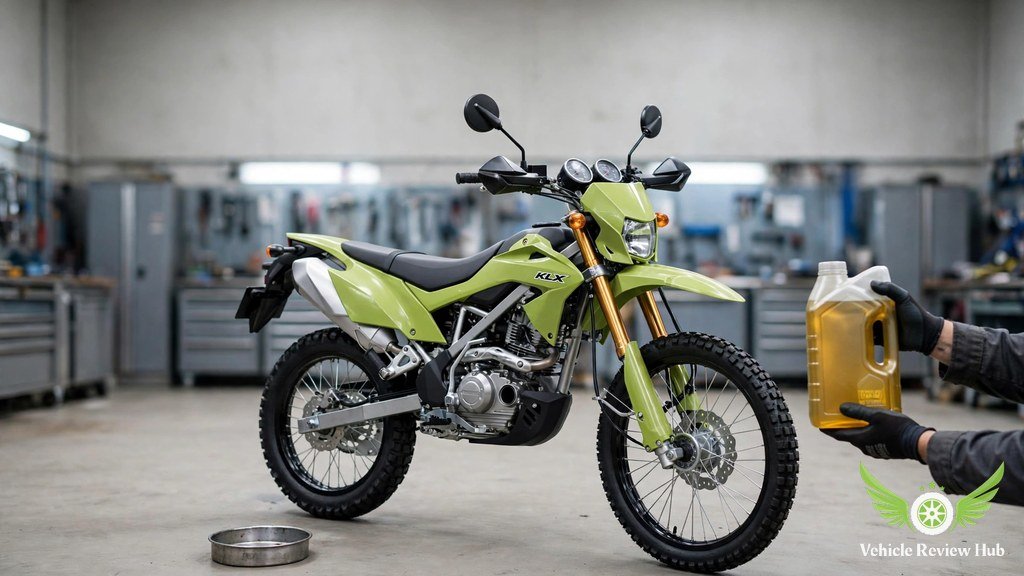
Full Schedule Could Not Be Verified
The full factory maintenance schedule for the KLX150 BF could not be verified. No owner’s manual or service manual schedule for the BF was obtained from any source fetched for this Kawasaki KLX150 BF reliability guide, and no Kawasaki Indonesia page publishes the schedule. That gap is stated here rather than filled with another model’s intervals. What follows comes from three labelled sources instead — a generic 150 cc plan, Indonesian owner practice, and the conflicting oil-capacity figures.
Dealer Service Rhythm: Every 3,000 km
The dealer service rhythm for the BF is every 3,000 km — but the reader should know exactly where that figure comes from. It is drawn from a generic 150 cc preventive-maintenance plan that calls for the motorcycle to be checked every 3,000 km, with services at 750, 3,000, 6,000 and 9,000 km. That plan is not the KLX manual, and this Kawasaki KLX150 BF reliability guide labels it as generic-plan sourced. From the same generic plan: engine oil is anticipated every 3,000 km and replaced every 6,000 km, the spark plug is replaced every 12,000 km, and the centrifugal oil filter is cleaned every 12,000 km. Indonesian owners and mechanics suggest changing the oil every 2,500 to 3,000 km. One figure is genuinely unresolved and must be shown as a conflict: the oil capacity. Ralph731 TV, citing the service manual, gives 0.93 litres with the filter left in place; satupiston gives 1.2 litres, or 1.3 with a filter change. This Kawasaki KLX150 BF reliability guide prints both and settles neither — a buyer should check the level on the dipstick rather than trusting either number alone. The grade is not in dispute: 10W-40.
The video below is an Indonesian-language KLX oil change using Genuine Oil 4T 10W-40 SL-MA. Its narration is in Indonesian, not English. This Kawasaki KLX150 BF reliability guide includes it because it shows the oil change itself — the drain, the fill, and the 10W-40 grade — on the same family of bike. The 10W-40 grade is the one this Kawasaki KLX150 BF reliability guide records for the BF.
| Service item | Interval | Source |
|---|---|---|
| General check and service | Every 3,000 km (first at 750 km) | Generic 150 cc plan — not the KLX manual |
| Engine oil change | Every 2,500–3,000 km (owner practice) | Indonesian owners and mechanics |
| Spark plug replacement | Every 12,000 km | Generic 150 cc plan — not the KLX manual |
| Centrifugal oil filter clean | Every 12,000 km | Generic 150 cc plan — not the KLX manual |
| Oil capacity | 0.93 L or 1.2 L — conflict, unsettled | Ralph731 (manual-cited) vs satupiston |
| Oil grade | 10W-40 | Genuine Oil 4T 10W-40 SL-MA |
Notes: no row in this table is a verified Kawasaki interval — every interval carries its source label. Read the source column before trusting any interval in this Kawasaki KLX150 BF reliability guide. The oil-capacity row is a genuine conflict between two sources, and this Kawasaki KLX150 BF reliability guide prints both figures rather than choosing one.
Kawasaki KLX150 BF Tires, Brakes and Suspension Maintenance
The parts that wear fastest on a BF are the parts that touch the ground and the parts that stop it. Knobby tyres, a chain, brake pads and fork oil all live hard lives on a trail bike, and the BF’s soft suspension works them harder than a road bike’s would. This section of this Kawasaki KLX150 BF reliability guide covers the fork-oil figure, the thinnest number in the whole guide, and the checks that matter on tyres, brakes and suspension.
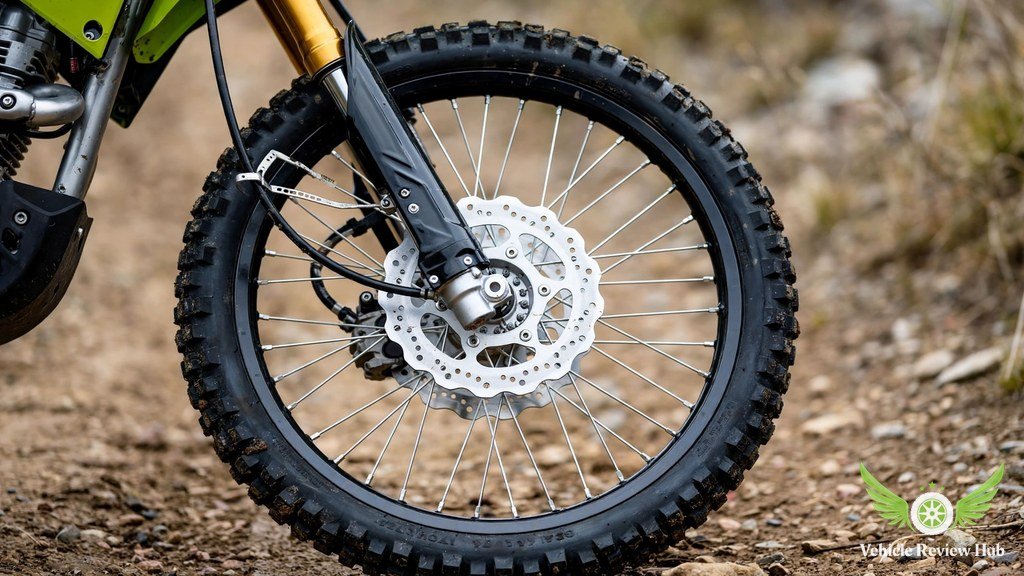
Fork Oil Life About 20,000 km
Fork oil life on the BF is about 20,000 km — and the word “about” carries real weight here, because the figure is the top of a generic range rather than a Kawasaki interval. A general Indonesian maintenance source puts shock oil replacement at every 10,000 to 20,000 km depending on use, and this Kawasaki KLX150 BF reliability guide takes the 20,000 km top of that range, labelled as generic practice with thin evidence. It is not a KMI interval, and this Kawasaki KLX150 BF reliability guide must never present it as one. The honest way to read it is as a planning figure: a BF that has done hard trail work will want its fork oil sooner than a bike that has only ridden gentle tracks.
Tire, Brake and Suspension Checks That Matter
The checks that matter on a BF are the ones a buyer can do with their eyes and hands. On the tyres — 2.75-21 front and 4.10-18 rear — look for knob height, cracking, and age: a tyre gone hard with age grips worse than a newer tyre with less tread. On the brakes — a 240 mm petal front disc with a twin-piston caliper and a 190 mm petal rear disc with a single-piston caliper — check pad thickness, disc scoring, and lever feel. On the suspension — the gold 35 mm upside-down fork with 175 mm of travel and the Uni-Trak rear shock with 192 mm and five-way preload — check the fork for weeping seals, the shock for leaks, and the rear linkage for play. On the chain — a 428 chain with 132 links on 14/52 sprockets — check for stretch, stiff links, and hooked teeth, and keep it cleaned and lubricated. The foam air filter deserves the same attention: it sits behind a high-mounted inlet, but a filter clogged with dust starves the carburettor. These are the checks this Kawasaki KLX150 BF reliability guide puts first, because each one is cheap to do and expensive to ignore. Dirt Action in Australia, which reviewed the BF when it was new, confirms the fork and brake specification this Kawasaki KLX150 BF reliability guide relies on.
Kawasaki KLX150 BF Maintenance and Ownership Costs
Owning a BF is cheap in the ways that matter and vague in the ways this guide refuses to guess at. The bike is mechanically simple, its parts are shared across the whole KLX150 family from 2009 to the present, and the routine items are tyres, chain, brake pads and oil — all small and familiar to any Indonesian workshop. What this Kawasaki KLX150 BF reliability guide will not do is put a number on that cheapness: no resale percentage and no running-cost figure was verified for the BF. That is the honest position of this Kawasaki KLX150 BF reliability guide. That shared-parts supply is the main reason this Kawasaki KLX150 BF reliability guide calls the BF cheap to keep.
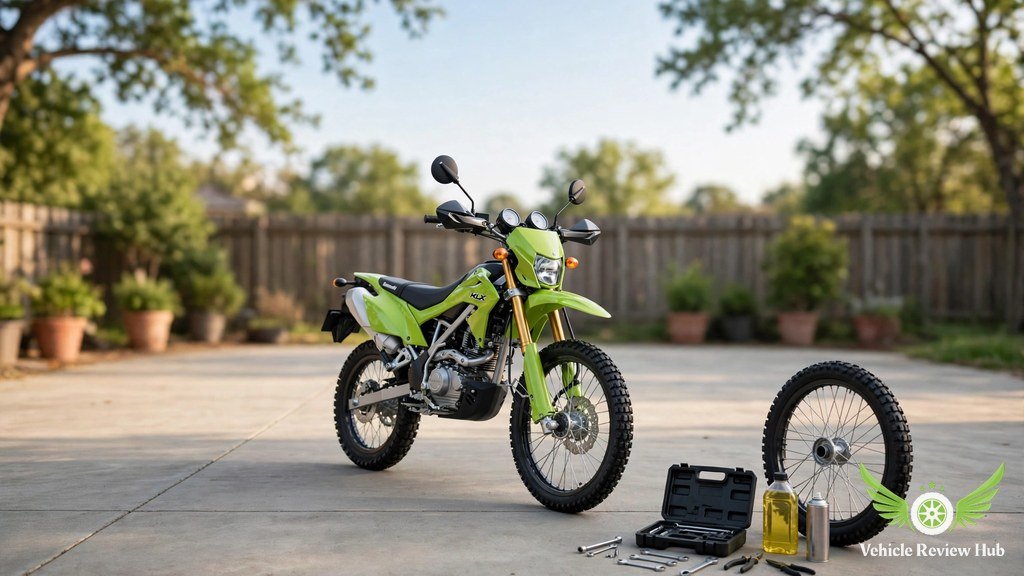
Fuel, Routine Servicing, Tires and Replacement Parts
Fuel is the BF’s largest running cost in kind, and the only one with a measured figure behind it. The instrumented Otomotif test recorded 31.8 km per litre, and with a 6.9-litre tank that works out to about 219 km of range — labelled arithmetic, not a measured range. The BF is the thirstiest of its three-bike test group — far more than the Honda CRF150L’s 42.3 km/l and the Yamaha WR155R’s 48.3 km/l — so a rider who covers distance will feel it at the pump. Routine servicing is the cheap part of ownership: oil, a filter clean, a spark plug, chain care, and brake pads are all small jobs, and the carburettor can be cleaned by any workshop without diagnostic equipment. Tyres are the largest single consumable, wearing faster on asphalt than on dirt. Replacement parts are helped by the family: engine, carburettor, wheels and many chassis parts are shared across the KLX150 line from 2009 to the present. Otomotif’s BF SE test is the source for the fuel figures this Kawasaki KLX150 BF reliability guide uses, and BikeBD’s 3,500 km owner test gives the owner-side view of living with the bike.
Oil Filter Every 12,000 km
The oil filter on the BF is cleaned every 12,000 km — a figure that needs its label attached, because it comes from the same generic 150 cc maintenance plan as the 3,000 km service rhythm, not from the KLX manual. The plan calls for the centrifugal oil filter to be cleaned every 12,000 km, and this Kawasaki KLX150 BF reliability guide prints that figure with its generic-plan label. A buyer should not confuse it with other bikes’ figures: the Suzuki Boulevard C50’s oil filter, for example, is replaced only at 600 and 11,000 miles, and it has no bearing on the BF. The practical point is simple — when the oil is changed, the centrifugal filter should be checked and cleaned on the 12,000 km rhythm.
How to Keep a Kawasaki KLX150 BF Reliable
Keeping a BF reliable is mostly a matter of doing the small things on time and keeping a record of them. The bike asks for little — clean oil, a clean air filter, a lubricated chain, and a look at the fork seals after hard use — and it rewards the owner who gives it that little with years of uncomplaining service. The final section of this Kawasaki KLX150 BF reliability guide sets out the preventive routine, the paperwork that protects a buyer, and the one honest gap that remains: the warranty terms, which no source could verify.
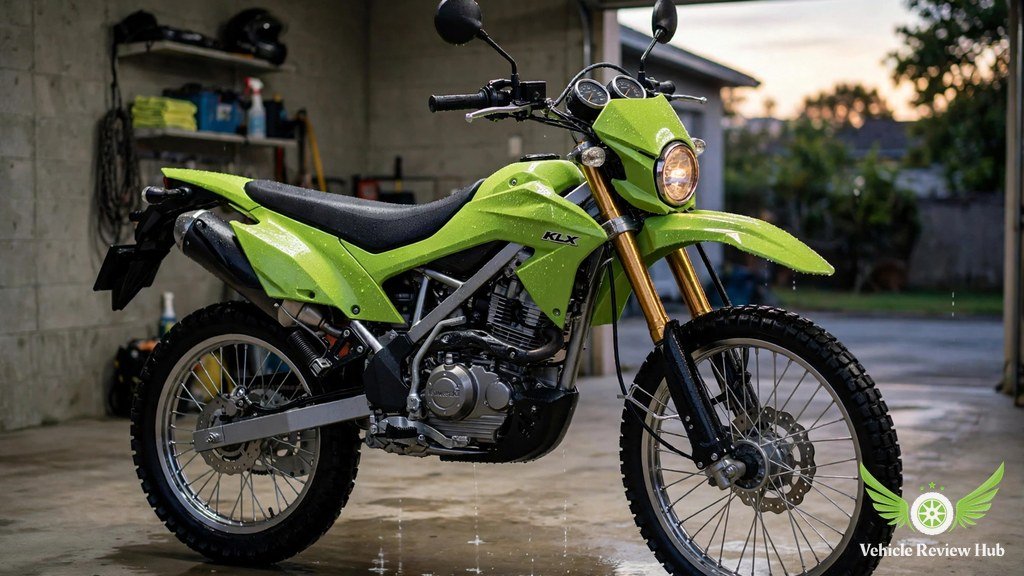
Preventive Maintenance, Records and Regular Inspections
Preventive maintenance on a BF is a short routine done often. Before every ride, check the oil level on the dipstick — the capacity itself is disputed between 0.93 and 1.2 litres, so the dipstick, not either number, is the authority — and look for fresh oil weeping at the fork seals. After every off-road ride, wash the bike, clean and lubricate the chain, and check the air filter; a foam filter full of dust is the cheapest problem a BF can develop. Every 3,000 km, or sooner if the riding has been hard, give the bike the general service this Kawasaki KLX150 BF reliability guide describes: oil, plug, filter clean, and a brake check. Keep records of every service, with dates and kilometres. Store the bike dry, and drain the carburettor if it will sit for weeks. The current standard bike that inherited the BF’s role is covered in the Kawasaki KLX150 review, and its reliability picture is the same quiet one this Kawasaki KLX150 BF reliability guide describes.
Warranty Terms Still Unverified
The warranty terms for the Kawasaki KLX150 BF are still unverified. No Kawasaki Indonesia warranty terms for the BF were found in any source searched for this Kawasaki KLX150 BF reliability guide, so no warranty length is printed here — not one year, not two, not any other number. A buyer of a used BF should assume nothing about warranty cover and should ask the seller directly, in writing. The bike’s name was dropped in February 2023, so the question is mostly academic — but the terms could not be verified, and this Kawasaki KLX150 BF reliability guide says so rather than guessing. That is the final word of this Kawasaki KLX150 BF reliability guide: a simple, well-proven trail bike with no recall and no signature defect, a thin fork-seal watch item, and a service schedule that must be followed by label rather than by factory book.
Kawasaki KLX150 BF Reliability Frequently Asked Questions
These answers cover the BF’s recall record, its wear items, and the service intervals a used buyer should follow — with every figure labelled by its source.
Has the KLX150 BF had any recalls?
No recall was found naming the BF in any market searched. The US NHTSA database could not be checked directly — its API was unreachable — so this Kawasaki KLX150 BF reliability guide states no NHTSA result at all. A CPSC search found Kawasaki recalls for competition bikes and side-by-sides, but nothing naming the KLX150 or the BF. That is a search result, not proof that no defect ever existed.
Does the BF have any common problems?
No signature defect is documented for the BF in any source searched. The only complaints are ride-quality observations: a little vibration at low speeds, high-rpm handlebar vibration, and a soft fork that bottoms on landings. One online claim — that buyers should avoid 2013–2014 units for a cam chain tensioner failure — is fabricated: the BF did not exist before June 2015.
What should I check on a used KLX150 BF?
The fork seals first — look for oil weeping on the fork leg above the seal — then the chain and sprockets, tyre knob height and age, brake pad thickness, and the foam air filter. Ask for service records, check the oil, and listen for a clean idle. A carburettor left standing with stale fuel gums up its small jets, so hard starting and a lumpy idle are the signs of neglect.
How often should the BF be serviced?
The full factory schedule could not be verified, so the figures in this Kawasaki KLX150 BF reliability guide are labelled, not factory. A generic 150 cc plan calls for a check every 3,000 km, with the spark plug replaced and the centrifugal oil filter cleaned every 12,000 km. Indonesian owners and mechanics suggest changing the oil every 2,500 to 3,000 km.
How much oil does the BF take?
That figure is unsettled, and this Kawasaki KLX150 BF reliability guide prints both sides: Ralph731 TV, citing the service manual, gives 0.93 litres with the filter left in; satupiston gives 1.2 litres, or 1.3 with a filter change. Check the level on the dipstick rather than trusting either number alone. The grade is not in dispute: 10W-40.
Is the KLX150 BF covered by a warranty?
No warranty terms for the BF were found in any source searched, so no warranty length is printed in this Kawasaki KLX150 BF reliability guide — not one year, not two, not any other number. The name was dropped in February 2023, so the question is mostly academic for a used buy, but a buyer should assume nothing and ask the seller directly, in writing.