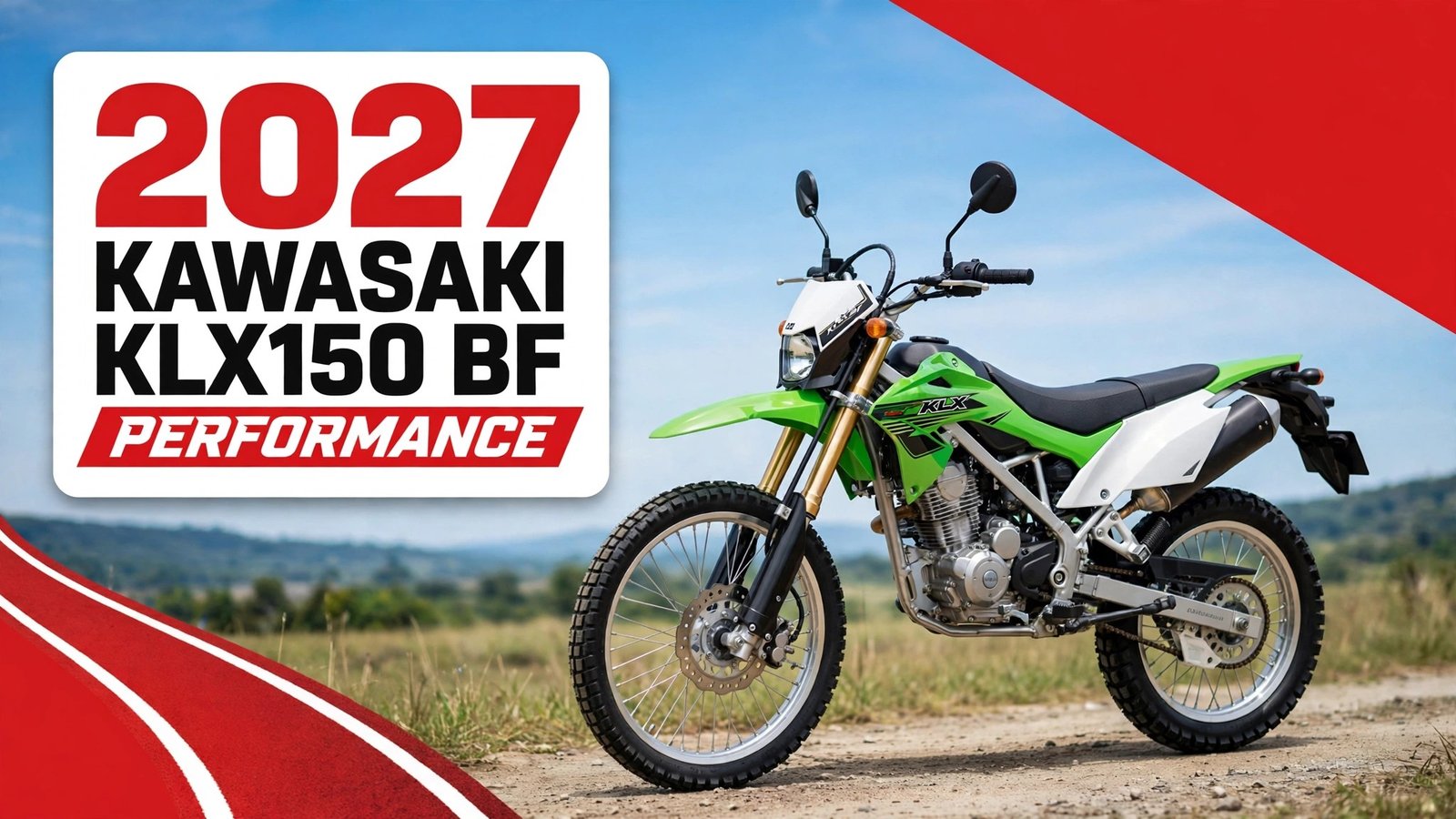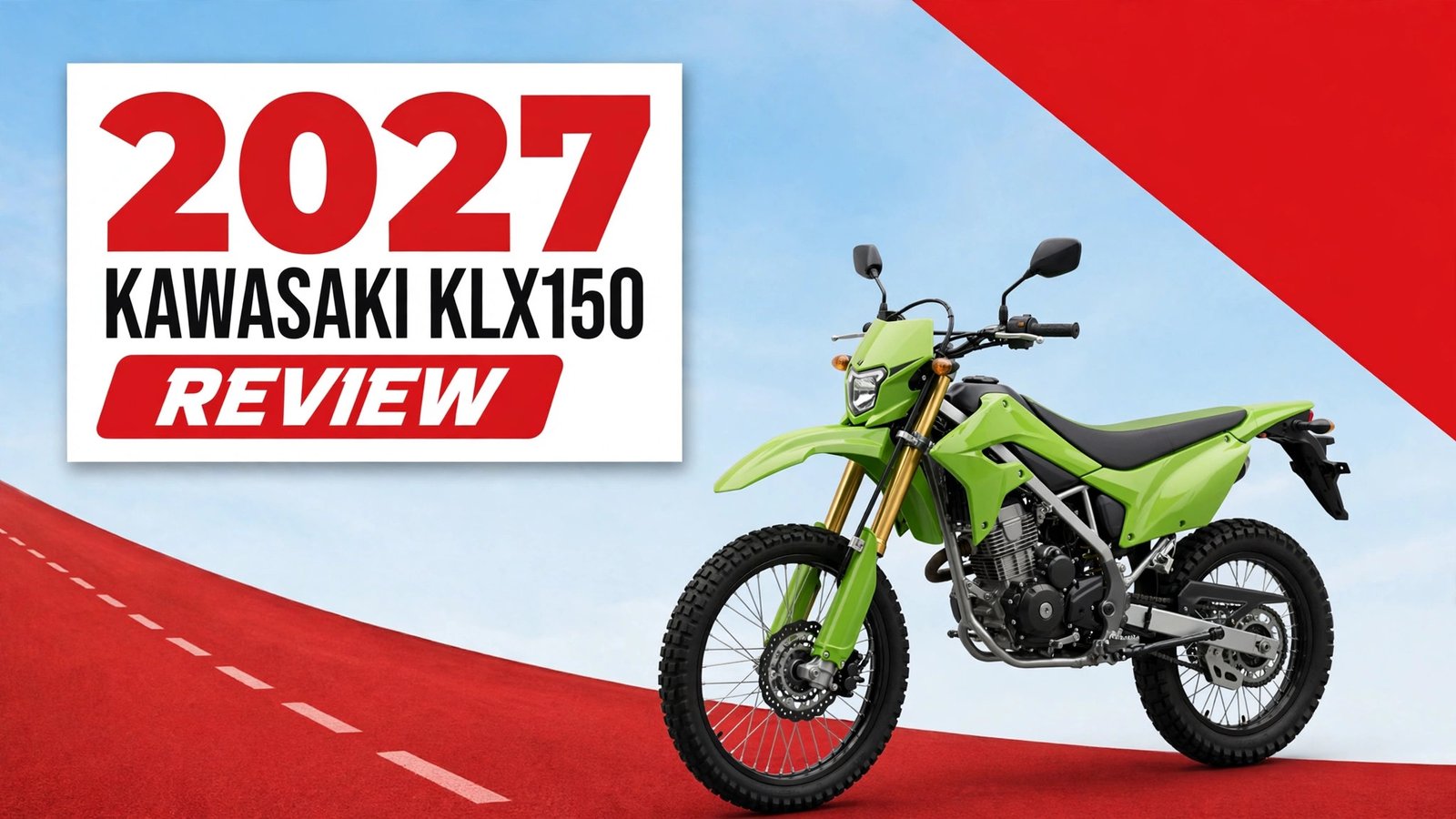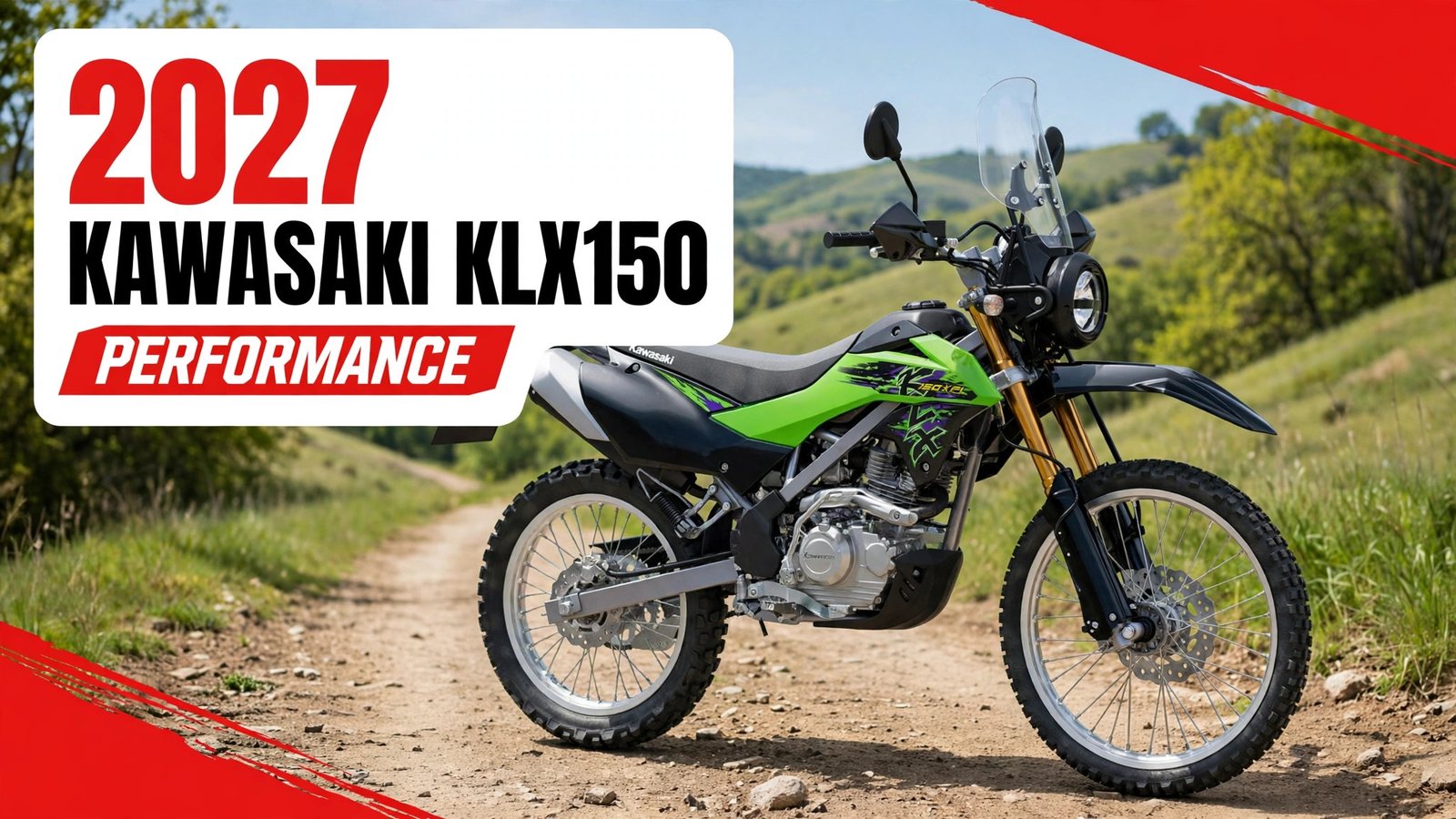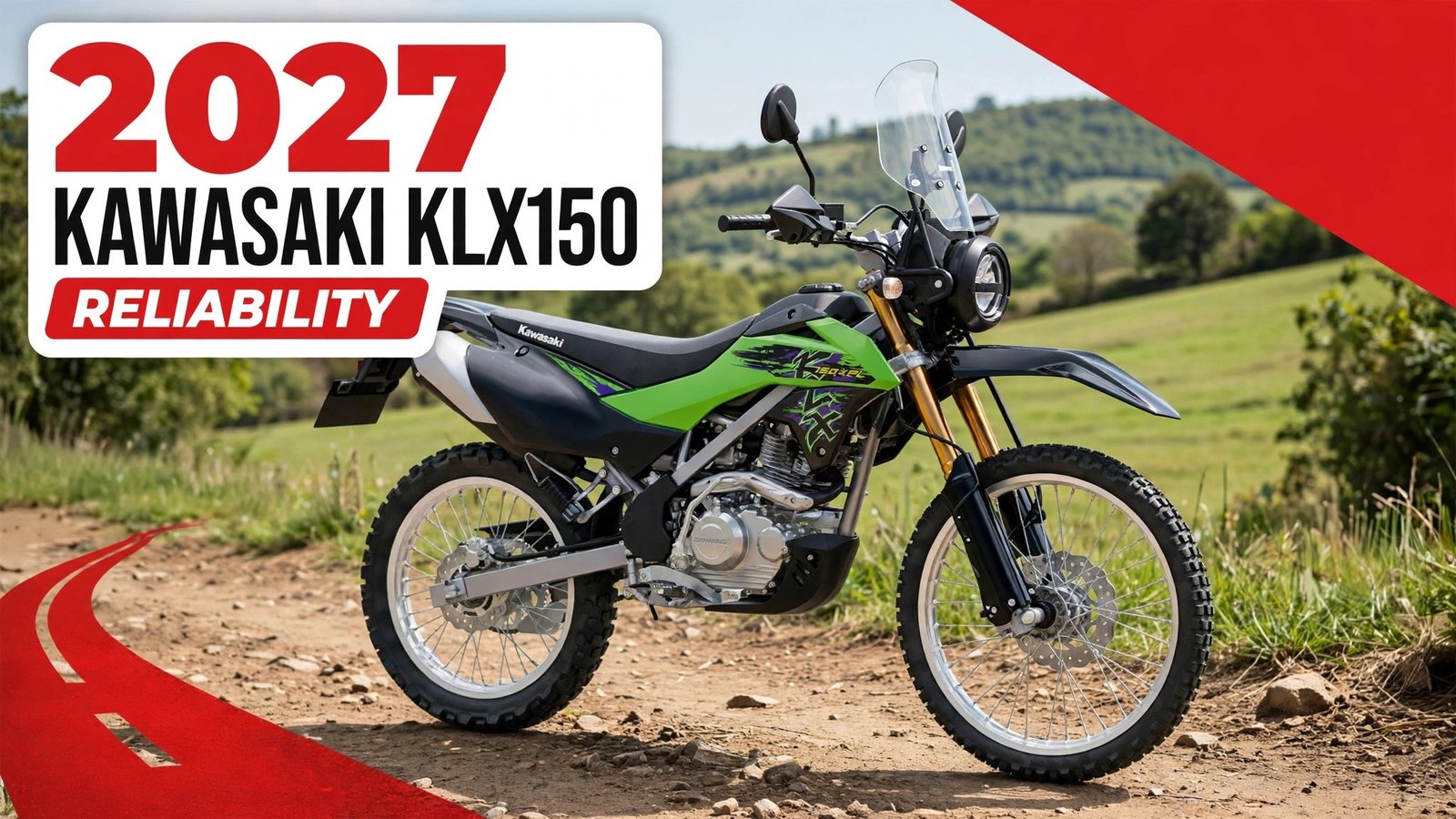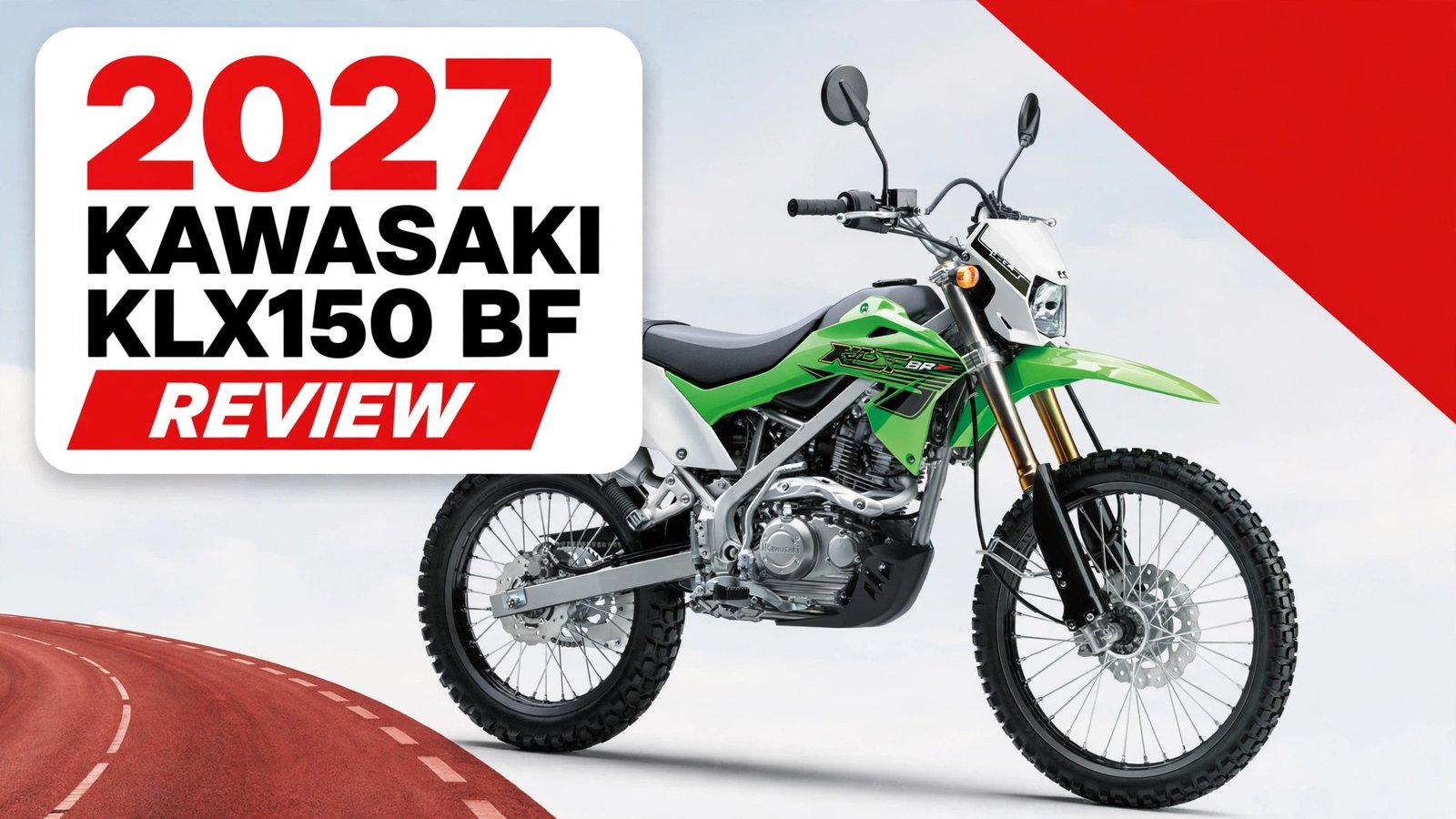
The Kawasaki KLX150 BF is the Big Foot version of Kawasaki’s Indonesian trail bike, and the honest answer to the first question most riders ask is that it is a fork and gearing package, not a new motorcycle. Launched in June 2015 at Rp 29.9 million on the road in Jakarta, the BF took the KLX150’s 144 cc carburetted single and gave it a gold upside-down fork, shorter 52/14 gearing and the old L’s 21/18 wheels. It was never sold in the United States, at any price, in any year — and this Kawasaki KLX150 BF review says so plainly, because fabricated American prices for this bike are all over the internet.
What follows in this Kawasaki KLX150 BF review is built only on verified figures: the Otomotif first ride and instrumented BF SE test, the Kawasaki Malaysia brochure, Dirt Action’s Australian review, and the current Kawasaki Indonesia pages for the bikes that succeeded it. The BF is gone from the Indonesian lineup, so this is a review of a used buy now: the simplest, friendliest trail bike in its family, and also the slowest and thirstiest in its own three-bike test.
Kawasaki KLX150 BF Overview and Model-Year Updates
Every fact in this Kawasaki KLX150 BF review starts from one distinction: the BF was a variant, not a generation. Kawasaki launched it in June 2015 as part of a major change to the KLX150 line, replacing the low S and the big-wheel L with three bikes — the new standard KLX150, the BF, and the BF SE. The engine did not change. The wheels did not change. What changed was the fork, the gearing, and the stance, and that is the whole story of the Big Foot name, told in full in this Kawasaki KLX150 BF review. The standard bike it was based on is covered in the Kawasaki KLX150 review.
Launched 2015, Not 2013
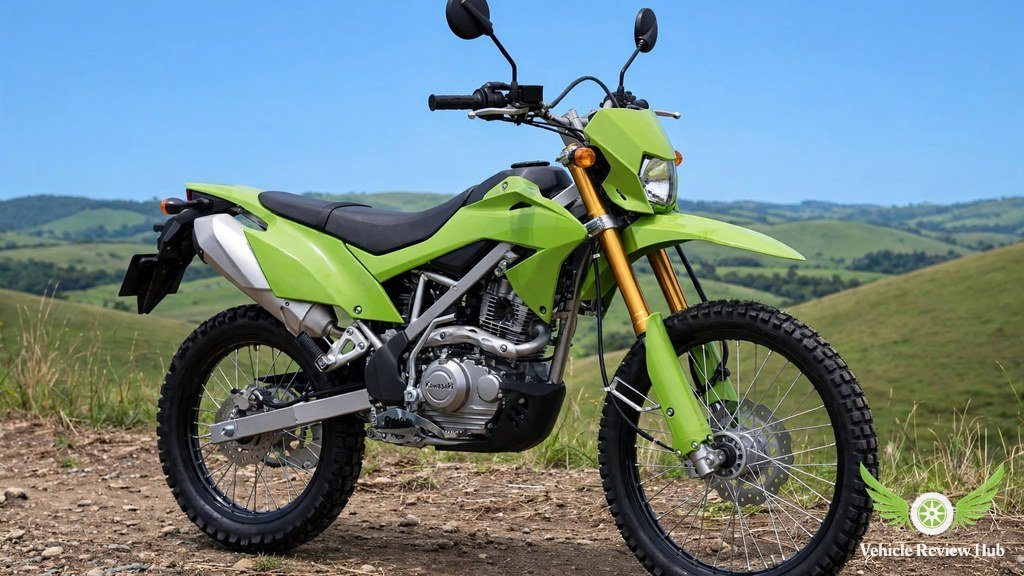
The BF did not exist before June 2015. Otomotifnet’s first ride, dated 24 June 2015, covered the launch of the new KLX150 range, and Kawasaki Motor Indonesia presented the change as a major one — bigger low-to-mid torque from the same 144 cc engine, a new look, and three variants at three prices. The 2013 date belongs to the L era, and guides dating a fuel-injected second generation to 2013–2019 are fabricated: no fuel-injected KLX150 has ever existed. The KLX150 line itself dates to 2009, when the low KLX150S launched on 16 May 2009 at Rp 22.7 million on the road. Buyers shopping for one should treat any listing that calls a 2013 or 2014 bike a BF as a mislabelled L, the first check in this Kawasaki KLX150 BF review.
Name Dropped After 2022 Models
In February 2023 Kawasaki launched the new KLX150 series at Kawasaki Bike Week with three types only — the S at Rp 32.9 million, the standard at Rp 36.5 million, and the SE at Rp 39.5 million, all on the road — and no BF anywhere in the list. The January 2023 price list still showed the BF at Rp 36.1 million and the BF SE at Rp 38.7 million, but those were old stock clearing, not a continuing model. The SE effectively inherited the BF’s role — hand guard, engine under-guard and gold fork — while the standard inherited its 21/18 wheels and upside-down fork. The current SE, which carries the BF’s guards and gold fork, is listed on the Kawasaki Motor Indonesia SE page. One caveat: the BF badge may persist in other markets — MotorcycleDB lists the KLX150BF from 2016 to 2024, and bikez lists a 2023 model — but in the Indonesian KMI lineup, which this Kawasaki KLX150 BF review follows, the name ended after 2022.
Kawasaki KLX150 BF Engine and Specifications
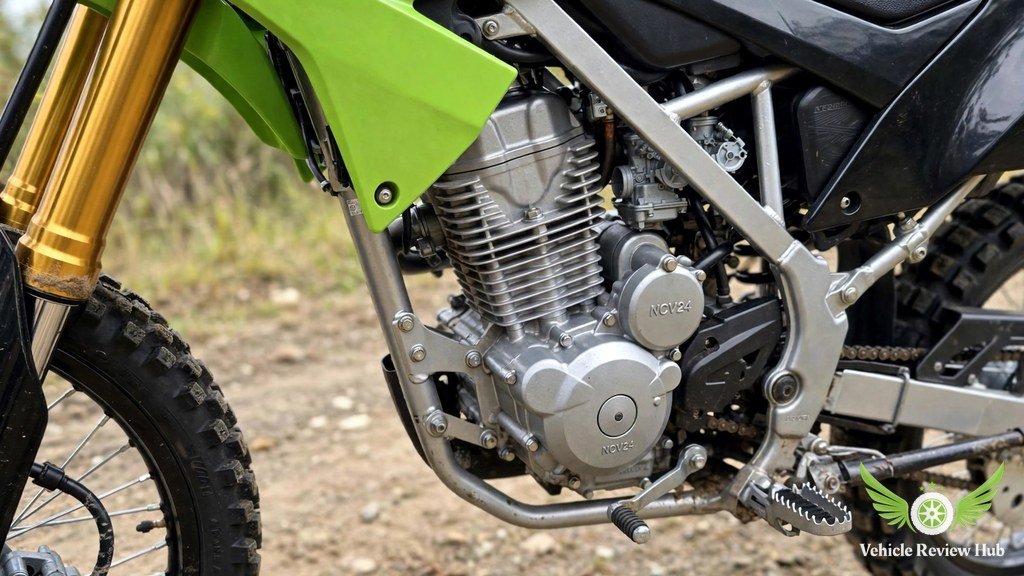
The engine is the least changed part of the BF, and that is a compliment: the same 144 cc air-cooled single as the whole KLX150 family, with the same Keihin NCV24 carburettor, five-speed gearbox, and kick starter beside the electric start. What the BF changed was how that engine’s power reached the ground — shorter gearing — and how the bike carried it — a proper upside-down fork. This section of this Kawasaki KLX150 BF review sets out the specification, then the two changes that made the bike a Big Foot.
| Figure | Kawasaki KLX150 BF |
|---|---|
| Engine | 144 cc air-cooled SOHC 2-valve single |
| Bore × stroke | 58.0 × 54.4 mm |
| Compression | 9.5:1 |
| Fuelling | Keihin NCV24 carburettor |
| Power | 8.6 kW (12 PS) @ 8,000 rpm |
| Torque | 11.3 Nm @ 6,500 rpm |
| Gearbox | 5-speed, return shift |
| Final drive | 52/14 (3.714), 428 chain, 132 links |
| Front fork | ø35 mm upside-down, gold, 175 mm travel |
| Rear shock | Uni-Trak single gas shock, 5-way preload, 192 mm travel |
| Front brake | 240 mm petal disc, twin-piston caliper |
| Rear brake | 190 mm petal disc, single-piston caliper |
| Wheels / tyres | 21/18 in, 2.75-21 / 4.10-18 |
| Seat height | 870 mm |
| Ground clearance | 295 mm |
| Curb weight | 118 kg |
| Fuel tank | 6.9 L |
Notes: power and torque are Kawasaki Indonesia’s claims (8.6 kW = 12 PS). Press tests printed slightly less, as this Kawasaki KLX150 BF review notes. Otomotif recorded 11.8 dk in 2015 and 11.9 dk in 2020. The instrumented figures in this Kawasaki KLX150 BF review come from the Otomotif BF SE test. Engine-oil capacity is unsettled: Ralph731 TV, citing the service manual, gives 0.93 L with the filter left in; satupiston lists 1.2 L (1.3 L with a filter change). This Kawasaki KLX150 BF review prints the 0.93 L figure and notes the conflict rather than settling it. Grade is 10W-40, the one figure both sides agree on in this Kawasaki KLX150 BF review.
The Change Was Fork and Gearing
Against the standard KLX150, the BF changed two things. The first was the fork: a 35 mm upside-down unit, finished in gold, with 175 mm of travel, replacing the standard’s telescopic fork. Indonesian coverage called it the iconic gold USD fork — the single most visible BF identifier. The second was the gearing: 14/52, a 3.714 final reduction, against the standard’s 46/14 (3.286 on Kawasaki Indonesia’s 2026 pages). Shorter gearing trades top speed for low-end pull — the mechanical reason the BF felt friendlier off-road than its rivals while being the slowest of the three in the 2020 test. The test figures behind that trade-off are set out in the Kawasaki KLX150 performance guide. One conflict: satupiston’s gear guide claims the 2024 standard runs 14/52 as well, while Kawasaki Indonesia’s pages say 46/14. This Kawasaki KLX150 BF review reports both and settles neither — the BF’s own 52/14 is confirmed by the Otomotif test box, the Malaysia brochure and sprocket listings alike.
Wheels Were Already 21/18 on the L
The wheels are the change the BF did not make, and the name “Big Foot” misleads some buyers on exactly this point. The old L — the big-wheel variant the BF replaced in June 2015 — already ran 21-inch front and 18-inch rear wheels with the same 2.75-21 and 4.10-18 knobby tyres. The BF kept them. What the L did not have was the upside-down fork or the short gearing, and that is the honest boundary between the two bikes in this Kawasaki KLX150 BF review. A buyer comparing a late L with an early BF should look at the fork and the rear sprocket, not the wheels: gold upside-down fork and a 52-tooth rear sprocket mean BF; a telescopic fork and a 46-tooth rear sprocket mean L — the tells this Kawasaki KLX150 BF review uses to identify a real BF. The fatbar — 13 mm taller and 32 mm wider than the pre-2015 bar — is a third tell.
Kawasaki KLX150 BF Price and Market Availability
Price is where this Kawasaki KLX150 BF review has to be blunt twice over: no American price exists for this bike in any year, and no verified used price exists either. What can be printed, with sources, is the launch price, the price ladder across seven model years, and the prices of its replacements. Everything else is a conversion, a guess, or a fabrication.
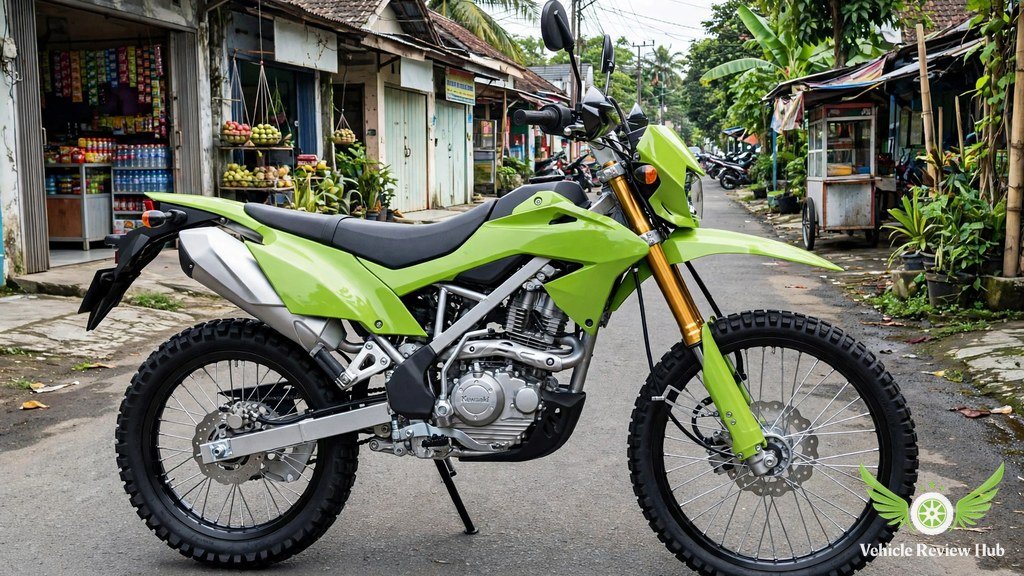
No US Price Exists, in Any Year
The BF was never sold in the United States. Kawasaki USA’s KLX page carries no KLX150 at all — a check of the page in November 2026 returned zero hits for “klx150” — and no American dealer, importer or price guide has ever listed the BF. That matters because the internet is full of dollar prices for this bike, and every one is invented: a $5,799 US MSRP for a “KLX 150L”, a $1,500–$2,600 range from an aggregator, and converted rupiah figures dressed up as sticker prices. The verdict section of this Kawasaki KLX150 BF review names the two worst offenders and rejects them in full, because a buyer who budgets on a fabricated price is budgeting on air. The only honest price language for the BF is rupiah in this Kawasaki KLX150 BF review, labelled on-the-road Jakarta or list price as the source states it, and the only honest American answer is that the bike has to be imported — the earliest BF becomes eligible under the 25-year rule in 2040.
Jakarta Launch Price: Rp 29.9 Million
At launch in June 2015 the three-bike range was priced on the road in Jakarta at Rp 26.8 million for the new standard KLX150, Rp 29.9 million for the BF, and Rp 30.9 million for the BF SE. The BF therefore cost Rp 3.1 million more than the standard at launch — the price of the gold fork, the shorter gearing and the fatbar — and the SE cost another Rp 1 million over the BF. Prices climbed through the BF’s life: by around 2020 the BF listed near Rp 31.8–34.6 million depending on the source and the month, the SE near Rp 33.4–36.8 million, and the top Extreme variant near Rp 37.3 million. The last listings, in January 2023, showed the BF at Rp 36.1 million and the BF SE at Rp 38.7 million — old stock, clearing before the February 2023 relaunch. For scale, the bikes that replaced the BF now list higher still: the current standard is Rp 38.6 million on the road in Jakarta, and the current SE is Rp 39.1 million list, as this Kawasaki KLX150 BF review notes. The BF’s launch premium looks small in hindsight — Rp 3.1 million for a real fork and gearing change.
| Year / source | Standard | BF | BF SE |
|---|---|---|---|
| June 2015 launch, OTR Jakarta | Rp 26.8M | Rp 29.9M | Rp 30.9M |
| ~2020 (carmudi, OTR Jakarta) | Rp 30.7M | Rp 34.6M | Rp 36.8M |
| Jan 2023 (tribunjualbeli) | Rp 32.3M | Rp 36.1M | Rp 38.7M |
| Feb 2023 new series | S Rp 32.9M / standard Rp 36.5M / SE Rp 39.5M | — | — |
Notes: all figures are rupiah, on the road in Jakarta unless stated otherwise. No used price is printed anywhere in this Kawasaki KLX150 BF review — none was verified. The February 2023 row has no BF because the name had been dropped.
The video below is BikeBD’s coverage of Kawasaki’s official launch event in Bangladesh — price, bike details and showroom address. It is a launch event, not a BF review or a test ride, and this Kawasaki KLX150 BF review includes it because it is the only BF video with a verified embeddable ID not already used in this line. Its narration is in Bengali.
Kawasaki KLX150 BF Design, Features and Technology
The BF’s design, as this Kawasaki KLX150 BF review reads it, is honest trail-bike design: nothing is there for show, and the parts that look like accessories are the parts that do the work. This section of this Kawasaki KLX150 BF review covers the front disc, the confusing 2015 spec boxes, and the analogue instruments that date the bike to before 2023.
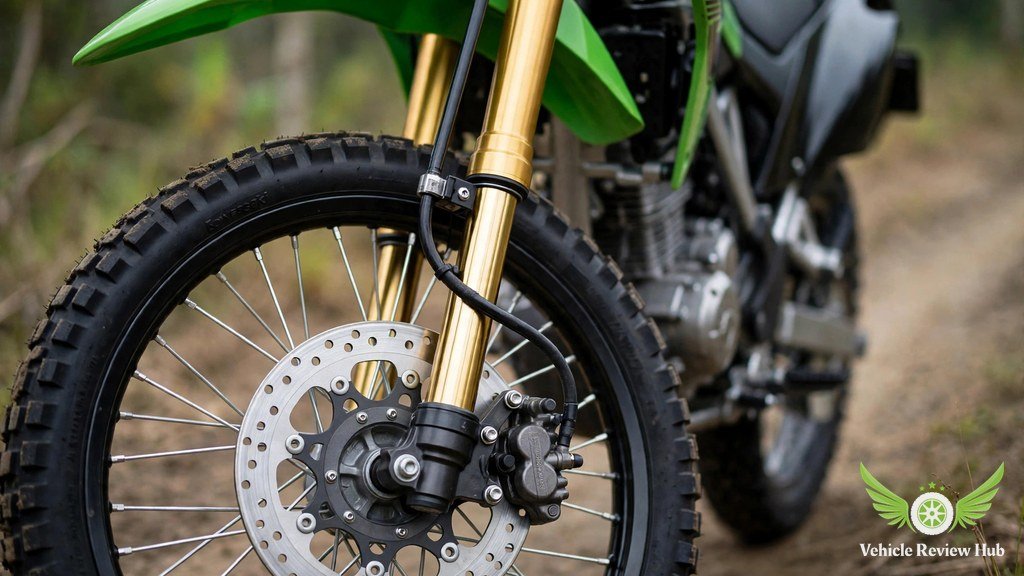
Front Disc Stayed 240 mm
The BF’s front brake is a 240 mm petal disc with a twin-piston caliper, and the rear is a 190 mm petal disc with a single-piston caliper — and that 240 mm figure is settled. The first ride, the BF SE test, the 2020 three-bike test and Dirt Action’s Australian review all print 240 mm. One 2022 KLX-series history article prints a larger figure, 250 mm, and it is the sole outlier: rejected. The same article also prints a 2009 launch claim of 11.5 dk and 12 Nm, against the official 12 PS and 11.3 Nm — press rounding, not the official figures. A buyer checking a BF should measure the disc; 240 mm is the number every primary source agrees on — the check this Kawasaki KLX150 BF review recommends.
Test Spec Box Was the Standard’s
There is a trap in the 2015 Otomotif spec boxes: both the June 2015 first ride and the September 2015 BF SE test print the same spec box — 2,050 × 830 × 1,115 mm, a 1,355 mm wheelbase, and 116 kg. Those are the standard’s numbers, printed under a BF test. The BF’s own brochure and the 2020 three-bike test print the real figures: 2,070 × 825 × 1,155 mm, a 1,340 mm wheelbase, and 118 kg. This Kawasaki KLX150 BF review uses the brochure figures throughout, including in the specification table above. Dirt Action’s review carries the same kind of error: its spec box says “33 mm telescopic fork” while its prose correctly describes 35 mm upside-down forks. The prose is right; the box is wrong — a rule this Kawasaki KLX150 BF review applies to every figure it prints.
Kawasaki KLX150 BF Riding Experience and Comfort
On the trail, the BF’s character — the character this Kawasaki KLX150 BF review judges — is set by two facts that pull in opposite directions: the shortest gearing in the family, and the softest fork. The gearing makes it the easiest KLX150 to ride slowly over rough ground; the fork makes it the easiest to bottom out. This section of this Kawasaki KLX150 BF review covers the riding position — the tall 870 mm seat — then the SE kit.
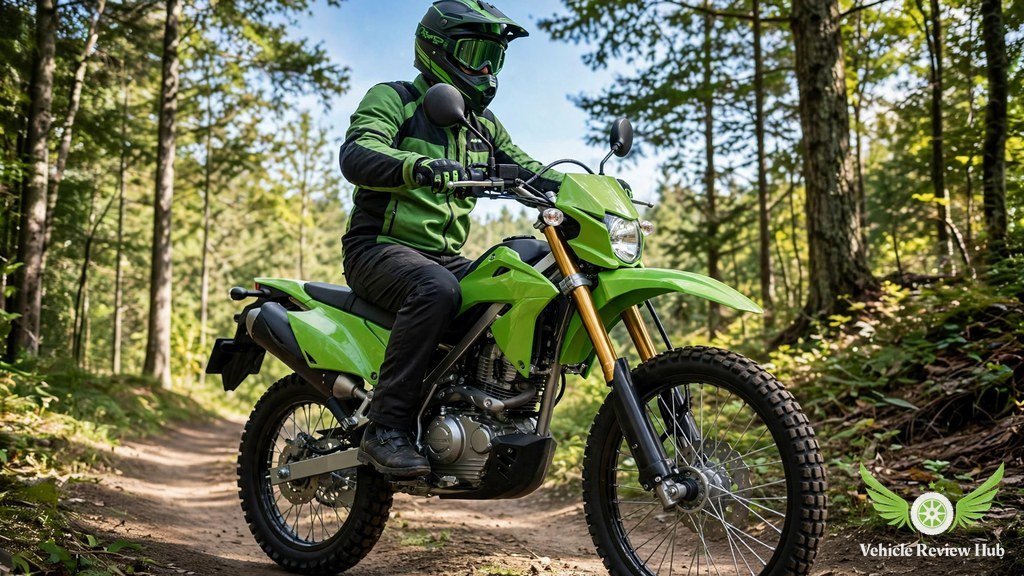
Seat 870 mm, Weight 118 kg
At 870 mm the BF’s seat is 5 mm taller than the current standard’s 865 mm, and at 118 kg the bike weighs exactly the same as the standard — the fork and gearing changes added nothing. The seat is the number that decides whether the bike fits — the first question in this Kawasaki KLX150 BF review: 870 mm is tall for a short rider, and the BF has no low variant of its own — the low bike in the family was the old S at 830 mm, which the 2015 change replaced with the new standard. What the BF gives back for the height is 295 mm of ground clearance and a riding position built around the fatbar — taller and wider than the pre-2015 bar, and the sturdiest bar in the 2020 three-bike test’s judgement. The tank holds 6.9 litres — about 219 km at the instrumented 31.8 km per litre, labelled arithmetic. BikeBD’s 3,500 km owner test recorded a speedometer maximum of 110 km/h and an average near 38 km per litre on regular terrain — owner-test numbers, labelled as such, with the Racelogic 104.1 km/h and 31.8 km/l remaining the instrumented reference. The instruments are analogue — speedometer and fuelmeter, no tachometer — and the headlamp is a 35/35 W halogen unit.
SE Kit: Guards, Skid Plate, Black Rims
The BF SE is the same motorcycle with protection bolted on, and the kit is worth itemising because it is what most used buyers actually want. The SE adds a hand guard, an engine guard — the skid plate under the engine — a frame cover, black aluminium rims instead of the standard rims, the fatbar handlebar, and special graphics and colours, including a Yellow SE. The top BF SE X-TREME sat above the SE at around Rp 37.3 million in the 2020-era listings. None of the SE kit changes the engine, the fork or the gearing — the SE is a BF with armour, not a faster BF — and that is why the SE’s instrumented test figures (104.1 km/h, 31.8 km/l) are quoted for the BF family as a whole. The guards matter off-road: the hand guard saves levers, the skid plate saves the engine cases, and black rims hide scuffs. On a used BF, the presence — or absence — of the SE kit is the quickest check of how the bike was equipped from the factory — check it first, says this Kawasaki KLX150 BF review.
Kawasaki KLX150 BF Review: Pros, Cons and Verdict
The verdict of this Kawasaki KLX150 BF review is that the BF was the right bike for a narrow job: the easiest KLX150 to ride on a trail, for riders who valued control over speed and simplicity over equipment. It was the slowest bike in its own three-bike test and the thirstiest, and it cost more than the fuel-injected Honda while doing less on the road. In Indonesia, where it was sold, that trade was fair, judged on Indonesian terms in this Kawasaki KLX150 BF review. Anywhere else, it is a bike to admire from afar — and, from 2040, to import.
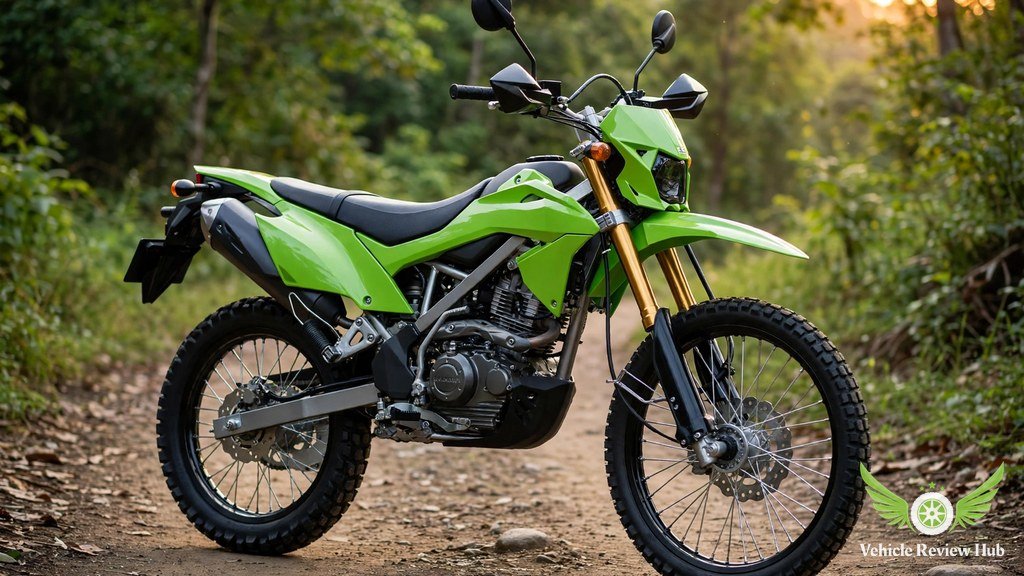
Main Advantages and Limitations of the Kawasaki KLX150 BF
The advantages in this Kawasaki KLX150 BF review start with the fork and the gearing, and they end there too — the BF’s strengths and its weaknesses are the same two parts seen from opposite sides. The gold upside-down fork is a real fork on a cheap trail bike, the short gearing makes slow trail work easy, the engine is simple enough to fix anywhere in Indonesia, and parts are shared across the whole KLX150 family, as the Kawasaki KLX150 reliability guide covers. The limitations mirror them: the fork is soft and bottoms on landings, the gearing caps the top speed at 104.1 km/h, the carburettor drinks at 31.8 km per litre against rivals at 42.3 and 48.3, and there is no tachometer, no LED headlight and no digital dash.
| Aspect | Advantage | Limitation |
|---|---|---|
| Fork | Gold 35 mm upside-down, 175 mm travel | Soft — bottoms on landings |
| Gearing | 52/14 — easiest low-speed trail control | Caps top speed at 104.1 km/h |
| Engine | Simple 144 cc carburetted single, kick + electric start | Thirstiest in its test — 31.8 km/l |
| Parts | Shared across the KLX150 family since 2009 | SE kit parts cost more to replace |
Notes: the fuel figures are from the same 2020 three-bike test: the Honda CRF150L recorded 42.3 km per litre and the Yamaha WR155R 48.3, against the BF SE’s 31.8. The top speed is the Racelogic figure from the 2015 BF SE test. No resale percentage and no running-cost figure is printed anywhere in this Kawasaki KLX150 BF review — none was verified. On recalls: the US NHTSA database could not be reached when this review was written, so no NHTSA result is stated; a CPSC search found nothing naming the KLX150 or the BF.
Fabricated USA Prices, Named and Rejected
Two fabricated American prices deserve naming, because a buyer is most likely to meet them. The first is a $5,799 US MSRP attached to a “KLX 150L” in an aggregator listing — fabricated: the BF was never sold in the United States, no American MSRP exists, and the model code is invented. The second is a $1,500–$2,600 American price range from a motorbike-aggregator site — also fabricated, and presented without a source, a year, or a seller. A third class of fabrication is the converted rupiah figure dressed up as a sticker price: converting the Rp 29.9 million launch price to dollars produces a number, not a price. This Kawasaki KLX150 BF review prints no American price for the BF because there is none to print, and any source that offers one is, by that fact alone, not a source.
So the final word of this Kawasaki KLX150 BF review is a narrow one. If you ride trails in Indonesia and work on your own bike, a used BF — preferably an SE — is the friendliest KLX150 ever made, and the gold fork and short gearing are worth the premium they commanded. If you want speed, economy, or a bike you can buy new, the current standard and SE do the BF’s job better. For the head-to-head numbers, the Kawasaki KLX150 comparison sets the BF’s successors against the Honda and the Yamaha. And if you are reading this from the United States, the honest answer is to wait: the earliest BF becomes eligible for import under the 25-year rule in 2040.
Kawasaki KLX150 BF Review Frequently Asked Questions
These answers cover the questions buyers ask first about the Big Foot in this Kawasaki KLX150 BF review — what it is, what it cost, and whether it can be bought in the United States.
What does BF stand for?
BF stands for Big Foot. Kawasaki launched the KLX150 BF in Indonesia in June 2015 as the big-wheel variant of the KLX150 line, with a gold upside-down fork and shorter 52/14 gearing — a fork and gearing package, not a new motorcycle.
Was the Kawasaki KLX150 BF ever sold in the United States?
No. The BF was never sold in the United States, and no US price exists for it in any year. Kawasaki USA’s KLX page carries no KLX150 at all, and every dollar price printed for this bike online is fabricated — this Kawasaki KLX150 BF review names the two worst offenders in its verdict section.
What engine does the KLX150 BF have?
A 144 cc air-cooled SOHC 2-valve single with a Keihin NCV24 carburettor, five speeds, and electric start beside a kick starter. Kawasaki Indonesia claims 12 PS at 8,000 rpm and 11.3 Nm at 6,500 rpm, as this Kawasaki KLX150 BF review notes. The BF was never fuel-injected.
How much did the KLX150 BF cost when new?
Rp 29.9 million on the road in Jakarta at launch in June 2015, with the BF SE at Rp 30.9 million. The last listings, in January 2023, showed the BF at Rp 36.1 million and the BF SE at Rp 38.7 million — old stock, clearing before the February 2023 relaunch.
How is the BF different from the standard KLX150?
Two changes: a gold 35 mm upside-down fork with 175 mm of travel, and shorter 52/14 gearing against the standard’s 46/14. The 21/18 wheels were already on the old L, so they were not the change. The BF’s seat is 870 mm, its ground clearance 295 mm, and its curb weight 118 kg — the same weight as the standard.
Is the KLX150 BF still made?
No. Kawasaki dropped the BF name after the 2022 models; the February 2023 New KLX150 Series lists the S, standard and SE only. The SE carries the BF’s role — hand guard, engine under-guard and gold fork — so the BF is a used buy now, and this Kawasaki KLX150 BF review treats it as one.