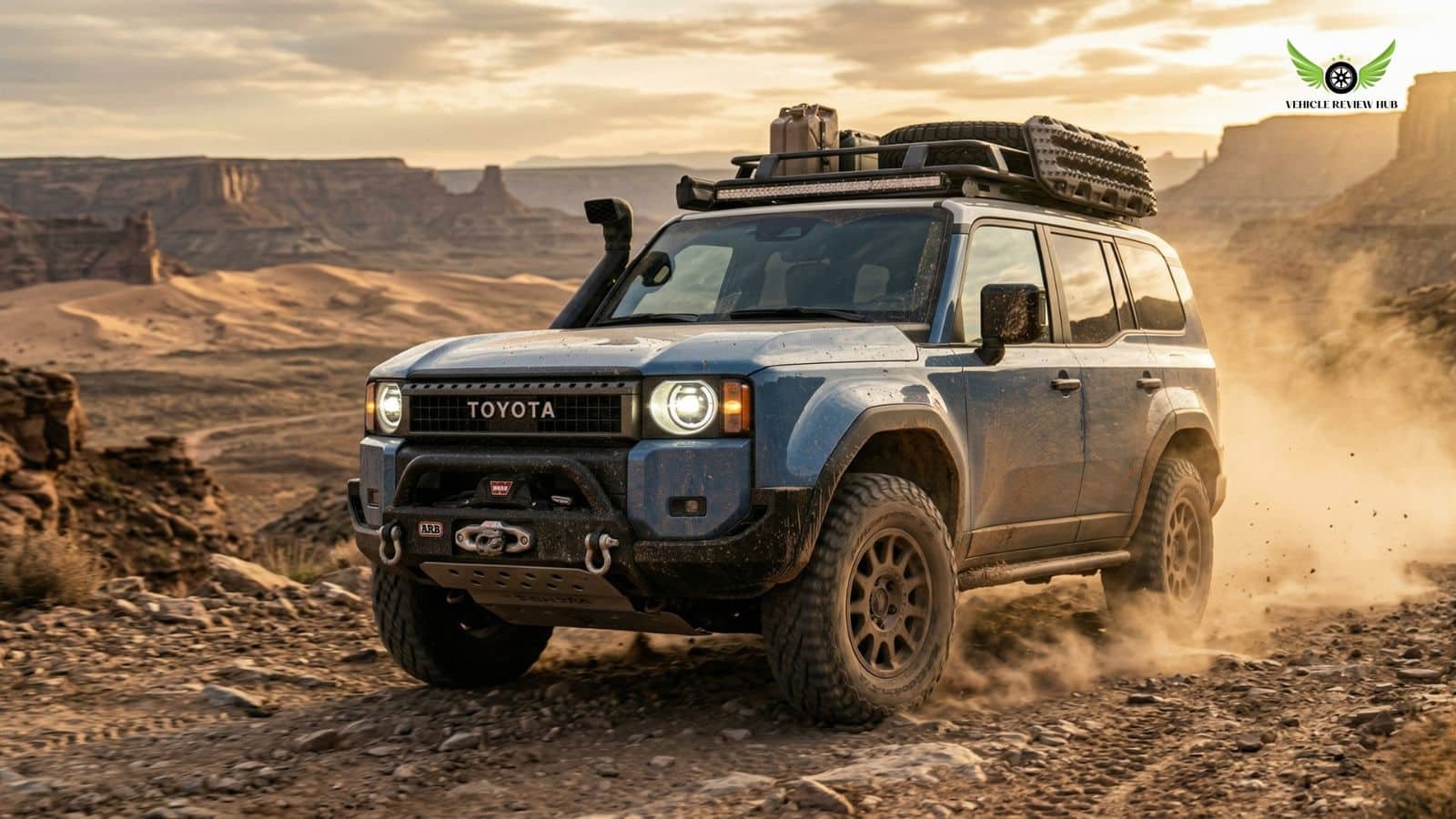
The 2026 Toyota Land Cruiser marks a strong comeback of one of the world’s most iconic SUVs, now redesigned as a modern hybrid off-road machine. In this Toyota Land Cruiser review, the focus is clear—combining legendary durability with improved fuel efficiency and everyday usability. Built on a new platform and powered by a hybrid powertrain, the Land Cruiser is no longer just a rugged off-roader; it’s now a more balanced SUV designed for both city driving and extreme terrain.
What makes this model important is its shift toward efficiency without losing its core identity. Toyota has reintroduced the Land Cruiser with a smaller, more practical design while keeping its global reputation for reliability intact. The addition of hybrid technology means better fuel economy compared to older generations, which is a major upgrade for buyers who want performance without excessive fuel costs.
In terms of positioning, the 2026 model stands out by offering a rare mix—serious off-road capability alongside modern comfort and tech. From multiple trim levels to a competitive Toyota Land Cruiser price range, it caters to both adventure seekers and daily drivers. Key highlights include advanced 4WD systems, updated interior tech, and improved suspension tuning.
All trims, performance details, specifications, and buying insights are discussed in detail below to help you make a confident and informed decision.
Toyota Land Cruiser Trim Levels & Pricing
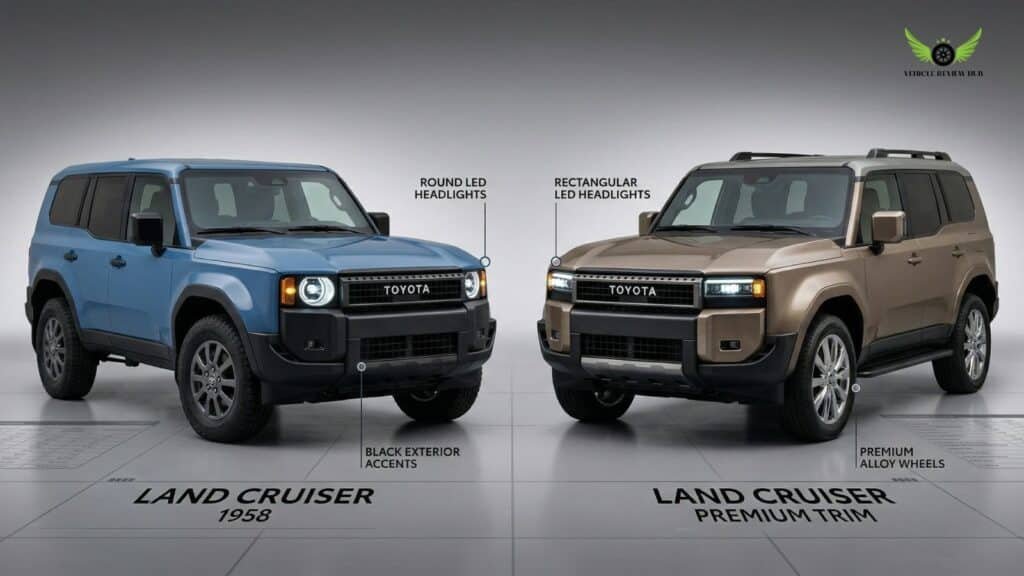
The 2026 Toyota Land Cruiser comes with a streamlined two-trim lineup, with pricing starting from $57,000+ and going up to around $63,000+ MSRP. This simplified structure makes it easier for buyers to compare options without getting lost in too many variants. In this Toyota Land Cruiser review, understanding how these trims are priced helps you see the real value behind the Toyota Land Cruiser price, especially when moving from base to premium features.
Toyota offers two main trims: Land Cruiser 1958 (base model) and Land Cruiser (higher trim). Both are built on the same hybrid platform and come with full-time 4WD, so the core performance remains unchanged. The difference comes in the level of comfort and technology. The base trim focuses on practicality with essential off-road features and a simpler interior, while the higher trim adds premium materials, a larger infotainment system, and more advanced driver-assistance features.
Pricing varies not just because of trim differences, but also due to optional packages, dealer pricing strategies, and regional costs. Choosing the higher trim typically adds around $5,000–$7,000, which reflects upgrades in interior quality and everyday usability rather than performance changes.
Trim | MSRP | Key Features | Target Buyer |
Land Cruiser 1958 | ~$57,000–$58,000 | Cloth interior, classic styling, essential off-road tech | Off-road focused buyers on a budget |
Land Cruiser (Standard) | ~$62,000–$63,500 | Larger display, premium interior, advanced tech features | Buyers wanting comfort + daily usability |
Prices may vary depending on market, dealership, and optional features.
It’s important to understand that MSRP is not the final amount you will pay. The actual on-road price includes taxes, registration, insurance, and dealer fees. For example, a base model priced around $57K can realistically reach $60K–$62K, while higher trims may go up to $65K–$70K+ depending on configuration.
In real-world scenarios, dealerships may add markups of $2,000–$5,000 in high-demand areas, while competitive markets may offer slight discounts. Regional differences also play a big role—buyers outside the U.S. often pay significantly more due to import duties and local taxes.
To understand which trim delivers the best value based on features and performance, those aspects are discussed in detail below.
Entry-Level vs Premium Trim Differences
The difference between the base and higher trims of the 2026 Toyota Land Cruiser is not about capability—it’s about comfort, technology, and overall driving experience. In this Toyota Land Cruiser review, the “base vs top trim” comparison clearly shows that both versions deliver the same off-road strength, but cater to very different types of buyers.
The Land Cruiser 1958 (base trim) is designed for functionality. It includes all the essential off-road hardware—full-time 4WD, durable suspension, and core terrain systems—while keeping the interior simple with cloth seats and a smaller infotainment display. In contrast, the premium trim focuses on refinement, offering upgraded materials, a larger touchscreen, enhanced audio, and more advanced driver-assistance features.
The higher cost of the premium trim comes from these comfort and tech upgrades, not performance improvements. This means your decision should be based on how you plan to use the vehicle daily, rather than expecting better off-road capability.
Feature | Base Trim (1958) | Premium Trim |
Price | Lower starting MSRP | ~$5K–$7K higher |
Interior | Cloth seats, basic finish | Premium materials, refined cabin |
Technology | Smaller display, limited features | Larger infotainment, advanced connectivity |
Off-road Capability | Strong and fully capable | capability (no major upgrade) |
In real-world use, the base trim is ideal for buyers who prioritize durability and cost-efficiency, such as off-road enthusiasts or those in rugged environments. However, for daily commuting, long drives, or family use, the premium trim offers a noticeably better experience with its added comfort and convenience.
One limitation of the base trim is its minimal interior and limited tech, which may feel basic compared to modern SUVs in this price range. While both trims justify the Toyota Land Cruiser price, the right choice ultimately depends on whether you value practical capability or a more premium driving experience.
Premium Package & Optional Features Explained
The 2026 Toyota Land Cruiser offers a range of premium packages and optional features that allow buyers to personalize the SUV beyond its standard trims. These upgrades mainly focus on technology, interior comfort, and convenience, rather than changing the core hybrid performance or off-road capability. In this Toyota Land Cruiser review, these optional features directly influence both the driving experience and the final Toyota Land Cruiser price.
Typical optional features include a larger infotainment screen, premium sound system, ventilated front seats, advanced driver-assistance systems, and enhanced camera views. Some packages also combine multiple upgrades into one bundle, making it easier for buyers to select a complete setup instead of adding features individually.
Buyers usually choose these upgrade packages to improve daily usability and long-term satisfaction. For example, a technology package is ideal for urban driving and long highway trips, offering better connectivity and safety support. On the other hand, an off-road-focused upgrade adds practical tools like multi-angle cameras and terrain visibility, which are useful in rough environments.
From a cost perspective, optional features can add around $1,500 to $5,000+, depending on the configuration. While this increases the initial cost, it can also boost resale value, especially for models equipped with popular tech and comfort features.
However, not all upgrades are necessary. Buyers who prioritize durability and budget may find the standard trim sufficient, while others may see real value in adding selective features based on their usage needs.
Toyota Land Cruiser Engine, Powertrain & Performance
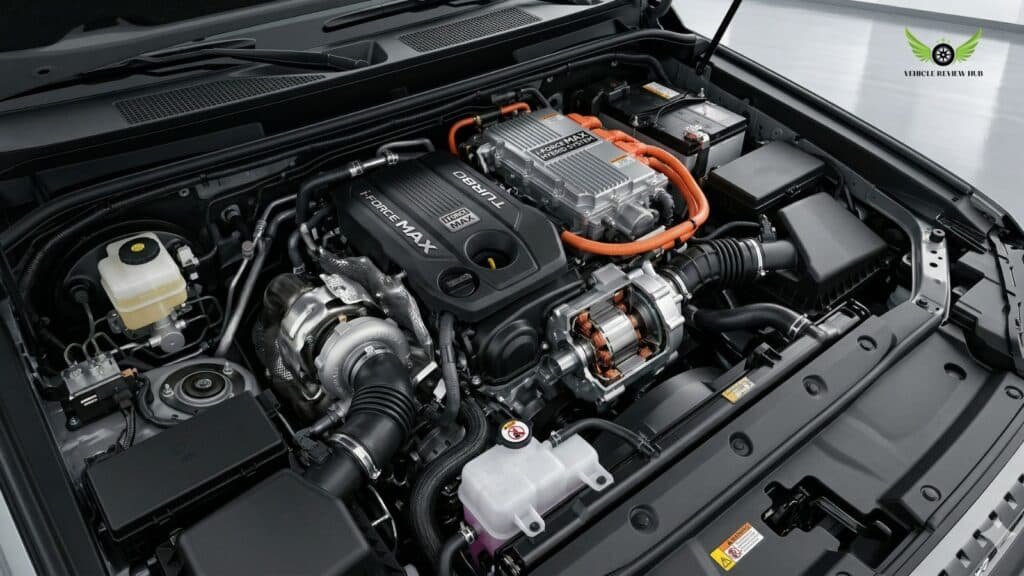
The 2026 Toyota Land Cruiser delivers a well-balanced performance setup, combining strong off-road capability with improved fuel efficiency through its modern hybrid system. In this Toyota Land Cruiser review, the biggest evolution is the shift from a traditional V8 to a more efficient hybrid powertrain, without compromising the SUV’s core strength and durability.
The Land Cruiser is powered by a 2.4L turbocharged 4-cylinder hybrid engine (i-FORCE MAX) paired with an electric motor and an 8-speed automatic transmission. This system is designed to produce high torque at low speeds, which is crucial for off-road driving. The hybrid setup matters because it enhances both power delivery and efficiency, offering quicker response in city conditions and better control on rough terrain.
Compared to previous generations, especially the older V8 models, the 2026 version delivers similar power but significantly higher torque, making it more capable in real-world situations like climbing steep trails or carrying heavy loads. At the same time, it improves fuel efficiency, which makes it more practical for daily use.
Engine | HP | Torque | Transmission | Drivetrain |
2.4L Turbo Hybrid (i-FORCE MAX) | ~326 HP | ~465 lb-ft | 8-speed automatic | Full-time 4WD |
In real-world driving, this hybrid system performs efficiently in both urban and off-road environments. In the city, the electric motor supports smoother acceleration and better fuel usage during stop-and-go traffic. Off-road, the strong torque output allows controlled movement over rocks, sand, and uneven terrain without needing excessive throttle.
However, there are some limitations. Despite the hybrid system, the Land Cruiser is still a heavy SUV, which affects overall fuel economy compared to smaller vehicles. Fuel efficiency can also drop during aggressive driving or towing conditions.
Overall, the 2026 Land Cruiser offers a more refined and practical performance package, making it suitable for both daily driving and serious off-road use while maintaining its legendary reputation.
2.4L Turbocharged i-FORCE MAX Hybrid (326 hp, 465 lb-ft)
The 2.4L turbocharged i-FORCE MAX hybrid system in the 2026 Toyota Land Cruiser is a modern powertrain designed to balance performance, efficiency, and durability. It combines a turbocharged gasoline engine with an electric motor integrated into the transmission, working together as a single system rather than operating separately like traditional hybrids.
This setup allows the engine to deliver strong high-end power while the electric motor provides instant torque at low speeds. The turbocharger increases air intake for better combustion, while the electric motor fills in power gaps—especially during acceleration or when driving on uneven terrain. As a result, the system produces 326 horsepower and 465 lb-ft of torque, with torque being the most important factor for real-world usability.
Torque matters more than horsepower in off-road conditions because it determines how effectively the vehicle can move at low speeds under load. For example, when climbing a steep hill or towing a trailer, the Land Cruiser can maintain steady power without needing aggressive throttle input. This improves control and reduces strain on the engine.
In real-world use, this system performs well during towing, hill climbing, and slow rock crawling, where consistent torque delivery is critical. However, one limitation is the increased complexity of the hybrid system. Compared to older naturally aspirated engines, it may require more specialized maintenance and potentially higher long-term servicing costs.
8-Speed Automatic Transmission & Full-Time 4WD System
The 8-speed automatic transmission in the 2026 Toyota Land Cruiser is designed to deliver smooth power delivery and better efficiency across different driving conditions. It automatically selects the optimal gear based on speed, load, and terrain, allowing the engine and hybrid system to operate efficiently without requiring driver input. The multiple gear ratios help maintain low-end torque for off-road driving while also improving fuel economy at highway speeds.
The Land Cruiser also features a full-time 4WD system, meaning power is continuously distributed to all four wheels. Unlike systems that engage only when needed, full-time 4WD ensures constant traction, especially on uneven, slippery, or unpredictable surfaces. This is particularly useful in off-road environments where conditions can change quickly, such as mud, sand, or rocky terrain.
The key advantage of this setup is consistent grip and stability. Power is automatically balanced between the front and rear wheels, reducing wheel slip and improving control without driver intervention.
Compared to part-time 4WD systems, which require manual activation and are typically used only in off-road situations, full-time 4WD is more convenient and safer for mixed driving conditions. However, part-time systems can be slightly more fuel-efficient since they don’t always power all four wheels.
Overall, this combination enhances both everyday drivability and off-road confidence, making the Land Cruiser highly versatile.
Low-Range Gearing, Crawl Control & Towing Capability
The 2026 Toyota Land Cruiser is equipped with advanced off-road technologies like low-range gearing and Crawl Control, both designed to enhance control in extreme driving conditions. Low-range gearing reduces wheel speed while multiplying torque, allowing the vehicle to move slowly with maximum force. This is essential for situations like steep climbs, deep sand, or rocky trails where precise movement is more important than speed.
Crawl Control functions as an off-road cruise system. It automatically manages throttle and braking at low speeds, helping the driver maintain consistent movement without constant pedal input. This is particularly useful during rock crawling or downhill descents, where maintaining traction and control is critical.
In real-world scenarios, such as climbing a steep, uneven hill, these systems work together to prevent wheel slip and ensure steady progress. The driver can focus on steering while the system handles power delivery.
The Land Cruiser also offers a towing capacity of around 6,000 lbs, making it capable of handling trailers, boats, or small campers. This adds practical value for users who need both off-road capability and utility.
However, towing heavy loads can impact fuel efficiency and overall performance, especially over long distances or in demanding conditions. Despite this, the system remains reliable for most everyday and adventure-focused needs.
Toyota Land Cruiser Interior & Exterior Features
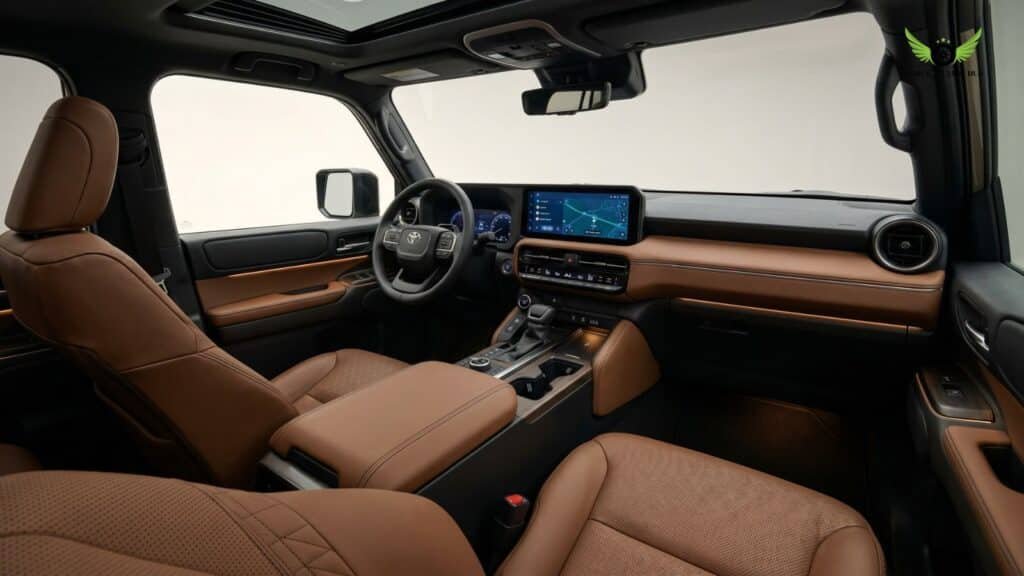
The 2026 Toyota Land Cruiser combines functional ruggedness with modern comfort, making it equally capable for off-road use and daily driving. In this Toyota Land Cruiser review, the key highlight is how Toyota has redesigned the SUV to feel more usable in real-life situations without losing its tough identity.
Inside, the cabin is built with a clear focus on practicality and comfort. The layout is straightforward, with physical buttons and a clean dashboard that are easy to operate even on rough terrain. Depending on the trim, you get features like a larger touchscreen, upgraded materials, wireless connectivity, and advanced safety systems. The seats are designed to provide proper support, which becomes especially important during long drives.
Comfort plays a major role because the Land Cruiser is no longer limited to off-road use. For example, on a long road trip, supportive seating, good cabin insulation, and user-friendly controls help reduce driver fatigue. This makes the vehicle suitable for both family travel and everyday commuting.
On the outside, the Land Cruiser follows a boxy and purpose-driven design. This is not just for style—the shape improves visibility, ground clearance, and approach angles. Features like wide wheel arches, strong body lines, and protective elements enhance durability while maintaining a bold presence on the road.
Overall, the design approach is focused on usability over luxury. The interior ensures comfort where it matters, while the exterior supports real off-road performance, creating a balanced SUV that works in both urban and extreme environments.
Comfort, Seating, Cabin Space & Cargo Capacity
The 2026 Toyota Land Cruiser offers a well-balanced mix of cabin comfort and practical space, making it suitable for both daily driving and long-distance travel. In this Toyota Land Cruiser review, the focus is not just on rugged capability but also on how comfortably the vehicle supports passengers and cargo.
The Land Cruiser typically comes with a two-row seating configuration (5 passengers), which allows for better legroom and cargo flexibility compared to many three-row SUVs. The seats are designed with supportive cushioning and durable materials, while higher trims add premium finishes and extra comfort features. Front and rear passengers both benefit from adequate headroom and legroom, making the cabin feel open rather than cramped.
Comfort matters especially during long drives or off-road trips, where fatigue can quickly become an issue. For example, on a family road trip with 4–5 passengers and luggage, the Land Cruiser provides enough seating support and cabin insulation to maintain comfort over several hours of driving.
The cabin layout is built for usability, with smart storage areas, easy-to-reach controls, and folding rear seats that expand cargo space when needed. With all seats in use, cargo capacity is sufficient for everyday needs like groceries or small luggage. When the rear seats are folded, the space becomes significantly larger—ideal for carrying travel gear, camping equipment, or bulky items.
Compared to an average midsize SUV, the Land Cruiser offers more usable cargo space and better seat durability, but it does sacrifice the option of a third row. This may be a limitation for buyers who need 6–7 passenger seating, but it benefits those who prioritize cargo capacity and comfort.
Overall, the interior space is designed for real-world practicality, making it a strong choice for families, travelers, and adventure-focused users.
Infotainment System, Wireless Apple CarPlay & Toyota Safety Sense 3.0
The 2026 Toyota Land Cruiser comes equipped with a modern infotainment system and advanced driver-assistance features, designed to improve both convenience and safety. In this Toyota Land Cruiser review, the technology upgrade is a major step forward, making the SUV feel more aligned with current expectations for a smart, connected driving experience.
The infotainment system includes a large touchscreen display (typically 8-inch or 12.3-inch depending on trim), along with wireless connectivity options like Bluetooth, navigation, and voice control. The interface is designed to be clean and responsive, allowing easy access to media, maps, and vehicle settings. One of the most useful features is wireless Apple CarPlay, which eliminates the need for cables. This means you can instantly connect your iPhone, use apps like Google Maps or Spotify, and control them directly from the screen—making daily driving more convenient.
Toyota Safety Sense 3.0 adds a layer of intelligent safety through features like lane departure alert, adaptive cruise control, automatic emergency braking, and road sign assist. These systems actively monitor surroundings and assist the driver in maintaining safe distances and lane positioning.
In real-world use, these features make a noticeable difference. During city driving, wireless connectivity allows seamless navigation and communication, while safety systems help in traffic-heavy situations. On highways, adaptive cruise control and lane assist reduce driver fatigue, especially on long trips.
However, there can be minor limitations. Some users may experience a slight learning curve with the interface, and occasional system lag depending on usage.
Exterior Design, LED Lighting & Tow/Haul Modes
The 2026 Toyota Land Cruiser features a rugged, boxy design that blends classic off-road styling with modern functional upgrades. In this Toyota Land Cruiser review, the exterior is not just about looks—it is engineered to support durability, visibility, and real-world usability.
The standout design elements include its upright stance, wide body, and high ground clearance. This boxy shape improves visibility for the driver and enhances approach and departure angles, which are essential for off-road driving. Protective body cladding, strong wheel arches, and a bold front grille reinforce its tough, purpose-built character.
LED lighting plays a key role in both design and safety. The Land Cruiser comes with advanced LED headlights and taillights that provide clearer and longer-range visibility, especially during night driving or in low-visibility conditions like fog or rain. This improves reaction time and overall driving confidence.
The SUV also includes tow/haul mode, which adjusts throttle response, transmission behavior, and power delivery when towing heavy loads. This feature helps maintain stability and reduces strain on the engine and transmission.
In real-world use, when towing a trailer or boat, tow/haul mode ensures smoother acceleration and better control. Similarly, during night driving on highways or rural roads, the LED lighting system significantly improves visibility and safety.
However, the rugged design does come with a trade-off. Compared to more aerodynamic SUVs, the boxy shape may slightly impact fuel efficiency at higher speeds.
Overall, the Land Cruiser’s exterior design prioritizes function over form, delivering both durability and practical performance.
Toyota Land Cruiser Competitor Comparison
The 2026 Toyota Land Cruiser sits in a unique position in the SUV market—it is not the most powerful, nor the most luxurious, but it offers one of the best balances between off-road capability, hybrid efficiency, and long-term reliability. In this Toyota Land Cruiser review, comparing it with key rivals helps clarify why many buyers consider it a practical choice in the best off-road SUV category.
Buyers typically compare the Land Cruiser with models like the Jeep Wrangler Rubicon, Ford Bronco, and Land Rover Defender, as all of them target off-road performance but differ in comfort, technology, and daily usability.
Model | Engine | HP | Torque | MPG (Approx) | Starting Price |
Toyota Land Cruiser (2026) | 2.4L Turbo Hybrid | 326 hp | 465 lb-ft | ~23 MPG combined | ~$57,000 |
Jeep Wrangler Rubicon | 3.6L V6 | 285 hp | 260 lb-ft | ~20 MPG combined | ~$47,000 |
Ford Bronco (Badlands) | 2.7L Twin-Turbo V6 | 330 hp | 415 lb-ft | ~19 MPG combined | ~$50,000 |
Land Rover Defender 110 | 2.0L Turbo / 3.0L Mild Hybrid | 296–395 hp | 295–406 lb-ft | ~19–22 MPG | ~$56,000 |
MPG and torque figures may vary depending on configuration and driving conditions.
From a performance perspective, the Land Cruiser stands out with its high torque output and hybrid efficiency, making it more suitable for both daily driving and controlled off-road situations. While the Wrangler and Bronco are more “hardcore” off-road machines with removable doors and extreme trail focus, they are less comfortable for everyday use.
In real-world scenarios, the difference becomes clear. For example, if you need an SUV for daily commuting, long highway trips, and occasional off-road use, the Land Cruiser offers a smoother and quieter experience. On the other hand, if your primary use is extreme off-roading, vehicles like the Wrangler Rubicon may provide more specialized features.
From a cost perspective, the Toyota Land Cruiser price is slightly higher than some competitors, but it justifies this with better fuel efficiency and a more refined driving experience. The Defender offers more luxury but comes with higher maintenance costs, while the Bronco provides strong performance at a competitive price but lacks hybrid efficiency.
Overall, the Land Cruiser’s biggest strength is its balanced approach—it is not the most extreme in any one category, but it performs consistently well across all areas. This makes it a strong choice for buyers who want one SUV that can handle both everyday life and off-road adventures without compromise.
Land Cruiser vs Ford Bronco & Jeep Wrangler (Power & Fuel Economy)
When comparing the 2026 Toyota Land Cruiser with the Ford Bronco and Jeep Wrangler, the key difference comes down to hybrid efficiency vs traditional off-road performance. In this Toyota Land Cruiser review, the Land Cruiser stands out as a more balanced option, while the Bronco and Wrangler lean toward more extreme off-road capability.
The Land Cruiser uses a 2.4L turbocharged hybrid system, combining strong torque with better fuel efficiency. In contrast, the Bronco and Wrangler rely on traditional gasoline engines, which deliver solid performance but consume more fuel. This difference becomes important for buyers who plan to use their SUV daily, not just for off-road adventures.
Model | Engine | HP | MPG (Approx) | Off-road Capability |
Toyota Land Cruiser (2026) | 2.4L Turbo Hybrid | 326 hp | ~23 MPG combined | Strong + balanced |
Ford Bronco | 2.3L Turbo / 2.7L V6 | 275–330 hp | ~18–20 MPG | Very strong (trail-focused) |
Jeep Wrangler | 3.6L V6 / 2.0L Turbo | 270–285 hp | ~19–21 MPG | Extreme (best for rock crawling) |
MPG figures are approximate and may vary based on configuration and driving conditions.
Fuel economy matters because it directly affects long-term ownership cost and daily usability. The hybrid system in the Land Cruiser provides better mileage, especially in city driving, where stop-and-go traffic benefits from electric assistance. This makes it more practical for regular commuting compared to the Bronco and Wrangler.
In real-world use, if you drive mostly in the city with occasional off-road trips, the Land Cruiser offers a smoother ride, better fuel efficiency, and less fatigue. However, on challenging trails like rock crawling or extreme terrain, the Wrangler and certain Bronco trims can perform better due to their specialized off-road setups.
One limitation is that while the Land Cruiser is highly capable, it is not as focused on extreme off-roading as the Wrangler or Bronco. Instead, it delivers a more refined and versatile driving experience across different environments.
Land Cruiser vs Lexus GX 550 & Land Rover Defender (Performance & Luxury)
When comparing the 2026 Toyota Land Cruiser with premium SUVs like the Lexus GX 550 and Land Rover Defender, the difference comes down to luxury vs balance. In this Toyota Land Cruiser review, the Land Cruiser positions itself between rugged capability and everyday comfort, the GX and Defender lean more toward premium experience and brand luxury.
The Lexus GX 550 focuses heavily on refinement, offering a more upscale interior, quieter cabin, and premium materials throughout. The Land Rover Defender blends luxury with strong off-road performance, featuring advanced suspension systems and high-end design. In contrast, the Land Cruiser delivers a more practical level of comfort, prioritizing durability and usability over pure luxury.
Model | Luxury Level | Engine | Price (Starting) | Reliability |
Toyota Land Cruiser (2026) | Mid-premium | 2.4L Turbo Hybrid | ~$57,000 | High |
Lexus GX 550 | High luxury | 3.4L Twin-Turbo V6 | ~$64,000 | Very high |
Land Rover Defender | Premium luxury | 2.0L Turbo / 3.0L Mild Hybrid | ~$56,000+ | Moderate |
Prices may vary depending on configuration and market.
Buyers choose these premium SUVs for comfort, brand value, and advanced features, especially if the vehicle will be used daily. The Land Cruiser appeals to those who want a reliable SUV with modern features but without the higher ownership costs often associated with luxury brands.
In real-world use, if your priority is daily comfort and premium feel, the GX 550 offers the most refined experience. The Defender provides a mix of luxury and off-road innovation but may come with higher maintenance concerns. The Land Cruiser, on the other hand, is ideal for buyers who want long-term reliability, lower maintenance risk, and solid comfort.
One limitation is that the Land Cruiser does not match the interior luxury and premium detailing of the GX or Defender. However, it compensates with durability, efficiency, and a more practical ownership experience.
Toyota Land Cruiser Buying Guide
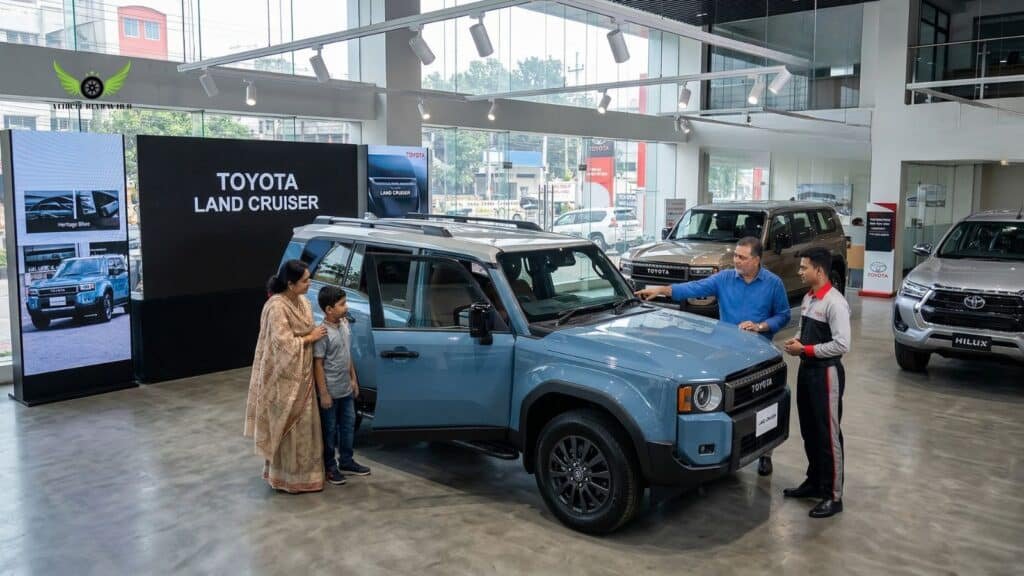
The 2026 Toyota Land Cruiser is best suited for buyers who want a reliable, capable SUV that can handle both daily driving and off-road conditions without compromise. In this Toyota Land Cruiser review, the key to making the right decision is understanding your usage, budget, and long-term expectations—because this is not just a lifestyle SUV, it’s a long-term investment.
When deciding whether to buy, start with three main factors: budget, usage, and terrain. The Toyota Land Cruiser price starts in the high-$50K range, but your final cost will depend on trim selection, optional features, and location. If your driving is mostly city and highway, you may not need the higher trim with added luxury features. However, if you want a more refined experience for daily use, upgrading makes a noticeable difference.
Choosing the right trim is important because both versions offer the same core performance, but differ in comfort and technology. The base trim is ideal for buyers who prioritize durability and cost-efficiency, while the higher trim suits those who want better comfort, tech, and resale value. This makes trim selection less about capability and more about lifestyle.
From a value perspective, the Land Cruiser stands out due to its strong reliability and lower long-term maintenance risk compared to many competitors. Even though the upfront price may seem high, it often balances out over time through durability and resale strength.
In a real-world scenario, a family buyer who needs comfort, safety features, and space for long trips will benefit more from the higher trim with added convenience features. On the other hand, an off-road enthusiast who focuses on performance and rugged use may find the base trim more than sufficient.
Ultimately, this buying guide SUV decision comes down to how you plan to use the vehicle. If you want a single SUV that handles daily life, long trips, and occasional off-road adventures with confidence, the Land Cruiser is a strong and practical choice.
Choosing the Right Trim and Options
Choosing the right trim for the 2026 Toyota Land Cruiser comes down to one key idea: pay for what you will actually use. In this Toyota Land Cruiser review, both trims offer the same core performance, so your decision should focus on comfort, technology, and daily usability, not capability.
The main factors that influence trim choice include budget, driving style, and feature expectations. If your usage is mostly off-road or utility-focused, the base trim already delivers everything needed. However, if you plan to use the SUV for daily commuting, long drives, or family use, the added comfort and tech in the higher trim can justify the extra cost. This is especially important when evaluating the real Toyota Land Cruiser price, as optional upgrades can quickly increase the final amount.
Buyer Type | Recommended Trim | Reason |
Budget-focused buyer | Land Cruiser 1958 (Base) | Lower cost, strong capability, essential features only |
Daily commuter | Land Cruiser (Higher Trim) | Better comfort, tech, smoother daily experience |
Family user | Land Cruiser (Higher Trim) | More convenience, safety features, long-trip comfort |
Off-road enthusiast | Land Cruiser 1958 (Base) | Focus on durability and performance, less need for luxury |
Balanced buyer | Higher Trim + selective options | Mix of comfort and value without overspending |
For example, a budget buyer who mainly needs reliability and off-road strength will get maximum value from the base trim. In contrast, a luxury-focused buyer will benefit more from the higher trim with added features like a larger screen and premium interior.
One important limitation to consider is overpaying for unused features. Many buyers add packages they rarely use, which increases the cost without improving real-world value.
The best approach is to align your trim and options with your actual driving needs, ensuring you get the most value without unnecessary upgrades.
Pricing Trends, Incentives & Dealership Availability
The 2026 Toyota Land Cruiser is currently positioned in a high-demand market, which means the final purchase price often exceeds the official MSRP. While the base price starts in the high-$50K range, the actual Toyota Land Cruiser price depends on factors like dealership availability, region, and timing.
The most important factor affecting pricing is supply and demand. Since this is a newly redesigned model with strong global interest, many dealerships have limited inventory. As a result, prices can increase in areas where demand is higher than supply. Regional differences such as taxes, import duties, and logistics costs can also significantly impact the final price, especially outside the U.S.
Dealer markup happens mainly due to low inventory and high buyer demand. When stock is limited, some dealerships add additional charges above MSRP. In real-world scenarios, buyers often face waiting lists for certain trims, while others choose to pay a premium for immediate delivery.
When it comes to incentives, there is no fixed nationwide offer. Financing deals or promotional benefits vary by region, and availability depends on dealership-specific programs and buyer eligibility. This means buyers should always check with local dealers for the most accurate information.
To get the best deal, buyers should compare multiple dealerships, avoid high-markup offers, and stay flexible with trim and configuration. For example, a buyer who waits for incoming inventory may secure a better price than someone purchasing during peak demand.
Overall, Land Cruiser pricing is market-driven, and careful research can help reduce unnecessary costs.
Frequently Asked Questions About the 2026 Toyota Land Cruiser
Before making a final decision, most buyers have practical questions about performance, pricing, features, and real-world usability. This FAQ section covers the most important points from this Toyota Land Cruiser review, helping you quickly understand whether this SUV fits your needs and budget.
Is the 2026 Toyota Land Cruiser a hybrid SUV?
Yes, it comes with a 2.4L turbocharged i-FORCE MAX hybrid powertrain.
Add Your Heading Text Here
Lorem ipsum dolor sit amet, consectetur adipiscing elit. Ut elit tellus, luctus nec ullamcorper mattis, pulvinar dapibus leo.
What is the starting Toyota Land Cruiser price?
The starting MSRP is in the high-$50,000 range, but the final price varies by region and dealer.
How many trims are available?
There are two trims: Land Cruiser 1958 (base) and Land Cruiser (higher trim).
Is the Land Cruiser good for daily driving?
Yes, it is designed for both daily use and off-road performance.
How fuel-efficient is the 2026 Land Cruiser?
It is more fuel-efficient than previous models due to its hybrid system.
Is it better than Ford Bronco or Jeep Wrangler?
It is better for daily comfort and efficiency, while Bronco and Wrangler are stronger for extreme off-road.
What is the towing capacity?
It can tow approximately 6,000 lbs depending on configuration.
Does the Land Cruiser have a third row?
No, it mainly comes with a two-row (5-seater) setup.
Are optional packages worth it?
Yes, but only if they match your actual usage needs.
Is the Land Cruiser reliable long-term?
Yes, it is known for strong reliability and durability.
Why is dealership price higher than MSRP?
Due to high demand and limited supply, dealer markup is common.
Who should buy the 2026 Toyota Land Cruiser?
Buyers who want a balanced SUV for daily driving, long trips, and off-road use.