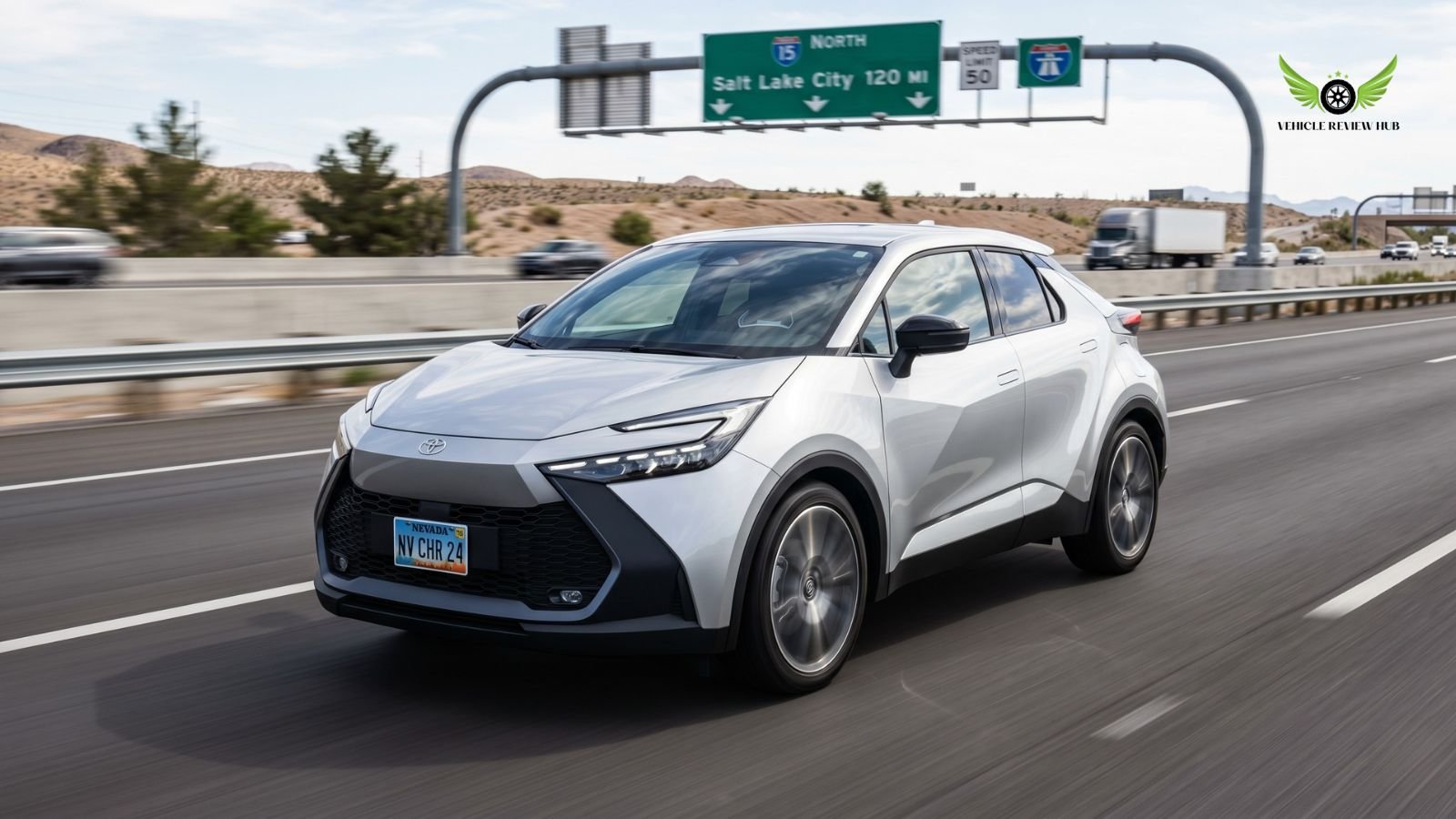
The Toyota C-HR is built for stable daily driving rather than speed. In this Toyota C-HR Performance overview, the focus is on real U.S. specs and how the car behaves in actual driving.
The gasoline model sold in the U.S. uses a 2.0L 4-cylinder engine producing 144 horsepower and 139 lb-ft of torque, paired with a CVT and front-wheel drive. Fuel economy is rated at 27 MPG city and 31 MPG highway, which shows the engine is tuned for efficiency, not performance.
Looking at Toyota C-HR Acceleration, the numbers are consistent across tests. The 0–60 mph time is about 10 seconds, placing it on the slower side of the segment. In real driving, this means smooth takeoff in city traffic but limited response during highway merging or overtaking.
From real usage, the Toyota C-HR Driving Experience is focused on comfort and control. The CVT keeps acceleration steady, and the compact size makes it easy to drive in urban areas. Steering is light, and low-speed handling feels predictable, which suits daily commuting.
The newer electric version changes the performance level. It produces up to 338 horsepower with dual-motor AWD and reaches 0–60 mph in about 5 seconds. This is a major increase compared to the gas model, offering quicker acceleration and stronger highway performance.
Overall, the Toyota C-HR delivers consistent and reliable performance for everyday driving. The gas version is best for efficiency and smooth operation, while the new EV version offers significantly higher power and faster acceleration.
Toyota C-HR Engine Performance Explained
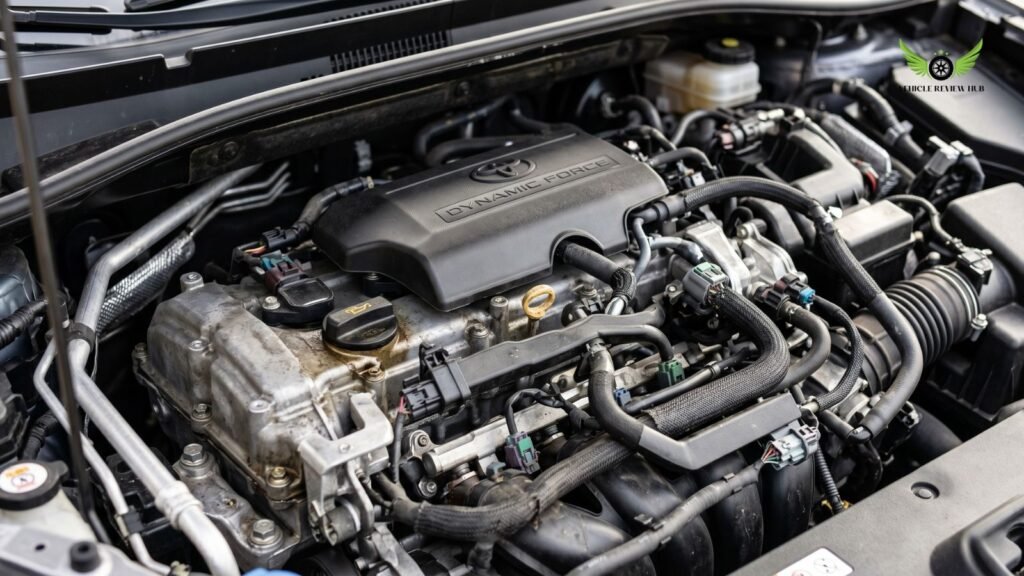
In this Toyota C-HR Performance section, the focus is on real engine output and how it translates into everyday driving. The U.S. model follows a simple setup, while newer versions show a clear shift toward higher power and improved acceleration.
2.0L Engine Performance Limitations (144 HP)
The Toyota C-HR sold in the U.S. uses a 2.0-liter 4-cylinder engine producing 144 horsepower and 139 lb-ft of torque, paired with a CVT and front-wheel drive.
This setup is tuned for efficiency, not speed. Fuel economy is rated at 27 MPG city and 31 MPG highway, which confirms the focus on daily usability.
In real driving:
- Acceleration is modest, with 0–60 mph around 10 seconds
- Power delivery feels smooth at low speeds
- Highway overtaking requires more time and planning
From a practical standpoint, this explains the overall Toyota C-HR Acceleration experience. It is consistent and easy to control, but not quick compared to competitors that offer higher horsepower.
Based on owner feedback, the engine works well in city conditions but feels underpowered during high-speed driving.
New EV Powertrain Performance (Up to 338 HP AWD)
The newer generation introduces a fully electric version with a completely different performance level.
- Dual-motor all-wheel drive
- Power output up to 338 horsepower
- 0–60 mph in about 4.9–5.0 seconds
This is a major increase in performance compared to the gasoline model. Acceleration becomes much quicker, and power delivery is immediate, which improves highway driving.
In terms of Toyota C-HR Driving Experience, the EV version feels more responsive and stable at higher speeds. At the same time, the overall tuning still focuses on comfort rather than aggressive sport driving.
The difference between the gas and EV versions is clear. The original engine supports smooth, efficient daily driving, while the electric version delivers strong acceleration and a more advanced driving feel.
Toyota C-HR Acceleration and Speed Analysis
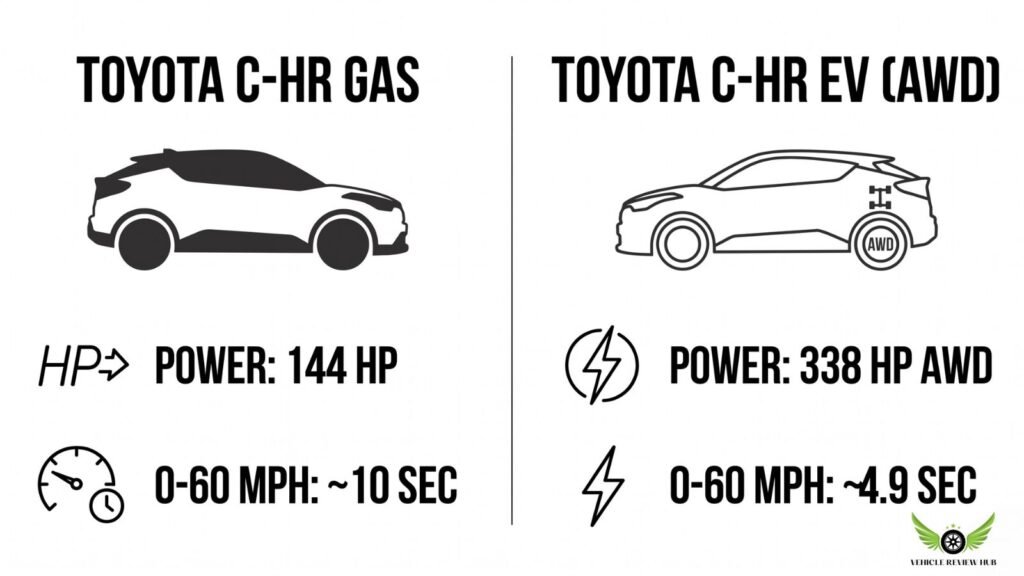
In this Toyota C-HR Performance section, acceleration is explained using verified figures and real driving behavior in the U.S. The difference between the gasoline model and the newer electric version directly affects how the vehicle feels in daily use.
0–60 mph Performance (Gas vs EV Comparison)
The U.S. gasoline model uses a 2.0L engine with 144 horsepower and 139 lb-ft of torque.
- 0–60 mph: about 10.0–10.3 seconds (independent tests)
- Quarter mile: around 17.5 seconds at ~80 mph
These numbers place it below most subcompact SUVs in straight-line speed.
The electric version delivers a completely different result:
- Power: up to 338 horsepower (dual motor AWD)
- 0–60 mph: about 4.9 seconds (manufacturer estimate)
This is more than twice as quick as the gas model. The improvement comes from higher output and instant electric torque.
Real-World Acceleration Experience
In daily driving, the gasoline model behaves exactly as the numbers suggest.
- Initial movement is smooth and controlled
- Power builds gradually due to the CVT
- Passing at highway speeds requires planning
This creates a predictable but slow response. It works best in city conditions where quick acceleration is less important.
The electric version behaves differently:
- Immediate response from a stop due to instant torque
- Strong mid-range acceleration for highway merging
- No gear shifting delay
This results in a more responsive and confident driving feel, especially at higher speeds.
Toyota C-HR Driving Dynamics and Handling
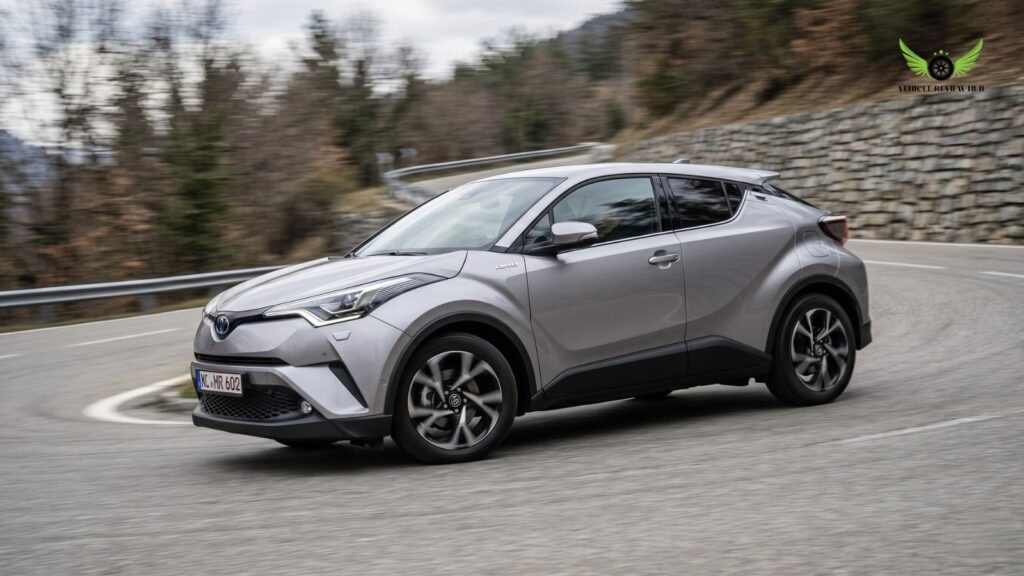
In this Toyota C-HR Performance section, the focus is on how the car actually feels on the road. The setup is designed for comfort and stability rather than sporty driving, which matches its role as a daily-use compact SUV.
Ride Comfort and Suspension Setup
The Toyota C-HR uses a MacPherson strut front suspension and a double-wishbone rear setup. This configuration is important because many cars in this segment use a simpler rear suspension, but the C-HR uses a more stable design.
In real driving:
- The ride is smooth over city roads and small bumps
- Suspension absorbs uneven surfaces without harsh impact
- Cabin movement stays controlled even on rough pavement
From actual user feedback, the ride quality feels comfortable for daily commuting. It is not overly soft, but it avoids stiffness, which helps during longer drives.
The setup works best in urban conditions where consistent comfort matters more than aggressive performance.
Steering Feel and Cornering Stability
Steering in the Toyota C-HR is tuned for ease of use.
- Steering is light at low speeds, making parking simple
- At higher speeds, it becomes more stable and controlled
- Response is accurate, but not sporty
In cornering:
- The car remains stable in normal turns
- Body roll is present but controlled due to SUV height
- Grip is sufficient for everyday driving conditions
From real-world driving behavior, the handling feels predictable. It does not react sharply like a performance car, but it maintains balance and control in regular driving.
This matches the overall Toyota C-HR Performance approach—stable, comfortable, and easy to drive, rather than aggressive or sport-focused.
Toyota C-HR City vs Highway Driving Performance

The focus here is how the Toyota C-HR performs in real city and highway conditions based on its engine output, CVT behavior, and suspension setup. The difference becomes clear when you drive it in both environments.
Urban Driving Experience
The Toyota C-HR performs best in city driving.
- Smooth low-speed acceleration due to the CVT
- Light steering makes parking and tight turns easier
- Suspension absorbs bumps and uneven roads effectively
With a 2.0L engine producing 144 HP, the car feels stable in stop-and-go traffic. Power delivery is gradual, which helps maintain control in crowded roads rather than quick bursts of speed.
From real driving behavior, the Toyota C-HR Driving Experience in urban areas feels comfortable and predictable. The compact size also makes it easier to navigate narrow streets and heavy traffic.
Highway Stability and Comfort
On highways, the driving feel remains stable but highlights the limits of the engine.
- The car stays planted at steady speeds
- Steering becomes firmer and more controlled
- Suspension keeps the ride balanced over long distances
At cruising speeds, stability is good, and the vehicle does not feel unstable. However, acceleration is limited. With around 10-second 0–60 mph performance, overtaking requires more time and planning.
The CVT also keeps engine RPM higher during acceleration, which can make the engine feel strained under load. Despite this, the overall ride remains controlled and comfortable for regular highway driving.
Is Toyota C-HR Fun to Drive?
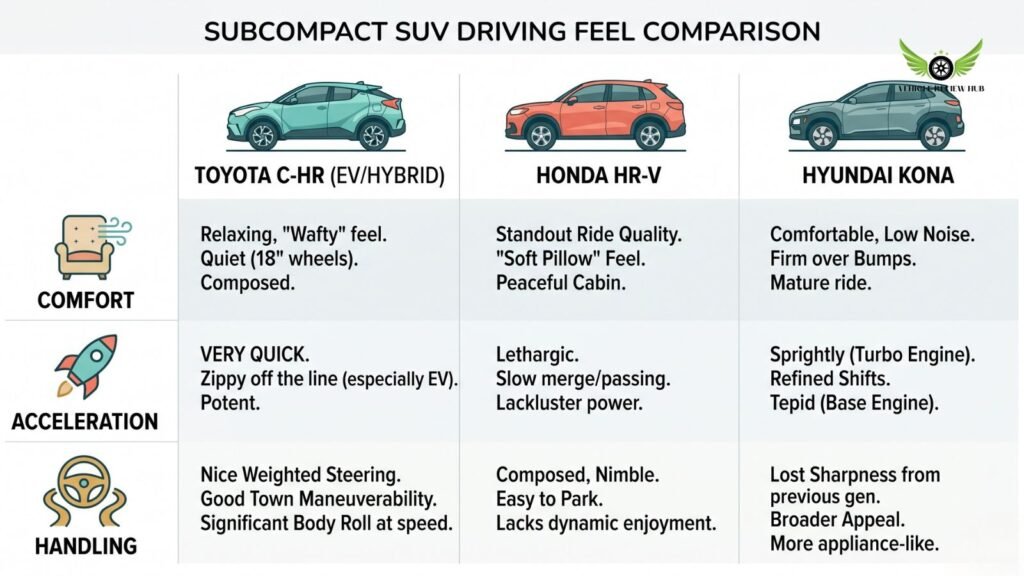
The driving feel is focused on comfort and control rather than excitement. In this Toyota C-HR Performance context, the car is designed for smooth daily use, not sporty response.
With a 2.0L engine producing 144 HP and a CVT, acceleration builds gradually. The response is predictable, but it does not feel quick. This setup works well in normal driving conditions, especially in city traffic where smooth movement is more important than speed.
From real driving behavior, the Toyota C-HR Driving Experience feels stable and easy to manage. Steering is light, the suspension keeps the ride comfortable, and the overall handling supports relaxed driving. It does not react sharply during aggressive inputs.
The newer electric version increases power significantly, but the tuning still focuses on comfort and stability rather than a sporty feel.
The C-HR feels enjoyable for calm, everyday driving, but it does not provide the quick or engaging response expected from performance-focused vehicles.
Comparison with Honda HR-V, Hyundai Kona
The differences become clear when comparing it with key rivals.
- Toyota C-HR (gas): 144 HP, 0–60 mph ~10 seconds
- Honda HR-V: about 158 HP, 0–60 mph ~9 seconds
- Hyundai Kona (turbo): up to 190 HP, quicker acceleration
In real driving:
- C-HR focuses on smoothness and stability
- HR-V feels balanced with slightly better response
- Kona offers stronger acceleration and a more engaging feel
From real test data, the Kona is noticeably quicker, while the HR-V provides a middle ground. The C-HR remains the least performance-oriented among them.
Even with the newer electric version of the C-HR, which produces up to 338 HP and reaches 0–60 mph in about 5 seconds, the tuning still prioritizes comfort over aggressive handling.
Who Will Enjoy Driving the C-HR
The driving experience is best suited for specific types of drivers.
- Drivers who prefer smooth and predictable acceleration
- City-focused users who want easy handling and control
- Buyers who value comfort over speed
It is not ideal for:
- Drivers looking for quick acceleration or sporty feel
- Buyers who want sharp handling or aggressive cornering
- Highway-focused drivers who need strong passing power
From real-world use, the Toyota C-HR Driving Experience feels stable and easy to manage rather than exciting. It works well for daily commuting, especially in urban environments.
Toyota C-HR Performance FAQs (Acceleration & Driving Experience)
These questions cover the most common concerns about Toyota C-HR Performance, based on real specs and driving behavior.
Is the Toyota C-HR fast?
No. The gasoline model produces 144 HP and reaches 0–60 mph in about 10 seconds, which is slower than most competitors.
How is Toyota C-HR Acceleration in real driving?
Acceleration feels smooth but gradual. It works well in city driving but feels limited during highway merging or overtaking.
Does the Toyota C-HR feel powerful on the highway?
Not really. At higher speeds, the engine needs more time to build power, so passing other vehicles requires planning.
Is the Toyota C-HR Driving Experience comfortable?
Yes. The ride is smooth, steering is light, and the suspension absorbs bumps well, making it comfortable for daily use.
Does the Toyota C-HR handle well in corners?
It remains stable in normal turns, but it is not designed for aggressive cornering. Some body roll is noticeable due to its SUV height.
Is the Toyota C-HR good for city driving?
Yes. Compact size, smooth acceleration, and easy steering make it very suitable for urban conditions.
How does the EV version improve performance?
The electric version produces up to 338 HP and can reach 0–60 mph in about 5 seconds, offering much quicker acceleration and stronger response.
Who will enjoy driving the Toyota C-HR the most?
Drivers who prefer smooth, predictable driving and comfort will enjoy it more than those looking for speed or sporty handling.