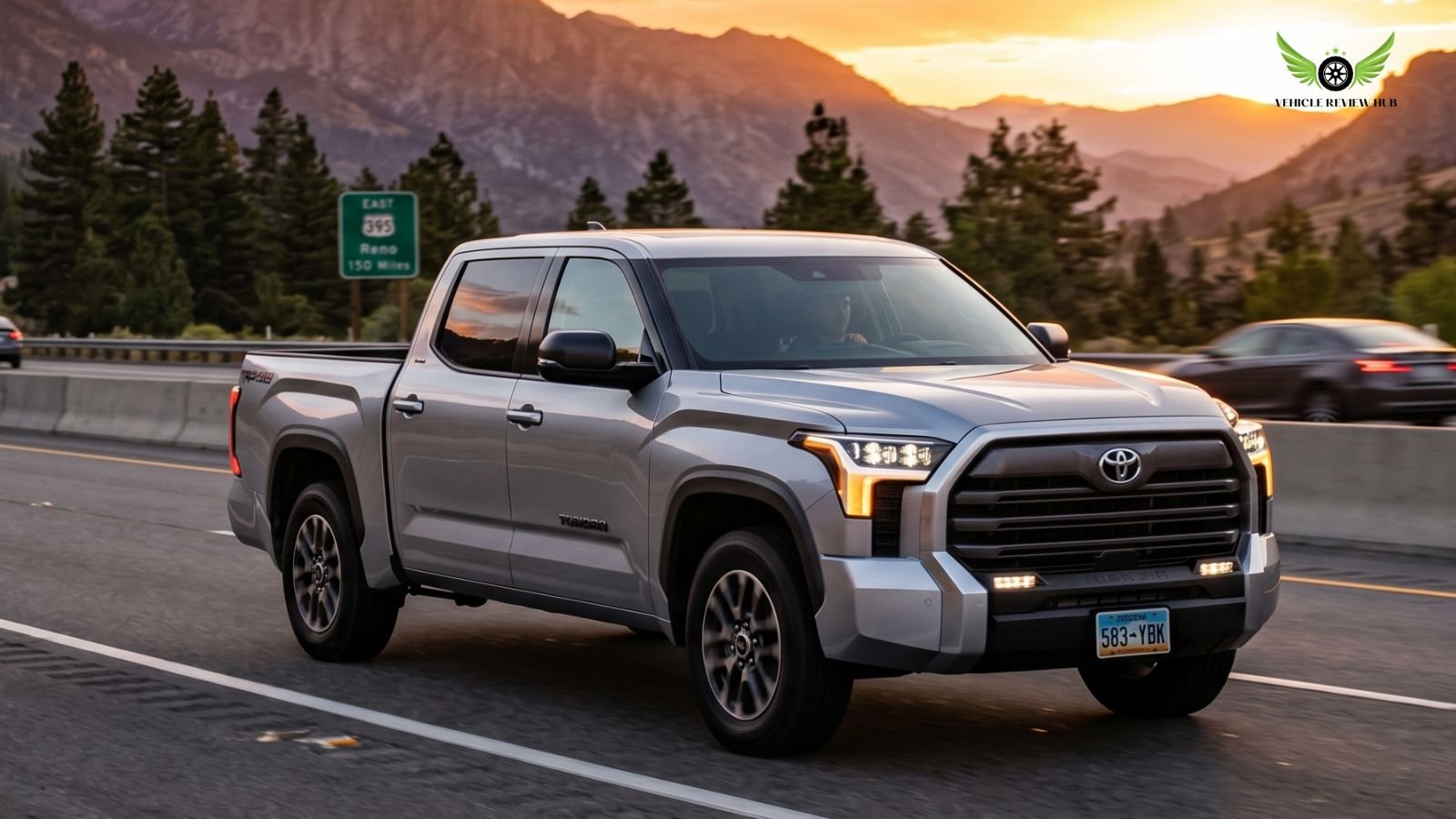
Toyota Tundra Mileage is practical for a full-size truck, but it is not designed to lead the segment in fuel efficiency. The current model uses a twin-turbo V6 with an optional hybrid system, and real results depend heavily on driving conditions, load, and driving style.
Official EPA ratings for most models fall around 17–20 MPG combined, with highway figures reaching 22–23 MPG in ideal setups. Hybrid versions typically deliver about 20–22 MPG combined, with slightly better results in city driving due to electric assistance.
From real-world driving, most owners report:
- 16–18 MPG in mixed driving
- Lower mileage in city traffic
- Better efficiency on steady highway drives
Fuel economy drops noticeably when towing or carrying heavy load. In testing, highway driving at steady speeds can stay close to EPA numbers, but mixed use often falls below that range.
The Toyota Tundra Fuel Economy is therefore consistent rather than exceptional. It performs best when driven smoothly on highways and within moderate load conditions.
From a Toyota Tundra Real-World Experience, the truck feels stable and predictable, but fuel efficiency varies depending on how it is used. For buyers who prioritize power, towing, and daily usability, the mileage remains acceptable within the full-size truck category.
Toyota Tundra Fuel Economy Overview
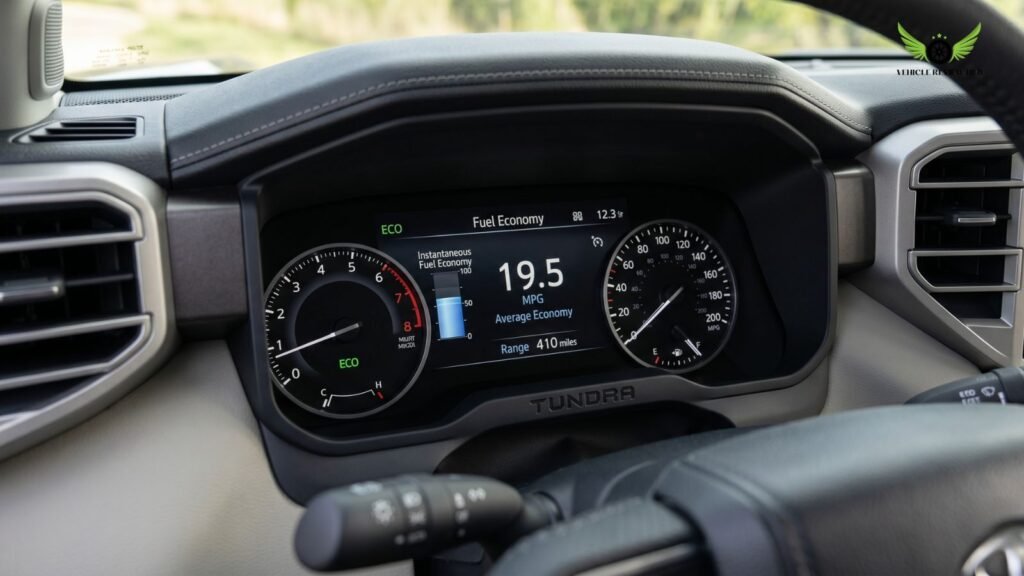
Toyota Tundra Mileage sits in the typical range for a full-size truck. The current model uses a twin-turbo V6 with an optional hybrid system, and fuel economy varies mainly by drivetrain (RWD vs 4WD) and how the truck is used.
Official EPA Ratings (18–24 MPG Range)
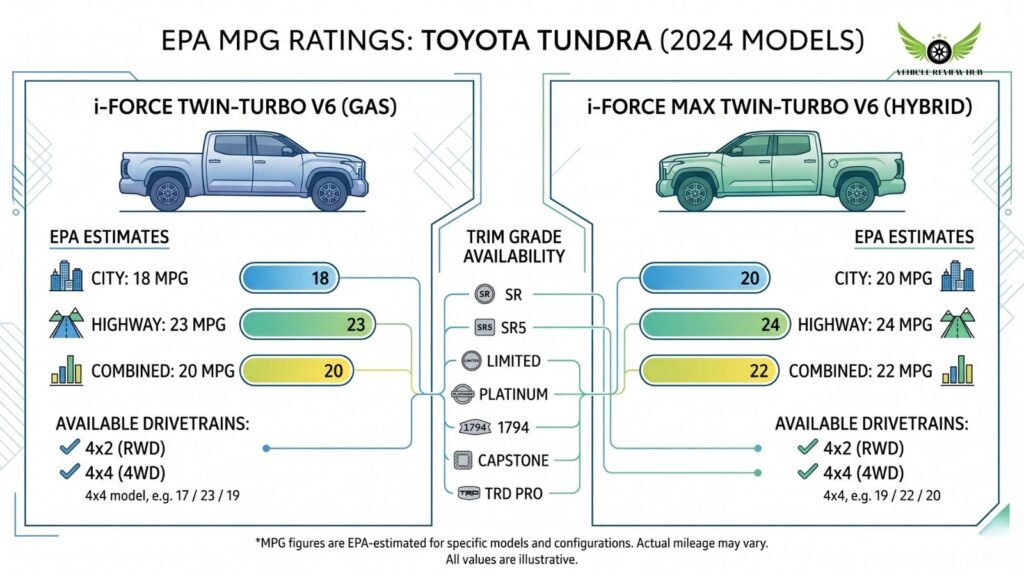
Configuration | City MPG | Highway MPG | Combined MPG |
RWD (V6) | ~18 MPG | up to ~24 MPG | ~20 MPG |
4WD (V6) | ~17 MPG | ~22–23 MPG | ~19 MPG |
Hybrid RWD | ~20 MPG | up to ~24 MPG | ~22 MPG |
Hybrid 4WD | ~19 MPG | ~22 MPG | ~21 MPG |
In practical terms, most trims fall between 19–20 MPG combined, while the best setups can reach around 24 MPG on highways under steady driving.
Hybrid vs Non-Hybrid Mileage Comparison
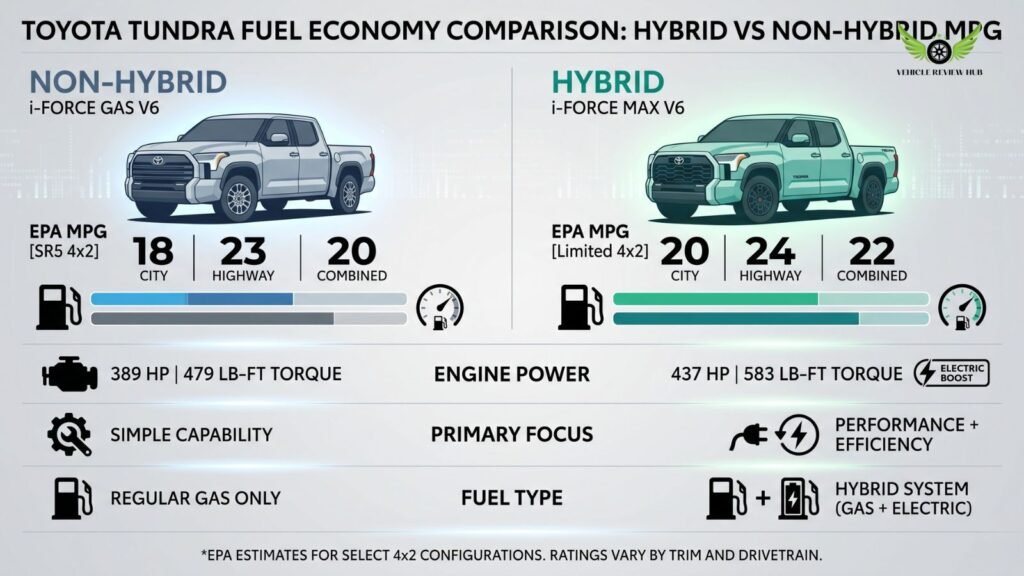
Type | Combined MPG | What Changes in Real Driving |
Non-Hybrid V6 | ~19–20 MPG | Stable highway efficiency |
Hybrid (i-FORCE MAX) | ~21–22 MPG | Slight gain in city traffic, smoother response |
The hybrid setup improves Toyota Tundra Fuel Economy, but the difference is not large. From real driving patterns, the advantage shows mostly in city conditions where the electric motor reduces fuel use during stop-and-go traffic.
From a Toyota Tundra Real-World Experience, highway mileage remains similar between both versions, and factors like driving style, speed, and load often have a bigger impact than engine choice.
Toyota Tundra Real-World Fuel Economy from US Owners
Real ownership data shows that Toyota Tundra Mileage often differs from official estimates. The gap comes from driving conditions, traffic, load, and driving style. In everyday use, owners see a range that reflects how the truck is actually driven rather than ideal test conditions.
City Driving Mileage (Often Lower Than EPA)
In city driving, fuel economy is usually lower than EPA ratings.
Most owners report:
- Around 14–17 MPG in city conditions
- Lower numbers in heavy traffic or short trips
This happens because stop-and-go driving increases fuel consumption, and the truck’s weight requires more power at low speeds. Even with the hybrid system, city mileage improves slightly but does not change the overall pattern.
Highway Mileage (Up to ~22–24 MPG)
Highway driving delivers better results for Toyota Tundra Fuel Economy.
Typical real-world range:
- Around 18–22 MPG on highways
- Up to ~22–24 MPG in steady-speed conditions
When cruising at a constant speed, the engine runs more efficiently. This is where the truck performs closest to its official ratings.
Real Owner Feedback on MPG Variations
From a Toyota Tundra Real-World Experience, fuel economy varies more than many expect.
Common patterns from owners:
- Average combined mileage often falls around 16–18 MPG
- Driving style has a major impact on fuel use
- Towing or carrying heavy loads reduces MPG significantly
- Mileage tends to improve slightly after initial break-in miles
The key takeaway is that fuel economy remains consistent within a realistic range, but it changes based on how the truck is used.
Toyota Tundra Fuel Tank Capacity and Driving Range
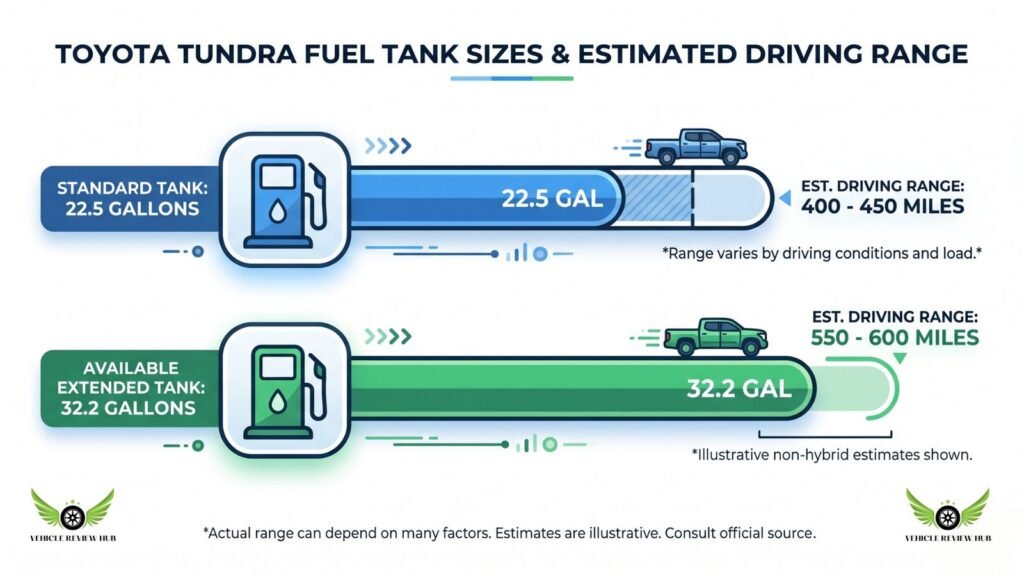
Driving range in the Tundra depends mainly on tank size and actual fuel use. Most models are equipped with a 32.2-gallon fuel tank, while some base trims come with a 22.5-gallon tank. This difference directly affects how far the truck can go on a full tank.
Range on a Full Tank (400–600 Miles Range)
Tank Size | Typical Real Range |
22.5 gallon | ~380–450 miles |
32.2 gallon | ~500–650 miles |
With average real-world consumption around 17–20 MPG, most drivers see between 450–600 miles per tank with the larger tank. Highway driving at steady speed can push the range closer to the upper end, while city driving brings it down.
From real use, the larger tank is a key advantage for long-distance driving, especially in areas where fuel stops are less frequent.
Long Road Trip and Towing Fuel Usage
Fuel use changes quickly depending on how the truck is driven.
From real-world patterns:
- Highway trips – more stable fuel consumption and better range
- Long-distance driving – closer to official efficiency numbers
- Towing or heavy load – noticeable drop in fuel economy
Under towing conditions, fuel economy often drops to around 10–14 MPG, which reduces total range significantly. Even with the larger tank, range can fall below 400 miles when carrying heavy loads.
From a Toyota Tundra Real-World Experience, the truck performs best on steady highway drives. Range is strong for long trips, but fuel use increases quickly when towing or driving under load.
Toyota Tundra Real-World Driving Experience
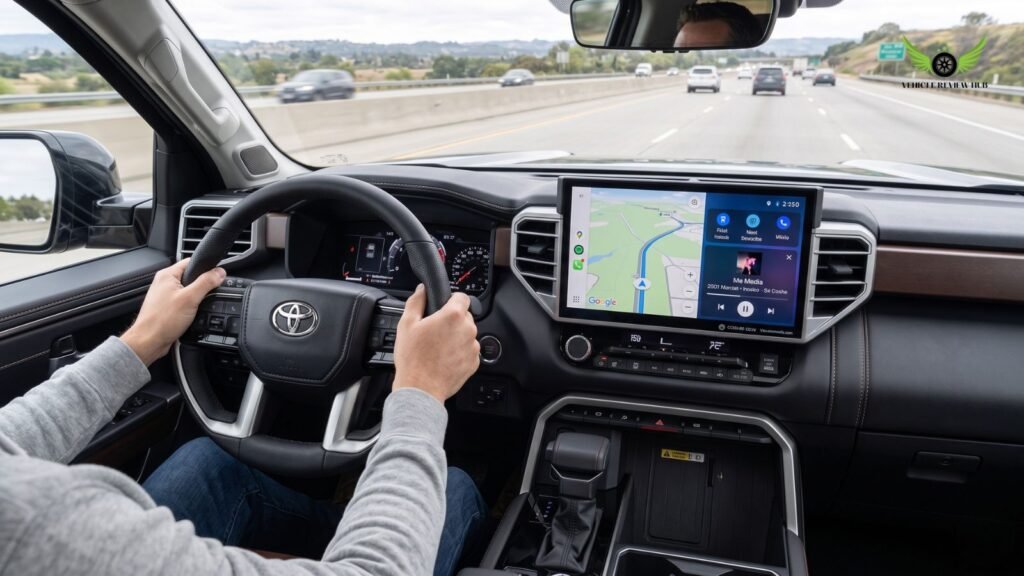
The real-world driving feel of the Tundra is focused on stability, usability, and consistency. It is built to handle daily driving, long trips, and work use without feeling overly complex. The experience is not about luxury first—it is about control and reliability across different conditions.
City Driving and Daily Usability
In city driving, the truck feels large but predictable. The steering is light enough for daily use, and the driving position gives good road visibility.
From real use:
- Strong low-end torque helps in stop-and-go traffic
- The size can make tight parking more challenging
- The hybrid system feels smoother in slow traffic conditions
For everyday driving, it remains manageable, especially with modern driver-assist features.
Highway Comfort and Long-Distance Driving
On highways, the truck feels stable and controlled. The suspension setup helps reduce road impact, and the vehicle maintains balance even at higher speeds.
From real driving:
- Minimal steering correction is needed on straight roads
- The 10-speed transmission keeps power delivery smooth
- Cabin noise remains controlled during long trips
This makes long-distance driving less tiring, especially for highway-focused users.
Work Truck Use and Practical Utility
The Tundra is designed for practical use. It handles hauling, light work, and daily tasks without difficulty.
From real-world patterns:
- Torque delivery helps when carrying load
- The truck remains stable even with added weight
- Bed and storage design support everyday work needs
Most users combine work use with daily driving, and the truck performs well in both roles.
Interior Comfort, Tech and Cabin Quality
Inside the cabin, the focus is on usability and comfort rather than over-design.
Key points:
- Large touchscreen (up to 14-inch) with simple controls
- Spacious seating, especially in crew cab models
- Supportive seats for long drives
From real experience, the cabin feels solid and functional. It provides enough comfort for daily driving while keeping controls easy to use.
Is Toyota Tundra Fuel Efficient Enough?
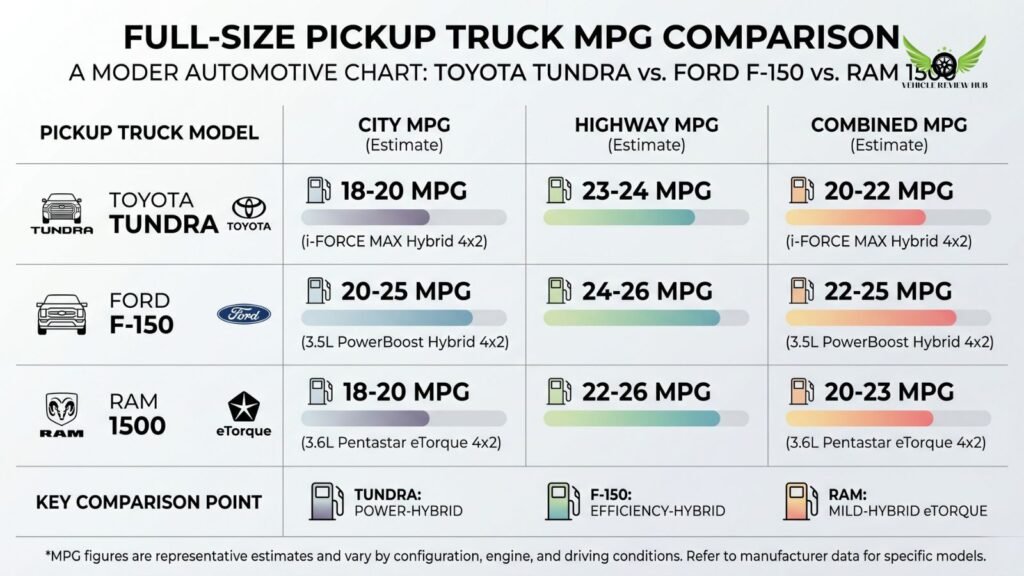
For a full-size truck, the Tundra delivers steady but not class-leading efficiency. The numbers are close to the segment average, and real results depend heavily on driving style, speed, and load. In most daily situations, the mileage feels predictable rather than impressive.
Comparison with Other Full-Size Trucks
Truck | City MPG | Highway MPG | Combined MPG | What You’ll Notice |
Toyota Tundra (V6) | ~17–18 | ~22–24 | ~19–20 | Consistent, but not the highest |
Toyota Tundra Hybrid | ~19–20 | ~22–24 | ~21–22 | Small gain, mainly in city |
Ford F-150 Hybrid | ~23–25 | ~24–26 | ~23–24 | Higher overall efficiency |
RAM 1500 (V6/eTorque) | ~20 | ~25 | ~22–23 | Strong highway numbers |
In real driving, the gap shows up mostly in city use. The F-150 hybrid tends to return higher MPG, while the RAM often feels more efficient on long highway runs. The Tundra stays close but doesn’t lead.
Who Benefits from Hybrid Efficiency
The hybrid setup improves Toyota Tundra Mileage, but the benefit depends on how the truck is used.
You’ll see the most benefit if:
- You drive in stop-and-go traffic regularly
- Your trips are shorter and more frequent
- You prefer smoother acceleration at low speeds
In these conditions, the electric motor reduces fuel use and makes driving feel more responsive.
You’ll see less difference if:
- Most of your driving is highway cruising
- You tow frequently or carry heavy loads
From a Toyota Tundra Real-World Experience, the hybrid is more about smoother daily driving with a small efficiency gain, rather than a major jump in MPG.
Toyota Tundra Mileage FAQs – Key Questions Answered
When it comes to Toyota Tundra Mileage, most buyers want clear, practical answers before making a decision. Fuel economy, real-world performance, and daily usability all play a role in ownership cost. Below are the most important questions based on real driving data and user experience.
What is the real Toyota Tundra Mileage in daily driving?
Most drivers get around 16–18 MPG in mixed driving, depending on traffic, speed, and load.
What is the Toyota Tundra Fuel Economy on the highway?
Highway mileage usually ranges from 18–22 MPG, with up to 22–24 MPG in ideal steady-speed conditions.
Is the hybrid Tundra more fuel efficient?
Yes, but the improvement is small. The hybrid adds about 1–2 MPG, mainly noticeable in city driving.
Why does mileage drop in city driving?
Stop-and-go traffic increases fuel use, especially for a large truck, which reduces overall efficiency.
What range can you expect on a full tank?
With a 32.2-gallon tank, most drivers see around 450–600 miles per tank, depending on driving conditions.
How much does towing affect fuel economy?
Towing can reduce fuel economy to around 10–14 MPG, depending on weight and terrain.
Is Toyota Tundra Mileage good compared to other trucks?
It is average for the segment. Some competitors offer slightly better MPG, but real-world differences are not extreme.
Is the Toyota Tundra good for long-distance driving?
Yes. From a Toyota Tundra Real-World Experience, highway driving feels stable, and fuel use becomes more consistent on long trips.