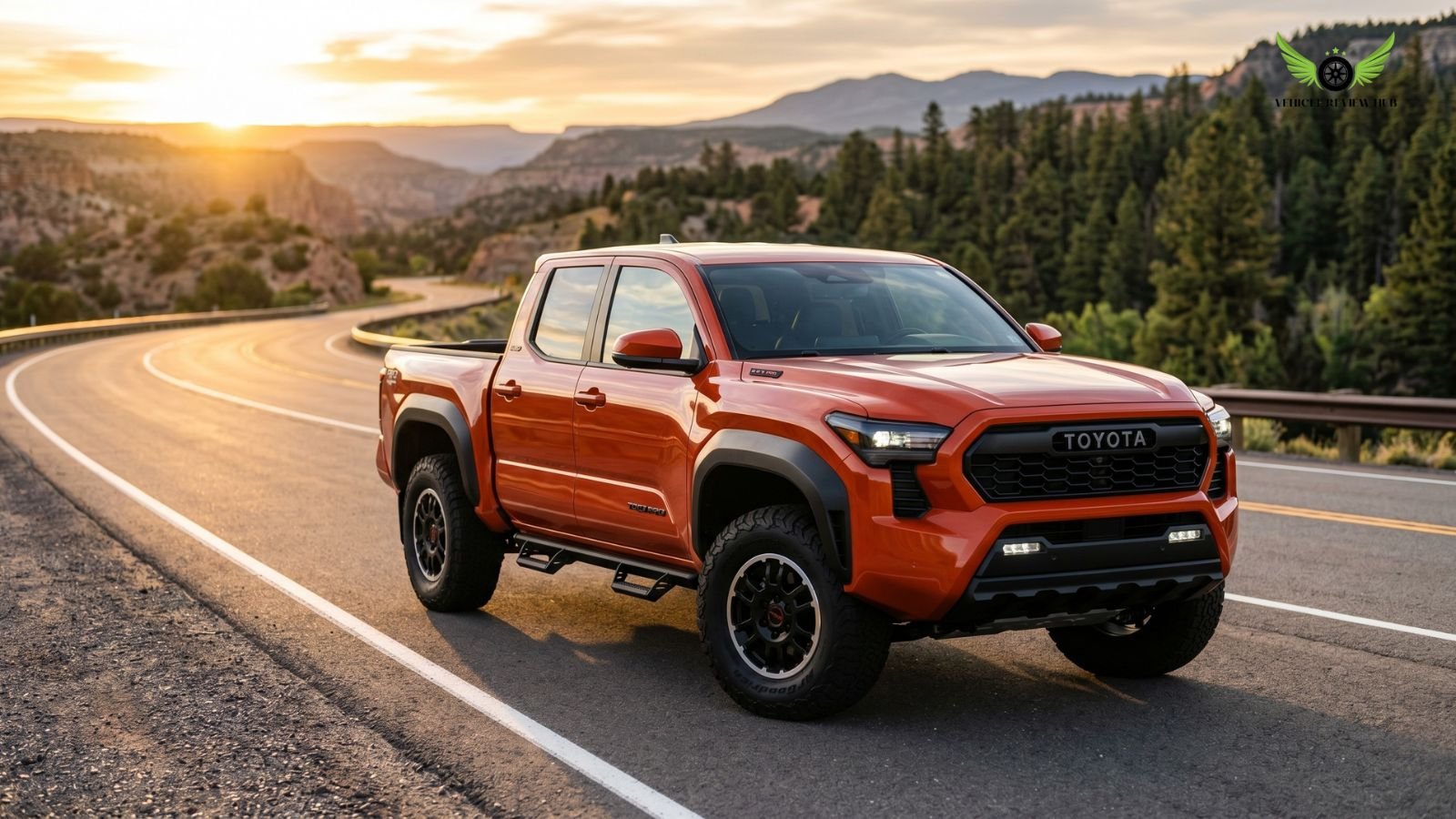
If you care about real-world capability, Toyota Tacoma Performance comes down to three things—usable power, towing strength, and off-road control. From my observation, most US buyers don’t need extreme numbers; they need a truck that performs consistently in daily driving and weekend use. That’s exactly what Tacoma delivers.
The current model uses a 2.4L turbocharged engine producing up to 278 hp and 317 lb-ft torque. The hybrid i-FORCE MAX version increases output to 326 hp and 465 lb-ft torque, which is a clear improvement in low-end power. In real driving, this higher torque makes acceleration smoother and towing more stable, especially under load.
When it comes to Toyota Tacoma Towing, the truck can handle up to 6,500 lbs depending on configuration. Most trims realistically stay in the 6,000–6,400 lbs range, which is enough for trailers, small boats, and equipment. Payload capacity goes up to around 1,700 lbs, making it practical for daily work use.
The strongest part of this truck is its Toyota Tacoma Off-Road Capability. From my experience, Tacoma is built for controlled movement rather than speed. Features like Crawl Control and Multi-Terrain Select help maintain traction on difficult surfaces. Combined with a body-on-frame platform, it performs well on rocky trails, sand, and uneven terrain.
At the end of the day, the Toyota Tacoma Performance makes sense for buyers who want a balanced truck. It’s not the most powerful in the segment, but it delivers consistent results where it matters most.
Toyota Tacoma Engine Performance Analysis
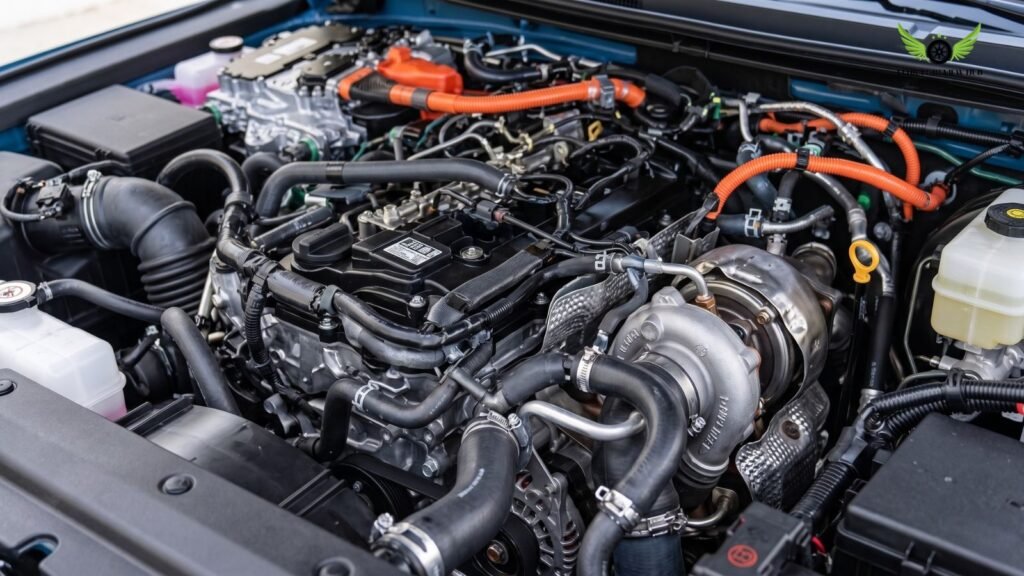
What matters most in Toyota Tacoma Performance is how the new engine setup delivers power in real conditions. Instead of focusing only on horsepower, the latest Tacoma improves torque and responsiveness, which you actually feel while driving.
Turbocharged Engine vs Previous V6 Performance
The older Tacoma used a 3.5L V6 engine producing about 278 hp and 265 lb-ft torque. The new model replaces it with a 2.4L turbocharged engine that delivers up to 278 hp and 317 lb-ft torque.
Engine | Horsepower | Torque |
Old 3.5L V6 | 278 hp | 265 lb-ft |
New 2.4L Turbo | 278 hp | 317 lb-ft |
The horsepower stays similar, but torque increases by over 50 lb-ft, which makes a real difference.
From my observation:
- Acceleration feels quicker from low speeds
- Less effort is needed when carrying load
- Power delivery is smoother in daily driving
Hybrid i-FORCE MAX Power Output Analysis
The hybrid system pushes Toyota Tacoma Performance further by combining the turbo engine with an electric motor.
- 326 hp
- 465 lb-ft torque
This is a major jump, especially in torque. Compared to the old V6, torque increases by nearly 200 lb-ft, which directly improves pulling power.
From a practical perspective:
- The truck feels stronger during acceleration
- Towing becomes more stable
- Power delivery is immediate, especially in city driving
Many US drivers prefer this setup because it provides instant low-end torque, which is more useful than high-end power.
Toyota Tacoma Acceleration and Real Driving Performance
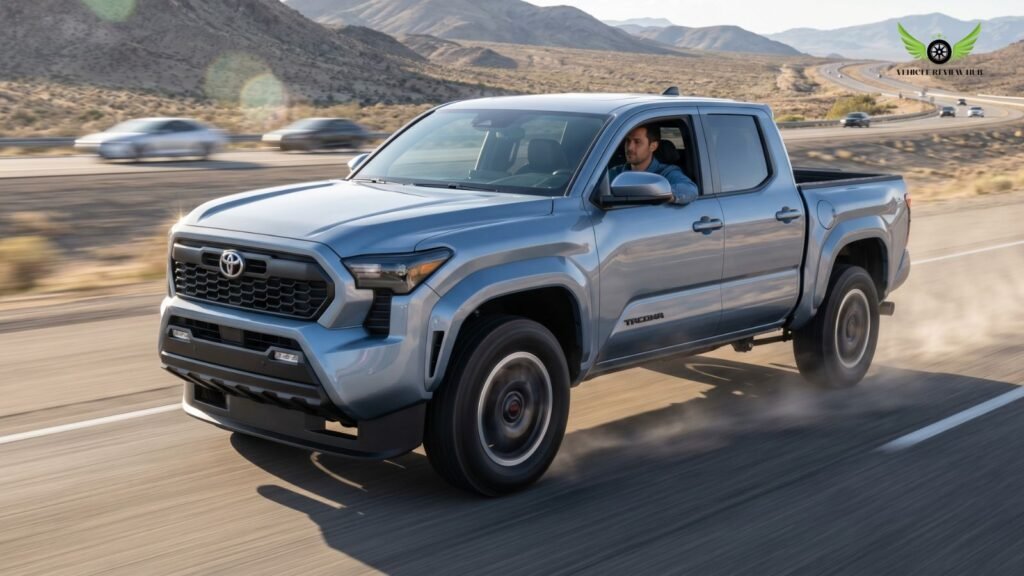
For most buyers, Toyota Tacoma Performance in acceleration is about usable power, not speed numbers. The latest model improves responsiveness, especially at low speeds, which makes daily driving easier.
0–60 mph Expectations and Real-World Data
Here’s a clear comparison based on real-world testing:
Model Type | 0–60 mph Time | Torque |
Turbo (Gas) | ~7.0–7.5 sec | 317 lb-ft |
Hybrid (i-FORCE MAX) | ~6.0–6.3 sec | 465 lb-ft |
From my observation:
- Hybrid feels quicker due to higher torque
- Turbo version is smooth and consistent
- Performance stays stable under load
Highway Power and Overtaking Performance
Highway driving is where Toyota Tacoma Performance feels balanced.
From real driving:
- Strong pull in 40–70 mph range
- Easy overtaking without delay
- Stable performance on inclines
The engine doesn’t feel aggressive, but it delivers power smoothly when needed. For most US drivers, this makes highway driving stress-free.
Toyota Tacoma Towing and Payload Capability Explained
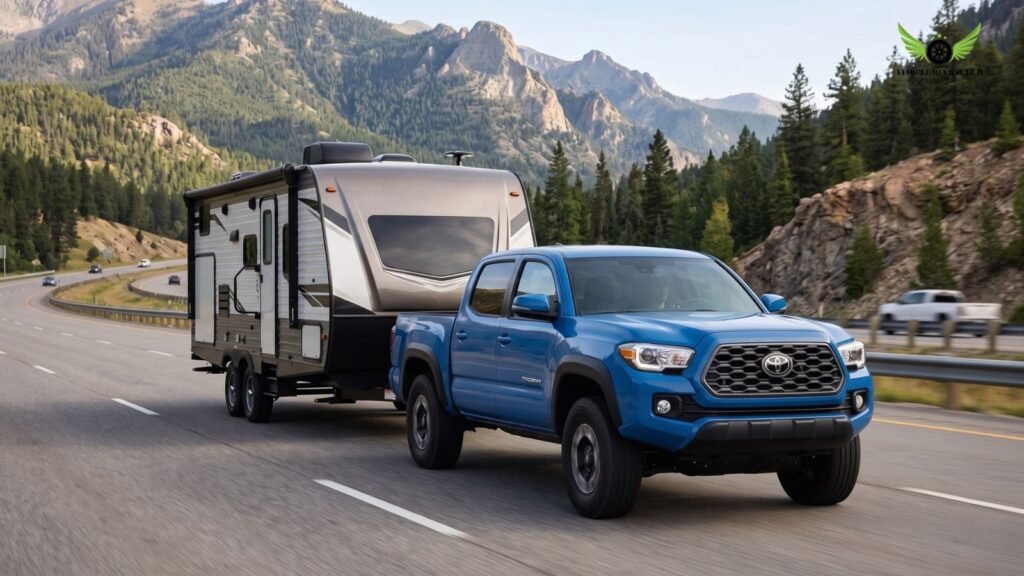
For most buyers, Toyota Tacoma Performance in towing is about control and consistency, not just the maximum number. The latest model improves torque delivery, which helps the truck handle real-world loads more confidently.
Maximum Towing Capacity by Trim
Towing capacity depends on engine type and configuration. Here’s a clear, real-world breakdown:
Setup | Max Towing Capacity |
Base SR (basic configuration) | ~3,500 lbs |
Standard 2.4L Turbo (most trims) | up to 6,500 lbs |
Hybrid i-FORCE MAX | around 6,000 lbs |
- The highest rating reaches 6,500 lbs when properly equipped
- Most common trims (SR5, TRD Off-Road) operate in the 6,000–6,400 lbs range
- Payload capacity stays around 1,500–1,700 lbs depending on setup
From my observation, these numbers are practical for everyday needs like trailers, boats, and light work equipment.
Real-World Towing Experience in the USA
Numbers alone don’t explain Toyota Tacoma Towing. Real driving experience shows how the truck behaves under load.
From actual usage:
- Strong low-end torque (317 lb-ft gas / 465 lb-ft hybrid) helps during initial pull
- The truck remains stable at highway speeds with moderate loads
- Power delivery stays smooth without sudden strain
In real conditions:
- Best comfort zone is around 5,000–6,000 lbs
- Closer to max capacity requires more careful throttle and braking control
At the end of the day, Toyota Tacoma Performance in towing and payload is built for practical use. It may not be a heavy-duty truck, but it delivers reliable capability for everyday hauling without making driving difficult.
Toyota Tacoma Off-Road Capability (Deep Dive)
What makes Toyota Tacoma Off-Road Capability stand out is how the truck maintains control on difficult terrain. It’s not just about power—it’s about traction systems, suspension tuning, and low-speed stability working together.
TRD Off-Road vs TRD Pro Performance Comparison
Here’s a clear comparison based on actual specs:
Feature | TRD Off-Road | TRD Pro |
Engine | 2.4L Turbo | Hybrid i-FORCE MAX |
Horsepower | up to 278 hp | up to 326 hp |
Torque | 317 lb-ft | 465 lb-ft |
Suspension | Bilstein shocks | FOX performance shocks |
Drivetrain | 4WD | 4WD |
Focus | Balanced capability | High-performance off-road |
From my observation:
- TRD Off-Road is more practical for mixed use
- TRD Pro offers stronger torque and better suspension for rough terrain
Crawl Control, Multi-Terrain Select & Suspension Setup
The real strength of Toyota Tacoma Off-Road Capability comes from its control systems.
- Crawl Control
Maintains a steady low speed by automatically managing throttle and braking - Multi-Terrain Select
Adjusts traction based on surface type like sand, mud, or rocks - Suspension Setup
- Bilstein shocks (TRD Off-Road) improve stability
- FOX shocks (TRD Pro) provide better travel and impact control
From a practical perspective:
- These systems reduce wheel spin
- Improve grip on uneven terrain
- Make off-road driving easier and more predictable
Real Trail and Desert Performance Experience
In real driving conditions, Tacoma performs best when control matters more than speed.
From actual usage:
- Maintains traction on rocky and loose surfaces
- Handles sand and desert terrain without losing stability
- Suspension absorbs bumps effectively
The Toyota Tacoma feels most comfortable at low speeds where precise control is needed.
From my experience, Tacoma is built for consistent off-road performance, not aggressive driving. It gives you confidence on trails without requiring advanced driving skills.
Toyota Tacoma On-Road Driving Dynamics
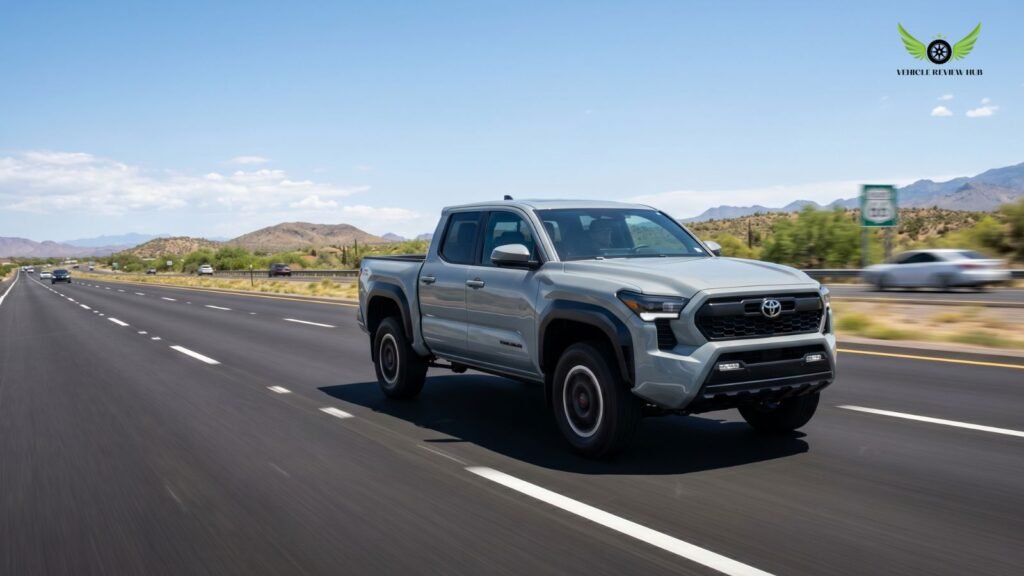
For daily use, the Toyota Tacoma Performance on paved roads is about stability and control rather than luxury-level softness. The latest model improves ride quality and handling, but it still feels like a true truck, which many buyers actually prefer.
Ride Comfort and Suspension Tuning
The new Tacoma uses an updated suspension setup that improves everyday comfort without losing durability.
- Rear suspension change: higher trims now use coil springs instead of traditional leaf springs, which helps reduce stiffness
- Frame update: improved chassis design increases overall ride stability
From real driving experience:
- Small bumps are absorbed better than older models
- The ride feels more controlled on uneven roads
- Off-road trims still feel slightly firm on city pavement
Steering Feel and Stability at Speed
Steering response plays a key role in Toyota Tacoma Performance, especially during highway driving.
From real-world behavior:
- Steering feels more precise compared to older Tacoma models
- The truck remains stable at highway speeds (60–75 mph range)
- Lane changes feel predictable, not loose or unstable
In practical terms:
- Easy to control in city traffic
- Confidence-inspiring on long highway drives
- Maintains balance even with light load
From my observation, Tacoma does not feel sporty, but it feels controlled. That’s more important for a truck designed for mixed use.
Is the Toyota Tacoma Powerful Enough?
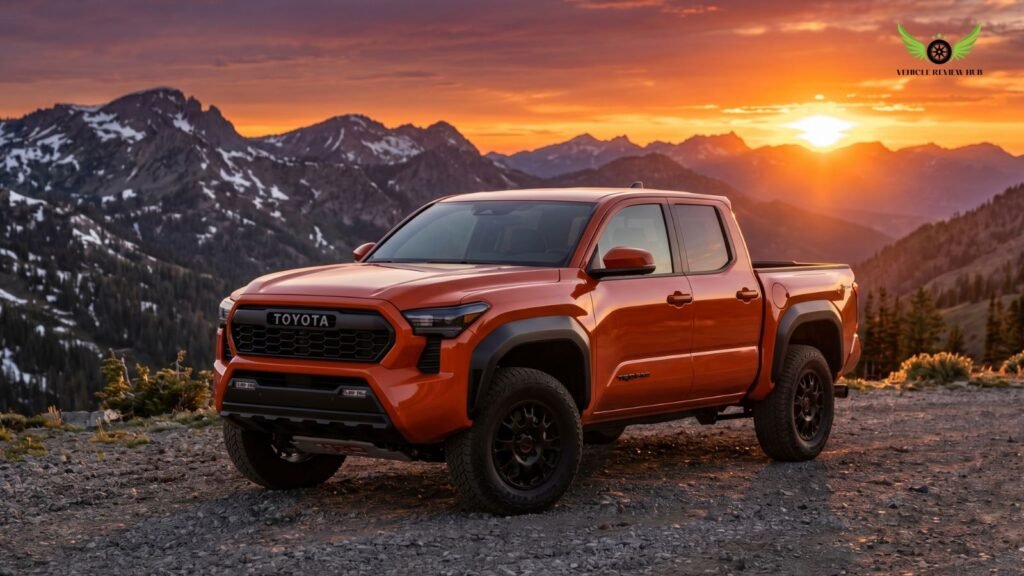
For most buyers, Toyota Tacoma Performance is not about having the highest numbers—it’s about how the truck performs in real situations. The latest Tacoma improves torque and responsiveness, which makes a noticeable difference in daily driving, towing, and off-road use.
Comparison with Ford Ranger, Chevy Colorado
Here’s a clear comparison based on current US specs:
Truck | Horsepower | Torque | Max Towing |
Toyota Tacoma | up to 326 hp (hybrid) | up to 465 lb-ft | up to 6,500 lbs |
Ford Ranger | up to 315 hp | up to 400 lb-ft | up to 7,500 lbs |
Chevy Colorado | 310 hp | 430 lb-ft | up to 7,700 lbs |
From a practical perspective:
- Tacoma delivers the highest torque (465 lb-ft) in hybrid form
- Ranger and Colorado offer higher towing capacity
- Tacoma focuses more on balanced performance than maximum output
From my observation, torque plays a bigger role in real driving than horsepower. That’s where Tacoma feels stronger, especially at low speeds.
Who Should Choose Tacoma for Performance
This is where Toyota Tacoma Performance makes sense for the right buyer.
Best suited for:
- Drivers who want strong low-end power for daily use
- Buyers focused on off-road capability and control
- Users who need moderate towing without pushing limits
Not ideal for:
- Maximum towing requirements
- Buyers looking for highest top-end power
If you ask me, Tacoma is built for consistent performance, not extreme performance. It feels more stable and predictable, which matters more for long-term use.
At the end of the day, Toyota Tacoma Performance is powerful enough for most real-world needs. It may not lead in every category, but it delivers where it matters—usable torque, control, and reliability.
Toyota Tacoma Performance FAQs (Quick Answers)
Most buyers have a few key questions before deciding. Here are direct, practical answers based on real data and usage experience.
Is Toyota Tacoma Performance good for daily driving?
Yes. It delivers smooth low-speed acceleration and stable handling, which makes it practical for everyday use.
How fast is the Toyota Tacoma (0–60 mph)?
Standard models take around 7.0–7.5 seconds, while hybrid versions can reach around 6.0–6.3 seconds.
What is the maximum Toyota Tacoma Towing capacity?
It can tow up to 6,500 lbs when properly equipped. Most trims operate around 6,000–6,400 lbs.
Is the hybrid Tacoma more powerful?
Yes. The hybrid version produces up to 326 hp and 465 lb-ft torque, which improves acceleration and towing stability.
Is Toyota Tacoma Off-Road Capability really strong?
Yes. Features like Crawl Control and Multi-Terrain Select help maintain traction on difficult surfaces like mud, sand, and rocks.
Is the Tacoma more powerful than Ford Ranger or Chevy Colorado?
Not in towing capacity, but it offers higher torque (465 lb-ft) in hybrid form, which feels stronger in real driving.
Is Tacoma good for highway driving?
Yes. It provides stable performance at highway speeds and maintains control during overtaking.
What engine does the Toyota Tacoma use?
It uses a 2.4L turbocharged engine, with an optional hybrid system producing up to 326 hp and 465 lb-ft torque.
Is Toyota Tacoma good for towing heavy loads?
Yes for mid-size needs. It can tow up to 6,500 lbs, but it’s not designed for heavy-duty towing like full-size trucks.
Does Tacoma feel powerful in real driving?
Yes. High torque delivery makes it feel strong at low speeds and during acceleration.
Which Tacoma trim is best for performance?
The TRD Pro (hybrid) is the most powerful, while TRD Off-Road is the best balance for most buyers.
Is Tacoma better for off-road or highway driving?
It performs well on both, but it’s more focused on off-road capability and control.
How does Tacoma perform compared to older models?
The new model is stronger and more responsive due to higher torque and improved transmission.