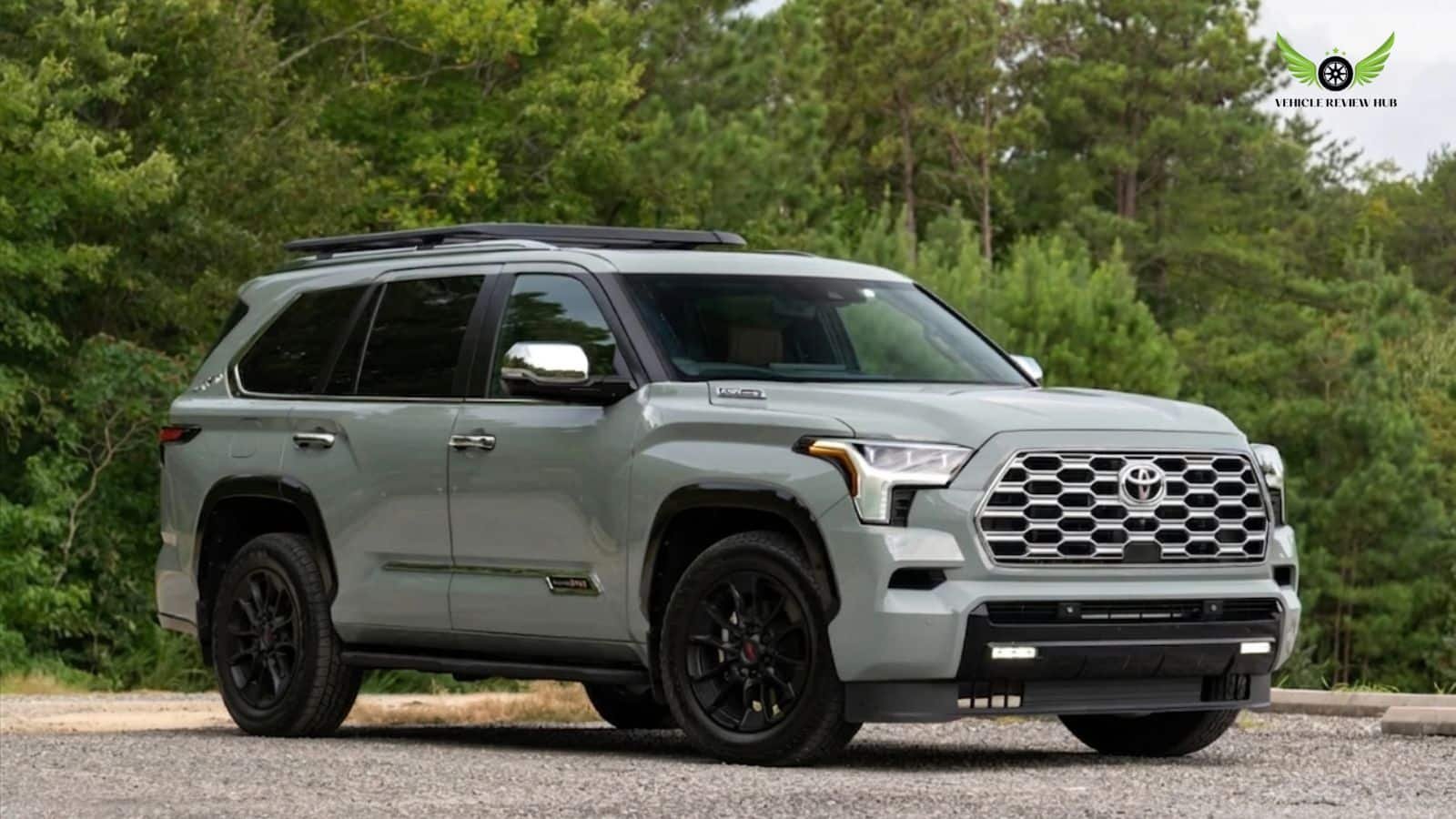
The Toyota Sequoia is a full-size, three-row SUV designed for buyers in the United States who need serious space, strong towing ability, and long-term reliability. It sits at the top of Toyota’s SUV lineup and is built on the same rugged platform as the Toyota Tundra, which means it’s engineered for both daily driving and heavy-duty use.
What makes the modern Sequoia stand out is its shift to a hybrid-only powertrain. Instead of the old V8, Toyota now uses a twin-turbo V6 hybrid system that delivers strong torque for towing and highway driving while improving fuel efficiency compared to traditional full-size SUVs. This change reflects what many US buyers want today—power without extreme fuel costs.
In real-world use, the Sequoia is commonly chosen by:
- Families who need a spacious and comfortable 3-row SUV
- Owners who regularly tow boats, trailers, or campers
- Drivers who want a balance between capability and everyday usability
Pricing places it in the premium full-size SUV category, and depending on the trim level, it can range from a mid-range family SUV to a near-luxury vehicle with high-end materials and advanced tech.
This guide is built to help you understand the Sequoia from a practical US buyer’s perspective—covering how it performs, what it costs to own, where it fits in the market, and whether it’s actually worth your money based on real usage needs, not just specs on paper.
What Is the Toyota Sequoia and Why It’s Popular in the USA
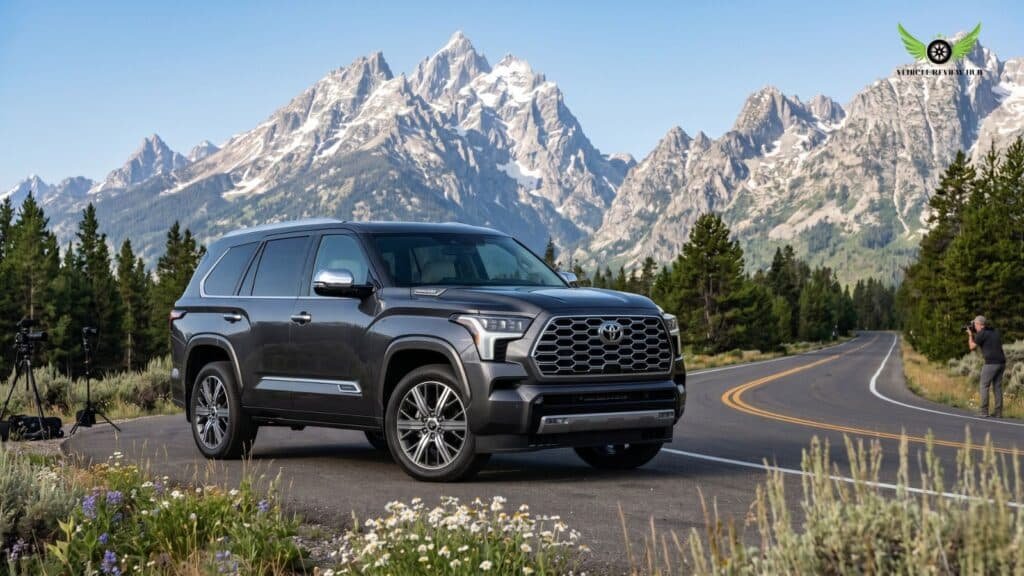
The Toyota Sequoia is a full-size SUV built on a body-on-frame chassis, the same construction used in pickup trucks like the Toyota Tundra. This design is used in the US market for vehicles that need to handle high towing loads, long-distance travel, and heavy usage without structural stress.
The current generation Sequoia uses a 3.4L twin-turbo V6 hybrid system (i-FORCE MAX) with 437 horsepower and 583 lb-ft of torque. This replaces the previous V8 engine and is engineered to deliver higher torque at lower RPM, which directly improves towing performance and load handling.
Key capability data (US specification):
- Maximum towing capacity: up to ~9,500 lbs (depending on trim and setup)
- Fuel economy: ~19 MPG city / 22 MPG highway
- Seating: 7 or 8 passengers (three rows)
- Drivetrain: RWD standard, 4WD available
The Sequoia is popular in the USA because it directly matches real usage patterns. It is commonly used for towing boats, RVs, and trailers, while also serving as a family vehicle with full three-row seating.
The hybrid system is a major reason for its demand. Compared to traditional V8 full-size SUVs, it delivers similar or higher torque while reducing fuel consumption. This lowers long-term fuel cost, especially for highway driving and towing.
Toyota Sequoia Overview in the Full-Size SUV Segment
The Toyota Sequoia operates in the full-size SUV segment, where vehicles are built for maximum capacity, towing strength, and durability. In the US, this segment includes models like the Ford Expedition and Chevrolet Tahoe.
All vehicles in this category use truck-based construction, but the Sequoia differentiates itself with a standard hybrid system and higher torque output.
Performance positioning in this segment:
- Torque: 583 lb-ft (higher than most V8 competitors)
- Towing: up to ~9,500 lbs
- Fuel economy: ~20 MPG combined, which is above average for this class
The main trade-off is cargo space behind the third row, which is slightly reduced due to battery placement. However, for buyers focused on towing and performance, this does not impact primary use cases.
Hybrid-Only Powertrain Concept Explained
The Sequoia uses a hybrid-only configuration, meaning every model includes both a gasoline engine and an electric motor.
System components:
- 3.4L twin-turbo V6 engine
- Electric motor integrated into the transmission
- 10-speed automatic gearbox
Combined output:
- 437 hp
- 583 lb-ft torque
Operational behavior:
- The electric motor provides instant torque at low speeds, improving acceleration and towing response
- The gasoline engine maintains power at higher speeds
- The system operates automatically; no external charging is required
Efficiency outcome:
- Combined fuel economy: ~20–22 MPG
This setup allows the Sequoia to deliver high towing capability with lower fuel consumption compared to V8 engines, which is the main technical advantage of this system.
Who Should Buy the Toyota Sequoia
The Toyota Sequoia is designed for specific usage scenarios where capability is required.
Buyer Type | Reason |
Large families | Needs 3-row seating (7–8 passengers) |
Towing users | Requires up to ~9,500 lbs towing capacity |
Long-distance drivers | Benefits from stable highway performance and ~20 MPG efficiency |
Outdoor/travel users | Needs 4WD and off-road capability (TRD Pro available) |
Long-term owners | Values durability and consistent performance over time |
It is not optimized for:
- Urban driving with tight parking conditions
- Buyers needing maximum cargo space behind the third row
The Sequoia is popular in the USA because it provides high torque, strong towing capacity, and improved fuel efficiency in a single vehicle built for long-term use.
Toyota Sequoia Price in the USA
The Toyota Sequoia is positioned in the upper tier of the full-size SUV market, with real-world pricing that reflects its hybrid powertrain, towing capability, and truck-based construction. For the current generation, base models start in the low $60,000 range, while well-equipped trims move into the mid–high $80,000 range depending on features and drivetrain options.
In actual US buying scenarios, the final deal price often depends on inventory levels and region. High-demand trims like TRD Pro and Capstone typically sell close to MSRP, while mid-level trims may see moderate dealer discounts.
New Toyota Sequoia MSRP and Trim Levels
The Sequoia lineup is structured to cover entry-level family use, premium comfort, off-road performance, and near-luxury positioning. All trims share the same hybrid engine, so pricing differences come from features, materials, and intended use.
Trim Level | Starting Price (USD) |
SR5 | ~$62,000+ |
Limited | ~$68,000+ |
Platinum | ~$79,000+ |
TRD Pro | ~$80,000+ |
Capstone | ~$83,000+ |
- SR5 focuses on core functionality and value
- Limited adds key upgrades most buyers actually use (comfort + tech)
- Platinum targets buyers who want premium features without going full luxury
- TRD Pro is built for off-road use with standard 4WD and upgraded suspension
- Capstone sits at the top with luxury-grade interior materials and finishes
SR5, Limited, Platinum, TRD Pro & Capstone Price Comparison
The Toyota Sequoia trim lineup is structured around use-case and feature level, not engine differences. Every trim uses the same hybrid system, so the price difference comes from interior quality, technology, drivetrain setup, and intended purpose.
Trim | Price Range (USD) | What You’re Paying For |
SR5 | ~$62K–$64K | Basic configuration, essential features, lowest entry price |
Limited | ~$68K–$70K | Added comfort, larger infotainment, upgraded materials |
Platinum | ~$79K–$81K | Premium interior, advanced features, higher comfort level |
TRD Pro | ~$80K–$82K | Off-road suspension, 4WD standard, rugged setup |
Capstone | ~$83K–$86K | Luxury interior, high-end materials, flagship trim |
From a real buyer standpoint, the differences are practical:
- SR5 is chosen when budget matters but full capability is still required
- Limited is the most balanced option, offering noticeable upgrades without a major price jump
- Platinum is focused on comfort—better seats, more tech, and a quieter cabin
- TRD Pro is built specifically for off-road use, not daily luxury
- Capstone is designed for buyers who want a near-luxury SUV experience without switching brands
The key point is that performance remains identical across all trims, so buyers are not paying for more power—they are paying for features, comfort, or specialization.
In real US market behavior, most buyers choose Limited or Platinum, because they offer the best balance between cost and everyday usability.
Used Toyota Sequoia Price Range
The Sequoia holds its value strongly in the US market, which keeps used prices relatively high compared to many competitors.
Model Year Range | Typical Market Price |
2015–2019 | $25,000 – $40,000 |
2020–2022 | $40,000 – $60,000 |
2023–Present (Hybrid) | $60,000 – $80,000+ |
Older models remain in demand due to durability, while newer hybrid models maintain high resale value because of strong demand and limited supply.
Taxes, Dealer Fees and On-Road Costs
The actual amount buyers pay goes beyond the listed price. In the US, total ownership cost at purchase includes taxes and mandatory fees that vary by state.
Cost Component | Typical Range |
Sales Tax | 5% – 10% |
Dealer Fees | $500 – $1,500 |
Registration & Title | $200 – $500 |
A realistic purchase example:
- Vehicle price: ~$65,000
- Additional costs: ~$4,000 – $7,000
- Final on-road price: ~$69,000 – $72,000
In higher-tax states, the final number can go beyond this range.
Overall, the Toyota Sequoia is priced as a premium full-size SUV, but buyers are paying for a combination of hybrid performance, towing strength, and long-term value retention, which directly impacts total cost of ownership over time.
Toyota Sequoia Engine and Core Specifications
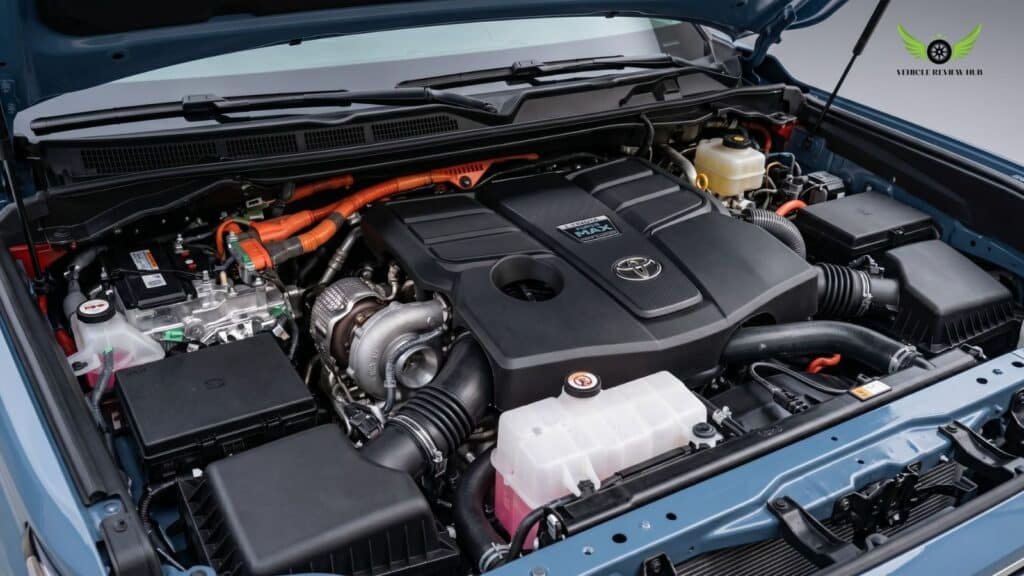
The Toyota Sequoia is engineered around a single goal: deliver high torque, stable towing, and consistent performance under load. Instead of offering multiple engine options, Toyota uses one optimized setup across all trims to ensure predictable performance in real-world US driving conditions.
i-FORCE MAX Twin-Turbo V6 Hybrid Overview
The Sequoia uses a 3.4-liter twin-turbo V6 hybrid system (i-FORCE MAX) that combines a gasoline engine with an electric motor integrated into the transmission. This is not a typical fuel-saving hybrid—it is tuned for torque delivery and load handling.
In real driving, the electric motor supports the engine at low speeds, which is where a large SUV needs the most force. This results in quicker response when accelerating with passengers or pulling weight, while the twin-turbo engine maintains power at highway speeds. The system operates automatically, without any need for charging or driver input.
Horsepower, Torque and Transmission
The Sequoia produces 437 horsepower and 583 lb-ft of torque, with torque being the key factor for how this SUV performs in daily use.
Specification | Value |
Engine | 3.4L Twin-Turbo V6 Hybrid |
Horsepower | 437 hp |
Torque | 583 lb-ft |
Transmission | 10-speed automatic |
This level of torque is delivered early, which improves acceleration under load, highway merging, and towing response. The 10-speed automatic transmission helps keep the engine in its optimal range, reducing strain during long drives and maintaining smooth power delivery across different speeds.
Towing Capacity and Drivetrain Options
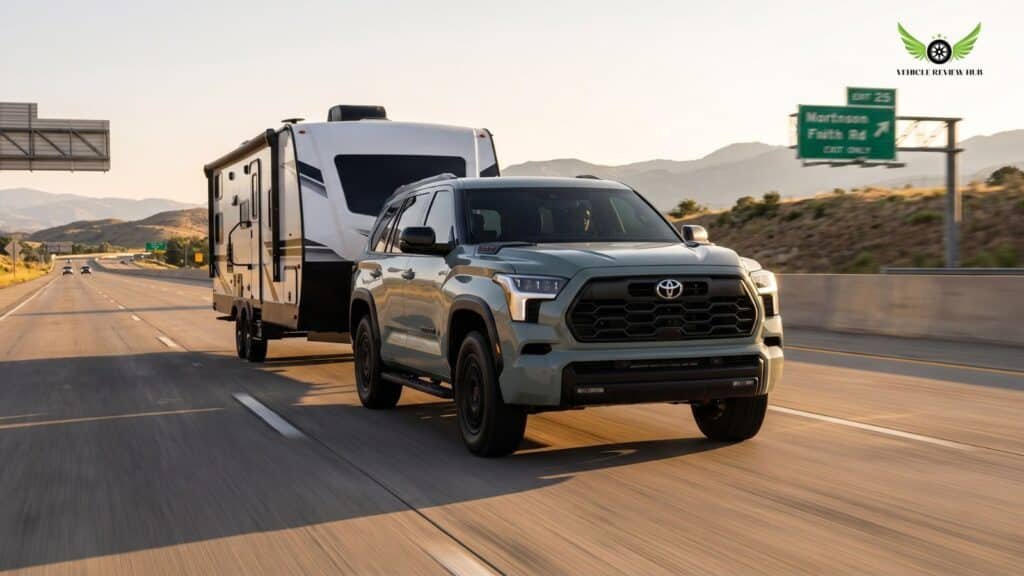
The Sequoia is built for real towing use, with a maximum capacity of around 9,500 lbs when properly equipped. This is enough for common US use cases such as towing boats, travel trailers, or campers.
Configuration | Max Towing Capacity |
SR5 (RWD) | ~9,500 lbs |
Limited / Platinum | ~9,200–9,300 lbs |
TRD Pro (4WD) | ~9,000 lbs |
Capstone | ~9,000 lbs (approx.) |
Rear-wheel drive is standard and delivers the highest towing efficiency, while optional 4WD improves traction in off-road or low-grip conditions. TRD Pro includes 4WD as standard, tuned for rough terrain rather than maximum towing numbers.
In practical terms, this setup allows the Sequoia to handle heavy loads without sacrificing drivability. The combination of high torque, hybrid assistance, and a multi-gear transmission ensures that power is available when needed, whether on highways, inclines, or while towing.
Toyota Sequoia Pros and Cons
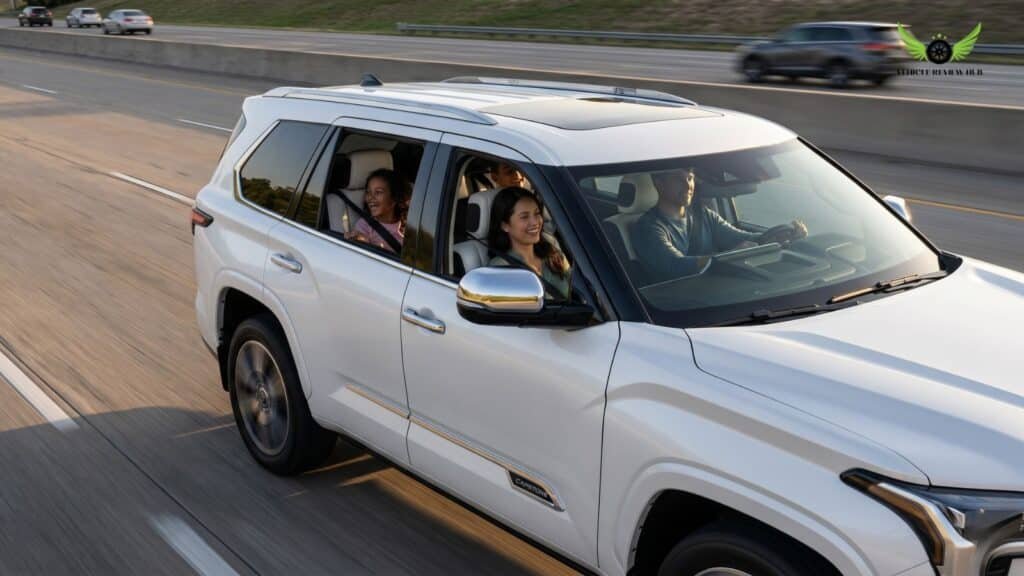
The Toyota Sequoia is built around high torque output, towing strength, and long-term durability, which are the main priorities for full-size SUV buyers in the US. Its strengths are clear in real usage, but there are also practical limitations that affect everyday usability.
Key Advantages for US Buyers
High torque for real towing performance
The Sequoia produces 583 lb-ft torque, which directly improves towing response and acceleration under load. This is critical when pulling trailers or driving on highways with passengers and cargo.
Up to ~9,500 lbs towing capacity
This level of towing covers common US use cases such as boats, campers, and utility trailers without needing a pickup truck.
Hybrid system improves efficiency vs V8 SUVs
Real-world fuel economy is around 19 MPG city / 22 MPG highway, which is higher than most traditional V8 full-size SUVs while maintaining similar capability.
Body-on-frame construction for durability
Built on a truck platform, the Sequoia is designed for heavy-duty use and long service life, especially under repeated towing or load conditions.
Stable highway performance
The long wheelbase and suspension setup provide better stability during long-distance driving, especially when towing.
Drawbacks and Limitations
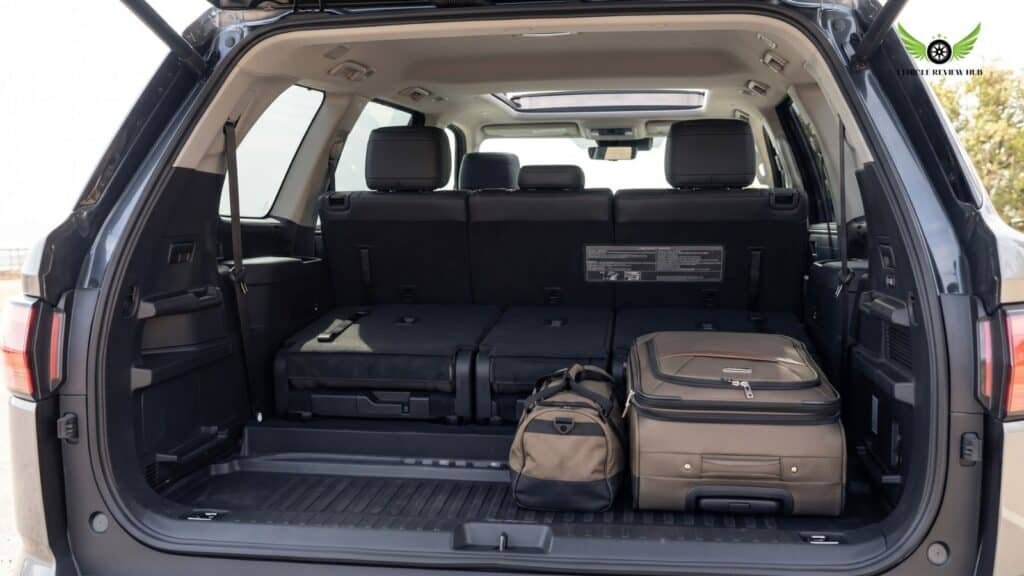
Limited cargo space behind the third row
Due to hybrid battery placement, cargo capacity is reduced when all seats are in use, which can affect family travel with luggage.
Large size reduces urban usability
Its full-size dimensions make parking and maneuvering more difficult in cities and tight spaces.
High purchase cost
Starting around $62K+ and exceeding $80K+, it is positioned in the premium range of the segment.
Fuel economy is still moderate in absolute terms
Although improved, ~20 MPG combined is still high fuel consumption compared to smaller SUVs.
Less flexible interior packaging
The rear layout is not as adaptable as some competitors, especially when balancing passengers and cargo.
Ideal Buyer Profile
Buyer Type | Why It Fits |
Large families | Needs 3-row seating (7–8 passengers) |
Towing users | Requires up to ~9,500 lbs towing capacity |
Highway drivers | Benefits from stable ride and consistent performance |
Outdoor/travel users | Needs durability and available 4WD |
Long-term owners | Values reliability and high mileage lifespan |
The Toyota Sequoia is best suited for buyers who need high torque, strong towing capability, and long-term durability in one vehicle, and are willing to accept trade-offs in size and cargo space for that capability.
Toyota Sequoia Final Buying Verdict
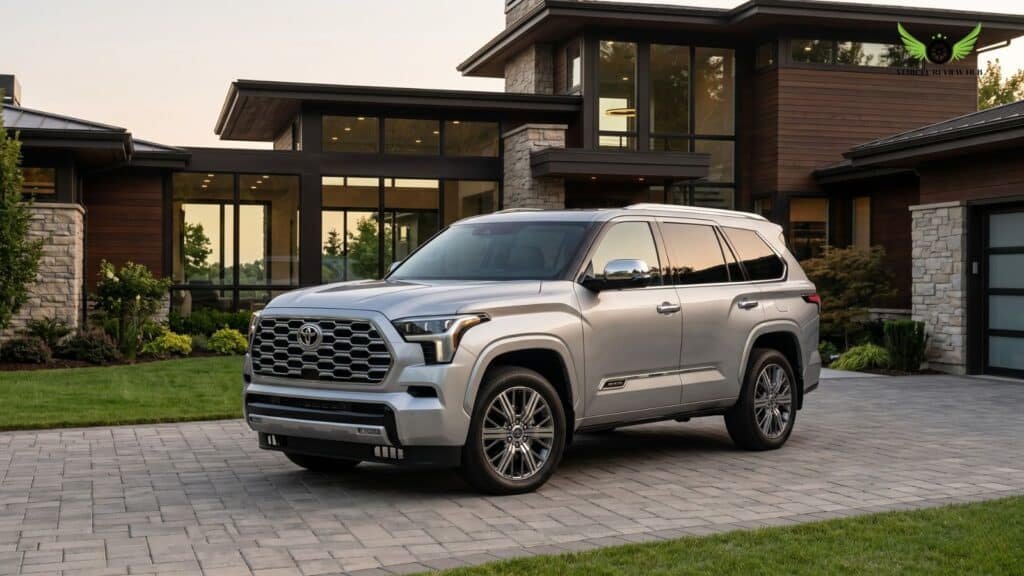
The Toyota Sequoia is a purpose-built SUV. It is not designed to be the most comfortable, the most fuel-efficient, or the most spacious in every situation. Instead, it is engineered to deliver reliable power, high towing capacity, and consistent performance under load—the three things that matter most to a specific group of US buyers.
Is the Toyota Sequoia Worth Buying?
The Sequoia is worth buying when its capabilities are actually used.
With 583 lb-ft of torque and up to ~9,500 lbs towing capacity, it performs where many SUVs start to struggle—pulling weight, maintaining speed on highways, and handling long-distance driving with a full load. The hybrid system adds another layer of practicality by improving efficiency without reducing performance, keeping real-world fuel economy around 20–22 MPG, which is competitive for this size.
From an ownership standpoint, the value is not just in performance but in consistency over time. The truck-based structure is designed for repeated stress—towing, long trips, and heavy use—without rapid wear. This is why many buyers in the US keep this vehicle for years instead of replacing it frequently.
However, the value becomes less clear if those capabilities are not needed. In city-focused use, its size, fuel consumption, and interior packaging limitations become more noticeable than its strengths.
The decision is practical, not emotional:
- If you need torque, towing, and durability → it delivers
- If you prioritize comfort, compact size, or maximum cargo space → better alternatives exist
Best Use Cases in the USA
Use Case | Practical Benefit |
Towing boats, campers, trailers | High torque ensures stable pulling without strain |
Long highway travel | Stable ride and consistent power over long distances |
Large family transport | 3-row seating with usable passenger space |
Outdoor and travel use | 4WD availability supports rough terrain and remote travel |
Single all-purpose vehicle | Combines family SUV and utility capability |
In real usage, the Sequoia works best for buyers who expect their vehicle to handle multiple roles without compromise—family transport during the week and towing or travel on weekends.
It is not optimized for urban convenience or maximum interior flexibility. Instead, it is built for workload consistency, not lifestyle flexibility.
The final verdict is simple:
The Toyota Sequoia is a strong choice when you need real capability and long-term dependability, but it only delivers full value when those capabilities are actually used.
Toyota Sequoia FAQs – Practical Answers for US Buyers
Before buying a full-size SUV like the Sequoia, most buyers have specific, practical questions related to ownership, cost, and real-world usability. The answers below are focused on real US usage scenarios—no theory, only what actually matters.
Is the Toyota Sequoia reliable for long-term use?
Yes. It is built on a truck-based platform and commonly runs beyond 200,000 miles with proper maintenance.
What is the real fuel economy of the Sequoia?
Around 20 MPG combined in real driving (19 city / 22 highway depending on conditions).
How much can the Sequoia tow?
Up to about 9,500 lbs when properly equipped.
Does the Sequoia still use a V8 engine?
No. It uses a 3.4L twin-turbo V6 hybrid producing 437 hp and 583 lb-ft torque.
Which trim is best for most buyers?
Limited trim offers the best balance between price and features for daily use.
Is the Sequoia good for family use?
Yes. It has 3-row seating for 7–8 passengers, but cargo space is limited when all seats are used.
Is it suitable for city driving?
Not ideal. Its large size makes parking and maneuvering difficult in tight urban areas.
Does it need external charging?
No. It is a self-charging hybrid; no plug-in required.
What is the average maintenance cost in the US?
Typically around $600–$900 per year depending on usage and mileage.
Is the Toyota Sequoia worth buying?
Yes, if you need towing, durability, and highway performance. Not ideal for city-focused use.