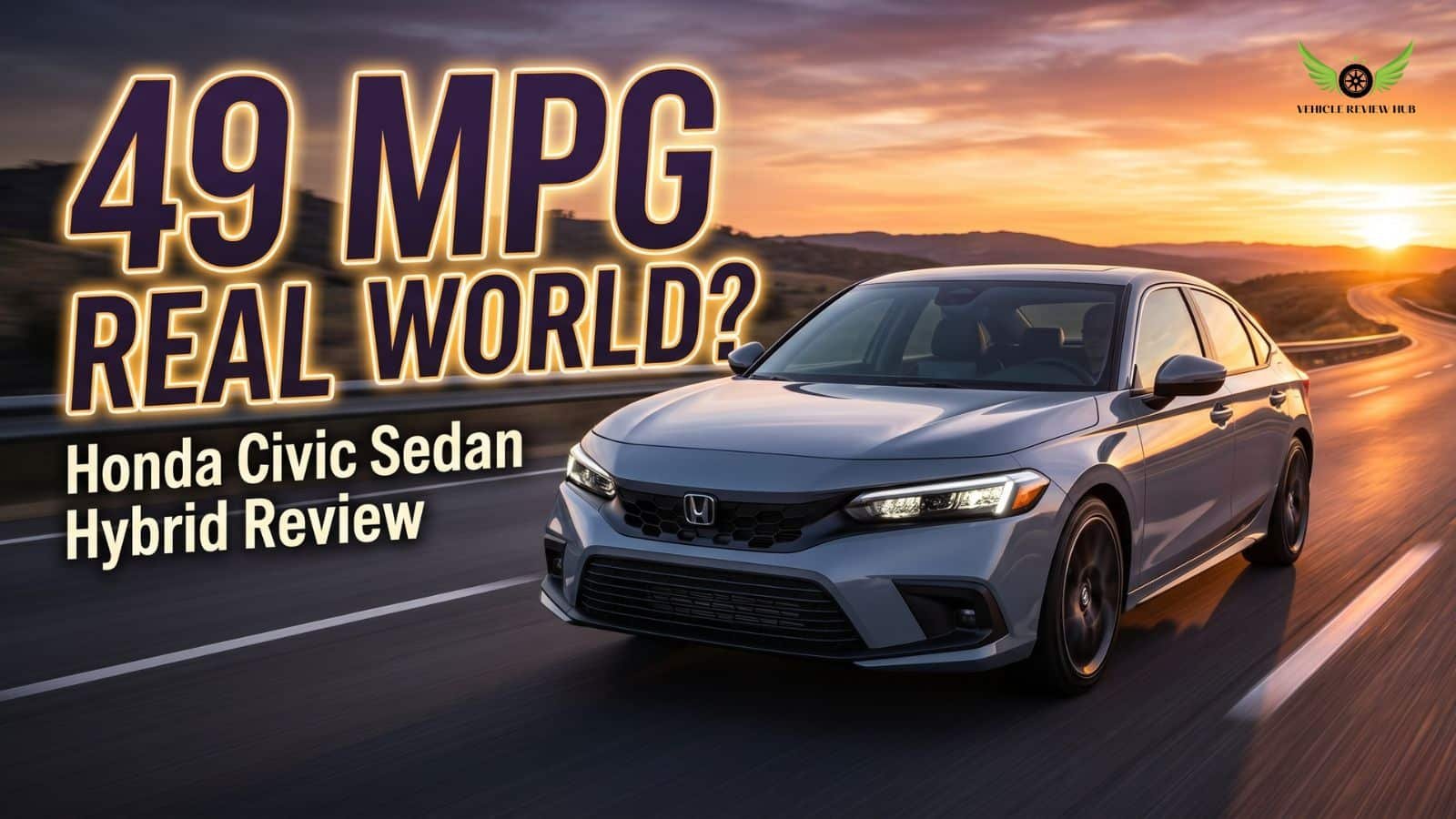
If you want a compact sedan that can reduce fuel costs without sacrificing comfort or daily usability, the Honda Civic Sedan remains one of the strongest choices in the USA. The latest models combine efficient engines, refined road manners, and practical everyday driving, making the Civic a popular option for commuters, students, and long-distance drivers.
For 2025–2026, the hybrid trims became the biggest highlight of the lineup. The latest hybrid system can deliver around 49–50 MPG combined while still providing smooth acceleration and responsive low-speed driving. In heavy city traffic, the hybrid setup feels quieter and more efficient than many traditional gasoline compact sedans.
The standard gasoline models also continue to deliver strong Honda Civic Sedan Fuel Economy numbers. The LX trim is EPA-rated at 32 MPG city and 41 MPG highway, which remains competitive for a non-hybrid compact sedan.
One reason the Honda Civic Sedan Real-World Experience continues to stand out is overall balance. The Civic does not only focus on MPG figures. It also provides comfortable seating, stable highway driving, practical cabin space, and manageable long-term ownership costs.
From a real ownership perspective, many US drivers choose the Honda Civic Sedan because it feels refined during daily commuting while still maintaining excellent mileage and dependable long-term efficiency.
Honda Civic Sedan Fuel Economy Overview
The Honda Civic Sedan continues to be one of the most fuel-efficient compact sedans in the USA. Honda designed the latest lineup to balance strong MPG, smooth daily driving, and lower long-term fuel costs without making the car feel underpowered during normal driving.
For 2025–2026, buyers can choose between efficient gasoline trims and a much more fuel-efficient hybrid system. The hybrid models especially stand out because they combine nearly 50 MPG with noticeably stronger acceleration than the standard gasoline versions.
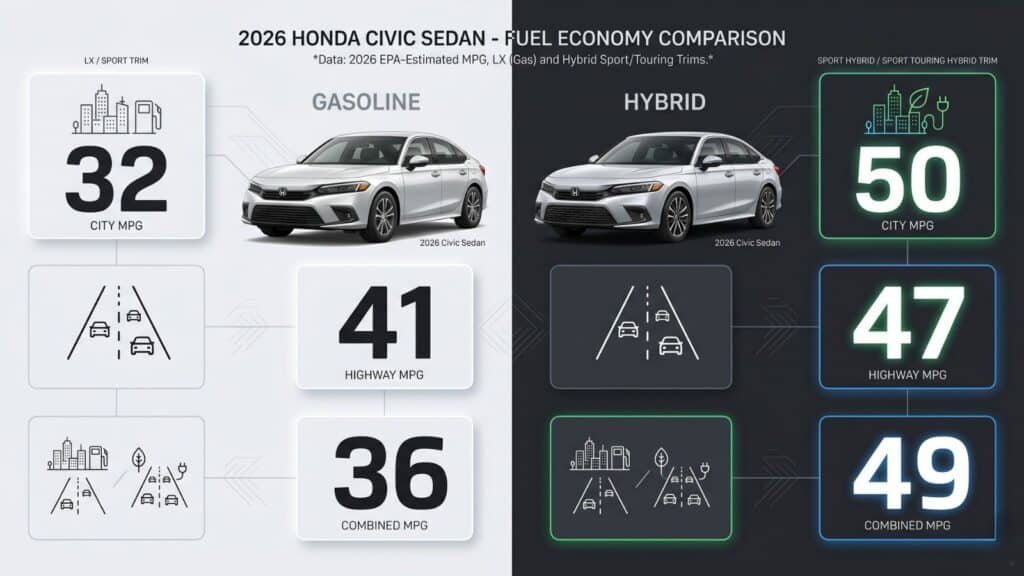
Gas Model MPG (32 City / 41 Highway / 36 Combined)
The standard LX trim uses a 2.0L naturally aspirated engine paired with a CVT transmission. EPA estimates rate the LX at 32 MPG city, 41 MPG highway, and 36 MPG combined.
The Sport trim delivers slightly lower mileage because of its larger wheels and different tire setup. EPA ratings are around 31 MPG city, 39 MPG highway, and 34 MPG combined.
Gasoline Trim | City MPG | Highway MPG | Combined MPG |
LX | 32 MPG | 41 MPG | 36 MPG |
Sport | 31 MPG | 39 MPG | 34 MPG |
In real driving conditions, the gasoline Honda Civic Sedan performs especially well during highway commuting. The CVT transmission helps keep engine RPM low at cruising speeds, which improves long-distance fuel efficiency.
Many commuters still prefer the gasoline trims because they provide strong Honda Civic Sedan Mileage numbers while keeping the purchase price lower than hybrid models.
Hybrid MPG (Up to ~49–50 MPG Combined)
The Sport Hybrid and Sport Touring Hybrid trims use Honda’s two-motor hybrid system producing 200 horsepower and 232 lb-ft of torque.
EPA estimates rate the hybrid trims at around 50 MPG city, 47 MPG highway, and 49 MPG combined.
Hybrid Trim | City MPG | Highway MPG | Combined MPG |
Sport Hybrid | 50 MPG | 47 MPG | 49 MPG |
Sport Touring Hybrid | 50 MPG | 47 MPG | 49 MPG |
The hybrid system performs especially well in stop-and-go traffic because the electric motor handles low-speed driving more efficiently than a traditional gasoline engine.
From a real-world ownership perspective, many drivers report that the hybrid models can achieve MPG numbers close to EPA estimates during mixed commuting conditions. This makes the Honda Civic Sedan Fuel Economy one of the strongest selling points for buyers who drive frequently in urban traffic.
Another advantage is refinement. The hybrid system feels smooth during acceleration and quieter during daily driving, helping the overall Honda Civic Sedan Real-World Experience feel more comfortable for commuting and long-distance travel.
Honda Civic Sedan Real-World Fuel Economy from USA Owners
The Honda Civic Sedan performs strongly in real-world fuel economy because its MPG numbers remain relatively consistent during everyday driving. Many US owners report that the Civic can achieve results close to official EPA ratings when driven normally, especially during highway commuting and mixed daily use.
For 2025–2026, the hybrid trims deliver the best overall Honda Civic Sedan Mileage in real commuting conditions, while the gasoline models remain efficient for buyers who mostly drive on highways.
City Driving MPG Results
In city traffic, the hybrid Honda Civic Sedan performs noticeably better than the standard gasoline models because the electric motor handles low-speed driving more efficiently.
EPA estimates rate the hybrid trims at around 50 MPG city, and many drivers report real-world city mileage between 45–50 MPG depending on traffic conditions, temperature, and driving habits.
The gasoline LX trim is EPA-rated at 32 MPG city, while the Sport trim is rated around 31 MPG city. In real urban driving, many owners usually report mileage in the high-20s to low-30s during heavier traffic conditions.
Honda Civic Sedan Trim | Real-World City MPG |
LX Gas Model | Around 28–32 MPG |
Sport Gas Model | Around 27–31 MPG |
Hybrid Models | Around 45–50 MPG |
From a daily commuting perspective, the hybrid system feels especially efficient in stop-and-go traffic because the gasoline engine shuts off frequently at lower speeds, helping reduce fuel usage during urban driving.
Another advantage is smoothness. The hybrid setup feels quieter in traffic and more relaxed during short-distance commuting, which improves the overall Honda Civic Sedan Real-World Experience.
Highway MPG and Long Trip Efficiency
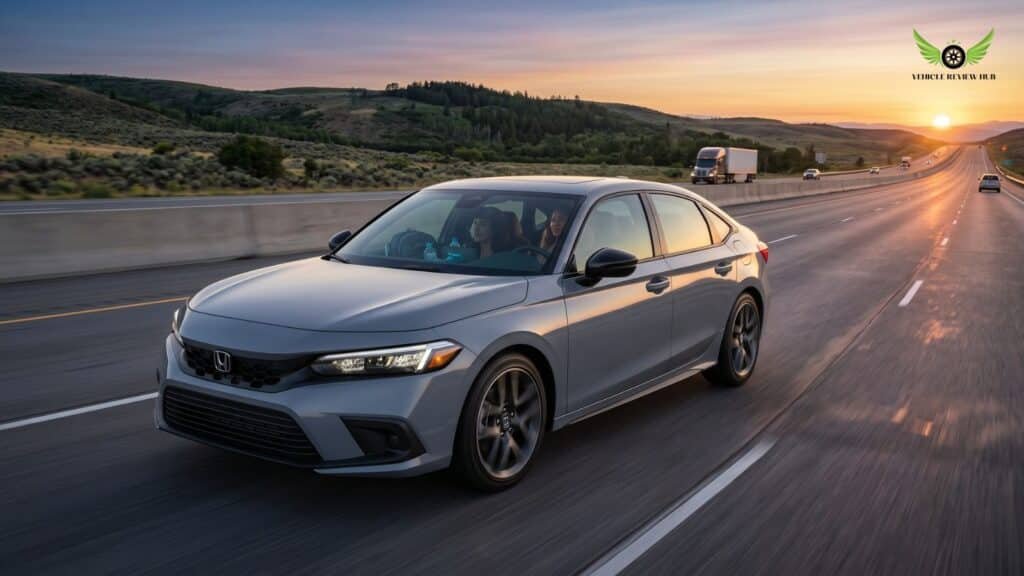
Highway fuel economy remains one of the strongest parts of the Honda Civic Sedan Fuel Economy experience.
The standard LX trim is EPA-rated at 41 MPG highway, while the hybrid trims are rated around 47 MPG highway. In real highway driving, many owners report mileage close to those estimates during longer trips and steady cruising speeds.
Honda Civic Sedan Trim | Real Highway MPG |
LX Gas Model | Around 38–41 MPG |
Sport Gas Model | Around 36–39 MPG |
Hybrid Models | Around 45–47 MPG |
One reason the Honda Civic Sedan performs well on highways is efficient power delivery at cruising speeds. The CVT and e-CVT transmissions help keep engine RPM lower during steady driving, which improves long-distance efficiency.
From a real ownership perspective, many drivers also mention that the Civic remains comfortable during longer road trips because of stable highway handling, supportive seating, and predictable fuel consumption.
For buyers focused on lower fuel costs and dependable long-distance efficiency, the Honda Civic Sedan continues to deliver one of the strongest real-world MPG experiences in the compact sedan segment.
Honda Civic Sedan Driving Range and Daily Usability
The Honda Civic Sedan combines strong fuel economy with practical everyday usability, which is one reason it remains popular among commuters and long-distance drivers in the USA. Along with efficient MPG numbers, the Civic also offers a long driving range, comfortable road manners, and easy daily drivability.
For many drivers, one of the biggest advantages of the Honda Civic Sedan Fuel Economy is fewer fuel stops during the week while still maintaining smooth performance for both city and highway driving.
Fuel Tank Range (~400–500 Miles)
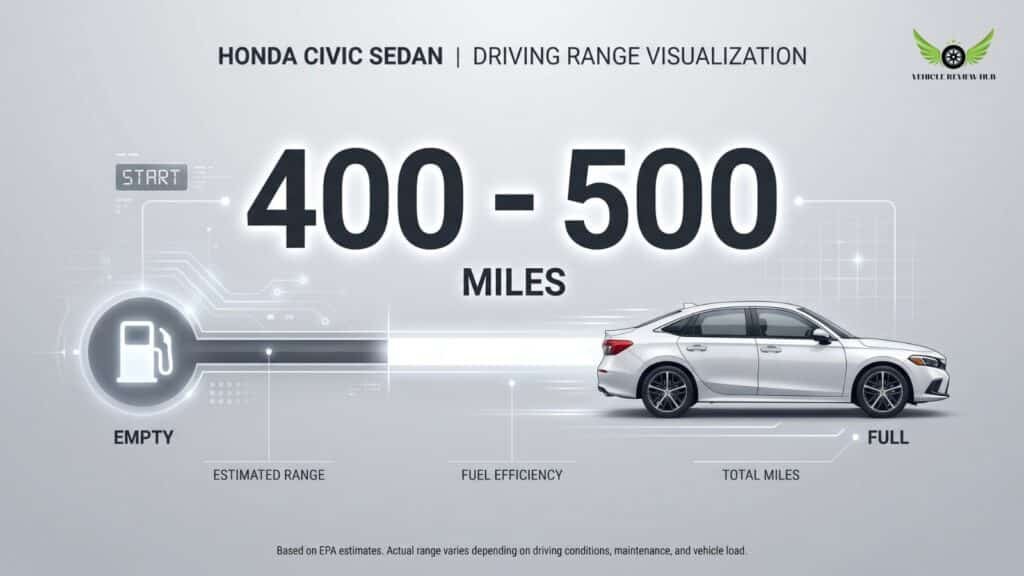
The standard gasoline Honda Civic Sedan models use a 12.4-gallon fuel tank, while the hybrid trims use a slightly smaller 10.6-gallon tank.
Because of strong highway efficiency, the LX gasoline trim can realistically achieve around 440–500 miles of driving range depending on driving style and traffic conditions.
The hybrid models also perform very well in real-world range because of their higher MPG figures. Many drivers report driving around 500 miles or more on a full tank during mixed commuting conditions.
Honda Civic Sedan Trim | Estimated Driving Range |
LX Gas Model | Around 440–500 miles |
Sport Gas Model | Around 400–470 miles |
Hybrid Models | Around 500+ miles |
From a daily ownership perspective, many commuters mention that the hybrid Civic can comfortably handle several days of city driving and highway commuting before needing refueling.
Another advantage is efficiency consistency. The Honda Civic Sedan Mileage remains relatively stable during highway cruising because the CVT and e-CVT systems help maintain lower engine RPM at steady speeds.
Hybrid Efficiency in Daily Commute
The hybrid trims provide the strongest overall Honda Civic Sedan Fuel Economy for drivers who spend a lot of time in urban traffic.
The electric motor handles much of the low-speed workload, which helps reduce fuel usage during stop-and-go commuting. In traffic-heavy driving, the gasoline engine frequently shuts off during lighter acceleration and slower speeds, improving efficiency significantly compared to traditional gasoline sedans.
EPA estimates rate the hybrid Civic at around 50 MPG city and 49 MPG combined, and many owners report real-world mileage close to those numbers during normal commuting conditions.
Another reason the Honda Civic Sedan Real-World Experience works well for commuters is refinement. The hybrid system feels smoother during low-speed acceleration, cabin noise stays controlled in traffic, and the transition between electric and gasoline power feels natural during daily driving.
The Civic also remains practical for everyday use because visibility is good, parking is easy in urban areas, and the suspension absorbs most rough pavement comfortably during commuting.
For buyers looking for a compact sedan with long driving range, strong fuel savings, and comfortable daily usability, the Honda Civic Sedan continues to deliver one of the most practical ownership experiences in its segment.
Honda Civic Sedan Real-World Driving Experience
The Honda Civic Sedan continues to deliver one of the most balanced daily driving experiences in the compact sedan segment. Along with strong fuel economy, the Civic also provides comfortable commuting, stable highway manners, practical interior space, and smooth everyday usability.
For 2025–2026, the hybrid trims improved overall refinement even more by making low-speed driving quieter and smoother during traffic-heavy commuting.
Daily Commuting Comfort
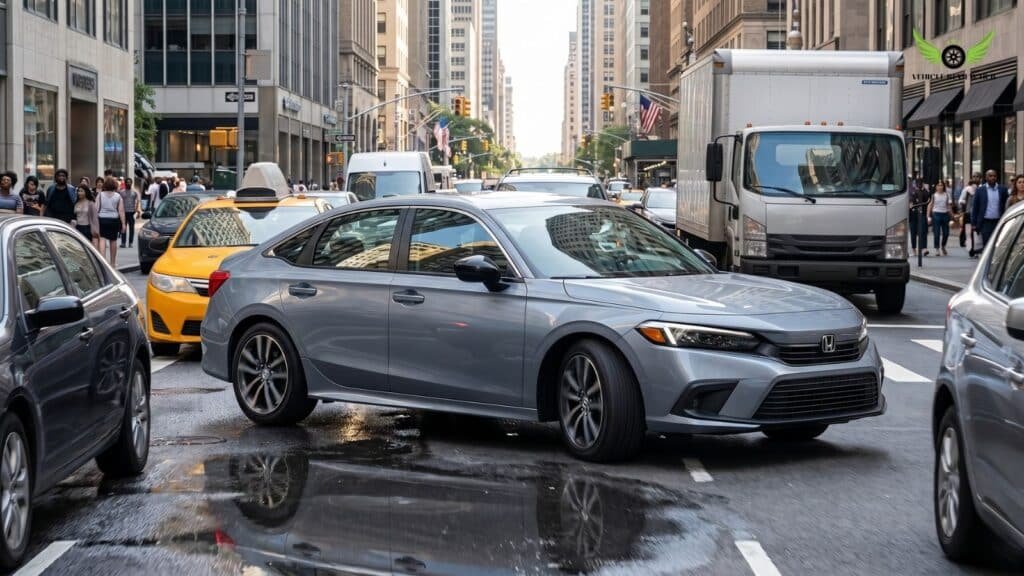
The Honda Civic Sedan feels comfortable during everyday commuting because the suspension absorbs most road imperfections without making the car feel overly soft.
In city traffic, steering remains light and predictable, which helps during parking, lane changes, and stop-and-go driving. The hybrid trims especially improve smoothness because the electric motor handles much of the low-speed acceleration.
The seats also work well for longer commuting sessions. Front-seat comfort feels supportive for daily driving, and visibility remains strong compared to many compact sedans.
From a real-world ownership perspective, many drivers choose the Honda Civic Sedan because it balances comfort, fuel savings, and easy drivability better than many compact rivals.
Highway Driving and Road Noise
Highway driving remains one of the strongest parts of the Honda Civic Sedan Fuel Economy and ownership experience.
At higher speeds, the chassis feels stable and controlled during lane changes and longer highway trips. The suspension also stays composed over uneven pavement and highway expansion joints.
Road and tire noise can still become noticeable on rough highways, especially in lower trims with larger wheels. However, the higher hybrid trims feel quieter because of additional insulation and improved refinement.
Another advantage is long-distance efficiency. The Civic maintains lower engine RPM during highway cruising, which helps improve fuel economy while keeping the cabin reasonably comfortable during longer drives.
For many commuters, the Honda Civic Sedan Real-World Experience feels more refined on highways than several entry-level compact sedans in the same price range.
Interior Comfort and Technology Experience
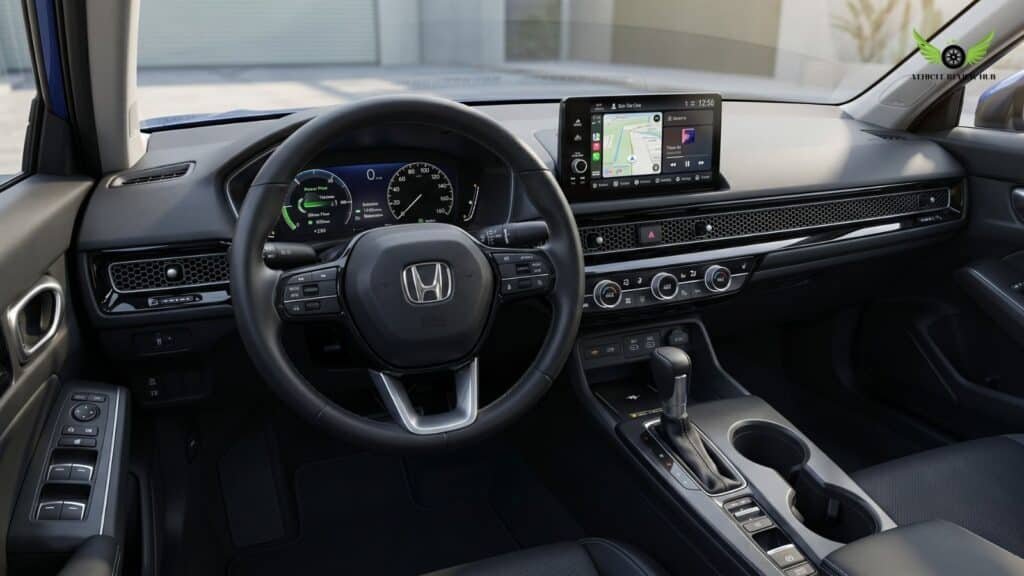
The Honda Civic Sedan interior focuses on practicality and ease of use rather than overly complicated design.
The dashboard layout feels clean, climate controls remain simple to operate while driving, and the infotainment system responds quickly during normal use.
Higher trims include features such as:
- Wireless Apple CarPlay
- Wireless Android Auto
- Google built-in
- Bose premium audio system
- Fully digital instrument cluster
Another strength is cabin refinement. The interior materials feel more upscale than many compact competitors, especially in hybrid trims.
The seating position also feels natural for longer drives, which helps reduce fatigue during commuting and highway travel.
Passenger Space and Practicality
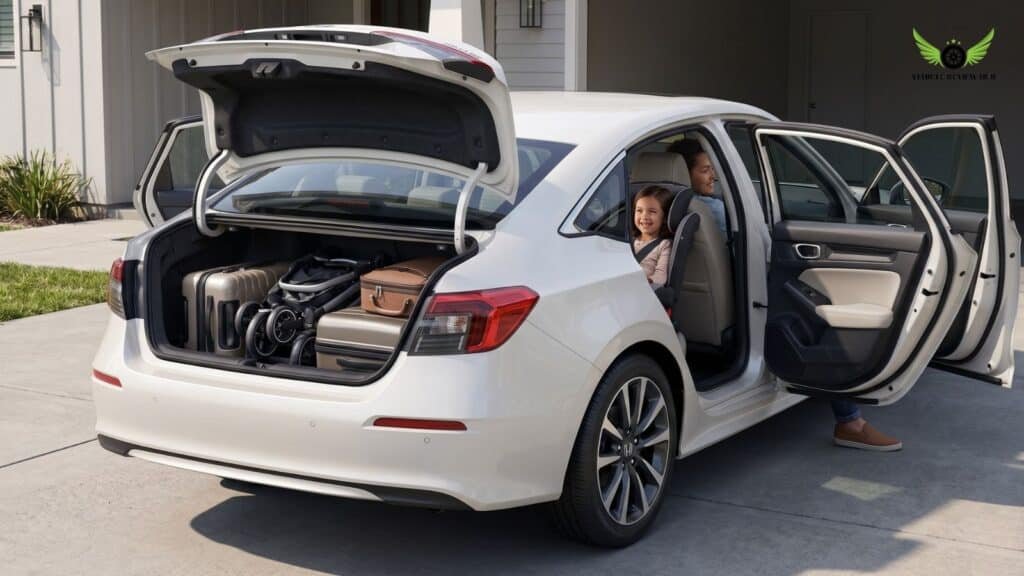
The Honda Civic Sedan remains practical for commuters and small families because it offers competitive passenger space for the compact sedan segment.
Rear-seat legroom feels comfortable for adults during normal daily use, and the overall cabin layout feels more spacious than older Civic generations.
Cargo practicality is also strong. The sedan provides around 14.8 cubic feet of trunk space, which works well for groceries, luggage, and everyday commuting needs.
From a daily usability perspective, the Civic balances interior comfort, fuel efficiency, and passenger practicality better than many compact sedans in the same category.
Is Honda Civic Sedan Fuel Efficient Enough?
Yes, the Honda Civic Sedan is fuel efficient enough for most daily drivers, commuters, and long-distance travelers in the USA. The latest hybrid trims especially deliver excellent MPG while still providing stronger acceleration and a more refined driving feel than many compact competitors.
For 2025–2026, the Civic Hybrid became one of the strongest all-around compact sedans because it combines nearly 50 MPG with 200 horsepower, comfortable daily driving, and practical long-term usability.
Comparison with Toyota Corolla and Prius
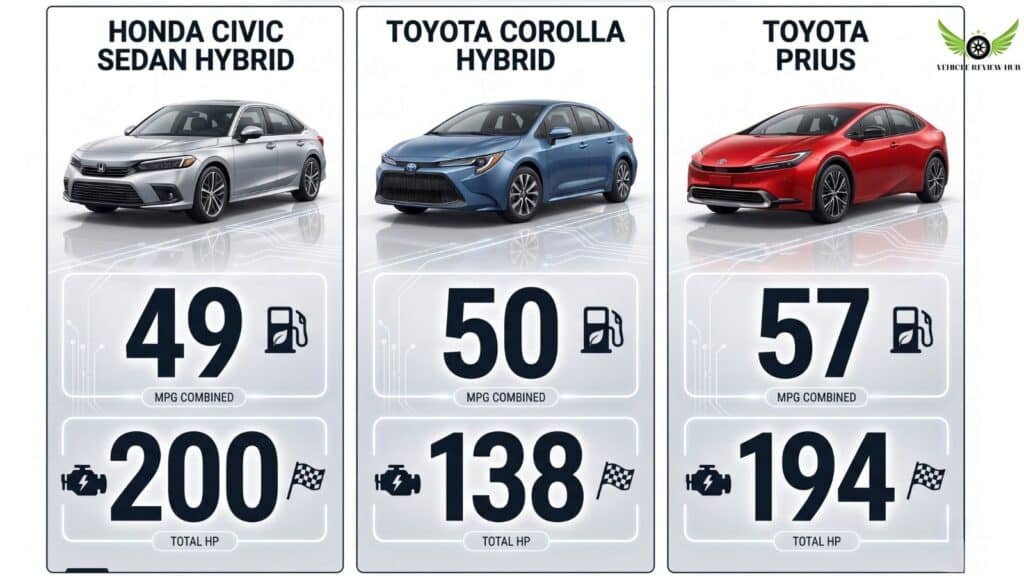
The Honda Civic Sedan Fuel Economy remains highly competitive against both the Toyota Corolla Hybrid and Toyota Prius.
The Toyota Prius still delivers the highest overall efficiency. Some Prius trims achieve up to 57 MPG combined, making it one of the most fuel-efficient hybrid cars currently available.
The Toyota Corolla Hybrid delivers around 50 MPG combined, which is slightly higher than the Civic Hybrid in some driving conditions.
The Honda Civic Sedan Hybrid is EPA-rated at around 49 MPG combined while producing 200 horsepower and 232 lb-ft of torque.
Model | Combined MPG | Horsepower | Driving Character |
Honda Civic Sedan Hybrid | 49 MPG | 200 HP | Balanced and refined |
Toyota Corolla Hybrid | 50 MPG | 138 HP | Comfort and efficiency focused |
Toyota Prius | Up to 57 MPG | 194 HP | Maximum MPG priority |
Where the Honda Civic Sedan stands out is balance. The Civic Hybrid delivers noticeably stronger acceleration than the Corolla Hybrid while still maintaining excellent mileage.
From a real-world ownership perspective, many drivers prefer the Honda Civic Sedan Real-World Experience because the Civic feels smoother, quieter, and more refined during commuting and highway driving.
The Prius remains the better choice for buyers focused only on maximum fuel savings. However, the Civic offers a stronger mix of efficiency, comfort, performance, and everyday drivability.
Best Option for MPG Buyers
For most buyers focused on fuel savings, the Sport Hybrid is the best overall option in the Honda Civic Sedan lineup.
The hybrid system delivers around 49 MPG combined while still feeling responsive during highway merging and city acceleration.
Another advantage is real commuting efficiency. In stop-and-go traffic, the electric motor handles much of the low-speed driving, helping the Honda Civic Sedan Mileage remain highly efficient during everyday commuting.
The hybrid trims also feel smoother during daily driving because the transition between gasoline and electric power remains refined during normal use.
For buyers who want the absolute highest MPG possible, the Toyota Prius still remains the efficiency leader. But for drivers looking for a compact sedan that combines fuel economy, comfort, performance, and practical daily usability together, the Honda Civic Sedan continues to be one of the strongest overall choices in the USA.
Frequently Asked Questions About Honda Civic Sedan Mileage and Fuel Economy
The Honda Civic Sedan remains one of the most popular compact sedans in the USA because it combines strong fuel economy, comfortable daily driving, and practical long-term ownership. Below are some of the most common questions buyers ask before choosing the Civic Sedan.
What MPG does the Honda Civic Sedan get?
The standard gasoline LX trim delivers around 32 MPG city, 41 MPG highway, and 36 MPG combined. Hybrid trims can achieve around 50 MPG city and 49 MPG combined.
Is the Honda Civic Sedan Hybrid fuel efficient?
Yes. The Honda Civic Sedan Hybrid is one of the most fuel-efficient compact sedans currently available in the USA. It combines nearly 50 MPG with strong acceleration and smooth daily drivability.
How far can a Honda Civic Sedan go on a full tank?
The gasoline models can typically travel around 440–500 miles on a full tank, while hybrid trims can reach around 500 miles or more depending on driving conditions.
Which Honda Civic Sedan trim has the best fuel economy?
The Sport Hybrid and Sport Touring Hybrid trims deliver the best Honda Civic Sedan Fuel Economy in the current lineup.
Is the Honda Civic Sedan good for long highway trips?
Yes. The Civic feels stable at highway speeds, offers comfortable seating, and maintains strong fuel efficiency during long-distance driving.
Does the Honda Civic Sedan save fuel in city traffic?
Yes. The hybrid trims especially perform well in stop-and-go traffic because the electric motor handles much of the low-speed driving.
Is the Honda Civic Sedan Hybrid better than the Toyota Corolla Hybrid?
The Corolla Hybrid delivers slightly higher MPG in some situations, but the Honda Civic Sedan Hybrid offers significantly stronger performance and a more refined driving experience.
Is the Honda Civic Sedan quieter than older models?
Yes. The latest Civic models feel more refined than previous generations, especially higher hybrid trims with additional sound insulation.
How practical is the Honda Civic Sedan for daily use?
The Civic works very well for commuting and family use because it offers comfortable seating, good passenger space, practical trunk capacity, and manageable ownership costs.
Does the Honda Civic Sedan require premium fuel?
No. The Honda Civic Sedan uses regular unleaded gasoline.
Is the Honda Civic Sedan expensive to maintain?
No. Maintenance costs are generally reasonable compared to many compact sedans, and Honda vehicles are known for strong long-term reliability.
Is the Honda Civic Sedan worth buying for fuel economy?
Yes. For buyers who want strong MPG, comfortable daily driving, and dependable long-term ownership, the Honda Civic Sedan remains one of the best all-around compact sedans in the USA.