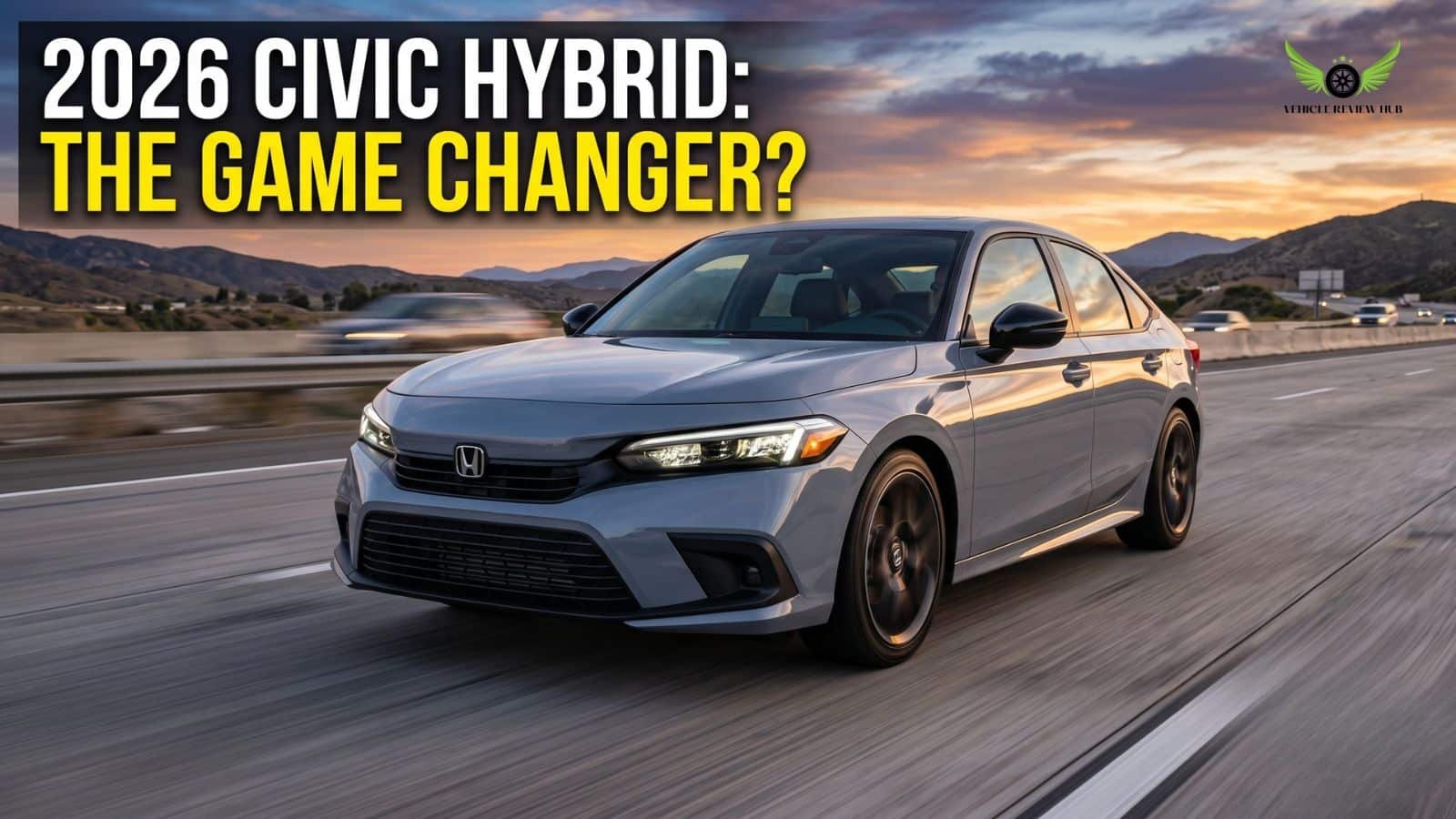
If you are searching for a compact sedan that balances fuel efficiency, smooth daily driving, and responsive real-world performance, the Honda Civic Sedan remains one of the strongest options in the USA. The latest lineup gives buyers two different driving experiences: a fuel-efficient gasoline model and a significantly quicker hybrid version with stronger low-speed acceleration.
For 2025–2026, Honda improved the overall Honda Civic Sedan Performance by expanding the hybrid lineup and refining the chassis tuning. The standard LX and Sport trims use a 2.0L naturally aspirated engine producing 150 horsepower, while the Sport Hybrid and Sport Touring Hybrid trims produce 200 horsepower and 232 lb-ft of torque through Honda’s two-motor hybrid system.
In real driving conditions, the Honda Civic Sedan Driving Experience feels more refined than many compact rivals. Steering remains predictable, highway stability feels solid, and the suspension handles rough roads comfortably without making the car feel overly soft.
The hybrid trims especially stand out during city driving because the electric motor delivers instant torque during acceleration. This makes stop-and-go traffic feel smoother and more responsive compared to the standard gasoline engine. Independent road tests also show the Civic Hybrid reaching 0–60 mph in around 6.2–6.6 seconds, while the standard gasoline model typically reaches 0–60 mph in around 8.5–9 seconds.
For buyers looking for a compact sedan with practical daily usability, efficient fuel economy, and a more enjoyable driving feel than most entry-level sedans, the Honda Civic Sedan continues to offer one of the best all-around packages in the USA market.
Honda Civic Sedan Engine Performance Breakdown
The Honda Civic Sedan offers two different performance setups depending on the trim level. The standard gasoline models focus more on fuel efficiency and smooth commuting, while the hybrid trims deliver noticeably stronger acceleration and quicker low-speed response.
For 2025–2026, the hybrid system became the biggest performance upgrade in the lineup. Honda improved both power delivery and efficiency, making the hybrid Civic feel more responsive during everyday driving without sacrificing MPG.
150 HP Base Engine vs 200 HP Hybrid Comparison
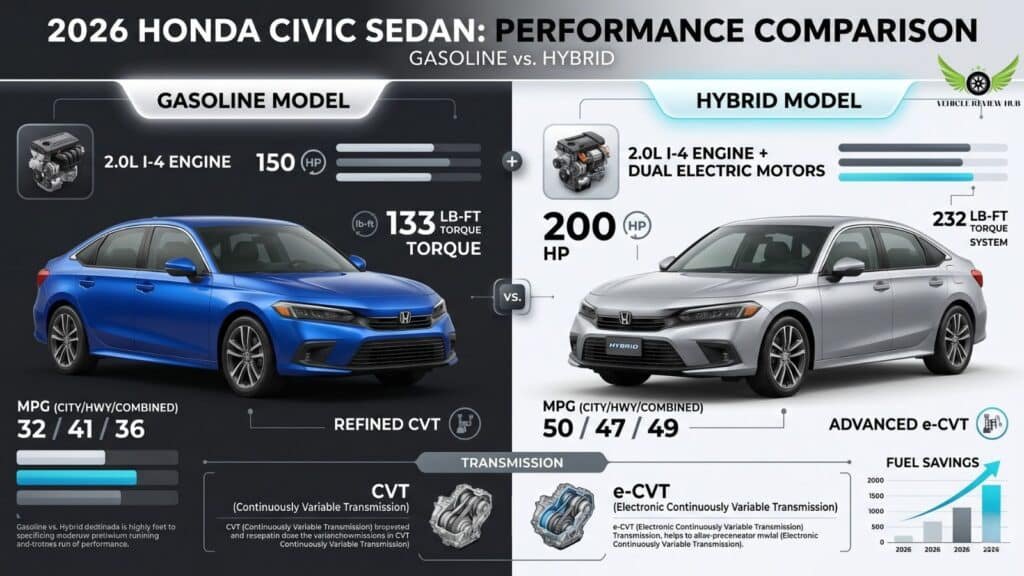
The LX and Sport trims use a 2.0-liter naturally aspirated four-cylinder engine producing 150 horsepower and 133 lb-ft of torque. These trims are designed mainly for affordable commuting and lower long-term ownership costs.
The Sport Hybrid and Sport Touring Hybrid trims use Honda’s two-motor hybrid system producing 200 horsepower and 232 lb-ft of torque. The additional torque changes the overall Honda Civic Sedan Performance significantly, especially during city acceleration and highway merging.
Performance Specification | Gasoline Model | Hybrid Model |
Horsepower | 150 HP | 200 HP |
Torque | 133 lb-ft | 232 lb-ft |
Transmission | CVT | e-CVT |
0–60 mph | Around 8.5–9 sec | Around 6.2–6.6 sec |
EPA MPG | Up to 32/41 MPG | Up to 50/47 MPG |
In real driving conditions, the gasoline engine feels smooth and predictable for commuting, but the hybrid version feels much quicker because the electric motor provides instant torque during acceleration.
The hybrid trims also improve highway passing performance. Drivers do not need to push the engine as hard during overtaking situations because the electric motor responds immediately when extra power is needed.
Torque Delivery and Real Driving Feel
The biggest difference in the Honda Civic Sedan Driving Experience comes from how power is delivered.
The standard gasoline model builds acceleration gradually, which works well for relaxed daily driving and highway cruising. For most commuters, the engine feels refined enough for normal use, although it is not designed to feel sporty.
The hybrid system feels more responsive because electric motors deliver maximum torque immediately. In stop-and-go traffic, the Civic Hybrid reacts faster when pulling away from traffic lights or merging into faster lanes.
Another improvement is smoothness. The hybrid system feels quieter at lower speeds, and the e-CVT transmission keeps acceleration more consistent without noticeable gear shifts.
From a handling perspective, the Honda Civic Sedan remains balanced and easy to control. Steering feels precise, and the suspension keeps the car stable on highways without making the ride overly stiff.
For buyers who want stronger acceleration while still maintaining excellent fuel economy, the hybrid trims provide the best overall driving experience in the current Civic Sedan lineup.
Acceleration and Real Performance Data
The Honda Civic Sedan delivers very different acceleration characteristics depending on the powertrain choice. The standard gasoline models focus more on smooth commuting and fuel efficiency, while the hybrid trims provide noticeably stronger real-world performance.
For 2025–2026, the hybrid system became one of the biggest highlights of the lineup because it combines strong fuel economy with quicker acceleration and better low-speed responsiveness.
0–60 mph (≈8.5–9 sec Base / ≈6.2 sec Hybrid)
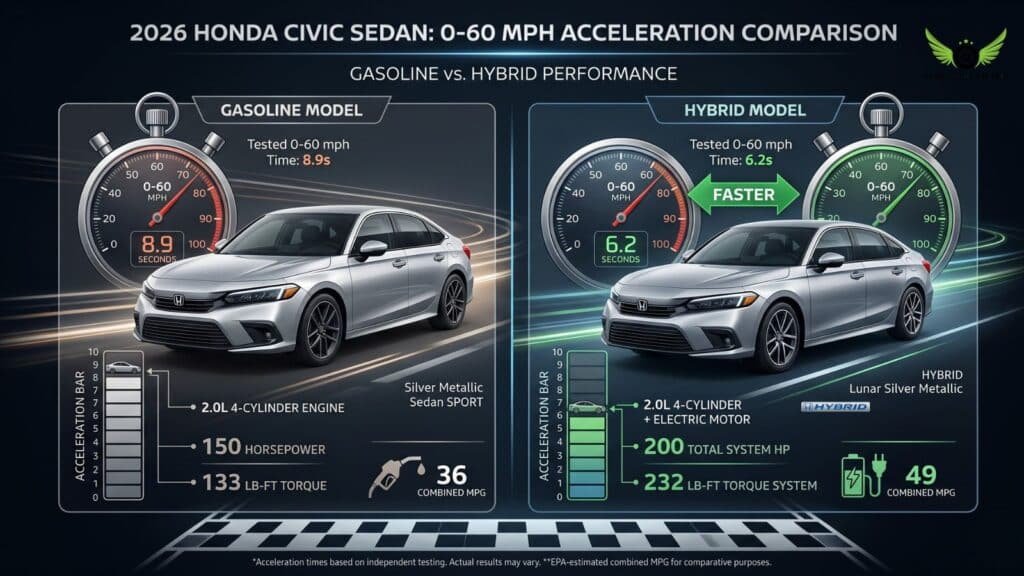
The standard Honda Civic Sedan with the 2.0L naturally aspirated engine typically reaches 0–60 mph in around 8.5–8.9 seconds based on independent road testing. This setup feels smooth during normal commuting, but acceleration is tuned more for efficiency than sporty driving.
The hybrid trims are significantly quicker. Independent testing from Car and Driver recorded the Civic Hybrid reaching 0–60 mph in around 6.2 seconds, making it one of the quickest non-performance compact sedans in its segment.
Acceleration Specification | Honda Civic Sedan |
Base Engine Power | 150 HP |
Hybrid Power Output | 200 HP |
Hybrid Torque | 232 lb-ft |
0–60 mph (Gasoline Model) | Around 8.5–8.9 sec |
0–60 mph (Hybrid Model) | Around 6.2–6.6 sec |
In real driving conditions, the Honda Civic Sedan Performance feels stronger in the hybrid trims because the electric motor delivers power instantly during acceleration. This makes the car feel quicker when leaving traffic lights or entering highways.
The standard gasoline model still performs well for daily driving, but the hybrid version clearly feels more responsive and effortless during faster acceleration situations.
Highway Overtaking Performance
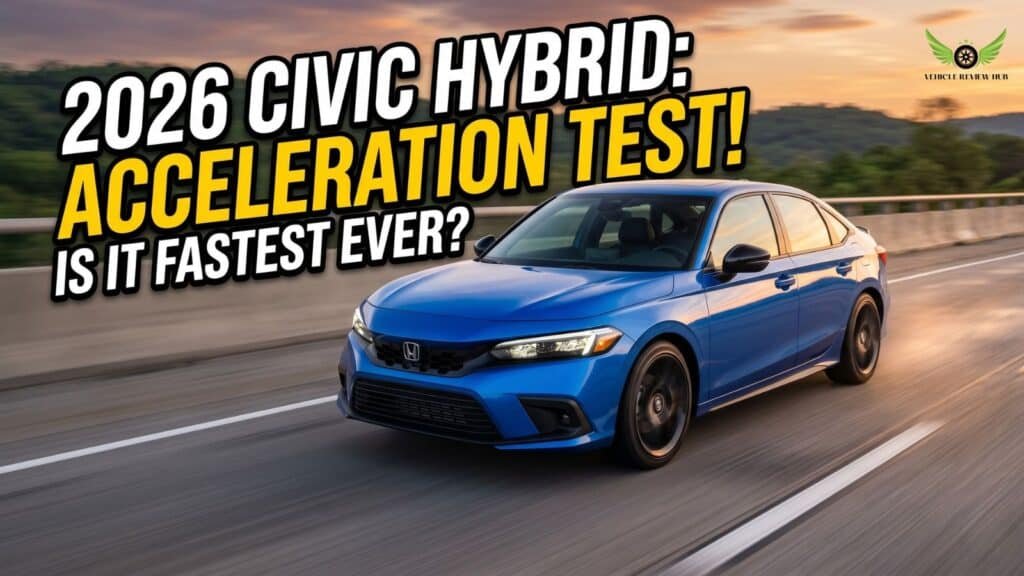
Highway overtaking performance is another area where the hybrid Civic stands out.
The standard 150-horsepower engine handles regular highway cruising comfortably, but passing slower vehicles at higher speeds requires more throttle input and longer acceleration time.
The hybrid trims improve this significantly because the electric motor provides immediate torque during mid-range acceleration. In real highway driving, the hybrid Civic feels quicker and more confident when overtaking slower traffic or merging into fast-moving lanes.
Another advantage is smoothness. The e-CVT transmission keeps acceleration consistent without noticeable shifting behavior, helping the Honda Civic Sedan Driving Experience feel refined during highway driving.
From a practical perspective, drivers who frequently travel on highways or carry passengers regularly will likely appreciate the stronger acceleration and smoother passing performance of the hybrid trims.
Honda Civic Sedan Driving Dynamics and Handling
The Honda Civic Sedan continues to deliver one of the most balanced driving experiences in the compact sedan segment. It combines responsive steering, stable highway manners, and comfortable suspension tuning without feeling overly stiff or harsh during daily driving.
For 2025–2026, Honda refined the suspension setup further, helping the Civic feel smoother on rough roads while still maintaining confident handling during cornering and highway driving.
Steering Precision and Chassis Balance
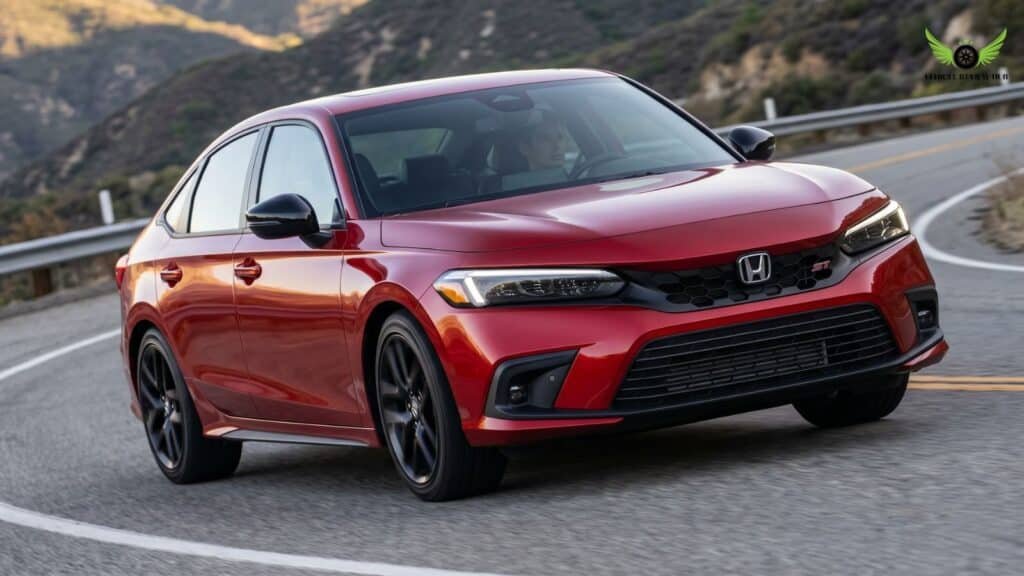
One of the strongest parts of the Honda Civic Sedan Driving Experience is steering precision. The steering feels direct and predictable, making the car easy to control during both city driving and highway cruising.
In real driving conditions, the Civic feels stable during lane changes and controlled through corners. Body movement remains limited compared to many compact sedans, which helps the car feel more refined at higher speeds.
Honda uses a MacPherson strut front suspension and a multi-link rear suspension setup, which improves overall chassis balance and helps maintain better road stability on uneven pavement.
The hybrid trims feel slightly smoother during acceleration because the electric motor delivers torque more progressively. This helps the car feel composed when exiting corners or accelerating in traffic.
From a practical driving perspective, the Civic remains easy to maneuver in urban environments while still feeling confident during long highway trips.
Ride Comfort vs Sportiness
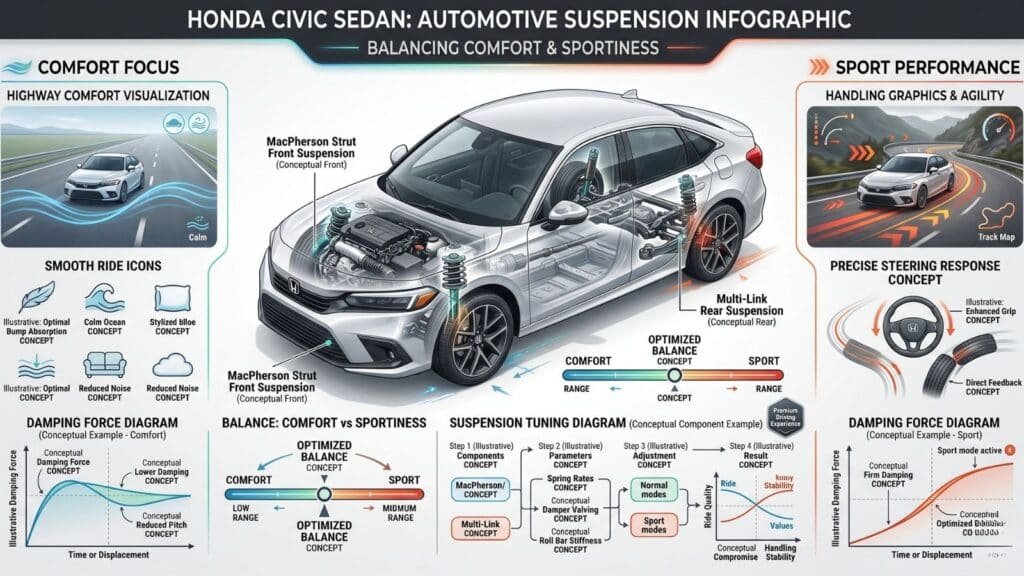
The Honda Civic Sedan Performance focuses more on balance than aggressive sport-focused handling. The suspension stays firm enough to keep the car controlled during turns, but it still absorbs most road imperfections comfortably during everyday driving.
Compared to older Civic generations, the latest models feel more refined on rough pavement and expansion joints. Highway stability also remains one of the Civic’s strongest qualities, especially during long-distance driving.
The Sport and hybrid trims feel slightly firmer because of wheel and suspension tuning differences, but overall ride quality still remains comfortable for commuting and family use.
Road and tire noise can still become noticeable on rough highways, especially in lower trims, although the Sport Touring Hybrid feels quieter because of additional insulation and improved refinement.
For buyers looking for a compact sedan that feels stable, comfortable, and more engaging to drive than many entry-level rivals, the Honda Civic Sedan continues to offer one of the strongest all-around handling setups in the USA.
Honda Civic Sedan City vs Highway Driving Experience
The Honda Civic Sedan is designed to handle both urban commuting and long highway driving comfortably. Its compact size makes city driving easier, while the stable chassis and refined suspension help maintain confidence at higher highway speeds.
For 2025–2026, the hybrid trims improved the overall Honda Civic Sedan Driving Experience even more by adding smoother low-speed acceleration and quieter operation during traffic-heavy driving.
Urban Driving Ease and Maneuverability
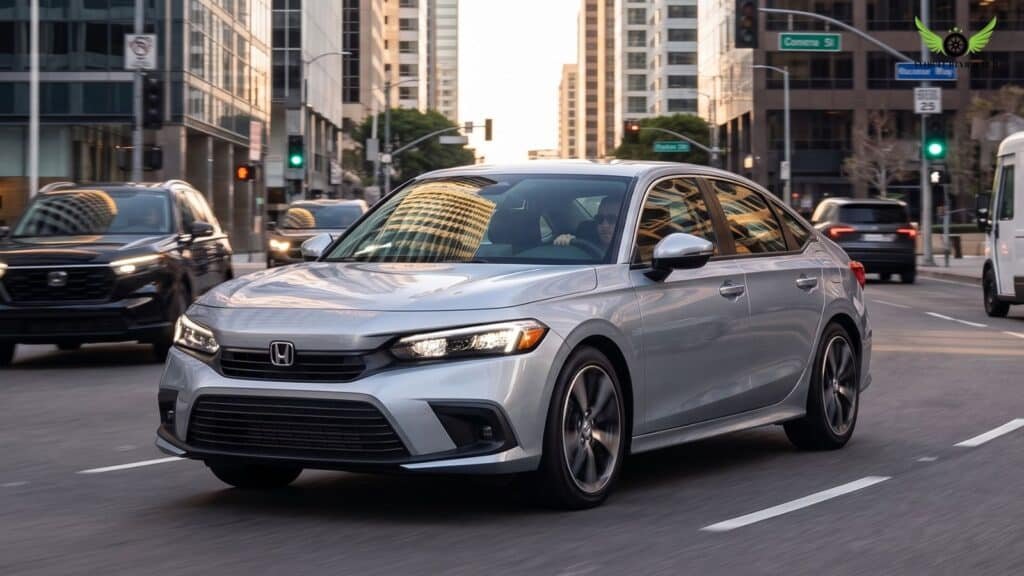
In city traffic, the Honda Civic Sedan feels easy to control and simple to maneuver. Steering remains light at lower speeds, which helps during parking, narrow streets, and heavy urban traffic.
The hybrid trims especially improve daily commuting because the electric motor delivers torque instantly. In stop-and-go traffic, acceleration feels smoother and more responsive compared to the standard gasoline model.
Another advantage is visibility. The Civic’s seating position and cabin layout provide good outward visibility, helping drivers feel more comfortable during lane changes and parking situations.
Ride quality also works well for urban driving. The suspension absorbs most road imperfections comfortably without making the car feel overly soft or disconnected from the road.
From a real-world perspective, many commuters prefer the Honda Civic Sedan because it feels more manageable in crowded city environments than larger sedans or SUVs.
Highway Stability and Long-Distance Comfort
Highway driving is another area where the Honda Civic Sedan Performance feels strong for the compact sedan segment.
At higher speeds, the chassis stays stable and controlled during lane changes and long curves. Steering remains predictable, which helps reduce driver fatigue during longer trips.
The hybrid trims feel especially refined on highways because the powertrain delivers smoother acceleration and quieter cruising during normal driving conditions.
Compared to several entry-level compact sedans, the Civic also maintains better ride balance during long-distance driving. The suspension stays controlled over uneven pavement while still keeping the cabin comfortable for passengers.
Road and tire noise can still become noticeable on rough highways, especially in lower trims, although higher trims feel quieter because of additional sound insulation.
For drivers looking for a compact sedan that handles both daily commuting and highway travel comfortably, the Honda Civic Sedan continues to deliver one of the most balanced driving experiences in the USA.
Is Honda Civic Sedan Fun to Drive?
Yes, the Honda Civic Sedan remains one of the most engaging compact sedans for everyday driving in the USA. Honda focused on steering response, chassis balance, and smooth power delivery, which helps the Civic feel more refined and enjoyable than many entry-level competitors.
For 2025–2026, the hybrid trims improved the overall Honda Civic Sedan Driving Experience even more by adding stronger acceleration and better low-speed responsiveness without sacrificing fuel economy.
Comparison with Toyota Corolla and Hyundai Elantra
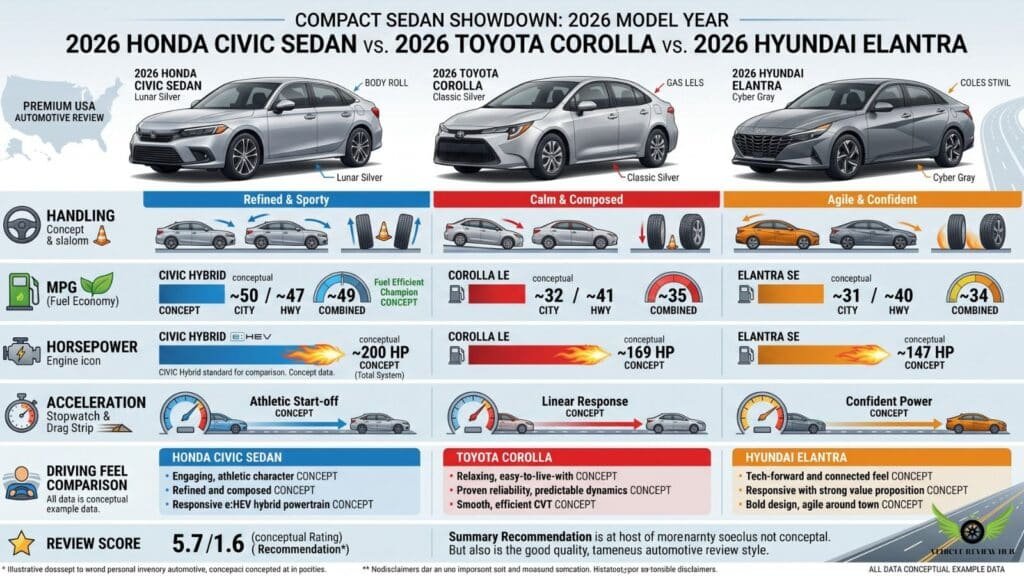
Compared to the Toyota Corolla, the Honda Civic Sedan feels more responsive during cornering and highway driving. Steering feels sharper, and the suspension provides better chassis control without making the ride uncomfortable.
The Corolla focuses more on comfort and fuel economy, while the Civic offers a more balanced mix of comfort and driver engagement. The Civic Hybrid is also significantly quicker, reaching 0–60 mph in around 6.2–6.6 seconds compared to slower acceleration numbers in most Corolla trims.
Against the Hyundai Elantra, the Civic feels more refined at higher speeds. The Elantra offers strong technology features and good fuel economy, but the Civic delivers more confident steering feedback and smoother overall handling during real-world driving.
Compact Sedan | Driving Feel |
Honda Civic Sedan | Balanced, responsive, refined |
Toyota Corolla | Softer and comfort-focused |
Hyundai Elantra | Feature-focused but less composed |
From a real driving perspective, the Honda Civic Sedan Performance stands out because it combines everyday comfort with more confident handling than many compact sedans in the same price range.
Best Driving Experience Trim
For most buyers, the Sport Hybrid provides the best overall driving experience in the Honda Civic Sedan lineup.
The hybrid system produces 200 horsepower and 232 lb-ft of torque, which makes the car feel much quicker during city acceleration and highway merging compared to the standard gasoline trims.
Another advantage is smoothness. The electric motor delivers power instantly, helping the Civic feel more responsive in stop-and-go traffic while still maintaining excellent fuel economy.
The Sport trim also keeps a good balance between comfort and handling. Suspension tuning feels controlled without becoming harsh during everyday driving.
The Sport Touring Hybrid adds more premium features and a quieter cabin, but many drivers may find the Sport Hybrid offers the better overall value for performance-focused daily driving.
For buyers looking for a compact sedan that feels practical during commuting but still enjoyable on winding roads and highways, the Honda Civic Sedan continues to be one of the strongest all-around choices in the USA.
Frequently Asked Questions About Honda Civic Sedan Performance
The Honda Civic Sedan remains one of the most searched compact sedans in the USA because buyers want a balance of fuel economy, real-world performance, and comfortable daily driving. Below are some of the most common performance-related questions buyers ask before choosing the Civic Sedan.
How fast is the Honda Civic Sedan Hybrid?
The Honda Civic Sedan Hybrid can reach 0–60 mph in around 6.2–6.6 seconds depending on trim level and testing conditions. It produces 200 horsepower and 232 lb-ft of torque.
What is the 0–60 mph time of the standard Honda Civic Sedan?
The standard 150-horsepower gasoline model typically reaches 0–60 mph in around 8.5–8.9 seconds.
Is the Honda Civic Sedan Hybrid quicker than the Toyota Corolla Hybrid?
Yes. The Honda Civic Sedan Hybrid is noticeably quicker because it produces more power and torque than the Toyota Corolla Hybrid.
Does the Honda Civic Sedan handle well?
Yes. The Civic is known for balanced handling, responsive steering, and stable highway driving. Many drivers consider it one of the better-handling compact sedans in its segment.
Is the Honda Civic Sedan comfortable for long highway trips?
Yes. The Civic provides stable highway manners, supportive seating, and controlled suspension tuning that work well during long-distance driving.
Which Honda Civic Sedan trim feels the most fun to drive?
For most buyers, the Sport Hybrid offers the best balance between acceleration, handling, fuel economy, and daily comfort.
Does the Honda Civic Sedan Hybrid feel faster in city driving?
Yes. The electric motor delivers torque instantly, making the hybrid feel quicker and smoother during stop-and-go traffic and low-speed acceleration.
Is the base Honda Civic Sedan slow?
The standard gasoline engine is tuned more for fuel economy and smooth commuting than sporty performance. For daily driving it feels adequate, but the hybrid trims are noticeably stronger during acceleration.
Does the Honda Civic Sedan have sporty handling?
Yes. Compared to many compact sedans, the Civic feels more composed during cornering and provides more direct steering feedback.
Which is better for driving performance: Civic or Elantra?
The Honda Civic Sedan generally feels more refined and balanced during real-world driving, while the Hyundai Elantra focuses more on technology features and styling.
Does the Honda Civic Sedan ride smoothly on rough roads?
Yes. The latest suspension tuning helps absorb most road imperfections comfortably while still maintaining stable handling.
Is the Honda Civic Sedan good for daily commuting?
Yes. The Civic remains one of the best commuter sedans because it combines good fuel economy, comfortable ride quality, stable handling, and practical everyday usability.