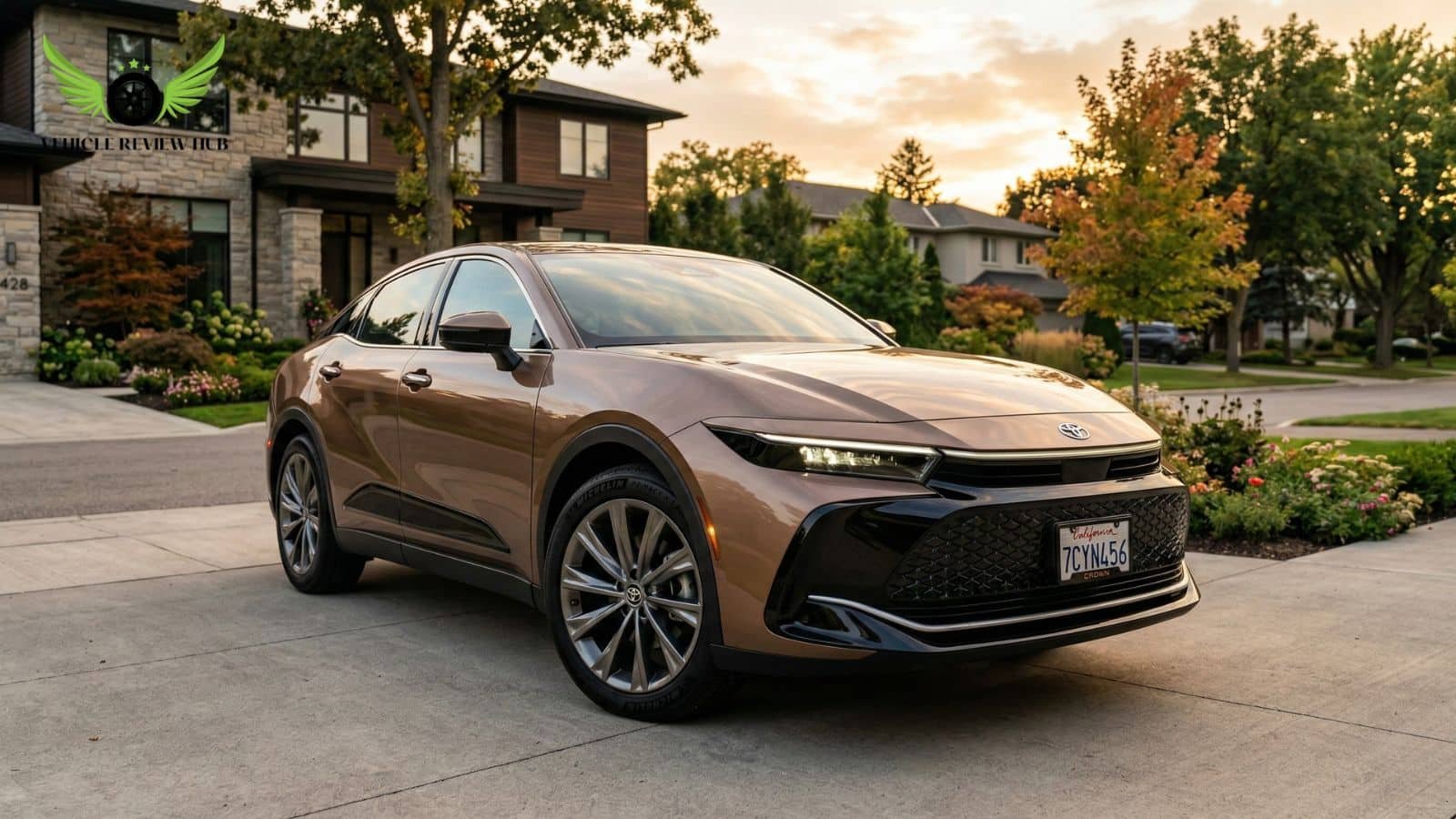
The Toyota Crown Signia Maintenance Cost in the USA is expected to stay moderate and predictable, especially compared to many midsize SUVs in its class. Since it uses Toyota’s proven hybrid system, annual ownership cost for a typical American driver (12,000–15,000 miles per year) should mostly include routine oil changes, tire rotations, brake service, and hybrid system inspections — not expensive mechanical repairs.
This guide explains everything you need to know about Toyota Crown Signia Maintenance Cost, including the recommended service schedule, hybrid maintenance expenses, long-term durability expectations, and common reliability concerns. We’ll also look at how it compares to other Toyota hybrids and what early owners should realistically expect.
Understanding the Toyota Crown Signia Reliability is just as important as knowing the price. A vehicle may look premium, but long-term ownership cost depends on engineering quality. Toyota’s hybrid systems have been used for more than two decades in models like the Prius, Camry Hybrid, and RAV4 Hybrid. Historically, these systems have shown strong durability, low failure rates, and reduced brake wear thanks to regenerative braking.
For a U.S. commuter driving 40–50 miles daily, the service schedule typically follows 5,000-mile intervals for inspections and 10,000-mile synthetic oil changes. Because hybrids use electric motors to assist the gasoline engine, engine strain is often lower than that of traditional SUVs, which can reduce long-term wear.
Compared to the RAV4 Hybrid, the Crown Signia shares a similar hybrid architecture, so ownership cost patterns are expected to be close. However, since this is a newer model, long-term data is still developing.
In the next sections, we’ll break down the detailed service schedule and deeper Toyota Crown Signia Reliability insights to help you make a confident buying decision.
Toyota Crown Signia Maintenance Schedule Explained
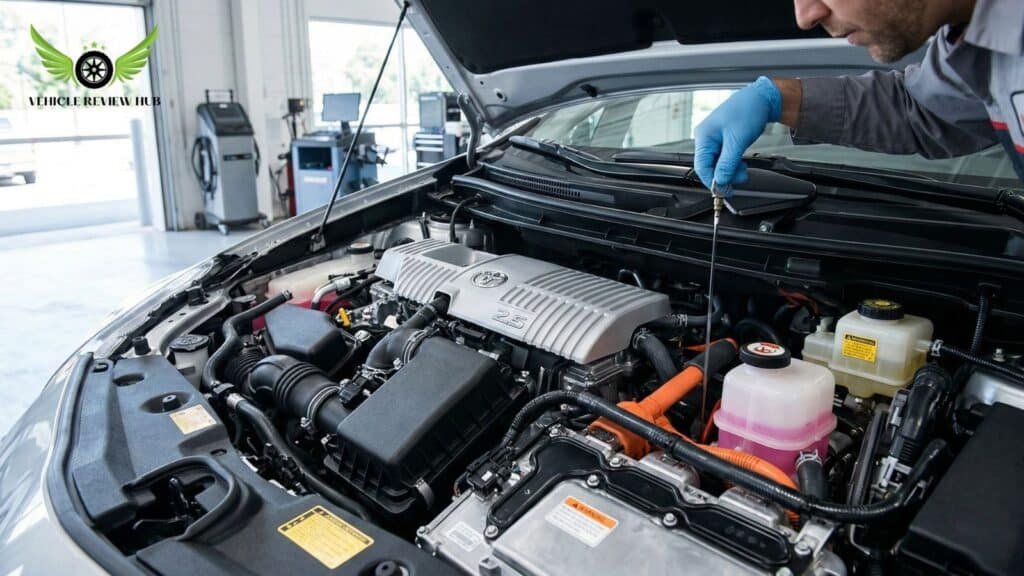
The 2026 model follows Toyota’s standard 5,000-mile service structure used across its modern hybrid lineup in the U.S. That means inspection-based visits every 5,000 miles, with synthetic oil and filter replacement typically at 10,000-mile intervals under normal driving conditions. This factory maintenance schedule is designed to prevent problems before they start, not after damage happens.
At 5,000 miles, service intervals focus on tire rotation, brake inspection, fluid level checks, and a multi-point safety inspection. Because the Crown Signia is a hybrid, brake wear is often slower thanks to regenerative braking. Around 30,000 miles, engine and cabin air filters are commonly replaced. Hybrid system components like the inverter cooling system follow a long inspection timeline, with coolant service required much later than traditional engine coolant.
Following this schedule protects the Toyota Crown Signia Reliability. Skipping oil changes or delaying inspections can increase engine heat and raise the Toyota Crown Signia Maintenance Cost over time.
Mileage | Required Service Items |
5,000 | Tire rotation, brake check, fluid inspection |
10,000 | Oil & filter change + 5k services |
15,000 | 5k services + cabin filter check |
30,000 | Engine air filter replacement + inspections |
60,000 | Coolant & system inspection |
For a U.S. driver covering 15,000 miles yearly, this means about three visits per year. Compared to gas-only SUVs, service intervals are similar, but hybrid brake and drivetrain wear patterns are generally more favorable in the long term.
5,000-Mile Service Intervals
The 5,000-mile service is a routine inspection visit designed to keep the Crown Signia running efficiently between major maintenance points. This interval focuses on preventive care rather than part replacement. During this visit, technicians typically perform a tire rotation cycle, inspect brake components, check fluid levels, examine suspension parts, and complete a full multi-point inspection.
Even though the oil service interval with synthetic oil is commonly 10,000 miles under normal driving conditions, the 5,000-mile check ensures early detection of leaks, uneven tire wear, or brake irregularities. For a hybrid SUV, this matters because cooling efficiency and brake performance directly support Toyota Crown Signia Reliability.
Staying consistent with these smaller visits helps control the Toyota Crown Signia Maintenance Cost over time. For example, correcting alignment or rotation issues early can prevent premature tire replacement. Monitoring brake wear is also important, even though regenerative braking reduces pad usage compared to gas-only SUVs.
For a U.S. commuter driving around 15,000 miles annually, this means roughly three inspection visits per year. However, drivers in severe conditions—frequent short trips, extreme temperatures, or dusty environments—may require shorter service intervals to maintain optimal performance.
30,000-Mile and 60,000-Mile Service Requirements
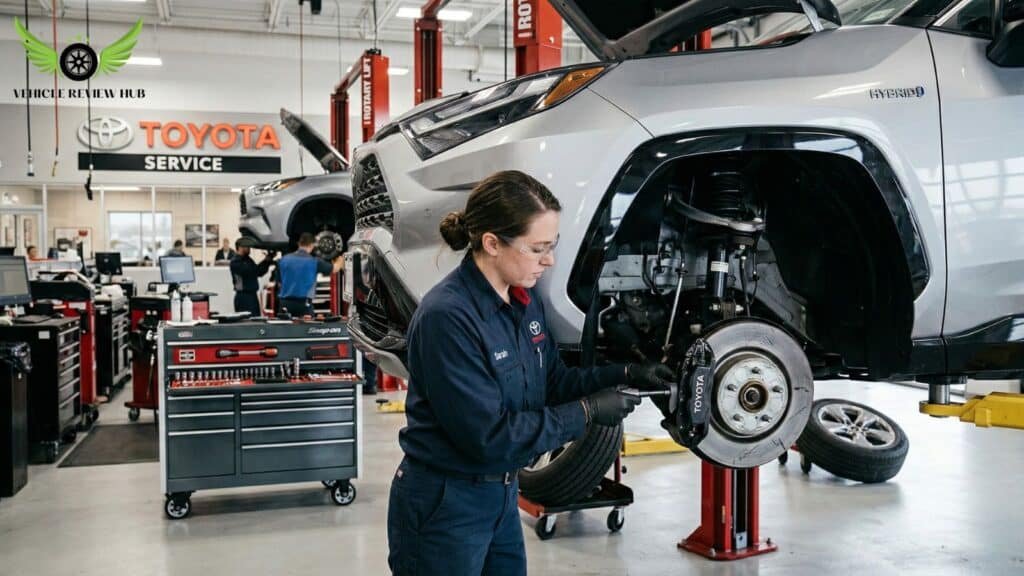
The 30,000-mile and 60,000-mile marks are true maintenance milestones for the Crown Signia. Unlike the 5k inspection visits, these intervals include part replacements and fluid services that directly impact long-term durability.
At 30,000 miles, the focus expands beyond inspections. This typically includes engine air filter replacement, cabin air filter change, full brake inspection, and system diagnostics. Some vehicles may also require brake fluid testing depending on driving conditions. These services protect airflow efficiency, braking consistency, and overall Toyota Crown Signia Reliability.
By 60,000 miles, maintenance becomes more involved. Spark plugs are commonly replaced around this range on modern Toyota 2.5L engines, and brake fluid replacement is often required. A deeper hybrid inspection is also performed, checking cooling systems and electronic components. These added labor and parts explain why Toyota Crown Signia Maintenance Cost increases at this stage.
Mileage | 30,000-Mile Service | 60,000-Mile Service |
Filters | Engine & cabin air filter change | Inspect/replace as needed |
Brakes | Full inspection | Brake fluid replacement |
Ignition | — | Spark plug replacement |
Hybrid System | Visual hybrid inspection | Extended hybrid inspection |
Verified U.S. service ranges vary by region, but 30k services often fall in the low-to-mid hundreds, while 60k visits can rise into the mid hundreds depending on spark plug labor and fluid service rates.
Because regenerative braking reduces pad wear, hybrid models may delay brake pad replacement compared to gas-only SUVs. For example, a 15,000-mile-per-year commuter may still have healthy brake pads at 60k miles, while a non-hybrid SUV might already require replacement — helping balance overall Toyota Crown Signia Maintenance Cost over time.
100,000-Mile Coolant and Hybrid System Service
As the Crown Signia approaches 100,000 miles, attention shifts to long-interval hybrid cooling components. While Toyota typically schedules inverter coolant replacement at extended intervals (often beyond 100k miles for initial service), this mileage point is when many owners begin proactively servicing both engine coolant and inspecting the hybrid cooling system to preserve performance.
The hybrid system relies on a dedicated inverter coolant circuit to regulate heat from the electric motor and power control unit. Unlike traditional engines, hybrid electronics are highly temperature-sensitive. The battery cooling system also manages airflow and thermal balance to prevent overheating, especially in hot U.S. regions. Proper cooling maintenance is essential to sustaining Toyota Crown Signia Reliability over the long term.
If coolant degrades or circulation weakens, internal temperatures can rise, placing stress on expensive hybrid components. Delaying service may significantly increase Toyota Crown Signia Maintenance Cost if electronic repairs become necessary.
In real-world history, many Toyota Prius models have exceeded 200,000 miles on original hybrid systems when cooling services were performed correctly. That track record supports strong Toyota Crown Signia Reliability expectations.
Typical U.S. dealership coolant service for hybrid and engine systems combined often falls in the low-to-mid hundreds depending on labor rates. Importantly, hybrid battery replacement is not automatically required at 100,000 miles. With proper cooling care, battery life commonly extends well beyond this milestone.
Toyota Crown Signia Maintenance Cost Breakdown
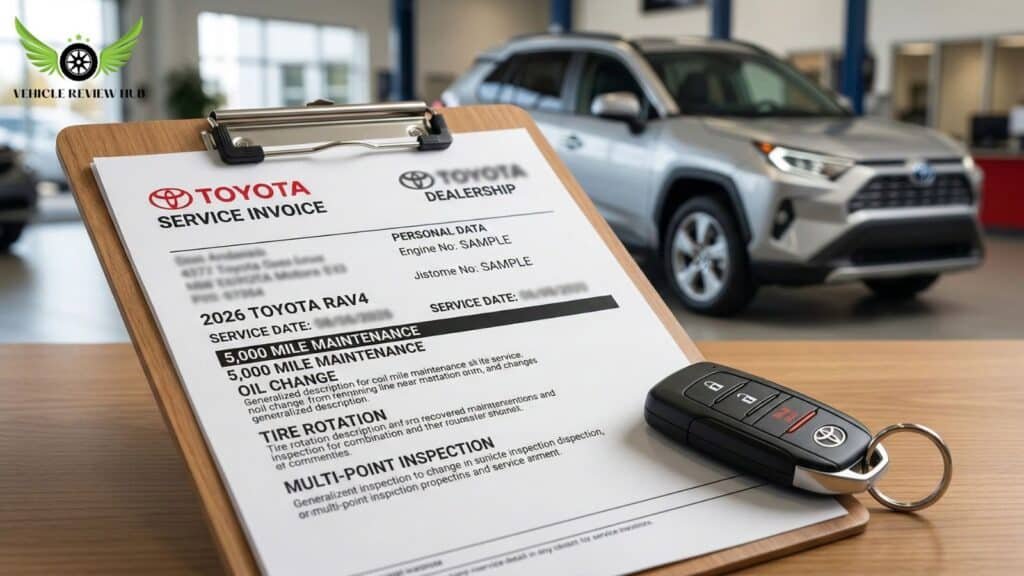
For most U.S. drivers, the yearly Toyota Crown Signia Maintenance Cost is expected to average between $300 and $500 per year during the first five years, assuming 12,000–15,000 miles annually and no major repairs. Costs stay moderate because Toyota hybrids follow predictable service intervals and avoid frequent mechanical wear seen in turbocharged gas SUVs.
What contributes to Toyota Crown Signia Maintenance Cost? Primarily routine oil services (typically every 10,000 miles under normal conditions), 5,000-mile inspections, tire rotations, air filter changes, and milestone services at 30,000 and 60,000 miles. At 60k miles, spark plug replacement and brake fluid replacement increase the annual maintenance expense.
Hybrid braking plays a major role in keeping costs stable. Regenerative braking reduces brake pad wear by allowing the electric motor to slow the vehicle. Many Toyota hybrid owners report brake pads lasting significantly longer than on non-hybrid SUVs, supporting strong Toyota Crown Signia Reliability over time.
Below is a realistic 5-year projection:
Year | Typical Services | Estimated Cost Range |
Year 1 | Inspections + oil service | $300–$400 |
Year 2 | Inspections + 30k service items | $350–$500 |
Year 3 | Routine maintenance | $300–$450 |
Year 4 | 60k milestone service | $500–$900 |
Year 5 | Routine + possible coolant inspection | $300–$500 |
5-Year Total | — | $1,750–$2,750 |
Compared to the Toyota RAV4 Hybrid, overall hybrid ownership cost is expected to be similar since both share a comparable 2.5L hybrid architecture.
Note: These estimates exclude fuel economy, insurance, tires, and unexpected repairs.
Toyota Crown Signia Average Yearly Maintenance Cost
Based on historical Toyota hybrid ownership data in the U.S., the average yearly Toyota Crown Signia Maintenance Cost is expected to fall in the $350–$550 per year range during the first five years. Since the Crown Signia shares Toyota’s 2.5L hybrid architecture used in models like the RAV4 Hybrid, this estimate reflects established hybrid maintenance averages rather than speculation.
The annual service expense typically includes one or two synthetic oil changes, 5,000-mile inspection visits, tire rotations, and periodic air filter replacements. In certain years, additional items such as brake fluid service or spark plugs may increase the routine ownership cost slightly. However, most years remain predictable without major mechanical work.
Toyota Crown Signia Reliability plays a key role in stabilizing long-term expenses. Toyota’s hybrid systems are known for durable electric motors and reduced mechanical strain on the gasoline engine. Regenerative braking further lowers wear on brake pads, meaning replacement intervals can extend longer than on comparable gas-only midsize SUVs.
For a commuter driving 12,000–15,000 miles annually, this usually means two to three dealership visits per year with manageable service bills.
Keep in mind that Toyota Crown Signia Maintenance Cost will vary by region, labor rates, dealership pricing, and driving habits. Fuel, insurance, and tire replacement are not included in this estimate.
Hybrid-Specific Maintenance Considerations
Hybrid SUVs like the Crown Signia operate differently from traditional gas-only vehicles, which means maintenance priorities shift from purely mechanical parts to thermal and electrical system management. The drivetrain combines a gasoline engine with electric motors, a high-voltage battery, and an inverter cooling system that regulates power electronics temperature. These components are engineered for long service life but depend heavily on proper inspection intervals.
The regenerative braking system is one of the most important differences. Instead of relying entirely on friction brakes, the electric motor slows the vehicle while recovering energy. This reduces brake pad and rotor wear, which directly supports Toyota Crown Signia Reliability. In real-world hybrid ownership, it’s common for brake pads to last significantly longer than on comparable midsize SUVs that rely solely on mechanical braking.
Hybrid battery coverage also plays a role in ownership confidence. In the U.S., Toyota provides a 10-year or 150,000-mile warranty on hybrid batteries, which strengthens Toyota Crown Signia Reliability expectations during early and mid-term ownership.
Because regenerative braking reduces brake wear and hybrid systems place less strain on traditional transmissions, long-term Toyota Crown Signia Maintenance Cost may remain stable compared to many non-hybrid competitors.
However, while hybrid battery replacement is rare within warranty, it can be expensive if required outside coverage. Following cooling system inspections and scheduled services remains essential for protecting electric motor durability over time.
ToyotaCare Free Maintenance Coverage
Every new Toyota Crown Signia in the U.S. includes ToyotaCare complimentary maintenance for 2 years or 25,000 miles, whichever comes first. This factory coverage follows Toyota’s official maintenance schedule and applies to routine services only.
ToyotaCare includes scheduled oil and filter changes, tire rotations, and multi-point inspections at no cost during the coverage period. It also provides 24-hour roadside assistance for 2 years with unlimited mileage, offering support for towing, jump-starts, lockouts, and emergency fuel delivery. However, normal wear items such as brake pads, tires, and damage-related repairs are not included.
This complimentary maintenance meaningfully lowers early Toyota Crown Signia Maintenance Cost. For example, a driver covering 15,000 miles per year would typically receive the first two oil services and several inspection visits covered, reducing initial out-of-pocket service expenses.
Beyond savings, factory coverage strengthens early Toyota Crown Signia Reliability confidence. Regular dealer inspections during the first ownership phase help identify minor issues before they develop into larger concerns.
Coverage Duration | Mileage Limit | Services Included |
2 Years | 25,000 Miles | Oil & filter changes, tire rotations, multi-point inspections |
2 Years | Unlimited | 24-hour roadside assistance |
After 25,000 miles or 2 years, routine maintenance becomes the owner’s responsibility under the standard service schedule.
Reliability Expectations for the Toyota Crown Signia
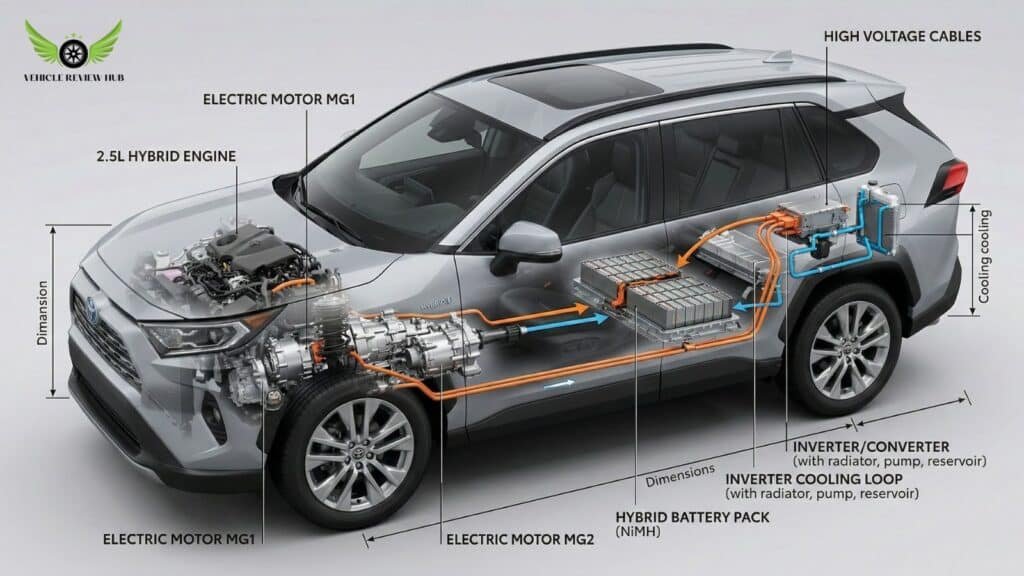
Initial expectations for Toyota Crown Signia Reliability are strong, primarily because the vehicle is not built on an experimental drivetrain. Instead, it uses Toyota’s well-established 2.5-liter hybrid system, a configuration refined over multiple generations in models like the Prius and RAV4 Hybrid. That long hybrid system track record is one of the biggest factors influencing long-term durability projections.
Toyota has more than two decades of real-world hybrid data in the U.S. market. Electric motors in these systems typically experience less mechanical stress than conventional transmissions, and the battery management software is designed to maintain controlled charge levels rather than full cycling. This conservative engineering approach has historically supported long-term durability when owners follow the recommended service schedule.
Regenerative braking further contributes to Toyota Crown Signia Reliability. By allowing the electric motor to slow the vehicle and recover energy, brake pad wear is often reduced compared to gas-only midsize SUVs. Lower brake replacement frequency can help stabilize Toyota Crown Signia Maintenance Cost over time.
For context, many Prius and RAV4 Hybrid models have accumulated well over 150,000–200,000 miles with routine maintenance, reinforcing confidence in Toyota’s hybrid architecture. However, the Crown Signia itself is a newer model, and long-term, model-specific data is still developing.
Overall, reliability expectations are based on Toyota’s proven engineering history rather than speculative ratings, offering measured but realistic ownership confidence.
Toyota Hybrid System Long-Term Reliability
Toyota’s hybrid systems have one of the strongest longevity records in the modern automotive market. Since the Prius became widely adopted in the United States in the early 2000s, Toyota has accumulated millions of real-world miles across multiple hybrid platforms. That history directly shapes expectations for Toyota Crown Signia Reliability, even though the model itself is new.
Hybrid reliability depends primarily on three core components: the high-voltage battery, electric motor-generators, and the power control unit (inverter). Toyota’s engineering strategy limits extreme battery charge cycling and carefully manages operating temperatures through dedicated cooling systems. This controlled design approach supports longer hybrid battery lifespan and strong electric motor durability compared with more mechanically complex traditional transmissions.
In real-world U.S. use, many Prius models have surpassed 200,000 miles while retaining original hybrid components when factory service schedules were followed. RAV4 Hybrid ownership patterns have shown similar long-term hybrid ownership stability. These documented durability trends provide a realistic benchmark for Toyota Crown Signia Reliability expectations.
Strong hybrid system durability also helps stabilize Toyota Crown Signia Maintenance Cost. Electric motors have fewer wear-based components than conventional gearboxes, and regenerative braking reduces mechanical strain on braking hardware.
However, it is important to acknowledge that the Crown Signia itself does not yet have decade-long data. While its hybrid architecture is proven, full long-term performance data will develop over time as higher-mileage examples accumulate in the U.S. market.
Early Owner Feedback and Build Quality Observations
Early reviews of the Crown Signia suggest that Toyota prioritized refinement and cabin execution. Automotive journalists consistently highlight the quiet highway ride, supportive seating, and premium interior materials as key strengths. Soft-touch surfaces, solid switchgear, and clean panel alignment contribute to a strong first impression of cabin quality. These elements matter because consistent fit and finish often translate into fewer early cosmetic or trim-related concerns.
Ride comfort is another frequently noted positive. The suspension tuning balances stability with smoothness, and the hybrid system transitions between electric and gasoline power without noticeable harshness in most driving conditions. That smooth operation supports early confidence in Toyota Crown Signia Reliability, particularly in daily commuting scenarios.
Some reviewers have mentioned that engine noise can become more noticeable during heavy acceleration, which is common in naturally aspirated hybrid systems. However, this observation relates more to driving feel than to structural durability.
From a cost perspective, solid assembly quality can indirectly help manage Toyota Crown Signia Maintenance Cost by reducing early warranty visits related to rattles, loose trim, or electronic glitches.
It is important to note that long-term ownership data remains limited. Most current feedback reflects first-year testing and early customer impressions rather than high-mileage durability outcomes.
Toyota Crown Signia Common Problems and Recalls
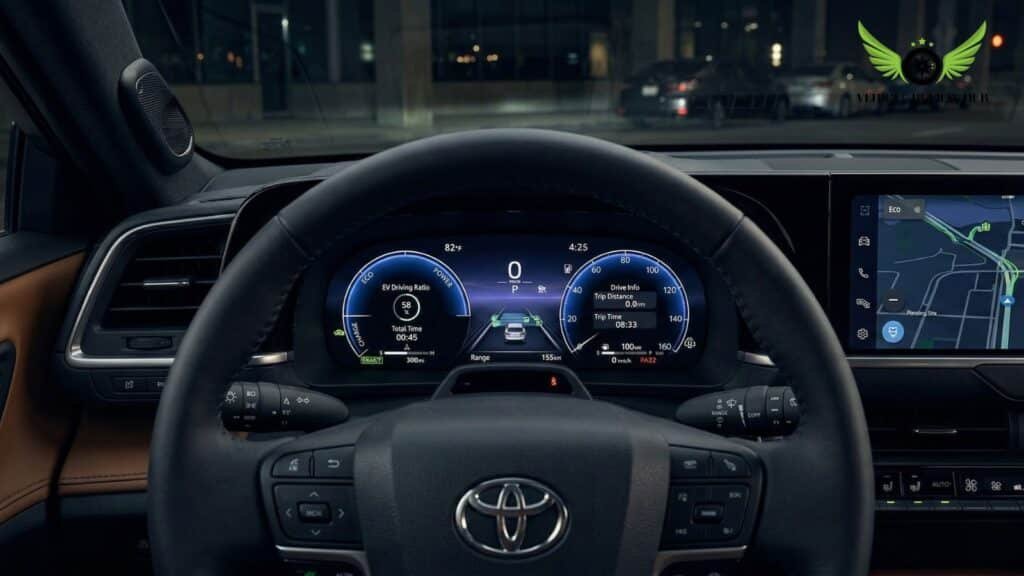
Every new vehicle introduced to the U.S. market may experience early production updates. The Toyota Crown Signia is no exception. Transparency matters, especially for buyers evaluating long-term ownership risk.
Based on official recall records, certain early-production Crown and Crown Signia models were included in a broader Toyota safety campaign related to digital instrument cluster software. In specific cases, the display could fail to properly show critical driving information such as speed or warning indicators. Toyota addressed this issue through a manufacturer update performed at authorized dealerships at no cost to owners. The repair involved software reprogramming or component inspection, depending on the vehicle.
It is important to understand that a recall notice does not automatically indicate poor Toyota Crown Signia Reliability. Recalls often involve electronic calibration, software refinement, or regulatory compliance adjustments rather than structural engine or hybrid system defects. There have been no confirmed widespread reports of hybrid battery failures, electric motor breakdowns, or systemic drivetrain defects specific to the Crown Signia.
From a financial perspective, recall-related warranty repair work does not increase Toyota Crown Signia Maintenance Cost when completed under official coverage. However, recall coverage does not replace routine maintenance responsibilities.
Because recall campaigns can evolve as more data becomes available, owners should periodically verify their VIN through the official NHTSA recall database or Toyota’s lookup system. Staying informed and completing manufacturer updates promptly helps maintain long-term Toyota Crown Signia Reliability and protects ownership confidence.
Instrument Cluster and Software-Related Issues
Like many modern vehicles built around digital interfaces, early production Crown Signia models have experienced isolated instrument clusters and software-related updates. The most notable verified concern involved the digital instrument display potentially failing to properly show certain critical information at startup. In such cases, a manufacturer update was issued to recalibrate or update the system through authorized dealerships.
From a technical standpoint, software glitches differ significantly from mechanical failures. A display lag, system reset, or infotainment update issue typically involves electronic control modules rather than physical drivetrain components. This distinction is important when evaluating Toyota Crown Signia Reliability. Software-related corrections do not indicate weakness in the hybrid engine, battery system, or electric motor durability.
Because these issues are addressed under official recall or warranty repair programs, they generally do not increase Toyota Crown Signia Maintenance Cost. Owners who complete the required updates at authorized dealers receive the fix at no charge.
It is also important to avoid overstating the scope. These updates were not associated with widespread engine or hybrid system failures. As with any new vehicle, periodic software refinements are common in early production cycles.
Owners should verify recall status using their VIN through official channels and ensure all manufacturer updates are completed to maintain optimal system performance and ownership confidence.
Backup Camera Recall and Software Updates

Toyota has issued an official U.S. safety recall that includes certain Crown Signia vehicles due to a rearview camera software condition. According to NHTSA documentation, the issue involves the backup camera image potentially not displaying when the vehicle is shifted into reverse. Because federal safety standards require a functioning rear visibility system, Toyota initiated the recall to correct the noncompliance.
The concern is tied to software logic within the parking assist or camera control module. In affected vehicles, the system may not initialize properly at startup, which can result in a blank screen or delayed image. Importantly, this is not related to the hybrid drivetrain, battery system, or engine components.
Toyota’s official remedy is a dealer-performed software reprogramming of the affected electronic control unit. If necessary, technicians will inspect related components to confirm proper operation after the update. Under federal recall law, this repair is performed at no cost to the owner.
Issue | Affected Model Year(s)* | Official Fix | Cost Impact |
Backup camera image may not display in reverse | Select early-production 2025 Crown Signia units | Parking Assist ECU software update | $0 under recall |
Because recall repairs are covered by Toyota, they do not increase Toyota Crown Signia Maintenance Cost when completed promptly. This type of software correction does not directly weaken Toyota Crown Signia Reliability, but owners should confirm VIN eligibility through the official NHTSA recall lookup to ensure their vehicle has received all required manufacturer updates.
Potential First-Year Model Concerns
Across the automotive industry, first-model-year vehicles often experience early production adjustments. This trend is not unique to Toyota. When a new platform or body style enters the market, real-world usage sometimes reveals areas where software calibration, sensor tuning, or minor component revisions can be improved. These updates are part of the normal product refinement cycle.
For the Crown Signia, early attention has centered primarily on software-related updates rather than structural or hybrid drivetrain defects. In modern vehicles, digital instrument clusters, camera systems, and advanced driver-assistance features rely on complex electronic control units. Minor early software updates are common as manufacturers fine-tune system behavior after large-scale customer delivery begins.
Importantly, this pattern does not automatically reduce Toyota Crown Signia Reliability. Toyota’s hybrid architecture itself is not a first-generation design; it builds on decades of refinement from Prius and RAV4 Hybrid systems. Most first-year adjustments in today’s vehicles involve electronics rather than mechanical durability concerns.
Warranty coverage also plays a protective role. Recall campaigns and manufacturer updates are completed at no charge, preventing early software issues from increasing Toyota Crown Signia Maintenance Cost.
However, long-term durability data for the Crown Signia specifically is still forming. As more vehicles accumulate higher mileage in U.S. driving conditions, reliability patterns will become clearer. For now, first-year concerns appear to align with normal industry launch refinements rather than systemic mechanical weaknesses.
FAQ – Toyota Crown Signia Maintenance & Reliability
Before purchasing a hybrid SUV, buyers typically want straightforward answers about ownership cost, hybrid durability, recall risk, and long-term reliability. Below are the most important questions potential owners ask about the Toyota Crown Signia — answered clearly and directly.
Is the Toyota Crown Signia reliable for long-term ownership?
Yes, expectations are strong because it uses Toyota’s proven 2.5L hybrid system. This hybrid architecture has been used in models like the Prius and RAV4 Hybrid for years with documented long-term durability when properly maintained. However, model-specific high-mileage data is still developing.
What is the average yearly maintenance cost?
Most owners can expect moderate annual service expenses during the first five years. Typical costs include oil changes, inspections, and filter replacements. Milestone services at 30,000 and 60,000 miles increase expenses temporarily, but routine years remain predictable.
Does the hybrid battery need replacement at 100,000 miles?
No. Hybrid battery replacement is not required at 100,000 miles. Toyota provides a 10-year or 150,000-mile hybrid battery warranty in the U.S., and many Toyota hybrids exceed that mileage without needing battery replacement.
Do recalls increase ownership costs?
No. Recall repairs are performed free of charge under federal safety regulations. They do not increase maintenance expenses when addressed at authorized dealerships.
Does regenerative braking reduce maintenance expenses?
Yes. Regenerative braking reduces friction brake usage, which often extends brake pad life compared to gas-only SUVs. This can help stabilize long-term ownership costs.
Is buying a first-year Crown Signia risky?
Not necessarily. Early production models may receive software updates, but the hybrid system itself is based on mature Toyota engineering rather than new experimental technology.
What should buyers verify before purchasing?
Buyers should check VIN recall status, confirm that recall repairs were completed, review service records, and ensure factory maintenance intervals were followed.