Short answer: Honda CB300R reliability is genuinely strong for a small single — a proven 286cc engine with a simple service schedule, a clean mechanical record, and just two recalls in its whole US run, both of them free dealer fixes. But Honda CB300R reliability is not a blank cheque: the 2019 transmission recall, the 2019–2025 headlight recall, and the bike’s small tank and firm seat are the known talking points, and this Honda CB300R reliability guide reports them plainly. One framing fact first: the CB300R is a current model, on sale new in 2026 at $4,499 plus $600 destination — not a discontinued bike, and this Honda CB300R reliability guide covers a motorcycle you can still buy new with a full warranty.
One identity rule governs this whole Honda CB300R reliability guide: the CB300R is the 286cc Neo Sports Café naked sold in the US from 2019 to 2026, not the faired CBR300R that shares its engine family, and not the older CB300F it replaced. Every figure below belongs to the naked CB300R by year and era. For the full model story, see our Honda CB300R review.
Honda CB300R Reliability Overview
The headline for Honda CB300R reliability is simple: owners like this motorcycle, and the mechanical record backs them up, which is why Honda CB300R reliability stands out in the lightweight class. Across a seven-year US run there is no chronic engine failure, no gearbox scandal, and no electrical plague — just ordinary wear items, two recalls, and the small-bike compromises every buyer should know about. That combination is rare at this price.

MCN Owners Rate Reliability 4.8 Out of 5 From 13 Reviews
MCN owners rate the CB300R’s reliability and build quality 4.8 out of 5 from 13 owners — a figure this Honda CB300R reliability guide labels carefully, because the sample is small and the source is British. The live MCN page also shows overall ownership at 4.4 out of 5, engine at 4.8, ride and brakes at 4.7, and value at 4.8, with MCN’s own expert reliability score at 4 out of 5. The words behind the scores matter more: MCN’s CB300R owner reviews praise typical Honda build quality and finish, with complaints concentrated on the small tank, the hard seat, and the basic equipment — not on mechanical breakdowns. Thirteen owners cannot prove a whole model run, but nothing in the wider record contradicts them, and that is the honest shape of Honda CB300R reliability evidence.
The video below in this Honda CB300R reliability guide is Motorcyclist Magazine’s MC Commute review of the 2019 CB300R — honestly named as a review, not a service tutorial — and it captures the bike’s light, easy character well.
How Mileage, Storage and Previous Care Affect Reliability
How mileage, storage, and previous care affect reliability matters more than the model year on the badge for Honda CB300R reliability. A 2021 bike with 6,000 garaged miles and a full dealer book is safer than a 2019 bike with 18,000 hard miles, no valve-service receipt, and a chain adjusted once a year. Mileage alone rarely condemns these singles, but neglect compounds: a dry chain wears sprockets, a missed valve check hides tightening clearances, and stale fuel gums the injector. For the performance story behind these miles, see our Honda CB300R performance guide.
Honda CB300R Common Problems and Wear Items
Common problems on the CB300R are refreshingly ordinary for Honda CB300R reliability: no chronic engine failure, no gearbox scandal, no electrical plague — just two recalls, one of them confined to a single model year, plus wear items any inspection catches. Everything below is labelled by authority.

Recall 25V-210: Headlight Flicker and Shut-Off Explained
Recall 25V-210 is the recall most used buyers will actually meet, and this Honda CB300R reliability guide explains it exactly. Certain 2018–2025 CB300R motorcycles may suffer headlights that flicker or shut off while riding; the remedy is a replacement headlight assembly, free of charge, with owner letters mailed May 27, 2025. One scope note matters for American buyers: the campaign names 2018 CB300R motorcycles, but the US run starts in 2019, so the 2018 year covers non-US bikes — for US buyers the affected years are 2019–2025. Check the headlight recall status by VIN before paying.
Chain, Sprockets, Tires, Fork Seals, Brakes and Electrical Checks
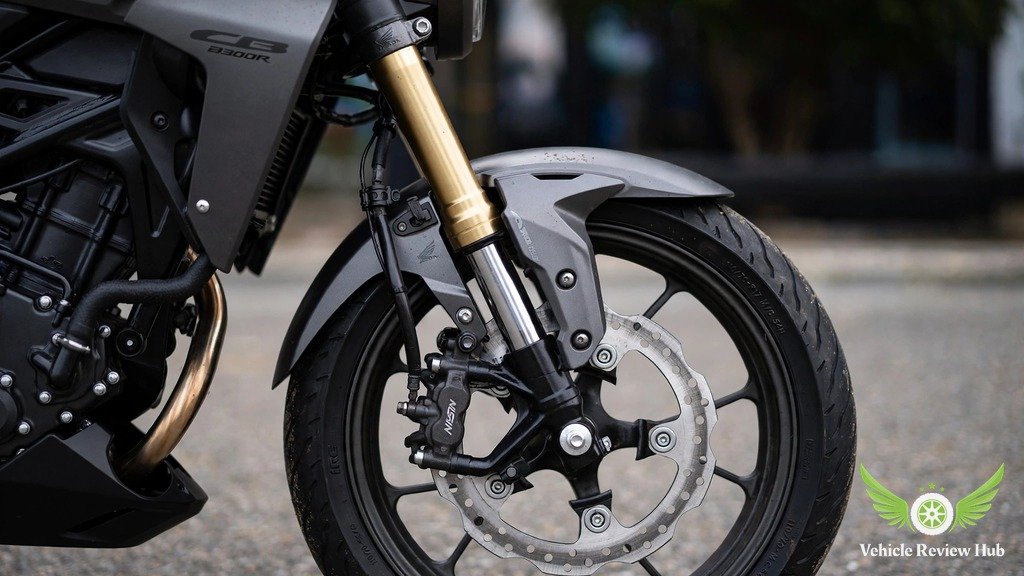
Chain, sprockets, tyres, fork seals, brakes, and electrics make up the rest of the Honda CB300R reliability watch list. Chain and sprockets wear first: look for tight spots, hooked teeth, and missing O-rings, and replace chain and sprockets as a set when adjustment runs out. Fork seals weep with age; check for oil mist on the fork legs. On brakes, check pad thickness, disc condition, and caliper movement on the 296 mm front disc with two-channel ABS — the front brake is described as a radial-mount Nissin four-piston caliper, while one MaintenanceSchedule text says two-piston, and this Honda CB300R reliability guide reports both wordings. The ABS is two-channel and it is not cornering or lean-sensitive ABS — there is no traction control, no ride modes, and no ride-by-wire on US bikes. On electrics, check the LCD dash, the lights, and the sidestand indicator; the gear-position question is covered below, because one Rider review text lists a gear indicator while US specification lists show none.
Honda CB300R Maintenance Schedule and Servicing
The maintenance schedule is the backbone of Honda CB300R reliability, and it is reassuringly simple — the schedule itself is a big part of Honda CB300R reliability: a first service at 600 miles, oil and filter every 8,000 miles or 12 months, chain care every 600 miles, and a valve check at 16,000 miles that owners most often forget. The rhythm is the same across the whole US run.

First Service at 600 Miles, Oil Every 8,000 Miles or 12 Months
First service at 600 miles, oil every 8,000 miles or 12 months — that pairing is the heartbeat of Honda CB300R reliability. The 600-mile first service clears break-in debris and establishes the service book; a used bike without it deserves a discount. After that, oil and filter go every 8,000 miles or 12 months (SAE 10W-30, JASO MA, 1.5 litres), with an interim safety inspection every 4,000 miles. The table below draws on MaintenanceSchedule’s CB300R schedule, derived from the owner’s manual.
Oil Filter at 600 and 16,000 Miles Only, Not Every Change
Oil filter at 600 and 16,000 miles only, not every change, is the single easiest service error in this topic, and this Honda CB300R reliability guide puts it in the heading. Most riders assume the filter goes with every oil change; on this bike the schedule table says otherwise. The valve-clearance inspection also falls at 16,000 miles, with spark plugs inspected at the same mark and replaced at 32,000 miles (NGK SIMR8A9, gap 0.8–0.9 mm). Demand the matching valve-service receipt — a bike near the 16,000-mile mark without it carries a bill coming. Brake fluid and coolant are time-based items covered in the next section, and both are easy to forget on a low-mileage bike.
| Service item | Honda CB300R interval (US) | Notes |
|---|---|---|
| First service | 600 miles | Establishes the service book |
| Engine oil + filter | Oil every 8,000 miles / 12 months | SAE 10W-30 JASO MA, 1.5 L; interim checks 4,000 miles |
| Oil filter replacement | At 600 and 16,000 miles ONLY | Not every oil change |
| Valve clearance | Inspect at 16,000 miles | Receipt is the key document |
| Spark plugs | Inspect 16,000 miles; replace 32,000 miles | NGK SIMR8A9, gap 0.8–0.9 mm |
| Chain care | Lube + slack check every 600 miles | Slack 50–55 mm, sidestand, neutral |
| Brake fluid | Replace every 2 years | DOT 4; time-based |
| Coolant | Replace every 3 years | Time-based |
| Summary | Oil 8,000 mi, valves 16,000 mi | Same rhythm the whole US run |
Honda CB300R Tires, Brakes and Suspension Maintenance
Tyres, brakes, and suspension are where Honda CB300R reliability meets the road most directly, and where the bike’s light weight changes what to check. A 316-pound motorcycle is gentle on tyres and brakes, but small problems show up fast.
Chain Slack 50 to 55mm and Checks Every 600 Miles
Chain slack 50 to 55 mm and checks every 600 miles is the number this Honda CB300R reliability guide wants every owner to memorise, because it is wider than most riders expect — and wider than other Honda singles use. Measure on the sidestand in neutral, lube at the same 600-mile visit — the rhythm this Honda CB300R reliability guide recommends — and never copy another model’s tighter figure onto this bike. The chain is a #525 O-ring running 14T/36T sprockets on the 2026 bike. A chain lubed every 600 miles and adjusted to spec lasts; a dry, tight chain eats sprockets.
Valve-Clearance Inspection at 16,000 Miles and Plug Schedule
Valve-clearance inspection at 16,000 miles and plug schedule is the service that separates a kept CB300R from a neglected one in Honda CB300R reliability terms. The single’s valves tighten with use, and a skipped 16,000-mile check stores up a larger bill later. Spark plugs are inspected at 16,000 miles and replaced at 32,000 miles, and the air filter goes every 12,000 miles. The front brakes are a 296 mm disc with two-channel ABS and a 220 mm rear disc; the fork is a 41 mm inverted unit with 5.1 inches of travel, and the rear Pro-Link shock adjusts preload only. Tyres are 110/70-17 front and 150/60-17 rear on the current bike — check date codes on any used example, because a low-mileage bike can still wear old rubber.
Honda CB300R Maintenance and Ownership Costs
Ownership costs are where Honda CB300R reliability pays off in cash, and low bills are the reward for Honda CB300R reliability: fuel is cheap, routine servicing is modest, and the only genuinely large bill is the valve service. The honest catch is the new-bike price cap: a 2026 bike at $4,499.
Fuel, Routine Servicing, Tires and Replacement Parts
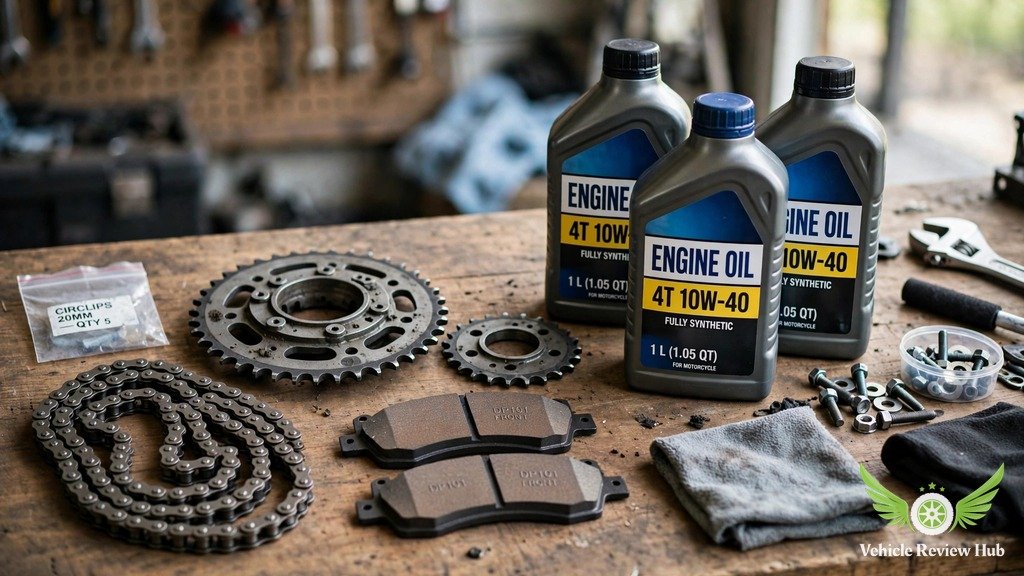
Fuel, routine servicing, tyres, and replacement parts form the everyday running costs in Honda CB300R reliability, and three of the four are modest. Fuel first: Rider’s first ride measured 73.8 mpg in city and canyon riding and 54.5 mpg at a wide-open freeway sprint, with a 2024-review average of 73.5 mpg — so real-world economy sits in the 60s and 70s for most riders, giving roughly 190 miles from the current 2.6-gallon tank. Routine servicing follows the 8,000-mile rhythm above; no published US servicing-cost figure was found, so this Honda CB300R reliability guide gives no American price quote. Tyres are widely available in these sizes, and a chain-and-sprocket set is routine when the 600-mile habit is kept. Parts availability is a qualified strength of Honda CB300R reliability: consumables are common Honda parts shared with the CBR300R family, while model-specific bodywork can take longer to source.
Repair Expenses, Parts Availability and Long-Term Ownership Costs
Repair expenses, parts availability, and long-term ownership costs complete the Honda CB300R reliability money picture: cheap years punctuated by one valve service, plus two free recall fixes on affected bikes. The major valve service is the big bill and the service most likely skipped by a previous owner, which is exactly why its receipt matters so much on a used bike. Beyond that, long-term costs stay low because there is no chronic failure to keep repairing — the record shows wear items, not breakdowns. The US warranty is one year, transferable, with HondaCare extended coverage available. This 2020 CB300R review and test ride reaches the same verdict: an outstanding, reliable entry-level bike. See our Honda CB300R buying guide for the buying decision.
| Cost item | Figure | Label |
|---|---|---|
| Fuel economy | ~73.5 mpg Rider 2024 average | ~190-mile range, 2.6 gal (current) |
| Routine service rhythm | Oil every 8,000 miles / 12 months | Interim safety checks 4,000 miles |
| Major valve service | The big bill — inspect at 16,000 miles | Receipt is key |
| Recall repairs | Free of charge at the dealer | 19V-412 + 25V-210, VIN check proves status |
| US servicing cost | No published figure found | UK £120 is NOT a US cost |
| US warranty | 1 year, transferable | HondaCare extended available |
| Summary | Cheap years, one big valve bill | New 2026 at $4,499 caps used values |
How to Keep a Honda CB300R Reliable
Keeping a CB300R reliable means doing the simple things on time. Nothing in Honda CB300R reliability requires exotic tools, and that simplicity is the point of Honda CB300R reliability — just a calendar, a chain habit, a valve receipt, and a service book proving the work, plus one paperwork check: the recall check that comes back with two names, not zero and not ten.

Preventive Maintenance, Service Records and Regular Inspections
Preventive maintenance, service records, and regular inspections are the three habits that define Honda CB300R reliability in practice, and Honda CB300R reliability rewards owners who keep them. Preventive maintenance means the 600-mile chain habit, oil every 8,000 miles, fluids on their time intervals, and the valve check booked before it is overdue. Keep every receipt: a complete book is worth real money at resale, especially on a bike whose new price caps used values. Regular inspections mean a two-minute pre-ride check — tyres, chain, brakes, lights, oil level — plus a seasonal look at fork seals, pads, battery, and fastener corrosion. One long-term ownership account worth reading is this six-year CB300R ownership thread — an India-market bike, labelled as such.
Exactly Two Recalls Name the CB300R: 19V-412 and 25V-210
Exactly two recalls name the CB300R: 19V-412 and 25V-210 — and that heading is literal, verified, and worth stating plainly for Honda CB300R reliability buyers. The first, 19V-412 (Honda KK3), names certain 2019 CB300R motorcycles only: a transmission main-shaft circlip may detach, misaligning gears, and the bike can shift from neutral into gear on start or seize the transmission and rear wheel in motion — the remedy is a replacement main shaft, free, and recall work began July 8, 2019, so check circlip completion on ANY 2019 example. The second, 25V-210 (Honda KS0), is the headlight flicker and shut-off campaign covered above, naming 2019–2025 bikes in the US with a free headlight assembly. But the instruction stays VIN-first: run the VIN and get the answer in writing before paying. Other models’ recalls stay separate: the MT-03’s reflector and VIN-label campaigns are not CB300R recalls. For Honda CB300R reliability buyers, the rule is absolute: a short, fully repaired recall record is a selling point, but only a VIN check proves it for the bike in front of you.
| Recall check | CB300R position | Note |
|---|---|---|
| 19V-412 / KK3 — transmission circlip | 2019 only; remedy replace main shaft, free | Check completion on ANY 2019 example |
| 25V-210 / KS0 — headlight flicker/shut-off | 2019–2025 US; remedy replace headlight, free | Letters mailed May 27, 2025; 2018 year is non-US |
| 2026 models | Named in NO recall | NHTSA count 0 for 2026 |
| Buyer rule | Run the VIN, get it in writing | A recall list is not a VIN check |
Honda CB300R Reliability FAQs
Direct answers to the Honda CB300R reliability questions asked most.
Is the Honda CB300R reliable?
Yes. For Honda CB300R reliability, MCN owners rate reliability and build quality 4.8 out of 5 — from a small sample of 13 owners, labelled as such — and the mechanical record shows no chronic failure.
What are the common problems on a CB300R?
For Honda CB300R reliability shoppers, the watch items are the two recalls, chain and sprocket wear, fork-seal weeping, tyre age, brake wear, and the hard seat — a comfort complaint, not a breakdown.
Which recalls affect the CB300R?
For Honda CB300R reliability checks, exactly two: 19V-412 (2019 only, transmission circlip) and 25V-210 (2019–2025 US, headlight flicker and shut-off). No 2026 bike is named in either — but run the VIN anyway.
What is the CB300R service schedule?
For Honda CB300R reliability: first service 600 miles, oil and filter every 8,000 miles or 12 months, chain care every 600 miles, brake fluid every two years, coolant every three years.
When does the CB300R need a valve check?
For Honda CB300R reliability, valve-clearance inspection falls at 16,000 miles, with spark plugs inspected at the same mark and replaced at 32,000 miles. Demand the receipt.
How often should the CB300R oil filter be changed?
For Honda CB300R reliability, the filter goes at 600 and 16,000 miles only — not at every oil change, per the manual’s schedule table.
What is the correct chain slack for a CB300R?
For Honda CB300R reliability, 50 to 55 mm measured on the sidestand in neutral, checked and lubed every 600 miles. Never copy another model’s tighter figure.
Does the CB300R have the headlight recall?
For Honda CB300R reliability readers, 25V-210 names 2019–2025 bikes in the US: headlights may flicker or shut off, fixed free with a replacement assembly. Only a VIN check proves a single bike’s status.
How much does servicing cost?
For Honda CB300R reliability budgeting, no published US servicing figure was found, so no American quote is given here. Expect modest routine costs and one large valve bill.
Is the CB300R still in production?
Yes. For Honda CB300R reliability buyers, the bike is current through 2026 at $4,499 plus $600 destination — buy it new with a full warranty, or used under that price cap.
Is buying a used CB300R worth it?
Yes, says this Honda CB300R reliability guide, when the bike is clean, recall-cleared, and priced well under the new 2026 sticker. Otherwise buy new.