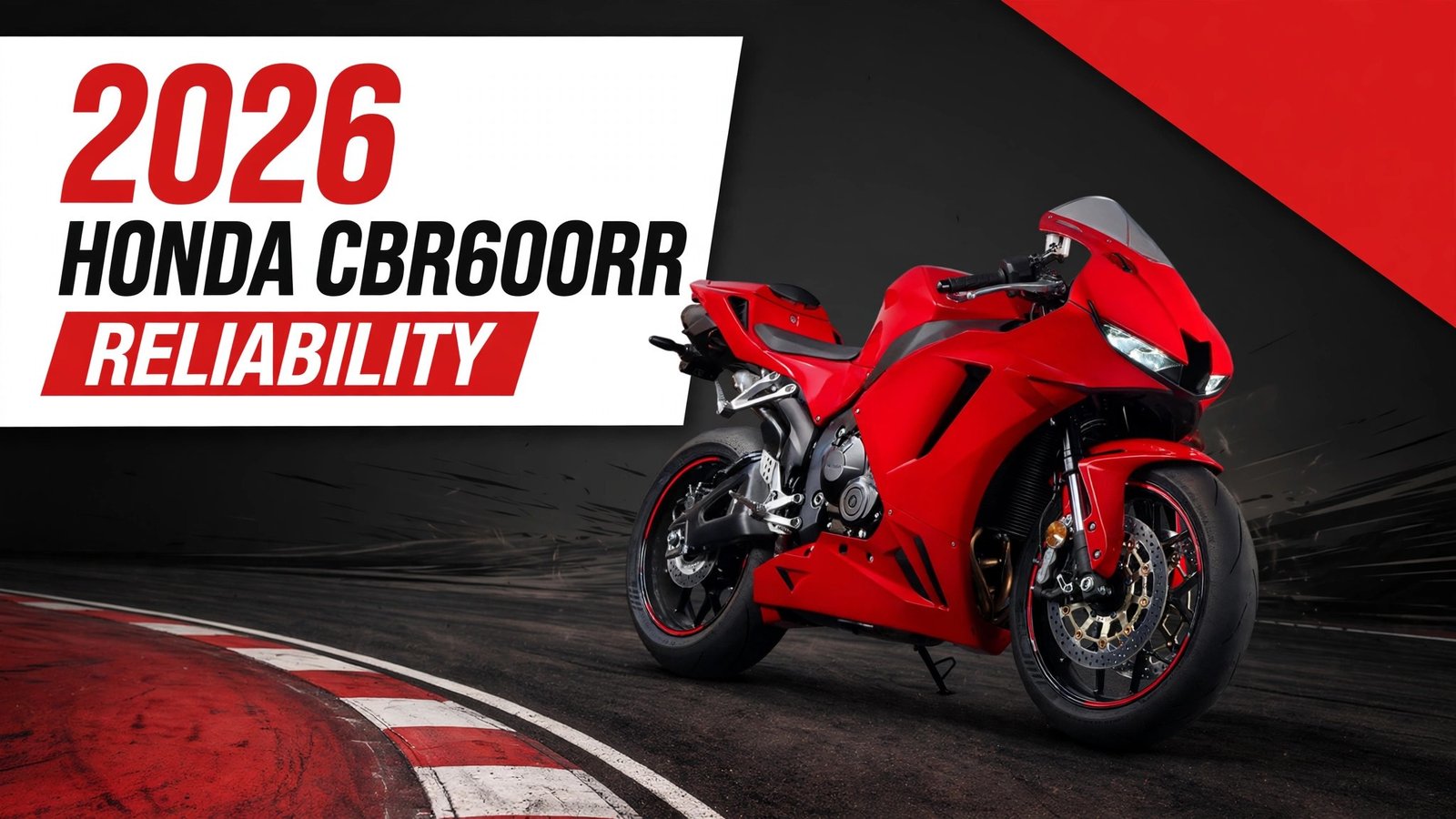
Short answer: Honda CBR600RR reliability is genuinely strong for a supersport, with one big asterisk for late-model buyers. The 599cc inline-four has been in production since 2003 with only evolutionary changes, and owner scores across three generations sit between 4.4 and 4.9 out of 5 — but the bike is now a 23-year-old design sold in the USA in its 2013-on form, and the newest bikes carry a real engine recall that every 2024–2026 buyer must check by VIN. This Honda CBR600RR reliability guide separates the proven record from the current recall headlines, works through the service schedule, and names the inspection points that actually matter on a used bike.
That framing matters because Honda CBR600RR reliability is easy to oversell in either direction. Sellers quote the Honda badge as if it were a warranty; sceptics point at the 2024–2026 engine recall as if it condemned the whole model line. Neither is fair. This Honda CBR600RR reliability guide works through the owner evidence generation by generation, the maintenance schedule from the owner’s manual, the ownership costs, and the recall record campaign by campaign, so a buyer can judge any used CBR600RR on facts rather than slogans.
Honda CBR600RR Reliability Overview
The short version of Honda CBR600RR reliability: a simple, understressed-for-its-class inline-four, a strong dealer network, and service intervals that ask very little of the owner between the 16,000-mile valve checks. The 599cc engine has run since 2003 with only evolutionary changes, and the US bike since 2013 is the same fundamental machine Honda still sells new.
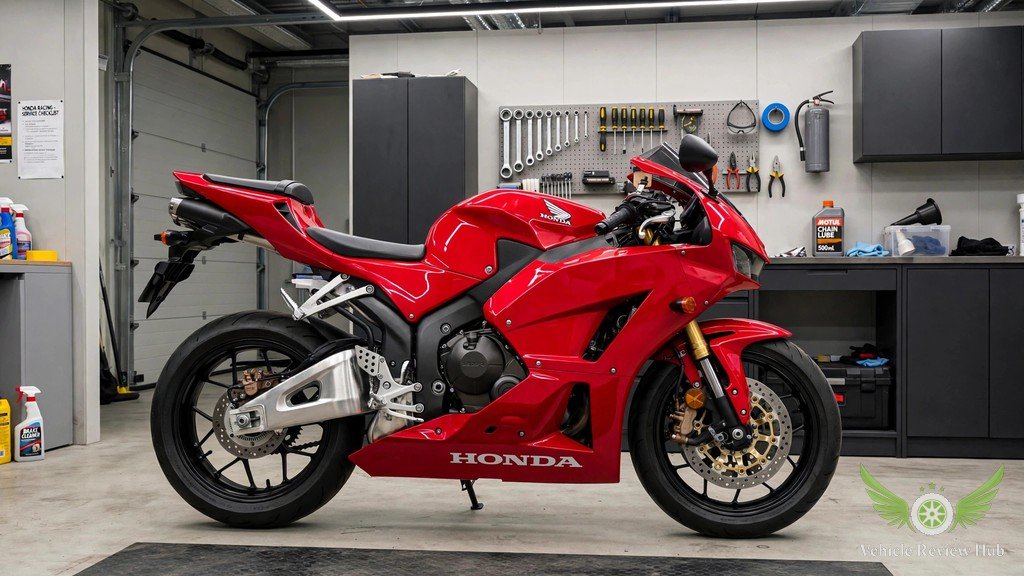
MCN Owners by Generation: 4.6, 4.9 and 4.4 Out of 5 With Small Samples
Owner evidence is where Honda CBR600RR reliability starts, and the numbers come with their sample sizes attached — that matters, because every one of these samples is small. MCN’s owner reviews for the 2003–2006 CBR600RR give reliability 4.6 out of 5, from 20 owners, with an overall rating of 4.6 out of 5. MCN’s owner reviews for the 2007–2008 bikes give reliability 4.9 out of 5, from 17 owners, with an overall rating of 4.8 out of 5 — The 2009–2018 generation scores 4.4 out of 5 for reliability, from 16 owners, with an overall rating of 4.4 out of 5; MCN’s testers still called the bike “as rugged as a Tonka toy” while noting the occasional fairing panel popping out. One warning: MCN’s 2024-on page shows just 3 out of 5, but from only 2 owners, so this guide does not treat that figure as meaningful evidence.
How Mileage, Track Use and Previous Care Affect Reliability
Mileage alone tells a buyer very little about Honda CBR600RR reliability, and this guide says so plainly. A 30,000-mile bike with full history beats a 6,000-mile bike that sat for three years on original tires and a dead battery. What matters is the pattern: oil, chain, fluid and valve work done on time. Previous use matters even more on a supersport than on any other class. An outdoor commuter shows finish wear and corroded fasteners; a track-day bike may hide crash damage behind fresh fairings; a race-school bike may have lived at redline. For the full model story, see our Honda CBR600RR review; for power and economy, see our Honda CBR600RR performance guide. Honda CBR600RR reliability rewards the buyer who reads the history, not the odometer.
Honda CBR600RR Common Problems and Wear Items
Honest Honda CBR600RR reliability coverage names the watch items with their evidence level attached. The list below comes from owner reports and test coverage, not forum folklore, and it is short — which is itself the story.

Cam Chain Tensioner Rattle: an Inspection Point, Not a Proven Defect
The most talked-about Honda CBR600RR reliability item is cam chain tensioner rattle, and this guide states its status precisely: it is an inspection point, not a proven defect. Owner forums carry reports going back to the early-generation bikes of a rattle from the right side of the engine, often noticed when warm, around 4,000–6,000 rpm, and owners frequently blame the automatic cam chain tensioner. But Honda has issued no tensioner recall, and valve clearances, exhaust components and fairing buzz can all mimic the noise. The correct response in this Honda CBR600RR reliability guide is a procedure, not a panic: listen to the engine cold and warm, ask whether the noise changes with rpm and temperature, and have a dealer diagnose a persistent rattle before money changes hands.
Chain, Sprockets, Tires, Fork Seals, Brakes and Electrical Checks
The wear items on a CBR600RR are the same ones that wear on every chain-drive supersport, and all are cheap if caught on schedule — the first rule of Honda CBR600RR reliability. Check the #525 O-ring chain (16T front, 42T rear on the current bike) for adjustment and tight spots, and replace chain and sprockets as a set when adjustment runs out. Check tires for pressure, tread and age — old rubber on a low-mileage bike is a common used-buy trap, and supersport tires wear faster than any other class. Brakes need the usual pad and fluid discipline, plus a check of C-ABS health on RA models. Electrical checks round out Honda CBR600RR reliability: the charging system on early bikes is owner-documented as a weak point when the stator sits in hot oil, batteries punish bikes left standing, and the 2003–2004 rear-brake recall noted by MCN is a reminder to run the VIN on any early bike. Fairing fit deserves its own look: MCN noted panels popping out on 2009–2018 bikes, and mismatched fasteners and overspray point to repaired crash damage.
Honda CBR600RR Maintenance Schedule and Servicing
This section is the core of Honda CBR600RR reliability, because the schedule is the one thing Honda has fully published for this bike — and it is generous for a supersport. Oil every 8,000 miles, valves every 16,000, chain every 500: follow it and the inline-four does the rest.

First Oil at 600 Miles, Then Every 8,000 Miles or 12 Months
Honda’s schedule for the CBR600RR starts with a first service at 600 miles or one month, then engine oil every 8,000 miles or 12 months, whichever comes first — verified in the owner’s manual, which lists the initial change at 600 miles and regular changes every 8,000 miles. Recommended oil is SAE 10W-30 meeting JASO MA. The video below shows an oil change on a 2007–2012 CBR600RR from CycleCruza’s DIY maintenance series — an earlier generation, not the current bike, but the same basic procedure of fairing removal, drain, filter and refill, and it is useful for Honda CBR600RR reliability readers precisely because it walks through the job step by step rather than skipping the fiddly parts.
Two habits matter most: change the oil on time even on a low-mileage bike, and never let the chain go dry. Track riders should halve the oil interval.
Valve-Clearance Inspection Every 16,000 Miles and Plug Schedule
The 16,000-mile valve-clearance inspection is the big-ticket item in Honda CBR600RR reliability, and it deserves an honest explanation rather than a scary number. The owner’s manual marks valve clearance for inspection at 16,000 miles, and Honda rates valve work dealer-recommended, so most owners pay a dealer for this one. The CBR600RR uses shim-under-bucket adjustment, so a tight valve means a camshaft-out job with new shims. Spark plug scheduling is where manuals disagree, and this Honda CBR600RR reliability guide reports the disagreement instead of picking a winner: the 2012 owner’s manual table lists plug service at 24,000 km and 48,000 km marks, while later US manuals fold plug inspection into the 16,000-mile valve service. Follow your own model-year manual; a plug change at either interval is correct Honda CBR600RR reliability maintenance, not a warning sign.
| Service item | CBR600RR interval | Note |
|---|---|---|
| First service | 600 miles / 1 month | Oil + checks |
| Engine oil | Every 8,000 miles / 12 months | SAE 10W-30, JASO MA |
| Valve clearance | Inspect every 16,000 miles | Dealer-recommended, shim-under-bucket |
| Spark plugs | Per model-year manual table | 2012 manual: 24,000 / 48,000 km marks |
| Drive chain | Clean + lubricate every 500 miles | #525 O-ring, 16T/42T current bike |
| Brake fluid | Replace every 2 years | Calendar item, DOT 4 |
| Coolant | Replace every 3 years (manual) | See coolant conflict note below |
| Summary | 8,000-mile oil, 16,000-mile valves | Long intervals for a supersport |
Honda CBR600RR Tires, Brakes and Suspension Maintenance
Tires, brakes and suspension are where Honda CBR600RR reliability meets the road. Stock setup on the current bike is straightforward: a 41mm Showa SFF-BP fork with 4.7 inches of travel, a Unit Pro-Link rear shock with 5.1 inches, dual 310mm front discs with radial four-piston calipers, and a single 220mm rear disc.
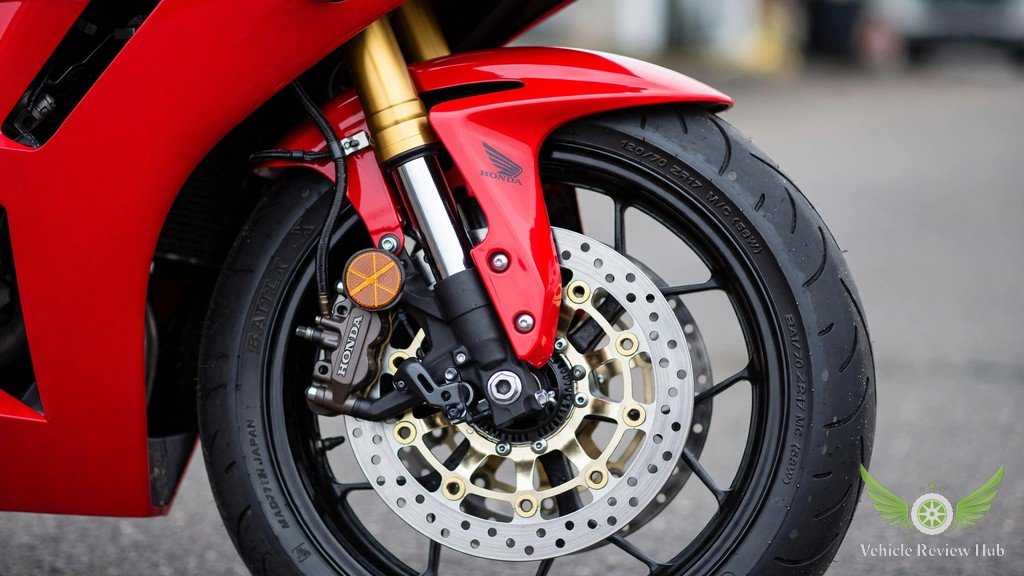
Chain Care Every 500 Miles and Coolant Interval Conflicts Explained
Chain care is the highest-value job in Honda CBR600RR reliability: the owner’s manual lists drive-chain cleaning and lubrication every 500 miles, more often than the 600-mile figure on Honda’s smaller bikes, and supersport chains live harder lives than commuter chains. Clean, lubricate, and check slack at several points — a chain tight in one spot and slack in another is worn out. Coolant is where the schedule genuinely conflicts, and this Honda CBR600RR reliability guide explains both sides. The owner’s manual marks radiator coolant for replacement at 3 years, a calendar interval, using Pro Honda HP Coolant premixed. Some independent service schedules and dealer guides instead quote a mileage-based coolant interval, and some owners simply change coolant with the valve service. The conflict is harmless: coolant does not wear by miles the way oil does, so the manual’s 3-year figure is the authority.
Brake Pads, Brake Fluid Every Two Years, Forks and Shock Checks
Brake pads are consumables: check thickness before every ride and replace before they score the discs. Brake fluid is replaced every two years regardless of mileage, a calendar item owners forget more than any other, and on RA models the C-ABS system needs its own health check: a warning light, a soft lever, or a pump that never cycles on start-up all mean dealer diagnosis, not a home bleed. Fork and shock checks follow the same discipline: seals, stanchions, linkage bearings and the HESD steering damper — and treat soft suspension at track pace as a limit, not a breakdown.
Honda CBR600RR Maintenance and Ownership Costs
Ownership costs are where Honda CBR600RR reliability becomes a budget question, and the answer is reassuring only if the buyer prices the 16,000-mile service and the tire bill honestly. It is one of the cheapest supersports to buy and keep — but tires, chains and dealer valve work are the three bills that surprise owners.
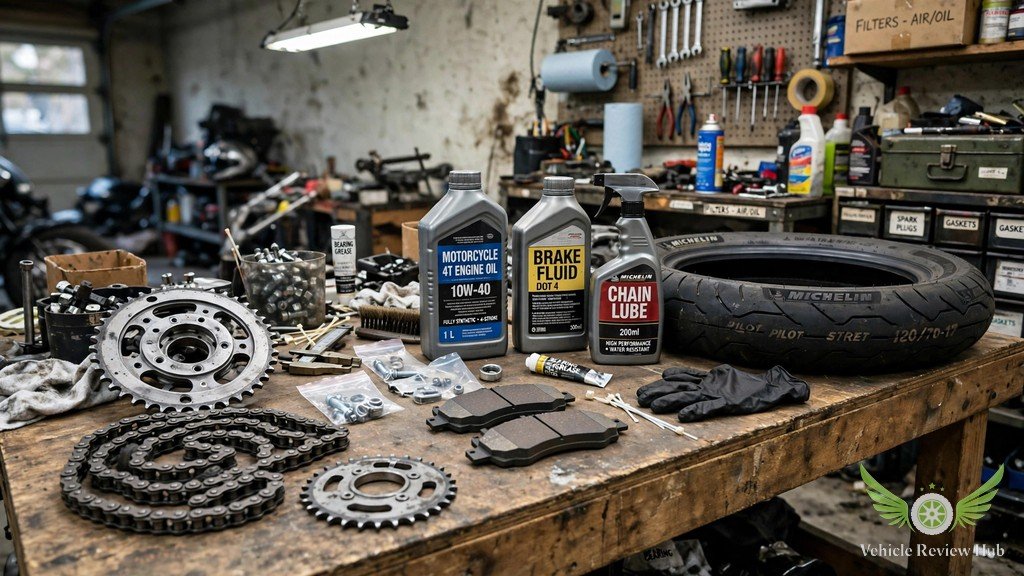
Fuel, Routine Servicing, Tires and Replacement Parts
Fuel is a modest running cost in Honda CBR600RR reliability: the 4.8-gallon tank keeps fill-ups infrequent for a supersport; the performance guide covers mileage in detail. Routine servicing is modest: oil and filter, chain care, fluid every two years, coolant every three years, and the 16,000-mile valve inspection. No published US servicing-cost figure was found to quote — get a local dealer quote for the valve service before buying a bike approaching 16,000 miles. Tires are the largest recurring item after servicing on any supersport, so budget a set per hard season. Parts availability is excellent, which keeps Honda CBR600RR reliability affordable: the platform has run since 2013 in its current form, Honda dealers stock consumables, and aftermarket support for chains, pads, filters and fairing panels is deep.
Repair Expenses, Parts Availability and Long-Term Ownership Costs
The big repair expense on any faired supersport is crash damage, and the CBR600RR is no exception — but no evidence marks its engine or gearbox a weak point outside the specific recalls below, and the valve-inspection schedule exists precisely to catch wear before it becomes a rebuild. A valve inspection is a few hours of dealer labour. Beyond the engine, long-term Honda CBR600RR reliability costs are shaped by consumables and cosmetics — tires, chains, brake pads, batteries, fork seals, and fairing panels after a drop — and by the service book: a bike approaching a valve interval costs its next owner that service, so a used price should reflect work due. For the buying picture, see our Honda CBR600RR buying guide — including the separate engine recall that affects certain 2024–2026 bikes, which is covered there by VIN and flagged again below.
How to Keep a Honda CBR600RR Reliable
Keeping a CBR600RR reliable is disciplined, not complicated: treat the 500-mile chain routine as a habit, and inspect after every wash, not after a failure. That routine is the simplest summary of Honda CBR600RR reliability in practice.

Preventive Maintenance, Service Records and Regular Inspections
Start with the chain, because it is the highest-value job in Honda CBR600RR reliability: clean and lubricate every 500 miles, check slack at several points, and replace chain and sprockets as a set when adjustment runs out. That 500-mile habit is the cheapest Honda CBR600RR reliability insurance there is. Before every ride, inspect tires, brakes, chain, lights and controls. Do the book work on time. Store it right and Honda CBR600RR reliability improves for free: a battery tender, a wash, and a cover.
Fuel Pump Recalls 24V-113 and 24V-864: Which Years Each Covers
Two fuel-pump recalls name the CBR600RR, and they cover different years — never merge them. NHTSA campaign 24V-113 covers certain 2018–2020 CBR600RR motorcycles (plus 2018–2019 CBR1000RR models), Honda campaigns KP8 and KP9, in a multi-model action of about 17,374 bikes: an improperly molded fuel-pump impeller can warp or swell, lock the pump, and stall the engine, with owner letters mailed in April 2024. NHTSA campaign 24V-864 is the later expansion, Honda campaigns KR2–KR5, covering certain 2007 and 2009–2017 CBR600RR motorcycles (plus CBR1000RR and VFR1200 models), 40,481 bikes in total, with owner letters mailed January 3, 2025. Note the gap the expansion leaves: the 2008 model year is not named in the 24V-864 list — check any 2008 bike by VIN regardless rather than assuming it is clear. Both recalls are free dealer fixes, and both are still worth a VIN check on any bike that never visited a dealer for them — run the VIN through Honda’s own recall lookup before buying. One more recall belongs in any current Honda CBR600RR reliability conversation even though it is not a fuel-pump item: the engine recall 25V-891 covers certain 2024–2026 bikes for excessive oil consumption from improper cylinder-surface finishing, with a free repair expected from July 2026 — the buying guide covers it in full, and any 2024–2026 buyer checks it by VIN first. Bottom line: buy on history and condition, service on the book schedule, check the VIN.
Honda CBR600RR Reliability FAQs
Direct answers to the questions buyers and owners ask most about Honda CBR600RR reliability.
Is the Honda CBR600RR reliable?
Yes. Honda CBR600RR reliability is backed by MCN owner scores of 4.6 out of 5 for 2003–2006 bikes, 4.9 for 2007–2008 and 4.4 for 2009–2018, plus a long race-school history. It is maintained reliability — skip the schedule and wear catches up.
How often should I change the oil?
For Honda CBR600RR reliability, change engine oil at 600 miles first, then every 8,000 miles or 12 months. Use SAE 10W-30 meeting JASO MA, and halve the interval for track use.
When does it need a valve check?
For Honda CBR600RR reliability, valve clearance is inspected every 16,000 miles. It is a dealer-recommended job with shim-under-bucket adjustment, and the check usually finds nothing needing adjustment.
How often should I clean the chain?
For Honda CBR600RR reliability, clean and lubricate the drive chain every 500 miles, checking slack at several points, and replace chain and sprockets as a set when adjustment runs out.
Has the CBR600RR been recalled?
Yes — for Honda CBR600RR reliability checks, the fuel-pump recalls are 24V-113 for certain 2018–2020 bikes and 24V-864 for certain 2007 and 2009–2017 bikes, plus the separate engine recall 25V-891 for certain 2024–2026 bikes. Always run the VIN.
What is the cam chain tensioner rattle?
For Honda CBR600RR reliability, CCT rattle is an inspection point, not a proven defect: owner-reported rattles exist, Honda has issued no tensioner recall, and a persistent rattle needs dealer diagnosis before purchase.
What are the common problems?
For Honda CBR600RR reliability, the watch list is short: chain and tire wear, fork seal weeping, fairing panels popping out on 2009–2018 bikes, battery drain on stored bikes, charging-system weakness on early bikes, and the fuel-pump recalls. No prevailing engine or gearbox failure pattern exists in owner reports.
How much does servicing cost?
For Honda CBR600RR reliability budgeting, no published US servicing-cost figure was found to quote — get a local dealer quote for the 16,000-mile valve service, which is the largest single service bill, and budget a tire set per hard season.
Does the CBR600RR have a warranty?
For Honda CBR600RR reliability planning, new-bike warranty terms vary by market and year — US buyers should confirm the current Honda USA warranty at purchase rather than assuming another market’s terms apply.
Are parts easy to find?
Yes. Honda dealer support and the long-running platform parts base make consumables easy to find — good news for Honda CBR600RR reliability. Confirm fitment: parts do not always interchange across generations.
Should I buy a pre-2013 or 2013-on bike?
For Honda CBR600RR reliability, a 2013-on bike buys the final US generation, the SFF-BP fork and the current parts base, while a pre-2013 bike buys a lower price and older electronics. Condition and history matter more than the year split.
What should I check first on a used CBR600RR?
For Honda CBR600RR reliability, check chain and sprocket wear, tire age, fork seals, brake pad thickness, C-ABS health on RA models, fairing fit and crash history, battery health, and the VIN recall status — then confirm the 16,000-mile service is done or priced in.
Is the 2026 bike reliable?
For Honda CBR600RR reliability, the 2026 bike carries the same proven platform as the 2013-on generation — but certain 2024–2026 bikes are inside the 25V-891 engine recall, so check the VIN before buying new stock or used.