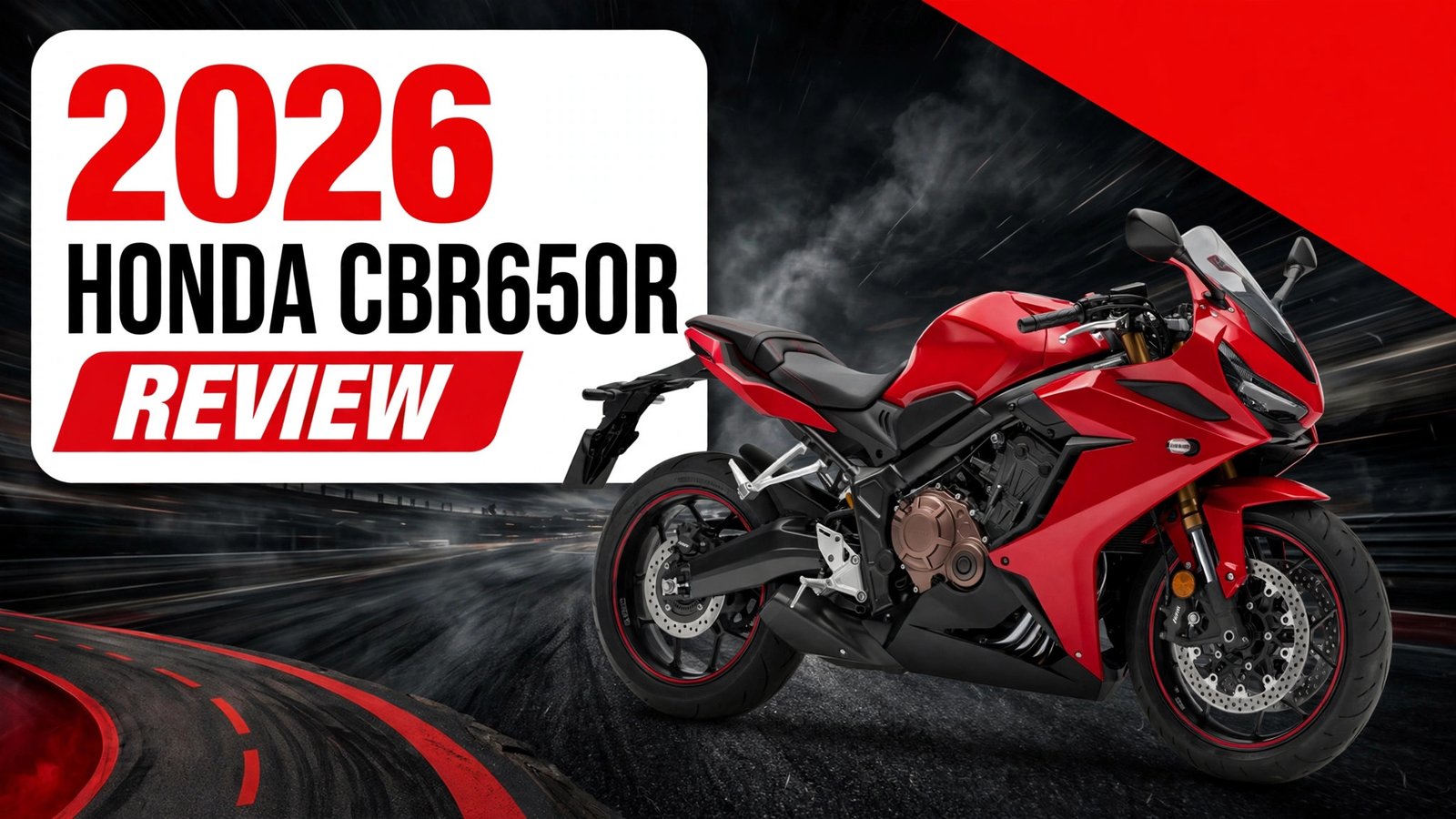
Short answer: this Honda CBR650R review finds the most sensible middleweight sport bike Honda sells in America — a 649cc inline-four with full fairings, everyday ergonomics, and, for 2026, an E-Clutch that removes the clutch lever from daily riding without removing the rider from the gearbox. The 2026 bike costs $9,199 plus a $600 destination charge, and this Honda CBR650R review treats its headline technology honestly: the E-Clutch is an automatic clutch, not an automatic gearbox, and the rest of the motorcycle is deliberately conventional — no ride modes, no IMU, no quickshifter, and no horsepower figure from Honda USA. This Honda CBR650R review covers the verified specifications, the model-year changes that matter, the honest limits of the platform, and who should buy one instead of the cheaper Kawasaki Ninja 650.
That framing matters because this Honda CBR650R review sits between two kinds of hype. One side sells the E-Clutch as a revolution that makes the bike ride itself; the other dismisses a middleweight four as an outdated compromise now that twins dominate the class. Neither is fair. This Honda CBR650R review judges the bike on what it actually is: the last affordable inline-four sport bike with Honda build quality, a price cut for 2026, and a genuinely useful piece of technology for riders who spend their miles in traffic as well as canyons.
Honda CBR650R Overview and Model-Year Updates
The CBR650R is Honda’s full-faired middleweight, and this Honda CBR650R review starts with its position in the range: sportier than the CB650R naked it shares its engine with, far more forgiving than the CBR600RR supersport, and aimed squarely at riders who want sport-bike looks and sound without supersport punishment.

What Is the Honda CBR650R and Who Is It Designed For?
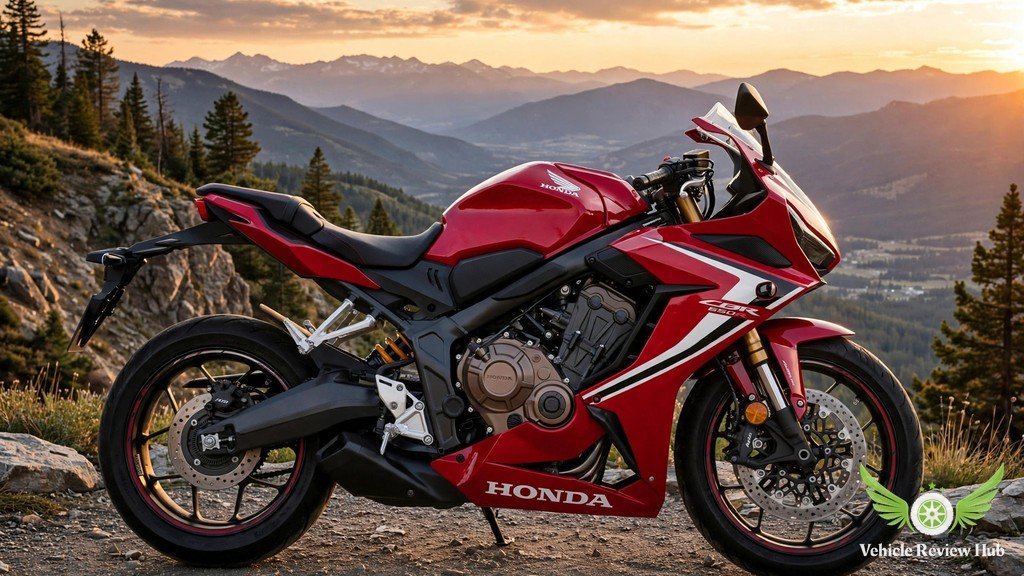
The Honda CBR650R is a 649cc liquid-cooled DOHC inline-four sport bike with a full fairing, clip-on handlebars, and a riding position that leans forward without folding the rider in half. It is designed for the rider this Honda CBR650R review keeps meeting in test coverage: someone moving up from a 300 or 500, someone returning to riding after years away, or an experienced rider who wants a second bike that is fun on a Sunday and painless on a Monday commute. What it offers instead is the rarest thing in the modern middleweight class: four cylinders, a fairing, and a price under $10,000 before destination.
US History 2019 to 2026: SFF-BP Fork in 2021 and E-Clutch in 2024
The CBR650R reached American shores as a 2019 model, replacing the CBR650F with ground-up revisions: sharper Fireblade-inspired styling, a lighter chassis, and a more powerful, higher-revving version of the 649cc four. Ultimate Motorcycling’s 2019 first-ride review noted the engine’s tractable power from about 4,000 rpm and a soft rev limiter at 12,500 rpm, with peak power arriving high in the range. The 2024 update brought the 5-inch TFT display with Honda RoadSync and, crucially, the E-Clutch — first as a variant alongside manual bikes, then, for 2025 and 2026, as the only US specification. The 2026 bike also carries a lowered MSRP, which this Honda CBR650R review treats as the year’s real news: Honda cut the price rather than raising it, a rare move that sharpens the bike’s value case against every twin-cylinder rival.
Honda CBR650R Engine and Specifications
The engine is the reason this Honda CBR650R review exists: in a class that has almost entirely switched to parallel twins, the CBR650R keeps a 649cc inline-four alive, and its smoothness, sound, and top-end character are things no twin in the price range can copy.

649cc DOHC Inline-Four at 11.6:1 With PGM-FI 32mm Throttle Bodies
At the centre of this Honda CBR650R review is a 649cc liquid-cooled DOHC inline-four, four valves per cylinder, 11.6:1 compression, and Programmed Fuel Injection through 32mm throttle bodies, driving the rear wheel through a six-speed gearbox and a #525 chain. Honda USA publishes no horsepower figure for this motorcycle, and this Honda CBR650R review invents none. The measured evidence comes from a named test: Cycle World’s dyno test of the 2019 US model recorded 80.1 horsepower at 10,950 rpm and 41.73 pound-feet of torque at 8,170 rpm at the rear wheel, with the bike tipping Cycle World’s scales at 455 pounds fully fuelled. The 94-horsepower figure that appears on aggregator pages and some reviews is a European crank rating, not a Honda USA figure, and it should never be quoted as what an American bike makes.
Weight 456 lb Before 2024 and 466 lb After, Seat Height and Details
Weight tells the E-Clutch story in miniature, and this Honda CBR650R review quotes it by generation rather than blending figures. Pre-2024 manual bikes are claimed at 456 pounds curb weight; the E-Clutch bike is claimed at 466 pounds — the E-Clutch hardware adds roughly 10 pounds, a small price for what it does. The rest of the chassis numbers are friendly for a faired sport bike: a 31.9-inch seat height, a 57.1-inch wheelbase, and a 4.1-gallon tank with a 0.8-gallon reserve. For the tested performance figures behind these numbers, see our Honda CBR650R performance guide.
| Specification | Honda CBR650R (2026, USA) | Notes |
|---|---|---|
| Engine | 649cc liquid-cooled DOHC inline-four, 11.6:1 | PGM-FI, 32mm throttle bodies |
| Gearbox / final drive | 6-speed manual with Honda E-Clutch, #525 chain | Rider still shifts with the foot lever |
| Seat height / wheelbase | 31.9 in / 57.1 in | 4.1-gallon tank, 0.8-gallon reserve |
| Curb weight | 466 lb (E-Clutch) | 456 lb for pre-2024 manual bikes |
| Front brakes | Dual 310mm discs, radial 4-piston calipers | ABS standard; single 240mm rear disc |
| Suspension | 41mm Showa SFF-BP fork / single rear shock | SFF-BP from the 2021 update |
| Summary | 2026: $9,199 + $600 destination | E-Clutch only for 2026 in the USA |
Honda CBR650R Price and Market Availability
Price in this Honda CBR650R review is the bike’s strongest argument after its engine: one specification, two colours, and a 2026 sticker that went down instead of up.

Honda CBR650R Price in the USA: $9,199 for 2026 Plus $600 Destination
The 2026 Honda CBR650R lists at $9,199 plus a $600 destination charge — $9,799 before tax and dealer fees — verified on Honda Powersports’ own 2026 page and in current dealer listings. Honda markets the price as a lowered MSRP against the 2025 bike, and this Honda CBR650R review reads that cut two ways: it makes the only inline-four in the class cheaper than the Yamaha YZF-R7 and the Suzuki GSX-8R, and it undercuts the CBR600RR by $2,300 while offering a far friendlier riding position. The full rival comparison, with every figure trim-labelled, is in our Honda CBR650R buying guide.
Matte Black Metallic and Grand Prix Red Colours for 2026
The 2026 CBR650R comes in two colours: Matte Black Metallic, new for 2026, and Grand Prix Red, the long-running signature colour of the model line. There is no separate manual trim for 2026 in the USA — every 2026 bike carries the E-Clutch — so colour is the only choice a new buyer has to make, and this Honda CBR650R review states that plainly because shoppers browsing older listings will see manual bikes, different colours, and lower-spec dashboards everywhere.
Honda CBR650R Design, Features and Technology
The technology story in this Honda CBR650R review is one headline system surrounded by deliberate simplicity: a clever automatic clutch, a modern TFT dash, and everything else kept intentionally basic.

E-Clutch Explained: an Automatic Clutch, Not an Automatic Gearbox
The E-Clutch is the most misunderstood feature in this Honda CBR650R review, so it deserves a precise explanation. Two small electric motors work the clutch for the rider: pull away from a stop, shift up or down with the foot lever, and come to a halt without ever touching the clutch lever, and the bike will not stall. The rider still chooses every gear with their foot — the bike never shifts for itself — and grabbing the clutch lever at any moment instantly returns full manual control, while a handlebar switch turns the system off entirely for riders who want a conventional clutch all the time. It is not a DCT, which is a different Honda system with two clutches and automatic shifting, and it is not a quickshifter, which only cuts ignition briefly during shifts. ChaseOnTwoWheels’ 2026 review found the system genuinely novel — clutchless up and down shifting with full manual override the second the lever is grabbed — while noting an on-off jerkiness at parking-lot speeds that cannot be feathered out, and spongy-feeling Nissin brakes on a brand-new, unscrubbed bike. That honesty matches this Honda CBR650R review’s verdict: the E-Clutch is a real convenience in traffic and a non-event everywhere else, which is exactly what it should be.
5-Inch TFT From 2024, HSTC On or Off Only and No Ride Modes
From 2024 the CBR650R carries a 5-inch full-colour TFT display with Honda RoadSync smartphone connectivity, replacing the LCD dash of earlier bikes — a genuine improvement in readability, though this Honda CBR650R review notes that RoadSync’s navigation and call features divide owners and are not a reason alone to buy a newer bike. Honda Selectable Torque Control (HSTC) is present but simple: on or off, with no lean sensitivity, because there is no IMU. There are no ride modes, no cornering ABS, no cruise control, and the throttle is cable-operated rather than ride-by-wire. None of this is a defect — it is the design brief of a motorcycle engineered for simplicity and price — but a buyer who wants electronic rider aids must look at the ZX-6R or the RS 660 instead, and a seller who describes a US CBR650R as having riding modes is inventing features. For the servicing picture behind the technology, see our Honda CBR650R reliability guide.
Honda CBR650R Riding Experience and Comfort
On the road, the CBR650R feels exactly like its specification sheet promises: a sport bike that fits real bodies, real commutes, and real weekends, with an engine that rewards revs without demanding them.
Riding Position, Handling and Low-Speed Maneuverability
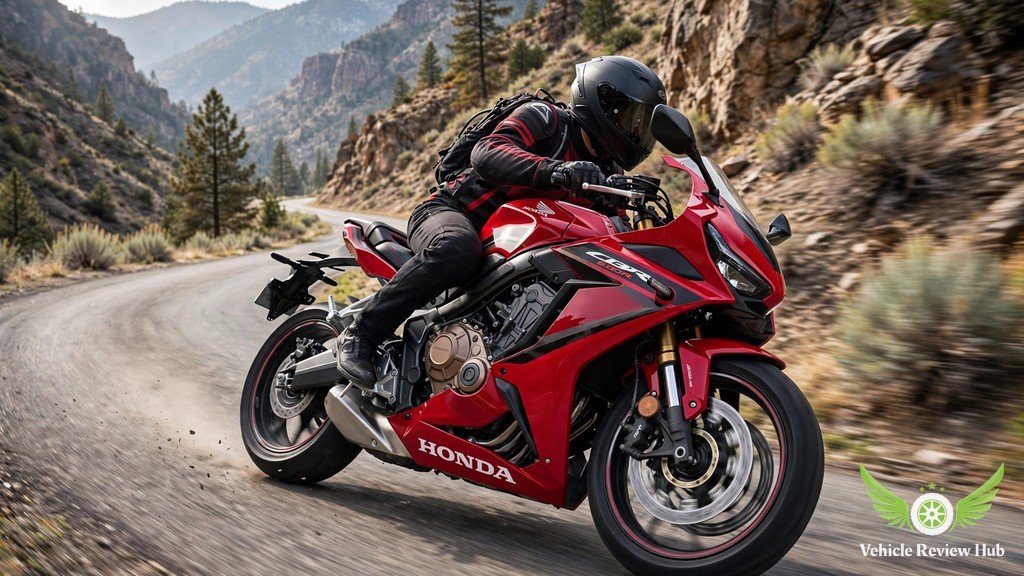
The riding position in this Honda CBR650R review is the bike’s great filter in reverse: where a supersport excludes riders, this one includes them. Clip-ons sit above the triple clamp rather than below it, the pegs are set for a moderate knee bend, and the 31.9-inch seat lets most riders reach the ground comfortably. TopSpeed’s 2026 coverage calls the bike the most practical sport bike in its class, and this Honda CBR650R review agrees — the chassis is stable and neutral, the SFF-BP fork gives the front end a precision the pre-2021 bike lacked, and the bike changes direction willingly without ever feeling nervous. The video below is a full review of the 2025 E-Clutch bike — not a magazine instrumented test, but a useful real-world account of the current bike’s character, sound, and E-Clutch behaviour on the road.
Two honest limits belong in this Honda CBR650R review alongside the praise. The stock Dunlop tyres have been criticised in tests for limiting grip compared with premium rubber, and the brakes, while strong, have a soft initial bite that some testers wanted firmer. Neither flaw dents the verdict for the intended buyer, but both belong in an honest Honda CBR650R review, and both are cheap to fix with better tyres and a brake-bleed at the first service.
Highway Comfort, Passenger Use and Everyday Practicality
On the highway the CBR650R is capable and composed, and this Honda CBR650R review rates its practicality well above its sportiness without apology. The fairing takes the worst of the wind off at speed, the engine cruises without strain, and the 4.1-gallon tank returns a practical range this Honda CBR650R review puts at roughly 120 to 150 miles in mixed riding — the full fuel-economy picture, including the hard-riding test evidence around 45 mpg, is in the performance guide. Everyday practicality is otherwise strong — Honda dealer support, deep parts availability, a 12-month warranty on a new bike, and a riding position that does not punish the rider for commuting. Ownership-cost detail lives in our Honda CBR650R buying guide, but the headline here is simple: this is a sport bike you can ride every day without making excuses for it.
Honda CBR650R Review: Pros, Cons and Verdict
The verdict in this Honda CBR650R review comes down to a simple trade: the last affordable inline-four in the class, a genuinely useful automatic clutch, and Honda build quality, in exchange for modest power, basic electronics, and tyres and brakes that reward an early upgrade.
Main Advantages and Limitations of the Honda CBR650R
Advantages in this Honda CBR650R review: a 649cc inline-four with genuine character and smoothness no twin can copy; the E-Clutch, which removes stalling and clutch work from daily riding while keeping full manual control available; a 41mm Showa SFF-BP fork that is the chassis standout; a 5-inch TFT dash with RoadSync from 2024; a 31.9-inch seat and a riding position most riders can live with; Honda reliability and dealer support; and a 2026 price of $9,199 that went down, not up. The limitations in this Honda CBR650R review are equally clear. Power is modest for the class — a rear-wheel dyno figure around 80 horsepower against twins and triples making more torque lower down — and there are no ride modes, no IMU, no cruise control, and no quickshifter. The stock tyres limit grip, the brakes feel soft at first bite, and the E-Clutch can feel jerky at parking-lot speeds.
Who Should Consider the CBR650R Over the Kawasaki Ninja 650?
Choose the CBR650R over the Kawasaki Ninja 650 if you want an inline-four rather than a parallel twin, a full fairing with supersport looks, the E-Clutch for traffic, and a chassis with a genuinely good fork — and if you accept paying $1,600 more than the Ninja 650’s $7,599 base price for those things. Choose the Ninja 650 if you want the lowest price in the class, stronger low-end torque from its twin, and a lighter, more beginner-friendly package, and if you do not care about four-cylinder sound or top-end character. For everyone else in this Honda CBR650R review — returning riders, commuters who want a sport bike, and experienced riders who want a second bike that is fun without being punishing — the CBR650R remains one of the easiest recommendations in the middleweight class, provided the buyer accepts it for what it is: a practical sport bike with a superb engine and a clever clutch, not a cut-price supersport. At $9,199 plus $600 destination for 2026, this Honda CBR650R review calls it the smartest middleweight Honda sells.
Honda CBR650R Review FAQs
Direct answers to the questions buyers ask most in this Honda CBR650R review.
What is the Honda CBR650R?
A 649cc inline-four middleweight sport bike in this Honda CBR650R review: Honda’s full-faired, everyday-usable sport bike, sold in America since 2019, built for riders who want sport-bike looks and sound without supersport ergonomics.
How much does the Honda CBR650R cost?
The 2026 Honda CBR650R costs $9,199 plus a $600 destination charge, notes this Honda CBR650R review, in Matte Black Metallic or Grand Prix Red, with the E-Clutch as standard.
What is Honda E-Clutch?
An automatic clutch, not an automatic gearbox, explains this Honda CBR650R review: the rider still shifts with the foot lever, but never needs the clutch lever to pull away, shift, or stop — and grabbing the lever instantly restores full manual control.
How much horsepower does the Honda CBR650R make?
Honda USA publishes no figure. Cycle World’s dyno test of the 2019 US model recorded 80.1 rear-wheel horsepower at 10,950 rpm, reports this Honda CBR650R review. The 94-horsepower figure is a European rating, not a US figure.
What is the seat height of the Honda CBR650R?
31.9 inches, per this Honda CBR650R review — friendly for a faired sport bike, and one reason shorter riders should sit on this bike before buying a taller rival.
How much does the Honda CBR650R weigh?
466 pounds claimed curb weight for the E-Clutch bike, 456 pounds for pre-2024 manual bikes, says this Honda CBR650R review. Cycle World weighed a 2019 bike at 455 pounds fully fuelled.
Does the Honda CBR650R have ride modes?
No. The US CBR650R has no ride modes, no IMU, and no cornering ABS through 2026, stresses this Honda CBR650R review. Traction control is a simple on-or-off HSTC system.
Does the Honda CBR650R have a TFT display?
From 2024, yes: a 5-inch full-colour TFT display with Honda RoadSync, says this Honda CBR650R review. Earlier bikes have an LCD dash.
Is the Honda CBR650R good for beginners?
It is a reasonable step-up bike, says this Honda CBR650R review, but not a first motorcycle for most riders: the 649cc four, 466-pound weight, and faired sport ergonomics suit riders with some experience better than absolute beginners.
What fuel economy does the Honda CBR650R get?
Test evidence puts hard riding around 45 mpg, notes this Honda CBR650R review, with a practical range of roughly 120 to 150 miles from the 4.1-gallon tank. Gentle riding stretches both figures.
Is the Honda CBR650R good for highway riding?
Yes, finds this Honda CBR650R review: stable at speed with useful wind protection from the full fairing, though the tank range of roughly 120 to 150 miles means more fuel stops than a touring bike.
Should I buy the CBR650R or the Ninja 650?
Buy the Honda for inline-four character, the E-Clutch, and a better fork; buy the Ninja 650 for a $1,600 lower base price and stronger low-end twin torque, advises this Honda CBR650R review.
Is the Honda CBR650R good for commuting?
Yes — the E-Clutch, the comfortable riding position, and the manageable seat height make it one of the best sport bikes for daily commuting, says this Honda CBR650R review.
When did the Honda CBR650R go on sale in the USA?
As a 2019 model, replacing the CBR650F, notes this Honda CBR650R review, with the SFF-BP fork arriving for 2021 and the E-Clutch and TFT dash for 2024.