Short answer: Honda CRF150R reliability is the reliability of a proven youth race bike with a strict, hours-based service life and an expensive top end — and this Honda CRF150R reliability guide says so plainly. The 2007 platform, updated once in 2012 and carried into 2026 with only graphics changes, has no chronic engine failure on its record — but it is a closed-course competition motorcycle with no warranty, no street legality, and a piston the owner’s manual replaces every six races, about every 15 hours. Buy on valve history and paperwork, not on plastics — that is the Honda CRF150R reliability rule in one sentence.
One framing fact belongs up front in this Honda CRF150R reliability guide: the current bike is not a new design. The 2026 CRF150R is the latest US year, but no 2027 model exists on Honda’s US site, and the bike was absent from Honda’s US lineup in 2010–2011 before returning in 2012. That matters for Honda CRF150R reliability because the 2025 MXA test of an 18-year-old bike, the 2012 update, and Honda’s 2026 specifications are the honest basis for buying advice. For the full model story, see our CRF150R review.
Honda CRF150R Reliability Overview
The headline for Honda CRF150R reliability is simple: you are buying a proven platform, and the proof is in the service record. The 149cc liquid-cooled Unicam single — 66.0 by 43.8mm, 11.7:1, fed by a 32mm Keihin carburetor every year, never fuel injected — has been raced hard since 2007, and its failure modes are well understood. What is not simple is the bill when the top end comes due.
A Proven 2007 Platform With a Rebuild Cost Warning
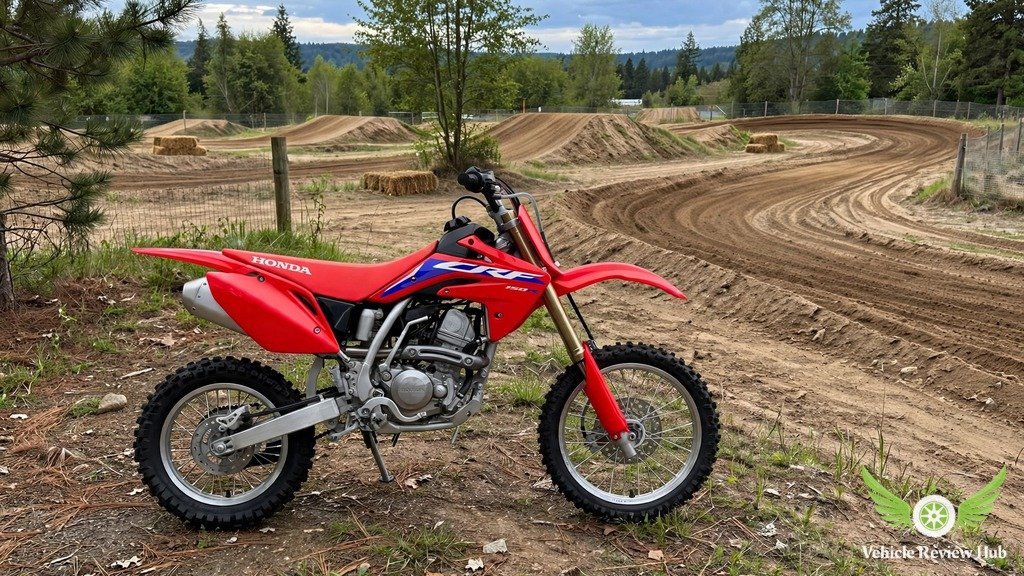
A proven 2007 platform with a rebuild cost warning is the honest summary of Honda CRF150R reliability. Proven, because the Unicam four-valve single — 26mm steel intake valves, 22.5mm steel exhaust valves, close-ratio five-speed, kick start only — has survived nearly two decades of youth racing, and the 2012 update (new head, lighter piston, redesigned cam, new 32mm Keihin FCR carburetor, revised suspension) made it stronger through the powerband. The warning is the price of that complexity: a four-stroke top end has far more moving parts than the two-stroke 85 it races against. Honda’s 2025 CRF150R owner’s manual is the document this Honda CRF150R reliability guide leans on for the service ladder.
Top-End Rebuilds Cost Around Four Times an 85’s per MXA
Top-end rebuilds cost around four times an 85’s per MXA, and this Honda CRF150R reliability guide keeps that figure attributed exactly as MXA wrote it. MXA’s 2025 test of the 150R states: “It is not if you will blow up your CRF150 but when. Rebuilding the CRF150 will cost about four times more than fixing the simpler 85.” That is MXA’s verdict, not a Honda statement. The torque and ease that make the 150R attractive against the 85s are bought with valves, shims, a cam, and a piston that all wear on race hours. For Honda CRF150R reliability, the rebuild is not a surprise expense; it is a scheduled one.
Honda CRF150R Common Problems and Wear Items
Common problems on the 150R are refreshingly ordinary for Honda CRF150R reliability: no chronic engine failure, no gearbox scandal, and a wear list any inspection catches. What has surfaced is one number-one watch item, a carburetor that punishes neglect, and the usual wear list.
Valve Clearance Is the Number One Watch Item
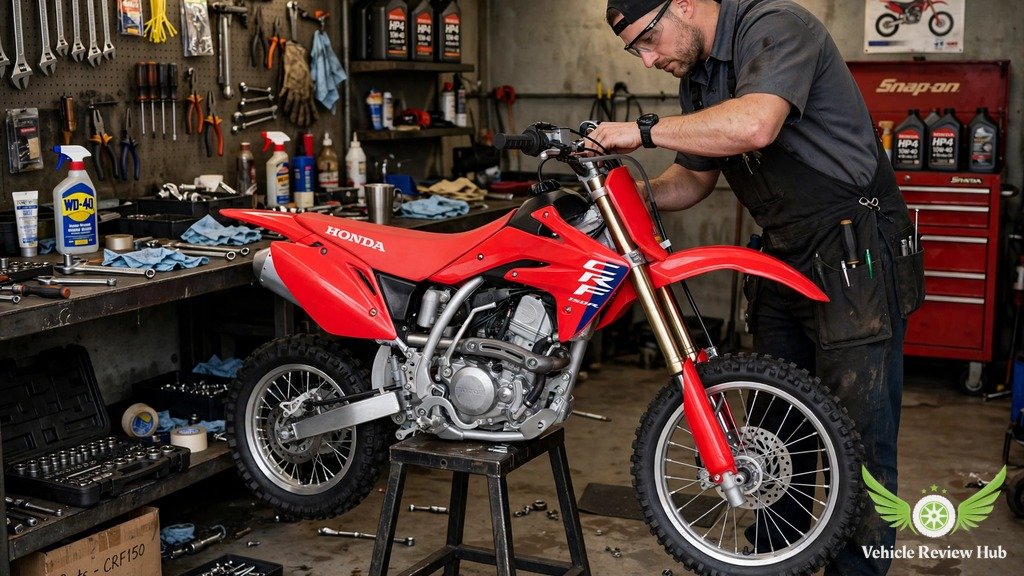
Valve clearance is the number one watch item in this Honda CRF150R reliability guide, and the manual gives exact numbers: intake 0.006 plus or minus 0.001 inches, exhaust 0.010 plus or minus 0.001 inches, measured on a cold engine. The Unicam design uses shims under buckets, so a check means partial disassembly — but skipping it is how a tight intake valve turns into hard starting, and hard starting turns into a top-end job. The classic symptom is a bike that kicks without catching when cold: tight valves bleed compression, so demand a cold-engine valve measurement, not a warm start-up demo. One piece of good news, noted by MXHideout’s CRF150R coverage: the 150R’s stainless steel valves tend to last longer than the titanium valves in bigger race bikes. That is an owner-coverage observation, not a Honda promise. For the power figures behind these checks, see our CRF150R performance guide.
Chain, Sprockets, Tires, Fork Seals, Brakes and Electrical Checks
Chain, sprockets, tires, fork seals, brakes, and electrical checks complete the Honda CRF150R reliability wear list, and each one tells a story about the previous owner. The #420 chain (15T/50T standard, 15T/56T Expert) stretches under race loads and wears sprockets, then the countershaft seal — check slack, kinks, tight spots, and sprocket hooking the way the manual intends. Tires are Dunlop MX51 rubber, 70/100-17 front and 90/100-14 rear on the standard bike, and knobby rears wear fast on hardpack. Fork seals weep on hard-ridden, dirty-parked bikes; brake pads and the 220mm front and 190mm rear discs deserve a thickness check at every service. Electrical checks mean the carburetor as much as the wiring: the 32mm Keihin’s pilot jet clogs when a bike sits with pump gas, and MXA notes the jetting “runs ratty” low-to-mid despite the TPS and accelerator pump. A bike that has sat for months with stale fuel is a bigger risk than one with honest race hours. Stale gas, a dirty air filter, and a clogged pilot jet cause more 150R grief than any design flaw.
Honda CRF150R Maintenance Schedule and Servicing
The maintenance schedule is the backbone of Honda CRF150R reliability, written in races and hours, not miles and months. Each race counts as about 2.5 hours: 3 races is about 7.5 hours, 6 races about 15.0, 9 races about 22.5. Learn that ladder and Honda CRF150R reliability becomes predictable.
Races and Hours Schedule: Oil, Filter and Valve Inspections
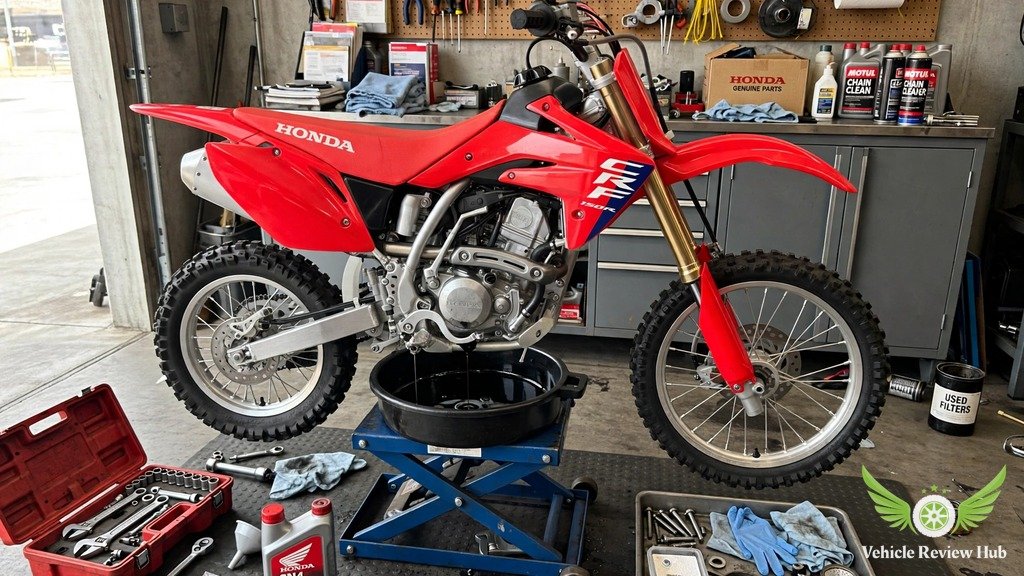
Races and hours schedule: oil, filter, and valve inspections are the sentence that defines Honda CRF150R reliability costs, and every figure here is verified from Honda’s own owner’s manual maintenance schedule page — read directly from the manual table, not carried over from any bigger Honda. Engine oil and engine oil filter are replaced every 6 races, about every 15.0 hours, and the same 6-race mark brings the valve-clearance and decompressor inspection. Both also come after break-in. The piston, piston rings, and piston pin are replaced at the same 6-race, 15.0-hour mark in the 150R manual — verified from the manual’s own schedule table, which happens to match the 250R’s ladder numerically but was read from the 150R manual itself, never assumed from it. The drive chain is lubricated every race and replaced every 3 races, about every 7.5 hours. Fork oil is replaced every 3 races, about every 7.5 hours, on the 150R manual — note that carefully, because it differs from the bigger CRF-R bikes, where fork oil runs to 22.5 hours. Steering-head bearings are inspected every 9 races, about every 22.5 hours. The manual’s maintenance schedule page shows the full table, and this Honda CRF150R reliability guide uses its column marks, not another model’s.
Twin-Sump Design: Engine and Transmission Oils Are Separate
Twin-sump design: engine and transmission oils are separate, one of the 150R’s quiet reliability advantages. Unlike the current CRF450, which dropped twin-sump lubrication, the 150R still keeps engine oil apart from clutch and transmission oil — so clutch material never circulates through the engine. Engine oil capacity is 0.62 US quarts (0.59 litres) after draining with a filter change — and that is the engine sump only, never the total oil capacity. Transmission oil is inspected every race and replaced on the 6-race line, per the manual’s clutch note. Two drain plugs, two fillers: the engine drain sits at the bottom of the ignition cover near the shifter, the transmission drain just behind it.
| Service item | Interval (150R owner’s manual) | Note |
|---|---|---|
| Engine oil + filter | Replace every 6 races / ~15.0 hours | Also after break-in ride |
| Valve clearance + decompressor | Inspect every 6 races / ~15.0 hours | Also after break-in ride; cold engine |
| Piston, rings, pin | Replace every 6 races / ~15.0 hours | Verified from the 150R manual table |
| Air filter | Clean every race / ~2.5 hours | After every moto in dust |
| Drive chain | Lubricate every race; replace every 3 races / ~7.5 hours | #420 chain, 15T/50T standard |
| Fork oil | Replace every 3 races / ~7.5 hours | 150R figure — not the 250R’s 22.5 hours |
| Coolant | Replace every 2 years | Regardless of hours |
| Summary | Honda CRF150R reliability: races and hours, not miles | Engine oil 0.62 US qt (engine sump only) |
Honda CRF150R Tires, Brakes and Suspension Maintenance
Tires, brakes, and suspension are where Honda CRF150R reliability meets the track, and the wear items here are the ones a pre-purchase inspection catches first. The standard bike’s hardware is serviceable with ordinary tools.

Air Filter Cleaned After Every Moto in Dusty Conditions
Air filter cleaned after every moto in dusty conditions is the shortest, strictest job in Honda CRF150R reliability, and the most commonly skipped. The manual cleans the air filter every race, about every 2.5 hours, and its note adds: clean after every moto for dusty riding conditions. A dirty filter costs power first, then an engine — dust past the filter scores the piston and cylinder that the 15-hour top-end budget is meant to protect. Check any used bike’s airbox — filter condition, sealing, and dust tracks past the element — and treat a filthy airbox as evidence the whole ladder was skipped.
Brake Pads, Suspension Linkage and Bearing Checks
Brake pads, suspension linkage, and bearing checks complete the Honda CRF150R reliability chassis list. Brakes are a single 220mm front disc and a single 190mm rear disc; check pads and discs at every service, and remember brake fluid is a two-year replacement regardless of hours. Suspension is a 37mm inverted Showa fork with 10.8 inches of travel and a Pro-Link Showa shock with 10.7 inches — and fork oil, as noted above, is a 3-race, 7.5-hour replacement on this bike, not the 22.5-hour figure from the bigger CRFs. Swingarm and shock-linkage bearings get lubrication every 3 races, about every 7.5 hours, on the manual table. Check linkage, wheel, steering-head, and swingarm-pivot bearings at every major service. Tires are Dunlop MX51 rubber on the standard bike — 70/100-17 front, 90/100-14 rear. For the full buying decision, see our CRF150R buying guide.
Honda CRF150R Maintenance and Ownership Costs
Ownership costs are where Honda CRF150R reliability pays off in predictability. Fuel is minor, servicing is frequent but straightforward, and the only large bills come from a skipped top-end interval or a bike without an hour log. No US servicing-cost dollar figure exists for the 150R, so none is invented here.
Fuel, Routine Servicing, Tires and Replacement Parts
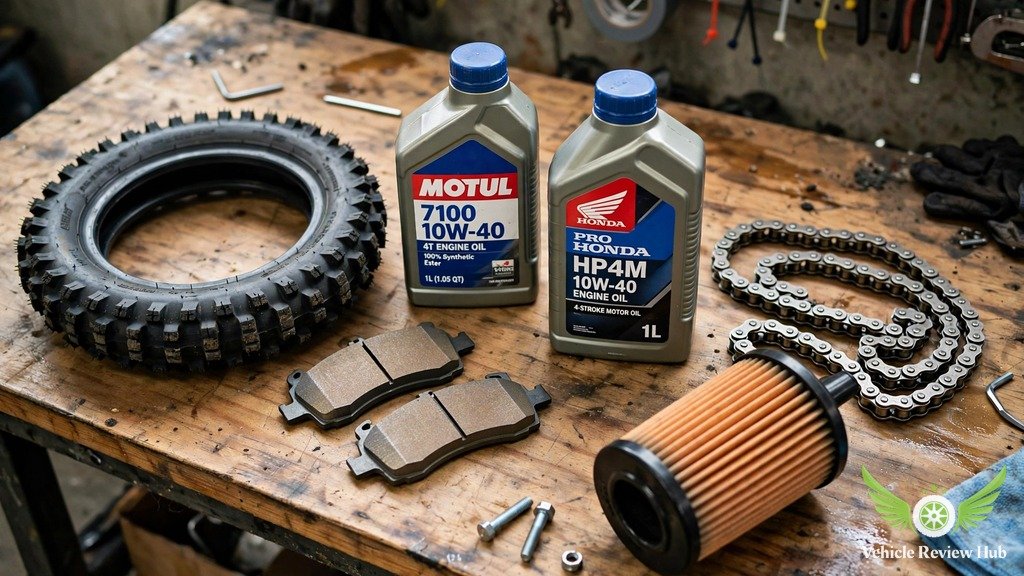
Fuel first for Honda CRF150R reliability budgeting: no EPA rating or MPG figure exists for a closed-course bike. Fuel economy is measured in motos per tank: the 150R carries a 1.1-gallon tank, and a full tank covers a practice session and a moto. Routine servicing follows the race-based ladder, and a home mechanic can do most of it. Tires are the big consumable, and the chain’s 7.5-hour rhythm makes drivetrain parts a recurring line. The one cost this Honda CRF150R reliability guide will not soften is the top end: MXA’s “about four times an 85” figure is the budget line, and a piston, rings, pin, gaskets, and machine work at the 15-hour mark is a real, recurring cost.
No Warranty at All: Sold As Is for Competition Use
No warranty at all: sold as is for competition use is the doc heading, kept verbatim, and this Honda CRF150R reliability guide quotes no street bike’s warranty for it. Honda’s own CRF150R page states the CRF150R and Expert are intended for closed-course operation only, and the bike does not conform to Federal Motor Vehicle Safety Standards or US EPA standards. Do not let a seller quote any road bike’s warranty for this machine — that warranty never applied to any R. The consequence for Honda CRF150R reliability is that every repair is on the owner’s wallet from hour zero. A bike with a complete hour log, valve and piston receipts, and a clean dealer check is worth real money. Leftover new stock is no exception: zero hours start the ladder at zero. For how Honda’s bigger race bike handles the same hours-based life, see our CRF250R reliability guide — a link for comparison only.
| Cost item | Figure | Label |
|---|---|---|
| New bike (2026) | $5,499 + $300 destination | Verified; available September 2026 |
| New bike (2026 Expert) | $5,699 + $300 destination | 19/16 wheels, 34.1-in seat, 187 lb |
| Race-based service rhythm | Oil/valves/piston 6 races; chain + fork oil 3 races | Hours, not miles |
| Fuel | 1.1 gal tank | No MPG rating exists |
| Factory warranty framing | None — competition bike | Never quote a street warranty |
| US servicing cost | No published figure found | No invented quote given |
| Summary | Honda CRF150R reliability: frequent, predictable, owner-funded | Skipped top-end service = big bills |
How to Keep a Honda CRF150R Reliable
Keeping a 150R reliable means doing the simple things on races and hours. Nothing in Honda CRF150R reliability needs exotic tools: an hour meter, an every-race air-filter habit, a logbook, a chain habit, and the dealer check first.
Preventive Maintenance, Hour Meter and Regular Inspections
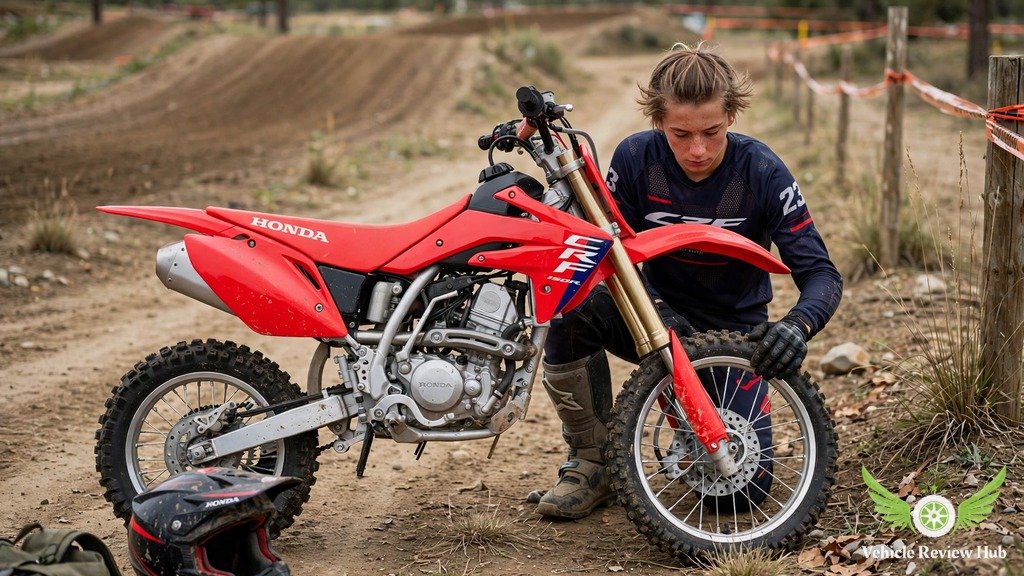
Preventive maintenance, hour meter, and regular inspections are the three habits that define Honda CRF150R reliability: every-race air filter, 3-race chain and fork-oil work, 6-race oil, filter, valve, and piston work, 9-race steering-head check, and two-year coolant. The hour meter is literal: log every ride’s hours, keep every receipt, and never buy or sell on “low miles” — this bike has no odometer, so hours are the only honest currency. Regular inspections mean a pre-ride check plus seasonal seals, bearings, and pads. Verify the trim too: Expert wheels, gearing, and seat never came on the standard bike. For the standard bike’s own story against its rivals, see our CRF150R performance guide.
2007 Camshaft Was a Campaign, Not a Recall: Check Proof
2007 camshaft was a campaign, not a recall: check proof is the doc heading, kept verbatim — and this Honda CRF150R reliability guide must handle it with care, because the campaign is unverified in the brief. No Honda campaign bulletin, NHTSA record, or press source was found confirming a 2007 camshaft campaign for the CRF150R, and NHTSA’s API returns Count 0 for 2007 and 2008 CRF150R and CRF150RB — but competition bikes are not tracked in NHTSA’s system the way street bikes are, so Count 0 proves nothing about Honda service campaigns either way. What is real is the owner-reported pattern behind the heading: “spun camshaft and top-end damage” is a known typical CRF150R issue in owner content. The rule for Honda CRF150R reliability buyers is therefore proof, not headlines: demand dealer paperwork, a campaign letter, or service records before paying any premium for a “campaign-done” 2007 bike, and run the bike past a Honda dealer for a campaign-history check, and run the VIN through Honda’s recall lookup. A seller who cites a cam campaign without paperwork is selling a story — and on a 2007 bike, the valve clearances and the top-end receipts decide, not the story. The same proof-first rule applies to the swingarm item the buying guide covers: also doc-only and unverified.
The video below in this Honda CRF150R reliability guide is MXHideout’s CRF150R review — a review that covers exactly the Honda CRF150R reliability realities this guide states, including valve habits and maintenance load. It is honestly labelled as a review, not a step-by-step rebuild guide.
Honda CRF150R Reliability FAQs
Direct answers to the Honda CRF150R reliability questions buyers ask most: intervals, valves, and the 2007 proof questions.
Is the Honda CRF150R reliable?
Yes, by race-bike standards. For Honda CRF150R reliability, the proven 2007 platform holds up — but only on the race-based schedule, with a real hour log and valve history.
How often does the CRF150R need an oil change?
For Honda CRF150R reliability, engine oil and filter are replaced every 6 races, about every 15.0 hours, per the owner’s manual — and after break-in.
When does the CRF150R need its valves checked?
For Honda CRF150R reliability, valve clearance and the decompressor are inspected every 6 races, about every 15.0 hours, on a cold engine.
How often does the CRF150R need a new piston?
For Honda CRF150R reliability, piston, rings, and pin are replaced every 6 races, about every 15.0 hours, verified from the 150R manual table itself — not borrowed from the 250R.
How often should I replace the CRF150R drive chain?
For Honda CRF150R reliability, the #420 drive chain is lubricated every race and replaced every 3 races, about every 7.5 hours.
How often does the CRF150R need fork oil?
For Honda CRF150R reliability, fork oil is replaced every 3 races, about every 7.5 hours, per the 150R manual — shorter than the bigger CRF-R bikes.
Was there a 2007 CRF150R camshaft campaign?
Unverified, says this Honda CRF150R reliability guide: no Honda bulletin or NHTSA record was found confirming it, and NHTSA Count 0 proves nothing for a competition bike. Demand dealer paperwork first.
Was there a 2007 CRF150R swingarm recall?
Also doc-only and unverified, says this Honda CRF150R reliability guide: no Honda source or NHTSA record was found. Same rule — paperwork and a dealer check decide.
Does the April 2026 drive-gear recall cover the CRF150R?
No, says this Honda CRF150R reliability guide: the April 30, 2026 CPSC recall names 2025–2026 CRF250R/RX/RWE and CRF450R/RX/RWE only. It does not name the 150R.
Does the CRF150R have a warranty?
No warranty framing applies, says this Honda CRF150R reliability guide: the R is a closed-course competition motorcycle, sold as is.
Is the CRF150R street legal?
No. For Honda CRF150R reliability buyers, the R is closed-course only, not street legal in any US state, and cannot be plated. Theft cover is the real question.
Is buying a used CRF150R worth it?
Yes, says this Honda CRF150R reliability guide, when the hour log shows every-race filters, 3-race chains and fork oil, and 6-race valve and piston work — and any 2007 cam or swingarm claim comes with paperwork.