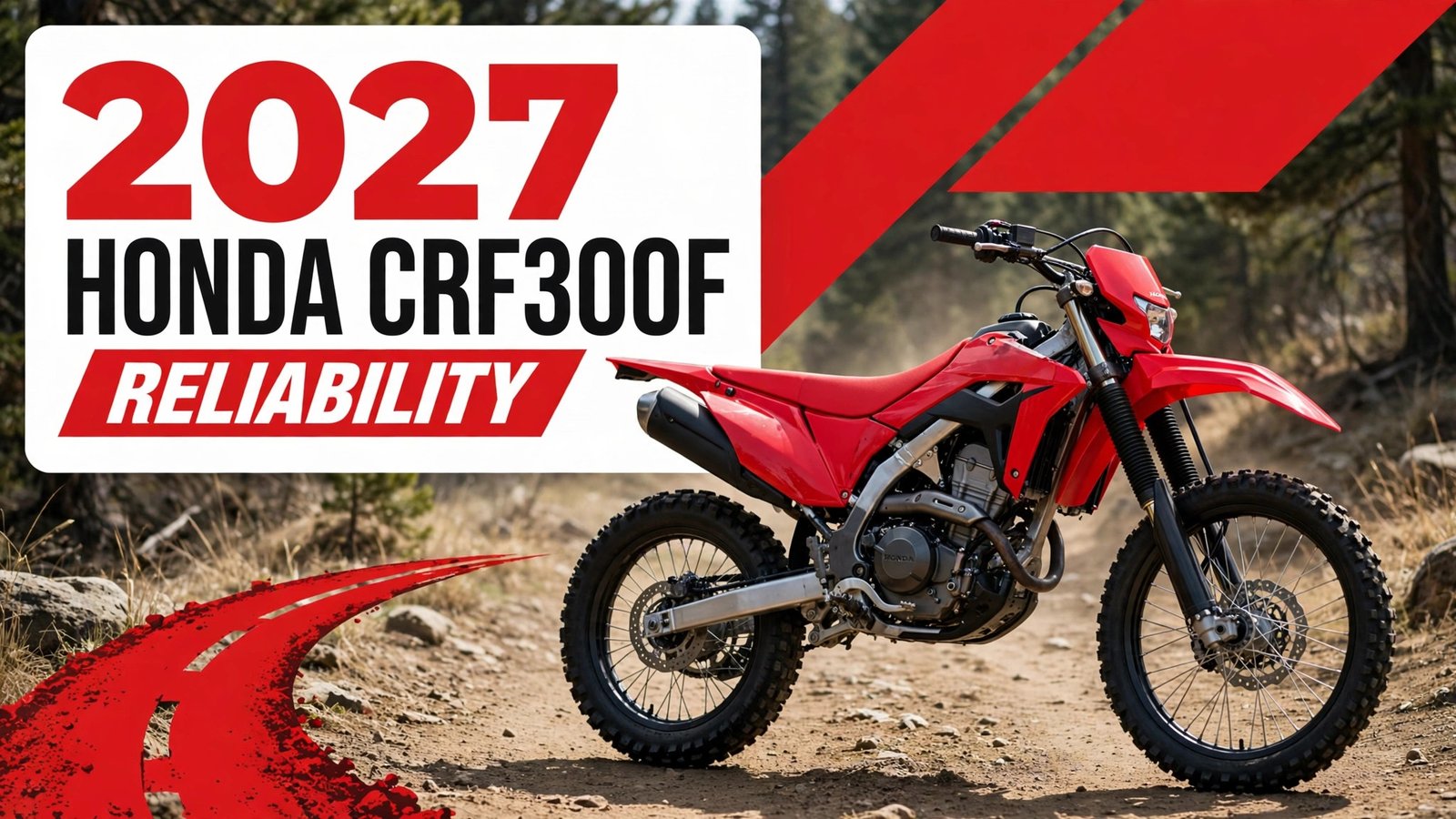
Short answer: Honda CRF300F reliability looks promising on paper, but honest coverage has to start with a limit — this is a brand-new motorcycle, and no meaningful owner data exists yet. The CRF300F reached dealerships in October 2025 as a 2026 model, replacing the CRF250F, so there are no long-term owner surveys, no documented failure pattern, and no used-market history to lean on. What Honda CRF300F reliability rests on is a proven formula: a simple air-cooled single, a steel frame, a six-month transferable warranty, and a miles-based service schedule. This Honda CRF300F reliability guide separates what is verified from what is still unknown, and tells first owners exactly what to watch.
That distinction matters more here than on most reliability guides. A bike on sale for a decade earns its reputation from thousands of owners; the CRF300F earns its early reputation from design, predecessor, and first-ride reports. Honda CRF300F reliability cannot honestly be scored yet, and any guide that gives it a number today is inventing one.
Honda CRF300F Reliability Overview
The short version of Honda CRF300F reliability is that the ingredients are right and the evidence is young. A 294cc air-cooled four-valve single, a steel perimeter frame, and a new six-speed gearbox is about as simple as a modern motorcycle gets — the foundation of Honda CRF300F reliability.
Six-Month Transferable Warranty: F Models Are Not on the No-Warranty List
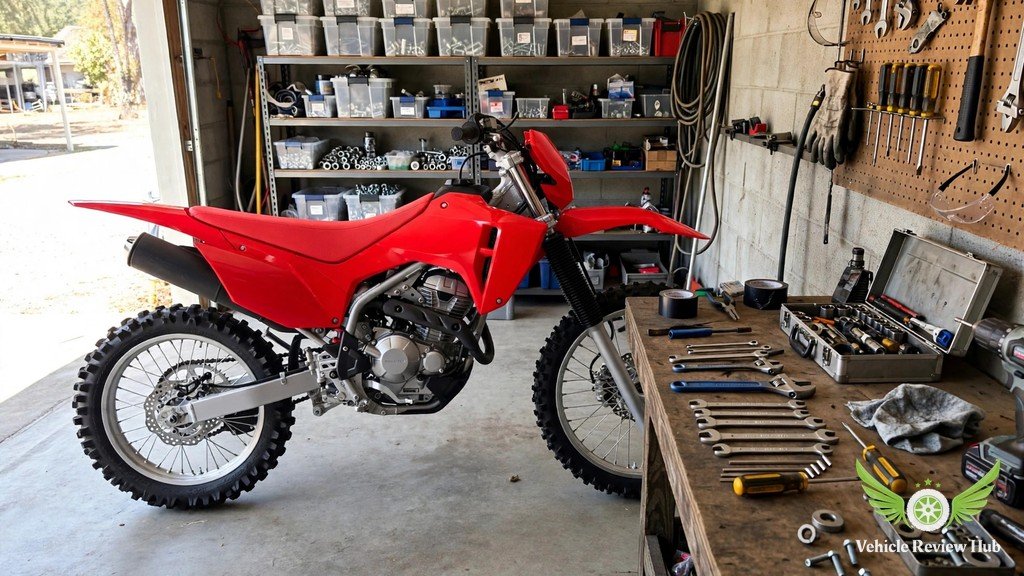
First, the warranty position, because it is different from the rest of Honda’s off-road line and easy to get wrong. Honda CRF300F reliability comes with a transferable, six-month included, limited warranty — confirmed on Honda’s own 2026 CRF300F specifications page. That matters twice over: the warranty transfers to a second owner inside the window, and the F models are explicitly not on the no-warranty list covering Honda’s competition machines. The CRF450R, CRF450RX and CRF450X carry no Honda limited warranty in the United States, and buyers sometimes assume every off-road Honda shares that position. The CRF300F does not. It is a trail bike with a warranty, not a competition bike without one.
Six months is short by street-bike standards: it covers early manufacturing defects, not wear items, crash damage, or neglect. For Honda CRF300F reliability, ride properly in the first months, log every service, and raise genuine defects inside the window.
No Meaningful Owner Data Exists Yet for a Bike This New
The second honest limit on Honda CRF300F reliability is the calendar. Announced in August 2025 and in dealers from October 2025, the bike has barely completed its first riding season. No owner forum holds a meaningful high-mileage sample, no survey has scored it, and no long-term test has passed its first few services. That is normal for a new model — but every reliability claim today is a design or predecessor argument, and this Honda CRF300F reliability guide labels which is which.
The predecessor argument is genuinely useful. The CRF250F earned a strong reputation over years of service as a low-maintenance, hard-to-break trail bike, and the CRF300F keeps that philosophy: air cooling instead of radiators to damage, a steel frame, a simple single, and electric start. The new engine is a larger-bore version of a proven layout, not a clean-sheet experiment. Neither substitutes for owner data, though. Honda CRF300F reliability will be proven — or dented — by the first few thousand owners. For now: promising design, proven family, unproven record.
Honda CRF300F Common Problems and Wear Items
Honest Honda CRF300F reliability coverage names the watch items with their evidence level attached. Right now the honest list is short: no documented problems, and the items below are things first owners should inspect, not failures that have already happened — the honest starting point for Honda CRF300F reliability.
No Documented Problems Yet: What First Owners Should Watch
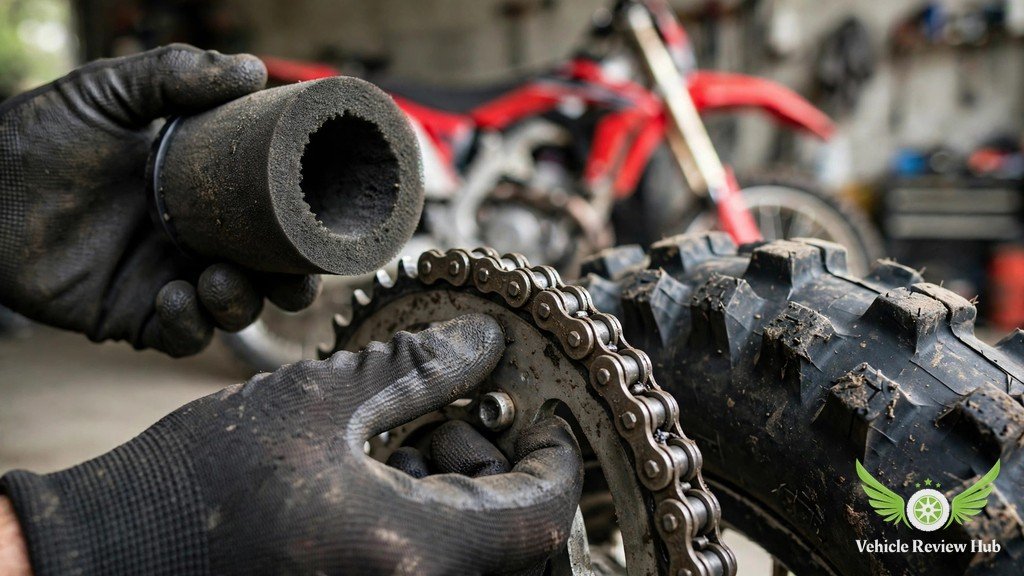
There are no documented problems yet for the CRF300F, and that sentence should be read literally: no recall names this model, no service-bulletin pattern has emerged, and no owner community has converged on a weak point. First owners should therefore watch the things that wear on every air-cooled trail bike. The oil cooler is new on this model, so its lines and fittings deserve a look at every service — a weep at a fitting is cheap if caught early. The clutch uses new heat-resistant discs, and clutch feel is the early warning for adjustment or wear. The air-cooled engine has no radiators to damage, but it depends on airflow and clean oil — mud-packed fins and overdue oil are the enemies.
The video below — a real-world CRF300F test over log hops, singletrack and water crossings — is not a maintenance tutorial, and this guide says so honestly. It is useful for Honda CRF300F reliability readers because it shows the bike ridden as first owners will ride it, and confirms the traits that matter for longevity: a docile engine and controls simple enough that nothing electronic can strand you.
Two more watch items come from the first-ride reports rather than from failures. Testers noted the suspension can be overwhelmed as speeds rise — a capability limit, not a defect — but regular fork-bottoming wears seals faster. And the bike’s simplicity cuts both ways: with no speedometer, tachometer, or hour meter, service intervals depend on the owner tracking miles honestly. Honda CRF300F reliability rewards owners who keep a log; the bike will not keep one for you.
Chain, Sprockets, Tires, Air Filter and Electrical Checks
The wear items on a CRF300F are the same ones that wear on every trail bike, and all are cheap if caught on schedule, which is the first rule of Honda CRF300F reliability. Check the #520 O-ring chain (14/50 sprockets) for adjustment, lubrication, and tight spots at every book interval — a worn chain eats sprockets, so replace chain and sprockets as a set. Check tire pressure and tread before every ride. Clean and oil the air filter on schedule and never run a dry or torn element, because dust past the filter scores the bore and valves. Electrical checks are simple by design: a start button, a kill switch, and a low-fuel light, so a dead starter usually means a battery, a connection, or a switch. For the full model picture, read our Honda CRF300F review and our Honda CRF300F performance guide.
Honda CRF300F Maintenance Schedule and Servicing
This section is the core of Honda CRF300F reliability, because the schedule is the one thing Honda has fully published for this bike — and it is a miles schedule, the opposite of the hours schedule on Honda’s competition bikes. Follow it, and the bike’s simple design does the rest.
First Service at 100 Miles, Then Every 600 Miles or Six Months
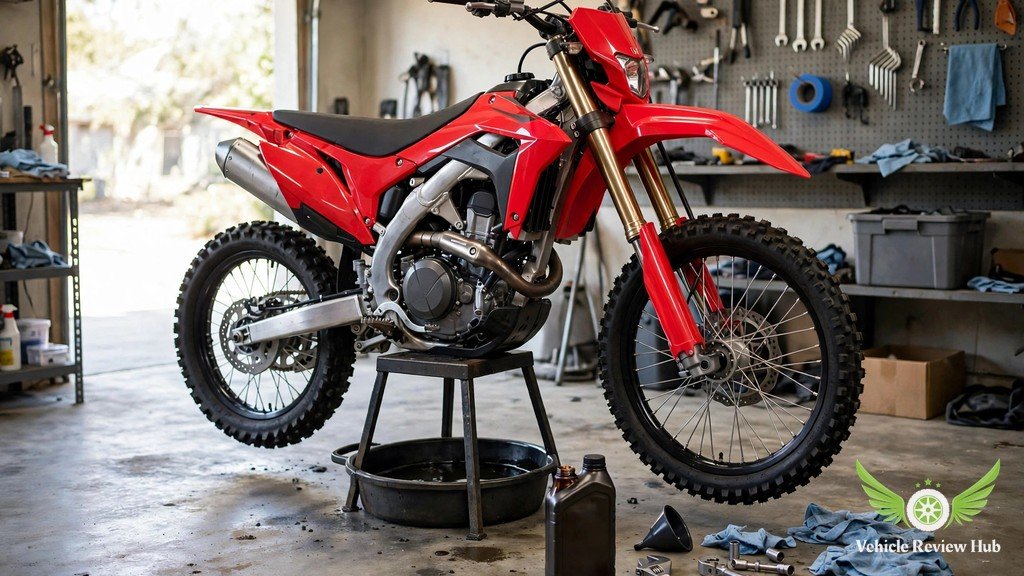
The headline numbers from the owner’s manual are simple: an initial service at 100 miles, then regular service every 600 miles or six months, whichever comes first, with further intervals stacking at 1,200, 1,800, and 2,400 miles. That rhythm is confirmed in the 2026 CRF300F owner’s manual maintenance schedule. The first 100-mile service is the one new owners most often skip, and it is the one that matters most: it catches assembly and break-in issues while the bike is still inside its six-month warranty window.
The 600-mile rhythm after that is generous by dirt-bike standards and strict by street-bike standards, which is exactly right for a trail bike. Months matter as much as miles: a bike sitting all winter still ages oil, fuel, and battery. A bike ridden 200 miles a year still needs its six-month service. Honda CRF300F reliability is won or lost at this interval more than anywhere else: skip two services and the valve train, the chain, and the air filter all start paying for it at once.
| Service item | Interval | Note |
|---|---|---|
| Initial service | 100 miles / 1 month | Do not skip; protects Honda CRF300F reliability inside warranty |
| Engine oil and oil filter | Every 600 miles / 6 months | Oil AND filter together at every interval |
| Valve clearance | Inspect at each scheduled interval | Dealer service unless owner is qualified |
| Air cleaner | Clean at each interval; more often in dust | Dusty riding shortens this interval sharply |
| Chain inspection and lube | Every 300 miles / 3 months | Twice as often as the main service rhythm |
| Fuel filter | Replace every 4,800 miles | Long interval; easy to forget — log it |
| Summary | Miles, not hours | Never import the RX hours schedule into the F |
Oil and Filter Together, Valve Inspection and Air Cleaner Cleaning
Three jobs carry the weight of Honda CRF300F reliability, and the manual treats them as a set. Engine oil and the oil filter are both replaced at every 600-mile interval — together, every time. That matters on an air-cooled engine, where the oil does more cooling work and degrades faster under heat. Use the manual’s grade, check the level upright, and never overfill. Valve clearance is inspected at each interval — the manual marks it as a dealer item unless the owner has the proper tools and data and is mechanically qualified. Air cleaner cleaning follows the same interval, with dusty conditions shortening it: a clogged filter costs power first and engine life second — which is why Honda CRF300F reliability depends on this job.
Honda CRF300F Tires, Brakes and Suspension Maintenance
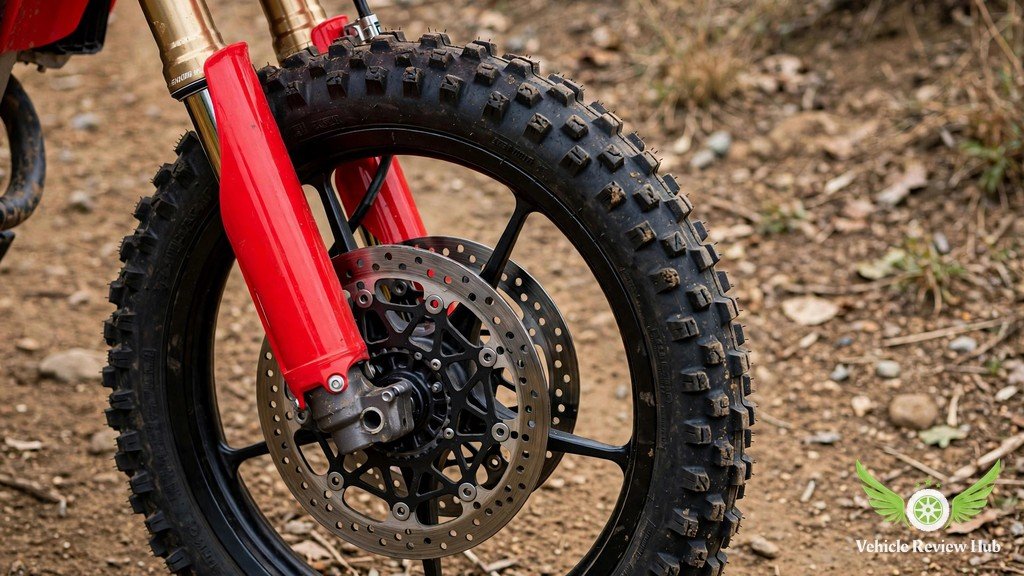
Tires, brakes, and suspension are where Honda CRF300F reliability meets the ground. The stock setup is trail-grade: a 41mm Showa fork with 9.5 inches of travel, a Pro-Link rear shock with 9.1 inches, and brakes sized for a 270-odd-pound trail bike. Trail-grade does not mean maintenance-free — it means parts built to be serviced on the owner’s schedule, and that servicing is Honda CRF300F reliability in practice.
Chain Inspection and Lube Every 300 Miles or Three Months
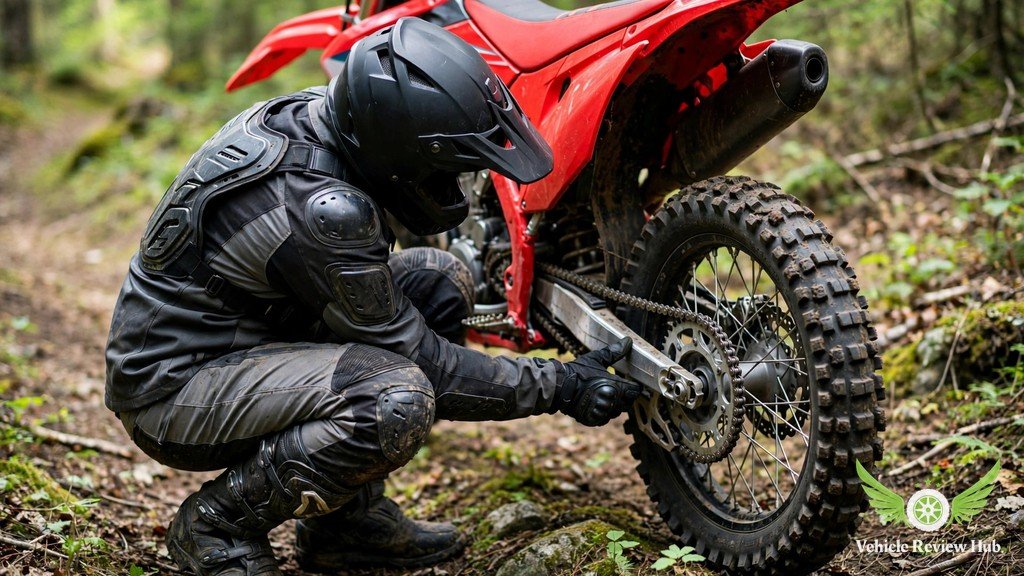
Chain care runs on its own, faster rhythm: inspection and lubrication every 300 miles or three months, whichever comes first — twice as often as the oil-change rhythm, and the single most skipped job on trail bikes. A dry or over-tight chain wears sprockets, stresses the countershaft bearing, and can eventually fail in a way that damages the engine case. Check slack on a stand, lube after riding, and clean a gritty chain first. Hooked teeth or a chain that will not hold adjustment means the set is done. For Honda CRF300F reliability, chain discipline is the cheapest insurance on the bike.
Fuel Filter at 4,800 Miles, Spark Arrester and Brake Checks
The longer-interval jobs are the ones owners forget, so they get named here deliberately. The fuel filter is replaced every 4,800 miles — a long interval on a bike that may take years to reach it, which is exactly why it should go in the logbook now. A clogged fuel filter shows up as starvation under load. Clean the spark arrester on schedule: it keeps the bike legal for public off-highway areas, and a clogged one costs power. Brake checks are simple: pads, discs, lever feel, and fluid at every service. The rear brake’s feel is a known talking point among testers — but feel is not failure. Check the pads and the fluid, not the forum opinions, and Honda CRF300F reliability stays boring in the best way.
Honda CRF300F Maintenance and Ownership Costs
Ownership costs are where Honda CRF300F reliability becomes a budget question, and the answer is reassuring: this is one of the cheapest motorcycles Honda sells to keep running. The bike is not expensive in small pieces, and the pieces do not come often — but the warranty is short, so the owner carries the cost of Honda CRF300F reliability sooner than on a street bike.
Fuel, Routine Servicing, Tires and Replacement Parts
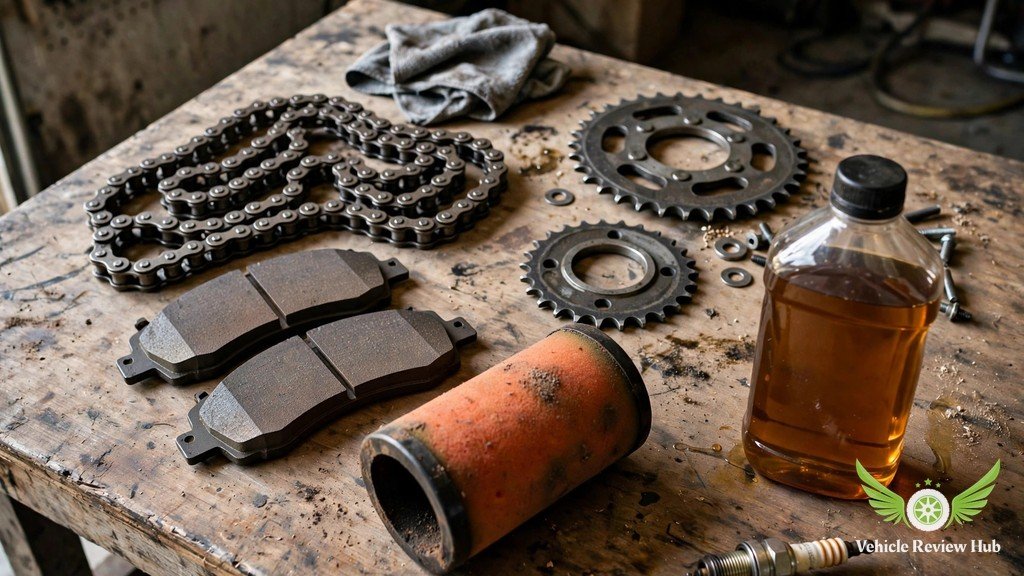
Fuel is the smallest running cost, and the honest framing matters: there is no EPA mileage figure for the CRF300F, because it is an off-road motorcycle, and no tested fuel range has been published yet. The tank holds 1.6 gallons, so fuel planning on the trail is about carrying enough for the loop — a point our Honda CRF300F performance guide covers in full. Routine servicing is the real running cost: oil and filter every 600 miles, chain care every 300, air filter cleaning on schedule, tires as they wear. None needs special tools beyond a stand, a torque wrench, and the manual, and none of the parts is expensive. Tires are the largest recurring item, but that is normal consumption, not a defect. Parts availability is excellent from day one, which keeps Honda CRF300F reliability affordable: the CRF-F family shares hardware across years and Honda dealers stock the consumables.
Repair Expenses, HondaCare Option and Long-Term Ownership Costs
The big repair expense on any single-cylinder trail bike is the top end, and the CRF300F is no exception in principle — but there is no evidence yet that its top end is a weak point, and the valve-inspection schedule exists precisely to catch wear before it becomes a rebuild. A valve inspection is cheap; a valve job is not. Beyond the engine, costs are shaped by the warranty ending at six months: after that, every repair is the owner’s, so price the doc’s HondaCare option at purchase if you want longer cover. Confirm HondaCare terms in writing — this guide quotes no unverified figure. Add transport, gear, and any off-highway sticker fees. None of these changes the core Honda CRF300F reliability picture: a simple bike with a short warranty and a cheap service book.
How to Keep a Honda CRF300F Reliable
Keeping a CRF300F reliable is not complicated, but it is disciplined: the bikes that last are owned by riders who treat the 600-mile book as a minimum, not a target, and who inspect after every dusty ride rather than waiting for something to break. That routine is the simplest summary of Honda CRF300F reliability in practice.
Preventive Maintenance, Storage Care and Regular Inspections
Start with a logbook. With no speedometer readout beyond a low-fuel light and no hour meter at all, miles and dates are the only honest record of use. Log every oil change, filter clean, chain adjustment, and valve check against mileage. Before every ride, check tires, chain, brakes, fins, and controls. On a schedule, do the book work on time: oil and filter at 600 miles, chain care at 300, fuel filter at 4,800, and valve clearances at the manual’s intervals. Clean the air filter after dusty rides, wash mud off the fins, and store with fuel stabilizer and a clean filter if it sits for months. For the buying picture, see our Honda CRF300F buying guide. That routine is Honda CRF300F reliability in its most practical form.
No Recall Names the CRF300F: R, RX and L Campaigns Do Not Apply
One finding needs exact handling. No recall names the CRF300F. The campaigns touching other Honda off-road models — the 2025–2026 CRF450R/RX handlebar-clamp recall, the 2021–2025 CRF300L emissions stop sale, any CRF450R campaign — do not apply to the CRF300F. That is not a claim the CRF300F will never be recalled. It is a statement about today’s record: a VIN check at Honda’s own recall lookup is still good practice, but buyers should not expect a CRF300F campaign there. The bottom line on Honda CRF300F reliability: buy on the design and the service book, service it on the miles schedule, and it should reward you for seasons.
Honda CRF300F Reliability FAQs
Direct answers to the questions buyers and owners ask most about Honda CRF300F reliability.
Is the Honda CRF300F reliable?
Too new for a proven score, but promising: Honda CRF300F reliability rests on a simple air-cooled design, a proven trail-bike family, and a published miles service schedule. No documented problems exist yet.
Does the Honda CRF300F have a warranty?
Yes — a transferable, six-month included, limited warranty. For Honda CRF300F reliability planning, that matters: unlike Honda’s competition bikes, the F is not on the no-warranty list.
How often should I change the oil on a CRF300F?
For Honda CRF300F reliability, change engine oil and filter together every 600 miles or six months, after an initial service at 100 miles. There is no hours schedule for this bike.
What are the CRF300F valve clearances?
For Honda CRF300F reliability, check them at your model-year manual’s intervals, measured cold. The manual marks valve work as a dealer item unless the owner has the proper tools and data.
Has the Honda CRF300F ever been recalled?
No recall names the CRF300F. For Honda CRF300F reliability checks, R, RX, and L campaigns do not apply — but a VIN check is still good practice before buying.
Is the CRF300F street-legal?
No. The CRF300F is an off-road-only trail bike, green-sticker legal in California, but never street-legal. That shapes Honda CRF300F reliability: no road miles, only trail miles.
How much does the 2027 Honda CRF300F cost?
The 2027 CRF300F is listed at $5,099 plus $300 destination, in Red, while the 2026 launch model was $4,999 plus $300. Honda CRF300F reliability costs sit on top: frequent, cheap services with a short warranty.
Are CRF300F parts easy to find?
Yes. Honda dealer support and the shared CRF-F family parts base make consumables easy to find — good news for Honda CRF300F reliability. Always confirm fitment: F, L, and R parts do not always interchange.
Should I buy a used CRF300F?
There is barely a used market yet — the bike only reached dealers in October 2025. For Honda CRF300F reliability, a nearly new bike with its 100-mile service documented is the safest early buy.
What should first owners watch most closely?
For Honda CRF300F reliability, watch the oil-cooler lines, clutch feel, chain adjustment, and air filter condition. These are inspection items, not documented failures.
Is the CRF300F better than the CRF250F for reliability?
Unproven either way so far. Honda CRF300F reliability inherits the 250F’s simple philosophy, but the 250F has years of owner data and the 300F does not yet.
Does the CRF300F need an hour meter?
It helps, but the book runs on miles, not hours. For Honda CRF300F reliability, a mileage logbook matters more than an hour meter.