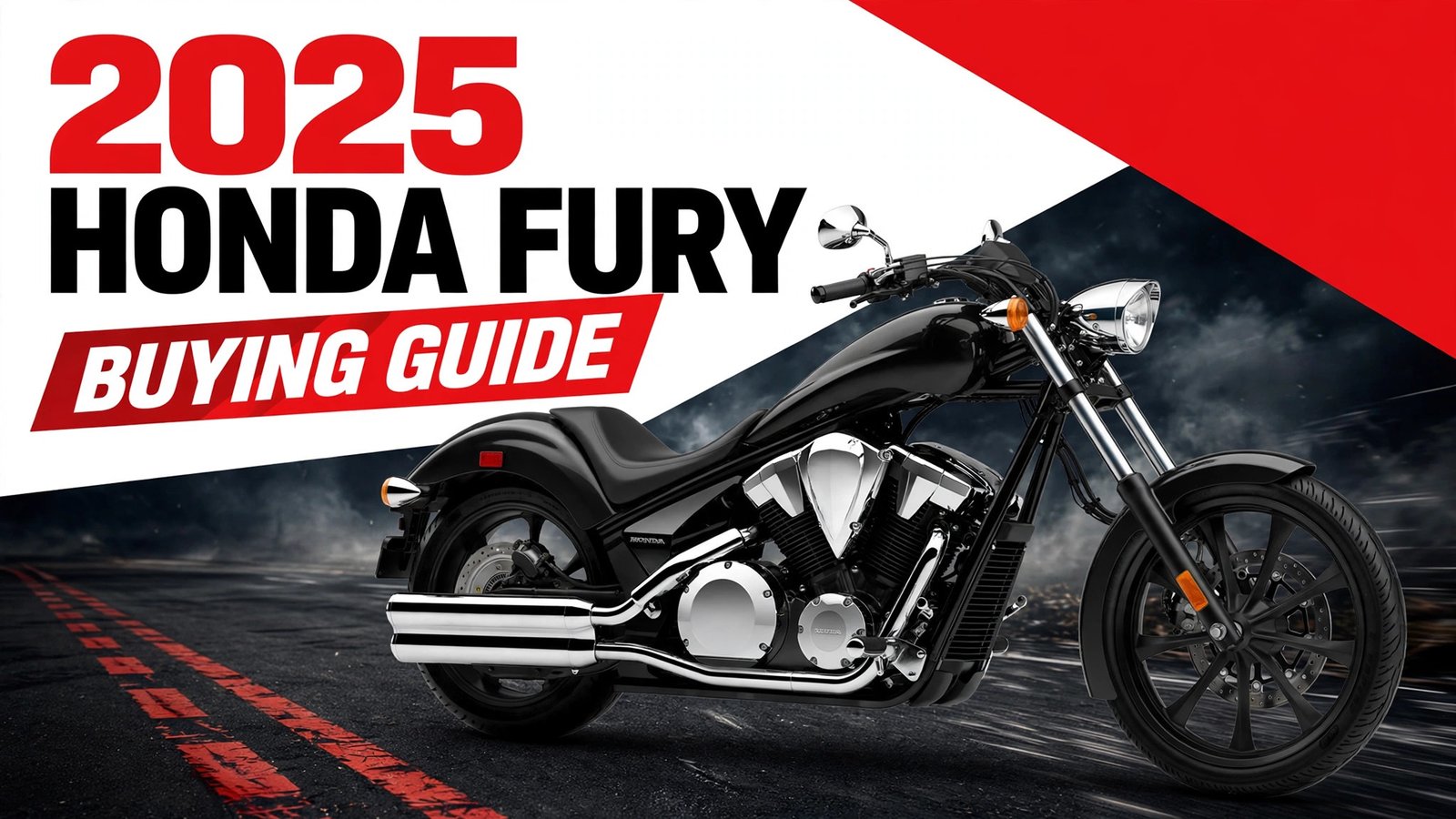
Short answer: a used Honda Fury is one of the cheapest ways into a genuine factory chopper in the United States, but the price spread is wide and details matter more than the year. This Honda Fury buying guide is built on real November 2026 dealer listings, Honda’s 2025 specification page, and NHTSA records, so every price below is an asking price, not a guess. In this Honda Fury buying guide: prices by era, leftover new 2025s, insurance, and a VIN and inspection checklist.
Headline numbers: a new 2025 Fury lists at $11,499 plus $775 destination, dealers still advertised leftover new 2025 bikes in November 2026 (one at $10,499), and used asks ran $4,795 to $10,590, mostly $6,000 to $9,000.
Honda Fury Price and Market Availability
Shoppers confuse stickers with used asks; this Honda Fury buying guide separates them.
What Does a Used Honda Fury Cost in the USA by Era?
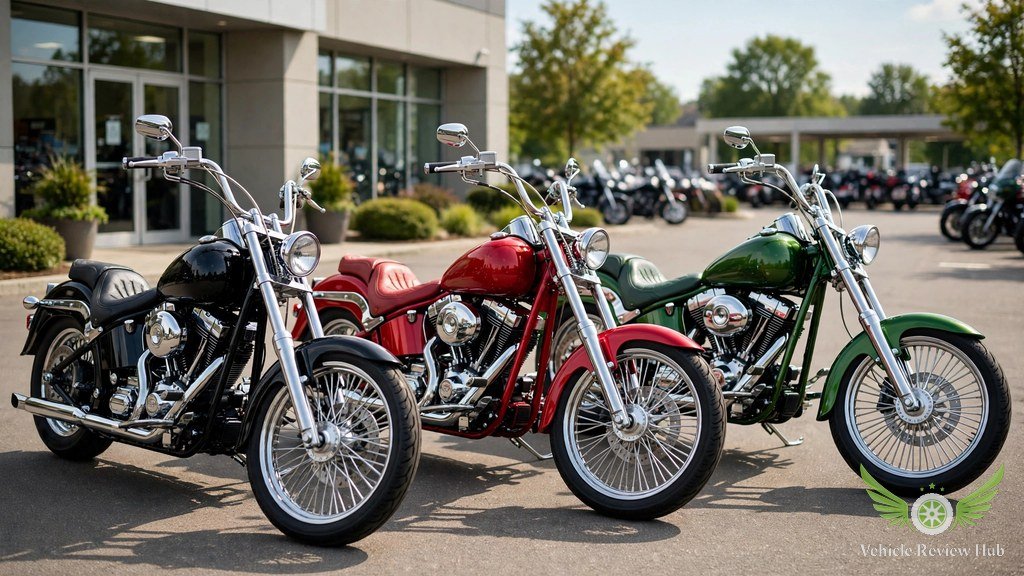
Early bikes (2010–2013) are the cheapest way in. In the November 2, 2026 snapshot: a 2010 with 82,978 miles at $4,795 (Specialty Motorsports, Sacramento, California); a 2013 with 5,596 miles at $6,998 (State 8 Motorcycles, Peninsula, Ohio). Mid-era bikes (2014–2019) were thinner: a 2019 with 8,488 miles at $5,990 (J&J Motors, Massillon, Ohio), including a six-month warranty. Late-era bikes (2020–2024) command the strongest money: a 2022 with 3,700 miles at $6,999 (MLS Powersports, Georgetown, Kentucky); a 2023 with 5,631 miles at $6,990 plus a $398 fee (J&J Motors, Massillon); a 2023 with 1,304 miles at $8,995 (Ol’ Red’s Motorcycles, Simpsonville, South Carolina), with no dealer fees; and a 2024 with 4,455 miles at $10,590. Fee trap: a 22,972-mile 2023 at MotoMax, Raleigh, was $8,999 plus $499 in fees, while the Ol’ Red’s bike at nearly the same sticker had none.
| Era | Asking range (Nov 2026) | Buys |
|---|---|---|
| 2010–2013 | $4,795–$6,998 | Cheapest; many non-ABS |
| 2014–2019 | Near $5,990; thin supply | Same bike; ABS common |
| 2020–2024 | $6,499–$10,590 | Lowest mileage; ABS standard |
Is the Honda Fury Still Available New Through US Dealers as a 2025?
Yes, as leftover stock. Honda’s 2025 Fury page lists the bike at $11,499 plus $775 destination, in Adventure Green only, under model ID VT1300CX. Dealer sheets dated November 2, 2026, still showed new 2025 bikes advertised: Big Hometown Motorsports, Marietta, Ohio, at $10,499, a full $1,000 under sticker, and I-90 Motorsports, Issaquah, Washington, at $11,499. So the honest answer in this Honda Fury buying guide is that the Fury is still available new as a 2025, but only as leftover stock: no 2026 model has been announced, and videos claiming a 2027 Fury are AI-concept clickbait. A used 2024 asking $10,590 is not a bargain when a new 2025 sits at $10,499 nearby. See the full Fury review.
Honda Fury Insurance and Ownership Costs
No Fury-specific US average exists, so this Honda Fury buying guide invents none.
Why No Fury-Specific Insurance Figure Exists and What Drives Quotes
No Fury-specific insurance figure exists in the sources a buyer can check. MoneyGeek’s 2026 averages price a 40-year-old rider with a clean record at $141 a year for minimum liability and $364 a year for full coverage, but that profile is built around a 2018 Honda Rebel 500, not a Fury, so it is a method benchmark, never a Fury quote. Generic cruiser bands run $200 to $600 a year for full coverage. One site quotes roughly $500 a year for the Fury with no method shown: treat that as a guess, not a rate. Your real quote is driven by age, record, state, coverage, value, and modifications. Note the usual 5–15 percent safety-course discount. The practical advice in this Honda Fury buying guide is to get three quotes by VIN before you buy, one with the exact modifications declared, because an undeclared exhaust or intake can become a claim problem, and quotes first is the discipline this Honda Fury buying guide recommends throughout.
How to Estimate Fuel, Maintenance, Parts and Other Ownership Expenses
Start with fuel: the Fury’s small tank makes the arithmetic visible. Honda’s period EPA estimate is 45 mpg and owner reports span 37 to 50 mpg, so a 3.4-gallon tank gives roughly 126 to 170 miles in theory and about 120 to 150 miles before most riders want fuel. At 5,000 miles a year, 42 mpg, and $3.50 a gallon, fuel costs about $417 a year. Maintenance follows the Fury’s own manual: first service at 600 miles, oil and filter every 8,000 miles (GN4 10W-30, 3.9 quarts with filter), valve-clearance inspection every 8,000 miles, air cleaner every 12,000 miles, coolant and final-drive oil at 24,000 miles, brake fluid every two years. Price the 200/50-18 rear tire first. No verified US dealer service price for the Fury could be found, so this Honda Fury buying guide gives no labour figure, and running these cost lines with your own numbers before signing is exactly what this Honda Fury buying guide is for.
| Cost item | Basis | Figure |
|---|---|---|
| Fuel | 5,000 mi/yr, 42 mpg, $3.50/gal | About $417/yr |
| Insurance | No Fury-specific figure exists | 3 VIN quotes; cruiser band $200–$600/yr |
| Routine service | Oil/filter + valves every 8,000 mi | Dealer price; no national figure |
How to Inspect a Used Honda Fury
Value sits in chrome, paint, and shaft drive; risk in three recalls. This Honda Fury buying guide gives the order: VIN first.
Checking VIN Recall Status Including Fuel Pump Recall 26V633
This Honda Fury buying guide insists on three VIN checks before you pay anything. Fuel pump recall 26V633, Honda campaign KU9, covers certain 2023 to 2025 Fury bikes plus certain 2024 to 2025 Shadow VT750 models: 4,206 units in total, of which 820 are Furys, so never quote the 4,206 figure as Fury-only. The pump, part 16700-HN8-6011-M1, may malfunction and stall the engine. Per NHTSA’s 26V633 acknowledgement and TopSpeed’s recall report, Honda declared the defect on September 24, 2026, with VINs searchable from October 8, 2026, and owner letters from November 27. Fury owners are receiving interim letters because parts were not ready. Confirm the bike’s status in writing. The same VIN check must cover 15V439 and 17V805. The Fury reliability record explains each campaign in full, and this Honda Fury buying guide repeats its warning: a clean recall check does not clear a bike with no service history.
| Recall | Scope | Remedy |
|---|---|---|
| 26V633 (KU9) fuel pump | Certain 2023–2025 Fury; 2024–2025 Shadow | 4,206 total (820 Fury); free pump; interim letters |
| 15V439 (JS9/JT0) starter relay | Certain 2013–2016 Hondas incl. 2014–2015 VT1300 | 47,168 total; free inspection/replacement |
| 17V805 fuel tank welds | Certain 2017 + 2010/2016 replacement-tank Furys | 20 units; free tank replacement |
Inspecting the Shaft Drive, Tires, Chrome, Paint and Modifications
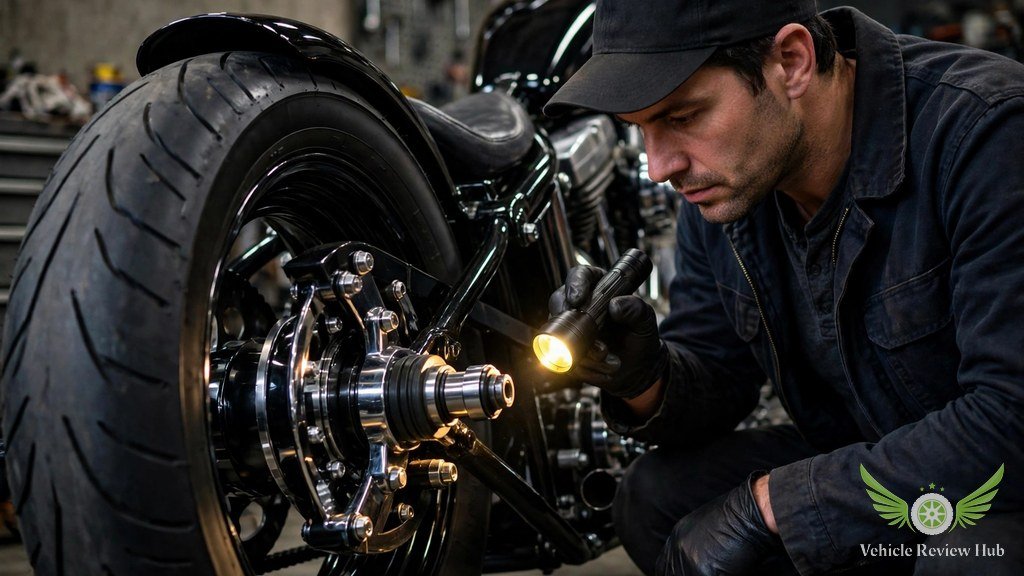
This Honda Fury buying guide starts at the back: the shaft drive is the Fury’s best feature. Check the final-drive housing for leaks and the oil level, which should sit flush with the lower edge of the fill hole, and ask when the hypoid SAE 80 gear oil was last changed: the manual calls for inspection every 8,000 miles and replacement every 24,000 miles or two years, whichever comes first. Check rear-wheel bearing play, tire date codes, and tread depth (manual minimums: 0.06 in front, 0.08 in rear). Then walk the chrome slowly: much of the Fury’s brightwork is chrome-plated plastic, superb when new but quicker to chip and peel than real chrome, so run a hand over the rocker covers, drive cases, and fender trim rather than trusting photographs. Check for respray under bright light. Modifications should come with original parts or a price reduction. If the seller cannot show the 600-mile first service and the 8,000-mile valve checks, treat the service history as missing: this Honda Fury buying guide treats missing valve history as a failed inspection.
Honda Fury Model Years and Features to Compare
Barely changed from 2010 to 2025, this Honda Fury buying guide sorts differences that change what you pay.
Comparing Early Non-ABS Bikes With Later Standard-ABS Models
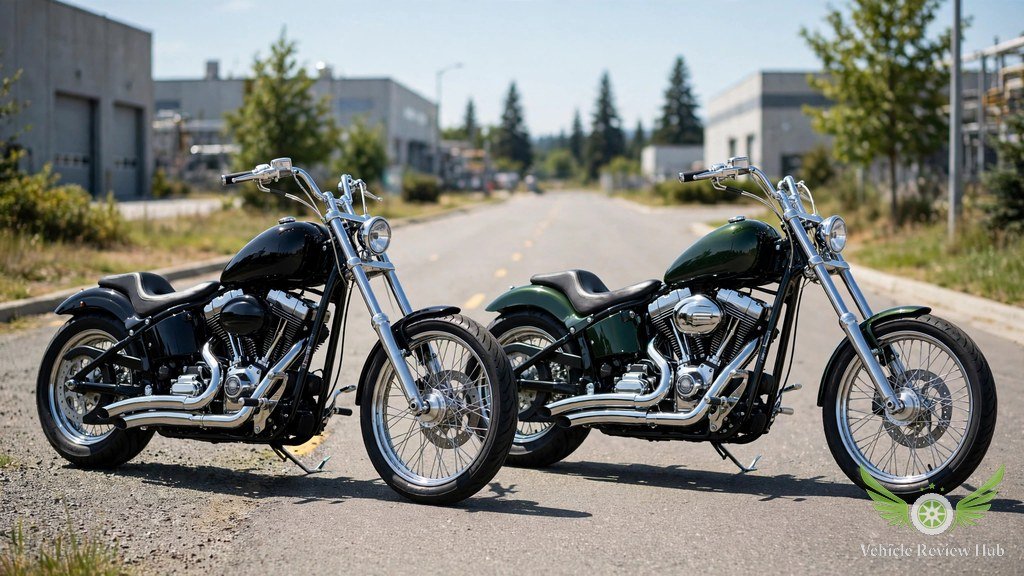
This Honda Fury buying guide calls ABS the single most important year split on a used Fury. The 2010 US Fury was non-ABS only; the ABS variant that year was a Canada-market bike. Honda added the Fury ABS as a separate variant, model code VT1300CXA, from 2011, in Black only in 2012 ($14,390) and 2013, and still sold both trims in 2014, at $13,390 standard and $14,390 ABS, and again as an option in 2015. So ABS-standard-in-2014 claims are wrong, and any 2010–2015 ABS listing needs proof. By 2023 dealer sheets stated that ABS was standard equipment on every Fury. The exact year Honda dropped the non-ABS bike could not be pinned from Honda’s own releases, so verify the actual motorcycle: the front-wheel tone ring, the ABS light that goes out above about 6 mph, and the A suffix in the model code. Never pay an ABS premium on a seller’s word alone in this Honda Fury buying guide comparison.
Which Differences Matter: Year, Colour, Mileage and Service History?
This Honda Fury buying guide ranks four factors: service history first, condition second, ABS third, year and colour last. Service history matters most because the Fury’s 8,000-mile valve-clearance interval is the first job a neglected bike misses; a stamped book showing the 600-mile service and every 8,000-mile check is worth more than a two-year age advantage. Condition comes next, mostly chrome and paint. Year itself matters least: the engine, gearbox, shaft drive, and chassis are effectively the same from 2010 to 2025. Adventure Green is the only 2025 colour. Mileage matters in bands: under 5,000 miles is a garage queen needing age checks on tires, fluid, and battery; 5,000 to 20,000 miles is the sweet spot; over 30,000 miles is fine with documented history. That ranking is how this Honda Fury buying guide says to judge any two model years. Watch this specs-and-changes rundown before judging any two model years against each other.
Honda Fury vs Harley-Davidson Breakout: Which One to Buy in the USA
Usually argued on brand loyalty, this Honda Fury buying guide argues it on price and size.
Fury at $11,499 Against the Breakout at $22,999 for 2026
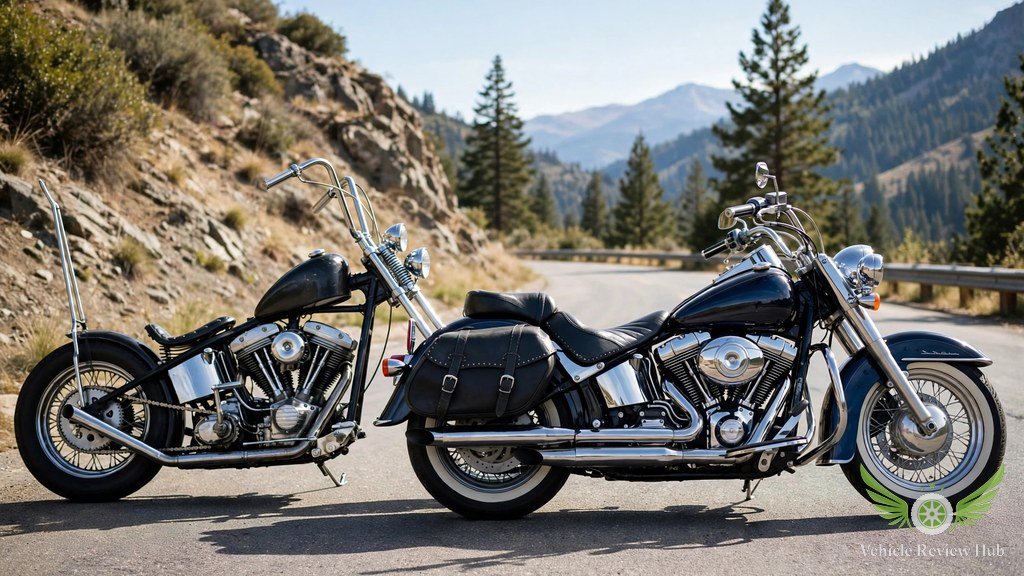
A new 2025 Fury is $11,499 plus $775 destination, while Harley-Davidson’s 2026 Breakout page prices the Breakout at $22,999 before dealer freight and setup: a gap of exactly $11,500 on sticker alone. For that gap the Breakout gives you a much bigger motorcycle: a Milwaukee-Eight 117 of 1,917cc against the Fury’s 1312cc, a 240mm rear tire against the Fury’s 200mm, LED lighting, and ride modes. The Fury answers with a lower 26.7-inch seat, shaft drive against the Breakout’s belt, Honda’s low-maintenance reputation, and $11,500 left for gear and servicing. Performance is not close on paper, and this Honda Fury buying guide will not pretend otherwise. The Fury performance figures put the gap in context, and this Honda Fury buying guide says to test-ride both first.
When a Scout Bobber, Speedmaster or Vulcan S Makes More Sense
Three smaller rivals beat both bikes for particular riders. The Indian Scout Bobber, from $12,999 plus $725 destination for 2026, suits riders wanting modern performance and a factory bobber look, and is the closest-priced alternative to a new Fury. The Triumph Bonneville Speedmaster suits classic-twin character; no verified price is quoted here. The Kawasaki Vulcan S, from $7,649 plus $685 destination for 2026, suits budget buyers and shorter or newer riders: lighter and easier to manage than a 675-pound chopper. None looks like a Fury: if the silhouette is what you fell in love with, this Honda Fury buying guide says to buy the Fury; if cruisers in general, ride all three first.
Is Buying a Used Honda Fury Worth It?
After prices, recalls, inspections, and rivals: this exact motorcycle, or a cruiser in general? This Honda Fury buying guide answers it directly.
Benefits and Risks: Unchanged Design, Thin Data and Strong Style Value
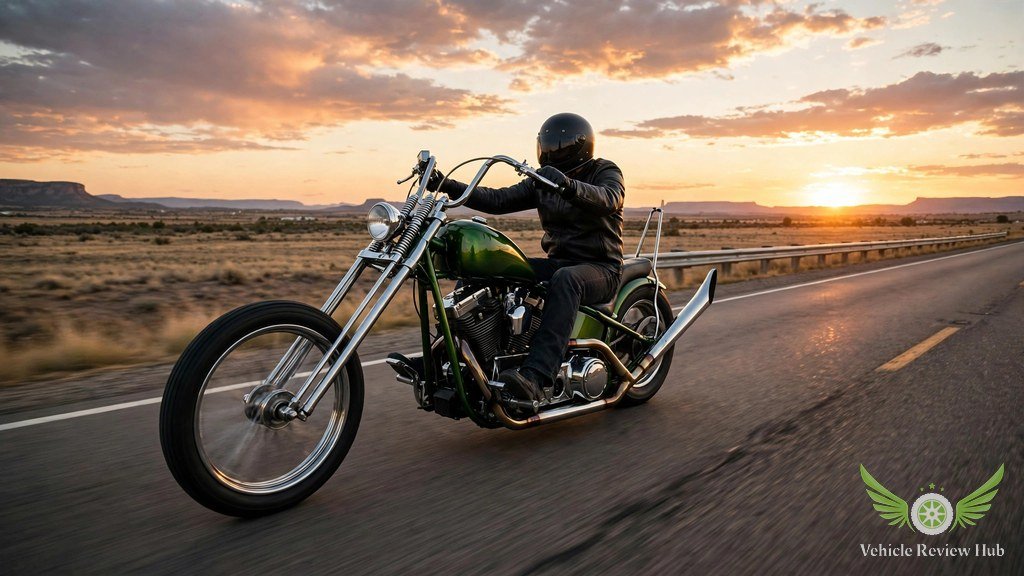
Benefits are real: an unchanged design means every mechanical answer is known: fifteen years of owner history, parts that interchange across model years, and no model-year surprise in the wiring. Style value is equally real: nothing else from a major manufacturer looks like a Fury, and clean late bikes hold $7,000 to $9,000. Verified owner sentiment is warm: Cycle Insider’s Fury owner ratings number 23, mostly 4.5 to 5.0 out of 5, the lowest recent note a 4.3 for a 2022 ABS bike over its factory seat. The risks are specific. Data is thin: no Fury-specific insurance average or verified US dealer service price exists, and another outlet’s owner-rating figure could not be verified, so it is not repeated here. The 8,000-mile valve interval punishes neglected bikes, the 3.4-gallon tank punishes long-distance plans, and chrome-plated plastic trim punishes outdoor storage. Missing history, peeling chrome, and an open recall turn a $7,000 bike into a $5,000 bike with homework. Buy the documented, garaged, ABS example with fresh tires, and the Fury is worth it in this Honda Fury buying guide verdict.
US-Market Alternatives: Shadow Phantom, Scout Bobber and Bobber
If the Fury fails your test ride or budget, three alternatives cover the same ground differently. Honda’s own Shadow Phantom is the in-family step down: smaller, cheaper, and the natural choice if the Fury’s 675 pounds or 71-inch wheelbase intimidate you. The Shadow Phantom review covers its pricing and specifications. The Indian Scout Bobber is the modern alternative, from $12,999 for 2026, with stronger performance. The Triumph Bonneville Bobber is the style alternative, for riders who find the Fury’s stretched-out reach tiring. The Rebel 1100 is the value alternative; its Rebel 1100 buying guide covers a larger, more versatile Honda cruiser. None replaces the Fury’s silhouette, and if that silhouette is why you started reading this Honda Fury buying guide, no alternative will talk you out of it.
Frequently Asked Questions About Buying a Honda Fury
These answers cover the questions buyers ask most, from used prices and recall checks to insurance, inspection, and ownership costs. Each answer states what is verified, so this Honda Fury buying guide stays honest about thin data.
How Much Does a Used Honda Fury Cost in 2026?
This Honda Fury buying guide prices November 2026 listings: roughly $4,800 to $7,000 for early 2010–2013 bikes, $6,000 to $9,000 for mid-era 2014–2019 bikes, and $6,500 to $9,000 for late 2020–2025 bikes. Use the era bands in this Honda Fury buying guide as your anchor; every figure is an asking price.
Is the Honda Fury Still Available New?
Yes, as leftover stock: new 2025 Adventure Green bikes were advertised from $10,499, and this Honda Fury buying guide found a new leftover 2024 at $10,779. No 2026 Fury model exists, so check any ‘2026 Fury’ listing’s model year.
What Is the Honda Fury Fuel Pump Recall 26V633?
Recall 26V633 covers certain 2023–2025 Fury bikes within a 4,206-unit campaign; the Fury portion is 820 units. A defective pump can stall the engine, so this Honda Fury buying guide advises a VIN check on NHTSA.gov before paying. The recall section of this Honda Fury buying guide lists the other two VIN checks.
Which Honda Fury Model Years Have ABS?
Early US Fury bikes were non-ABS, ABS was optional through the 2010s, and standard by 2023, as this Honda Fury buying guide confirms. This Honda Fury buying guide advises verifying the actual bike by tone ring, ABS dash light, and A-suffix model code, since the exact standard-only switchover year is unpinned.
How Do I Inspect a Used Honda Fury?
Check the VIN for recalls 26V633, 15V439, and 17V805; inspect the shaft drive for leaks and play; check tires, chrome, and paint; and judge modifications by original parts. This Honda Fury buying guide treats missing service history as a failed inspection.
What Does Honda Fury Insurance Cost?
No Fury-specific US insurance figure exists, so this Honda Fury buying guide quotes none. Quotes depend on age, record, state, coverage, bike value, and modifications; get quotes by VIN, as this Honda Fury buying guide recommends.
What Are Honda Fury Ownership Costs?
Plan roughly $417 a year in fuel at 5,000 miles, 42 mpg, and $3.50 a gallon, plus a 200/50-18 rear tire, 8,000-mile services, and shaft-drive oil changes. This Honda Fury buying guide keeps those figures as planning arithmetic, not measured averages.
Is the Honda Fury Reliable?
The Fury’s record is mostly clean: a 20-unit tank-weld recall, a multi-model starter-relay recall, and the 2023–2025 fuel-pump recall. This Honda Fury buying guide still advises a VIN check on every bike, because recall coverage is by VIN, not by model year alone. The reliability section of this Honda Fury buying guide covers all three recalls in full.
Honda Fury vs Harley-Davidson Breakout: Which to Buy?
The Fury at $11,499 undercuts the Breakout at $22,999 by $11,500 on MSRP. This Honda Fury buying guide recommends the Fury for style value, the Breakout for a larger engine and dealer network, and the Scout Bobber as the middle-priced alternative.
Is Buying a Used Honda Fury Worth It?
Yes for style value, if the bike passes the checks this Honda Fury buying guide sets out: an unchanged 15-year design means deep parts knowledge and stable prices. This Honda Fury buying guide warns against a premium for a modified bike without original parts, or any bike with an open fuel-pump recall.
What Should I Check Before Paying for a Honda Fury?
Confirm the VIN recall status, the 600-mile first service, and the 8,000-mile valve checks; ride for shaft-drive noise and brake feel; and compare the asking price against the era band. This Honda Fury buying guide treats missing service records as a reason to negotiate, not to walk away.
Which Alternatives Should I Consider?
The Shadow Phantom is the in-family step-down, the Scout Bobber the middle-priced rival, and the Vulcan S the budget alternative. This Honda Fury buying guide covers each briefly, with the Scout Bobber from $12,999 and the Vulcan S from $7,649 for 2026. Scout Bobber and Vulcan S prices in this Honda Fury buying guide are 2026 figures.