Honda NC750X performance is not about big horsepower numbers. It is about a 745cc parallel-twin engine tuned for low-rev torque, a six-speed Dual-Clutch Transmission (DCT) that removes the clutch lever, and fuel economy that embarrasses most motorcycles twice its size. The current US model, the 2027 NC750X DCT, costs $9,499 plus a $600 destination charge, and it returns for 2027 without major mechanical changes in a new Matte Mud Gray color.
So what does Honda NC750X performance actually feel like? Modest on paper, easy in practice. The European claim is 57.8 horsepower, the only published American dyno run measured 51 horsepower at the rear wheel, and the top speed listed in Europe is 106 mph for the DCT model. Honda USA publishes no MPG figure, but American testers have recorded 52 to 53 mpg in mixed riding, and one long-term test averaged nearly 69 mpg over 1,400 miles.
Honda NC750X Engine Performance and Power Delivery
The engine is the foundation of Honda NC750X performance: a 745cc liquid-cooled parallel twin, canted forward 55 degrees, with a 270-degree crankshaft, four valves per cylinder, and a 38mm throttle body. Its long 80mm stroke against a 77mm bore marks it as an undersquare engine built for low-rev pull.

Rider Dyno 51 HP at 6,200 RPM and EU Claim 57.8 HP Explained
The two horsepower figures in Honda NC750X performance discussions measure different things. The European claim is 57.8 horsepower at 6,750 rpm, with 51 lb-ft of torque at 4,750 rpm, measured at the crankshaft, before drivetrain losses. The American figure comes from Rider magazine’s 2018 road test, which recorded 51 horsepower at 6,200 rpm and 48 lb-ft of torque at 4,700 rpm at the rear wheel on a Jett Tuning dyno.
A seven-horsepower gap between crank and wheel is normal drivetrain loss, and that distinction is the honest baseline for Honda NC750X performance. Note that this dyno run is from the 2018 bike; no major American outlet has published a fresh one for the 2021-on bikes.
DCT Shifting, Ride Modes, Low-Rev Torque and Power Delivery
Since 2023, every US NC750X has been DCT-only, and the gearbox defines Honda NC750X performance more than the horsepower figure does. The six-speed Dual-Clutch Transmission has no clutch lever and no foot shifter in automatic mode: twist the throttle and go. Paddle switches let you override automatic shifting, and a manual mode hands you full control while still auto-downshifting.
The 2025 update rethought the DCT, adding Rain, Standard, and Sport modes and two User modes that adjust throttle, braking, traction, and shift timing, plus low-speed refinements borrowed from the Africa Twin. In Standard mode the DCT upshifts early, reaching fourth gear by 25 mph and fifth by 30 mph, while Sport mode holds gears longer and sharpens throttle response. Honda NC750X performance is built for riders who want effortless, not exciting.
Honda NC750X Top Speed and Acceleration
Top speed is the most misunderstood part of Honda NC750X performance: the verified figure is European, the bigger numbers are estimates, and no American magazine has published an instrumented acceleration test.
Honda Europe Figure 106 MPH for DCT and Why 110 to 115 Claims Are Estimates
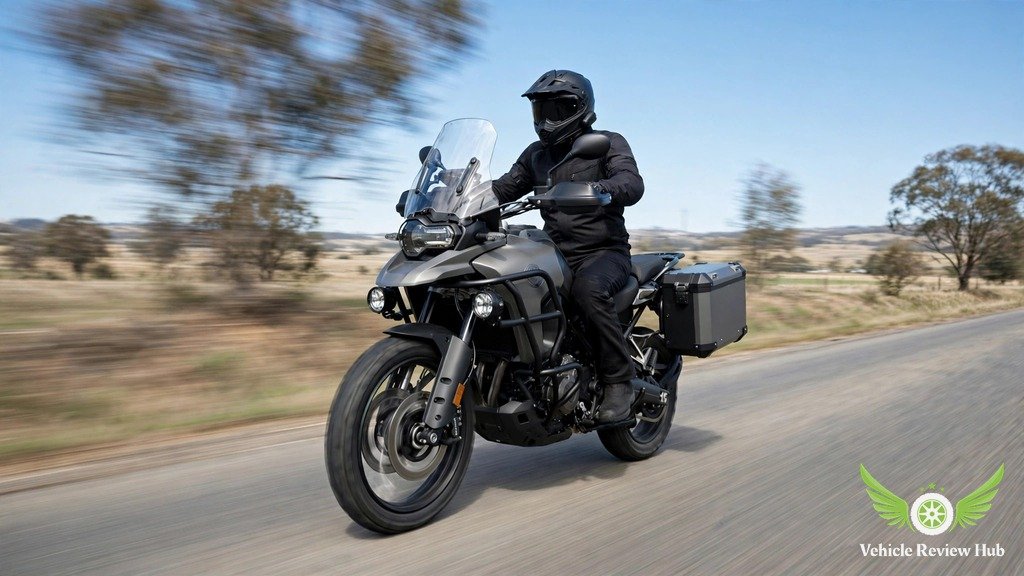
Honda’s European specification tables list the NC750X DCT at 170 km/h, which converts to 106 mph. That is the documented top-speed figure for the DCT model. That European figure is the anchor of Honda NC750X performance at speed.
Claims of 110 to 115 mph come from aggregator websites that republish each other’s tables without a test behind them, and some pages even claim 125 mph, which no Honda document or credible test supports. Treat every number above 106 mph for the DCT as an estimate. In short, Honda NC750X performance tops out where a 58-horsepower, 497-pound motorcycle should: fast enough for any American highway, happiest between 65 and 80 mph.
Why No Instrumented 0-60 or Quarter Mile Test Exists in the USA
No major American motorcycle publication has published an instrumented 0-60 mph or quarter-mile time for the NC750X, because American testers treat it as a commuter and light tourer, so their tests measure economy, comfort, and practicality instead of launch times. That absence means any 0-60 figure you find online is an estimate or an unverified measurement. This article gives no 0-60 or quarter-mile number because no verified one exists. That missing test defines the limits of Honda NC750X performance data.
Tested evidence still shows clean DCT launches, no stalling, and brisk city pace — useful Honda NC750X performance facts. Beyond that, Honda NC750X performance should be judged on economy and ease.
Honda NC750X Mileage and Fuel Economy
Fuel economy is where Honda NC750X performance genuinely embarrasses its rivals: a 497-pound motorcycle returning 50-plus mpg in normal American riding is unusual, and the spread of tested figures shows how much riding style changes the result.

Honda USA Publishes No MPG Figure and the 3.7-Gallon Tank
Honda USA publishes no MPG figure for the NC750X, so every economy number here comes from independent testing or Honda’s European claims, each labelled as such. The fuel tank holds 3.7 gallons on the current bike and sits under the seat rather than ahead of the rider. That layout makes room for a lockable storage compartment, a 23-litre space Honda says fits most full-face helmets. Every economy claim in Honda NC750X performance coverage should carry that label.
The small tank is the bike’s main touring compromise in Honda NC750X performance terms. Even at 53 mpg, a 3.7-gallon tank means a fill-up every 190 to 200 miles, and hard highway riding at 80 mph shortens that further. The upside is a low center of gravity, part of why it feels lighter than 497 pounds suggests. That honesty about the tank is part of Honda NC750X performance.
Tested 52 to 53 MPG in Mixed US Riding and Up to 69 MPG Ridden Gently
American testing supports the 52 to 53 mpg mixed-riding band. Motorcyclist’s MC Commute test of the 2021 NC750X DCT recorded an average of 53.3 mpg. Motorcycle.com’s 2021 test observed 52 mpg. Two independent American tests landing within a mile per gallon of each other is rare agreement in Honda NC750X performance testing.
The higher figures come from gentler or longer-term use. Rider averaged nearly 69 mpg over 1,400 miles of mixed freeway and surface-street riding on its 2018 test bike. A British long-term owner reported 45 to 75 mpg over 20,000 miles, averaging around 60 mpg. Honda’s European WMTC claim is 67.2 mpg, and the EPA certification figure is 62.7 mpg. Honda NC750X performance rewards a light throttle hand more than almost any motorcycle in its class.
| Test or claim | MPG | Range on 3.7 gallons |
|---|---|---|
| Motorcyclist MC Commute, 2021 DCT | 53.3 mpg | About 197 miles |
| Motorcycle.com, 2021 DCT | 52 mpg | About 192 miles |
| Knox long-term average, 20,000 miles | About 60 mpg | About 222 miles |
| Rider, 2018 test, 1,400 miles | Nearly 69 mpg | About 255 miles |
| Planning band, mixed US riding | 52 to 53 mpg | 190 to 200 miles |
Honda NC750X Real-World Riding Performance
Specifications only go so far here, because Honda NC750X performance is mostly about how little effort daily riding takes. The DCT, low seat, low center of gravity, and storage compartment combine into a bike that asks less of its rider than any rival. Understanding that split is key to Honda NC750X performance.
City Riding, Traffic Performance and Everyday Acceleration
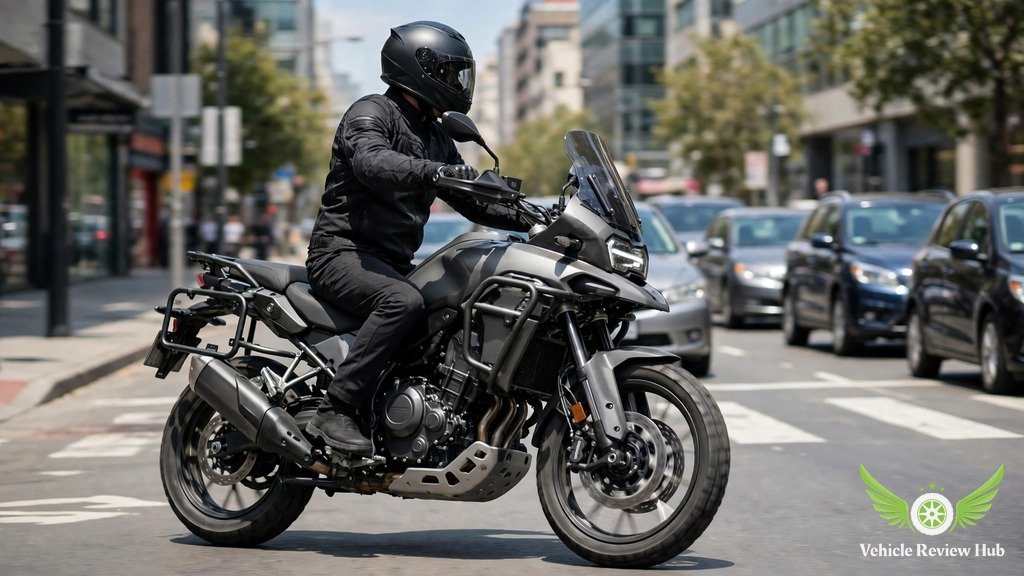
In the city, the NC750X is close to unbeatable for its price. No clutch lever in stop-and-go traffic, no stalling at a light, and the automatic downshifts mean the bike is always in a usable gear when the gap opens. The 31.6-inch seat lets most riders put both feet down, and the low weight placement makes slow-speed maneuvers feel easy. City riding is where Honda NC750X performance shines brightest.
Everyday acceleration is brisk up to city speeds, thanks to the torque peak at 4,750 rpm, and the frunk swallows a helmet or groceries. The 2025 update’s smoother low-speed DCT behavior fixed the old bike’s off-idle lurch, the top complaint. What the city rider gives up is excitement: a muted engine note, lazy early upshifts in Standard mode, and firm suspension over broken pavement. For commuting, though, Honda NC750X performance is a genuine strength, not a compromise.
Highway Riding, Overtaking Ability and Around 190 to 200 Mile Range
On the highway, the NC750X is planted and stable, with a 60.3-inch wheelbase. The fairing and low windscreen divert wind from the rider’s upper body, though testers note helmet noise from the low screen. Cruising at 75 mph sits around 4,500 rpm in top gear. That relaxed cruise is central to Honda NC750X performance.
Overtaking needs planning rather than instinct, the main highway limit of Honda NC750X performance. From 65 mph, rolling on the throttle in Standard mode produces a measured rather than urgent response, because the DCT is already in top gear. Sport mode or the downshift paddle transforms the response. Range sits around 190 to 200 miles in mixed American riding, and Honda does not list cruise control for the US bike.
The 5,000-mile owner review embedded above comes from a rider with 5,000 miles on a 2026 NC750X DCT, asking whether the bike is a keeper, with the DCT and economy standing out. That matches Honda NC750X performance generally: it impresses over months, not in ten minutes. The Africa Twin Adventure Sports ES is the natural step up in Honda NC750X performance for riders who want the same DCT philosophy with more power and a bigger tank.
Honda NC750X Handling, Braking and Stability
Handling is the quiet surprise of Honda NC750X performance. On paper, a 497-pound bike with a conventional fork and a single shock should feel ordinary, but the chassis geometry and low center of gravity give it an agility testers praise. The limits are honest: this is a road bike with adventure styling, not a dual-sport machine.

Conventional 41mm Fork, Chassis, Tires and Cornering Behaviour
The front suspension is a 41mm conventional Showa fork, non-adjustable, with 4.7 inches of travel, matched to a preload-adjustable rear shock with 4.7 inches of travel. The diamond-type steel-tube frame, 27-degree rake, 4.3 inches of trail, and 60.3-inch wheelbase make for a stable motorcycle that corners with confidence on paved roads. The 2021 redesign cut suspension travel by 30mm and lowered the seat. That fork-and-shock package defines Honda NC750X performance handling.
Tires on the current bike are street-biased Dunlop Trailmax D609 rubber in 120/70-17 front and 160/60-17 rear sizes, a 90/10 street-to-dirt design. Testers report no concerns on twisties, and the low center of gravity makes the bike feel nimble. Two honest limits: first, with no inertial measurement unit there is no cornering ABS, and the DCT can be slow to downshift for a corner exit unless the rider uses the paddles. Second, with 4.7 inches of travel, 17-inch cast wheels, and street tires, Honda NC750X performance ends where the pavement does. That road-only honesty frames Honda NC750X performance fairly.
Single Front Disc Before 2025, Dual 296mm Discs From 2025 and ABS
Braking improved meaningfully with the 2025 update, and the year split is a key Honda NC750X performance detail when shopping used. Before 2025, the NC750X stopped with a single 320mm front disc gripped by a two-piston caliper, plus a single 240mm rear disc, with two-channel ABS standard. That setup could stop the nearly 500-pound bike competently, but testers noted it needed a firm squeeze for a quick stop.
From 2025 on, the bike carries dual 296mm front discs with Nissin two-piston calipers and a single 240mm rear disc, still with two-channel ABS. Ultimate Motorcycling’s 2025 review reports that a gentle squeeze now gets the job done, with new lighter wheels offsetting the extra weight. ABS is standard on every year, but it is conventional two-channel ABS, not lean-sensitive cornering ABS. For used buyers, the brake upgrade justifies preferring a 2025-or-newer bike.
Honda NC750X Performance Compared With Other Crossover Bikes
Against its rivals, Honda NC750X performance trades power for economy and ease, and that trade is either the reason to buy it or the reason to pass. The two closest crossover rivals are the Kawasaki Versys 650 and the Suzuki V-Strom 650, both long-running middleweights that offer something the Honda does not. That trade defines Honda NC750X performance. Honda’s own Transalp XL750 sits above it in power.

Honda NC750X vs Kawasaki Versys 650 and Suzuki V-Strom 650
The 2026 Kawasaki Versys 650 LT ABS costs $10,399 plus a $685 destination charge, $900 more than the Honda before destination, and brings a 649cc parallel twin making 66 horsepower at 8,500 rpm with 45 lb-ft of torque at 7,000 rpm, a 5.5-gallon tank, dual 300mm petal front discs, traction control and standard saddlebags. It is sportier and higher-revving, but its manual gearbox makes every traffic shift the rider’s job, and at about 503 pounds wet it is heavier than the Honda.
The Suzuki V-Strom 650 XT, listed at $9,799 in the United States, is the value alternative, with a 645cc 90-degree V-twin, a curb weight just under 475 pounds, a 5.3-gallon tank, and owners commonly reporting 45 to 55 mpg. It undercuts the Honda on price and carries more fuel, but it is manual-only with no automatic option. The Honda answers with the DCT, the 23-litre frunk, the lowest seat of the three at 31.6 inches, and the best tested fuel economy at 52 to 53 mpg against the Suzuki’s 45 to 55 mpg. Choose the Versys for revs and luggage, the V-Strom for value, and the NC750X for the easiest daily ride. That ease-and-economy win is the Honda NC750X performance argument.
Is the Honda NC750X Suitable for Commuters and New Touring Riders?
For commuters, the answer is an easy yes, and commuting is the strongest case for Honda NC750X performance. The DCT removes the worst part of city riding, the frunk removes the need for luggage on most days, the 31.6-inch seat suits shorter riders, and 52 to 53 mpg in mixed riding keeps the weekly fuel bill small.
For new touring riders, the answer is yes with conditions. The NC750X is approachable, stable, and economical, with an upright riding position for confident control. But new riders should respect two things: 497 pounds is heavy to pick up if it tips over, and the 190 to 200-mile range plus the lack of cruise control means long highway days take more planning than on a bigger tourer. Honda NC750X performance suits the rider who values ease and economy over speed, and for that rider it is one of the best motorcycles Honda sells in the United States.
Honda NC750X Performance FAQs
These are the direct answers to the questions buyers actually ask about Honda NC750X performance, from horsepower and top speed to fuel economy, range, and rivals.
What is the Honda NC750X top speed?
Honda’s European specification lists the NC750X DCT at 170 km/h, or 106 mph. Claims of 110 to 115 mph from aggregator websites are estimates without a test behind them, and claims of 125 mph are unsupported. It cruises comfortably at 75 to 80 mph. That is the verified Honda NC750X performance top speed.
How much horsepower does the Honda NC750X have?
Honda claims 57.8 horsepower at 6,750 rpm at the crankshaft in Europe. The only published American dyno run, Rider’s 2018 test, measured 51 horsepower at 6,200 rpm at the rear wheel. The difference is normal drivetrain loss between crank and wheel, not a contradiction. That crank-versus-wheel gap is the first thing to understand about Honda NC750X performance.
What MPG does the Honda NC750X get?
Honda USA publishes no MPG figure. American tests recorded 52 to 53 mpg in mixed riding: Motorcyclist’s MC Commute test averaged 53.3 mpg and Motorcycle.com observed 52 mpg. Gentler riding returns more, with Rider averaging nearly 69 mpg over 1,400 miles and a long-term owner averaging around 60 mpg over 20,000 miles. Those are the tested numbers behind Honda NC750X performance fuel-economy claims.
How far can the Honda NC750X go on a tank?
On its 3.7-gallon tank, plan on 190 to 200 miles in mixed American riding at 52 to 53 mpg. Gentle riding stretches range past 220 miles at 60 mpg and toward 255 miles at 69 mpg, while hard highway riding shortens it below 190 miles. That 190-to-200-mile band is the practical Honda NC750X performance range figure.
Does the Honda NC750X have a manual transmission option?
Not in the United States anymore. Manual-transmission NC750X models were sold alongside DCT versions through 2022, but every US NC750X from 2023 onward is DCT-only. The DCT still offers a manual shift mode with handlebar paddles. That 2023 switch simplified Honda NC750X performance buying: one gearbox, no choice to make.
Is there a Honda NC750X 0-60 time?
No verified American 0-60 or quarter-mile time exists for the NC750X, because no major American publication has published an instrumented acceleration test. Any 0-60 figure found online is an estimate or an unverified claim. The bike launches cleanly and cannot stall thanks to the DCT, and it feels brisk up to city speeds. That honesty is part of Honda NC750X performance reporting done right.
What changed in Honda NC750X performance for 2025?
The 2025 update brought dual 296mm front discs replacing the single front disc, a 5-inch TFT display with Honda RoadSync, rethought DCT logic with Rain, Standard, and Sport ride modes plus two User modes, smoother low-speed shifting, redesigned LED lighting, and Durabio bodywork. Power and weight stayed effectively the same. Those changes define modern Honda NC750X performance.
How does the NC750X compare to the Versys 650?
The Versys 650 LT ABS costs $900 more before destination, makes 66 horsepower against the Honda’s 57.8 claimed, carries 5.5 gallons against 3.7, and includes saddlebags, but it is manual-only and slightly heavier. The Honda answers with the DCT automatic, the 23-litre frunk, a lower seat, and better tested fuel economy. That ease-and-economy edge is the Honda NC750X performance case against the Versys.