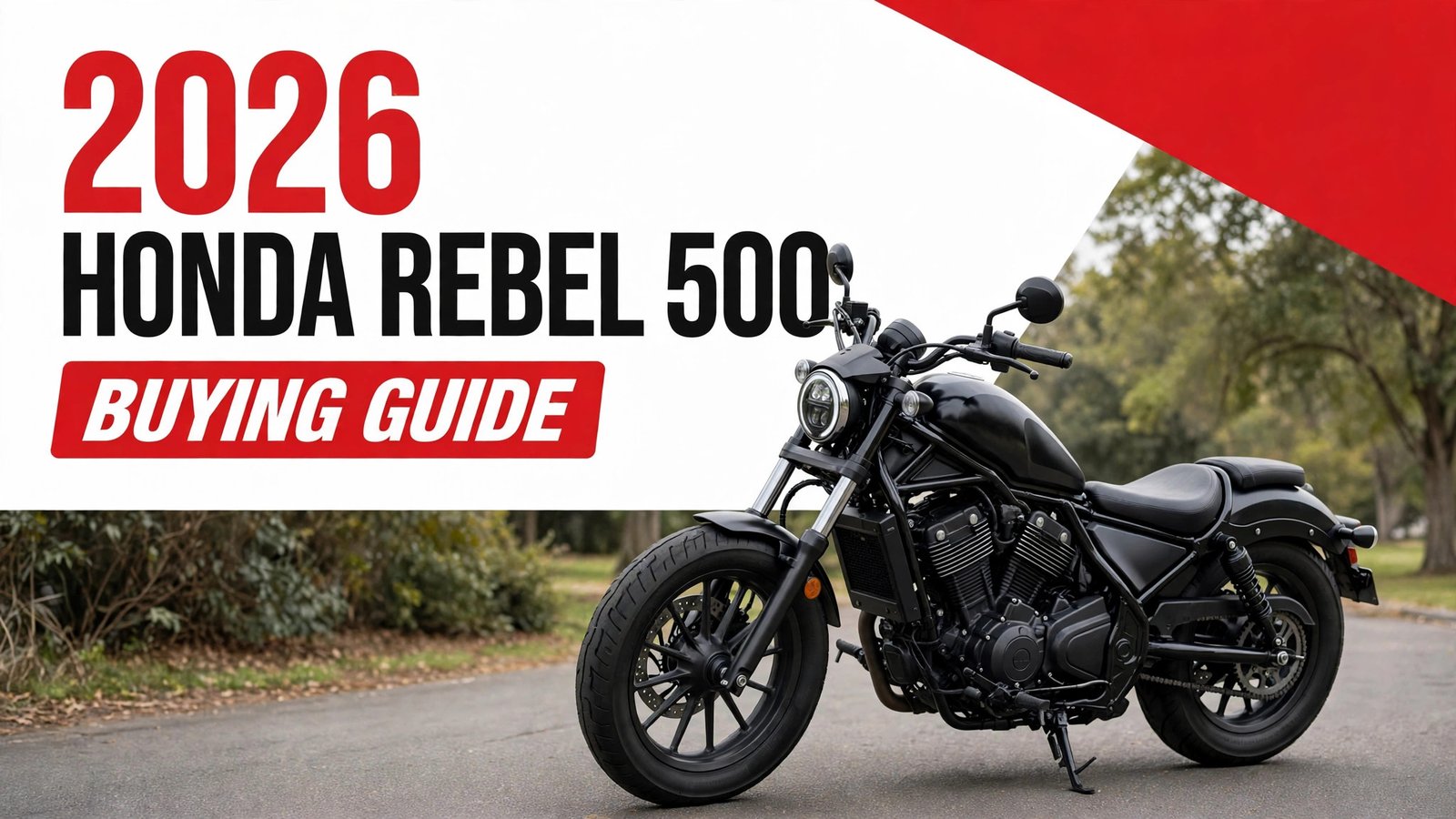
Short answer: a used Honda Rebel 500 is one of the safest used-cruiser buys in America, provided you buy the right trim, verify the recalls by VIN, and check for sitting neglect instead of fixating on the odometer. Clean 2020-on ABS bikes with a few thousand miles commonly ask $4,800–$6,000, while leftover-new 2024 stock can cost less than a used 2025. This Honda Rebel 500 buying guide covers real asking prices, insurance benchmarks, inspection steps, and model-year differences.
The Rebel 500’s appeal is simple: a 471cc liquid-cooled parallel-twin engine, a 27.2-inch seat, and a curb weight of roughly 408 pounds for the base bike, 414 pounds with ABS, and 419 pounds for the SE. A new rider can flat-foot it at a traffic light, and an experienced rider can still enjoy it on a back road — which, in this Honda Rebel 500 buying guide’s assessment, keeps used demand high, so do not expect a bargain simply because a bike is a few years old.
Honda Rebel 500 Price and Market Availability
New Rebel 500 prices have climbed steadily since the 2017 launch. Use the tables below as your anchor: check original MSRP first, then mileage and trim.
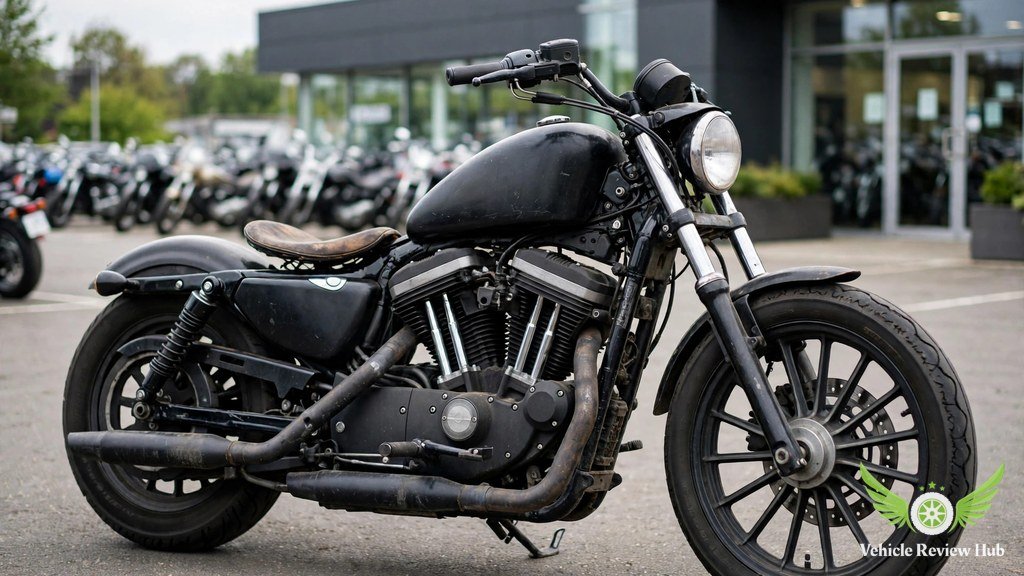
What Does a Used Honda Rebel 500 Cost in the USA by Year?
The Rebel 500 launched for 2017 at $5,999, with early 2018 pricing in the same area. The 2021 lineup, the first to include the SE, ran $6,299 base, $6,599 ABS, and $6,799 ABS SE, per Motorcyclist’s 2021 Rebel 500 buyer’s guide. Prices then rose by roughly $100 a year through 2022 ($6,399/$6,699/$6,899) and 2023 ($6,449/$6,749/$6,949), reaching $6,499/$6,799/$6,999 for both 2024 and 2025. For 2026, Honda simplified the lineup to two trims, both with ABS standard: the base bike at $6,799 and the SE at $6,999, plus a $600 destination charge — the 2026 baseline this Honda Rebel 500 buying guide uses throughout — per Honda’s own Rebel 500 page and dealer listings checked for this Honda Rebel 500 buying guide on November 2, 2026.
| Model year | Base MSRP | ABS MSRP | ABS SE MSRP |
|---|---|---|---|
| 2017 | $5,999 | — | — |
| 2018 | $6,099 | — | — |
| 2019 | — | $6,499 | — |
| 2020 | $6,199 | $6,499 | — |
| 2021 | $6,299 | $6,599 | $6,799 |
| 2022 | $6,399 | $6,699 | $6,899 |
| 2023 | $6,449 | $6,749 | $6,949 |
| 2024 | $6,499 | $6,799 | $6,999 |
| 2025 | $6,499 | $6,799 | $6,999 |
| 2026 | $6,799 (ABS standard) | — | $6,999 (ABS standard) |
*The 2018 base figure is $6,099 per Cycle World and dealer brochures; the 2017 launch price was $5,999. Destination charges moved from about $400 on 2019 bikes to $600 on 2026 bikes — compare out-the-door totals. Here is what real sellers were asking in early November 2026, as recorded for this Honda Rebel 500 buying guide — asking prices, not completed sales.
| Listing (November 2026) | Miles | Ask |
|---|---|---|
| Used 2024 ABS SE, Wichita, KS — Jay Hatfield Honda (Nov 2) | 1,226 | $5,999 |
| New leftover 2024 base, Scottsdale, AZ — Western Honda (Nov 2) | 1 | $5,919 total |
| New leftover 2024 ABS SE, Issaquah, WA — I-90 Motorsports (Nov 1) | 1 | $6,999 |
The pattern in this Honda Rebel 500 buying guide is consistent: pre-2023 bikes with moderate mileage cluster around $3,900–$5,000, 2023–2024 bikes around $4,800–$6,000, and anything under 1,500 miles pushes toward new-bike money.
Low-Mile Beginner Bikes Are Common, Including a 258-Mile 2021 SE
Low-mileage Rebel 500s are genuinely common: first bikes bought with enthusiasm, then sold when the owner upgrades or stops riding. A low odometer reading is a reason to inspect carefully, not to pay a premium blindly. One correction to this Honda Rebel 500 buying guide’s outline: its cited 258-mile 2021 SE example could not be traced to any real US listing in searches run on November 3, 2026 — the closest matches were a 292-mile 2021 SE in the UK at £4,795 and an unrelated stock number containing “258”. This Honda Rebel 500 buying guide therefore does not present the 258-mile figure as verified.
Honda Rebel 500 Insurance and Ownership Costs
Insurance is where the Rebel 500 quietly wins: modest power and a low theft-and-crash profile mean full coverage typically costs a few hundred dollars a year for an experienced rider. Your own quote will still vary, so treat every benchmark here as a starting point for quotes.
ValuePenguin Benchmark Around $399 a Year Is Based on a Rebel 500
The outline’s insurance claim in this Honda Rebel 500 buying guide checks out, and unusually precisely. ValuePenguin’s motorcycle insurance study puts average full coverage at $33 a month, or $399 a year — and its methodology states the quotes were collected across all 50 states for a 45-year-old single man who owns a 2018 Honda CMX500 Rebel, with $50,000/$100,000 bodily injury limits, $25,000 property damage, and $500 comprehensive and collision deductibles. In other words, the $399 benchmark is not a generic average borrowed for this Honda Rebel 500 buying guide; it is literally priced on a Rebel 500. Younger riders and riders in expensive states will pay more. Owner examples agree: BikeBound lists $484 a year for full coverage for a 45-year-old man in California with a clean record, while MoneyGeek’s October 2026 analysis put a 40-year-old rider with a clean record on a 2018 Rebel 500 at $141 liability-only and $364 full coverage. The lesson of this Honda Rebel 500 buying guide: get quotes from at least three insurers.
How to Estimate Fuel, Maintenance, Parts and Other Ownership Expenses
Build the annual budget in this Honda Rebel 500 buying guide from four lines. Fuel: the tank is listed at 3.0 gallons on current Honda pages and 2.9 gallons in early brochures, so plan on 2.9–3.0 gallons and about 140–160 miles of range. Servicing: first service at 600 miles, oil every 8,000 miles or 12 months, valves every 16,000 miles, plugs at 32,000 miles, chain every 600 miles, brake fluid every two years. Wear items: common-size cruiser tires, and chain and sprockets lasting 15,000–20,000 miles. A realistic first-year budget, excluding purchase price, runs $700–$1,200; the one-year Honda warranty is transferable.
How to Inspect a Used Honda Rebel 500
Inspect in the order that catches expensive problems first: paperwork and recalls, then engine and cold start, then chassis and crash evidence, and only then cosmetics.
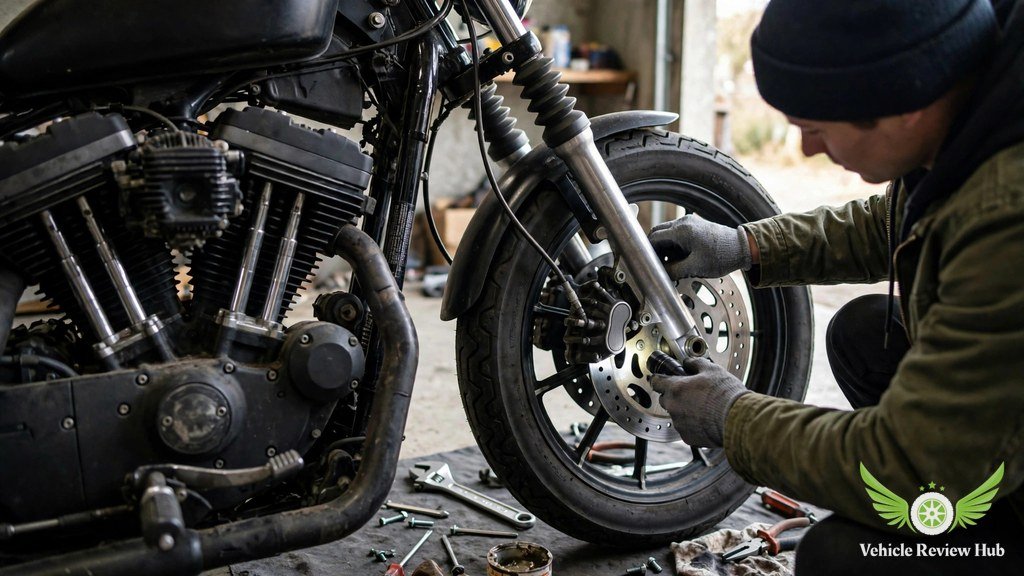
Checking VIN Recall Status First, Then Engine, Cold Start and Records
Start with the VIN, before you fall in love with the bike — the first rule of this Honda Rebel 500 buying guide. The Rebel 500’s model code is CMX500; the VIN plate and model-code sticker give the exact trim and year (decoded in the next section). This Honda Rebel 500 buying guide recommends running the VIN through Honda’s recall lookup and the NHTSA database, and checking three campaigns that name the CMX500: 21V-382 (certain 2020–2021 models, 28,528-unit multi-model campaign; the CMX500’s own slice is not published separately), 26V-146 (certain 2023–2025 CMX500), and 26V-500 (2017–2023 and 2025 CMX500, 43,913-unit campaign including the SCL500). Note the overlap: a 2024 bike is not in 26V-500 and must be checked against 26V-146 instead, and NHTSA’s year-by-year API returns no campaign for 2019 or 2026 CMX500 machines — possibly a filing quirk, not proof of exclusion. The companion Rebel 500 reliability guide covers each campaign and the service schedule in more depth. Then insist on a genuinely cold start: the engine should be cool to the touch when you arrive, start promptly, and idle smoothly with no smoke, rattles, or warning lights. Listen for cam-chain noise, check for oil weeping around the valve cover and countershaft sprocket, and check the coolant level. Ask for service records matched to the schedule; missing records are a price negotiation point, not necessarily a deal-breaker.
Inspecting for Drop Damage and Verifying ABS and SE by Model Code
Drop damage shows up in predictable places: scraped bar ends, bent levers, scuffed mirror housings, rashed heat shields, scratched fork lowers, and cracked turn-signal lenses. Fresh damage on several points, or a bent handlebar, tweaked fork, or dented tank, points to a crash — check the frame, steering stops, and wheel alignment. Check the chain for rust and slack, tire date codes as well as tread depth, and both brakes for firm feel. Verify ABS and SE from the model code, not the seller’s advertisement — mislabelled trims are common. Honda’s code pattern is consistent across dealer brochures: CMX500 is the base bike, “A” after CMX500 means ABS, and “A2” means the SE, with a final letter for the model year. Verified examples: 2019 ABS CMX500AK; 2021 ABS CMX500AM and SE CMX500A2M; 2023 SE CMX500A2P; 2024 base CMX500R, ABS CMX500AR, SE CMX500A2R; 2025 base CMX500S, ABS CMX500AS, SE CMX500A2S; 2026 base CMX500AT, SE CMX500A2T. The SE kit is also visible: diamond-stitched seat, black fork boots, black upper fork covers, and colour-matched headlight cowl. If the code says base but the bike wears SE parts, someone added accessories; if it says SE but the cowl and seat are missing, price it as a base bike. Naming note: a future cluster in the same document series is titled “CMX500 Rebel,” but CMX500 is simply the Rebel 500’s model code.
Honda Rebel 500 Model Years and Features to Compare
Three steps matter: 2017–2019 originals, 2020-on slipper-clutch bikes, and 2025–2026 refreshed bikes.
Comparing 2017-2019 Originals With 2020-On Slipper Clutch Versions
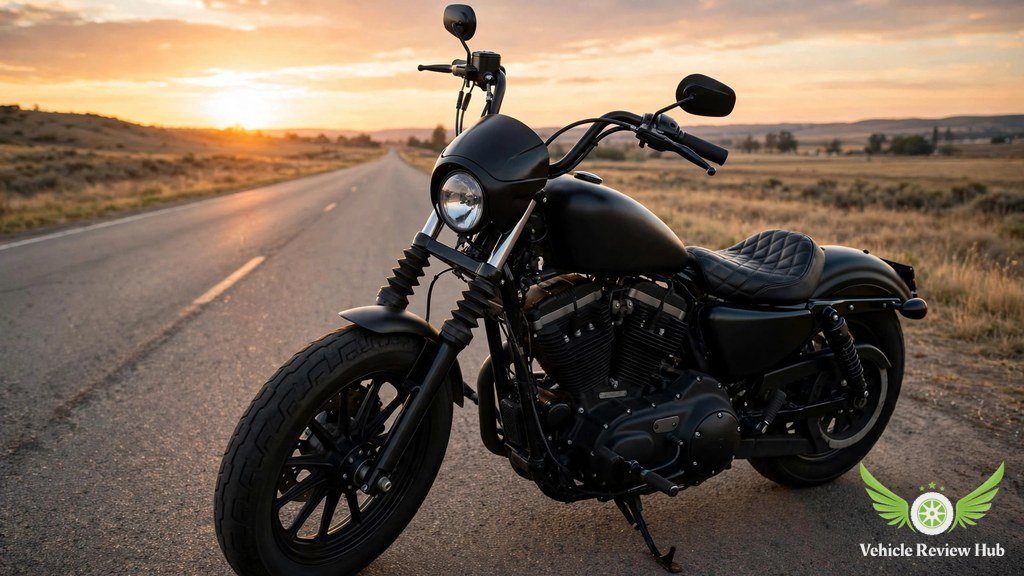
The 2017–2019 originals are honest, simple motorcycles: the same 471cc twin, low seat, and bobber styling, but with a conventional clutch, earlier instruments, and earlier suspension settings. The 2020 update is the one worth paying for in this Honda Rebel 500 buying guide: an assist-and-slipper clutch cutting lever effort by roughly 30 percent per Honda, full LED lighting, updated instruments, and revised suspension and seat. For a new rider, the lighter clutch justifies a premium of a few hundred dollars over a comparable 2019 bike. Prices reflect the split: a clean 2017–2019 bike without ABS is a $3,500–$4,500 motorcycle in most markets, while a comparable 2020-on ABS bike starts around $4,500. Do not pay 2020-on money for a 2019 bike.
Which Features Matter Most: ABS Trim, SE Equipment and 2025 Seat?
Rank the features in this order, as this Honda Rebel 500 buying guide does. First, ABS: a $300 paid option through 2025 and standard on both 2026 trims, worth roughly $200–$400 over an identical non-ABS bike. Second, the 2025 refresh: a redesigned seat, reshaped handlebars, revised rear shocks, and colour-matched fenders, in Matte Black Metallic, Pearl Blue, and Pearl Beige. GearPatrol’s 2025 Rebel 500 coverage confirms the same changes and the $6,499, $6,799, and $6,999 pricing for that year. Third, SE equipment: the diamond-stitched seat, fork boots, upper fork covers, and headlight cowl look sharp — the 2025 SE pairs a brown saddle with Pearl Blue paint — but add no performance. The LCD display is standard on every US Rebel 500; there is no TFT, E-Clutch, or DCT version of the 500 in the USA through 2026.
Honda Rebel 500 vs Rebel 300 E-Clutch: Which One to Buy in the USA
Two new bikes, $1,450 apart.

Rebel 500 at $6,799 Against the Rebel 300 E-Clutch at $5,349 for 2026
For 2026, the maths is clean. The Rebel 500 costs $6,799 plus a $600 destination charge, and the Rebel 300 E-Clutch costs $5,349 plus the same $600 destination charge — a $1,450 gap before taxes and dealer fees, per Honda’s pages and the Motorcycle.com 2026 Rebel 500 specification listing. The 500 gives you a 471cc parallel twin against the 300’s 286cc single, roughly 46 horsepower at the crank on the European claim, and a Cycle World rear-wheel dyno figure of 40.83 horsepower. The 300 counters with E-Clutch and 379 lb against the 500’s roughly 414 lb ABS weight. Buy the 500 for highway riding or long-term ownership; buy the 300 E-Clutch if you are brand-new, ride in town, or value the $1,450 saving. For a used buyer the gap narrows: a used 500 at $4,500–$5,000 competes with a new 300 E-Clutch once destination and fees are added, and the 500’s extra power usually wins. The companion Rebel 300 buying guide covers the smaller bike’s used market.
When an Eliminator, SCL500 or Rebel 1100 Makes More Sense
The Kawasaki Eliminator, at $6,499 without ABS and $6,799 with ABS plus a $650 destination charge for 2026 (SE ABS $7,099), uses a rev-happy 451cc Ninja-based twin and weighs less than the Rebel; leftover-new 2025 Eliminators were advertised at $4,999 plus fees. The Honda SCL500, at $6,999 plus $600 destination for 2026, shares the Rebel’s 471cc twin. The Honda Rebel 1100, at $9,699 plus a $775 destination charge for 2026 (touring T version $10,899), is the step up for two-up touring, a 1,084cc twin, and an available DCT automatic — but costs roughly $2,900 more before fees.
Is Buying a Used Honda Rebel 500 Worth It?
Yes, with two conditions: the bike passes the VIN and cold-start checks, and the price reflects its true trim and service history rather than its odometer alone.
Benefits and Risks: Check for Sitting Neglect and Missed Time-Based Services
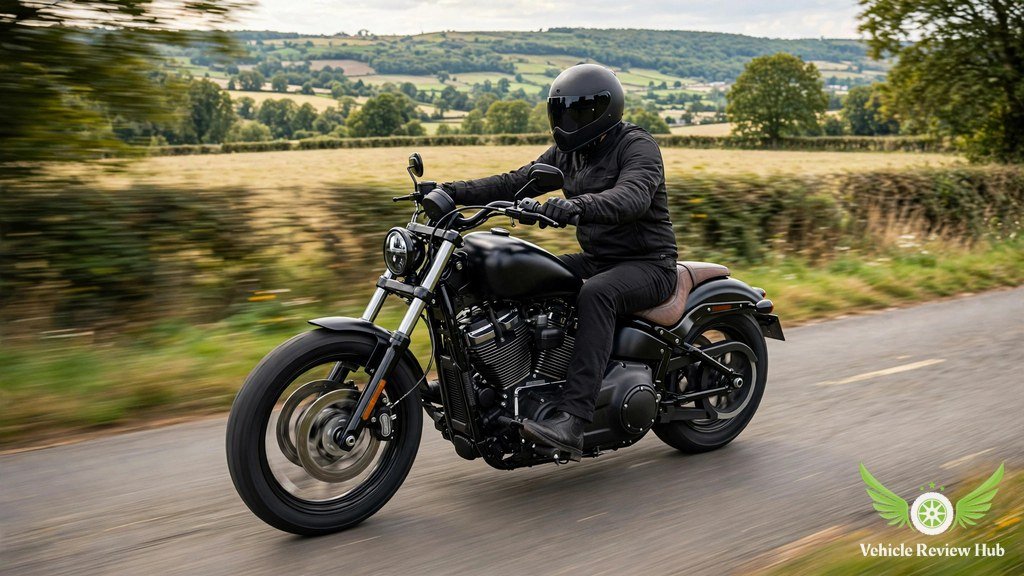
The benefits are concrete: a proven 471cc twin, a low seat, light weight, and strong resale value. The biggest risk is sitting neglect. A Rebel 500 with 800 miles that spent three years in a garage can need more work than a 12,000-mile bike ridden and serviced annually. Price the catch-up work before you offer: a bike that needs tires, a battery, brake fluid, and a full service can absorb $600–$1,000 quickly. Ask when the brake fluid, tires, and battery were last changed, not just the oil, and budget a $100–$200 dealer inspection on any bike over $5,000. The video below, from Throttle Vibes Garage, runs through five problems to know before buying a Rebel 500 — the kind of pre-purchase risks this section is about.
US-Market Alternatives: Meteor 350, Super Meteor 650 and Vulcan S
The Royal Enfield Meteor 350, at $4,899 for 2026 according to Cycle World’s Meteor 350 pricing page, is cheaper new than most used Rebel 500s — but gives up highway pace. The Royal Enfield Super Meteor 650, with its Celestial touring version reported around $7,499–$7,899 in October 2026 coverage, offers a 648cc twin and touring kit near new Rebel 500 SE money. The Kawasaki Vulcan S, at $7,649 without ABS and $8,149 with ABS plus a $685 destination charge for 2026 per Kawasaki’s Vulcan S page, brings a 649cc twin with about 60 horsepower and an adjustable Ergo-Fit position — but costs roughly $850–$1,350 more before destination charges.
Honda Rebel 500 Buying Guide: Frequently Asked Questions
These direct answers in this Honda Rebel 500 buying guide cover prices, insurance, inspection, model years, and rivals — the questions this Honda Rebel 500 buying guide hears most.
How much does a used Honda Rebel 500 cost in the USA?
This Honda Rebel 500 buying guide puts clean 2020-on ABS bikes at $4,800–$6,000; this Honda Rebel 500 buying guide says pay for ABS first — that is this Honda Rebel 500 buying guide’s price rule.
Is the 258-mile 2021 SE a real listing?
No: this Honda Rebel 500 buying guide could not trace it to a real US listing, so this Honda Rebel 500 buying guide calls it unverified.
Is $399 a year realistic for Rebel 500 insurance?
Yes: this Honda Rebel 500 buying guide verified ValuePenguin’s $399 figure is priced on a 2018 CMX500 Rebel, so this Honda Rebel 500 buying guide calls it realistic.
How do I verify ABS and SE trim by model code?
Check the model-code sticker: this Honda Rebel 500 buying guide decodes CMX500 as base, A as ABS, and A2 as SE, so this Honda Rebel 500 buying guide says never trust ads alone.
Which recalls should I check before buying?
Check 21V-382, 26V-146, and 26V-500 by VIN: this Honda Rebel 500 buying guide notes a 2024 bike sits in 26V-146, and this Honda Rebel 500 buying guide insists on a VIN check.
Should I buy a 2017–2019 Rebel 500 or a 2020-on bike?
Buy 2020-on if you can: this Honda Rebel 500 buying guide rates the slipper clutch and wider ABS worth a few hundred dollars, and this Honda Rebel 500 buying guide calls a clean 2019 ABS bike a bargain.
Is the 2025 seat refresh worth paying extra for?
For long days, yes: this Honda Rebel 500 buying guide confirms the redesigned seat and revised shocks, so this Honda Rebel 500 buying guide says seek a 2025-or-newer bike.
Does the Rebel 500 have E-Clutch, DCT, or a TFT display?
No: this Honda Rebel 500 buying guide confirms every US Rebel 500 uses an LCD display and manual clutch, so this Honda Rebel 500 buying guide warns against paying for rumoured 2027 features.
What is the difference between the Rebel 500 and the CMX500 Rebel?
Nothing: this Honda Rebel 500 buying guide states CMX500 is the Rebel 500’s model code, so this Honda Rebel 500 buying guide treats the two names as one motorcycle.
What does sitting neglect cost to fix?
Budget $600–$1,000 for tires, a battery, brake fluid, and a service: this Honda Rebel 500 buying guide calls sitting neglect the key used risk, so this Honda Rebel 500 buying guide says price it first.
Used Rebel 500 or new Rebel 300 E-Clutch?
Take the used 500 for highway riding: this Honda Rebel 500 buying guide notes the $1,450 new-bike gap narrows used, so this Honda Rebel 500 buying guide usually picks the 500.
Is a used Honda Rebel 500 a good first motorcycle?
Yes: this Honda Rebel 500 buying guide rates the low seat, light weight, and proven twin ideal for beginners, so this Honda Rebel 500 buying guide calls a checked used 500 a strong first buy.
Buy the cleanest 2020-on ABS bike your budget allows and verify it by VIN and model code. That is the verdict of this Honda Rebel 500 buying guide, and this Honda Rebel 500 buying guide rates a checked used Rebel 500 a strong first buy.