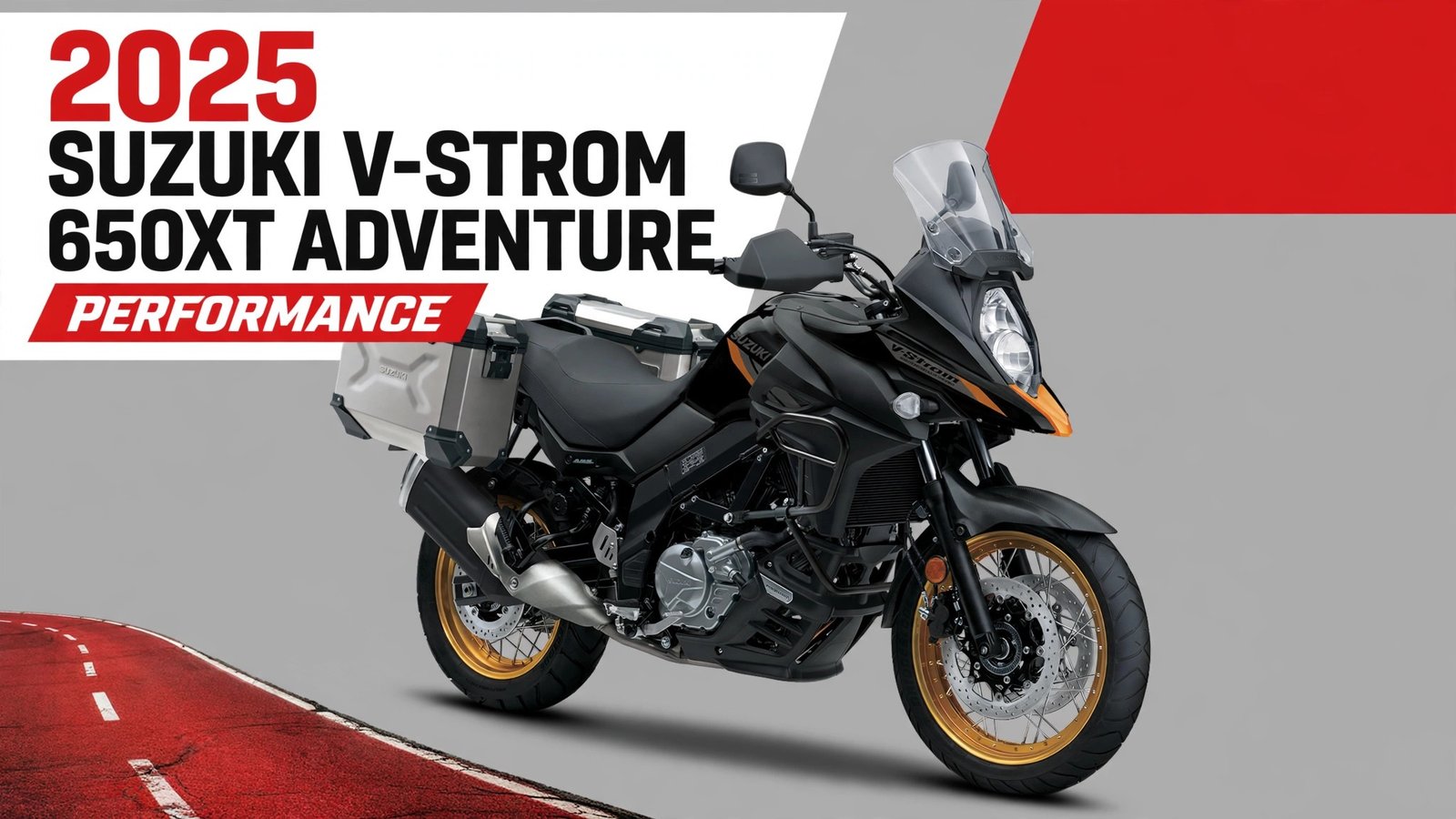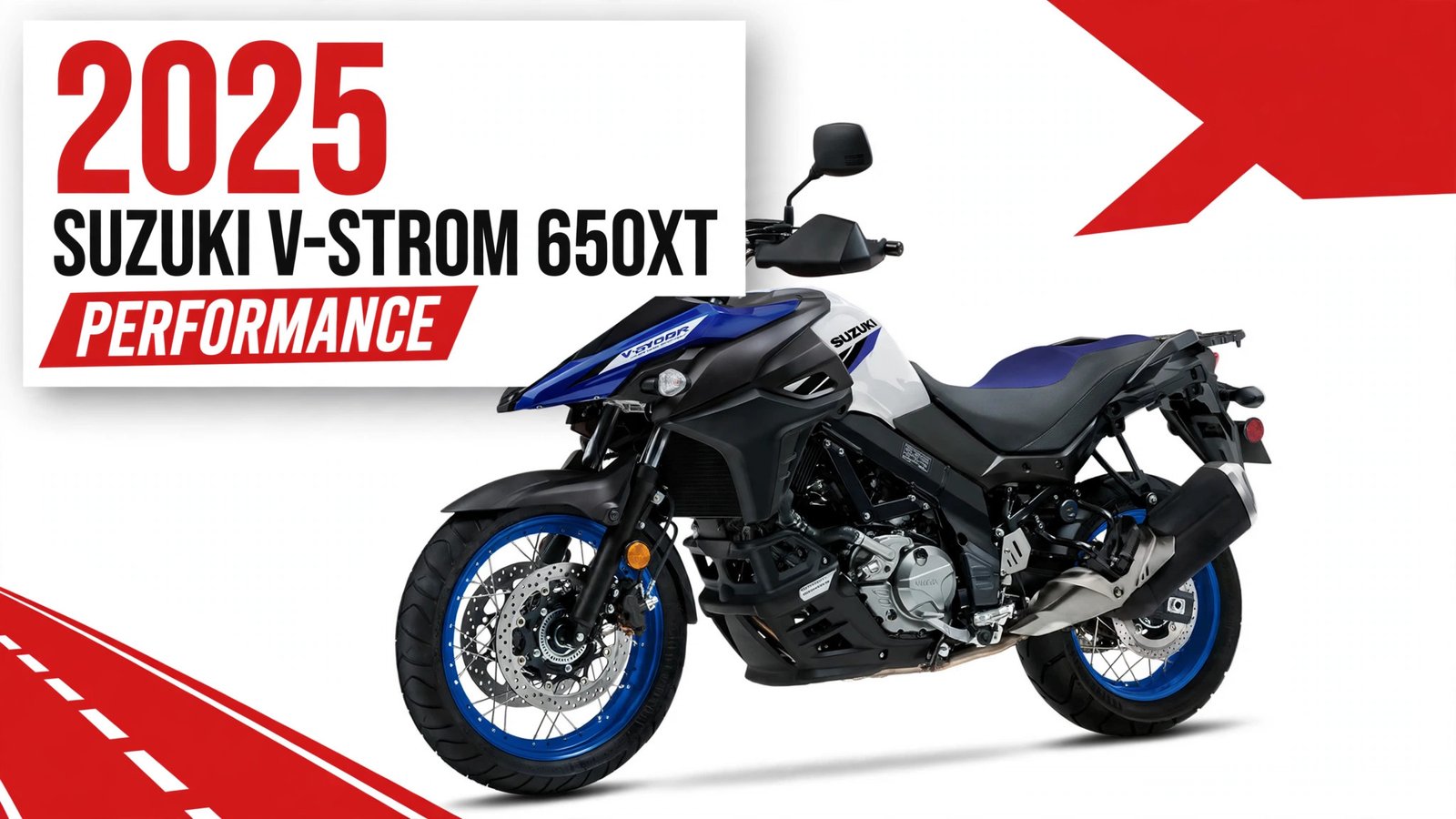
The Suzuki V-Strom 650XT performance story is unusual: the most useful numbers come from a single dyno test, and top speed has never been measured. Suzuki USA publishes no horsepower, no torque and no MPG for the 650 platform, so this Suzuki V-Strom 650XT performance guide builds only on instrumented tests: Cycle World’s 2023 XT Adventure dyno, Rider’s three MPG tests, and RevZilla’s 2023 real-world test. What emerges is a bike that makes 66.85 hp at the rear wheel, returns around 50 mpg in the best XT test, and works best as a commuter and tourer, not a dirt bike. This Suzuki V-Strom 650XT performance guide also corrects the two mistakes most articles repeat: 109 mph is a quarter-mile trap speed from a 2006 gen-1 test, not a top speed, and the unsourced torque figure on spec-aggregator sites has no test behind it.
Suzuki V-Strom 650XT Engine Performance and Power Delivery
The XT shares its 645cc V-twin with the base 650, so Suzuki V-Strom 650XT performance starts from the same engine: a liquid-cooled 90-degree V-twin, 81.0 by 62.6 mm, 11.2:1 compression, six speeds and a chain final drive. Suzuki publishes no output claim for it, which makes the one real dyno test the anchor for Suzuki V-Strom 650XT performance.

The Only XT Dyno: Cycle World Tested the XT Adventure
There is exactly one dyno test of an XT trim anywhere: Cycle World’s run of a 2023 XT Adventure on a Dynojet 250i. In this Suzuki V-Strom 650XT performance guide, the dyno is the anchor: everything else is judged against a measured 66.85 hp, not a brochure number. Cycle World recorded a smooth delivery and a flat torque curve — the V-twin pulls cleanly from low revs and stays calm at highway speed, and that delivery is the heart of Suzuki V-Strom 650XT performance. The test bike was the Adventure trim, but the engine is identical across the 650 line. Suzuki USA lists the 645cc V-twin with no output claim at all — the dyno is the only source for Suzuki V-Strom 650XT performance.
66.85 HP at 9,210 RPM on a Dynojet 250i
The numbers are 66.85 hp at 9,210 rpm and 43.04 lb-ft of torque at 6,560 rpm, measured at the rear wheel. That is the whole honest output story for Suzuki V-Strom 650XT performance. The most common wrong number is an unsourced torque figure that traces back to a European 69 Nm claim; no test has ever produced it, and this guide will not print it as fact. For context, Rider’s 2017 comparison dynoed the base 650 at 68.7 hp and 44.2 lb-ft — a different bike on a different dyno — and the Versys 650 in the same session made 61.2 hp and 42 lb-ft, which puts Suzuki V-Strom 650XT performance ahead of its closest road rival. That flat torque curve is where Suzuki V-Strom 650XT performance is felt most: clean low-speed pull, and Low RPM Assist holding 6 mph in first gear without stalling.
| Bike | Dyno test | Peak horsepower | Peak torque |
|---|---|---|---|
| 2023 V-Strom 650XT Adventure | Cycle World, Dynojet 250i | 66.85 hp @ 9,210 rpm | 43.04 lb-ft @ 6,560 rpm |
| 2017 V-Strom 650 (base) | Rider Magazine comparison | 68.7 hp @ 9,100 rpm | 44.2 lb-ft @ 6,500 rpm |
| 2017 Kawasaki Versys 650 | Rider Magazine comparison | 61.2 hp @ 8,300 rpm | 42 lb-ft @ 7,300 rpm |
| 2023 V-Strom 800DE | Cycle World, Dynojet 250i | 72.2 hp @ 8,500 rpm | 50.2 lb-ft @ 5,500 rpm |
| 2024 Yamaha Ténéré 700 | Cycle World database | 61.7 hp | 42.5 lb-ft |
Suzuki V-Strom 650XT Top Speed and Acceleration
Top speed is the question every Suzuki V-Strom 650XT performance search starts with, and it has the least honest answer anywhere online: no magazine has ever instrumented a gen-3 XT at top speed, so every number in Suzuki V-Strom 650XT performance writing is an estimate — and most articles do not say so.
No Instrumented XT Run Exists Anywhere
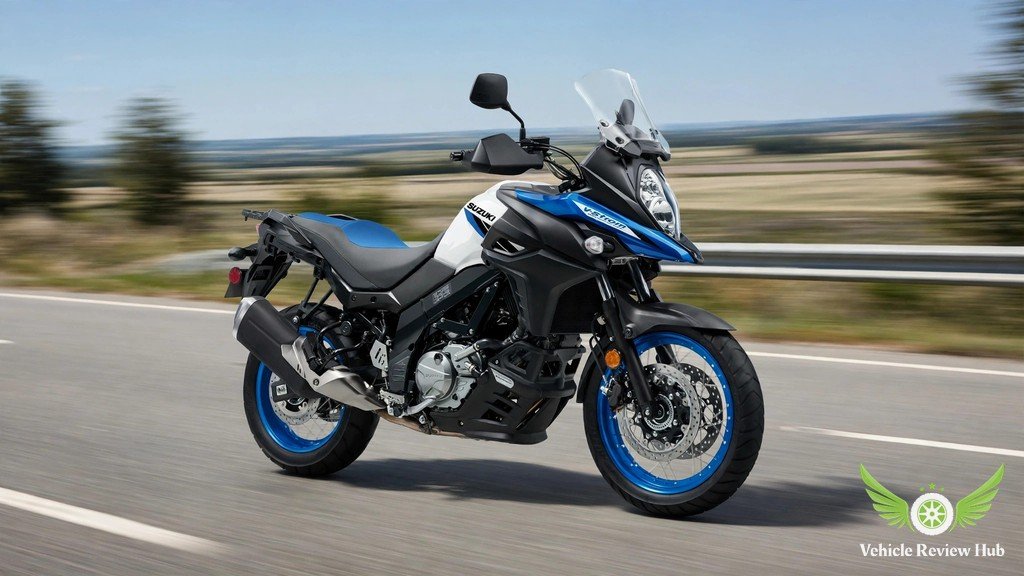
There is no tested top speed in Suzuki V-Strom 650XT performance, or for any gen-3 650. The only tested speed number anywhere is 109 mph, and it is not a top speed at all — it is the Cycle World 2006 gen-1 quarter-mile trap speed. Articles printing “109 mph top speed” mistake a trap speed for a top speed. What the aggregators print instead is a spread of estimates: MotorcycleDB 115 mph, 1000PS 112 mph, Bennetts’ UK review 120 mph, motorcyclespecs.com around 125 mph, Indian-market sites around 118 mph, one Turkish database 124 mph. The honest Suzuki V-Strom 650XT performance range is 111 to 125 mph, and no single figure in it is a fact. No magazine has run a gen-3 XT at top speed, and Suzuki publishes no claim — until one does, the estimate range is the most accurate answer.
Generation Two XT Has No Traction Control at All
Acceleration talk in Suzuki V-Strom 650XT performance needs the same generation discipline as top speed. The only instrumented acceleration figures are gen-1: Cycle World’s 2006 test recorded 0–60 mph in 4.1 seconds and a 12.65-second quarter-mile, with 62.4 bhp and 53.4 mpg. Those numbers belong to the 2006 bike and its 5.8-gallon tank, not to the current XT — quoting them without the year misleads readers. The gen-2 XT that arrived in 2015 had no traction control at all — Rider’s 2015 first ride never mentions it, because TC arrived with the 2017 redesign, and the 2015 bike’s ABS was always-on. The gen-3 XT carries two traction-control modes plus Off, Low RPM Assist and Easy Start — the full Suzuki V-Strom 650XT performance electronics list — and still no ride-by-wire, quickshifter or cruise control. That gap shapes the launch: a rider’s right hand and a forgiving clutch, not electronics.
Suzuki V-Strom 650XT Mileage and Fuel Economy
Fuel economy is where Suzuki V-Strom 650XT performance is best documented: Rider Magazine tested the bike three separate times, and the three tests must never be merged into one number.
Rider Tested the 2015 XT at 44.7 MPG Average
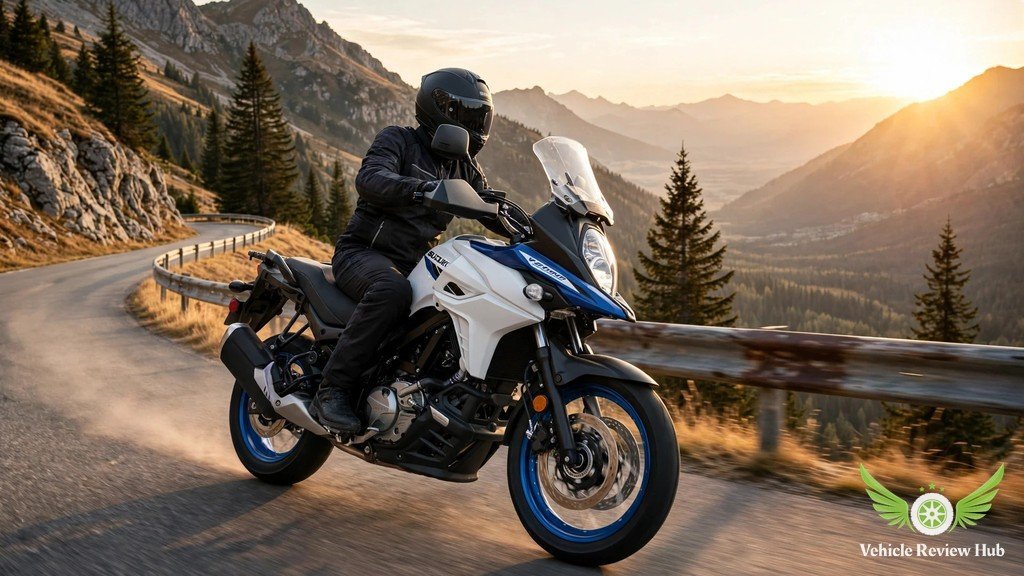
Rider’s only XT-specific MPG test is the 2015 first ride of the gen-2 bike: 37.1 low, 44.7 average, 51.5 high, from the 5.3-gallon tank — a gen-2 figure from a 517 lb wet bike. The two later Rider sets are base-bike tests, and this Suzuki V-Strom 650XT performance guide keeps them on the base bike’s side of the ledger: the 2017 comparison recorded 41.0 / 46.9 / 58.5 mpg, good for about 248 miles on the 46.9 average, and the 2018 XT test recorded 47.5 / 50.5 / 70.6 mpg, good for about 268 miles on the 50.5 average. The 2018 set is the best real-world number in Suzuki V-Strom 650XT performance, and the one to quote for touring range. Never average the three sets in Suzuki V-Strom 650XT performance writing, or quote the 2018 high of 70.6 as typical — it is the high end of a careful test, not a commute.
| Test | Bike | Low / Average / High (mpg) | Range on average (5.3 gal) |
|---|---|---|---|
| Rider 2015 first ride | 2015 XT (gen-2) | 37.1 / 44.7 / 51.5 | ~237 miles |
| Rider 2017 comparison | 2017 650 (base) | 41.0 / 46.9 / 58.5 | ~248 miles |
| Rider 2018 test | 2018 XT (gen-3) | 47.5 / 50.5 / 70.6 | ~268 miles |
RevZilla’s 2023 XT Test Published No MPG Figure
RevZilla’s 2023 XT test is the most thorough real-world ride of the current bike, and it published no MPG figure at all. That absence matters: MotorcycleDB’s 67.2 mpg and motorcyclespecs.com’s roughly 69 mpg have no test behind them. RevZilla’s test prices: the XT was $9,599 and the base $9,104 in 2023, against $9,799 and $9,299 for 2025. The verdict was “Commuting > Touring > Off-roading,” the adventure box not checked — “one heck of a sport-tourer, instead.” That fits the MPG evidence for Suzuki V-Strom 650XT performance: the XT is at its best covering miles on pavement.
Suzuki V-Strom 650XT Real-World Riding Experience
Suzuki V-Strom 650XT performance is also a riding story, and RevZilla’s 2023 test is the best account of what the bike feels like day to day.

RevZilla: Great Tourer, Flimsy Plastic Cowl
The lower engine cowl is “a flimsy plastic that would not handle any serious impacts on rocky trails” — protection in looks only. The dash is an LCD that is “a bit dated,” its bottom panel “difficult to discern at speed or certain sunlight angles.” Against that, Suzuki V-Strom 650XT performance earned praise through the engine: a forgiving powerband — RevZilla compared it to a golden retriever — and Low RPM Assist, which held “a near perfect six mph” in first gear, clutch out, no throttle. On the highway the XT is comfortable, with quick overtakes and a three-way adjustable windscreen — touring is where Suzuki V-Strom 650XT performance shines. The 5 ft 4 in tester “could barely touch down my tip-toes” on the 32.9-inch seat — a warning for shorter riders that no spec sheet carries.
The Front Tire Slides in Sand: Tester Verdict
On sand and gravel the front tire produced “immediate slide outs on the front tire that got me spooked” — the stock Bridgestone Battlax AX41S “isn’t exactly designed with off-roading in mind.” A Continental TKC 80 swap “makes a massive difference” — the fix is a tire change, not a different bike. That is the honest version of Suzuki V-Strom 650XT performance off pavement: gravel roads, yes; real dirt, only with different tires. The panic-brake test reassured: rear ABS kicked in quickly, front ABS “never revealed itself” no matter how hard the tester braked.
Suzuki V-Strom 650XT Handling, Braking and Stability
Suzuki V-Strom 650XT performance includes the parts that wear out — the wheels, brakes and suspension.

Spoked Wheels Inspected at Every Single Service
The owner’s manual calls for the spoked wheels to be inspected at every single service — spoke tension and trueness — because a loose spoke on a tubeless spoked wheel is a safety issue. The chain needs a check before every ride, lubrication every 600 miles, and 20–30 mm of slack on the RK525SMOZ8. The wheels are the point of the trim in Suzuki V-Strom 650XT performance: blue-anodized rims laced with stainless-steel spokes on an inboard-nipple, center-flange design that accepts tubeless tires, so a puncture can be plugged at the roadside. Do not confuse them with the 800DE’s spoked wheels, which are tube-type. The recall record is clean for recent bikes — the same four DL650 recalls as the base bike, 18V694 naming the DL650XA, and none for 2019–2025 — one more reason Suzuki V-Strom 650XT performance holds up years after purchase.
Brake Pads, Suspension Linkage and Bearing Checks
Up front is a 43 mm fork, not adjustable, with 5.9 inches of travel; at the rear a single shock, preload-adjustable, with 6.3 inches. Brakes are dual Tokico two-piston calipers on 310 mm discs with ABS up front, and a Nissin single-piston caliper on a 260 mm disc with ABS at the rear, on a 26.0-degree rake and 4.3-inch trail. Each service checks brake-pad thickness, suspension-linkage play and wheel-bearing smoothness, as the V-Strom 650 reliability and maintenance guide lists. The 12-month limited warranty covers the bike as sold; Suzuki does not say “unlimited mileage,” and this Suzuki V-Strom 650XT performance guide does not either.
Suzuki V-Strom 650XT Performance Compared With Other Adventure Bikes
Against its rivals, Suzuki V-Strom 650XT performance holds up on measured output — and the comparison that matters most is the one inside Suzuki’s own showroom.

Suzuki V-Strom 650XT vs Suzuki V-Strom 800DE
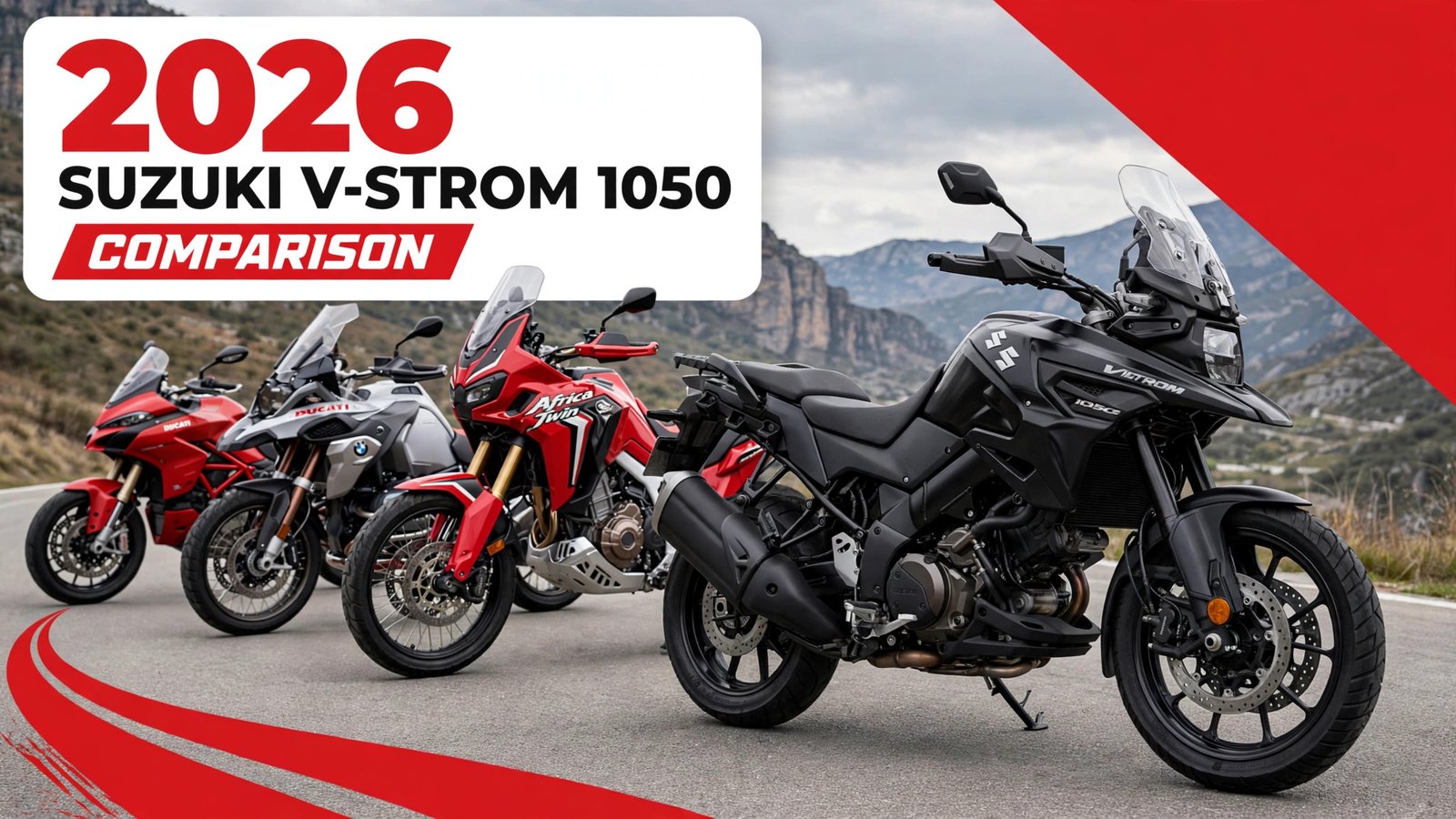
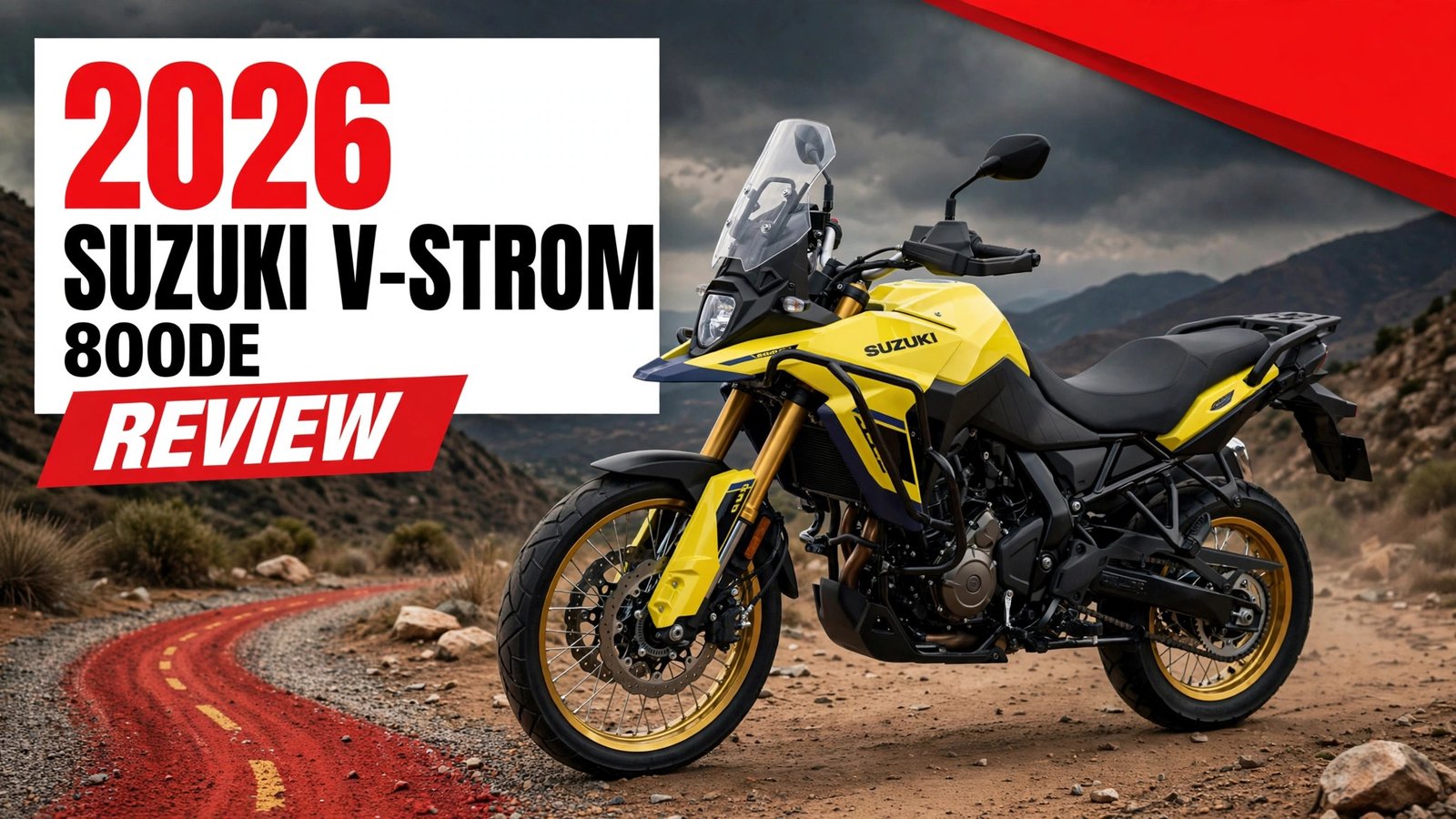
The 800DE is the bigger Suzuki: on Cycle World’s 800DE dyno it made 72.2 hp at 8,500 rpm and 50.2 lb-ft at 5,500 rpm — about 5 hp and 7 lb-ft more than the XT Adventure, from a 776cc parallel twin with a 270-degree crank and a claimed 83 hp. But it is heavier at 507 lb wet against the XT’s 476 lb curb, and costs $11,709 against the XT’s $9,799 — a $1,910 gap before destination. The 800DE’s 21-inch front wheel, longer travel and higher clearance make it the more serious dirt bike, on tube-type spokes. For most riders the XT is the better value in Suzuki V-Strom 650XT performance terms: nearly the same usable power, lighter, cheaper, and tubeless tires that make a roadside puncture a ten-minute fix. The 800DE wins the dyno sheet; the XT wins the ownership math. The same Cycle World database puts the Ténéré 700 at 61.7 hp, so the XT sits ahead of the Yamaha and the Versys 650 performance numbers, where the Kawasaki made 61.2 hp. The V-Strom 800DE performance guide and the V-Strom 650 comparison carry the full rival detail.
The video below is the best ridden comparison available: ZigWheels’ 2019 head-to-head of the gen-3 XT against the Kawasaki Versys 650. It is an India-market video — the “under Rs 10 lakh” framing gives that away — but the bikes are the same gen-3 machines sold in the US, and the back-to-back riding suits this Suzuki V-Strom 650XT performance comparison.
Is the Suzuki V-Strom 650XT Suitable for Beginner Riders? Yes
Yes — with one honest caveat. The XT is one of the friendliest middleweights a new rider can buy: a forgiving powerband, Low RPM Assist that all but removes stalling, and traction control with two modes plus Off. The caveat is physical: 476 lb and a 32.9-inch seat are tall and top-heavy for shorter riders, and the 5 ft 4 in tester could barely touch toes. A low seat drops the height by 20 mm, and the XT’s $9,799 price — $500 over the base 650, $1,200 under the Adventure — makes it a sensible first adventure bike for a rider with the inseam for it. For a short rider, the base 650 with cast wheels is the same bike, and the Versys 650 review covers the closest rival. Running costs are ordinary for Suzuki V-Strom 650XT performance: chain, pads and tires, with spoked wheels inspected at every service. On Suzuki V-Strom 650XT performance for a new rider, the engine is the easy part — the seat height is the test.
Suzuki V-Strom 650XT Performance FAQs
These are the questions riders ask most about Suzuki V-Strom 650XT performance, answered from the tested figures in this guide — dyno runs, MPG tests and real-world rides.
What is the top speed of the Suzuki V-Strom 650XT?
No tested top speed exists for the gen-3 XT. Aggregator estimates cluster between 111 and 125 mph, and every one is an estimate, not a test. The only tested speed number is the 2006 gen-1 quarter-mile trap speed of 109 mph — and this Suzuki V-Strom 650XT performance guide says so plainly.
How much horsepower does the V-Strom 650XT make?
66.85 hp at the rear wheel, measured by Cycle World on a Dynojet 250i with a 2023 XT Adventure. Suzuki USA publishes no horsepower claim, so the dyno figure is the only honest number for Suzuki V-Strom 650XT performance.
What is the torque of the V-Strom 650XT?
43.04 lb-ft at 6,560 rpm at the rear wheel, from the same Cycle World dyno run — the honest Suzuki V-Strom 650XT performance torque figure. Never quote the unsourced torque figure on spec-aggregator sites — no test has produced it.
What MPG does the V-Strom 650XT get?
Suzuki V-Strom 650XT performance on fuel depends on the test: 44.7 mpg average for the 2015 gen-2 XT, 46.9 mpg in the 2017 comparison, and 50.5 mpg for the 2018 XT. Never merge the three sets — different bikes, different tests.
How far can the V-Strom 650XT go on a tank?
Suzuki V-Strom 650XT performance on range: about 248 miles on the 2017 comparison’s 46.9 mpg average, and about 268 miles on the 2018 XT test’s 50.5 mpg average, from the 5.3-gallon tank.
Is the V-Strom 650XT fast? What are its 0–60 and quarter-mile times?
No instrumented 0–60 or quarter-mile exists for the gen-3 XT. The only tested figures are gen-1: 0–60 mph in 4.1 seconds and a 12.65-second quarter-mile from 2006 — this Suzuki V-Strom 650XT performance guide labels them gen-1 only.
Is the V-Strom 650XT good for beginners?
Yes — Suzuki V-Strom 650XT performance suits beginners, with a height caveat. The forgiving powerband, Low RPM Assist and traction control make it friendly, but the 476 lb weight and 32.9-inch seat are tall for shorter riders. A low seat drops the height by 20 mm.
Does the V-Strom 650XT have traction control?
Suzuki V-Strom 650XT performance includes traction control on the gen-3 XT (2017 onward), with two modes plus Off. The gen-2 XT from 2015–2016 had no traction control at all — its ABS was always-on and could only be disabled by removing fuses.
V-Strom 650XT vs 800DE — which is faster?
The 800DE is faster on the dyno: 72.2 hp against the XT’s 66.85 hp. But it is 507 lb wet against the XT’s 476 lb curb and costs $11,709 against $9,799. That is the Suzuki V-Strom 650XT performance verdict: the 800DE wins on power, the XT on weight and value.
Does the V-Strom 650XT have a quickshifter, cruise control or TFT display?
No to all three. Suzuki V-Strom 650XT performance electronics stop at traction control, Low RPM Assist and Easy Start — no ride-by-wire, no quickshifter, no cruise control and no TFT display. The dash is an analog tachometer with an LCD.
What tires does the V-Strom 650XT come with, and are they good off-road?
Bridgestone Battlax Adventurecross Scrambler AX41S, tubeless, 110/80R19 front and 150/70R17 rear. Fine on tarmac, but they slide in sand — a Continental TKC 80 swap makes a massive difference off-road, and that is the honest Suzuki V-Strom 650XT performance picture.
Why is there no official top speed or MPG from Suzuki?
Suzuki USA simply does not publish them for the 650 platform — no horsepower, no torque, no MPG in the spec table, and RevZilla lists claimed horsepower and torque as “N/A.” So Suzuki V-Strom 650XT performance figures come from independent tests, not Suzuki.