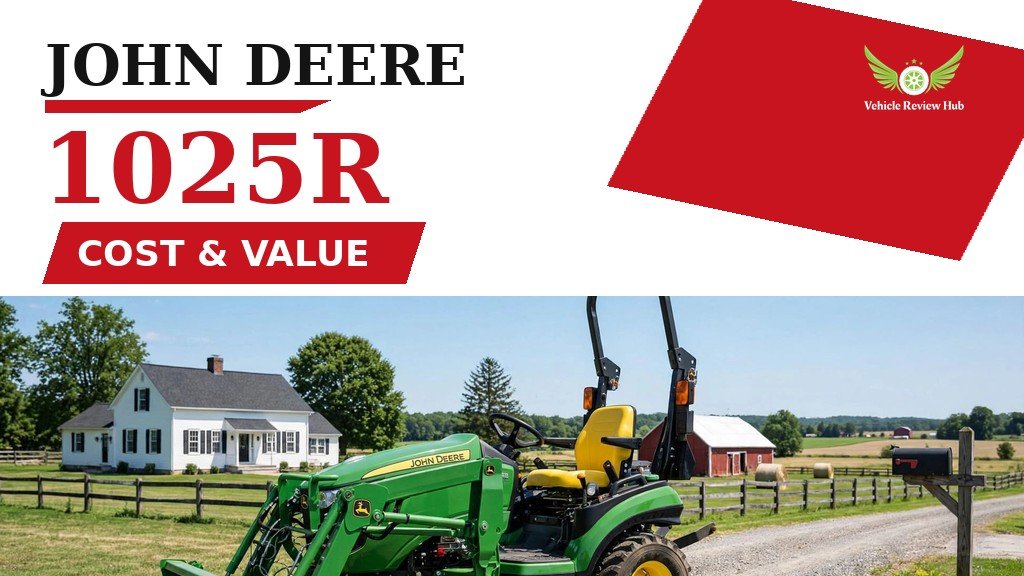
The John Deere 1025R ownership cost is the number that decides whether this popular sub-compact tractor is a smart buy or an expensive toy. Between diesel, filters, insurance, and the occasional repair, a 1025R typically costs a homeowner roughly $1,500 to $2,000 per year before resale. Because these machines hold their value so well, the true John Deere 1025R ownership cost over five years often lands well under what the purchase price suggests.
In this guide, we break down every piece of the budget: fuel and maintenance, insurance and storage, depreciation and resale, and the repair-or-replace decision — plus what to check when buying used.
John Deere 1025R Total Cost of Ownership
When buyers talk about John Deere 1025R ownership cost, they usually start with the purchase price and stop there. The real number is the purchase price plus five years of running expenses, minus what the tractor is still worth when you sell it. On that basis, the 1025R is one of the cheapest tractors per hour of work in the United States.
Fuel, Routine Maintenance and Operating Expenses
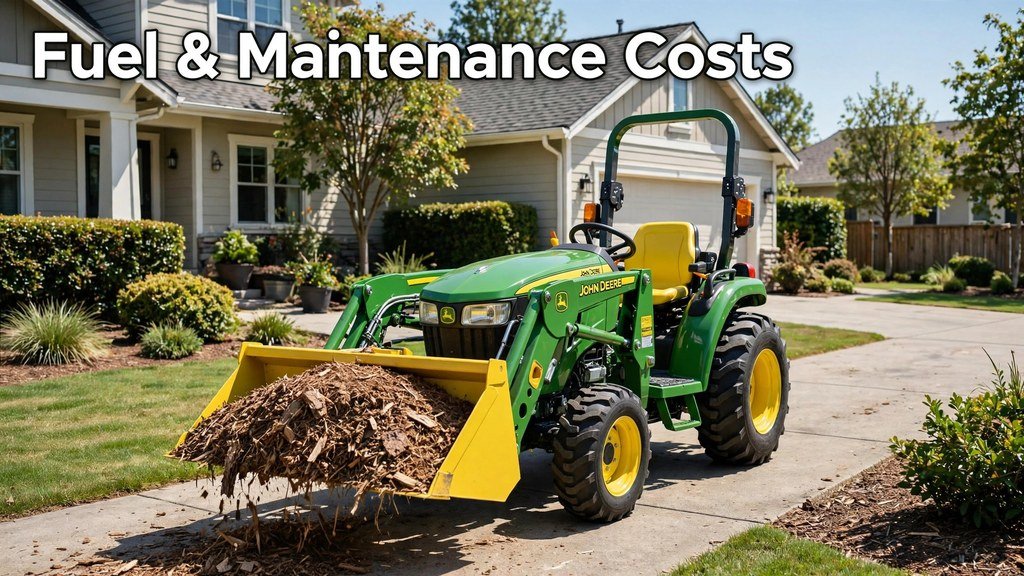
Fuel is the largest recurring line item in John Deere 1025R ownership cost. The 23.9-horsepower Yanmar diesel sips fuel compared to gas-powered yard equipment, burning roughly 0.75 to 1.2 gallons per hour under typical mowing and loader work, with heavier PTO jobs pushing toward 1.4. With a 6.3-gallon tank, most owners refuel every 5 to 8 hours of work. Our John Deere 1025R performance and fuel usage guide has detailed consumption numbers by task type, and owner reports describe a tractor that can work all weekend on a tank or two when the work is light.
At 100 to 200 hours per year, annual fuel use lands around 85 to 170 gallons. Diesel prices move a lot: the EIA’s weekly diesel price update showed the U.S. average near $6.18 per gallon in mid-October 2026, easing from a record above $6.50 in September. For planning we use a rounded $6.00 per gallon in the budget table below. At 150 hours a year, fuel runs about $765 to $1,020 annually depending on the pump price and how hard you work the machine — the single biggest variable in John Deere 1025R ownership cost.
Routine maintenance is the second recurring expense, and it is modest. An annual oil and filter service costs most owners $60 to $120 in parts DIY, or $200 to $300 at a dealer. Greasing the loader pins and mower spindles, cleaning the air filter, and checking fluids cost almost nothing but protect everything else. That math is why fuel often decides whether the John Deere 1025R ownership cost fits your budget.
Repairs, Unexpected Costs and Five-Year Budget
A realistic John Deere 1025R ownership cost projection reserves money for repairs, even though the machine is famously reliable. The 6-year/2,000-hour powertrain warranty covers the expensive internals, but wear items still cost money: mower blades every year or two ($80 to $150), a battery every 4 to 6 years ($120 to $180), and hydraulic hoses or belts as they age ($50 to $200 each). A full set of turf or R4 tires eventually runs $400 to $700. Our 1025R maintenance and reliability guide covers the service schedule and the warning signs that turn a small fix into a big bill.
The table below rolls the full John Deere 1025R ownership cost into a five-year budget for a typical homeowner running about 150 hours per year. Every figure is an estimate based on owner reports and current parts pricing, not a quote.
| Cost Item | Estimated 5-Year Total | Notes |
|---|---|---|
| Diesel fuel (150 hrs/yr) | $3,800 | ~128 gal/yr at an estimated $6.00/gal |
| Routine maintenance (oil, filters, grease) | $1,300 | Annual service, mostly DIY |
| Scheduled service intervals | $650 | 200/400-hour transmission and hydraulic service |
| Insurance | $1,000 | Estimated $200/yr inland marine or scheduled policy |
| Repairs and parts reserve | $1,600 | Belts, hoses, blades, electrical items |
| Tires, battery, miscellaneous | $750 | One battery and tire wear over five years |
| Total estimated 5-year operating cost | $9,100 | Excludes purchase price; before resale recovery |
That $9,100 estimate works out to roughly $1,820 per year, or under $12.50 per operating hour — easy to justify against the landscaping and rental bills it replaces. For a real-world look at first-year costs, this breakdown is worth watching:
John Deere 1025R Insurance and Financial Considerations
Insurance is the part of John Deere 1025R ownership cost buyers forget to budget, and it is one of the cheapest lines to get right — the right policy usually costs less than a single tank of diesel per month.
Equipment Insurance and Liability Coverage
A standard homeowners policy may cover a tractor stored at home, but coverage is often limited and usually excludes use away from the property. Many 1025R owners carry a separate inland marine policy or schedule the tractor as a personal article, covering theft, fire, rollover, and damage while trailering. Owner reports describe inland marine quotes for compact tractors in the range of roughly $115 to $300 per year for a machine in the 1025R’s price class, though rates vary by value, deductible, and state. That annual premium is one of the smallest lines in the John Deere 1025R ownership cost budget.
Liability is the other half. If the tractor damages a neighbor’s property or you do paid work with it, a homeowners policy may not respond, so owners who use their 1025R for side jobs or snow removal should ask an agent about a farm or business liability endorsement. Insuring the machine costs a small share of the John Deere 1025R ownership cost, so going without is a poor gamble. If you financed the tractor, the lender may require proof of insurance until the loan is paid off.
John Deere Financial runs seasonal promotional rates, so confirm the current offer with your dealer rather than budgeting around an old number — cash buyers avoid interest entirely and keep the John Deere 1025R ownership cost predictable.
Storage, Theft and Damage Protection
Proper storage protects both the machine and your John Deere 1025R ownership cost. A tractor kept in a garage or barn holds its paint, seat, and plastics far better than one left outside, and that condition difference shows up directly in resale value. If indoor space is not available, a breathable cover and a locked, level parking spot are the minimum.
Theft is a real financial risk with sub-compact tractors: light enough to winch onto a trailer and valuable enough to resell quickly. Beyond insurance, owners reduce the risk by removing the key, locking the fuel cap, chaining the tractor when storing it outside, and fitting a GPS tracker, which costs less than $100 plus a small subscription. ROPS structures should stay up whenever the tractor is working, since a rollover is both a safety event and a repair bill that can reach several thousand dollars. A few hundred dollars in prevention protects a five-figure asset and keeps the John Deere 1025R ownership cost from spiking on a single bad day.
John Deere 1025R Depreciation and Resale Value
Depreciation shapes the John Deere 1025R ownership cost more than almost any other factor, because it determines how much of your purchase price comes back to you. John Deere sub-compacts are among the slowest-depreciating machines in the equipment world, and strong dealer networks and parts availability keep used demand high year after year.
How Model Year, Hours, Condition and Attachments Affect Price
Used 1025R pricing follows a clear pattern: low hours and good condition command prices surprisingly close to new. A 2024 with just 1 hour was recently listed at $24,830, while another 2024 with 60 hours asked $18,951. Well-kept machines with 200 to 400 hours typically sell from $15,000 to $20,000, while higher-hour tractors with 500 to 1,000 hours trade closer to $12,000 to $16,000.
Hours matter more than model year: a 2018 with 300 garage-kept hours will outsell a 2022 with 900 hard hours, because buyers know the Yanmar diesel is barely broken in at a few hundred hours. Faded plastic, a torn seat, or a rusty mower deck can knock $1,000 off the asking price, while service records add confidence and dollars. Attachments are a hidden lever in the John Deere 1025R ownership cost equation at resale time: a tractor sold with a 120R loader, a 60D AutoConnect mower deck, and especially the 260B backhoe sells faster and for meaningfully more than a bare tractor. The backhoe alone holds value remarkably well on the used market. This resale strength directly lowers the John Deere 1025R ownership cost, since every dollar of retained value is a dollar you do not really spend. Our full review and specs breakdown of the 1025R covers the features that make used buyers pay a premium. For factory specifications to compare any used machine against, see Everglades Equipment’s 1025R spec listings.
Private Sale, Dealer Trade-In and Resale Preparation
For the sale itself, a private sale almost always beats a dealer trade-in, often by $1,500 to $3,000 on a clean 1025R. Dealers need margin to recondition and warranty the machine, so their offer reflects wholesale reality. A private listing with clear photos, the hour-meter reading, service records, and a cold-start video tends to sell within days in most markets. If you trade toward a bigger tractor, get the trade number in writing first, and remember some states let you pay sales tax only on the price difference.
Before listing, wash and wax the plastics, touch up scratches, replace a torn seat cover, sharpen or replace the mower blades, and gather every receipt into a folder. A tractor that looks maintained sells the story that it was maintained — and buyers pay for that story. Small cosmetic investments routinely return several times their cost in the final price, which is the easiest win in the whole John Deere 1025R ownership cost picture.
Buying a Used John Deere 1025R
Buying used is where careful shoppers get the best John Deere 1025R ownership cost of all: somebody else absorbed the first years of depreciation, and you get a proven machine for thousands less than new. The 1025R’s huge installed base means plenty of choice — but you need a sharp eye to avoid somebody else’s neglected tractor.
Inspection Checklist, Service History and Recall Verification
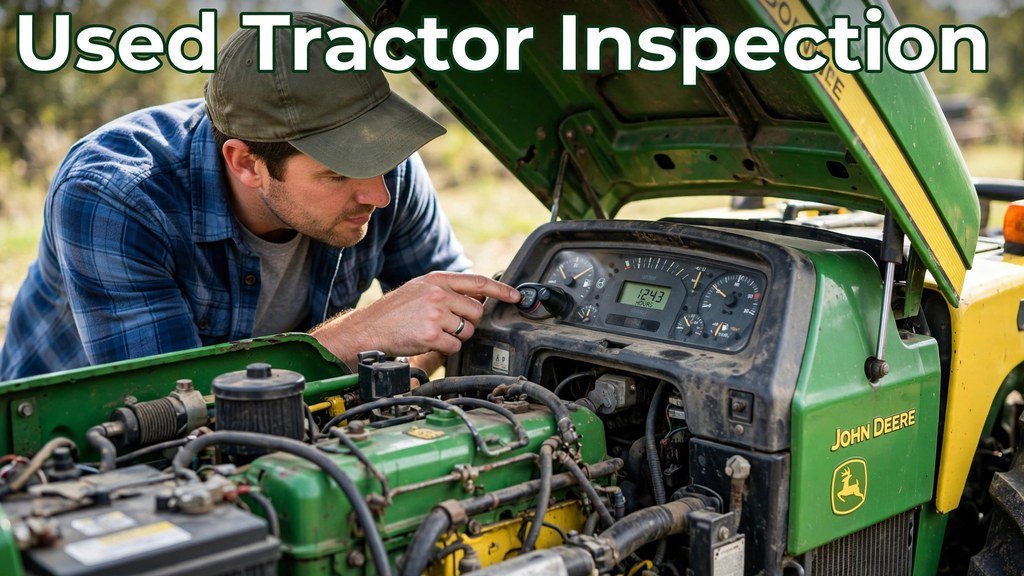
Start with the hour meter and service records. A 1025R with 400 well-documented hours is a better buy than a 200-hour machine with no records. Ask for receipts for oil changes, filter replacements, and any dealer service. Then walk the tractor: cold-start it and listen for knocking or hard cranking; run the loader through full lift, curl, and dump looking for cylinder drift or weeping seals; engage the PTO and listen for bearing noise; check the range selector area and front hubs for oil weeping; inspect loader pins and bushings for play; look at tire wear and sidewall cracks; and test every safety switch, light, and gauge. Skipping this walkaround is the fastest way to inflate your John Deere 1025R ownership cost after purchase.
Recall verification is non-negotiable. In September 2024 the U.S. Consumer Product Safety Commission announced a recall of about 147,900 John Deere compact utility tractors sold between November 2017 and July 2024, covering the 1025R, the 1023E, and the 2025R. The front bell crank in the brake linkage can fail and cause the tractor to lose braking. Find the serial number on the front-right frame near the engine, enter it in Deere’s recall lookup, or call Deere & Company at 800-537-8233. The dealer repair is free, but make it the seller’s job to show you the completed repair paperwork before money changes hands. A 1025R repair guide with diagrams and OEM part numbers is handy when you want to confirm parts against the serial range of any machine you are considering.
Negotiating Price and Comparing Alternative Tractors
Price the machine against the market, not the seller’s story. Check comparable listings with similar hours and attachments, then open below asking with specific reasons: upcoming tire replacement, cosmetic work needed, or missing service records. Cash offers and flexible pickup timing give you leverage. Late-model machines sometimes carry a premium simply because they look new — if the hours and condition match an older example, do not pay extra for the model year alone.
Always cross-shop before you commit. The John Deere 1023E review and buying guide is worth reading if your workload is light — the 1023E does nearly everything the 1025R does for a few thousand less, and owners who compare the two often find the smaller machine covers their task list. Our 1023E ownership cost guide puts the five-year numbers side by side so you can see exactly what the 1025R’s comfort upgrades cost you over time. Sit on both, price both with the attachments you actually need, and buy the tractor that fits the work — that discipline is the single biggest lever on your John Deere 1025R ownership cost.
Frequently Asked Questions About John Deere 1025R Ownership
These answers cover the most common John Deere 1025R ownership cost questions buyers ask.
How much does a John Deere 1025R cost per year to own?
For a typical homeowner running 100 to 200 hours per year, the total John Deere 1025R ownership cost lands around $1,500 to $2,000 annually, covering fuel, maintenance, insurance, and a repair reserve — excluding the purchase price and before resale value, which can return a large share of what you paid.
Is the John Deere 1025R expensive to maintain?
No. Annual oil and filter service costs $60 to $120 in parts DIY, or $200 to $300 at a dealer, and the 200- and 400-hour transmission and hydraulic services add a few hundred dollars every few years. Sticking to the schedule keeps the John Deere 1025R ownership cost low and prevents the neglected-maintenance failures that generate big bills.
How well does the John Deere 1025R hold its resale value?
Very well. Low-hour examples with a loader and mower deck routinely list within a few thousand dollars of new — a 2024 with 60 hours recently asked $18,951 against $19,250 new with a loader. Clean machines with 200 to 400 hours typically sell between $15,000 and $20,000. Strong resale helps the John Deere 1025R ownership cost case more than any other factor.
What does tractor insurance cost for a 1025R?
Most owners report paying roughly $115 to $300 per year for an inland marine policy or a scheduled personal-articles endorsement. Rates vary by state, deductible, and insured value, so get a quote from your own agent. It is a small slice of the John Deere 1025R ownership cost and worth every penny.
Should I buy a new or used 1025R?
It depends on your budget and patience. New 2026 machines with a loader are advertised around $19,250 on promotion, and tractor-loader-backhoe packages run about $25,500 — with the full 6-year/2,000-hour powertrain warranty. Used machines with a few hundred hours save you several thousand dollars on John Deere 1025R ownership cost and have already proven themselves. Either way, verify the September 2024 brake recall status before you buy, since the free dealer repair must be documented.
Is the 1025R cheaper to own than the 1023E?
No — the 1023E costs a few thousand less to buy and holds its value nearly as well. The 1025R’s comfort upgrades — cruise control, tilt steering, deluxe seat, work lights — are genuinely nice but do not pay for themselves, so the John Deere 1025R ownership cost runs higher than its smaller sibling for most buyers. Buy the 1025R for the features, not the savings.