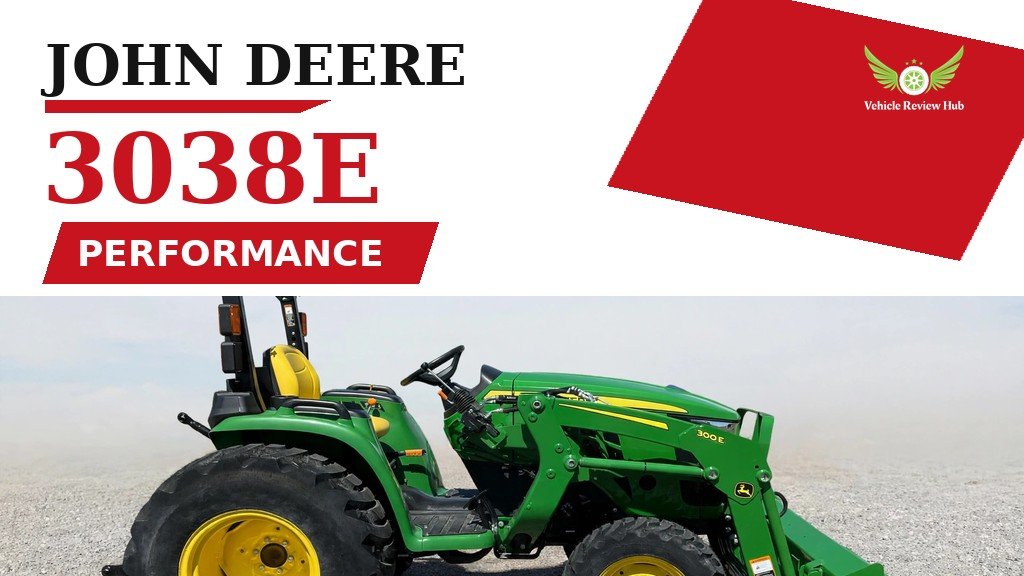
The short answer: John Deere 3038E performance means 36.7 gross horsepower from a turbocharged three-cylinder Yanmar, 30 PTO horsepower, and a 300E loader lifting 1,186 pounds at the pins — enough for 5- and 6-foot implements on up to about 20 acres. Fuel economy is a strong suit: owners report roughly 0.25 to 0.5 gallons per hour in light work and 0.6 to 1.0 in harder mowing and loader duty (owner-reported ranges), with the 7.5-gallon tank often lasting two workdays. Trade-offs: a narrow frame that feels tippy on side slopes, 84-inch loader height, and a DPF that punishes short light-duty cycles.
This guide breaks down John Deere 3038E performance task by task — mowing, loader work, grading, and tilling — with real fuel numbers, honest handling impressions, and the setup choices that make the biggest difference for American property owners.
John Deere 3038E Fuel Consumption and Runtime
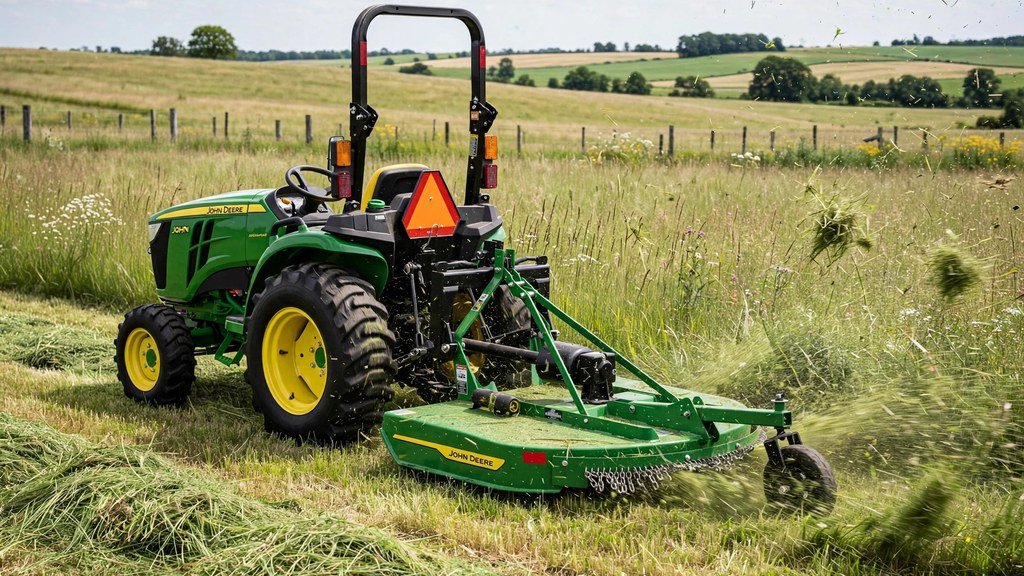
Fuel is where John Deere 3038E performance surprises first-time buyers most. The turbocharged 1.568-liter Yanmar 3TNV86T-NJT runs at just 2,500 rpm at rated speed with high-pressure common rail injection, so John Deere 3038E performance fuel numbers stay low: idle and light chores barely move the needle, PTO mowing runs about two-thirds of a gallon per hour, and hard loader cycles approach one gallon per hour or slightly more, per owner reports and The Drive’s hands-on 3038E review.
Fuel Usage During Mowing, Loader Work and Idling
One hands-on review found the 3038E used roughly four gallons of diesel in 16.5 hours at about 1,500 rpm — about 0.25 gallons per hour for light work. A TractorByNet owner reports roughly two-thirds of a gallon per hour running a 6-foot bush hog, and says he is lucky to burn five gallons in an all-day light-duty session.
The table below collects owner-reported fuel figures by task — practical ranges, not engineering data.
| Task | Typical Engine Speed | Reported Fuel Use (gal/hr) |
|---|---|---|
| Idling and light yard chores | 1,200–1,500 rpm | 0.25–0.5 |
| Finish mowing, light grading | 1,800–2,100 rpm | 0.4–0.7 |
| Rotary cutting heavy brush | 2,100–2,500 rpm | 0.6–1.0 |
| Loader work, material handling | 1,800–2,500 rpm | 0.7–1.2 |
| Heavy tilling or box blading | 2,200–2,500 rpm | 0.8–1.3 |
| Blended real-world average | Mixed property work | ~0.5–0.9 |
At those rates, the 7.5-gallon tank often covers two full workdays: around 15 hours at 0.5 gallons per hour, or 7 to 10 hours of hard loader duty. Our 3038E ownership cost guide turns these John Deere 3038E performance fuel figures into annual budgets.
Factors Affecting Fuel Economy and Runtime per Tank
Engine speed dominates John Deere 3038E performance fuel economy more than anything else. Owners who run the lowest speed that still gets the job done burn dramatically less than those who run flat-out for light chores — two days of 1,500-rpm work consumed just over half a tank, while hard sessions burn two to three times as much per hour.
Implement sizing matters for John Deere 3038E performance too: a 5-foot cutter matched to the 30-horsepower PTO lets the engine breathe, while a 6-foot cutter in heavy brush pushes fuel toward the top of the range. One owner runs 2,100 rpm for pasture mowing and 2,500 for brush — matching speed to load rather than leaving it pinned. Low rear tire pressure (around 9 to 10 psi) improves grip and cuts wheel spin, and regular loaded work keeps the DPF hot enough for passive regeneration, avoiding fuel-hungry parked cycles — our 3038E maintenance and reliability guide explains the routine in detail.
John Deere 3038E Performance for Everyday Work
John Deere 3038E performance centers on a simple idea: a compact frame with power for full-size implements. The turbocharged 1.568-liter Yanmar makes 36.7 gross horsepower and 77.2 lb-ft of torque at 2,500 rpm, driving an independent 540-rpm rear PTO with 30 horsepower. The two-range hydro with Twin Touch pedals, standard MFWD and diff lock, and a 1,356-pound Category 1 hitch handle 5- and 6-foot implements on properties up to about 20 acres. Optional cruise control and a two-spool rear remote kit widen the implement options for buyers who want more versatility.
Mowing, Landscaping, Grading and Property Maintenance
Mowing is why many owners bought the machine: one long-term owner runs a 6-foot John Deere RC2072 bush hog with “power to spare,” using about 600 pounds of front ballast for balance. He mows pasture at 2,100 rpm and raises it to 2,500 for brush, and the 3E series’ higher torque rise pulls through thick material without bogging. With 5-foot implements, John Deere 3038E performance feels effortless.
Grading and driveway work also show strong John Deere 3038E performance: a 6- or 7-foot blade or box blade moves gravel in high range, and the hydro lets you feather speed around gates and trees. The position-control hitch makes repeatable depth easy. Our 3038E review and buying guide has the full spec sheet, and the 3025E performance and fuel usage guide shows what the extra horsepower buys.
Loader Work, Material Handling and Light Tilling
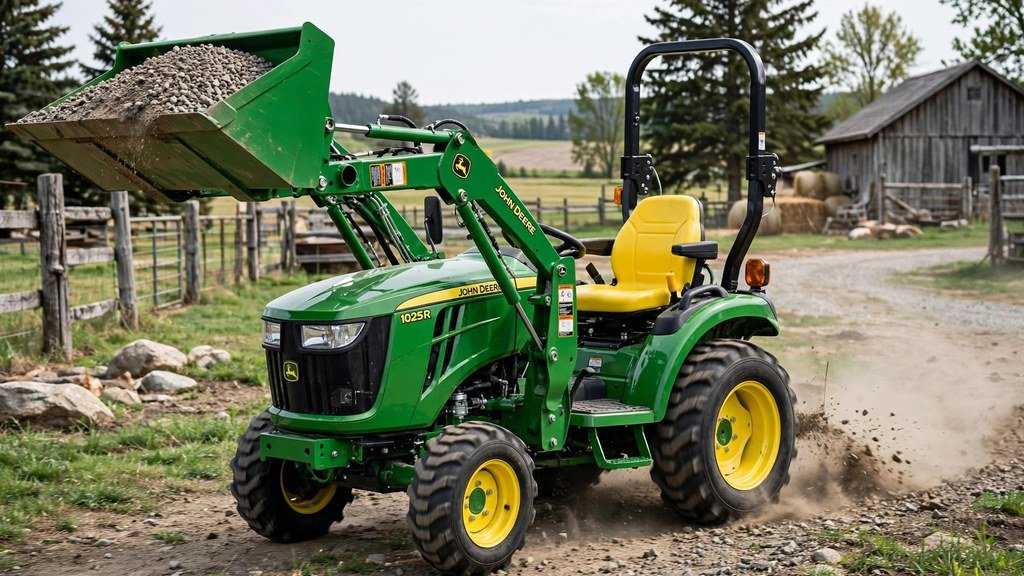
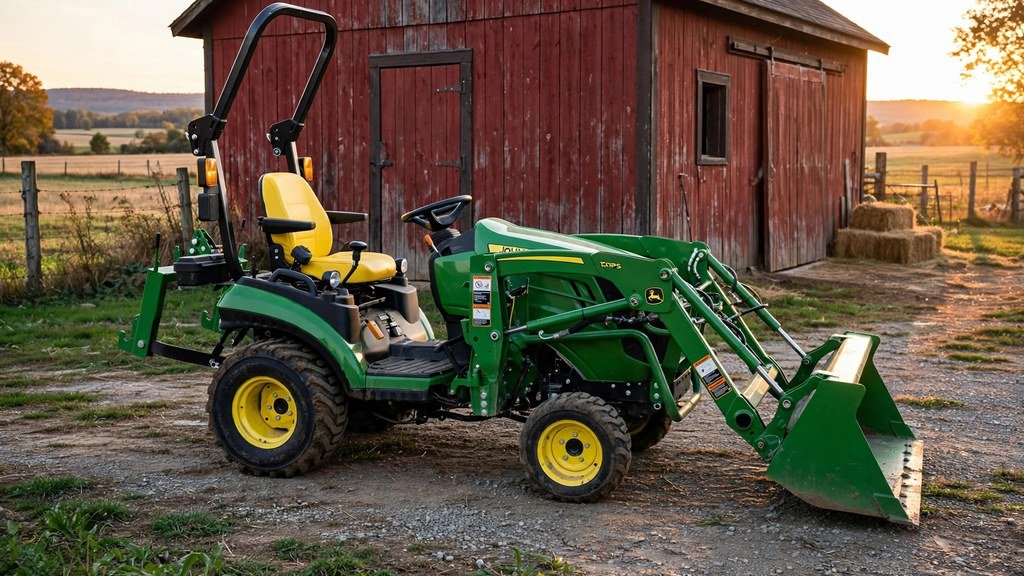
The 300E loader defines John Deere 3038E performance for most buyers. Deere’s official 300E specs list 84 inches of max lift height, 1,186 pounds at the pivot pin at full height (845 pounds 500 mm ahead of the pin), and 1,704 pounds of breakout force — enough for full buckets of gravel, mulch, and firewood all day. Owners report hauling more brush per load than a pickup bed holds.
Honest limitations: 84 inches only narrowly clears a typical dump truck’s sideboards — one reviewer could not dump into the bed on level ground. Simultaneous lift-and-curl slows to a crawl on the standard pump (5.3 gpm to implements), and the loader bogs if you take too big a bite of heavy material. The mechanical self-leveling 300E raises capacity to 1,283 pounds. For tilling, a 5-foot rotary tiller is a comfortable match and a 6-footer works in good soil — but heavy clay or a 7-foot tiller exceeds the class, as the 2032R performance and fuel usage guide comparison shows.
John Deere 3038E Handling, Comfort and Operating Limitations
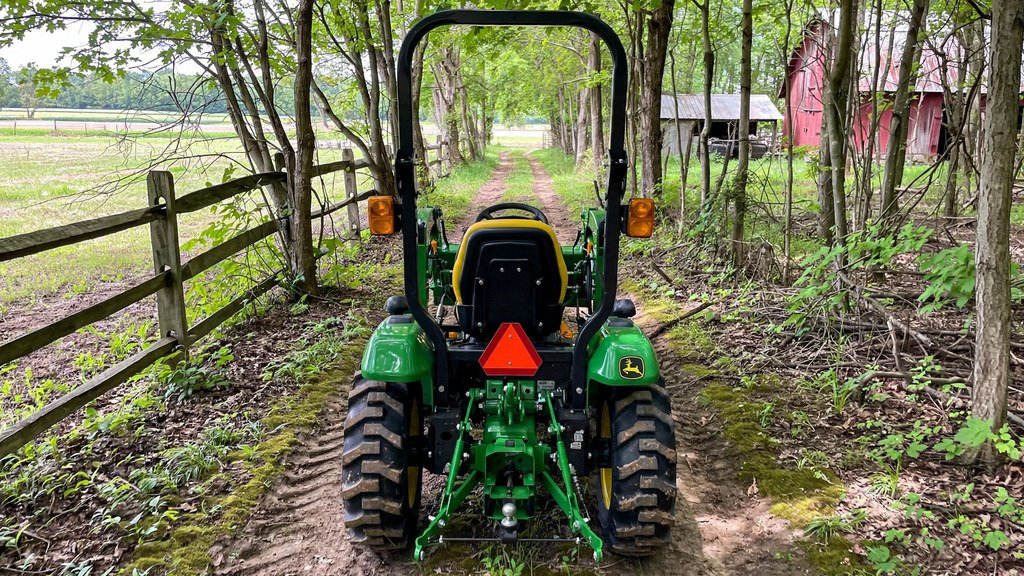
The 3E series is Deere’s value line, so the operator station is simpler than the deluxe 3R machines — but owners describe John Deere 3038E performance in the seat as comfortable, easy to learn, and well laid out. The handling trade-offs: a narrow frame and 62.8-inch wheelbase make it nimble in trees but tippy-feeling on side slopes, and at 2,668 pounds, traction — not horsepower — often sets the real work limit.
Maneuverability, Operator Comfort and Ease of Use
With a 62.8-inch wheelbase and roughly 9.8-foot turning radius with brakes, John Deere 3038E performance in tight quarters is genuinely good — nimble around trees, outbuildings, and fence lines. Twin Touch pedals make direction changes intuitive for beginners, and the semi-flat platform with color-coded controls keeps new operators confident.
For operator comfort, John Deere 3038E performance is a pleasant surprise for a value-line tractor: a contoured seat, good legroom for taller operators, and a flip-forward cushion that sheds weather. Night work is easy with bright headlights and a movable rear work lamp on the ROPS. Small annoyances: no dash indicator for 4WD or the parking brake, a diff lock that can take several tries to engage, and a louder hydro whine than Deere’s premium 3R series.
Traction, Stability, Terrain and Workload Limitations
The defining limit of John Deere 3038E performance is weight, not power: owners routinely run out of traction before horsepower — once the wheels spin, extra power is moot. Rear tire ballast plus a ballast box transforms the machine; without ballast, the front end gets light with a loaded bucket.
Slope work deserves respect: the narrow frame feels tippy on side slopes, especially with a raised bucket — keep the loader low, engage 4WD early, and avoid side-slope carries. Deep snow and icy hills challenge the light machine; rear chains made all the difference for one owner plowing with a 7-foot blade. Other hard limits: loader arms are not quickly removable, the single brake pedal means no independent left/right braking, and the hitch does not lift implements very high. Respect these and John Deere 3038E performance stays confidence-inspiring; ignore them and the machine reminds you it is a 2,668-pound compact, not a 50-horsepower utility.
John Deere 3038E Real-World Owner Experience
After the spec sheets, John Deere 3038E performance comes down to how owners feel years in. The consensus across TractorByNet owner reviews is strikingly consistent: a powerful, simple, easy-to-run machine that punches above its price — as long as you respect its narrow stance, modest loader height, and DPF habits. Owners who ballast properly and size implements sensibly report years of near-trouble-free work.
Owner-Reported Benefits, Complaints and Practical Trade-Offs
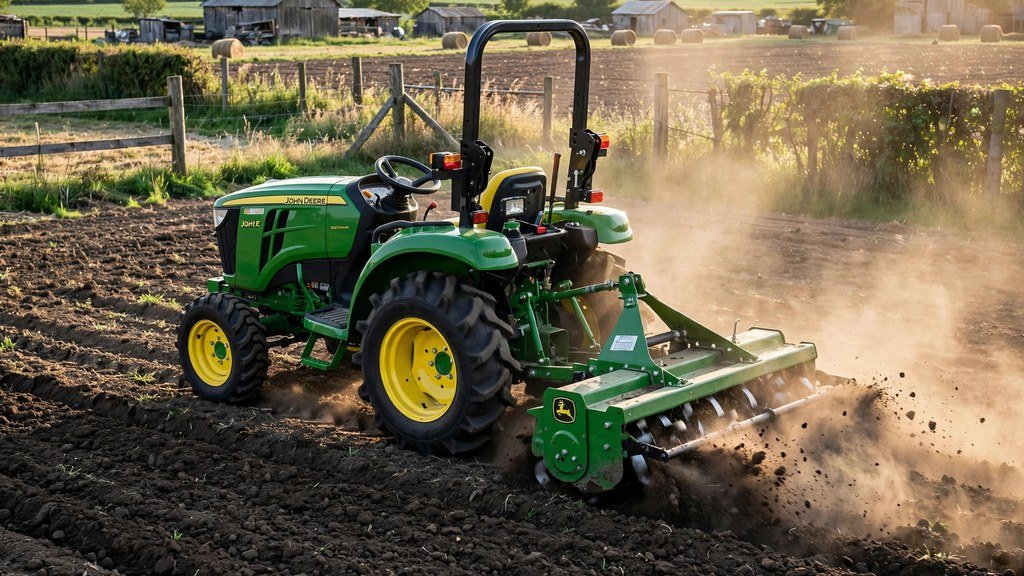
Benefits first, as owners report them: power with margin — 6-foot bush hogs, 7-foot blades, and 5.5-foot disks with power to spare. Fuel economy draws repeated praise, with some of the best gallons-per-hour figures in the class. Reliability reports are strong: multiple owners report four-plus years with zero problems, and the simple mechanical design appeals to DIY maintainers. The 6-year/2,000-hour limited powertrain warranty (Deere’s standard compact-tractor coverage) backs it longer than many rivals.
The video below is one of the most candid owner-style walkarounds available — a straight-talking review that covers what the 3038E does well and where it frustrates:
Complaints, equally candid: the DPF frustrates most. The 3038E meets Final Tier 4 with DOC/DPF aftertreatment — no DEF — and short, light-duty cycles cause soot buildup, parked-regen requests, and occasional derate faults (ECU code 3719) locking the engine below 1,800 rpm until a regen completes. Regularly worked machines regenerate passively and rarely bother owners. Other gripes: weeping front axle seals on some machines, the 84-inch loader height limit, no quickly removable loader arms, and a parking brake with no dash warning light. Overall, owners rate John Deere 3038E performance as excellent value — compact power at a bargain price that is hard to match.
Choosing the Right Setup for Your Property
Getting the most from John Deere 3038E performance starts with tires and ballast: R4 industrials for mixed use, R1 ag tires for ground-engaging work. Liquid-fill the rears or add wheel weights — owners say this does more for stability than any other change — and run a ballast box for serious loader work.
Sizing implements to the 30-horsepower PTO protects John Deere 3038E performance: 5-foot tools are the sweet spot, 6-foot works in moderate conditions, 7-foot is for light duty only. For mostly loader chores, order the mechanical self-leveling 300E for 1,283-pound capacity. And be honest: if you regularly need more lift than 1,186 pounds or more rear remotes, price the step up to the 4 series before buying — several owners sold their 3038E for exactly that reason. For 5 to 20 acres of mowing, grading, loader work, and light tilling, the standard setup with proper ballast is the value sweet spot of the whole Deere compact line.
Frequently Asked Questions About John Deere 3038E Performance
These are the John Deere 3038E performance questions owners and shoppers ask most often, answered from Deere specifications and documented owner experience. If you are still comparing models, start with the review and buying guide first, then come back to these numbers once you have narrowed your list.
How much fuel does a John Deere 3038E use per hour?
Roughly 0.25 to 0.5 gallons per hour for light chores, 0.4 to 0.7 for finish mowing, 0.6 to 1.0 for heavy rotary cutting, and 0.7 to 1.2 for loader work (owner-reported ranges). One owner measured two-thirds of a gallon per hour with a 6-foot bush hog; a hands-on review used about four gallons in 16.5 hours of light work.
How long will a tank of fuel last on a 3038E?
At 0.5 gallons per hour, roughly 15 hours — about two workdays. Hard loader or PTO work at 1 gallon per hour brings that down to 7 to 8 hours, still a full day for most operators.
What can the 300E loader lift on a 3038E?
The 300E loader on a 3038E lifts 1,186 pounds measured at the pivot pin at its 84-inch maximum height, or 845 pounds measured 500 mm ahead of the pivot — the figure closer to real bucket-center loads. Boom breakout force is 1,704 pounds at the pin. The mechanical self-leveling 300E option raises capacity to 1,283 pounds. Proper rear ballast is required to use the full rating safely.
Does the 3038E have enough power for a 6-foot bush hog?
Yes — multiple owners run 6-foot cutters and report power to spare. Plan on roughly 600 pounds of front ballast, run 2,100 rpm for pasture and 2,500 for heavy brush, and expect fuel use to rise in thick material.
Is the 3038E good on hills and rough terrain?
Moderately. MFWD and the diff lock pull well, but the narrow wheelbase and light weight make it feel tippy on side slopes — traction, not horsepower, is the usual limit. Ballasted tires, early 4WD engagement, and a low loader transform confidence; R1 tires and chains help on steep or wet ground.
Does the John Deere 3038E have DPF problems?
The 3038E uses DOC/DPF with no DEF, and DPF complaints are the most common owner frustration — mostly usage-pattern problems, not design defects. Regularly worked machines regenerate passively and rarely cause trouble; tractors used only for short, light puttering build soot, request parked regens, and can derate (ECU code 3719) until a cleaning completes. Let automatic cycles finish and work the tractor under real load.