The short answer on John Deere 4055 maintenance is reassuring: this is a mechanically straightforward row-crop tractor, and most of its upkeep is fluids, filters, and inspections you can do in your own shop. The 4055 pairs a 7.6-liter turbocharged diesel with a closed-center hydraulic system and your choice of a 15-speed PowerShift or a 16-speed Quad-Range transmission, and none asks for dealer-only tools for routine care. This John Deere 4055 maintenance guide covers the service schedule, job costs, engine and transmission life, common problems, and the used-tractor inspection separating a good 4055 from an expensive one.
One framing note for this John Deere 4055 maintenance guide: the 4055 is a 1988–1992 machine, so every example today is at least 30 years old. Hours and care history matter far more than model year: a 4055 with documented John Deere 4055 maintenance and 6,000 hours usually beats a 4,000-hour tractor with no records and milky hydraulic oil. Keep up with John Deere 4055 maintenance on schedule and these tractors routinely work past 10,000 hours; neglect the transmission-hydraulic system and cooling, and repair bills end its career.
John Deere 4055 Maintenance Schedule and Service Costs
The 4055’s service schedule follows the 55-series pattern: daily checks, a 50-hour check, engine oil and filter at 250 hours, transmission-hydraulic filter at 500, and transmission-hydraulic oil at 1,200. This section of the John Deere 4055 maintenance guide walks through each job with capacities and costs.
Engine Oil, Filters, Cooling System and Fuel-System Service
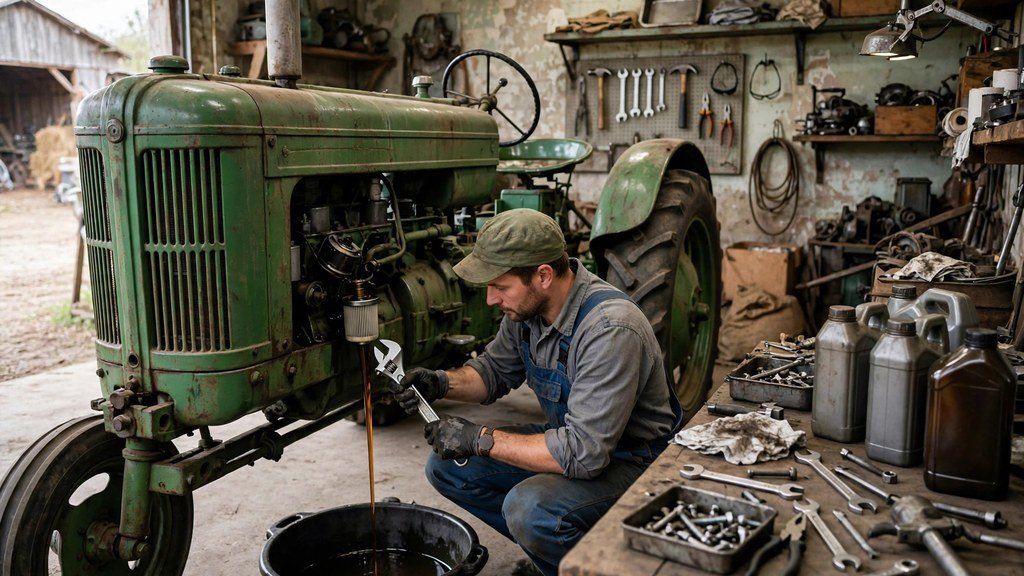
Engine oil is the single most important item in John Deere 4055 maintenance. The 7.6-liter six-cylinder holds about 19 quarts, and the 55-series schedule calls for an engine oil and filter change every 250 hours. Use diesel-rated 15W-40 oil and a quality filter, and check the level before every use: the 466 has little tolerance for low oil or coolant in the crankcase, so a rising level or milky oil is a stop-and-investigate symptom. John Deere 4055 maintenance starts with that daily level check, plus draining water and sediment from the fuel filter, which matters on tractors that sit between jobs and build condensation in a 65-gallon tank.
Air and fuel filters follow their own rhythm in John Deere 4055 maintenance. Service the dry air cleaner at 250 hours and replace elements annually, sooner in dusty harvest conditions: a restricted filter costs power and raises exhaust temperature on a turbocharged engine. Replace fuel filters at 500 hours and any time the engine stumbles under load after sitting. The cooling system holds 27 quarts; flush it and replace the thermostat every two years or 2,000 hours, keep radiator and oil cooler fins clean of chaff, and check hoses at every service: a burst upper hose at full load overheats the engine fast. In John Deere 4055 maintenance, cooling care is cheap insurance against a scored engine.
Transmission, Hydraulic Fluid, Axle and PTO Maintenance
The transmission-hydraulic system is the second half of John Deere 4055 maintenance, and it is the system most owners under-service. The 4055 runs a shared transmission-hydraulic sump using Hy-Gard-type oil; the 55-series schedule calls for the filter at 500 hours and the oil and filter together at 1,200 hours, with the suction pickup screen cleaned at the oil change. In John Deere 4055 maintenance, check the level at 50 hours and before heavy hydraulic work, and treat any change in look or smell as information: milky means water, burnt-smelling means clutch slippage. John Deere 4055 maintenance also means greasing the hitch, steering spindles, and front axle pivot at 50 hours, changing MFWD axle oil at 600 hours where fitted, and checking clutch pedal free play and PTO clutch adjustment at 250 hours.
The video below shows hands-on repair work on a 4055, the kind of job this John Deere 4055 maintenance guide describes:
| Service item | Interval (55-series schedule) | Notes for the 4055 |
|---|---|---|
| Engine oil + oil filter | Every 250 hours | 19 qt 15W-40; check daily |
| Air cleaner service | Every 250 hours; elements annually | Sooner in dust |
| Fuel filters | Every 500 hours | Drain water and sediment at daily checks |
| Transmission-hydraulic filter | Every 500 hours | Hy-Gard-type oil |
| MFWD front axle oil | Every 600 hours | MFWD only |
| Valve clearance adjustment | Every 600 hours | Dealer or experienced shop job |
| Transmission-hydraulic oil + filter | Every 1,200 hours | Clean suction screen too |
| Cooling system flush + thermostat | Every 2 years or 2,000 hours | About 27 qt coolant |
Service costs stay modest for routine John Deere 4055 maintenance: most jobs are fluids and filters. As planning estimates for 2026 US shop rates, a DIY engine oil service runs $120–$200, a dealer annual service $400–$700, and a transmission-hydraulic oil change $500–$900. Those numbers argue for following John Deere 4055 maintenance on schedule.
John Deere 4055 Reliability and Long-Term Durability
The 4055’s reliability comes from proven, unexotic components: the 466 turbo diesel, a closed-center hydraulic system, and transmissions that were already mature when the 55 series launched.
7.6L Diesel Engine, PowerShift and Quad-Range Care
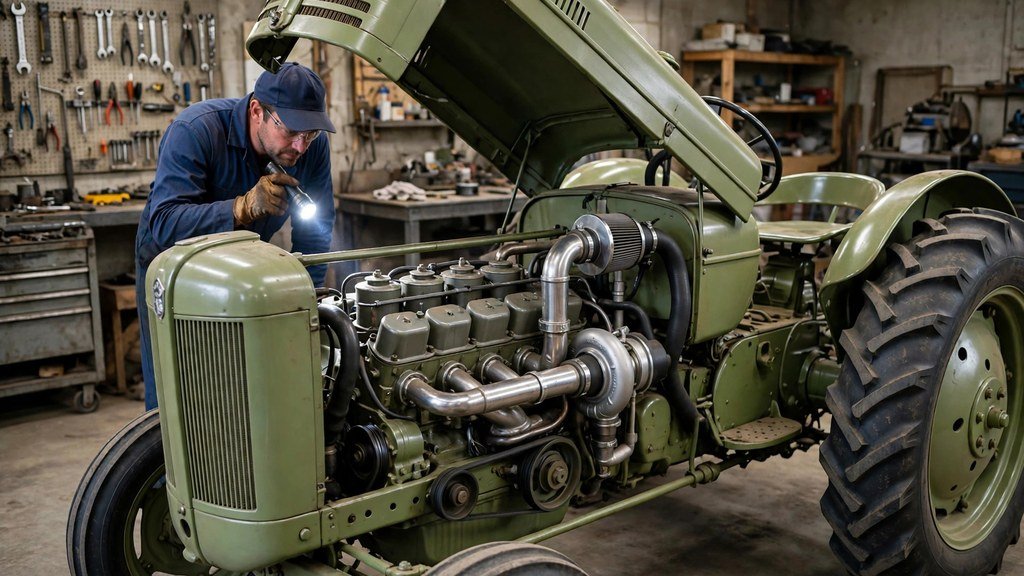
The engine is a John Deere 6466T: six cylinders, turbocharged, 466 cubic inches (7.6 liters), direct injection, rated at 2,200 rpm. Published power figures vary by rating standard: 128 hp maximum engine power in the 55-series comparison data, about 112 hp in another dataset, and 106–109 hp at the PTO and about 100 hp at the drawbar in Nebraska-style test reporting, with the Quadrange version covered by Nebraska Test 1626 from September 1989. That spread is normal for the era, and it is why John Deere 4055 maintenance advice focuses on condition over brochure numbers: a healthy 466 with good compression, clean injectors, and a working turbo does its rated work, while a tired one will not.
Engine care in John Deere 4055 maintenance is mostly about oil, air, fuel, and heat. Keep oil fresh, the air filter clean, and cooling fins clear, and the 466 routinely passes 10,000 hours. Let the turbo idle a minute or two after hard work before shutdown so it cools with oil flowing. Transmission care splits by gearbox. The 15-speed PowerShift needs clean Hy-Gard oil, a fresh filter, and correct clutch pressure; slipping or slow engagement is usually a pressure or clutch-pack problem, and catching it early beats running a slipping pack until it contaminates the system. The 16-speed Quad-Range needs the same clean oil plus linkage and detent attention, since jumping out of gear under load usually means linkage adjustment or internal wear. How each transmission feels in the field is explained in the transmission driving impressions.
How Operating Hours, Service History and Workload Affect Longevity
Four factors decide how long a 4055 lasts, and all four sit inside John Deere 4055 maintenance. First, hours per year: 300 annual tillage hours wear faster than 150 hours of light hauling. Second, workload: constant heavy draft work with a slipping clutch or low hydraulic pressure ages the transmission faster than moderate hours. Third, storage: a tractor parked clean, dry, and with treated fuel starts reliably, while one left outside collects small faults that grow. Fourth, the previous owner’s habits, where John Deere 4055 maintenance records earn their value: receipts for oil, filters, and clutch work beat a low reading on a neglected tractor.
Parts for the 466 engine, both transmissions, and the hydraulic system remain widely available through Deere dealers and the aftermarket: the 55 series sold in large numbers and shares parts with the 4255 and 4455. The expensive failures arrive late: a transmission needing a full split, an engine needing an overhaul after a cooling failure, or a hydraulic system contaminated by a failed clutch pack. All three are cheaper to prevent than to fix, and all three announce themselves early — the practical payoff of John Deere 4055 maintenance.
John Deere 4055 Common Problems and Warning Signs
The 4055’s problems are well documented: the model sold in large numbers and has spent decades in second and third ownership. The good news for John Deere 4055 maintenance is that most problems announce themselves early: a slow crank, a slipping gear, a new whine, or a changed fluid color, and most have a simple first check.
Engine Starting, Cooling, Oil Leaks and Performance Symptoms
Starting trouble is the most reported 4055 complaint in owner forums, and John Deere 4055 maintenance troubleshooting starts with the same short list: fresh fuel, two charged 12-volt batteries with clean terminals (925 cold-cranking amps each), a clean air filter, and fuel delivery without air. Old fuel is the leading culprit after storage: untreated diesel grows contamination that plugs filters and starves the pump. Cranks but will not catch usually means fuel delivery trouble: filters, a weak transfer pump, or air in the system after a filter change. Will not crank at all usually means a battery, cable, or neutral-start switch problem. Low power under load points at the air filter, the turbo, or worn injectors, in that order, and black smoke under load with a clean filter points at the injection pump or injectors needing a shop.
In John Deere 4055 maintenance, a 4055 that runs hot usually has a clogged radiator or oil cooler, a tired thermostat, or a slipping fan belt, and the fix is cleaning and replacement parts. Oil leaks most often come from hydraulic couplers and hoses, valve cover and front seals, or the rear main area; find the source before topping off becomes a habit: oil on the ground is oil missing from the transmission sump, and low oil turns a seal leak into a clutch problem. Blue smoke on startup that clears, versus blue smoke under load that does not, tells you different things about ring and valve wear; either belongs in a pre-purchase conversation, not a surprise after the sale. All of that is standard John Deere 4055 maintenance.
Transmission Shifting, Hydraulic Pressure and PTO Checks
Transmission trouble is where John Deere 4055 maintenance gets expensive if ignored. On a Quad-Range, jumping out of gear under load is the classic complaint: linkage adjustment is the most common cause, and the check is to disconnect the linkage and feel for crisp detent engagement at the transmission arm. If adjustment does not fix it, the cause is internal, usually a bent shift fork, lost countershaft preload, or a worn shift collar, and that repair means splitting the tractor. On a PowerShift, slipping, slow engagement, or harsh shifts usually trace to low clutch pressure, a clogged filter, or worn clutch packs; the correct first step is a pressure test against the service manual, not a fluid change alone. Which transmission suits your farm is covered in the transmission comparison.
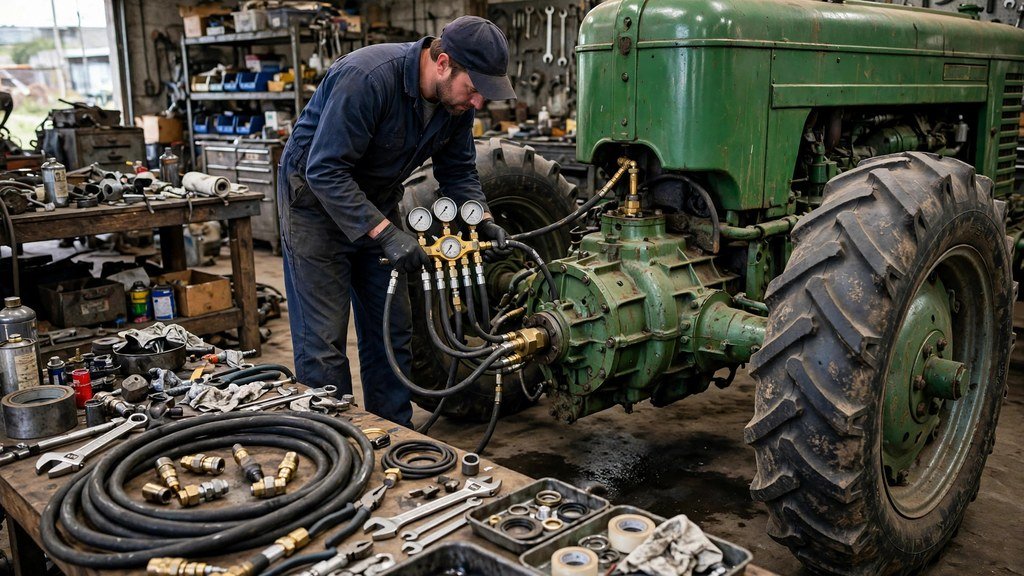
A hitch that drifts down, slow loader or remote response, or a whining pump all point at low system pressure; check in order: oil level, filter condition, suction leaks, then pump output. The closed-center pump delivers 26–28 gallons per minute at 2,530 psi in published data, so a test well short of that is a pump or relief-valve problem. A PTO that will not disengage usually means a sticking clutch pack or a faulty hydraulic control valve: a safety problem, so do not work around a PTO that stays engaged. In John Deere 4055 maintenance, any PTO, brake, or steering fault outranks every other job.
John Deere 4055 Used-Tractor Inspection
A used 4055 can be excellent value, but only if the inspection backs up the price. As planning bands from recent listing summaries, rough or parts tractors trade under $15,000, average working 4055s $20,000–$35,000, and clean low-hour MFWD PowerShift examples $35,000–$50,000 or more, with a 1992 MFWD PowerShift example listed at $34,500 in owner-forum discussion. This section of the John Deere 4055 maintenance guide turns the service schedule into a buyer’s checklist.
Checking Engine Blow-by, Fluid Condition and Maintenance Records
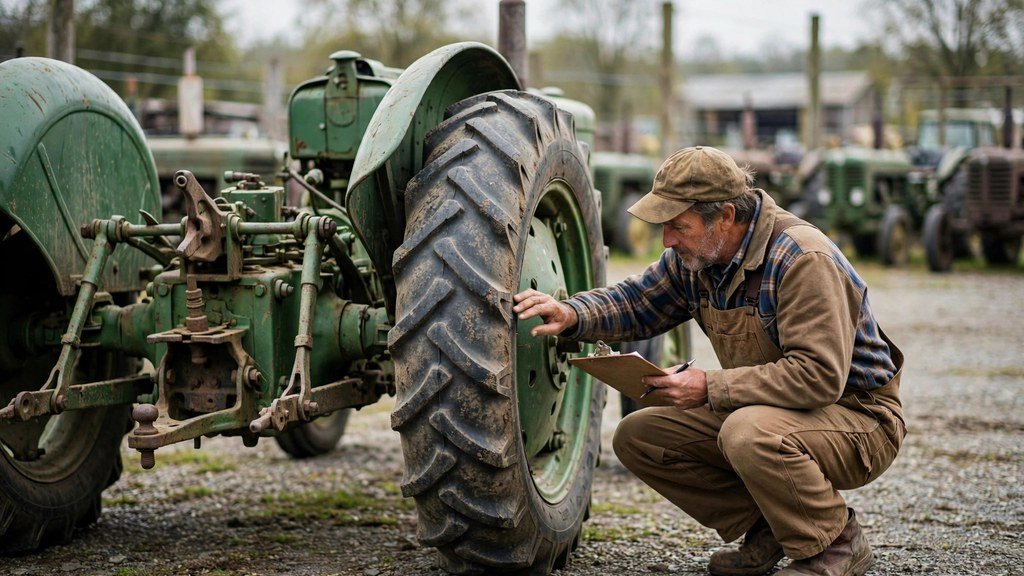
Start with records and fluids, because John Deere 4055 maintenance history is the best predictor of what you are buying. Ask for receipts or a log showing 250-hour oil changes, filter changes, and any clutch or pump work, and check the hour meter against condition: a battered 4,000-hour tractor has lived hard, while a 7,000-hour tractor with clean fluids and fresh filters may be better. Check blow-by with the engine warm: remove the oil filler cap and watch for steady, heavy vapor pulsing out, pointing at worn rings. Pull the dipsticks and look at every fluid: engine oil dark but not milky or gritty, transmission-hydraulic oil clear reddish, not milky or burnt-smelling, and coolant clean, not oily or rusty. Any fluid failing that look test is a negotiating point or a walk-away sign.
For John Deere 4055 maintenance, a cold engine should start promptly without excessive smoke, idle smoothly, and show no oil leaks once warm. Persistent blue smoke, knocking, or a turbo whistling loudly or showing shaft play all point at work the seller should have mentioned. Check radiator fins for chaff, the fan belt for cracks, and battery cables for corrosion, and ask about the last valve adjustment and cooling service on higher-hour tractors. Prices and repair costs are compared in the ownership cost comparison.
Testing Brakes, Hydraulics, Hitch, PTO and Four-Wheel Drive
In John Deere 4055 maintenance inspections, drive through every gear: shifts should be crisp on a Quad-Range with no jumping out under load, and smooth without slipping on a PowerShift. Test brakes separately and together, including the parking brake on a slope: the 4055 uses differential hydraulic wet disc brakes, and a weak side is a safety fault and a repair bill. Raise the hitch with a load if available and watch for drift, run the remotes through full stroke and check couplers for leaks, and engage and disengage the PTO to confirm full release. On MFWD tractors, engage four-wheel drive and check for noise, vibration, or an axle that will not disengage, and inspect the front axle and final drives. One pricing trap: fresh paint and new tires do not fix a slipping transmission or a worn engine, so price on mechanical condition, not shine, and use every genuine defect as a negotiating point, priced against the repair it needs. That discipline is the heart of John Deere 4055 maintenance for buyers.
John Deere 4055 Maintenance: Frequently Asked Questions
These are the questions 4055 owners actually ask about keeping their tractor running, answered from this John Deere 4055 maintenance guide.
How often should I change the oil on a John Deere 4055?
John Deere 4055 maintenance calls for an engine oil and filter change every 250 hours, using 19 quarts of 15W-40. Check the level before every use.
What oil does a John Deere 4055 use?
John Deere 4055 maintenance specifies diesel-rated 15W-40 engine oil and Hy-Gard-type transmission-hydraulic oil for the shared sump.
How often should I change the transmission-hydraulic oil?
John Deere 4055 maintenance changes the transmission-hydraulic filter every 500 hours and the oil and filter together every 1,200 hours, cleaning the suction screen at the oil change.
What engine does the John Deere 4055 have?
John Deere 4055 maintenance covers the John Deere 6466T: a six-cylinder turbocharged diesel of 466 cubic inches (7.6 liters), direct injection, rated at 2,200 rpm.
How much horsepower does a John Deere 4055 have?
John Deere 4055 maintenance references figures that vary by rating standard: 128 hp maximum engine power in the 55-series comparison data, 106–109 hp at the PTO, and about 100 hp at the drawbar in Nebraska-style test reporting.
What is the difference between PowerShift and Quad-Range on a 4055?
John Deere 4055 maintenance treats them as two different care jobs: the 15-speed PowerShift shifts under load with hydraulic clutch packs and needs correct clutch pressure, while the 16-speed Quad-Range is a mechanical range gearbox needing linkage and detent adjustment. Both share the same Hy-Gard oil system.
Why does my 4055 Quad-Range jump out of gear?
John Deere 4055 maintenance points at linkage adjustment first, since it is the most common cause. If adjustment does not fix it, the cause is internal, usually a bent shift fork, lost countershaft preload, or a worn shift collar, and the repair means splitting the tractor.
Why is my 4055 PowerShift slipping?
John Deere 4055 maintenance traces slipping to low clutch pressure, a clogged filter, or worn clutch packs. Pressure-test against the service manual before assuming the worst; do not keep working a slipping transmission.
Why won’t my 4055 PTO disengage?
John Deere 4055 maintenance usually traces this to a sticking clutch pack or a faulty hydraulic control valve. Treat it as a safety fault, and do not work around a PTO that stays engaged.
Why is my 4055 running hot?
John Deere 4055 maintenance points at a clogged radiator or oil cooler, a tired thermostat, or a slipping fan belt. Blow the fins clean, replace the thermostat and hoses on schedule, and investigate promptly.
How do I check blow-by on a used 4055?
John Deere 4055 maintenance checks blow-by with the engine warm: remove the oil filler cap and watch for steady, heavy vapor pulsing out, pointing at worn rings. Light vapor is normal; a cap that dances or blows oil is not.
How much does annual 4055 maintenance cost?
John Deere 4055 maintenance done yourself costs $300–$600 a year in fluids and filters for a typical 200–300-hour season; a dealer annual service runs $400–$700. Budget more in transmission-oil years.
What should I check first when buying a used 4055?
John Deere 4055 maintenance history comes first: ask for oil and filter records, then check blow-by, every fluid’s color and smell, cold start, gear engagement under load, brakes, hitch drift, PTO release, and MFWD function before agreeing a price.
Is the John Deere 4055 reliable long-term?
Yes, with steady John Deere 4055 maintenance: the 466 engine and both transmissions routinely pass 10,000 hours when fluids, filters, cooling, and linkage stay on schedule. Neglect of the transmission-hydraulic system ends most 4055s early, not age alone.